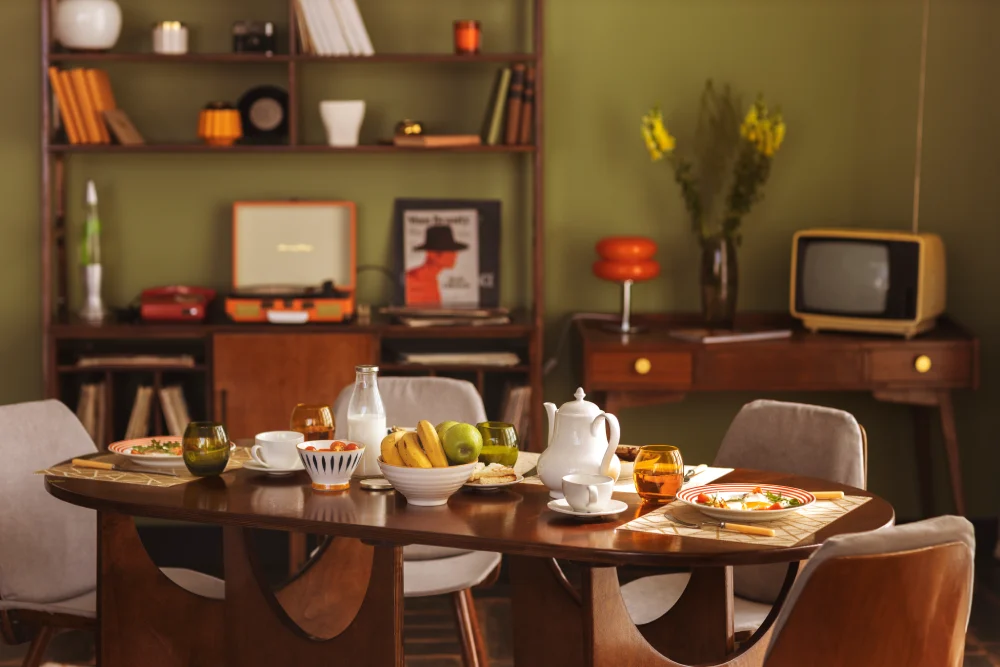
Home Blog Page 93

Kitchen Colours as per Vastu Shastra for a Harmonious Home

0
Kitchen Colours as per Vastu Shastra

Vastu Shastra is an ancient Indian science of architecture and design. It has its roots in the Vedic traditions, which are over 5,000 years old. Vastu Shastra comes from the Sanskrit words ‘Vastu’ and ‘Shastra.’ ‘Vastu’ means dwelling and ‘Shastra’ means science. Vastu Shastra aims to harmonize human homes with nature. These principles are believed to bring peace, prosperity, and happiness into our lives. Following Vastu principles may bring us peace, prosperity, and happiness. The kitchen, the heart of the house, is vital for the family’s health.

So, if you are building a home and want to choose a kitchen colour as per Vastu, you have come to the right place. In this article, we have discussed some auspicious colours that you can use for your kitchen. Read till the end and choose your desired colour. 

Best kitchen colour According to Vastu

Choosing the right colours can significantly enhance the overall radiation of the kitchen. The kitchen is the centre of the home, and it is essential to do everything you can to attract positive energy into it.

List Of all Vastu colours for kitchen

Here is a certain list of colours that flow with your taste.

Saffron: Saffron is light yellow in colour with vibrant, warm, and energetic hues. It is often considered an auspicious colour and is best suited for a north-directed kitchen.
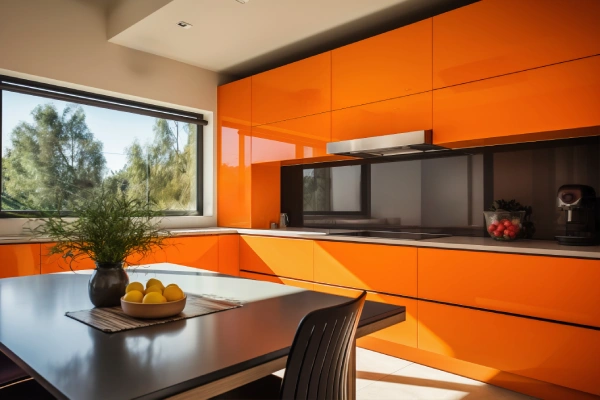
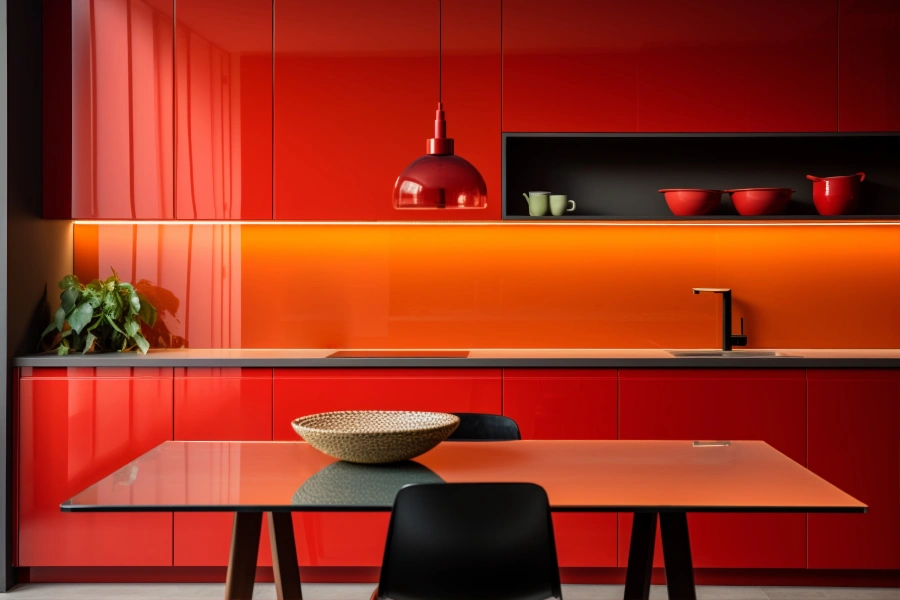
Red and Orange: Red represents fire and good fortune, while orange represents prosperity and optimism. These colours demonstrate Agni Tattva.
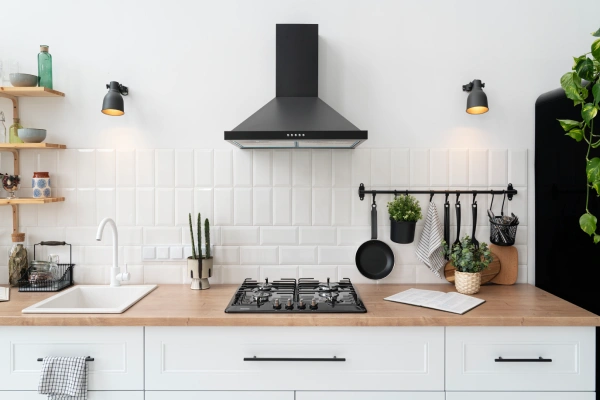
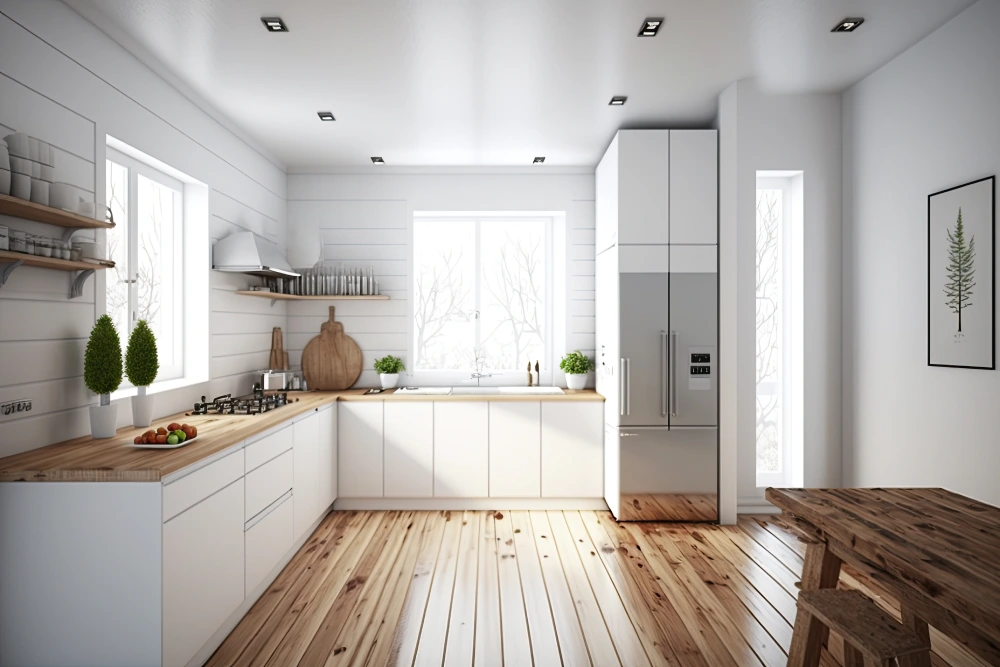
White: White indicates purity, calmness, and abundance and is a good choice for your kitchen. You might have to mind the stains though.
Yellow: Yellow has the warmth to light up a dim kitchen. The colour, when aligned with the south-facing kitchen, promotes working spirits and uplifts the environment.
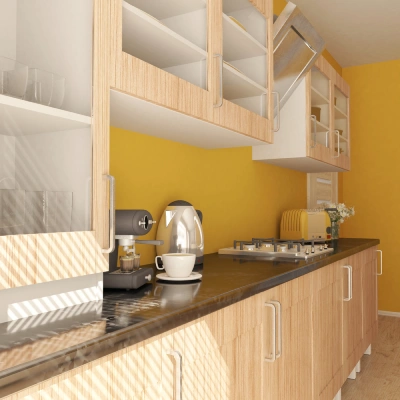
Peach and Pink: These two colours represent peace and love and promote social conversations improving the mood in the kitchen.
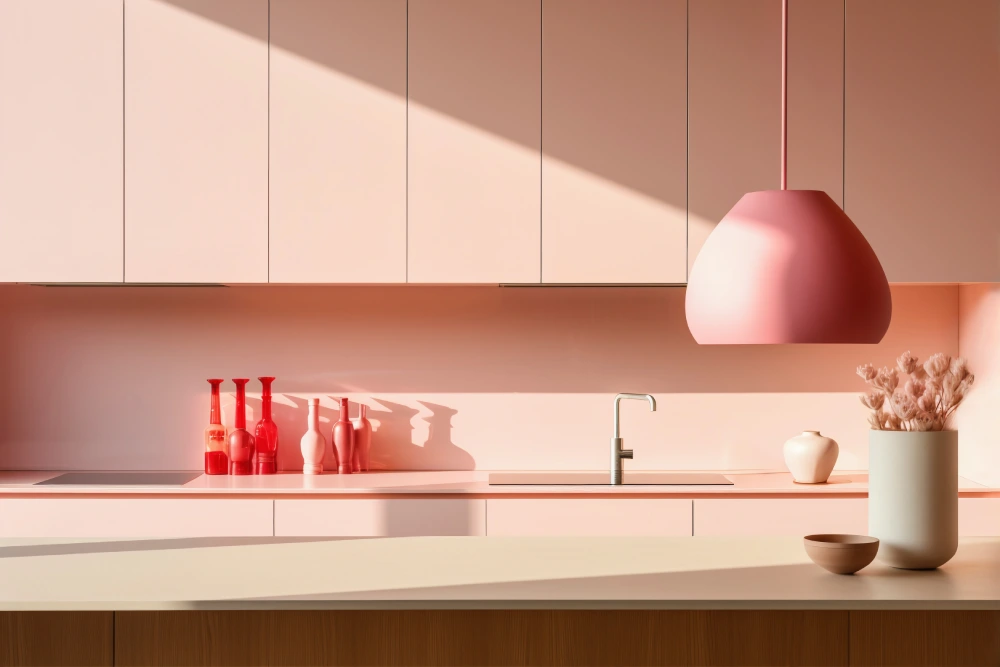
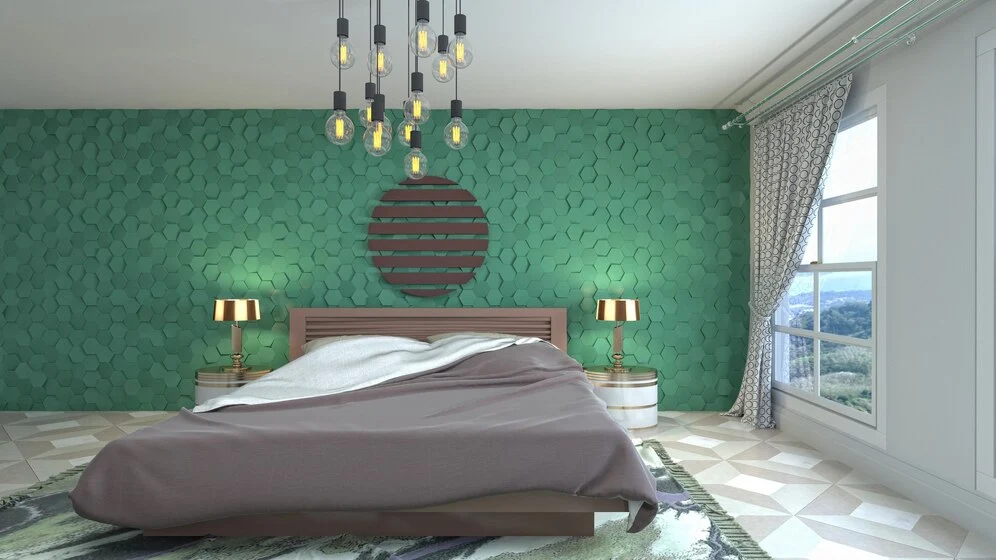
Green: Green invites nature, refreshment, harmony, and healing and makes you feel fresh during tiring kitchen work.
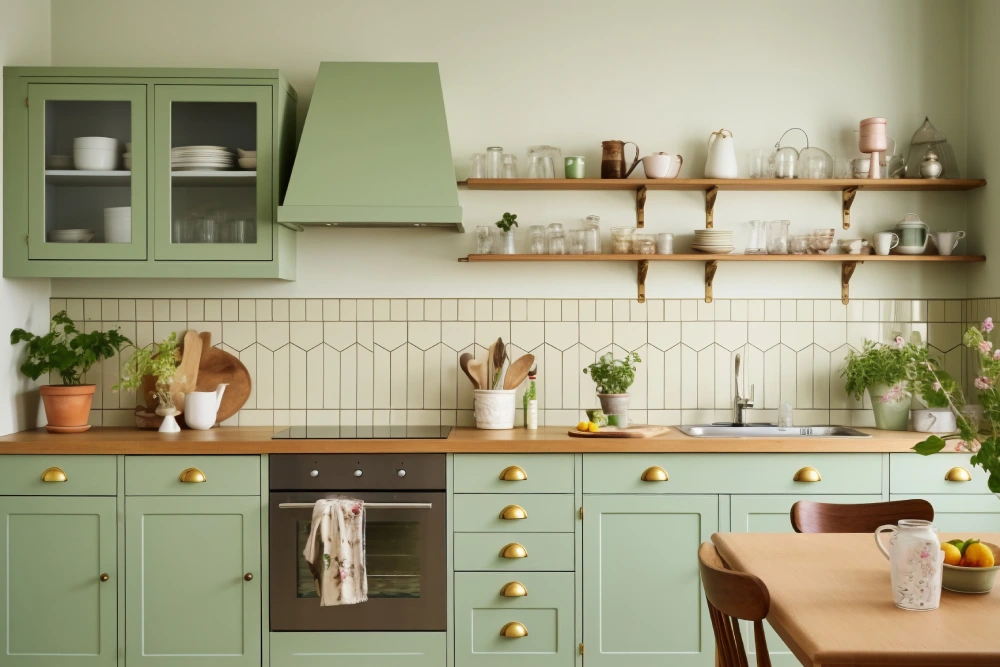
Beige: Beige invites calmness and stability, improves relationships, and increases levels of satisfaction.
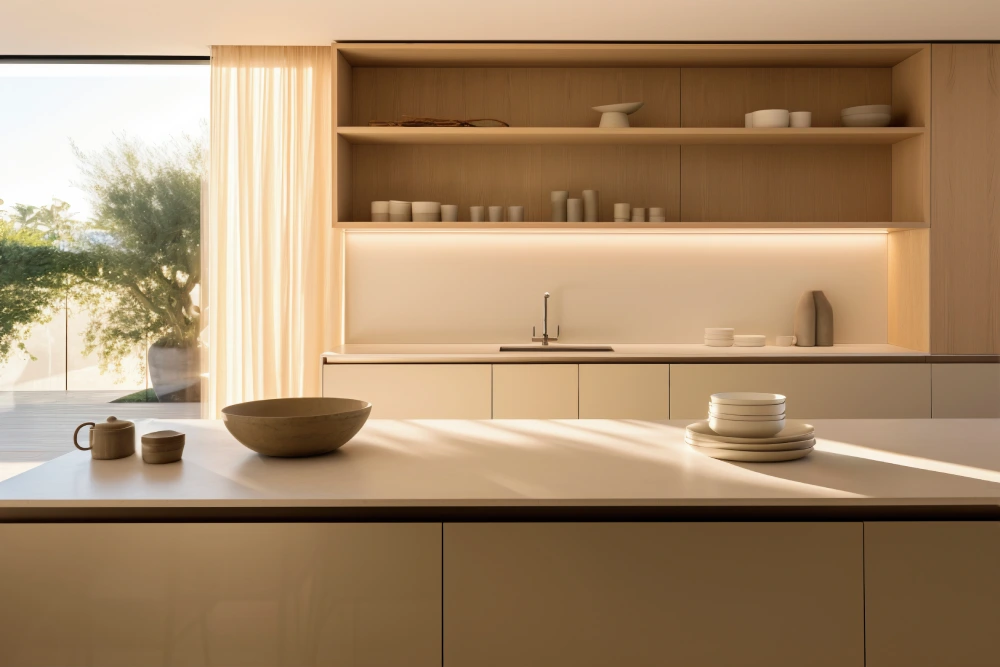
Light Grey: Light grey can be used in moderation; however, it is not recommended as vastu is considered. You can, however, combine it with warmer tones for West or North-facing kitchens.
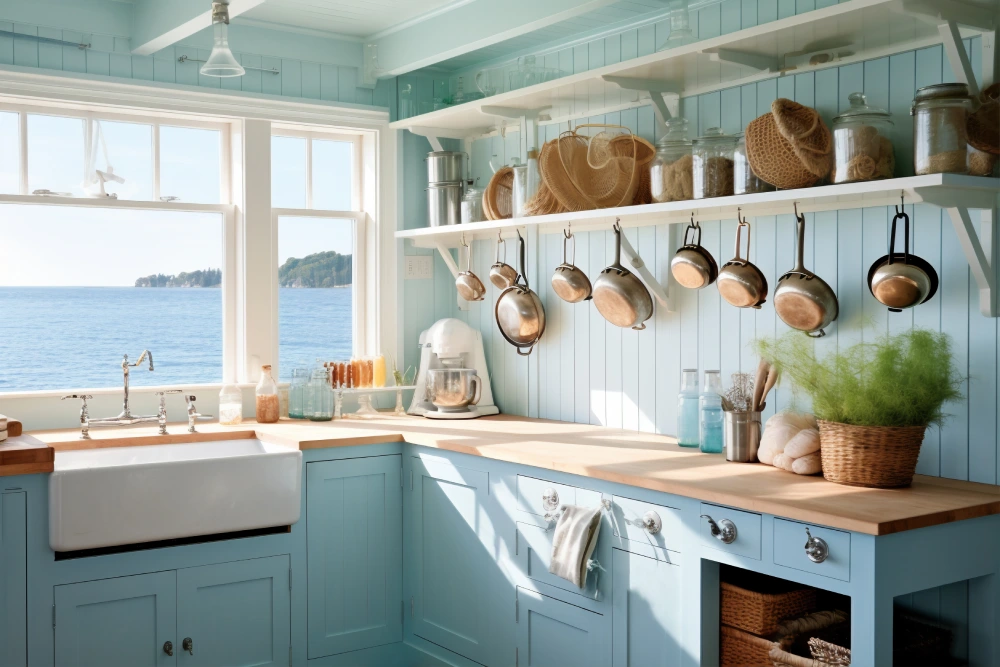
Ocean blue: Ocean blue can create a calm and cool effect. However, it surpasses appetite and dampens fire energy. This colour can be used when combined with decorative tiles or tableware.
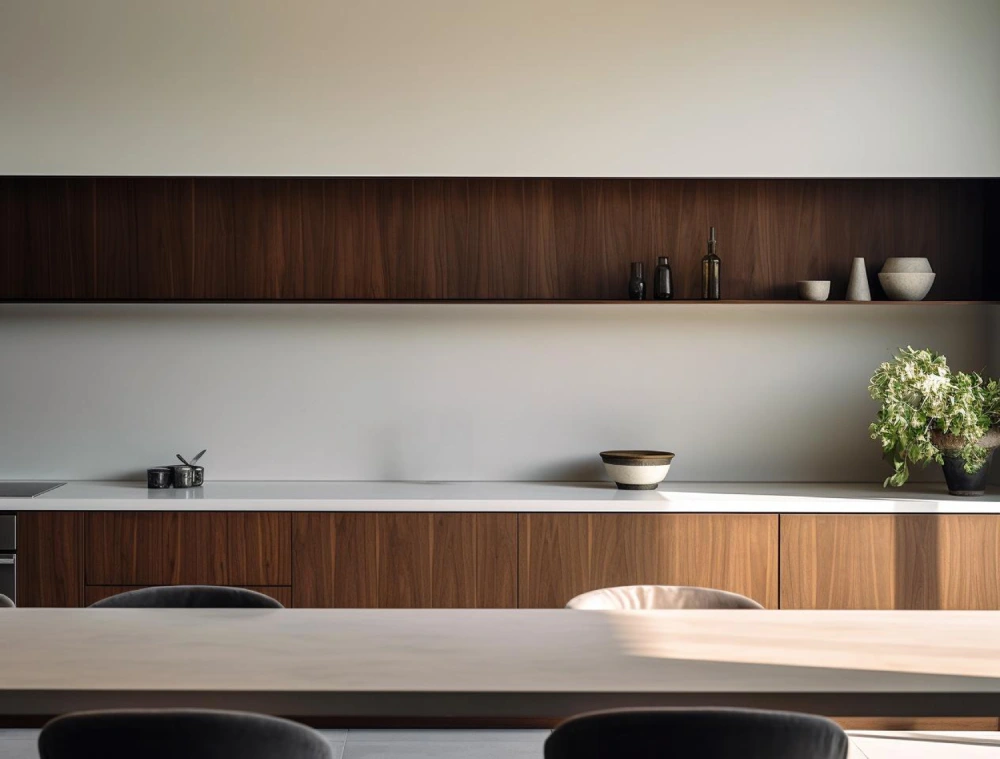
Brown: Brown brings in earth elements and provides comfort and contentment in the kitchen space. It can be used for east and southeast-facing kitchens and is considered positive.
Importance of Vastu colours for kitchen

There are other factors apart from just mood and energy that we should consider when choosing colors for our kitchens according to vastu shastra. Every color used in Vastu has particular energies associated with it which may symbolize different elements or things within life. Correct colors for this room can raise your energy levels, promote better relationships, and contribute to good blood circulation.

Psychological Effects of Colors

Yellow:

Facilitates Positive Emotions: Because yellow is associated with sunlight and warmth, it tends to be uplifting by nature. This may make cooking a more pleasant experience.

Enhances Thought Processes: Yellow can improve focus and clarity of thought, which can come in handy when cooking demands attention and precision. While preparing meals, it keeps you awake.

Boosts Appetite: Bright colors such as yellow are known to increase appetite; this makes it an excellent option for a space where food is prepared and consumed.

Green:

Calms the Mind: Being the colour of nature, green has a calming effect. It helps reduce stress levels and encourages relaxation that is important given amount of time spent in the kitchen.

Healthy Lifestyle: The connection made between green and fresh produce or healthy choices in food can lead people to healthier lifestyles.

Ensures Harmony: Green acts as a balancing color that brings other kitchen colours together, leading a comforted atmosphere.

Orange:

Encourages Social Interaction: Orange is a social color that encourages interaction and conversation. It’s perfect for the kitchen where family and friends gather.

Stimulates Appetite: Orange also aids digestion just like yellow, thus rendering meals more satisfying.

Boosts Motivation: The buzz of orange can enhance motivation and make cooking more exciting and animated.

White:

Promotes Cleanliness: White implies purity and cleanliness. Therefore it can make the kitchen look new and well-maintained.

Enhances Clarity: In a busy kitchen environment, white brings orderliness and clarity which can be beneficial.

Makes Space Look Bigger: For confined kitchens, white bounces off light making them appear more spacious.

Common mistakes to avoid while selecting kitchen colour according to vastu

Using Too Dark Colors:

Effect on Mood: Dark colors like deep blue, black, or dark grey can make the kitchen feel gloomy and uninviting. They can absorb light, making the space look smaller and more enclosed, which can negatively affect your mood and energy levels.

Practical Issues: Dark colors can also show dirt and stains more easily, making it harder to keep the kitchen looking clean.

Overuse of Bright Colors:

Overwhelming Effect: While bright colors like yellow and orange are energizing, using too many bright shades can be overwhelming and create visual chaos. This can make the kitchen feel busy and stressful, rather than a relaxing space to cook and eat.

Lack of Balance: Without a balance of neutral tones, bright colors can dominate the space and make it difficult to focus.

Ignoring Vastu Principles:

Disruption of Energy Flow: Ignoring Vastu guidelines can lead to a disruption in the flow of positive energy. For example, placing the kitchen in the wrong direction or using colors that clash with Vastu principles can affect the harmony and peace of the household.

Missing Out on Benefits: Vastu principles are designed to enhance well-being and prosperity. Ignoring these guidelines means missing out on potential benefits that could improve the overall atmosphere of your home.

Conclusion

Depending on the direction of the kitchen, the colour you choose plays a significant role. Vastu Shastra is not just a superstitious practice. It is a gem that determines the lighting and well-being of the people who live in it. 

So, it is important to consider the colour that best suits your style, and that aligns with Vastu. Consult a Vastu expert for more clarifications.

FAQs

1) Which colour is best for the kitchen, according to Vastu?

Some of the best colours for the kitchen are red, orange, saffron, white, green, and beige.

2) Which colour is ideal for the kitchen?

Depending on the light and modernization, the ideal kitchen colour is white, light grey, or beige.

3) What colour is it to paint kitchen cabinets?

Avoid using darker or cooler tones when painting kitchen cabinets.

4) How do I remove Vastu dosh from the kitchen?

Prioritise keeping the kitchen in the north and replacing the stove cabinet. Look for balancing air, water, fire, and earth elements.

5) What are the rules for kitchen colour design?

One strict rule to follow in deciding kitchen colour design is to make sure it brings light, calmness, appetite, style, and warmth to the kitchen area. Choosing red, orange, white, and beige can go well with Vastu alongside modernization.
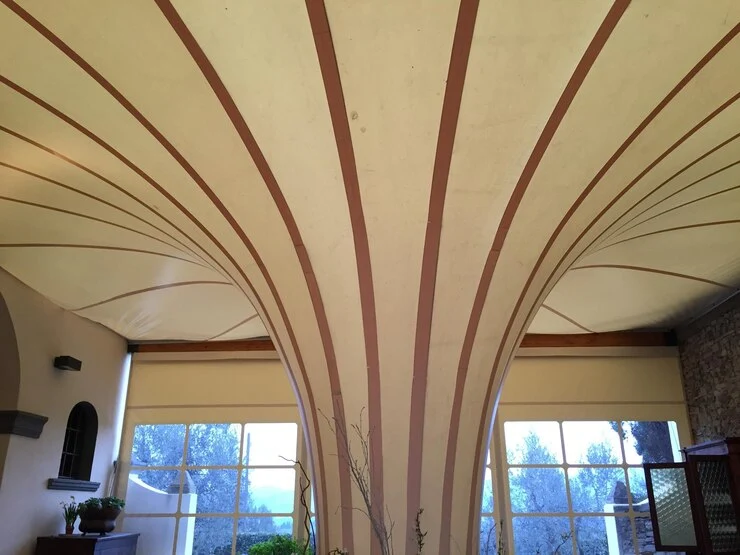
False Ceiling Design For Bedroom: 7 Best Ideas

0

Our home, especially our bedroom, is where we can let our imagination run wild and get creative.

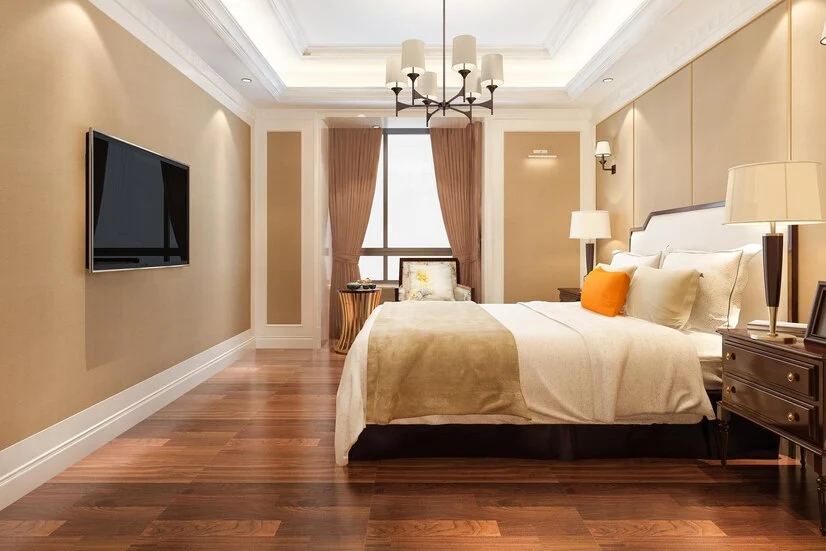
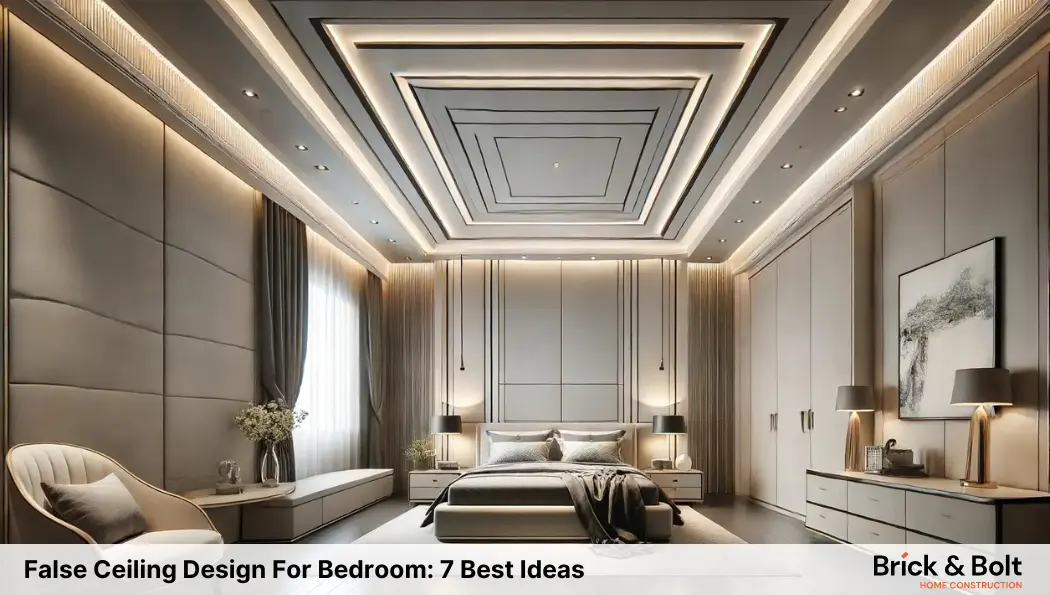
One such creative idea is having a false ceiling in your bedroom. These ceilings are aesthetically pleasing and can have a visual impact when lying on your bed.

There are many ways you can design your false ceiling. Let’s discuss 7 of those designs in this article.

Top 7 False Ceiling Designs For Bedroom Ideas

Canopy Flase Ceiling Design for Bedroom

Canopy false ceiling Design

Have you ever been under a canopy? A canopy is a structure that covers the entire area and provides shelter. Likewise, a canopy-design false ceiling will involve a false ceiling structure that spans the entire bed, even extending outside the bed area.

You can place color lights in strategic areas around the canopy for an aesthetic touch. Wood, MDF panels, and Gypsum board are popular materials used to make this structure.

Suspended Ceiling With Integrated Lighting

Suspended false Ceiling With Integrated Lighting for bedroom

A suspended ceiling with integrated lighting is more like a canopy design. Both have a false ceiling structure that is installed below the actual ceiling.

The main difference between the two is, that in a canopy design, you strategically place lighting for a visual impact. In a suspended ceiling with integrated lighting, the lights are incorporated into the false ceiling grid system or panels.

This is often done with LED strips or recessed spotlights. Sometimes, you can even have different lighting zones and moods.

Biophilic False Ceiling Design for Bedroom

Biophilic false ceiling Design for bedroom

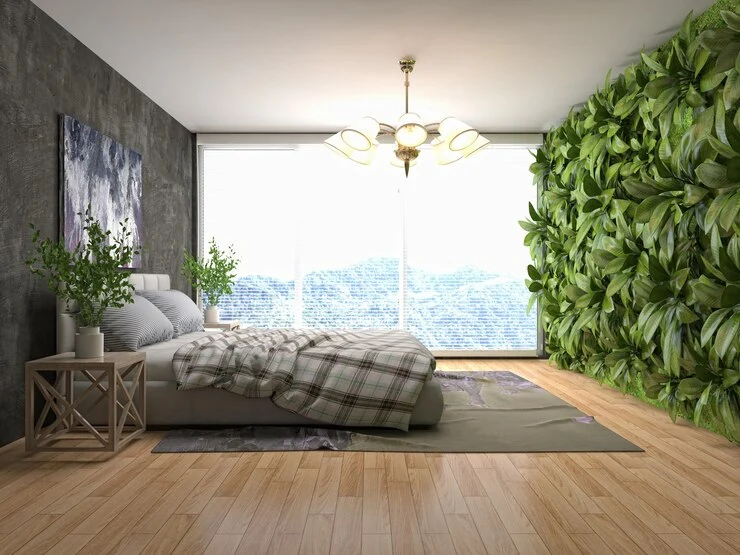
This is the perfect false ceiling design idea for a biophile, a person who loves nature and all living things. A biophilic false ceiling is all about using natural attributes to enhance your bedroom atmosphere.

Some natural elements that can be used in false ceiling involve,

  • Using wood panels or bamboo as false ceiling materials,
  • Incorporating patterns like leaves, plants, animals, etc., in the false ceiling,
  • Hanging plants like vines from the ceiling.

Metal Accents False ceiling design for bedroom

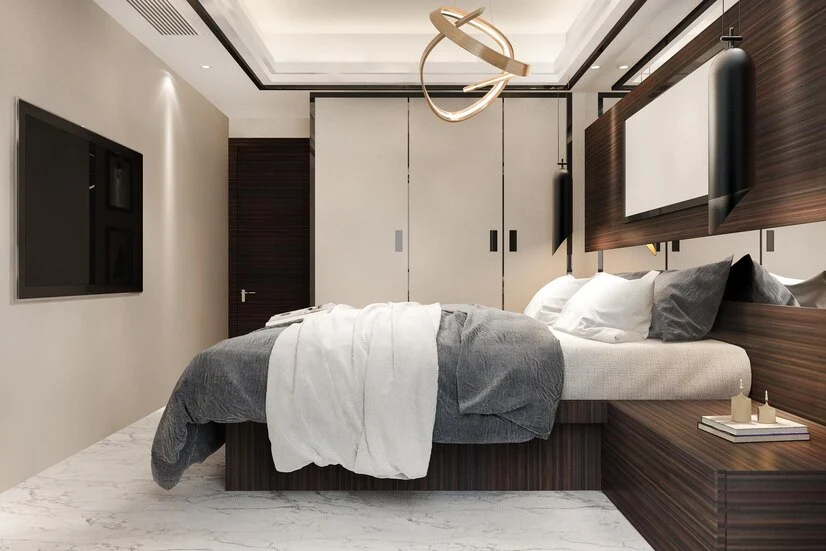
Adding metal accents to your bedroom false ceiling can give a touch of sophistication and it gives a Modern Bedroom Ceiling Design look to it. You can use metals like aluminum, brass, copper, etc., as metal panels, beams, or trims.

Metal accents are a preferred choice for many as they are aesthetically pleasing, give a classy look, are more durable, and there are several design options you can choose from.

Minimalist Lighting Channels false ceiling design for bedroom

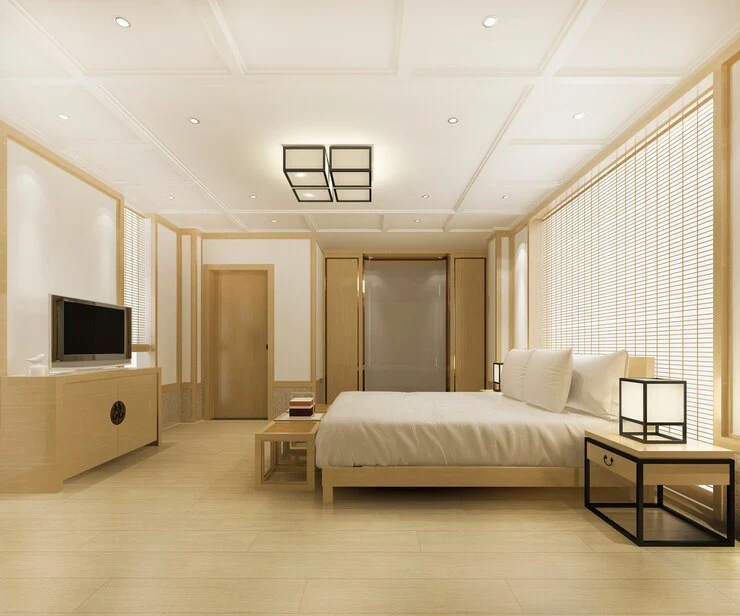
The name of this design implies how this ceiling will be structured. Minimalist: subtle design that blends seamlessly with the false ceiling. Lighting channels: Straight lighting channels running through the false ceiling, attached with LED strips or other lighting fixtures. These Minimalist lighting channels provide a clean, sleek, and modern look that enhances the overall aesthetic of the bedroom, living room, etc. The channels can be in straight lines or geometric structures like a square, triangle, circle, etc.

Textured Paint With Stenciled Accents

Textured Paint With Stenciled Accents false ceiling design for bedroom

This false ceiling design combines the beauty of textured paint and stenciled designs. Here, your false ceiling will be painted with a special paint with certain textures like swirls, metallic, sand, etc. Incorporating a POP ceiling for bedrooms can further enhance this design, offering a seamless blend of elegance and personalization.

Then, stenciled designs are given on top of this textured paint to add a visual impact to your false ceiling.

Starburst Design With Fiber Optics

Starburst Design With Fiber Optics false ceiling design for bedroom

Want to make your room more magical and mesmerizing? Then, starburst design with fiber optics is the best choice for you.

This method involves installing flexible strands of fiber optics into the false ceiling and connecting them to a light source. The perk here is they come in various colors, and you can control the brightness to your liking.

Conclusion

Your bedroom is one place where you can let your dreams come true. So, get started and find innovative false ceiling ideas to enhance your bedroom ambiance. Don’t forget to check out the False Ceiling Cost for the best options that fit your budget.

As a final note, here are some factors you need to consider when choosing false ceiling designs for your bedroom.

  • Determine your preferences. Do you prefer soft or bright lighting, a modern or classic look, or a minimalist or extravagant design?
  • Determine if you want a low or high ceiling.
  • Determine your budget.

You can also consult a professional if you want an expert opinion on your false ceiling designs.


How to Buy Home Without Loan: debt-free home buying

0
How to Buy a Home Without a Loan

Buying a home without a loan has many benefits. The benefits are not just about money. 

The chance to own a home without debt and the likelihood that its equity will grow faster than through debt are arguments. They would make someone seek other ways to finance the property. 

This blog will tell you how to buy a home without taking a house loan. It will focus on the ways to buy a home without a home loan and the strategies you can follow to achieve it.

How to Buy a House Without Loan?

1. Cash Payment

Buying a house with cash is a good idea. It’s for people who have worked for years to save some money or lucky people who got a lump sum. 

Buying a home for direct cash results in owning the home without needing a home loan. Through this approach not only the burden of loans and debts is avoided, but also they feel financially secure and happy. 

2. Owner Financing

Owner financing, or seller financing, is a different way of buying a house without engaging a loan company. In this setup, the seller becomes the landlord. The buyer pays the agreed amount directly to the seller, not a bank. 

Owner financing has several benefits that are more likely to be realized. These include shorter closing times, lower closing charges, and more freedom to negotiate terms. 

It can attract buyers if they want to access the housing market without the usual loan process.

Strategies for Buying a Home Without a Loan

Save Aggressively

Savings effectively is a rudimentary plan that can help to purchase homes without necessarily undertaking a loan. 

When people avoid unnecessary spending and save some of their income, they can eventually gather the money needed to buy a home without a loan. 

Additionally, one may be able to select investment avenues such as mutual funds or fixed deposits to grow money faster, enabling one to achieve the dream of owning a home faster.

Consider Downsizing or Location

Another good alternate approach is considering downsizing or using affordable areas for moving. 

Some of the options that one can try are to decide to buy a smaller house or to look for an area that is not as expensive so that one can own a house within one’s capacity. 

It enables you to take advantage of affordable housing markets within your financial capacity to establish housing units.

Inheritance or Gift Funds

It is possible for an individual to have an inheritance or be gifted money to buy a house without asking for a loan. 

These are major financial boosts that, when used prudently, can provide the platform to get you home faster and help you pay cash for the house. 

Inheritance or gift funds can be a decent endowment on a given undertaking, which makes you eliminate debts and acquire freeholds alongside a more extended and sound financial status.

Government Assistance Programs

Another beneficial approach in the absence of a loan is to learn about what governments offer homebuyers in terms of initial support. 

These programs comprise funds, grants, and loans for a down payment, affordable loans, and reasonable interest rates to help qualified individuals realize their dream of owning a home. 

In fact, such an opportunity under government schemes and subsidies helps people buy or construct a home without being bound to conventional mortgage credits.

Conclusion

In addition to owning a home without a loan, it is useful for those who have been saving for a long time, received non-recourse funds in the form of an inheritance or gift, or are ready to look for owner financing. Exploring options for a Home Loan Interest-Free can also be beneficial for reducing the financial burden.

Despite this, there are a variety of techniques used to prepare for the financial aspect and use efficient, affordable homes to acquire houses without mortgage costs.

FAQs

1. Can we purchase a house without a loan?

Of course, it is quite feasible to purchase a house with no home loan by providing cash, owner financing, and other methods.

2. Can I buy a house in installments?

Purchasing a house backed by installment contracts in favor where the owner of the house will sell the house to the buyer and provide the buyer with a means of paying for the house in equal installments dates, which relieves the buyer from seeking a mortgage.

Simple Main Hall Fall Ceiling Design Ideas

0
Simple Main Hall Fall Ceiling Design

False ceilings exhibit your creativity, and decorating your main hall with a simple false ceiling design can help you achieve minimalistic and artistically fine interior design.

There are different varieties of simple main hall false ceiling designs. You can customize them according to your taste and preference. Knowing the available main hall false ceiling designs can help you work it out with your creativity.

Top 6 Simple Main Hall Fall Ceiling Design

The following are considered the top 6 main hall false ceiling designs:

  • Geometric patterns with fall colors
  • Wooden false ceiling for hall
  • Recessed false ceiling with LED lighting
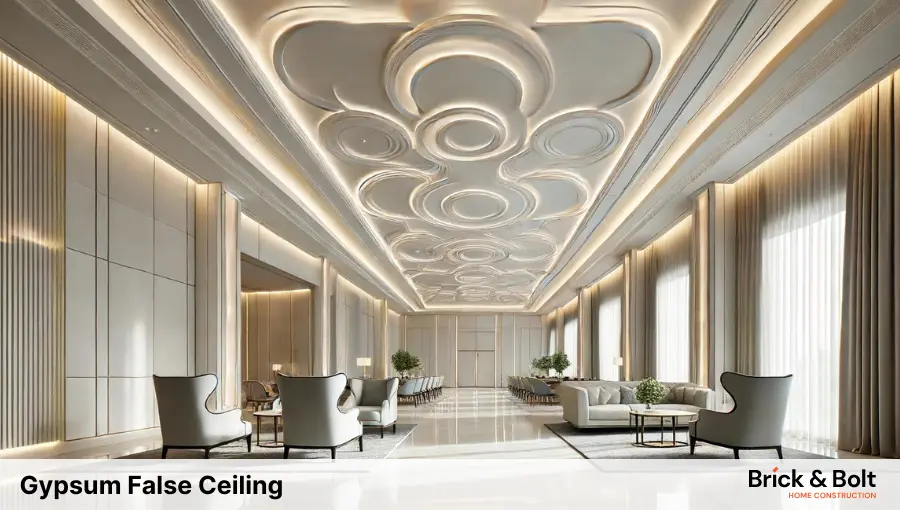
  • Gypsum false ceiling 
  • Starry night sky with fiber optic lighting and false ceiling
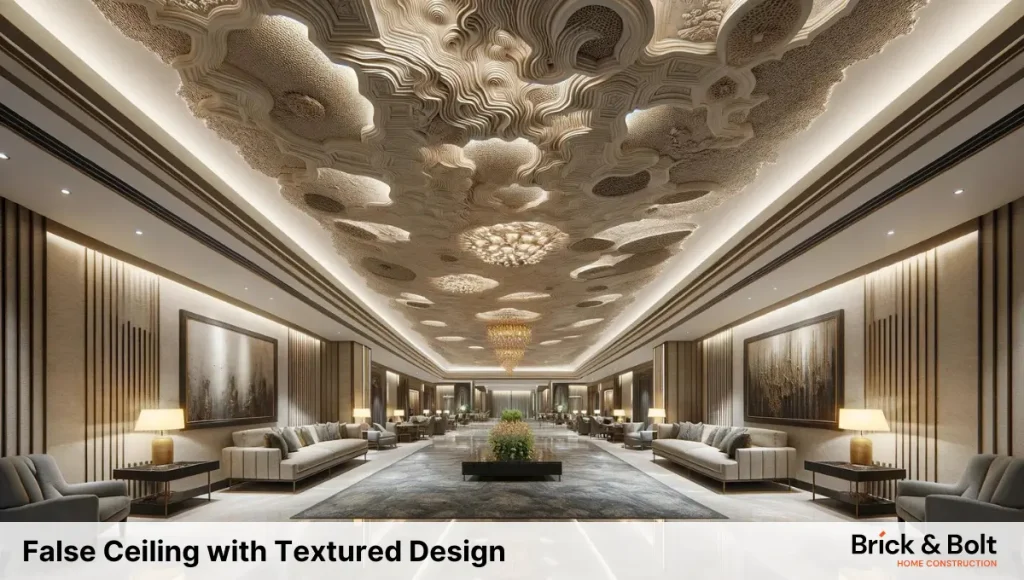
  • False ceiling with textured design

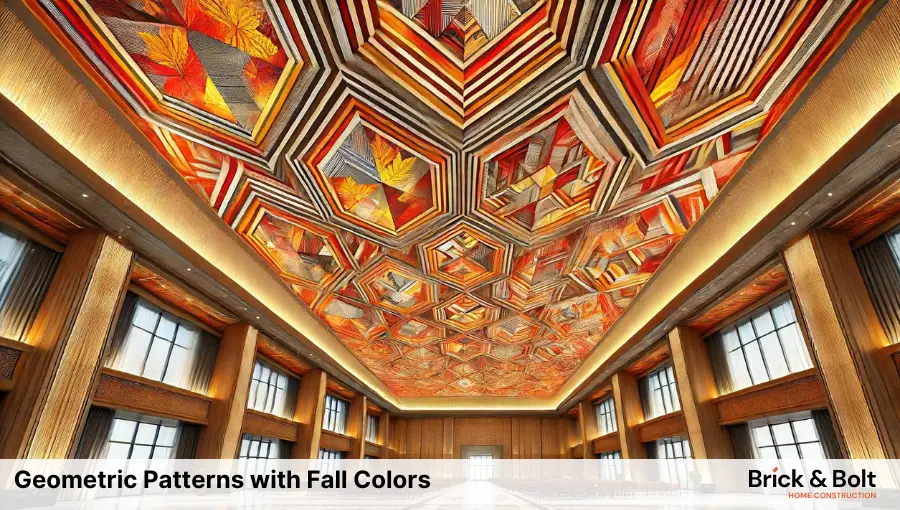
Geometric Patterns with Fall Colors

Geometric Patterns with Fall Colors

Fall colors can evoke a feeling of warmth and coziness and present an aura of invitation to your main hall.

You can use geometric patterns like squares and rectangles, honeycombs, chevrons, and leaves and vines to create a structural appeal and pair them with burnt oranges, coffee brown, deep reds, and other fall colors.

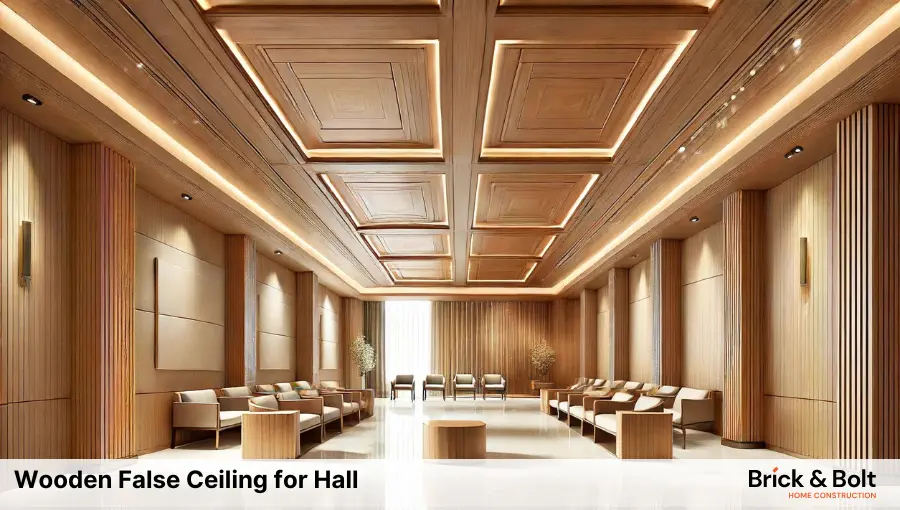
Wooden False Ceiling for Hall

Wooden False Ceiling for Hall

If you wish to add a classic yet modern touch to your main hall, you can opt for wooden false ceiling designs. Wood false ceilings can complement any design and add warmth and beauty to your space.

Wooden false ceilings provide a high functional aspect alongside their natural insulation facility.

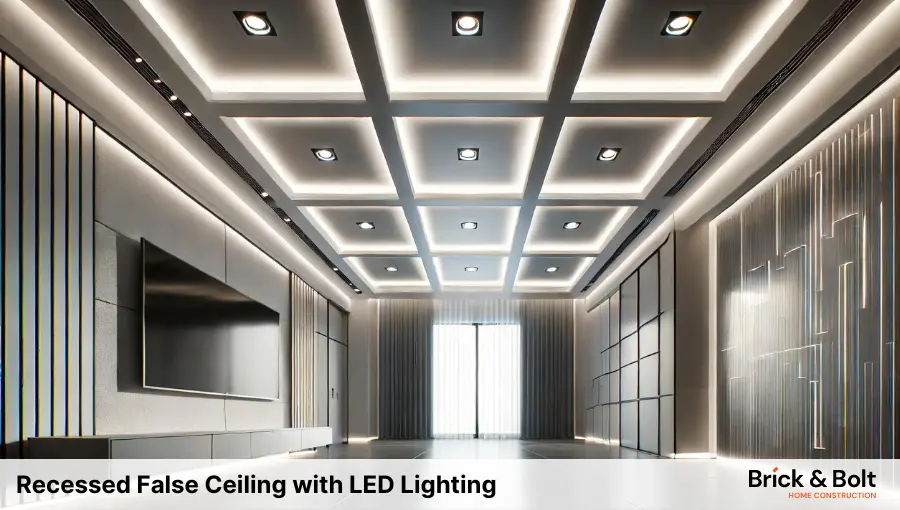
Recessed False Ceiling with LED Lighting

Recessed False Ceiling with LED Lighting

Recessed false ceilings with LED lighting are a popular option for both residential and commercial spaces. They give a clean, modern, and minimalistic appeal.

The LED lighting facility helps improve cost and energy efficiency while serving different purposes, such as general, accent, and task lighting.

Gypsum False Ceiling

Gypsum False Ceiling

Gypsum false ceiling, gypsum board panels, or drywall is widely used in commercial and residential spaces owing to their many advantages:

  • Fire resistance
  • Sound insulation
  • Thermal insulation
  • Affordability and
  • Easy installation

Starry Night Sky with Fibre Optic Lighting False Ceiling

Starry Night Sky with Fibre Optic Lighting False Ceiling

The starry night sky with fiber optic lighting and false ceiling is a unique design and will serve as a great conversation starter for anyone who enters the main hall. With this design, you can achieve an eternal bright star-illuminated night illusion for your main hall.

Installing this false ceiling design can be complex, and you must hire an experienced contractor for installation.

False Ceiling with Textured Design

False Ceiling with Textured Design

False ceilings with textured and polished designs can help you make the plain ceilings interesting. Textured paints on geometric shapes, floral motifs, and other creative textures such as stone structure, food grain structure, waves, and so on can greatly upgrade your main hall ceiling.

Key Factors to Consider When Choosing the Simple Main Hall Fall Ceiling Design

Consider the following factors while designing your main hall ceiling, as they will help you make the appropriate choice.

  • Ensure that your choice of false ceiling design matches the overall look.
  • Look for matching color schemes.
  • Make certain that the false ceiling design does not hinder your functionalities like lighting and acoustics.
  • Measure your ceiling height to ensure your false ceiling design is accommodative.
  • Look into the maintenance aspect of your false ceiling design.
  • Determine your budget before choosing the false ceiling design.

Conclusion

False ceilings are a great way to enhance the appeal of your main hall ceiling. It can easily impress the onlookers and make them feel cozy and invited.

False ceilings for the main hall come in a myriad of designs. You can also design the false ceiling of the main hall according to your wishes and exhibit your artistic tastes. These false ceiling designs will be one of the best options to design your Main hall & bedroom ceilings.

Look into the different designs and customization facilities to fit your preferences and budget.

FAQs

1. Are false ceiling designs expensive?

There are false ceiling designs available in an affordable price range. The price of the false ceiling designs will vary based on the elements used in them.

2. Are false ceiling designs dangerous?

False ceilings can pose a risk of falling due to poor workmanship. Therefore, it is advisable to install them in a stable manner.

3. What is the current false ceiling design trend?

Minimalistic false ceiling designs are the contemporary trend. There has also been a liking for art decorative accents in golden painting.

Types of Soil for Building Foundations & Construction 

0
Types of soil for building foundation

A detailed knowledge of the various soil types and properties is vital before starting the work on foundations & construction. Because different types of soil will affect your building’s foundation based on its physical and chemical properties. Choosing the right type of foundation is very crucial according to the soil type.

Hence, in this blog of Brick & Bolt, you will explore the different types of soil for building foundations and construction to understand which type of foundation is best suitable for your dream construction project. 

Understanding Soil Composition 

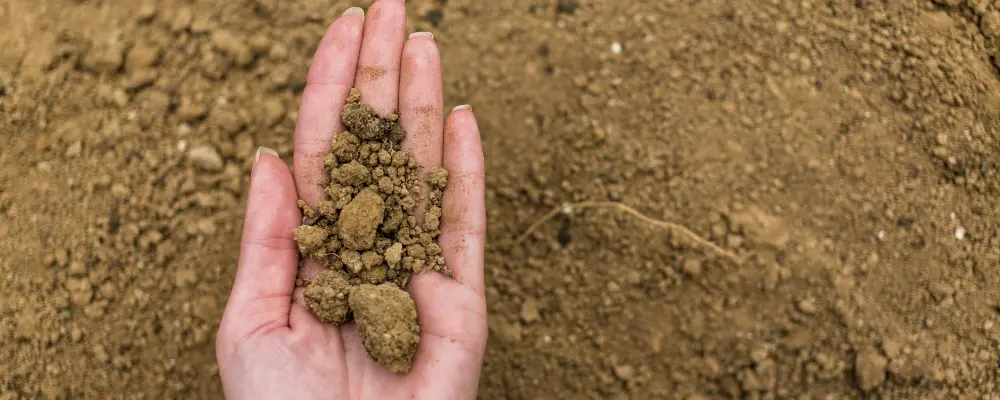
The soil is a combination of minerals, organic matter, water, and air, varying in composition. It generally contains sand, silt, and clay. It’s constituents determine its properties and suitability for different purposes.

Soils are often more stable when they include a higher proportion of rock and compacted sand or gravel. During the home foundation process, the soil must be capable of staying stable during wetting and drying cycles so that foundations do not crack because of normal expansion and contraction.

Good soil for construction is that which is capable of capturing precipitation, preventing runoff and erosion from causing structural damage. A good infrastructure soil should be chemically balanced to prevent material deterioration. It should also contain minimal organic material, which can decay over time and cause movement beneath the foundations. 

Common Types of Soil for Building Foundation

Good soil for construction

The following are the major types of soil for building construction:

1. Clay Soil

Clay is made of fine mineral materials and little organic material. It’s generally found where streams and rivers once flowed or in an area where water tends to sit after heavy rainfall. It becomes sticky when wet and does not drain effectively. Its small particles cause it to expand and push on the foundation’s wall when moist. And when it dries, it shrinks, causing the foundation to shift. It can cause fissures and unequal levels in a building if not amended. Hence, it is unsuitable for foundation construction due to its instability.

To construct the right type of home foundation, the ground must be dug deeper to ensure stability. A drilled pier or a slab foundation appears best suited to clay soil.

A slab-on-grade foundation controls the soil’s tendency to expand and contract after construction, but a drilled-pier foundation improves structural firmness or stability when dug deeper.

Advantages of clay

It’s the perfect stuff for a tropical climate place. 

  • Clay soil has excellent thermal insulation properties. This helps to maintain cooler temperatures in structures during hot weather and reduces the need for air conditioning.
  • Clay soil retains water well, where dry periods can follow heavy rainfall. This property helps sustain plant life and maintain lush, green landscapes.
  • Clay soil is rich in nutrients, making it an excellent choice for gardens and agricultural purposes.
  • When compacted, it can support heavy loads, making it suitable for building foundations. Its dense nature educes the risk of shifting or settling over time.

2. Silt Soil

Silt soil is composed of rock and other mineral materials. It also includes tiny particles and can retain water for a long time. Compared to sandy soil, it has considerably smaller particles, making it easily transported by moving water flows. This soil type can be seen near rivers, lakes, and other water bodies. 

It is not suitable soil for building a foundation because it stresses the building. These types of soil for building construction does not dry quickly or readily when it contains water. It drains poorly and grows, pressing against the foundation. This results in relatively poor support for construction. The RCC spread, and isolated pad footings are suitable for this silt soil. The foundation’s depth should be more than the erosion, swelling, and shrinkage zones. 

Advantages of silt

Silt has fertile ground, can hold more water, and is easier to work with than other soils.

  • Silt provides a moderate load-bearing capacity, making it suitable for supporting various types of structures, such as small buildings and road bases. 
  • When compacted, silt exhibits low compressibility and reduced risk of sinking. This is essential for maintaining structures over time, particularly in areas prone to heavy rainfall.
  • Silt acts as an insulator, helping to regulate temperatures and reduce energy costs,  where maintaining a stable indoor temperature is crucial.
  • It has the ability to retain moisture, which can be advantageous for landscaping and agriculture.

3. Loamy Soil

Loam soil is the most suitable for building foundations. Generally, farming areas contain this type of soil. It contains the right combination of sand, silt, and clay constituents. It can retain moisture and nutrients. It also has a higher pH and calcium level when compared to other types of soil.

Loam soil manages moisture effectively since it absorbs water and dries out consistently. It also allows for air circulation and drains well. However, before starting the construction, the soil should undergo filtration to eliminate any undecomposed particles or elements. This is to prevent further terrible effects.

Loamy soil is suitable for the construction of isolated pad footings. The area and depth are again decided by bearing capacity, groundwater table depth, and load-bearing stratum depth. Isolated pad footings are provided beneath columns and joined/tied together by connecting beams. If the structure has only one story, a continuous strip foundation can be employed; however, isolated RCC pad foundations are preferable if they are cost-effective.

Advantages of loam soil

It’s good for construction because it holds water at a balanced rate. It controls air humidity if applied as a layer to interior walls. It’s best when combined with straw to build walls.

  • When applied as a layer to interior walls, loam soil can help regulate indoor air humidity. 
  • The fertile nature of loam supports healthy plant growth which can enhance the aesthetic appeal of construction projects.
  • The combination of sand, silt, and clay in loam soil provides good structural stability. This ensures that buildings and other structures are less likely to settle unevenly, reducing the risk of cracks and other structural issues over time. 

5. Peat Soil 

The peat soil is generally available in brown or black. It’s commonly seen in bogs and wetlands. Peat contains organic matter that can hold a lot of water, making it easily compressible. Also, the soil can become extremely dry during the hot summer months. Thus, this is also comparatively good soil for construction. If you build on peat soil, the building is very vulnerable to cracks or other types of damage. Isolated and beam foundations will be anchored to a firm soil layer beneath the surface. Without firm subsoil, a raft foundation will be used to extend support for the structure beyond the peat soil.

6. Sandy Soil 

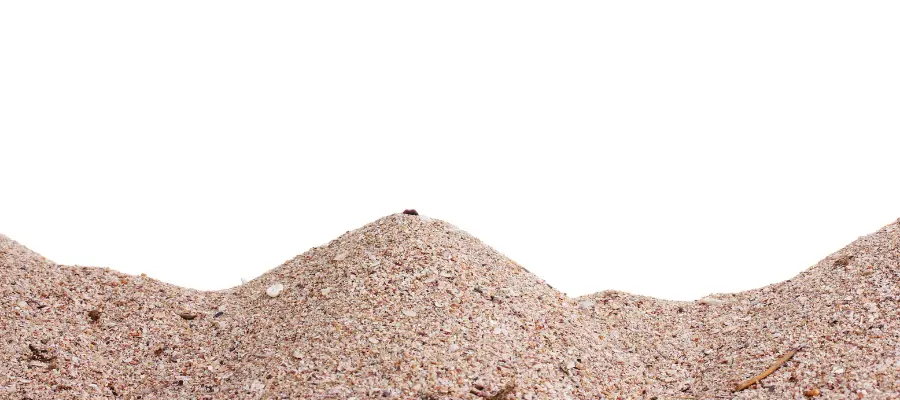
Best soil for building foundation

Rock soil or sand soil is formed from the decomposition of rocks such as granite, quartz, and limestone. It cannot retain water. This is the best soil for building foundations, as it won’t hold the minimum risk of putting a building under stress.

  • Fine Sand: Fine sand has tiny particles. They measure 0.075 to 0.425 millimeters. It feels silky when you rub it between your fingers. 
  • Medium Sand: Medium sand is different. Its particles range from 0.425 to 2 millimeters. It has a noticeably grainy texture.
  • Coarse Sand: The largest particles are in coarse sand. It ranges from 2 to 4.75 millimeters. They make the soil feel rough and chunky. When you try to mold wet or dry sandy soil, the larger particles resist. They cause the soil to crumble and fall apart.

Advantages of sand

  • This material excels in construction projects because it effortlessly handles heavy loads. Its drainage capabilities are excellent. 
  • It is completely free of organic and impure substances.
  • Sand, particularly coarse sand, provides a stable foundation that can support substantial loads. Its granular structure helps distribute weight evenly, reducing the risk of structural failure.
  • Sand compacts well and has low compressibility. This minimizes the risk of sinking or shifting over time. 
  • Sand is an insulator by nature, helping to regulate temperature by reducing heat transfer.

Stress in a building can cause structural and non-structural fissures to form, potentially leading to the building’s collapse. Hence, for sandy soil, sand and gravel can be compacted with other high-quality soil types, such as loam soil, to improve stability. Deep foundations like screw piles or helical pliers are good long-term foundation techniques for this soil type. It keeps the sand from washing away while also holding the foundation solid.

7. Gravel Soil

Rocky or gravelly soil is full of small, irregular rocks and stones. Imagine walking by a river or in the mountains. The ground is rough and uneven. This soil is rougher than sand but smoother than stones. The rocks and gravel are tough to dig and plant in. Mountains and eroded areas expose gravel soil. 

Water relentlessly breaks down rocks into small pieces. This soil’s nutrient scarcity makes it a challenging environment for plant growth. However, some tough plants have adapted to thrive in these harsh conditions. 

Advantages of Gravel Soil

Gravel soil has many benefits in construction and landscaping. It is a top choice for builders, architects, and landscape designers. One of gravel soil’s significant benefits is excellent drainage. Gravel lets water pass through it quickly. This stops waterlogging, which can harm structures or cause erosion.

Some other advantage are:

  • It’s high load-bearing capacity. It support substantial loads, making it ideal for constructing roads, driveways, and building foundations. 
  • It is known for reduced sinking risk especially beneficial for heavy structures and high-traffic areas.
  • Gravel helps prevent soil erosion by allowing water to drain through while holding soil particles in place. 
  • This makes it best choice for landscaping, retaining walls, and embankments.
  • It is a cost-effective option for various construction projects as only low maintenance are required to add.

Conclusion

For your home building’s stability and longevity, you must choose good soil for construction. The soil should get soil testing to determine the specific soil properties and to design the foundation based on those characteristics. For the integrity of the structure, you should conduct site preparation, soil compaction and drainage measures. By considering the soil characteristics and selecting the appropriate type of foundation, you can mitigate potential risks to your home building.

If you are also looking for long-lasting and durable home construction, Brick & Bolt is here. As a leading construction company Brick & Bolt provides a wide range of expertise to your project. They can also assist you in selecting the right type of foundation according to your soil type along with the proper construction materials and house floor plans. In addition, you can check your building cost estimation by using our exclusive building cost estimator tool. 

Understanding Property Deeds: A Comprehensive Guide

0
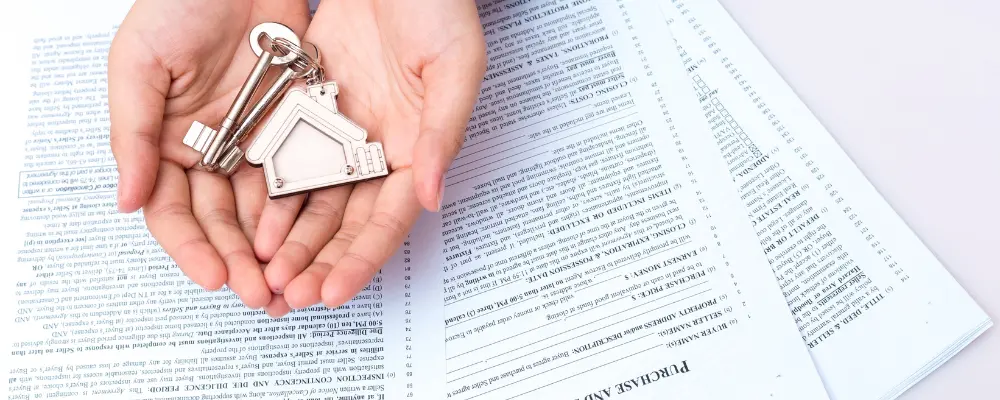
Property deed

When buying or selling a house, you frequently hear the term “property deed.” However, many people may find it difficult to completely understand the meaning of this term. Property deeds are commonly used for all sorts of real estate. 

In today’s Brick & Bolt blog, you will learn about property deeds, their key elements, the transfer process, and the importance of proper documentation. 

What is a Property Deed? 

A property deed is a document that transfers legal ownership of real property, such as land parcels and construction, from a seller to a buyer. The seller is listed as the grantor in the deed, and the new owner is listed as the grantee. Along with the names, information such as the sale price or if the property was gifted is given.

For those involved in Indian real estate transactions, understanding escrow transactions is also essential.

Key Elements of a Property Deed

Title deeds

A property deed document is typically one or two pages long, with the contents based on the type of deed, property type, and location. The following are the key elements of a property deed document:

  • Property Description: This includes the property boundaries and any other essential facts concerning the property type, such as neighbouring roads, utilities, or the name of the subdivision
  • Buyer and Seller Information: This includes the names and addresses of the parties purchasing and selling the property.
  • Seller’s Signature: To make the document official, the seller or person transferring the property must sign it with their full name. Some deeds demand signatures from both the buyer and seller.
  • Granting Clause: The clause that transfers the title of the property and specifies the buyer’s rights.
  • Consideration Clause: The provision that states how much money the seller received for the sale of the house. 

Types of Property Deeds

There are numerous types of property deeds. The following are the major types of property deeds.

  • Warranty Deed
  • Bargain and Sale Deed
  • Quitclaim Deed
  • Special Purpose Deeds

Warranty Deed

A warranty deed is the type of deed used when obtaining a mortgage, and it offers more protection to the buyer than other deeds. Warranty deeds come in two types:

General Warranty Deed: It provides the best protection for the buyer by ensuring that the seller has the legal right to transfer the property and that there are no liens, debts, or encumbrances.

Special Warranty Deed: It provides fewer safeguards. Although the deed ensures that there were no liens or encumbrances on the property while the seller possessed it, it does not guarantee that these encumbrances did not exist prior to the seller’s ownership. The most common use of this sort of deed is to transfer an estate or trust.

Bargain and Sale Deed

A bargain and sale deed simply declares the seller’s title to the property and does not protect the buyer against liens or obligations. This sort of deed is most common in tax sales and foreclosures, where the property’s history may be unknown.

Quitclaim Deed

A quitclaim deed occurs when the seller “quits” any claims to the property. The deed transmits any ownership interest the seller may have in the property, but it does not guarantee that such ownership exists.

Special Purpose Deeds

Special purpose deeds are commonly used in court for specific conditions. The most important types of special purpose deeds are:

Administrator’s Deed: When a person passes away without a will, the administrator deed will be in use. A court will appoint an administrator to handle the decedent’s assets, and an administrator’s deed document can transfer real property title to the grantee.

Executor’s Deed: This is used when a person passes away with a will. The estate’s executor liquidates the decedent’s assets, and an executor’s deed may be used to transfer title of real property to the grantee.

The Sheriff’s Deed: It is delivered to the successful bidder at an execution sale to fulfil a judgment against the property owner. The grantee acquires the judgment debtor’s title.

Tax Deed: It is created when a property is sold due to outstanding taxes.

Gift Deed: It transfers ownership of real property for no or minimal consideration. In some places, the gift deed must be documented within two years, or it is void.

The Importance of Proper Documentation for Property Deeds

House deeds

Proper documentation, particularly about property deeds, is vital for various reasons:

Legal Protection: A well-prepared and properly conducted deed protects both the buyer and the seller by clearly defining their respective rights and responsibilities.

Title Clarity: Recording the deed document guarantees that the chain of title is clear, which reduces the chances of future ownership disputes.

Financing and Insurance: Lenders often require a clear title before providing financing, and title insurance policies usually count on the facts recorded in the deed.

Tax Implications: Property deeds, such as land registry deeds, might have financial consequences, such as transfer taxes or property tax assessments, so proper documentation is essential for effective taxation.

Conclusion 

Proper knowledge of property deeds is very important for anyone who belongs to real estate transactions. Either for buying or selling a property, it is a must and should. Proper documentation of property deeds is critical for ensuring legal protection and title clarity and facilitating financing and insurance. Property deeds are essential for managing the tax-related procedures associated with property transactions. Buyers and sellers can more easily handle the convolutions of real estate transactions by getting to know the details and importance of property deeds. This understanding helps proceed with the transfer of property ownership securely without any issues. Additionally, it’s crucial to draft contracts related to construction projects carefully to avoid common mistakes.

Exploring the World of Tiles: A Comprehensive Guide to Different Types of Tiles

0
Tiles for home construction

Tiles are an essential component of architecture and interior design because they make places more useful, long-lasting, and attractive. There are different types of tiles to make your place look elegant and sleek. In this blog, Brick & Bolt takes you on a journey through the definition of tiles, examining the different types of tiles, their features, and the pros and cons of tiles.

What are Tiles?

Tiles are thin slabs of stone or ceramic used to cover floors, walls, roofs, and other surfaces, like tabletops. They are made of many different materials and come in many different sizes, forms, and finishes to meet people’s preferences and requirements.

Importance of Tiles in Building Construction

Tiles are an important part of making a place look better and work better. In addition to bringing style and personality to the space, home tiles protect surfaces from damage like scratches, water, and stains. The right tiles can change the look and feel of any space, whether it’s a residential, a company, or an industrial site.

Types of Tiles for Homes

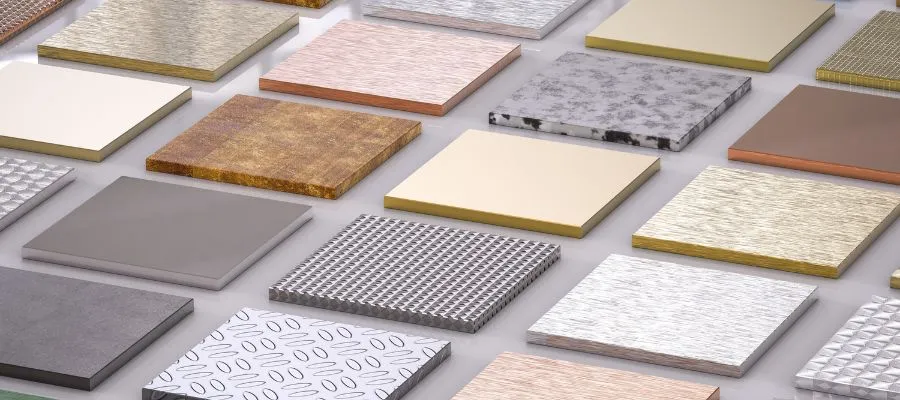
Different types of Tiles image

There are different varieties of tiles available on the market, and their qualities might vary depending on the materials and methods they use. Choosing the best tiles for your home depends on a number of things, such as the area where they will be used, your personal preference, your budget, and your way of life. Here are some common types of tiles and the areas of your house where they would look best:

1. Ceramic Tiles

2. Porcelain Tiles

3. Marble Tiles

4. Granite Tiles

5. Travertine Tiles

6. Terrazzo Tiles

7. Glass Tiles

8. Mosaic Tiles

9. Vinyl Tiles

10. Cement Tiles

11. Quarry Tiles

Let’s explore all the types of tiles in detail-

1. Ceramic Tiles:

Ceramic tiles are made from natural materials like clay, sand and other minerals. Ceramic tiles are available in many different shapes, sizes, and colours. They are usually very strong. They can be used in kitchens and entryways because they are easy to clean. They come in many styles and colours, so they can match any room’s decor. One of the main advantages of ceramic tiles is that they are durable. Also, ceramic tiles are lighter than porcelain tiles.

2. Porcelain Tiles:

Porcelain tiles are made from a refined clay that includes kaolin along with other natural materials like feldspar, silica, and mineral oxides. The smooth, glazed surface of porcelain tiles makes it easy to clean and maintain because dirt and spots don’t stick to them. Also, because they are heated to a very high temperature, these tiles last a very long time. They are not good for wet places like bathrooms because they can be very slippery when they get wet. These tiles are great for restaurants, parks, balcony decks, and other places. Among other types of tiles, porcelain tiles make a very unique pattern.

3. Marble Tiles

Marble tiles are made from natural stone taken from rocks all over the world. They have unique patterning and designs that make any room look more sophisticated. Marble isn’t as hard as some other types of stone, but it can be polished and used to add a touch of luxury to bathrooms, kitchens, and other places inside the home.

4. Granite Tiles

Granite tiles are made from granite, which is another type of natural stone.   Granite is made when molten lava deep in the Earth’s crust turns into crystals. People like granite tiles because they are durable and don’t get damaged by heat, scratches, or moisture. Because they come in so many colours and patterns, from light speckles to bold patterns, granite tiles are often used for floors, kitchen countertops, and outdoor installations.

Granite flooring is considered as one of the best flooring options for your homes, although it might be expensive compared to ceramic tile flooring.

5. Travertine Tiles

Limestone, formed by mineral streams, is used to make travertine tiles. This gives the tiles a unique, rough surface. They come in a variety of earthy tones, from creamy white to rusty red, and also you can change the colour and patterns of them naturally. Most of people use travertine tiles on patios and pool decks because they make the area look natural and aesthetic.

6. Terrazzo Tiles

Terrazzo tiles are made from small pieces of marble, quartz, granite, or glass mixed with cementitious or epoxy binder. They come in many different colours, styles, and sizes so that you can make any pattern you like. This tile is simple to clean and can be used for floors, tables, and decorations in both residential and commercial spaces.

7. Glass Tiles

Glass tiles are made from recycled glass materials that give any room a sleek and modern look. There are a lot of different colours, sizes, and finishes for them, such as clear, frosted, and iridescent options. Water and stains don’t stick to glass tiles because they don’t have pores. They are often used as backsplashes and decorative elements in kitchens, bathrooms, and swimming pools.

8. Mosaic Tiles

Small pieces of glass, pottery, stone, or other materials are arranged in a pattern or design to make mosaic tiles. They can be used to make intricate works of artwork or decorative accents in homes, restaurants, and public places. You can buy mosaic tiles in sheets that are already put together or as separate pieces, so you can be as creative and unique as you want.

9. Vinyl Tiles

Vinyl tiles are synthetic tiles that are made from polyvinyl chloride (PVC) and other chemicals. These tiles come in a lot of different colours, shapes, and textures that make them look like stone or wood. Vinyl tiles are popular tiles in homes and commercial spaces because they last a long time, are affordable, and are easy to install.

10. Cement Tiles

Cement tiles are handmade from colours, sand, and cement. The intricate colours and patterns give floors and walls a charm. Cement tiles are good for the environment and last a long time, but they need to be covered so that water doesn’t stain or damage them. It can be used both indoors and outdoors.

11. Quarry Tiles

Quarry tiles are a type of unglazed tile usually made from rock or clay found in nature. They are made by extruding them and then heating them at high temperatures to make a dense, long-lasting tile that works well in places with a lot of foot traffic. People love the natural, earthy colours and rough structure of quarry tiles, which makes them a good choice for both indoor and outdoor use.

Advantages and Disadvantages of Tiles for Homes

Tiles come in a variety of styles and are highly advantageous because of their durability and ease of maintenance. However, they also have certain disadvantages, such as they can crack easily and occasionally require professional installation. Before choosing a tile, it is important to consider the benefits and disadvantages of each type of tile.

You can also read our blog post on choosing the best flooring options for your home to make your floor look elegant and appealing.

In conclusion, tiles are a useful way to improve the look and functionality of any area. There are many types of tiles, from ceramic to marble, to fit any style or budget. Knowing about the features, advantages, and disadvantages of each tile type will help you make a choice and achieve the ideal look for your home or commercial space. If you choose the right tiles, you can turn your room into an artwork that showcases your style and personality. If you are planning to purchase the tile, then definitely you will have a dream of constructing your own home. Then don’t worry, Brick & Bolt is here to help you, you can construct your home with the trusted construction company in Ghaziabad and calculate your house construction cost with our cost estimator and experience hassle-free construction with our experts.

Understanding Construction Mortgages: Everything You Need to Know

0
Construction Mortgage Image

Are you planning to build a home with a construction loan? But, getting a loan for the construction process can be hard and exciting as well. However, no need to worry, for the construction process, a construction mortgage is a type of loan that can be used to pay for constructing a new home. In this blog, Brick & Bolt will discuss construction mortgages, including how they work, their different types, who can get them, and their pros and cons.

What is a Construction Mortgage?

A construction mortgage, also called a construction loan, is a short-term loan used to pay for home construction or renovation.  Construction mortgages are meant to cover the costs involved in constructing a house, from the home foundation to the finishes.

What are the Key Takeaways of Construction Mortgage

  • Construction mortgage loans are short-term loans used to pay for labour, materials, and building permits while a new home is being built.
  • With these loans, the money is distributed in steps, matching the different stages of the building process to keep costs down.
  • There are different types of construction loans, such as construction-only loans, construction-to-permanent loans, owner-builder loans, and jumbo construction loans for high-cost properties.
  • Building a new home involves more risk than buying existing home, so construction mortgages can be harder to obtain and usually have higher interest rates than standard home mortgages.

To know the estimated cost of your construction, use our construction cost estimator and plan your budget accordingly.

Types of Construction Mortgage

Mortgage loan image

There are different types of loans are available. But two loans are the most commonly used loans. They are-

1. Stand-Alone Construction Loan:

This loan involves obtaining two distinct loans. The first loan can only be used for building your house and covers all of your house construction-related costs. Once the construction is done, you will get a different, traditional mortgage.

2. Construction-to-Permanent Loan: 

This loan gives you a single loan that pays for your home construction. When the construction is done, this loan becomes a permanent mortgage, and you move in. Basically, this method combines the construction loan and the permanent mortgage into a single process, so you don’t need two different loans.

How a Construction Mortgage Works?

A construction loan is a way for investors to build a new home. This short-term loan differs from traditional mortgages because it only covers costs during the construction process.

Once the loan is approved, lenders release the money in steps called drawdowns, which match up with different parts of the building project’s schedule. This staged funding ensures that only the necessary funds are spent, helping the budget stay on track. One important aspect of most construction loans is that you only have to pay the interest during the construction period, which lasts less than a year.

Many people choose construction-to-permanent loans because they make it easy to turn this short-term loan into a regular mortgage once the construction is completed. This loan type promotes stability by making switching to standard mortgage terms easy after construction is finished.

Getting this kind of financing takes a lot of planning. Making detailed plans, sticking to a realistic budget, and choosing an experienced lender are all very important.

Additionally, lenders usually need at least a 20% down payment because the loan carries more risk than a traditional mortgage. This risk can be reduced by carefully planning the job and ensuring it is finished on time.

What are the Qualifications to Get a Construction Loan?

Credit score imgae

To qualify for a construction loan, you’ll need to meet specific credit score, down payment, and employment history requirements. Keep reading to learn more about these details.

Credit Score Requirements

Investors usually need a credit score of at least 680 to get a construction loan. This number shows that you are creditworthy and financially stable, which is what the lender wants. A higher credit score can make it easier to get a loan and could even mean better terms and interest rates. It is very important to keep your credit score high and no delays in bill payments or taking on too much debt. One important thing you need to do to get the money you need for your job is to meet the minimum credit score requirements.

Down Payment Requirements

To get a construction loan, investors should have at least a 20% down payment ready. This means giving at least Rs.60,000 upfront for a project that costs Rs.300,000. This is a stricter requirement than what is usually needed for a traditional mortgage because construction loans carry more risk. A big down payment helps protect lenders in case the project runs into problems or is late. Before you apply, make sure you have enough money saved for the down payment and any other costs that come with it.

Employment History

Lenders carefully review your work experience to see how stable you are and how likely you are to be able to pay back the loan. Your chances of getting approved greatly increase with regular work experience. When someone is self-employed, they may need to show more proof of their income and work experience, like tax returns. Most lenders want you to have been working for at least two years to get a construction loan. So keep in mind that if your job or income changes while you are applying for the loan, then it could affect your ability to get the loan.

Advantages of Construction Mortgage

Here are some advantages of construction mortgage

  • Construction loans give you the flexibility to build your home the way you want.
  • There are some construction loans that can be turned into traditional mortgages once the house is built.
  • You only have to pay interest on the money you received, not the whole loan amount.
  • These loans can be used to pay for land, construction materials, permits, and contractor work.

Mortgage loan and home loan are two terms that are generally used in the area of real estate financing.

Disadvantages of Construction Mortgage

There are many advantages to a construction mortgage, but there are also some disadvantages.

  • For the most part, construction loan interest rates are higher than traditional mortgage rates.
  • A higher down payment, usually around 20%, is generally needed for these loans.
  • Delays in construction projects often occur, which can raise costs and cause problems with the lender.
  • Getting a construction loan can be harder because you need thorough plans and a realistic budget.

In conclusion, a unique way to get the money you need to build your dream home is through a building mortgage. Before you start, you should know how the construction journey works, what qualifications you need, and the pros and cons of your chosen field. It can be hard to understand construction financing, but you can build your dream home if you carefully think through your options and work with experts. Construct your dream home with the best construction company and make your dream come true.

L-Shaped House Vastu Tips: Harmonizing Your Unique Home Design

0
L-Shaped house vastu

The plot will become L-shaped if any corner of a plot is cut off or any part of the corner of a plot is extended. These L-shaped house vastu offer good fortune along with the opportunity to build something unique for your living space.

In today’s Brick & Bolt blog, you will learn the characteristics, Vastu tips, and Vastu remedies for L-shaped houses.

Understanding L-shaped House Vastu

L-shape plot vastu

According to Vastu Shastra, the land is the basis of energy upon which the quality of other energies that affect the structure built on it is based. The Vastu of a location is determined by its surroundings, wind, water bodies, soil type, and sunshine, and hence the quality of living in a house erected there. Hence, its also crucial to consider Vastu principles for plot selection for your home construction.

A house built in an L-shaped shape is called DwiShaala, which means two sides or facing two directions. L-shaped houses often have a right-angle layout. As per Vastu principles, extending the northeast corner of your house’s plot will help bring prosperity and happiness and offer a unique architectural design. These DwiShaala houses are more suited for their design flexibility, maximum natural light, and the creation of distinct zones within them.

Vastu for L-Shaped House Design

Kitchen Vastu for L-Shaped House

As per the L-shape plot vastu, the white theme is a very good option for the interior of the kitchen. The combination of milky white or light cream walls, a glass chimney, and white cabinetry in the kitchen can appear stunning, Especially, the milky white colour, which represents purity, calmness, and abundance, would be a good choice for your kitchen colour as per Vastu. Focus on Vastu tips for kitchen design, appliances, and remedies to create a harmonious cooking and dining experience.

Living Room Vastu for L-Shaped House

According to the L-shaped house Vastu, the living room should have sufficient light. So, adding large windows with transparent glass will be a better choice.

You can paint the walls with light golden or white colour paint. You can decorate your living room with a cosy and comfortable light golden sofa set. The multi-coloured striped floor mattress makes your room very bright. 

For a comprehensive understanding of Vastu colours, refer to our guide on Vastu Colours for Your Home.

Study Room Vastu for L-Shaped House

Make sure to provide the large glass doors or windows in the L-shaped study room. According to the L-shaped house Vastu, light grey will be a good paint colour that will enhance the impression of your study room. You can decorate the interior with furniture based on Vastu principles.

Bedroom Vastu for L-Shaped House 

As per L-shaped house plans Vastu, the best spot for the master bedroom is in the home’s southwest corner. The guest and children’s bedrooms should be on the northwest corner. According to Vastu, the east and northern walls of the bedroom should have required windows. The doors should also always open at a 90-degree angle.  

Advantages of an L-Shaped House Plan

L shaped house plans vastu

Following are some of the major advantages that L-shaped houses offer.

Wide Open Spaces

An L-shaped house presents an attractive, bright, and welcoming space with a breezy feel. 

Indoor-Outdoor Harmony

The L-shape layout seamlessly connects the indoors and outdoors, fostering a harmonious relationship with nature.

Endless Possibilities for Creativity

Unleash your creativity with an L-shape design that offers endless possibilities for customisation and development. Imagine adding personal touches such as hard landscaping, an infinity pool, a meditation or rock garden, or an outdoor kitchen/entertainment area.

Outstanding Aesthetics

Whether your home is on a vast property or in a subdivision with nearby neighbours, an L-shape plan allows you to take advantage of the outlooks along one side of your property.    

Vastu Remedies for L-Shaped Houses

The following are some of the vastu remedies for L-shaped houses.

  • Levelling the plot is critical to resolving all of the home issues. If the northeast corner is higher than the other sides, use that corner’s soil to balance the plot in the south and west directions. 
  • An irregularly shaped plot must be divided into two regular plots, each with its own compound walls. It would help if you construct the additional compound wall to protect from negativity from a road-facing plot.
  • You can grow trees and plants as per vastu, such as money plant, jade plants, and bamboo near the house entry to mitigate the negative impacts of the road that runs through the plot. 
  • Metals, rocks, or plants will also be employed to fix the space based on direction flaws, as Vastu experts recommend for an L-shaped home.
  • Expert advice suggests that you can correct your home’s Vastu dosha. Vastu pyramids can be placed on extended plots as a remedy. While a lead pyramid will help with the extension of the southwest direction, copper strips are ideal for the southeast direction.

Although constructing a new home allows you to integrate Vastu principles from the beginning, you can still maintain positive energy and balance in a rented space by utilising Vastu remedies for rented homes.

Conclusion

When L-shaped houses, also known as DwiShaala homes, are built according to the L-shaped house Vastu, they provide a distinctive architectural design with the potential for good fortune. Following these Vastu principles and treatments, you can change your L-shaped home into a harmonious and profitable environment. 

Consider visiting a professional, such as Brick & Bolt. A Vastu expert who provides personalised advice on guaranteeing your home adheres to these ancient Vastu principles, bringing calm, pleasure, and good fortune into your living environment.

Brick & Bolt is a leading construction company in Chennai. We can build your dream home that aligns with your requirements and Vastu principles, along with superior craftsmanship and 470+ quality checks. In addition, we provide an extensive collection of floor plans designs for free to help you find the perfect layout for your home.

Staircase Vastu for North-Facing House: Ensuring Prosperity and Harmony

0
Staircase for north-facing houses

Vastu Shastra, an ancient Indian science of design and architecture, tells us how to make our living spaces more peaceful by aligning architectural elements with natural forces. Following Vastu rules is very important for north north-facing house to ensure it is prosperous, healthy, and peaceful. The placement and building of stairs are an important part of Vastu Shastra. In this blog, Brick & Bolt explains staircase Vastu for north-facing houses and gives you tips on how to avoid common Vastu doshas (defects).

What is Staircase Vastu for a North-facing House?

Vastu Shastra for homes says that the north direction is always aligned with wealth and success. This is because planet Mercury and Kubera, the gods of wealth, rule in this direction. So, keeping the north direction’s purity and balance in a house facing north is very important. Since the staircase is a major structural feature, where it is placed can have a big effect on the Vastu of a house.

Importance of Staircase Vastu for a North-facing House

Staircase for houses

For a north-facing house Vastu, it’s important that the stairs are in the right place. It is Vastu who says the stairs shouldn’t be put in the north, northeast, or northwest corners of the house. There are also lots of Vastu remedies for north-west corners to promote happy, well-living. People believe these directions are lucky, so they should stay open and not have any heavy structures like stairs. The stairs should instead be put in the southwest, or western part of the house. This placement helps balance the flow of energy and keeps the residents’ financial security and growth from negative impact.

Tips to Avoid Staircase Vastu Doshas for North-facing House

Consider these tips to avoid Vastu doshas while constructing your staircase in a north-facing house:

  1. As we already said, the stairs should never be in the northern part of a north-facing house. The North is linked to wealth and success, and putting something heavy there, like stairs, can block the flow of good energy.
  2. The stairs should go up clockwise. People think that this will bring them good luck and positive energy. People believe that a staircase that goes counterclockwise is bad luck and can cause health and financial problems.
  3. Avoid placing things in the middle of the room. According to Vastu Shastra, the most holy part of the house is in the middle, which is called the Brahmasthan. If you construct a staircase in the middle, it can throw off the balance of energy and cause a number of issues.
  4. Make sure the stairs are well-lit and made of good materials. People believe that broken or poorly built staircases are unlucky and can bring bad energy into the home. It’s also important that the stairs are level and don’t creak.
  5. The number of steps in a Vastu staircase should be odd, like 9, 11, or 15. Odd numbers are believed to be lucky and bring positive energy to the home.
  6. Don’t store things under the stairs, especially big things or a lot of stuff. This area should be kept clean and ideally empty to keep the flow of energy free.
  7. According to staircase Vastu for north-facing houses, it is a bad luck to have an entrance or exit right under a staircase. This can cause problems and loss of money. The area under the stairs should ideally stay open and not have any way to get in or out.
  8. In the north-facing staircase vastu, you shouldn’t put toilets under or near stairs. This is thought to be very bad luck and can cause health problems and financial problems for the people who live there.
  9. For the internal staircase Vastu for the north-facing house, the stairs should be in the southwest, south, or west. To keep the energy flowing in the house, internal stairs should be built the same way as external ones.

In conclusion, it is important to follow the staircase Vastu for a north-facing house when building or constructing staircases. If you follow these Vastu rules, you can avoid common Vastu doshas. An important part of Vastu Shastra for a north-facing house is that the stairs must be constructed correctly so that the people who live there are healthy and happy.

You can make your living space balanced and healthy by following these Vastu tips for your staircase. Always remember that the north direction will bring you wealth and success. Constructing the stairs in the right place and following the Vastu rules will make your home look nice and make you feel good with positive energy and unity. If you want to construct any residential or commercial buildings with Vastu compliant contact the best leading construction company in Delhi. Calculate your construction cost with our cost estimator tool and budget accordingly for hassle-free construction.

Also read: Harnessing Productivity: Vastu for Office Spaces.