Home Blog Page 90

Staircase Vastu For East-Facing House

0
Staircase Vastu For East-Facing House

Even if technology has developed so much, the one thing most of us will never compromise regarding our house is Vastu. Houses in India are built per the Vastu Shastra to ward off evil and bring wealth and prosperity. And if you are reading this article, you also must believe in it. 

If you are building an east-facing house and need Vastu details for building a staircase, you have come to the right place. In this article, we will discuss all about building a staircase in an east-facing house, including its direction, number of steps, color, etc.

Ideal Staircase Position As Per Vastu
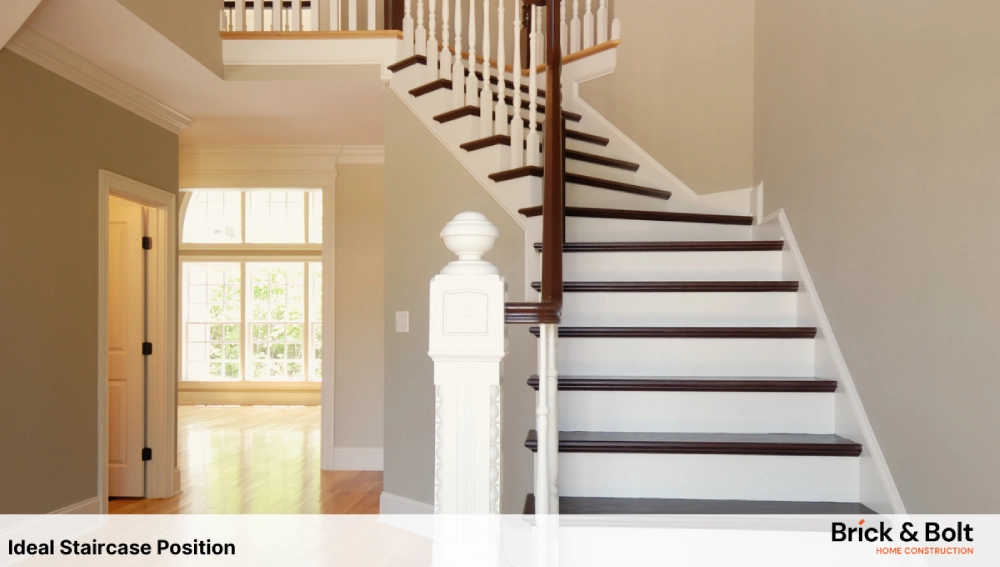
Ideal Staircase Position

When you are planning to build a two—or three-story house, you will definitely need a staircase built inside. The position of the staircase is very crucial as any mispositioning can cause negative effects on the health of the family members. 

Now, let’s look at the do’s and don’ts of positioning your staircase in your east-facing home. 

Do’s

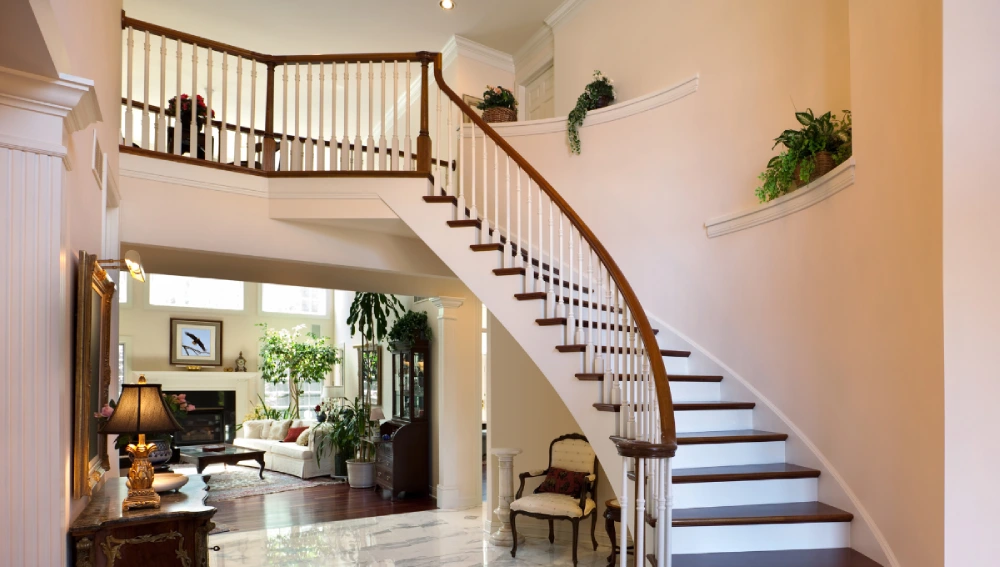
  • Build the staircase in the southwest (the most preferable), west, or south corner of your house. 
  • The stairs should be built in a clockwise direction as it is believed to bring prosperity and auspiciousness.

Don’ts

  • Do not build the staircase in the middle of your house. It is believed to cause complications during pregnancy. 
  • Do not build the stairs in the northeast corner, as it brings direct sunlight into the house. 
  • Do not build the stairs in an anti-clockwise direction, as it is believed to impact your business growth and career. 
  • Avoid building a spiral staircase, as it can bring evil energy and affect the mental health of your family. 

Number Of Steps For East-Facing Houses

For an east-facing house, it is considered ideal to always have an odd number of steps (Eg., 17, 19, 21, etc.). This is based on the below theory. 

Most of the time, when people ascend the stairs, they take the first step with their right leg. In Hindu culture, it is considered auspicious to finish on the same foot one began on, hence the odd number of stairs. 

It is also said that the number of steps should never end in zero, like 10, 20, etc. Some Vastu Sashtras also say that the number of steps should be divisible by three with a remainder of two. 

For example, take that you have a total of 17 steps. If you divide 17 by 3, you will get 5 with a remainder of 2. This is an ideal number of steps you can have for an east-facing home. 

Colors Of Staircase For East-Facing Houses
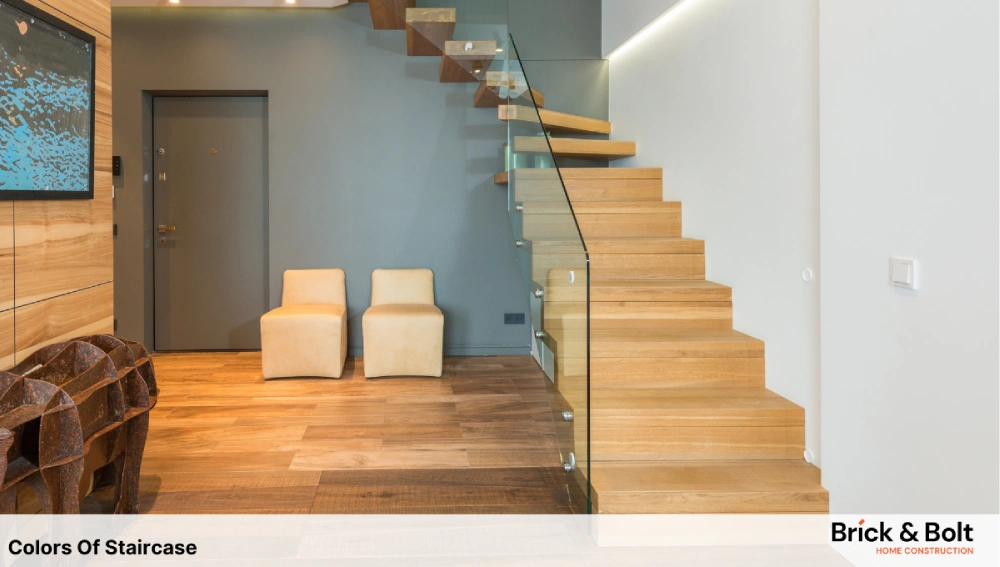
Colors Of Staircase

The color of your staircase is also important as it can create a visual impact on a person. However, don’t go for dark colors like red, black, or dark gray. These colors will attract negative energies and can harm your household. 

Instead, go for light colors like white, off-white, gray, mid-gray, beige, yellow, sky blue, light green, etc. If you wish to add more color to your stairs, you can add some wallpapers or hangings if you like.

Space Beneath Staircase In East-Facing Houses

There will naturally be some space beneath the stairs after building it and you might wish to do something with that place, like use it as a storeroom, bathroom, pooja room, etc. 

However, it is best to avoid doing anything with the space under your stairs. This place can accumulate negative energy and can impact anything you do there. 

Conclusion

The staircase in your east-facing house is as important as any other space in your house. You need to take care of how you build them and ensure you do it in a way that negative energies don’t enter your household. 

If you don’t understand or can’t do it on your own, you can hire a Vastu Shastra expert and build your house accordingly. 

FAQs

1. Which Direction Is Best For Staircase As Per Vastu?

In an east-facing house, the staircase should run from east to west or north to south. Placing the stairs in this direction is said to be beneficial to the dweller’s health and prosperity.

2. Where Should Stairs Be Placed In An East-Facing House?

When you build an east-facing house, ensure you place the staircase in the southwest (the most preferable), west, or south corner of your house. The stairs should also be built in a clockwise direction as it is believed to bring prosperity and auspiciousness.

3. What Is The Vastu Shastra For East-Facing House?

Here is the general: idea of the Vastu Shastra for an east-facing house.

Stairs: Place them in the southwest, south, or west corner. Avoid the northeast corner.
Living room: Northeast is preferred.
Pooja room: Northeast is preferred.
Kitchen: Northwest or southeast is preferred.

4. At Which Angle Should Stairs Be Installed?

There is no specific angle at which the stairs should be installed in Vastu Shastra. However, it is recommended to build them in a clockwise direction running from north to south or east to west.
Modern PVC Wall Panel Designs for Bedroom

0
Modern PVC Wall Panel Designs for Bedroom

Seeking modern ways to enhance the elegance of your bedroom? Then, here you have the most aesthetic options suggested that make your place visually appealing.

Among all decorative ideas, PVC wall design has gained huge popularity in bedroom makeovers. It provides seamless transformation, style, and a touch of sophistication. With a wide array of modern design options to choose from, many homeowners prefer PVC wall design for bedrooms.

In this article, you are going to explore the top-notch PVC or polyvinyl chloride panels that add a vibrant feel to your bedroom.

Top 10 Modern PVC Wall Panel Designs for Bedrooms

1. Sleek Vertical Panels

PVC sheets are incorporated between vertical grids, look lightweight and provide sheet strength. Those vertical grids are also made up of PVC and contain interlocking edges, which prevent water from passing through the joints. 

This design provides a smooth and glossy finish to the bedroom whereas the joints in between the grids blend with the tracks well. Choosing patterns including grooves gives a sleek look to the wall.

2. Rustic Wood Texture

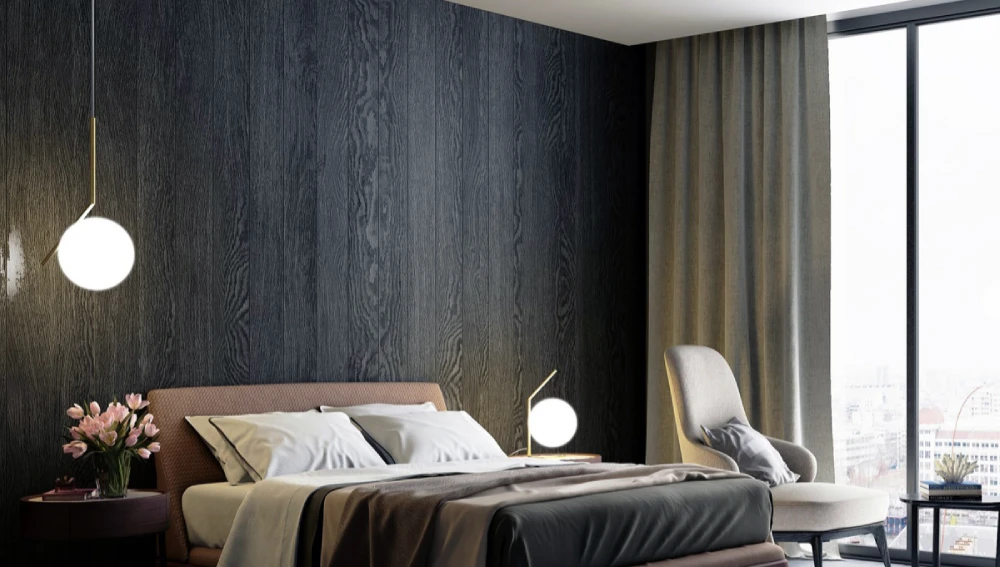
If you are looking to add a warm and luxurious touch to your bedroom, rustic wooden textures are the best option to go with. These elegant wooden textures are achieved through printing and later give hot foil treatment to the surface. Additionally, it is innovative with a 4-inch groove design that transforms the wall with a homogeneous wooden plank look.

3. Quirky 3D Wall Panels

3D Wall panels

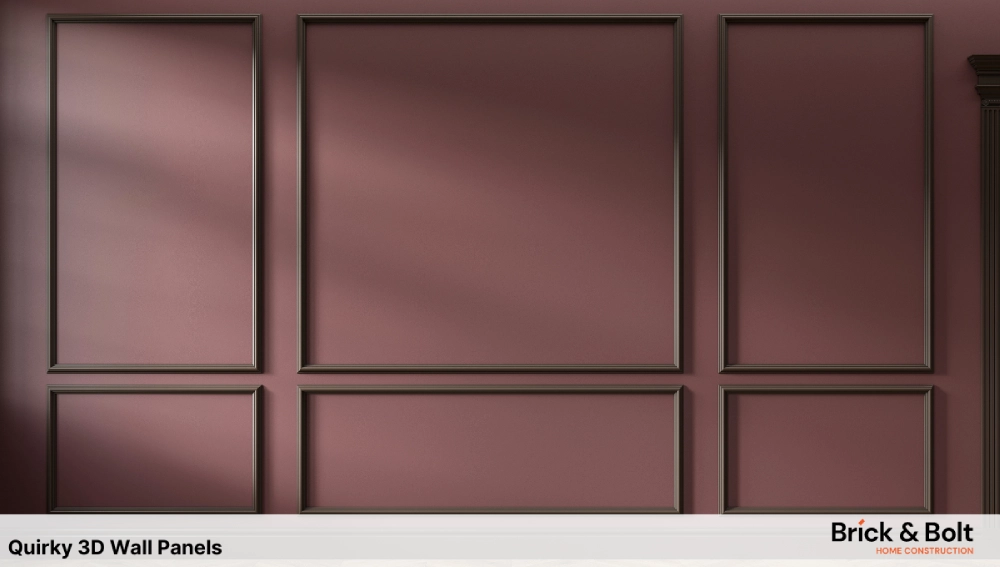
Quirky 3D wall designs are the ultimate alternative for your bedroom. If you are bored with usual or flat wall panels, then this will be your most wanted décor. Unlike regular designs, it gives a pleasant new experience to your visual. You can combine Quirky 3D wall design with more moulding design for high visual decors

4. Panels with Integrated LED Lights

LED lights not only add elegance to your ceilings but also to your walls. Surprisingly, the PVC wall panels on the ceiling are integrated with LED lights to draw the next level of attention. You can strategically arrange them based on your bedroom infrastructure.

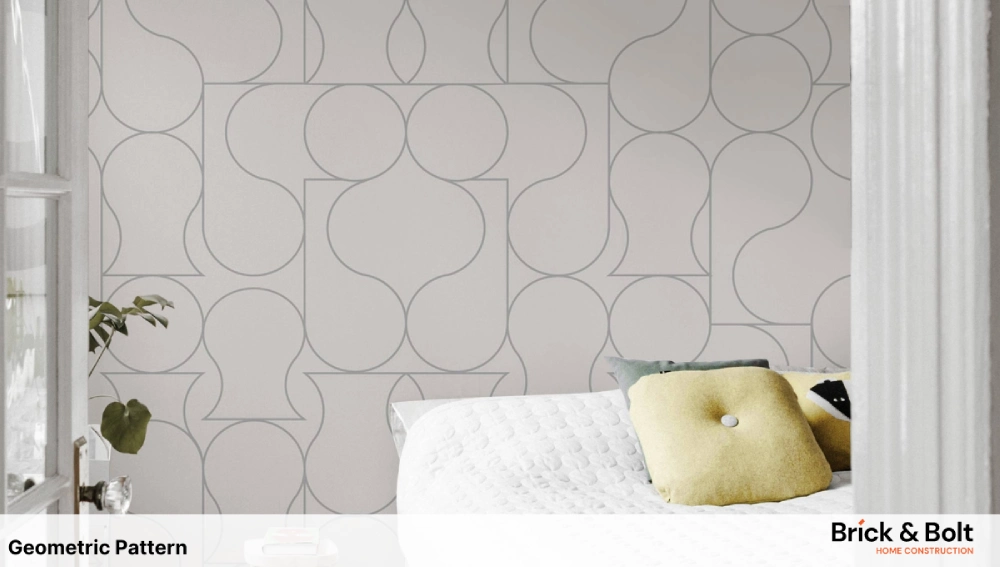
5. Geometric Pattern Panels

Geometric Pattern

Acquire a trendy and artistic feel with geometric pattern PVC wall panels. These designs provide bold shapes and patterns to your bedroom, seem extremely creative and wow look in your living space. If you would like to have something nostalgic and up-to-the-trend, this pattern is one among them.

6. Board and Batten Design

Engraving vertical stripes on the flat surface delivers a warm and rustic atmosphere to your living space. It gives a neat and modern look and features energetic characteristics. This can be your perfect design that elevates your bedroom style elegantly.

7. Textured Panels

Textured panels are the latest trend in PVC wall designs that can add depth to the space and create visual interest. Due to their lightweight, the installation is exceptionally easy. Based on the size and shape of your living space, you can select the thickness of the texture.

8. Minimalistic Wallpaper Design

Looking to conceal all imperfections in your bedroom? Then, using a minimalistic wallpaper design would be a great choice. The market is expanded with bold, vivid patterns to subdued designs in multiple shades. So, choosing a well-suited theme assists in obtaining a drastic changeover in your living space.

9. Color Blocking

Add a cool and refreshing look to your bedroom with a color block wall. Attractive color combos do wonders in your area with a soothing feel. Without any extra décor ideas, choosing the right color panels will make your space striking. Consider your available space and fill the space with bold or neutral shades that you love the most.

10. Metallic Panels

Elevate your bedroom elegance with luxury and modern metallic panels. It reflects light and improves overall décor. They come with many subtle shades that act as the best alternative to transform your dull area into desired aesthetics.

Conclusion

PVC wall panels in your bedroom remain clean and hygienic. They are safe, affordable, lightweight, and user-friendly and act as a versatile solution to décor your interior. Embrace the comfort and modern functionality of PVC wall panels to create a costly ambiance. With a wide collection of panel designs, you can avail the most suitable one apt for your bedroom.

FAQS

Is PVC good for bedroom walls?

Yes, PVC (polyvinyl chloride) is a good option for bedroom walls due to its durability, water resistance, and ease of maintenance. It is also relatively easy to clean and can be installed in various styles and colors. However, it may not provide the same aesthetic appeal as traditional wall finishes like paint or wallpaper.

Can PVC board be used for walls?

Yes, PVC boards can be used for walls. They are durable, water-resistant, and easy to clean, making them suitable for areas prone to moisture or high traffic. PVC boards also offer a range of colors and finishes and are relatively easy to install. However, they may not have the same aesthetic appeal or insulation properties as other wall materials.

Cancellation of Illegal Registration: Protect Your Property

0
Cancellation of Illegal Registration

Property registration is a legal procedure for acquiring ownership of the property. Once it is officially enrolled, the owner can discover various protections and rights under the law.

However, if the situation is not aligned with estimated regulations, the registration of a property can be cancelled. It may be due to various reasons such as an error in registration, violation of property laws and regulations, or fraud. Similar to a registration process, the cancellation also includes various procedures and formalities.

To prohibit illegal registration, the government has derived strict guidelines for any property registration.

Grounds for Cancellation of Illegal Registration

Both the seller and buyers have the right to cancel the purchase contract if they have valid reasons. A few common reasons are listed here:

Official Court Order

If a court of law announces an order to cancel the property registration, it will be cancelled legally. This is possible only when legal proof is submitted.

Fraud Activities Detected

Property registration can be cancelled if any fraudulent activities take place like submission of false documents, fake proofs, or misrepresentation of facts. Along with that, the buyer, seller, or party can cancel the registration with valid reasons under this ground.

Non-compliance with Legal Requirements

If a property registration process is identified as a violation of any legal regulations like nonpayment of stamp duty or registration fee, then it may be cancelled.

Mistakes Found

The party has the right to cancel the property registration if any mistakes or errors happen in the regulations like incorrect data being recorded in the document.

Illegal Occupation

If a specific property is illegally occupied or transferred without the consent of the legal owner, then a buyer has the right to cancel the registration.

Who Can Initiate Cancellation

Who Can Initiate Cancellation

Generally, the cancellation of property registration happens when the procedures are not aligned with the regulations. However, here are the lists of entities or individuals who can cancel the registration:

Property Owner: The property owner can cancel the registration under some significant circumstances like mutual agreement in property transactions or in case of fraudulent activities.

Court: A court of law can initiate the cancellation if legal grounds find such as forgery, fraud or disputes over ownership.

Registrar: The official body has legal rights to cancel the property registration when issues occur like errors in the registration process, illegal registration, legal disputes, or detection of fraud.

Government Authorities: In some cases, government authorities come forward to cancel the registration for certain reasons, such as eminent domain, unpaid taxes, or non-compliance with zoning laws.

Cancellation Process

The cancellation of a property registration involves several steps, and the outline is mentioned below:

Gathering Evidence

Submission of proof or evidence is a crucial step in the property cancellation process. Organize the relevant documents such as purchase agreements, original title deeds, or registration documents, including expert’s opinion, legal notices, and witness statements.

Notice to Parties Involved

Providing a notice to all parties who are involved in this registration process is the next vital step. It transparently informs them about the cancellation request and allows them to give their opinion. This step is essential to ensure that no one has an objection to this process before proceeding further.

Filing a Suit

With the required evidence gathered, legal action will be taken to cancel the property registration (i.e., filing a suit). The process takes place through the court system. They thoroughly review the case and inform parties to attend the hearing.

Court Proceedings

Court proceedings involve a judicial process once the cancellation of property registration is decided. Following that, both parties need to submit their evidence and significant points. The court validates all those proofs in different aspects to come up with the right judgement.

Court Order

A court decision is the final step. After a thorough verification, the court may approve or deny the request for property registration cancellation. If approved, parties can approach the relevant registry office to enable the registration process further.

Conclusion

In summary, the cancellation of property registration may happen due to various reasons and can be handled through legal regulations. It is important to understand the associated procedures and ask advice from legal experts to avoid complications in each step. The cancellation is enabled due to any reason; both parties should obey the court of law.

FAQs

1) How can a registered document be cancelled?

Collect valid evidence such as expert reports, documents, and witness statements in accordance with the reason for cancellation. By submitting those proofs in court, you can cancel the property registration process. However, the court will approve the request only after verifying the records.

2) Can registration be cancelled or surrendered?

Yes, the cancellation of a property registration typically involves a legal regulation. When the registered owner or an affected party seeks assistance to cancel the registration due to reasons such as legal disputes, fraud, mistakes or errors. This process usually involves the submission of valid evidence. The court formally examines the documents and comes up with the right decision.

3) What is the time limit to cancel a sale deed?

A sale deed can be cancelled within three years from the date of registration of the deed. After three years, the legality of the sale deed can be revoked only on strong grounds for cancellation like forgery or fraud.

Kitchen Partition Designs: Maximize Space and Style

0
Kitchen Partition Designs

The layout and walls are key in making a kitchen look good and work well. Proper use of partition can create the illusion of division between different zones of the kitchen. It can also add storage and style. In this blog, we share 8 best kitchen partition design ideas to give you inspiration on how to create efficient and attractive cooking area.

8 Best Kitchen Partition Designs

1. Breakfast Bar Partition

A breakfast bar partition is a common feature for kitchens since it effectively separates the working area from the eating zone. This partition may be made of wood, glass, or metal, and may be arranged in a way that is consistent with the decor of the kitchen area. A breakfast bar partition is pretty. But, it also adds extra work space and shelves. You can use them for utensils and cookbooks.

2. Glass Wall Partition

There is nothing quite like glass wall partitions when it comes to achieving an open and airy kitchen theme. They enable the admission of natural light and give a clear vision of the surrounding environment. Glass partitions may be of tempered glasses which are strong and can be cleaned easily. It is particularly suitable where space is an issue because it makes the room appear larger than it actually is.

3. Plant Wall Partition

Plant wall partition is an effective and sustainable design concept, especially in the kitchen area. Not only does it give the room a more natural feel, but it can also aerate the area. This design choice is perfect for kitchens with limited storage. One can add design interest without losing storage space.

4. Open Shelving Partition

Open Shelving Partition

Open shelf partitioning is common in kitchen designs since it allows space for storing and displaying items such as books, utensils, and other accessories. This design choice is particularly useful with kitchens that have very little storage space because it makes the room look larger while offering space.

5. Sliding Glass Door Partition

One of the best ways to get a sense of division in the kitchen is through the use of sliding glass door partitions. It offers a good view of the surrounding environment and can be constructed to fit the general look of the kitchen. This design choice is especially suitable for small kitchens because it visually expands the space of the room.

6. Room Divider with Shelving

A room divider with shelving is a practical and effective idea for the kitchen space. This adds more cabinet space, shelves for cookbooks, utensils, and even decorative purposes. This design choice is particularly effective, especially in kitchens with limited space to store kitchen accessories, as it makes the room look larger and provides storage space.

7. Hanging Fabric Panels

Kitchens can be effectively decorated and styled using fabric panels hung in different designs. They make the space more vibrant and richer and can be used to define zones within the kitchen area easily. For this type of design, it is perfect for small kitchens that want to add character without losing possible storage space.

8. French Doors Partition

Aluminum frame doors are used in French door partitions, which are ideal for kitchens. It offers an unobstructed vision of the environment and can be constructed to harmonize with the general kitchen decor. This design choice turns out to be particularly beneficial in small kitchens, as it contributes to the optical illusion of space.

Conclusion

So, it is vital to consider the many design options for the kitchen walls. Find the best solutions for the project’s needs in function and looks. From this, it will be clear that the choice of kitchen partition depends on your needs and what you find best for you, as it also adds beauty to your home.

FAQs

1) Are glass partitions suitable for kitchens?

Glass walls will make a suitable partition design for kitchens as they give a transparent and stylish look. They can be easily cleaned and will stand strong when robust materials are used.

2) What is the cheapest material you can use in kitchen partition walls?

MDF (medium-density fiberboard) is a highly affordable material you can use in partitioning kitchen walls. The price of the material starts from Rs.100 to Rs. 150 per sq ft.

3) What material does French door partition use?

Wooden and aluminum are generally employed in French door partition designs.

Home Construction Loan Interest Rates

0
Home Construction loan

Owning a home is a dream for many. Financing the home’s construction can be difficult at times, which is when the home construction loan comes in handy. Understanding home construction loans will help you make an informed decision. 

Home Construction Loans

Home construction loans are provided exclusively for building personal homes. Home construction loans cover the costs involved in building new buildings rather than for buying already-built houses.

This helps ensure that the funds will be used for their intended purpose and that you are not paying interest on money that you have not used.

How Does a Home Construction Loan Work?

Home construction loans are normally short-term loans that have a higher interest rate than normal mortgage loans. 

This loan gives funds at stages corresponding to the different construction completion stages. The process of getting home construction loans mainly involves the following steps:

  1. Pre-approval
  2. Budget and timeline development
  3. Finding a builder
  4. Closing the loans
  5. Making schedules
  6. Construction progress
  7. Getting funds
  8. Completion and occupancy

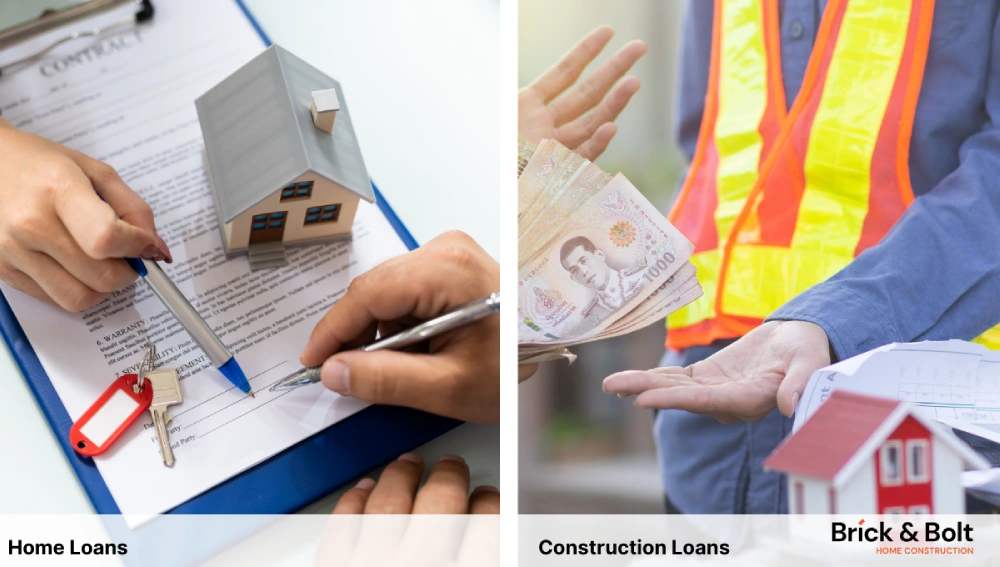
What are the differences between Home Loans and Construction Loans?

differences between Home Loans and Construction Loans

Home loans are given in one installment. Construction loans on the other hand are offered in installments based on the progress of construction.

You have to provide a detailed plan for construction loans and they have higher interest rates because of the high risk. In same case for home loan it’s not needed, Just you need to submit the required documents after proper valuation and legal check the amount will be sanctioned. The down payment for home construction may differ according to the lenders, while the down payment is higher for traditional home loans.

Home Construction Loan Interest Rates 2024

The interest rates for home construction loans may differ depending on various factors like credit score, amount of loan, and lender. It is important to check and compare the interest rates from different lenders to get the best deal.

Features of Home Construction Loans

Home construction loans may give various features that can benefit the borrowers. This includes, 

  • Long-term: The period for payment of a loan can be extended up to 30 years.
  • Tax benefits: Borrowers can claim deductions under sections 80C and 24B.
  • Loan amount: The loan financed can be up to 90% of the property value.
  • Transfer of balance: Borrowers can transfer their loans to another lender if they find lower interest rates. 

Home Construction Loan Eligibility Criteria

Lenders will assess your ability to repay the loan based on the factors below.

  • Credit score: a strong credit score (normally above 750) can increase your chances of qualifying for favorable interest rates.
  • Debt-to-income ratio: This helps compare your monthly debt obligations to your gross monthly income. A lower debt-to-income score is ideal for getting home construction loans.
  • History of Employment: Stable employment will assure lenders about your ability to repay.
  • Savings: A healthy savings account showcases your financial responsibility and can guarantee a home construction loan.
  • Land ownership: You must own the land on which your home is being built, and it must be without any problems.

Home Construction Loan – Documents Required

To complete the loan application, the lenders will normally request the following documents: 

  • Identity and address proof
  • Proof of Income
  • Bank statements
  • Assets documentation
  • Land ownership documents
  • construction plans and budgets.

Conclusion

Home construction loans can help you a long way in lessening your financial burden and help you achieve your dream of owning a home. Understand the eligibility criteria and gather the necessary documents to complete the loan application process smoothly. 

Also, look into the structure of the loan, interest rates, and the qualifying criteria before applying. 

Hope you build your dream home sooner!

FAQs

1) Which bank is best for a home construction loan?

The best bank for home loan construction will depend on the rates of interest, terms of the loan, and services offered. Due to their competitive rates, the top choices are HDFC Bank and Canara Bank.

2) Can I take a home loan for construction?

Yes, you can take a specialized home construction loan.

3) How much loan can I get for construction?

Normally, the loan amount is up to 9% of the property value, mainly depending on the income and repayment capacity.

4) Who is eligible for a house-building loan?

Indian citizens and NRIs between the ages of 18 and 65 are eligible if they have stable incomes and good credit scores.

Single Floor Front Elevation Design: Elevate Your Home

0
single floor front elevation design

A single-story home is compact, comfy, and a dream home of yours. Imagine highlighting and setting the tone of architectural elegance on your front floor. Craft your front elevation design according to your wish and enjoy your dream home. 

This blog contains a guide to eight famous designs for front elevation that are practical and inspirational. 

Best Single Floor Front Elevation Design

The best single-floor front elevation design includes,

  1. Modern Minimalist
  2. Warm Craftsman Charm 
  3. The Alluring Ranch-Style
  4. Rustic Elegance With Stone 
  5. Eye-Catching Brickwork 
  6. Playful Pops of Colour
  7. Sustainable Design with Wood
  8. Mid-Century Modern Marvel 

Each element is explained below:

Modern Minimalist

Natural light, clean lines, and geometric shapes bring in the features of modern yet simple. This style will bring expansive windows, flat roofs, and cool colors, namely grey, black, or white. Imagine having a sleeve wood panel with contrasting white stucco or a landscape garden with dramatic windows. Placing wooden accents or an essence of nature in the entry door will bring a warm touch. 

Warm Craftsman Charm

Craftsman bungalows bring nostalgic and timeless elegance to the house. This style is determined by low gabled roofs with wide eaves and natural elements like stone, wood, and beams. For a single-story building, the craftsman may incorporate a decorative and cozy front porch with beams and windows colored with vibrant colors above the entry of the door. Incorporate classic textures and decoratives in the entry doors. 

The Alluring Ranch-Style

A ranch style brings a calm and relaxed aesthetic to a sprawling single-story building. It is one of the popular choices and decorates a low and long profile. Creating wide windows, side bandings, and seamless front doors is top-notch. The ranch-style elevation in the front covers the porch across the facade and paves the way for a perfect entry. You can also add your personalized touch to it.

Rustic Elegance With Stone

Adding natural stones brings a touch of nature, classic charm, and timeless beauty to a single-story home. In the facade, stone is used predominantly and creates connection and solidity towards Mother Earth. Utilizing stones of different textures, palettes, and hues can bring in the elegance of slate. You can make a pinch of visual retreat by using contracting elements like wooden beams. 

Eye-Catching Brickwork

Eye catching brickwork

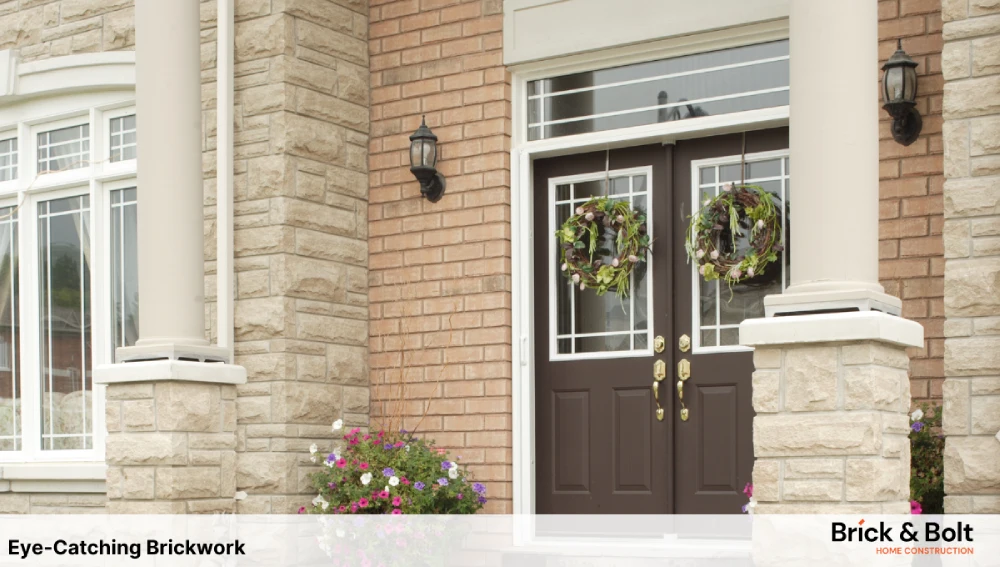
Brickworks are durable and versatile, adding rapid character to a single-story home. Bricks can be made into two forms: the traditional running bond and the modern stack bond. Bricks can be colorful, or to add elegance, opt for cool tones. Incorporate a contrasting color to the shutter or trim that makes the brickwork pop up. 

Playful Pops of Color

Be playful and colorful, and don’t hesitate to inject your personality into it. The colors can be used in windows, doors, and landscaping. Be sunshine by using yellow on your doors, or be bold by using red against a warm tone. Colors can be attractive if they are used right along with a good architectural structure and design.

Sustainable Design with Wood

Woods are durable, resilient, and reliable, and utilizing warm-colored woods with cool tones can create a vibrant impact. Recycled lumber and cedar can be used in place of modern and rustic aesthetics. Wood can be placed in sidings, slatted entryways, and exposed beams, adding value and depth to a single-story building. Focusing on purchasing woods that are suitable for the climate is important to ensure longevity and maintenance. 

Mid-Century Marvel

This style brings optimism and a chic look to your home. The single-story houses built in these styles bring in geometric shapes, clean lines, and stresses on outdoor living. Large glasses, an open floor, and a flat roof with dramatic overhanging welcome natural light and aid in the free flow of energy. You can add your touch by mixing wood, glass, and stone by creating a dynamic unit. Planters or bright-colored doors will enhance a playful touch. 

Conclusion

Single-story buildings are compact elements that are a part of your success story. There are several crucial elements to consider, including doors, windows, rooflines, and facades, that bring in beauty.

The harmony of the house and visuals will bring ambiance, serenity, and calmness into the house. Focus on selecting the products and designs that best suit single floor house design. Look for the classic eight-element designs and incorporate them with contrast to bring in vibrancy and good vibes. 

FAQs

1) Which design is the best for front elevation?

Large windows, dramatically angled roofs, and intelligent landscaping are simple designs to incorporate in front elevation.

2) What are the four types of elevation?

The four types of elevation include front elevation, back elevation, right elevation, and left elevation. 

Eco-Friendly House Construction: Sustainable Future Building

0
Eco-Friendly House Construction- featured image

In today’s eco-friendly culture, how people build their homes matters a lot. As the population grows, these structures foster efficient use of the earth’s resources. 

In this blog, we will cover the basics of green building, learn how to practice green home construction and review some questions about environmental construction.

What Is Eco-Friendly House Construction?

Eco-friendly house construction entails making houses that reduce harm to the environment. This happens during the design and construction phases and during their usage phase. This approach entails embracing sustainable use of materials, energy, and water and preventing wastage.

Key Principles of Eco-Friendly Construction

Sustainable Materials

Green construction materials must be renewable and recyclable and must not harm the environment. Some examples are bamboo, reclaimed wood, recycled steel, low-VOC paints, and coatings.

Energy Efficiency

Some aspects are proper insulation, quality windows, and energy-efficient appliances. When designed well, they can minimize a home’s energy use.

Water Conservation

There are ways to use less water in green homes. They include installing low-flow faucets and showerheads, harvesting rainwater, and using native plants in the lawns.

Waste Reduction

Aim to reduce inappropriate construction waste disposal by reusing materials and using pre-fabricated parts. This will reduce environmental impact.

How to Implement Green Home Construction?

Eco-Friendly House Construction

Define Your Green Goals

It helps to define your sustainability goals and the reasons for your green home project.

Consider Local Climate

When designing a home, ensure it uses natural light and air. Use them based on the region’s climate.

Choose a Sustainable Location

You can reduce environmental impacts and save resources by picking a site with fewer interferences to the ecosystem. It should also have room for biodiversity and be near infrastructure.

Passive Solar Design

Only a few mechanical systems are used for heating and cooling. Instead, use design strategies that let the building rely on solar heating and natural ventilation.

Energy-Efficient Design

Install eco-friendly features. For example, add new LED lights, efficient temperature controls, and solar panels. These changes will cut tariffs.

Prioritize Recycled and Reclaimed Materials

This way, one can minimize the need for new materials. This is especially true in construction. Use materials from old structures or made from recycled material.

Durable and Low-Maintenance Materials

Choose long-lasting materials to avoid issues like seepage & leakage. These materials do not need regular replacing or refurbishing. Choose long-lasting products to reduce the impact of maintenance waste on the environment.

Water-Efficient Fixtures

Encourage using water-efficient equipment, such as low-flow toilets, faucets, and showerheads. These devices save water while still using it efficiently.

Rainwater Harvesting

Use the water for laundry, washing vehicles, and watering gardens. Also, it is used to wash paths, walls, and open spaces. It is also for sanitation. This cuts the demand for municipal water.

Renewable Energy Sources

Install solar panels to get sunlight, use wind turbines to get wind energy, or go geothermal to access heat from deep in the earth. Do this to make renewable energy for your home.

Minimize Construction Waste

Schedule construction to make less waste. Ensure reuse, recycling, and donation to cut landfill waste.

Research Government Incentives

Find other environmental rewards. They can cut the cost of green construction and spur sustainable building.

Conclusion

Green homes are more than a fad. They are a way of life as innovative buildings become eco-friendly. You can make eco-friendly homes by using Eco- bricks and sustainable resources. Also, focus on efficient use of energy and water. They will also be healthy, comfortable, and cheap to maintain.

FAQs

1) Is green building eco-friendly?

Of course, green building practices involve using fewer resources and creating less waste. They also encourage sustainability. So, they are an eco-friendly way to build.

2) What is the most efficient type of house?

Passive solar homes use natural heating and ventilation, have an energy-efficient design, and are among the most efficient home types.

3) What is the most environmentally friendly house to build?

Building an eco-friendly house would use sustainable materials and efficient systems. It would also use water-saving fixtures and renewable energy, reducing its impact on the environment.

4) How to make a house eco-friendly?

An ecological house must be designed and built using sustainable materials. It must also use energy and water efficiently, handle waste well, and use renewable energy.

Building Plan Approval Minimum Square Feet

0
Building Plan Approval Minimum Square Feet (1)

The approval of building plans is a regulatory process and it makes sure that the construction of the buildings complies with the local zoning and follows the building codes. 

The minimum square feet is one of the essential criteria that must be met for the plan approval. Here is a brief guide that will help you understand the process regarding square feet that is essential for building plan approval.

Understanding Minimum Square Footage Requirements

Like some other countries, India does not have a national wide built-up area that is mandatory for the approval of building plans. The regulations for the minimum square feet are established by local authorities and municipalities like the Directorate of Town and Country Planning. 

These regulations are mainly for the maintenance of safety and provide guidelines by considering the specific needs and infrastructure of the specific region. 

For example, if there is a larger area, then it might be allowed for a smaller one-story structure, while the smaller area might need a multistory building to achieve your living space within the approved limitations for your land size. This is part of the building construction process guide.

Finding Minimum Square Footage Requirements

Where do you think you can find the requirements of minimum plot size? Here are some of the important resources to get you started. 

Municipality website or local planning department

Many municipalities have websites that can give information about the regulations for the building and bylaws. Search for the sections on Building Permissions, Town Planning Schemes, or Development Regulations. 

These sections can give an outline regarding the requirement of minimum square footage and other related guidelines.

Contacting your local planning department

You must not hesitate to contact your local planning department directly. It can be a phone call, email, or even an in-person visit that can help you connect with the appropriate personnel who can help you answer all your doubts and questions. 

Engineers and architects

An architect or engineer can be considered a valuable resource if you are working with them. They will be familiar with the codes of local buildings. They can also provide you with advice regarding the requirement of plot minimum square feet. They may help ensure your plan follows the regulations.

Factors Beyond Minimum Square Footage

Factors Beyond Minimum Square Footage

Even if your land meets the minimum size that has been mandated by your local authority, getting the approval for your plan involves more than just square feet. 

Here are some of the additional factors that might be considered, they are:

Minimum plot width or Frontage

There may be any minimum requirement of width or any frontage for your land. This will dictate the minimum street-facing side of your property. This also provides proper access and avoids creating excessively narrow spaces.

Requirements of road width

The width of the road can also influence the minimum requirement of plot size. Compared to the narrow roads, the wide roads may have different minimum feet size requirements. 

This regulation made by local authorities plays a significant role in ensuring the flow of traffic, access during emergencies, capacity of infrastructure, safety, and aesthetics.

Maximum height of the building

The regulations by local authorities may specify the maximum height of the buildings in your area. This can be influenced by factors like maintenance of consistent aesthetics of the neighborhood, ensuring structural safety, and also avoiding excessive shedding in the nearby properties.

Floor space index

It is an important concept in the regulations of buildings. This points to the ratio of the total build-up area of your structure to the total area of your plot. 

For instance, a floor space index of 2 allows you to construct a total building area in which all the building floors are 2 times the size of your plot. An understanding of the floor space index of your area is crucial for planning the size and the layout of your building.

Property lines setbacks

Setbacks mainly refer to the minimum distance between the building that needs to be maintained from the property lines of your plot. This helps in incurring proper ventilation, access to light, and fire safety for your structure and also for the neighborhood. There may be different setback needs for the front, back, and sides of your land. 

Conclusion

It is a hassle to get the approval for building plan, and minimum square footage of a building plan. However, if there is complete research, guidance from a professional, and a clear understanding of the local regulations, Then, you can build your project without any problem.

FAQs

1) How many square feet do you need to build a house on?

There are no specific minimum square feet requirements for building a house in India.  

2) What does FSI stand for?

FSI indicates Floor Space Index of a building plan. 

3) How small of a house can you build?

According to IRC, the smallest size for a house to be built is 120 square feet.

How Much Home Loan Can I Get on a 25000 Salary?

0
How-Much-Home-Loan-Can-I-Get-on-a-25000

Owning a home is a dream for many. Home loans help people with minimum incomes to make their home-ownership dream come true. 

It is important to know the eligibility and criteria to get a home loan if you are earning a monthly salary of 25k. Dig into the blog till the end to find your answers. 

How Much Home Loan Can I Get on a 25000 Salary?

If you are getting a salary of twenty-five thousand per month, you are eligible for a loan amount of Rs. 18.64 lakhs. The criteria include:

  • Having a CIBIL score greater than 650
  • Having more than three years of work experience
  • Age must be between eighteen and seventy years 

The actual amount varies depending on the individual’s eligibility. 

Aid of Home Loans

Home loans are tools that help one achieve homeownership. They help individuals purchase homes with small down payments. They are also liquid, have market stability, and contribute to economic growth. 

Estimating Loan Amount

The first step to acquiring a home loan is understanding the minimum amount you can borrow and the favorable conditions that allow you to access it effortlessly.

Scenario 1: Minimum Eligibility

The lender calculates your debt-to-income ratio (DTI) to understand affordability. It is the ratio calculated by comparing the gross annual income of an individual to the debt payment. Make sure the DTI is below 36%

The loan amount is conservative, and it is made sure that the buyer can manage to pay the loan amount with interest. Additionally, choosing a loan amount that requires a shorter period to complete the payment will increase the credibility and decrease the interest rates.

Scenario 2: Favorable Conditions

Having a consistent income, making a large amount of down payment, and having a good credit score can potentially increase your eligibility for fast loans. 

Remember, these are just estimates. Before finalizing your loan amount, visit a bank or utilize an online calculator to see how much loan you can obtain.

Factors to Consider That Are Affecting Loan Eligibility

Certain considerations have an impact on acquiring loan eligibility. These factors that need to be considered include:

Loan-to-Value Ratio (LTV)

The loan-to-value ratio is a financial measurement that is used by lenders to calculate the risk of giving money depending on a mortgage. The value of the property is compared to the amount of the appraised loan. To calculate the LTV, you can find by using:

LTV ratio = mortgage amount/appraised property value.

Having a lower LTV ratio is important as it denotes that the borrower has an upper hand in the equity compared to the lender, indicating a lesser risk in the loan. To get a lower interest rate, the LTV ratio should be below 80%.

Credit Score

Credit Score

Credit scores denote the numerical representation and should lie between 300 and 850. The credit score is calculated depending on the history of credit scores, loans, and other financial needs. 

Here is the credit score breakdown:

Excellent: A credit score at or above 800.

Good: A credit score that lies between 700 and 799.

Fair: The credit score should lie between 600 and 699. You are eligible to receive loans but with a higher interest.

Poor: Any credit score that is less than 500 is considered poor, and you may not be eligible for a loan.

Debt-to-Income Ratio (DTI)

DTI is a crucial factor that helps lenders determine your ability to pay debt. The gross monthly income to the debt monthly payments is calculated. 

Having a lower DTI indicates that the larger part of the income available is sufficient for your living expenses and loan payments. Additionally, lower DTI indicates lower interest rates and better terms on loans. 

Around 36% of DTI is considered favorable, and above 43% is considered least favorable.

Down Payment

A down payment is an amount paid upfront during the purchase of a house. The remaining amount, other than the down payment, is usually financed through a loan.

If the down payment is huge, then the amount you have to borrow as a loan will be drastically reduced. It helps to reduce interest costs, establishes financial strength, and builds equity.

As home ownership is considered, making a down payment within twenty percent is considered good.

Conclusion 

In wraps, owning a house is a dream to many. Irrespective of the salary, there are certain conditions that an individual should meet to make the process effortless and get a home loan easily. This includes having a lower DTI, a high credit score, larger down payments, and a stable employment history. 

FAQs

1) Can I buy a house with an annual income of Rs. 25,000?

Yes, you can buy a house with an annual income of 25,000 to 30,000 rs.

2) How much home loan can I afford with a Rs. 30,000 salary?

With a salary of 30,000, you can afford a house with a loan price between eighteen and thirty lakhs.

3) Can I afford a house if I make Rs. 35,000 a year?

Yes, you can afford a house with an annual income of 25,000 to 30,000.

4) Is 25k a low income?

Earning 25k makes you a top 10% earner in India, which is good news.

Is Insurance Compulsory For Home Loan

0
Is Insurance Compulsory For Home Loan

Owning a home is a major dream for many people. However, financing a home through loans has some considerations, including insurance. 

You might wonder if you require some kind of insurance to acquire a home loan. This article will delve deep into the topic and help you understand it fully. 

Home Loan Insurance and its Importance?

Home Loan Insurance or a Home Loan Protection Plan (HLPP) is a scheme offered by a financial institution that will take responsibility for repaying the borrower’s outstanding home loan amount in case the borrower is unable to do so under unforeseen circumstances. Thus, the financial institution takes on the role of an insurer for the home loan borrowed by the client.

Although not mandatory, home loan insurance can provide valuable security benefits for lenders and borrowers. Below are the reasons to consider it.

Peace of Mind:

Knowing that a loan may even be repaid if there are any unfortunate events can give peace of mind to both lenders and borrowers.

Protection of Family:

If the borrower passes away or has an accident and becomes disabled, insurance can help the family avoid losing their house because of loan default.

Secured Lender’s Interest:

Lenders may give competitive interest rates to borrowers who get insurance. Insurance can reduce the risk.

Is Insurance Compulsory for a Home Loan?

Home loan insurance is a wise decision. However, it is not compulsory to purchase home insurance along with home loans. There are some guidelines and regulations that must be understood while getting home loan insurance.

RBI Guidelines for Home Loan Insurance

RBI Guidelines for Home Loan Insurance

The Reserve Bank of India has not made it mandatory for home loan buyers to get home insurance. Banks or any other financial institutions cannot force borrowers to get home insurance under any false information and rules. 

The guidelines that are present to ensure transparency and fair practices include:

Disclosure

Lenders must disclose the terms and conditions of the home loan insurance policy, including coverage details, exclusions, and premium costs. Borrowers must have the option to decline the insurance at any cost so it does not affect the loan application. 

Flexibility

It is the borrower’s choice to choose a home loan insurance policy from any insurer they like, not just the one that is offered by the renderer. This helps compare the policies and secure cost-suitable policies at a competitive price.

IRDA Regulations for Home Loan Insurance

The role of IRDA (Insurance Regulatory and Development Authority) is very important in regulating the insurance sector in India. Like RBI, India’s insurance regulatory and development authority also does not mandate home insurance for home loan borrowers. 

Some of the regulations that are entailed by IRDA are listed below.

Standardization of Products:

The IRDA has standardized some aspects of home loan insurance policies to ensure consistency and clarity. These policies have some important coverage elements and exclusions. However, insurers have some flexibility in providing additional tailoring of the policy for specific needs. 

IRDA does not Enforce Mandatory Home Loan Insurance

Neither RBI nor IRDA has mandated home loan insurance for borrowers. However, some banks might have internal policies that make home loan insurance a requirement to avail of the loan. 

Difference Between Home Loan Insurance and Home/Property Insurance

There may be some confusion regarding home loan insurance and property insurance. Some of the key differences are listed below. 

Purpose:

Home loan insurance protects the lender in case the borrowers have problems with the loan due to unforeseen reasons. Those reasons may include death, critical illness, or disability. The insurance company will pay the remaining loan to protect the lender’s financial interests.

Home/property Insurance protects the borrower by covering property damages financially if they are caused by fire, theft, natural disaster, or any other specific event. 

Coverage:

Home loan insurance mainly focuses on financial protection to repay loans financially.

Home/property Insurance offers a wide range of coverage options depending on the policy chosen. This includes the building structure, contents, and even liability if someone gets injured on the property.

Beneficiary: 

The primary beneficiary in home loan insurance is the lender. However, in some cases, this might also provide partial coverage to the borrower’s family to help them retain ownership of the house.

Home/property Insurance mainly benefits the borrowers. They will receive financial compensation for the losses covered.

Conclusion

Although it is not mandatory to take home loan insurance when getting a home loan in India, it may be wise to do so if you can afford it. It can give peace of mind and security to both lenders and borrowers. 

So, make decisions after consulting with financial advisors and consider your personal situation.

Happy home building!