Home Blog Page 89

Laser Cutting Designs For Elevation

0
laser cutting designs

With the rise of technology, our methods and how we do things have also changed. What would have been a tough job to do manually can now be done quickly using high-powered laser beams. 

Laser cutting in home elevation is the latest trending technology. This technology uses high-powered laser beams to cut designs in materials for your home’s exterior precisely. 

This technology allows you to make many intricate designs. This article will examine some of them. 

Design Your Home’s Exterior With Laser Cutting

Unlike manual designing, laser cutting will allow for a neater finish and enable designers to achieve more intricate designs. Many designs can be made with these laser-cutting tools, especially when it comes to designing your house’s front elevation. Below are some of the most commonly used designs. 

Geometric Patterns

Geometric patterns are generally chosen for their elegant and aesthetic appearance. The neat geometric cuts create a striking visual appeal to viewers. Even though most of the time, only simple shapes like squares, circles, triangles, etc., are used, the repetition of the same shape creates a pattern or rhythm in the design. 

If you wish, you can even use complex geometric shapes instead of simple shapes. The orderly format of the pattern is the main impact of this design. 

Organic Shapes

As the name suggests, organic shapes bring about a touch of nature to your home exterior. The laser-cut designs are usually in the shape of natural elements, like leaves, branches of trees, waves, etc.

You can also use marine life laser-cut designs like fish scales, sea shells, etc., according to your preference. 

Traditional Designs

Laser technology is like modern art, and creating traditional designs with this tool will be like adding a touch of classic architecture to our modern lives. You can incorporate many traditional designs into your laser cutting designs. 

Each design will belong to a particular era and culture. So, make sure you do thorough research and choose the traditional design you like and the one that suits your house aesthetic. 

How Do You Design Elevation Design?

Your home elevation or exterior is the first thing that people see when they visit your house. So, it is essential to design your elevation in such a way that it captures the attention of viewers. Here are some tips you can follow to design your home elevation design.

  • Determine how you want your home elevation design to be (modern, traditional, or any other style).
  • Determine your budget.
  • Once you got an idea, browse the internet and get design inspirations. You can also visit your neighborhood houses to see how they have done it. 
  • Determine what material you are going to use for the design (stone, brick, wood, etc.)
  • Roughly sketch your idea if you can. You can also use 3D software to visualize your ideas.
  • Consult professionals and make necessary changes. 

Once you have your plan ready, you can contact an architect and start working on your home elevation design. 

What Is An Example Of Laser Cutting Design?

Laser cutting is the latest technology that has been used in various industries, not just construction. Below are some examples of how laser-cutting technology has been used in the last few years. 

  • Used in industries for cutting sheet metal, wood, and plastics used in making car parts, electronics, medical devices, etc. 
  • Used to create logos, signs, and displays.
  • Used in creating intricate jewelry.
  • Used in creating arts and crafts like stencils, gifts, decorations, etc. 
  • Used in home decor, like furniture, lighting fixtures, home elevations, etc. 

What Software Is Used For Laser Cutting?

The software used for laser cutting can vary depending on the cutter used and personal preferences. Below are some design software and laser cutting software commonly used for laser cutting. 

Design software

This software is mainly used to draw the designs that will be sent to the laser cutter to carve into the materials. The cutter will use this design as a reference to cut the appropriate shapes into the material. Some common design software used are

  • Adobe Illustrator,
  • Inkscape,
  • CorelDRAW,
  • AutoCAD.

Laser cutting software

After the design is made, the laser cutter will use specific software to translate the design into instructions for the laser. The two software commonly used here are as follows:

  • Proprietary software
  • Universal G-code software 

Conclusion

Using laser cutting technology in your home elevation designs can infinitely increase the aesthetics and elegance of your home. There are many designs you can choose from for your home elevation. 

If you have difficulties choosing the right one for your home, you can consult a professional and get expert opinions from them. This can help you decide easily. 

FAQs

1) How Do You Get Designs For Laser Cutting?

Here are some ways you can get designs for your laser cutting.

Design them yourself in design software.
You can also download free or paid design files from the internet.
Hire a professional graphic designer to create custom-made designs according to your wishes.

2) How Can You Create Your Design On The Laser Cutter?

Here is how you create your design on a laser cutter.

Draw your design in a design software.
Convert your design into a digital vector file.
The laser cutter software will translate the file into a language it understands.
The laser cutter will start carving your design into the material placed.

3) What Are The Disadvantages Of Laser Cutting?

Though laser-cutting is much preferred today, it has its limitations. 

The machine is expensive. So, not all companies have them. 
Limited material thickness to facilitate cutting.
The designs should be in digital vector files for proper processing.
The operator should be highly experienced in this.


What are the Rules of land Patta: Guide to Land Ownership Proof

0
What are the Rules of Patta

A land patta is a legal document that indicates the ownership of a particular property. It is often called the “Record of Rights” which transparently showcases the person who has a legal right to hold the property. The document contains crucial information like survey number, tax details, owner’s name, location and subdivision.

It plays an immense role in property transactions for various legal and administrative purposes. The patta of a land is sufficient to prove that the land belongs to a named person. However, the issuance of a patta is not a simple process; it includes a complex range of rules and guidelines such as that are explained below.

Rules & Guidelines for Issuance of Patta

Having a patta is evidence that you are the rightful owner of a property. It can be obtained only with the following regulations.

Eligibility

To acquire a patta for land, an individual must:

  • Confirm that the land is not registered in someone’s name
  • Own the land to which the patta is required

Required Documentation

Address Proof (anyone): To verify your current address, submit the address proof like a Passport copy, Aadhaar card, Voter ID or any other government-issued identification.

Ownership Proof: They require documents like a partition deed or sale deed to ensure that you are a legal owner of a property.

Identity Proof: As per the government guidelines, valid identity proof such as a passport, Aadhar card, or voter ID.

Tax Receipts: Need to provide the latest property tax receipts

Encumbrance Certificate: It resembles the absence of monetary liabilities on the property.

Application Process

Visit Website: Visit the Tamil Nadu government’s official website (https://eservices.tn.gov.in/eservicesnew/index.html

Login: If you are an existing user, you are directed to a required page directly by entering your credentials. Otherwise, click the “Register” option and create an account by filling in the essential details.

Patta Service Page: Once logged in, enter the “Patta & FMB/Chitta/TSLR Extract” section.

Fill Out the Application Form: Click the relevant option and enter all the essential details such as survey number, district, subdivision, taluk, or other information.

Upload Mandatory Documents: Upload the scanned copies of necessary documents like address proof, ownership proof, latest property tax receipt, identity proof and encumbrance certificate.

Submit the Application: Ensure you have entered all the details correctly, and then click the ‘Submit’ button.

Verification And Survey

Once submitted, your application form will be forwarded to the concerned authorities to conduct a thorough inspection./

Issuance

Upon successfully verifying the application form, the patta for land will be issued. You can download it directly from the e-service portal using your application number.

What is the Purpose of Patta

Purpose of Patta in the Context of Land Ownership

  • To establish the legal ownership of the land.
  • To facilitate land transactions (sale, purchase, lease).
  • To settle disputes related to land ownership.
  • To allow the landowner to pay land taxes and claim certain government benefits or schemes.

Purpose of Patta in the Context of Construction

  • To provide a strong base for constructing walls, columns, or other structures.
  • To prevent settlement and uneven settling of structures by spreading the load evenly over a larger area.
  • To support vertical and horizontal loads in traditional construction.

Rules & Guidelines for Maintenance of Patta

Rules & Guidelines for Maintenance of Patta

Proper maintenance of the patta elevates the accuracy and legal standing of a property. With the following simple steps, you can keep your record up-to-date:

Updating Information

Landowners are required to update the patta periodically. Ensure that the patta records include the changes that happen in the sale, ownership, transfer of land, or inheritance.

Transfer of Patta

Patta transfer is a legal process to include the new owner’s details officially. Hence, the accuracy and legal standing of the patta are efficiently maintained.

Use of Patta

Patta is a primary document in Tamil Nadu. Landowners can use it as legal proof for various purposes. Understanding its significance can help you manage things better.

Legal Relevance

A patta is a legal key document that holds immense relevance in multiple legal contexts. It acts as proof of ownership and mentions the person who owns the land officially.

Importance in Loans and Mortgages

To enable smooth transactions, providing legal security is paramount. Patta acts as valid evidence of ownership in loans and mortgages, which is essential for both borrowers and lenders. It assures the lender that the borrower has a right to use this property as collateral.

Handling Disputes

Lenders verify a land patta of a borrower to ensure that the property is clear and free from any encumbrances.

FAQs

1. What are the required documents for a patta?

Below are the documents required to apply for a patta.

Address Proof: Passport copy, Aadhaar card, Voter ID, or any other government-issued identification.
Ownership Proof: Partition deed or sale deed.
Identity Proof: Passport, Aadhar card, or voter ID.
Tax Receipts
Encumbrance Certificate

2. What is a patta transfer?

Patta transfer is a legal process to include the new owner’s details officially. Hence, the accuracy and legal standing of the patta are efficiently maintained.

False Ceiling Cost In Major Cities In India

0
False Ceiling

Looking for decorating your rooms with false ceilings? You have got a brilliant taste then.

False ceilings are a cost-effective way to decorate your rooms with stunning themes and are highly workable to provide you with uniform lighting and audio facilities.

If you are wondering about the cost of false ceilings in your area, read this article. It will give you an idea of your area’s average price of false ceilings.

Factors Influencing the Cost of False Ceilings

The cost of a false ceiling can vary depending on the following factors:

  • Material
  • Complexity of the design
  • Labor cost
  • Additional fixtures cost

Material

The materials used in false ceilings are primary contributors to the cost of construction of false ceilings.

The top materials typically used in false ceiling construction are:

  • Plaster of Paris(POP)
  • Gypsum
  • Metal
  • Glass
  • Wood
  • Poly Vinyl Chloride (PVC)
  • Fabric and Synthetic

Complexity of the Design

The cost of setting the false ceiling may differ depending on the complexity of the design. Designs ranging from simple flat false ceilings to multi-level, gold-rimmed,  and night-themed designs are available. Some designs may require a lot of labor, time, and pricy materials, thus increasing the overall cost of setting up a false ceiling.

Labor Cost

You will need to hire skilled labor to construct your false ceilings. The cost of labor can vary significantly across different regions of the country, depending on the area, such as rural or urban.

Additional Fixtures Cost

False ceilings provide many functional facilitations, such as installing smart gadgets, lighting, audio systems, moldings, and trimmings. These additional features can incur an added cost when the false ceiling is set up.

False Ceiling Cost in Major Cities Across India

False Ceiling Cost in Major Cities Across India

The table below gives the approximate cost of false ceilings in major cities across India, which will vary depending on the material, design, and other factors.

False Ceiling TypesChennaiBengaluruHyderabadJaipurMysuruDelhi
PVC False Ceiling – 8 mm₹50 – ₹70₹50 – ₹70₹50 – ₹70₹50 – ₹70₹50 – ₹70₹50 – ₹70
Gypsum False Ceiling – 12 mm₹80 – ₹120₹80 – ₹120₹80 – ₹110₹70 – ₹100₹75 – ₹110₹80 – ₹120
Film Coated Daiken False Ceiling – 8 mm₹80 – ₹120₹80 – ₹120₹80 – ₹115₹75 – ₹110₹75 – ₹110₹80 – ₹120
Gyproc Gypsum False ceiling – 12 mm₹80 – ₹120₹80 – ₹120₹80 – ₹120₹75 – ₹110₹75 – ₹110₹80 – ₹120
Mineral fiber Color Coated Grid Ceiling – 12 mm₹80 – ₹120₹80 – ₹120₹80 – ₹120₹80 – ₹120₹80 – ₹120₹80 – ₹120
50 Grid False Ceiling₹80 – ₹120₹80 – ₹120₹90 – ₹130₹80 – ₹120₹80 – ₹120₹90 – ₹130
FRP (Fibre Reinforced Plastic) False Ceiling₹80 – ₹120₹80 – ₹120₹85 – ₹125₹80 – ₹110₹75 – ₹110₹85 – ₹125

Conclusion

It is good to consult many online directories and ask local contractors about the cost of installing false ceilings.

Also, ask for multiple quotes alongside inquiring about the materials used and the labor cost. Consider the warranty of the materials used in the false ceiling to make an informed decision before moving forward with the false ceiling construction.

False ceilings will surely increase the look of your rooms and give you a feel of sophistication. So many hurrahs to your False Ceiling Design for Bedroom venture too!

FAQs

1) Are floral POP designs trending?


Floral POP designs are classic and elegant and are always trendy. This design offers an ethereal appeal and is so preferred by many for decorating their halls and bedrooms.

2) What are the latest trends in false ceiling designs?

Recently, minimalistic designs, such as clean, single-level designs, have been widely preferred in the construction industry. Many residential and commercial buildings use gypsum plasterboards to achieve this minimalistic false ceiling design.

3) What materials will give a fancy outlook to the false ceiling setup?

Elements such as plywood, glass, and acrylic paintings can give a fancy outlook to the false ceiling setting. Many use golden-themed geometric patterns with backlighting to achieve a fancy appeal in false ceilings.

Construction Contract Documents

0
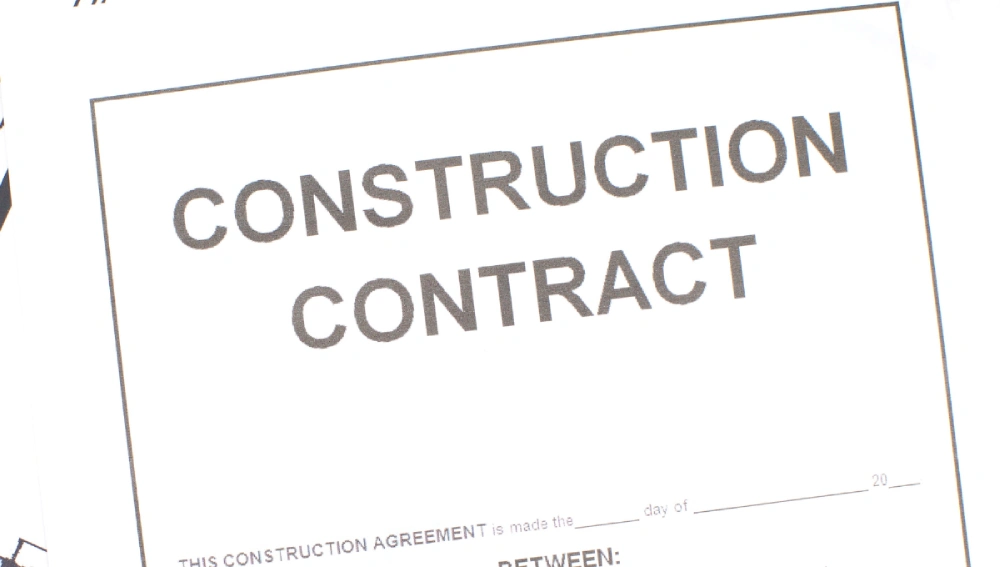
Construction-Contract-Documents

Construction contract documents outline terms, conditions, and responsibilities for each stakeholder, making sure each knows what to do. This blog article will explain the meaning of these documents, what they include, and why they are crucial to project success.

What are Construction Contract Documents?

Construction contract documents are a mix of written and graphic papers. They define the legal relations for a construction project. These include documents defining the parties’ duties, the project’s needs, the work, and the contract’s duration. They also cover other factors that guide project implementation.

Importance of Construction Contract Documents

Construction contract documents are crucial to completing projects successfully. They have many benefits and functions. These documents provide clarity, reduce risks, and set a framework for managing and communicating between stakeholders.

Benefits: 

  • Contract documents clearly outline the project scope and deliverables. 
  • Establish contractual terms, ensuring transparency for all stakeholders.
  • Framework for good project management, communication, and collaboration among stakeholders.
  • Ensures that the terms and conditions can be enforced if needed.
  • Serve as a reference for project documentation and management strategies.
  • Assess the interests of all parties included in the construction process.
  • Ease effective communication and collaboration among project stakeholders
  • It provides a basis for dispute resolution. If needed, it allows for legal enforcement.
  • It helps reduce risks. 
  • Legally bound.

Key Components of Construction Contract Documents

Key Components of Construction Contract Documents

Several parts of construction contract documents are crucial. They create the contract and define its terms and conditions. Understanding these parts is important. It helps you make clear contract documents.

1. The Agreement

This is the main document. It defines the legal relations between the owner and contractor. It contains terms, conditions, and obligations for each party.

2. General Conditions

General conditions define the basics of the construction contract. They cover provisions not about construction work, including managerial, insurance, and legal clauses. They also cover provisions about the dispute mechanism.

3. Special Conditions

These are the conditions that relate to the project or contract under consideration. They may have special requirements or be an addition to the general conditions.

4. Scope of Work

It outlines the services and products the contractor has to deliver. It lists the tasks and responsibilities of the contractor for the project. It also says what is beyond the contractor’s work.

5. Construction Drawings

Construction drawings are pictures of the construction work. They show things like the amount, size, and depth of the work to be done.

6. Specifications

Specifications outline the technical details of a construction project. They cover how the project will be done. They also cover the materials to be used. They specify the project’s work standard and other technical details.

7. The Schedule

A proper schedule helps in drawing up the appropriate project timeline and clearly communicating the expectations.

8. Schedule of Values

The schedule of values splits the contract sum into work sections. This makes it easy to submit payment applications. It also makes it easy to control finances during the project.

9. Bill of Quantities

The bill of quantities shows all the works and their quantities.

Roles and Responsibilities in Preparing Contract Documents:

  • The owner must provide the project requirements and scope of work. They must also provide any specific conditions or restrictions.
  • The architect or engineer prepares the construction drawings. They also make the specifications and technical requirements for the project.
  • Legal counsel drafts and reviews contract terms. They do this to make sure the terms follow the law.
  • The contractor must review the contract documents, submit bids and tender document, and perform the work as the contract requires.

Contract Document Management:

  • You need proper document control and storage to manage construction contract documents. 
  • You should establish change management procedures. They will handle changes to the contract during construction.
  • Keep contract documents for a while after the project to handle legal and warranty issues.

Conclusion

In conclusion, careful planning and management of construction legal papers are important. They reduce risk and aid a well-coordinated construction process. 

Due to their importance and key features, owners, and contractors can use these documents to improve projects and meet goals.

FAQs

1) What are the 5 components of contract documents?

The five key components of construction contract documents are:
1. The Agreement
2. General Conditions
3. Special Conditions
4. Scope of Work
5. Construction Drawings

2) Who prepares a contract document?

Owners or overseers usually write the contract documents. They may get help from architects, engineers, or legal counsel. The goal is to give full and accurate accounts of the project’s specifications.

Which Nakshatra Is Good For Buying Property

0
which nakshatra is good for buying property

Technology and our lifestyle may have developed, but the culture and traditions we have followed from ancient times have not. And it is in our culture to begin any good thing at an auspicious time. 

This applies to buying property also. After all, buying a property is a huge investment, and buying it at a good time and nakshatra is a way to assure ourselves that all will go well. 

So, if you are going to purchase a property in 2024, here are some things you can look into for an auspicious beginning. 

Auspicious Dates In June 2024

The June month of 2024 features several Hindu festivals and observances, like the Apara Ekadashi, Mithuna Sankranti, Ganga Dussehra, etc. The first half of June (until June 22) is especially considered auspicious for making a purchase or starting any good activities. 

Date & DayTithiNakshatraAuspicious Property Purchase Muhurat
June 6 (Thursday) Pratipada Mrigashirsha8:16 am – 5:23 am (June 7)
June 7 (Friday) Pratipada, DwityaMrigashirsha5:23 am – 7:43 pm
June 13 (Thursday) Saptami, AshtamiPurva Phalguni5:23 am – 5:08 am (June 14)
June 20 (Thursday) Trayodashi, ChaturdashiAnuradha5:24 am – 6:10 pm
June 21 (Friday)PurnimaMula6:19 pm – 5:24 am (June 22)
June 27 (Thursday) Shashthi, SaptamiPurva Bhadrapada11:36 am – 5:26 am (June 28)
June 28 (Friday) SaptamiPurva Bhadrapada5:26 am – 10:10 am

Auspicious Dates In July 2024

The month of July also observes several Hindu festivals like Yogini Ekadahi, kamika Ekadashi, Ashadh Amavasya, etc. There are also several auspicious dates in this month for starting any activities. 

Date, Day & TimeTithiNakshatraAuspicious Property Purchase Muhurat
July 4 (Thursday)ChaturdashiMrigashirsha5:28 am – 3:54 am (Jul 5)
July 5 (Friday)PratipadaPunarvasu4:06 am – 5:29 am (Jul 06)
July 11, 2024 (Thursday)Panchami, ShashthiPurva Phalguni5:31 am – 1:04 pm
July 18 (Thursday)TrayodashiMula3:25 am – 5:35 am (Jul 19)
July 19 (Friday)Trayodashi, ChaturdashiMula, Purva Ashadha5:35 am – 5:36 am (Jul 20)
July 25 (Thursday)PanchamiPurva Bhadrapada5:39 am – 4:16 pm
July 26 (Friday)Shashthi, SaptamiRevati2:30 pm – 5:40 am (Jul 27)

Auspicious Dates In August 2024

The month of August 2024 also holds several observances and festivals like Krishna Janmashtami, Raksha Bandhan, Nag Panchami, etc. It also has auspicious dates for marriages and important purchases. 

Date, Day & TimeTithiNakshatraAuspicious Property Purchase Muhurat
August 1 (Thursday)DwadashiMrigashirsha5:43 am to 10:24 am
August 2 (Friday)Trayodashi, ChaturdashiPunarvasu10:59 am – 5:44 am (Aug 3)
August 15 (Thursday)EkadashiMula12:53 pm – 5:51 am (Aug 16)
August 16 (Friday)Ekadashi, DwadashiMula, Purva Ashadha5:51 am – 5:51 am (Aug 17)
August 22 (Thursday)ChaturthiRevati10:05 pm – 5:55 am (Aug 23)
August 23 (Friday)Chaturthi, PanchamiRevati5:55 am – 7:54 pm
August 29 (Thursday)Ekadashi, DwadashiPunarvasu4:39 pm – 5:58 am (Aug 30)
August 30 (Friday)DwadashiPunarvasu5:58 am – 5:56 pm

Auspicious Dates In September 2024

September is another month rich in festivals and observances like Ganesh Chaturthi, Onam, etc. Some dates in September are also good for starting any good activities. 

Date, Day & TimeTithiNakshatraAuspicious Property Purchase Muhurat
September 12 (Thursday)Navami, DashamiMula, Purva Ashadha6:05 am – 6:05 am (Sep 13)
September 13 (Friday)DashamiPurva Ashadha6:05 am – 9:35 pm
September 19 (Thursday)Dwitiya, TritiyaRevati8:04 am – 5:15 am (Sep 20)
September 26 (Thursday)Navami, DashamiPunarvasu6:12 am – 11:34 pm
September 27 (Friday)EkadashiAshlesha1:20 am – 6:13 am (Sep 28)

Auspicious Dates In October 2024

Date, Day & TimeTithiNakshatraAuspicious Property Purchase Muhurat
October 10 (Thursday)Saptami, AshtamiPurva Ashadha6:19 am – 5:41 am (Oct 11)
October 17 (Thursday)PurnimaRevati6:23 am – 4:20 pm
October 25 (Friday)Navami, DashamiAshlesha7:40 am – 6:29 am (Oct 26)

Auspicious Dates In November 2024

Date, Day & TimeTithiNakshatraAuspicious Property Purchase Muhurat
November 1 (Friday)PratipadaVishakha3:31 am – 6:34 am (Nov 2)
November 7 (Thursday)ShashthiPurva Ashadha6:38 am – 11:47 am
November 21 (Thursday)Shashthi, SaptamiAshlesha3:35 pm – 6:50 am (Nov 22)
November 22 (Friday)Saptami, AshtamiAshlesha, Magha6:50 am – 6:50 am (Nov 23)
November 29 (Friday)ChaturdashiVishakha10:18 am – 6:56 am (Nov 30)

Auspicious Dates In December 2024

Date, Day & TimeTithiNakshatraAuspicious Property Purchase Muhurat
December 19 (Thursday)Chaturthi, PanchamiAshlesha, Magha7:09 am – 7:09 am (Dec 20)
December 20 (Friday)Panchami, ShashthiMagha, Purva Phalguni7:09 am – 7:10 am (Dec 21)
December 26 (Thursday)Ekadashi, DwadashiVishakha6:09 pm – 7:12 am (Dec 27)
December 27 (Friday)Dwadashi, TrayodashiVishakha, Anuradha7:12 am – 7:13 am (Dec 28)

Benefits of buying property according to Nakshatra

Benefits of buying property according to Nakshatra

Buying properties according to Nakshatra, a belief rooted in Vedic astrology and followed by many Indian cultures has several benefits. For example, Vastu Paintings for Your Walls can enhance the positive energy in your new home when purchased under the right Nakshatra.

  • Each nakshatra has a specific planetary influence and energy. Buying property at the right time can help you align with the energy and bring a positive influence to your property. 
  • Each nakshatra has a specific effect. Some are associated with prosperity and success, while others are associated with emotional well-being and harmony.

Conclusion 

These are some auspicious days, times, tithi, and nakshatra from which you can choose when buying a property. You can also consult an expert to get a professional opinion on when to move into your new home in the second half of 2024. 

FAQ’s

1. Which Day Is Auspicious To Enter A New House?

Sunday and Monday are considered good days to enter a new house. You can consult an expert and consider other factors before choosing an auspicious day. 

2. What Is A Tithi?

A tithi is the duration of two faces of the Moon observed from Earth. The lunar days are called tithis with each month having 30 tithis. 

3. What Is Lucky For A New Home?

Here are some things you can do to bring luck to your home.

Pick an auspicious day to move in.
Hand a horseshow over the entrance.
Paint your porch blue.
Light a candle or burn sage.
Boil milk and rice.
Ring a bell.

Can NRIs Buy Property in India?

0
Can-NRIs-Buy-Property-in-India

Yes, NRIs can buy most types of properties in India. However, they must be aware of some restrictions, mainly regarding agricultural land, plantation properties, and farmhouses. 

Non-resident Indians have options in buying properties in India. This article will help you understand the needs that are required to be known when buying a property in India. 

Process of Buying Property in India as an NRI

An NRI who is looking to invest in Indian real estate must understand that the process is very important. Here is a simplified outline:

Eligibility check: The first step you must take is to check if you are eligible as an NRI under the Foreign Exchange Management Act (FEMA).

Search for property: Research the property you like and connect with a reliable real estate agent to find a suitable property. 

Plan your finances: Check and assess your finances, including the available funds and whether loans are needed. 

Legal due diligence: Hire a lawyer to conduct a complete check on the legal title and compliance of the property.

Purchase funding: Open an NRO or NRE account in any Indian bank to carry out all the transactions.

On-site visit: Visit the property to ensure that it meets your expectations.

Sale Agreement: Draft the sale agreement and sign it with the terms and conditions of the sale.

Payment: Make all the payments through bank channels from your NRE or NRO account. 

Registration: The property must be registered with the local sub-registrar office.

Power of Attorney: If you are not physically present in India, consider appointing a trusted Indian resident with power of attorney to handle the legal formalities and registration of property.

Taxation: Tax implications, including income and wealth tax, must be understood. 

Types of Property NRIs Can Buy

NRIs can purchase residential properties and commercial properties in India. However, NRIs cannot purchase any farmhouses, agricultural lands, or plantation properties. 

Ownership of these properties is possible only if they are inherited and received as an heir at the previous owner’s death. Buying Property in India as an NRI is straightforward except for the above-mentioned properties; NRIs can purchase all other immovable properties in India.

To buy agricultural land, plantation property, and farmhouses in India, they must get approval from the RBI and the government. 

Documents necessary to buy property in India for NRIs

To purchase properties, a person must get and submit a certain number of properties. It is important to make sure all the documents are in hand before you start the purchasing process. 

Some of the important documents that are needed are:

  • Title deed in the name of the seller
  • Any older title deeds if any
  • Updated encumbrance certificate
  • Tax receipts
  • Mutation extracts
  • Building permit
  • Plan approved
  • Occupancy certificate
  • Completion certificate
  • Allotment letter
  • Commencement certificate
  • Possession Certificate
  • Share certificate
  • NOC from local authorities
  • NOC from society
  • RERA registration

It is important to check the history of property documents and analyze them with the help of experts so that any future problems can be avoided. 

Benefits of Buying Property in India as an NRI

Benefits of Buying Property in India as an NRI

There are various reasons for NRIs to consider investing in Indian real estate. Some are as follows:

Potential in investment

Rental income: The properties can produce a steady stream of income in the form of rent. This offers a return on investment. 

The growing population in India increases the demand for rental properties, making it an attractive option.

Capital Appraisal: According to the historical approach, the Indian market has always shown great growth potential. Owning a property can increase its value over time, and it can yield capital gains when resold.

For future use

A place to stay: Buying a property can be a form of investment when you return to India during your visits. Having a own place reduces the reliance on hotels or any rentals/ this gives a familiar feeling and a comfortable environment.

Retirement planning: It is a wise strategy for retirement if you have your property. 

Benefits of tax

Tax deduction: Under some special conditions, NRIs can get tax reductions on rental income, which can help reduce the overall tax burden.

Tax exemption: some properties that are used as your residency may be exempt from tax.

Other benefits

Tangible assets: Real estate can be considered as a tangible asset that gives security and stability to your investments.

Restrictions for NRIs

The primary restriction for NRIs is their inability to purchase agricultural lands, farmhouses, and plantation properties directly. On the other hand, they can freely purchase residential and commercial properties in India. 

Conclusion 

Various reasons have been discussed as to why NRI property investment is going well. Some of the reasons for this process are affordable prices, high value of resale, tax incentives, etc. 

The above-mentioned information is general, if you are going to invest in India as an NRI check with legal and financial professionals for advice. 

FAQ’s

What are the rules for NRIs buying property in India?

NRIs must follow the provisions of FEMA when buying property in India. They can get residential and commercial properties but not directly buy agricultural land, farmhouses, or plantation properties. 

What is the tax on NRI property bought in India? 

The tax on NRIs is a TDS of 1% if the property value is less than ₹50 lakhs and 20% if it is higher. They may also be subject to capital gains tax if they sell the property.

Is it a good idea for NRIs to buy property in India?

Yes, it is generally considered a good investment due to the potential for rental income and capital investment.

Can US citizens own property in India?


US citizens who are NRIs can own property in India, except for agricultural land, farmhouses, and plantation properties.

Seepage vs Leakage: Managing Home Water Issues

0
Difference-between-Leakage-and-Seepage

A constant battle that everybody needs to take comes in maintaining your home dry and healthy. But have you ever thought that the damp spot on your basement wall is a leakage or just a seepage? 

These both involve the intrusion of water, but the difference in these terms is important in knowing the level of the problem is severe or mild and what steps you must take to fix it. 

The article will help you understand the difference between leakage and seepage to keep your home free from water damage. 

Difference between Leakage and Seepage

Leakage

Leakage

Imagine a pipe burst or any crack in the roof. Leakage mainly occurs when there is a distinct opening or any breach in the structure that makes the concentrated flow of water enter. 

Leaks can occur suddenly or over time. However, they typically cause water stains that are visible, drips, or even occur like puddles.

Leakage can lead to environmental pollution if any toxic substances are escaped. This may result in posing a risk to safety and health. It may also cause economic losses.

Seepage

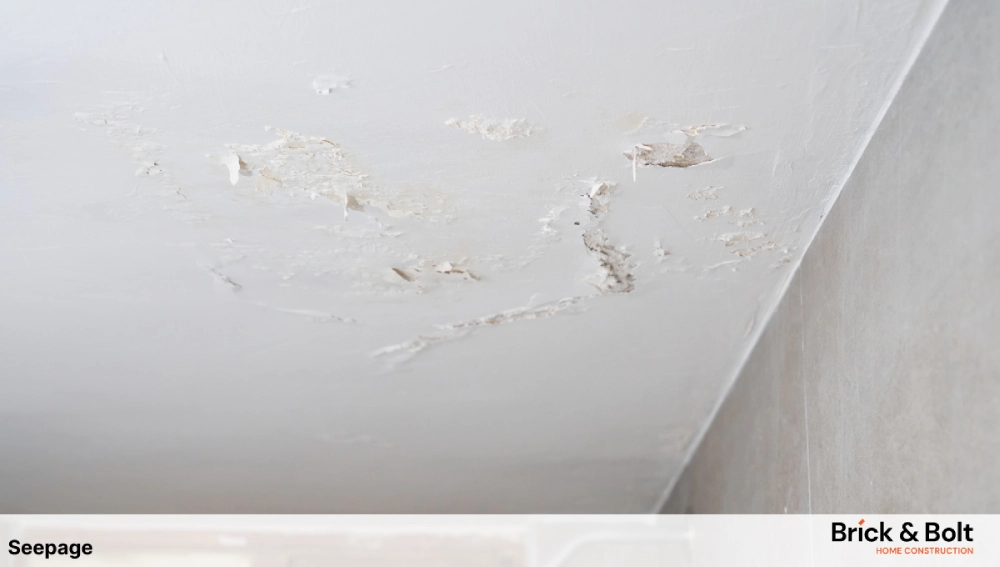
see page

Seepage, which can be referred to as the seeping of water in a slow and gradual movement, commonly occurs if the water flows through concrete, brick, or even compact soil. Ensuring proper measures taken during Eco-Friendly House Construction particularly

Seepage does not happen with any specific opening, like leakage. Here, water finds its way into the cracks or tiny pores due to the differences in pressure. They are less effective than leakage, but they can also cause significant damage if they are not checked.

Seepage can help recharge groundwater.  The disadvantage of seepage however includes possible soil erosion due to excessive seepage and cracks in the foundations or walls of the basement.

Difference between leakage and seepage

CategorySignDescription
Signs of LeakageVisible water stains or dripsDark patches or streaks on ceilings, walls, or floors. Identify the source to prevent further damage.
A sudden increase in water billsUnexplained high water bills may indicate increased water usage due to leakage.
Mold growth
Green, black, or white mold growth in damp areas like basements, bathrooms, or around sinks is a sign of leakage.
Damp patches on walls or ceilingsDamp areas indicate water intrusion, possibly from leaks in roofs, walls, or pipes.
Unexplained noises like running waterGurgling or similar noises from walls or pipes can indicate hidden leakage.
Signs of SeepageGradual dampness or musty odorDamp, musty smells in areas like basements or crawl spaces signal seepage issues.
Peeling paint or wallpaperMoisture behind walls or ceilings causes paint or wallpaper to peel or bubble.
Efflorescence (mineral deposits) on wallsWhite, powdery crystals on walls indicate water intrusion through porous materials as water evaporates.
Cracks in the foundation or basement wallsSeepage over time can lead to cracks in foundations or basement walls, potentially threatening the building’s structural integrity.

Addressing Leakage and Seepage

If you have identified the problem of leakage or seepage, then it is time to address those problems.

For leakage:

  • It is important to identify the source of leakage. Make a proper repair by looking for visible cracks, damaged pipes, or faulty fixtures.
  • If you have identified any leak from a pipe, then turn off the main water valve to prevent further damage.
  • Depending on the severity of the leak, you might need to call a plumber, roofer, or general contractor to fix the problem.

For Seepage:

  • Improve the drainage around the house. Make sure to ground around the foundation slopes away from your house. Consider the installation of gutters and downspouts for diverting rainwater.
  • Dehumidify the space, as the removal of excessive moisture can prevent further damage and the growth of mold.
  • If you find that seepage is very persistent, try applying a waterproof coating to your foundation walls.
  • Seal any cracks in your foundation or basement walls to prevent more water intrusion.

Conclusion

Early detection and prompt action are the main keys to preventing damage caused by water from leakage and seepage. Understanding the difference between them and watching out for the signs can help keep your home dry and healthy.

To a damp-free, healthy house!

FAQs

1) What are the signs of leakage in plumbing systems?

Visible water stains, sudden increases in water bills, growth of mold, damp patches, and unexplained noises.

2) Is seepage common in coastal areas?

Yes, seepage is common in coastal areas as they are near water.

3) How can I detect hidden leakage in my home?

The hidden leakage can be detected by looking for signs like dampness, peeling paints, and musty odor.

4) Can seepage damage historical monuments?

Yes, historical structures can be damaged by prolonged seepage.

Lease Deed Format for Lands: Secure Your Land Lease

0
Lease-Deed-Format-for-Lands

The lease deed is an important document that has the terms and conditions in which the landowner gives the temporary possession of their land to another party, that is, the tenant. This agreement is basically a rental agreement made when the land is used by someone other than the landowner.

A lease deed is a legal document that provides all terms and conditions that both parties must follow during the period of the lease. Lease deeds must be registered if the period is more than 11 months.

This article will give you detailed information regarding the format of the lease deed for the land and also some free downloadable templates for your convenience.

Key Elements of a Lease Deed for Land

Leasing of land is a common practice for different purposes that include agriculture, commercial development, and residential use. A well-drafted lease deed can protect the interest of the landowner as well as tenants by clearly mentioning their rights and obligations.

A lease deed must consist of the following key elements:

1. Parties Involved

These sections must clearly identify the landowner and tenant. It must include their full names, addresses, and contact information.

2. Description of the Land

The description of the land that is being leased must be included here. The legal description consists of the official identification of the land, which is mainly based on government records. This may have a plot number, survey number, or any other specific identifier. 

The physical address of the land. The size of the land, commonly expressed in acres or square feet, and the unique features of the buildings, water bodies, or others must be mentioned clearly.

3. Lease Term

The duration of the agreement is called the lease term. This must include the date on which the lease agreement starts and the date on which the lease agreement ends. 

Early termination: there is a possibility for termination by either of the parties, and the terms associated with them must be addressed here.

Renewal options: The lease can also include renewal options, and terms and conditions must be stated. 

A clear mention of the terms and conditions is needed to avoid any misunderstandings and help in a smooth experience for both parties.

4. Rent

The financial aspects of the lease agreement are mentioned here. The lease deed must cover the 

  • Rent amount: the specific cost that the tenant needs to pay the landowner for leasing the property.
  • Frequency of the payment: how often does the rent need to be paid? That is the monthly or quarterly must be mentioned here.
  • Due dates: the specific dates on which the rent must be paid must be mentioned.
  • Late payment penalties: Any late fees that need to be paid if there is any delay in the rent payment must be defined clearly.

5. Security Deposit

A security deposit is like a financial safeguard for the landowner. It protects the landowner from any damage caused by the tenant in the land use or any non-compliance with the lease agreement.

The exact amount for a security deposit, payment terms, and conditions of return must be mentioned under this section in the lease agreement. 

6. Use of Land

The use of land section provides information regarding the permissions in the use of land by tenants. This mainly states the restrictions on usage and protects the interests of both parties. 

In this section, the permitted uses, restrictions on use, and environmental compliances will be mentioned. A proper and clear use of the land section can prevent misunderstandings and ensure the land use as per the landowner’s intention.

7. Maintenance

A lease deed must clearly mention the responsibilities of both parties regarding the maintenance of the land. This section mainly addresses the responsibilities of the tenant and the responsibilities of the landowner and helps in differentiating the normal damage expected from the use and the damage caused by the tenant. 

The clear separation of the maintenance responsibilities helps reduce disputes and ensures the maintenance of the property throughout the term of the lease.

8. Taxes and Charges

Landowners come with related taxes and charges such as property taxes, utilities, and waste disposal fees. So, the lease deed must mention the responsibilities for taxes and charges and the payment method convenient for the tenant when paying the amount.

9. Indemnification

It’s a clause that protects both parties from legal repercussions arising from others’ actions. It states that the damage caused by the respective party will be responsible for their actions

Free templates to download Lease deeds for land 

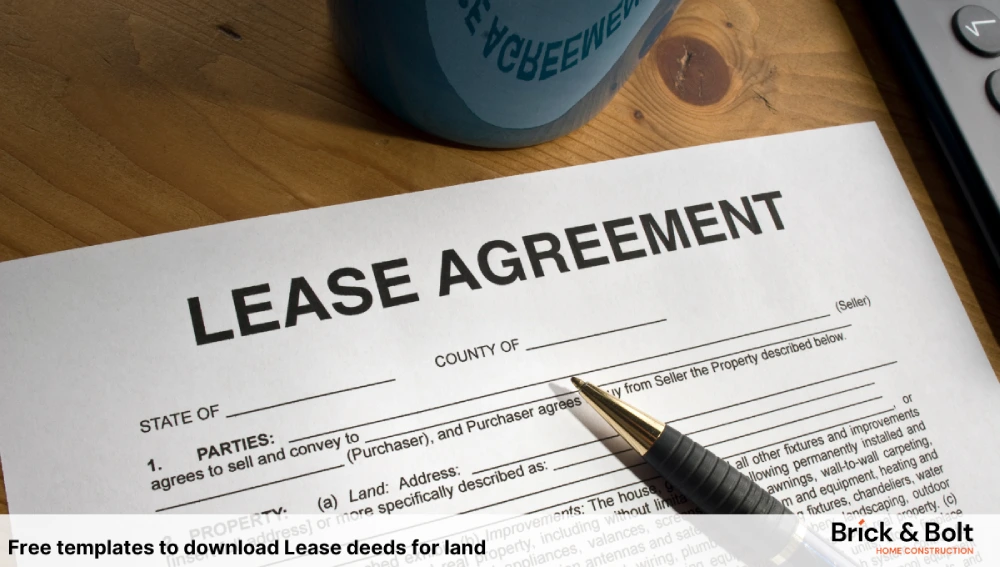
Free templates to download Lease deeds for land

The process of drafting the deed format has been made simpler with the availability of free templates for lease deeds. These free templates can be downloaded from online websites and used. Some of the sites that provide free templates for lease deed formats include legaltemplates.net, Easy Legal Docs, Smallpdf.com, and Template.net.

Conclusion

A well-drafted lease deed for land helps in clear communication and also protects the landowner and tenant throughout the term of the lease. By understanding key elements like Lease Deed Stamp Duty and utilizing available resources, you can create a solid foundation for your lease agreement.

It is advisable to contact a lawyer to ensure your lease deed is legally valuable and meets your specific requirements.

FAQS

1) Who are the parties involved in a lease deed? 

The parties involved are the landowner(lessor) and the tenant (lessee).

2) Can a company be a party to a lease deed?

Yes, both landowners and tenants can be companies or any other legal entities.

3) What’s the final step after creating a lease deed?

Both parties must sign the document in the presence of witnesses and have it notarized.

Cancellation Of Lease Deed: Steps and Considerations

0
Cancellation Of Lease Deed

In India, it is popular for many people to sell or buy a property on lease. According to their lease agreement, the buyer has the right to use the property for a specific period of time. 

But what if you want to cancel the lease before the end of the lease agreement? What are the procedures you need to follow? We’ll look at all these topics in detail in this article. 

Understanding Termination Vs. Cancellation

The terms “termination” and “cancellation” are often used interchangeably. However, there are certain subtle points that differentiate the two. 

Lease Termination

A lease termination is a more general term used to refer to a lease ending, which can be due to both planned (mutual agreement) or unplanned (breach of contract) circumstances, often necessitating considerations.

Lease Cancellation

A lease cancellation refers to a more specific situation where the lease is ending prematurely due to a breach of contract or other causes. 

How To Cancel Registered Lease Deed

A lease deed involves both parties (lessor and lessee), so it can’t be done by one party alone. To cancel a registered lease deed, both the parties should follow the below procedures. 

  1. Whether the cancellation is due to mutual agreement or breach of contract, both parties should agree to end the lease.
  2. The next step is to formalize a “deed of surrender.” This document is legal proof that both parties agree to the early lease cancellation.
  3. Both parties should visit the sub-registrar’s office where the original lease was registered and register the deed of surrender. 
  4. You can also consult a lawyer to ensure there are no mistakes or loopholes in the deed of surrender. 

Cancellation of Lease Deed Format

Grounds For Cancellation Of A Lease Deed

Grounds For Cancellation Of A Lease Deed

There are two ways a lease deed can be cancelled. 

  • Mutual agreement
  • Breach of contract

Mutual Agreement

As the name implies, this type of lease cancellation happens when both the parties, the lessor (landlord) and lessee (tenant), mutually decide to cancel the lease early.

This is the smoothest way to end a lease and there will be no disagreements or any other issues associated with this method. This lease can be ended by formulating a “deed of surrender” document which indicated the early cancellation of the lease. 

Breach Of Contract

As the name suggests, this type of lease cancellation occurs when either the lessor or lessee fails to fulfill or violates the terms of the lease agreement. 

This type of lease termination can be complex. Most of the time, the involved parties will attempt to resolve the issue without the cancellation of the lease. However, if the issue escalates, legal action might be taken to settle the dispute, consuming time and money and resulting in lease cancellation. 

Unforeseen Circumstances

Sometimes, a lease can also be cancelled due to unforeseen circumstances. This can happen from both the parties’ sides. Even though the lease wasn’t drafted for unforeseen circumstances, you can discuss the issue with the other party and request an early termination. 

Important Points To Consider During A Cancellation Period

A lease cancellation is a very important procedure; you must ensure you do everything correctly and without any mistakes. Below are some points you should consider during the cancellation period. 

Notice Period

If you wish to end your lease agreement with the landlord, ensure you notify your landlord before the end of the notice period. This notice period will clearly be given in the lease agreement, within which time you should inform whether you wish to end the lease. 

Missing this deadline can lead to serious consequences, such as penalties for early termination fees.

Documentation

Ensure you keep all the necessary documents in hand during the cancellation period. These documents are crucial for a smooth lease cancellation. The documents required are listed below.

  • Lease agreement
  • Written note of cancellation along with proof of delivery
  • Communication records (e-mail or written communication with the landlord)
  • Rent receipts
  • Security deposit records

It is best to consult a professional and discuss if you need any more documents for the procedure. 

Security Deposit

The terms of your security deposit should also be detailed in the lease agreement. Ensure you review it correctly. 

After a lease cancellation, you are entitled to get back your security deposit within a 1 or 2-month period. The landlord is also entitled to deduct the amount from your security deposit for cleaning and repair costs.

Professional Help

Seeking professional help can make the process all the more easier. If the lease cancellation process seems complex, it is best to consult a lawyer and go through all the legal requirements. 

This can help you avoid making unnecessary mistakes and ensure a smooth lease cancellation. 

Conclusion

Whatever the reason for your lease cancellation, ensure you do the procedure correctly and do not allow for any mistakes. Consult a lawyer in case of any concerns. 

FAQs

1. Can A Lease Deed Be Cancelled?

Yes, a lease deed can be cancelled in India. There are two ways a lease deed can be canceled: Mutual agreement and Breach of contract.

how to cancel registered rent agreement ?

To cancel a registered rent agreement, both the landlord and tenant must mutually agree to terminate the contract. A written notice should be provided, specifying the intent to cancel the agreement, and must comply with any notice period or penalty clauses mentioned in the agreement. The cancellation can be formalized through a mutual termination deed registered with the appropriate authorities.

2. How To Terminate A Lease Deed?

To cancel a lease agreement, both parties must formalize a deed of surrender and submit it to the sub-registrar’s office along with the necessary documents. The lease will be terminated after verification. 

3. How Do I Write A Cancellation Of A Lease?

If you and your landlord have mutually agreed to cancel the lease, you should write a deed of surrender to the sub-registrar’s office.

Here are the points that should be mentioned in the document. 

The official termination date
Repayment of security deposit (including deductions)
Outstanding rent or utility bills

Lease Deed Stamp Duty: Legal & Financial Responsibilities

0
Lease Deed Stamp Duty

A lease deed is an important legal document that contains an agreement between the property owner and the tenant. The agreement is temporary, and the tenant has no right to claim ownership as it is just rented for some time. 

The deed is registered by the government authorities and is protected legally by both parties. One important element of deed registration is the payment of stamp duty.

What Stamp Duty Is and Its Purpose in Lease Deed Registration

Stamp duty is a tax put forth by the state government on particular documents, namely lease deeds. The lease deed stamp has two purposes.

Generation of Revenue: Stamp duty taxes serve as an important source of income for the state government.

Authentified Document: The presence of stamps in the lease documents forbids tampering or misuse of the document in the future. 

It protects both the owner and tenant through government policies. 

Importance of Stamp Duty in Lease Deeds

Importance of Stamp Duty in Lease Deeds

The lease stamp duty in a lease deed not only indicates taxation but is also a legal aspect that protects the property. It is a public-registered document signifying the completion of payment and transfer of the property. 

Certain essential components represent the importance of stamp duty lease deeds.

Validity: A lease deed is considered invalid without a lease deed stamp, and the victim cannot be defended by law. 

Evidence: In cases of dispute, a lease deed document containing the lease deed stamp can be placed as evidence.

Registration: Registering lease deeds with authorities plays an important role in claiming rightful ownership and tenantship in cases of dispute. To register the document, payment of duty stamp play is crucial.

How Stamp Duty Applies to Lease Deeds

The stamp duty payable on a lease deed differs depending on state government regulations. In the state of Karnataka, two types of scenarios should be followed to get the stamp duty for the lease.

Leasing Type: The type of leasing is important. Leasing a property includes both commercial and residential. 

Duration of the Lease: The shortest duration for which a lease can be signed is between three and five years, and the longest is ten years.

Legal Requirements for Paying Stamp Duty on Lease Deeds

The Indian Stamp Act of 1899 and the state government amendments gave all the details required for paying the stamp duty on lease deeds. 

The legal requirements that are needed to get stamp duty on lease deeds are described below:

Stamp Paper: Stamp paper is used to print the lease deed containing the details with the exact value as calculated per stamp duty.

Payment: The stamp duty payment can be made through different methods, including online payment methods, challans, or demand drafts.

Time Commitment: After the lease deed is released, the stamp duty has to be paid within two months from the date.

Registrations: Once the stamp duty is paid, the lease deed will be presented to the local sub-registrar’s office within a time frame.

Documents Needed for Stamp Duty on Lease Deeds

Certain legal documents must be carried while going for a lease stamp duty on lease deeds.

1)Lease Agreement

A lease agreement is a blueprint that needs to be align on it’s lease Deed format with the conditions between the tenant and the landlord. This agreement includes specifics such as the real amount of rent, the duration of the lease, the responsibilities of both parties, and the maintenance obligations. Violations of the agreement will lead to legal action.

2) Proof of Ownership

The land owner has to provide documents to establish their ownership before leasing it. This includes a sale agreement, registry docket, or tax receipt.

3) Proof of Identification

A PAN, Aadhaar card, or passport issued by the government should be submitted by both the tenant and landlord. 

4)Photographic Evidence

The tenant and landlord should submit two passport-sized photographs. 

5) Challan or Demand Draft

Payment proof can be any receipt like a challan, an online payment confirmation, or a demand draft.

6)Witness

Two witnesses are required to sign the lease deed. The witnesses should provide their ID proofs. 

Differences in Stamp Duty for Various Types of Lease Deeds

The difference between the stamp duty and the amount required to pay for the stamp depends on the property.

Residential Lease:

According to the Department of Stamp Duty and Registration Fees in the Karnataka, 

One Year: Average annual rent (AAR): 0.5% + premium + advance + Rs. 500 fine + Rs. 100 stamp paper. 

Ten Years: Annual rent of 1% + annual deposit paid + Rs. 100 of stamp paper

Above Ten Years: Annual rent of 2% + annual deposit paid + Rs. 100 for stamp paper.

Commercial Lease:

In the case of a commercial lease, it is advised to consult a lawyer. The stamp duty amount payable is higher for commercial leases compared to residential leases. The government guidelines keep shifting, and keeping up with the current guidelines and specific rates including the Lease Deed Registration Fees, is important. 

Conclusion

Paying for stamp duty is a legal demand that ensures the document is secured under government policies and laws. There are different types of lease stamping each with its demands and requirements. Contact legal help, pay the stamp duty on the lease deed, and secure it to prevent disputes.

FAQs

How is the stamp value calculated?

The stamp value is calculated based on the type and duration of the lease. 

What is stamp duty on a Uttar Pradesh lease deed?

Stamp duty charges vary for different states. In UP, the stamp duty rate is 4% of the annual rent and deposit amount.

What is the use of RS 500 stamp paper?

The five hundred rupee stamp paper is used for a partnership deed or power of attorney.