Home Blog Page 88

What Happens If a Building Permit Expires?

0
What Happens If a Building Permit Expires

Whenever one plans to build or rebuild a structure or do any other development, one must get the right permits. A building permit is important. It ensures that the project follows local standards. It reduces risk in construction and reassures every stakeholder.

But, it is crucial to know that there are risks from the refusal. If the building permit is expired or Bulit Without A Permit, it will also impact the project.

In this article, we will explore what happens if a building permit expires and provide guidance on how to prevent and address this issue.

What Happens If a Building Permit Expires?

Building permits imply that if one expires, it causes problems for the owner and other projects. Failing to abide with a permit that reached its expiry date may attract fines, penalties, and legal proceedings. 

The consequences of an expired permit may be direct. But they may also affect other parts of life.

Consequences of an Expired Permit

Work Stoppage

Projects with expired permits will see some effects. The first is the suspension of construction. Construction activity has to cease until such time that a new permit is granted or the permit expiring is replaced. This can lead to numerous problems, such as the project taking a longer time than planned and the costs increasing.

Fines and Penalties

The other results of expiring permits include fines and penalties. These are levied against companies and people involved in the underwriting processes. They are often case-sensitive. They may go for as little as a few hundred rupees to as much as several thousands. 

The price depends on the location of the government in question. In some occasions the property owner may also need to secures a new permit which often proves very expensive and annoying.

Renewal Process

If the permit has reached its expiry date, the holder is supposed to apply for a new license and go through the fee process again. It can take a substantial amount of time and, sometimes the deteriorating conditions may force one to start over with the project all over again.

Project Delays

These are buildings for which permits have been issued. But, construction has not started or has been stopped for some reason. Such holdups can lead to increased expenses and lost time, which cannot be advantageous for the project as a whole.

Compliance Issues

Outdated permits can also have an impact on compliance. This leads to a stop work order which can cause further hold up in the process of the project, if the set out permit compliances are not met.

What to Do if Your Permit Expires
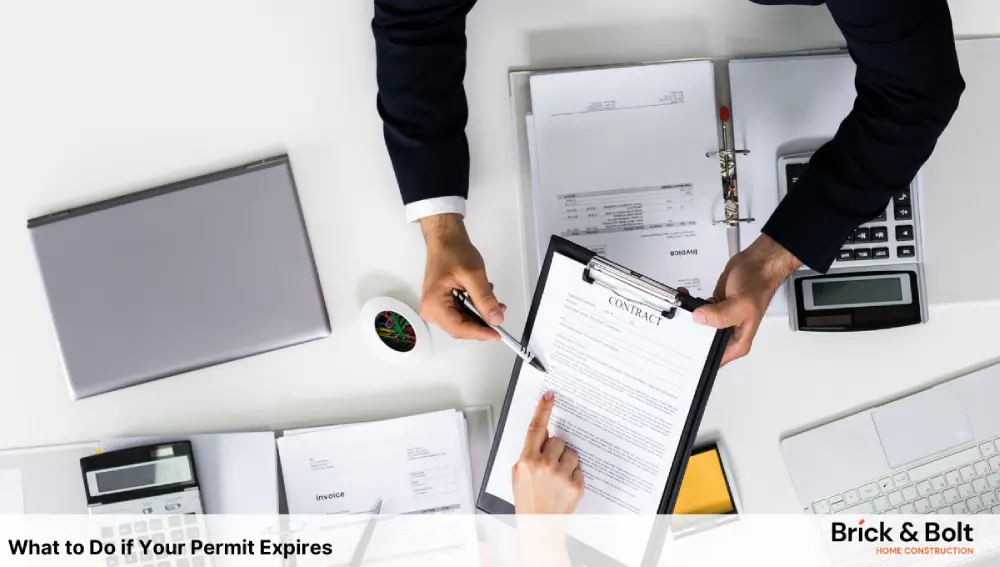
What to Do if Your Permit Expires

Contact the Building Department

The first action is to communicate to the building department about a permit that has gone out of date. They can then give information on how to go about renewing the permit. You can use resources like the Parivahan Sewa, the official website of the Ministry of Road Transport and Highways. You can also use the official state government website to renew the permit, if the facility is available.

Prepare for Renewal

To renew a permit, gather the necessary information and documents first. Then, initiate the process with the permit holder. This involves ensuring that construction and changes follow relevant standards and codes. It also involves ensuring that the right inspections are done when needed. Most often the following documents are required:

  • The original expired permit
  • A copy of your ID proof (Aadhaar card, PAN card, etc.)
  • Address proof documents
  • Proof of fee payment

Consider a Professional

If you are not very confident in this process of renewal or need some help, then it is possible to turn to the professionals. They are useful to prevent people from getting lost and also to make sure that all the proper measures are involved.

How to Prevent a Permit Expiration

Track Validity

Therefore, it is important to monitor the permit status to avoid such a situation when the permit is no longer valid. This covers the need to track the permit’s expiry date. It ensures that all the required actions to renew the license are pursued before it expires.

Buffer Time

There should always be time between the expiration date and the renewal process. This way, any issues can be resolved without delay. This time enables any corrections to be made and it also makes sure that a new permit for the teaching practice is issued without any gaps in between.

Communication is Key

It is important to ensure that the validity of the permit is communicated to any involved stakeholder efficiently to avoid permit expirations. Make sure all the project stakeholders are informed of the date the permit expires and the steps to take to renew it.

Conclusion

Thus, it can be pointed out that expired building permits have certain impacts on the owners of properties and constructions. Failure to adhere to that should be done with the expired permit can attract fines, penalties, and even lawsuits. Thus, learning the impact of expired permits and how to avoid them shall help property owners protect their projects from setbacks.

FAQs

What permits are generally required for construction in India?

Land title, land clearance, zonal clearance, highway permit, forest permit, and other permits suitable to the property under consideration are generally required for permission for construction in India.

How long is a building permit valid?

Building permits are valid in India for 3 years in case of 4-storeyed residential, industrial, and commercial buildings from the date of sanction. For buildings over 15 m in height, the building permit extends for a period of 4 years.

What certificates should construction companies hold in India?

Construction companies must hold a solvency certificate, character certificate, and labor office registration certificate for registration purposes in India.

Marble vs. Granite Flooring: Which is Right for Your Home?

0
Marble Vs. Granite Flooring (1)

Guess what is the first question that will come to your mind when deciding on your house’s flooring. “Should I use granite or marble flooring? Which one is the best?”

Both granite and marble are top players in the flooring industry and are the first choice for people to use for their homes or other buildings. While granite is known for its sturdiness and durability, marble is known for its classy and elegant look. 

In this article, we will look into the differences between the Granite and marble floorings and their pros and cons. This will help you decide which one will be the best for your preferences and needs. 

Marble Or Granite Which Is Better For Flooring

Both marble and granite floorings are best floorings in their own ways. However, a detailed comparison of some features between the two will give a better idea of which to choose. 

Features MarbleGranite
Durability Marble is less durable than granite and is comparatively less resistant to scratches.Granite is more durable than marble and is more resistant to scratches. 
Acidic resistanceMarble is less resistant to etching from acidic substances. Granite is more resistant to etching from acidic substances. 
PorousMarble is not that dense and is more porous than granite. Granite is a denser stone with low porosity.
Cost Marble is less expensive than most other floorings.Granite is more expensive than most other floorings. 
Damage by strong chemical cleaning liquidsThe high porosity of marble allows it to absorb the chemical liquids, making it more susceptible to etching and damage. Granite is less porous and dense. So chemical liquids can’t seep through and damage the stone. 
Stains Marble is more porous making it more susceptible to stains and other damages.Granite is less porous making it more resistant to stains and other damages.
Outdoors Marbel is susceptible to heat and scratches. So, it is not that suitable for outdoors.Granite hight is heat and scratch resistant, making it a better choice for outdoors. 
Heat resistanceMarble is only moderately heat resistant and can etch or discolor if exposed to too much heat. Granite is highly heat resistant, making it a good choice for kitchen or fireplace floorings. 
Scratch resistanceMarbe is less scratch resistant. Granite is more scratch resistant than marble.
Maintenance Marble is high maintenance and requires polishing at least once a year.Granite is low maintenance and only needs polishing once every few years.  
Appearance Marble has a more classier look and is often bought for its premium appearance.Granite also looks goods but less so compared to marble.
Used forMarble is used in low-traffic areas like bedroom, hallway, and entryway floorings. Used in high traffic areas like kitchen and bathroom flooring, Granite stairs, and countertops. 
Origin Formed when existing rocks undergo intense heat and pressure. Forms from the cooling and solidification of molten magma.
Environmentally-friendlyBoth marble and granite are less environment friendly as the extraction and processing (mining, cutting, polishing) can cause dust and pollution. 
Health risksSome marble varieties can contain asbestos, a potential carcinogen, that can cause lung cancer.Some granite varieties can emit radon gas, a potential carcinogen, that can cause lung cancer. 

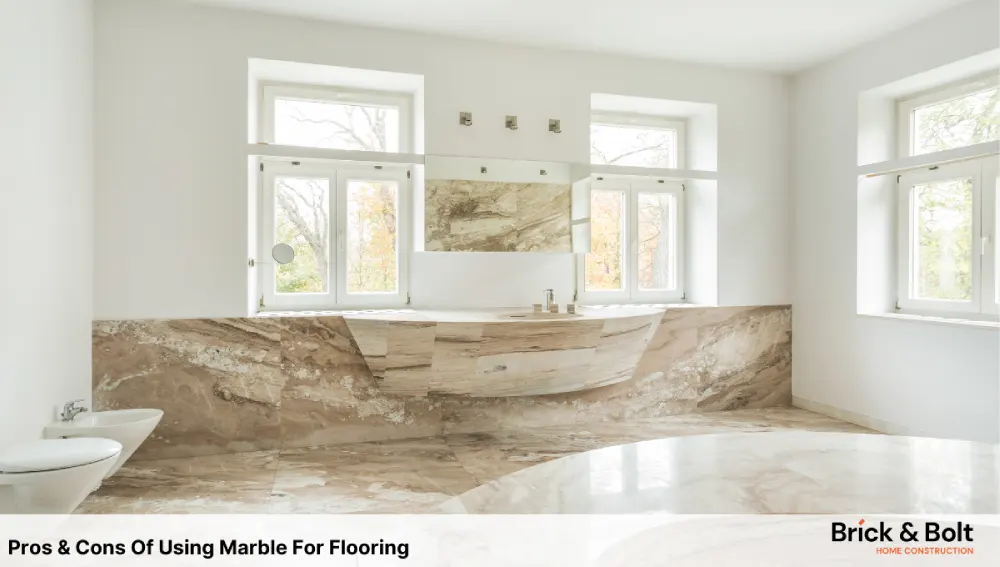
Pros & Cons Of Using Marble For Flooring

Pros & Cons Of Using Marble For Flooring

Benefits Of Using Marble For Flooring

  • Elegant, luxurious, and has a premium look.
  • With proper care and maintenance, marbe floors can last for decades.
  • Easy to clean and maintain than most other floorings. 

Cons Of Using Marble For Flooring

  • Marble flooring is more expensive than other flooring. 
  • Marble is porous, so it must be sealed to prevent stains.
  • It is less scratch or chip-resistant.
  • Polished marble can be slippery when wet, leading to accidents. 

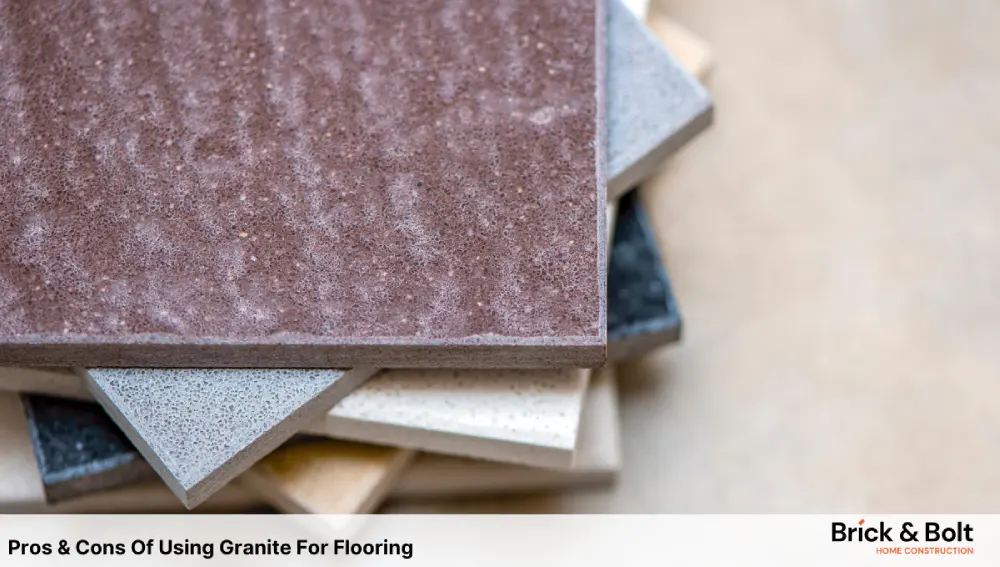
Pros & Cons Of Using Granite For Flooring

Pros & Cons Of Using Granite For Flooring

Benefits Of Using Granite For Flooring

  • Granite is highly dense and practically indestructible. 
  • It is less porous and is highly stain and chip-resistant.
  • Granite is a natural insulator and helps regulate room temperature.
  • It is not that slippery and easy to walk on. 

Cons Of Using Granite For Flooring

  • Granite is more expensive than most other floorings.
  • Though it very rarely stains, granite also needs to be sealed to prevent stains from forming over time. 
  • Granite is very dense and hard. It can be uncomfortable to stand in granite for a long period. 

Conclusion

Now you know the difference between marble and granite. Both are premium flooring materials and sever different purposes. Marble is more classy andis suitable for low-traffic areas like bedroom, hallways, etc. 

Granite, on the other hand, are strong and dense, making it suitable for high-traffic areas like kitchen, bathrooms, outdoors, etc. so, understand your needs and choose your flooring stone wisely. You can also consult a professional if you need an expert opinion. 

FAQs

1. What is the durability of marble and granite?

Marble is less durable than granite and is comparatively less resistant to scratches and chips. Whereas, granite is denser and more durable than marble and is more resistant to scratches.

2. What are some pros of installing marble flooring?

Here are some of the pros of installing marble flooring in your house.

  • Elegant, luxurious, and has a premium look.
  • With proper care and maintenance, marbe floors can last for decades.
  • Easy to clean and maintain than most other floorings.

3. How do marble and granite floorings appear?

Marble has a more classier look and is often bought for its premium appearance. Whereas, granite also looks goods but less so compared to marble.

Power of Attorney for Property

0
Attorney for Property

A Power of Attorney, also known as POA, is a legal document that empowers a third party, referred to as the attorney or agent, to act on behalf of the person referred to as the principal. 

This document is frequently employed in property transactions and enables the agent to manage the principal’s property and funds. In this blog post, we will endeavor to explain in detail what the Power of Attorney for Property is and how it works.

What is Power of Attorney of Property?

A Power of Attorney for Property is also referred to as a General Power of Attorney which involves many Documentation requirements It is a legal instrument that empowers an agent to deal with the property and financial matters of the principal. 

This document is mostly applied in circumstances where the principal is physically or mentally incapacitated to handle the property and affairs. The agent usually is a trusted family member or a friend of the principal and has the authority to make decisions for the latter.

How Power of Attorney of Property Works

The Power of Attorney for Property operates in a way that the agent has the authority to act for the principal in several aspects. The agent can be in charge of the principal’s property such as real estate, moves, and financial products. 

The agent can also exercise financial prowess by paying bills, investing, and even purchasing items. The powers of an agent usually depend on the powers contained in the instrument creating the POA and must be exercised for the benefit of the principal.

Importance of Understanding POA for Property

  • You can keep an active say in how your business is run. You can also guide how your property is managed if you become physically unable to do so.
  • It can help you avoid situations where your money is abused or mismanaged.
  • It may help if you need a trip or have a health problem. Or, some other reason that stops you from handling your own affairs.

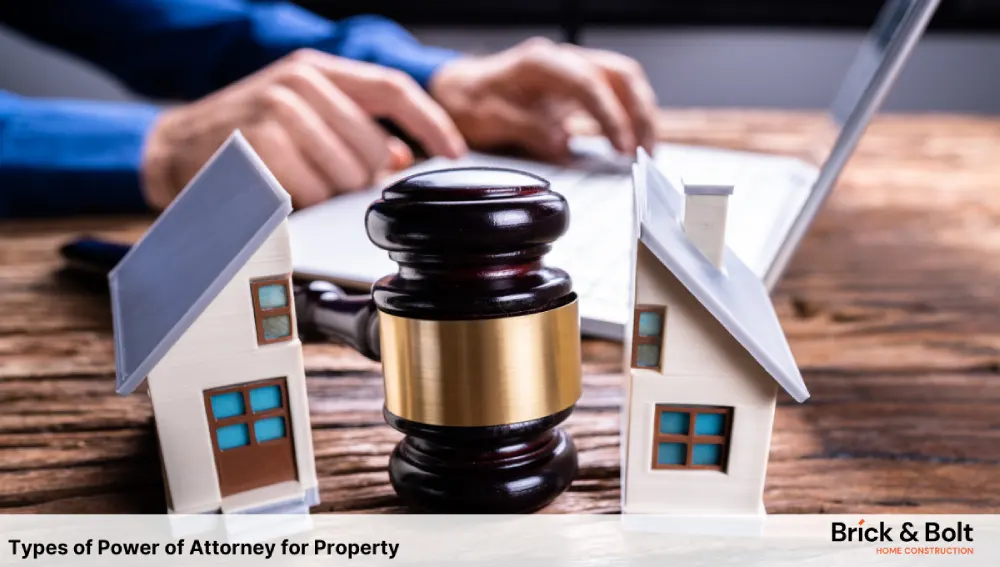
Types of Power of Attorney for Property

Types of Power of Attorney for Property

There are several types of Power of Attorney for Property, each with its own specific characteristics and limitations, It’s often advisable to hire a construction lawyer to navigate these complexities effectively. The most common types include:

General Power of Attorney

A General Power of Attorney authorizes the agent to possess general control and supervision of the principal’s property and business. This type of POA is typically used when the principal cannot handle his/her affairs due to incapacity, like being in a coma.

Limited Power of Attorney

A Limited Power of Attorney confines the agent’s authority to specific actions concerning the principal’s property or financial matters, such as the sale of a particular property or management of a particular financial account. This type of POA is occasionally found useful when the principal requires help in a particular matter or dealing.

Springing Power of Attorney

A Springing Power of Attorney gives the agent powers to act on behalf of the principal once the principal is incapacitated. This type of POA is usually preferred where the principal wishes to grant authority to the agent but only in the event of an emergency.

How it Differs from Other Types of POA

It is different from other powers of attorney, for example, the medical power of attorney or the general power of attorney. All the above work lets someone else act for you. But, power of attorney for property is limited to your money and property.

Creating a Power of Attorney for Property

A Power of Attorney for Property usually involves 3 things:

  • It defines the agent’s powers.
  • It sets the time period of the power.
  • It covers any special stipulations.

You must prepare the document as the Indian Registration Act of 1908 and the Powers of Attorney Act of 1882 say. 

  • The nature of authority that is given to the attorney-in-fact and within what parameters
  • Length of contractual period and conditions under which a POA may be terminated
  • The name of the Principal, and also of the attorney-in-fact
  • Information about the claimant’s property is also provided

Two other independent witnesses must also sign the power of attorney document, which must be executed by the principal. It may also need notarization. This proves that the principal is capable of decisions and understanding their results.

Legal Implications

When utilizing a power of attorney for property, it’s essential to consider the following legal implications:

1. Authority and Responsibility: The agent appointed under a POA has a legal duty to use the powers vested in them to benefit the principal. They must also use them according to the instructions or restraints in the document.

2. Documentation and Formalities: Any property related transaction that is performed under a POA has to meet the legal requirements in terms of documentation, witnessing and where necessary notarization.

3. Revocation and Termination: The principal retains the right to cancel or withdraw the POA at any time, but mostly when there is change of circumstance or lack of trust from the principal to the attorney.

4. Third-Party Reliance: Buyers, sellers, and other financial institutions in a property transaction may rely on a POA’s authority. So, it must be clear and accurate.

Benefits of Power of Attorney for Property

1. The failure of business and financial affairs due to the mechanisms exercised by an incapacitated person.

2. Protecting your money – one’s cash, property, and other assets from being stolen or misused.

3. Easing your situation when you perhaps have to be away from home, fall sick or are in any other way unable to handle your matters on your own.

4. Setting down one’s wishes and preferences in a document that can then be used, and cannot be questioned under the law.

How Power of Attorney of Property Is Applied in Practice

A Power of Attorney for Property is used in practice when the agent takes action for the principal in matters concerning the property and financial matters of the principal. The agent has to exercise the powers in the principal’s best interest and within the powers spelled out in the POA instrument. 

The agent must also maintain records of their activities and decisions and be able to produce credentials and prove that they have the authority to undertake the business of the principal.

Conclusion

A Power of Attorney for Property is a legal document that empowers an agent to act for and on behalf of the principal in matters concerning property transactions and financial management. similar POA for home loan takes several steps and documentations.

With knowledge of Power of Attorney for Property and its categories, people can be fully prepared to have their property and other related matters managed effectively.

FAQs

1. What are the limitations of power of attorney?

It includes the powers that the principal delegates to the agent, the capability of the principal to cancel out or revoke the POA, as well as the obligation of the agent to always act in the best interest of the principal.

2. What is the best form of power of attorney?

The best POA for you depends on your specific situation. You should consider the level of power you wish to grant your attorney. It is best to consult a lawyer to draft a proper POA. 

3. What are the risks of being a power of attorney?

The risks of being a Power of Attorney include the potential for abuse of power, the risk of being held liable for the agent’s actions, and the potential for conflicts of interest.

Lease Deed Registration Fees

0
Lease Deed Registration Fees

Having a clear idea about the lease agreements is crucial for landlords as well as tenants. But beyond the agreement, the registration of the lease deed is a significant step that provides legal protection for both parties involved. 

The details regarding the lease deed registration fees, their explanation, factors, and variations are all given in detail. Read till the end to know more.

Lease Deed Registration Fees

The details regarding the fees for lease deed registration are explained below based on the factors that influence the cost and variations in the locations.

Explanation of registration fees

The sub-registrar’s office verifies the lease deed and other documents to officially register it and gives it a unique registration number. The registration fees are important as they provide for the maintenance of public records and legal documentation of property transactions.

The lease deed registration fees are normally comprised of two components:

Various factors can influence the total cost of registering your lease deed:

  • Stamp duty is a tax levied by the state government on lease agreement value. This also acts as a revenue source for the government. The exact cost of stamp duty differs depending on the state. Lease Deed Stamp Duty can help you budget accurately and comply with state regulations when entering into a lease agreement.
  • Registration fees are also fixed fees charged by the government for registering and processing lease deeds. Unlike stamp duty, registration fees remain the same in almost all areas of the country.

How to Calculate Lease Deed Registration Fees

How to Calculate Lease Deed Registration Fees

The exact calculation for calculating the lease deed can differ depending on your location. To calculate the registration fees for the lease deed, you have to consider the stamp duty applicability and registration charges. The formula is as follows:

Registration fees = Total rent for lease period x percentage rule

For example, if the total rent for the lease period is Rs. 1 lakh and the registration fee rate is 1%, then the calculation will be: 

1,00,000×1%=1000

Variations by region or state

Because of the state-specific nature of the fees, there are no standards for lease deed registration costs. Some examples can showcase the difference:

Lease deed registration charges in Tamilnadu

  • In Tamil Nadu, the registration fee for lease agreements lasting up to 99 years is 1%, and the stamp duty is 4% based on the rent amount.
  • In Delhi, the registration fee is 1% of the consideration amount set forth or value as per circle rate, whichever is higher.

It is crucial to check the specific rates applicable in your region or state.

Importance of Registering a Lease Deed

Registering the lease deed with local authorities can provide various benefits like:

Strong legal validity: A registered lease deed will become a public document and it gives strong legal evidence in case of any disagreements. 

Protection for both parties: The registered lease deed protects the rights and obligations of both tenant and landlord as will be outlined in the agreement.

Eviction rights: If the tenant has made any problems with rent or contract breaching, a registered lease allows them to get legal eviction through the court.

Tax benefits: In some special cases, tax benefits may be available for registered leases. So, it is good to consult a tax advisor for any specific details.

Factors affecting the cost

Duration of lease: Stamp duty is commonly calculated as a percentage of the total rent for the entire lease period. 

Property type: In some states, the stamp duty may differ depending on whether the leased property is residential or commercial. Residential leases may incur less stamp duty than commercial ones.

Location: The structure of registration fees and stamp duty rates are determined by the individual state government. The cost can differ depending on the property location.

Additional Costs Associated with Lease Deed Registration

There may be some additional incidental costs that may be linked with lease deed registration, like

Lawyer fees: If you need legal assistance in drafting or receiving the lease deed, you must pay lawyer fees.

Stationary and printing: there will be a cost for lease deed printing and any other document copies. 

Conclusion

For a transparent and legally good lease agreement, the understanding and accurate calculation of lease deed registration fees is important. By knowing the factors that affect the cost and calculation method, you can be well-prepared for the registration process. 

Keep in mind that the registered lease deed can give valuable legal security and peace of mind to all the involved parties.

FAQs

1. What is the validity of unregistered lease deeds?

An unregistered lease deed is a valid contract. However, it may have some limits in a legal context. They are not as valid as registered deeds in court.

2. What are the benefits of registration of lease deeds?

The registration of lease deeds can give benefits such as strong legal standing, rights protection, eviction rights, and potential tax benefits.

4. What is the minimum stamp value for a rental agreement?

There is no minimum stamp value for a rental agreement; it differs from state to state. It can be calculated as a percentage of the total rent for a lease period.

Documents Required for Home Loan From Builder

0
Documents Required for Home Loan From Builder

With all the significant documents availing a home loan is the simplest task. No matter whether you are planning to buy or construct the house, below is the list of mandatory documents that you should have.

Therefore, you must pay attention to these documents when you apply for a home loan. For a common man, buying or constructing a new house is probably like beginning a new phase of life. In order to fulfill your dream, you must fit the eligibility criteria that can be verified with the following documentations.

Documents Required for Home Loan From Builder

Ensure that you have the following documents to fulfill the dream of constructing your new house.

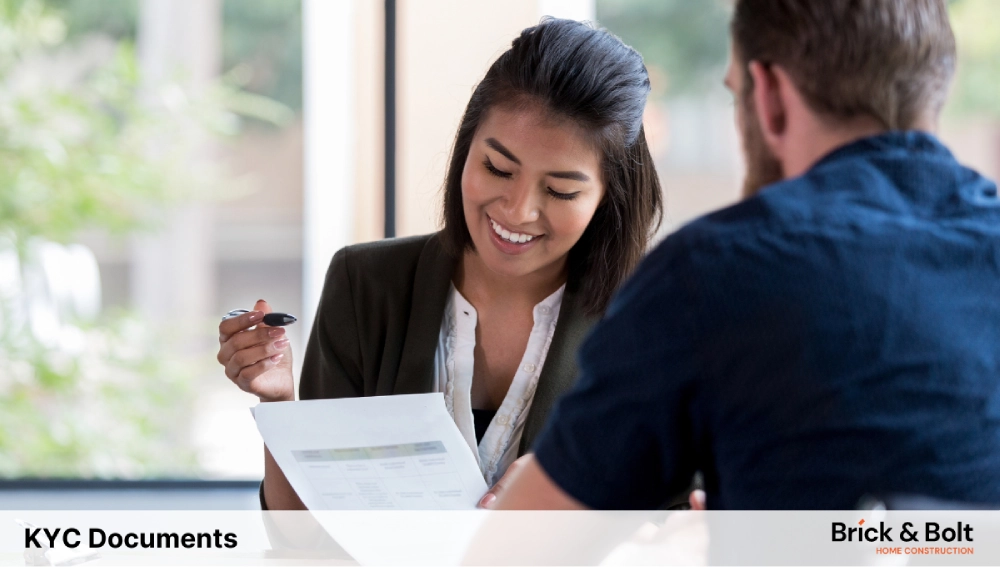
KYC Documents

KYC is proof of customer identity verified by any financial institutions while applying for a home loan to minimize the illegal activities. Since 2004, the Reserve Bank of India has established a rule that filling out the KYC is compulsory. 

Proof of Identity

To confirm the identity of a homeowner or builder, it is essential to submit any one of the following documents: Driver’s license/ PAN/ Voter ID card/ Passport. It is a crucial proof to verify your identity and creditworthiness before loan sanctioning. 

Proof of Address

Provide a recent copy of the electricity bill/ water bill/ telephone bill/ piped gas bill, or else driving license/ Aadhar card/ copy of your passport. The purpose of this document is to verify the current address of the builder. 

Property Documents

A proof of property document is mandatory to submit at the bank side. It certifies the property’s legal ownership and authenticity to avoid any fraudulent activities taking place. 

Sale Agreement or Allotment Letter from the Builder

A sale agreement or allotment letter is a crucial legal document to be submitted by the builder when buying a new property via a bank loan. It acts as a provisional document to hold your place until the final settlement is made.

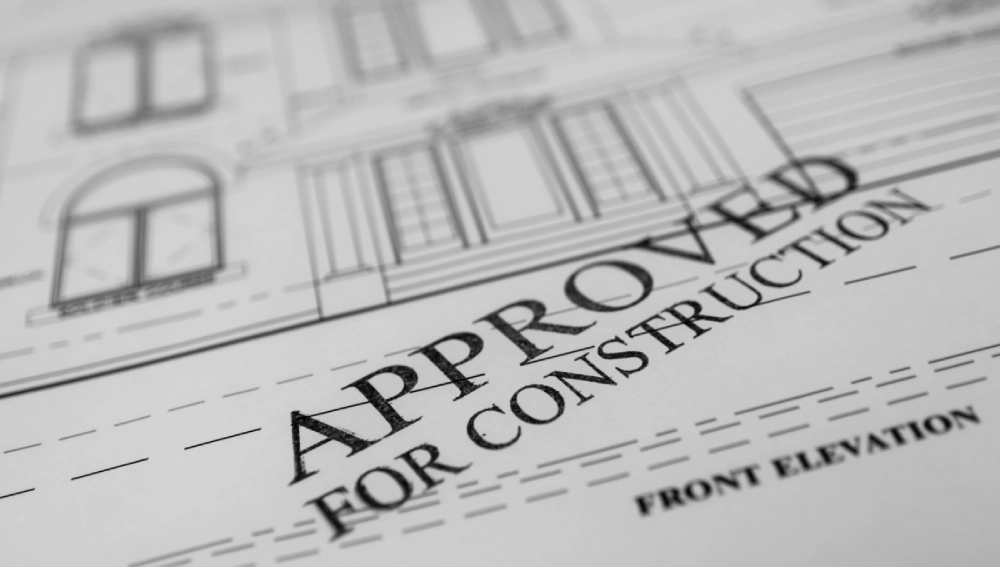
Approved Building Plan and Layout

Not all the building plans will be accepted to provide a home construction loan. Some plans can be approved and some not. Based on your construction type, the lenders will decide it.  

So that you need to submit the essentials, such as the builder’s registered development agreement, Approved plan copy (e.g., Blueprint Xerox), and Conveyance Deed (for your new property or house).

No Objection Certificate (NOC) from Relevant Authorities

No objection certificate is similar to a permission statement ensuring that the property is legally sold to the owner aligned with regulations.

Income and Employment Documents

Income and Employment Documents

The proof of your income denotes that you are eligible enough to repay the loan amount within the estimated time.

Salary Slips for the Past Few Months

The applicant has to provide the bank statements of the last six months (with the statement of salary account) and salary slips of the past three months from their current working company. It will guarantee that your income is stable and you can repay the loan amount on a specified date.

Income Tax Returns (ITRs)

Financial institutions typically ask for the last 2 to 3 years of ITRs (Income Tax returns) when you apply for a home loan. It is evidence of the borrower’s financial stability and repayment capacity.

Proof of Business Ownership (If self-employed)

Self-employed entrepreneurs and business owners ensure that they have the below listed comprehensive documents for a home loan:

  • Industry margin
  • Average bank Balance
  • Rental income – cash credit or account credit
  • Liquid income program for low ITR filed
  • Repayment track record
  • Gross turnover receipts

Loan-Specific Documents

Along with the aforementioned documents, the builder should have the following proofs while applying for a home loan:

  • Loan application form
  • 3 passport size photographs
  • Passbook for last 6 months or bank account statement
  • Challans as proof of advance income tax payment (only for self-employed people)
  • Assessment order copies for the past 3 years or IT returns (for self-employed businessmen)
  • Form 16 / IT returns for the last 2 to 3 financial years (for salaried individuals)

Agreement Between Builder and Buyer

BBA (Builder Buyer Agreement) is a legal document that needs to be signed by both parties. This contract specifies the conditions, modalities and clauses between the prospective buyer and real estate builder. It includes the project delivery date, transfer process, annexures, approvals, flat layouts, terms and conditions of sale, etc.

Conclusion

Applying for a home loan is a far better choice than burning your personal savings on construction. If your income or financial stability is smooth enough with a good CIBIL score, you can use the loan opportunity at the best possible interest rates. Understanding the Documents Required For Home Loan can help streamline the application process and increase your chances of approval.

FAQs

1. What documents are required for a builder project loan?

The list of documents required to be submitted for a builder project loan includes a property tax receipt, Conveyance Deed (for new property), share certificate, occupancy certificate, approved plan copy, and registered development agreement of the builder.

2. What are the legal documents for a home loan?

These are the key list of documents for a home loan: Voter ID, passport copy, Aadhar card or any other government-issued proof. Salaried applicants need to submit bank statements and salary slips to verify their income stability. The documents required for a legal opinion include an approved building plan, sale deed, property tax receipts, and title deed.

3. Can I get a home loan for an under-construction property?

For an under-construction property, a home loan is disbursed in tranches. The payment is released in different portions when the builder demands. However, some financial institutions will only charge EMIs for the amount disbursed.

4. Who is eligible for a house-building loan?

The applicant should be aged between 21 – 65 years. If he/she is a salaried person, they should earn a minimum of 10,000 p.m. For a self-employed business person, the minimum business income should be 2 lac p.a.

Cost Of Bricks In Chennai: Prices, Tips, and Quality Checks

0
cost of bricks in chennai

Whether you are planning to build your own home or do other construction work in Chennai, the first thing you will do while starting the project is to look for a seller who sells quality bricks in your area. 

The type and quality of the bricks you buy are very important for the sturdiness and durability of your construction. You will also wish to be cost-effective while choosing them. So, it is essential to do your research and choose the seller that sells high-quality bricks at reasonable prices. 

In this article, we will discuss the average price of bricks in Chennai, the factors that affect these prices, and some tips you can follow to reduce the overall cost of your bricks.

What Is The Cost Of Bricks In Chennai?

The cost of bricks might differ based on several factors, which we will discuss below. However, here is a general estimate of the cost of bricks in Chennai. 

  • Clay bricks – Rs. 3– Rs. 8 per piece 
  • Fly ash bricks – Rs. 9 – Rs. 18 per piece
  • Concrete bricks – Rs. 9 – Rs. 15 per piece

1 load bricks price in Chennai

For bulk purchases, such as a full load (typically around 3,000 bricks), prices range from ₹22,000 to ₹30,000 per load.

What Are The Factors Affecting Brick Cost In Chennai?

What Are The Factors Affecting Brick Cost In Chennai

There are several factors affecting the cost of bricks in Chennai. Below are some of them.

Type Of Brick

There are several types of bricks you can use for your construction purposes. There are clay bricks, fly ash bricks, concrete bricks, etc. All these vary in cost and can affect the total cost of your bricks. 

Quality

Like any other product, the higher the brick quality, the higher its price. However, if you wish to choose a high quality brick at a low price, clay bricks can be a good choice for you. 

Size And Quantity

The size of each brick and the number of bricks in each unit can also affect the total price of your bricks. However, some sellers might give you a discount if you purchase bricks in large numbers. Investigate before you buy bricks. 

Delivery And Transportation

You will also be charged for the delivery and transportation of your bricks. So, if your construction site is far from where the bricks are sold, it might add to your costs. Choosing the Best Bricks for Home Construction can help in ensuring quality and durability, potentially reducing long-term maintenance expenses.

Location

Brick prices vary in different parts of Chennai. Research thoroughly before settling on a seller. 

Tips For Getting The Best Price On Bricks In Chennai

Compare Prices

There are many online websites like Justdial, Tradeindia, etc., you can use to find the list of brick sellers in Chennai, compare brick prices, and determine which suits your financial condition. You can also visit local brick suppliers and get a quote. 

Negotiate

You can also try negotiating the prices with the brick suppliers. Negotiate with some dealers and choose the one that sells you bricks at the best prices. 

Consider Bulk Discounts

Most brick sellers usually give discounts if you buy a bulk load of bricks. So, if you purchase bricks for your home, try making a single or double purchase with large quantities. 

Look For Reputable Suppliers

Buying from reputable suppliers can help you get high-quality bricks at reasonable prices. Most reputable sellers would have gotten their reputation for the quality of their products. So, buying bricks from them can ensure quality and long-term savings of your money. 

Conclusion

Remember to always do your research before you choose a brick seller. Each seller is reputed for something. One is known for providing high-quality goods, and the other is known for selling bricks at low prices. 

Consider your needs and your financial situation before you commit to a buyer. You can also consult a professional or a trusted friend who is into construction to understand what to look out for when buying bulk amounts of bricks from sellers. 

FAQs

1. What Is The Price Of Sand In Chennai?

The price of sand in Chennai can vary depending on its type and quantity. Here is the average price of sand in Chennai. 

  • M Sand: Rs. 45 – Rs. 800 per cu.ft.
  • River Sand: Rs. 50 – Rs. 140 per cu.ft. 

2. Which Bricks Are Cheaper?

Among the many types of bricks, clay bricks are known for their affordable costs, good quality, and long-lasting durability. 

3. Which Brick Is Long-Lasting?

Clay bricks rank high in their durability and longevity lasting over a 1000 years if they are well-built.

4. What Is The Cheapest House Brick?

If you are going for bricks that are cheap and long-lasting at the same time, then clay bricks are the best option for you. They are highly durable and can last over 1000 years if well-built. 

Building Plan Approval Rules in Tamil Nadu

0
Building Plan Approval Rules in Tamil Nadu

Getting a building plan approval is the first step in the construction process. In Tamil Nadu, you need this approval to finish your building project without any project. 

You need to follow some rules and regulations while applying for a building plan approval. The relevant authorities will look into it and decide whether the plan is suitable for approval. 

Let’s look into the approval rules and regulations for the building plan in Tamil Nadu.

Building Plan Approval Process

The process involved in building plan approval has many steps. The basic step is that the applicant must submit their plans to the relevant authorities for scrutiny and get the necessary permissions before starting the construction work. 

Below is the step-by-step process of getting a building plan approval.

  1. Prepare the building plan (ensure you adhere to the rules and guidelines while planning).
  2. Submit the application form with the relevant documents to the Local Planning Authority (LPA). You can find the application online on the LPA’s website.
  3. Verification. The LPA will verify your plan and check whether it adheres to the rules and regulations. They might even request a site inspection.
  4. Building plan approval. Based on your plan, the necessary documents, and other data, your LPA will either approve or reject your building plan. 

Key Building Plan Approval Rules in Tamil Nadu

Key Building Plan Approval Rules in Tamil Nadu

Building projects in Tamil Nadu require approval under the Tamil Nadu Combined Development and Building Rules (TNCDBR), which are like a guide for construction work. 

They tell you about things like setbacks, how far your building needs to be from the property line, how tall the building can be, and how big your land plot is. There are different rules, mainly depending on the area you are building in.

Minimum Plot Size

The requirements for the minimum plot size differ according to the jurisdriction and type of building. Commonly, they vary based on categories, such as 32 square meters for economically weaker sections and 72 square meters for other categories. For specific details, refer to TNCDBR.   

Setbacks

Setbacks are the minimum distance between your building and the road, property lines, or other structures. They are mainly used to maintain ventilation, safety, and lightning. 

Steback details are mentioned in the TNCDBR and vary depending on factors like building height, road width, zone type, etc.

Building Height Restrictions

The maximum height for buildings is analyzed by the zone regulations, which ensure an orderly development in your area. 

  • The maximum height allowed for non-high-rise buildings is 18.3 meters (approx. 60 feet)
  • For buildings with stilt+2 floors, the maximum height permissible is around 10 meters (approx. 33 feet)
  • For buildings with stilt+3 floors, the maximum height permissible is around 14 meters (approx. 46 feet)

These are just some height restrictions. You can refer to the TNCDBR to get a detailed description. 

Zoning Regulations

Zoning regulations categorize land for purposes like residential, commercial, or industrial use. Building plans must follow the designated zone regulations.

The Tamil Nadu government will divide different zones based on their intended usage. You need to ensure that your building plan adheres to these zoning regulations and that you only plan to construct buildings permitted in those areas. 

The documentation required to submit a building plan in TamilNadu:

To get the approval for building plans, you need to submit a group of documents such as the ones below. 

Ownership documents

Ownership documents are essential to prove your authority and legal rights to build on the land. These documents mainly include the sale deed, patta, and encumbrance certificate.

Site plans

An aerial view of your construction site is known as a site plan. This illustrates the layout and position of the building that has been proposed inside the property’s boundary. The site plan must also have detailed information on the width of the road, boundaries of the plot, and surrounding structures.

Architectural drawings

The architectural drawings give a visual representation of your building’s design. They include the layout of each floor, room dimensions, and utility placement. Elevations show the height and exterior design. Sections show the internal structure of the building.

Structural calculations

Structural calculations are essential for ensuring the safety and stability of the building. These calculations analyze load: the weight of the structure that needs support, such as furniture, occupants, and environmental factors. 

The strength and details of the materials used and their capacities to bear the load must be given. The details regarding the foundation depth and reinforcement for the support of the structure must be calculated.

Additional Documents

Depending on the project type and the area of land involved, you may need other documents, such as a non-objection certificate, land use certificate, and soil test report.

Download the building plan approval rules in Tamil pdf

Building plan approval rules are currently not available in Tamil, You can download the building plan approval rules in English by visiting the official website: https://www.tn.gov.in/tcp/gos/maws_e_18_2019.pdf

The authorities responsible for reviewing and approving building plans

To get approval for the building, an individual has to reach out to the related local planning authority. They will give permission or refer the individual to the appropriate office. it’s also important to Check Building Plan Approval Status regularly to ensure that the process is on track and to address any potential issues promptly.

The authorities responsible for reviewing and approving your building plan depend on whether the location falls under a planning area or a non-planning area. 

Authoritative bodies for a planning area

The authorities responsible for approving the building plan in a planning area are

  • Local Planning Authority (LPA)
  • Chief Town Planner/District Town Planner
  • Directorate of Town and Country Planning (DTCP)

Authoritative bodies for a non-planning area

The authorities responsible for approving the building plan in a non-planning area are

  • Local Planning Authority (LPA)
  • Minor Settlement Board (MSB)
  • Revenue Divisional Officer (RDO)
  • Directorate of Town and Country Planning (DTCP)

Here, you will find resources that will simplify your building plan approval process:

Some of the resources that can help you navigate the process of building plan approval in Tamil Nadu are 

Following these building plan rules and regulations is very crucial in getting approval for your building plan. For more details regarding these rules, you can visit the official website given above. 

FAQs

Is building plan approval mandatory in Tamil Nadu?


Yes, it is mandatory to get approval for a building plan as per the Town and Country Planning Act of 1971.

How do you get approval for the house plan from Panchayat in Tamil Nadu?


House plan approval from the panchayat in Tamil Nadu can be obtained from the secretary or executive officer.

What is the cost of plot approval in Tamil Nadu?


There is no specific fee for plot approval, but processing fees may apply when submitting building plans.

Is no planning permission required under 2500 square feet in Tamilnadu?


Planning permission is needed for all areas. Check with a local authority to know the status of approval for building under 2500 sq ft.

How many floors can be built without permission?


The number of floors that can be built without permission depends on zoning regulations and plot size. For more information, refer to the official government website or consult the local authorities.

Bedroom Pop Ceiling Design Idea

0
Bedroom Pop Ceiling (1)

Enhancing the look of your home with modern decorations cannot miss the use of false ceilings. One way to improve the appeal of your bedroom ceiling is to decorate it with POP ceiling designs.

POP stands for Plaster of Paris, a popular material used in false ceilings. These ceilings also have functional attributes, such as concealing wires, improving acoustics, and improving uniform lighting throughout the room. 

If you are looking for ways to improve the look of your bedroom, POP ceiling is a great choice.

Top 6 Bedroom POP Ceiling Design Ideas

Though there are many POP ceiling designs available to decorate your bedroom, the following are some of the latest and trendiest top 6 POP ceiling design ideas:

  • Tray Ceiling With Indirect Lighting
  • Cloud Design
  • Geometric Design
  • Backlit Design
  • Multi-Level Design
  • Floral Design

Tray Ceiling With Indirect Lighting

A tray ceiling with indirect lighting using a POP ceiling is highly beautiful and functional. Indirect lighting can give a soft and diffused glow, enabling a cozy and inviting visual appeal. This ceiling option can help set different lighting moods and create a calming and inviting atmosphere.

Cloud Design

Cloud design POP ceiling is one of the popular ceiling designs, opted by many for its dreamy and aesthetic appeal. You can choose the clouds’ size, shape, number, and dimensionality according to your preference.  You can also add other decorative elements of art to your cloud ceiling. This design allows you to sleep under your sky indeed.

Geometric Design

Geometric shapes are also popularly incorporated into POP ceilings for bedrooms. Simple and complex geometric design options can be chosen to furnish the ceilings. Geometric shapes give the bedroom POP ceilings a sophisticated and brilliant outlook.

Backlit Design

Backlit POP ceilings are fantastic options for creating a cozy, fantasy-like ambiance in your bedroom. Cove lighting is one of the highly popular designs, followed by geometric patterns, starry night sky designs, and recessed niches with backlighting. 

Warm white, cool white, and color-changing LEDs (Light Emitting Diodes) options are available for stunning backlit POP ceiling design backlighting.

Multi-Level Design

The multi-level POP ceiling design, with its depth and dimensional characteristics and impressive lighting effects, adds a touch of modern appeal.

The depth and dimension of the multi-level ceiling design make the bedroom look spacious and help highlight specific areas, like the bed or seating corner.

Floral Design

A floral POP ceiling can give your bedroom a classic and elegant appeal. Large and small flower cluster designs incorporating geometric shapes can also be included in the POP ceiling design. The design also gives the room a natural and romantic vibe.

Given a proper color code, the floral POP ceiling design can beautify your bedroom tremendously.

Benefits of Using POP Ceiling Design for Bedroom

Benefits of Using POP Ceiling Design for Bedroom

Some of the benefits of using POP ceiling design for bedrooms include:

  • Concealing of loose wiring on the ceiling.
  • Provide uniform lighting throughout the room.
  • Provide noise insulation facility.
  • Help connect smart lighting, control, and other facilities.
  • Come in fireproof and waterproof designs.
  • An added fancy and luxury to the bedroom.

Key Factors to Consider When Choosing the Bedroom POP Ceiling Design Idea

Some of the factors to consider while investing in POP ceiling designs for bedrooms include:

  • Size of the room and ceiling height to appropriately optimize the POP ceiling feature usage.
  • Matching of the overall design of the bedroom.
  • Alignment of the color scheme used in the bedroom.
  • Facility to integrate lighting.
  • Ease of maintenance of the ceiling.
  • Soundproofing facility.
  • Facility to incorporate moldings and trimmings.
  • Affordability or budget-friendly.

Conclusion

POP ceilings for bedrooms are a better option and an excellent way to showcase creativity through the customization facility. Incorporating a variety of False Ceiling Designs can further enhance the aesthetic appeal and functionality of your bedroom space.

POP ceilings have many benefits, including aesthetic and functional facilities, making them one of the most sought-after elements to beautify a room or a house.

Try POP ceilings for your bedrooms and enjoy a sophisticated look!

FAQs

How long does the POP ceiling last?

Modern POP ceilings are estimated to have a 20-year lifespan, given they are regularly maintained.

Does the POP ceiling reduce heat?

Yes, POP ceilings have the characteristics of heat insulation and fire-retardant.

Is a POP ceiling waterproof?

Yes, POP ceilings are considered waterproof to some extent. Severe water leakage, however, can damage the POP material ceiling.

Documents Required For Home Loan

0
Documents Required for Home Loan

What Are the Property Documents Required for Home Loan?

When applying for a home loan, you will need to submit more than just the standard KYC documents. You will also need to submit various documents related to the property to the lender. 

These documents help establish the legal ownership and clear title of the property you intend to purchase or construct. Here are the key property documents required for a home loan:

A. Property Documents

Deed of Sale or Sale Agreement or Share Certificate (Original)

It helps identify the property’s legal ownership. This contains information on the property’s physical location, the buyer and the seller, and the price that has been agreed on. 

Receipts for Paid Taxes (Building & Land)

Bank statements and receipts showing property tax payments made at the local town confirm that the taxes are paid in full. This documentation is crucial to check that there aren’t any active tax credits on the property.

Allotment Letter (if applicable)

If the buyer buys a house from the builder, the allotment letter shows the buyer their land ownership. The builder or developer often prepares it. It might contain the property’s address, unit count, and sale price.

Receipts of advance payments for flat purchase

These receipts are the agreements. They show the payments to the builder or sellers when buying the property. Its importance comes from its use in creating payment history and ownership records.

Permission Letter from Appropriate Authority (if applicable)

Certain work may need a permission letter from the authority. In that case, the following observation also needs the letter.

No Objection Certificate (NOC) from Society (if applicable)

The NOC is essential if the property is in any area that attracts certain construction regulations. The letter comes from the concerned authority. This is usually the town or city municipal corporation or the town planning department of a particular locality.

Land Conversion Documents (if applicable)

The property’s location determines if the application needs certain documents. These documents prove the land’s change from farm to Non-Agricultural (NA) use. These are official legal papers. They are from the government bodies that govern industries. They are used to verify real estate ownership.

Power of Attorney for collecting original documents of Property

It is a letter that officially permits one to recover the original property documents on behalf of the client. Another point to consider is that the person who must collect and submit the documents must have the legal power to do so.

B. KYC Documents (Know Your Customer) 

KYC Documents

Proof of Identity (Any One Required) 

– Passport:  

A valid passport is one of those proofs that validate an individual’s identity.

– PAN Card: 

A PAN card is also another vital document used for identification, and it’s formally known as Permanent Account Number Card.

– Driving License:  

For identification, any valid driving license is accepted. It must have your current address.

– Voter ID Card: 

Your voter ID card is a useful document issued directly by the government, and you can use it to prove your identity.

– Aadhaar Card: 

Your Aadhaar card is an identity proof document that will be exclusive to you, and you won’t find any other person with the same number.

Proof of Residence (Any One Required)

– Electricity Bill: 

A recent electricity bill in your name indicates you have a place where you live.

– Ration Card: 

A ration card can be used as proof of residence.

– Telephone Bill: 

A telephone bill from any social telecommunication network in the last month can be solid proof of residence.

– Employment Letter: 

Your employment letter should contain your current address. You can use it as a proof of residence.

– Passbook or Bank Statement with address: 

A passbook or a bank statement indicating the current address.

Conclusion

The home loan application requires the submission of many property documents, which are key to the loan approval process. The documents help the lender decide whether to give a home loan and also impact factors such as Home Construction Loan Interest Rates. , With the help of Guarantor, it is possible to get home loan without any document

They show the legal capacity and market worth of property, which helps the borrower win loans. Confirm the documents with the lender and ensure the paperwork is in order to prevent last-minute mishaps.

FAQs

Can we get a home loan without property documents?

No, property documents are compulsory for home loans. Banks demand these papers to ensure that the property legally belongs to the current owner and that the occupant has a clear title. Failure to acquire these documents will cause the lender to be unable to determine the risk implied, leading to rejection.

How do banks verify property documents?

Sometimes, this is done through the legal department of the bank and by doing a title search. It means affirming the legality of the deeds, showing the property has no encumbrances, and confirming the seller’s private or legal capacity. Additionally, knowing the Documents Required for a Home Loan From a Builder can help ensure you have all the necessary paperwork prepared to facilitate the approval process.

What documents are required for a home loan self-occupied?

There are no extra requirements for self-occupied property. It just needs the same property documents. The status and title of the property are the most important conditions that the lender has to demand, whether the property is occupied or not. 

Is Patta mandatory for a home loan?

A patta, or title deed, is a must-have for getting a home loan. If the applicant lacks a patta, then the lender lacks legal proof that he owns the assets used as security. So, the loan could be turned down.

Duplex House Front Elevation Designs

0
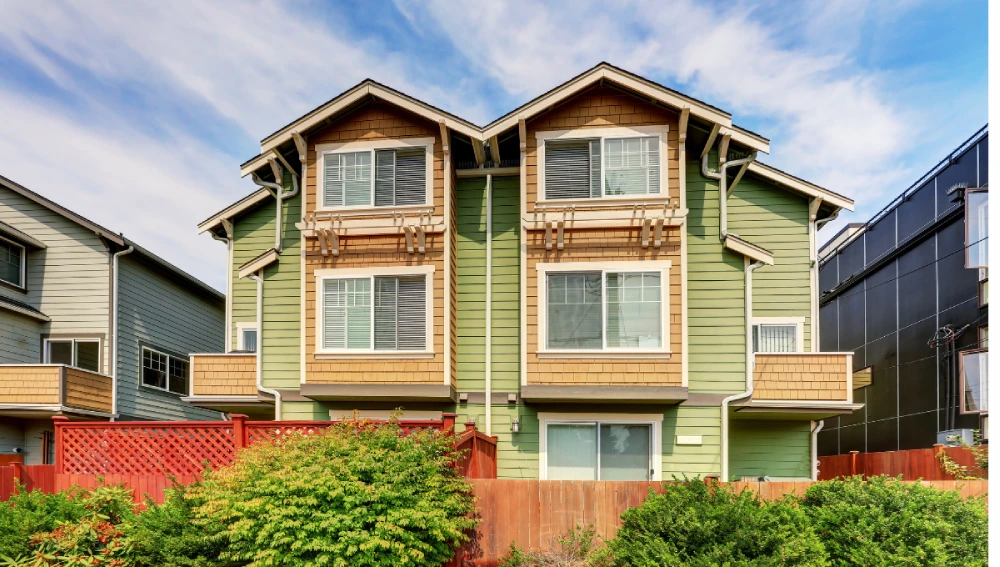
Duplex House

Have you recently built a duplex house and are looking for some front elevation designs? You have come to the right place. 

A duplex house is a residential building that has two separate homes joined together. So, whether you are going to live in one and rent one or you are going to rent both, the exterior look of the house is important. 

So, here are some aesthetic and attractive duplex house front elevation designs you can choose from to enhance the look of your house. 

Top 6 Duplex House Front Elevation Designs

Modern Duplex

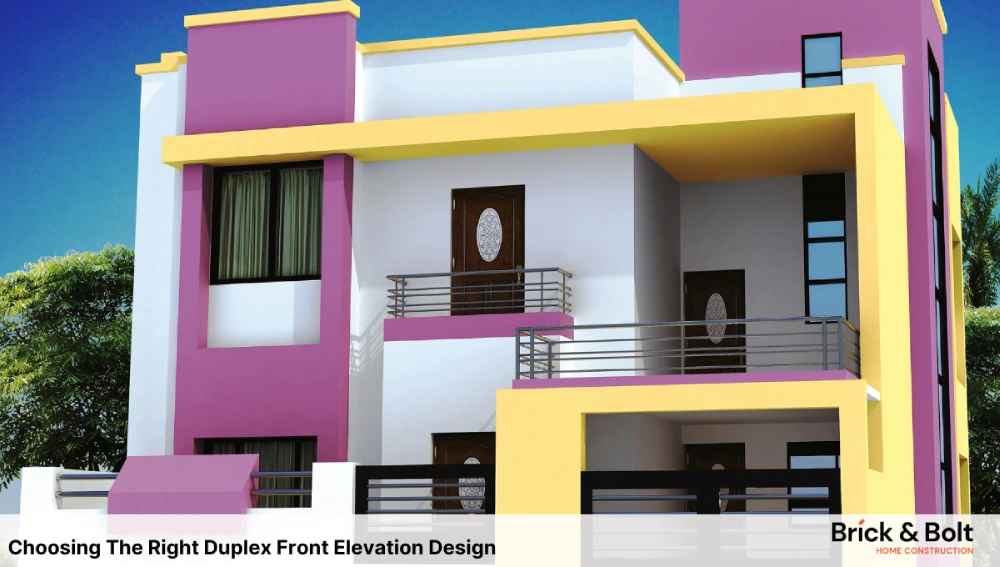
Modern duplex elevation often involves a very minimalistic and sleek look with open floor plans. You can have flat roofs and large floor-to-ceiling windows and incorporate geometric shapes to enhance the exterior. 

Modern designs also involve using materials like steel, glass, and concrete for a more elegant finish. 

Traditional Duplex

A tradition duplex home elavation often sides towards a more classic look, involving symmetrical designs and symmetrical windows and doors. Some elements of its exterior are gabled roofs, covered porches, cornerstones, etc. the materials used for the exterior is usually brick, stone, or wood. For more affordable options, consider exploring Low-Cost Normal House Front Elevation Designs to achieve a similar aesthetic.

Craftsman Duplex

This duplex design is inspired by the American Arts and Crafts movement and emphasizes natural materials and handcrafted details. Some features of this craftsman duplex home elevation are gabled or hipped roofs with wide eaves, wood shingles or stone veneer, exposed beams, porches with tapered columns, etc. 

Mediterranean Duplex

This style imitates the style of houses found around the Mediterranean Sea. Here, the walls will usually be of warm color tones like ochre or terracotta, the doorways and windows will be arched, the balconies and railings will be wrought iron, and the roofs will be red tiled. 

Colonial Duplex

This style reflects the architectural style of America. Some features include a symmetrical facade, rectangular shape, and double-hung windows with shutters. The materials used here are usually brick or wood. 

This type of duplex home may even have a central doorway with a pediment—a triangular structure above the door. 

Ranch Duplex

A ranch duplex is a single-story building with two homes placed side-by-side. The elevation design mostly comprises horizontal lines and has a simple but neat look.

This type of duplex includes low-profile roofs, open floor plans, wide eaves, attached garages, outdoor patios or decks, etc. The materials used here are brick, stone veneer, and wood siding. 

Choosing The Right Duplex Front Elevation Design

Choosing The Right Duplex Front Elevation Design

No matter how many styles you see, there will always be one style that sticks to your heart and stays. You need to find that design and incorporate them into your duplex. Here are some things you can do to find the style that suits your taste. 

  • First, decide what type of design you want for your duplex (modern, traditional, craftsman, Mediterranean, colonial, or ranch).
  • Consider factors like your property size, sun exposure, and codes and regulations that prohibit any style, etc. 
  • Decide how much of a budget you are going to allot for this design. 
  • Explore your options, consult professional architects or builders, and discuss your desired design choices. 

Conclusion

Remember, your house is a reflection of your personality. So, take your time, consider all the factors, and decide on your duplex house front elevation design. Duplex can be done in 1bhk, 2bhk, 3bhk house plans

Consult a professional if you are confused and don’t know what to choose. They can give you ideas and help you figure out your desired design. 

FAQs

1) What is a duplex house?

A duplex house is a residential building that has two separate homes joined together. The houses may be one above the other or placed beside each other. These houses have a common wall separating them. 

2) What is a modern design for your duplex house front elevation?

Modern duplex elevation often involves a very minimalistic and sleek look with open floor plans. You can have flat roofs and large floor-to-ceiling windows and incorporate geometric shapes to enhance the exterior. 

Modern designs also involve using materials like steel, glass, and concrete for a more elegant finish.

3) What materials are best for front elevation designs?

Here are some materials that will be excellent choices for your front elevation designs.

Concrete
Brick
Stone
Metal
Wood
Textured plaster