Home Blog Page 73

Boundary Wall Construction: Enhance Security and Aesthetics

0
Boundary Wall Construction

If you’re a property owners and builder, looking to learn something more about boundary wall, and add aesthetic value to the properties, you’re landed in a right space. Boundary walls are vital as they mark property lines, ensures safety, and add value to homes and businesses. 

Building a boundary wall requires careful planning. You must choose the right materials and follow local codes and regulations. Design and material choices can vary based on budget, purpose, and style. So, each boundary wall is unique. A well-built boundary wall is important for any property which adds to its beauty. This applies to private homes, industrial complexes, and public institutions.

What is the Boundary wall construction?
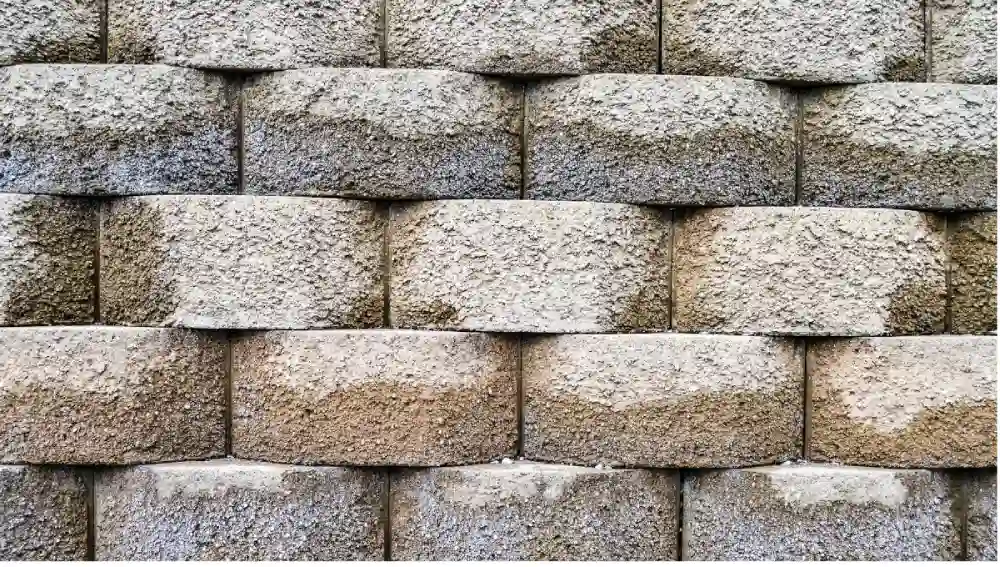
Boundary Wall Construction

Any structure built along or near the edge of a property to define its borders is called boundary wall. This can include walls, fences, or other types of enclosures. These walls often incorporate security features like spikes, barbed wire, razor wire, or even electric fencing to enhance safety.

When it comes to designing boundary walls, many property owners choose to add cladding for a more attractive appearance. 

Cladding involves applying a layer of decorative materials such as tiles, marble, or Shera panels over the masonry wall. This is especially popular for enhancing the look of institutional buildings and grand bungalows, where stone cladding is commonly used for its elegant finish.

Diverse materials are used to construct boundary walls such as,

  • Bricks
  • Concrete
  • Cement
  • PVC Board
  • Wood
  • Steel

Why it’s important to put boundary wall construction?

important to put boundary wall construction

If you are planning to build a boundary wall, you need to know the importance of constructing the boundary wall on your property. Here are a few important points to know why you need to build a boundary wall.

1. Security:

  • It is the most important factor for an individual or a family. By building the boundary wall, it serves as a first line of defense. Nowadays boundary walls are constructed with security alarm systems that serve different security needs.
  • From the basic alarm system to the modern technology, each system differs from one another with its unique feature.

2. Safety:

  • For families who are living with children and pets, the boundary wall acts as a physical barrier to them. 
  • To avoid unauthorized individuals who create problems with the owner. Sometimes trespassers may walk on the road and will have eyes on what is happening inside which can create the chances of theft.
  • It is better to build a strong boundary wall to have a safer life.

3. Visual Appeal:

High-quality construction and attention to detail ensure that the wall not only serves its functional purpose but also adds aesthetic value. The choice of colors should complement the surrounding environment.

Quality materials such as natural stone, brick, concrete blocks, or metal can give unique textures and finishes that greatly enhance the wall’s appearance.

Lighting can highlight these design features, creating an engaging visual effect, especially at night. 

4. Noise Reduction:

  • The main source of noise rises from the line of sight. By blocking the view with the help of the wall, noise pollution is reduced. The remaining amount of noise reduction depends upon the material you choose for the boundary wall.
  • It is better to choose cement bricks than wood which is built with a double wall as it removes the unwanted noise from the traffic.

5. Privacy:

  • Privacy is one of the important factors for every individual as it denotes fundamental human rights and freedom. Installing boundary walls creates a private space for an individual and protects them from the prying eyes of neighbours and trespassers.

Benefits of Putting boundary wall

  • Doing a cadastral survey (knowing the property boundaries through a survey), helps to maintain a good relationship between the two landowners. 
  • It will avoid conflict between the two owners, and they can live without worry.
  • It helps you to extend your outdoor space and provides more space for your privacy.
  • Having a double-coated wall constructed of bricks may reduce traffic noise. 
  • It prevents unsafe conditions from being a chance of theft or allowing trespassers.

Step by Step process to construct boundary wall

Building a boundary wall will enhance your property’s privacy, and security and give it an elegant look. To build boundary walls, you need to know the step-by-step process to install boundary walls. Here are a few steps to build the wall.

1. Planning and Legal Compliance

  • Plan to decide with the height of the wall, which material is suitable, how much thickness is required, and selection of style according to your building.
  • Get approval from the necessary authorities before installing a wall.
  • If the wall is on shared boundaries, then raise the Party Wall Agreement to share equal expenses with neighbours.

2. Material Acquisition

  • The selection process depends on the material you choose to build the wall.
  • You can choose materials like wood, stones, cement, and bricks to install the wall.
  • Buying bulk materials helps to reduce costs, but note that if you have enough space to store these things.
  • Depending on the design, additional materials such as paint, rebar (steel rods), sand, and cement may be required.

3. Preparing the Site

  • At the marked location, dig a trench accurately in the site.
  • Dig the trench in the measured way based on the wall height and soil condition.
  • Mix the concrete mixture and pour it into the trench according to your plan in the correct proportions to get a solid formation.

4. Building the Wall

  • If concrete sets to solid formation similar to Concrete Wall Panels, then start to build the wall with the required materials.
  • Walls can be raised according to your plan.
  • Make the plan lively to get an accurate rate of your plan.
  • If you are facing any queries or problems at the time of construction, clarify them with civil engineers.

5. Installing Additional Features

  • The main reason to construct boundary walls is for safety purposes.
  • Adding additional features like CCTV, seating area, and water features can help you spend your time in a relaxed way.

6. Maintenance

  • Building a wall is an easy task, but maintaining it is a crucial part of the proper functionality of the boundary wall.
  • If you constructed the wall, it should be maintained in good condition to last forever.
  • Keeping plants in the wall looks decorative, it should be maintained regularly to avoid overgrowing towards the wall.
  • Better paint a wall and maintain it for long-lasting years.

So, these are the things you need to know before constructing the boundary wall.

Conclusion

Boundary wall construction is a critical aspect of property development, providing security, privacy, and aesthetic appeal. Several factors, including the plan structure, wall height, and materials used, influence the cost and design of a boundary wall. 

These elements can result in a wide range of prices, making considering budget constraints and specific needs essential. For any type of hassle-free construction, look no further than Brick and Bolt, your trusted construction partner.

FAQs

1. How much does a boundary wall cost?


In India, the cost of constructing a boundary wall depends on the structure plan and the height of the wall, which typically ranges from 2 to 4 feet. The price for constructing a boundary wall can vary from Rs. 60 to Rs. 500 per square foot, depending on the materials and design chosen.

2. What is the rule of the boundary wall?


The minimum height of the boundary wall is 4 to 5 feet. It should get approval from the official before constructing the wall. If it is a shared wall, then notify your neighbour to share expenses. If it is not a shared wall, then your neighbor cannot build anything on the wall.

3. How thick is a boundary wall in feet?


The thickness of the boundary wall depends on the factor you choose:
Stone – 8 – 24 inches
Bricks – 4 – 12 inches
Concrete block – 4 – 8 inches
Wood – 1 – 2 inches


House Construction Contract Agreement

0
House Construction Contract Agreement

A house construction contract is a hidden legal agreement that both contractors and owners should sign before starting the construction project. Whether you are the contractor of the client, it is important that you should understand what the agreement is and what it entails. 

In this article, we will discuss all about house construction contract agreement, its types, importance, and the key components of the agreement. Read till the end to learn all about it. 

What Is A House Construction Contract Or Agreement?

What Is A House Construction Contract Or Agreement

A house construction agreement or contract is a legal bond between the contractor and the owner. The deal encompasses the details of terms and conditions put forth by both the builder and the homeowner. 

The agreement entitles the milestones, timelines, total cost, down payments, approval, insurance, and termination clauses of the project. 

This contract serves as a roadmap for the entire construction process and ensures to protect the interests of the concerned personnel. 

Types of Construction Contracts

Based on the location, type of project, and the relationship between the contractor and the owner, the types may differ. The types of home construction agreements are listed below.

Fixed-Price Contracts

A fixed-price contract includes a predetermined, hefty amount of money that remains the same throughout the completion of the project. The contractor and the construction owner will form the agreement based on the predetermined price. 

Also called lump-sum contracts or fixed-sum contracts, fixed-type contracts are normally used in large construction projects. This type of contract gives the owner security and assurance as they already know how much they will pay, and there are no surprise expenses. 

In some cases, this contract will maintain the initial amount even if the material expenses and time required increase. 

Pros

The advantages of fixed-price contracts include:

  • Pre-agreed cost
  • Simplifies the contract procedures
  • An achievable milestone
  • Provides security to the owner and assurance to the contractor that the fixed price will be paid.

Cons

The disadvantages and limitations of a fixed-price contract are listed below:

  • In cases where the expenses go past the fixed amount, the contractor might have to bear the costs. 
  • This contract is only beneficial in situations where accurate estimates of the expenses are available.

Cost-Plus Contracts

A cost-plus contract or cost-reimbursement contract in a construction agreement focuses on paying the project cost and the contractor’s overhead costs. This includes the repayment cost and the contractor’s profit.

This type of contract is preferred in construction projects where the accurate costs cannot be determined. The buyer agrees to reimburse the contractor for the expenses and gives an additional profit for their work. 

Pros

The pros of the cost-plus contract are listed below:

  • They are lower in risk and have easier negotiations.
  • The contractors may have incentives.
  • There is a guaranteed profit for the contractor.
  • The house owner can start the project without a clear picture and build it later.
  • Increased transparency and builds trust between the owner and the contractor during the agreement

Cons

The disadvantages of the cost-plus contract are listed below:

  • The final cost can be determined, but it may not be clear on the total expenses.
  • Contractors must be careful that their fee is not reduced at any point.
  • Needs a trusted partner; if not, disputes may arise. 

Time And Materials Contract.

Time And Materials Contract.

The time and material (T&M) contract is different from the ones we discussed above. In this type of contract, the owner pays the builder an hourly wage and gives the exact amount spent to purchase a particular material. 

The price is mostly an estimate, and it may not necessarily be an estimated amount for the total project. This type of contract is often used in construction but can also be used in software development, graphic design, marketing, and other areas.

Pros

  • The time and material contract advantages are listed below:
  • The scope of the project can be adjusted at any point in time.
  • Unlike a fixed-price contract, the fee is paid only when the work is done.
  • There is transparency for the owner related to materials used and facilities utilised. 

Cons

The cons of the time and materials contract are listed below:

  • The lack of a maximum cap in the contract can increase the owner’s spending. 
  • The hourly wage should be stated clearly to avoid future disputes.

Unit Pricing Contracts

As the name suggests, in unit pricing contracts, the constructor and the owner allocate a particular amount for the completion of a part or unit of work. Based on this, the total estimate for construction work can be calculated. 

Unit pricing contracts can also be called measurement contracts, remeasurement contracts, or measure-and-pay contracts. The predetermined unit price contains the entire cost of undertaking a part of the construction work, including the cost of materials, labour, etc. The buyer will pay the amount once the work is completed. 

Pros

The pros of unit pricing contracts are listed below:

  • The charge for the project can be added or deleted depending on the unit’s need. 
  • The transparency in cost is the biggest plus in unit contracts.
  • The contractor can be at ease knowing that he will be paid for the work.

Cons

The disadvantages of unit pricing contracts are listed below:

  • The contractor may delay the work in some cases.
  • At the beginning of the project, it is difficult to set a cost for the project.
  • Generally, the contractors are not paid at the mentioned timeline. 

Importance of a House Construction Agreement

The house construction agreement plays a crucial role in house construction due to the given reasons below:

  • Understanding: The agreement builds a mutual understanding and provides clarity on the scope of the project.
  • Guarded Interest: The home construction is a binding agreement; hence, both the contractor and the owner need not worry about the payment and the results.
  • Well-structured Payment Terms: The payment terms are transparent in most of the house contract types. 
  • Risk Management: In certain types of house contracts, namely unit contracts, the risk is shared by both parties.
  • Legal Document: The contract is a legal document under the control of law and hence can be used in case of dispute.

Key Components of a House Construction Agreement

No matter the type of house construction agreement, there are key points that the agreement should contain. 

  • Details of Project: The contract should contain the details of the work, namely the aim of the work, deadlines, specified instruments if necessary, cost of the project, quality, and related things.
  • Details of Contractor: The contractor’s details, including qualifications, contact information, address, or licence, are necessary.
  • Time Schedule: Milestones or deadlines for project completion should be specified.
  • Warranty: In case of any defects, the clause must underline the contractor’s role in it. 
  • Termination: The determination deadline and dispute resolution clauses should be outlined. 
  • Signature: The agreement should contain both parties’ signatures for legal sources. 

Sample Agreement 

 Owner (“Client”): 

Name: [Client’s Full Name]

Address: [Client’s Address]

Phone: [Client’s Phone Number]

Email: [Client’s Email Address]

Contractor (“Contractor”):

Name: [Contractor’s Full Name/Company Name]

Address: [Contractor’s Address]

Phone: [Contractor’s Phone Number]

Email: [Contractor’s Email Address]

Licence Number: [Contractor’s Licence Number]

  1. Scope of Work 
  • In the specified property address, the contractor agrees to conduct work. 
  • Description of Work: [Detailed summary of the work to be conducted]
  • Plans and Specifications: [Reference to attached plans, drawings, and specifications]
  1. Project Timeline
  • Start Date: [Date]
  • Completion Date: [Date]
  • Milestones: [List of project milestones with expected completion dates]
  1. Contract Price and Payment Terms
  • Total Contract Price: Rs.[Total Amount]
  • Payment Schedule:

– Down Payment: [Amount] due on [Date]

– Progress Payments: Rs.[Amount] due on [Dates] or upon completion of specified milestones

– Final Payment: Rs.[Amount] due upon completion and acceptance of the work

  1. Materials and Specifications
  • Materials to be Used: [List of materials, brands, models, etc.]
  • Quality Standards: [Description of the quality standards to be met]
  1. Warranties
  • Workmanship Warranty: [Duration of warranty on workmanship]
  • Material and Conditional Warranty: [Period of Warranty]
  1. Termination
  • Termination by Client: In case of delay or other endeavours, the client may terminate the contract. 
  • Termination by Contractor: In case the client delays payment or is not respectful, the contractor may terminate the client. 
  1. Governing Law: This contract shall be governed by the laws of the state of [state].
  • Signatures

 – Client’s Signature: Date: 

– Contractor’s Signature: Date: 

Conclusion

A house construction agreement is crucial proof that protects both the contractor and the owner in case of problems. The sample format gives an insight into the structure of the contract. Make sure to seek help from professionals if you have further queries. 

FAQs

1. What is a Joint Development Agreement?


The joint development agreement is between people who collaborate to do a specific project and share the benefits. 

2. Can I make my contract?


Yes, you can make your contract, but seeking professional help will move it in a much more legal way. 

3. How do I create a house construction quotation?


You can create a house construction quotation by including a clear statement of project scope, deadlines, payment, and materials.

Vernacular Architecture: Blending History and Sustainability 

0
Indian Vernacular Architecture

In a world where trends change every day, vernacular architecture is a style anchored to tradition and history. It serves as a constant inspiration to architects across the globe. Read on to learn more about it. 

What is Vernacular Architecture?

An architectural style that evolves from the needs of the region—rather than individual tastes, current trends or aesthetic considerations—can be termed as vernacular. It develops organically and is shaped by indigenous cultures, climatic conditions, geographical features and locally available materials. Vernacular architecture can loosely be defined as architecture of the masses.

What are the Typical Features and Benefits of Vernacular Architecture?

Since vernacular architecture is unique to each location, architectural features evolve locally over time. However, a few typical characteristics persist in vernacular structures of every region. 

Material Usage: 

The style emerged from the basic need for shelter for survival, thus leading to the use of locally available and easily accessible materials, such as soil, stones and wood from the same site. 

Cost:

Materials are generally sourced from the site itself, and local community members function as labourers in constructing vernacular structures. This results in a drastic reduction in overall cost.

Effect of Environmental Conditions:

Site topography, terrain and vegetation are major factors that influence building orientation and built forms, while passive design strategies such as shading devices (for rain and sun), insulating elements and wind-catchers are developed to withstand local micro-climates.

Functionality and Adaptability:

Vernacular structures develop mainly from the specific needs of the community, with functionality being the core aspect. They evolve to accommodate the growing and changing needs of the community.

Cultural and Historical Basis:

Predominantly based on wisdom gained from generations past, vernacular structures are representative of local history and traditions. They arise from the specific needs and cultural ethos of the people who use it and adapt to accommodate their growing requirements.

Sustainability:

Although the term ‘sustainability’ originally emerged during the late 20th century, its principles have been adopted in vernacular structures for centuries. Built forms with reduced carbon footprints, which are in close proximity to nature, make these structures a seamless blend of history and eco-conscience. 

What are the Limitations of Vernacular Architecture?

Although vernacular architecture presents a seemingly ideal style to combat sustainability, there are certain limitations which can hinder its practical development.

Loss of Historical Knowledge:

Since vernacular architecture evolves over multiple centuries, knowledge of a lot of essential methodologies that made such structures successful in the past, may be lost over subsequent generations, resulting in inefficiency.

Labour Requirements:

Technological evolution has resulted in faster, machine-intensive construction, while vernacular architecture is still heavily dependent on manual labour. Difficulty in finding skilled labour is also caused due to the labour-intensive methodologies of this style.

Urban Development:

Rapid urbanisation has led to difficulty in sourcing local materials and extensive transportation is often required to bring materials from outer fringes of cities to the actual construction site, thereby increasing cost. Size of plots have also drastically reduced, rendering obsolete some of the methodologies that were historically developed to maximise natural sunlight and ventilation.

Vernacular Architecture Through History

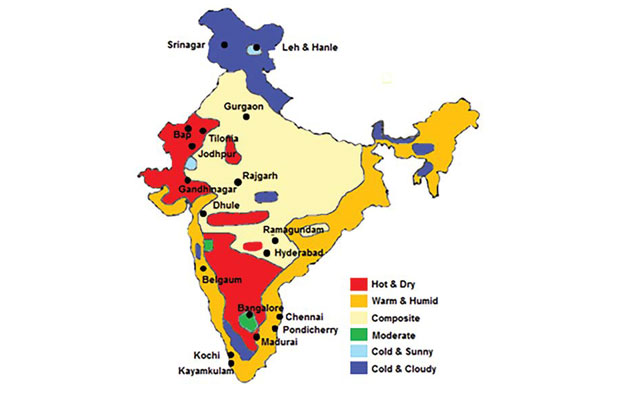
Throughout history, architecture has provided an accurate means of recording significant historical events, giving an insight into local culture and traditions prevailing through different eras. Houses, religious structures, cultural centres and industrial buildings are representatives of these cultures which have survived the political turmoils of various centuries. In India, these structures were built based on their climatic zones and terrain conditions.

A map showing the six climatic zones of India

A map showing the six climatic zones of India

Image source: https://www.saurenergy.com/solar-energy-articles/mono-vs-poly-a-climatic-study-in-cold-zones

Traditional Houses of Kerala:

In Kerala, residences are shaped by halls arranged around a central courtyard to combat the warm and humid climate. Known as nalukettu (4 halls), ettukettu (8 halls) and pathinaarukettu (16 halls), these homes feature sloping tiled roofs, thick brick or masonry walls and semi-open verandahs designed to alleviate heavy rains and hot summers. The principles of Vastu Shastra—an ancient Indian philosophy based on science and allocating optimised orientations to every room—guide the basic design of these houses.

Dhajji Dewari Construction in Kashmir:

Another representative of historical vernacular architecture is the Dhajji Dewari construction based in Kashmir. Timber frames infilled with brick or stone, packed with mud mortar and finished with mud plaster, characterise this construction technology that helps battle the cold and dry climate in the region. Timber frames combined with stone foundations and symmetric forms ensure that these structures are earthquake resistant.

Hindu Temples:

Ancient Hindu temples were also designed differently based on their geographical locations – Nagara (North India), Dravida (South India) and Vesara (Central India). While the core principles of Vastu Shastra were kept intact in all three styles, they differed from each other in their planning and form. Nagara temples featured curvilinear towers above their garbhagriha (inner sanctum) and Dravida temples were crowned with pyramidal structures, while Vesara temples were a blend of the other two. Temples like the Brihadeshwara temple in Thanjavur (built in the 11th century) are considered to be architectural marvels, with their construction techniques being analysed even today.

Historical vernacular built forms bestow us with ancient knowledge gained through centuries of trial and error and serve as a guiding factor for new age architecture.

Vernacular Architecture Today

Globalisation, combined with the evolution of architectural styles and construction technologies, has led to a paradigm shift in contemporary architecture. However, vernacular methods and principles continue to inspire numerous modern day designs due to their inherent quality of sustainability. 

Auroville Township Southern India: 

Auroville is one such experimental township in Southern India, where buildings are designed in coherence with their natural environment. Integration of rainwater harvesting systems and domestic waste treatment plants, with the use of local resources such as mud blocks and rammed earth, has helped create truly sustainable communities.

The Rajkumari Ratnavati School in Jaisalmer :

The Rajkumari Ratnavati School in Jaisalmer, designed by Diana Kellogg Architects, also uses vernacular principles to create a modern and functional structure. Jaalis and structure made with locally hand-carved Jaisalmer sandstone, combined with solar panel canopies and the elliptical form of the building, enable maximum airflow in the hot and dry region, while ensuring a reduced carbon footprint.

Pioneers of Vernacular Architecture in Contemporary Practice:

Prominent architects like Hassan Fathy, Laurie Baker, BV Doshi, Anupama Kundoo and Chitra Vishwanath (Biome Environmental Solutions) are paving the way forward for young architects, with their designs serving as prime examples of vernacular architecture adapted to fulfil contemporary urban needs.

Architecture for Tomorrow

Today’s architecture is increasingly defined by mass produced structures that are highly derivative of global trends. This is leading to the production of buildings resembling glass boxes, that are neither sensitive to the local climate nor reflective of regional cultures. 

Invoking a sense of character, identity and singularity, vernacular structures keep the cultural and historic significance of a region alive, while also giving a boost to local economies through employment. With the rising threat of global warming, vernacular architectural design—combined with contemporary construction technology—can play a significant role in creating a more sustainable tomorrow for future generations. 

FAQs

What is the most famous vernacular architecture?

One of the most famous examples of vernacular architecture is the traditional Japanese minka, characterized by its wooden construction, steeply pitched roofs, and open interior spaces designed to adapt to the climate and lifestyle. Other notable examples include the Adobe houses in the American Southwest, Tudor-style cottages in England, and rondavels in Southern Africa, each reflecting local materials and cultural practices.

What is the principle of vernacular architecture?

The principle of vernacular architecture is to use local materials, traditional building techniques, and design methods that respond to the environmental, cultural, and social conditions of a specific region. It emphasizes functionality, sustainability, and harmony with the local context, often reflecting the accumulated knowledge and practices of the community.

Exploring Types of Flooring for Luxury Interiors

0
Flooring for Luxury Interiors

Selecting the right type of flooring material can be a daunting task, considering that it is one of the most essential elements that can “make or break” the look of your home. A luxurious or high-end floor can instantly elevate any space and define the tone of the house, ranging from warm and inviting to cold and unwelcoming. So, what are the flooring materials available to add timeless elegance to your home and what are the factors you need to look out for? Read on to learn more.

Types of Flooring for Luxury Interiors:

Flooring materials can be broadly categorised into two types- natural and manufactured. While natural materials are often preferred by those who wish to incorporate sustainability in their homes, manufactured materials may provide a wider range of options to choose from and increased customisation.

Natural Flooring Materials

  1. Onyx
  2. Marble
  3. Granite

Manufactured Flooring Materials

  1. Vitrified Tiles
  2. Terrazzo

Natural Flooring Materials

A wide range of natural materials with high-end finishes are available in the market today. These are an ideal choice if sustainability is a factor to be considered for your project and if you are looking for more earthy, natural tones in your home.

Onyx

This is a type of semi-precious stone made of silica and quartz components. Its translucent property and wide range of colours, make it a highly sought-after material in luxury interiors, offering infinite floor design possibilities. Generally having a flexiglass backing to increase strength, Onyx can be backlit with lighting fixtures, resulting in a unique illuminated finish. Onyx prices generally start from ₹1500/sq ft.

Pros and Cons of Onyx Flooring

With proper installation and regular care, Onyx can be a highly durable material lasting through decades and not requiring replacement. It delivers a visually unparalleled finish to any surface.

However, Onyx requires heavy maintenance with regular application of specialised stone cleaning products and repolishing. It is highly susceptible to stains, discolouration and scratches. Its delicate nature makes it difficult to handle and transport.

Marble

Marble, a metamorphic formation of limestone, is an ageless stone incorporating elegance and subtlety. While marble is generally highly polished to give a lustrous look, it is also available in rougher finishes like sand-blasted, flamed and bush-hammered. Some of the most popular types of Italian marble are Botticino, Bianco Beige and Italian Dyna. Luxury marble prices start from ₹200/sq ft and go up to ₹10000/sq ft.

Pros and Cons of Marble Flooring

Marble is a highly durable material if installed properly. It can last at least two decades, and its strength increases over time. The stone does not undergo any expansion or contraction with temperature changes and can help keep your home cooler during summer. 

However, it can be easily chipped and scratched. Since it is a soft and porous stone, it can also absorb stains easily when its polish wears out. Minor scratches and stains can nevertheless be removed with re-polishing. Marble can be avoided in locations with colder climates due to its innate cool nature.

Granite

Granite is an igneous rock composed of multiple minerals, which dispense every rock with a different texture and grain pattern. Available in numerous colours ranging from cool colours like greys, blacks, greens and blues to warmer hues of browns and yellows, granite is one of the most commonly used flooring materials. Its numerous finishing possibilities—polished, flame-finished, lappato, hammered,etc.—make it a sought-after flooring material to display opulence. Premium granite can cost between ₹300/sq ft to ₹2000/ sq ft.

Pros and Cons of Granite Flooring

Granite is available in almost every colour and shade, with endless textures and patterns, enabling it to blend with any type of interior. It also keeps the house cool during summer and does not easily get scratched or stained since it is a hard stone.

However, granite is a heavy stone, which decreases its ease of workability, transport and labour. Therefore, installation charges are generally higher compared to other stones. It may also be difficult to differentiate between the standard and premium qualities of granite.

Manufactured Flooring Materials

Finding the right natural material which blends well with the rest of your home may not be easy. In such cases, materials which are factory-made or manufactured are an ideal alternative.

Vitrified Tiles

While vitrified tiles are the most commonly used materials for budget flooring, they are also available in high-end ranges that can inject modern sophistication into your home. Digitally printed imitation tiles of marble, granite, and onyx provide a cheaper alternative with lower maintenance costs compared to the actual stones. They are available in various types, such as full-body vitrified, Glazed vitrified tiles (GVT), and Double charged vitrified tiles (DCVT), offering endless aesthetic possibilities. The price range of these tiles begins from ₹150/sq ft. and can go up to ₹5000/sq ft.

Pros and Cons of Vitrified Tiles

Vitrified tiles are generally resistant to scratches and chemicals. Their non-porous quality also ensures that stains do not get absorbed. Availability in a wide range of sizes, colours and patterns makes them a versatile flooring choice.

In case of damage, it may be difficult to replace any single tile in the space. Unless proper grouting and laying are done, these tiles may not add an elegant finish to the floor. The manufacture of vitrified tiles also contributes to heavy carbon dioxide emissions, making them environmentally unsustainable.

Terrazzo

A terrazzo floor is created by pouring small chips of marble, granite or other stones into a base of concrete or epoxy, which is then polished to create a monolithic floor. Such floors are unique and add a colourful pop to any space. Due to the various materials that can be used to create Terrazzo flooring, its cost can vary widely. However, its price generally starts from ₹200/sq ft.

Pros and Cons of Terrazzo flooring

Since Terrazzo flooring is created on-site, it can be moulded to any room shape while maintaining its monolithic aesthetic. It can also be made with leftover waste materials after construction, requires minimal maintenance, and is highly durable. Stone chips of any size, pattern and colour can be added to a terrazzo mix, ensuring unlimited customisation. 

Laying a terrazzo floor is labour and time intensive and requires skilled labour. Unless properly finished and polished, stone chips can protrude from the floor, creating unwelcome undulations, which will require refinishing.

Summary

To summarise, natural flooring materials such as Onyx, Marble and Granite may have higher installation and maintenance costs, but are more durable and sustainable. Manufactured materials, however, provide the added benefits of higher customizability and ease in installation. 

Therefore, it is crucial to select a flooring material that not only blends well with the rest of the interiors but is also durable, blemish-resistant and easy to maintain. Hiring an expert with industrial knowledge is an ideal option. Please contact Brick & Bolt, an Indian construction company, to hire experts who can choose the perfect flooring material to suit your needs and build your dream home!

FAQS

Which material is better for flooring?

The best flooring material depends on your specific needs and preferences:
Hardwood: Offers timeless beauty and durability but can be costly and susceptible to scratches and moisture damage.
Tile: Provides durability and water resistance, making it ideal for bathrooms and kitchens; options include ceramic, porcelain, and natural stone.
Luxury Vinyl: Mimics natural materials, is water-resistant, and offers ease of maintenance at a lower cost.

What is luxury vinyl flooring called?

Luxury vinyl flooring is often referred to as Luxury Vinyl Tile (LVT) or Luxury Vinyl Plank (LVP). It mimics the appearance of natural materials like wood or stone while offering durability, water resistance, and easier maintenance.

Which flooring option is most expensive?

The most expensive flooring option is typically high-end natural stone, such as marble or rare granite. These materials are costly due to their extraction, processing, and installation requirements, as well as their durability and aesthetic appeal.

What Is Plinth Beam In Construction?

0
Plinth Beam In Construction

The plinth beam in construction is a crucial factor that holds the building together in the past, present, and future. They distribute the weight equally to the foundation and make the building stand upright. 

This blog helps you to understand one of the important pillars of construction called the plinth beam. 

Plinth Beam Construction

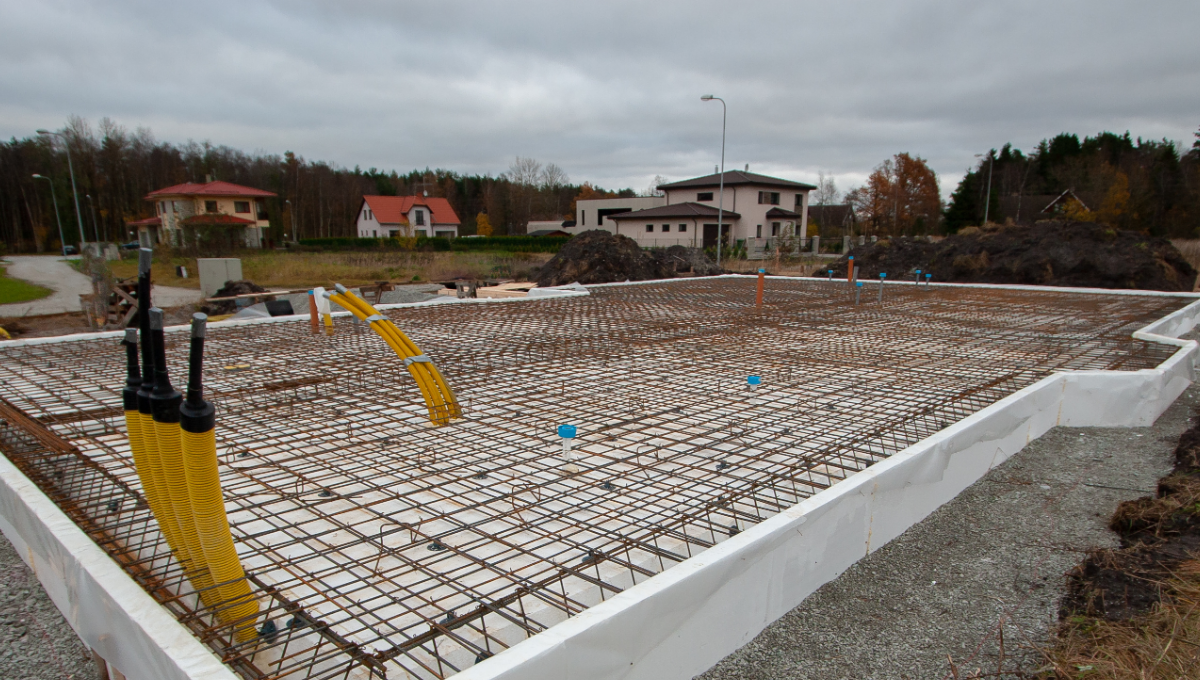
A plinth beam is a reinforcement concrete beam that acts as a bridge between the foundation and the wall. Once the foundation becomes strong, the plinth beam is laid to avoid any cracks or damage from the foundation to the walls. The load of the wall is uniformly distributed to the wall due to the plinth beam. 

Minimum Dimensions of Plinth Beam

Minimum Dimensions of Plinth Beam

M2O is the least concrete grade that is present in plinth beams. In case the mixture is blended using labour, then ten per cent of cement should be added to the mixture. The depth of the beam should contain a minimum diameter of 200 mm. This must span the entire width of the foundation’s top course. 

At the bottom, the plinth beam contains two 12 mm-diameter bars. In addition to it, another two 10 mm diameters bars are placed above. Stirrups are placed at a distance of 150 mm and have a minimum diameter of 6 mm. 

The plinth beam shutter should be placed firmly and tightly sealed before pouring the concrete. The reinforcement is covered with a 25-mm concrete layer and sealed compactly. The plinth beam is now ready and protects the building. 

Type of Plinth Beam 

There are different types of plinth beams used in construction depending on the purpose and design. The types of plinth beams include:

Plain Plinth Beam

Plain plinth beam Design is one of the common types of plinth beam used in construction. It has a basic design that can be used when there is stable soil and requires light loads.

Reinforced Concrete Plinth Beam

Reinforced concrete plinth beams are used in construction that requires heavy load capacity and strength. The spell behind the strength is that the beam is mixed with concrete and reinfocement, which helps to bear heavier loads. They provide strength and support to modern buildings.

Cantilevered Plinth Beam

When the exterior walls expand above the beams of the foundation, a cantilevered plinth beam is used. This type of beam can be used in balconies and verandas and to support a part of a building that is overhanging.

Importance of Plinth Beams in Construction

The plinth beam is crucial in construction as it gives support to sub-columns by spreading their  weight to the ground. The plinth beam helps to strengthen the foundation. Additionally, the plinth beam traps soil settlements by absorbing soil movements and maintains the building structure. 

The plinth beam protects the building from seismic shocks and protects the buildings during earthquakes. This absorbs the horizontal stress and provides firmness in the building during earthquakes. 

How Can a Plinth Beam Strengthen a Construction?

Increased Load Distribution

The plinth beam takes in the stress and distributes it throughout the foundation. The plinth beam spreads this stress uniformly and protects the building from any cracks or bends. When there is uneven support resting on a side of a building, the plinth beam can withstand the extra weight and stabilise the building weight.

Moisture Protection

The plinth beams are built above the ground level and encompass a damp-proof course (DPC) sometimes. It is a waterproof layer that is kept above the beam. The DPC traps the water from rising to the ground and entering the walls. This protects against any moulds, dampness, or deterioration of the buildings.

Reduced Cracking

The existing cracks or upcoming cracks can be prevented as the plinth beam balances the stress. Moreover, plinth beams like reinforced beams will absorb certain vibrations and withstand further risks. 

Disadvantages of Avoiding Plinth Beams in Construction

There are certain disadvantages due to the lack of plinth beams in construction. The disadvantages include:

Uneven Weight Distribution

The lack of a plinth beam will result in uneven weight distribution in the foundation. This affects the settling of uneven parts and the sinking of the foundation. It later develops cracks in floors, windows, doors, and structures.

Stability Reduction

When a plinth beam goes missing, the binding of walls loses its composition and is easily susceptible to strong winds and earthquakes. This leads to exponential growth in cracks and collapse of buildings.

Problem in Dampness

Plinth beams prevent the building from drenching from water by reducing the rise of water levels. As there will be no barrier to stop the water level, the building will be affected by mould, leading to damage to materials in buildings. 

Conclusion

Plinth beams play a vital role in maintaining the structure of the building. They are important because they spread the weight over the foundation, act as a bridge between the superstructure and foundation, withstand earthquakes, reduce cracks, and present potential collapse of buildings.

FAQs

1. What is the purpose of a plinth beam?


The plinth beam links the wall and foundation by preventing cracks or any expansion in the building.

2. Where to place a plinth beam?


The plinth beam is placed between the foundation and the wall. 

3. What is the size of a plinth beam?


The general size of a plinth beam is nine inches in width. But it may change depending on the floor structure. 

Difference Between Concrete And Cement

0
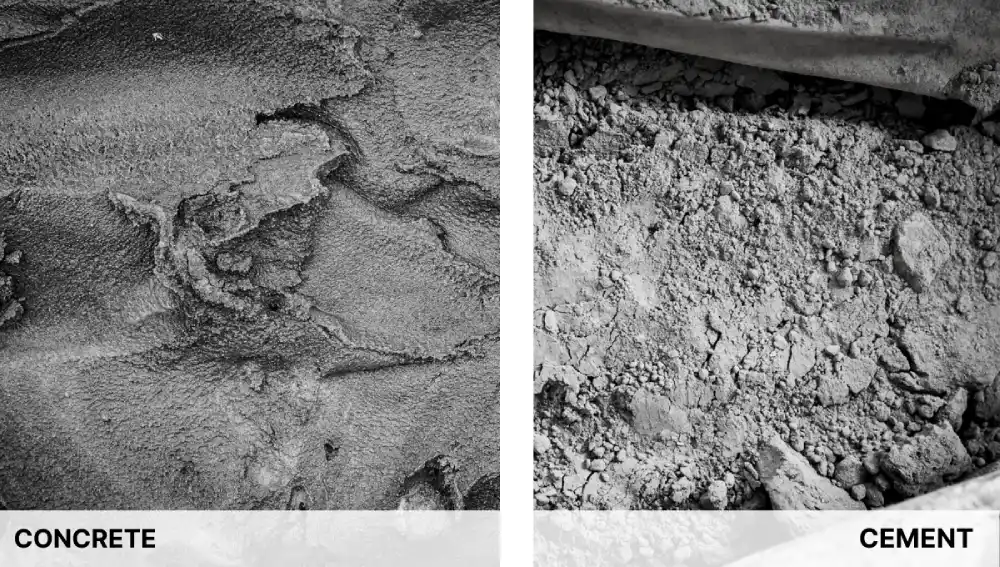
CEMENT VS CONCRETE

Concrete and cement are crucial elements in construction. They bind together the building blocks of any building and give it shape, strength, and tenacity.

While undertaking your dream construction project, you might encounter commonly held doubts about what kind of cement mixture to use, when and where to use concrete, what types of concrete and cement are available, and much more. This article will lessen your burden in this doubtful scenario and help you learn the basic difference between concrete and cement, what they are, their kinds, and how they contribute to building construction.

The Basic Difference Between Concrete and Cement

Concrete and cement are distinct yet relative elements of construction. Concrete cannot exist without cement, and cement cannot be used much as an individual element unless mixed together with other components such as sand, gravel, crushed stones, and other aggregates.

FeaturesConcreteCement
FunctionConstruction material.Binding agent in concrete, mortar, etc.
IngredientsWater, cement, sand, gravel.Limestone, clay, gypsum.
StrengthHigh compressive strength and low tensile strength.High compressive strength and .low tensile strength.
Used InUsed in building bridges, pavements, ceilings, etc.Used to make concrete, mortar, plaster, and so on.
AppearanceMostly grayish white. It can turn coloured with the addition of pigments.Grayish white.
WorkabilityIt has low to moderate to high workability. You can set its workability as per your project’s requirements.It works best when mixed with water.
Setting TimeVaries based on the type of concrete. Typically, it takes some days to harden and set.Sets and hardens quickly when mixed with water.
DurabilityHighly durable. Can resist extreme weather conditions to a greater extent.It can get cracked and damaged.
Water ResistanceNot usually waterproof. It can become water-resistant when mixed with elements that have water-resistance properties.Not resistant to water.
Fire ResistanceNon-flammable, non-combustible, and non-explosive material.Non-flammable, non-combustible, and non-explosive material.
CostExpensive than cement as it contains many ingredients like cement, sand, aggregates, water and admixtures.Less expensive than concrete as it’s an individual material..
AvailabilityOften mixed on site of construction. Its availability is highly dependent on the availability of cement and other materials.Sold in bags in bulk quantities.

How is Cement Made?

cement

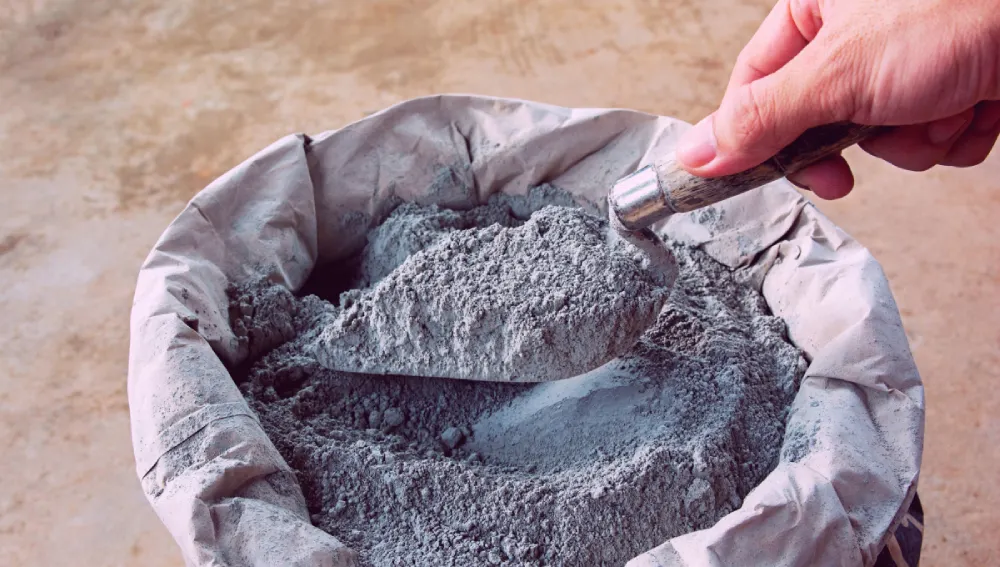
Cement is usually made from of limestone, clay, or gypsum.These components are crushed and added with iron ore, silica, or other materials to create the required cement type. The mixture is then burned in a kiln at extremely high temperatures and undergoes sintering, which turns the mixture into a clinker. The clinker is cooled down and ground into a fine powder called cement.

How is Concrete Made?

Concrete

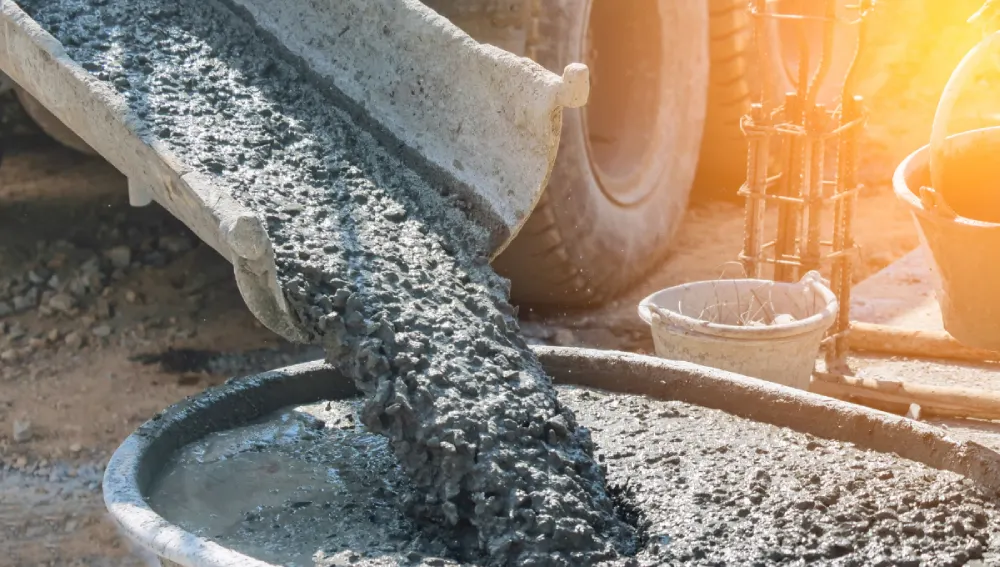
Concrete primarily consists of four components: Portland cement, water, sand and aggregates. The cement is mixed with water and other additives such as sand, crushed rocks, or gravel to make the concrete more compact. Water acts as a hydrating agent and helps create a paste-like substance along with the cement, which coats the aggregates. 

Concrete Mixtures Proportions

The concrete mixture contains the ingredients in different proportions per construction requirements. The ingredients are mixed to form a uniform paste.

Grade of the ConcreteRatio (Cement:Sand:Coarse Aggregate)MPa (Strength)
M51:5:105
M7.51:4:87.5
M101:3:610
M151:2:415
M201:1.5:320

Concrete grade refers to the minimum compressive strength of the mixture after 28 days since it was poured. The compressive strength of concrete is measured in megapascals and is denoted by MPa.

Types of Cement

Cement is usually differentiated based on its chemical composition and the resulting properties. Some widely available cement types include the following:

Types of Concrete

Concrete types are categorized based on their strength, density, application, and other properties. Some of the types of concrete mixtures available are:

What is Best for Construction: Concrete vs Mortar?

Cement acts as a binding agent in both concrete and mortar mixtures. A concrete mixture consists of sand, water, and other aggregates alongside cement. A mortar mixture, on the other hand, consists of just cement, sand, and water alone.

Concrete and mortar mixtures come with unique perks and benefits. Concrete is recommended for structural applications that require high compressive strength, such as slabs, beams, pavements, and others. Mortar is helpful in filling gaps between bricks, stones, or blocks. It is also applied to stucco.

The pros and cons of concrete and mortar are as follows:

ConcreteMortar
ProsHighly durable, strong in compression, versatile, easily available, and cost-effective.Highly adhesive, easily workable, and helpful in repair works.
ConsWeak in tension, requires formwork for shaping.It has lower strength than concrete

Uses of Cement

Cement is a versatile component that is used in many areas of construction. Some of its common applications include:

  • Concrete production
  • Mortar manufacturing
  • Plaster and stucco creations
  • Creating grouts and others.

Uses of Concrete

Concrete finds applications in many ways. Its structural applications include:

  • Foundations
  • Slabs
  • Beams and columns
  • Walls
  • Bridges
  • Dams
  • Tunnels

Non-structural applications include:

  • Roads
  • Sidewalks
  • Driveways
  • Parking lots
  • Swimming pools
  • Fountains
  • Pipes
  • Blocks
  • Panels, and so on

Conclusion

Concrete and cement are highly helpful elements in construction. They help in different applications and provide benefits like strength, durability, structure, and more.

The choice of element to use for construction, whether concrete or cement or other aggregate, is based on the recommendation of the construction professionals. You can follow their guidance, refer to various sources, and find the right material for your construction projects.

FAQs

1. Can cement be used in construction by itself?


No, cement cannot be used in construction by itself. You can mix it with water and other materials to make concrete, mortar, or grout.

2. How much cement is required to make concrete?


The quantity of cement required to make concrete depends on the grade of concrete you wish to make. Thus, based on the concrete’s desired strength, the necessary cement quantity will differ.

3. What is the setting time of concrete?


The initial setting time for concrete is 2 to 4 hours, and the final setting time is 6 to 12 hours. However, concrete continues to gain strength for nearly 28 days through curing.

What is BIM in Architecture?

0
Building Information Modeling

BIM is elaborated as Building Information Modeling, creating unimaginable digital transformation in the architecture, engineering and construction (AEC) industry. It adds professionalism to each stage of the process including planning, designing and construction of projects.

This concept makes the structure of buildings more efficient and collaborative. It potentially deals with complications with high chances of occurrence such as slow deliverables, high cost and lack of communications.

When implementing this technology correctly, you are able to witness reliable results both in small and large-scale projects. To know more about this concept in detail, continue your reading:

What is BIM?

Building Information Modeling

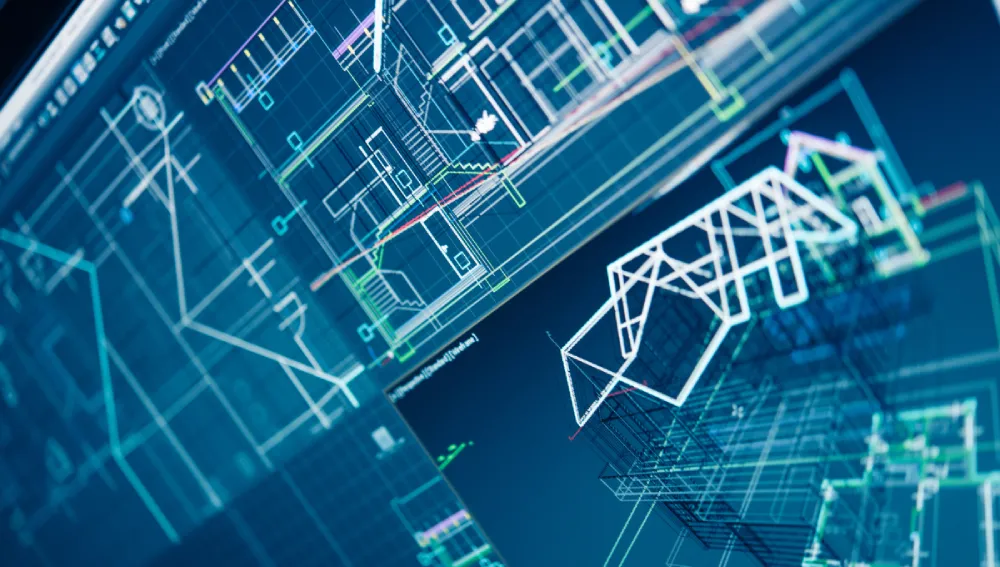
BIM or Building Information Modeling is an innovative 3D design technology that enables streamlined building and infrastructure work. It involves engineers, contractors, architects, real estate developers and other relevant construction professionals to plan for the design aligned with determined goals.

In simple terms, it is a collaborative approach to storing, sharing, exchanging and managing information throughout the completion of the entire building project. More than software, BIM is accompanied by software tools and multiple data resources to support a disciplined work environment.  

It proficiently optimizes the planning, designing, building and operating the projects. The owners can take advantage of enhanced efficiency and reasonable costs with less environmental impact.

Why It’s Essential to Current Architectural Design?

BIM carries several reasons to use it in the current architectural design, they are:

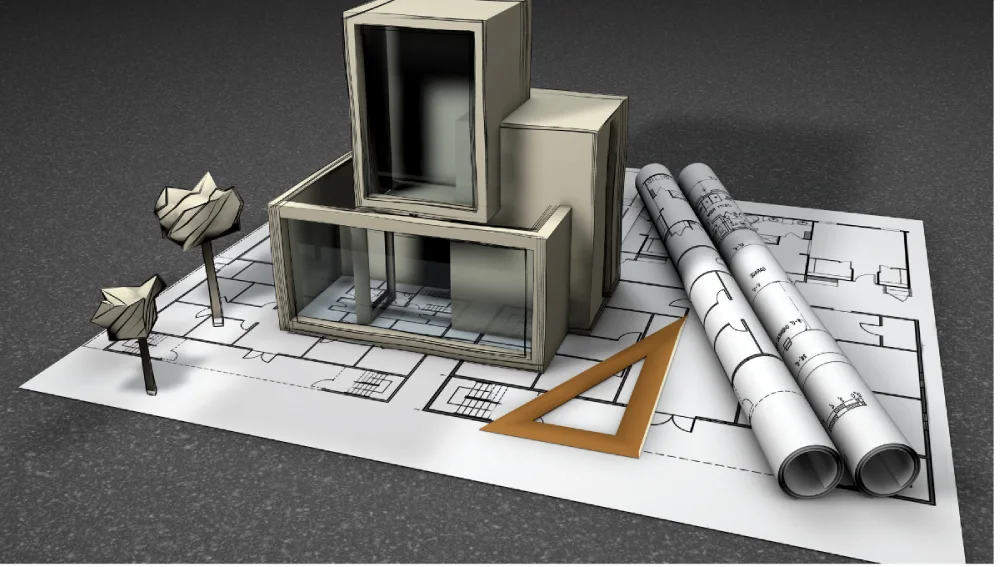
Enhanced Visualization: BIM creates 3D model designs that allow stakeholders to visualize their future construction before it begins. It helps make informed decisions and can provide a more accurate and relevant presentation to the clients.

Improved Communication & Collaboration: BIM facilitates transparent communication among contractors, architects, engineers and other relevant professionals. It creates centralized project work with improved communication, leading to the discovery expected results.

Promotes Accuracy and Reduce Errors: The design through digital models provides greater accuracy in design and construction documents. It potentially eliminates the errors associated with design and actual construction.

Efficiency and Productivity: The BIM concept streamlines the project work by automating the task including cost estimates, and generates drawings, and schedules. It efficiently reduces the errors and manual work of employees results in increasing productivity within the determined timeline.

How does BIM help to construct your property?

BIM help to construct your property

BIM significantly supports you at different stages of property management. Let’s see in detail how it benefits you in constructing your property:

Clear Planning & Design: BIM offers detailed and accurate 3D models that resemble your dream. This allows for making efficient planning and designs and is more likely to achieve the desired BIM construction without causing any errors and changes.

Clash Detection: BIM software can proactively detect the clashes between building systems (including HVAC, plumbing, and electrical), therefore you can identify and resolve them before causing any costly troubles.

Quality Control & Assurance: BIM is popularly known for providing accurate and up-to-date information. This ensures that the construction will meet the estimated design standards and specifications.

Improved Client Communications: Enabling better communication with clients provides a detailed visualization of the project. It is more likely to obtain their satisfaction just with fewer changes.

Benefits of BIM for Architects

Here are the lists of benefits given in a concise list format:

  • Facilitates better communication and collaboration with contractors, clients and engineers.
  • Comprehensive data management is a key that centralizes project-related details in a single model.
  • Supports streamlined workflow, reducing documentation time and design preparation.
  • Visualize a clear and detailed view of the final project for clients
  • Minimizes the risk occurrence by identifying the gaps and resolving them at an earlier stage
  • Helps in accurate cost prediction for overall project

Future of BIM in Architecture

These are the key trends that we can expect in the future of BIM and hopefully, the result will be magical.

Sustainability

BIM plays a prominent role in deriving more sustainable and eco-friendly building structures. By accessing advanced analysis tools, architects gain a way to achieve it.

Smart Buildings

BIM can make building structures smarter with the integration of newly launched technology for enhanced energy management and user experiences.

Modular Construction & Prefabrication

BIM allows people to plan for modular construction and prefabrication, resulting in faster construction work and reduced waste.

BIM vs AutoCAD: Which is Good?

BIM for Comprehensive Projects

BIM is an ideal choice for handling comprehensive projects efficiently that require collaboration, detailed modelling and data management.

AutoCAD for Basic Drawing & Drafting

AutoCAD is well-suited for simpler projects including simple 3D designs and straightforward 2D drafting.

FAQs

1. How is BIM Different from CAD?


BIM offers a clear and detailed 3D model with integrated data for construction, planning, designing and lifecycle management, while CAD primarily focuses on 2D drafting and 3D models for individual components.

2. Is AutoCAD a BIM tool?


No, there is no relation between BIM and AutoCAD, it is used only for 2D drafting and 3D models. However, the BIM is fundamental for planning & designing entire building projects.

3. Will BIM replace AutoCAD?


BIM can efficiently replace AutoCAD with proficient handling of complex and collaborative projects because of its 3D modelling and data capabilities.

General vs specific power of attorney

0
specific power of attorney - feature image

General power of attorney (GPA) and specific power of attorney (SPA) are two common forms of power of attorney (POA). It is necessary to understand the differences between them before granting such authority. This blog will help you explore the key differences, advantages, and disadvantages and also provide general guidance on choosing between general or specific powers of attorney.

Key Differences Between General and Special Power of Attorney

Scope of Authority

General power of attorney grants broad authorization to the agent. This allows the agent to handle a wide range of matters. that includes financial transactions, property management, legal decisions, and many more. 

Specific power of attorney grants only limited and specific powers to the agent. The agent can only do specific tasks and specific decisions in matters mentioned in the documents.

Duration of Authority

Normally GPA will be effective until it is revoked by the principal. It may also be revoked if the principal passes away or is decapitated. It can also be made durable. That is it may remain effective even if the principal is decapitated.

SPA will remain effective only until the specific transaction or task is completed. They can be made durable but they will be valid only until the period-specific task. 

Flexibility

GPA is more flexible as it covers a wide range of activities. This is suitable for the management of ongoing affairs, specifically if the principal is unavailable or unable to manage their affairs for an extended time. 

Due to its limited scope, SPA is more restrictive and less flexible. It is ideal for one-time or short-term needs, mainly if the principal needs assistance in specific matters.

Advantages of General Power of Attorney (GPA)

general power of attorney

There are various advantages of GPA. Some are-

Comprehensive Authority: provides broad powers to agents. Agents can handle all necessary tasks without the need for multiple documents.

Convenience: as the centralizing authority is in one document. It is hassle-free

Flexibility and Durability: agents can manage even if the principal is unavailable or incapacitated. They can manage matters without any interruptions.

Streamlined Decision-Making: The agent can act without a need to verify specific powers granted for each action. This is particularly useful in situations that need immediate response like financial or legal matters.

Disadvantages of General Power of Attorney (GPA)

Risk of Abuse: authority can be misused or abused by agents. As their decisions may cause financial or legal issues.

Loss of Control: as the principal relinquishes significant control of their affairs. This may be unsettling. It may be difficult for principals to monitor and ensure that agents work according to their best interests.

Complexity in Revocation: revocation of GPA is a complicated, cumbersome, and time-consuming process. 

Potential for Overreach: Because of the agent’s extensive power, the agent may overstep and make decisions that are beyond what the principal has scoped.

Difficulty in Oversight: It may be difficult to oversee agents’ decisions, which  may lead to mismanagement or neglect of principal affairs.

Advantages of Specific Power of Attorney (SPA)

specific power of attorney

Specificity: SPA provides a specific authority to the agent. This makes sure that the agent’s power is limited and the risk of misuse is also low.

Greater Control: the principal has more control over overall affairs. This is beneficial for principals who only need assistance in specific tasks.

Reduced Risk: the limited scope for agents reduces the potential for abuse of overreach by agents.

Targeted Assistance: SPA is only used if the principal needs any assistance for a specific activity. This makes the principal choose the most qualified agent for each specific task. 

Easier Revocation: SPA can be revoked easily once the specific task is completed. The process is simple. The principal only needs to inform the agent and any relevant third party.

Disadvantages of Special Power of Attorney (SPA)

Limited Scope: As SPA offers authority only for specific tasks, it becomes restrictive if there are any unforeseen situations.

Multiple Documents: If various tasks are needed, the principal needs to create multiple SPAs . Managing and tracking multiple documents may be cumbersome.

Potential for Delays: limited authority may cause delays if any agent encounters outside their designated power. It might slow the urgent decision-making processes. 

Inflexibility: flexibility is needed for dynamic situations. However, restrictions on agents in SPA can become a hurdle in urgent situations.

Repetitive Processes: principals, who require regular assistance need to make and notarize various SPAs. This can be a burden and may affect the efficiency in the long term. 

How to Choose Between General and Special Power of Attorney

Choosing between GPA and SPA mainly depends on the specific needs and situations. As GPA provides a wide range of authority, it is suitable for managing various tasks. GPA is ideal for making long-term management of the principal’s affairs. In contrast, SPA offers limited, task-oriented pavers. That also ensures precision control and helps in minimizing the risk of abuse. 

For choosing between SPA and GPA, one must evaluate their trust in the agent, task complexities, and need for flexibility. It would be good if you could consult with a legal expert to understand the implications. This might ensure that your choice aligns with your financial and personal goals.

Can both special and general powers of attorney be made durable?

Yes, both SPA and GPA can be made durable. The POA durable means that even if the principal is decapitated the agreement remains valid. This is mainly for the continuous management of the principal’s affairs without any disturbances. 

To make POA durable, specific language must be included in the document stating that the agent’s authority remains effective despite the principal’s incapacity. This can provide additional security mainly for long-term planning.

Conclusion

Choosing the correct type of POA is a significant decision that needs careful consideration of the principal’s needs. Also, the scope of authority and trustworthiness of agents are essential. It will be good if a legal advisor is consulted to clarify the considerations and make sure that the chosen POA aligns with both current needs and future contingencies.

FAQs

1. When to use a special power of attorney?


SPA can be used if the principal needs specific assistance with specific tasks.

2. What is the most powerful power of attorney?


GPA is the most powerful power of attorney.

3. What is the validity of special power of attorney in India?


The validity of SPA in India mainly depends on the terms specified in the document.

How To Cancel Power Of Attorney

0
HOW TO CANCEL POWER OF ATTORNEY - featured image

Power of Attorney (PoA) is a powerful tool to ensure that your duties are executed smoothly in your absence or inability. PoA extends legal rights to an agent or attorney-in-fact who acts on your behalf in matters concerning your input.

At times, you may want to revoke or cancel the power of attorney you had granted to an agent on various grounds. This article will help you understand the legal guidelines you must adhere to cancel a power of attorney appropriately.

Ways to Cancel a Power of Attorney

Ways to Cancel a Power of Attorney

You can cancel a power of attorney through the following methods:

  • Written deed of revocation
  • Following the provisions of the original PoA
  • Destruction of the original PoA

Written Deed of Revocation

This is the most secure way to revoke a power of attorney. You can ask a lawyer to draft the deed of revocation for you. The revocation deed must contain the following details:

  • Your name and other relevant information
  • Details of the original PoA, like date of execution, name of the attorney or agent, and others.
  • A clear statement of revocation of the PoA
  • The effective date of revocation
  • Your signature
  • Signature of any witnesses
  • Proper notarization

Following the Provisions of the Original PoA

If your original PoA document states any provision under which you must revoke a power of attorney, you can follow those instructions. It is important that you first refer to the original PoA granting document to see if any provisions for revocation were provided. Failing to adhere to those instructions may end up getting legally challenged.

Destruction of the Original PoA

Destruction of the original document can nullify the power of attorney. But it is not an advisable thing to do, as it does not give legal validation most of the time. Destroying the original POA document can sometimes result in unnecessary confusion and may pose a challenge while trying to prove the revocation of the granted power of attorney.

What are the Situations Under Which You Can Revoke the Power of Attorney?

Situations Under Which You Can Revoke the Power of Attorney

You can revoke the power of attorney under the following circumstances:

  • Loss of trust in the agent
  • Change of circumstances
  • Change of mind
  • No need for an agent
  • Death of the agent

Loss of Trust in the Agent

The common reason for canceling a power of attorney is losing trust in the agent. The agent may have mismanaged your finances, made decisions against your wishes, or acted against your best interests. Under such circumstances, you can revoke the power of attorney.

Change of Circumstances

Certain changes in life circumstances can also call for revocation of power o attorney. You may have undergone a divorce, and you might want to revoke the power of your agent if your ex-spouse was your agent. 

You might have a child who has grown into adulthood and wish to pass your power of attorney to her or him. Your agent may live far away from you and you might want an agent who is living nearer to you. These are some life circumstances that could force you to cancel the power of attorney you had granted to an agent.

Change of Mind

You may simply not wish to continue with an agent acting as your attorney and may want to make your own decisions. Such a change of mind can also call for the cancelation of power of attorney.

No Need for an Agent

You may have appointed an agent as your attorney for a specific period or until you were physically or mentally incapacitated and were undergoing treatment. You can revoke the power of attorney upon recovery or the end of a particular period.

Death of the Agent

The death of the agent results in automatic revocation of the power of attorney. You do not have to terminate the contract personally under such circumstances and the Power of Attorney Valid becomes invalid After the Death of the agent

Legal Requirements and Process for Cancelling a Power of Attorney

The process of revoking a PoA may vary based on the status of whether the PoA was registered or not.

If you have a registered PoA, you may also have to register the revocation deed to make it legally binding.

In the case of an unregistered PoA, a written revocation is still necessary but it might not require legal registration. However, registration of the revocation deed is highly recommended for legal protection.

Upon writing a deed of revocation, you would have to execute the following steps:

  • Send a copy of the revocation deed to the agent or attorney as a notice of revocation. This will act as an official notice of cancellation. Follow the appropriate ways, such as certified mail, to send the official revocation deed.
  • Inform banks, investment companies, or government agencies that might have relied on the PoA. This will help avoid any confusion or misuse of the PoA in the future.

How NRIs Can Revoke a Power of Attorney?

Non-resident Indians can follow the below-mentioned steps to revoke a power of attorney:

  • Draft the written revocation deed.
  • Duly sign and notarize.
  • Send the signed deed to your lawyer in India.
  • Register the revocation deed with the Sub-Registrar of Assurances in India.

Conclusion 

To learn more about canceling a power of attorney, you can visit any relevant government websites or bar association websites to know the revocation procedures in your jurisdiction.

You can also refer to sample revocation deed formats online. However, it is best to hire a lawyer to draft the document. Also, always make sure to register your revocation deed to make it legally standing.

FAQs

1. Can a Power of Attorney be canceled verbally?


No, a power of attorney cannot be canceled verbally to prevent unnecessary confusion in the future. Also, a verbally canceled power of attorney does not have legal validity.

2. What happens if the agent refuses to accept the cancellation?


Suppose the agent refuses to accept the cancellation of a power of attorney even after a proper notification through a written revocation deed. In that case, you can file a lawsuit to declare the PoA null and void.

3. How long does it take to cancel a Power of Attorney?


Generally, it might take a few days to a week to revoke a power of attorney. It is based on the complexity of the revocation process due to the cooperation of the agent, lawyer, or any involved third party.

4. Do I need a lawyer to cancel a Power of Attorney?


You will need a lawyer to cancel a power of attorney in case you have a complex PoA scenario, such as a registered or durable PoA, or when the agent is uncooperative.

What is the Stamp Duty Value of Property?

0
What is the Stamp Duty Value of Property

Stamp duty is one of the vital ingredients of any property transaction prevalent in India. It is a state tax on write-offs and property dealings in the state legal systems. However, you have to know something known as the stamp duty value of a property. Most importantly, it will help home buyers. It will also help those planning to invest in real estate and anyone in the real estate field. 

This blog will focus on and explain the details of stamp duty and its computations. We will also compare the costs of registering properties by state.

What is Stamp Duty?

Stamp Duty Value of Property

Stamp duty is a tax on written and legal documents and property. It is a fee that everyone must pay to the state. This is required for a document to be lawful. The stamp duty is usually a proportion of the property’s worth or consideration.

Who has to pay Stamp Duty and Registration Charge?

As a rule, the purchase price is adjusted this way. Usually, the buyer pays stamp duty and registration charges. But, in some transactions, like property exchanges, the stamp duty and registration charges might be split. The separation is done along the lines of the buyer and the seller.

State-wise Difference in Property Registration Charges

The stamp duty rates and registration charges can vary significantly across different states in India. This is because state governments levy the stamp duty. They set the rates based on factors like the property’s location, type, and value. 

Here’s a table outlining the stamp duty rates in some of the major cities in India:

StateStamp Duty RateRegistration Charges
Maharashtra6% of the property value (5% for women)1% of the property value
Gujarat4% of the property value1% of the property value
Karnataka5% of the property value1% of the property value
Tamil Nadu7% of the property value1% of the property value
Telangana6% of the property value1% of the property value
Delhi6% of the property value1% of the property value
Uttar Pradesh5% of the property value1% of the property value
West Bengal6% of the property value1% of the property value

Stamp Duty Calculation

The stamp duty is calculated based on the property’s market value or the transaction amount, whichever is higher. While calculating you can use the stamp duty formula or online stamp duty cost calculator to

Stamp Duty Calculation Formula:

Stamp Duty = Property Value x Stamp Duty Rate (%)

For example, if the property value is ₹50 lakhs and the stamp duty rate in the state is 6%, then,

Stamp Duty = ₹50 lakhs x 6% = ₹3 lakhs

Factors Considered for Stamp Duty Calculation

Several factors are taken into consideration when calculating the stamp duty for a property transaction. These include:

FactorDescription
Property LocationIt covers the area within the Municipal limits, Municipal council/panchayat region, and Gram panchayat region, and stamp duty charges vary depending on the location of the property.
Property TypeThe type of property used, for instance, residential, commercial, or industrial is also important in determining the stamp duty rate.
Property ValueThe overall stamp duty charge is based on the market value of the property.
Gender of the BuyerIt shall also be important to note that stamp duty can vary with the gender of the buyer across states with the female buyer paying a lesser amount than the male buyer.
Purpose of the TransactionIt can also rely on the nature of the transaction where the stamp duty is paid, this may include a sale, lease, or mortgage among others.

Stamp duty rates in top cities in 2024:

CityStamp Duty Rate
Mumbai6% of the property value
Pune5% of the property value
Hyderabad6% of the property value
Chennai7% of the property value
Bangalore5% of the property value
Delhi6% of the property value
Ahmedabad4% of the property value
Kolkata6% of the property value

Documentation Required for Payment of Stamp Duty

Documentation Required for Payment of Stamp Duty

To pay the stamp duty, you will typically need to provide the following documents:

  • Property sale deed or agreement
  • Ownership documents (such as title deeds or property cards)
  • Identification documents (such as an Aadhaar card, PAN card, or passport)
  • Proof of address
  • Photographs (as required)

How is Stamp Duty Paid?

It can be done through various methods, including:

Non-Judicial Stamp Paper Method

In this way, you pay the stamp duty by buying non-judicial stamp papers. You buy them from authorized vendors or government offices. The stamp papers are then affixed to the legal documents.

Franking Method

In the franking method, the sender pays stamp duty to the government. The documents are then “franked” or stamped to show the payment.

E-Stamping

E-stamping is a digital way to pay stamp duty. The payment is made online. An electronic stamp is generated and put on the documents. This method is becoming widely popular through its convenience and security.

Conclusion

Stamp duty is important for property transactions in India you can pay it through online. Understanding its math is essential. This is true for home buyers, real estate investors, and professionals. They must also understand the state-specific variations. Learn the stamp duty rules. Then, use the right payment methods. This will make property transactions smooth and legal.

FAQs

1. What is the stamp duty value for property while paying TDS?


The stamp duty value is the higher of the property’s market value or the transaction value. It is used to calculate the TDS (Tax Deducted at Source) on the property transaction.

2. What if the sale value is higher than the stamp duty value?


If the sale value is higher than the stamp duty value, the duty is based on the sale value. The buyer must pay the higher amount.

3. Who pays the TDS, the buyer or the seller?


In a property transaction, the buyer is responsible for deducting and paying the TDS to the government.