Home Blog Page 66

Water-Cement Ratio in Concrete: All You Need to Know

0
Cement Ratio in Concrete

Concrete is one of the most widely used materials in current construction and water-cement ratio is one term that is commonly heard in the domain of concrete construction. Read on to learn why this aspect is a crucial element of typical construction.

What is Water-Cement Ratio?

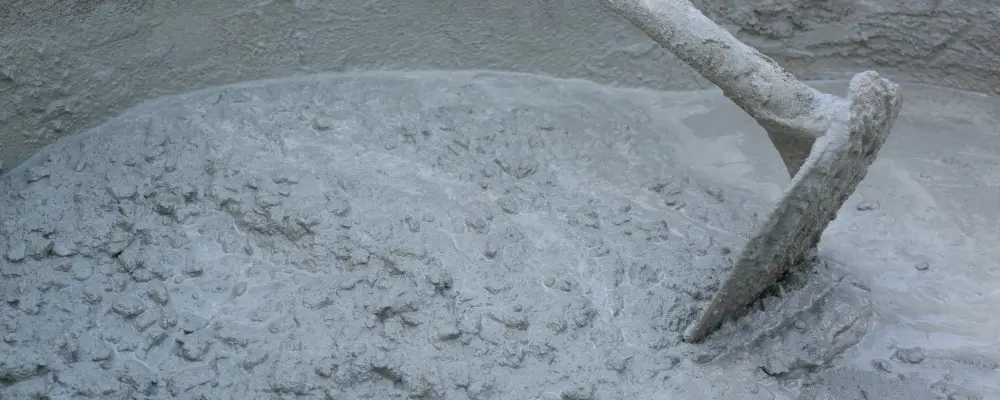
As the name suggests, water-cement ratio is the ratio of mass of water to the mass of cement in a concrete mix, generally expressed in decimal format. While this ratio can easily and quickly be modified during the concrete mixing process, it has significant long-term effects on a building. Water-cement ratio is one of the most important factors that determines quality of concrete, which further determines durability, performance and lifespan of the overall built structure. 

Why is Water-Cement Ratio Important?

Variation in water quantity causes variations in the final quality of concrete, meaning that water-cement ratio has pivotal long-term and short-term effects on a building.

  • Workability

Water acts as a bonding material for the other components of concrete, namely cement, sand and aggregates. In concrete construction, cement is first mixed with water to create a slurry and then combined with the other components. Decreased water in a cement mix means increased time consumption and labour for mixing and pouring and vice versa. Increase in water content means easier handling, however, it must be carefully controlled to prevent strength reduction.

  • Strength 

Water-cement ratio is one of the most significant factors that determines the long-term compressive and flexural strength of concrete. Lower values of water-cement ratio lead to the formation of fewer air gaps, meaning better compaction and higher strength. Increased water quantity results in large gaps or voids in the concrete after setting or drying, which extensively reduces its strength.

  • Durability

High water content in a cement mix leads to the creation of air gaps and shrinkage upon hardening of concrete. These further lead to creation of cracks, meaning increased permeability. This results in water seepage into built structures, accompanied by formation of mould, mildew and microbial growth, all of which negatively impact the structure and reduce its durability.

Factors that affect Water-Cement Ratio

Mixing of water and cement seems like a simple concept, whose validity can be determined by visual and textural observation. However, this process calculations Water-Cement Ratio and considerations of all components of concrete.

  • Cement Type

Different grades and types of cement have different water requirements to ensure workability and absorption. For example, OPC (Ordinary Portland Cement) generates more heat upon hydration and thus requires more water compared to PPC (Portland Pozzolana Cement), while lower grade cements require lower quantities of water compared to higher grades.

  • Aggregate Properties

Aggregate size, type and shape affect water-cement ratio, due to their impact on friction and workability in a concrete mix. Well graded aggregates with diverse sizes of particles require lesser water than poorly graded aggregates with uniform sized particles. 

  • Sand Properties

Studies show that concrete with fine sand generally requires more water (meaning higher water-cement ratio) than concrete with coarse sand particles. This is also due to the impact of friction on ease of workability. 

  • Climatic Conditions

Environmental factors such as humidity and heat significantly affect water-cement ratio. For instance, hotter regions with a high rate of evaporation demand additional water compared to humid regions, where water requirement would be lower to ensure workability. 

  • Use of Admixtures

Inclusion of concrete admixtures such as water reducing admixtures or plasticisers in a concrete mix lead to the reduction in requirement of water (i.e, lower water-cement ratio) by 5% to 30%. This is especially beneficial in areas that face water scarcity and also ensures faster setting of concrete. 

What is the Ideal Water-Cement Ratio?

The IS (Indian Standard) code provides guidelines and standards for water-cement ratio in different grades of concrete, which can be used to determine the right water quantity for construction in India. The recommended water-cement ratio generally ranges between 0.4 to 0.6, depending on the various components of concrete as explained in the previous section. 

Minimum water cement ratios for PCC (Plain Cement Concrete) as per IS 456 (2000):

Minimum water cement ratios for RCC (Reinforced Cement Concrete) as per IS 456 (2000):

  • M20 grade concrete: 0.55
  • M25 grade concrete: 0.50
  • M30 grade concrete: 0.45
  • M35 grade concrete: 0.45
  • M40 grade concrete: 0.40

However, it is advisable to consult structural or civil engineers to derive water-cement ratio formulae for calculations based on specific site conditions.

How can Water-Cement Ratio be Checked? 

It is important to test the strength and workability of concrete at different stages to ensure the right water-cement ratio. 

  • Slump test is a practical, efficient and commonly used test to determine this and involves placement of a fresh concrete mix in a cone-shaped mould. The amount of slump experienced by the concrete is then measured to determine its workability, flow and the accuracy of its water-cement ratio.
  • Samples of concrete can be created in the initial stages of construction, for the conduction of various strength tests. These can aid in determining whether the right water-cement ratio has been utilised and then the same ratios can be followed for actual construction. 

However, it is necessary to hire civil or structural engineers with adequate industrial knowledge to determine the ideal water-cement ratio based on specific site and project requirements, in order to ensure enhanced stability and increased durability of concrete structures. Contact Brick & Bolt —which conducts 470+ quality checks at every construction stage—to ensure the right structural requirements for the construction of your dream home today!
Concrete Corrosion: Causes, Effects and Prevention

0
Concrete Corrosion

Concrete is one of the most frequently used materials for modern construction. Its strength, durability and ease in workability, combined with ready availability of labour make it a popular choice for home construction. However, one of the common drawbacks faced with its use is concrete corrosion. It is thus essential to understand what exactly concrete corrosion means, its causes and prevention of corrosion. This blog provides a comprehensive guide for the same.

What is Concrete Corrosion?

Concrete is made up of cement, sand, water and aggregates. Corrosion of concrete refers to the degradation or deterioration of its component materials. Physical and structural changes caused by concrete corrosion reduce concrete durability and building lifespan. It can cause substantial damage to a building and endanger the safety of its residents. 

What Causes Concrete Corrosion?

Several physical, chemical and biological factors affect concrete and lead to its corrosion. Careful consideration of and planning for these can help in prevention.  

  • Improper Design

Proper design of shuttering is required to prevent leakage of concrete during the pouring process. Water-cement ratio is also an essential factor, neglection or improper use of which can result in loss in concrete strength and development of cracks, leading to water permeability and eventually concrete corrosion.

  • Improper Execution

Improper mixing and shuttering or formwork, insufficient curing and compaction can all lead to the development of cracks, which speed up the process of corrosion. Use of low quality component materials such as low corrosion resistance steel for reinforcement or low grade cement can also enhance concrete corrosion.

  • Excess Humidity

Exposure to excess relative humidity can increase the pH levels of wet concrete and make it acidic, leading to corrosion of reinforcement in concrete. It also fosters the growth of mould, mildew and bacteria that can decrease concrete strength and result in concrete corrosion.

  • Exposure to Corrosive Substances

Groundwater or treated water often consists of salts and acids of sulphur, chlorides and nitrates along with microbial organisms. Curing or even later exposure through cleaning with such water can drastically enhance concrete corrosion. These acidic substances are particularly harmful to steel reinforcement, leading to rapid rusting and corrosion.

What are the Effects and Indicators of Concrete Corrosion?

Concrete corrosion has physical and biological effects that can compromise the integrity of the building’s structure. These are generally visible to the naked eye through physical indicators. 

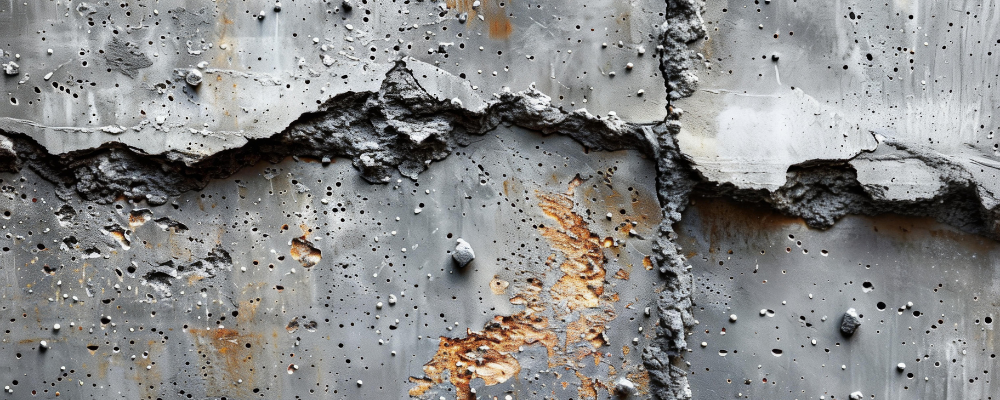
  • Formation of Cracks

This is the primary indication and effect of concrete corrosion. The sign can begin with the development of hairline cracks, which eventually widen to form structural cracks. They are generally caused by improper curing and lead to increased permeability, resulting in corrosion, mainly of reinforcement members.

  • Spalling

The development of patches or flakes that are separated from the substrate layers of concrete is termed as spalling. It is a common effect in cold climates, but can also develop due to exposure to fire. Spalling weakens the structure and causes surface breakage.  

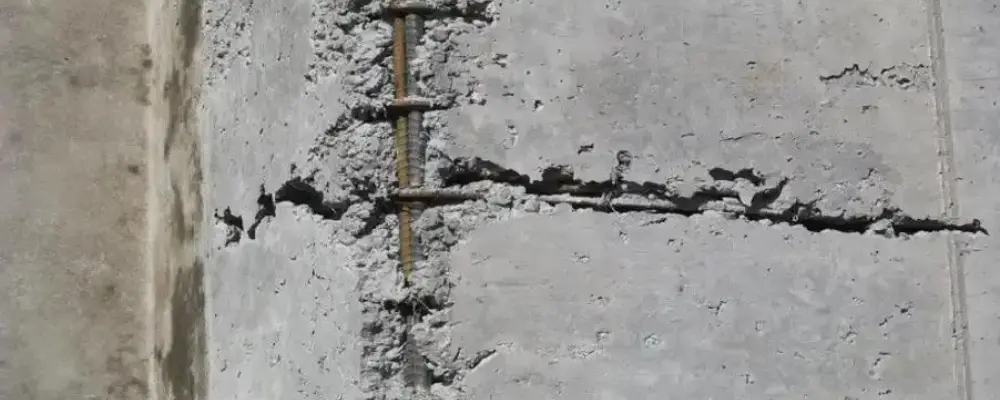
  • Exposed Steel Bars

Caused mainly by incorrect concreting techniques or freeze thawing, exposed steel bars are a clear indication of the deteriorating condition of concrete. Exposure of steel leads to quicker rusting, resulting in quicker loss in quality of concrete. 

  • Structural Deformity and Collapse

Major steel and concrete corrosion can lead to structural damages such as deformity and failure in reinforcement. This can further lead to instability of the structure and eventual collapse of the building. Safety precautions must be taken in order to ensure that concrete corrosion does not reach this extreme stage. 

What are the Methods to Prevent Corrosion?

Several foolproof physical, chemical and biological techniques exist to prevent concrete corrosion and ensure its durability. Some of these are discussed below.

  • Ensure Quality of Concrete

Extensive supervision by qualified experts is necessary before, during and after the process of concreting. Skilful labour that can assure proper formwork, shuttering, pouring, compaction and adequate curing are essential to ensure quality and durability of concrete that is resistant to cracks which lead to corrosion.

  • Reinforcement with Non Corrosive Materials

Concrete is typically reinforced with structural steel bars of different diameters, which are vulnerable to rust. Replacing these with non corrosive materials like stainless steel, epoxy-coated steel or Fibre Reinforced Polymer (FRP) can reduce the probability of concrete corrosion. However, this technique is generally cost intensive. 

  • Admixtures

Organic and inorganic inhibitors can be added to the concrete mix. These prevent chemicals like sulphates and chlorides from penetrating the concrete surface, which slows down rusting of steel reinforcement by the formation of a protective layer. Use of such admixtures is a simple and cost effective method to prevent corrosion.

  • Coating Materials or Sealants

Treating visible surfaces of concrete with lacquer-based paint, varnish, plaster or oil can reduce the area exposed to environmental factors that would otherwise negatively affect it. Use of epoxy coating to obtain a polished look or covering the concrete surface with flooring, cladding and other surface finishing materials can also prevent concrete corrosion.

  • Use of Intelligent Sensors

Intelligent sensors are a relatively new technology that can ensure the quality of concrete. They persistently monitor construction sites and even finished buildings to give timely warnings on any deterioration or reduction in quality, thus reducing dependency on manual labour and assuring reliability. 

Repair and Cure for Corroded Concrete

Minor corrosion of concrete such as cracks can typically be repaired by patching or filling with new concrete or plaster, as required. However, major damages cannot generally be repaired and replacement of these elements is necessitated to ensure building safety and integrity. Therefore, it is advisable to prevent occurence of concrete corrosion by ensuring good quality during construction. 

Brick & Bolt conducts 470+ quality checks by expert teams at every stage of construction, to assure the best concrete quality and durability. Contact Brick & Bolt to build your dream home today!

Types of Slabs for Home Construction: A Comprehensive Guide

0
Types of Slabs for Home Construction

Concrete, specifically concrete slabs, are one of the most commonly used elements in modern home construction. Forming an essential part of building structures, concrete slabs come in various types offering customisable shapes, sizes, spans and loading options. Read on to learn more about some of the most commonly used types in contemporary slab construction.

A slab is a horizontal element of a building structure, generally made of RCC (Reinforced Cement Concrete) and forms the roofs and floors of buildings, while providing a flat surface for building usage. It helps in transferring different types of load such as live and dead loads to the columns, beams, foundation and other supporting members to ensure stability of a structure. 

Types of Concrete Slabs

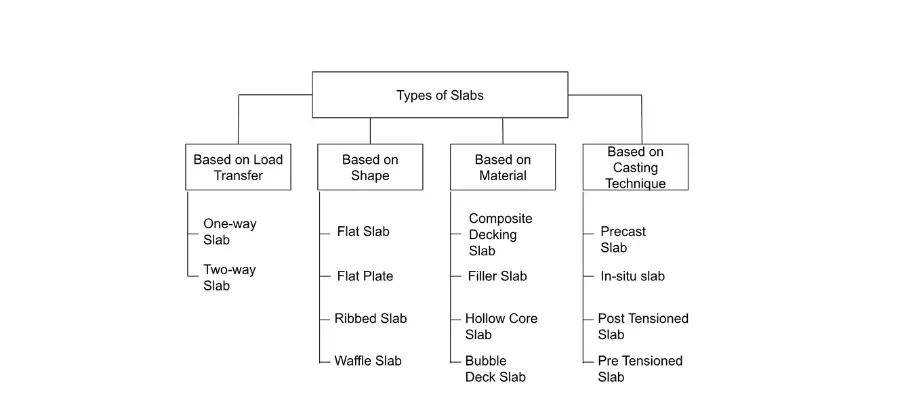
Different types of concrete slabs can be designed based on specific site and project requirements. Typically built types of slabs can be categorised as follows:

Types of Slabs
  1. Types of Slabs Based on Load Transfer

RCC slabs generally transfer load in only one or two directions, which gives the major classification based on load transfer.

  • One-way Slabs

A one-way slab transfers load along only one direction, onto parallelly placed supporting elements such as beams, columns or load-bearing walls. These supports are generally on the two shorter sides of the slab. However, a slab that is supported on four sides can also be called one-way if the ratio of its length to its width (L/B) is more than two. These slabs experience bending only in one direction, which is the direction perpendicular to its supporting sides. Major steel reinforcement bars to counteract tension are also placed along this direction, with minimal bars in the other direction.                                   

  • Two-way Slabs

When an RCC slab is supported on all four sides by beams, columns or load bearing walls, it is called a two-way slab. A two-way slab is more squarish in shape, meaning that the ratio of its length to its width (L/B) is less than two. The load in such a slab is transferred along both directions and the slab also experiences bending in these two directions. Main steel reinforcement bars are provided equally along both directions to resist bending moments, leading to a higher amount of steel required as compared to one-way slabs. 

  1. Types of Slabs Based on Shape
  • Flat Plate

A flat plate slab is directly supported on columns or load bearing walls, without any beams. Easier and faster formwork, leading to speedy construction, is a major advantage of flat plate slabs. This type of slab is generally used in public buildings like hotels, multi-storey offices or residences and hospitals, due to the clean and uninterrupted ceiling surfaces that they provide, which can be utilised for running other services like HVAC and fire extinguishing pipes. However, flat plate slabs can generally be used for maximum spans of 12m.

  • Flat Slab

Flat slabs are a type of slabs that have evolved from flat plates, due to requirements of higher spans accompanied with clean ceiling aesthetics. They also do not have any beam supports, but instead rest on drop panels, column heads or a combination of both, which form the tops of columns. These form slab thickenings at the joint between columns and the slab, reducing the overall depth of the slab required. They can bear higher loads compared to flat plate slabs, and the absence of beams makes them an ideal choice for public buildings with large floor spans. 

  • Ribbed Slab

A ribbed slab is a type of one-way slab, with small beam-like projections at the bottom of the slab, known as ribs or joists. Multiple ribs run parallel to the shorter direction of the slab, providing additional support to it. It helps in reducing the overall depth of the slab and main beams by incorporating steel only in tension points along the ribs. The ribs form rectangular pockets along the ceiling surface, which can be utilised for creating false ceilings or to create horizontal directionality in a space.

  • Waffle Slab

Waffle slabs consist of equally spaced ribs along both directions, forming a waffle-like appearance at the bottom of ceilings. These are a type of two-way slabs that help in floor insulation as hot air gets trapped in the waffle pockets. They can be utilised to create floors with very large spans and heavy loads and provide structural stability while minimising material usage. Waffle slabs are most commonly used as slabs that form roofs for parking areas. However, such slabs require extensive formwork, are more expensive, time-consuming and labour intensive. 

  1. Types of Concrete Slabs Based on Material
  • Composite Decking Slab

A composite slab consists of materials that are typically not part of RCC slabs, such as steel decking sheets and steel beams. The need for formwork in this type of slab is eliminated as the steel decking itself acts as formwork for concrete to be poured, thus reducing construction time. Steel decking sheets are normally profiled, to ensure additional load capacities with lighter slab weights. Decking is usually trapezoidal or re-entrant in shape, and its depth can vary between 80 mm and 300 mm.  

  • Filler Slab

A filler slab utilises objects such as clay pots and tiles, to reduce the amount of steel and concrete in a slab. Steel bars are provided in the tension zones and eliminated in compression areas to be replaced with these objects. The behaviour of these slabs is very similar to conventional RCC slabs. Filler slabs promote the use of greener materials and ensure thermal comfort, since the filler materials are usually made of clay which creates cool temperatures. They also create an aesthetically unique ceiling look. However, reduced cost of materials may be negated by the increased cost of labour. 

  • Hollow Core Slab

With equally spaced continuous voids in circular or oval shapes, hollow core slabs are generally precast and prestressed. These slabs are almost twice as strong as conventional slabs, due to the prestressing of steel bars and allow large spans of up to 20m without intermediate supports. They are also lightweight and more sustainable, owing to the use of reduced amounts of cement and steel. However, hollow core slabs are generally thicker (thickness ranges from 125mm to 500mm), which may lead to increased floor-to-floor heights. Increased resistance to steel corrosion is ensured with increased thicknesses.

  • Bubble Deck Slab

Bubble deck slabs are similar to filler slabs, but have plastic balls or bubbles placed between the concrete instead of clay tiles or pots. These plastic balls are made of high density polypropylene materials and are not visible at the bottom of the roof. This kind of a slab is generally precast and reduces the weight of the structure by reducing concrete requirement in the slab. Such slabs however have increased depths, ranging between 230mm to 600mm. Reduced amounts of steel and cement usage, combined with reduced transportation costs due to their light weights, make these slabs economical. 

  1. Types of Slabs based on Casting Technique
  • Precast Slabs

Precast slabs are slabs whose concrete has been poured and hardened in factory setups away from the actual construction site. Mass manufacturing in factories ensures uniform quality, strength and finishing. They are generally produced in standard sizes with simple on-site installation joints that ensure efficient and speedy construction, which is especially beneficial in the construction of multi-story buildings with repetitive floor slab layouts. Such slabs also generally offer the added advantage of recyclability at the end of the building’s life cycle, due to their easy dismantling process. Decreased labour costs may however be negated by increased transportation and manufacturing costs.

  • Slabs Cast In-situ

As the name suggests, In-situ slabs or site-cast slabs entail mixing and pouring of the concrete for slabs on actual construction sites. This is the most common type of slabs, in particular for low-rise buildings and independent homes. Offering increased design freedom and customisability, these are more cost-effective for small projects. The necessary concrete admixtures can be included and appropriate curing conditions can be ensured as per specific site and design requirements. However, proper supervision is necessary to ensure good quality, adequate curing and strength gain. Unfavourable weather conditions may negatively affect the concrete mixing and pouring processes.

  • Post Tensioned Slabs

Tensioning is a process in which steel reinforcement bars (tendons) are stretched and tightened to create tension. When this process is done after the concrete has hardened to an extent, it results in the creation of post tensioned slabs. Tendons are placed in ducts left between concrete and stretched. This process strengthens and hardens concrete, while also giving it an enhanced ability to resist cracks since the slab has already undergone expansion. Such slabs have increased load bearing capacities and provide stability in challenging soil conditions such as swamps and marshes. A significant drawback of this technique is the noticeable increase in cost. 

  • Pre Tensioned Slabs

These are very similar to post tensioned slabs, with the major difference being that steel reinforcement bars are tensioned prior to pouring and hardening of concrete. Steel tendons are anchored between supports on two ends or in a frame and stretched to their tolerance limits by machines. Concrete is then poured around it and the tendons are released after it gains sufficient strength. Although offering increased compressive strength, this technique is also cost intensive. 

Slab design 

The selection of the ideal type of slab for home design requires careful considerations and calculations of dead and live loads, slab spans and loading capacity. Structural or civil engineers are necessary to provide recommendations and slab designs that are site and project specific. Drawings provided by them include technical details such as slab depth and span, reinforcement sizing and spacing and formwork details, which need to be precisely followed by contractors on site to ensure structural stability during and after slab construction. Contact Brick & Bolt for a one-stop solution to design and construct your dream home, with slabs that fulfill both functional and aesthetic requirements. 

A Comprehensive Guide to Admixtures in Concrete: Types, Uses, and Benefits

0
Admixtures in Concrete

Concrete is one of the most commonly used materials in the construction of modern homes, especially in India. Since its invention in the early 19th century, there have been many technological advances that have helped in increasing its quality. Admixtures constitute one such technology that is frequently used in home construction. Read on to learn more about what an admixture is and what its types are. 

What is an Admixture?

Concrete is generally composed of cement, sand and aggregates in different proportions to create different grades. An admixture is an element other than these, which is added to concrete to enhance its properties such as workability, increase or decrease in setting time, durability, etc.

Inclusion of an admixture in a concrete mix allows builders to customise it based on specific site requirements. It can be added before mixing concrete or while mixing it or even during the setting stage, depending on the function it is required to perform.

The quantity of an admixture in a concrete mix is generally small and typically ranges from 0.5% to 5% of the cement mass in the mix. 

Types of Admixtures in Concrete

Different types of admixtures are used to provide different benefits and ways to enhance concrete quality, workability and durability, based on specific requirements. A concrete admixture can be broadly categorised into the following categories. 

  • Chemical Admixtures
  •  Mineral Admixtures

1. Chemical Admixtures

These are water-soluble elements that can be in powdered or liquid forms and are generally added before or during the preparation of a concrete mix. A chemical admixture is usually used in smaller quantities that make up a very small percentage of the overall mix. The following are the various types of chemical admixtures available in the market today, which can be used for different purposes as required. 

  • Retarders

A retarder is an admixture included in the concrete mix to delay the time taken by concrete to set. In hotter climates, concrete undergoes a faster setting. Retarders aid in cooling down the concrete temperature, thus increasing its setting time and ensuring better finishing.

  • Accelerators

Accelerators are used to decrease the setting time of concrete, especially in colder climates where the process can take longer. They help in speeding up the construction process with higher early concrete strength. However, these must be used in moderation, to avoid shrinkage and loss in concrete strength.

  • Water Reducing Admixtures/ Plasticisers

As the name suggests, water-reducing admixtures are utilized to reduce the amount of water in a cement mix. The amount of water required can generally be reduced by 5% to 10%, but higher-range admixtures or superplasticizers can also reduce this quantity by 30%. This is especially beneficial in areas with low water availability and can also aid in increasing concrete strength.

  • Air-entraining Admixtures

The addition of an air-entraining admixture in a concrete mix ensures the entrapment of uniform, stable air bubbles. This reduces friction between cement particles, thus increasing the workability of concrete. It also ensures the impermeability of concrete, leading to increased durability. However, the inclusion of this admixture in higher quantities can lead to a drastic decrease in concrete strength.

  • Miscellaneous Admixtures

Apart from the above categories, there are also other admixtures available in the market today, which can be used for purposes such as:

  • Hydration control
  • Reduction of shrinkage
  • Colouring
  • Inhibition of corrosion
  • Damp-proofing

3. Mineral Admixtures

Mineral admixtures are available in fine powdered forms and are generally made up of waste materials from different industries, which are insoluble in water. They are added in larger quantities to the concrete mix as compared to chemical admixtures and can sometimes even be used to partially replace cement in the mix. These are also available in different types, some of which are explained below.

  • Fly Ash

Fly ash is a by-product of thermal power plants, consisting of Silica, Alumina, and Calcium oxides. The use of fly ash in concrete as an admixture increases its workability and setting time. It can also replace a certain quantity of cement in the mix, helping the production of greener concrete with lower shrinkage, and reducing the creep of concrete.

  • Silica Fume

This is a by-product of electric arc furnaces that produce silicon-based compounds. As an admixture, it increases the flexural and compressive strength of concrete, while enhancing its resistance to erosion and abrasion. However, its use in a concrete mix highly increases water requirement, which is why it’s almost always used along with a plasticizer.

  • Metakaolin

Thermally activated ordinary and kaolin clay is called metakaolin. This mineral admixture reduces the permeability of concrete and increases its resistance to chemical attacks, thus ensuring increased durability. It also helps in the early strengthening and setting of concrete, leading to faster construction.

Admixtures in Concrete

Benefits of Admixtures in Concrete

As explained in the above sections, admixtures provide various benefits in the use of concrete, which can be summarised as follows:

  • Early/ late setting and hardening
  • Increased durability
  • Enhanced workability
  • Increased compressive and flexural strength
  • Resistance to environmental factors such as corrosion, chemical attacks, shrinkage and cracking.
  • Enhanced finishing 
  • Speedy construction and lower costs
  • Providing color options for finishing

Limitations of Concrete Admixtures

Certain intrinsic properties of admixtures limit their frequent usage in the production of concrete elements, such as:

  • Increased cost
  • Increased probability of cracks 
  • Uncalculated quantities of admixtures can result in decreased strength
  • Use of poor quality admixtures results in structural defects

Therefore, the inclusion of admixtures in a concrete mix requires careful consideration and study of the properties of each element, along with the environmental conditions of the site. Even slight changes in the quantity of admixtures used can have drastic effects on a structure. Therefore, it is advisable to consult experts such as structural engineers to determine the type, quantity and proportion of admixtures to be used. Contact Brick & Bolt to ensure the usage of the right admixtures to build your dream home today!
Difference Between High Strength Concrete and High-Performance Concrete

0
Difference Between High Strength Concrete and High Performance Concrete

Concrete is a fundamental material of modern construction, playing a crucial role in building skyscrapers to sturdy bridges. Typically, not all concrete mix are the same. Depending upon the construction requirements, the ingredients are adjusted with varying properties, leading to the production of specialized concrete types.

Generally, when discussing different types of concrete, people often confuse the terms, “high strength” and “high performance”. With this article, you will be cleared with their meanings, purpose, properties and applications. Let’s dive into the topic now:

The construction industry is most familiar with two types of concrete: high-strength concrete and high-performance concrete (HPC). Although their names may sound similar, they possess ideal functionalities.

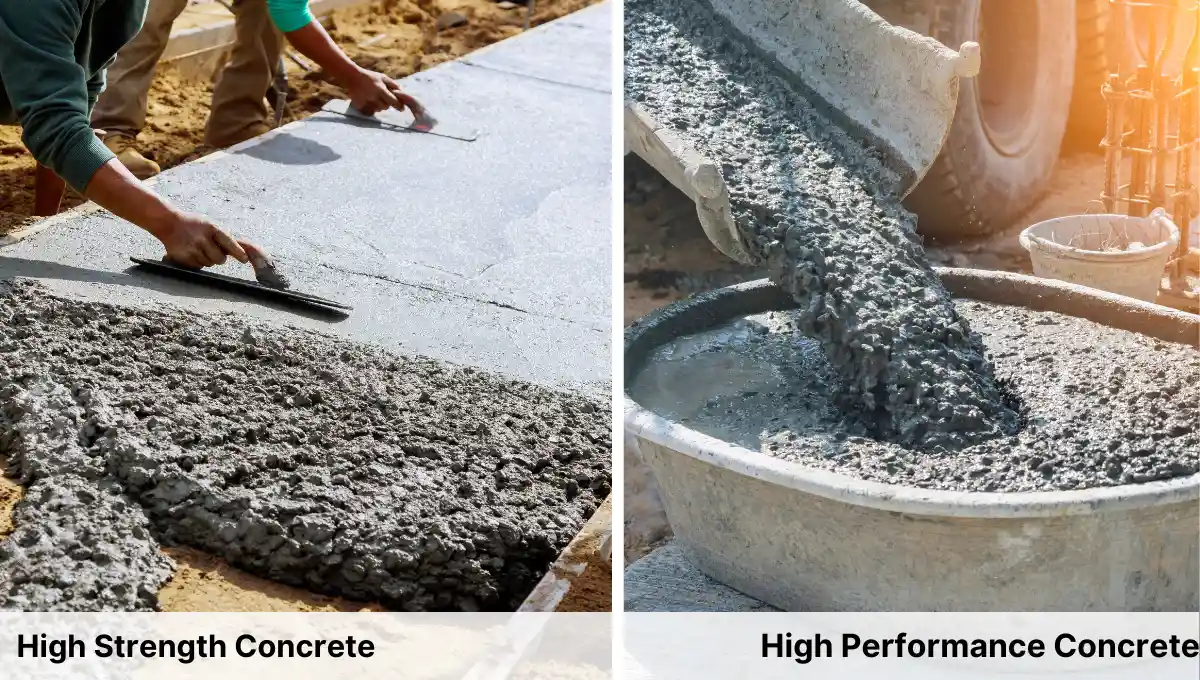
High Strength Concrete

The name suggests that high strength concrete excels in compressive strength. It is known for its powerhouse performance, allowing concrete to withstand significant loads or pressure applied to it.

The strength of concrete is measured in megapascals (MPa) or per square inch (psi). The compressive strength of normal concrete is around 3000 – 4000 psi (i.e.) 20 to 28 MPa), while the high-strength concrete has a compressive strength of at least 7978 psi (55 MPa) or more than that.

To achieve this high strength concrete, some special types of cement are used such as sulphate-resistance cement, high-early-strength cement or the additives like supplementary cementitious materials (SCMs). They contain the properties of improving the durability and strength of the concrete.

High Strength Concrete

Applications of High-Strength Concrete

High-strength concrete is primarily used in the construction of high-rise buildings, offshore structures, bridges, and related areas.

Being capable of handling heavy loads, makes it ideal for these demanding applications.

Benefits of High-Strength Concrete

High-strength  concrete offers several advantages to the structures, including:

  • Reduces overall weight
  • Drastically lower the reinforcement needed
  • Cost-effective work and
  • Supports streamlined design

High-Performance Concrete (HPC)

High-Performance Concrete (HPC)

High -performance concrete is a type of concrete that takes your structure performance to the next level. Beyond just high strength, it has improved properties such as , compressive strength, durability, tensile strength and resistance to chemical attacks and hectic temperature changes.

Special types of cement, well-graded aggregates, and admixtures can achieve maximum performance. Generally, admixtures are materials augmented with concrete mixture either before or during the Mixing of Concrete of ingredients for the concrete. They increase the workability of concrete and, when used to reduce the water-cement ratio, aid in increasing its strength To leverage the overall properties of concrete, high performance concrete also chases special types of aggregates, such as high or light weight aggregates. It is best at resisting deformation and cracking, simultaneously maintaining its durability and strength even under extreme weather conditions.

Benefits of High -Performance Concrete

  • Due to its ability to withstand heavy loads, it is ideal for constructing high-rise structures and skyscrapers.
  • High- performance concrete is superior in providing a smooth finish and improved workability, leading to witness Satisfactory final product.
  • It is specifically suitable for structures exposed to harsh weather conditions.
  • Because of its high level of water resistance, HPC is best used in water- containment structures like bridges, swimming pools, etc.

Applications of High Performance Concrete

High -performance concrete is best fit for the construction of highways, bridges and other related infrastructures, particularly exposed to harsh weather and heavy traffic.

Contains superior resistance to saltwater corrosion, making it the prime choice for docks, offshore platforms, and piers.

Because of its enhanced strength and ductility, it actively withstands seismic forces and earthquakes.

High Strength Vs. High-Performance Concrete

Both concretes are beneficial to the structures in different ways, but still, they have varied properties. Here are some major key differences discussed:

Key ParametersHigh Strength ConcreteHigh Performance Concrete (HPC)
Key propertiesHigh compressive strength (55+ MPa), low creep of concrete, low shrinkage, modulus of elasticBased on the mix designs, it provides enhanced durability, workability, tensile strength, chemical and weather resistance, compressive strength and more.
ApplicationsBridges, precast concrete elements and high-rise buildingsSuitable for a wide range of constructions, including bridges, architectural concrete, high-rise buildings, and marine structures.
WorkabilityContains moderate workabilityHigh workability (easier to work and finish)
Construction speedStandard or regular construction time.Faster process (due to early strength gain capacity)
CostConsumer lower costDue to its complex mix design, it costs more.

In a Summary,

Both high-strength and high-performance concrete resemble the advancement in technology, offering top-notch solutions to construction projects. To handle any complex structures, the concrete mix is carefully curated with unique characteristics and applications. You can make informed decisions based on some significant factors such as durability, performance and durability.

FAQs

1. When should you use high- strength concrete?

High -strength concrete is a prime choice for applications requiring high load-bearing capacity including bridges, precast concrete elements with heavy loads and high-rise buildings. It is capable of achieving thinner sections, which is the next-level advantage in these scenarios.

2. What is the main difference between high -strength and high- performance concrete?

High-strength concrete offers exceptional compressive strength (55+ MPa) to the structures. High performance concrete, on the other hand, focuses on achieving superior properties like high durability, strength and workability along with the high-strength.

3. Is high-strength concrete durable?

High- strength concrete contains moderate durability compared to HPC. Significantly, high -performance concrete is highly resistant to wear, chemical attack and cracking. It results in a longer lifespan with reduced maintenance costs.

4. Is high -performance concrete always the best option?

Not exactly. Based on the type of construction projects you are handling, the choice of preference may vary. Using high- performance concrete costs higher but suits well for more complex mix designs. If a project typically requires higher compressive strength and budget is a major concern, high-strength concrete is sufficient.

5. What are other significant factors you should  consider when choosing concrete?

Beyond performance and strength, there are some other significant factors to consider:

* Site condition
* Project requirements
* Material availability
* Budget

White Cement Uses and it’s Types

0
White Cement

What Is White Cement?

White cement is no different from grey cement except for the color. It takes all the qualities and adds several other benefits, like grey cement. Its white color is due to the addition of manganese, copper, nickel, and iron oxides. They are added during the production process. 

The white cement adds aesthetic value due to its exceptional workability. It’s a strong and durable cement, mainly used for decorative applications. The major raw materials used in white cement are limestone, gypsum, clay, kaolin, and fuel. White cement manufacturing is done to enhance the whiteness as much as possible.

White Cement Uses

Uses of white cement

White Portland cement is mostly used for decorative purposes. It creates beautiful finishes and is therefore used in making interiors that are finely aligned and versatile. Here is a list of uses of white cement:

  1. Used to develop architectural finishes that are aesthetically pleasing.
  2. It is also used in the production of concrete products, such as panels and facades.
  3. Used in terrazzo flooring system. The white color helps to give a brighter and more clean appearance.
  4. In mosaic production, it is also used as a binding material.

Decorative Applications

White cement is known for its finishing touch. It provides a neutral and clean base that enhances the overall appearance of the decorative elements. white cement when applied on walls gives Strong and Long-lasting properties. It can help make things clean and bright. The white cement is therefore used for architectural and decorative purposes. It helps to provide intricate details. Additionally, white cement is extensively used in manufacturing precast concrete products such as tiles, garden ornaments, sculptures, etc.

Walls, Floors, and Ceilings

Walls: White cement gives walls adhesive strength and is therefore applied before painting. Since it is attractive and durable, it can be used as cement paint for exteriors. Also as a primer for the walls. 

Floors: 

White cements are used to obtain the perfect white finish for flooring. Due to its water-resistant properties, it is an ideal choice for homes. These white cement sheets serve as artificial lighting. They are good at reflecting light. This makes it more appealing. It provides a naturally white pigment as a texture. This helps prevent it from fading.

Ceilings:

White cement is used to make more creative artificial ceilings. This allows for the creation of high-quality designs. It gives it an elite look while also giving it an aesthetic appearance. The white cement has a waterproof nature. It tends to withstand much higher temperatures. The wear and tear property of the white cement makes it withstand harsh elements when used for exteriors.

Architectural Elements

White cement, when used in structural aspects, has various applications.  Moreover, it can be used to repair marble tiles and sheaths on roofs, walls, and floors. 

Countertops and Worktops

White cement has a light-reflecting property, which gives the entire space an openness and brightness. This gives a strong, beautiful appearance to the countertops. The white cement countertops help to handle heat, scratches, and stains well. Therefore, it is best suited for kitchens or any worktops. White cement closely safeguards the worktop and countertop and makes them suitable for everyday use.

Swimming Pools

For swimming pool interiors, pool plasters are typically white cement formulated with light pastel colors. They are amazing in appearance and also last for a longer period. The white color gives the pool a clear and bright finish 

Functional Applications

White cement has various functional applications, from structural to architectural and decorative. It is versatile and adds elegance due to its characteristics.

Colored Concrete 

White cement serves as a base for a wide variety of colors. This offers creative freedom. It benefits us with higher reflectivity.

Tile Grouts and Fillers 

White cement has the best advantage of filling the gaps and cracks. It fills gaps in ceramic tiles, vitrified tiles, and marble flooring. 

Improved Light Reflection 

The white cement has a light reflection in nature itself. This helps to save costs and has practical functions in the manufacture of roads and tunnels.

White cement: Varieties 

White cement: Varieties 

The amount of iron and manganese oxide added primarily determines the color of the white cement. There are mostly five basic types of white cement that are used.

Type I

Type I white cement is an all-purpose ordinary white Portland cement. It is used for general construction purposes. It provides a bright, clean appearance for the structure. This is mostly similar to grey cement, except for the white color characteristics.

Applications: pavements, buildings, precast concrete products, decorative structures.

Type II

Type II is a moderate sulfate-resistant cement. Also, this is engineered to have a moderate hydration temperature. It is important when casting concrete on soil with moderate sulfate levels, but irrelevant for concrete countertops.

Applications: Foundations, retaining walls, and underground structures.

Type III

Type III cement is a type of Portland cement that is known for its early strength development. Type III white cement reacts faster than Type I. It allows for early removal of formwork and quick use of structures.

Applications: Precast concrete products, tilt-up construction, repairs.

Type IV

Type IV has a low heat of hydration in White Cement. It is used in mass concrete operations where it is important to limit heat buildup and stresses during hydration. reduces the risk of thermal cracking in large pours.

Applications: Large foundations, dams, and massive structures.

Type V

Type V white Portland cement is also known as sulfate-resisting cement. It is mainly used to protect the soil from sulfate attack. It is significantly more expensive than regular cement. For outdoor applications, it is a popular choice.
Applications: Seawater-exposed structures, sewage treatment plants, industrial environments.

Conclusion

white cement stands out as a versatile and aesthetical material, offering both functional and decorative benefits in construction. Whether used for creating bright, reflective surfaces, intricate architectural details, or durable finishes for walls, floors, and ceilings, white cement. White cement and wall putty look alike but have major differences in properties By understanding its uses and types, you can make informed decisions to achieve both the visual appeal and structural integrity of your construction projects.

10 Methods To Check The Quality Of Sand For Construction

0
Quality Of Sand

When it comes to construction, the quality of materials used plays a pivotal role in determining a structure’s strength, durability, and longevity. Among these materials, sand is a crucial component that directly affects the performance of concrete and mortar. The 10 methods that are used for checking the quality of sand used in construction are given as follows

The Importance of Sand Testing

The quality of sand that is used in construction is crucial. They are vital for the strength, durability, and overall performance of the mortar and concrete. 

If the sand is of poor quality it may lead to failure in structure, increase the cost of maintenance, and reduce the lifespan of a building. 

By implementing a regular and complete sand testing procedure, the risks can be reduced and projects can be successful.

The Importance of Sand Testing

10 Methods To Check The Quality Of Sand

Visual Inspection

Visual inspection is the most common method that helps in assessing the sand quality. The sand can be examined with the naked eye and the detection of any impurities are detected. Some of the impurities are slay, slit, and organic materials. 

Good quality sand must be clean, free from contaminants, and uniform in color and texture. A fine sand particle must not be too smooth as this may affect the bonding with cement.

Sieve Analysis

It is a basic and commonly used sand testing method. The sand will be passed through a series of standard sieves. Those sieves have various mesh sizes for the determination of particles. Proper sand grading is needed for strong and workable concrete mixes. This makes sieve analysis important for quality control. 

The apparatus needed for this analysis are a Stack of test sieves, Balance (accurate to 0.01g), Rubber pestle, Sieve shaker, and Oven.

The steps involved in this process are preparing the sample, crushing lumps, sample weighting, stacking sieves, sieving, and weighing the remaining materials. 

After the completion of the process, compare the initial sample weight to the total retained sample weight. If the final weight changes more than 2% then discard the samples and analysis because of potential errors. Accuracy in sieve analysis helps in obtaining reliable sand quality for construction.

Moisture Content

Moisture content is crucial when the sand is tested for construction. More moisture can weaken the concrete. Also if there is more moisture it affects the workability. The moisture content tests mainly involve the sand sample weighting before and after drying them in the oven. This helps in the determination of moisture percentage, ensuring optimal sand moisture levels for construction.

The apparatus used in this analysis are metal tray, weighing Scale, and oven. The procedures involved in the process are preparation of the sample, initial weighting, drying, final weighting, and calculation.

Formula used is

moisture content = (initial weight – final weight/initial weight)*100.

For example: 

Wet sand sample weight (W) = 1200g

Oven-dried sand sample weight (Wd) = 1000g

Moisture content: (1200−1000/1200)×100 = 16.67%

From this, we can see that the sand sample is 16% moisture content by weight. 

Clay and Silt Content

High levels of clay and silt content in sand can reduce the quality of the concrete and mortar. This can lead to poor strength and durability. 

The presence of any fine particles can be tested using a sedimentation method. As sand is mixed with water and allowed to settle.

The apparatus used are a measuring cylinder, Water, and Balance (accurate to 0.01g).

The procedure for the analysis of clay and silt content is the preparation of samples, mixing with water, sedimentation, and measuring. 

The importance of this analysis is to ensure strength and durability.

Clay and Silt Content

Organic Matter

Organic matter like leaves, roots, and other materials that decay can affect the concrete. It mainly affects the strength and setting. Colorimetric tests are used for detecting the presence of organic matter. This is done by mixing sand with a sodium hydroxide solution.

The materials used in this analysis are sodium hydroxide solution (3%) and a test tube or glass container. 

The procedure used in this method is the preparation of sand samples, mixing the sample with sodium hydroxide solution, and observing colour changes. 

Permeability Test

The permeability of sand affects the strength of concrete. It helps in checking on how the water passes through the sand. It is crucial for the construction process as well as the finished structure’s durability.

The apparatus used are the Permeability apparatus (constant or falling head), stopwatch, and graduated cylinder. The procedures used are sample preparation, filling the apparatus, allowing water flow through the sample, and measurement of the time. 

Specific Gravity

The ratio of sand density and water density is called specific gravity. It is an important factor that influences the volume and weight of sand. By measuring the specific gravity, you can get a correct proportion of mixed designs. 

The apparatus used in this measurement are Pycnometer, Balance (accurate to 0.01g), and Water. The method followed here is the preparation of sand samples, filling the pycnometer, weighing, and calculating. 

Specific gravity = (M2-M1)/(M4-M1)(M3-M2)

here, 

M1 = Weight of empty pycnometer

M2​ = Weight of pycnometer with sand

M3​ = Weight of pycnometer with sand and water

​M4= Weight of pycnometer filled with water only

Chemical Analysis

The analysis of chemicals can help in the detection of harmful substances like sulphates, chlorides, and alkalis. This can affect the concrete durability. This test mainly involves the sand sample collection and analysis them 

Apparatus materials used here are Laboratory equipment for chemical analysis and reagents for testing chlorides, sulphates, and alkalis.

The procedure is collecting sand samples and testing them according to laboratory standards. 

Testing Frequency

Regular testing of sand is crucial to maintain quality control on construction sites. The frequency of testing depends on the volume of sand used and the criticality of the construction project. Establishing a testing schedule helps ensure consistency and quality throughout the project.

The procedures that must be followed here are initial testing, routine testing, and documentation. 

Conclusion

Testing the sand is a crucial part of maintaining the strength, durability, and quality of the construction. Knowing the type of sand used in construction By using various methods of analysis as provided above, construction professionals can maintain high standards and reduce the potential risks in structure. 

FAQs

1. What does visual inspection look for in sand?

Visual inspections for impurities like clay, silt, and organic materials.

2. Why is accurate sieve analysis crucial? 

Accurate sieve analysis provides a reliable sand quality for construction purposes.

3. How does organic matter affect concrete?

Organic matter in sand weakens concrete by reducing its strength, delaying setting time, causing surface stains, and increasing the risk of cracking, leading to reduced durability.

How Relevant is Vastu Shastra for Modern Home Design Today?

0
Vastu for Home Design

Vastu is a common requirement of land owners for home design in present times. It presents a set of guidelines to be followed to ensure prosperity and happiness in homes. However, Vastu Shastra is often termed as a superstitious belief and norm that is followed blindly without any scientific basis. 

Does Vastu Shastra have any scientific basis? Is it relevant in modern day design? Read on to learn more as we attempt to answer these questions.

What is Vastu Shastra?

‘Vastu’ in Sanskrit means to dwell or reside in a home or built form on a piece of land. Vastu Shastra is an ancient Indian philosophy that lists out guidelines for the design of these dwellings. It is a manual with concepts revolving around spatial organisation that lead to enhanced connections with the environment around built forms. 

What are the Basic Principles of Vastu Shastra?

A set of basic principles form the core of Vastu Shastra. These principles then delve into greater depths and explanations for guiding “good home design”. These can be applied for building new structures or for modifying existing ones.

  • Alignment With Cardinal Directions

According to Vastu Shastra, each cardinal direction along with the centre, is associated with one of the five elements (panchabhoota)- air, water, ether, fire and earth. Any space designed must be in alignment with these five elements to follow cosmic order.

  • Proportion and Geometry

Every physical form must follow certain principles of proportions and geometry in order to fit in well with the natural environment around it and maintain a balance between people and their surroundings.

  • Attaining Moksha or Salvation

It is believed that following Vastu Shastra ensures the flow of positive energy by aligning it with natural forces and thus makes homes peaceful havens. A popular belief is also that abiding by Vastu Shastra can help attain moksha or salvation.

Scientific Basis for Vastu Shastra

Although labelled as superstitious and outdated, Vastu Shastra consists of many principles rooted in scientific facts. These principles were based on scientific observations made thousands of years ago, but can be verified even in the current day. 

  • Solar Pathway and Wind Directions

Vastu Shastra presents design guidelines for homes based on the path followed by the Earth around the Sun. Optimum natural sunlight in homes ensures thermal comfort and regulates circadian rhythms of sleep cycles, to assure overall well-being. Wind direction in India is from the Southwest to Northeast in hotter months and vice versa in cooler months. Positioning of rooms and windows, building orientation and basic directionality in Vastu promote conditions for receiving optimal sunlight and ventilation. For example, bedrooms placed in the Southwest, as directed by Vastu, receive abundant cool air in summer with lower exposure to the Sun. 

  • Magnetic Poles

Similar to the Earth’s magnetic poles (North Pole and South Pole), the human body also has magnetic poles. The head is considered to be the North Pole as it is the heaviest part of the body, while the feet form the South Pole. Muscular actions are triggered by electric impulses in the nervous system, forming an electromagnetic field around the human body. Vastu Shastra provides guidelines that take these factors into consideration. For example, it states that sleeping with the head facing North would negatively affect blood circulation in the head, since the Earth’s North Pole and the body’s North would repel each other, similar to a magnet’s action.

  • Energy Fields

Every particle in the universe is made up of energy, which can either be positive or negative. According to thermodynamics, this energy can neither be created nor destroyed and thus, the energy in a space like a home depends on the interaction between its enclosed particles. Vastu Shastra also suggests the existence of two types of positive energy—Jaivik (life force) and Pranik (energy of natural elements)—and provides guidelines to optimise their interaction with each other. For example, it states that the main entrance of a home is best suited to face the North-East direction, to allow the first rays of morning sunlight into the house, creating positive energy, High recommended to keep your medication on the energy field side

Vastu for home

Common Myths about Vastu Shastra

Considering that Vastu Shastra has been around for thousands of years, it is natural that a lot of myths and misconceptions have developed around it over the years. Some of them are explained here.

  • Vastu Shastra is a Rulebook

It is important to understand that Vastu Shastra does not lay down any specific rules, but just provides guidelines for design. 

  • Vastu Shastra is a Religious Belief Meant only for Hindus and Indians

It is not a religious text, but a manuscript which can be followed by everyone and everywhere. However, Vastu principles are specific to different regions to ensure alignment with different environmental conditions.

  • Following Vastu Shastra can Solve Life Problems

Vastu Shastra principles are only meant for harmony with nature and energy flows, but cannot guarantee solutions to any other problems in life. 

  • Vastu Shastra is Illogical

As explained in the previous section, Vastu Shastra is based on scientific phenomena to ensure coexistence with natural elements.

  • Expertise is Required to Understand Vastu Shastra

Vastu Shastra does not consist of complicated subjects and requires no special expertise to comprehend. 

Limitations of Vastu Shastra for Home Design 

Although rooted in scientific facts, Vastu Shastra has certain limitations which may make it difficult to be followed for modern home design.

  • Space Constraints

Vastu was mainly meant for landscapes with larger plots and following its principles in tight urban plots may be difficult. For example North side windows are recommended by Vastu for optimum sunlight. However, this may not be possible in cases where the North side is abutting neighbourhood properties, meaning that providing Northern windows would not allow any light in the home.

  • “Vastu Experts”

Multiple self-proclaimed “Vastu experts” are in practice nowadays, promoting different Vastu guidelines that may not even be a part of the original manuscript. They target vulnerable and fear-driven people for monetary gains. 

  • Plot Sizes and Shapes

Vastu Shastra generally recommends avoiding irregular shapes. However this may be difficult to follow when the plot shape itself is irregular, which is a common trait of new urban plots. Smaller plot sizes also mean that following Vastu principles may not ensure the best conditions for ventilation and natural light.

  • Practicality

Following Vastu principles for modern home design may not always be practical and may mean additional monetary expenditure. For example, Vastu recommends borewell locations in the North, Northeast or East. However, groundwater availability in the site may actually be elsewhere.

To What Extent Should Vastu Shastra Be Followed in Modern Home Design?

The principles of Vastu Shastra can be followed as long as individual requirements are met and the underlying integrity of the design is maintained. It is not recommendable that functionality and basic necessities of abundant natural light and ventilation be compromised just to abide by these principles. Although rooted in scientific knowledge, modern home designs may not be able to achieve 100% Vastu compliance due to the simple reason of practicality. In the end, individual beliefs and prioritisation become the vital aspect for prospective homeowners to make a choice between compromising certain aspects of Vastu and achieving good design. 

Brick & Bolt is a pioneering tech-enabled construction company with 4500+ completed projects. We provide end-to-end construction services with options of 100% Vastu-compliant designs that can be customised to suit your tailored needs. Contact Brick & Bolt and begin building your dream home today!
How AI is Revolutionizing Real Estate: Industry Impact and Future Trends

0
AI in Real Estate

In a constantly evolving world, Artificial Intelligence (AI) is a technology that has created powerful waves of change. The launch of ChatGPT in November 2022—which gained 100 million users by January 2023 and became the fastest-growing consumer application of the time—gave traction to the development of AI. Fast forwarding to today, millions of people are using AI everyday, leading a paradigm shift in the way of working across all sectors, including the AEC (Architecture, Engineering and Construction) industry.

This rapid development has raised several important questions. What is the relation between real estate and AI? What is AI architecture design and why is it becoming common? How can AI in real estate help change the industry? Read on as we attempt to answer these questions.

What is Artificial Intelligence (AI)?

In a literal sense, Artificial Intelligence means the intelligence of machines or softwares. Covering a broad range of technologies like Machine Learning (ML), it refers to computer systems that can perform tasks that typically require human intelligence such as learning, problem-solving and interpretation.

How is Artificial Intelligence (AI) in Real Estate Used Today?

The real estate industry is rapidly evolving to integrate AI into its processes to optimise working. New softwares and AI technologies are persistently finding their way into architecture and construction offices to perform a wide range of tasks ranging from pre-construction to post-construction processes. Some of these tasks and ways in which AI is used are explained below.

AI in Pre-Construction Processes

This refers to processes that occur before the actual construction of a building, such as site studies, digital surveys, soil testing and design. AI-optimised workflows provide precise and reliable data for beginning construction.

  • Site Analysis and Mass Studies

AI tools like Autodesk Forma, Scape and Cogniac help extract information on climatic, geographical, historical and infrastructural contexts of specific sites. The data is even produced in 3-D forms, which provides major aid in the planning process. These tools are especially beneficial for sites with tricky terrain conditions and challenging accessibility, which often require time-consuming and labour-intensive processes for analysis. Having precise and accurate data on site conditions enables architects and designers to make informed decisions for planning and designing built forms while respecting the natural integrity of the site.

  • Generative Design

AI in architecture design is a powerful technology which simplifies the creative process of design. Prompt-based tools like Midjourney and Dall-E 2 generate realistic 3-D images, while Spacemaker and GetFloorPlan are some tools that can generate floor plans. Users input their specific requirements into these tools, which then generate multiple design options within a few seconds for users to choose from. These tools even offer 360 degree tours of the space design generated. Such tools also aid designers visualise their design concepts and communicate them to clients.

  • Augmented Reality (AR) and Virtual Reality (VR)

Multiple architects and designers often face difficulties in explaining their designs to clients. The use of AR and VR tools in the real estate industry help bridge this communication gap. Immersive design experiences allow users to virtually feel spaces before their actual construction, which enables better understanding and simpler correction of errors. Quick adjustments can be made by the designers to suit the requirements of clients, which helps speed up the design process and make it more efficient.

AI During Construction

The use of AI tools in the construction process helps optimise workflows and ensure accuracy in built forms. Here are some ways in which these tools are being used during construction. 

  • 3-D printing and Robotics

A lot of designs that have been deemed as impractical until now due to the difficulty in their construction, can now take physical form with the aid of robotics and 3-D printing in construction. Complex, dynamic and fluid forms can be created with these technologies, enabling increased freedom in design combined with the speed and ease of automated construction. While such technology may be more expensive, it eliminates the need and dependency on manual labour, whose skills may not be adequate for certain types of construction.

  • Project Construction and Management

AI tools like Procore, OpenSpace and Rhumbix provide project cost forecasting and labour and resource management. They also include real-time surveillance and risk analysis, which help in enhancing productivity, safety and security. Automated documentation of the construction process minimises errors and cost overruns, and also aids in minimising the need for humans in monotonous administrative processes. 

AI in Post-Construction Processes

Post-construction processes are those which occur once the building is handed over to its users and occupied permanently. AI tools help mitigate problems faced by users after occupation. 

  • Building Energy Management (BEM)

LadyBug Tools and EnergyPlus are some AI tools that can generate energy assessment data based on multiple factors like climate, building orientation and material usage. These then propose improvements to ensure efficiency in usage of energy and water and management of other resources like waste. Implementing the proposed changes can assist in creating greener and more sustainable building operation systems.

  • Marketing

AI tools like Natural Language Processing Technology (NLPT) help connect sellers with prospective buyers by filtering out unnecessary leads. AI chatbots are virtual assistants that can ascertain requirements of users and guide them to appropriate pages or websites for buying property. Customised ads based on user data and browsing trends are also another AI feature for enhanced marketing. 

  • Property Valuation and Recommendation

AI tools can generate current and future values of properties by examining various factors of the area such as infrastructure, crime records and recreational facilities. These help property owners in obtaining faster and more accurate valuations for property sale. Prospective buyers are also diverted to these sites with customised recommendations.

  • Building/ Home Automation

‘Smart Homes’ in the real estate industry today is a commonly used terminology. Such homes are assisted by AI tools like Amazon Alexa and Home Assistant, which streamline day-to-day household activities. Building or home automation technology consists of a network of interconnected devices that generally respond to voice commands or biometric sensors. Electrical fittings, gates and doors along with security devices such as locks and cameras are often automated to ensure building/ home safety and security along with comfort and convenience. 

The Future of Artificial Intelligence (AI) in Real Estate

The possibilities of AI currently seem endless, with new innovative AI technologies being developed every day. These tools and technologies have extensive benefits and advantages over typical construction in the real estate industry. Infinite design and execution possibilities make AI a powerful creation that— when integrated with construction processes— can transform the real estate industry of the future. It can lead to the creation of workflows and spaces that forever define the way of people’s living and thus is an integral tool to be incorporated into the industry. 

Honeycomb in Concrete: Causes, Prevention, and Effective Repair Methods

0
Honeycomb Concrete

Have you ever seen honey bee nest-like occurrences in the finished concrete surfaces? It is termed ‘honeycomb in concrete.’ It occurs when the concrete cannot fill the entire space inside the formwork during construction, leaving air voids.

In today’s blog of Brick & Bolt, you are going to understand what honeycomb in concrete is, what its causes are, how to prevent it, and most importantly, how to repair it effectively. 

What is Honeycomb Concrete?

Honeycombs in concrete are defined as hollow spaces and cavities left in concrete mass on the finished concrete surface or inside the mass due to incomplete filling of the formwork or improper compaction of the concrete. By using the best cement for concrete can ensure that this occurrence is avoided.

What are the Different Types of Honeycomb in Concrete?

Honeycombing in concrete can be categorised into three major types based on its size. 

1. Small Honeycombs

These are due to small voids or surface irregularities that reside after the concrete is poured and compacted. Usually, these will be less than 10mm in size. These small honeycombs are generally not structural problems but do influence the aesthetic appearance of the finished product.

2. Medium-sized Honeycombs

Medium-sized honeycombs may be caused by the lack of sufficient vibration of the concrete during compaction or the improper installation of the formwork. They typically vary in size between 10mm to 50mm. These honeycombs can reduce the strength and durability of the concrete and may have to be treated in remedial works to ensure that the structural value of the finished concrete structure is sound.

3. Large Honeycombs 

Large honeycombs in concrete are caused by problems such as inadequate formwork, improper placing or compaction, and failure to remove any debris or obstruction from the formwork before pouring the concrete. Normally large honeycombs are greater than 50mm in size. Large honeycombs must have to be widely repaired or replaced because they greatly compromise the structural strength of the concrete.

What are the Causes of Honeycomb in Concrete?

Several reasons generally form honeycomb in concrete. The following are some of the major causes of honeycomb in concrete:

  • Insufficient vibration: Insufficient or improper vibration during concrete placement can result in air voids and poor consolidation, causing honeycomb in concrete.
  • Improper mix design: Concrete mixtures with inadequate workability or improper aggregate gradation can lead to honeycombing. Using the right proportion of cement and sand is crucial for achieving the proper mix design.
  • Tightly spaced reinforcement: Closely spaced steel reinforcement bars obstruct proper concrete flow and consolidation. While reinforced cement concrete has many advantages, improper placement of steel reinforcement can lead to honeycombing issues.
  • Poor formwork design: Improperly designed or poorly maintained forms can let concrete to escape, creating voids. 
  • Segregation of aggregates: Separation of coarse aggregates from the cement paste during placement can result in honeycombing.
  • Improper curing: If concrete curing is not done properly, concrete can develop honeycombing. Proper curing is necessary to guarantee the concrete acquires strength and durability.
Honeycomb in Concrete

How to Prevent Honeycomb in Concrete?

Always prevention is better than cure when it comes to honeycomb concrete. Here are some effective strategies to minimise the risk of honeycombing:

  • Right mix design: Make sure the concrete mix has good workability and aggregate gradation. Understanding different types of concrete used in construction can help in selecting the appropriate mix for your project, reducing the risk of honeycombing.
  • Proper and effective vibration: Use proper vibration technique and equipment to remove trapped air bubbles from concrete mixtures.
  • Spacing in reinforcement: Avoid reinforcement bar congestion and ensure proper spacing. 
  • Formwork quality: Use well-designed and clean formwork.
  • Proper placement techniques: Employ proper methods of concrete placing, including appropriate rates of pouring and lift heights. 
  • Curing: Allow the concrete to adequately cure before formwork removal. 
  • Quality control: There must be very strict quality control at all stages of construction.

How to repair honeycomb in concrete

Generally, honeycombing in concrete repair procedure involves the following stages:

1. Surface Preparation

You can take out loose or deteriorated concrete with a wire brush or hammer. Make sure the repair area is free from dust, dirt, and debris. Avoid the application of heavy machinery, such as electrical chippers, near the honeycomb region to prevent damage to the sound concrete. 

2. Dry Pack Method

This can be used for repairing very small areas and shallow honeycombs in concrete. Prepare a stiff plasticity mortar of ratio 1:3 cement and fine sand with ample water. Pack this mixture with solid pressure on to the damaged area in layers, and finish it with flushing to the rest of the concrete to get a smooth, unnoticeable honeycomb concrete repair.

3. Epoxy Injection

Small spaces and cracks can be filled with a suitable substance, like non-shrinkage epoxy grout, using a mechanical injection pressure pump.

4. Shotcrete Application

For extensive honeycombing or large-scale repairs, shotcrete, also called sprayed concrete, can be the best option. Prepare the surface by extracting loose material and cleaning it thoroughly. Apply shotcrete in layers, ensuring proper compaction, and finish and cure the repaired area as required.

After filling the honeycomb, wait for the required time for it to dry. Remove formworks after 12 hours of repair based on the type of material used and environmental conditions. Cure repair material to achieve sufficient strength. Later, the texture and colour required to match the surrounding concrete will be provided, and aesthetics will be maintained.

Although honeycomb in concrete is considered a common problem in construction, its effects can be minimised. With proper knowledge about the techniques of prevention and repair, these works can ensure the durability and performance of concrete structures. Effective remedial measures can ensure concrete durability and performance in structures by addressing the causes of honeycombs in the concrete. Remember, you can repair small-scale honeycomb concrete using appropriate methods. But if it’s deeper and large-scale, always consider rebuilding so that you can achieve continued safety and durability in your built environment. If you are also seeking long-lasting and durable construction, Brick & Bolt is here as one of the top construction service providers in Chennai. Brick & Bolt provides a vast range of expertise to your project. They can also assist you in selecting the right construction materials and house floor plans. In addition, you can check your building cost estimation by using our exclusive building cost estimator tool.