Home Blog Page 61

Exploring the Best PoP Designs For Halls

0
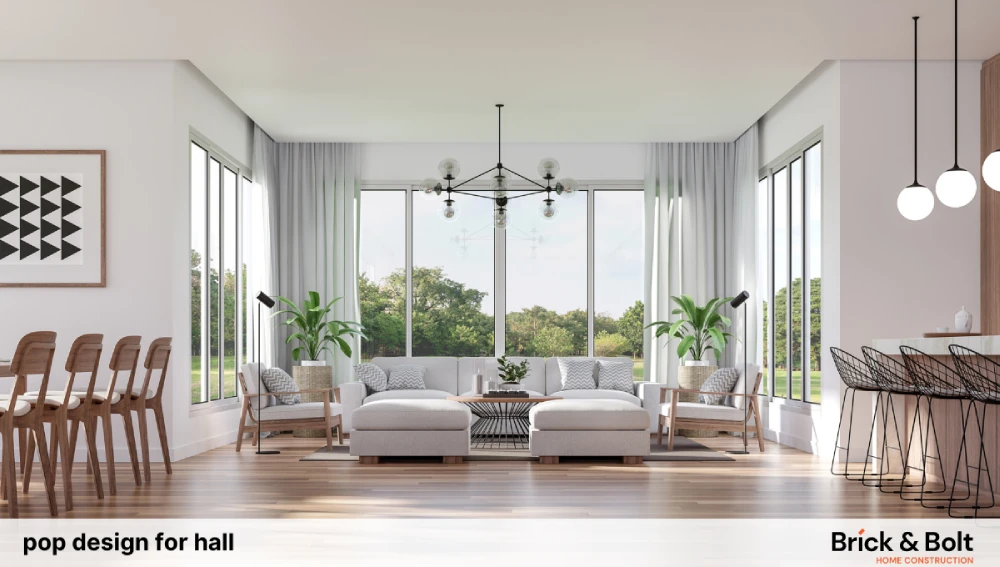
pop design for hall

Your hall is the first thing that enters someone’s eye when they step into your house. The sofas, tables, ceiling, lamps and other interior elements show your guests your taste and aesthetic sense. 

In that case, isn’t it necessary that you do your ultimate best design for your hall? And isn’t it good that you can do it in a budget-friendly way instead of spending too lavishly on these designs?

PoP (Plaster of Paris) is a popular material used in construction and many other fields. It is less expensive and can give your hall the splendid look you desire. Let’s look at some creative designs you can create with PoP for your hall.

Top PoP Design Ideas For Hall

Led Panels PoP Wall Design

What better way to lighten up your hall than by using some bright and colorful LED lights in your PoP design? After choosing a PoP design for your wall, you can talk with your designer and see whether you can integrate LED panels in them. 

Corresponding the light placements with the POP design can give you a visually attractive ceiling. You can use LED lights for several PoP ceiling designs, such as vaulted, plus-minus, coffered, etc. LED lights are also the best choice if you wish to go for a more economical design option. 

PoP Design With Wooden Accents

Wood is always a good choice of decorative material, whether you want it for your floors, walls, ceiling, or any other aspect of your home. Combining it with PoP will just add to its rustic charm. 

Talk with your designer and create a POP false ceiling structure that can incorporate wood panels in it. You can use a darker wood for a traditional look or a lighter wood for a more modern feel. 

Plus-Minus PoP Design

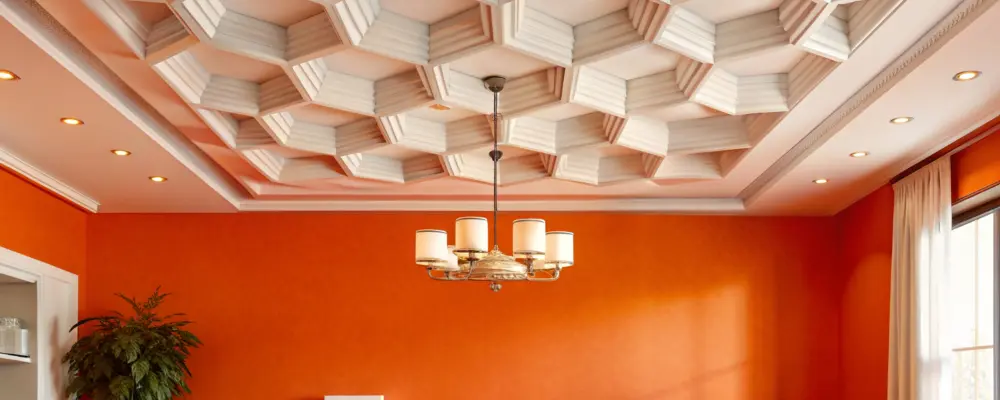
A plus-minus PoP ceiling design involves designing the ceiling with intricate patterns that add depth and dimension to it. You can create a number of intricate patterns with them, such as squares, circles, lines, etc. All these patterns will be protruding from the main ceiling, giving a 3D view.

Creating this type of ceiling involves great expertise and precision. Discuss your requirements with your designer and let them know before starting the work.  

Cornices PoP Design

Cornices are horizontal decorative structures that you can find in buildings. In a room, it generally runs along the junction between the wall and ceiling. 

Traditionally, these cornices are designed using cement or wood. However, you can also make them using PoP. You can incorporate them into various forms like leaves, florals and geometric patterns. They can add a modern and luxurious touch to your hall. 

Victorian Trims PoP Wall Design

Have you ever seen the inside of a British palace? It will almost always be covered in a myriad of intricate designs and structures. e.g., floral motifs, ornate cornices, dentil moldings, and egg-and-dart patterns,

These designs were famous during the Victorian era, hence the name Victorian trims. 

You can add these designs to your home if you wish to give your home a royal and classy look. You can make the bigger moldings with POP and use other materials like MDF or wood for smaller moldings. 

Victorian trims require expertise to design correctly. So, ensure you find the right designer for your hall design. 

Vaulted PoP Ceiling Design

Vaulted POP ceiling designs are a great choice if your home has the space to elevate the ceiling of your hall.

A vaulted ceiling is an arched ceiling that creates a sense of height and spaciousness in a room.

This vaulted structure is a classic model that gives country home vibes with a touch of modernity. 

You can use PoP and create various intricate designs and mouldings in the vaulted structure. The extra height that the vaulted ceilings give you can make room for extra light to fill in and make the room more spacious. 

PoP And Gypsum Combined Design

Though not a usual design option, you can still combine gypsum and POP to get some unique design models for your hall. 

POP has higher durability and strength, making it an excellent choice for intricate and sharp designs. Gypsum has better fire resistance and sound insulation, making it a better choice for safety concerns. 

Combining both these materials and creating design ideas can give your hall an entirely new look than you imagined.

Double-Layered PoP Ceiling Design

A double-layered POP ceiling design involves creating two distinct layers in your ceiling using POP. This design is a great choice if you wish to add depth and dimension to your ceiling. 

In this type of ceiling, the first layer is the base layer, which covers the entire ceiling. This layer can be plain, or you can make any textures with POP. 

The second layer is where your main work is and mostly involves creating designs like geometric shapes, curves, waves, etc. You can customise the designs to your tastes. 

Multi-Layered PoP False Ceiling Design

This design is like the upgraded version of the double-layered PoP ceiling design. Here, you get to play with multiple layers in your ceilings. This gives you endless possibilities and designs to decorate your ceilings. 

This ceiling design is created by designing multiple layers of POP one over the other. This can give space for you to add complex details, stunning depth, and dimension, giving your ceiling a luxurious and aesthetic appearance. 

Conclusion 

Plaster of Paris (PoP) is a go-to choice for anyone who wishes to liven up their hall and make it more inviting. The details and depth you can add with POP give your room a visually appealing sight. 

If you wish to add PoP ceiling designs to your home, ensure you first talk to a professional. They can understand your tastes and suggest some interesting designs. 
How To Apply Primer On Walls

0
How To Apply Primer On Walls

Priming your walls is one of the most important processes you should do to ensure smooth, shiny, and bright paint colors. Paint primer promotes paint adhesion, enabling the paint to embed deeply into the wall and provide a clean and flawless appearance. 

In this article, we will learn the importance of applying a primer and the step-by-step process of applying it on your wall. So, if you are in the process of applying primer to your wall but don’t know how, use this article as a guide and follow the steps for a clean and smooth wall. 

Why Should You Apply Primer On Walls?

Applying primer is an important step that should be followed before painting your walls as they have numerous benefits like the ones listed below. 

Improved adhesion

Primer increases the adhesion of your paint, making it bind strongly to the wall surface. This increases its life and reduces the chances of flaking or peeling.

Neutralise color

Primer gives a clean bright white finish to your walls. This can help the true colour of the paint shine through, especially if you are going to paint over a dark surface. 

Cover imperfections

Primer can cover imperfections like holes, blemishes, dents, etc., providing an even surface for the paint. 

Block stains

Primer can prevent stains from sticking to the paint, especially in places like the kitchen, bathroom, etc.

Step-By-Step Process Of Applying Primer On Wall

Applying primer to your walls is an important step to get your walls ready for painting. So, ensure you read the steps thoroughly and do your best at priming your walls. 

Selecting the Right Primer

The first step in priming your walls is to know which primer to buy for your wall. There are two types of primers: water-based latex primer and oil-based primer. 

Both these primers work well on different wall surfaces. Understanding them can help you choose between the two. Latex primer is like an all-purpose primer that suits interiors well. You can also clean it up easily with water. An oil-based primer is well-suited for covering porous surfaces, blocking stains, and wood tannin. 

Also, ensure you buy enough primer to cover your requirements. It is better to buy them in one go than buy them several times as this can help in cost reduction.

Prepare The Wall

Remember, you can’t just apply primer on your wall after you buy it. You need to prepare the surface first. First, remove any objects from the wall surface, like hangings and other objects. 

Apply putty evenly with a putty knife and sand the surface after drying. Ensure the wall surface is even and dry. 

Cover Other Surfaces

Make sure to cover the surface where you don’t need a primer to be applied. This includes switch boxes and  any other nearby immovable objects If you can move things, it is best to move them away till your primer dries off. You can use painter’s tape to cover moldings, ceilings, fixtures, etc. Wall or floor surfaces that do not require primer can be covered with tarpaulin or similar wall and floor coverings to prevent staining.

Dampen Roller Or Brush

Dry rollers or brushes can’t absorb the primer and evenly apply it on your wall. This can be rectified by dampening your roller or brush before dipping it into your primer. 

For this process, you can use water for latex primers and paint thinner or mineral spirits for oil-based or alkyd primers. 

Cut-In Corners And Spot Prime

Primer needs to be evenly applied on all small corners to ensure easy paint adhesion. Wear safety glasses or goggles, take a 2-inch nylon polyester brush, and apply primer on all corners of your walls. 

To spot prime, apply primer on areas that need special attention with spot brushes. This includes patches in drywall in plaster, joint compound, areas of barewood exposed by sanding or scraping, etc.

Roll On The Primer

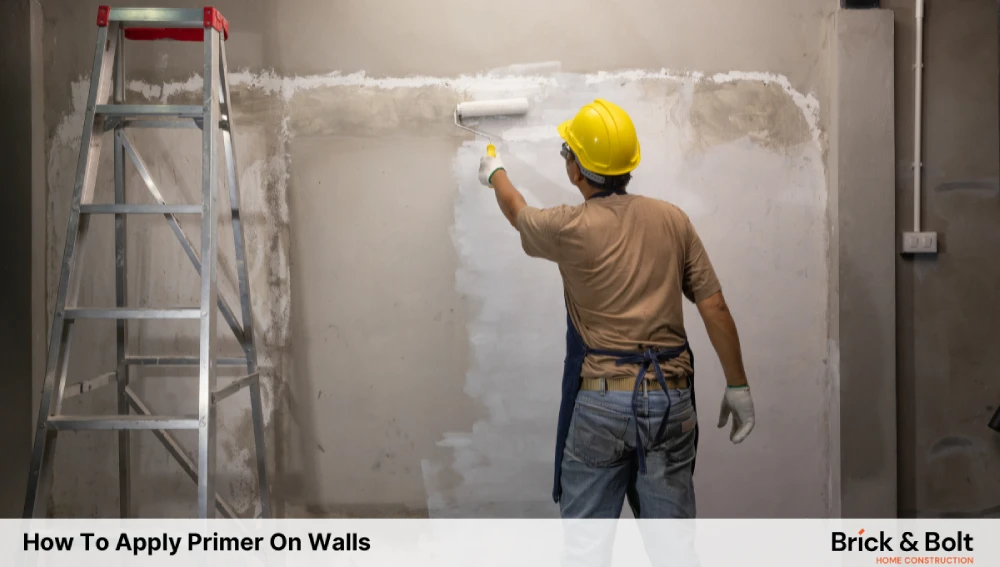
Now that you have covered all the special places, you can go on to apply primer on the larger parts. For this, you can use a 9-inch paint roller to evenly apply the primer on your walls. 

Make sure you squeeze out any excess primer off the roller. Make sections and move your roller from top to bottom to cover the entire wall surface. If a second layer of primer is necessary, follow the manual instructions and apply it only after the first layer has completely dried off. 

Sand Primer

Sanding your primer is an important step that can give you the smooth and sleek look in your walls. After your primer has dried off, use a fine grit sandpaper to smoothen out the surface. This can remove any existing bumps or ridges.

After sanding the entire wall, clean the surface with a sponge or damp towel. You can start painting after the wall dries. 

Conclusion 

Applying primer to your wall surface is a crucial step you need to follow for a smooth and clean paint finish. It might feel like extra work, but the results you get afterwards make it totally worth the time and money spent. 

FAQs

1. Should I apply primer with a brush or roller?

You might need both a brush and roller to apply primer on your wall. First, use the brush to “cut in” corners and spot prime for tricky corners. Later, you can use the roller to cover the larger surfaces. This can give you a neat and even finish. 

2. How many coats of primer should be applied on a wall?

This depends on the wall surface. But generally, it is best to give 2 or 3 coats of primer to obtain a perfect finish. 

3. What kind of roller should be used to apply a primer?

You can use a 9-inch paint roller to evenly apply the primer on your walls. Make sure you squeeze out any excess primer off the roller. Make sections and move your roller from top to bottom to cover the entire wall surface.

The Benefits of a Green Roof – A Guide

0
The Benefits of a Green Roof

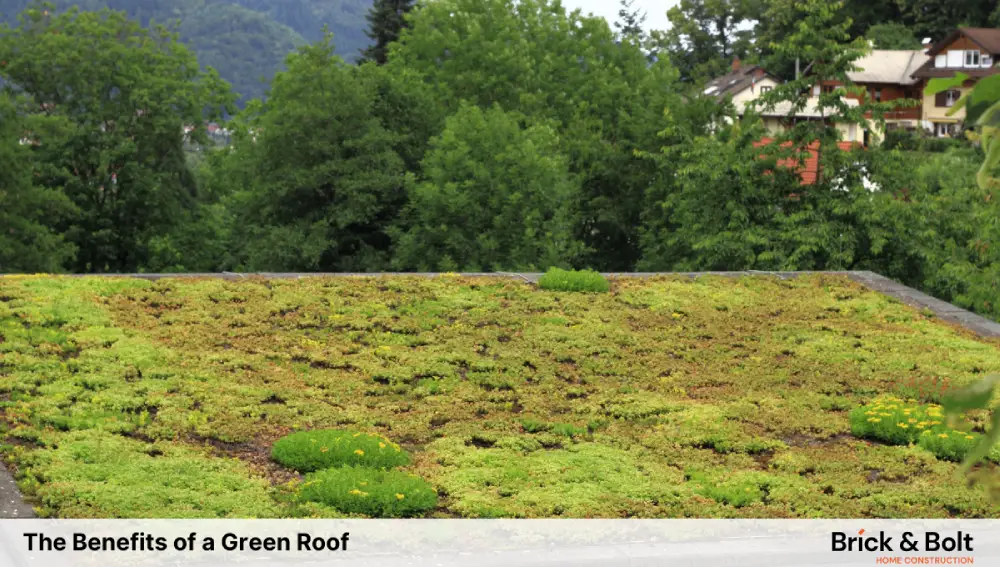
Green roofs, also called living roofs, are becoming more common because they have many good points for economy, nature, and society. Adding plants to rooftops helps handle rain, clean the air, control heat, save power, and bring in more types of life. They also make places nicer and healthier for people to be in.

Let’s look at all the ways green roofs can help.

Rainwater Management

A major advantage of a green roof lies in its capacity to handle rainwater well. Plants, soil, and drainage layers soak up rain, delaying its entry into the sewer system. This method helps filter rainwater, while plant evaporation keeps the groundwater level steady. This puts less strain on the sewer system, cutting down on flood risks when it rains hard.

Air Purification

Green roofs play a big role in cleaning the air. The plants growing on these roofs catch particulate matter from the air and convert carbon dioxide (CO2) into oxygen. This natural cleaning improves the air overall, creating healthier urban spaces for living and working.

Temperature Regulation

Green roofs help control temperatures by absorbing and bouncing back sunlight. Plants absorb about 50% of the sunlight, while 30% bounces off. This natural cooling reduces the need for air conditioning, leading to energy savings. Also, green roofs can bring down the temperature around them, making cities more comfortableduring hot weather.

Better Solar Panel Performance

A cooler roof featuring  green plants boosts how well solar panels work. When solar panels are installed on a cooler surface, they do a better job, which means lower energy bills.

Less Noise

Green roofs serve as natural sound buffers. They absorb noise and create a quieter setting inside and outside the building. This benefit stands out in loud city areas, offering a calmer space to live and work.

Extended Roof Lifespan

Green roofs shield roofing materials from harsh weather. This includes protection from the sun, rain, wind, and temperature changes. As a result, they can double or even triple how long a roof lasts. This longer life means the initial cost of a green roof pays off in 8 to 21 years. The payback comes from less need for upkeep and fewer replacements.

Increased Property Value

The beauty and eco-friendly nature of a green roof, along with lower energy costs and a longer roof life, boost a property’s worth. Green roofs catch the eye of potential buyers, making the building more appealing in the real-estate market.

Support for Biodiversity

Green roofs give birds, butterflies, and bugs a place to live. In cities full of concrete and asphalt, these roofs offer vital green areas that draw wildlife, helping to create a healthier ecosystem.

Protection Against Fire

Plants on the green roofs hold a lot of water, which forms a fire-resistant cover on buildings. This extra layer of defense can help stop fires from spreading, making the building safer.

Improved Well-Being

Living and working in a green environment positively influences people’s well-being. Greenery helps people relax and feel less stressed, which leads to a healthier and more enjoyable life.

Healing Environment

Green spaces help patients recover faster, so they don’t need to stay in the hospital as long. Being around greenery helps people handle pain better and feel good overall, creating what people often call a “healing environment.”

Social Interaction and Reduced Vandalism

Green environments bring people together and make communities stronger. Neighbourhoods with more green areas see less fighting, violence, and property damage. Green spaces connect people and make them feel more like part of a group.

Direct-Green, Low Maintenance

Pre-cultivated vegetation blankets help you create a green roof that looks great right away. These mats cover 90% of the area when you put them in, which means fewer weeds can grow and you don’t need to do much upkeep.

Time and Cost Savings

Setting up a green roof with vegetation blankets is quick and simple compared to planting each plant. This way saves you time and money because it doesn’t need much care afterward.

Erosion Protection

On roofs that get a lot of wind, pre-cultivated vegetation blankets stop the soil from blowing away during big storms. These blankets make a strong, erosion-resistant top layer, so your green roof stays in good shape and works well.

The Urban Impact of Green Roofs

Green roofs have a big effect on urban environments. They help solve unique problems like higher temperatures, bad air quality, and not enough green spaces. Here’s how green roofs make city life better:

Reducing City Heat:

Cities feel hotter than the countryside because of all the concrete and asphalt that soaks up and holds onto heat. Green roofs help cool things down. The plants on these roofs soak up sunlight to grow, which means less heat gets absorbed by buildings and streets. This cooling can lower city temperatures by as much as 3°C, making urban areas more comfortable to live in and easing the load on energy sources.

Boosting City Wildlife:

Green roofs give urban animals a place to call home. In cities with few parks, these roofs offer a safe spot for birds, bugs, and other small creatures. The different plants used on green roofs draw in various types of wildlife. This helps increase biodiversity and supports many species that might find it hard to survive in urban areas otherwise.

Improving Stormwater Management:

Cities often struggle with stormwater runoff because of their many paved surfaces, like roads and buildings. Green roofs soak up rain, which cuts down on runoff and makes flooding less likely. The plants and soil on these roofs work like a sponge. They catch rainwater and let it out, which helps manage stormwater and takes some pressure off city drains.

Boosting Building Performance:

Green roofs insulate well, which helps buildings perform better and save energy. They cool buildings in the summer and warm them in the winter cutting down on heating and cooling needs. This leads to lower energy costs and a smaller carbon footprint for the building. The insulation from green roofs also improves indoor air quality and makes the space more comfortable to live or work in.

Throughout time, people have talked and researched how green roofs not only benefit individual humans but whole societies too. One thing that stands out amongst all such discussions is their ability to enhance air quality and regulate temperatures better than any other means.

Moreover, these rooftops also encourage biodiversity among various species, thereby promoting overall wellbeing. To achieve this, it is important to install green roofs. This makes our surroundings less harmful for us as we contribute towards creating healthier, more aesthetically pleasing places.

If your aim is to save on power bills or extend the lifespan of your roof top, then going for a green roof makes perfect sense, regardless of its aesthetic value and harmony with nature.

How to Hire the Right Civil Contractor for Your Construction Project?

0
Civil Contractor

Are you about to undertake a construction project? Whether you’re planning to construct a new home, renovate a commercial space, or any other kind, the necessary decision you’ll be making is hiring the right civil contractor. However, newcomers in the construction industry may get confused in the selection process.

No need to worry! In today’s blog of Brick & Bolt, you will understand the complete process to help you find the right civil contractor for your project.

Understanding Civil Contractors

A civil contractor is a specialist type of contractor who works with clients in the public and private sectors to deliver construction services. Typically, civil contractors work on infrastructure projects including canals, dams, bridges, and roads. Contractors may offer project management and engineering services in addition to construction services. Civil contractors are responsible for planning, coordinating, and executing construction projects. They collaborate closely with clients to generate project ideas, select building supplies and techniques, and manage the entire construction process. Additionally, civil contractors ensure the timely and budget-friendly completion of projects. Additionally, a civil contractor is responsible for ensuring adherence to all safety rules and ensuring the end result meets all requirements.

How to Hire Civil Contractors?

Hiring a reliable civil contractor is a major part of successfully executing any construction project. The following are the general steps involved in the selection process:

1. Preparing for Your Construction Project

Hiring a civil contractor starts by initially outlining the scope of the project and its technical requirements. You, as the contractor, will thus be able to make decisions in areas such as the type of structure, approximate timing of completion, the major items required, and the ultimate budget. Getting a good point of arrival at the project will allow the contractors to convey their attitude.

2. Finding Potential Civil Contractors

After finalising the project objectives, you can conduct research and make a list of potential contractors in your region with the necessary experience. For recommendations, ask your business contacts who have recently hired contractors. Make a list of contractors who might meet your requirements. If you’re specifically looking for a house construction contractor in Bangalore, you can explore our comprehensive guide. 

3. Evaluating Civil Construction Contractors

Verify that the contractors you have on your list are licensed, registered, and have other required certifications. Check for the company’s founding year and the company’s previous career record, as well as customer feedback. For those in Bangalore, we’ve compiled a list of key factors to consider when choosing a construction contractor. The best thing you can do is to prefer the experienced contractors who have a lot of validated experience in making similar projects in the past.  

4. Getting Numerous Quotes

In the hiring process for civil contractors, getting numerous quotes is a crucial step. By comparing rates, services provided, and schedule rates from several contractors, you can ensure you are receiving the best value for your project. This allows you to make better decisions about which contractor best suits your needs. Getting quotations from several sources can also help you avoid any future unforeseen expenses or budget overruns.

5. Interviewing Civil Work Contractors

Have face-to-face meetings with the contractors you have chosen. Provide your project schedule, specifications, and answers to any questions. Ask them for price quotes based on estimated expenses. Examine quotes carefully, paying attention to overall charges, labour and material prices, and timeframe commitments. For insights on selecting the best construction materials for Indian homes, refer to our detailed guide, it will help you to make your decision.

6. Ensuring Legal Compliance:

You must verify whether the civil contractors are in compliance with the law or not. Confirm that the contractor complies with health and safety laws and possesses all the licenses and permits required to do the task. By doing this, you can protect yourself from any possible legal problems that might come up during the process. Also, it’s critical to verify their insurance coverage for construction projects in order to protect against potential calamities or damages on the construction site and to improve construction site safety. You may guarantee a successful and seamless working relationship with your selected civil contractor by prioritising legal compliance.  

It’s essential to be aware of construction labour laws, safety rights, and compliance requirements – our comprehensive guide can help you understand these crucial aspects. 

7. Signing a Detailed Contract 

Signing a detailed contract is an important step that you shouldn’t skip when committing civil contractors for your project. In this document, make sure that the scope of work, deadlines, budget, and any other important information that both parties decide upon are specified. A detailed contract guarantees that prospects are specified in detail right from the start, protecting both the contractor and the client. By taking considerable time to draft and carefully read a comprehensive contract, you can ensure that your project proceeds effectively and prevent future misunderstandings and problems.

Working with Your Chosen Civil Contractor Company

After signing a contract, start focusing on establishing a stable working relationship with your contractor. Create a sign-up form for members and agree on regular progress meetings and updates. Deal quickly and promptly with any issues or concerns that may pop up. Honest and open conversations prevent tiny squeezes from erupting into major stopping blocks.

Install the project from the very beginning and bring the control throughout the project. Regular checks and follow-ups of the agreed standards will ensure that the final product meets the expectations of your proposed ideas.

Selecting the right civil contractors is very important for the success of any construction project. They will be professionals in the civil field who master all types of projects. For more detailed guidance on choosing the ideal contractor for your specific project, check out our in-depth article. They will meticulously monitor each stage of the project to ensure its smooth progress. They guarantee that everyone on the construction site understands their tasks and completes them punctually. They make sure everyone stays safe while in the worksite. Assess candidates thoroughly on all sides rather than selecting contractors just because of price. Set aside time in advance for thorough investigation and analysis. By doing this, future project delays, quality problems, or legal troubles are avoided. For a seamless construction process, modify the best practices listed below to fit the needs of your particular project.

How to Calculate Bricks for Different Wall Types

0
How to Calculate Bricks in a Wall

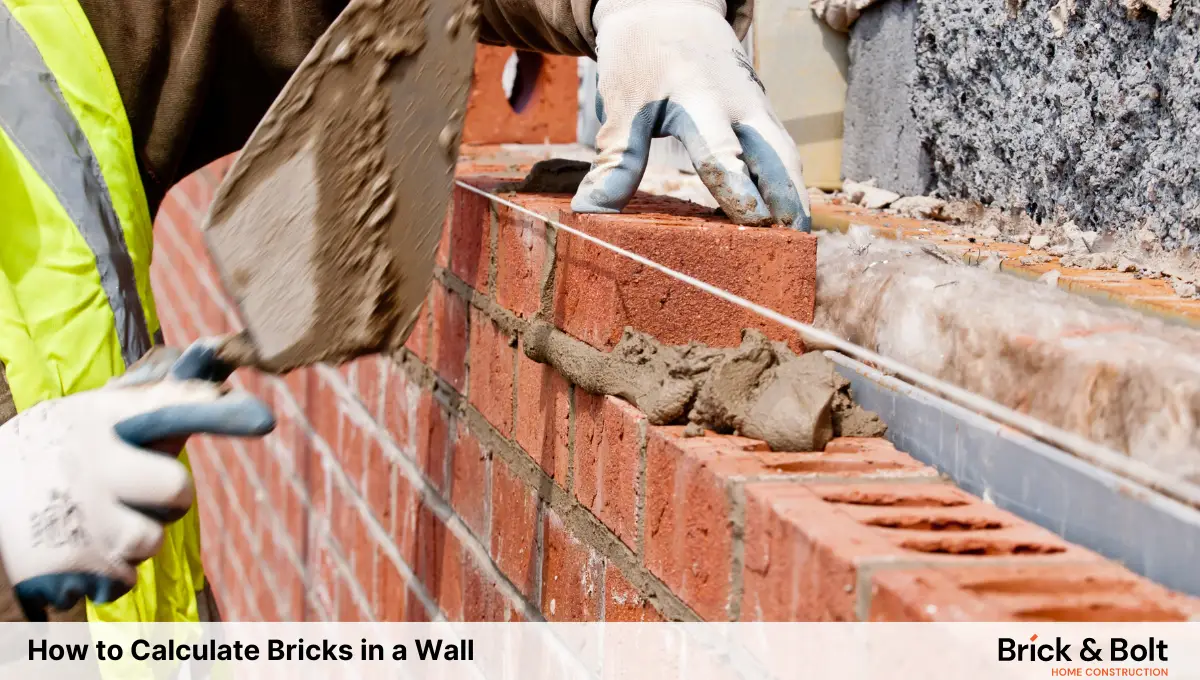
While undertaking any new construction project, we have to deal with a multitude of hurdles. One of the toughest parts among them is getting an accurate estimation of the building materials required. Ordering insufficient materials can delay your project, while an overestimation can lead to unnecessary expenses.

The fundamental solution to overcome this situation is to estimate how many bricks you need for a wall surface. Bricks are basic yet expensive, which helps determine your overall building requirements. If you are getting into a construction project for the first time, here is the blog to guide you. Read on to understand the number of bricks you need to cover a wall surface.

Understand Brick and Mortar Dimensions

To know the exact number of bricks required, it is crucial to understand the dimensions of bricks and mortar joints. These requirements are fundamental to exactly estimating the number of bricks required for the structures.

Standard Brick Sizes

Brick sizes are not the same in all regions, but here are common standards used:

For Metric Units: 230mm x 110mm x 75mm

For imperial units:

Common Brick: 8 7/8 inches long x 4 ¼ inches wide x 2 ¼ inches high

Standard Brick: 7 5/8 inches long x 3 5/8 inches wide x 2 ¼ inches high

Note: The aforementioned values are not accurate; they are just an example. It is advised to verify the dimensions with your manufacturer before buying.

Mortar Joint Thickness

Mortar joints denote the gaps between bricks filled with mortar. It’s standard thickness typically ranges between 3/8 inch and ½ inch. However, it is important to consult local building codes to ensure compliance with project requirements. The thickness of a mortar joint greatly influences the overall brick dimension and mortar unit. Paying attention to these details assists in predicting an accurate calculation.

Variations in Brick Dimension

The variations can occur even in standard brick sizes due to these significant factors:

Region: The manufacturing cost and brick size can differ between every region and country. It includes the types and quality of raw materials used, transportation costs, tools and techniques, and labor charges. Consult your supplier to ensure its availability and compare it with your project needs.

Brick Type: Brick type is a primary factor that impacts the overall estimation. There are various ranges of bricks available in the market with different dimensions, such as facing bricks, engineering bricks, burnt clay bricks, concrete bricks, fly ash bricks, etc. Ensure your brick requirements aligns with the type of brick you prefer for your construction.

How to Calculate the Number of Bricks You Need for a Wall

Before diving into the calculations, calculate the standard-size brick wall by multiplying the length and height of the wall. The answer will be your total surface area, then multiplied by bricks per square foot. Here, you need to leave a gap for wastage by adding an extra 10% of the total.

For example:

  • If the wall measures 10 ft in length and 8 ft in height, calculate the area: 
  • Wall area: 10 ft * 8 ft = 80 sq. ft.Next, calculate the number of required bricks: 

Total bricks = 80 sq. ft. * 6 bricks/sq. ft. = 480 bricks.

  • Finally, adding for wastage yields: 

Bricks with wastage = 480 * 1.1 = 528 bricks

Note: Based upon your brick size and dimension, this calculation may vary. The above-given calculations are just for your understanding.

Estimation for Different Construction Projects

Considering the type of project, it might sound obvious to determine the exact number of bricks required. Whether you are planning to build a new house or an industrial building, the layer of wall directly influences your calculations. Bringing you the different wall layers into the table to make informed decisions:

Single-Layer Walls

A single-layer wall, often called a half-brick wall, includes a width of one brick, with the longer side of the brick exposed. They offer fantastic support for existing systems, but not the same for load-bearing or structural applications. 

When using this method, it is essential to follow height restrictions and place piers at different points along with the wall. A single-layer wall may consume 60 bricks per m2 (if the standard brick size is used).

Double-Layer Wall

A double-layer wall (one-brick thick walls) contains two different layers, which alternate between a stretcher course and a header course. It looks wide, as the long edge of a brick provides excellent structural integrity to a building. 

This one-brick thick wall can be used as a freestanding, recommended for any wall with a height over 600mm. When it is a standard sized brick, it approximately requires 120 bricks per m2.  

Brick Piers

Brick piers are supporting structures used to add strength to brick walls and add aesthetic appeal. It can be placed along with single-layer walls, constructed vertically. You require an extra 14 bricks per m2 for a single brick pier and 34 bricks for double-layer structures.

Conclusion

The accurate estimation of brick requirements is crucial for successful construction projects. The steps mentioned in this guide will allow you to find the exact quantity needed, avoiding unnecessary project delays and costs. Once again, remember to consider the significant factors, including brick size, mortar thickness, and wall pattern, for better results. By the formulas given, you can predict the exact requirements and minimize any potential losses.

FAQs

What is the average number of bricks per square foot?

There is no exact range that can be predicted, which depends on mortar thickness and brick size. However, a rough estimate is around 6 bricks per square foot for a single-layer wall. (if a standard brick is used)

Are there any online tools to calculate the brick requirements?

Yes, you have plenty of online platforms to estimate the brick requirements for any type of building. Just by feeding the data, the results can be given. But it is uncertain that the results are accurate.

How do I account for wastage when estimating the number of bricks?

Generally, it is recommended to add 10% wastage to your total brick count to balance the unexpected damages, breakage, or any other troubles caused during construction.

How Many Bricks Are Required for 1 Square Feet of a 9-Inch Thick Wall

0
How many bricks in 1 square feet 9 inch wall

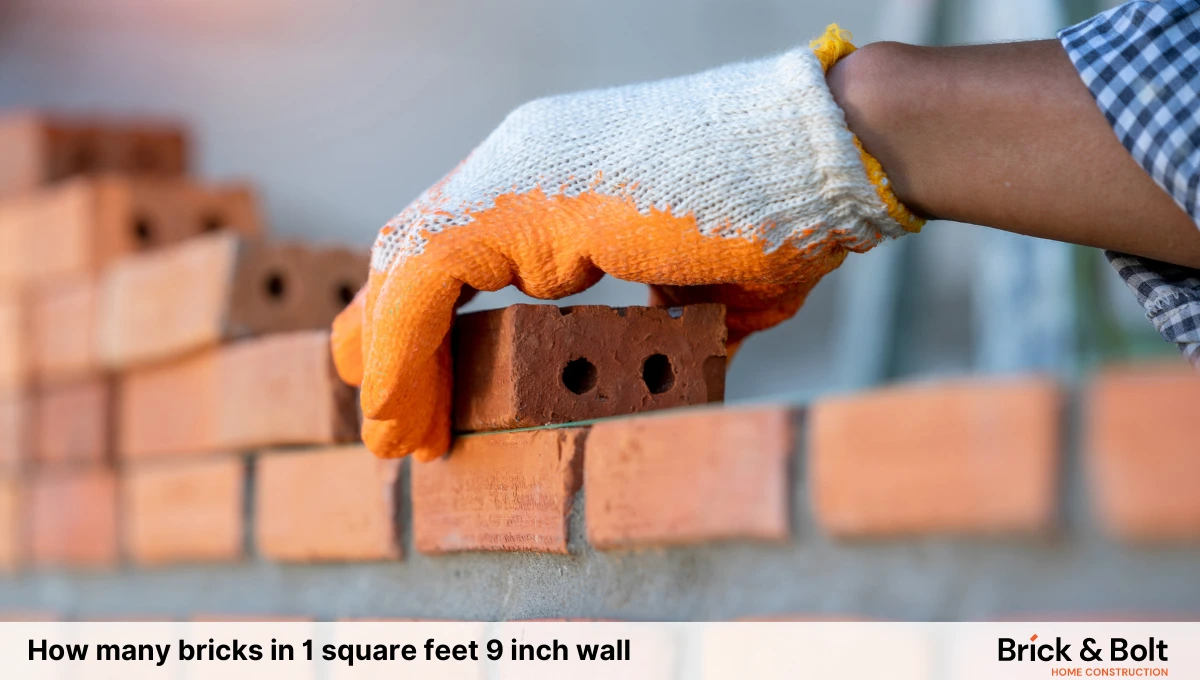
Accurate estimation of brick requirements for a construction project is crucial for effective planning and budgeting. It is a primary raw material that allows for informed decisions in different aspects. Unfortunately, many homeowners and builders are struggling to determine the brick count accurately for a square foot or specific wall area.

Before diving into the wider calculation, the estimation per square foot eases the job. This blog aims to provide practical tips for real-world applications. With consideration of important factors, we explain to you how many bricks are required for 1 square foot of a 9-inch thick wall.

How many bricks in 1 square feet 9 inch wall ?

To determine the number of bricks required for a 1 sq. ft., 9-inch wall, follow these simple steps:

Find the Brick Dimension

As an initial step, determine the length, width, and height of the specific brick. It may vary between regions and countries. For consideration, we’ll take the Indian standard brick size:

Brick size = 190 x 90 x 90 mm

Mortar thickness = 12 mm

Calculate the Total Volume of Brick Work on a 9 Inch Wall

Use this formula to calculate the volume of brickwork:

Volume (cubic feet) = Area (sq. ft) x Thickness (feet)

Since the area is given in square feet whereas the thickness is 9 inches, you need to convert the thickness to feet.

Thickness (feet) = 9 inches / 12 inches per foot = 0.75 feet

Now, use this thickness (feet) to determine the brickwork volume.

Brickwork volume = 1 sq. ft. x 0.75 feet = 0.75 cubic feet.

Find the Volume of One Brick Without Mortar

Calculate the volume of one brick without mortar by multiplying the length, width, and height of the brick.

Length x width x height = 190 mm x 90 mm x 90 mm = 15,39,000 mm3, or 0.05438 cubic feet.

Calculate the Volume of Each Brick with Mortar

As mentioned, the thickness of the mortar is 12mm

Volume of one brick with mortar = length x width x height = 202 mm x 102 mm x 102 mm = 21,01,608 mm3, or 0.07422 cubic feet.

Note: In this formula, the mortar thickness is added to the length, width, and height of the brick.

Calculate No. of Bricks for 1 Sq.ft., 9 Inch Wall

Number of bricks = total volume of brickwork / volume of each brick

= 0.75 cubic feet / 0.07422 cubic feet

= 10.12

So, we need 10 bricks for a 1 sq. ft., 9 inch wall.

Factors Affecting Brick Quantity

Brick calculation is easy, but it can be influenced by certain significant factors, as explained in the following. These parameters must be considered for an accurate estimation:

Types of Bricks:

You can find a wide array of brick types on the market today. Based on your selection, the calculations may vary. For instance: Compared to solid bricks, hollow bricks are generally larger and consume fewer bricks per square foot. The size and weight-bearing capacity impact the brick count. If you are using different brick sizes in your construction, adjust the calculations accordingly.

Wall Openings:

Doors and windows are essential variables in all construction projects. It reduces the wall area, resulting in a lower brick count. Before diving into the brick calculations, ensure the area of the larger openings for accurate estimation.

Brick Wastage:

Brick damages are unavoidable during construction. There is a chance for 5 to 10% of brick wastage; hence, the overestimation helps to compensate for the losses. It is always advisable to order slightly more bricks to avoid project delays.

Design Consideration:

Bricks are available in different patterns and sizes to elevate the elegance of buildings. Each has its unique properties and benefits (examples include the Flemish bond and the English bond). According to your selection, the final brick count can vary. The area might require additional bricks to achieve perfect cutting and fitting. 

Final Wordings

I hope you got the answer along with a calculation method for how many bricks are required for a 1 square foot, 9-inch wall. You can use the same method to determine the brick count of all construction projects. However, you should be aware of some important considerations that can directly influence the final brick count, including brick type, design considerations, and waste. By following the steps mentioned in this guide, you can accurately predict the brick quantity appropriate to your construction needs.

FAQs

How does mortar thickness influence brick quantity?

Thicker mortar joints affect the area covered by each brick. It increases the number of bricks required for a specific area. For example, a mortar joint with a thickness of ¼ inch requires more brick count than a 3/8 inch thickness.

What is the average cost of a brick per square foot?

The cost of brick is not the same in all regions. It can significantly vary due to quality, market conditions, brick type, and location. It is highly recommended that you get quotes from your local manufacturers or suppliers for accurate pricing.

Is this calculation method applicable for different types of bricks?

Yes, the basic calculation method is the same, but the final brick count can vary based on the brick type. For example, hollow bricks, which are comparatively larger than solid bricks, might require fewer bricks per square foot.

What is the standard size of a brick?

As per the BIS guidelines, the standard size of a brick in India is 190 mm x 90 mm x 90 mm (length x width x height). However, the dimensions can vary according to the type of brick and region.

Do I need to take wastage into the account?

Yes, it is necessary to consider the brick wastage during construction. Add 5 to 10% to the final brick quantity to compensate for the broken or damaged bricks and avoid project delays.  

A Khata in Bangalore: Understanding Its Importance in Real Estate

0
A Khata in Bangalore

In the real-estate world, you often hear the term ‘Khata.’ You can be a property owner, buyer or seller of the property or someone interested in real estate. You must understand Khata and its major type, ‘Khata A.’  

In today’s blog of Brick & Bolt, you are going to get an understanding of Khata,A Khata, its significance, its importance in real estate, its relationship with property tax and how you can apply for Khata A.

What is Khata and its Importance?

Khata is a document that certifies that the buyer of a property has an account with the municipality for tax purposes. It reveals whether the individual has to pay taxes or not. An owner’s Khata contains information that would estimate the owner’s tax liability, such as the property’s size, location, and built-up area. It has two major types: A Khata and B Khata

A Khata certificate is required for all properties located within the boundaries of Bruhat Bengaluru Mahanagara Palike (BBMP). Obtaining A Khata document is necessary in some parts of the state of Karnataka in order to get approval for building layout plans, bank loans, and  building licenses. If owners have the Khata document, obtaining water and electricity connections is simple.

When you’re considering buying a plot in Bangalore, it’s essential to check whether the property has the necessary documentation. These things to check before buying a plot in Bangalore will ensure that you’re making a safe and informed investment.

What is Khata A? 

Khata A is a document that denotes the tax payment by the owner to the BBMP. A Khata signifies that the property conforms with all government regulations and property-related construction regulations in Bangalore. The possession of the A-Khata document enables property owners to file for approval of the building plan, trade approvals, building licences, and bank loans for the property. 

Importance of Khata A in Real Estate Transactions 

The Khata A certificate is a major document in real estate, mainly in the regions where it is required for various property-related activities. It plays a crucial role in establishing the legality and authenticity of a property, thereby ensuring a smooth transaction without any concerns.

Property Transactions: A khata certificate is essential when you buy or sell a property. To guarantee seamless and legal transactions, it is necessary during the registration of properties and the transfer of ownership.

Building Permissions and Licensing: A Khata certificate is necessary to get building permits and licenses from local authorities for any construction, renovation, or enlargement of a property.

Financial Transaction: When applying for a mortgage loan like a home loan, property loan, financial institutions frequently want A Khata certificate as part of the documentation process.

Government Programs: In order to prove property ownership and eligibility, participation in a number of government housing programs and initiatives may also require A Khata certificate.

Legal Validation: According to the municipal authorities, properties with an A Khata are legitimate and fully accepted. They can, therefore be assessed for property taxes. 

Access to Civic Amenities: Properties bearing an A Khata typically grant their owners access to a number of services and facilities provided by the national and local governments.  This covers having access to a trash disposal facility, power connections, a water supply, and other necessities. 

Khata A and Property Tax 

In Karnataka, the assessment of property taxes is closely connected to khata. The local municipal authorities in the state base their assessment of a property’s property tax due on the khata. 

Here’s how the assessment of property taxes is related to the Khata:

Property Identification: A property’s owner is identified by the Khata document. It includes information about the property, like the owner’s name, address, and size, among other pertinent factors.

Property Tax Assessment: The municipal authorities check the property information and determine the property’s worth for taxation when a property owner files for A Khata registration. The amount of property tax due from the owner is determined by the assessed value.

Property Classification: Properties are generally divided into groups, zones, or sections according to attributes, including location, type of property, and facilities offered. The khata aids in assigning the property to the relevant tax zone for an accurate tax assessment.

Tax Payment: Based on the property’s assessed value, owners of real estate with a Khata get tax bills. They will have deadlines to pay the property taxes in order to avoid penalties and legal action.

How to Apply for Khata A?

To apply for Khata A, you must complete a number of tasks. Before applying for your A Khata certificate, it’s helpful to estimate the associated costs. You can use our Khata cost estimator to get an idea of the expenses involved in the process.

You’ll find these steps helpful during the entire process:

1. The Khata registration form must be obtained from the BBMP office or its website as soon as possible.

2. Fill in the required details, including the size of the property, the name and address of the property owner, and any other pertinent data.

3. Include the necessary paperwork:

  • Title deed (attested copy) or sale deed
  • Prior receipts for property taxes
  • Certificate of Encumbrance
  • Comprehensive survey illustration
  • Certificate of occupancy, if applicable
  • Proof of the owner’s residence and identification

4. After that, send the application form, together with any other necessary paperwork, to the relevant BBMP office.

5. The BBMP representatives may inspect the property in addition to reviewing the submitted paperwork.

6. Using the data they have on the property, the BBMP will determine the amount of property tax that must be paid.

7. You need to pay the property tax that the BBMP has assessed.

8. The BBMP will provide the Khata A certificate as soon as the tax payment is verified.

You can say Khata A as a testament to your property’s legal status and to the real-estate business. It plays a major role, from proving ownership and facilitating property tax payments to improving property value and simplifying real-estate dealings. A property with Khata A not only provides peace of mind but also opens doors to numerous advantages in terms of legal clarity, financial transactions, and overall property management. 

Cement Ceiling Designs: Enhancing Spaces with Durability and Aesthetic Appeal

0
Cement Ceiling Designs

Whenever you enter any home, your eyes directly move upwards to embrace the beauty of the ceiling. Ceilings have the ability to transform the interior of the space by adding beauty and style. Even from the earliest of times, they were among the favourite spots of decoration. Nowadays, cement ceiling designs come into the picture with a wide array of patterns and color options.

In today’s blog of Brick & Bolt, you will understand the cement ceiling, its types, color combinations, advantages and disadvantages.

What is a Ceiling?

A ceiling is the overhead interior surface covering the undersides of a floor or the uppersides of a roof. Ceilings are mainly used to cover floors and roof construction. There are various material options available for ceilings including, cement ceilings to false ceilings. While cement ceilings offer durability, false ceilings give a unique aesthetic to your home, A cement ceiling is generally composed of cement, water, aggregates like sand or gravel, and sometimes, additional admixtures. For those interested in exploring alternatives for beautifying their ceiling, you can check out our comprehensive guide on types of false ceiling materials

Different Types of Cement Ceilings

While cement ceilings offer unique advantages, it’s important to note that there are many ceiling options available for different needs and preferences. For a comprehensive overview of various ceiling types, you might want to explore our guide on different types of false ceilings.

The following are many types of cement ceilings:

  1. Exposed Cement Ceiling
  2. Textured Cement Ceiling
  3. Polished Cement Ceiling
  4. Cement Board Ceiling

1. Exposed Cement Ceiling

If you prefer to give your home an unfinished, classy look, exposed cement ceilings are the better option. This option will highlight the building’s structure with a raw look and a natural grey tone of cement. It will be ideal if you wish to have an open, airy feel in your personal space, loft apartments, modern homes, or commercial spaces.

2. Textured Cement Ceiling

With textured cement ceilings, you can add your style with textures. The finishing of ceilings can range from smooth, and sleek to rough and troweled surfaces. You can also play with patterns and imprints. The overall decoration of the home interior can be enhanced by adding your personal style.

3. Polished Cement Ceiling

If you wish to enhance the finishing work of your cement ceiling, then you can consider the polished cement ceiling. It offers a cultured, glossy finish that can amplify the light within a space. Here, you have to grind the surface of the cement to get the reflective sheen. This type of ceiling is perfect for spaces that demand sleek and high-look, such as modern houses, modern homes, classy apartments, and commercial spaces.

4. Cement Board Ceiling

If you are looking for lightweight and moisture-resistant cement ceilings, cement board ceilings will be the best option. These cement board ceilings are specially made up of thin panels of cement, which are reinforced with natural fibres, which are the best building insulation materials. Generally, this type of ceiling is used in bathroom and kitchen areas that are more open to humidity. Along with their versatility, cement board ceilings can also be finished by painting, tiling, or just leaving them uncovered for a more industrial look.

While we’ll focus on cement ceilings here, it’s worth noting that lighting plays a crucial role in ceiling design. If you’re interested in how lighting can enhance your ceiling, check out our article on trends in false ceiling light designs

Color Combination for Cement Ceiling Design

Along with the different designs and patterns you can add your style to your space interior with colour combinations for cement ceiling and cement ceiling corner design. The following are some of the major color combination options:

Black and White 

A black-and-white combination would be the most suitable for a simple and sophisticated design. The black-and-white combination offers the perfect balance between formal and cosy interiors. It’s often used in home offices and commercial spaces.

Shades of Grey

Choose different shades of grey for your cement ceiling that radiate a classic style. This multi-purpose color pairing is perfectly designed for a modern home that matches fashionable interiors.

White and Beige

The neutral color combination of white and beige offers a classic design and charm to the interior. Since the white color enhances light, it creates the illusion of a larger space. It is a great choice for any style of cement ceiling. 

Dark Grey and Metallic Gold

If you want to stand out with a bold and dramatic look, then this color combination is ideal for you. The dark ceiling that swallows the wall and becomes a part of the floor is a feature that adds depth whereas metallic gold reflects a sense of luxury, which makes the space a perfect choice for modern homes.

Earthy Green and Wood Tones

Natural tones of green or shades that replicate nature retain a natural look. The balanced combination of the cement ceiling makes it an excellent choice. It can be used to decorate various design types, e.g., home offices, floors, or spaces, with a biophilic approach.

Light Blue and Silver

Light blue is used with additional silver accents to make the design look sophisticated and modern as well. This color combination is ideal for relaxing and calming places such as the bedroom and the bathroom. It will offer a modern vibe. 

For those looking to create a cohesive look in their bedrooms, our guide on classy bedroom colour schemes can provide valuable insights. 

Advantages and Disadvantages of Cement Ceilings 

The following are the advantages and disadvantages of cement ceilings you must consider before making the choice:

Advantages of Cement Ceiling:

  • Cement ceilings are the best alternative since they are quite resilient and can easily resist all weather conditions.
  • As it is non-combustible and offers exceptional fire resistance, cement is essential for building safety.
  • Since cement resists moisture, it doesn’t grow mold or mildew, which makes it ideal for humid environments.
  • The need for regular repairs is decreased by the ease of maintenance and low upkeep that cement ceilings demand over time.
  • Sound acoustics provided by cement ceilings reduce noise levels in the space.
  • Compared to other synthetic alternatives, cement is a more environmentally friendly construction material because it is a natural substance that can be recycled.

Limitations of Cement Ceiling:

  • Cement ceilings are difficult to install because they are heavy and need enough structural support. 
  • Qualified personnel are needed to do the installation correctly.
  • The limited design options of cement ceilings may make them unsuitable for a variety of design tastes.
  • The interior temperature of a space can be impacted by heat absorption and retention from cement ceilings. Hence, it requires proper insulation.
  • Cement ceilings are costly, particularly if other structural alterations are required to provide support.
  • The industrial look of cement ceilings makes them potentially unsuitable. 

If you are going to add a ceiling or renovate the ceiling, you may want to ask the opinion of an experienced civil engineer or a construction company, such as Brick & Bolt in Chennai, in order to be sure that the ceiling style you are proposing matches the structural requirements and represents the fashion you prefer. A properly thought-out and executed cement ceiling can easily become a remarkably beautiful focal point that can transform your interior space into a whole new level of aesthetic eye candy.

All About the Best Waterproofing Chemical for Terrace: Effective Solutions & Tips

0
Waterproofing Chemical

If you have a home with a terrace, you have a special space to relax, work out, and enjoy the outdoor view. It can be your celebration spot for every good thing. However, this open space is often outdoors and exposed to different weather conditions. If you live in rainy areas, then they’re vulnerable to water damage. You should, and are supposed to, make your terrace waterproof.

Water proofing on the terrace will prevent leakage and water seepage by increasing the life of your home while avoiding any structural damage. In today’s blog of Brick & Bolt, you are going to learn more about terrace water proofing with chemicals, different types of waterproofing chemicals, different factors to consider when choosing a waterproofing chemical, and many more.

Understanding Terrace Waterproofing

The continuous contact of the terrace with water will penetrate the water into the building structure of your home. To avoid damage to the building structure, a protective layer containing different chemicals will be applied on the surface of the terrace. This is called terrace waterproofing.

Effective terrace waterproofing helps to control problems like:

  • The seepage of water into the structure
  • Different types of cracks and weakening of the building structure
  • The growth of molds and mildews
  • It ensures that connections and interior decorations do not get damaged.

Effective terrace waterproofing not only protects your terrace but also offers protection for your entire house against water damage. If you are interested in improving the look of your terrace, read more about transforming your terrace and outdoor living ideas.

Best waterproofing method for terrace

There are numerous types of waterproofing chemicals for terraces, each with its own set of properties and applications: 

1. Cementitious Waterproofing: 

It is an easy and highly versatile method. This method includes mixing waterproofing organic and inorganic chemicals with cement and sand to create a waterproofing paste. It is spread as a thin coating to the terrace surface. It will act as a protective layer once it dries completely. It will be highly resistant to water penetration.

2. Liquid Membrane Waterproofing: 

In liquid membrane waterproofing, acrylic or polyurethane-based liquid is applied in a thin layer over the surface and forms a rubber-like thin layer after drying. This will be the best method to apply waterproofing to difficult-shaped terrace areas.

3. Bituminous Waterproofing: 

As the name suggests, they are made from bitumen. Bitumen is a thick, viscous substance that is perfect for waterproofing roofs because it can seal off the terrace to avoid leakages, thus saving your roof and the whole structure below it from any water damage. Therefore, they are widely used. They are generally used in membranes and liquid coatings forms.

4. Polyurethane-based Waterproofing: 

This is the best waterproofing chemical for terraces. However, it is the most expensive chemical waterproofing method available on the market. This will present the best elasticity and is better suited for surfaces prone to movement or cracking. 

If you want to enhance the appearance and functionality of your terrace, explore these tips for designing an attractive and practical rooftop space.

Terrace waterproofing chemical

  1. Acrylic Polymer
  2. Grout and Epoxy
  3. Vinyl Ester Resin
  4. Polyurethane
  5. Poly acrylic

Factors to Consider When Choosing a Waterproofing Chemical

For selecting the right terrace waterproofing chemical, you have to consider several factors:

  • Climatic and weather conditions: One needs to consider weather conditions in house areas. It may require more durable chemical solutions for heavy rainfalls or extreme temperature variations.
  • Cost Criteria for Waterproofing: First, you decide your requirements and set the budget for waterproofing a terrace. The cost may vary depending on the quality and type of product. Considering the value for the long-term, you can select the better one.
  • Terrace Material and Condition: The selection of waterproofing chemicals depends on the substrate materials, whether reinforced cement concrete (RCC) or bricks, and their condition. Accordingly, you select a suitable waterproofing chemical.
  • Ease of Application: In the case of a self-drive/DIY approach, you can easily opt for the available user-friendly waterproofing chemicals for the terrace.
  • Waterproofing Warranty: You should check the warranty about the waterproofing chemical solution for the terrace before buying.

Application Process

The application process can vary depending on the chosen product, but generally involves these steps:

  1. Preparation of Terrace Surface: Prepare the terrace surface by cleaning thoroughly removing any dirt, debris, or loose material.
  2. Repair Cracks: To prevent roof leakage and ensure the longevity of the waterproofing, you have to repair any cracks or damages if present.
  3. Primer Application: For better adhesion, some waterproofing chemicals require primers. It can enhance the bonding between the substrate and waterproofing layers.
  4. Waterproofing Chemical Application: Apply the waterproofing chemical using a brush, roller, or spray. Multiple coats may be necessary.
  5. Curing or Drying: Allow the applied waterproofing chemical to cure or dry fully. Depending on the product and environmental conditions, this can take anywhere from 24 hours to several days.
  6. Testing: Once the surface is cured or dried, conducting a water test is advisable to ensure proper application and effectiveness.

Maintenance and Longevity of Terrace Waterproof Treatment

To keep your waterproofing treatment effective and long-lasting, it’s important to:

  • Regularly inspect the terrace, especially after severe weather.
  • Clean the terrace often to avoid dirt buildup.
  • Fix any damages right away to stop water from getting in.
  • Reapply the waterproofing treatment as suggested by the manufacturer, usually every 5-10 years, depending on the product and conditions.

If you are interested in improving the space utilisation of your terrace, explore different ideas to maximize the utilization of your terrace space.

While choosing the best waterproofing chemical for your home’s terrace, you need to consider the requirements. Knowing the types of waterproofing chemicals will help you choose the best one that would suits your requirements. Regular maintenance and timely reapplication will be necessary to keep the waterproofing treatment up for a long period, thereby protecting your terrace or home from damage for several years. Proper waterproofing of a terrace is not done for the sake of preventing water damage but adds to the value and life expectancy of your property. A well-protected terrace will not cause any water issues and can be designed beautifully and used as a functional space for relaxation and entertainment activities. For new home construction, you can also explore highly effective waterproofing options to protect your investment.

To learn more about waterproofing chemicals for terraces, you can visit nearby construction specialists such as a construction company in Hyderabad.

Staircase Headroom: A Complete Guide to Safety, Comfort, and Design

0
Staircase Headroom

Have you ever heard of staircase headroom? Did you consider it a livable room? No, it’s completely different from your assumptions. It’s an empty space with a specific purpose. While building your dream home or buying a home, you should consider the headroom or staircase overhead clearance.

In today’s blog of Brick & Bolt, you are going to understand staircase headroom clearance, its importance, and key considerations for architects, builders, and homeowners.

What is a Staircase Headroom?

The headroom for stairs is the vertical space between your head and the sill of a doorway or the ceiling of the house, and the floor of the room is headroom. In simple words, it is the empty space between your head and the bottom of the floor above. It can also be called a Headway or overhead clearance of stairs. Typically, the house needs to have 7.5 feet of headroom, not less than 6 feet 8 inches. 

The Importance of Sufficient Stair Headroom Design

Following are some of the major importance of sufficient staircase headroom design:

  1. Ensuring Safety: If the staircase overhead clearance is not sufficient enough, taller people will tend to get head injuries. Also, if you try to carry items, it will become a safety issue.
  2. Comfort and Usability: With sufficient headway for stairs, you can feel comfortable and your movement through the stairs will become simple.
  3. Legal Compliance: If the minimum staircase headroom clearance is not as per the code, it can result in failed inspections and legal issues.
  4. Property Value: You can increase the property value by designing the staircase with sufficient head clearance.

Building Regulations and Stair Headroom Standards

The following are the main requirements for staircase headroom in India:

1. National Building Code of India (NBC):

The NBC offers detailed instructions for building construction all over India. 

As per the NBC code the residential buildings need to have a minimum headroom clearance of 2.2 meters, or around 7 feet 2 inches.

The minimum headroom requirement for commercial, institutional and all other types of buildings should be 2.4 meters, or around 7 feet 10 inches.

2. Municipal Bylaws:

While the NBC provides general guidelines for stair headroom, specific requirements can vary based on local municipal bylaws. Major cities usually have their own building codes. 

3. Special Considerations:

Certain local regulations may permit less headroom in specified staircase sections for loft rooms or places beneath sloping roofs, but explicit approval is required. Different rules may apply to fire escape staircases, which frequently require for much larger clearances.

4. Variations for Different Building Types:

Public buildings, schools, and hospitals may have more strict requirements for ensuring the safety of a wide range of users. Industrial buildings can have different standards according to their specific use and building function.

Challenges and Solutions in Staircase Headroom Design

It can be challenging to design the headroom of a staircase, particularly when working with pre-existing structures or atypical layouts. The following is the list of typical problems with their corresponding fixes:  

1. Loft Conversions

When you choose to convert your loft, you might find that there are some headroom issues arising from the sloping roofs and limited vertical space.

Below are common solutions:

  • Adding a dormer window can help to increase headroom over the stairwell. Such will also create more usable space and natural lighting.
  • If the room beneath the loft has a high ceiling, lowering it may give extra headroom for the staircase. However, one should be careful in doing this as it requires serious structural assessment and professional planning so that both spaces remain intact.
  • Spiral staircases, alternating tread stairs or other compact staircase types can be used where there isn’t enough space. Such designs make good use of vertical space while minimizing the floor area used. Check with local building codes because not all such space-saving designs are allowed.

2. Split-Level Designs

Maintaining consistent headroom in split-level dwellings, which have levels connected by small flights of stairs, becomes difficult. 

Solution include:

Proper planning: It is imperative that during the initial design stage, proper planning ensures sufficient height at every level of transition. Early consideration helps avoid problems later in the construction process.

3. Retrofitting Existing Staircases

There are particular headroom challenges to retrofitting staircases in older buildings.

Solutions include:

  • Move the Stairs: Relocating the stairway in the house can mitigate the lack of headroom. This is especially possible in larger areas or when undertaking large-scale renovations.
  • Changing Roof Shape: Changes in the roofline or even dormer hanging can create extra space above one’s head. Professional advice should be sought to ensure that these changes do not undermine a building’s stability.
  • Look for Exemptions: At times, local administrations may give concessions for slight deviations from minimum clearance levels like within historical structures maintaining their initial designs being significant. Consult with relevant authorities to comprehend how you can get such exceptions and what you will require to qualify for them.

Measuring and Verifying Staircase Headroom Clearance

Accurate measurement of stair head height is crucial:

1. Use a plumb bob or laser level for vertical accuracy.

2. Measure from the nosing line to the overhead obstruction.

3. Take measurements at multiple points along the stairs.

4. Document staircase headroom height measurements for inspections.

Innovative Approaches to Staircase Headroom Design

The following are some of the innovative approaches you need to consider in staircase headroom design:

1. Floating Stairs: These can create an illusion of more space and may allow for better head clearance on stairs in tight spaces.

2. Glass Elements: Using glass for balustrades or even treads can enhance the feeling of openness in areas with limited staircase headroom height.

3. Curved Staircases: In some cases, a curved design can navigate around headroom restrictions more effectively than straight flights.

4. Multi-level Landings: Breaking up a staircase with landings can help manage headroom challenges in complex layouts.

The headroom for stairs is a major element of building design that impacts safety, comfort, and legal compliance. Whether you’re working on a new construction, renovation, or loft conversion, being all eyes on staircase headroom clearance is essential. By understanding the importance of adequate head clearance for stairs, adhering to building regulations, and employing creative staircase headroom design solutions, you can ensure that your staircases are not only functional and safe but also contribute positively to the overall quality and value of your space.

It’s always best to consult with local building authorities and professional architects or builders like Brick & Bolt in Pune. They can ensure your specific project meets all relevant standards and regulations for headroom for stairs.