Home Blog Page 59

How to Transfer Property Without a Succession Certificate?

0
Steps to Transfer Property Without a Succession Certificate

Transferring a property without a succession certificate has gained interest among individuals who inherit the property. In other countries, it is mandatory to have a succession certificate along with a bank balance or other details on movable properties. 

However, for immovable properties, a succession certificate is not required; however, an alternative document is necessary for a smooth transfer process. This blog helps you register property transfers without a succession certificate. 

Understanding the Succession Certificate

Understanding the Succession Certificate

A succession certificate is a legal document, as you are aware, that is issued by the court to an heir that verifies their right to inherit the deceased’s estate. The succession certificate includes details about all the debts, securities, and other crucial information, namely bank statements, investments, and other assets that are under the deceased’s name.

In many jurisdictions, you can transfer a property without a succession certificate. Especially if it is an immovable property like a house, unless an authority needs the certificate, you don’t have to produce a succession certificate. Moreover, immovable property transfers are taken care of by other documents, namely a will, a legal heir certificate, or a letter of administration.

Why You Might Not Need a Succession Certificate?

There are certain reasons why you might not need a succession certificate for property transfer:

  • Will: If you have a valid will, which is left by the deceased, mentioning the role and the property, then you no longer need a succession certificate.
  • Joint Ownership: In case a property is owned  and looked after jointly, then the property legally and automatically transfers to the surviving one, which means you need no succession certificate.
  • Legal Heir Certificate: Having a legal heir certificate is sufficient  to facilitate the transfer of the property.
  • Nominee in Records: If the deceased nominated you in housing societies or documented the transfer of property, this can confirm your nomination and bypass the need for a succession certificate.

Steps to Transfer Property Without a Succession Certificate

Steps to Transfer Property Without a Succession Certificate

Since there are alternatives to transferring property without a succession certificate, let’s look into the steps to proceed.

1. Verification of the Existence of a Will 

The primary and most fundamental step in transferring a property is verifying the existence of the will. The legally available will should outline the details and beneficiaries of the property. 

To locate your will, visit your lawyer or any legal authorities. You can also probate the will in court and enforce the terms of the will.

2. Identify Legal Heirs

In case there is no will, then locate a legal heir, which can be identified through a legal heir certificate or via family tree documentation. 

You can get a legal heir certificate by visiting your local revenue or municipal office with a death certificate. You have to submit the related documents to get the certificate. However, the authorities will verify the claim to see if there is any conflict of interest.

3. Collect Required Documents

It is important to gather the necessary documents before a property transfer.

  • A death certificate of the deceased is mandatory. 
  • Collect property documents, including sale deeds, ownership documents, or title deeds for the original property.
  • A family tree document or a legal heir certificate that recognises the heir for the property.
  • Gather all the address proofs of all the beneficiaries.

4. Settle Outstanding Dues

Before focusing on property transfers, make sure that the outstanding dues, such as utility bills, property tax, and any loan against the property, are paid. This will avoid any future legal disputes. Check with the property tax departments or local municipalities to see if there are any pending dues. Settle any loans or encumbrances on the property. 

5. Proceed with the Transfer Deed

Depending on the mutual agreements, you can proceed with the transfer deed using. the collected documents, either with a transfer by will, a gift deed, or a partition deed. 

6. Register the Transfer

Once all the documents are secured, you can register the property transfer in the local sub-registrar’s office. This will make the transfer document legally recognised and recorded.

  • Prepare the Deed: Make sure that the transfer deed is prepared with all the legal stamps and drafted according to the format.
  • Registration Process: In the presence of a witness, submit the legal document to the sub-registrar’s office. 
  • Pay Fee and Stamp Duty: The local laws will have a designated stamp duty and registration fee. It is important to attach this document to the other required documents. 

Challenges of Transferring Property Documents Without Will

  • Conflict Among Heirs: In the absence of will, there is always chaos among the heirs. Each heir may expects a share and make claims, leading to litigation. The process of  putting  off the dispute is often a costly and lengthy one that requires  court interventions. 
  • Incomplete Documentation: The transfer of property can be delayed if essential documents like the death certificate or property ownership papers are missing. The property transfer cannot proceed with incomplete documentation, thus complicating the process. 
  • Cost Involved: The transfer of property often has associated costs that are used for registrations and more. If legal issues arise, these costs can increase significantly, especially if the court becomes involved. This adds further complexity to the transfer process.

Conclusion 

A succession document is not mandatory for property transfers on immovable properties all procedures should be done with the deed of the surrender period. However, other documents, such as a death certificate, will, and legal heir certificate, are essential. It is crucial to be aware of potential disputes among legal heirs, which can complicate the transfer process. Given the variability in laws across jurisdictions, seeking legal counsel is advisable to ensure compliance and mitigate challenges.

FAQs

1. Is there an alternative to a succession certificate?

Yes, there are certain alternatives to succession certificates, specifically the legal heir certificate and death certificate. 

2. Is a succession certificate mandatory for movable property transfers?

A succession certificate is typically mandatory if you want to transfer movable property, as it indicates the rightful heir to the property. 

3. Who is the legal owner of a property after death?

The legal ownership usually passes to immediate family members, such as the spouse, children, or grandchildren, unless a will specifies otherwise.


How to get a Succession Certificate

0
How To Get Succession Certificate

A succession certificate is a legal document that an heir may obtain after the death of a person. However, in some cases, it is not always the heir that gets the successor certificate. It can also be someone they trust, and if there is no will, then the succession certificate comes to the rescue. 

This blog helps you understand the importance of a succession certificate and how to get one.

Succession Certificate

Succession Certificate

A succession certificate is a legal document granted to a person without a will. It is also the only document through which the successor can claim his right to the deceased’s property, managing the debts and assets.

You should apply to the magistrate or a high court to get a succession certificate. High courts specifically have cells that provide a succession certificate to get the certificate for immovable property, you should have documents such as a death certificate and proof of the legal relationship to the deceased must be included. 

The succession certificate also includes the debts and securities of the deceased. However, the certificate does not automatically grant ownership rights to the property; it only provides the legal authority for the successor to manage the assets Laws about Succession Certificates in India

In India, the legal rights for the succession certificate are governed by the Indian Succession Act of 1925. A few acts are mentioned below:

  • Section 371 of the Act: Specifies the court in which the successor can file the petition.
  • Section 372 of the Act: Outlines the application process for the succession certificate.
  • Section 373: Details the steps that need to be followed to get the succession certificate
  • Section 374: Lists the contents included in the succession certificate.
  • Section 379: Describes the fee collection methods related to the succession certificate. 

Difference Between Legal Heir Certificate and Succession Certificate

It is important to understand the difference between a legal heir certificate and a succession certificate. The below is described in detail.

CharacteristicsSuccession CertificateLegal Heir Certificate
ApplicabilityA succession certificate is obtained to gain authority over the deceased debt and securities.A legal heir certificate is obtained primarily on immovable properties, namely estates, by the rightful heir.
ContentsIt focuses on the relationship with the applicant.It has a list of all the legal heirs.
FunctionIt provides protection and helps the successor gain legal authority regarding claimIt spots the legal heirs that the deceased had.
EffectThe successor may or may not benefit from the authority.The inheritor is the sole owner of the property.

Procedure to Obtain a Succession Certificate

Procedure to Obtain a Succession Certificate

To inherit the property, a legal heir must submit athe petition to take over the deceased property. Additionally, a death certificate must be submitted along with the form. Follow the steps to get a succession step and submit it to the local civil court for verification. 

  • Filing: The form to fill out for the succession certificate must adhere to the format provided by the law. You can also fill out the petition form with the help of your lawyer. In India, each court has its own designated fee. It is important to attach the payment slip for the court fee along with the petition form. 
  • Summon and Notice: Once the petition is submitted, the court will summon the necessary parties for further proceedings. The other parties that may be summoned include bank officials, legal heirs, etc.
  • Notice in Newspaper: Once the petition is done, the family members will also receive a notice from the court regarding the succession certificate. In case of any objection, the parties can raise their concerns against the succession certificate. 

Displaying the succession in newspapers can also raise further concerns. If no one raises any concern within the period, then the succession certificate will proceed. If there is an objection, then the court will proceed with addressing the issue. 

  • Evidence Submission: Once the parties are summoned, then the successor must provide all the evidence in front of the court. These documents include a death certificate, address proof of the dead, legal heir details, movable documents, and a no-objection certificate from the legal heirs.
  • Succession Certificate: If all the claims on the successor are clear and the court thinks that it is legitimate, then the court issues the succession certificate to the legal heirs. For movable assets like fixed deposits, banks require a succession certificate before allowing access to funds. The succession certificate is accepted throughout the nation. 

Where Can You Apply for a Succession Certificate?

The general way to apply for a succession certificate is through court; however, the state of Tamil Nadu has a designated portal to apply for the successor certificate online. Here are the steps to follow to get a succession certificate:

  • You can click on the link: https://tnedistrict.tn.gov.in/tneda/. 
  • Then go to “New User Registration.” If you are new or already have an account, proceed  to “Citizen Login.”
  • Fill in all the required details and complete the process of registration.
  • Once you have filled out the details, you can search for the succession certificate or legal heir and complete the entire procedure. 

However, make sure that the e-service portal meets  your need, and if not, follow the traditional way of getting the successor certificate.

Conclusion

In summary, a succession certificate can be obtained by filing a petition in court. You have to fill in the details, pay the desired amount, and call in all the parties. Once you have submitted all the legal documents after verification, the certificate is yours. It is also important to consider that the successor certificate has debts included in it, so before accepting or wanting one, be aware of the risks. 

FAQs

1. How much does it cost to get a succession certificate?

The fees to get a succession certificate contribute to three percent of the total property value.

2. How do I get a succession certificate in Tamil Nadu?

To obtain a succession certificate in Tamil Nadu, you have to go to the district court or submit an application form through the online portal.

3. Is it difficult to get a succession certificate?

A succession certificate determines the legal ownership of who will take control of the estate. Hence, it may be complicated if there is a concern raised by others.

Home Loans Without Property Documents

0
Home Loan Without Property Documents

Obtaining a home loan can be a rollercoaster ride. However, is it possible to secure a loan without proper documentation? The answer to this question is explained in the blog. Do read this comprehensive guide to understand and explore the strategies to get a loan without documentation. 

What are Home Loans Without Documents?

Home Loans Without Documents

A home loan typically requires property documents provided by the borrower to facilitate financial agreements. However, this is not always the case. In rare-case scenarios, the loane may not have documents due to different reasons, namely loss of paperwork, difficulty in property registration, and inheritance.

Reasons for Missing Property Documents

  • Dispute in Inheritance: Properties that are passed down through generations often suffer from a lack of proper documentation. Additionally, disputes may arise among family members over generational inheritance.
  • Damage or Loss: Some crucial documents or papers may be damaged, lost, or misplaced. 
  • Incomplete Registration: If the document is too old, it might not have full information, producing an incomplete registration. 
  • Unapproved Constructions: In certain cases, the property or the construction will not have proper permission from the government; hence, it cannot be used as a legal document.

It is crucial to understand the importance of the missing documents and identify them before approaching a loan. 

Why Documents are Important for Lenders?

To be precise, legal documents ensure the lender that you are the owner of the land, and that it abides by legal compliance. Hence, the lender may ask for the below documents.

  • Ownership Verification: It legally determines that the owner of the land is the one who requires a home loan. 
  • Legal Standing: It verifies that the property sticks with local regulations. 
  • Assessment of Market Value: The market assessment helps the lender understand the property’s current market value to process the loan.

Primary Documents Needed to Get Loan

Primary Documents Needed to Get Loan

Before purchasing a home, looking into the officially required documents is advisable. This will save you from complications during the loan application, even if you don’t have all the necessary documents

  • Title Deed: A title deed is a document that proves ownership.
  • Sale Deed: A sale deed is a document that outlines the transaction details between the seller and buyer. 
  • Property Tax Receipts: This outlines the taxes that are paid on the property.
  • Building Plan Approval Document: It ensures that the construction plan is approved by the regulations.
  • No Objection Certificate(NOC): It needs to be received from relevant housing or municipal authorities. 
  • Identification Proof: The owner should produce and  have identity proof, such as  PAN, Aadhar, or passport.

Strategies to Get a Home Loan Without Documentation 

Certain strategies will help you get a home loan without documentation.

Co-Applicant or Guarantor

To get a home loan, you can use a guarantor or a co-applicant.

  • Guarantor: A guarantor is a person who guarantees that you will pay the loan and also indicates that the guarantor will agree to bear the financial consequences if you fail to pay. To bring him as a guarantor, he must have  financial stability.
  • Co-Applicant: A co-applicant can be a business partner or someone in the family. A co-applicant with proper documentation will increase your loan eligibility criteria. 

However, the guarantor and the co-applicant should be informed of the risk and agreed upon by multiple parties.

Note: The guarantor and co-applicant must also provide their financial documentation for the lender’s review.

Alternative Property Documentation

In case of missing original documents, certain alternative documents can also be submitted, namely:

  • Ownership Affidavit: It is a legal affirmation that denotes the borrower’s ownership of  the property.
  • Records of Revenue: If the deed is missing, then the revenue records of the owner can be submitted instead of the deed documents. 
  • Previous Property Records: Old utility bills (E-bill, gas bill), tax receipts, or old sale deeds in the borrower’s name will support the claim. 

This strategy is a legal alternative to the documents.

Secured Loan Against Other Assets

In case the property documents are pending, then focusing on other assets can be a smart solution:

  • Collateralization: It is a way in which fixed deposits, gold, or any other asset can be placed as collateral to receive the loan.
  • Mortgage on Another Property: If there is another document with full completion of documentation, then it can be produced as a mortgage to get a loan. 

Loan Against Builder’s Guarantee

If the building is under construction, then the builder might provide a guarantee:

  • Tie-Up with Builder: Some builders have links with banks providing loans, even if certain documents are pending.
  • Undertaking from Builder: The builder ensures that the document will be provided at the specified time frame. 

No-Doc or Low-Doc Loans

Certain financial institutions provide loans with minimum documentation.

  • No-Doc Loans: These are loans that require only a little paperwork, making them more accessible for borrowers. However, it is important to consider that they often come with high interest rates due to the increased risk for lenders. 
  • Low-Doc Loans: Compared to traditional documentation, they require fewer documents and verifications process, while still necessitating some level of paperwork to assess the borrower’s financial situation.

Conclusion 

In summary, obtaining a home loan without proper documentation is hard. However, it is also important to understand the risk that the lender has to experience to sanction the loan. If you don’t have legal documents such as a sale deed, title deed, and completion certificate, you can always produce the alternative documents that are necessary. However, you can also look for other strategies that are mentioned in the blog, but they are often associated with risks. Hence, it is important to understand the risk and then choose the wise option as a buyer. 

FAQs

1. Can I get a loan against the property without income proof?

Yes, it is possible to get a loan without income proof; however, you must submit tax payment slips or other relevant financial documentation as alternative Can a housewife apply for a property loan?
Yes, they can apply for the property loan, either independently or  jointly with their spouse or family members. 

2. What are the proofs of a home loan?

To get a home loan, the typically require to submit various documents such as  a voter ID, an Aadhaar card, utility bills, and a passport for proof of address. Also , the sale deed, title, last six-month salary slip, and other documents may  also be redquired

A Comprehensive Guide on the Differences Between Marble And Granite

0
difference between marble and granite

There are numerous materials available in the market today that allow versatile finishing options in the construction industry. Two of the most commonly used materials are marble and granite Both of these options have the power to uplift the look of homes and are durable. But which one to choose? Don’t look any further; this blog helps you understand the differences between marbles and granite, so that you can make an informed decisions. 

Granite

Granite

Granite is an igneous rock that mainly contains quartz, mica, and feldspar. Granite is formed because of the magma produced  due to slow crystallisation of the earth’s surface, giving it a unique sparkle with a different range of colours. 

Composition of Granite

  • Granite is made of different materials, mainly quartz, that gives its glossy look and contributes to twenty to sixty percent of the rock.
  • Feldspar, specifically made of plagioclase, contributes around thirty-five to forty-five percent of the granite. The feldspar can be grey, white, or pink.
  • Mica contributes to only five to ten percent of the total rock and gives the granite it’s dark specks.
  • However, other minerals, namely amphibole and hornblende, can also be present in the granite. 

Applications of Granite in Construction

Granite has a wide range of applications, and some of them are listed below:

  • Interiors: Granite is commonly used for flooring, creating countertops, cladding, dadoing, fireplace mantels and kitchen backsplashes.
  • Exteriors: Granite can be used in landscaping for flooring, creating cornices, parapets, coping and sculptural elements. It is used for cladding on built facades and can also be used as a building block for construction.The remaining granite from construction, when crushed, can be used in the construction of roads and for ballast in railways.

Marble

Marble is a metamorphic rock that is primarily composed of calcite, a crystalline form of calcium carbonate. It is formed when limestone is subjected to heat and pressure over millions of years. 

Marble is extremely famous for its wide range of colours, distinctive patterns, and beauty.

Composition of Marble

  • The main composition of marble is  calcite, which is a predominant mineral that is white in colour and has crystalline structure. Calcite contributes to around ninety to ninety-eight percent of marble.  
  • The next mineral is dolomite, which can reduce  calcite content or cause a disturbance in its colour, giving it a light grey or pinkish hue. 
  • Quartz is the least material that contributes to only five percent of the marble. It is  primarily found in impure marbles.

Applications of Marble in Construction

Marble does have a variety of applications, and a few are highlighted below:

Architecture: Marble has  been widely used in architecture for centuries. It is  used in staircases, columns, and in flooring to give a luxurious look to the building. It is also used to create countertops, sculptural elements, elevational cladding and as a building block.

Famous Structures Made With Marble

Greece, The Parthenon, is made utilising Pentelic marble, and it exhibits everdying beauty in marble architecture. 

India, Taj Mahal—it is an UNESCO-recognised World Heritage Site that is an example of marble elegance.

Differences Between Granite and Marble

Both granite and marble have their own distinct qualities, which are listed below:

CharacteristicsGraniteMarble
TypeIgneous rockMetamorphic rock
CompositionThe primary contributor is quartz around twenty to sixty percent, feldspar around thirty-five to forty five percent, and other minerals.Calcite contributes around ninety to ninety eight percent with mica, quartz, dolomite, and other impurities. 
Differences in ColourGranite is available in different colours starting from pink, black, grey, red, blue, and green.Marble is most commonly found in white colour, but also available in cream, green, red, blue and, pink colours.
Process of FormationGranites are formed as a result of magma cooling beneath the surface of earth.Under heat, limestone is formed by metamorphism of rocks which results in the formation of marble.
TextureIt is  generally coarse with visible crystals.Marble is finely grained with smooth structure.
HardnessIt is  harder and scratch resistant with 6-7 on Mohs scale.It is  softer and prone to scratches that lie 3-4 on Mohs scale.
MaintenanceThey require low maintenance and need sealing or polishing only once in a year.They need to be taken care of regularly and require high maintenance.
Heat ResistanceThey are extremely resistant to heat and can withstand pans and hot pots.They have poor resistance to heat.
CostThey are commonly affordable; however, the cost varies depending on the colour and texture.They are typically costly, specifically for rare types of marbles like  Calacatta.
Famous structuresMount Rushmore USA, Granite Belt Australia.Taj Mahal, India, The Parthenon, Greece.
Geological SignificanceThey are linked with mountain buildings and tectonic plates.They can give insights into the geological history of the place as they are the result of carbonate rocks.

Conclusion

In summary, granite and marble are wonders that elevate the aesthetics in your building instantly. However, they have distinct differences between each other. Both granite and marble are available in a wide range of flooring, colors, and finishes. Granite requires low maintenance, but marble needs to be checked frequently. Hence, it is important to understand the differences and opt for the option that best suits your needs and budget. 

FAQs

1. Which is better, granite or marble?

Granite is better at withstanding heat, scratches, and chips compared to marble. However, you can juggle depending on the area of utility and requirements. 

2. Is marble more expensive than granite?

Yes, marble is quite expensive compared to granite and requires high maintenance. 

3. Which granite colour is costlier?

Black-coloured granite is costlier and is in high demand due to its rarity and distinguished appearance.

A Comprehensive Guide on the Differences Between Steel Bars And Rebars

0
difference between steel bar and rebar

There are different types of steel that play a distinct role in construction. 

Steel bars are commonly used to enhance the strength of concrete, and rebars are used to increase the tensile strength by blending with concrete. 

This blog helps you to understand the difference between steel bars and rebars, hence making you an expert in your building construction. 

Steel Bars

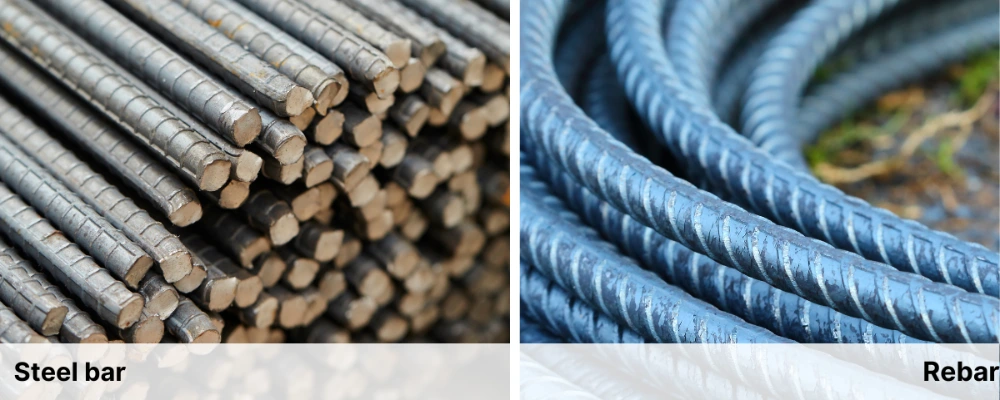
steel bar

A steel bar is a blend of carbon and iron that is specifically used in construction where heavy structures are necessary. The general composition of steel bars varies depending on their property and usage in the buildings. 

Iron, which is chemically known as Fe, constitutes around ninety-six percent to ninety-nine percent of the total fundamental design. 

The durability and strength of the steel vary depending on the composition of the steel. The general composition of carbon in a steel bar ranges from 0.02 percent to 2.1 percent. 

Applications of Steel Bar

The utilisation of steel bars is infinite, and some of their uses are explained below:

  • Steel bars are primarily used in construction works to that withhold the foundations and bear the structural elements.
  • Steel bars are used in the production of different machine parts, namely gears and tools. 
  • Additionally, they are used in shipbuilding and automotive industries.
  • As steel bars can withstand heavy weights and are durable, they are used in the construction of bridges and railways. 
  • Steel bars are also used in the oil and gas industries in drilling rings, pipelines, and other transportation services in the field.
  • They are also used in the manufacture of defence products and in the aerospace industry. In defence, they are used in the production of weapons, vehicles, and protective equipment.
  • In the aerospace industry, steel plays a significant role in manufacturing light-weight and high-strength materials. 

Rebar

rebar

A rebar is also known as a reinforcing bar. It is widely used in reinforced concrete structures and provides strength to the building. When concrete is stretched, the strength of the concrete reduces, and rebars are introduced to withstand the tensile forces.

This blend of rebars and concrete provides a durable product known as reinforced concrete that is widely used in construction.

The composition of a rebar differs depending on the carbon amount; however, alloys also play a crucial role in determining the strength of the material depending on its utility. 

The carbon steel Iron contributes around ninety-six to ninety-eight percent of the fundamental strength, and carbon contributes between 0.2 and 0.5 percent. However, depending on the usage, manganese, sulphur, phosphorus, silicon, vanadium, and nickel are used in different compositions. 

Applications of Rebar

As rebars increase the tensile strength of the concrete, they are used in a wide range of applications that are listed below:

  • Rebars in construction provide structural integrity and increase the load-bearing capacity, making them a perfect solution for industrial buildings, floors, roofs, and residential buildings. 
  • Reinforced concrete columns are widely used to bear loads above the floors and withstand high tensile strength. They are used in the construction of bridges.
  • Rebar slabs allow distribution of weight evenly, thus preventing cracks. Hence, they are used in industrial and residential flooring. 
  • Rebars can withstand ground pressure and environmental forces and are used in the construction of tunnels. 
  • Rebars are often used in nuclear power plants to contain nuclear reactions and to ensure cooling of the towers.

Differences Between Steel Bar and Rebar

There are significant differences between steel bars and rebars, as listed below:

PropertiesSteel BarsRebars (Reinforced Bars)
DefinitionSteel bars are rigid metal rods that are a blend of alloys of carbon, and iron.Rebars are steel bars that when mixed with concrete provides reinforced concrete that has high tensile strength.
CompositionThey are primarily made of steel or stainless steel.They are made of carbon steels with certain patterns in the surface layer to be able to blend with concrete.
TextureThe surface can be smooth or polished depending on the application.They are twisted or have patterned ridges to provide binding of concrete.
PurposeThey are widely used for manufacturing, construction, and in machine components.The main purpose is to add strength to the concrete.
Strength The tensile strength of the steel bars differs depending on the grade.The rebars offer high tensile strength so that the concrete can withstand breaking.
DuctilityDepending on the composition and application the ductility may differ.They have high ductility and can prevent any cracks and tears.
Process of ManufacturingDepending on the application the manufacturing process can be cold rolling, drawing, orhot rolling.They normally undergo hot rolling as they need to be twisted into a shape.
Size and ShapeThey are available in different sizes depending on the application and can be hexagonal, square, or round in shape.The usual shape of a rebar is round with a standard diameter from 6 mm to 50 mm.
CostThe pricing may differ depending on the size, shape, type of alloy, and in common they are expensive.The price primarily differs on the coating material that is used and is generally cost-effective.

Conclusion

In summary, both reinforced bars and steel bars have significant roles in construction with distinct applications. The steel bars are normally alloys of carbon and iron and play a crucial role in building and in marine operations. However, the rebars, also known as reinforcement bars, are primarily used along with concrete. They provide tensile strength and reduce cracks in concrete.Hence, it is crucial to select the steel bars depending on your application. 

FAQs

1. What are the common uses of steel?

The primary use of steel is in the construction of industrial buildings, residential areas, and in the construction of underground pipes.

2. What is a rebar?

A rebar is often called a reinforced bar that is primarily used along with concrete to increase the tensile strength.

3. Can steel bars be used in place of rebars?

While steel bars are strong, they are not specifically designed to bond with concrete like rebars. Rebars have surface patterns that ensure a better bond with concrete, making them more suitable for reinforcement. Using steel bars instead of rebars could compromise the structural integrity of concrete.

4. How is the strength of rebars measured?

Rebar strength is also measured by tensile strength, which is particularly important for reinforcing concrete. Rebars are designed to handle tension forces that concrete alone cannot withstand. This makes them essential for ensuring the structural integrity of concrete.

5. What manufacturing processes are used for rebars?

Rebars are typically produced through hot rolling, followed by additional processing to create surface patterns. This process ensures that rebars have the necessary strength and bonding characteristics for reinforcing concrete. The hot rolling process also allows for the production of various sizes and shapes.

6. How does the cost of rebars impact construction budgets?

Rebars are generally more affordable, especially when considering their vital role in reinforcing concrete structures. The price of rebars can vary depending on the coating and material used. However, their contribution to the structure’s longevity and safety makes them a wise investment.

7. How does the cost of rebars impact construction budgets?

Rebars are generally more affordable, especially when considering their vital role in reinforcing concrete structures.

PPC VS PSC CEMENT: Understanding their Differences

0
ppc vs psc cement

Portland cement is a common material that is used in construction. There are two distinct types of variations in Portland cement, namely Portland Pozzolana Cement (PPC) and Portland Slag Cement (PSC). 

Based on the suitability for different construction projects , the cement can differ. This blog gives a guide on the differences between PPC and PSC, which can help you determine the right type of cement. 

Portland Pozzolana Cement (PPC)

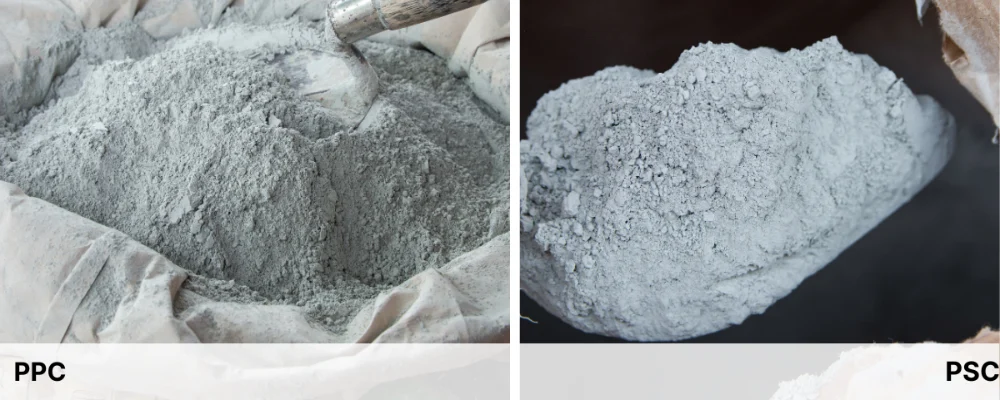
Portland Pozzolana Cement (PPC)

PPC or Portland Pozzolana Cement is a form of hydraulic cement. As the name indicates, it is a mixture of Portland clinkers and pozzolana materials, namely fly ash. 

The strength of these cements comes from calcium hydroxide and fly ash. When water reacts with these two materials, they create a bond that leads to  the hydration process and results in enhanced strength of the cement. 

Advantages of Portland Pozzolana Cement

There are certain advantages to PPC, and they are listed below:

  • Workability: PPC has high workability, is easy to handle, and can undergo a variety of easy construction applications.
  • Less Heat Release: PPC releases less heat compared to other cement during the hydration process. This reduces cracks caused by overheating and protects the overall building structure. 
  • Endurance: PPC can withstand environmental damage caused by moisture permeation.
  • Resilient to Chemical Attacks: PPC is not adversely affected by sulphide or chloride attacks, ensuring stability in demanding environments.
  • Sustainability: PPC is an eco-friendly option and can withhold high-performance benchmarks.

Applications of PPC

The application of PPC is diverse due to its compatibility and versatility, which play a vital role in infrastructure projects. The applications include:

  • Plastering
  • Residential buildings
  • Marine structures
  • Construction of sewage pipes and dams, and
  • Masonry work.

Portland Slag Cement (PSC)

Portland Slag Cement (PSC)

PSC is a blend of cement consisting of Portland cement clinker, gypsum and blast furnace slag. Slag is essential because it is a non-metallic product that contains more than ninety percent of a mixture of silicates and alumino-silicates of lime. 

PSC is made by a blend of 35-70% slag, 25-65% clinker, and 3-5% gypsum. The resultant product contributes to a vast number of constructions. 

Advantages of PSC

The primary pros of Portland Slag Cement are mentioned below:

  • PSC can withstand alkali-silica reactions. This reaction occurs when a swelling takes place in concrete due to the reaction between alkali oxide and silica over time.
  • It is less susceptibleto cracking.
  •  PSC has a good finish, and the painting process is often simplified 
  • It is resistant to chloride and sulphate attacks. 

Applications of PSC

There are several applications of Portland Slag Cement, as  explained below:

  • PSC is  widely used to make roads and flyovers.
  • PSC is often used to construct marine structures. 
  • PSC works great in industrial, residential, and commercial buildings.

PPC Vs PSC Cement

ParticularsPortland Pozzolana Cement (PPC)Portland Slag Cement (PSC)
CompositionIt is a mixture of Portland cement clinker, fly ash and gypsumIt is a mixture of Portland cement clinker, blast furnace slag and gypsum
Pozzolanic MaterialIt contains pozzolanic substances namely volcanic ash, silica fume, or fly ash.It primarily contains fine slag produced from blast furnace (a by product from steel industriesy)
Setting TimeIt requires additional hours to set compared to OPC and thus can extend the hours of working.It can harden a little faster compared to PPC.
Development of Strength Construction structures that require long term stability can choose PPC. PPC  takes time to harden but slowly achieves maximum strength. It can be used in buildings that require rapid strength development.
FinenessIt is  finer and denser with low permeability. The fineness of PSC is lesser compared to PPC.
Hydration HeatIt  releases low levels of heat during the hydration process, decreasing the risk of cracking.It releases heat higher than PPC but is  lesser than OPC.
DurabilityIt is  highly resistant to aggressive and harsh environmental conditions.It is  used in marine construction due to its high resistance to sulphate and chloride attacks.
WorkabilityIt is easier to work with due to higher fineness.It is less easy to work with due to lower fineness.
ColourDue to the presence of pozzolanic material it is dark grey in colour.The Slag content gives PSC a lighter colour compared to PPC.
Environmental ImpactIt has eco-friendly byproducts, namely fly ash, decreasing CO2 emissions. Similar to PPC, PSC utilises a byproduct of steel which also reduces the carbon dioxide levels in the atmosphere.
CrackingIt has low levels of shrinkage and risk due to the slow hydration process.It has moderate cracking compared to PPC.
Demand of WaterIt generally needs high levels of water to maintain its workability.It  requires a moderate amount of water compared to PPC for its  workability. 
Strength of BondPPC has higher strength with steel and thus reduces the corrosion risks.Its strength is less compared to PPC but it has  good reinforcement bonds. 
Surface FinishPPC offers a smooth finish and decreases the need for additional finishing work.The finish provided by PSC is less smooth.

Conclusion

In summary, it is vital to understand the differences between Portland Pozzolana Cement and Portland Slag Cement. Both of these cements have wide applications and differ in their composition and physical properties However, it is important to consult a structural or civil engineer to recommend the most suitable type for your specific project requirements.

FAQs

1. How good is PSC cement for concrete?

Portland Slag Cement is mostly used in general construction work, including in concrete mix, plasterwork, and masonry and is well suited for it.

2. Are PPC and PCC cement the same?

There are differences between PPC and PCC as they have different compositions and physical properties.

3. Which one is the best, PPC or PSC?

Both PPC and PSC have different purposes. PPC is durable and has slow development in strength. On the other hand, PSC has  good resilience and early strength development. 

4. Which cement is the best for concrete?

There are three types of cement, namely Portland Pozzolana Cement (PPC), Portland Composite Cement (PCC), and Portland Slag Cement (PSC); each of these has different pros and cons and can be chosen based on suitability for specific project requirements.

How To Reduce Construction Cost

0
Construction Cost

Owning or building a house is a dream for everyone. However, budgeting is a crucial factor in determining whether you can achieve your dream. In India, it is possible to build a house for Rs.12 lakh. It can vary depending on the materials and labor costs. This blog covers smart ideas on how to reduce house construction costs. 

Plan Right to Reduce the Cost of House Construction

Plan Right to Reduce the Cost of House Construction

To reduce the cost of your construction, it is important to determine the budget that is required in each phase. This includes expenses for labor, materials, unseen costs, and permits. 

Utilize the cost calculator to determine the necessary expenses for construction. Keep in mind that the amount for construction includes registration charges and stamp duty.

Additionally, consider the interior needs—plumbing, flooring, painting, and tiling—before finalizing the estimate. It is also best to ask your friends about the cost of the materials, as it helps you determine the range. The last but foremost mindset is not to deviate anywhere from the required budget and end up unnecessary overspending. 

How Much Do Professional Builders Spend on House Construction?

You may have a blueprint in your mind regarding finance, but how much do pros spend on achieving this goal of yours? Well, here is something that will help you to understand the figures that experts spend on house construction.

According to the Cost of Doing Business Study in 2004, the cost breakdown for building a house in the U.S. is listed below:

  • The low cost of the finished building accounts for 20% to 25% of its total selling price, with half of the cost covered by driveways and other utilities.
  • The cost of the building materials, starting from flooring to foundation, contributes 35 to 30 percent of the total cost.
  • The labor cost contributes 20-25%.
  • About 6% contributes to general overhead.
  • The cost of finance contributes to only 2% of the total price. 

However, it is important to keep in mind that if you are to build your own home, the labor cost will be higher and several jobs need to be considered. 

Smart Ways to Reduce Construction Costs

Smart Ways to Reduce Construction Costs

Here is a breakdown of some of the smart ways to reduce construction costs:

Select the Right Building Materials and Plot

It is important to consider plots or land that are even and on road level. If not, then you might end up spending money on leveling the ground. Moreover, it is smart to buy materials such as steel, bricks, and cement from local sources, and if you have enough space to store the construction materials and equipment, it is wise to get them in bulk. 

This will help you to save money. On the other hand, it is crucial to keep an eye on the expenses that are needed for flooring, paint choices, and furniture. Opting for concrete bricks or fly ash bricks compared to clay bricks will also help in reducing the cost.

Consider Life Cycle Cost 

It is also important to consider the initial cost and the total cost that it needs for its entire life. Consider at least the maintenance cost for 30 to 40 years.

Consult with your architect and contractor to make sure that the building materials last for a long period. Moreover, the cost of repair and replacement should not affect your future expenses. Hence, opt for green construction materials, such as blended cement, to make sure the overall maintenance cost is reduced.

Choose Experienced Architects and Builders

The baseline of cost-effective building is not to cut down on the entire cost or to compromise on its quality. Hiring a good architect or contractor may seem like a waste of money, but it’s  worth every penny. 

The contractors normally charge between 8-12% of the total construction cost, which is a reasonable payment to manage the hirers and execute the project. They have experienced manpower, a well-laid-out plan, and minimal material waste while focusing on finishing the project with the desired budget. 

Stock Plan

Compared to a stock plan, custom plans are quite expensive; hence, choosing a stock plan can be cost-effective. Stock plans offer pre-determined structures that can expedite construction and reduce design costs.

On the other hand, a custom plan needs specific changes or alterations; accordingly, the cost may vary depending on the revisions and complexity of the design. 

In this case, it is good to discuss with your contractor, and they will give you an overview of the labor cost, material cost, and contractor cost, so you can plan your house construction around that budget too. 

Focus on Necessities

Prioritize completing the basic functional needs of your building over luxury features. This focus will keep your budget on track, avoiding inflation from unnecessary expenses. Luxurious items can always be added later if your budget allows.

Don’t Change Your Plan Midway

Make every effort to avoid making significant changes to your plan midway through construction, as this can lead to cost overruns and project delays. Mid-project adjustments may require additional materials and labor, extending your construction timeline.

Low-Cost House Significance

At present, it is a great deal for a larger population to afford their own house. Hence, low-cost construction gains significant importance. To reduce your financial burdens, you can opt for home loans and focus on long-term payments. 

Conclusion

It is important to build your dream house effectively within your budget. Make sure to follow the steps and own your house within your finances. Choose well-trained and experienced builders and laborers, and stick to the plan. These will help you achieve your dream house within your budget. 

FAQs

1. How can construction projects reduce costs?

You can avoid overruns in construction costs by sticking to the plan, spending on necessities, and hiring experienced laborers.

2. Who gets the most money in construction?

The highest-paying construction jobs include construction estimator, construction superintendent, and installation manager.

3. How much money is needed to build a home in India?

Generally, on 1000 square feet of land, the average cost of building a house is estimated at around 12lakh; however, the cost may vary depending on the materials.

Villas vs. Individual Houses: A Comprehensive Comparison to Help You Choose

0
Difference Between a Villa and House

At a certain point in life, everyone wants to own a house. But is owning a home similar to owning a villa? Villas and individual houses have their similarities and differences. They both have individual characteristics that shine. Read on to understand the differences and to choose your best option. 

What is A Villa?

Villa

The history of villas goes back to the ancient Roman Empire. Hence, these houses are also known as Roman villas. In ancient days, villas were constructed by rich Romans.

A villa is a single-storey or multi-storey building connected to an outside terrace or garden. Some villas can connect with nearby villas located within a single compound. 

A villa generally contains a pool, garden, farmlands, and other lavish amenities. In the present day, villas are more common in suburbs than in metropolitan cities.

Pros of a Villa

  • Villas are built in large areas and give people privacy compared to apartments. 
  • Villas let their owners have their touch of personalisation.
  • They are a long-term investment.
  • Villas offer built-in gyms, parks, and clubhouses that help increase the overall experience of living.

Cons of a Villa

  • The cost of constructing a villa or buying a villa, along with its maintenance cost is high.
  • They are mostly built in the outskirts of cities and it may be hard to commute to schools, hospitals, or other services.
  • Villas are hard to resell due to their expensive prices. 

What is An Individual House?

house

An individual house is a private residential living space that is not connected to other housing units. It is not connected or shared with other neighbouring units. An individual house contains backyards, driveways, or other amenities. 

Pros of an Individual House

  • An individual house has privacy as it is not connected to neighbouring walls.
  • It can offer a range of customisation options and provide large indoor and outdoor spaces.
  • In the future, the house can be expanded by adding guest rooms, gym areas, or other additional spaces as required.
  • They are a great choice for investment.

Cons of an Individual House

  • Compared to townhomes, individual houses may cost a lot.
  • The owner has to solely bear the repair and maintenance costs.
  • Additional security is needed, like cameras or alarms.
  • Unlike apartments, individual homes have less access to maintenance services like trash collection and snow clearance. 

Differences Between Individual Houses and Villa

Though villas and individual homes may be similar in functionality, there are certain notable differences between them. These are listed below

CharacteristicsVillaIndividual House
SizeVilla sizes generally start with larger areas of 2500 sq ft and can go beyond 10,000 square feet. Individual houses generally have highly variable sizes.The minimum starts from 3oo square feet and can go beyond 10,000 square feet.
LocationVillas are generally located in exclusive allotted areas.An individual house can be built on any type of land.
SpaceVillas are often spacious, with big areas for each room, and usually represent luxury.Individual houses can be compact and have simpler designs.
AffordabilityThe starting price of villas in a small town is generally at least ₹ one crore. An individual villa can be purchased in small towns from a starting price of ₹35 lakhs.
FacilitiesThe facilities of a villa usually include gyms, gardens, and pools.The facilities of an individual house include basic facilities; others are just additions to it.
PrivacyVillas include high privacy for their owners, keeping the neighbours at a distance.Privacy of An individual house primarily depends on the proximity of neighbouring properties. They can connect you with neighbours, or keep them at a distance.
CommunityThey are gated communities and can have shared amenities.They can be standalone or part of a community.
MaintenanceThey are managed by the community, which provides maintenance services.The maintenance is the homeowner’s responsibility.
InvestmentsThey have strong investment potential with good appreciation, rental income, and other benefits. Investment potential can vary depending on the location and trends in the market.

Who Can Choose Villas?

People who have large families and are looking for ultimate privacy can choose villas. Additionally, lifestyle and the ability to fund them play a key role in opting for villas. 

High-earning professionals and business executives who like to live in a calm and comfortable environment generally opt for villas. Most villas are owned by celebrities and public figures to maintain high-end security and privacy. 

Villas are costly options; hence, consider all the affordable options before getting one.

Who Can Choose Individual Homes?

Families that are compact and have children may opt for individual homes as they give affordable options for both indoor and outdoor activities. 

Individual homes are the stepping stone of experience for first-time home buyers. Professionals and remote workers earning a decent amount of salary can invest in an individual house. People who are fond of social connections can choose individual homes over villas. 

Conclusion

In short, both villas and individual homes are good investment options. However, the preferences may differ depending on the individual. Villas are luxurious residences, while independent houses are more on the affordable side. Make sure to decide on the type of residence that best suits your taste in lifestyle. 

FAQs

1. Why is a house called a villa?

Back in the Roman days, villas were country estates of luxurious forms made of freestanding houses that were surrounded by agricultural purposes.

A villa is a more luxurious form of a house that contains a pool, garden, farmlands, and other lavish amenities. In the present day, villas are more common in suburbs than in metropolitan cities.

2. Which is bigger, a house or a villa?

A villa is generally bigger than a house. Villas are normally lux

Understanding Construction Rules and Regulations in India: A Guide for Contractors

0

Undertaking a construction project requires you to follow certain rules and regulations set by the government. These rules provide contractors with guidelines regarding construction, safety, sustainability, and eco-friendliness. 

In this article, we will look into the rules and regulations that contractors should take note of to construct a building safely without any legal complications. 

National Building Code of India (NBC)

National Building Code of India (NBC)

The NBC of India is known for regulating the construction activities of buildings. It is done across the country with a national instrument. It is established to ensure standards for sustainability, safety, functionality, etc. The NBC of India covers a wide area and focuses on improvements such as:

  • Structural safety for earthquakes: Focus on withstanding the seismic force. Buildings are designed to handle wind loads to ensure building resilience.
  • Wind Resistance Management: Based on geographic locations, wind load  are calculated according to the building heights. This helps prevent the pressure of the wind. 
  • Fire safety: The code specifies the minimum provision for fire safety. This includes the use of fire-resistant materials. It ensures the provision of fire exits along with the installation of fire alarms.
  • Building and structural design: This is based on structural integrity. It ensures that the property can withstand natural disasters. They provide criteria for the construction and design. 
  • Plumbing service: It ensures safe water delivery for water supply and disposal. It helps to prevent contamination and other health hazards.
  • Sanitisation system: The guidelines are fixed for proper sewage disposal and maintenance of toilets.
  • Electrical safety: This ensures proper grounding of wires. It also provides guidelines for circuit protection. Safe wiring and installation are major concerns.
  • Facility management for disabled people: Standards include ramps, elevators, and accessible toilets. Guidelines support designing spaces. This helps accommodate all types of people.
  • Energy-efficient guidelines: It provides guidelines to encourage sustainable practices. It advises making use of technology and efficient materials. This helps in energy consumption.
  • Development Rules and Control: It sets standard guidelines for parking, room size, setbacks, etc., to provide uniformity. It also ensures that building projects follow local and national regulations.

State Building Bye-Laws

The ultimate aim of State Building Bye-Laws is to govern building construction and land usage in the state. These laws help in the orderly development of an area. They consider human safety to be a priority. This brings growth to urban areas. This is implemented within each state and its government. 

The State Building Bye-Laws focus on providing public health, safety, urban planning, environmental sustainability, and accessibility.

The Tamil Nadu Combined Development and Building Rules, 2019, are a set of regulations introduced. The Tamil Nadu Land Use and Building Construction Act governs land use and construction. These rules help streamline development across the state and focus on bringing uniformity.

Building rules and regulations

Key Components of State Building Bye-Laws

1. Specific Zoning Regulations

The zoning regulations determine what type of building is permitted within a specific area or zone. This provides safety for everyone who works and lives. It has control over the building height and construction according to the usage. They are categorised as residential, commercial, and industrial zones. 

  • The residential zone is primarily for housing. This concentrates on the people and their well-being. This zone primarily consists of suburban homesteads, family residences, apartments, condos, etc.
  • For a commercial zone, the intention is for business. They depend on the height, parking, and FSI. This zone is separate from residential or industrial zones and used for business prospects like offices, retail stores, etc. 
  • Then comes the industrial zone. It’s for industries and manufacturing units. This is completely out of the city. Its purpose is mainly to ensure safety, control pollution, and manage waste.

2. Building Height Limitations

Building height varies according to the type of zone. This aims to maintain uniformity, ensure ventilation, and prevent overcrowding.

3. Plot Size Requirements

According to the intended use of the buildings, the plot should be designed with adequate space and necessary infrastructure.

4. Setback Distances

These are the minimum distances required between any property or building. This helps provide adequate space, emergency access, and enough ventilation.

5. Floor Space Index (FSI)

The Floor Space Index (FSI) is the ratio of a building’s total build-up floor area to the area of the plot. It varies by zone and property type. It is based on the density and intensity of land use.

6. Fire Safety Measures

State Building Bye-Laws include important fire safety regulations. This includes:

  1. Installation of fire alarms, and extinguishers. 
  2. Using adequate fire-resistant materials.
  3. Provision of fire exits and routes for escape 

7. Registration of Professionals

Professionals handle the projects under the supervision of the government. This is for maintaining the quality. Many states require architects, contractors, and engineers to be registered and certified.   

How do You Get to Know the State-Building Bye-Laws for Your State?

State-Building Bye-Laws for Your State

Understanding your state’s specific regulatory framework is essential to understanding the state-building bye-laws.

1. State Building Bye-Laws:

These are a set of rules and regulations established to govern construction, maintenance, and renovation. It is determined by local, national, or regional authorities.

  • Government Websites and Portals: Check the official website of your state’s Urban Development Authority or Town and Country Planning Department. These have sections that detail building regulations and bye-laws.
  • State Government Portal: Bye-laws are published on e-government portals.
  • Physical copies: Libraries and government offices have these copies as a document to which we get access.  

2. Zone and Building Type:

The State building Bye-laws vary according to the property types. It is divided into residential, commercial, and industrial zones.  

  • Residential Zones: Focus on creating a comfortable and pleasing living environment. It depends on the plot sizes, setback distance, density, etc. It fosters community development.

Type: Single-family homes, multi-family residences, apartment complexes, and mixed-use residential areas.  

  • Commercial Zones: They bring economic growth by supporting business activities. FSI, parking facilities, and infrastructure are all considered. It is used for commercial activities such as retail, offices, hospitality, and services.

Type: Office buildings, retail stores, shopping centers, hotels, and mixed-use commercial areas.

  • Industrial Zones: These are designated for manufacturing units and other industrial activities. It concentrates on pollution control, safety standards, buffer zones, etc. It is used for production, storage, and distribution activities. 

Type: Factories, warehouses, manufacturing plants, and research and development facilities.

3. Local Authority Consultation:

  • Ensures compliance with state and local building regulations. 
  • Contact town planning or municipal corporation for guidance.
  • Discuss parameters such as zoning, building heights, land use, etc.
  • Submit the plans for approval. This helps meet safety and environmental standards.
  • Consult for infrastructure needs with the public works department. 
  • Attend public hearings to stay informed about new regulations and community concerns.

Conclusion 

These are the rules and regulations you need to follow while undertaking any construction work in India. Whether you are the contractor or client, ensure you check and understand the rules before starting the project. 

This will help you avoid any legal complications and ensure a smooth construction. You can also consult a professional if you need a clear understanding of the laws.

Which Facing House is Good for All Rashis?

0
Which Facing House is Good for All Rashi

The direction that a house faces is significant in both architecture and astrology. In ancient traditions like Vastu Shastra and Vedic astrology, the direction of the house is believed to influence a person’s luck, health, and wealth. Astrologers suggest specific directions based on zodiac signs, or Rashi’s, as it can provide the best energy. 

This blog details the best house facing for all the 12 Rashis and helps the house owners make decisions that can lead to peace, prosperity, and well-being.

South facing house good for which rashi

People born under the Capricorn are known for their practicality, discipline, and determination. The ideal house facing Makara Rashi is a south-facing house as they are considered auspicious directions according to vastu shastra.  They are believed to provide Capricorn prosperity, stability, and positive energy. 

East facing house good for which Rashi

People with Aries rashi are energetic, dynamic, and always ready for action. A house facing east can be favorable for Mesha Rashi. The south side will complement their competitive nature. 

The south-facing houses will help aries individuals to improve their assertiveness and leadership qualities. This will empower them to take bold steps in their life.  This direction will also improve their confidence and encourage them to be active in their pursuits.

North facing house good for which Rashi

People who are born under this Rashi are empathetic and spiritual. The north-facing house is best for Meena Rashi because it provides peace and tranquility. This will be perfectly suitable for the sensitivity and compassionate nature of people with Pisces. 

North-facing houses can channel their creativity and spiritual growth, and they also provide an environment that is conducive to relaxation and self-reflection. This helps in improving prosperity and personal happiness.

Which Facing House is Good for Mithuna Rashi (Gemini)

Mithuna Rashi, or Gemini, is ruled by Mercury. People with Mithuna Rashi are adaptable, communicative, and intellectual. According to Vastu Shastra, the east- or northeast-facing houses are considered auspicious for individuals with Mithuna Rashi. This direction is believed to attract positive energy and produce harmony in the living environment. 

This direction also supports the need for constant mental simulation and gives a harmonious space suitable for social interaction and creative works.

Which Facing House is Good for Simha Rashi (Leo)

Simha Rashi also called Leo is ruled by Sun. These people are confident, ambitious and also natural born leaders. For them south facing houses are considered to be highly auspicious. 

It is believed that this direction will bring prosperity, good fortune and positive energy to the person born in Leo. This direction will improve their natural cherisma and helps in achieving success in their works. 

Which Facing House is Good for Tula Rashi (Libra)

Tula Rashi also called Libra is ruled by Venus. People with tula rashi are well known for their harmony, beauty and balance.  A north or east facing house can be considered as good for this tula rashi people. 

This direction will bring wellbeing and increased wealth along with happiness and peace. This direction will help them in maintaining balance in the relationship and also promotes a serene living environment. 

The north or east facing houses can improve their appreciation for aesthetics and also supports their thinking about harmony in both personal and professional life.

Which Facing House is Good for Vrishabha Rashi (Taurus)

People with Taurus are mostly practical grounded and value material comforts them. The highly auspicious direction of the house for Taurus people are north facing houses. 

This direction can bring their inner strength and help them to overcome the challenges. This also helps in improving their ability to focus and work towards their goal with determination.

Which Facing House is Good for Vrischika Rashi (Scorpio)

Scorpios are considered as intense, passionate, and determined people. A south-facing house can be suitable for Vrischika rashi people, as it can complement their strong will and powerful nature. This direction can bring their inner strength and help them to overcome the challenges. 

This also helps in improving their ability to focus and work towards their goal with determination. The south-facing house can support their ambition and desire to control. This makes them the perfect choice for scorpio.

Which Facing House is Good for Kanni Rashi (Virgo)

People with kanni rashi are analytical, practical and detail oriented. For them the north or northeast facing house can be considered as most suitable and it can help in promoting mental clarity and focus. 

This direction will provide them with the positive energy that can help them for pursuiting their perfection and order. The north facing home can give them a serene and organised area that will be aligning with their cleanliness and structure. 

Which Facing House is Good for Kumbha Rashi (Aquarius)

People with Aquarius are more innovative, independent, and humanitarian. The north-facing house can be best for these people, as it will encourage them with creativity and intellectual search. This direction can help them to improve their innovative ideas and support their thinking in social change and progress. 

The north-facing home can give them the environment that can help them grow their individuality and independence. This will allow them to trive in their own way. 

Which Facing House is Good for Dhanusu Rasi (Sagittarius)

Dhanusu Rashi vr Sagittarius is ruled by Jupiter. These people love adventures and are also optimistic and philosophical. East-facing houses can be considered auspicious for Dhanush Rashi people. 

As this can be auspicious for their understanding of knowledge and spiritual growth. The east direction will bring positivity and opportunities for expansion, which are considered significant for sagittarians. 

Living in east-facing houses and staying healthy to stay motivated, be optimistic, and also open to new experiences. 

West facing house good for which Rashi

Kadagam Rashi, also called Cancer, is ruled by the Moon. People with kadaga rashi are nurturing, emotional, and family-oriented. West-facing houses are suitable for this rashi as it can help in developing emotional stability and hormones. 

The north direction can bring peace and tranquility that will resonate with the caring and sensitive nature of people with cancer. The north-facing home can create a nurturing environment where people can create a safe and loving environment in their space for their family. 

Conclusion 

Each Rashi has their own traits that can align with specific houses facing directions according to Vastu Shastra. The direction of the house can influence the individual’s life according to Vastu Shastra. The orientation of the house is mainly related to the energy of different zodiac signs and it can impact the personality, health and fortune of the person living in it.

FAQs

1. Does house-facing matter? 

Yes, both astrology and architecture believe house direction impacts life.

2. What is the significance of house facing? 

It influences energy flow, sunlight availability, and alignment with zodiac signs.

3. Can house-facing affect luck and wealth? 

Traditional beliefs suggest it can influence prosperity and fortune.

4. Is there a universal best direction for a house? 

While the East is often considered auspicious, the ideal direction varies by Rashi.

5. How does sunlight affect house direction? 

Morning sunlight (East) is generally beneficial for health and mood.