Home Blog Page 51

A Comprehensive Guide to Tendering in Construction

0
Tendering in Construction

Tendering is a process in which an organisation submits a proposal that describes the details of a construction project and works related to it, and invites bids to provide the execution  services. Tenders are generally shared publicly to receive an attractive bid from eligible contractors and suppliers. Tender documents are very important to select the main contractor or suppliers for a construction project. 

In this article, let’s discuss all the aspects  of tendering in construction. 

What is  Tendering  in Construction?

Tendering in Construction

In simple terms, tendering in construction means requesting and receiving prices or rates for a construction related work. In this process, clients invite bids from eligible and interested contractors to execute a reasonable construction project 

Tenders are usually publicised through domestic or local media and can be accessed by all the interested contractors to submit their bids with information regarding technical and financial details and the materials used for the project. Once the bids are submitted within the deadline from contractors, it is then evaluated by the client based on quality, price and other such factors. The most ideal contractor or builder is then selected for executing the project. 

The Tendering Process

The tendering process in construction includes five major steps, they are:, 

  1. Pre-tender Stage: It is the initial and crucial stage in tendering. Before launching a tender, there are some preparatory tasks like defining the scope, budget and time taken by the buyer. Detailed construction drawings are also prepared in this phase.
  2. Tender Advertisement/ Invitation stage: The tender notice is published in e-tender portals, trade publications, newspapers, or on social media platforms like Facebook, Twitter and LinkedIn,  Sometimes, the tender invitation is sent to only specific contractors chosen by the client. Through this advertisement or invitation, other details required for the execution of the project—such as design drawings, terms and conditions of the project and other expectations from the contractor—can also be accessed by interested parties. 
  3. Closing of Tender: The tender notice will also notify about the validity period, within which the interested parties must submit a proposal or bid . If the contractor fails to submit the bid within the allotted time, it is considered that the contractors is not interested  to bid for the project. 
  4. Tender Opening and evaluation process: Once multiple proposals are received, each of these is carefully evaluated based on various criteria, such as quality of materials, cost and timelines proposed. 
  5. Tender Award: The tender is awarded to the most ideal contractor or organisation as judged by the client or tender publishers. Once a contractor has won the tender, he/she has  to provide the needed goods and services at the price offered and the buyer must pay the negotiated amount on/before the given period. 

Types of Tenders in Construction.

Types of Tenders in Construction.

According to the nature of the contract, complexity of the construction and the needs of expertise, a client can choose different types of tenders which suit them technically and financially. Given below are brief descriptions of the types of tenders used in construction;

Open Tendering: In Open tendering, the clients advertise their invitation about the proposed project publicly which can be accessed by all interested contractors. It allows any new or emerging contractor to submit a bid and gives an opportunity to win. Since it is an open tender, there will be more competition among potential contractors and bargaining is possible. It is suitable in construction as there is no bias in the selection processHowever, there is a high chance of picking a contractor who offers the lowest price but fails to deliver good quality work. 

Selective Tendering: Here, the clients invite a few selected contractors to submit their bid. In selective tendering, a pre-qualification process is likely to be used when there is a large and complex project. Pre-qualification can be done by evaluating various aspects regarding the contractor or organisation, such as Supplier identity and background, financial information, business and professional standing, health & safety measures adopted, equal opportunity & diversity policies, environmental management, quality management, previously completed projects and anti-bribery and corruption policies. Here, the overall numbers of competitive bids received is reduced. It is easy to manage and is considered a time saving method This method is designed to improve the quality of bids with  limited contractors. It reduces the tendering cost and promotes economical use of the client’s resources. 

Negotiated Tendering: In negotiated tendering, only a single contractor is selected to submit a tender and also has an allowance for three contractors maximum. Negotiation begins when the client finds a suitable contractor of their choice to submit a bid for a project. This type of tendering minimises the risk of failure in construction and is useful in certain circumstances such as, emergencies. It reduces the time taken involved in appointing the contractor or supplier for the tender.

Benefits of the Tendering Process.

There are several benefits gained by the tendering process, such as: 

  • Competitive Pricing: It encourages main contractors to provide competitive pricing for the project, which can lead to keeping the costs down and makinge sure that the project is completed within budget.   
  • Quality Assurance: It ensures that the main contractor who was selected for the project will provide quality consistency, reliability and continuity of supply of the goods and services.  
  • Financial Planning: Tendering ensures that both the property owner and the contractor are aware of the budget for the project in advance, any change in which will not be valid. Payments at every stage of construction are defined, which allows property owners and also the contractors to efficiently manage their funds.
  • Transparency: Since every aspect of the project, such as quality and type of materials used, is specified in a tender document, property owners can be assured of delivery of a building that meets their standards and expectations.

Conclusion.

Tendering is a construction process that has various benefits over typical construction, for both the contractors and the property owners. It is thus a vital aspect of the construction industry. However, its types, benefits and legal aspects must be carefully evaluated before getting involved in the process, in order to ensure a smooth and hassle-free project.

FAQ

1.What is tendering in Construction?

Tendering in construction means requesting and receiving prices or rates for a construction related work. In this process, clients invite bids from an eligible and interested contractors for execution of a project.

2. What are the advantages of Tendering in construction?

Competitive pricing, quality assurance, financial planning and transparency are the major advantages of tendering.
What is Coping in Construction? All You Need To Know

0
Coping in Construction

In the realm of architecture and  construction, the term ‘coping’ holds significant importance in terms of durability and sustainability. Coping generally means ‘covering’ or ‘capping’. It is done in  construction as a protective barrier to ensure safety from water penetration or seepage during rainfall and bad weather conditions into the wall. In this blog, let’s explore more about the advantages, types, and functions of coping in construction. Keep reading!

What is Coping in Construction?

Coping

Coping or capping is an element built on the top of compound walls, parapet walls ,boundary walls or any other open walls. It is generally made  with concrete, mud, bricks or  stones. However, different metals like zinc, aluminium, SS (stainless steel), and copper can also be used in coping. Due to its significant structure, its projection can prevent water seepage into the wall and direct the water away from the walls. Its appearance also adds an aesthetic look to the building. 

Types of Coping Based on Their Shapes

Since coping is exposed outside to tolerate different extremities of weather, care must be taken on the materials used for designing coping. It should be resistant to water, sulphur and frost. Following are the different types of coping based on its shapes;

  • Single-Side Slope: In this type, a slope is directed towards one side and about 20-100mm of coping is projected outside the wall. Along with this, there is a semi-circular throating, which is a groove of 10mm at the bottom surface, which can discharge the rain water efficiently.
  • Two-Side Slope: Here, the slope is directed towards both the sides of a wall and for about 20-100mm, the  coping is projected out of the wall. This type also generally consists of a semi-circular throating To avoid water seepage into the wall, a damp-proof course with a minimum thickness of 15-25mm should be provided  beneath the coping.

Curved coping: In curved coping, as the name suggests, there is a curved or rounded projection that crowns walls and  leads to aesthetic appeal. Generally, the highest part of the curve is in the middle and lower parts on both the edges of a wall, to ensure efficient discharge of water away from the wall. 

Flat coping: This is the most simple type and consists of just a flat element above a wall. This type is not very effective in diverting away rain water.

Hipped End coping: This type has a three-sided slope which is more suitable for edges and corners of the wall.

Crenelated Coping: It is also termed as ‘battlemented coping’, which is designed with alternative low and high sections. These types of coping can be seen generally in historical buildings.

Types of Wall Coping Based on Materials.

Types of Wall Coping Based on Materials
  •  Brick Wall Coping
  • Clay Wall Coping
  • Terra Cotta Wall Coping
  • Stone Wall Coping
  • Concrete (Pre-Cast) Wall Coping
  • Concrete (Cast-in-Situ) Wall Coping
  • Stainless Steel Wall Coping
  •  Zinc Wall Coping
  • Tile Coping

To provide an affordable protection on the top of compound walls and parapets from cyclic changes of weather like heating, cooling and rain, coping is the best choice. Coping is generally made by precast cement concrete or stone slabs which are about 50mm thick. It should be projected out for atleast 25 mm on both sides of the wall and consist of under-surface grooving to direct water away from walls.

Benefits of Coping.

Coping has several advantages in construction, such as:

Prevents Decay: Coping prevents the wall from decaying or developing mold due to rainwater by effectively directing the water away from the wall surfaces towards the ground. 

Enhances Durability: Due to the prevention of seepage by coping, the inner wall doesn’t get affected by water. This keeps inner walls healthy and can extend the lifespan of construction and masonry walls.

Aesthetic Appeal: Apart from being structurally beneficial, coping enhances the physical appearance of a building by providing an elegant finish  

Low Maintenance: Properly constructed coping with standard materials like concrete and stone requires only minimal maintenance. It can withstand harsh weather conditions and so there is no need for frequent repairs or replacements. 

 Functionality: When short or low-height walls are finished with coping, they can function as seating spaces in outdoor areas. Without coping, such walls would be inconvenient and uncomfortable to sit on due to their generally rough surfaces, thus making them less functional.

Protects Against Weather: Coping acts as a barrier against various weather conditions such as rain, snow, and ice. This protection is crucial for maintaining the physical soundness of the building from moisture, water damage over the long term. 

With proper installment, there is no considerable disadvantage of coping. Round, sloped or curved coping are ideal types to ensure functionality

Conclusion.

Coping acts as a defensive and protective mechanism for exposed or open walls.  Metal, terra cotta, stone, or precast concrete are the types of materials generally used for coping that also add an aesthetic appeal to the walls. For your next construction project, ensure that your exposed walls are topped with coping to facilitate a long and durable building lifespan.

FAQs

 1.What is coping?

Coping generally means ‘covering’ or ‘capping’ done for wall tops to direct water away from wall surfaces.

2. .What are the major benefits of Coping?

The major benefits of coping are, it prevents decaying, protects from adverse weather conditions, enhances the durability of walls, gives an aesthetic look and is minimal in maintenance.

M15 Concretes: Key Features, Applications, and Durability

0
M15 Concrete cement

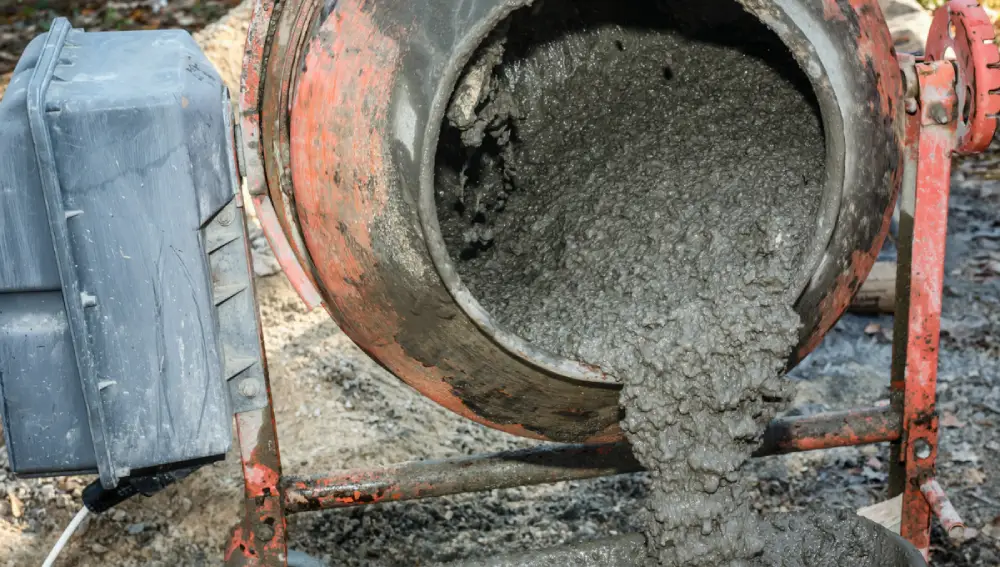
Different buildings require different types of concrete mixes. This is where concrete grades come into play. There are several types of concrete mixes. Higher grades are more stronger and durable than lower grades. Low-grade mixes are used for small works and high-grade  concrete is used for large construction projects. 

In this article, we will learn about M15 concrete, its components, mix ratio, and applications. Read till the end to learn all about M15 concrete. 

What is an M15 Concrete Mix?

M15 Concrete Mix

The M15 concrete has a compressive strength of 15 N/mm² (Newton per square millimetre). This is achieved after 28 days of curing. Its standard mix ratio is 1:2:4, which means 1 part cement, 2 parts sand, and 4 parts aggregate. 

An M15 concrete is a nominal mix concrete. A nominal concrete mix has a fixed ratio that gives an approximate estimate of the materials required to make the concrete.

Key Components of M15 Concrete

An M15 concrete is made of cement, sand, and aggregate. They are mixed in specific ratios and hydrated with water to create the perfect M15-grade concrete mix. 

Functions of Each Component

  • Cement: Cement acts as a binding agent responsible for holding all the components together. It gives the concrete strength. 
  • Sand: Sand includes fine aggregate particles that fill the void in the concrete mix. They create a dense concrete mix and improve workability. 
  • Aggregate: Coarse aggregate includes large particles like gravel or stone chips. They provide stability and strength to the concrete.
  • Water: Water hydrates the components and starts the chemical reaction that stimulates hardening.

Factors Affecting M15 Concrete Ratio

Factors Affecting M15 Concrete Ratio

As discussed above, though M15 is a nominal concrete mix with a predetermined mix ratio of 1:2:4, it is just an estimation. The actual amount of each material required may vary depending on several factors, like the ones below.

The Properties of Each Material

The specific properties and quality of each material can affect the M15 mix ratio. 

  • The type of cement used can affect the water-cement ratio. This can alter the overall mix proportions. 
  • The fineness and moisture content of the sand can impact the water-cement ratio.
  • The type and size of the aggregate can influence the volume of voids and impact material proportions. 

Exposure Conditions

The weather conditions under which the concrete mix is exposed can influence the mix ratios. 

Compressive Strength

The compressive strength of an M15 concrete is fixed. However, if the construction project requires a lower or higher compressive strength, it might affect the material proportions. 

Admixtures 

Admixtures include water reducers, plasticizers, etc. They can affect concrete properties and material proportions.

Workability

Workability is the concrete’s ability to be mixed, placed, and compacted into shape. This can influence the amount of water and admixtures used and affect the overall mix proportions. 

M15 Concrete Applications

M15 concrete is a concrete of moderate strength. It has several applications and can be used in areas that require moderate strength. Some major areas where M15 concrete is used include:

  • Pavements or pathways
  • Plastering walls and ceiling
  • Beams, flooring, lintels, and leveling
  • Stairs and steps
  • Small-scale foundations
  • Farm sheds, water tanks

M15 Concrete ratio

The standard mix ratio for M15 concrete is 1:2:4. This means:

This ratio ensures the right balance between the strength, durability, and workability of the concrete.

Standard Concrete Mix Ratios

The purpose of construction determines the grade of concrete. There are several grades of concrete and mix ratios. The below table shows the concrete grade, mix ratio, and compressive strength. 

Concrete GradeMix RatioCompressive Strength
M51:5:105 MPa (725 psi)
M7.51:4:87.5 MPa (1087 psi)
M101:3:610 MPa (1450 psi)
M151:2:415 MPa (2175 psi)
M201:1.5:320 MPa (2900 psi)
M251:1:225 MPa (3625 psi)

Tips for Successful M15 Concrete Mixing

A perfect M15 concrete mixing ensures a building’s stability and durability. The following  are some tips you can follow to get a successful M15 concrete mix.

  • Mix the components in the right proportions. Look into the ratio of each component and use the right amounts.
  • Ensure you use weighing machines to get the right amount of each particle. 
  • Ensure you use the right water-cement ratio. Mix the concrete mix with water for a considerable amount of time to ensure uniform mixing. 
  • Ensure you get high-quality materials for your concrete. They should be clean and without any contamination or organic matter. 
  • Cover the concrete mix with burlap bags or plastic sheets to prevent rapid drying.

Conclusion

M15 concrete is used where only moderate strength is required. The nominal mix ratio for this concrete is 1:2:4, which  means 1 part cement, 2 parts sand, and 4 parts aggregate. 

As discussed above, though the mix ratio is predefined, several conditions can affect material proportions. So, ensure you are thorough and consider all factors before determining the amount of each material used for the concrete. You can discuss with a professional if you have any doubts or concerns before preparing the mix. 

FAQs

1. What is a nominal mix ratio?

A nominal mix ratio has a fixed ratio. It is an approximate estimate of the materials required to make the concrete.

2. What is the concrete mix ratio of M10, M15, and M20 concretes?

The concrete mix ratio of M10, M15, and M20 concretes are 1:3:6, 1:2:4, and 1:1.5:3. 

3. What does an M15 concrete mean?

An M15 concrete has a compressive strength of 15 N/mm² (Newton per square millimetre) after 28 days of curing. The standard concrete mix ratio is 1:2:4, which means 1 part cement, 2 parts sand, and 4 parts aggregate. 

Plinth Beam Designs: Importance, Dimensions, and Key Applications in Construction

0
Plinth Beam Designs

Introduction

Plinth beams play an important role in the construction industry. The key function of the plinth beams is to provide load distribution, protection from cracks, structural support, etc. PPC, or Portland Pozzolana Cement, is best suited for the plinth beam. It slowly hydrates and gives strength. It is a reinforced concrete beam that acts as a barrier between each consecutive floor. These beams prevent the cracks from spreading throughout the building when they occur. The plinth beam enhances the stability and improves the architectural appearance of the building. 

What is the plinth level?

Plinth Beam Design


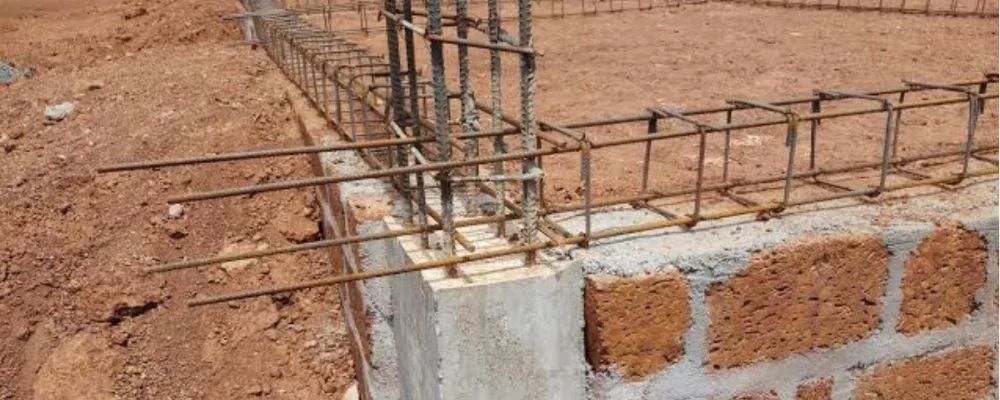
The plinth level is defined as the base designed for the ground level. It acts as the foundation for construction. The plinth height can be in a range between 300 mm and 600 mm. The most common is around 450 mm. 

The main role of the plinth level is to provide support for the construction of the wall and floor. It also serves to evenly distribute the load throughout the foundation. It acts as a moisture-resistant barrier. Its primary function is to improve stability and level the surface for constructing the floors and walls of the building. 

Dimensional Requirements of a Plinth Beam. 

Dimensional Requirements of a Plinth Beam. 

Various factors govern the dimensions of a plinth beam. It includes the type of buildings, the design of the load distribution, and the soil condition. The plinth beam design controls the dimensions and height of the building by accommodating specific requirements. However, there are some general guidelines to follow:

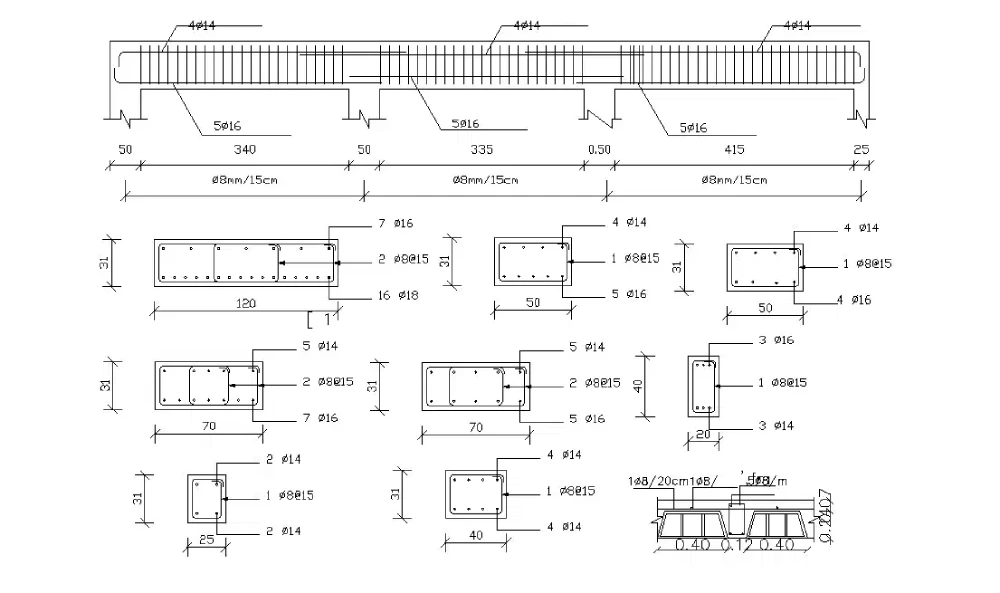
  • Height: Plinth beams are usually 300–450 mm in height. However, for constructions prone to waterlogging or similar issues, the minimum height may be 600 mm. The height of the beam provides space between the ground and the bottom of the beam. Height should be no more than 1/4 of the clear span (minimum 200 mm). The span-to-depth ratio should typically be between 12 and 15.
  • Width: The width of the beam should be the same as the width of the walls. It should align with the foundation’s outer edge when the concrete is poured. Many architects and builders prefer a width of 225 mm. Single-storey structures require the minimum RCC plinth beam size of 9 inches x 9 inches (225 mm x 225 mm). Multi-storey, buildings may need larger dimensions. The plinth beam width should be at least 200 mm (not more than the width of the supporting beams).
  • Depth: The depth of the plinth beam ranges from 300mm to 600mm ( 12 inches – 24 inches). The structural engineer calculates the depth of the beam based on a variety of factors.
  • Concrete strength: Plinth beams are made of reinforced concrete and steel rods. It requires a concrete strength of 20 MPA (M20 grade).
  • Grade of Material (steel): Stirrups at least Fe 415, main reinforcement of grade Fe 500 or Fe 550.

Reinforcement Detailing:

  • Top reinforcement: Minimum two 12 mm diameter bars.
  • Bottom reinforcement: Minimum two 12 mm diameter bars.
  • Transverse/shear reinforcement:
    • Maximum spacing of shear reinforcement: 0.75 times the depth for vertical stirrups and depth for inclined stirrups at 45 degrees (maximum spacing of 300 mm).
    • Minimum shear reinforcement: Asv/bSv > 0.75/0.87 Fy.
    • Minimum diameter of shear reinforcement: Not less than 8 mm with U-link and 1350 hook at each end.

Applications of a Plinth beam

A plinth beam is a reinforced concrete (RCC) beam that connects a wall to its foundation. It has numerous applications, including:

  • Support: Plinth beams provide the necessary support to the walls of a structure. It prevents the propagation and expansion of the cracks.
  • Load distribution: Plinth beams distribute the load of the walls and columns evenly across the foundation. This prevents cracks from the foundation from spreading into the wall above when the foundation settles.
  • Barrier: Plinth beams act as a barrier to keep moisture and dampness from the ground floor from reaching the building’s upper structure. In framed structures, they can also protect against water seepage.
  • Strength: Plinth beams can make a residential unit stronger and more durable.
  • Aesthetics: Plinth beams can also improve the aesthetic appeal of a building.  

The size of the plinth beam is determined by a variety of factors, including building type, floor count, design specifications, soil conditions, and so on. 

The height of the plinth can range between 9 inches and 18 inches. The minimum required height is 20 cm. A minimum of two 10mm-diameter bars are used at the top and bottom of the building.

Placements of a Plinth Beam

Plinth beams are placed in between the foundation of the building and the wall. It is located at the bottom, or the base ground level. 

Steps to Follow for the Placement of the Plinth Beam:

  • Mark the area where to place the plinth beam. Have a clear location for where the plinth beam is constructed. 
  • The next step is the excavation. Excavate the marked area to the depth that is required. Make the beam a minimum of 200 mm deep.
  • Place the steel bars in the areas of excavation. The size depends on the dimensions of the beam used.
  • The spacing of the bars should be 4-6 inches apart. They are tied by binding wires to stay together.
  • To shape the plinth beam, install formwork. It can be made of plywood or steel sheets. 
  • The formwork must be installed tightly. Then mix the concrete in the required proportion. Use at least M20-grade concrete. Pour the concrete in layers. Before Plinth filling, it is important to compact the concrete properly. Ensure to keep the shuttering position solid before pouring the concrete.
  • Smooth the surface after pouring the concrete with a trowel.
  • For proper curing, the plinth beam has to be kept moist for 7 to 14 days, approximately. Give a 25mm cover to the rods in the beam.
  • After the curing process is over, remove the formwork.
  • Make the upper end of the beam higher than the final ground level.

Conclusion

The fundamental function of the plinth beam is to provide the support and necessary load distribution for the construction. It protects the building from cracks, moisture damage, etc. It has the mechanical function of transferring the weight to the ground without affecting the structure of the building. It also includes the internal and external walls, which encompass the whole area of the building. They are mostly used in areas prone to flooding.

How to Calculate Cement, Sand, and Aggregates

0
How to calculate cement sand and aggregate

A concrete mix is composed of cement, sand, and aggregate. It is essential in construction work.

A good-quality concrete mix can make your building strong and durable. You can do this by using the right amount of materials. This can give your concrete the strength it needs to support the building.

This article will help you understand why you should calculate cement, sand, and aggregate. You will also learn the steps you can follow to calculate it. 

Importance of Calculation

How To Calculate Cement

A concrete mix consists of cement, sand, aggregate, and water. These components provide support, strength, fire resistance, and durability to the building. 

Here are some reasons you should calculate the amounts of cement, sand, and aggregate. 

  • Using calculated portions of ingredients can achieve the strength and durability the structure needs to support itself. 
  • Calculating the ratio for each material ensures you order only the required amount of materials, saving costs. 
  • It minimises the amount of waste or unused materials after mixing the concrete.
  • Calculating the ratio of each ingredient ensures uniform concrete quality throughout the building. This reduces the chances of defects or failure.
  • Pre-planned calculations can ensure the concrete mix is delivered on time. This can help complete the project  on schedule.

Steps to Calculate

Follow these steps to calculate the ingredients for your concrete mix.

1. Determine the concrete grade and mix ratio

There are several grades of concrete. Each corresponds to a specific mix ratio  (as shown in the table below). You need to choose the appropriate grade to establish the mix ratio.

2. Calculate the concrete volume needed

Measure the length, width, and depth of the structure to calculate the volume of concrete required in cubic meters.

3. Calculate the dry volume

The volume of concrete you have calculated is the wet volume of the concrete. The raw materials used are all dry. The volume of dry materials will be higher than wet. So, you need to determine the dry volume. Multiply the wet volume by 1.54 to get the dry volume.

4. Determine the percentage of each material

Now, you need to calculate the percentage of each material required for the mix. Consider an M10 concrete., The mix ratio is 1:3:6. This involves 1 part cement, 3 parts sand, and 6 parts aggregate.

That is, 1+3+6 = 10 parts. 

To calculate the percentage of each material, divide the number of individual parts by the total number of parts. 

1 part cement — 1/10 = 0.1(10%)

3 parts sand — 3/10 = 0.3(30%)

6 parts aggregate — 6/10 = 0.6(60%)

That is, an M10 concrete consists of 10% cement, 30% sand, and 60% aggregate.

5. Calculate the volume of each material

To find the volume (cubic yards) of each material required, multiply the individual percentage by dry volume (1.54). 

Cement — 0.1×1.54 = 0.154 ㎥

Sand — 0.3×1.54 = 0.462 ㎥

Aggregate — 0.6×1.54 = 0.924 ㎥

6. Convert volume to weight

To obtain the weight of each material in kilograms, multiply the volume by the appropriate density:

Cement weight — 0.154 ㎥ × 1440 kg/㎥ = 221.76 kg

Sand weight — 0.462 ㎥ × 1520 kg/㎥ = 702.24 kg

Aggregate weight — 0.924 ㎥ × 1560 kg/㎥ = 1443.84 kg

This calculation provides the total amount of each material needed. 

Standard Concrete Mix Ratios

Standard Concrete Mix Ratios

The mix ratio for each concrete determines its strength and purpose. For Example, a patio and a driveway have different purposes. So, the strength they need to withstand pressure also differs. 

Here are various grades of concrete with their respective mix ratios and compressive strengths:

Concrete GradeMix RatioCompressive Strength
M51:5:105 MPa (725 psi)
M7.51:4:87.5 MPa (1087 psi)
M101:3:610 MPa (1450 psi)
M151:2:415 MPa (2175 psi)
M201:1.5:320 MPa (2900 psi)
M251:1:225 MPa (3625 psi)

Water to Cement Ratio

The amount of water added to the concrete mix ratio significantly influences its quality. Insufficient water may lead to a dry mix that is challenging to work with, while excessive water can weaken the mix.

So, you need to add the right amount of water. Here is a table indicating the water-to-cement ratio for various concrete grades:

Concrete GradeWater Cement Ratio
M50.60
M7.50.60
M100.60
M150.50
M200.45
M250.40

Conclusion

Cement, sand, and aggregate calculation is very important to get the perfect concrete mix for your building. While manual calculations can be difficult., You can visit websites that have  calculators  to help you calculate the necessary quantities of each material.

FAQs

1. How to calculate dry volume?

The volume of concrete you have calculated represents the wet volume. The raw materials used are all dry, so the dry volume will be greater than the wet volume. To find the dry volume, multiply the wet volume by 1.54.

2. What are the steps to follow to calculate ingredients for concrete? 

Follow these steps to calculate the ingredients for your concrete mix.

* Determine the concrete grade and mix ratio.
* Calculate the concrete volume needed.
* Calculate the dry volume.
* Determine the percentage of each material.
* Calculate the volume of each material.
* Convert volume to weight.

Fine Aggregates: Exploring the Characteristics and Applications in Modern Construction

0
Fine Aggregates

Introduction

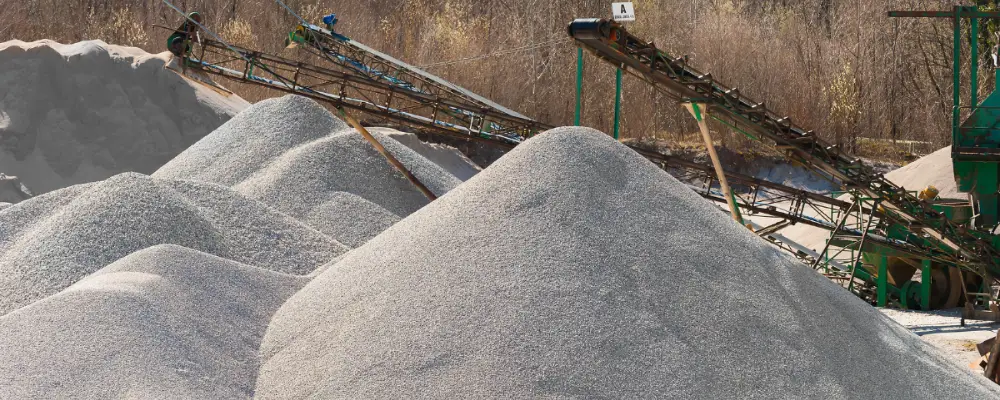
Fine aggregates are natural materials mostly composed of crushed stone or sand. The fine aggregates are commonly used in construction projects. It is cost-effective and influences the strength, durability, and stability of concrete. The size of the particles must have a diameter of less than 4.75 mm. It delivers 35% to 45% by mass or volume of concrete mixtures. These fine aggregate materials are extracted through the mining process. 

What is a Fine Aggregate?

Fine Aggregates

Fine aggregates are defined as inert granular materials. It has many properties that affect the performance of the concrete. The primary sources are gravel, crushed stone, river sand, etc. Its surface area is generally high. Spaces between the coarse aggregates are called voids. Fine aggregates are used to fill the voids that occur in the coarse aggregates.

The fineness modulus of the fine aggregates in the grading zone is between 2.30 and 3.10. The fine aggregate has been in use since ancient times. The extraction and processing of fine aggregates have evolved as technology has. Building structures generally use natural sand. The fine aggregates are dynamic and meet modern construction standards. The purpose of the fine aggregate is to enhance the workability and finish of concrete. 

Characteristics of fine aggregate in construction:

Fine aggregate plays a major role in construction. It helps in the production of concrete and mortar. The main functions and benefits of the fine aggregates include:

Gravel and Sand Composition

They are nonrenewable resources, which include grains and fragments of rocks. River sand primarily contains mostly limestone and sandstone. 

Comprehensive Strength 

The strength of the concrete is affected by the ability of the aggregate to resist a comprehensive load. The size, shape, texture, and content of coarse aggregate play essential roles in determining the strength of concrete. The type of coarse aggregate can also be more important for high-strength concrete because of limitations on the water-to-cement ratio.

The main purpose of fine aggregate is to increase workability. It fills the voids and reduces the amount of cement that is required. This increases the overall strength of the cement mix.

The principal effect of the fine aggregate is achieving the desired density and cohesive mix. It is important to determine the quality of the structure. 

Absorption 

Absorption refers to the ability of fine aggregates to absorb water. This property significantly determines the water-cement ratio in the concrete mix. Fine aggregates help maintain the integrity of the concrete mix by minimizing excessive water absorption.

Density 

It is defined as the mass per unit volume of the fine aggregate. The weight and stability of the aggregate are measured by calculating the density of the materials. The ideal density of fine aggregate ranges from 2.5 to 3 g/cm3.

Porosity

Porosity is the measure of the void spaces that exist within the fine aggregates. It leads to increased water absorption, reducing the strength of the concrete. 

Fineness Modulus 

The fineness modulus is an index number. It depicts the particle’s mean size in a fine aggregate. The fine aggregates have a fineness modulus between 2.00 and 4.0. The fineness modulus of fine aggregates can be calculated through a systematic sieve analysis, where cumulative percentages retained on specified sieves are totalled and divided by 100.

Specific Gravity

It is defined as the ratio of fine aggregate density to the density of water. It calculates the aggregate volume required to obtain the concrete mix for design. The specific gravity range is from 2.5 to 3.0. 

Angularity 

Angilarities are defined as the fine aggregate particle’s shape and sharpness of edges. It provides the bonding of cement paste. When compared to round aggregates, these reduce workability.

Properties of Fine Aggregate 

Properties of Fine Aggregate 

Several important properties of fine aggregate can influence the performance and quality of the concrete. The key properties are: 

Size 

Fine aggregates should have particles smaller than 4.75 mm. Materials like crushed gravel, crushed stone, silt, and clay qualify as fine aggregates.

Strength 

Fine and coarse aggregate particle strength is important in determining the overall concrete strength.

Water Absorption 

The water absorption in fine aggregates is ideally less than 5%. Depending on the water absorption of the aggregates, it can vary between lightweight aggregates and normal aggregates. In lightweight aggregates, it has a microstructure that leads to absorbing more water. The normal aggregate has less water absorption, less than 3%. 

Surface Texture 

For fine aggregate, you can have both smooth and round aggregates. However, rough textures provide better bonding for the concrete. 

Role of Fine Aggregate in Concrete 

  • Fine aggregates are used to fill the voids between the coarse aggregate. This includes providing the necessary density and compaction of the concrete mix. 
  • The fine aggregate determines the workability condition of the concrete. It makes the concrete mix easier with a smooth finish. 
  • The fine aggregate significantly creates an impact on the strength and durability of the concrete. 
  • It helps in maintaining the dimensional stability of the cement. The fine aggregate minimises the cracks, leading to reducing the concrete shrinkage.

Uses of Fine Aggregates 

  • They are used in building bridge roads. 
  • They have provided a smooth surface for masonry work. 
  • By choosing the right method of plastering you can bring a smooth finish to ceilings and walls.
  • Filling materials for leveling surfaces, including athletic infield material, path fines, track fines, soil amendments, and the base for pathways.
  • The base layer below the surface layer for horse arenas and horse stalls
  • Concrete: Fine aggregates are a key ingredient in concrete. It also has water and cement. It reduces the amount of water and cement needed. They have properties of durability and compatibility. 
  • Fine aggregates are used in producing asphalt. 
  • Fine aggregates are used as a road base. 
  • Fine aggregates can be used to create foundations for new roads. 
  • Other construction materials: Fine aggregates have various applications in the making of construction materials. For example: blocks, pipes, and bricks. 
  • Smooth surfaces: Fine aggregates are best suitable for smooth surface projects. For example: athletic infield material, path fines, track fines, and underneath pavers. 
  • Soil improvement: Fine aggregates can also be used to enhance soil by improving quality.

Types of Fine Aggregates 

Natural Aggregate 

River Sand

These are naturally occurring sands. They are obtained from the river beds. It is commonly used in mansory work and concrete. 

Sea sand

It is obtained from this seashore. It contains high salt and must be used only after washing. 

Crushed Stones and Sand 

This is used as a natural sand substitute. It is manufactured by crushing the hard stones.

Manufactured Aggregates 

Crushed Gravel and Sand:

It is extracted by crushing the gravel and also used in the preparation of concrete. 

Recycled Aggregates 

It is obtained from recycled materials used in construction. It helps build sustainability in the construction industry.

Classification of Fine Aggregate

Based on Origin 

Natural Aggregates: 

The obtained from natural sources like seashores and river beds

Artificial Aggregates:

Industrial methods are used for its production. These include recycled material and crushed stones.

Based on Composition 

Siliceous Aggregate 

It primarily consists of silica, which is represented by quartz sand.

Calcareous aggregate 

The main component is calcium carbonate. For example, limestone sand.

Based on Particle Size 

Fine sand 

Fine sand aggregate type is obtained from crushed stone particles or natural sand. It has a diameter of less than 9.55 mm. The fineness modulus for this is between 2.2 and 1.6. 

Silt

Silt is difficult to remove from the aggregate surface. The particle of silt has a size range between 0.075 and 0.002 mm. It’s also called clayey silt. It is usually determined by mixing water and using sieve analysis.

It has negative side effects on sand. It creates cracks in the concrete and impairs the bonding of particles.

Conclusion

Fine aggregate has an important application in the construction industry. It decides the cement’s stability, strength, and various other factors. The fine aggregate is the key component of the concrete. It makes up to 35-45% of the total volume of concrete mixture. It is generally used in projects that require a smooth surface. For example: athletic infield material, path fines, track fines, and underneath pavers. They may also function as soil amendments, supporting the establishment of high, compact surfaces while providing significant mechanical strength.

Hairline Crack in Concrete

0
Hairline cracking

Introduction

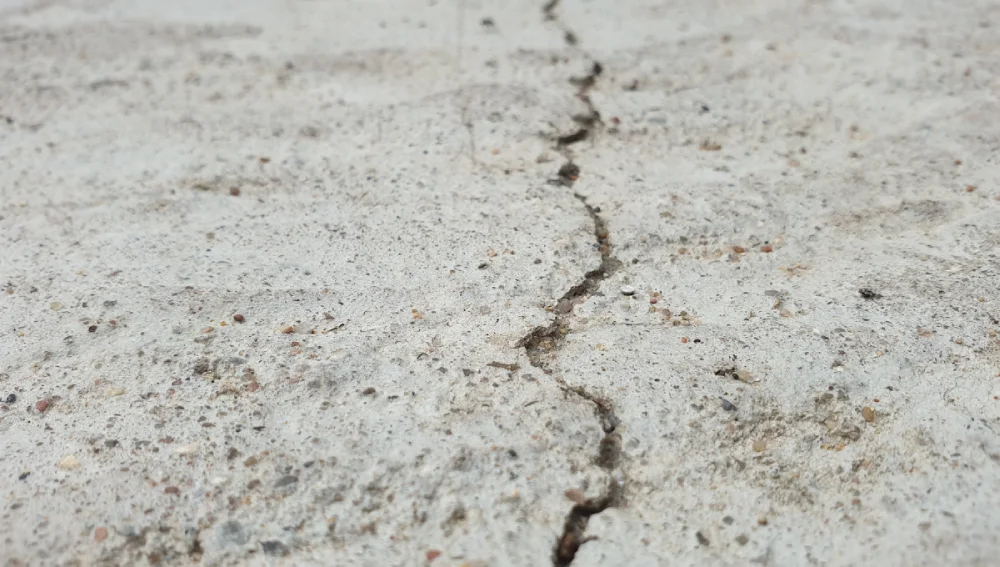
Hairline cracks in concrete are identified as small and narrow cracks. It is less than 0.003 inches wide. They are among the most common types of cracks in concrete structures, appearing in both old and new concrete. Any hairline crack indicates that the concrete has experienced some form of stress. The major reasons include temperature change, external load, and shrinkage. These cracks can also occur during the curing process of the concrete. Generally, hairline cracks do not affect the structureal integrity of the building. 

The width of the hairline crack is less than 0.1 inches. These are fine lines that are badly visible. It usually appears on the surface or within the structure of the concrete. They are sometimes random, with specific patterns depending upon the source of the stress These hairline cracks may seem small but can cause deeper issues over time.

Characteristics of Hairline Cracking 

Hairline cracking

Hairline cracks are a major concern because they can affect the structural components of the concrete. The key characteristics of hairline cracking in concrete are: 

Width:

The hairline cracks are small and narrow. Its width is typically less than 0.1 mm. These are not immediately visible to our naked eyes. 

Depth 

The hairline cracks usually extend into the structural core. These hairline cracks generally affect the concrete surface layer. 

Appearance 

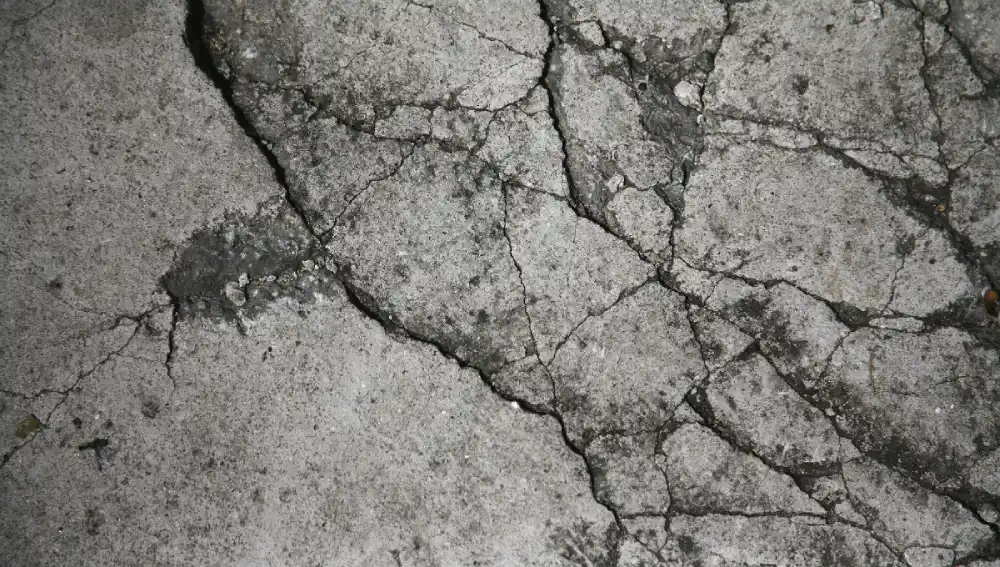
It can be fine and continuous. It runs along the surface of the concrete. Otherwise, it can be a map-like structure. 

Location 

Hairline crack’s appearance depends on factors like environmental conditions and shrinks. It is seen in the edges and corners of the walls where the concrete experiences higher stress.

Formation 

The hairline cracks are formed immediately after the curing process. Or during the early process of concrete curing. 

Impact of Hairline Cracks

Small Impact

Hairline cracks generally affect non-structural parts of the concrete. In this case, it does not affect the overall quality of the structure. 

Potential Impact:

In some instances, hairline cracks may necessitate deeper investigation as they can indicate issues such as improper curing, shrinkage, overload, increased stress, etc.

Reasons for the Hairline Cracks in the Concrete

Reasons for the Hairline Cracks in the Concrete

Shrinkage During Curing 

The curing process of concrete can lead to shrinkage-induced cracking. As concrete is porous, when it dries out, it leads to expansion. This results in more absorption of water. The water absorption will, in turn, cause a moisture difference. This results in concrete cracking. 

Improper Water-Cement Ratio 

The water-cement ratio of concrete should not exceed 0.5. The lower the water content, the greater the durability and reduced shrinkage. As shrinkage is the primary cause of the crack, it is necessary to have a few pores that give compaction to the concrete. Too little water can also lead to dehydration. It leads to the cracking of the concrete.

Inadequate Curing Techniques 

Concrete must require proper curing to achieve the desired durability and strength. 

Excessive Vibration During Placement 

Mechanical vibrators or vibrations from external sources are a major reason for the cracks in the concrete. Too much vibration causes the segregation of concrete mix. It eventually leads to cracking. 

Temperature Fluctuations 

Rapid or extreme temperature fluctuations can lead the concrete to expand and contract. This process leads to hairline cracks, especially in the initial curing stages.

Excessive Bleeding 

Bleeding results in the rise of water to the surface of the concrete. The excess bleeding affects the surface of the concrete, making it weak. This forms hairline cracks. It is the result of water evaporation and drying of the surface. 

Load Induces Cracking. 

Excessive loads that are more than the concrete’s capacity can lead to cracking. These are commonly seen in structural elements or slabs.

Plastic Shrinkage 

During the initial stages of curing, concrete, rapid water evaporation from the concrete surface occurs, which can cause hairline cracks within hours of pouring. It can be fixed by applying a surface treatment.

Thermal Contraction 

After the concrete is set, it undergoes contraction and cracking. This causes the spread of linear cracks across the surface of the concrete. It can be controlled by using insulation and temperature control techniques. 

Overworking of Cconcrete 

Excessive processing of the concrete surface will have an impact on the finishing. It creates fine cracks in the form of patterns. Light patching compounds  can be used to cover these cracks.

Effects of Hairline Cracks on Concrete 

  • Hairline cracks can adversely affect the visual appearance of the concrete surface, giving a poor and aged look. 
  • Hairline cracks do not significantly affect the structural integrity if they create a minimal impact and do not extend deep into the structure.
  • When the hairline cracks deeper, there is a potential weakening of the concrete. It occurs in areas of increased load bearing. 
  • When there is a gap created due to airline cracking, it leads to reduced durability and increased permeability. This results in chemical water and other substances settling in the gaps of the concrete. 
  • The crack areas of the concrete are more exposed to erosion. It leads to the start of surface degradation with time. 
  • The hairline cracks increase the carbonation process, which causes carbon dioxide to get into the concrete. This lowers the pH level, leading to Concrete corrosion of reinforcement. 
  • Plastic shrinkage is where the surface of the concrete dries faster and causes hairline cracks with less moisture. 
  • A proper ratio of water and cement to produce the concrete mix affects the aggregate grading and leads to the formation of hairline cracks.
  • The flexural stresses produced in beams and slabs need attention. This stress is seen on the side of the concrete. It results in creating hairline cracking. 
  • When the concrete materials are not of the desired quality, it creates poor bonding. This results in hairline crack formation.

Solutions to Prevent Hairline Cracking in the Concrete 

  • Remove any dust or loose particles collected in the cracks using any brush. Clean the cracks regularly with compressed air. 
  • When a crack appears, create a V shape with a chisel  This helps prepare the crack and repair it easily with bonding material.
  • The crack can be fixed by injecting epoxy. This helps to regain the structural quality. 
  • The cracks will lead to sliding movements of concrete. This can be fixed by filling the cracks with latex patch material. This is usually flexible. 
  • The larger cracks can be fixed with a mortar mix.
  • The smooth surface of the concrete where the crack appears can be filled by applying concrete as a patching compound. 
  • To provide a waterproof barrier for the concrete in places of small cracks, effective use of silicon sealant can fix the crack.
  • Installation of metal tables across the crack can help hold the concrete together. Stitching bars can also be used as a replacement. 
  • In places where a crack exists, it can be covered by applying a thin layer of concrete above the surface. 
  • A self-leveling compound can fill the gap of the crack. It helps create a smooth surface of the concrete. 
  • Hydraulic cement can fill the cracks as it expands and seals the gap immediately and efficiently. 

Conclusion

Hairline cracking in concrete can be due to underlying issues. It can entirely affect the performance and quality of the structure. It is significant to take the necessary preventative measures and follow practices for immediate fixing of the cracks. Any delay or unmonitored cases can lead to serious effects. This can cause both functional and aesthetic damage. It can also reduce the integrity of the concrete construction. 

Regular maintenance by conducting quality checks is essential for long-term durability and improving building performance.  A variety of reasons can affect the construction. From environmental to materialistic factors, a building has impacts from all sides. Preventive measures can enhance the process of maintaining the structural integrity of the construction.

Stainless Steel Fabrications: All You Need to Know About the Process

0
Stainless Steel Fabrication

Stainless steel fabrication is a commonly used methodology in the modern construction industry. Its process includes cutting, shaping or bending, designing, assembling, and welding for conversion into various forms to be used for commercial, domestic, and industrial purposes. Stainless steel is known for its 100% recycling nature. The main composition of stainless steel is nickel, iron, and chromium. Corrosion resistance and smooth surfaces are its key features. Read on to learn about how this material is being used by the construction industry through  fabrication.

What is Stainless Steel Fabrication? 

Stainless Steel Fabrication

Stainless steel fabrication is defined as converting stainless steel into a particular shape or form through the application of different processes and methodologies. The steps involved in forming stainless steel are highly technical. It contains a minimum of 10.5% chromium, which makes it corrosion-resistant. 

Stainless steel was invented back in the 20th century. by Harry Brearley, a British metallurgist, He found that when chromium is added to  steel, it makes it resistant to rusting. A revolution was created in the metal industry by his discovery. Various grades of stainless steel were then developed with different properties. 

Process Breakdown

Fabrication involves various processes for altering stainless steel in order to transform it into usable shapes, forms, and products. Some of these processes are:

Cutting 

Cutting large elements of stainless steel into usable sizes is one of the crucial steps of the fabrication process. 

Some cutting techniques used are:

  • Metal punching

It is also known as sheet metal punching. It is a process in which excess shear pressure is applied to cut the stainless steel sheets at specific locations.

  • Shearing

Shearing is a process in which large rolls of stainless steel are cut into smaller sheets. Conventional press/ guillotines used for shearing other such metals can be used for stainless steel as well. 

  • Laser cutting

A laser beam can be used to melt the stainless steel in specific sections where it needs to be cut. This process is a noncontact cutting process. A significant amount of energy in the form of light is transferred to the sheet metal. Heat is created, and it vaporizes parts of the steel in order to break it into pieces.

  • Other types of cutting:
  • Abrasive Cut-Off Saw. 
  • Plasma cutting,
  • Flame cutting, 
  • Circular saw cutting
  • Oxy-Acetylene Saw. 
  • Plasma Cutting
  • Water Jet Cutting
  • Circular Saw.
  • Angle Grinder
  • Jigsaw.

Forming

Forming refers to subjecting stainless steel to different types of deformation in order to obtain the desired physical properties of shape and size. This includes several processes, like: 

  • Bending: Flat stainless steel sheets and bars can be bent using bending machines or press brakes. Tubular elements are more difficult to bend and require rotary bending machines or hydraulic presses.
  • Rolling: The stainless steel sheet is passed through a series of rollers to form a cylindrical shape. This process is useful for creating lightweight structural parts.

Stamping and punching: 

A punch gives shape to the stainless steel sheet through a complex process that involves mechanical methods. This process is similar to carving and can be used to add patterns to the stainless steel. It is highly used in industries such as automotive aerospace electronics where precision is required. This process is generally used for bulk quantities and high volumes. 

Welding

Welding

Welding is the process of joining two metals The material parts are melted by heating and joined upon cooling. It is an important process that helps build the desired shapes.

Arc welding 

It is used in electric arcs where two pieces of metal are joined together by melting. Arc welding types are: 

  • Carbon arc welding 
  • Submerged arc welding 
  • Shielded metal arc welding 

MIG or MAG welding

It is also known as metal inert gas welding. A wire electrode and shielding gas can join two pieces of metal, including stainless steel. 

Spot welding: 

Two pieces of metal are joined together by applying pressure and heat in a small spot. This process is called spot welding. It is an efficient technique for joining without any additional material. 

Machining 

Stainless steel sheets are further processed using various types of machines. This is called machining.

Milling

It involves the removal of materials from the steel sheet using a rotary cutter. The main purpose is to create complex holes, shapes, etc. 

Turning: 

It is a process that uses a lathe machine to rotate the metal. A cutting tool is used to remove metal along the diameter. It works in a linear motion and results in creating a cylindrical shape. The cutting tool can be set at various angles according to the desired form.

Drilling: 

Drilling stainless steel requires the usage of specialised drill bits and machines. This process does not require expertise or the use of factory equipment, however, adequate protective gear must be used for safety. 

Surface finishing 

Grinding 

Grinding creates a smooth surface on the stainless steel by removing excess or unwanted material. This gives a mirror-like finish. It is done by using a grinding wheel and is called surface grinding. Abrasive belts can also be used as a cutting tool for grinding. 

Polishing: 

Polishing is used to give a glossy finish to the stainless steel surface. This makes it highly reflective and is a finer abrasive process than grinding. It is a traditional method that improves the surface quality and prevents rusting. 

Passivation 

The removal of impurities from stainless steel is called passivation. It is a chemical treatment that improves durability and prevents corrosion. In this process, chemical acid solutions are applied. For example, nitric acid or citric acid removes free ions from its surface.

Assembly 

Joining components 

The final product is obtained by joining the individual fabricated components. This can be done by welding, bolting, riveting, etc.

Fitting and alignment 

Correct alignment and tolerance are required to obtain the final assembly. The precise fit of all parts ensures the quality of the product.

Conclusion 

Stainless steel has unparalleled benefits and plays a vital role in various construction industries. These benefits include environmental sustainability, longevity, and low maintenance. Fabrication of stainless steel allows its physical modification in order to convert it into usable forms and products. This enables versatility in its usage and makes it an important aspect of the construction industry. 

Difference Between Primers and Paint

0
Difference Between primer and paint

Among the many materials that are used to protect and preserve your wall surfaces, primer and paint are the most important. Both priming and painting are essential steps that are necessary to protect your wall surfaces from external factors and enhance their overall appearance. 

However, several people are confused about what primer and paint are. So, in this article, we will look into both primer and paint in detail and clear all doubts regarding these two and their purpose in construction. 

What is a Primer?

Primer

A primer prepares the surface for paint. It is like a preparatory undercoat that covers the wall, helping the paint adhere better and increasing the paint’s life. 

A primer can be applied to both old and new wall surfaces. It is usually applied after putty to ensure an even and dry surface. A 9-inch roller is commonly used to apply primer evenly across larger areas, while a brush is typically used for cutting in corners and spot priming.

Purpose of Primer

A primer is a very useful material in construction, especially if you wish to get that glossy, sleek finish after you paint. You can get the best results if you apply the primer on your wall correctly. 

Below is why a primer is important before painting.

  • It can increase paint adhesion and help it bind strongly to the wall surface. 
  • It can increase paint life and protect it from peeling or flaking.
  • It can cover imperfections in the surface, like holes, dents, etc., and provide an even surface for painting. 
  • It leaves off a bright white colour. Painting on it can help the true colour of your paint shine through.
  • It can prevent stains from bleeding through the paint. This can be useful in places like kitchens and bathrooms.
  • Sand the surface after the primer to prepare the surface for painting. 

What is Paint?

paint

Paint is a pigmented liquid. It is applied over the surface of a building as a final finish to enhance its beauty. It coats the surface and protects it from external elements like wind, water, dust, and Sun rays. There are innumerable colours and patterns that you can choose from. 

Primer Vs. Paint

Below is the table depicting the difference between a primer and paint. 

Primer Paint 
It is a preparatory base coat that is applied on the surface before painting.It is used as a final finish that protects the wall surface while serving a decorative purpose. 
It is a bonding agent between the surface and the paint, allowing it to bond better with the surface.It enhances the visual appeal of the wall surface by adding colour and shine to it.
It consists of a synthetic resin, solvent, and an additive agent.It consists of pigment, solvent, and binder. 
It does not have any pigment (colour). It gives off a bright white finish.It has pigments. There are thousands of colour choices one can choose from when painting their surface. 

Types of Paints and Their Uses

Paints are water-based or oil-based. 

  1. Water-Based Paints:
  • Latex paint
  • Acrylic paint
  1. Oil-Based Paints:
  • Alkyd paint
  • Enamel paint

1. Water-Based Paints:

Latex Paint

It is a high-quality water-based paint. It is used for indoor paint jobs. It dries fast and can be cleaned with soap and water. It is less durable. So it is suitable for areas of less damage, like walls and ceilings. 

Acrylic Paint

It is a water-based paint with the same composition as latex paint. The paint has more acrylic polymers. This makes it more durable and is a good option for usable surfaces like cabinets. 

2. Oil-Based Paints:

Alkyd Paint

Alkyd paint is a widely used coating that comprises alkyd resin as its base.​ It is characterised by durability, a strong odor, and specific application properties. It is suitable for various surfaces, including furniture, doors, and more.

Enamel Paint

It is an oil based paint that is more durable and long-lasting It is commonly used in exterior surfaces but can also be used in interior works. 

Purpose of Paint

Paint is the best final finish you can give your surface. It protects your wall while adding to its visual appeal. This presents a mutually beneficial scenario. Below are some notable benefits of painting your surface. 

  • You can choose from different colour paints. It can add colour, shine, and texture to your surface. 
  • It is a final finish that protects your surface from wind, dust, water, and UV rays.
  • A high-quality paint lasts longer and protects the surface from damage. 
  • Some paints are antimicrobial. It can protect the surface from viruses, bacteria, and other germs. 

Paint is used for both performance and decoration. Choosing a high-quality, long-lasting paint can give you the aesthetics and protection you look for in a paint.

Conclusion

Primer and paint have their roles in protecting your surface and enhancing its look. So, whether it is an old building or a new one, always apply a coat of primer before painting it. 

Ensure you select reputable brands to buy primer and paint. Do your research and ensure you get the best quality primer and paint for your surface. 

FAQs

1. What is a PPIO?

PPIO, or Primer and Paint In One combines both primer and paint. You don’t need to prime your surface first and then paint. With a PPIO, you can directly paint after applying putty. 

2. What is the main difference between a primer and paint?

A primer is a base coat that is applied on the surface before painting. Paint is a final finish top coat that protects the wall surface while serving a decorative purpose.

3. Can PPIO products always replace a dedicated primer?

These products can be convenient, but they may not offer the same benefits as traditional primers in certain situations, especially with tough surfaces.

Mortar Joints: Importance, Benefits and Types 

0
Mortar Joints

Have you ever noticed those few lines between the bricks, or stones, on a wall? Those lines are actually what we call mortar joints, which are a very important part of building a strong, beautiful wall. In this blog, we take a look at what a mortar joint is, why it’s so essential, and the kinds you might use to give your wall not only its best look but also help it last longer.

What are Mortar Joints?

Mortar Joints

Mortar joints are the spaces found amongst bricks or stones, filled with a special mixture of mortar that generally contains cement, sand, and water. Mortar works to join bricks, stones, or other building blocks together, in turn keeping the wall together with well-dispersed stability. They are required not only for strength but also to play a great role in how the wall looks.

Importance of Mortar Joints

Mortar joints are essential during construction for the reasons below:

  • Binding : They make the wall strong and keep all the bricks, stones, or other building blocks in a set together so that it is stable.
  • Appearance: Diverse types of mortar joints give varied aesthetics and styles to a wall, especially when masonry blocks are left exposed without plaster or paint.
  • Weather Protection: Some of them offer protection against rain and wind that might lash against the wall to make it last for a long period.

Types of Mortar Joints

Types of Mortar Joints

There are several types of mortar joints, each with a unique look and function. Let’s explore some of these various types.

i. Concave mortar joints

The shape of these mortar joints might resemble a small dip or even a bowl. This type of design serves well to direct rainwater off the wall and thus reduces the chance of water damage. Due to the concave type of design, which is so practical for protection yet seems very neat to the eye, this  is one of the most commonly used mortar joints for many kinds of masonry work.

ii. V-Mortar Joints

V-mortar joints are much like concave but resemble a V in the center. For the most part, it is selected for a very sharp and modern appearance. Much like concave, V-mortar joints help in directing runoff from the wall and prevent waterit from seeping into the bricks or stones.

iii. Flush Mortar Joints

Flush mortar joints, as the name suggests, are flush or in line with the masonry surface. This joint  looks relatively smooth, flat and modern. Even though it does  not perform as well in terms of keeping water out as compared to the concave or V-mortar joint, many builders still prefer using them because they give wall surfaces a clean and refreshing appearance.

iv. Raked mortar joints

Raked mortar joints are formed by a grooved recess, marking an outline and shadow line between masonry blocks. This design provides great depth and some texture to the wall, making it look highly detailed and interesting. Raked joints may also facilitate another desired effect of making the blocks appear 3-dimensional—a pleasing effect in exposed masonry surfaces. 

v. Weathered Mortar Joints

Weathered mortar joints slope slightly towards the inside and they act like a small ramp,; this feature helps water to slide away from the wall. Additionally, these features give the wall a more traditional appearance. Weathered joints are usually used if a classic appearance is desired on older or historic buildings.

vi. Beaded Mortar Joints

Beaded mortar joints are those having a small, rounded bead at the edge of masonry block surface. The joint imparts an aesthetical aspect to the wall in addition to setting an appearance with a touch of elegance and sophistication. However, this type of joint is susceptible to easy breakage as it extrudes out from the wall surface. vii. H. Grapevine Mortar Joints

Grapevine mortar joints are similar to concave ones, but this mortar joint zigzags like a grapevine. They are not used as frequently as the other types of mortar joints, but they provide a wall with a unique aesthetic appearance. Grapevine joints are often used in ornamental masonry where a organic aesthetics are valued. 

Selecting the Correct Mortar Joint: Considerations

Correct Mortar Joint

All the types of mortar joints explained above incorporate functionality and visually pleasing aesthetics. However, the choice of joint depends on some significant factors, like:.

  1. Weather Conditions: For someone who resides in a region where there are heavy rains or where there is high wind, they would need a mortar joint that would help in deflecting water away from the wall. Concave, V-mortar, and weathered joints will be ideal in such conditions, while beaded joints may not be ideal.
  2. Wall Style: The appearance of the wall is very important. If one desires a slick, modern look and feel, then perhaps flush joints are best. If one wants something more textured and, traditional, then perhaps raked or weathered joints are best.
  3. Durability: All the joints are not equally durable. Concave and weathered joints are superior in protecting the wall from water damage. Check the level of abrasion that the wall may be subjected to, in order to determine the durability of the joint that can withstand such conditions.

Quality of Mortar Joints

Below are a few tips to help your mortar joints look great visually and function properly:

  • Proper Mixing Of Mortar: This is a matter of great importance. Mortar that is too dry may be difficult to work with, while a very wet mix may lead to cracked and weak joints.
  • Spread Evenly: Spread the mortar equally in the joints. Use a trowel to spread it while scraping off the surplus. Non-uniform mortar joints may look clumsy and unfinished.
  • Clean Off: Dampen the face of the bricks or stones and clean off any excess mortar while it is still wet. This will enhance the aesthetics of exposed masonry surfaces.
  • If you are new to masonry, practice first on a small project so that you can get a feel for applying mortar to the actual masonry and finishing the joints.

Conclusion

Mortar joints may seem like a small and insignificant part of construction. However, they are vital to ensuring wall stability and visually pleasing aesthetics. Choosing the right type of mortar joint for your specific project needs is important. It is recommendable to consult experts to help you choose the right type and proportions for mortar joints.

Frequently Asked Questions

What is a mortar made of?

Mortar is generally a mix of cement, sand, and water, used as glue to paste bricks or stones on top of each other. However, it can also be made with other materials like lime. 

Can I use any type of mortar joint for any wall?

Not always. The type of mortar joint you wish to have depends on the purpose of the wall, local weather conditions, and even the style you intend to have.

How do I repair a mortar joint if it has a crack in it?

Rake out the weakened mortar joint and replace it with new mortar. One might want to consider getting professional help if they are not strongly convinced or unaware of how to do it themselves.

How long does it take for the mortar to dry?

Under normal circumstances, mortar tends to dry within a period of around 24 to 48 hours. However, drying time will differ depending on the type of weather and the mortar being used.