Home Blog Page 49

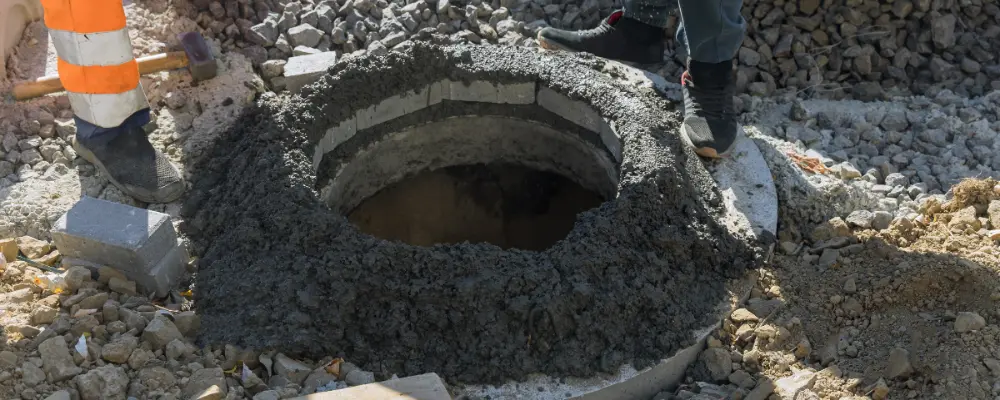
Plumbing Work in House Construction

0
Plumbing Work

In the construction of the new house and the innovation of the old house, various important elements  need to be considered. Most of the elements will contribute to the proper construction of the space. One of the such elements that need to be considered is plumbing. Plumbing is important for creating a comfortable, functional, and safe home. Plumbing is not just about installing the pipes; it also needs careful planning, precise execution, and a complete inspection. In this blog, we will know why the plumbing system is very important in the construction of a home.

What is Meant by Plumbing Work?

Plumbing Work

Plumbing can be considered an important aspect of construction that goes beyond building the walls and roofs. This mainly involves the pipe installation, fixtures, and systems that can bring clean water into your home and safely carry wastewater away. Making sure that water flows efficiently, fixing leaks, and maintaining the plumbing system, this work needs skilled professionals. Hiring a qualified plumbing contractor is important for any construction project. 

Importance of Plumbing

A plumbing system includes pipes, fittings, and fixtures that will allow the distribution of water  and the removal of waste water. It can be considered a lifeline for any house as it makes sure that the residence will have access to clean, safe water. 

If there is no right plumbing system, then the house may become uninhabitable. You can try to imagine if the house has no capacity for taking showers, flushing the toilet, and getting clean water from the pipe. Plumbing is the procedure that helps these daily routines to be effective functionally, and its significance cannot be underestimated.

Some of the Key Reasons for Plumbing in Buildings and Homes:

Key Reasons for Plumbing in Buildings and Homes

To Ensure a Supply of Clean Water: 

One of the main features of the plumbing system is the continuous and easy delivery of water to the houses. People might be exposed to various health risks because of the absence of soft water for drinking, cooking, and cleaning.

Efficient Disposal of Wastewater: 

Plumbing systems also play an important role in the removal of wastewater from houses. A proper drainage system and sewage system can save public health.

Improving Comfort and Convenience: 

Modern plumbing systems provide a level of comfort and luxury that the previous generation could only have in their imagination. It starts from hot water showers to the dishwashers and washing machines. The plumbing system has improved the quality of life for modern people.

What is Construction Plumbing?

Construction plumbing is important for any building projects, as it ensures that clean water is delivered where it is needed and wastewater is efficiently removed. This process is essential for making a building building livable and functional. Plumbers will use various tools and techniques to complete this project. 

Other than pipes and fixtures, the plumbing construction also needs the installation of valves for controlling the water flow. This also helps ensure that every part of the system can be managed safely. For the regulation of water pressure and prevention of backflow, valves such as check valves, ball valves, and gate valves are necessary. If they are not there, it causes some significant damage. 

Understanding about the Plumbing System of a Home

There are mainly three systems in the home plumbing system, and they are,

  • Supply line network 
  • Drainage system 
  • Venting system

1. Supply Line Network:

The supply line network will bring clean water into the house from the municipal water supply or private wells. The system will work under pressure to deliver the water to all the different fixtures and appliances throughout the house. This will ensure that the multiple fixtures can function simultaneously and maintain sufficient water flow and pressure throughout the home. 

2. Drainage System:

The drainage system will carry the waste water and sewage away from the house. Unlike supply lines, drain pipes will mainly rely on gravity to move the water. These pipes are larger in diameter and are normally made from polyvinyl chloride, acrylonitrile butadiene, styrene plastic, or cast iron drains.

As the drainage system mainly relies on gravity, the drainage pipes are normally sloped. These slopes can help in the prevention of clogs and make sure that the waste material will move smoothly through the pipes towards the main sewer line or septic tank.

3. Venting System:

The venting pipes will allow air  to enter the drainage system and prevent the vapour  formation. A proper venting will make sure that each fixture has its own play that is needed for preventing the water seals from losing in the plumbing traps that are under the sinks and toilets. The main function of venting pipes is the prevention of sewer gases from entering the house.

One of the world’s leading plumbing experts, Richard Trethewey, explains, “When you pull the plug on a bathtub, you’ve got 40 gallons of water that wants to scream down that pipe. If there’s a vacuum, it can pull the water out of all the traps in the house.”

Maintenance of Plumbing

It is crucial to maintain the plumbing work, as it is very important in the house. This is mainly for,

  • Prevention of Costly Repairs: Regularly maintaining the plumbing works can protect the house owners from surprising and high prices to repair. Small problems, if they are not addressed, can cause large troubles that need extensive repair work.
  • Ensuring Efficiency: As well-maintained plumbing systems are more efficient, that leads to a decrease in the water payments and energy intake. Fixing the leaks and addressing the minor issues immediately can cause extensive savings of money over the years.

Conclusion

The plumbing system may not always be the most important part of house construction, but it is an essential system that is needed for the creation of a safe, functional, and comfortable house. A well-designed and proper installation of plumbing system with the help of experts can make a huge difference in your daily life, as they will provide a reliable supply of water, effective removal of waste, and convenience of modern appliances. 

FAQs

How does plumbing impact energy efficiency?

Efficient plumbing reduces water waste and energy use, particularly with modern fixtures and water heaters designed for conservation.

What materials are commonly used in plumbing systems?

Common materials include copper, PVC, PEX, and sometimes cast iron or steel.

What is a venting system in plumbing?

The venting system allows air into the drainage pipes to prevent vacuum formation and ensure smooth waste flow.

What are supply lines in a plumbing system?

Supply lines bring clean water into the house from the municipal supply or a private well.

How do you choose the right plumbing materials?

Consider factors like budget, durability, climate, and local building codes when selecting plumbing materials.
A Comprehensive Guide to the Cement Manufacturing Process

0

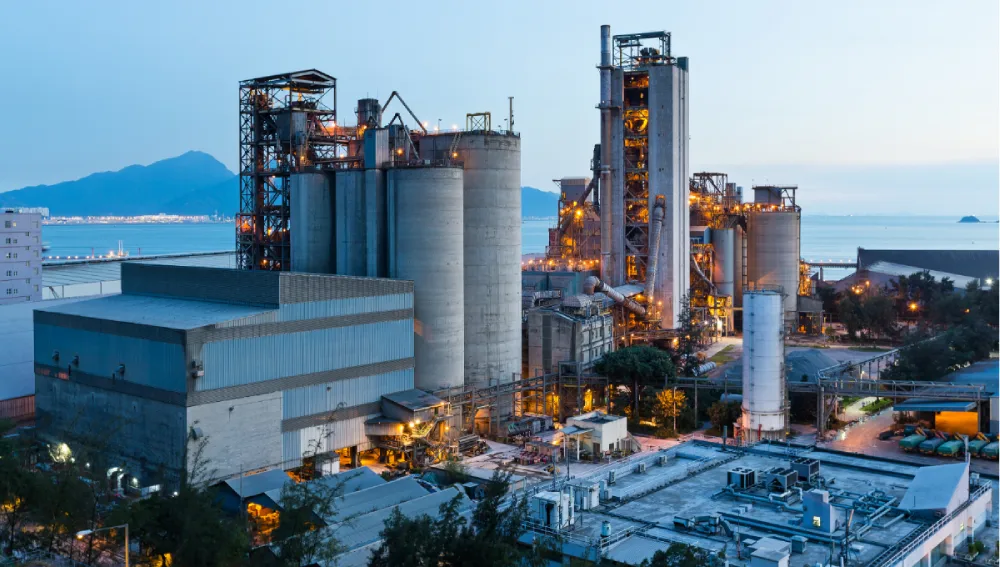
Cement is one of the most widely used materials in the construction industry worldwide. Most building projects utilize cement in one or the other form, including concrete, mortar, and flooring. This blog provides a comprehensive guide on the step-by-step manufacturing process of this crucial element. Read on to learn more about it.

What is Cement?

Cement

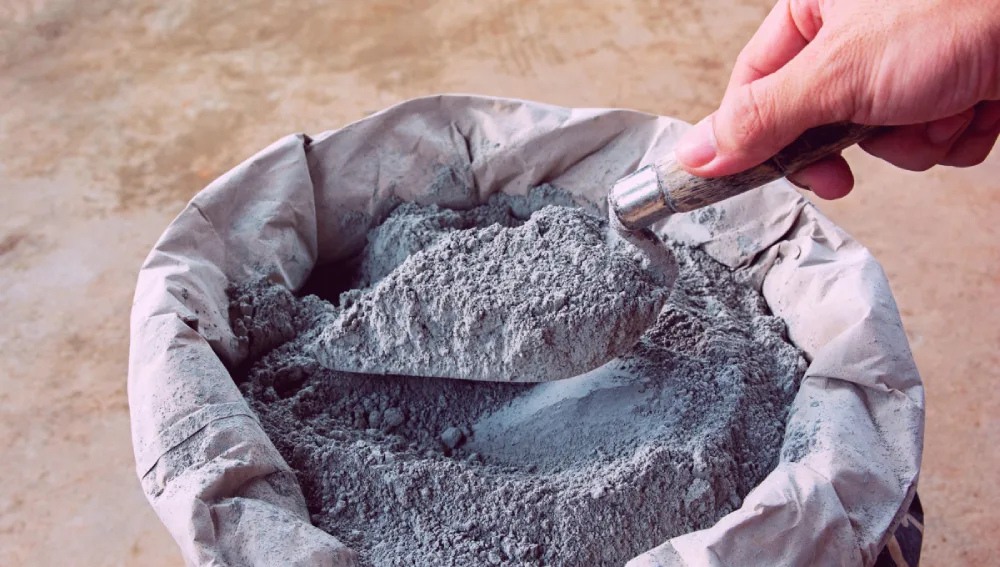
Cement is a fine, powdery substance that plays an important role in construction. It acts as a paste when mixed with water, becoming quick-drying and taking some time to harden and develop its strength. This makes it an essential component in building structures like houses, bridges, and roads. The cement generally adopted and used widely for building is known as Portland cement. The name is so derived because the color of this cement resembles the Portland stone, a type of building stone quarried in England.

Cement Production Raw Materials

Cement manufacturing is an industry that involves several steps, including the gathering of raw materials. These raw materials are necessary to enhance the strength together with the ability to make cement hard. 

The major raw materials for producing cement are:

1. Limestone (CaCO₃): This is the major raw material in this mix as it provides the calcium content to the mix.

2. Clay: Comprised of silica (SiO₂), alumina (AL ₂O₃), and iron oxide (Fe₂O₃). 

3. Gypsum (CaSO₄·2H₂O): It is added to regulate the rate at which the cements start hardening.

These raw materials are blended in definite quantities to obtain a uniform and homogeneous raw mix which is very crucial in the production of good quality cement.

The Manufacturing Process of Cement

The Manufacturing Process of Cement

Now, let’s explore the steps involved in the cement production process in more detail:

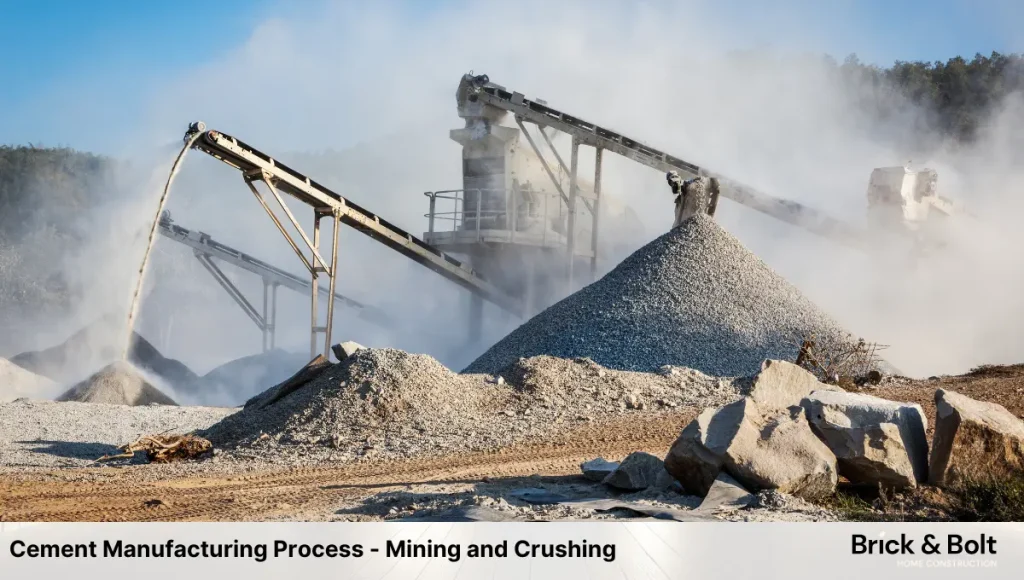
1. Mining and Crushing

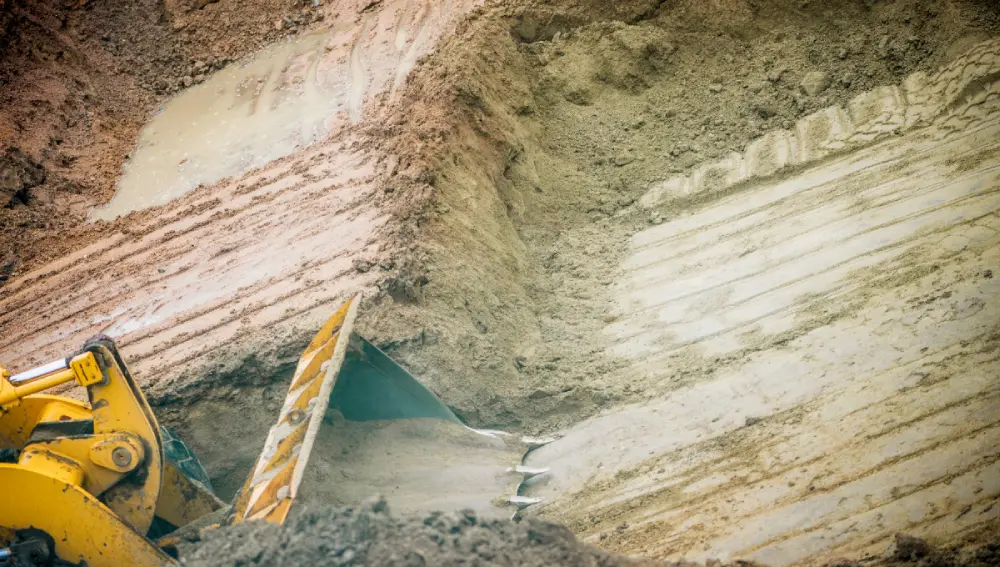
The process of making cement begins with mining, where raw materials are extracted from quarries. Huge machines called excavators dig the limestone out of the earth. The extracted limestone is then taken through a crushing plant, which reduces the size to smaller pieces of about 5 inches in size. This is important because small pieces are easier to handle and process during subsequent stages.

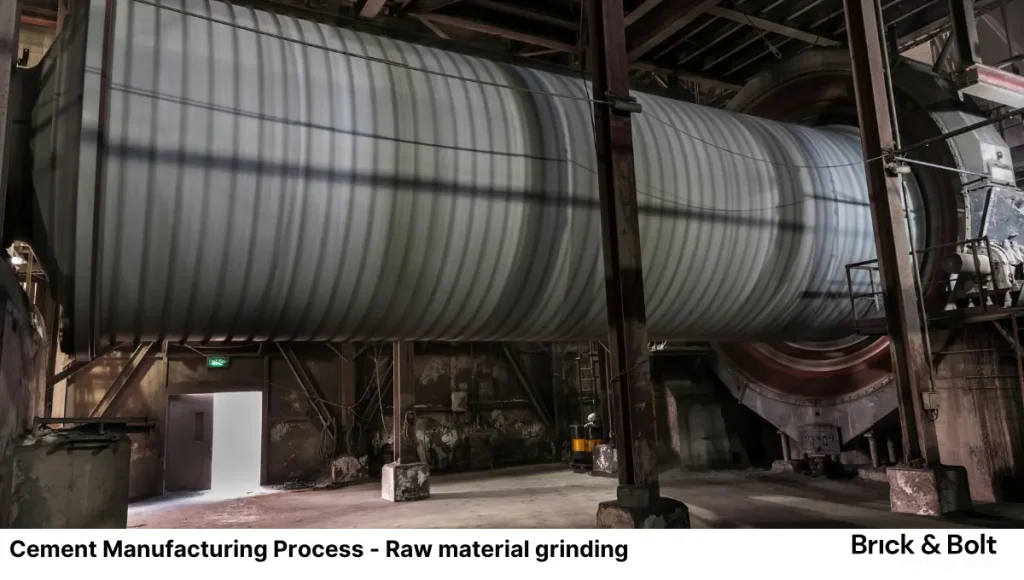
2. Raw material grinding

After crushing, the raw materials are carried to a grinding mill and made into a fine powder. This is done using equipment such as ball mills or vertical roller mills. The grinding process ensures the correct particle size of raw material and its homogeneous constitution, which is so critical for product quality.

3. Blending

The ground raw material, now very fine, is stored in silos where the process of blending takes place. Blending involves inducing compressed air into the raw materials, which undergo agitation and circulation in the silos. Slight changes in the chemical composition might alter the quality of the cement produced, so careful control is necessary. Leading technology is employed in modern cement plants to keep an eye on and make adjustments to the blending process to achieve the right chemical balance.

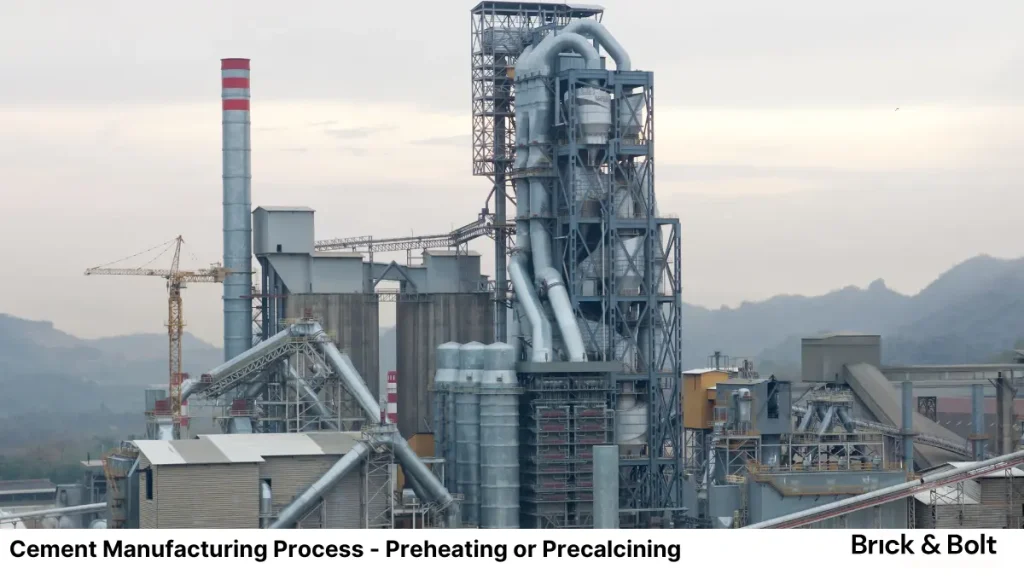
4. Preheating or Precalcining

The raw material is preheated in a high structure known as a preheater tower before it gets into the kiln. The preheater tower accommodates several cyclones through which the raw material is driven. During the raw materials’  course through the cyclones, it is heated by ascending hot gases to a temperature of about 900°C and calcination takes place. Calcination is the chemical reaction of limestone to convert it into limes and carbon dioxide.

5. Clinker Formation in the Kiln

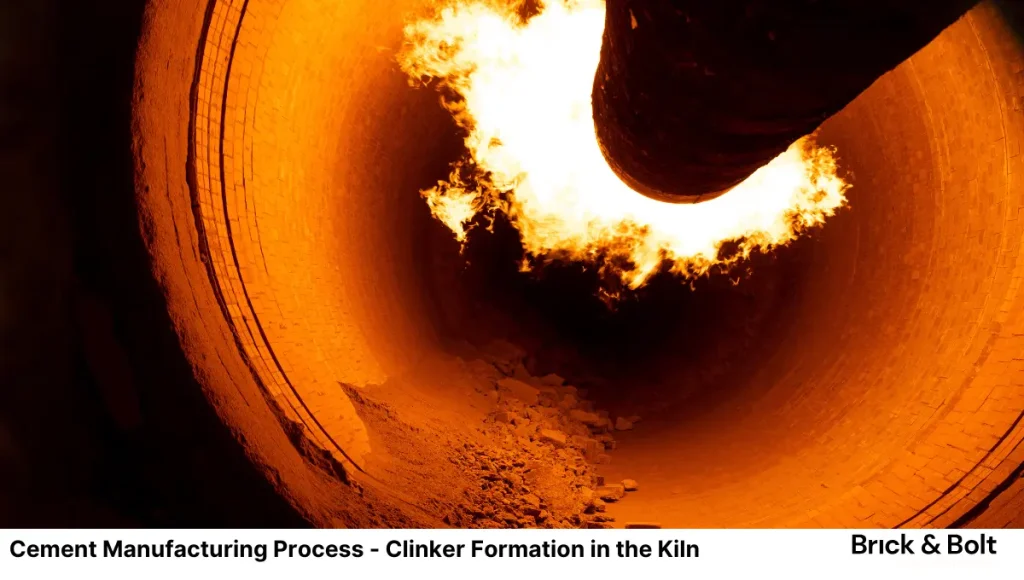
The kiln is a huge cylindrical furnace placed on a slope and rotating slowly. These furnaces are as long as 60 meters in length. The preheated raw material enters the kiln at 1400-1450°C and goes through a series of chemical transformations. The net effect of these chemical reactions is the formation of small hard lumpy structures which are referred to as the clinker and these look like black marble balls. Clinker a principal component of cement.

The kiln reactions from the following compounds:

  • Tricalcium silicate (C₃S): this compound gives strength to the cement and hardening properties.
  • Dicalcium silicate (C₂S): Strengthens cement hardening over time.
  • (C₃A) Tricalcium aluminate: regulates cement setting time.
  • Tetracalcium aluminoferrite (C4AF) – It gives color and also enhances the strength that cement reaches.

6. Cooling

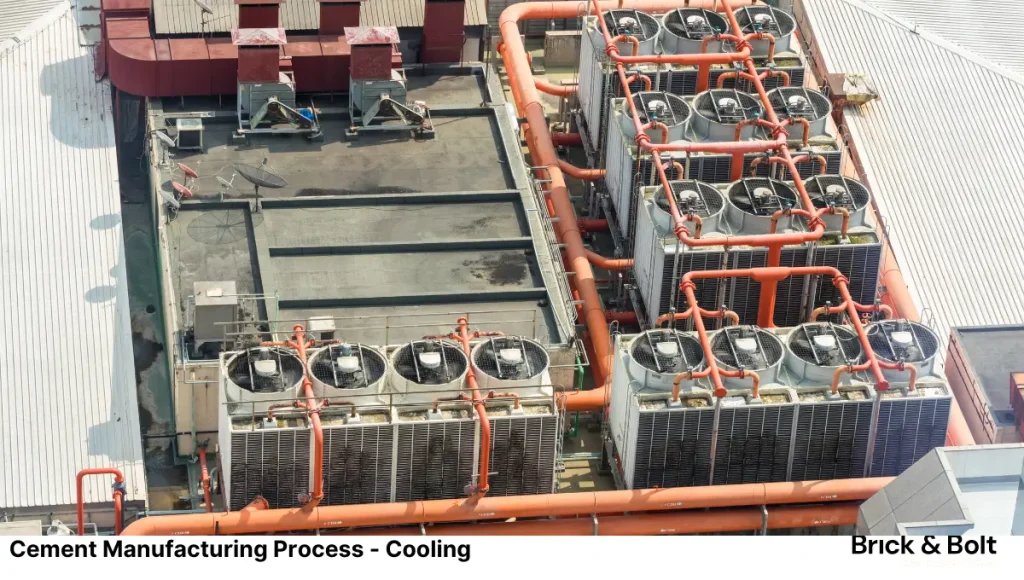
On formation, the clinker must be cooled as fast as possible to retain its properties. Passing the hot clinkers through a clinker cooler, air is blown across it to reduce the temperature to about 100°C. Rapid cooling prevents additional chemical reactions that could take place in the clinker. It is stored in silos until the next process.

7. Clinker Grinding

The next step will be to grind the clinker because now it has lowered in temperature. This is done inside a ball mill where it is further mixed with a small proportion of Gypsum. Gypsum is important because it acts as a regulator of the cement’s setting time and prevents it from early hardening after the addition of water.

The ball mill pulverizes the clinker and gypsum into a fine powder. The last product is of controlled particle size and determinant of the cement quality and performance.

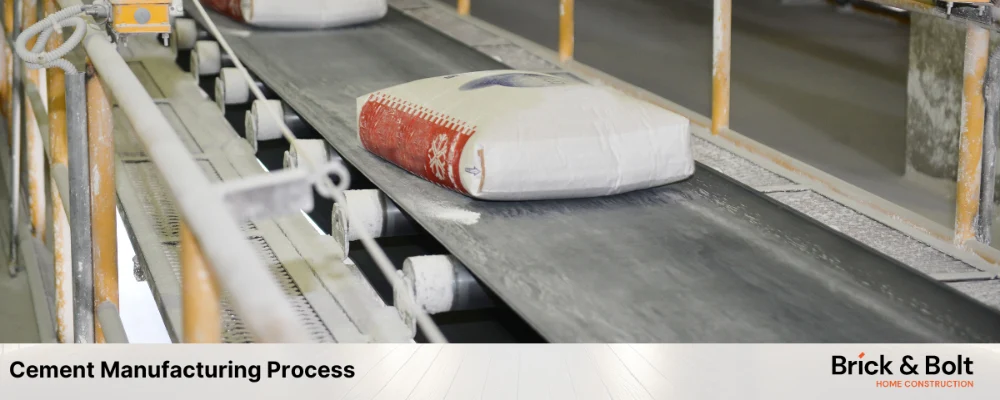
8. Packing and Distribution

Packing and Distribution of cement

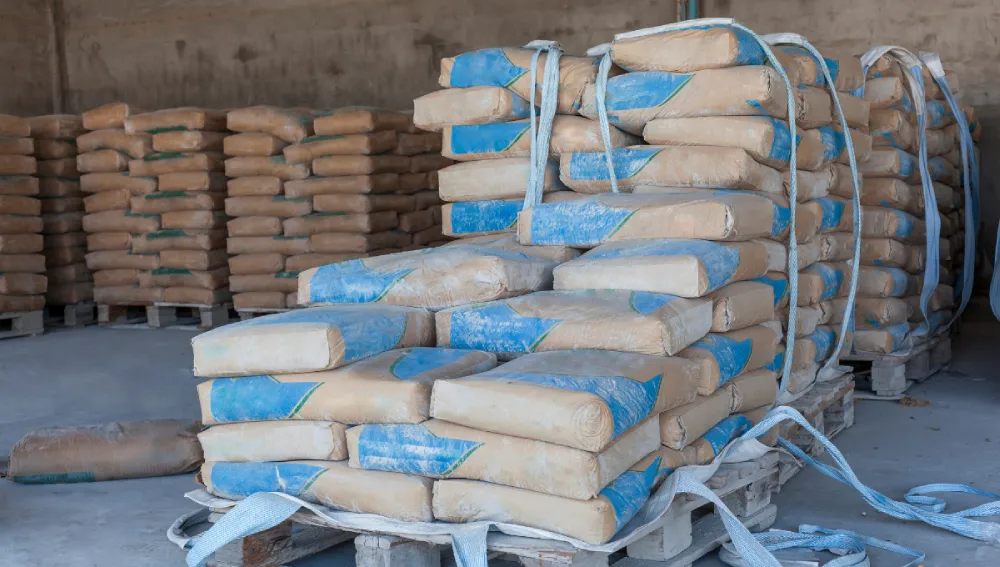
Packaging and distribution are the last processes involved in producing cement, which is either bulk-packed or stored in silos and is ready for delivery to its destination on a construction site. From here, it is used in various applications, including in the production of concrete, mortar, and other building materials.
Conclusion

Cement manufacture is a multistep process that converts simple raw materials into what is probably the most vital building ingredient. All of these steps are equally important and need careful control to ensure cement quality and durability. 

FAQ:

1. What is the main component of cement?

The principal component in cement is limestone: CaCO₃, a source of calcium. Other very important components include clays with silica, alumina, and iron, along with gypsum to help control the setting time of the cement.

2. Explain what takes place during calcination

In the preparation of clinker in the kiln, calcination is a crucial step in raw material production. The process involves heating limestone to about 900 degrees Celsius in a preheater tower until it breaks down into lime and CO2.

3. Why is gypsum added in the manufacture of cement?

Gypsum added during final grinding serves to control the setting time of the cement. Without gypsum, the cement will set too fast, making it quite difficult to work with during construction.

4. Materials to make cement

Cement is primarily made from limestone and clay, which are quarried and then heated in a rotary kiln to form clinker. This clinker is then ground with a small amount of gypsum and other additives to create the final cement powder, which becomes a key binding ingredient in concrete and mortar when mixed with water, sand, and aggregates.

Leasehold Property and Disadvantages of Buying a Leasehold Property

0
Leaseholder

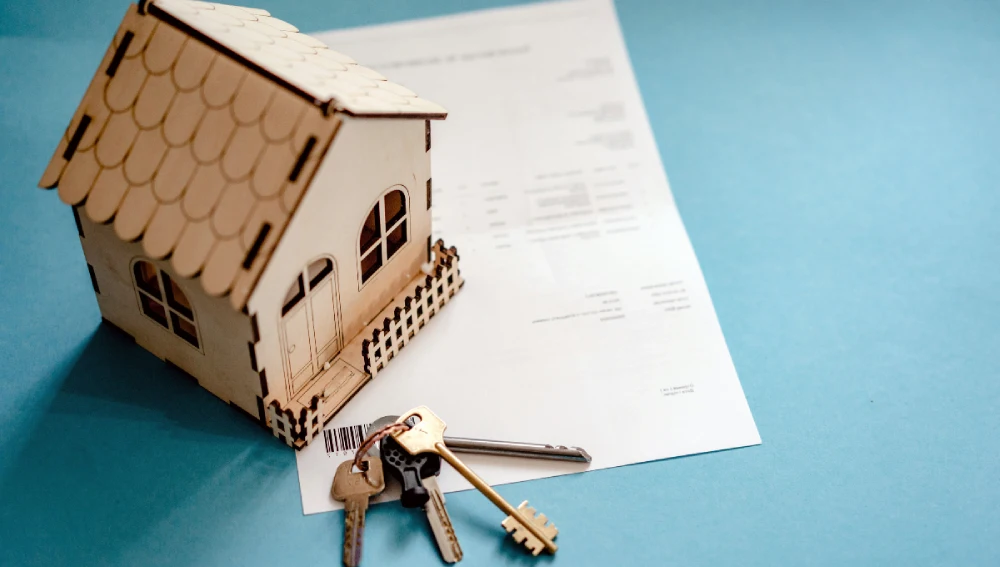
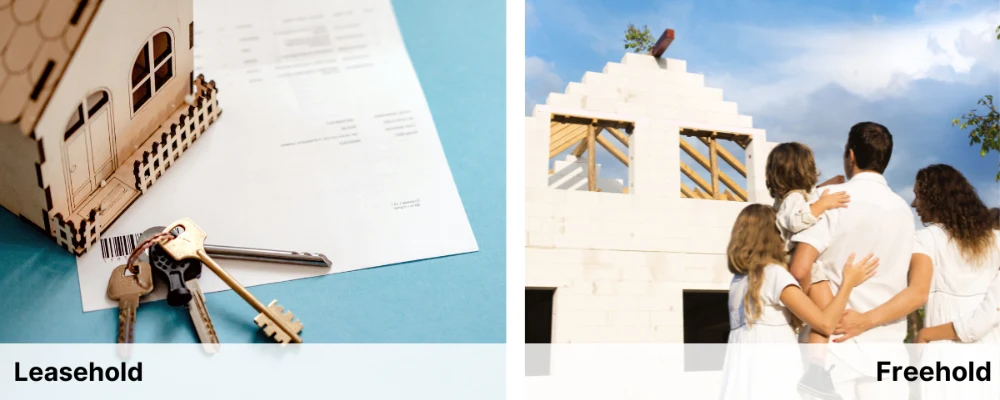
It is important to understand the type of ownership when buying a property as it can affect your rights, responsibilities, and value of your investment. Normally the property ownership is categorized into leasehold and freehold property. Freehold ownership will give complete control of the land as well as building on it to the buyer, while leasehold ownership involves a more complex arrangement. It allows the buyer to have property for a specific period and the land will remain as freeholders. 

There are various advantages and disadvantages to leasehold property, and this has confused a lot of people when deciding to purchase the land or building. Also, in fact some of them would argue that there are more disadvantages compared to advantages when it comes to leasehold property. So, it confuses people as to why anyone should buy a leasehold property in the first place. This blog will help you provide complete details about leasehold properties and the disadvantages of buying a property using a leasehold agreement.

What is a Leasehold Property?

Leasehold property

Leasehold property is a type of real estate where the owner provides the rights to use the property to another person for a specific period, normally for over decades. Leasehold property is a temporary ownership arrangement,  where the buyer does not own the land or property indefinitely.

Some of the features of leasehold property are: 

  • Leasehold lands normally take a longer duration, which may be between 25 to 30 years, to the extent of 99 years. It can also be extended as long as 999 years. 
  • Although it may seem like selling the land, in a legal sense, this is not the case because the upfront payment is not made as a sale consideration. The actual ownership of the property remains with the original owner, not the tenant.
  • In a leasehold property, the buyers do not completely own the property, and the actual ownership is still in the original owner’s hands 
  • Normally, the lease will last for a period of 25 to 30 years.
  • Other auxiliary costs like property tax and renewable contracts will always be taken by the buyer.
  • For any redevelopment or reconstruction of the leasehold property, approval must be obtained from all the parties. 
  • For the execution of any lease deed and construction of the leasehold property, consent must be obtained from the state department
  • Some states will provide an option for conversion of least-called properties into freehold properties.  Iif there is an option available, then one must use them.

Disadvantages of Buying a Leasehold Property

Limited Ownership

One of the most important disadvantages of buying a leasehold property is the limited ownership. The leasehold agreement only provides the right to your home for a certain number of years, and it is called lease term. You will have a continuous contractual relationship with the landlords,and the property will be reverted at the end of the term. Normally, this means you have less control over the property than a proper freehold property. 

Most of the flats that are created are normally leasehold. This will make sense as it allows the reciprocal obligations to be enforced, and further costs will be shared, but some landowners will abuse the system. Additionally, some of the new houses can be sold as leaseholds normally to create an additional income for the landowner as they sell them as an investment. 

A lease must be drafted about precisely what you own. However, the description of the property extension that has been included in the least is mostly complex and sometimes unclear.  This will cause problems mainly if there is an issue over who is responsible for the structural repair or if you need to extend your home. For example, in the recent case of Gorst vs Knight, the landlord prevented the leaseholders from converting the cellar into living spaces as the lease did not mention the necessity of subsoil.

Increasing Ground Rents

As a leaseholder, the buyer needs to pay the ground rent so that the landlord has the right to occupy their land. Traditionally this is a small or nominal amount, but in recent years the market has been raised, and the average value has become an investment option rather than just a way to acknowledge the interest of the landlord. 

Most of the lease will include the provision to increase the ground rate at a fixed interval of time that is mainly stepped up or in line with inflation. Buyers must note that some owners will provide the amount to be increased exponentially. In these cases, the initial price may be considered small, but over time they will increase dramatically and reduce the value and marketability of your home.

Other Costs

Apart from ground rent, other costs will be added over time for leasehold properties. This will make them more expensive than to own freehold property. These costs include service charges and maintenance fees,

In the case of leasehold properties, buyers will be responsible for the payment of service charges that will cover the maintenance, upkeep of communal areas, insurance, and other share to facilities. There will be fluctuations in service charges, and unexpected increases can place some burden on the finances of the leaseholder.

Along With service charges, leaseholders may also need to provide finance for major repair and maintenance works like roof repair or improvements in the structures. These costs may be high, mainly if the building is old or there is a need for renovation. 

These unpredictable costs can make it difficult for the financial planning of the least holders as they may face unexpected situations. There are many complaints from the least holders about the lack of control over the services they receive and the difficulty in the challenges of their quality and cost.

Consent Costs

If you are the buyer of the leasehold property, then the lease deed will restrict how you may use it This will also need the consent of the landlord in some situations for example, if you want to make any structural changes, then you must contact the landlord and get their permission before making any changes. Most landlords need to give their consent, and they cannot refuse without any reason. They can also only charge reasonable fees for handling your request, but these fees may still be higher than you expected. Also, getting this consent can take time and is stressful sometimes. 

Depreciating Asset

Leases can be considered as a decreasing asset as they lose their value over time. If the least term is short, then the worth of the property will be less.  This creates some problems, mainly if you are trying to sell or get athe mortgage.  Many mortgage lenders will need at least a certain number of years remaining on the lease before approving a loan and short-term leases can make it more difficult to sell the property.

If the term of the lease reduces, the value of the leasehold property also decreases, and this can be called “lease decay”. That can impact the property market under resale value. A property that has a short lease may need a costly lease extension for maintenance of its value, and if the lease is not extended, then the property may even become unsellable, and buyers, as well as mortgage lenders, will turn away from the very short leases.

Leases that are less than 80 years can be harder to sell

Generally, the remaining length of a lease affects buyer interest significantly. After 80 years, the leasehold will revert to the freeholder, meaning the leaseholder will no longer retain any rights. This scenario is particularly concerning since leaseholders typically own properties for about 30 to 40 years before selling. Consequently, convincing someone to purchase a leasehold property with only 40 years left on the lease can be quite difficult, as they may be apprehensive about acquiring a property with limited future value. In the end, all the leasehold and freehold agreements are made mainly because those buying the least hold are trying to buy somewhere that they can eventually sell for a profit, and if it cannot be done, then the least becomes significantly less appealing.

Legal Troubles

Even if the least holders have some legal protections, They must be sure that they are being charged fairly and reasonably for the services.  Some risks are still associated with the charges that are put forward by the freeholder. If you decide to take your freeholder or a management company to court for this issue, you may need to pay all their legal fees if you lose the case.  This is something that often happens as a result of leaseholders taking the freeholder to court over the dispute of the service charges.

If the court case does not end in favour of the leaseholder, then they are expected to pay the legal fees that have happened for themselves as well as for the freeholder. So legal trouble can have its consequences.

Restrictions that You may Face as a Leaseholder

Restrictions that You may Face as a Leaseholder
  • There is a need for written permission for any small changes that need to be made to the property.
  • There may be some restrictions in keeping  pets like dogs or cats
  • Home-based businesses may not be able to run as some lease agreements will prohibit this.

Considerations Before Buying a Leasehold Property

  1. Completely review the lease agreement for  term of the lease, ground rent, service charges, maintenance fees, and restrictions.
  2. Evaluate the length of the lease.
  3. Access financial implications or commitments.
  4. Ask for legal advice. 

Conclusion

There may be a lot of disadvantages in the leasehold property if we think about it, and it may not be a good thing to do for a lot of people as there is a great list of disadvantages mentioned above. However, leasehold properties may still have a certain way that people can take them if they want to, and it may work well for various people. In the end, the decision to buy a leasehold property is made by careful consideration of all the factors that have been involved. All the decisions will be made by the buyers with the advice of some legal advisors and consideration of their financial situations, aims, or plans.

FAQs

Why is most flats leasehold?

Flats are often leasehold because they allow for shared responsibilities among residents in communal areas. This setup ensures that maintenance and other costs are distributed fairly.

Can I make changes to my leasehold property?

You’ll need the freeholder’s permission to make any major changes. Even minor alterations may require consent, and there can be fees involved.

What if the freeholder refuses my request to make changes?

Freeholders can refuse requests, but they need a valid reason. If they refuse unreasonably, you may be able to challenge the decision.

Why are leases less than 80 years hard to sell?

Leases under 80 years are less attractive because they’re more expensive to extend and harder to finance. Many buyers avoid properties with short leases.

Can leaseholders be forced to move out?

Only if they breach the lease terms significantly, such as not paying rent or causing severe damage. Otherwise, leaseholders can stay for the lease term duration.

V Bracing in Buildings: A Complete Guide

0
V Bracing in Buildings

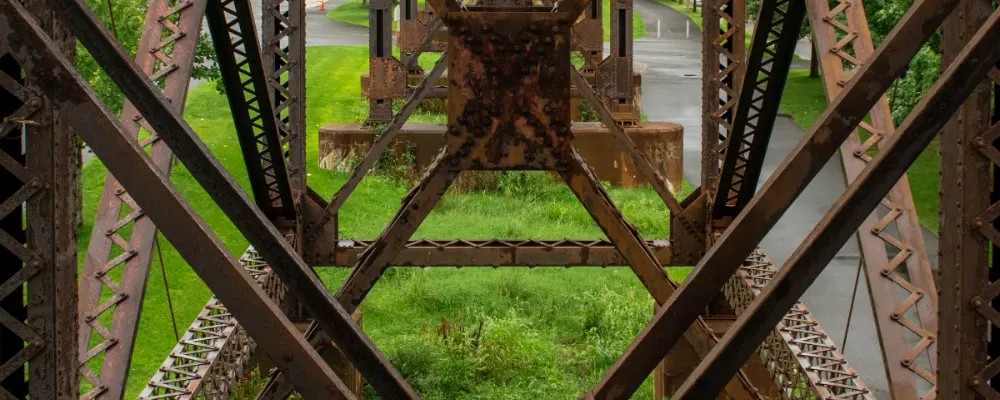
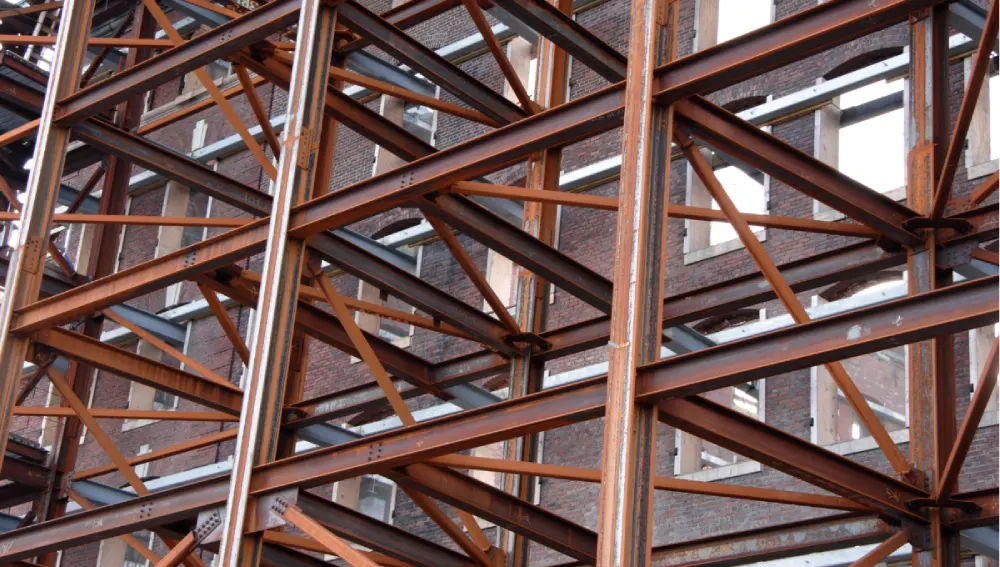
V bracing is a construction technology that today stabilizes many buildings and structures. It is an important feature of any building for reasons of stability and human safety, especially in earthquake-prone areas. It is designed to give resistance to lateral forces like winds and earthquakes.

Understanding V Bracing

V Bracing

When using V bracing, two diagonal components meet in the center of the lower horizontal component after running from the top two corners of a horizontal beam or frame. Thus, this creates a “V” shape, which is why “V bracing” got its name. Its design is so basic, but it works so well to dissipate and absorb these buckling or swaying forces that pose a hazard to structures.

V Bracing Vs Inverted V Bracing

While the most conventional is V bracing, there is another variety known as Inverted V Bracing or Chevron Bracing. In this, both the diagonal members intersect at the center of the top horizontal member instead of at the bottom. Both types of bracing stabilise a structure, but usage depends on the sort of building design it is applied to.

V Brace

  • Development: Two diagonal members cross in the middle of the horizontal element.
  • Buckling Strength: This design makes the structure resistant to failure under pressure through a great reduction in buckling strength for the compression brace.
  • Application: This is commonly used in seismic areas or places that have a high-recorded case of earthquakes where centric bracing in buildings saves people’s lives.

Inverted V Bracing (Chevron Bracing)

  • Built Using an Inverted V Shape: Diagonal members join at the apex of the horizontal member.
  • Stability: It offers stability like the V bracing. However, the load distribution may be different. So, it may suit some structures better.
  • Use: Seismic regions are very common, but they are used in buildings where particular structural considerations need an inverted design.

How does V-bracing function?

V bracing has shown to be extremely successful in seismically active areas, where structures must be reinforced from the start to withstand earthquakes. It works by generating a V shape with its diagonal elements, which resist lateral motion during an earthquake or severe winds. Here’s a more detailed look at how it works:

Energy Dissipation

V bracing often uses strong dampers made of steel, concrete, or wood. When the top of the Brace frame shifts due to external forces, these dampers absorb and reduce energy. This energy reduction is vital. It lessens the impact of seismic activity on the building.

Buckling Reduction

The most significant benefits associated with V braces allow it to decrease the buckling capacity of the compression brace. Buckling occurs when a member is subjected to such large stresses that it becomes initiated to either bend or collapse entirely. V braces make sure that buckling is hugely reduced, thereby allowing the structure to stay firm under any condition.

Load Distribution

The V bracing plays an important role in the distribution of loads across the structure. An equal distribution of loads ensures that extreme stress does not become concentrated on any particular part of the building, which might cause its failure.

Horizontal Force Resistance

The V shape of the bracing mechanism, whether  as metal V panels or V trusses, can resist the tensional or compressional forces that may incite the swaying of a particular building. This is most essential in high-rise structures or in buildings exposed to heavy winds or seismic activity.

Where is V-bracing Used?

V-bracing Used

It finds its most common application in highly earthquake-prone regions or where the structures are subjected to strong lateral forces. In seismic regions, structural design requires bracing to be centric; thus, V-bracing is used. Typical uses of V-bracing include:

  1. High-Rise Buildings: For high-rise structures, the wind and earthquake forces can be considerable. V-bracing stabilizes these structures, ensuring safety and functionality even during harsh weather. This robust design withstands environmental challenges, maintaining building integrity in all conditions.
  2. Industrial Buildings: Factories and warehouses often use V bracing in their structures. It reinforces them where heavy machinery or materials can cause vibrations or other harm.
  3. Bridges: Some bridges use V-bracing to help spread the load and resist forces from traffic and wind. This application is crucial for maintaining stability and structural integrity.
  4. Residential Buildings: V-bracing is important in earthquake-prone cities. It makes homes safer and more stable.

Benefits of V Bracing

  1. It gives stability: V-bracing adds structural rigidity to a building and is hence more stable to support horizontal forces.
  2. Effectiveness in Seismic Zones: V-bracing is very effective in seismic zones due to its provision of the required support against potential structural failure.
  3. Reduced Buckling: The V bracing is designed to reduce buckling, which in turn helps increase the lifespan of the structure.
  4. Versatility: V- bracing can be used in the construction of various structural materials such as steel, concrete, and wood; hence, it offers versatility in many building needs.
  5. Better Distribution of Loads: V- bracing ensures the structure doesn’t suffer from uneven load distribution, whereby one element supports more amounts of stress compared to others.
  6. Cost-Effective: Since V-bracing replaces or at least minimizes the need for other forms of reinforcement, it does indeed work out well in this regard as a cost-effective method of improving the safety and security of a building.

Conclusion

V bracing is essential in construction. It provides horizontal support and stability, especially in seismic zones. The diagonal members dissipate energy, reducing buckling. This ensures safety. In modern buildings—steel, concrete, or wood—V bracing is crucial. It adds strength and flexibility.

FAQs

1. What is the main purpose of V bracing in construction?

V bracing keeps structures stable by resisting horizontal forcess, like earthquakes and high winds.

2. In what areas is V bracing primarily utilised?

Seismic regions can use V-bracing to stabilise the building by providing more supportt, in the case of an earthquake.

3. What is the difference between V bracing and inverted V bracing?

In V bracing, the diagonal members meet at the vertex downward, while in inverted V bracing, they converge at the top Inverted V bracing is also referred to as chevron bracing, emphasising its similar function in providing lateral stability

4. What does V bracing do to help reduce buckling?

The V bracing lowers the buckling capacity of the compression brace, so structural failure does not take place.

5. Can V bracing used in different types of structures?

Yes, V bracing can be effectively applied in various types of structures, including those constructed from steel, concrete, and wood. Its versatility allows it to be utilised in different building designs while providing the necessary lateral stability regardless of the material used.

Leasehold vs Freehold Property

0
Leasehold vs Freehold Property

When you enter real estate to buy or invest, you will frequently come across the terms leasehold and freehold. These two are different forms of property ownership in India, and it is important to understand the key difference between them before making any decision. These may seem simple, but they carry significant implications for homeowners. In a leasehold property, the lessee can lease the property from the owner for a particular period that has restrictions related to ownership and transfer; meanwhile, freehold property provides complete property ownership without any restrictions on construction transfer and modification. By understanding the difference between these two terms,  it can be possible to make an informed decision about investment in real estate. 

This blog will provide you with information regarding the differences between leasehold and freehold properties, their advantages and disadvantages in property type, and also the process of converting a leasehold property into a freehold property. 

Leasehold

It is a property that the tenant agrees to rent from the owner for an agreed period. It is like having the house for a predetermined time without owning the land. The land will eventually belong to the original owner of the property. For example, most of the flats and apartments you can buy in India as leasehold properties.  As a tenant, you need to pay the ground rent, service charges, and maintenance fees to the owner, and you must return the property at the expiry of the lease. 

The duration of leaves may differ from 30 to 999 years. If the lease is longer, then the value of the property will be higher. A leased property that has less than 30 years may find it difficult to qualify for a home loan.

Freehold Property

What is the Difference Between Freehold and Leasehold Property?

NameLeaseholdFreehold
TenureThe lease is generally valid for a fixed period, such as 30, 60, 99, or even 999 years.The ownership duration is generally permanent but may be subject to limitations by town planning authorities.
Approvals RequiredTransferring a lease often requires approval from the state or relevant authorities.There are minimal restrictions on property transfers, making it easier to buy or sell.
Ownership RightsYou just have the right to use the property for a specified number of years agreed upon in the lease document.You own the building as well as the land, with ownership lasting indefinitely.

Advantages of Leasehold Property

Some of the general advantages of buying leasehold property are,

  • Affordable: As it is about only buying the building without land, the purchasing of leaseholds are more affordable compared to freeholds. Depending on the terms and length of the agreement, buying the leasehold can save money, mainly if you want to buy a bigger house in a crowded or influential area.
  • Alternative Financial Option: If the agreement allows, you can purchase the entire property, including land, at a lower annual fee compared to a mortgage.  but for this, you need an expert to analyse this option in the agreement.
  • Becoming a Homeowner: A leasehold is the best way to purchase a house without purchasing its land since you can improve the construction of the building.

Disadvantages of Leasehold Property

There are also some disadvantages to buying the leasehold along with advantages, and they are,

  • Continuous Reassessed Rent: The rent of the land can be affordable at the time of agreement, but normally it needs to be reassessed according to the market value of the property. If the real estate market increases, then the ground rent value will become high and unaffordable.
  • Higher Down Payment: If you would like to buy a leasehold property with a home loan, then the down payment will be higher than the freehold property.
  • Difficulty in Gaining Finance: It will be challenging to get housing finance for freehold properties when compared to freehold.
  • No benefit if the land value is increased: As you do not own the land, you will not benefit from increasing land value. The rising price of land in the area is a benefit for the homeowner, and the tenant will end up paying higher rent.

Advantages of Freehold Properties

Some of the advantages of freehold properties are,

  • Free from Hold: From the word freehold properties, it can be understood that these properties are free from a hold. That is, you can use the property for any purpose according to the regulations.
  • No Time Limit: In the leasehold, we can see that the buyer purchased the property for 99 years, but in the freehold, such properties have no time limit to the ownerships. Once you buy the property, you will become the owner of the property until you transfer it to someone, and its lease will never run out.
  • Saving Money on Rent: There is no need to pay any ground rent for freehold property.
  • Easy Access to Housing Finance: Home loans will be easily approved for freehold property compared to leasehold property.
  • Property Usage as per Discretion: You will be the complete owner of the building and the land, so there is no need to ask anyone’s permission or inform anyone about the changes in the structure of the property you make. You can completely reconstruct the house at your own pace.
  • Simple Paperwork: If you wish to sell your freehold house, the paperwork will be simple.
  • Easy transfer: If you wish to transfer the property to another person,the process will be much easier than a leasehold of the property. 

Disadvantages of Free–Hold Property

  • Complete Responsibility of Expenses: As you will be the complete owner of the property, you will be solely responsible for all the expenses related to the property.  That includes renovation, repair, reconstruction, and so on.  If the property has any legal issues, then it will be your sole responsibility, and the land owner will not share any responsibility.
  • Expensive Purchase: If you enter the market for purchasing freehold property, then it will be costly compared to a leasehold house.

How to Choose Between Leasehold Property and Freehold Property?

A few factors need to be considered when making the decision between leasehold and freehold properties.

Ownership extent: According to leasehold, it means that you only own the flat, but the original owner will have the title of the land. Conversely,  the freehold property means you get ownership of both land and the building constructed on it.

Unpredictability: As the market fluctuates the least, renewal and ownership will be unpredictable.  However, in the freehold on a shape, complete transparency will be given to the land owner.

Rent: In the least world property, the tenant must be annual and rent.  There is no such rent applicable on the freehold property.

Maintenance charges: For leasehold property, it is necessary to pay the maintenance charge to maintain the shared facility. In the freehold property, you will be completely responsible for maintenance and related expenses

Lease term: In the leasehold property, the tenant only owns the house for a specific period mentioned in the agreement. However, in freehold property, the owner will have ownership rights forever.

Modification Rights: In the leasehold property, there will be additional formalities that need to be maintained when modifying or reconstructing the house. There are no such limitations in the freehold ownership.

Loan Access: If you want to borrow home loans or mortgage loans for the property, the freehold owner has more advantages compared to the leasehold owner.

Conversion of Leasehold Property into Freehold Property

The main difference between leasehold and freehold properties is that freehold property ownership has multiple advantages over the least-held properties.  If you want  to convert leasehold property into freehold property, then you must follow some of the steps for converting it into a freehold properly:

  1. If the property is owned by the government, then apply for conversion from the concerned authority that owns the property.
  2. If it is a private property, then prepare a sale agreement between both parties.
  3. By considering the sale, prepare the final deed on the nonjudicial stamp paper.
  4. Register the final deed with the respective local registrar’s office.
  5. Mutate the name of the buyer in the local civic body book.

Legal Aspect Regulations

Both the leasehold and freehold systems will operate within the legal framework. Some of the legal aspects and regulations that are involved are:

Rights: The least holders can use and occupy the property within the agreed period and terms. But they need to pay the rent and maintain the property.

Agreements: The agreement is defined as the obligation and rights between both parties, and it specifies the length of the lease, rent payment maintenance responsibility, and so on.

Leasehold Valuation Tribunal: If there are any disputes, then the leasehold valuation tribunal will act as an essential resource that helps determine matters like extension of service charges and so on.

Necessary Documents for Converting Leasehold Property into Freehold Property

For converting the leasehold property into freehold property, there is a need for some specific documents to ensure the legal and smooth process:

  • Original Lease Agreement
  • No Objection Certificate
  • Title Deeds of Property
  • Sale Agreement
  • Conveyance Deed
  • Approval from Local Authority
  • Latest Property Tax Receipt

Conclusion

The choice between leasehold property and freehold property ownership is a decision that needs to be considered carefully according to your situation, financial goals, and long-term plans. Each type of ownership has its advantages and disadvantages. Choosing either of them will depend on various factors like the location of the property, budget, and lifetime preferences., 

FAQs

Is it better to invest in a freehold property?

Freehold properties are often considered a better investment because of the security of full ownership.

Can I pass on a leasehold property to my children?

You can, but they will inherit the property with the remaining lease period.

Do freehold properties appreciate in value?

Yes, freehold properties often appreciate in value, especially in desirable locations. The lack of ground rent and ownership of both the property and the land contribute to this upward trend, making freeholds attractive long-term investments

Are there any tax benefits to owning a freehold property?

There are no specific tax benefits, but you avoid the ongoing costs associated with leaseholds.

Can the landowner increase ground rent on a leasehold property?

Yes, the landowner can increase ground rent, typically in line with the lease terms.

Which Brick is Better for Construction?

0
Brick

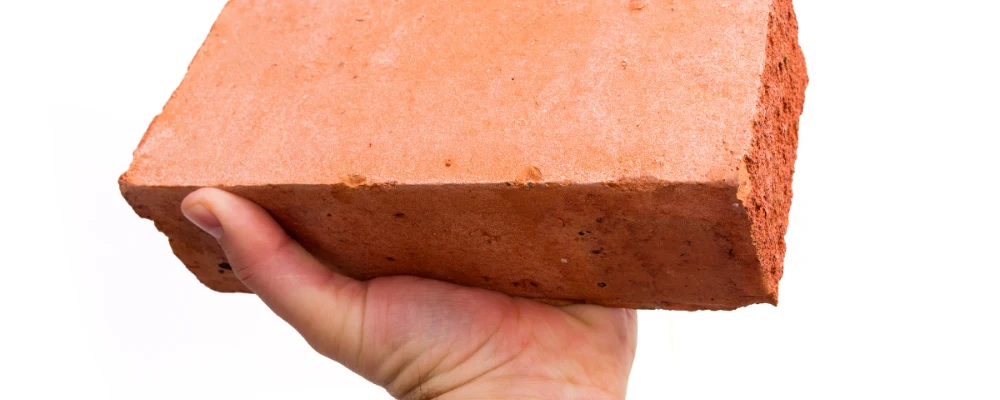
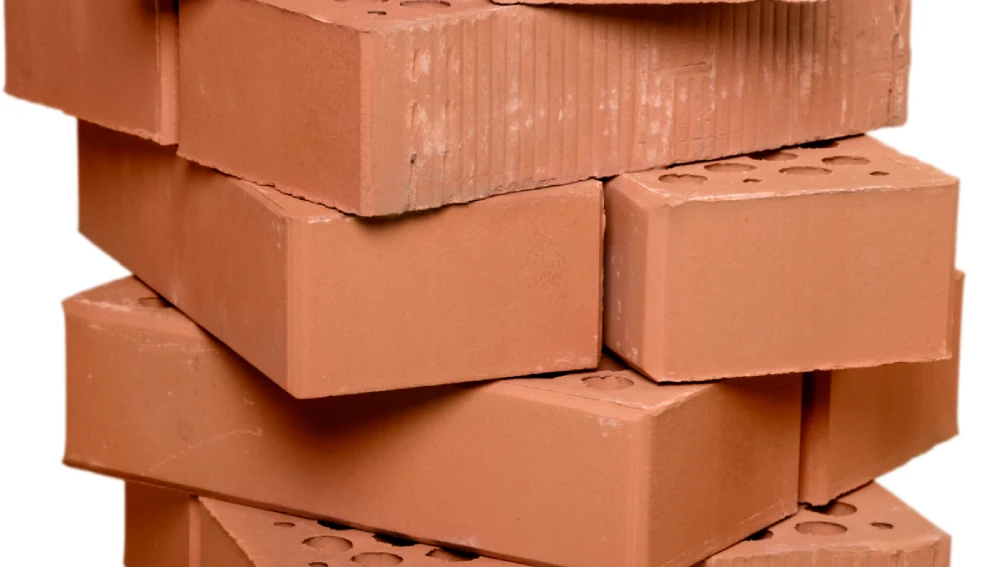
The selection of the kind of brick is perhaps one of the most vital decisions to make when constructing a house or any other structure. Bricks have been a part of these sectors since ancient periods; today there exist several kinds of them, all possessing different advantages and disadvantages. Read on to find out which type might be the most suitable for your construction project.

Types of Bricks:

Types of Bricks

1. Clay Bricks

These are the most common types of bricks used in construction. They  are manufactured using natural clay, which usually is fired in a kiln to provide toughness and strength. Therefore, manufacturers make fired bricks by mixing clay with water, forming the resultant mixture into bricks, and then drying followed by moderate firing at high temperatures.These are called burnt clay bricks. The drying process can also be done naturally under the sun, such bricks are called sun-dried bricks.

Advantages:

Strong: Clay bricks are enormously resilient and can survive for years without losing their structural integrity. This makes them very suitable for long-time construction activities, especially for homes, schools, and business buildings.

Fire-resistant: Probably one of the most valuable advantages of clay bricks is that they work well in extreme temperatures. Because of this, they can be quite suitable for building walls and structures in case of fire.

Ecological: Since clay bricks are manufactured from natural elements, they are ecological materials. They can also be recycled and reused, hence decreasing waste.
Disadvantages:

Expensive: Clay bricks are expensive because they cost more compared to other types of bricks due to raw material and firing, which requires energy in the kiln.

Heavy: Clay bricks are relatively heavy; hence, they are difficult to transport and handle during construction. This will accordingly result in extra cost and time for a construction project.

Size: Clay bricks are generally smaller than other types, which means that a larger quantity of these are required for constructing the same size of wall.

Seepage: Bricks often become porous when plaster or paint is not done correctly. This can lead to water seepage issues and also cause development of mould.

Best For: 

Clay bricks are the best option for residential housing or other constructions that require strong, durable and fire-resistant materials. They also serve well in projects where aestheticism matters since they bear its natural aspect, which most people find quite attractive.

2. Fly Ash Bricks

Fly ash bricks are produced by mixing fly ash— obtained as a by-product during the burning of coal— with sand, cement, and water. These bricks undergo high-pressure molding and steam-curing processes. As a result of their eco-friendliness and affordability, these have become increasingly preferred as alternatives to conventional clay bricks.

Advantages:

Lightweight: Fly ash bricks are relatively light compared to clay bricks. This will be beneficial during their application in the construction phases since handling them will be easier, and the bearing load on the foundation of a building is reduced.

Economical: They are cheaper than clay bricks. The production cost is relatively low since some industrial wastes like fly ash are included in their composition, thus benefitting the consumers.

Insulation: In the case of fly ash bricks, insulation is a featured characteristic , thereby keeping the building cool during summer and warm during winter. This can lead to energy savings over the life of the building.

Disadvantages:

Brittle: Fly ash bricks are brittle when compared to clay bricks, they may break easily during handling and construction. This might affect the durability of the structure.

Availability: Fly ash bricks may be available in places where there are coal-fired electricity generating centres, thus, they are not easily available everywhere, This tends to limit their use to  certain areas.

Best For: 

Fly ash bricks are best for building walls that demand good insulation and over projects where cost is a matter of concern. They are ideal  options for projects concerning environmental criteria since they reuse waste and have a lesser carbon footprint.

3. Concrete Bricks

Concrete bricks consist of water, cement, aggregates and sand. The raw materials are mixed, moulded into shape, and then cured into a hard brick. Concrete bricks are in high demand today in the current construction world due to their strong structural ability and flexibility of usage.

Advantages:

Strength: Concrete bricks are very strong and resilient. They bear heavy loads and, therefore, are ideal for structural parts such as load bearing walls, foundations, and retaining walls since they can withstand the most extreme loading conditions.

Adaptable: Because the concrete brick undergoes moulding to make different shapes and sizes, there is great room for flexibility in design and construction. This indeed acts as the reason for its suitability in an enormous number of uses.

Weather resistance: Adverse weather that includes extreme heat, cold, and moisture can be resisted by concrete bricks. Thus, it is excellent for outdoor construction.

Disadvantages:

Visual appearance : In appearance, concrete bricks lack the natural appeal of clay bricks. This regularity of their appearance can be less appealing for certain architectural design cases of exposed surfaces.

Heavy: Like clay bricks, concrete bricks are heavy, thus more complicated to raise and handle on-site.

Best For: 

Concrete bricks are ideal for building load bearing walls, foundations, and other structural elements that demand strength and durability. They are also a good choice when design flexibility is needed for a project.

4. Calcium Silicate Bricks

Calcium silicate bricks are made with a mixture of sand and lime. Making these bricks starts with the mixture of raw material, followed by the mould being cured under high pressure and temperature. Advantages:

Aesthetic appeal: These bricks have a smooth surface that can also be produced in different colours. These aspects create a very attractive appearance, thus being ideal for exposed decorative walls and facades.

Sound insulation: Calcium silicate bricks are sound insulators; hence, they are appropriate for residential buildings or auditoriums where noise abatement is necessary or required.

Fire-resistant: Similar to clay bricks, calcium silicate bricks are also resistant to fire and thus provide a further element of safety while constructing.

Disadvantages:

Slower setting: These bricks take a little longer time to finally set and harden in comparison with the rest of the types, which can delay construction.

Water Absorption: Calcium silicate bricks are the type of bricks that have the properties of water absorption, which may create problems when they come into damp conditions. This phenomenon could result in problematic manifestations, like efflorescence when salts are deposited on the brick surfaces.

Best for: 

Calcium silicate bricks are best for constructing walls where appearance and sound insulation are important. 

Factors About Bricks That One Should Consider

  1. Strength and Durability: The strength of a brick is very important and forms the basis for construction Bricks made from concrete and clay are known to be strong and long-lasting.
  1. Insulation Properties: In areas that experience severe weather conditions, insulation is key. Too much or too little heat indoors can lead to thermally uncomfortable spaces
  1. Cost: Budget stands as one of the main worrying factors for property owners  Fly ash bricks are cheaper, whereas clay bricks could be more expensive, though with long-term advantages.
  2. Aesthetic Value: The texture of bricks is a noticeable feature if the bricks will visibly be used for walls, as in living room or facade walls. In this respect, calcium silicate bricks might offer a good alternative since one can have them in a smooth finish and various colours.
  3. Environmental Impact: Being sustainable is an important factor affecting modern construction. Clay bricks are natural, can be recycled, and are good to use, while fly ash bricks are made from industrial waste, which is equally friendly to the environment.
Bricks

Which Brick is Better?

The best brick for use in construction is relative, based on one’s needs. Even though relatively expensive, clay bricks remain the best option for a strong and durable structure. You should consider fly ash bricks in case you opt for cost savings with improved insulation. Where high strength is required, concrete bricks represent the best options, while calcium silicate bricks remain ideal where appearance and sound insulation are required.

In summary, there’s no one-size-fits-all answer to which brick is better. Consider the factors that are most important for your project and choose accordingly.

FAQs

1. Which type of brick is the strongest?

Concrete bricks are generally the strongest, followed closely by clay bricks.

2. Which brick can work best for the cold climates?

Fly ash bricks are ideal for cold climates since they have good insulation properties.

What is a Caisson Shaft Foundation? All You Need to Know

0
Caisson Shaft

It’s a big box-like watertight structure used in constructing a solid foundation where the ground may be soft or underwater. More specifically, let’s examine what a caisson shaft is, how it’s made, and why it’s so important in construction.

Caisson Shafts – Understanding the Meaning

Caisson Shafts

The caisson shaft is a type of deep foundation that is commonly used in the construction industry. Now, imagine constructing a skyscraper, a bridge, or even a dam. For these structures to stand tall and never sink, they need strong structural support from the foundation. But what if the earth is too soft or the base is water? That would be when caisson shafts are most useful.

A caisson shaft is a massive ,cylinder made of concrete, metal, or wood. The cylinder is sunk into the ground deep—-most of the time below the level of water—-to provide a proper foundation for large structures. The term “caisson” itself is derived from a French word meaning “box” or “case,” which might give an idea of how the caisson will act as a protective box around the foundation.

Types of Caisson Shafts

There are many types of caisson shafts, each used under different site conditions. The most frequent are:

Open Caisson:

  • This type of caisson is open at both the top and bottom during placement into the ground. Labourers remove soil from inside the caisson as it is lowered into the ground. The top and bottom are sealed with concrete once the required depth is reached.
  • It is generally deployed in shallow water or on soft ground.

Pneumatic Caisson:

  • This type is mainly used in very deep water
  • It allows workers, digging inside the caisson, to keep water and mud outside by means of air pressure.
  • This type is normally employed for constructing bridges and tunnels.

Caisson Box:

  • The box caisson is a prefabricated concrete box which is open at the top and is sunk into place. It is then filled with concrete and the top is sealed with RCC.
  • This is usually employed in the building of foundations where the ground is firm but needs extra support.

Construction Process of Caisson Shaft

Building a caisson shaft is done in stages, and this demands meticulous planning. Here’s  how it’s usually done:

1. Planning and design:

According to the condition of the soil, depth required, and structure that it is going to support, the caisson shaft is designed by structural or civil  engineers.

2. Excavation:

Ground preparation involves excavating the place, depending on where the caisson shaft will be set. In the case of open caissons, it is simply an excavation into the earth or seabed.

3. Caisson Sinking:

The caisson is gradually sunk into the hole. In pneumatic caissons, air pressure pushes the water and mud away so that digging from the inside may continue.

4. Removing Soil:

Workers remove the soil from inside the caisson as it settles down deeper into the ground. The process is repeated until the caisson reachesd a solid layer of earth or bedrock.

5. Bottom Sealing:

When the caisson has reached the proper depth, the bottom is capped with concrete to keep out water and mud.

6. Filling with Concrete:

It is filled with concrete to make the caisson solid. Thus, it acts like a base that forms the foundation for the structure to stand.

7. Final Adjustments:

The top of the caisson may be trimmed or otherwise adjusted to suit the rest of the construction project if needed.

Why are caisson shafts so important?

 caisson shafts so important

The importance of caisson foundation in construction is that they give stability to those structures built on soft ground or underwater. Were it not for caissons, then buildings and heavy bridges might collapse, sink, or tilt over. They are especially important in places like rivers or oceans, or even areas with loose soil, where traditional foundations would never work.

Advantages of Using Caisson Shafts

  • Strong Foundation: The caisson shafts give a very solid foundation on which very heavy structures can be carried.
  • Versatile: They can be used for many different applications: underwater, and in loose soil. 
  • Long-lasting: The structures that are built on caisson shafts are stronger and less plagued by problems associated with sinking or tilting. 

Challenges Using Caisson Shafts Complex Construction: 

The main disadvantage is that caisson shaft building requires specialized equipment and workers, making this method more complicated than others. 

  • Cost: Caisson shafts can be more expensive to construct because of the materials and labour involved. 
  • Environmental Impact: Construction of caisson shafts, which in most cases can be in water, affects the environment negatively, and this impact needs to be managed with due care. 

Conclusion 

In many instances  of construction, especially those on soft soil or underwater, caisson shafts turn out to be very helpful. These constructions support buildings, bridges, and other heavy structures to ensure that they remain stable and are durable By understanding these different types of caissons and the processes involved in their construction, one can appreciate the engineering behind some of the world’s most impressive structures.

FAQ

1.  What is a caisson shaft used for?

A caisson shaft serves as a solid foundation for structures built on soft soil or underwater. It aids in supporting buildings, bridges as well as other heavy constructions by providing stability.

2. How is a caisson shaft different from a regular foundation?

Unlike normal foundations, caisson shafts are huge water-tight structures that are often sunk into very deep or unstable ground underwater or in places where the soil is loose. 

3. What are the different types of caisson shafts?

The primary types of caisson shafts include open caissons, pneumatic caissons, and box caissons. Each category is used in particular instances such as where there is either shallow water, deep water, or firm ground.

4. Why is air pressure used in pneumatic caisson shafts?

The use of air pressure in pneumatic caisson shafts helps to keep water and mud out while the caisson is being transported underwater. This is especially important when dealing with deep water or extremely loose soil where it would not have worked with traditional means.

Can I Get a Home Loan for Patta Land?

0
Home Loan for Patta Land

Purchasing land can be considered an important investment, and when it comes to buying Patta land, there is some specific information that everyone must understand. Patta land can be referred to as land that is legally owned and for which the government has issued patta, a legal document that serves as a proof of ownership. This can help you get home loans as well. This blog will help you understand whether you can get home loans for patta land.

What is Patta Land?

Patta Land

A patta is a legal document provided by the government to an individual or an entity as a proof of ownership ofto a specific land. It can also be called a record of rights, as this document is important in the regions where it is recogniszed.  It contains information about the land, like location, size, and name of the owner. A patta can be considered an essential document in property transfer transactions as it provides legitimacy to the ownershiptitle of land. 

Importance of Patta

Proof of Legal Ownership: 

Patta is the primary legal document that can establish the right to full ownership of a land. It is needed frequently by the banks for processing of loans and by the government authorities for any construction or development process.

Smooth  Transactions:

If a person has a patta for their land, then the process of buying and selling will be simplified. This is because patta can give clear information and legitimacy to the transaction that can help in avoiding any dispute over the land ownership.

Necessary for Registration:

Without a patta transfer, the ownership transfer may not be possible in many regions. This makes sure that all the land records are upgraded and accurate.

Patta and Home Loan

The demand for properties that have patta has increased exponentially in recent years, and many buyers are using various methods of financing their patta land, obtaining a loan being the most common method. The process that is involved in getting a home loan for a patta land is similar to any other property loan in India. However, banks in many states may not accept patta as a sufficient document for providing loans. In such cases, individual lenders or NBFCs (Non-Banking Financial Company) have to be relied upon.

Eligibility Criteria for Home Loan for Patta Land

Eligibility Criteria for Home Loan for Patta Land

The borrowers must meet some criteria to be eligible for a home loan for their property.

Ownership Documents

The sale deed, patta, and tax receipt of the properties are necessary ownership documents for loans. It must be with the borrower when applying for a loan. This is important to make sure that the land has a clear title and does not have any legal disputes.

Age limit

For a person to qualify for a home loan, they must be under the specific age group of 18 to 70 years.  This   is to make sure that the person has an eligibility to borrow  the loan with  stability in their finances, along with the life expectancy to repay the loan.

Credit score

A good credit score is important for getting a loan approval. Lenders  normally expect credit scores of 750 or higher as it will show the reliability of the borrower in the management of a loan and reduces the risk of defaulting Having a good credit score not only increases the approval chances but also can lead to getting better terms of loan.

Income criteria

There must be a regular income source for borrowers as they need to repay the loan. Income requirements may be different based on the policy of the lender and the profile of the borrower. Normally most of the lenders need a minimum income level of RS 1 lakh per annum. 

Factors That Need to be Considered Before Applying for a Home Loan for Patta land

Borrowers must consider some factors before applying for a home loan using Patta Land. These are:

Location

Where your land is located can influence the amount of loan you may get and the interest that you will have to pay. In cities, land will have high value, that means you can borrow more, but this  also comes with a high interest rate.

Loan Amount

The amount of loan that you can get is mainly based on the current market value of the land.  The lenders will provide up to 80 percent value of the land. It is important to consider how much you can pay for the down payment and monthly repayments before deciding on the amount of loan you will be borrowing.

Rate of Interest

Before applying for a loan, one of the important factors that must be considered is the rate of interest. The interest rate of the patta land’s home loan will be higher when compared to the regular home loans, as the land will not come under the housing society purview.

Loan Tenure

The time period over which the loan will be repaid is called loan tenure. It can range between 1 and 30 years.  It is important to choose the tenure that is suitable for your financial situations.  You must make sure that you can manage the monthly payment along with interest.

Legal Clearance

Before applying for a loan, make sure that all the necessary documents are available and the property has been legally cleared from the respective authorities.  This is an important step that helps in the prevention of any delays or complications in the approval process.

Conclusion

Taking a home loan for the patta land is a great way to finance your house. However it is important to confirm that the land has a clear ownership and does not have any legal disputes.  The borrower must also consider factors like amount of interest, original loan amount, location of the land and  tenure of the loan before proceeding to get a loan.With careful planning and research, home loans for patta land can help the borrower build their own house on their own land. However, in many states, patta is not accepted as a valid document for proof of ownership and banks may not approve loan requests. In such cases, alternative means of funding have to be figured out, such as borrowing from private lenders or NBFCs (Non-Banking Financial Company).

FAQs

What is Patta Land?

Patta land refers to land that has been officially documented and recognized by the government as belonging to a particular owner through a patta. This document serves as proof of ownership and is essential for legal property transactions.

Why is Patta important for property transactions?

Patta provides legal proof of ownership, which is crucial for buying, selling, or transferring property. Without a Patta, transactions can be legally challenged, leading to complications.

What documents do I need to apply for a home loan on Patta Land?

You’ll need your patta document, title deed, proof of income, and other relevant property records. Banks may also require a legal opinion to ensure the land is free of disputes.

Do all banks offer home loans for Patta land?

Not all banks offer home loans for patta land, especially if the title is unclear or if the land lacks necessary approvals. The document is also not accepted in many Indian states as a valid proof of ownership. It’s best to consult with banks that have experience dealing with Patta Land.

How can legal disputes over Patta land affect my loan application?

Legal disputes can significantly delay or even prevent loan approval. Banks avoid lending on properties involved in legal issues due to the associated risks.

What should I do before applying for a home loan on Patta Land?

Ensure the patta is updated, verify the title, obtain necessary approvals, and consult with a bank or legal expert. Proper preparation increases the likelihood of approval.

Can I Get a Home Loan for Patta Land?

Several banks in India offer loans for purchasing patta land, commonly referred to as plot loans. Notable institutions include ICICI Bank
1. ICICI BANK
2. HDFC BANK
3. State Bank of India
4. INDIAN BANK
These banks provide financing options for land acquisition, subject to eligibility criteria and specific terms.

Exploring Low-Cost Simple Kitchen Designs and Tips

0
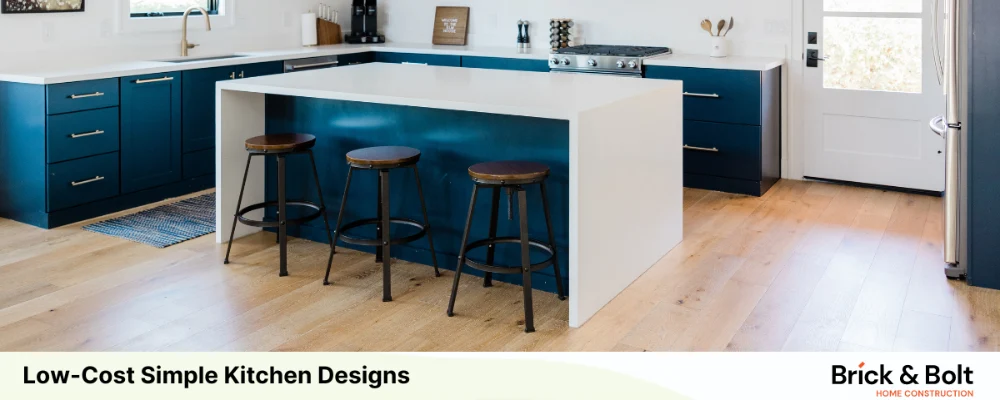
Low-Cost Simple Kitchen Designs

Construction of a new kitchen or renovation of an old one can be overwhelming as well as expensive, and most homeowners are hesitant to take it up. You might even think that it is impossible to renovate your kitchen without spending more, but actually it is affordable. With some practical and straightforward designs, you can actually give your kitchen the look that you want without spending a lot. 

This blog will help you in exploring simple kitchen designs and ideas that are economical and affordable.

8 Low-Cost Simple Kitchen Design Ideas

Choose open shelving

Closed cabinets that are conventionally used will be great for storage, but it can make the kitchen feel cramped and also be expensive. So open shelving is a modern trend that can give your kitchen an airy and spacious feel and also add an old-fashioned charm. It is also a way of showing off those beautiful pots, pans, and dishes that are generally kept inside. Open shelf design needs fewer materials and is a budget-friendly option while also keeping the space functional and visually open.

Smart Countertop Choices

The kitchen countertop has various uses that start from chopping vegetables to mixing and preparing meals. If the design you are looking for needs to be durable and has a touch of luxury without spending too much, then materials like wood, corian, and quartz can be good choices. You can also opt for solid concrete countertops (these can be precast or cast on-site). Concrete countertops can be left exposed or finished with tiles, laminates, or paint to add more elegance. They provide a unique look and are also easy to clean and maintain. These materials will provide long-term value, thus making them worth investing in.

Paint Instead of Tiling

Tiles are a good choice for kitchen walls because they help with moisture resistance, but they can also be expensive. So if tiling is not in your budget, then you can consider giving a fresh coat of paint to your walls. Vibrant colors can also be added as accent walls, as they can give some personality to the space. To enable moisture, dust, and oil resistance, you can opt for Teflon-coated or epoxy-coated paint. 

Freestanding Kitchen Island

A practical and flexible addition to the kitchen is a free-standing island counter. These can be moved and adjusted according to the layout of your kitchen. They give an additional storage and countertop place for making a multifunctional piece that adapts to the needs.  Such counters are more economical as they do not require supports from the wall and can consist of just a simple table.

Cabinet Handles

As you know, sometimes small changes can make a big impact. Cabinet handles may seem like a small element in the kitchen, but actually add up to the cost quite a bit. Rather than fixing actual handles, opt for the creation of grooves, recesses or concealed metal sections in your cabinet doors or drawers. These will completely eliminate the additional cost of handles, while still allowing you to easily access the cabinets. 

Budget-Friendly Appliances

Electrical appliances are often the biggest expense in modern kitchens. However, you do not have to buy high-end appliances to get a stylish and efficient kitchen. You can try to find appliances that can be affordable as well as functional. These appliances will also do the same jobs and also keep the budget in order. Also, you will get satisfaction from upgrading your kitchen with new and reliable appliances.

Sinks

Sinks will come in all shapes,  sizes, and prices, but their performance will be of the same basic function. So instead of using more high-end sinks like those made of granite, quartz, or porcelain, find the one that will fit your kitchen size and meet your needs without spending more. Some economical materials for sinks are stainless steel and acrylic.

Add Wallpaper for a Fresh Look

Wallpapers are low-cost and a fantastic way to give your kitchen a refreshing appearance. If you are bored of monochromatic aesthetics, then using wallpapers can provide you with various possibilities in terms of colors and patterns. They may not be durable styles, but when it comes to handling heat and moisture, they can be replaced easily at the end of their lifespan. They provide an affordable substitute for tiles or stone.

Additional Low-Cost Tips for Kitchen 

  • Flaunt the exposed beams instead of covering them up with false ceilings or shelves.
  • Replace drawers with cabinet storage to reduce the additional cost of drawer hardware. 
  • Opt for ready-made cabinets or shelving rather than custom-made ones
  • Avoid curved, angular, or any other irregularly shaped spaces or elements
  • Opt for low-range laminates instead of wood veneers for the cabinetry
  • Use simple, functional lighting rather than decorative options like recessed ones.

Conclusion

The transformation of your kitchen on a limited budget is not a thing to be afraid of. You can achieve a stylish and functional space without spending more by using a little creativity and smart planning. There are various low-cost options that can make a big impact on your kitchen. So try to incorporate these simple designs and obtain a budget-friendly kitchen.

FAQs

1. Can I use wallpaper in the kitchen?

Yes, wallpaper is an affordable way to refresh your kitchen’s look. Just choose options that can withstand heat and moisture.

2. Is painting kitchen walls cheaper than tiling?

Yes, painting is a more budget-friendly option, and it allows you to easily refresh your kitchen’s look with bold or neutral colours.

3. Can I combine different design styles on a budget?

Yes, blending rustic and mid-century elements can create a unique, low-cost kitchen design that’s both warm and sophisticated.

4. How do I create a functional kitchen in a small space?

A crowd-seating layout that combines cooking, dining, and socialising areas can maximise functionality in a small kitchen.

5. How can I keep my kitchen organised without spending much?

Invest in practical storage solutions like open shelving or multipurpose furniture to keep your kitchen tidy and functional.

Wainscoting Wall: Best Way to Decorate Your Space

0
Wainscoting Wall

Imagine walking into a room where the walls tell an impressive story. There, you will discover a tale of elegance and timeless beauty.

More than building a construction feature, people are paying close attention to the décor. There are numerous ways available to elevate your space, but wainscoting has been a popular design choice for centuries. It is a kind of wall covering laid over the lower portion of a wall to improve the overall elegance of construction.

Its enhanced aesthetic appeal and durability make it an ideal choice for any home décor. With this blog, you’ll get to learn in detail about wainscoting, its purpose and its types.

What is Wainscoting?

Wainscoting is wood paneling applied to the interior space, especially in the entryways, dining rooms, or living rooms. Since the 18th century, it has been an easier method to protect uneven walls and insulate rooms. It becomes an indispensable part of a home interior design plan that creates visual interest in a room.

The wealthy families of New England and Europe prefer wainscoting for both aesthetic and pragmatic reasons. Other than wood, it also includes materials like plaster or MDF(Medium-Density Fiberboard) for striking results.

Different Types of Wainscoting

In order to meet the decor expectations of individuals, wainscoting is classified into different types and listed below:

Flat-panel Wainscoting

Flat-panel wainscoting is extremely versatile and provides a neat and flushlook to your room. This type includes panels of plywood or MDF that are set into a frame making it look perfect for contemporary homes. You can décor it with narrow strips of wood or strips of molding to add a touch of sophistication. Flat-panel is also called a Shaker panel or board and batten.

Raised-panel Wainscoting

This most popular type of wainscoting method helps craft a traditional vibe to your space. Opt for this choice and travel back to the colonial days. The beauty is added by beveling the edges of the panel. This stylish option adds texture, depth, and visual interest to the walls, creating a peace of beauty at its peak. Beyond that all, it looks so cool in an old, formal look.

Shiplap Wainscoting

Shiplap is an appropriate choice for modern farmhouses or country-style atmospheres. This type of wainscoting is featured with wide, horizontal boards with small reveals between each section. The overlap at the edges of the boards creates a rustic charm look.

Wall-panel Wainscoting

It is a simple and cost-effective method that offers a premium appearance to your home. Wall panel wainscoting is an ideal choice for homeowners looking for minimalist and durable wall treatment. The beauty is elevated just by giving a wood end up or strips of molding to the bare wall.

Beaded-panel Wainscoting

Beaded-panel wainscoting is featured with narrow, vertical grooves with round edges. This combo creates a classic and versatile look for any room. Depending on the interior, it can be styled in numerous ways. Compared to other types, this style is easier to install.

Purpose of Wainscoting

Wainscoting is a tailored decorative choice applicable for various purposes, including:

Add Protection to the Walls: By placing wainscoting on the lower wall, it acts as extra protection from our everyday use, like chairs, tables, or other furniture bumps. It actively enhances durability and provides wear and tear resistance.

Home Décor Piece: Most home designers recommend wainscoting as a primary choice to add a dramatic look to walls. Homeowners who are likely to have a traditional, elegant appearance can go for a minimalist wainscoting style, like flat-panel wainscoting.

Provides Insulation: Historically, harsh weather conditions have been the biggest reason behind the damage to many buildings, especially in the cold climate. While adding wainscoting to the walls, it provides adequate protection against these significant temperature fluctuations. More than insulating your home, it typically reduces energy and maintenance costs.

Increase Property Value: As mentioned earlier, wainscoting provides additional protection to the walls. More than that, it is embedded with premium features that add extra value and sophistication to the home. That is why the property with wainscoting can often sell for higher prices than normal.

Factors to Consider When Designing Your Wainscoting

Once you decide that wainscoting is your ideal decorative material, then ensure these factors double the elegance.

Material: Of course, material is a primary concern as wainscoting is made from various materials like plaster, wood, and MDF. The choice of your material influences the look and feel of your wall. It elevates one-third of your home appearance and provides a good vibe.

Style: Wainscoting can be styled in different ways, from traditional to modern. Choose the one that is featured with elegant strips or boards that can influence the overall style of your home.

Colour: The right colour selection is everything. Choosing wainscoting in neutral colours like cream or white offer you a classic look, else going for a sharp and bolder colour gives you a dramatic effect.

What is the Cost of Wainscoting?

Wainscoting can décor your space without affecting your budget range. When compared with other decorative materials, this is cost-effective and proficient in transforming your entire home look. Wainscoting typically involves wood or MDF panels, and the installation costs may range around ₹135 to ₹200 per running foot (rft) for conventional wainscoting. For more elaborate designs or premium materials, the costs can increase substantially. For example, ready-made wainscoting panels from online sources can cost around ₹14,048 for a panel and molding kit.

Final Thoughts

Wainscoting is a versatile option to style your home and make it more vibrant. Whether you like to have a flushed or contemporary design, this will be your choice for any home. Ensuring that it will be a statement piece when you choose the perfect colour and style.

FAQs

1. Can Wainscoting be installed in any room of a home?

Yes, wainscoting is the most popular decorative choice that suits almost any room, including bedrooms, dining rooms, living rooms, and home offices.

2. Is wainscoting suitable for small spaces?

Yes, wainscoting can aesthetically transform your small space without overwhelming it. To avail a charm and rustic look, go with a lighter colour or lower-height panels.