The two most frequently used terms in metal or sloping roof construction are purlins and rafters. Both are parts of a roof framework, although they differ in functions. In this article, you will learn about purlins and rafters, their usage in construction, and how they are different.
What is a Rafter?
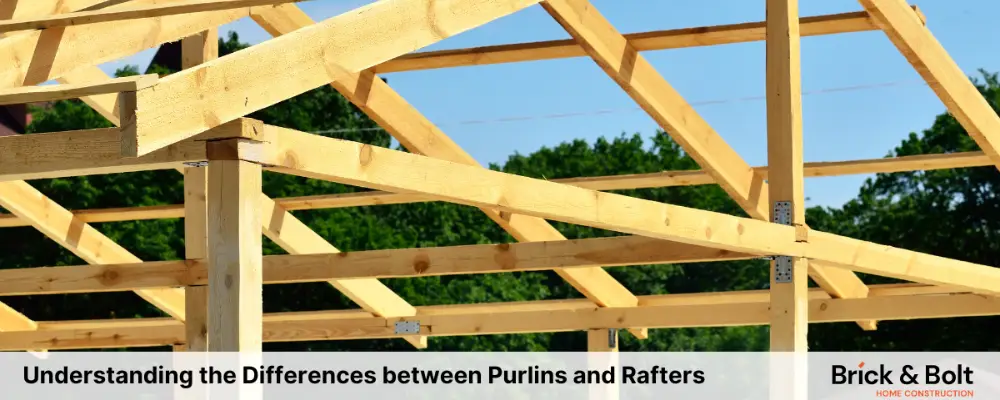
A rafter is one member of a group of parallel ‘beams’ that are laid along the slope of a roof and forms its main structure. Rafters are laid parallel or perpendicular to the columns or load bearing walls and transfer loads to them. They bear and transfer the major portion of loads that act on roofs, including wind and rain loads and the self weight of the roof.
Key Features of Rafters:
Slope: Rafters are installed with an inclination that corresponds to the designed roof angle. In this case, it would be clear that the positioning of the rafters has some effect on the pitch of the roof.
Primary Support: Rafters may be considered the main components of the roof because the majority of the roof load is transferred to these members.
Material: In small projects, rafters can be constructed from wood, but the use of metal can also be encouraged where large-scale construction or higher durability is required.
How Rafters Work:
The rafters are placed equidistant from each other to form the roof’s framework and fastened at the top of the ridge board and at the bottom of the wall plate. They form a triangular shape in conduction of the weight of the roof evenly along the supporting walls of a building (in case of pitched roofs). In the absence of rafters, the roof would collapse because the supports would not be good enough to carry the roofing materials and environmental loads.
What is a Purlin?
A purlin is a horizontal member laid above the rafters to support the roofing material. Purlins run perpendicular to the rafters and give support to the joints between roofing material components, such as joints between tiles. They also provide additional support to the rafters and the overall roof framework.
Key Characteristics of Purlins:
Position: While purlins are also laid across the slopes of roofs, they are perpendicular to rafters and above them.
Secondary Support: The main purposes of purlins are to support the roofing material and provide secondary support to the roof.
Materials: Purlins can be made in wood, in steel, or even aluminum, depending on the size and the structure of the building.
How Purlins Work:
Purlins are oriented perpendicular to the rafters, their purpose being to evenly distribute the weight of the roofing material across the roof. They are like additional secondary rafters that would be utilized on larger-scale buildings, where the size of the roof requires extra support or where the size of the roofing material is small, such as with tiles.
Key Differences Between Purlins and Rafters
While purlins and rafters are indispensable in the construction of a sloping roof, their purpose and applications vary. The major differences are listed below:
Feature
Rafter
Purlin
Primary Function
It provides the main support for the roof structure
It provides secondary support for rafters and roofing material
It supports the weight of the roof directly and transfers load to columns or load bearing walls.
Helps in load distribution across the roof area and transfers load to the rafters.
Importance/ necessity
Is an important structural element in most sloping roof frames.
May not be necessary in a few cases, like small roofs with large roofing materials such as metal sheets.
Cost
Cost is higher as the thickness of the members is more and because they also require higher load bearing capacity.
Lower cost due to smaller size and load bearing capacity.
Comparison Table: Purlins Versus Rafters
Aspect
Rafters
Purlins
Main Function
Support the weight of the roof
To provide additional support to the rafters along with the roofing material
Installation Position
From ridge to eaves
sloped Horizontally, across rafters
Common Uses
Residential and small structures
Large buildings like warehouses or barns
Cost
Cheaper for smaller projects
Adds to the cost of larger or more complicated roofs
Material Options
Almost entirely wood, but can be metal
Wood, steel, or aluminium
Support Role
Main supporters of the roof structure
Secondary supporters, which assist rafters and the roof
Framework of Rafters and Purlins
In most cases, both rafters and purlins are used together in one roof structure. It usually happens in cases when the building is larger or when the roofing material is small and needs support.
An example of such usage is a simple pitched roof that can be found in parks. Here, rafters support the main roof structure and transfer loads to the metal columns, while purlins are required to hold the terracotta tiles in place. Both together create a much stronger and more stable roof that can bear all the loads and environmental stresses such as wind or snow.
Conclusion
Despite both being important, purlins and rafters do different work: rafters are the basic roof-supporting elements, while purlins are secondary support elements that hold the roofing material in place. Being able to know the differences between purlins and rafters will finally lead you to make better decisions for your building project by ensuring the roof is not only safe but also functional.
FAQs:
1. What is the main purpose of a rafter?
A rafter is a beam that provides primary support for a sloping roof, supporting the self weight of the roof and bearing environmental loads
2. Why would one use purlins?
Purlins: These provide extra support to rafters and roofing material at intervals when the roof spans over a distance, particularly in larger constructions
3. Can purlins be used along with rafters?
Yes, purlins and rafters are often used together for roof assemblies, providing additional strength and stiffness.
In construction, you might hear about “capping” and “coping” when discussing the tops of walls, roofs, and other structures. While they might sound similar, they have different purposes and designs. Let’s dive into what each one is and how they differ.
What is Capping?
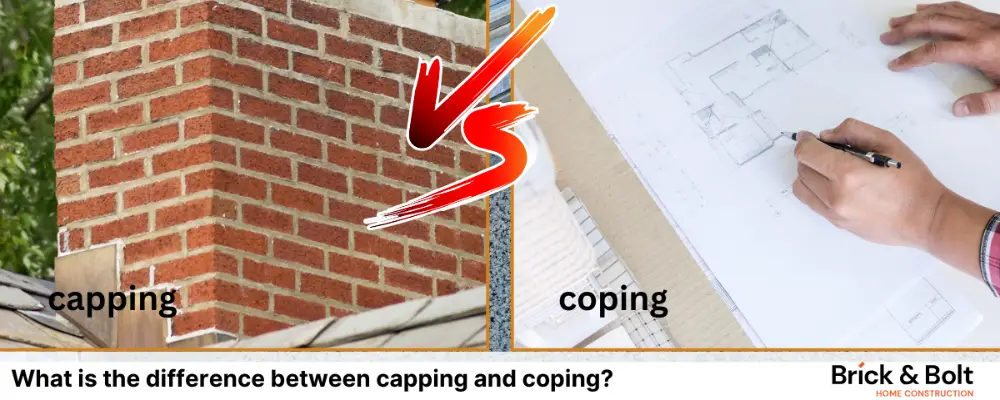
Capping can be defined as a layer of protection at the top of a wall or roof that prevents the seeping of water. It acts like putting a hat on the structure for protection against weather conditions, such as rain, snow, and especially the sun. Most often, capping is manufactured from metals, stones, and concretes, which are all strong.
Purpose: Capping prevents water from seeping through the wall or roof. Water that could penetrate would create deterioration in time, resulting in fissures with possible mold development.
Material: The common materials employed for capping are metal, stone, and concrete. These materials have been selected because they can withstand harsh weather conditions.
Appearance: The capping usually looks like a flat or slightly inclined surface on top of a wall or roof. It is functional but can also add some decorative touch to improve the building’s appearance.
What is Coping?
While copping essentially means capping, it is different, as it was designed specifically to cover the top of walls, mostly exteriors. It serves to protect the wall from water and to give the finished look. Copingcan be seen on garden walls, parapet walls- the small walls that extend above the roofline- and even on top of fences.
Purpose: Just like capping, coping protects the walls from water and gives the wall a neat, finished look.
Materials: Coping can be made from many available materials, such as brick, stone, or concrete. Certain types of coping also have a sloped or rounded top to facilitate the easy runoff of water.
Appearance: Coping is generally more aesthetic when compared to capping. Coping can be of different shapes-flat, round, and at times pointed. These can be of a simple design or very elaborate depending on the building style.
Key Differences Between Capping and Coping
Differences
Capping
Coping
Purpose
This is done mainly to save the structure from water and weather damage. It is used on both walls and roofs.
It protects the wall from water along with concerning about finishing the top of the wall with a decorative touch.
Location
Can be used on both roofs and walls mainly to prevent water infiltration.
Specifically used on the tops of walls, particularly exterior walls, to protect them and improve their appearance.
Design and Look
Generally more functional and less decorative; it is about protection.
More decorative, with various styles available to match the building’s design.
Materials
Usually made of metal, stone, or concrete.
These are often made from brick, stone, or concrete but with more design options.
Why Capping and Coping are so Important?
Capping and coping are very important in protecting structures from the water and weather elements. Without it, exposed walls and roofs would be subject to rain and snow, as well as sunlight, which may cause cracks, erosion, and other types of damage through time. They also help maintain both the structural integrity and good appearance of a building.
Capping and coping are most important in those areas that have extreme and bad weather conditions. They keep the water outside, and that is one of the things that catch long-term damage and expensive repairs. Besides, coping gives a finish to the walls for them to look appealing and not just functional.
When to Use Capping and When to Use Coping?
Capping: For capping, one needs to protect the top of a roof or wall area from water. That is mainly useful in flat or slightly sloped surfaces where the water may collect.
Coping: Laying copings at the top of external walls, for example, garden and parapet walls, is the best choice when one wants to protect the wall and simultaneously provide an added look to it.
How to Choose Between Capping and Coping?
Location, material, and the desired look are important considerations when people try to decide between capping and coping. If the flat surface – a roof is primarily to be protected, then capping is the perfect one. But if one is finishing the top of an exterior wall and wishes it to look nice, coping is the better option.
Another thing is your area’s weather conditions. If you are staying in an area where heavy rain or snow is frequent, then you would need something durable enough to hold everything together. Both capping and coping could be made from strong materials, but coping offers more design flexibility.
Conclusion
In simple terms, capping and coping are two techniques used in construction that help the walls and roofs from being damaged due to weather conditions. While capping is functional and mainly deals with protection, coping helps give an artistic touch to the structure.
FAQ
1. What does capping do in construction?
Capping protects the top of walls or roofs from water and weather damage. It’s commonly made from durable materials like metal, stone, or concrete. Capping also helps maintain the structural integrity of the building by preventing long-term deterioration.
2. How is coping different from capping?
Coping is more decorative and used mainly on exterior walls, while capping is primarily functional and focused on protection. Coping can come in various styles, like flat, rounded, or pointed shapes. It adds a finished look to walls, enhancing the overall appearance of the structure.
3. When should you use coping?
Use coping for exterior walls when you want both protection and a decorative finish. It’s ideal for garden or parapet walls, providing an elegant look while safeguarding against water damage. Coping offers more design flexibility, allowing you to match the building’s style.
First, it’s important to note that cement and cement screed are not the same. They serve different purposes in construction. So, we need to differentiate between them. In this article, you’ll come to understand what cement and cement screed are and how they differ.
What is Cement?
Cement is a key building material. It acts as a ‘binding material’ used to bind other materials in concrete or mortar. Typically, it’s mixed with water, sand, gravel, and sometimes chemicals to enhance strength.
How is Cement Made?
Cement is produced through the process of heating limestone and clay in a kiln. Next comes the process in which we convert the cement clinker into powder form. Wetting the mixture with water causes a chemical reaction whereby the concrete transforms into a solid, rocky substance.
Where is Cement Used?
The uses of cement include a broad category of building and construction works such as:
• Concrete is a mixture of cement, sand, gravel or crushed stone, and water. Common applications include foundations, walls, roads, bridges, and other structural elements.
• Making Mortar: Mortar is made of cement combined with sand and water. It acts as a bonding agent that holds bricks or stones together when walling.
Types of Cement
There are many different varieties of cement, but the most common is Portland cement. Most concrete and mortar mixes use this type. Other varieties include rapid-setting cement and low-heat cement, which are used for particular projects in which quick-drying cement or controlled temperature is needed.
What is Cement Screed?
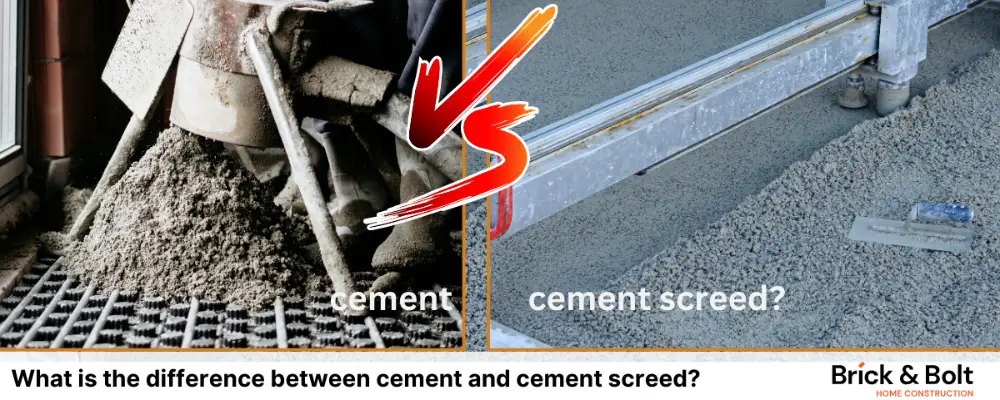
A cement screed, or screed, is a layer applied to a concrete base. It levels the floor and prepares it for coverings like tiles, wood, or carpet.
How is Cement Screed Made?
Cement screed consists of cement combined with sand and a small proportion of water. It is far a lot easier to mix compared to concrete, as it does not involve gravel or any stones. The sand used for the screed is usually very fine so that the screed comes out with a smooth surface.
Where is Cement Screed Used?
Cement screed is mainly used indoors for the following purposes:
• For the flooring: This is laid on top of the concrete floor. It provides a smooth floor that is even. Once the screed has been laid, then any other form of flooring material can be added like tiles, vinyl, or carpet.
• Underfloor Heating: In some building sites, the pipes used for heating may be integrated beneath the floor. To accommodate this, a cement screed should be laid over the pipework to provide a levelled floor surface for easy operation and comfort in the redistribution of heat.
Differences between Cement and Cement Screed
While the words ‘cement’ and ‘cement screed’ sound alike, they refer to different construction materials. Let’s look at the main differences between them.
Aspect
Cement
Cement Screed
Definition
A binding material used to make concrete and mortar
A smooth layer applied over concrete for leveling floors
Composition
Cement, sand, gravel, water (in concrete)
Cement, fine sand, and a small amount of water
Uses
Building foundations, walls, bridges, roads
Levelling floors, preparing for final floor finishes
Strength
High strength, used for structural purposes
Less strength, used for smooth surface finishing
Texture
Rough when used in concrete, as it includes gravel
Smooth because it is made of fine sand and no gravel
Thickness
Concrete is thick and strong enough to support weight
Screed is usually thin, only a few centimeters thick
Application
Used in major construction works like walls and buildings
Mostly used indoors on floors for leveling
Main Purpose
Acts as a binder to hold materials together
Creates a smooth, level surface for flooring
Strength
Strong and durable, used for load-bearing structures
Less strong, used for surface finishing only
Thickness
Can be thick and robust
Usually thin, only a few centimeters
Usage Areas
Foundations, walls, roads
Indoor floors, underfloor heating systems
Why do we Use Cement Screed?
Screed is used because concrete on its own is not smooth enough for flooring. Concrete is very good and ideal at the base of a building, but it is rough and not even. To have a floor suitable for laying tiles or other materials, we need a flat, smooth surface, and that’s where screed comes in.
Advantages of Using Cement Screed
1. Smooth Surface: The screed provides a smooth and even surface, which becomes rather significant in the case of installing flooring, such as tiles or wood.
2. Finishing: It provides a professional, neat finishing to the floor and makes the room look polished and well-structured.
3. Support: Screed provides support to floor materials for longer life and better performance.
4. Underfloor Heating: Cement screed is used with underfloor heating systems, allowing the heat to be evenly distributed throughout the room.
Why is Cement Important?
In construction, cement is indispensable because it works like glue, holding things together. If there had not been cement in human life, people wouldn’t have been able to build and construct strong and tall bridges, roads, or houses in a constructive way.
Benefits of Cement
1. Strong Foundation: The main ingredient of concrete is cement, and concrete is used to build the ground or foundation of the house or any other infrastructure. This needs to be strong enough to hold the entire building.
2. Versatile: Cement can be used in concrete, mortar, and screed, among others.
3. Durable: When mixed properly, cement produces durable materials that can last long, standing in harsh conditions of weather.
How to Lay a Cement Screed
Cement-screeding is a very sensitive process that requires skill to make sure the floor is at the same level. It requires a skilled person to ensure that the floor is perfectly level.
Application steps of Cement Screed:
Preparing the Surface:The Screed is laid on clean concrete, free of dust and debris.
Lay the Screed: Mix cement and fine sand in the right mix, adding only enough water to create a smooth, firm mixture.
Apply the Screed: Permit the screed to spread evenly onto the floor and be level and even.
Level the Surface: Use a tool called a float to level the screed and make sure there are no bumps or dips.
Conclusion
In short, the two most prominent and vital materials in construction are cement and cement screed. However, they do have some differences in their functions. Cement is used to make structures, like walls and bridges, strong and durable. Cement screed is used to level and smooth floors for flooring. Knowing the difference helps you appreciate how these materials make buildings safe, strong, and comfortable.
FAQs
1. What is cement screed used for?
A cement screed is a layer of cement applied on a floor that makes the surface smooth and level. The process is mainly done on concrete to further finish a floor for tile, wood, or carpet.
2. Is it possible to use cement without screed?
Yes, cement can be used to make concrete for building structures. However, screed is necessary for achieving smooth floors.
3. Why is cement important in construction?
Cement is also essential as it acts as a binder, holding materials together to form strong and durable structures such as buildings, roads, and bridges.
Most homes treat the mandir or prayer room with great respect, particularly in homes following Hindu religious traditions. This is the place where family members conduct their prayer and meditation. In modern homes with limited space, many would rather set up their mandir in the living room area. When constructing a mandir in the living room, thoughtful design is required to create a peaceful and spiritual atmosphere.
We will share several modern mandir designs that can be used in living rooms, primarily how one can fit a mandir in your space such that it not only blends with the architectural and interior styles of the room, but also brings a touch of something sacred.
Why Choose a Mandir in the Living Room?
It is very often the living room that forms the center of the house, where the family is more or less constantly gathered. Putting the mandir in this room allows it to be integrated into daily living rather than assigned to a separate area that is not entered very often. It also provides an opportunity for the whole family to pray together and thus fosters a sense of togetherness. In small houses or apartments, a living room may be the only room where a mandir can be reasonably accommodated without taking up too much space.
Key Considerations for Designing a Trendy Modern Mandir in the Living Room
Following are some of the aspects that one should consider before choosing the design of a mandir for one’s living room:
Space Available and Required: How much space are you able to devote to the mandir? The size of the mandir depends upon how much space is available in the living room. It is also important to consider the way in which you will be using the mandir. For example, if you want to sit inside the mandir and perform puja, you will require a larger enclosed space.
Direction: The mandir should be placed preferably in the North East, East or North direction, with the main idols facing West. According to Vastu Shastra, the ancient Indian architectural guide, these are the best and most auspicious directions a person faces while praying.
Style and Décor: The mandir should be designed to complement the overall design of the living room. The modern mandir should be integrated with the decoration of the living room and not out of place. However, ultra modern designs may sometimes not produce a spiritual atmosphere and will require blending with traditional styles.
Lighting: A brightly lit mandir will make the atmosphere pristine, relaxing, and calming. To make the surrounding area of the mandir in the house appealing and peaceful, one can use soft and warm lights. If possible, also try to incorporate windows or other openings nearby, to allow more natural light into the space.
Types of Modern Designs of Mandir for Living Rooms
You can merge a mandir into the living room in several ways. Some of the following modern mandir designs work well in different living rooms:
1. Wall-Mounted Mandir
This type is useful in small living rooms where there is very little floor space. It, therefore, allows you to create a sacred place without taking away much room. A wall-mounted Mandir can be in the form of a small cabinet or shelf-mounted on the wall. It can be designed with doors that open when praying and then shut to get themselves blended into the aesthetics of the room where it is located. Make sure that this mandir is mounted at the right height for your type of usage- whether you want to use it while standing or sitting on the floor.
Pros: Saves space and goes well with modern decor.
Cons: Insignificant space for storing prayer items.
2. Corner Mandir Design
Corners are usually free areas in rooms and hence quite ideal for a small mandir setup. A corner mandir design works well with space, creating coziness and intimacy in this nook for praying. You can place a small unit of mandir with a few shelves for placing idols, lamps, and other religious items. These can be wall or floor mounted and the main idol shelf or platform can be angled to face the right Vastu direction.
Pros: They can be small or large depending on the area available, thereby allowing for efficient use of corner spaces, which otherwise remain inaccessible and unused.
Cons: All parts of the living room may not always view them easily. Small nooks and corners in such units may also be difficult to clean.
3. Cabinet Style Mandir
Those who want a mandir that can be closed when not in use should go ahead with a cabinet-style mandir. In times when closed, this form of mandir appears like an ordinary cabinet attached to the TV unit or other similar units in the living room, but evokes suprise and awe while opening up into a pretty prayer room. You can opt for doors having decorative carvings or intricate glass works.
Pros: Prayer area is kept private whenever it is not in use. Creates storage space for prayer items.
Cons: It occupies more space as compared to a wall-mounted mandir.
Sliding doors can save space.
4. Shelf Mandir Design
The shelf mandir design consists of several open or shut shelves on a wall, leaving space for idols, lamps, and religious books. A shelf mandir should be ideal for minimalist houses since practicality is what this whole home is about.
Pros: It is easy to set up and doesn’t require much space. It is also cost effective.
Cons: Space for bigger idols or prayer accessories is improbable.
6. Portable Mandir
A portable mandir is a great option for those who do not have a permanent place for the mandir. These mandirs are compact enough to allow them to be moved easily within the house. Portable mandirs come in different designs that range from small-size wooden boxes to foldable units.
Pros: Easy to reposition, can be placed anywhere in the house.
Cons: Generally smaller in size, providing minimal room for religious items.
How to Decorate a Modern ‘Mandir’ in the Living Room
Lighting: Warm and soft light is very important to give ambiance to this place. LED strip lights, hanging lamps, or spotlights can be used to light up the idols and give a glimpse of the area. Avoid using sharp, bright lights; this makes the space jarring and causes a disturbance to the serenity.
Backdrops and Panels: An attractive feature of the mandir will be a decorative backdrop behind the idols. These can be done with wooden panels, marble, tiles or decorative cloth and even incorporate traditional designs like lattice or floral patterns for enhancement of the look.
Color Scheme: Soft, neutral colors work best for the mandir. Shades of white, beige, or light brown would be great in giving the mandir an elegant and serene look. If you want boldness, then go with deep reds or sprinkled gold accents for a traditional look. Religious Symbols: Incorporate signs such as Om, Swastika, Lotus or other respective religious symbols. These give a religious touch to the environment and assist in enhancing the holy atmosphere.
Plants and Flowers: Place fresh flowers or small potted indoor plants in the mandir area. Not only will they look nice, but they also add a touch of nature with their aroma and bring in calm and positive energies.
Vastu Tips for Temple in Living Room
The northeast corner of the living room should be kept for the mandir.
Idols or pictures of deities should face west, and you are to face East or North while praying. The mandir platform or the actual idol shouldn’t be at floor level.
Avoid placing the mandir near the bathroom or in places that can be disturbed very frequently.
Conclusion
A modern living room mandir is more than a place to say one’s prayers; it serves as a space imbibed with peace, serenity, and spirituality. From wall-mounted to shelf and portable ones, the trick lies in getting a design that would blend with the living room’s style and size, all the while retaining the sanctity of the mandir and ensuring easy usage. With proper lighting and color and material usage, a living room mandir may be truly beautiful and create a peaceful retreat within your house.
FAQs
1. What type of material is best to use in the living room for the mandir?
Materials like wood and marble are considered best for the making of mandirs since they are durable and provide a traditional, classic look. However, this is subject to individual preferences, budgets and requirements.
2. In the living room, where could I place my Mandir?
As per Vastu Shastra, the northeast direction is the most auspicious placement of the mandir; the idols are to be kept facing west.
3. Can I keep the portable mandir in the living room?
Yes, a portable mandir would be very nice for small houses or for those who need flexibility in moving the mandir around within the house.
The construction sector is evolving rapidly with growing demand everyday. In this competitive environment, designers and developers are exploring innovative options e to make their projects look unique. Beyond quality, they take high concern about design, safety, styles, etc. The method that works efficiently in various aspects is wall cladding – the most popular and commonly used wall finishing technique.
Cladding is an additional layer attached to buildings that resists external damage and safeguards the internal structure. Though it is not a part of the primary structure, it involves carrying some load of fundamental construction. You may think, how? Cladding prevents the formation of unequal pressure on the surface and reduces the extra load created at specific points on the structure.
This blog explains wall cladding, its significance, and types to make an informed decision on your construction project.
What is Wall Cladding?
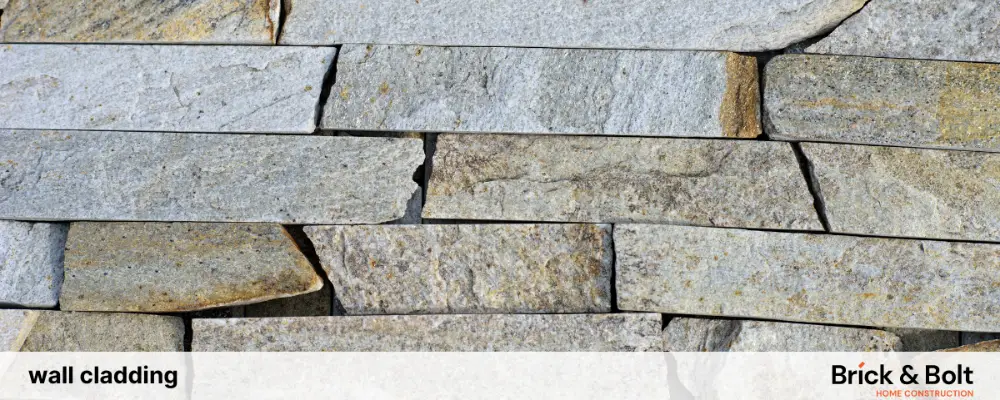
Wall cladding is the process of adding an extra layer of material to the interior or exterior surface of the building. It shields a room or building from the damaging effects of harsh weather conditions.
Cladding layers can be made from a variety of materials, such as vinyl, wood, metal, or brick. Choosing the appropriate type, texture, and dimensions enhances the style and appearance of a building. It is cost-effective and offers a long-term solution to prevent damage. Cladding is a sign that your property is cared for. As days pass, the property value will be increased at a lower maintenance cost.
Different Types of Cladding in Buildings
For outdoor spaces, there are various material choices available, such as:
Glass Cladding
Glass cladding is cost-effective and can be a good alternative to painting, tiling, or any other form of decoration. The personalized option is an extra feature, it can be enameled, laminated, tempered, or curved according to your taste. It makes the space visually appealing and creates a wow factor for your potential buyers if combined with well designed backlighting systems. They perfectly fit for a wide range of exteriors, as the maintenance is pretty low.
Natural Stone Cladding
Stone cladding offers a clean and rustic look to the building. Stones are naturally derived, containing water and moisture-resistant properties, making them a sustainable and durable option. They are available in various finishes such as polished, rough, leather, hammered and flamed. The cost of stone cladding is highly variable due to the availability of these choices. Meanwhile, it is also directly interconnected with the type of stone being purchased. They include limestones, granites, slates, quartzite, and marble.
Vinyl Cladding
Vinyl cladding is a widely known option available in various appealing colors. It is cost-efficient but also provides an extra temperature-controlling layer over your property. This property keeps the space warm even during heavy winter and summer. It is dent-resistant and completely flexible to install and maintain. Re-painting is not essential, which saves money in the future.
Wood Cladding
Wood cladding is the ultimate choice to achieve an aesthetically pleasing appearance. It can be installed horizontally, vertically, diagonally or in other patterns to achieve a perfect decorative finish. Generally, wood is durable, easy to install, a good insulator, and durable. However, it may not be suitable for very humid or moisture-prone areas, due to its inability to resist rot. In such cases, other cladding materials which resemble wood in finish may be used instead.
Fiber Cement Cladding
It is an exterior wall cladding, well-suited for commercial, industrial, and residential buildings. Fiber cement cladding is made with traditional materials like cement, sand, and cellulose fibers. They do not contract or expand, providing excellent dimensional stability to the structure. They are also highly durable and can generally bear heavy loads. Their cost ranges in the moderate zone when compared to other cladding materials.
uPVC Cladding
uPVC stands for Unplasticized Polyvinyl Chloride. One of the most widely used exterior and interior cladding materials, it offers high flexibility in design. It is highly resistant to weathering, corrosion, and water. Homeowners and developers are primarily choosing this option for its maintenance-free quality. It is available in different colors and designs and is also a cost-effective option.
Ceramic Cladding
Ceramic cladding can withstand extreme weather conditions and will not get damaged easily. This cladding is highly resistant to wear and tear, ensuring the safety of the building even during rain or increased pollution levels. It is composed of natural materials and can be recycled easily. It helps reduce carbon footprints in the environment.
External Foam Cladding
It is manufactured from a type of foam, like expanded polystyrene, which is manufactured in the shape of lightweight boards. The cladding contains a special coating, which is strong and highly resistant to impacts. These claddings come in panels, available in various thicknesses and sizes to fit for different application requirements.
Benefits of External Cladding in Construction
Cladding is an extra safety measure that helps reduce building maintenance and provides a long life. Here you can know why it is vital:
Excellent Durability: Cladding provides an additional layer of protection against external elements such as rain and snow. This prevents issues like mould formation, waterseepage and leakage, which in turn increases the building lifespan.
Elevate Appearance: Property investors or owners can avail an aesthetic look, which can enhance the monetary value in the future.
Cost and Maintenance: Although the initial cost of cladding can be high compared to other methods like painting and plastering, persistent maintenance costs are reduced due to the eliminated need for repainting or refinishing.
Conclusion
Cladding provides a low-maintenance and durable protective option for exterior surfaces of buildings. There are numerous types available in versatile finishes to blend with your requirements. Cost, maintenance, aesthetics and durability are some of the important factors you must consider carefully before making a choice.
FAQs
1. How do I select the best wall cladding?
These are the primary factors you need to consider when choosing a wall cladding: Analyze which material is suitable for the climatic conditions in the area of your construction. Set your budget range. Explore available options with low maintenance and high resistant properties. Align your choice of cladding with your building’s elevation.
2. How does cladding benefit your structure beyond decoration?
Cladding serves as an additional protective layer in the buildings, and it benefits you in several ways, such as:
Improves thermal insulation Promotes the mechanical strength of a structure Reduces water absorption Provides resistance to sunlight Protects the wall against air and chemical pollution. Provides sound insulation
Steel is an extremely versatile material. It is strong, durable, and ductile enough to be employed in a variety of applications, but construction is the most closely associated with it. Properties of steel have an impact on the design and construction of steel structures, hence understanding steel material properties is critical. This blog explores physical, chemical, and thermal properties of steel in the civil engineering field, which will help you to understand why steel plays such a key role in today’s construction industry.
What is Steel?
Steel is an alloy of iron and carbon, containing less than 2% carbon, about 1% manganese, and small amounts of silicon, phosphorus, sulphur, copper and oxygen. Despite steel’s low carbon content, carbon has a big influence on physical properties of steel, making it harder and more durable than pure iron. Adding other elements like chromium, nickel, manganese, and vanadium can boost properties of steel even more. Common steel is created by the purification of iron and combining it with other metals and minerals. Steel is a vital material for the construction industry.
Properties of Steel:
Let’s understand in depth the physical properties, chemical properties and thermal properties of steel.
Physical Properties of Steel:
Steel has the capacity to support heavy weights without being heavy itself, and it shows resilience in tough environments without failing. Engineers and builders who understand these properties of steel can apply it more appropriately to address the requirements of modern structures and technological advancements.
Density:
One of the most essential physical properties of steel is its density. Density is the measurement of the ratio of matter in an object to its volume. Steel becomes stronger as its density increases. The density of steel varies from 7,850 to 8,050 kilograms per cubic metre.
Young’s Modulus:
Young’s modulus is an important physical property of steel. It shows how well steel goes back to its original shape after being pulled. Steel with a higher Young’s modulus can handle more force without bending. The Young’s modulus for steel is between 190 and 210 gigapascals.
Tensile Strength:
Tensile strength denotes how much force steel can take before it breaks apart. The higher the tensile strength, the tougher the material. Steel’s tensile strength varies in the range from 400 to 2,000 megapascals.
Shear Strength:
A material’s shear strength is defined as its capacity to withstand forces that cause the internal structure to slide against itself. The shear strength of steel is specified at the point of failure under shear stress, and it is approximately 0.57 times structural steel’s yield stress.
Ductility:
Ductility is one of the most important physical properties of steel that allows it to be hammered thin or stretched into wires without breaking. Steel can bend significantly before failure, which is critical for absorbing energy during collisions and seismic activity.
Yield Strength:
Yield strength is the highest stress that a material can withstand before permanently changing shape and failing to bounce back. This tests the material’s ‘ductile’ character. If the stress level does not exceed the yield strength point, the material will regain its original shape after the stress is relieved. High yield strength indicates that the material has high strength. The yield strength of steel can range between 250 and 1,500 megapascals.
Chemical Properties of Steel:
The chemical properties of steel are largely concerned with its composition and how its constituent elements affect its behaviour and performance. Steel has the following key chemical properties:
The Carbon Content:
The concentration of carbon in steel can range from less than 0.1% to more than 2%. It has a considerable impact on ductility, hardness, and strength of steel. Lower carbon steels are more ductile, but higher carbon steels are harder and more durable.
Alloying Elements
The following elements are present in steel composition:
Manganese (Mn): Manganese, which is typically found in percentages ranging from 0.3 to 2%, enhances hardness, tensile strength, and wear and abrasion resistance. It also aids in the deoxidation of steel by eliminating sulphur and oxygen contaminants.
Chromium (Cr): Chromium, which is in percentage ranging from 10% to 30%, is used in stainless steel to improve corrosion resistance, hardness, and wear resistance.
Nickel (Ni): Nickel is added in steel in levels ranging from 2-20%. It improves hardness and corrosion resistance.
Molybdenum (Mo): Found in trace levels (0.1-0.5%), molybdenum improves hardness, strength at high temperatures, and corrosion resistance.
Vanadium (V): Added in trace levels (0.1-0.5%), vanadium increases strength, toughness, and wear resistance.
Silicon (Si): Silicon improves strength and flexibility and is often found in concentrations ranging from 0.2 to 2%.
Copper (Cu): Copper, when added to steel in moderate quantities (up to 0.4%), helps in improving the corrosion resistance of steel.
Thermal Properties of Steel:
Steel has several essential thermal properties that make it useful in a variety of applications, particularly construction and manufacturing. Here’s an overview:
Thermal conductivity:
Thermal conductivity refers to a material’s capacity to conduct and transfer heat. Materials with lower thermal conductivity provide better heat insulation. Carbon steel has a thermal conductivity of 45-60 W/m·K. Thermal conductivity, which is one of the important stainless steel properties, is about 15 W/m·K, which means it doesn’t conduct heat well.
Melting Point:
As there are different types of steel available in the market, there is no standard melting point for steel. The melting point of steel lies in the range of 1370-1510°C. Steel’s high melting point allows it to be employed in high-temperature applications like power plants and furnaces.
Thermal Expansion:
Thermal expansion describes the tendency of steel to expand when heated. The coefficient of thermal expansion of carbon steel has a range of 11x 10⁻⁶/°C to 13 x 10⁻⁶/°C. Stainless steel often has a somewhat higher coefficient.
Specific Heat:
The specific heat of an object is the amount of heat required to raise the temperature of a unit mass of the object by one degree. A high specific heat value means that the object has more heat insulation. The measurement units are Joules per Kilogram Kelvin. The specific heat of carbon steel ranges from 450 to 2081 J/kg-K, while that of structural alloy steel ranges from 452 to 1499 J/kg-K.
The above physical, chemical, and thermal properties of steel make it an excellent choice for a wide range of applications in the construction industry. It can hold heavy loads without weighing too much, and it stands up well to harsh conditions without breaking down. When engineers and builders know these properties of steel in civil engineering, they can use it better to meet the needs of today’s structures and aid with new technological advances.
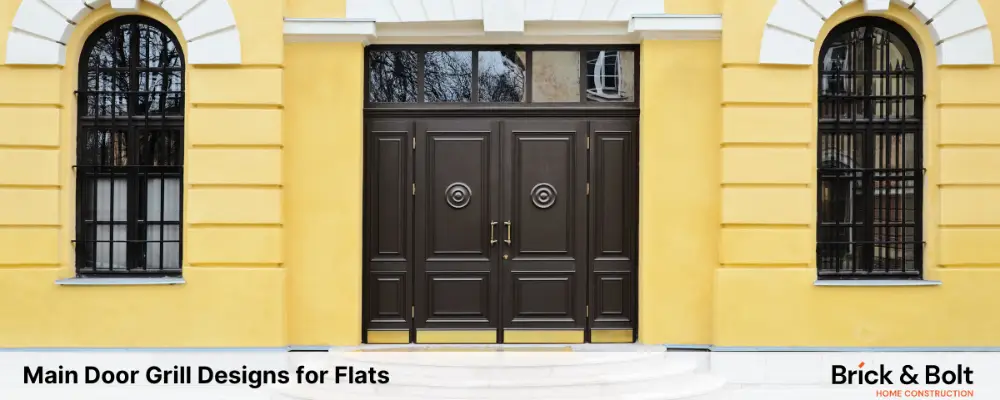
A modern apartment main door grill is used for both functional and decorative purposes. Not only do these grills keep your flat safe and secure, but they also very zestfully add to the overall aesthetics of your flat. More precisely, a well-designed main door grill leads in making your home look stylish to begin with, allowing it to be very welcoming while keeping it secure from any unwanted intrusions.
Therefore, style and security are the two things that one should consider while choosing a grill design for their unit flat. Now, let us tell you about some of the trending main door grill designs for flats coupled with some tips on just how you are going to select the perfect grills for your living space.
Why is a Main Door Grill Important?
The main door can be termed as the entry gateway to your home and hence is one of the most important parts of your flat. Adding a grill to your door has many advantages:
Security: They act as a barrier against unauthorised people entering your flat. This gives you a lot of comfort especially when the building is busy due to more than one family dwelling in it.
Aesthetic appeal: The grills of the main doors come in multiple designs ranging from traditional to modern. Whichever the case, it makes the place pretty and lovely if you choose a design that suits your flat décor.
Ventilation and Light: A door grill facilitates the passing of air and light through it, thereby enhancing the ventilation of your living space with no compromise on safety. The main door can be left open with the grill door closed, enabling you to enjoy cool breezes from the outside.
Durability: Most of the main door grills are made from metals like iron or steel, which may serve for tens of years with little maintenance. They also protect the main wood door from harsh weather conditions.
Factors to Consider When Choosing a Main Door Grill
The following is a list of things you may want to consider while choosing the grill of a main entrance door:
Material: It is one of the most important features of a grill from the point of view of both security and design. Common materials employed in this respect include:
Iron: Wrought-iron grills are resilient, firm, and appropriate for security purposes but is a heavy weight material..
Steel: Normal steel can rust, but stainless steel does not rust, is low maintenance, and very modern in appearance.
Aluminium: Lightweight, resistant to corrosion, and ideal for apartment lifestyles in larger, more coastal areas where humidity is known to be high.
Design: The design of the grill should merge with the general decor of your flat and also require low maintenance. Whether you want minimalist and clean or full-on decorative, there are plenty of options to suit your taste.
Size and space: The size and thickness of the door grill should be according to the size of your main door. Ensure that you measure the proper area before choosing any grill.
Security features: grills should have stronger bars or panels to provide good security. You may also require additional features like mosquito meshes to prevent the entry of pests.
Budget: While one should not be stingy when investing in a real door grill, the budget point of an individual will also have to come into play. The prices of door grills differ based on materials used, design, and size.
Popular Grill Designs at the Main Door for Flats
A few of the latest grill designs that will help beautify your flat while keeping it safe are mentioned below:
1. Classic Design of Iron Grill
The iron grill design is classic; it is always timelessly elegant. It consists of simple vertical or horizontal bars with minimal decorations. This will suit those who like tradition and prefer simplicity, but at the same time care about the safety of their flat.
Pros: Very strong, solid, and gives great security.
Cons: Iron has the tendency to rust over time if it is not properly maintained.
2. Laser-Cut Grill Design
Laser-cut grills are made with complicated patterns brought about by the use of advanced technology in laser-cutting. You can choose from completely abstract designs, floral motifs, or even custom patterns in laser-cut grills.
Pros: highly customizable, aesthetically desirable, and can be made from many different types of materials.
Cons: The personalization may make it a bit more costly.
3. Floral/ Decorative Grill Design
Ornamental grills go well with those who love traditional and artistic touches. Therefore, these grills can incorporate complicated patterns with scrollwork, floral designs, or religious symbols. This could be made from materials like wrought iron or brass that would add an essence of elegance and culture to your living room.
Pros: Stunning to look at, adds a touch of grandeur to any flat.
Cons: Requires more upkeep to clean the details.
4. Minimalistic Design of a Stainless Steel Grill
If you are into subtle design, then the minimalist steel grill is the way to go. The designs are clean, straight lines with prominence given to simplicity. They can work well with modern flats that intend to evoke minimalism and understated elegance.
Pros: Low maintenance, does not rust, and has a sleek, modern look. Cons: It does not include decorative features and can appear very plain to people who enjoy details in their design.
Design Tip: A minimalist steel grill will provide a great modern look if used in combination with modern door hardware, sleek handles, or locks.
5. Sliding Door Grill Design
Sliding door grills can be functional yet elegant for space-restricted flats. For limited space, the grills slide aside to open up instead of opening outward or inward. These Slide grills can be designed with simple vertical bars or more decorative patterns.
Advantages: it saves space, especially for smaller flats; it is easy to operate.
Drawbacks: Requires tracks, on which smooth sliding is required; these jam if not cleaned regularly.
6. Geometrical Pattern Grill Design
Geometric patterns are a popular choice for people who want modern and artistic door grill designs. Some common geometric patterns are symmetric arrangements of squares, triangles, diamonds, and other shapes that add organised ornamentation to the grills. Geometric grills are common in minimalist or modern flats.
Pros: Sleek, attractive, and well-ventilated.
Cons: It may not offer as much privacy compared with other designs.
How to Incorporate the Grill Design into Your Living Room
Here’s how you let your main door grill design blend with your living room decor:
Color Coordination: The colour of the grill must be in sync with your living room. You can go neutral, like black, white, or grey for a fine blend with any colour. For the most conspicuous appearance, gold and bronze can be chosen.
Material Harmony: Materials selected for the main door grill must match harmoniusly with the living room aesthetics. For example, a stainless-steel grill will perfectly match a living room that is set up with modern materials like glass and steel. For traditional living rooms where the furniture is made of wood, either an iron or wrought iron grill will do better.
Lighting and Accessories: Lights near the main door grill add beauty to the door. Soft lighting will illuminate the presence of details on the grill. You can also make it look inviting and warm by adding potted plants or welcome mats at the door area.
Maintaining Your Main Door Grill
It is necessary for security and maintenance reasons to keep the main door grill clean and oiled, though it is also a part of your house’s appearance. Herein, some hints are given to maintain your door grill:
Clean Regularly: The grill may collect much dust and dirt, especially in the case of intricate patterns or sliding channels. Regular cleaning should be done with a wet cloth or a mild detergent solution to keep the grill fresh.
Prevent Rust: Treat an iron grill with an anti-rust coating or paint over it with paint regularly or whenever you spot peeling. A stainless steel or aluminium grill will not generally rust, but may stain if not cleaned.
Locks and Hinges: Make sure you lubricate well the locks, hinges, sliding tracks and other metal joints in your grill to avoid squeaking, jamming or sticking.
Conclusion
A grill door is an important element that adorns your flat while also providing securityIn choosing the correct material, design, and colour, your main door grill will surely be fit to keep your home safe while adding beauty to your living space. Don’t forget to maintain your grill regularly to keep it looking its best and functioning properly.
FAQs
1. What material will be appropriate for a main door grill?
Some of the best materials to be used for door grilles would include stainless steel, iron, and aluminium. First, stainless steel is more resistant to rust; second, iron is firm and resilient but requires some maintenance; finally, aluminium represents light weight combined with corrosion resistance.
2. Can I get my main door grill designed according to my choice?
Most of the manufacturers do provide customisation options for door grills. You are free to select the pattern that suits your flat’s decor, the material to be used, and the colour.
3. How frequently should I clean my main door grill?
It is a good practice to clean off your door grills at least once every month to remove the accumulated dust and dirt. You will have to clean the grill more often in case of heavy wind or bad weather conditions.
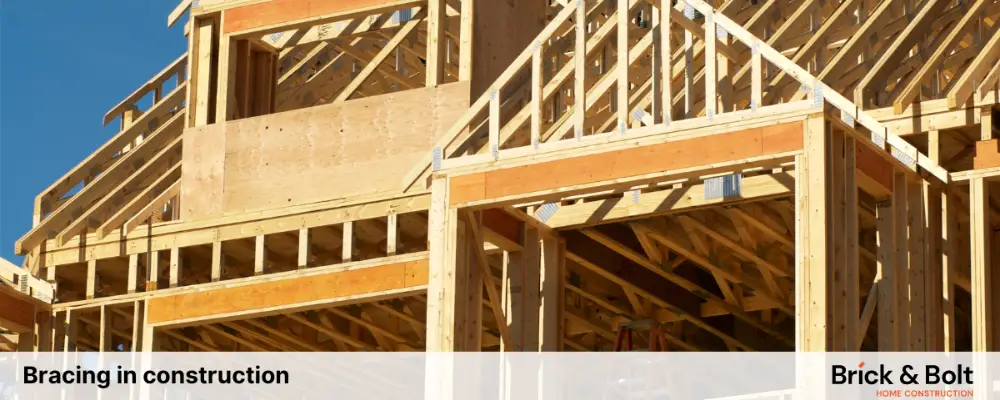
When constructing a structure, you have numerous vital parameters to consider. The primary factor among them is improving the strength and stability of the buildings. Bracing is one of the most efficient techniques for adding structural elements to a structure. It helps resist lateral loads caused by wind and earthquakes.
Bracing systems are particularly important in areas where the buildings are subjected to high wind loads. With various bracing types available, you can choose the right one that fits your application.
This article explains the popular bracing types and their significance in the construction. Continue reading to know them in detail:
What is Bracing in Construction
Bracing is a well-known construction technique that helps improve the structural performance of a building against lateral forces. It provides structural stability, durability, and resistance to various forces, such as strong wind or seismic activity.
Implementing a bracing system in construction helps evenly distribute loads, reduce sway, and withstand adverse conditions. It not only ensures the safety of occupants but also extends the longevity of the structures. Additionally, they can adapt to the unique needs of the structure and can be customised according to the construction requirements.
What is the Purpose of Bracing
The significant reason for installing a bracing is to ensure the safety of the construction. This technique provides structural stability and prevents buildings from any external forces like earthquakes or wind.
It transfers load or horizontal forces from the frame to the building foundation evenly. By maintaining structural integrity, protect the building from swaying or buckling.
Common Types of Bracing System
Horizontal Bracing
Horizontal bracing systems resist counteracting lateral forces caused by earthquakes, wind, or other environmental factors. It is installed horizontally on a building at each floor level, preventing excessive lateral movement and swaying. It can be made of materials like wood, steel, or concrete. Its major objective is to ensure the overall safety and integrity of the construction.
Vertical Bracing
Vertical bracing is designed to resist both the vertical and horizontal forces together. Their primary function is to withstand a structure’s weight, and they can be installed at a building’s corners. This system evenly distributes the vertical loads and enhances the strength of the structure.
Diagonal Bracing
Diagonal bracing offers a combined defence that can resist both lateral and vertical pressures. These braces are made from steel and are typically installed between structural members. It stabilises the structure in all directions and is popularly used in areas highly prone to wind loads or seismic activity. This type connects different parts of the structure in a diagonal pattern, which disburses loads efficiently and improves the overall rigidity of the building.
Popular Types of Bracing in Construction
X Bracing
X Bracing is a type of diagonal bracing commonly used in steel structures. It is characterised by its “X” shape installed in vertical and horizontal orientations. They offer excellent stability against vertical and lateral stresses, making it a widely used bracing system. X bracing minimises the sway during seismic events and enhances the overall stability of the structure.
K Bracing
K bracing, another popular diagonal bracing, enhances the building’s resistance to lateral and vertical forces. It resembles the letter “K” mounted either horizontally or vertically to the buildings. K bracing is an efficient method for improving structural integrity, considered it as the best choice for steel-framed buildings.
Core Walls
Core walls, also known as vertical components, provide central support to high-rise buildings. These brace walls are designed to resist both lateral and vertical forces. They act as the building’s essential structural core and offer a robust defence against seismic events, wind, and other outside influences.
Moment Walls
It is a type of structural frame constructed from steel that helps increase the overall building’s resistance to outside forces. They are particularly engineered to withstand lateral stresses through the bending of columns and beams. Moment wall is a popular choice for seismically active regions, preventing structural damage.
Shear Walls
Shear walls constructed from concrete or masonry help transfer lateral loads to the building foundation. These are vertical structural elements particularly important for taller constructions where the lateral forces are highly existent. It reduces structural deformation and increases overall stability.
Benefits of Bracing in Construction
Proper bracing offers numerous benefits to the buildings, as some of the significant points are listed below:
Supports Load Distribution: A bracing system in construction evenly distributes the load across a building framework. It helps reduce the structural element’s stress. Hence, the potential weak points are arrested. By withstanding lateral and vertical loads, the longevity and overall durability of the structure will be improved.
Promote Structural Stability: One of the primary advantages of bracing is enhancing structural stability. In general, bracing systems are designed to efficiently carry lateral forces caused by seismic activity and wind, thereby controlling excessive movement or swaying.
Enhance Safety: Bracing typically prevents significant structural damage or collapse in areas prone to high winds or earthquakes. When building resistance to external forces is improved, the chances of property damage are minimised.
Cost-Effective: Bracing systems in construction may seem expensive in the initial construction cost. However, they benefit the structure in the long term without being affected by any damage during extreme weather conditions. It lowers the maintenance cost and would be a valuable investment.
Final Wordings
Bracing is a crucial component in construction, offering essential stability and support to the building. By understanding the available types, you can get an idea of which option is wiser. More than going with the right type, a proper installation is paramount to ensuring the structural integrity and safety of your projects.
FAQs
1. When is bracing essential in construction?
Bracing is essential in construction, particularly in areas prone to natural calamities like earthquakes or hurricanes. It is commonly used in commercial structures, industrial facilities, and tall buildings.
2. Can bracing be installed in existing buildings?
Yes, bracing can be fixed in existing structures that resist lateral loads and improve their stability. However, consultation with professional engineers is important to determine the feasibility of the project and to choose the appropriate bracing methods.
If you are working on a construction site, industrial project, or any other commercial project, then the usage of cantilever scaffolding is invaluable. It is used to create a new working platform for the workers to simplify workflow. This stable platform allows the workers to carry out their work from the horizontal side of the building. Let us explore the use cases and benefits of cantilever scaffolding.
What is Cantilever Scaffolding?
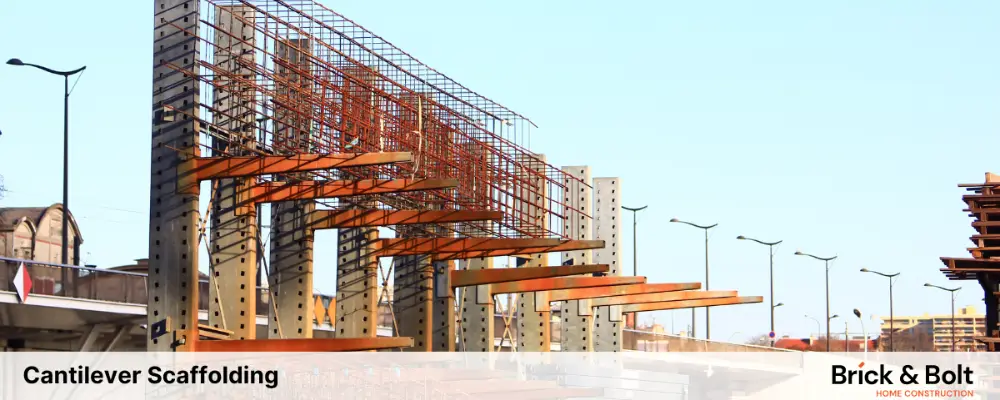
Cantilever scaffolding is a system that is used in construction projects and maintenance. It assists in creating a platform for workers on the side of the building or the structure.
It is sustained at one end and extended to another end. It has a horizontal platform that extends from the building to the structure and is supported by needles from the ground. Thus, support the workers access difficult sides or areas of the building or the structure.
Structure of Cantilever Scaffolding
Main Frame
The main frame provides the primary support for the cantilever scaffolding. This base foundation connects it to the building or the structure.
Cantilever Beam
This is an extended horizontal platform arising from the main frame. It provides a place for the workers to carry out their day-to-day activities. Without any vertical support, it extends outward from the main frame.
Needle Beam
The needle beams support the cantilever beam by extending inwards. It manages the load capacity and strengthens the beam.
Brackets
Brackets are the support that is attached to the cantilever beams. These are used for strengthening and balancing cantilever beams.
Guardrails and Toeboards
Guardrails are used to prevent falling from the working platforms. Toeboards help to contain the working equipment and tools.
Platform Decking
It is a secure surface on which the worker stands to carry on his work. This can be made of wood or any other material designed for durability and strength.
Ties and Anchors
Ties and anchors are used to attach the main frame to the structure or the building to prevent any movement.
Counterweights
Counterweights support the existing frames to prevent twisting to one side.
Length of the cantilever
The maximum length of the cantilever beam or slab should be 2 to 2.5 meters. The thickness or depth ratio of the slab should be 7:1.
Types of Cantilever Scaffolding
The two major types of cantilever scaffolding are as follows:
Single-Frame – The single main frame is connected to the structure or the building, and the extended frame is a cantilever beam where the worker stands to work. This can be used for easier tasks.
Double-Frame – In this type, the two main frames are connected to the building. It is used for heavier tasks.
Advantages of Cantilever Scaffolding
The primary advantages of cantilever scaffolding are as follows:
It eases the workers in reaching difficult areas, including balconies or any other side areas of the building.
It can be easily used in narrow or congested areas.
It needs only a small space on the ground to anchor its main frame to undertake any work in the building.
The installation of cantilever scaffolding is cost-effective.
It is a multipurpose equipment used for painting, maintenance, repairs, etc.
Application of Cantilever Scaffolding
The construction industry also adapting to new technological developments in the 21st century. One of the famous and useful methods is cantilever scaffolding. This allows construction workers to do their work efficiently. Some of the applications of cantilever scaffolding are as follows:
Building Maintenance
Cantilever scaffolding is especially used for working in high-rise buildings for painting, repairing, maintaining, etc.
Windows Installation
On the upper floor, window installation is a high-risk process. This can also be performed by using the cantilever scaffolding method.
Brickworks
In the construction process, brickwork is important. Cantilever scaffolding can be used to lay bricks in a particular area.
Coating Outer Walls
In high-rise settings, the cantilever scaffolding is used to coat the exterior walls of the building or the structure.
Insulation Work
It is efficiently used for the exterior insulation process.
Top Roof Maintenance
Roof maintenance is always a risky task. Roof repairs, chimney maintenance, and cleaning can be efficiently performed using cantilever scaffolding.
Bridge Work
It eases the maintenance and repair work in elevated structures.
Dam and Reservoir Maintenance
Reaching critical areas in dams and reservoirs for inspection or maintenance can be achieved using cantilever scaffolding.
Old Heritage Preservation
Cantilever structures are very helpful for preserving old buildings or structures. They allow workers to access difficult areas to improve the standard of work.
Industrial Operations and Maintenance
Cantilever scaffolding is helpful for industrial cleaning, repairing, or maintenance of equipment.
Safety Measures of Cantilever Scaffolding
The ultimate safety measure of cantilever scaffolding is falling from the height. Always prefer weather conditions before getting to work. High wind or rainfall may cause difficulties for workers. Avoid contamination and use super-quality materials for a healthy working environment.
Conclusion
On the whole, cantilever scaffolding is a type of scaffolding that ensures a pivotal role in the construction process. It eases the construction work that is difficult to achieve. It is also used for variant purposes.
FAQ’s
1. How is cantilever scaffolding differentiated from traditional scaffolding?
It can be installed in difficult areas where the space is narrow or congested.
2. What are the two different types of cantilever structures?
The two types of cantilever structures are the single-frame and double-frame scaffolding.
3. What is another name for cantilever scaffolding?
The cantilever scaffolding is also known as needle scaffolding, supported by a series of frames or brackets.
Careful consideration must be necessary for the construction and finishing of walls; this helps in ensuring a durable and aesthetically pleasing wall. Plaster of Paris and wall putty are two commonly used materials that have unique properties and applications. After learning about this, you will have a question: Can we mix plaster from Paris and wall putty? For this question, you can get detailed information from this blog, as this blog will provide you with the details regarding the characteristics of both materials and the feasibility of mixing them with their benefits and disadvantages.
What is Plaster of Paris?
Plaster of Paris is a building material that is obtained from gypsum. This material is produced by heating the gypsum to around 150°C. That will produce a fine powder that will be mixed with water to form a paste. This paste will be able to harden faster, making it suitable for various construction and also decorative applications.
This is normally used in the creation of architectural designs like fake ceilings, moldings, and cornices. Plaster of Paris can fill small cracks but is generally not recommended for larger crack repairs due to its brittle nature, which may lead to further cracking over time. This is used in both residential and commercial buildings because of its ability to form a smooth and hard surface.
What is Wall Putty?
Wall putty is a white cement material that is applied to the wall before painting. The main purpose of wall putty production is to fill the imperfections, smooth the surfaces, and also provide a uniform base for paints. It will help in improving the attaching capacity of paints to the walls.
Powder form is the commonly available form of wall putty. It will be mixed with water, and a smooth paste will be produced and applied to the walls. While wall putty can provide limited moisture resistance, it is primarily intended for interior applications. For exterior walls, specialized products should be used to ensure durability against environmental exposure. They help in preventing paint from peeling.
Purpose of Mixing POP and Putty
The concept of mixing plaster of Paris and wall putty often stems from the desire to harness their individual benefits; however, this approach may lead to challenges due to their differing properties. Some people seem to believe that mixing these two can provide a superior product that will benefit both materials.
Why Might People Consider Mixing the Two?
While it is technically possible to mix plaster of Paris and wall putty, this practice is generally not recommended due to potential issues with texture and structural integrity. The thoughts regarding the plaster of Paris and putty mixing mainly come for the improvement of properties in the mixture. Imagine that a combination of plaster of Paris that has quick setting nature and wall putty that has smooth finishing properties can provide a material that will set quickly as well as provide a smooth surface.
While it is technically possible to mix plaster of Paris and wall putty, this practice is generally not recommended due to potential issues with texture and structural integrity. There are some technical constraints that must be understood before mixing these two materials.
The Differences Between POP and Putty
Understanding the differences between the plaster of Paris and wall putty is important for identifying any possibility of mixing them. These differences mainly come from their composition, methods of application, drying time, and the texture that they produce.
Feature
Wall Putty
Plaster of Paris (POP)
Composition
It is primarily made of white cement, polymers, and various fillers, which contribute to its adhesive properties and smooth finish
Primarily for surface leveling and painting preparation
Ideal for creating decorative elements, like molds, ceiling designs, etc.
Suitability for Seepage Areas
It can be used as a solution for minor wall seepage
It is not recommended for areas with seepage or moisture
Composition and Chemical Property
Plaster of Paris
Plaster of Paris is calcium sulfate hemihydrate(CaSO4·1/2H2O). It is formed by partial dehydration of gypsum. Gypsum is a mineral that is mainly composed of calcium sulfate dihydrate.
It is mainly manufactured by heating the gypsum to over 150°C. A controlled heating method that can allow for partial removal of water will result in a hemihydrate state of calcium sulfate. In the end, the fine white powder will be produced and used in various applications.
Wall Putty
Wall putty mainly consists of cement materials like carboxymethyl cellulose sodium, bentonite, gypsum powder, white cement, lime calcium powder, wollastonite powder, talc powder, and quartz stone powder. Wall putty will be mixed with water and additives for the creation of a solution that can be applied to the walls.
These can be used in various applications to fill the gaps, cracks, holes, and imperfections on the surface of the wall and provide a plane and smooth surface for painting.
Can You Mix POP and Putty?
The idea of mixing the plaster of Paris and wall putty is an interesting topic. So we can explore the technical feasibility and practical implications of mixing them.
Technical Feasibility
Is it technically possible to mix POP and Putty? Yes, technically, it is definitely possible to mix the plaster of Paris and the wall putty. Both of them can be combined to form a paste. However, because of their difference in chemical properties, it may lead to some unpredictable results, like uneven texture or any compromise of structural integrity.
Effects on Workability and Performance Mixing POP with wall putty may significantly hinder workability, often resulting in a product that is difficult to apply and achieve a uniform finish due to its contrasting setting characteristics. POP’s quick-setting nature could accelerate the drying time of the putty, making it harder to apply and spread evenly. Additionally, this combination may lack the durability of putty and the smooth finish of POP, potentially leading to a subpar result.
Practical Considerations
Impact on the Application Process Using a POP-putty mixture could pose challenges during application. The Plaster of Paris has a fast drying capacity that can cause the mixtures to dry too quickly, making it harder to achieve a smooth surface. This inconsistency in texture can lead to an uneven finish and additional requirements for fixing.
Potential Challenges During Application
Inconsistent Texture: It is is a significant risk when mixing these materials, leading to a patchy surface and increasing the likelihood of cracks and peeling.
Quick Drying: POP dries rapidly, making it difficult to work with.
Cracking: The brittleness of POP, combined with the flexibility of putty, could lead to surface cracks over time.
Pros and Cons of Mixing POP and Putty
Before deciding whether to mix Plaster of Paris (POP) and putty, it is important to assess the potential advantages and risks.
Potential Benefits
Advantages in Specific Use Cases
In certain situations, mixing POP and putty may be beneficial. For example, if a project requires a smooth finish with fast drying times, a combination of these two materials might meet the needs better than POP alone. This mixture can also be helpful in utilising leftover materials efficiently, thereby reducing waste and saving costs.
Cost and Material Efficiency Considerations
When both materials are readily available, a mixture could prove to be a cost-effective solution. However, this cost efficiency must be weighed against any additional expenses for correcting potential flaws caused by improper mixing or application.
Risks and Drawbacks
Structural and Aesthetic Issues
Mixing POP and putty may lead to issues like cracking or peeling if not applied correctly. From an aesthetic perspective, the mixture might not provide the polished finish that wall paint alone offers, leading to an inconsistent or subpar look.
Longevity and Durability Concerns
The combined use of POP and wall putty may result in a product that lacks the effective qualities of each material, thereby reducing performance and durability compared to using them separately. In areas with high humidity or temperature fluctuations, the mixture could be more prone to cracking or other damage, potentially shortening its lifespan.
Challenges in Application
Several challenges may arise during the application of a POP-putty mixture, such as:
Inconsistent Texture: The materials might not blend uniformly, leading to a patchy or uneven surface.
Quick Drying: POP’s fast-setting nature may cause the mixture to dry too quickly, making it difficult to work with.
Cracking: The brittleness of POP, combined with the flexibility of putty, may result in cracks forming on the final surface.
Conclusion
It is technically possible to combine plaster of Paris and wall putty, but it comes with many challenges. The fast-setting nature of the plaster of Paris can lead to a rapid drying process, which makes it challenging to achieve a smooth finish before it hardens. Also, this mixture could lead to some structural concerns, like cracking. Even if combining these materials can provide cost and time benefits, in some cases, there are also potential disadvantages that must be carefully evaluated before deciding to use this approach.
FAQs
1. Can we mix POP and wall putty?
Yes, but the combination may lead to uneven texture and drying issues.
2. What is the purpose of mixing POP and putty?
The aim is to combine the quick-setting property of POP with the smooth finish of wall putty.
3. What are the challenges of mixing POP and putty?
The fast-drying nature of POP may make the mixture difficult to apply smoothly.
4. Does mixing POP and putty affect drying time?
Yes, the mixture may dry faster due to POP’s quick-setting nature.
5. Can mixing POP and putty lead to cracks?
Yes, the mixture may lead to cracks due to the brittleness of POP and the flexibility of putty.