Home Blog Page 43

A Comprehensive Guide to Curtain walls in Construction

0
curtain wall

A curtain wall plays an important role in modern construction. It can provide a visually pleasing and functional method of separating spaces. In this blog, we will understand the purpose, types, components, and installation of curtain walls and also address the advantages and disadvantages caused by using curtain walls in construction. 

What is a Curtain Wall in Construction?

A curtain wall is a thin wall or separating element that is attached to the outer section of the building. These walls help in providing a separation between a building and the environmental forces acting on it.  It is important to know that exterior curtain walls do not provide any structural support for the building floors or roofs. Curtain walls are mainly used to prevent moisture and air from reaching the interior of the building. They are generally made of glass with some sort of metal framework.

Curtain walls are normally used in high-rise buildings, commercial properties, as well as modern residential buildings. These are normally made from lightweight materials like metal, glass, or aluminium. Curtain walls can be used for multiple floors and improve the exterior appearance of the buildings. Even if they have a delicate appearance, certain walls are durable and provide protection against external weather elements.

Types of Curtain Wall Systems

Curtain walls can be premade at the factory and assembled before they are brought into the site. There are mainly two types of curtain wall systems, and they are classified mainly based on the method in which they are assembled.

  • Stick Curtain Wall System
  • Unitized Curtain Wall System

Stick Curtain Wall System

In the stick curtain wall system, the components will be assembled piece by piece on the construction site itself. This type of system is used in low-rise buildings or smaller regions. This system will provide flexibility as it can give space for onsite adjustment. Even if it has the advantage of low shipping costs, the labour cost and time consumption must not be underestimated, as they tend to be higher.

Unitized Curtain Wall System

In the unitized curtain wall system, the individual parts will be assembled in the factory itself. These components are installed and brought as a single unit from the factory to the site. The size of this type of curtain wall is directly proportional to the floor-to-floor height of the building structure. This can be used in high-rise buildings, as there is no need for any external supports like scaffolding. There will only be a need for a mini crane or temporary hoist to fix these walls into place. The system will provide the advantages of fast construction and uniform quality of components due to the factory manufacturing process. This type of curtain wall has high shipping charges because the size is large and the best protection must be given during the transportation to the site.

Components of a Curtain Wall

The structural elements for a single curtain wall unit installed on a building structure are,

  • Transom
  • Mullions
  • Vision Glass
  • Anchor

Transom

Transoms are horizontal bars or beams that connect the vertical members of the curtain walls and provide support for glass and other infill materials. They play an important role in the distribution of loads and help in the overall strength of the curtain wall.

Mullions

Mullions are the vertical components of the curtain wall. They give structural support to the system and also help in the load transfer to the mainframe of the building. These are usually made up of materials like steel or aluminium, and they are designed to be lightweight and durable. They also provide aesthetic function as they can define the appearance of the curtain wall.

Vision Glass

Vision glass represents the transparent or translucent glass panels that are generally used in curtain walls. They allow natural light to fall into the building and improve the energy efficiency. They also provide a visually appealing exterior. Glass panels are normally used for insulation, UV protection, and also durability. The glass can be double or triple glazed and also include low-E coating or reflective coating, depending on the climatic requirements in the area.

Anchor

Anchors are the materials that help the curtain wall system to be attached to the building. This is mainly designed to withstand environmental forces like wind, seismic activity, and thermal expansion and for making sure that the curtain wall remains securely in place. 

Advantages of Curtain Walls

  • Curtain walls can provide excellent weather protection and improve the performance of the building along with durability.
  • They are mainly designed for preventing water, snow, dust and other environmental elements from penetrating the system and helping to keep the interior building dry.
  • They are designed for dispersing the stress from sources like high winds and improving the overall steadiness of the building.
  • They help in increasing the energy efficiency.
  • They can act as a barrier, reduce the spread of the fire, and protect the building from fire.
  • They can create a classy appearance for high-rise buildings and low-priced buildings. 
  • The large glass panels can improve visibility and increase the natural light, making the interior of the building look and feel great.
  • They have versatile design options. That is, the curtain wall systems can be designed and manufactured for various ranges of specifications that can suit the specific aesthetics and practical needs of a building.

Disadvantages of Curtain Walls

  • Curtain walls can be more expensive for installation and maintenance when compared to other types of building envelopes like masonry or concrete walls.
  • Curtain walls may be relatively heavy, and that may need additional support for the structure, which increases the construction cost.
  • If it is not properly maintained or installed, curtain walls may leak. This can lead to water damage and other problems in the building.
  • Curtain walls may not be able to provide much insulation like other building envelopes; as a result, there may be higher heating and cooling costs.
  • Some people may not like the appearance of the curtain wall, as they may think it is cold and impersonal.
  • Curtain walls are complex, and they may need special knowledge for installing and maintaining.
  • Curtain walls need more frequent maintenance and cleanliness when compared to other types of building envelopes.

Installation Steps for Curtain Walls

  1. Determination of curtain wall location
  2. Attaching the mounting angles securely
  3. Positioning the curtain wall panels
  4. Sequential installation of panels
  5. Adjusting the bottom sweep
  6. Incorporation of doors is optional.

Conclusion

Curtain walls can be considered an advancement in the construction industry which provides a combination of aesthetics, functionality, as well as sustainability. They have the ability to improve the natural light and provide protection from other natural elements like wind. They also help in improving the energy efficiency, and it has become one of the most commonly used parts of the construction of high rise buildings. Choosing a proper curtain wall system will mainly depend on the specific needs of the building.

FAQs

1. Are curtain walls energy efficient? 

Yes, curtain walls can improve energy efficiency by allowing natural light into the building. However, they may need proper glazing to optimise insulation and energy performance.

2. How are curtain walls installed? 

Curtain walls are installed by first attaching mounting angles, positioning the panels, and securing them sequentially. Additional adjustments, like adding doors, may be optional.

3. Do curtain walls add weight to the building? 

Yes, curtain walls add weight, but they are designed to be lightweight. Additional support may be required for larger curtain wall systems.

4. Are curtain walls expensive to install? 

Curtain walls can be more expensive to install compared to traditional walls. The cost includes materials, labour, and additional structural support.

5. Can curtain walls reduce noise? 

Yes, curtain walls with proper glazing can reduce noise levels. This is particularly beneficial for buildings located in noisy urban environments.

Construction Cost in Noida: Factors, Estimates, and Cost Calculator

0
Construction Cost in Noida

Offering advanced technological and business hubs and proximity to the Indian capital city of Delhi, Noida is a rapidly developing metropolis in Northern India. This growth is driven by large-scale rural-to-urban migration into the city, accompanied by a booming demand for new housing. With skyrocketing land prices and persistently evolving construction costs, building a house in the city can be an intimidating task. This blog serves as a comprehensive guide on construction costs in Noida, to enable property owners to make informed choices and decisions with enhanced financial planning.

Factors That Affect Construction Costs in Noida 

Numerous physical, environmental, and political factors affect the home construction cost across various regions. A few of the specific factors influencing construction costs in Noida are explained below. 

Climate Control

Noida has a hot and dry climate, with strong, warm, and dusty winds. This demands additional architectural features such as passive shading elements (such as overhangs and chajjas), insulating materials, and electrical devices such as coolers, air conditioners, and humidifiers. All of these features result in a significant increase in the building construction costs, as well as running or maintenance costs. 

Site Location

Noida is a fairly large city, thus the location of the site inside the city is a major factor that affects the building construction cost. Material transportation costs for sites in the centre of the city may be high (as materials are generally manufactured on the city outskirts). However, labour costs will be higher for isolated sites or sites far away from the city centre. Use of locally available materials is vital to ensure minimisation of costs for material transportation. Accessibility to the site with adequate road sizes and quality is also important. For example, sites with small abutting roads will require manual labour for excavation since they cannot be accessed by large vehicle excavators, this consequently increases the total construction cost. 

  • Local Regulations and Approvals

The building plan approval process in Noida requires various documents to be submitted to local authorities. Electrical and water supply connections must be obtained through the NPCL (Noida Power Company Limited) and Noida Jal Board. Apart from this, stamp duty and registration also need to be completed. All of these processes entail specific costs, which may be subject to variation based on the site location and current political conditions. 

Type of Construction and Material Choices

Noida is a city composed of a diverse population with very large income differences between the poor and rich. This means that home construction choices can range from very basic to ultra-luxurious. The type of materials for building the main structure and for finishing can likewise range from affordable to extremely expensive. These choices predominantly affect the home construction costs in Noida.

Estimating the Average House Construction Cost in Noida

Construction cost per square feet in Noida varies widely depending on the factors explained above. For estimation, it is first necessary to calculate the total built-up area of a house, which can then be multiplied with the square foot rate to obtain the total cost of construction.

Prices in Noida generally start at ₹1900/sq ft for basic construction, while high-end home construction costs can even go beyond ₹10,000/sq ft. 

In general, the above mentioned square foot construction cost is made up of the following components:

ComponentPercentage of total cost required
Architectural design charges3-15%
Structural design charges0.5-5%
Contractor’s charge20%
Labour cost40-50%
Material cost50-60%
Services cost (plumbing and electrical work, including labour and materials)18%

These figures are just general indicators that can be used to derive rough estimates for construction before all the building details are designed and confirmed. 

Cost of Building a 1000 sq ft House in Noida

Considering the general values explained above, the total cost of constructing a 1000 sq ft house in Noida can be calculated as:

Basic construction (at ₹1900/sq ft)Mid range construction (at ₹2300/sq ft)Luxury construction (starting at ₹3000/ sq ft)
Architectural services (₹30 to ₹200/sq ft)30,00070,0001,00,000
Structural design services (₹10 to ₹50/sq ft)10,00020,00040,000
Material cost (~60%)8,88,00010,50,00013,56,000
Labour cost (~40%)5,92,0007,00,0009,04,000
Contractor’s profit (~10%)1,90,0002,30,0003,00,000
Overheads and miscellaneous (~10%)1,90,0002,30,0003,00,000
Total cost 19,00,00023,00,00030,00,000

Similarly, the construction costs for different sizes of houses can be calculated:

Size of House (Built-up area)Basic construction (at ₹1900/sq ft)Mid-range construction (at ₹2300/sq ft)Luxury construction (starting at ₹3000/sq ft)
500 sq ft₹9,50,000₹11,50,000₹15,00,000
1200 sq ft₹22,80,000₹27,60,000₹36,00,000
2000 sq ft₹38,00,000₹46,00,000₹60,00,000
5000 sq ft₹95,00,000₹1,15,00,000₹1,50,00,000

The figures mentioned above are only indicative and variable depending on the numerous site conditions and specific project requirements, such as location, number of floors, and design complexity. 

Home Construction Cost Calculator

The steps explained above can be followed to obtain rough estimates for building construction costs in Noida. However, Brick & Bolt’s Construction Cost Calculator can be used to procure more accurate construction per square feet rates in Noida. This calculator will produce estimates based on customisable options for structural materials, finishing materials, types of services required, site location, and various other aspects.

Brick & Bolt is a tech-enabled company with 4500+ completed residential projects that conducts 470+ quality checks at every construction stage to ensure the best quality for your house. With 3200+ customisable designs to tailor your home to accommodate your desires and the provision of end-to-end construction services, Brick & Bolt is one of the top construction companies in Noida and numerous other Indian cities. Contact Brick & Bolt today to construct your dream home at the lowest market price in Noida!

Alloy Steel: Types, Properties, Applications & Advantages

0
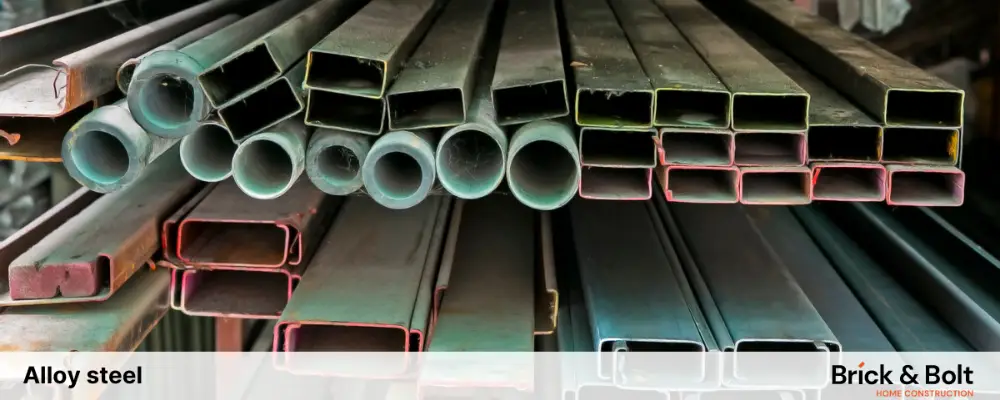
alloy steel

Alloy steel is a versatile material widely used in the construction sector for various purposes. Alloying elements contain excellent hardness, toughness, strength, and wear resistance. Due to its load-bearing capacity and light weight, it can meet various structural requirements.

Steel is classified into various types, including galvanized steel, alloy steel, shaped steel, etc. In this article, you’ll explore in detail about alloy steel, along with its applications, benefits, and types.

What is Alloy Steel?

Alloy steel is primarily composed of carbon and steel, along with various chemical elements such as manganese, nickel, copper, etc. The percentage of these added elements is tailored to enhance the desired properties of the final product. It typically ranges from 1.0% to 50% of the overall weight of the steel structure. These quantities may be adjusted to make some improvements like strength, ductility, elasticity, and resistance to oxidation.

Properties of Alloy Steel

Alloy steel includes various chemical elements; each has its own unique properties. Their functionalities can greatly vary due to the differing quantities added in alloy steel.

For example, the elements mixed at less than 5% can improve mechanical properties like strength and hardening ability. If it is added up to 20%, you can increase the steel’s stability and corrosion resistance even at high and low temperatures.

Some elements of alloy steel, their weight, and functionalities are mentioned in the table below:

ElementsWeight (%)Functionality
Copper0.1 to 0.4Excellent corrosion resistance
Manganese0.25-0.40Allows slower cooling, hence the risk of brittleness is reduced.
Nickel2 to 5, 12 to 10Promotes toughness and corrosion resistance properties in alloy steel.
Chromium0.5 to 2.0Beyond corrosion resistance, they provide excellent strength, tempering, and hardness.
Vanadium0.15Increased impact resistance, hardness, and abrasion resistance.
Sulfur0.08 to 0.15Improved machinability and corrosion resistance.
Tungsten0.8- 24Enhanced structural integrity, increased heat resistance capacity and higher melting point.

Types of Alloy Steel

In general, alloy steel is composed of mixing steel with a number of other elements to achieve the desired properties and traits. It is broadly classified into three types: low alloy steel, medium alloy steel, and high alloy steel. They are explained below:

Low Alloy Steel

It is a ferrous material with excellent mechanical properties due to the presence of materials like chromium, nickel, and molybdenum. The concentration of these elements is typically less than 8% of the total composition. The primary role of these elements is to optimize the mechanical properties and increase toughness after heat treatment.

Medium Alloy Steel

Medium alloy steel is a versatile alloy material widely used for its balanced carbon content and other useful qualities. It includes alloying elements like silicon, manganese, nickel, chromium, and molybdenum in between the moderate amount of 1% and 5%. They are used in various applications, including energy, automotive and manufacturing industries, and construction.

High Alloy Steel

It contains high alloy content, which is more than 8% of its total composition. They provide greater resistance to corrosion and improve mechanical properties compared to carbon steel. It has been widely used from kitchen utensils to medical equipment, including cars and industrial machinery. This is the most popular alloy, which contains at least 10.5% chromium, and it is a bit more expensive than low alloy steel.

Uses and Applications of Alloy Steel

Alloy steel includes enhanced alloy elements, which are used in a wide variety of industries. Here are some common uses and applications:

Construction Industry: Alloy steel plays a vital role in the construction industry. It is used to create a comprehensive range of products, including beams, girders, pipes, sheets, plates, rods, bars, etc. If it is a large-scale infrastructure project, alloy steel involves the creation of motorway barriers, railways, bridges, and electrical pylons.

Manufacturing Industry: Manufacturing industries primarily depend on alloy steel. It’s strength, malleability, and durability are indispensable in the manufacturing of machinery, tools, and equipment. Importantly, steel alloy is used for constructing extensive manufacturing facilities, such as factories and production plants. It improves efficiency and longevity of machinery, helping increase productivity and reduce maintenance costs.

Automotive Industry: Alloy steel is widely known for its strength,  durability, excellent corrosion resistance properties and is used in the production of suspension systems, frames, body parts, and engine components. The demand for lightweight materials is increasing, which boosts the development of high-strength alloy steels. It is because they improve fuel efficiency at reduced weight.

Medical Industry: Medical tools and equipment require excellent strength, durability, and biocompatibility. That’s why alloy steel is considered as the finest choice for implants, surgical instruments, and dental tools. Using reliable and long-lasting equipment improves patient outcomes.

Advantages of Alloy Steel

Alloy steel has several outstanding benefits and has been preferred in various manufacturing sectors. Compared to other materials, alloy steel has the following advantages:

  • Stronger and harder than most other materials
  • Increased ability to get harder
  • Highly resistant to corrosion
  • Excellent load-bearing capacity
  • High melting point
  • Abrasion resistance
  • Increased durability

How is Alloy Steel Manufactured?

Traditionally, steel alloys are manufactured using predetermined proportions of certain pure elements like scrap steel, iron ore, and alloying elements. Initially, they are prepared and melted in furnaces.

In solid forms, an adequate mixing is extremely slow and time-consuming; however, it can be easily accomplished in liquid states. The molten steel is then refined, cast, rolled, and formed into the required shapes.

To achieve the desired properties, heat treatment processes are applied, like annealing, hardening, and tempering. Finally, the alloy steel is ready, which is then inspected and ready for use.

Final Lines

Alloy steel is used in various applications and industries. Based on the base material and properties, its uses may differ. Based on the industry requirements, you can customize the proportion of elements. Thus, alloy steel is a versatile material that is crucial for many industries

Water Leakage: Detection Techniques, Repair Methods, and Prevention Tips

0
Water Leakage

Water leakage is a common problem faced by property owners. They can be the reason for major damage to the property if not attended to on time. They can result in costly repairs and even cause health hazards due to mold growth. It is important to understand the process of water leakage detection, repairing and prevention to protect your investment and maintain a safe living or working environment.

What is Water Leakage? 

Water leakage happens when water escapes from its intended pathways, like pipes, plumbing fixtures, or roofing systems and enters areas where it shouldn’t be. These leaks can range from minor drips to major breaches, causing large damage over time. Areas where water leakage occurs are discussed below:

1) Pipes and plumbing fixtures

Old or damaged pipes, loose connections, or faulty plumbing can result in water leakage in walls, floors, or ceilings.

2) Roofs

Damaged shingles, poor flashing, or clogged gutters can allow water to seep into the structure, leading to leaks.

3) Basements and foundations 

Poor drainage, cracks in the foundation, or hydrostatic pressure can cause water to enter the foundation walls.

4) Windows and doors 

Improper sealing or deteriorated caulking can allow water to enter the building envelope. 

Water Leakage Detection Techniques

Early water leakage detection is vital to prevent severe damage. Few methods can be used for water leakage detection. These methods range from simple visual inspections to advanced technology-based solutions.

Let’s discuss these methods in detail.

1. Visual Inspection

A regular visual inspection is the simplest method of protection against water leaks. Homeowners and maintenance personnel should periodically check areas prone to leakage, such as under the sinks, around toilets, near water heaters and around windows and doors. Signs of leakage are:

  • Water stains: Discoloration on walls, ceilings, or floors is a clear indication of a leak.
  • Mold and mildew: The presence of mold or mildew, especially in areas that are not damp, can signal a hidden leak. 
  • Peeling paint or wallpaper: Water damage can cause paint and wallpaper to bubble, peel, or blister.
  • Unexplained increase in water bills: If your water costs suddenly rise without your usage increasing, there may be a hidden leak. 

2. Water Meter Testing

A water meter test can help to find if there is a hidden leak in the plumbing system. To perform this test, follow the steps given below:

1) Ensure that all the appliances and fixtures that are related to water are turned off.

2) Record the water meter reading.

3) Wait for one or two hours without using any water.

4) Now check the meter reading again. If there are any changes in reading, there is likely a leak in the system.

3. Thermal Imaging

Thermal imaging cameras detect the temperature changes behind walls, floors and ceilings. The location of the leak may be found without damaging the structure since the water leaks often take place in cooler spots in these regions, which the camera can record.

4. Acoustic Leak Detection

It involves using special tools to listen to the sound of water escaping from pipes. This method is useful for water leakage detection in underground or hidden pipes. This tool amplifies the sound of water, allowing technicians to pinpoint the exact location of the leak and fix water leakage. 

5. Moisture Meters

Moisture meters measure the moisture level in building materials like wood, drywall, and concrete. High moisture levels in these materials can indicate a leak. This method is useful for water leakage detection behind walls or under floors without causing damage.

Water Leakage Repair

As soon as a leak is found, it must be fixed immediately to prevent further damage. The water leak repair method depends on the type and place of the leak. 

Let’s have a look at them in detail.

1) Plumbing leaks

For minor leakages, like dripping faucets or leaking pipe joints, repair can be done by the homeowner. Some of the simple  fixes are:

  • Replacing washers or seals: A worn-out washer or seal is a common cause of a dripping faucet. Replacing these components is usually a simple task.
  • Tightening connections: Loose pipe connections can also cause leaks. Carefully tightening these connections can stop the leak.
  • Applying plumber’s tape: Leaks at the threaded connections can be stopped by applying pipe sealant or plumber’s tape to the threads before reconnecting the pipes.

For bigger leaks, like burst pipes, it’s better to call a professional plumber. The plumber may need to: 

  • Replace damaged sections of pipe: If the pipe has burst or is badly corroded, the damaged section must be cut out and replaced. 
  • Repipe the system: In older homes with deteriorating plumbing systems, it may be necessary to repipe the entire system to prevent future leaks.

2) Roof leaks 

Water leak repair on the roof includes:

  • Replacing damaged shingles: If shingles are missing, cracked or curled, they should be replaced to prevent water from seeping into the roof.
  • Repairing flashing: Flashing around chimneys, vents, and skylights can decay over time, leading to leaks. Replacing or repairing can prevent water infiltration.
  • Cleaning gutters: Clogged gutters can cause water to back up and seep under the roof. Regularly cleaning gutters and downspouts can prevent this.  

3) Basement and foundation leaks

Water leak repair is challenging in basements and foundations. Some solutions are:

  • Sealing cracks: Small cracks in the foundation can be sealed with hydraulic cement or epoxy to avoid water infiltration.
  • Improving drainage: Making sure that the ground around the foundation slopes away from the building can prevent water from pooling and seeping into the foundation.
  • Installing a sump pump: In areas where flooding is common, installing a sump pump can help keep the basement dry by pumping out excess water.

Water Leakage Prevention

To protect your property from water leakage, a few solutions can be used to minimize the risk of leaks.

1) Regular maintenance 

Regular checking of the plumbing systems, roofing and drainage systems is essential. Regular analysis and replacing or repairing the damaged components can prevent and fix water leakage. 

2) Installing water leak detection systems

It provides early warnings of leaks, allowing for fast action. This system has water leak sensors placed in the areas prone to leaks, such as under sinks, near water heaters and in the basement. When a leak is detected, the system can alert the homeowner via an alarm, smartphone notification or automatic shutoff of the water supply.

3) Proper insulation

Insulation of pipes in cold climates can prevent them from freezing and bursting. Insulate pipes in unheated areas, like basements, crawl spaces and attics, to protect them from freezing temperatures. 

4) Controlling humidity levels

Controlling humidity levels in your home can prevent condensation which leads to leaks and water damage. Use dehumidifiers in damp areas and ensure proper ventilation in areas like bathrooms and kitchens.

Water leakage is a serious issue that falls under snagging, that can cause major damage if not handled quickly. Homeowners can avoid water leaks by being aware of the reasons and signs of leaks, using water leakage detection methods, and taking proper repair and preventive measures. Regular maintenance and care are important to keep your property safe, dry and in good condition for many years to come.

Understanding Dog-Legged Staircase Designs for Homes

0
Dog-Legged Staircase

When designing or renovating a house, one of the important architectural features is the staircase. Among many options available, the dog-legged staircase stands out due to its functional efficiency and aesthetic appeal. This type of staircase has become a preferred choice in both traditional and modern homes due to its space-saving features and versatility. In this article, we will explore and understand how dog-legged staircase fits into various staircase designs for homes and the key considerations for integrating them into your living space.

What is a Dog-Legged Staircase?

The dog-legged staircase resembles a dog’s bent leg and is made up of two flights turning 180-degree and has a mid-landing that changes the direction of the stairway. The two flights travel in exactly opposite directions of each other. This design is compact and efficient, making it ideal for homes where space is of prime importance. Dog-legged staircases are commonly used in residential buildings and some commercial buildings in situations where the designer aims to make optimal use of limited space.

Components of a Dog-Legged Staircase 

The key components of a dog-legged staircase that play a vital role in the safety, functionality and appearance of the staircase are discussed below.

1. Tread

2. Riser

3. Newel Post

4. Baluster

5. Handrail

6. Landing

7. Pitch

8. Line of Nosing

A brief description of these elements is given below.

1. Tread

It is the part of the step on which we put our foot. The tread is essential because it supports the weight of a person walking up or down the stairs. When designing or building the staircase, consider that it should be wide enough to fit your foot comfortably.

2. Riser

It is the section that separates each step between two treads vertically and determines how high each step is. For comfortable and easy climbing of stairs, it is important to see that the riser is not too high or too low. 

3. Newel Post

It is the vertical post at the beginning and end of the staircase. It provides structural support to the handrail or acts as a main anchor that keeps the handrail sturdy and secure.

4. Baluster 

It is the vertical support that connects the handrail to the rest of the staircase. Balusters are placed at regular intervals along the flight of stairs and help prevent falls by acting as a barrier.

5. Handrail

It is the part that we hold onto to assist during the climb or descent. It is supported by a baluster and newel post and generally runs along the entire length of the staircase. 

6. Landing

It is a flat area at the turning point for people to take a break between two flights. Landing is designed to break the continuous climb and makes the stairs safer and easier to climb by reducing the number of continuous steps.

7. Pitch 

It refers to the inclined angle of the stairs and is measured between the horizontal and the line of nosing. A well-designed pitch can make the staircase comfortable without being too steep or shallow. 

8. Line of Nosing

It is an imaginary line that connects the nosing of every step and runs parallel to the staircase’s slope. Line of nosing helps design stairs that are uniform and comfortable for use.

Planning and Design of Dog-Legged Staircase 

Before you start construction, a few things you need to consider for a dog-legged staircase design are given below.

1) Design for riser and tread: The vertical height of each step (the riser) should be 150mm to 200mm. The horizontal depth of each step, known as tread, should be 250mm to 300mm.

2) Calculate the width of stairs: To find the width for a single flight of steps, divide the total width of the staircase by 2. Minimum width must be 750mm.

3) Find the height of each flight: A dog-legged staircase design divides the height between floors in half, giving us 1800mm for every flight. Calculate the number of risers per flight to get the total height. 

4) Determine total space taken by treads: Once you find the number of risers, subtract it by one, and you get the number of treads. Multiply the number of treads with tread depth between 250 to 300mm.

5) Measure remaining space: Take the length of the stair hall and divide it by the area that the treads occupy.

6) Design the landing: Assume the length of the landing, then calculate the remaining space again for use as a passage. Minimum landing length and width must be 750mm.

Different Staircase Designs for Home

Some vital factors need to be evaluated before designing a home’s staircase, such as available space, safety, and how the staircase complements the overall architectural style. Here is a brief comparison of the dog-legged staircase design with other popular types of staircases. 

  • Straight staircase: It lacks a landing and is suitable for houses with lots of linear space. They are easy to design and comfortable, but can be tiring to climb..
  • L-shaped staircase: They are similar to a dog-legged staircase, but the turn is usually at a right angle. It has open corners and so requires more space than a dog-legged design.
  • Spiral staircase: It is known for its visual appeal and is ideal for small spaces. A spiral staircase can be less comfortable and safe, especially for those with mobility issues.
  • U-shaped staircase: It is like a dog-legged staircase but with two parallel flights connected by a larger landing. It needs more space, and it is often used in large mansions and buildings.

The dog-legged staircase is a flexible and space-efficient design that can be suitable for a range of architectural styles and home layouts. Whether you choose an open well, closed well, or quarter-turn variation, this type of staircase offers many benefits, like enhanced safety, comfort and aesthetic appeal. Consult the professionals at Brick & Bolt, who pay attention to key stair detail elements to create a staircase that not only serves its practical purpose but also becomes a focus point of the home’s interior. 

Overhead Water Tanks: Design, Capacity, and Essential Cleaning Services

0
Home water tank

In residential, commercial and industrial buildings, overhead water tanks are one of the essential components and basic requirements. Overhead tanks are designed to store water at a height above the ground level and ensure a pressurised and steady water supply through gravity to various parts of the building. This article discusses the important aspects of overhead water tanks in detail, so keep reading to learn about these technical features.

Brief on Overhead Water Tanks

Overhead water tanks are installed at elevated levels, mostly on rooftops or specially constructed towers, to use gravitational force to supply water. They are important water distribution systems in buildings, ensuring that water flows through pipes in taps and other outlets without the need for additional pumps. When the area is limited or there is undesirable water pressure, overhead water tanks are a vital part of the project. 

Overhead Tank Design

Overhead tank design involves several key considerations to ensure it functions safely and effectively. The main aspects are material selection, structural integrity, shape, size and foundation. 

Let’s discuss these in detail. 

1. Material Selection

Overhead tanks are commonly made from materials like concrete, steel or plastic. There are advantages and drawbacks to each of these materials. 

  • Concrete tanks: They are strong and durable and offer great resistance to weathering and leakage. However, they are heavy and need strong structural support and may be prone to cracking over time.
  • Steel tanks: They are lightweight and easier to install compared to concrete tanks. They are resistant to cracking, but might need protective coatings to prevent corrosion, particularly in coastal or humid environments. 
  • Plastic tanks: Plastic tanks are the most lightweight, cost-effective and easy to install. They are resistant to corrosion and are available in various sizes and shapes. They may degrade over time due to exposure to ultraviolet (UV) light if not treated properly.

2. Structural Integrity

The structural design of an overhead water tank must consider the load of the stored water, which can be huge. The tank must be designed such that it carries static loads and dynamic loads, like wind or seismic forces depending on the location. It also involves ensuring the tank foundation can bear the total load without excessive settlements, buckling or failure.

3. Shape and Size

The shape of the tank is often rectangular, cylindrical or spherical. Each shape has its own structural advantages which are mentioned briefly below.

  • Rectangular tanks: Easier to construct with concrete, especially for large capacity overhead tanks, but requires careful attention to internal stresses and may be challenging to clean.
  • Cylindrical tanks: They offer great structural stability and are used for both steel and plastic tanks.
  • Spherical tanks: Although they are more difficult to design and build, they offer the best stress distribution. 

The size of the tank is determined by the demand for water, which depends on the number of occupants in the building, the number of plumbing fixtures, and other specific water usage factors.

Estimating the Capacity of Overhead Water Tanks

Calculating the overhead tank capacity is vital to ensure an adequate water supply. It is generally based on the factors mentioned below:

1) Water Demand Estimation

The water demand for a building depends on the type of occupancy, i.e. residential, commercial or industrial and the number of users. For example, in a residential building, the per capita water requirement might be calculated at 135 litres per person per day, as per standard guidelines. The total demand can be estimated by multiplying this by the number of occupants.

2) Peak Demand Considerations

Overhead tank design should be such that they can meet the peak demand scenarios, like the morning and evening times when the water usage is normally highest. The overhead tank capacity should be sufficient to handle these peak times without getting empty.

3) Settings for Fire Fighting

Majorly for commercial or industrial buildings, the capacity of the overhead water tank must also account for water required in case of a fire emergency. In residential buildings, there must also be sufficient water capacity for emergency situations. In these cases, the fire safety regulations may dictate a minimum volume of stored water dedicated to firefighting purposes.

Cleaning Services and Maintenance 

Overhead water tank cleaning is important to ensure the water remains safe for consumption and the tank remains in good structural condition. Regular cleaning and inspection are vital components of this maintenance.

Over time, overhead tanks can accumulate sediments, algae and other contaminants that may compromise water quality. Regular cleaning is necessary to remove these deposits and ensure that water remains potable. 

Cleaning Process of Overhead Water Tanks

The following steps must be followed for the overhead water tank cleaning:

  • Draining the tank: The tank is emptied, either by using the water until it’s depleted or by manual/ pump draining.
  • Scrubbing: The interior surfaces of the overhead tank are cleaned to remove any sediments or biological growths. Special brushes and non-toxic cleaning agents are used for this purpose.
  • Disinfection: After scrubbing, the tank is disinfected using chlorine or other approved disinfectants, which kills any remaining microorganisms.
  • Rinsing and Refilling: The tank is thoroughly rinsed to remove any cleaning agents or disinfectants and is then refilled with fresh water.

Frequency of Cleaning

The frequency of the overhead water tank cleaning depends on the type of tank, the local environmental conditions, and the quality of the incoming water. It is generally recommended that overhead tanks be cleaned at least once every six months. In areas with poor water quality or high sediment content, more frequent cleaning may be necessary.

Structural Inspections

Just like cleaning, regular structural inspections are essential. These inspections should check for signs of cracking, corrosion, and other structural damage that could compromise the integrity of the tank. Any issues found should be quickly repaired to avoid more serious problems.

Overhead water tanks are an important part of the infrastructure in buildings, providing a reliable water supply through gravity-fed systems. The design and capacity of these tanks must be carefully planned to meet the needs of the building while assuring structural integrity. Regular maintenance, like cleaning and inspections, is important to keep the water safe and the tank in good working condition. By following best practices in design, capacity planning and maintenance, overhead water tanks can provide many years of reliable service.

Consult our team of experts at Brick & Bolt, to know the technical aspects and use of overhead water tanks, whether it’s for residential, commercial or industrial buildings.

Sand Filling in Foundation

0
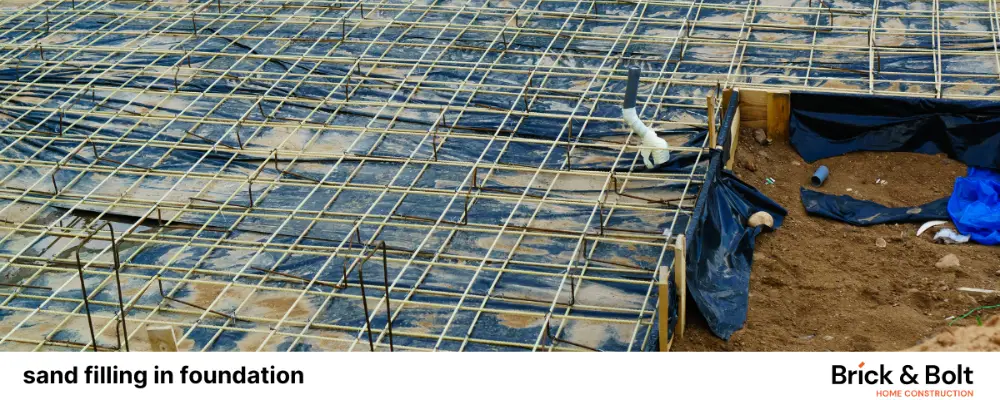
sand filling in foundation

A foundation is crucial for the long life of the building or the structure. A strong foundation supports the weight of the structure built above it. If a foundation is strong enough to support the building, then the life and strength of the building can increase. 

For a robust foundation, stabilizing the basement is a vital process. For this purpose, sands are used. In this blog, let us explore the importance of sand filling in foundation, the types of sand used in the process, and the detailed procedure and application.

What is Sand Filling in Foundation?

Sand filling is the process used to fill the gaps in the base structure, helping to create a stable platform for constructing a building. It can provide strength to the structure to withstand natural calamities. Leveling the basement is essential to build a structure above it. 

If your leveling is perfect, it gains the ability to bear the weight placed upon it, thus increasing the load-bearing capacity of the soil. The sand that is used to fill the gaps should be clean and coarse to attain the best leveling surface. This filling process can be done in different layers to ensure the density and stability of the basement.

Importance of Sand Filling in Foundation

Sand is known for its gritty texture and coarse particles when you rub it in your hands. These coarse fine particles are compatible. If you compact it at high density, sand provides better grip and support for the foundation. They are also perfect for providing strength, stability, and physical support.

Soil Stability

Soil stability refers to the capacity of the soil to limit the erosion of soil by wind or water. Sand is made up of a variety of particles that include silica and other elements. The stability of the soil lies in its bounding nature, which prevents it from breaking apart when exposed to external factors such as wind and erosion. Ensuring the stability of the soil is important for areas that are naturally having loose soil or active soil erosion.

Improving Load-Bearing Capacity

The compact filling of the sand in the foundation provides physical support to the above-constructed building. It increases the load-bearing capacity of the columns and thus evenly distributes the weight to the structure. It also reduces the stress on the soil by balancing the weight throughout the building.

Preventing Water Accumulation

The collection of water below the foundation is a risky issue. It leads to soil erosion, weakened foundations, and structural damage. To avoid these situations, sand filling is used. A drainage layer is created below the foundation to prevent the collection of water under the foundation.

Mitigating Differential Settlement

Differential settlement happens when the soil below the foundation may shift, expand, or contract irregularly. It may cause cracks in the wall or floor, or can form more gaps in the building structure. This can be stopped by sand filling in the foundation. You must check whether the sand is filled evenly at every corner of the foundation to ensure the stability and stiffness of the basement. Sand-filling minimises uneven settlement and enhances the stability and stiffness of the soil.

Reducing Soil Shrinkage and Swelling

Soil shrinkage and swelling mainly happen due to the moisture content in the soil. Soil naturally contains moisture in it. Soil shrinkage and swelling can be prevented by sand filling in the foundation. The compact sand filling doesn’t allow the moisture to interact with the soil. Sand-filling protects the foundation from moisture-related issues by reducing moisture in the soil.

Types of Sand Used in Foundation Filling

Coarse Sand

Due to its excellent drainage properties, coarse sand is used for filling the foundation. The fine and compact layer of these large particles provides a stable basement for a solid foundation.

Fine Sand

Fine sand is comprised of smaller particles and is used for giving a smooth finishing surface. It can be mixed with coarse sand to provide a stable foundation.

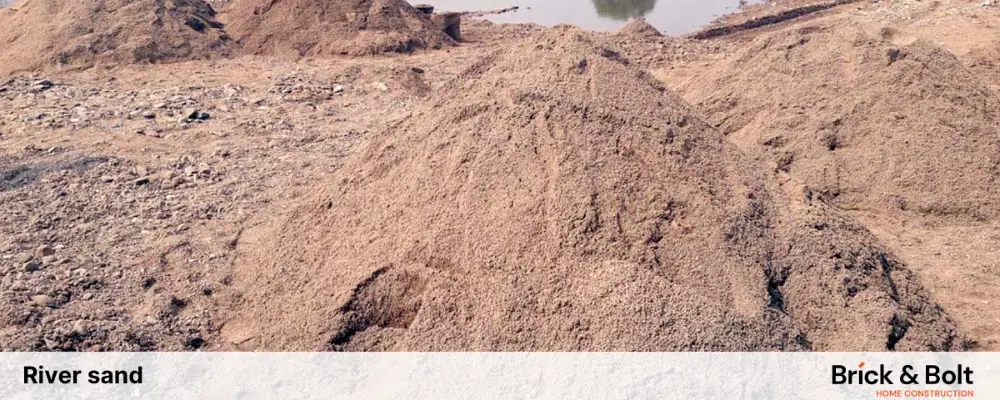
River Sand

River sand is sourced from the riverbed. It is known for its pure and smoothness which is ideal for filling in the foundation.

Manufactured Sand

It is commonly called M-sand. This industrial-manufactured sand is used as an alternative to river sand. These are made from breaking of larger rocks and processed for suiting construction works.

Moram Sand

Moram is a type of sand commonly found in tropical and subtropical regions. It forms through the natural breakdown of rocks, a process driven by the intense rainfall and high temperatures characteristic of these areas. Over time, the weathering of rocks results in the accumulation of this sand in the local environment.

Best Practices for Sand Filling in Foundation

The best practices for sand filling in the foundation include several processes. They are as follows:

1. Soil testing

Soil testing is crucial for determining the quality and type of soil. It helps in selecting the appropriate soil to be used in the foundation and in establishing the necessary thickness of the layers for optimal foundation strength.

2. Layer-by-layer compaction

Usually, sand filling is done layer by layer process. Each layer is compacted to ensure that the sand particles are tightly packed and provide the utmost strength to the building. 

3. Use of water

In the sand-filling process, water is used to wet the layer to give extra bindness and strength to the foundation. But be careful to avoid over-wetting, which could lead to mud creation, which could weaken the foundation.

4. Proper drainage

Proper drainage is important to avoid collection of water below the foundation. This can be prevented by using drainage pipes to enhance the drainage properties of the sand.

5. Regular soil inspection

Regular inspection is needed to check the stability of the soil that is ready for building construction.

Why do we Need Sand Filling Under Foundation Footings?

Sand-filling in the foundation footings is a vital process to provide stable soil. Some important benefits are as follows:

  • Sands are filled to provide uniformity to the basement. 
  • To ensure the structural stability of the construction.
  • Sand filling protects the building from termite attack
  • Helps to avoid the structure directly in contact with the foundation soil.
  • To increase the compact nature of the soil.

Conclusion

On the whole, sand filling is an important process in laying the foundation. It forms a compact layer and strengthens the stability of the soil for its longevity. The overall success of the construction project lies in the sand-filling process.

Fill Sand in construction: A complete Guide

0
fill sand

Fill sand is one of the major materials used in construction work. It helps in levelling ground, acts as a base support for many structures, and aids in proper drainage. Knowing what fill sand is, the different types, where it is used, benefits of using it, and some of the frequently asked questions about fill sand, will be important for both a builder and a homeowner. Read on to learn about these aspects.

What is Fill Sand?

Fill sand, as the name suggests, is a kind of sand used to fill in different spaces such as holes or low spots on the ground. It is generally a mixture of silt, crushed aggregates and dirt. Its most common use is in  construction to build a solid base to lay structures as well as buildings. Fill sand is extracted from natural sources like rivers and beaches. At factories, it can also be produced to meet specific needs.

The size of the granules of fill sand varies. Some fill sand has large-sized granules, while other types have smaller-sized granules. The size of the granules affects their application methods. Coarse sand is generally used for drainage, while fine sand is utilised in areas where finishing jobs are to be done. The appropriate type of fill sand depends on the nature of the job in question.

Types of Fill Sand Used in Construction

Several types are used during construction. Here are some of the most prominent:

1. Coarse Sand

Coarse sand has bigger-sized granules and is hence utilised for drainage purposes very often. It allows water to flow through efficiently, thus enabling recharge of groundwater. Coarse sand finds its application in backfills around the foundation and also in premixes of concrete. It is also largely used in landscaping and outdoor spaces.

2. Fine Sand

Fine sand includes smaller grains and is used in places where it would be visible. This type is generally more expensive and not easily available. 

3. Sand for Utilities

Utility sand can be a mixture of coarse and fine grains. Due to these two grainy textures combined, many uses become possible. Common applications include filling around utility wires and pipes, like water and gas pipes. The support and protection that this gives them helps in preventing any kind of damage.

Uses of Fill Sand in Construction

Fill sand has many key applications in construction. Some of the major uses are as follows:

1. Preparation of Foundation

The purpose for which fill sand is mainly used includes the preparation of the foundation. A building is incomplete without a proper, solid foundation. It aids in providing an excellent base that prevents settling and shifting. If land is uneven, fill sand can be used to level the surface.

2. Landscaping

Fill sand is also utilised in landscaping projects, especially for levelling gardens and lawns. This is most commonly used to fill any low spots in a yard for level ground or to create pathways or other decorative features within a garden. It is also used to create porous layers to recharge groundwater.

3. Utility Installation

Filling sand is one of the important steps when laying utilities underground. This protection works as a covering layer for underground or ground level pipes and cables. The layer assists in preventing the deterioration of these utilities due to shifting soil. This, in turn, helps minimise any leakage problems that may arise with time. Utility lines that are buried for longer obtain safety with the help of fill sand.

4. Site Preparation

Site preparation is done before construction. Fill sand is used in levelling and filling the area where buildings are to be constructed. This stabilises the ground, and makes it ready for construction. 

5. Erosion Control

Fill sand will provide further assistance in preventing erosion in areas that are susceptible to the runoff of water. Due to the stability of its surface, fill sand will prevent soil from washing away during heavy rains. This becomes extremely important at construction sites where the issue of soil stability may be in question.

Advantages of Fill Sand

Many benefits come with using fill sand. Here are some of the key advantages:

1. Stability

Stability is the reason why fill sand is used as a base to strengthen structures. There should be stability so that the buildings would remain safe and secure for quite a longer period. A solid foundational base will help avoid problems such as cracks and shifting.

2. Good Drainage

Fill sand is characterised by good drainage properties. The size of the sand grains allows water to pass with much ease, and this prevents problems of puddle formation and flooding. 

3. Versatility

Fill sand is versatile and can be employed as the base or for several purposes being pursued, be it landscaping or placing utilities. Thus, it is used for foundations in a broad range of projects, and is a valuable resource for builders and contractors.

4. Ease of Handling

Filling sand is lightweight and easy to handle. Therefore, it is easy to transport to construction sites. The ease of handling reduces the cost of labour involved and increases efficiency in a process which otherwise takes a lot of time during construction.

5. Cost-Effective

Fill sand is usually cheaper compared to other fill materials, as it is largely made from waste materials or impure sand.

Conclusion

Fill sand is one of the major materials used in construction for its stability, good drainage, and versatility. Understanding the types of fill sand and the uses for each significantly aids builders and homeowners in making informed choices for their projects. Indeed, fill sand is an important material to consider in achieving successful construction results, whether in preparing a foundation, landscaping, or installing utilities.

If fill sand is utilised properly, it can be used in the building of solid and enduring structures; this will further improve every construction undertaking. As you plan for your next project, consider the many benefits of fill sand and how it can contribute to your success.

River Sand in Construction: A Complete Guide

0
River sand

River sand is a crucial material used in construction. It’s key for building roads, bridges, and homes. So, knowing its properties and uses helps builders and homeowners make better choices. This article will cover what river sand is, its importance, properties, pros and cons, and how to choose the right type.

What is River Sand?

River sand is naturally occurring sand obtained from riverbeds and along the banks of rivers. It is formed by the disintegration of surface rocks and minerals, carried by the water that flows in the riverbed, making it fine-grained and smooth in texture. The color of the sand may normally be white to beige; it may perhaps differ based on the location and constituent minerals.

What Is The Role Of River Sand In Construction?

River sand serves several purposes around construction.

River sand is crucial for concrete. Concrete has cement, water, sand and aggregates. River sand is a key aggregate. Its fine texture helps create a smooth, workable mix. This mix is easy to pour and shape.

Then, river sand is used in plastering and masonry. It gives the walls and surfaces a strong and durable finish. Fine grains of the sand allows better adhesion of plaster and mortar, hence making the structure solid.

River sand also serves as a bed for bricks, tiles, and stones. It creates a level base and allows drainage, preventing water buildup under structures. 

What are the Properties of River Sand?

Proper application of river sand in construction is impossible without profound knowledge of the properties of river sand. Some of the basic properties are listed below.

  1. Grain Size: River sand does not have uniform grain size. Grain size can range from fine to coarse gravel, depending on the location from where it is sourced.
  2. Shape: The river sand grains are rounded or sub-rounded in shape. This shape gives better workability, with less friction between the particles, making the process of mixing with cement easier.
  3. Colour: The colour of river sand may vary, although it most commonly appears in light shades of beige, golden brown or white. This factor could have some effect on the final looks of concrete and plaster.
  4. Cleanliness: River sand can often consist of impurities accumulated by the flow of water. Cleaning this sand is very important in preventing contamination in concrete and mortar mixes. 
  5. Absorption Rate: The water absorption rate in river sand is moderate; it can hold some moisture. This property helps during the mixing process in maintaining workability.

Advantages and Disadvantages of River Sand in Construction

Advantages:

  • Good Workability: River sand has fine texture, which permits ease of mixing or application in construction.
  • Strength: Because river sand can provide high strength in concrete and mortar, it makes the structure last longer.
  • Availability: Many regions have rivers abundantly, hence making it one of the convenient choices for building purposes. However, they are scarcely available in regions without rivers.
  • Cost-Effective: River sand is generally more expensive than other types of sand, especially M-sand.

Disadvantages:

  • Impact on the Environment: Environmental problems associated with the over-extraction of river sand include erosion, habitat destruction, and change in the state of river flow.
  • Quality Variation: The quality of river sand can be different depending on the location or source it comes from. The sand must be tested for impurities and suitability for construction.
  • Supply Limitation: It may become scarce in some areas because of the regulation of river sand supply and now, for environmental reasons.

Applications of River Sand in Construction

There are several uses of river sand in the  construction industry. The common ones include:

  • Concrete production: River sand is a major ingredient in the production of concrete, imparting strength and workability.
  • Masonry and plastering: It finds application in the manufacture of mortar for bricklaying and plastering, which holds materials together, imparting strength.
  • Landscaping: It is also utilised for landscaping purposes, such as pathways, filling, and improving drainage conditions.
  • Backfill material: It can be utilised as a backfill material in trenches and foundations for support and stability.
  • Sandboxes and play areas: The fine texture of river sand makes it ideal for children’s sandboxes and play areas.
  • Glass manufacture: River sand is an important raw material in the production of glass, which is another vital material used in construction.

How to Choose Good River Sand for Construction

Top-quality river sand is of utmost importance to produce optimal strength and durability of built structures. Some tips on selection are as follows.

  1. Check for cleanliness: The sand in the river should be clean and free from impurities such as clay, silt, and organic matter. Impure sand may cause weaknesses in concrete and mortar.
  2. Grain size test: The sand should be of uniform colour and size, to ensure uniform and workable mixes.
  3. Look for consistency: River sand from authentic suppliers would promise consistent quality, because variations in the nature of the sand can give variable strengths and durability to the built product.
  4. Conduct a moisture test: The sand must be tested for moisture content. A high level of moisture in the sand could affect the mixing and final concrete strength.
  5. Take professional advice: Consult professionals in the field of construction or consultancy in case one is doubtful about the quality of the river sand.

Conclusion

River sand is indeed an essential construction material. Understanding what river sand is and the selection of quality material should ensure successful construction projects for both the builder and the homeowner. Remember that the right choice of materials is a guarantee of good and sound construction.

Although river sand has a few advantages like good workability and strength, there are environmental considerations and quality problems associated with its use. Due to these issues, its use in construction has also been banned and deemed illegal in many areas. Therefore, it is advisable to consult with industry experts before opting for the use of river sand.

FAQ’s

1. Is river sand better than manufactured sand?

River sand generally has better workability and produces better result in concrete mixes.  However, the quality of manufactured sand may be more consistent.

2. How to check the quality of river Sand?

Do a cleaning test to ensure that it does not have any dirt or organic materials. You could also check on the size of the grain for evenness and check moisture content by drying a sample.

3. What are the environmental costs of river sand?

Over extraction of river sand leads to erosion, kills the wildlife, and disrupts the ecosystem. Sand is used now, but let us try to use as little as possible and discover alternatives wherever we can, to avoid further environmental degradation.

Exploring Types of Rooftop Cooling Solutions

0
Cool roofing solutions

A cool roofing solution is introduced to help reduce the temperature of the building. In return, it leads to energy savings and increased comfort. These roofing solutions are designed to avoid excessive heat from sunlight without reducing the amount of natural light in a building

A cool roof is a roofing system that has high solar reflectance. It works more efficiently than the standard roofing products. Cool roofs, as the name suggests, are cooler than traditional roofs. It’s an added advantage to reduce energy bills. 

Importance and Necessity of Cool Roofs 

  • Cool roofs are used as part of climate adaptation strategies to combat excess heat from the roofs. 
  • Cool roofs increase thermal comfort in a building and help with improvement in mental health and increased productivity.
  • They stand as a cost-effective system for the long run due to energy savings. It significantly reduces the roof surface temperature, contributing to sustainable practices. 

Let’s dive into detail to discuss the various cool roof solutions that are available.

Rooftop Cooling Solutions and Strategies

There are several ways to reduce the temperature of roofs, resulting in cooler spaces inside a building. Some of these strategies are discussed below.

Roof Slabs as a Structural Covering for a Cool Roof Solution

A roof slab is a flat horizontal structural element that is an integral component of the building. It supports and protects the building structure and also bear loads

Structural Roof Materials for Cooling

Roofs are commonly made of RCC or wood. However, the use of alternative materials can help in cooling roofs. Some of these are:

  • Hollow concrete tiles: hollow concrete tiles are precast concrete units with hollow cores. The cores reduce the weight of the tiles, maintaining structural integrity and allowing air flow to cool roofs.
  • Lime concrete: Lime concrete is a traditional building material used instead of cement. Typically, it consists of line sand and core aggregate like gravel. It allows moisture to evaporate, bringing breathability.
  • Mud roof: These provide a sustainable system for cooling rooftops, since mud or clay is the primary material utilised.
  • Filler slab: A filler slab reduces the amount of concrete in an RCC slab by substituting it with other materials like clay pots or tiles, which can drastically reduce indoor temperatures.

Advantages of Cool Structural Roofs

  • The structural roof itself creates cooler temperatures, reducing the need for additional cooling solutions. When combined with reflective coating and insulation layers, cooling properties are enhanced.
  • Roof slabs can be used as bases for green roofs. In this way, it provides additional insulation and environmental benefits.
  • This system provides a strategy to improve thermal comfort for building occupancy without additional expense. 
  • Insulated Roof Panel for Cool Roofing Solutions 

Insulated roof panels consist of a core insulating material called which is present between two layers of structural materials of the roof itself. These are generally durable, such as metal or plastic. The primary purpose of insulated roof panels is to provide thermal insulation which enhances the overall comfort of a building and provides structural support. They help reduce the energy cost while improving the aesthetic appeal of the building. The roof panels are known for their long life span. They are often used for residential and commercial buildings. 

Different Types of Insulated Roof Panels 

  • Polystyrene foam core panels: popularly known for their excellent insulation properties. It is highly cost-effective.
  • Polyurethane foam core panels: They usually offer the highest insulation value. The area value is approximately 7 per inch in this type. 
  • Mineral wool core panel: It provides fire resistance and sound insulation
  • Modified bitumen membrane: It is a popular roofing solution. Modified bitumen membrane is an asphalt-based roofing material.
  • Thermoplastic membrane: Thermoplastic membrane is an artificial roofing material. It allows the material to be heat welded. Moreover, it offers excellent durability, energy efficiency, and flexibility. 

Advantages of Insulated Roof Panels

  • Some panels include thermal break, which prevents heat transfer. It reduces and prevents the transfer of heat between the outer and inner layers.
  • Many panels have reflective surfaces to reduce heat absorption. These panels have varying thicknesses, which impact the R-value. A higher R-value indicates better insulation. It reduces the heat and is designed to withstand harsh weather conditions.
  • The insulated roof panels require lower maintenance than the traditional roofing materials. They last approximately 30 to 50 years.
  • They provide excellent thermal performance and reduce the dependency on HVAC systems. The UV coating provides insulation and protects it against sun damage.
  • They are a cost-effective way of cooling rooftops.

Intermediate Insulation Layers for Cool Roofing Solutions 

Insulation roofing systems are materials installed between the inner roofing and the outer roofing material. It is designed to enhance thermal performance and reduce heat transfer. The primary purpose of the insulation layer is to lower energy consumption. They help contribute to the longevity of the roofing system.

Different Types of Insulation Layers

  • Cellulose fibers: These are natural fibers made from the cellulose of the polymer of glucose. Cellulose fibers can be obtained from the bark or leaves of the plants. The primary purpose of cellulose fiber is to provide a sustainable alternative to synthetic fiber.  
  • Mud paska: Mud paska is an insulating layer made from a mixture of soil straw and cow dung. It is an organic material on the roof that provides insulation and cooling. 
  • Inverted earthen pots: These are clay pots placed upside down on the roof surface. Without relying on the mechanical cooling system, it leverages natural insulating properties. The air is trapped inside the pot and acts as an insulator. These can be covered with a layer of concrete or similar material to ensure walkable space on the rooftop.

Surface Finishes as External Roofing Layer for Cool Roofing Solutions 

Surface finishes for cool roofs are coatings or treatments applied to external roof layers. This improves the solar reflectance and thermal emittance. These finishes can be applied to various roofing types, including metals, asphalt, and tile roofs. The primary purpose of cool roof surface finishes is to reduce heat absorption and increase reflection of light.

Different Types of Surface Finishes 

Cool roof membrane 

These are single-ply membranes that are naturally reflective. Typically made from materials like TPO (thermoplastic olefin) or PVC (polyvinyl chloride). 

These membranes can reflect up to 80% of the sunlight. It significantly results in reducing the heat transfer into the buildings. 

Metal roof with a reflective coating 

Metal roofing panels coated with reflective paint. These enhance the natural reflectivity of metal roofs, reducing the cooling cost.

Common metals, including aluminium and steel can be coated with Kynar 500 and similar reflective paints.

Tile roofs with reflective glazes 

These include clay or concrete that are coated with reflective glazes. The glaze increases the tile’s ability to reflect the sunlight. Reflective tiles can lower roof surface temperature. It contributes to cooler indoor environments. 

Ballasted roofs

These are roof types that are covered with gravel or paver. The ballast layer protects the underlying roof membrane. This adds a thermal mass. The reflective properties of light-coloured ballast can reduce heat absorption.

5. False Ceiling Internal Roofing Layer for Cool Roofing Solutions

false ceiling is a secondary ceiling usually hung below the main ceiling. This is often made from materials like gypsum, metal and fiber. It serves decorative and functional purposes. These ceilings largely include thermal insulation and soundproofing as they act as drop ceilings. It adds aesthetic appeal to interiors, making it an effective component of cool roofing solutions.

Different Types of False Ceiling 

Gypsum board ceiling: They are lightweight and easy to install. It offers good thermal insulation. 

Metal ceilings: Ceilings are durable and fire-resistant. They are suitable for commercial spaces and are generally made of aluminum or steel.

Mineral fibre ceilings: They have excellent acoustic properties and thermal insulation. 

PVC ceilings: These PVC ceilings are moisture-resistant. They are easy to maintain. It acts as a barrier to heating and enhances indoor cooling. 

Wooden ceilings: These are panels made from natural wood. It is aesthetically appealing with good insulation properties. 

Glass fibre-reinforced gypsum ceilings: These are panels made from gypsum reinforced with glass fibres. It provides thermal insulation, reducing heat gain.

Bamboo ceilings: These are panels made from bamboo. Generally, they are eco-friendly with good insulation properties and act as a natural insulator. 

Thermocol ceilings: The panels are made from expanded polystyrene. It provides thermal insulation and is moisture-resistant. 

Conclusion 

Cool roofing solutions are a sustainable and efficient way to manage excess heat. With various types of materials available, cool roof solutions can be selected to suit specific needs. When properly implemented, they can efficiently cool indoor spaces, creating thermally comfortable spaces. In the modern era of global warming, such solutions are a vital portion of construction.