Home Blog Page 41

Dead Load in Building: Overview & Accurate Calculation

0
dead-load

Estimating the self-weight of all elements in the buildings is significant to ensure the structural stability and integrity. It includes the roof, concrete beam, walls, flooring, etc. The term “dead load” refers to one of many structural loads that play a vital role in a structural design. It needs to be evaluated by the engineers in construction for every project.

If you are involved in commercial or residential construction work, being aware of this term may be helpful. So, in this article, we’re about to discuss what a dead load is, its examples, and how to calculate it.

What is Dead Load?

The dead load is a type of load that refers to the constant load in the building, such as the self-weight of structural elements and non-structural components. 

In structural design, the weight of each fixed and permanent element in a building contributes to the dead load. So, if you are dealing with any renovation project and want to increase the loading capacity of your floor, then consult your structural engineer to ensure no trouble can occur.

Importance of Dead Load in Structural Design

Dead load is a crucial factor in structural design because it directly deals with the overall load on the structure. Here are some reasons why dead load calculation is important:

Ensures Stability and Safety: Dead load is a way to calculate the total load transferred to the foundation. Potential collapse and structural instability is caused when dead load exceeds the designed load. Estimating it in advance can save you from costly impacts.

Improves Structural Efficiency: Accurate estimation of dead load allows engineers to optimize the material usage and design the load path efficiently. It not only reduces the cost and material waste but also ensures the right amount of load is transferred to the foundation.

Long-term Performance: A proper dead load distribution contributes to long-term performance. The loads within acceptable limits prevent cracking, shrinking, buckling and failure in structural elements.

Components of Dead Loads

Dead load includes various components such as:

Structural Elements: Walls, beams, slabs, columns, and other structural members are added to the dead load.

Architectural Elements: Elements like bricks, tiles, metal sheets, stone, drywall, plaster, flooring materials, or meta panels also contribute to the dead load.

Mechanical and Electrical Systems: pipes, valves, heating, air conditioning systems, wiring, electrical equipment, ducts, fans, and other elements related to this field will also be added to the dead load.

How to Calculate Dead Load

As mentioned earlier, dead load is the self-weight of the structure or construction. To calculate the dead load, multiply the unit density of the structure with its actual thickness. It will give you the weight of the structure per area.

For example:

A concrete slab has 0.25 m thickness. The unit weight of the concrete is 25 kN/m3.

Then the unit weight value is calculated as:

 25 kN/m3 x 0.25 m = 6.25 kN/m2.

In case density of a concrete slab is mentioned in kg, it should be converted to kN [kilonewton].

For example, the density of a slab is 2400 kg/m3, and the thickness is 18 cm.

Unit load = 2400 kg/m3 x 0.18m = 432 kg/m2

To convert kg into kN, you need to multiply the result with 0.0098.

Unit load= 432 kg/m2 x 0.0098 = 4.24 kN/m2.

This value only denotes the dead load contributed by the slab itself. To this, other load values such as screed, insulation layers and flooring finish must be added to obtain the total dead load of the floor slab.

Dead Load Direction

Dead load direction is the fundamental principle in structural engineering for load calculation. The self-weight of the constant structure is denoted as the dead load, which is vertically downward towards the earth’s center of gravity.

It is primarily responsible for handling the compressive stresses in structural elements like foundations and columns. But in most cases, it is applied to the horizontal elements like flat roof, slab stairs, and balcony. In sloped structures, the dead load acts vertically downwards, but is distributed along the inclined angle of the structural element.

Differences Between Dead Load and Live Load

FeaturesDead LoadLive Load
Nature of loadsThe weight of the constant structural elements, such as walls, floors, and roofs.Live load denotes the weight of movable objects and occupants within the structure including vehicles, people, furniture and equipment.
StressesDead load primarily causes compressive stress in the structure, especially in columns and foundations.It causes both bending and compressive stresses in structural members, such as slabs and beams.
VariabilityIt is constant over timeLive load varies over time and location, particularly based on the structure’s usage and occupancy.
PredictabilityIt can be predicted accurately with the structure’s materials and design.Accuracy is difficult, however, the estimation is primarily based on usage and occupancy standards.

Final Thoughts

Now, you can understand what dead load is and how it is differentiated from live load. Beyond that, there are multiple loads acting on the structural element. However, these two loads are essential to discuss. Load combinations with safety factors ensure structural strength and integrity. It is important to consult structural or civil engineers for load calculation to ensure a building’s structural stability, safety and durability.

A Comprehensive Guide to Bubble Deck Slabs in Construction

0
bubble deck slab

The bubble deck slab is a method of construction that is known for its diverse applications. It replaces concrete in axial points with balls or similar materials and strengthens the building. It is a unique method and decreases the structural weight of concrete slabs by fifty per cent. Read on to learn about what it is, its types and applications.

What Is a Bubble Deck Slab?

A bubble deck slab utilises steel and hollow plastic balls (known as bubbles) to decrease the concrete slab weight in a building. The centre part of the slab that is made of concrete is replaced by balls, thus reducing the weight of the slab by fifty per cent. 

The bubble deck slab is a type of slab that has an upper hand in terms of rapid construction, reduced environmental impact, sustainability, and decreased cost. This technique is used in different types of building construction, including hospitals, schools, offices, and schools. 

Types of Bubble Deck Slabs 

There are different types of bubble deck slabs that are used in the construction process. Some of them are explained below:

Semi-Precast Slabs

It is a combination of unconstructed and constructed elements. The precast concrete layer has a thickness of 60 mm which is brought to site, with the bubbles, and reinforcement steel bars being unattached. 

Above the precast layer, the bubble is supported by a temporary stand and further supported by interconnected steel. The bubbles and steel are then locked into place and the remaining concrete is poured. This method is useful when the design needs to be customised on site.

Reinforcement Modules

These modules contain a pre-assembled steel mesh and bubbles organised in place. They are placed after bringing them to the site and are connected with extra reinforcement. The concrete is then poured.

They generally follow a traditional style of construction in which standard modules or layouts of bubbles and reinforcement are required. The bubble deck can be utilised in tight construction spaces. To increase the storage efficiency, they can also be stacked upon one another. 

Finished Slabs

The finished planks are modules that are completely shop-fabricated and include plastic spheres, mesh reinforcement, and concrete. The entire process happens in a different place, i.e, in factory settings and is delivered to the construction site as a fully formed slab. This model works better for shorter spans and restricted construction schedules. 

Advantages of Bubble Deck Slabs

The applications and utilisation of bubble deck slabs are vast, and some of the applications are listed below:

Reduction in Concrete

Bubble deck slabs replace the axial concrete, hence reducing the concrete weight and making the structure lighter by thirty to fifty per cent. The eliminated volume is used by HDPE bubbles, thus decreasing the dead load of the structure. 

Increased Strength

The mixture of concrete and high-density polyethene (HDPE) spheres will decrease the slab weight. This increases strength, decreases deflections, and leverages flexural strength, thus providing stiffness, shear force, and larger spans with decreased design loads to spread the weight through columns. 

Architectural Design

Bubble deck slabs increase the architectural freedom of designers and can also be utilised in non-rectilinear plan forms. This allows enhancement of aesthetic values without restricting creative design. 

Reduced Cost Due to the reduced amount of concrete and lower transportation charges (due to lightweight), bubble deck slabs are generally cost-effective.

Materials and Specifications Used in Bubble Deck Slab

Bubble deck slab is an innovative method that includes hollow plastic spheres within concrete slabs to decrease the weight and material. Its common components are listed below:

Concrete:

The concrete grade that is used in bubble deck slabs is M20 or higher. The maximum aggregate size should be 20 mm. The type of concrete used for the slab can also be used in joint filling. 

Reinforcement Steel:

The reinforcement steel that is used for the bubble deck slab is Fe-500 or higher grades than this. They are placed or arranged as two meshes to support vertical or lateral loads. 

Plastic Spheres:

Polypropylene or high-density polyethene materials (HDPE) are used. The size and diameter range from 180 to 380 mm. 

All these structural materials work as a group to create a strong yet lightweight structure that can reduce the structural dead load. 

Installation of Bubble Deck Slab

The installation process of bubble deck slabs is listed below:

  • The panels reach the site and are lifted to the specific floor with the help of specialised equipment.
  • Once the panels reach the specific floor, they are laid perpendicular, that is, ninety degrees in angle, on the temporary prop runners. 
  • After ball placement, the concrete is poured into the gaps in the balls.
  • Right after pouring the concrete, the cement is cleaned using high-pressure water to remove dust and keep it tidy.
  • If the connections are not uniform, then add fluids or a thin silicon layer to adjust it. 

The installation process of a bubble deck requires specific alterations and processes according to the usage and project needs.

Conclusion 

Bubble deck slab is a versatile engineering method that helps to decrease the weight of the building. This is possible by replacing concrete with plastic balls. This plays a crucial role in construction and provides strength to the building. These bubble deck slabs have several advantages compared to conventional methods such as energy efficiency, reduced cost of transportation, fireproof, explosion safety, and earthquake safety. It is important to understand the structure and installation method to use them in your building. 

FAQs

1. What is a bubble deck slab?

A bubble deck slab is a patented integrated method that links steel, air, and concrete in a two-way structural slab. Hollow plastic balls are used to reduce concrete and are held using reinforced steel.

2. What are the sizes of bubble deck slabs?

The slab depth ranges from 200-500 mm. The diameter of the bubbles depends on the depth of the slab and can range from 180mm, 270mm, 360mm, 315mm to 225mm.

3. Why is the bubble deck slab not preferred in India?

The critical reason for the minimum usage of bubble deck slabs in India is their high initial cost. Compared to conventional concrete, it is costly and is often not used in India due to this reason.

The Differences Between End Bearing Pile and Friction Pile

0
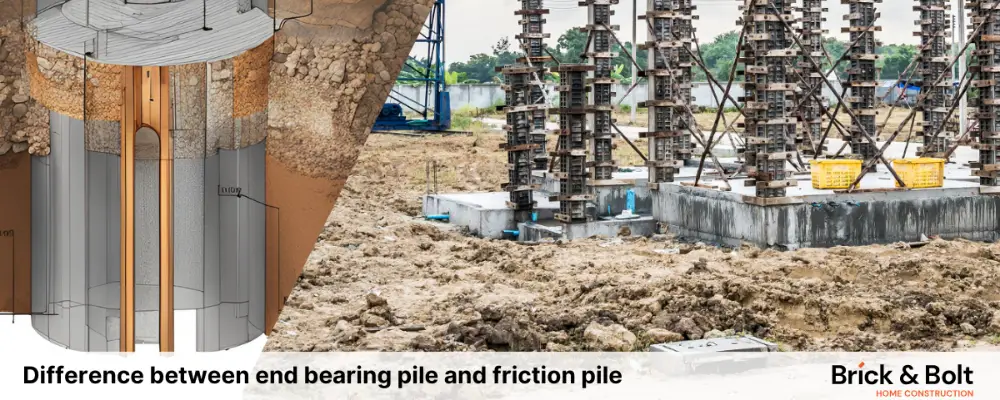
difference between end bearing pile and friction pile

The construction and civil engineering landscape is ever-evolving. In this, the choice of foundation system plays a critical role. It also stands as a decisive factor for the project’s success. Deep foundations are vital in building structures. They give stability and strength in unpredictable soil conditions and urban environments. 

The demand for deep foundations is expected to increase significantly in the coming years, with the piling method having a significant impact on the construction industry. 

Two predominant types of deep pile foundations are:

  • End bearing piles 
  • Friction piles 

Read on to learn more about the differences between these two types.

What is an End Bearing Pile?

End-bearing piles are used to transfer the structural load into stronger layers of the soil. It is also known as point-bearing piles. This is a type of deep foundation in which the load is transferred from the weak layer to the stronger soil. 

This load is transferred to the bottom tip, and the pile acts like a column which provides support to the above structure. The end-bearing pile is ideal for surfaces with weak soil. Also, they are used for heavy concentrated loads. This includes bridges, high-rise buildings, and water tanks.

What is a Friction Pile?

Friction piles transfer the load to the soil. However, it is done primarily through skin friction along their length. These are also called floating piles. Often, friction piles are made from various materials like concrete, steel, and timber. It is commonly used in areas with deep, soft soil. In this case, end-bearing piles are not feasible. 

The design involves calculating the pile’s bearing capacity, which is based on soil properties and pile dimensions. Typically, the load is transferred through the pile’s surface area in contact with the soil. It can be driven to greater depths, often up to 20 meters or more.

Differences Between End Bearing Pile and Friction Pile

Load Transfer Mechanism 

Piles are structural elements which transfer the load of a building or structure from a weaker to a more stable layer of soil. 

End bearing:

The load carried by the pile is transferred entirely. It passes through the pile’s top or bottom. The pile penetrates through weaker, compressible soil layers. It then reaches a firm, stable layer, which may be rock or dense sand. This layer has a high load-bearing capacity. The pile acts like a column and transfers the load below. 

Friction Pile:

Friction piles rely on the interaction between the pile’s surface and the surrounding soil. This helps to support the load. The pile’s surface area contributes to load transfer. There is frictional force that occurs between the pile shaft and the surrounding soil.

The load is gradually distributed along the length of the pile. It is not concentrated at the tip. Therefore, the soil layers themselves can produce enough friction to carry the load.

Suitable Soil Conditions:

The soil type is specified based on the pile type. It is primarily determined by the strength and soil conditions. 

End Bearing Pile Ideal Soil Conditions:

  • End-bearing piles are ideal when hard soil layers are available below. These are generally solid, non-compressible layers. For example, bedrock, dense gravel, or compacted sand. It should be available at a reasonable depth from the surface.
  • The upper surface layer is soft and compressible; load must be transferred to the bottom. 
  • An end-bearing pile is designed to penetrate through these weaker layers. It reaches the solid layer to gain adequate support.

Friction Piles Ideal Soil Conditions:

  • Friction piles get support from soils that can generate significant friction. It includes clay, silt, and sand.
  • The subsoil is predominantly soft and cohesive. There is no firm layer present. In such circumstances, friction piles are ideal. It can transfer the load deeper into the soil.
  • Soft to medium-stiff clays, loose to medium-dense sands, silts, and similar soils can offer surface friction. These do not possess high bearing capacity at any specific depth.

Load Distribution:

  • End Bearing Pile

The load is concentrated at the pile tip. The majority of the load is concentrated at the bottom tip of the pile. The strong layer is deep in the soil profile. It can bear the load.

  • Friction Pile

The load is distributed along the entire length of the pile. It is transferred from the pile shaft to the surroundings. As the pile is driven deeper into the soil, more surface area is engaged, and friction increases.

Shape

End Bearing Pile

It can be circular or H-shaped. They are based on the structural and soil conditions. Circular piles are commonly used in drilled piles. The main focus is transferring load to a firm layer.  H-shaped steel piles are often used because of their cross-section. It provides strength and penetration power.  Also, significant resistance that is required during installation is provided.

Friction Pile

It is generally circular to maximise surface contact. A circular cross-section provides a uniform distribution of stress and increases the frictional interaction with the surrounding soil. It is more effective in distributing load through friction along the entire pile length.

Settlement

End Bearing Pile: 

It shows minimal settlement if the firm layer is reached. The load from the structure is transferred directly to the firm layer. It passes through the pile tip. This prevents the pile from sinking further. This makes end-bearing piles ideal for projects requiring high stability and minimal settlement.

Friction Pile: 

It may experience more settlement due to soil compression. It can compress under the weight of the structure. However, the settlement occurs as the soil around the pile shaft compresses or consolidates. It occurs especially in softer or more compressible soils like clay or loose sand. The softer the soil, the greater the potential for settlement. This is why friction piles may require longer monitoring. 

Conclusion

In conclusion, both end bearing and friction piles are important in modern construction. Their distinct functionalities make them suited for different scenarios. End-bearing piles transfer loads directly to stronger, more stable layers. This makes them ideal for structures in densely built environments with high load requirements. Friction piles, on the other hand, distribute loads along the length of the pile and are suitable when there is no strong soil available at any depth.

Understanding the differences between these two pile systems is critical in optimising construction designs. It ensures sustainability and minimises risks in today’s rapidly evolving urban landscape. By carefully selecting the right pile type, engineers can enhance the safety and efficiency of projects..

Steel Column: Types, Key Considerations, and Uses

0
steel column

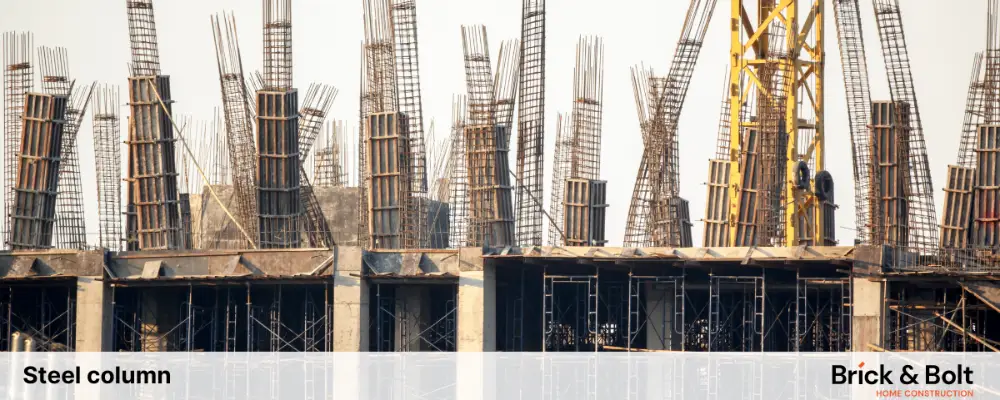
The stability of very large buildings and structures is ensured with the help of steel columns. They act as the foundational pillars in construction and have been used for various applications in construction. There are various types of columns based on shapes and design; they are used in different structures according to their needs. 

These columns are prepared for bearing optimal loads and help in ensuring the stability of the structure. They can also be used for fire resistance and improve durability for environmental factors. This blog will help you understand more about the significance of steel columns that are used in modern construction.

What is a Steel Column?

A steel column is a structural element that is used in buildings and other structures. It is normally in a vertical position and also helps in transferring the structural load downward. It is important for framing any building and also helps in supporting the structure and maintaining its stability.

The basic structure of a steel column is a long vertical element that is made of steel. The thickness and size are made according to the building requirements. Normally, high-strength steel is used so that it has the capacity to withstand heavy loads and forces without any deformation. 

Steel columns are connected to the beams with the help of welds or bolts. These connections are solid and stable, so the column can play its role efficiently. The fire resistance is also important in columns, so fire resistance coatings are normally used.

Types of Steel Columns

Column TypeDescriptionUnique CharacteristicsTypical Use
H-BeamsCommon structural steel columns with H-shaped cross-section flanges.Thick flanges provide high strength against bending and twisting.Widely used in building projects, including universal columns (UC).
I-BeamsSteel columns with an I-shaped cross-section and thinner flanges than H-beams.Thinner flanges and webs make them more efficient and lightweight while still offering strength.Often used in projects that require strength and material efficiency.
Pipe ColumnsCylindrical steel columns that can vary in size and configuration. Often hollow like a pipe.High resistance to buckling due to their cylindrical shape, and versatile for various configurations.Commonly used in residential buildings, parking structures, bridges, and large-scale frameworks.
Box ColumnsSteel columns in a cuboid configuration, typically consisting of four welded steel panels.Can be hollow or filled with materials like concrete for added strength. Highly rigid and effective in resisting bending.Suitable for architectural projects, where aesthetics are important, and for use with wiring or air ducts.
Steel-Concrete Composite ColumnsColumns combining steel and concrete are available in configurations like concrete-filled or concrete-encased steel columns.Provides combined tensile strength of steel and compressive strength of concrete. High fire resistance and versatility.Used in high-rise buildings, seismic areas, and projects requiring fire resistance and strong support.

Uses of Steel Columns

Steel columns are important in the construction of buildings and structural engineering. These columns will provide strength, stability, and durability to buildings. Some of the important uses of steel columns are as follows:

Structural Support

The main purpose of the steel column is to give structural support to buildings. These columns have the capacity to support floors, roofs, and other structural elements that help in keeping the building stable.

Load Bearing Capacity

Steel columns are made by using high-strength materials that can provide them with high load-bearing capacity. Thus, it can be used to support floors on the building on heavy loads.

Durability

The steel column design can help in protecting them from corrosion and weathering and increasing their lifespan. They can also be used along with fire-resistant alloys.

Flexibility

Steel has an inherent flexibility that can help in the absorption of seismic or external forces. Therefore, steel columns can be used in earthquake-prone areas.

Versatility

Steel columns can be produced in different sizes and designs and can also be customized according to the requirements of construction.

Easy Installation

Steel columns are easy to transport and have easy on-site installation. Their installation process can be fast and efficient and can help in reducing the construction time and cost.

Aesthetics

The aesthetic appeal of the building can be improved by using steel columns with different designs. The designs can be sleek and clean, and they can also be good-looking in contemporary buildings.

Hybrid Construction

Steel columns can be combined with other construction materials, like concrete. This can provide a hybrid construction approach that has optimal strength and durability.

Key Considerations While Selecting Steel Columns

Some considerations must be made when choosing the steel columns, such as: 

  • Fire protection
  • Corrosion resistance
  • Fabrication and construction methods
  • Availability and cost
  • Building codes and standards
  • Aesthetic considerations
  • Seismic considerations
  • Future adaptability

The Installation of Steel Structure Columns

1. Understanding the Types of Steel Columns

  • Steel columns come in various types, such as single-layer or multi-layer, long or short, with cross-sectional shapes like H, I, O, and more. The selection of the column type depends on the building’s requirements and structural design.

2. Selecting Lifting Points

  • Choosing the right lifting points is crucial for safely raising the steel columns. For standard steel columns, a single-point lift at the top is common, but for taller or more flexible columns, using two or three lifting points ensures stability and prevents deformation. If no welded lifting ears are used, it’s important to protect the steel with corner angles and reinforcing ribs at the binding points.

3. Lifting Methods

  • Rotation Method: The crane lifts and rotates the column around its base to place it upright.
  • Sliding Method: In this approach, the crane lifts the column while sliding the column base along the ground. A smooth sliding path should be provided to minimize friction.
  • Delivery Method: Multiple cranes may be used, with one acting as a support while the other lifts. This method helps distribute the load and place the column accurately.

Important Considerations:

  • Use cranes of similar types when lifting with multiple machines.
  • Load distribution among the cranes should be calculated carefully to avoid overloading.
  • Coordinated signals and smooth communication are essential for safety.

4. Installing Light Steel Structure Columns

  • Light steel structures, such as portal frame columns, often have an irregular shape with smaller bases and larger tops. Temporary supports should be added to prevent tipping.
  • Ensure that the anchor bolts of the column foot are accurately positioned using both right-angle and diagonal measurements.
  • Align the column vertically and check measurements against design specifications, following national safety standards.

5. Correcting Steel Column Placement

  • After installation, adjustments to the steel columns may be required to ensure accuracy:
    • Elevation Correction: Adjust the base elevation using nuts under the column’s bottom plate, allowing for precise adjustments within a ±1mm range. The gap between the column bottom plate and foundation can be filled with non-shrinkage mortar.
    • Longitudinal and Transverse Alignment: Use steel punches and alignment tools to ensure proper placement on the foundation cross-line.
    • Vertical Deviation Correction: Cable corrections and theodolites are used to ensure that the column is vertically aligned. Tighten bolts after confirming the accuracy.

6. Adjusting High-Rise Structures

  • For high-rise steel structures, additional attention is needed for horizontal alignment and column verticality. Measurements and the use of reference points are critical.
  • Once the column is hoisted, use cranes to fine-tune the elevation and alignment. Check measurements throughout to ensure that deviations remain within allowable limits (e.g., within 5mm).

7. Installing Roof Trusses

  • Reinforceing Steel roof trusses is essential before installation, particularly for double-machine lifting. The truss should be tied at its nodes to prevent bending.
  • After positioning the first truss, cables or braces are used for stabilization, and subsequent trusses are installed similarly, with careful attention to verticality and alignment

 8. Light Steel Structures:

  • Portal frames are common in light structures, with varying cross-sections that require careful balancing during installation.
  • Use reliable methods for anchoring bolts, measuring both length and diagonal for precise placement.

 9. Post-Installation Considerations:

  • Check for deviations in the installed columns, such as horizontal displacement and vertical misalignment, and make necessary adjustments.
  • Ensure all bolts are securely tightened to specified torque values, typically using double nuts or welding the nuts in place for additional safety.

Conclusion

Steel columns are important for modern construction, and they provide stability, strength, and durability to buildings. There are different types of steel columns, and each of them has been made for a specific application, and that is based on load-bearing capacity, environmental factors, and design. By understanding the characteristics, the people in construction can select the correct steel columns to ensure the longevity and safety of the structure.

FAQ

1. What is the strongest steel column?

The strongest steel column depends on the specific needs of the project. H-beam columns are considered among the strongest because their H-shaped cross-section allows them to bear larger loads compared to other steel columns. This design offers high load-bearing capacity, especially in situations where the column supports heavy and substantial structural elements, such as in high-rise buildings or bridges. However, the strength of a steel column can also be enhanced by the materials used, such as in composite columns where both concrete and steel are used to create a highly durable and strong structural component.

2. What size are steel columns?

The size of steel columns varies depending on the building’s requirements and the loads they need to support. For example, residential buildings might use smaller columns like a 4″x4″ or 6″x6″ square column. In larger structures, such as commercial buildings, columns can range from 10″x10″ to 18″x18″ or even larger. I-beam or H-beam columns used in heavy construction often have flanges between 6″ and 12″ wide, with the web (vertical section) being as much as 18″ to 36″ high.

3. What is the maximum length of a steel column? 

The maximum length of a steel column is typically governed by the construction requirements and transportation limits. Steel columns can be fabricated up to lengths of 18 to 24 meters (60 to 80 feet), though longer lengths are possible using spliced or bolted connections at construction sites. However, structural integrity, stability, and handling constraints usually limit the feasible length in a single piece.

A Comprehensive Guide to Post-Tensioned Slabs

0
post tension slab

Builders in the construction industry use post-tensioning systems to strengthen their construction projects. It can also apply to post-tension slabs, which are essential for producing concrete slabs that withstand for years and resist strong weather conditions. 

We know that concrete has good strength to bear heavy loads, and when combined with high-strength steel tendons, it becomes even stronger, efficiently supporting higher loads. In this article, we will explore the components, construction techniques, advantages, and disadvantages of the post-tension slab in detail.

What is a Post-Tension Slab?

While experimenting with various methods of reinforcing and strengthening concrete slabs in the early 90s, the prestressing method of concrete gained attention from construction professionals. It became widely used in their projects due to its durability and load-bearing capacity. 

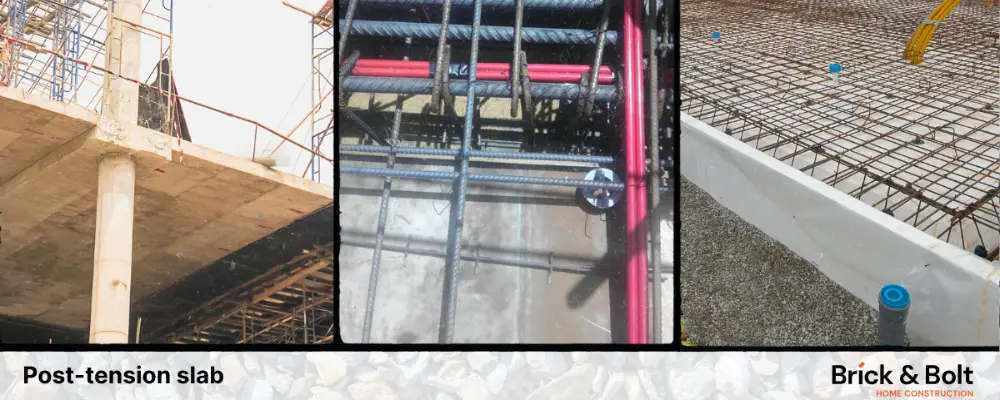
These post-tensioning slabs are widely used to reinforce concrete slab foundations. It contains steel cables or tendons that crisscross across the centre of the slab and are subjected to high tension, producing high strength after the concrete has set. When the poured concrete dries, the steel tendons provide stress and tighten through their cables for strengthening concrete slabs.

Uses of Post-Tension Slabs

As time passes, the stability of the concrete slabs may weaken. Climate changes, particularly high temperatures, readily affect them. The concrete slabs may expand and contract due to the unstable soil. Normal concrete slabs cannot withstand these conditions.

So construction professionals choose these post-tension slabs to avoid cracking, contraction, and expansion of the slabs and to strengthen the foundation. To withstand any natural calamities, these post-tension slabs provide additional support. The steel and tendons in the concrete slabs can bear heavy loads and provide a strong, solid foundation or roof and flooring systems. They can be used in bridges, walls, multi-story buildings, elevated slabs, foundations, and columns.

Working Principles of Post-Tensioning

When a heavy load is brought up on a structure, the concrete slab undergoes stress, leading to cracks and changes in its original shape and size. This can be reduced by introducing post-tension slabs in the construction process.

Generally, concrete is good in compression but weak under tension, while steel is good under tension. The post tensioning process subjects the concrete to compression and steel to tension, before the actual usage of the slab in the structure. When tendons are subjected to tension, the concrete compresses initially. This finally results in a slab with extremely high strength, which can readily resist excess compressive and tensile stress.

Components of Post-Tensioned Slab

The post-tension slab is a combination of traditional concrete slabs with steel tendons inside it. The main components of a post-tensioned slab are ducts, tendons, and anchors.

  1. Ducts

The ducts are small weightless steel pipes having flexible couplings transferring high torque. The standard lengths of these ducts are 5 m and 6 m. They can be connected with an external screw coupling and sealed with PE tape. They are resistant to water and excessive strain. Steel tendons are placed in these ducts during the concreting process.

  1. Tendons

Tendons are a vital component of the post-tensioned slab. It is made of one or more pieces of prestressing steel with a protective coating. These tendons can be housed in ducts for further use. The standard size of the tendons ranges from 0.50 to 0.60 inches.

  1. Anchors

Anchors are used to connect or anchor two tendons into the concrete. The ultimate function of the anchor is to transfer the stress into the concrete to support the strengthening process.

Construction Techniques for Post-Tension Slabs

Planning and design

The planning and designing of post-tension slabs is a tedious process that includes safety and compliance. To define the layout of the tendon, you should consider the slab’s requirements, dimensions, and use. To ensure the strength and durability of the tendon, selecting the right concrete mix is crucial. 

Installation of Tendons

As per the specified details in the designing process, tendons are installed. The tendons are covered with an outer layer generally made of plastic (ducts), allowing them to move and prevent corrosion. These can also avoid contact with the concrete. 

Pouring the concrete

As the tendons are placed at the preferred locations, the high-quality concrete mixture is poured into them. The concrete can be set for curing until it reaches the required strength.

Tensioning

The tensioning process begins by stretching the anchored tendons at the edge of the slabs using hydraulic jacks at the right force. 

Final touch

Once the tendons are properly tensioned, the slab can be finished with sealants,  and other specific materials as per the project’s requirements. The sealants and flooring materials are used to create a smooth and long-lasting surface.

Construction of Post-Tensioned Slab

  • It requires skilled labourers and supervisors for the installation of post-tensioned slabs.
  • An engineer must design and lay down the tendons, which are hosed into a plastic or steel duct that is water-resistant.
  • The poured concrete mixture may take around 20-25 days to cure and gain 75% strength. After this, the anchored tendons are stretched and coupled using hydraulic jacks.
  • 80% of force is applied on a tendon to stretch and compress the concrete. 
  • The non-used tendons at one end are bound and put into the anchor pocket.

Advantages of Post-Tensioned Slab

  • It supports an architect to work on his floor designs with thin slabs and columnless spaces.
  • The thinner concrete slabs support higher floor-to-floor height, which can be used to create additional floors.
  • The concrete and reinforcement are reduced by up to 20% to 30%.
  • It reduces crack risks and is low-cost maintenance.
  • It provides significant benefits for the developers, architects, engineers, and contractors.

Disadvantages of Post-Tensioned Slab

  • Additional costs are required for the installation of post-tensioned slabs.
  • Once it is finished, it can’t be remodelled. It needs much attention from planning to finishing.
  • At the initial stage, cracks in concrete can be unavoidable.

Conclusion

In conclusion, post-tensioned slabs are efficiently processed to bear heavy loads and withstand natural calamities. It supports the construction professionals to work as specified in the design process. The efficiency and strength of post-tensioning slabs can withstand the test of time.

Friction Piles: Types and Applications

0
friction pile

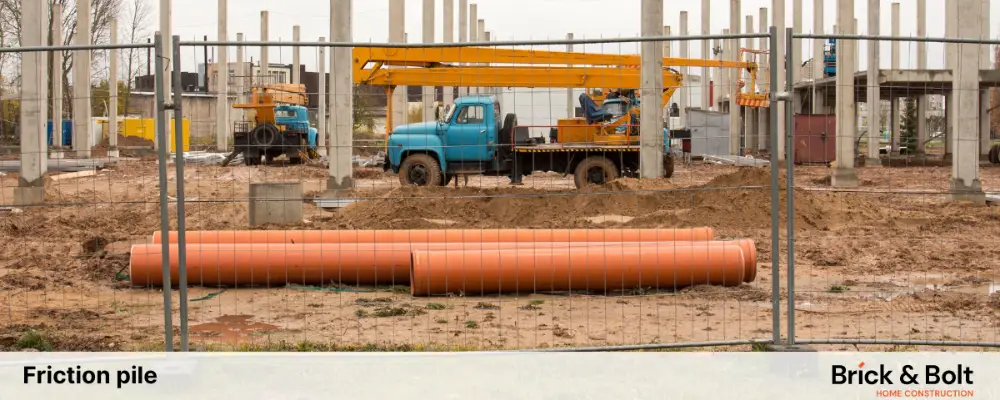
Friction piles play an important role in the construction when it comes to providing support in the areas that have weak and unstable soil. These piles can be a part of deep foundations and mainly relies on the frictional force between the surface of the pile and the surrounding soil for bearing a load. This mainly depends on the resistance generated along the pile shaft length. Frictional piles can provide cost-effective and reliable solutions for stability in areas where the soil is too weak to support the structural load with shallow foundations.

This blog will provide you with various details regarding friction piles and how to apply them practically in the construction.

What Are Friction Piles?

Frictional pile is a kind of foundational pile which mainly uses the frictional resistance force between the surface of the pile and adjacent soil for the transfer of superstructure load. Depending upon the subsoil condition, resistance force caused by friction can develop in a definite length of the pile. For a stable foundation condition, the frictional force must be adequate to support the superstructure. 

Working Principle of Friction Piles

Friction piles are also called floating piles. It works on the principle of using frictional resistance of pile surface and soil for supporting the structural loads. The frictional piles will distribute the load to its full pile length by soil interaction.

  1. Load Transfer Mechanism

The friction will be created when friction piles are moved into soil in a downward direction. This force helps in supporting the load and prevents settlement according to shear strength of soil.

  1. Load Distribution Along the Pile

Friction piles will carry loads along the shafts into the soil. The load amount carried by each section will depend on the friction produced between the soil and the pile. 

  1. Factors Affecting Efficiency
  • Soil Type
  • Pile Material
  • Pile Length
  • Installation Method
  1. Role of shear stress

The shear stress generated between the pile surface and soil is the key component in friction pile design.

  1. Friction Piles as Wedges

Friction piles function like wedges driven into the soil. As the pile penetrates the soil, it induces shear forces along its shaft. This behavior allows the pile to develop significant load-bearing capacity even in soils that do not provide a firm base for end-bearing.

What Is Friction Pile Made of?

Friction piles are long, slender columns that help in transferring the load of a structure into the ground. Depending on the project needs and soil conditions, these piles are made from,

  • Reinforced concrete: Used in large projects for strength and durability
  • Steel: It is used when high tensile strength and resistance to bending is needed. 
  • Timber: An economical option for lighter structures or in less aggressive environments, though less commonly used today.

These piles are driven deep into the ground, often to a depth at least three times the width of the structure, ensuring they engage with enough soil to support the building through friction along their length. The deeper they go, the more they rely on the friction between the pile surface and the surrounding soil to carry the load.

Types of Friction Piles

  • Precast concrete piles 
  • Cast-in-Situ Piles
  • H-Piles and Wide Flange Beams
  • Composite Piles

Applications of Friction Piles in Construction

  • Friction piles can be used in the areas where the soil is weak or unstable, but needs to support a high amount of loads. One such building is a skyscraper.
  • There is a need for deep foundations near soil that has a weak surface for the construction of bridges. Here the friction pile can give the necessary load-bearing capacity.
  • Large industrial structures like factories and warehouses must rely on friction piles for support. These piles can help in making sure that the structure can support any heavy machinery and equipment.
  • In constructing coastal and offshore structures, frictional piles can be used to support marine infrastructure.
  • Frictional piles can be used with retaining walls for lateral support in earth retention systems. 

Frictional piles are commonly used for larger structures requiring high load-bearing capacity in places with high-strength deep soil. Also, if there is properly compacted and consolidated sand, it can provide additional benefits. One of the most well-known examples of frictional pile application is a tall and super heavy skyscraper that is located in Dubai, which is the Burj Khalifa.

How To Calculate Skin Friction On Piles

Skin friction on pile surfaces can be calculated using the formula:

Qs=∑f*AsQs 

Where:

  • Qs​ = skin friction
  • As​ = surface area of the pile
  • f = unit shaft resistance

To find f, use the following equation:

f=Kσotan⁡(δ)+ca

where:

  • K = earth pressure coefficient,
  • σo = vertical stress at the pile depth,
  • tan⁡(δ) = friction angle between soil and pile,
  • ca = adhesion coefficient.

The earth pressure coefficient reflects how soil produces lateral pressure on the pile. The value of K depends on the pile installation method:

  • Driven piles: The earth pressure coefficient is higher due to soil compaction around the pile.
  • Bored piles: The coefficient is lower because the soil is less compacted around the pile.
  • Jetted piles: The coefficient can vary significantly, as the surrounding soil is often disturbed.

Factors Affecting Skin Friction

Several factors can influence skin friction, some are:

  • Pile material: The material used (steel, concrete, or wood) impacts the skin friction characteristics.
  • Soil type and installation method: The interaction between the pile and soil, along with the method of pile installation, can significantly affect skin friction.

What is Positive Skin Friction in Piles?

Positive skin friction is the force that resists the penetration of friction piles into the soil and transfers the building loads into the soil. It provides the needed stability to support the superstructure and is the main force behind the concept of friction piles. More than 80% of the piles’ bearing capacity comes from this force and 95% in the case of piles longer than 30m.

What Is Negative Skin Friction in Piles?

Negative skin friction happens when the surrounding soil around a pile or pile group moves downward relative to the pile. This occurs if the pile is located in a compressible soil layer. It leads to changes in the consolidation and settlement of the soil. Negative skin friction is a downward drag force that is produced by the settling soil on the pile’s surface.

Conclusion

Frictional piles can be used in deep foundation systems and can help provide stability and support in challenging soil conditions. They help transfer the structure’s loads to the deepest and more stable layers of soil. They can also ensure the stability and longevity of large structures. Thus, frictional piles are an important element of modern construction. 

FAQs

1. How to calculate friction pile capacity?

The friction pile capacity can be calculated by multiplying the surface area of the pile by the friction force per unit area that the soil can safely provide. More contact with the soil will lead to high frictional resistance that helps piles to support loads.

2. How to increase friction pile capacity?

To increase the capacity of a friction pile, several factors can be adjusted:
Pile Diameter: A larger diameter increases the surface area in contact with the soil, boosting friction.
Pile Depth: Deeper piles engage more soil, improving overall resistance.
Pile Number: Increasing the number of piles distributes the load more effectively.
Surface Roughness: Rougher pile surfaces create more friction, increasing load capacity.

3. What sizes do friction piles come in?

Frictional piles are normally made of H-piles and wide flange beams. H piles are normally as wide as they are deep but have the same thickness in the flange and web. When compared to the standard beams, piles will provide better distribution of weight over a wider area. Due to this, the H-Piles are an excellent choice for the friction piling, as they can support the large and heavy structures, and each pile can withstand loads up to 1000 tons.

Angular Aggregates: Role, Benefits, and Uses in Construction

0
angular aggregate

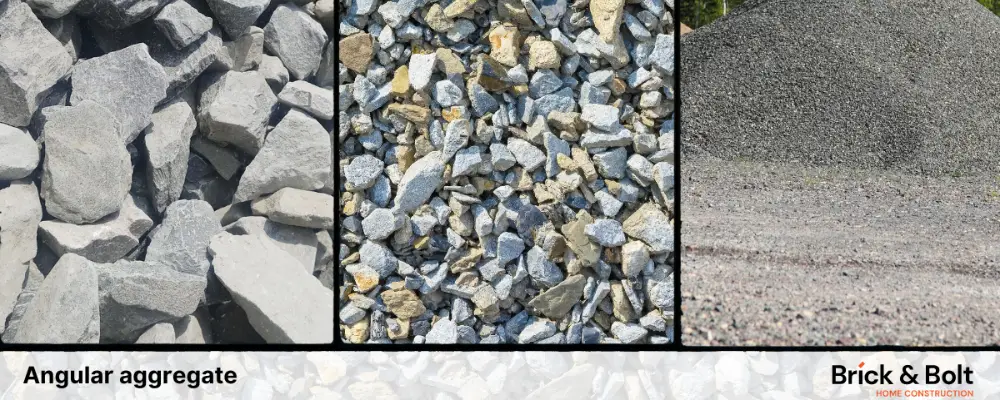
Angular aggregates in the construction industry are an important component. Their major characteristics are sharp, angular edges and rough texture. These aggregates are primarily produced by crushing the larger rocks or any stones. It further results in smaller fragments with irregular shapes. Their unique shape enhances the mechanical interlocking between the particles. This leads to superior strength for concrete. Also increases the stability of the concrete materials.

Angular aggregates are particularly beneficial in concrete and asphalt applications. In road construction, they are essential in offering excellent load-bearing capacity. They provide high resistance to deformation under traffic loads. Additionally, they are ideal for drainage systems due to their high permeability. This ensures efficient water flow, which prevents clogging.

What are Angular Aggregates? 

Angular aggregates are generally composed of well-defined edges. These are formed by crushing the bedrock, such as limestone or granite. These aggregates have irregular shapes and are primarily sourced from natural rock formations.

Importance of Angular Aggregates 

The main purpose of using angular aggregates is to achieve higher 

  • Strength
  • Interlocking
  • Water Demand
  • Asphalt Compaction
  • Segregation Control
  • Stability
  • Durability 

It brings improvement in performance based on its application. Its significance is listed as follows: 

  • Strength: Angular aggregates enhance the compressive strength of concrete by 10 to 20%. It improves the bonding with the cement paste, leading to stronger concrete.
  • Interlocking: The interlocking property of angular aggregates provides better stability in structures. Their irregular shape results in higher void content affecting the mix. The angular aggregates have 35% to 37% void content. It also reduces the concrete workability when compared to rounded aggregates.
  • Water Demand: Angular aggregates increase the water demand in concrete. Therefore, there is a demand for cement. Angular aggregates have to maintain the water-to-cement ratio.
  • Asphalt Compaction: Angular aggregates make asphalt mixes difficult to compact to the proper void ratios. Fresh concrete with angular aggregates also flows less easily into confined spaces.
  • Segregation Control: The rough and irregular structures of angular aggregates help to control segregation and promote strength development in the final product.

Types of Angular aggregates

Angular aggregates are of three types, namely:

  • Natural Angular aggregates
  • Crushed Stone as Angular aggregates
  • Manufactured Angular aggregates

Natural Angular Aggregates:

Formation: Natural angular aggregates are derived from natural rock formations. It includes materials such as limestone, granite, or basalt, often collected from quarries. They are typically formed through geological processes over thousands of years.

Characteristics: These aggregates have an irregular, sharp, and angular texture. Their shape enhances bonding with cement. This contributes to higher strength in concrete and construction materials.

Common Uses: Natural aggregates are widely used for various purposes. These include road base layers, railway ballast and as a component in asphalt and concrete. They are used in construction due to their durability and strength.

Crushed Stone as Angular Aggregates:

Production: It is mechanically created by crushing larger rocks. Rocks such as limestone, granite, and trap rock are broken down. These smaller pieces are sharp with angular edges.

Properties: The crushed stone has angular edges. This provides interlocking stability essential for load-bearing applications. These are available in various sizes. It typically ranges from fine dust to large stones. Its angularity enhances the compressive strength of concrete. As a result, it is a preferred choice in large infrastructure projects.

Manufactured Angular Aggregates 

Process: Manufactured angular aggregates are produced through industrial processes. Various materials, like slag, crushed concrete, clay, etc. are used. These materials are crushed and sorted based on their shape and size.

Key Features: These aggregates offer flexibility in size and composition. It is used as an alternative to natural aggregates.

Uses: Manufactured aggregates are used in eco-friendly construction. For example, it is often used to create concrete as a base for roads and structures.

Properties of Angular Aggregates 

Shape and Texture:

Angular aggregates have distinct shape and texture properties. It significantly influences the performance of concrete and asphalt mixtures. Here are some key points:

Shape

  • Angular Shape: Angular aggregates have sharp edges and corners. Its comprehensive interlocking property enhances the strength and stability of the concrete mixture.
  • High Angularity Number: The angularity number indicates the degree of angularity of the aggregate particles. Higher angular numbers mean more angular particles. It can contribute to better bonding with the cement paste. Angularity numbers range between 0 and 11. 0 represents perfectly rounded particles. Angularity number 11 indicates highly angular. The Angularity number for angular aggregates typically ranges from 8 to 11.

Texture

  • Rough Texture: Angular aggregates typically have a rough surface texture. This roughness increases the surface area available for bonding with the cement paste. It results in better concrete performance.

Strength and Durability:

The enhanced interlocking capabilities contribute to higher compressive strength. This brings greater stability to the concrete. The angular shape helps in better load distribution within the concrete. This reduces the likelihood of cracking under stress.

Angular aggregates are generally more resistant to wear and tear. This is a crucial factor for the longevity of concrete structures, which plays a major role, especially in high-traffic areas.

Water Absorption and Porosity

Angular aggregates typically have a rougher texture. Therefore, the surface area is greater when compared to rounded aggregates. This increased surface area leads to higher water absorption. This results in the need for more water to achieve the desired workability of concrete mixes.

Angular aggregates often have higher porosity, which results in more void spaces. This can lead to increased water absorption. Also improves the potential for more water to be retained within the aggregates.

Applications of Angular Aggregates in Construction 

Concrete Mixes

Angular aggregates are widely used in concrete mixes. They possess sharp edges and rough texture. This enhances the interlocking, which improves compressive strength and stability. However, the increased surface area of angular aggregates requires more water and cement. This helps to achieve the desired workability.

Road Base and Sub-base

Angular aggregates are used in the base and sub-base layers. This is used to provide a stable foundation in the construction industry. Their shape allows for better compaction and load distribution, reducing the stress. This creates a balance on the underlying layers and also improves overall durability. The rough texture also facilitates drainage. It prevents water accumulation that could weaken the structural integrity.

Use in Asphalt and Pavements

Angular aggregates are preferred in asphalt mixtures. Mainly because they create stronger interlocking stability than rounded aggregates. This interlocking enhances the pavement’s resistance to deformation. The rough texture also improves the skid resistance of the pavement surface.

Advantages of Using Angular Aggregates

Improved Bonding in Concrete

 Usually, aggregates with the largest surface area help with bonding. The larger surface area of angular aggregates. results in stronger and more durable concrete.

Help in Strength of the Structure

The angular aggregates have an interlocking ability, which provides higher compressive strength. This increases the structural integrity and stability of the concrete. They have become a standard choice for big buildings. It requires great strength. It is also used for major applications in bridges and high-rise buildings.  

Better Stability in Road Construction

Angular aggregates offer better compaction and load distribution in road construction. Also, it brings increased stability and longevity to the pavement.

Disadvantages of Angular aggregates

High Cost of Production

The production of angular aggregates is energy-intensive compared to naturally rounded aggregates. The production cost is comparatively higher. They involve the crushing of rocks in large quantities. Hence angular aggregates are not cost-effective. These are highly used for high-rise buildings,

Difficulty in Workability of Concrete

Angular aggregates have a rough texture and increased surface area, which leads to more water and cement requirements. This is quite essential in meeting the desired workability conditions. It can be sometimes challenging to handle and place.

Conclusion:

Angular aggregate plays a major role in the construction industry. Although angular aggregate has its disadvantages, it has a significant role. While they might be expensive and have reduced workability. But it often outweighs these challenges with its benefits. They produce larger voids due to their irregularities in shape. They bring stability and durability with their interlocking capability. Therefore, these aggregates have an intensive use of energy in building high-rise construction. Nevertheless, they continue to hold a major place in the various uses for construction purposes.

All You Need to Know About Precast Concrete Slabs

0
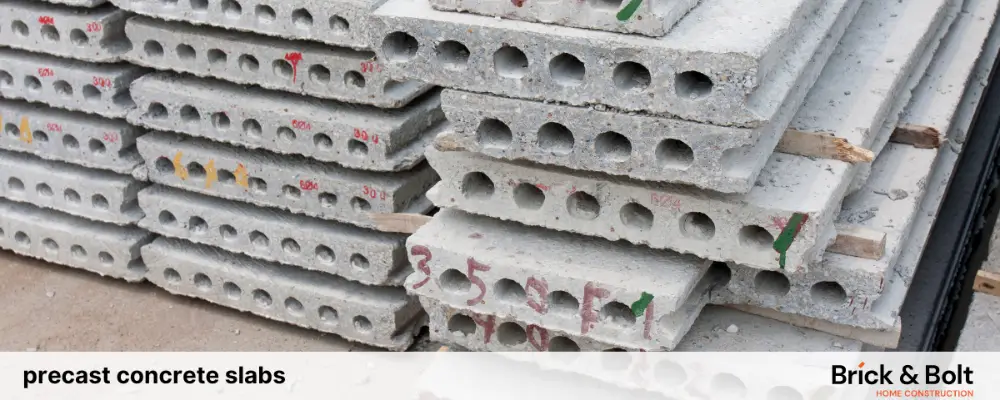
precast concrete slabs

Concrete is a versatile building material that can be widely used across the construction industry. The demands of the modern construction industry are increasing day by day. New technological innovations have increased the development of concrete building materials. 

To meet the demand of the construction market, precast concrete slabs are made. Most construction professionals prefer precast concrete slabs for easy usage, durability, and strength. Let us explore the advantages, applications, and disadvantages of precast concrete slabs in detail. 

What are Precast Concrete Slabs?

Precast concrete slabs are concrete elements manufactured at a factory or plant other than a construction site. They are known for their numerous benefits and extensive application across the construction industry. They are manufactured according to the consumer’s needs in a factory and directly transferred to the construction site for installation.

These can also withstand hard weather conditions and are environment-friendly. It reduces the timeline of the construction process and ensures superior quality, durability, and longevity of the product. It can be customised according to the consumer’s needs and guarantees easy transportation.

Types of Precast Concrete Slabs

Precast concrete slabs are made by pouring the concrete mixture into mould at the factory. The major 5 types of precast concrete slabs that are used in the construction industry are as follows:

  1. Hollow core units

Hollow core units are also known as voided slabs. They have tubular, circular or other irregularly shaped voids along the entire slab length. These slabs are used in constructing multi-story buildings. They are lighter than regular concrete slabs but equal in thickness and strength. The standard width of hollow core slabs is 120 cm and its thickness varies from 15 cm to 50 cm.

  1. Single tee units

Single tee units have a deck surface along with longitudinal supporting beams shaped like a Tee. The standard thickness of the deck may vary from 1.5 to 2 inches. The thickness of the concrete beam is 8 inches and its height is around 24 inches.

  1. Double tee units

Double tee units are suitable for longer spans which require greater support capacity. The standard width of double tee units is 2400 mm and depth varies between 250 mm and 1000 mm. It supports longer spans over 16 m. 

  1. Solid concrete units

It is made of reinforced concrete that has a completely solid and rectangular cross-section.  They can be manufactured with prestressed strands that are embedded within the element. They are ideal for constructing residential or commercial buildings that require high load-bearing capacity, fire resistance, and good thermal insulation. The standard thickness of these plates is 200mm. However, these are the heaviest types of precast slabs.

Applications of Precast Concrete Slabs

Precast concrete slabs are widely used in the construction industry with various applications. They are as follows:

  1. Flooring system

Precast concrete slabs are used in flooring systems for buildings and structures because of their solid strength. 

  1. Bridge decking

Bridge constructions can be efficiently executed with the application of precast concrete slabs. These bridge deck elements are best for their longevity and sustainability.

  1. Sound barriers

Precast concrete slabs are used in highways and roads for their noise-controlling property, which ensures road safety.

Advantages of precast concrete slabs:

  • The construction time of the project is reduced drastically due to its on-time availability.
  • Labour cost reduction in the construction site.
  • They are generally superior-quality products with zero defective material.
  • Precast slabs can be fabricated in various shapes, sizes, and textures according to the consumer’s requirements.
  • Precast concrete slabs are valued for their durability and sustainability, as they help reduce waste and minimise energy consumption during production.
  • Precast concrete slabs have excellent fire resistance properties which can withstand high temperatures.
  • They offer good sound insulation and can resist sounds or noise from external factors. It can also create privacy for occupants. 

Disadvantages of precast concrete slabs:

  • Some slabs require detailed attention to make and require additional costs for the manufacturing process.
  • Transportation charges may be high due to large weight of the slabs.
  • They must be handled with the utmost care to ensure proper installation with no gaps and cracks, requiring skilled labour.
  • Once it is built, it can’t be remodelled. The designs and requirements have to be mentioned clearly before starting the manufacturing process.
  • Improper installation may cause a serious issue. The connectors, bolts, and sealants must be properly fixed to acquire the required strength and ensure stability.

Installation Process for Precast Concrete Slabs

  • Panel placement and alignment: Make sure that panels are positioned in the right place as specified in the design and aligned perfectly with the adjacent panels for a solid connection.
  • Connection and anchorage methods: To create a long-lasting connection between the panels, connectors, bolts, and sealants are used.
  • Quality and inspection checks: Frequent quality checks are required to check whether the panels are connected properly and meet required quality standards. The inspection process must include checking for defects, cracks, and damage that can occur during the installation process.

Conclusion

On the whole, precast concrete slabs are essential in building modern infrastructure. They play a vital role by acting as building materials that are readily available in the market. Precast concrete slabs have high potential growth and development in the future construction industry. They will be more exciting and promising in the upcoming years.

FAQs

1. How thick is a precast slab?

The average thickness of the precast slabs ranges from 100mm to 270mm.

Irregular Aggregates: Properties and Applications

0
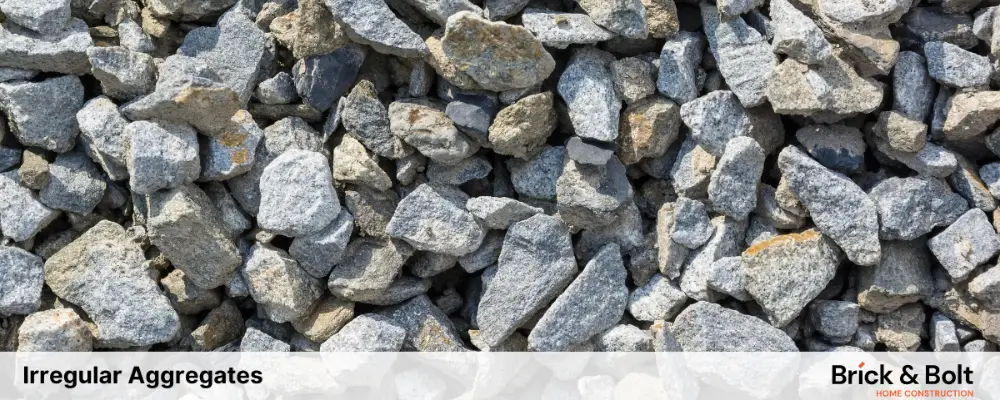
Irregular Aggregates

Aggregates in construction are critical. They determine the strength, durability, and quality of concrete and asphalt. Within these several types of aggregate, however, one type stands out: irregular aggregate. These aggregates are non-uniform in shape and texture. This affects their performance in a construction project. This article will outline and discuss irregular aggregates. It will cover their properties, applications, and how they compare with other aggregates.

What are Irregular Aggregates?

Irregular aggregates consist of gravel and pit sands. They are partly shaped by natural wear. They usually yield about 35% voids. This lowers its workability when compared with the rounded aggregate. They provide marginally better strength, though not good enough for high-strength concrete applications.

How the Irregular Aggregates Differ from Other Aggregates

Aggregates are present in several forms: rounded, angular, and irregular. Each type has specific characteristics. They justify its use in specific construction branches. To explain the pros and cons of irregular aggregates, we must compare them to other types.

PropertyIrregular AggregatesRounded AggregatesAngular Aggregates
ShapeAngular and unevenSmooth and roundedHighly angular and sharp
Surface TextureRoughSmoothVery rough
Void Content35%32 – 33%38 – 40%
Water Absorption2-3%1-2%3-4%
WorkabilityMediumHighLow
StrengthModerateLowHigh

The irregular shape of the aggregates improves interlocking. It is better than round aggregates. But, their strength is not as good as the angular aggregates. Such irregular aggregates often have moderate water absorption. So, they are useful where moisture retention is needed.

Types of Irregular Aggregates

There are two types of irregular aggregates: natural and manufactured. They differ in origin and formation.

Natural Irregular Aggregates

Natural irregular aggregates are those made by nature, like weathering, erosion, or sedimentation. These aggregates are usually extracted from quarries, river beds, and gravel pits. These are naturally occurring aggregates. Their shape and size could vary. They are partly rounded by attrition. Their angularity remains due to limited water erosion.

Manufactured Irregular Aggregates

Manufactured irregular aggregates are produced by crushing larger rocks into smaller, irregular pieces. This can control the size and shape of the aggregate particles in the process that makes them. Several crushers, like jaw and impact crushers, can develop particle size. These aggregates are often needed for construction. They require certain grading and size distributions.

Properties of Irregular Aggregates

Irregular aggregates have many unique properties. They affect performance in construction.

Shape and Surface Texture

Irregular aggregates are defined by their angular shape and rough texture. These are features from natural processes or mechanical crushing. They leave the material’s edges sharp. The pointed shapes of uneven aggregates allow them to interlock. This feature is vital for strong structures.

Size and Grading

The size of irregular aggregates normally ranges from 10 mm to 40 mm. Aggregates are usually graded. This classifies materials by size distribution. Normally, sieve analysis is among the common methods of aggregate grading. Proper grading is essential. It maximizes the strength and durability of construction materials. The aggregates must fit and interlock in a dense matrix.

Strength and Durability

Irregular aggregates are weaker than angular ones. But, they are strong enough for many general applications. Their compressive strength is usually 20 to 35 MPa, depending on the material and use. Their low abrasion resistance makes the aggregates unsuitable for high-wear uses, like busy roads.

PropertyValue
Compressive Strength20-35 MPa
Abrasion ResistanceModerate
Void Content35%
Water Absorption2-3%

Applications of Irregular Aggregates

The main use of irregular aggregates in construction is in tasks that need interlocking and some strength.

Use in Concrete Production

The main application of irregular aggregates is for concrete manufacturing. Their angular shape helps them bond well with cement. This yields better shear strength. Its higher void content may require more of it. This could raise the material cost. The only drawback of the irregular aggregates is their limited bonding strength. They are fine for normal concrete. But, they cannot be used in high-strength concretes.

Role in Road Construction

Irregular aggregates have wide applications in the construction of roads. Their rough, angular shape lets them interlock. This resists movement under load. These materials are suitable for use in the sub-base and base layers of roads, where load distribution is crucial. However, their moderate durability limits them to low- to medium-traffic roads.

Applications in Landscaping and Decorative Projects

Aggregates of irregular shapes for aesthetic reasons are fairly common in landscape settings. This angular product, in various sizes, has great aesthetic value. It suits rock gardens, pathways, and erosion control structures. The rough texture of the aggregate will inhibit slipping.

Advantages and Disadvantages of Irregular Aggregates

Advantages of Using Irregular Aggregates

  1. Better Interlocking: The shape of these aggregates is irregular. It allows for better interlocking and stability in the construction material.
  2. Moderate Cost: Irregular aggregates are cheaper than angular ones. So, they are moderately costly for most construction projects.
  3. Versatility: These aggregates have many uses, from making concrete to landscaping.

Limitations of Irregular Aggregates

  1. Higher Water Demand: A large surface and high void content raise the water-cement ratio. This reduces workability.
  2. Low Durability in High-Stress Applications: Irregular, medium-strength, low-abrasion aggregates are unsuitable for high-stress uses, like heavy pavements.
  3. Inconsistent Size: Natural irregular aggregates vary in size and shape. They require further grading to achieve a uniform size for construction.

Conclusion

Irregularly shaped aggregates have a mix of qualities. They suit specific construction projects. Their angular shape and rough texture improve interlocking. So, they are ideal for concrete and road work. But, their high void content and low durability make them unsuitable for tough tasks. Engineers and builders can now use irregular aggregates. They know their specific properties and limits. This helps meet construction needs for stability, low cost, or both.

Sulphate-Resisting Cement: Properties, Uses, and Benefits in Construction

0
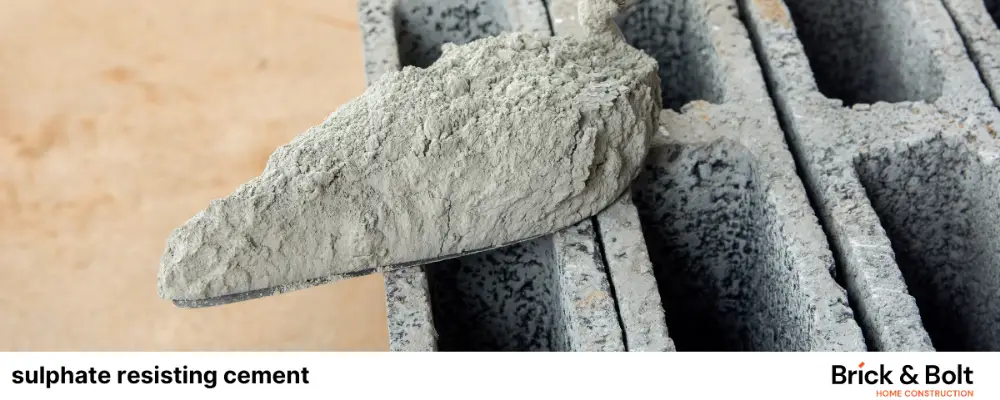
sulphate resisting cement

Sulphate-resistant cement (SRC) is vital in construction. It protects concrete from sulphates present in soil and water. These elements can weaken concrete over time. So, using the right materials is essential. In this article, we will explore sulphate-resisting cement, its properties, parts, and uses.

What is Sulphate-Resisting Cement?

Sulphate-resistant cement (SRC) lasts longer than regular cement. Regular cement breaks down fast when it meets corrosive sulphates. This causes cracks and damage. SRC contains minimal amounts of tricalcium aluminate (C3A), a compound that reacts with sulphates, considerably improving its strength and durability

Composition of Sulphate Resisting Cement

The ingredients in sulphate-resisting cement are key to its effectiveness. Here are the main components:

  • Cement Clinker: It is the main ingredient. It’s made by heating limestone and clay in a kiln. For SRC, less C3A is added to the clinker. This makes it better at resisting sulphates.
  • Gypsum: It is added during the grinding process. It manages the pace of cement setting and stiffening.
  • Supplementary Cementitious Materials (SCMs): SCMs are extra materials added to cement. They enhance its properties. Examples are fly ash and slag. They make the cement stronger and more durable.
  • Other Additives: Sometimes, other materials are added to improve sulphate-resisting cement. They are meant to boost its performance and properties like workability and strength.

Characteristics of Sulphate Resisting Cement

Sulphate-resistant cement has some unique characteristics. They make it different from regular cement.

  • Lower Heat of Hydration: SRC produces less heat when it sets. This is important for large structures. Too much heat can cause cracks.
  • Increased Durability: As it has less C3A, SRC is more durable. It can resist damage from sulphate attacks, which helps the concrete last longer.
  • Longer Setting Time: SRC takes a bit longer to set compared to regular cement. This can be helpful for complex projects.
  • Good Workability: Even with its special formulation, SRC is easy to mix and pour. This makes it convenient for builders to use.
  • Strength: SRC can withstand heavy loads, making it suitable for strong structures. It often has strength similar to or better than regular cement.
  • Hydration Resistance: SRC resists hydration in the presence of sulphates. This keeps the concrete intact over time.
  • Chemical Resistance: This cement resists chemical attacks, especially from sulphate ions. This property helps the concrete stay strong and durable.
  • Low Shrinkage: Sulphate-resisting cement shrinks less than regular cement as it dries. This means there is a lower risk of cracking in the concrete.

Applications of Sulphate Resisting Cement

Some construction projects use sulphate-resistant cement. It is for areas where sulphate is a concern. Here are some common uses:

  • Foundations: SRC is often used to build foundations in areas with high sulphate levels in the soil or water. This helps prevent damage to the foundation over time.
  • Sewage Treatment Plants: Sewage treatment plants use SRC. It can handle aggressive chemicals in waste.
  • Marine Structures: Structures such as piers and docks are built with SRC. Seawater contains sulphates, so they are exposed to it. This helps keep them strong and safe.
  • Concrete Repair Work: When fixing concrete damaged by sulphate, builders often use SRC. It ensures the repairs last.
  • Infrastructure Projects: SRC is used in highways, bridges, and other infrastructure at risk of sulphate exposure. This ensures these structures remain durable.

Advantages and Disadvantages of Sulphate Resisting Cement

Sulphate-resistant cement, like any material, has pros and cons. Here are its advantages and disadvantages:

Advantages:

  1. Enhanced Durability: SRC helps structures resist sulphate damage, which helps to last longer.
  2. High Strength: This cement offers excellent compressive strength, which can help to handle heavy loads.
  3. Reduced Maintenance Costs: SRC is less likely to be damaged by sulphates. So, structures made of it require little maintenance.
  4. Versatility: SRC is a flexible option that can be used in many kinds of construction works.

Disadvantages:

  1. Higher Cost: Sulphate-resisting cement can be more expensive than regular cement. This can increase the total cost of a project.
  2. Longer Setting Time: The longer time it takes to set may not be ideal for every project, especially those needing quick completion.
  3. Limited Availability: SRC may be hard to find in some places. This can make it harder for some builders to use.

Considerations Before Using Sulphate Resisting Cement

Before using sulphate-resisting cement, consider several things:

  • Soil Testing: It is important to test the soil to check for sulphate levels. This will help determine if SRC is necessary for the project or not.
  • Project Requirements: Consider the specific needs of the construction project, like the environmental conditions and the expected loads on the structure.
  • Cost Analysis: Think about the costs associated with using SRC compared to regular cement. Consider the potential long-term benefits of choosing SRC.
  • Construction Schedule: Keep in mind that SRC takes longer to set. It must be factored into the construction timeline. This will keep the project on track.

In conclusion, sulphate-resisting cement is key for building in sulphate-rich areas. Its unique characteristics boost concrete’s lifespan. Despite its pros and cons, a careful assessment of needs and conditions helps you to make the right choice. When you use sulphate-resisting cement(SRC) correctly, it will result in strong, long-lasting structures.

FAQs

1. Where is sulphate-resisting cement commonly used?

SRC is commonly used in foundations, sewage treatment plants, marine structures, concrete repairs, and infrastructure projects. These applications are often in areas where sulphate levels are high in the soil or water.

2. Is sulphate-resisting cement pricier than regular cement?

Yes, it is. However, it protects against sulphate damage. This saving on repairs and upkeep makes it worth it.