Home Blog Page 4

How Much House Loan Can I Get – A Complete Guide

0
how much house loan can i get​

Owning a house is a lifetime achievement for many, especially among the people of India. However, the financial requirements for owning a house are expensive. Thus, people are opting for home loans to fulfil their housing needs. Getting a loan is a huge process and involves numerous criteria and verifications for successful loan sanctioning. This blog will explain the loan process and give you a clear overview of how much housing loan you can get.

Understanding House Loans in India

House loans are the amount of money borrowed from a bank or other financial institution to fulfil housing needs. The money borrowed can be used for numerous housing purposes such as buying, constructing, renovating, extending, and refinancing a house or a property. The borrowed money is then paid as EMI on a monthly or small instalment basis with specific interest rates.

Factors Determining Your House Loan Eligibility

Income

Your annual and monthly income plays a major role in determining your eligibility for the housing loan. It gives a clear picture of how much loan you can afford and the duration to repay, based on your salary after deductions. Generally, the last three months of salary slips and the last six months of bank balance are verified to identify eligibility.

Age

Age is a major factor in determining loan eligibility, especially with the loan tenure. Younger applicants of more than 18 years of age have a chance of getting longer loan tenure periods, as they have longer working years ahead of them. On the other hand, the tenure of older people could have shorter loan repayment tenure.

Credit Score

Credit Score

The credit score or CIBIL score is a major factor in determining the loan eligibility. The previous loan repayment history and financial health significantly impact the credit score. Higher credit scores increase the chance of successful loan sanctioning and also decrease interest rates. If you have existing debt or unpaid loans, it could affect your credit score.

Property Value

Your property value is vital in determining the percentage of loan allocation, which is commonly known as the loan-to-value (LTV) ratio. Based on the property value, the loans can be sanctioned up to 80 to 90%. However, the RBI has certain guidelines to calculate the LTV ratio for lenders.

Dept to Income Ratio / Existing Liabilities

The Debt-to-income ratio is generally calculated to know the status of your existing liabilities. It is calculated by dividing the total monthly debt by the net monthly income. To meet the eligibility criteria and reduce the risk for the lender, your DTI should be less than 50%.

Calculating Your House Loan Eligibility

Manual Calculations

House loan eligibility can be calculated manually using the eligibility calculation formula: Eligibility = (Income – Existing EMI) x Multiplier (based on Interest Rate and Tenure).

Online Loan Eligibility Calculator

On the other hand, the eligibility can be analysed using online calculators, provided by various banks and financial institutions.

  • Access the bank or financial web portal that has an online loan eligibility calculator.
  • Enter your details such as age, monthly income, existing EMIs, and your city of residence.
  • Provide necessary information about your employment status, years of employment, and credit score.
  • In some financial portals, a range of potential interest rates, EMIs, and loan tenure options are provided based on your profile.
  • Based on the information, you can get a rough estimation of the loan amount.

Common Eligibility Criteria

  • The applicant for the loan should be between the ages of 23 and 65 years.
  • The credit score (CIBIL) of the applicant should be more than 750.
  • The applicant should have at least three years of work experience, with a stable salary.
  • The minimum salary after deductions should be more than INR 25,000.

Documents Needed For Housing Loan Application Process

Identity Proof

  • PAN Card
  • Aadhaar Card
  • Driving License
  • Voter ID
  • Passport
  • Passport-size Photographs

Address Proof

  • Aadhaar Card
  • Driving License
  • Voter ID
  • Passport
  • Recent Utility Bills- Water, Gas, Electricity

Income Proof

  • Last 3 Months Salary Slips
  • Last 6 Months Bank statement with Salary Credits
  • Employment Certificate/Offer Letter
  • Form 16 (IT Return Form) for the Last 2 Years

Property Related Documents

  • Sale Deed
  • Approved Building Plan
  • Property Tax Receipts
  • No Objection Certificate

Popular House Loan Schemes in India

PM Awas Yojana (PMAY)

It is the central government housing scheme that helps in providing affordable housing opportunities for the Economically Weaker Sections. They provide a subsidy of up to Rs. 2.67 lakh on your home loan for the upliftment of the underprivileged. The subsidy can be extended through the Credit Link Subsidy Scheme (CLSS) and can assist in securing a home loan.

Haryana Housing Board Scheme

It is the Haryana State Government Scheme, which has been in existence since 1971, and provides housing facilities for socially and economically weaker sections of people within Haryana.

Furthermore, the Haryana Urban Development Authority (HUDA) scheme was introduced to offer freehold residential and commercial plots to people with a monthly income of less than Rs. 3 Lakh.

Kerala Housing Board Scheme

Kerala State Housing Board was launched in 1971 to provide housing opportunities through loans for the people of Kerala. Grihasree Housing Scheme, Haritham Apartments, and Kowdiar Heights are some of the popular schemes of the Kerala government that help in providing home loans and subsidies for people below the poverty line.

Delhi Development Authority Housing Scheme

Delhi Development Authority Housing Scheme provides numerous housing benefits for people based on income-based categorisation and reservations. They provide housing based on a free-hold or lease-hold basis.

NTR Urban Housing Scheme

Nandamuri Taraka Rama Rau (NTR) Housing Scheme was the first housing scheme introduced in Andra Pradesh, sanctioning housing opportunities for over 75,000 houses aligning with PM Awas Yojana. They provide beneficiaries with up to Rs. 2.5 lakh for the economically weaker section.

Tamil Nadu Housing Board Scheme

TNHB provides housing opportunities by helping citizens purchase flats at an affordable rate, based on their income bracket, and the reservation categories. The minimum criteria to apply for the scheme are,

  • Must be from Tamil Nadu and have the age of over 21 years.
  • The applicant or their family members should not own a flat or a plot through TNHB.
  • They must come under the respective income category.

Conclusion

In summary, housing loans in India are crucial for individuals to fulfil their housing needs such as to buy, construct or renovate homes. Numerous public and private sector banks and financing sectors provide loans for individuals with varying financing opportunities. The government also provides loans and subsidies to back up those who cannot afford the entire housing cost. Although it provides financial benefits, it is necessary to ensure that the loans are manageable for repayment by understanding the terms and conditions.


Renting a Property – Essential Guide for Its Checklist & Tips

0
Renting a Property

Renting a property is often a hectic process for both first-time renters and experienced ones. It needs precise consideration and good awareness to ensure a sophisticated living experience at an affordable rental cost.

If you are searching for a rental property or a flat for a short duration or an extended period, then understanding the basics, checklists, and guidelines for renting a property is crucial. This blog will help you provide the necessary information about renting a property.

Understanding the Basics of Renting a Property

Renting is the process of building a contractual relationship between the tenant and the landlord. Renting allows the tenant to legally use the property owned by the landlord for a specified period in exchange for regular payments of money.

Once both parties agree, the renting process is legalized using the rental agreement, which provides the terms, conditions, responsibilities, duration, and rent amount. After the tenancy agreement is finalized, the tenant can move in and use the property legally, but the landlord retains ownership.

Checklist for Renting a Property or a Flat

Accessibility

Location plays a major role in renting a property. The chosen location should be easily accessible to basic amenities such as a market, hospital, office, school, and recreational spaces should be given priority. More than accessibility, safety and security should not be compromised.

Physical Inspection

Before renting, it is necessary to have a physical inspection to analyse the current condition of the property. Check for issues and potential problems associated with the property including dampness, plumbing, leaks, pests, the usage of electrical appliances, and sanitary fittings.

Amenities

Ensure that the property has basic amenities such as elevators, security, parking, water supply, power backup, usable outer spaces, proper drainage systems, and other amenities for your comfort.

Maintenance and Utility Charges

Before renting the flat, it is essential to discuss the annual and monthly rent, including the inclusivity of additional payments for maintenance, electricity, gas, and water. It is necessary to discuss cost arrangements for minor and major maintenance during your duration of stay.

Brokerage

If you found and finalised a flat or property using a broker, the commission rate should be discussed at the beginning, as the commission rates could vary from one month to a few months, depending on the location. It is recommended to associate with a broker who is registered under the Real Estate Regulations Act (RERA).

Rental Agreement

Rental Agreement

It is crucial to thoroughly go through the rental agreement to understand the information provided related to the terms, conditions, responsibilities, rent, and duration of stay. Ensure that the documents contain key information about,

  • Start and end date of the tenancy
  • Payable rental amount and frequency
  • Service or Maintenance charges
  • Responsibility for repair and maintenance
  • Conditions for contract termination
  • Notice period for vacating
  • Percentage increase in rent for contract renewal
  • Provisions for basic amenities

Lock-in and Notice Periods

A tenant needs to discuss the lock-in period with the landlord in the beginning to ensure that both parties cannot terminate the agreement during the time of tenancy. The notice period is another important aspect that needs to be discussed to ensure that the advance security deposit and other bills are paid before vacating the property.

Guide to Renting a Property in Chennai

Identify Requirements

The first step involves deciding the type of property you are looking to rent. It can be a residential apartment, individual villa, commercial property, or a workable office space. After identifying the requirements, choose the location that best suits your needs for easy accessibility, enhanced safety, and more.

Set Budget

Set a budget that you can afford for rent each month, considering other expenses such as maintenance charges, utility bills, and security deposits.

Search Properties

Search for rental properties according to the location and affordability on online platforms, or hire a broker or real estate agent to find properties that best suit your needs quickly, 

Physical Visit

After selecting a handful of properties through various sources, schedule visits to multiple properties to compare the available options. Check for the property’s condition, amenities, and surroundings.

Negotiate Terms

After the physical inspection, negotiate the monthly rent to ensure it best suits your budget. Similarly, discuss the length of tenancy, renting terms, conditions, and responsibilities.

Legal Documentation

After negotiating and finalising, it must be documented through a rental agreement highlighting all the terms and conditions. The written agreement is registered with the local authorities for legal binding. After registering, pay the security deposit by agreeing to the return conditions.
Move In

After legal formalities are completed, plan to move in by coordinating with the landlord for preparations and setting up basic utilities such as water, electricity, gas, the internet and other things, before moving in.

Maintain Good Rapport

After moving in, maintain a good rapport with the landlord throughout the tenancy phase to address any issues promptly and adhere to the terms mentioned in the rental agreement.

Conclusion

In summary, renting a property in today’s world needs close inspection and thorough analysis of various factors such as budget, location, amenities, leasing terms, and other important factors. It is necessary to ensure that your comfort matches the rental property for a smooth and sophisticated tenancy period. 

Proper documentation and registration of tenancy is crucial to legalise your stay to avoid any problems during your duration of stay and to know your tenancy terms and responsibilities. Although it is a comprehensive process, finding the right broker, real estate agent, and available sources can make it a hassle-free experience.

Paint Bubbling on Walls – Causes, Fixes, and Prevention Tips

0
Paint Bubbling on Wall

Imagine that you are constructing your dream house with precise detailing, but you notice bubbles or blistering in the walls. Frustrating right? — but don’t worry, understanding paint bubbling can help prevent these conditions and maintain structural integrity. This blog will guide you in understanding the causes, fixing, and prevention techniques.

What is Paint Bubbling?

Paint bubbling is a visual defect that appears on the painted surface of the wall, causing a lifted or bubbled appearance, which affects the overall aesthetic look. Air and water filtration are two of the most common causes and can be treated or prevented completely using specialised techniques.

Causes of Paint Bubbling in Walls

Moisture/Humidity

Moisture and high humidity levels in the atmosphere are the most common reasons behind the formation of blisters or bubbles in walls. The leaks in roofs, windows, or plumbing cause water to become trapped on the inner surface of the paint, forming blisters. They are most commonly found in bathrooms, kitchens, and other ground-level structures.

Poor Surface Preparation

The wall surface should be properly cleaned to remove dirt, grease, or any contaminants, and ensure an even surface before painting. However, failing to clean, prime, or repair the wall could cause bubbles or peeling of the paint.

Poor Application

Poor painting application techniques, such as providing thick coating, painting in high humidity conditions, and not allowing sufficient drying time, could lead to moisture deposits beneath the surface, resulting in the formation of blisters.

Paint Quality

Using old or low-quality paints can have a significant impact on bonding with the wall surface, leading to the formation of blisters and the peeling of paint. Old paint might have degraded and lost its effectiveness, and poor-quality paints could have poor adhesion, leading to the formation of bubbles.

Temperature Fluctuations

Extreme temperature changes could cause expansion and contraction in walls, causing structural movements. These varying stress levels can lead to the formation of blisters in the walls due to poor adhesion.

How to Fix Bubbling Paint?

Determining the Cause

The first and crucial process is to locate and address the potential reasons for blisters. Leakages in roofs, windows, and plumbing pipes can be repaired. Ventilation can be improved in damp areas to reduce humidity. A damp-proof course can be installed to treat rising dampness.

Remove Blisters

The blisters in the paint should be carefully removed using a putty knife or paint scraper. The wall surface should be completely cleaned to remove all sorts of dirt, dust, grease, and weak paint surfaces.

Sanding

Sandpaper can be used to smoothen the rough edges and uneven surfaces to improve adhesion before applying a new paint coating.

Apply Primer

Apply high-quality primer that is specifically made for the particular wall surface to seal the surface properly, improving adhesion and ensuring a smooth and even finish.

Repainting

Apply high-quality paint that is suitable for the wall surfaces. The paint application should be a thin, even coating, allowing each coating to dry completely before applying the next. It is crucial to provide adequate ventilation during the drying process.

How to Prevent Paint from Bubbling?

Surface Preparation

Proper cleaning and preparation of walls is essential to prevent blistering in paints. The loose and peeled paints should be removed using a scraper or sandpaper, and mild detergent solutions can be used to remove contaminants.

Repairing Damage

Any cracks, holes, or imperfections in the wall surface should be addressed to prevent moisture infiltration and improve the surface for proper adhesion of paints.

High-Quality Paints

High-quality paints and primers that are specifically designed for the wall types should be used to ensure proper adhesion and durability. It helps maintain the structural integrity without causing any damage in the long run.

Proper Applications

Proper painting techniques under controlled environmental conditions should be implemented to minimise moisture-related issues. Painting under extreme weather conditions, such as under direct sunlight or during rainy seasons, should be avoided.

Ventilation

Providing adequate ventilation to the painted area can help improve the drying process and prevent moisture infiltration.

Conclusion

Spotting paint bubbles is a setback in maintaining structural integrity; however, it can be fixed by following the right approaches and can help keep the walls looking new for a long period. Surface preparation and choosing the right quality paints are the keys to preventing blisters. Following the guidelines and performing the suitable painting techniques can keep your wall surface smooth and hassle-free.

FAQs

1. What are the most common causes of paint bubbling?

Some typical causes of paint bubbling are moisture infiltration, poor surface preparation, temperature fluctuations, poor application, and ventilation.

2. Can bubbling paint be fixed without repainting?

Yes, bubbling can be fixed without repainting if the paint bubbles in your wall are small and their impact is very limited. It can be fixed with sanding, applying primer, and a little touch-up of matching paint.

3. How do I choose the right paint to prevent bubbling?

Choosing the right paint is crucial to prevent bubbling in paint, and it can be determined by various factors.

Illegal Possession of Property – Legal Remedies & Prevention

0
illegal possession of property

Owning a property or land is one of the most valuable assets, that would have cost your sweat and hard-earned money. As buying a property is challenging, owning a property securely is equally challenging, due to the increasing rate of illegal possession of properties by unlawful means. This blog will explore how to deal with illegal possession, preventive measures, legal procedures, and recovery.

What is Illegal Property Possession?

Illegal property possession is the illegal occupation of property by an individual or a group without the consent of the legal owner. This type of possession is caused by numerous unlawful means such as coercion, forgery, or manipulation of legal documents. 

How to Deal with Illegal Property Possession?

Prevention

Property possession can be neglected by keeping your property active and conducting regular checks to identify any sort of illegal possession. It is crucial to keep your documents up-to-date to reduce the likelihood of forgery and potential squatters.

Legal Recourse

Holding the property documents, and documenting evidence of illegal occupancy is necessary to file a police complaint. By filing a police complaint, a legal notice will be issued to the squatter, to vacate the property. In most cases, this would help regain control over the property.

Eviction

Eviction

After obtaining the court order by filing a suit, the eviction process can legally proceed with the help of a lawyer. Typically the illegal occupant is ordered to vacate the property within 15 to 30 days after the judgment. A Bailiff from the court, along with the police, will ensure the peaceful eviction of the squatter.

Negotiation

Negotiation

Negotiations can be made between the two parties to peacefully resolve the problems, rather than going for a legal action. It is less expensive and can help regain the property without any problems quickly. In the case of resistance, compensation can be claimed as a penalty for illegal occupation.

Ways in Which People Illegally Occupy a Property?

Boundary Disputes

Illegal possession could occur due to a boundary dispute between two neighbouring landowners. This normally happens when two parties disagree over a common boundary, due to outdated surveys or lack of clear boundaries.

Adverse Possession

If the tenant resides in the property for more than 12 years, the law allows a squatter to acquire legal rights over the property, based on the Limitation Act of 1963.

Forgery

The illegal occupants create forged documents to transfer ownership illegally or claim ownership over the property, without the consent of the owner.

Squatters Claiming Stake

When land or property is left vacant or unused for a long period of time, squatters take advantage of the situation and claim ownership over it. If the property remains unoccupied, they might claim ownership through adverse possession.

Preventive Measures Against Illegal Possession

Secure Property Documentation 

Ensure that all the property documents including the title deed, sale deed, registration certificate, and other documents are up-to-date and are securely stored. In case of any illegal possession, it will help you in legal proceedings to prove ownership.

Regular Property Checks

It is mandatory to inspect the property to identify potential illegal occupancies, trespassing, and other unauthorised possession that can be detected in the early stages before the situation escalates.

Enhance Property Security

It is necessary to protect the vacant property, to prevent it from any sort of illegal occupancies or adverse claims. The security systems of the properties can be increased by providing physical barriers, surveillance systems, and regular inspection checks. This is extremely helpful for non-resident Indian property owners.

Mount Warning Signboard

Along with the fencing systems on the borders, warning boards can be mounted with ‘No Trespassing’ signboards, mentioning the owner of the private property, and with a caution note for legal action against trespassing.

Construct Housing Unit

A housing unit can be constructed on the vacant property to minimise the risk of illegal occupants.

Steps to Get Back Your Property from Illegal Possession

Gather Documents and Evidence

It is crucial to gather all kinds of original property documents including title deeds, sale deeds, tax receipts, and other legal documents. If possible, obtain statements from witnesses to specify the ownership and the illegal occupancy.

Issue a Legal Notice

Consult a qualified civil lawyer to draft a legal notice, clearly stating the ownership of the property, illegal occupation, and the demand to vacate the property, mentioning the timeframe.

File a Civil Suit

If there is no improvement or if the squatters refuse to leave, a lawsuit can be filed in the court for the possession of immovable property, according to Section 5 or 6 of the Specific Relief Act of 1963.

Court Proceedings

The court will issue a summons to the defendant with the information about the lawsuit, and to appear before the court for arguments with evidence. Title deeds and other ownership documents, along with documented photos, videos, legal notice and witness statements. Court hearings will be carried out, and final judgments will be issued.

Enforcement of Court Order

If you are entitled to legal ownership, the illegal occupant will be issued a court order to vacate the property within the timeframe (usually 15 to 30 days). If the occupant refuses to leave the property or causes any trouble, the property owner can opt for assistance from the court and the police to enforce the eviction in front of a bailiff.

Legal Action Against Illegal Possession of Property

Specific Relief Act 1963 (Sections 5 and 6)

  • According to Section 5 of the Specific Relief Act, the law allows the owners to reclaim their property legally based on the title. However, the lawsuit should be filed before 12 years, to reduce adverse possession.
  • According to Section 6 of the Specific Relief Act of 1963, the law provides legal aid to the rightful owner from illegal dispossession. The dispossessed individual should file a suit within six months of dispossession, and the relief is provided based on the possession and not the title.

Indian Penal Code (IPC) 

  • Section 441 defines unauthorised trespassing into private property with unlawful means with an intent to intimidate, insult, annoy, or commit an offence. This can be filed as criminal trespass.
  • Section 420 deals with cheating and dishonesty in delivering any property, money, or anything that is signed or sealed. They shall be punished with imprisonment for up to seven years and are liable to a fine.
  • Section 425 deals with causing mischief or damage to the property or diminishing the value or utility. 
  • Section 442 deals with house trespassing, that is entering or occupying any room or building, without permission can be liable under criminal trespassing.
  • Section 503 deals with criminal intimidation of threatening a person, causing damage to the property or person, or demanding illegal favours.

Conclusion

In summary, illegal possession of property is criminal theft, that leads to long-term legal battles and financial loss. Every property owner must be aware of the risks and secure the property from illegal possession. Maintaining up-to-date documents, securing the property with precautionary measures, timely inspections, and seeking early legal aid can help regain control of your property.

Hempcrete Construction – Benefits, Manufacturing Process

0
Hempcrete Construction

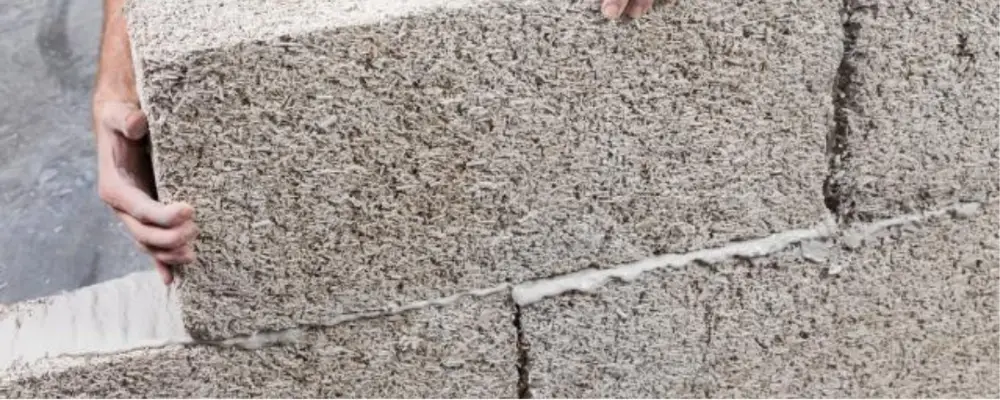
Hempcrete is an eco-friendly, game-changing material for building sustainable and environmentally beneficial structures. This well-supported biocomposite material is made from hemp hurds, the core fibres of the hemp plant, which are combined with lime and water. It is a green alternative to ordinary concrete, which has stimulated interest in eco-friendly construction. Hempcrete is a highly effective insulator with exceptional qualities. As a timeless choice for evolving modern designs and meeting the needs of industries, this material is in high demand at present as well as in the future.

This blog will provide readers with useful information about hempcrete blocks, including their benefits, manufacturing process, and uses. 

What is Hempcrete?

Hemp is an excellent plant that is planted for industrial and medicinal purposes and requires only a small amount of water. This can be cultivated without the use of any chemical fertilisers or pesticides and also supports regenerating agricultural land. When hemp and lime are combined, a natural concrete, hempcrete is produced with extremely lightweight properties. Its thermal mass and vapour permeability help create high-performance buildings that meet current and future thermal regulations.

Buildings of many kinds, including homes, apartment complexes, public and service sector buildings, and other structures, can be constructed, renovated, and restored using hempcrete, one of those bio-based materials.

The Composition of Hempcrete

In construction, an environmentally friendly building material that is made from hemp shives, lime, and water, is hempcrete. This lightweight, insulating substance is manufactured by combining woody hemp fibres, or hurds, with lime as a binder. Either natural hydraulic lime or hydrated lime is commonly found in the lime-based binder.

During the carbonation process, CO2 is absorbed by hydrated lime, which is formed from pure limestone. The setting period for hempcrete is shortened to around two weeks to a month for sufficient strength by combining hydraulic binders with ordinary hydrated lime for quicker results.

A small amount of cement or pozzolanic binder can be added to speed up the setting time. This makes the product lightweight, strong, durable, and suitable for constructing structures that are sustainable and long-lasting.

Benefits of Hempcrete Construction

The ideal benefits of hempcrete construction are the following:

  • Hemp absorbs carbon as it grows, offsetting the carbon released during hempcrete production, making it a carbon-negative material.
  • It makes structures safe and resistant to fire.
  • Since hempcrete doesn’t require any additional chemicals, it produces a healthy interior environment.
  • Hempcrete is an excellent material; it handles temperature swings so well and provides great thermal insulation.
  • When the relative humidity is high, hempcrete absorbs moisture; when it is low, it releases it.
  • It is impervious to termites and other pests.
  • Compared to conventional cement, hempcrete uses less water throughout the processing stage.
  • Its strength and features increase with time because it takes decades to cure completely.

Applications of Hempcrete in Construction

The following are some of the uses for hempcrete blocks:

  • For both exterior and interior walls, hempcrete blocks provide efficient insulation.
  • They are used on roofs and floors for their excellent insulation properties.
  • Under flooring, hempcrete is used as a supporting material.
  • In addition to providing insulation, it is used as a plastering medium.
  • Hempcrete blocks are frequently used while constructing new structures.
  • They improve the insulating qualities of older structures through retrofitting.
  • Hempcrete is used to restore and renovate a variety of structures and buildings.

Properties of Hempcrete

Hempcrete’s numerous engineering qualities include:

  • Hempcrete is strong and long-lasting.
  • Its lightweight is one of its defining characteristics.
  • Hemp lowers the carbon footprint by absorbing carbon dioxide.
  • By lowering building temperatures and humidity, the material helps to improve thermal comfort and reduce energy use.
  • Because of its low density and ability to withstand cracking, hempcrete is advised for seismically vulnerable locations.
  • The material’s low compressive strength of 1 MPa, or one-twentieth of conventional concrete, renders it unsuitable for use in building foundation construction in seismically active areas.

Production Process of Hempcrete Blocks

Hempcrete is processed using three fundamental steps.

  • Mixing the raw materials:

To make the best mixture, raw ingredients, including water, hemp shives, and a lime-based binder, are blended proportionately.

  • Moulding the Mixture: 

The mixed raw materials are poured into moulds and shaped into blocks, typically 6 to 30 cm wide.

  • Curing the Hempcrete Blocks: 

The blocks are put on a conveyor belt to cure once they have reached a firm state. After that, they are transferred to a specific location for outdoor drying. Curing, which usually takes 6 to 10 weeks, depending on the block’s width, improves the block’s strength and hardness.

Advantages of Hempcrete Blocks

The benefits of hempcrete blocks are numerous, as follows:

  • Hempcrete is an eco-friendly, energy-efficient building material with a carbon footprint of -72 kg/m².
  • Blocks of hempcrete show good fire resistance.
  • Hempcrete blocks have a very high capacity to handle moisture.
  • Hempcrete blocks come in different sizes (widths) and have a wide range of uses.
  • The strength and longevity of hempcrete bricks are its defining characteristics.
  • Because they are lightweight, transporting is made easier.
  • Blocks of hempcrete help control the structure’s temperature.
  • These blocks are sometimes used in ornamental construction.

Disadvantages of Hempcrete Blocks

The following are the drawbacks of hempcrete blocks:

  • Because of its reduced compressive strength, hempcrete is not a good choice for foundation construction.
  • Its use in some constructions is limited because it is not advised for components that are subjected to high loads.
  • Due to its limited popularity in many nations, hempcrete is used less frequently overall.
  • It might be challenging to source hemp because it is not always available or grown.
  • A lack of awareness about hempcrete construction among builders, engineers, and architects is a result of its limited appeal.
  • It is comparatively more expensive than conventional concrete.
  • Because hempcrete blocks are larger than conventional concrete blocks and brickwork, larger areas may be used, and less carpet and buildup area will be provided. 

Conclusion

In the form of hempcrete blocks, this blog explained every facet of hempcrete and its potential as a building material. The definition, uses, manufacturing process, benefits, and drawbacks of hempcrete were all covered in the course of the discussion to help understand all about hempcrete.

Grounding System – Types, Installation, and Maintenance

0
Grounding System

Grounding systems are an indispensable part of constructing and maintaining electrical systems. A grounding system ensures the prevention of electrical shocks, protects equipment from damage, and maintains the integrity of electrical circuits. The system is incorporated in all forms of construction projects such as residential, commercial, and industrial setups. This prevents catastrophic outcomes including fires, system outages, and life-threatening hazards. For any construction professional, knowledge about components, types, and applications of grounding systems is essential. This article will be a small introductory guide on grounding systems, their significance, installations, and maintenance. This will provide readers with a comprehensive understanding of the role of grounding systems in construction.

What is a Grounding System?

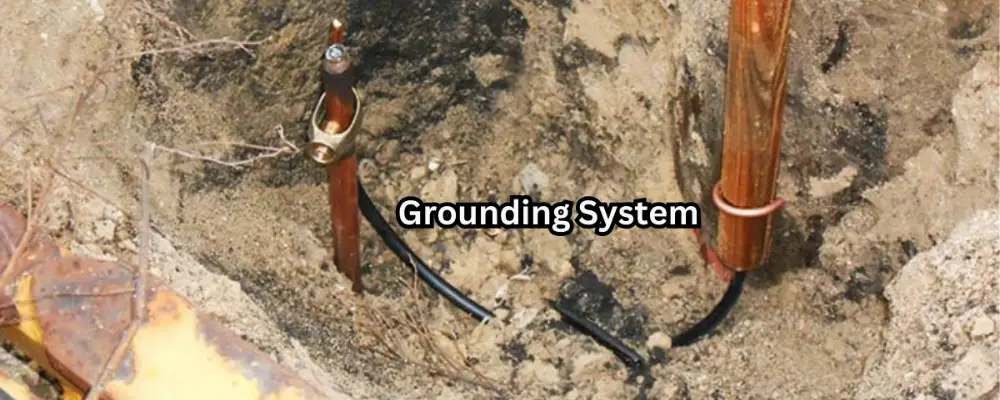
It is a low-resistance path that carries an electrical flow into the ground. This connection of electrical equipment with the ground is called grounding. This enables a safe flow or discharge of excessive currents to the ground without damaging or causing any safety hazards to the environment or nearby people. In technical terms, the term grounding can be described as a type of conductive connection between the electrical equipment and the ground. The inheritance of earthing conductors in the construction industry protects the volatile power supply. The absence of a grounding system means you are risking your data centre equipment and people’s lives.

Types of Grounding Systems

There are three types of grounding systems; they are,

1.  Ungrounded Systems

2.  Resistance Grounded Systems

3.  Solidly Grounded Systems

Ungrounded Systems: This type of grounding system was much more common in the 40s and 50s. As the name suggests, this type does not imply that the system is a standalone, not having a connection to the ground. What it means by the term ungrounded is that there is a capacitance between the electrical lines and the earth. In electrical terminology, this system is called capacitance-grounded system.  As a result of this capacitance, the ground-fault current is negligible. This system is considered to be riskier despite its existence and purpose fulfilment.

Resistance Grounded Systems: In this system, electrical power systems connect a neutral line to the ground through a resistor. Through a neutral line, this resistor will limit the fault current. This system is further divided into two based on the resistance; they are high resistance grounding and low resistance grounding. This high-resistance grounding limits ground-fault level to <10 amps. The low-resistance grounding limits the ground-fault current to between 100-1000 amps.

Solidly Grounded Systems: In this system, the electrical power is directly connected to the ground. In this type of system, it is much easier to locate than the other two systems. The industrial sector uses this system as a backup for generators. It reduces all the possibilities of overvoltage and prevents any short circuit or mishap.

Components of a Grounding System

Some of the main components involved in the grounding system are ground rods, grounding conductors, grounding plates, grounding electrode systems, and bonding conductors.

  •  Rods that provide a connection to the ground are known as ground rods.
  • Wires that connect the electrical system to the ground rods are called grounding conductors.
  •  Whenever the ground is not suitable for driving rods, grounding plates are used.
  • Besides, we have a grounding electrode system that serves as interconnected components that establish a grounding connection.
  • The  inclusion of bonding conductors in the grounding system ensures electrical continuity and prevents potential differences.

Installation process of a Grounding System

The design and installation of the grounding system involves seven steps. Below are the procedures that need to be followed for the installation of the grounding system.  

  • The first step in any grounding system is to measure the soil-specific resistivity. This can be measured with the help of 4 piles using the Wenner Method. All four piles are driven into the ground at equal intervals and in the same direction. With the use of a ground megger, the earth’s resistance is calculated.
  •  Grounding rods are used in those areas where the ground is not rocky. In this step, as the rods reach the moist layers of the soil, it becomes possible to get low grounding resistance.
  •  The next step is to ensure grounding cable connections with the rod. This is done by combining vertical rods with bare-stranded copper conductors.
  • Underground connections can either be conductor-to-conductor or conductor-to-electrode. To ensure these connections are stronger than mechanical connections, the Thermowelding method is used.
  • If the desired level of grounding resistance cannot be achieved, grounding resistance-reducing materials are added.
  • To measure grounding resistance and control grounding rods, grounding manholes are used.

Testing and Maintenance of Grounding Systems

Periodic testing and maintenance of grounding systems are essential to ensure their effectiveness. In testing the grounding system, measuring ground resistance and inspecting connections for corrosion or wear are important. Some of the common methods are:

  • To measure earth resistance, tools like clamp meters can be used.
  • To ensure all components are properly connected, continuity testing is carried out.
  • Apart from these methods, visual inspections for physical damage, replacing damaged corrections, and verifying compliance with updated codes can detect and rectify issues.

Applications of Grounding Systems

  • Installation of a grounding system can protect homes from electrical faults and lightning strikes.
  • In industrial facilities and commercial establishments, it safeguards sensitive equipment and prevents power disruptions.
  •  In telecommunication towers, it prevents antennas and other equipment from being struck by lightning.
  •  The usage of a grounding system in renewable energy systems stabilizes solar panels and wind turbines against electrical surges.

Conclusion

As a result, grounding systems are very important components for any secure electrical system. They greatly reduce the risks associated with electrical shocks, damage to equipment, or failure of a system by supplying a low-resistance pathway through which electrical current can flow into the earth. Every construction specialist must know what the various types of grounding systems are, their components, and how to install and maintain them. Proper grounding methods greatly contribute to the safety of the dwelling’s occupants, the integrity of significant equipment, and the elements of the electrical system’s infrastructure.

Final Setting Time – Method, Elements & Difference of Cement

0
final setting time

In any construction project, the building itself is not a complete structure. It is an adjoined  number of structural components that make our structures desirable. One of the many structural components is cement. It is a binder in concrete and mortar that holds the structure together. Understanding the setting time of cement is crucial to structural integrity. In generic terms, setting time is the duration that to transition from a fluid state to a solid state. This setting time can be divided into two types; they are the initial setting time and the final setting time. The difference between these two types is that in the initial setting time, the cement paste remains workable, whereas in the final setting time, the cement paste has completely lost its plasticity. This article provides proper knowledge of the above-mentioned setting times; failing to understand them would compromise the structural integrity.

What is the Final Setting Time?

The final setting time refers to the duration from the addition of water to the point of attainment of hardened cement. At this stage, the cement paste loses its plasticity. The hardened cement can bear loads and is stable for construction purposes. Observation of this process is important to determine the continuation of further processes such as formwork removal, and applying finishes. The parameter of the final setting time of the cement is influenced by the chemical composition of the cement, water-to-cement ratio, temperature, and the use of admixtures.

Procedure to Find Setting Time of Cement

The commonly used method or apparatus in the construction industry to determine the setting time of cement is the Vicat apparatus. This apparatus has a special rod with a needle at its end. Below are listed the procedures to determine the setting time of the cement.

  • In both initial and final setting times, the mixture is prepared in paste form by mixing water and cement at standard consistency.
  • To determine the initial setting time, the needle is lowered into the prepared cement paste that is filled in a mould. The process begins from here. The apparatus takes note of the time it requires for the needle to penetrate to 5mm from the bottom of the mould. The slow needle penetration signifies that the cement is in the initial setting phase.
  •  To determine the final setting time, after some time, the needle is again lowered. To signify that the cement is in the final setting time, the needle should not penetrate deep. The slight impression on the surface without much penetration implies that the cement is hardened and can support the load without significant deformation.

Final Setting Time of Various Cement Types

Final Setting Time of Various Cement Types

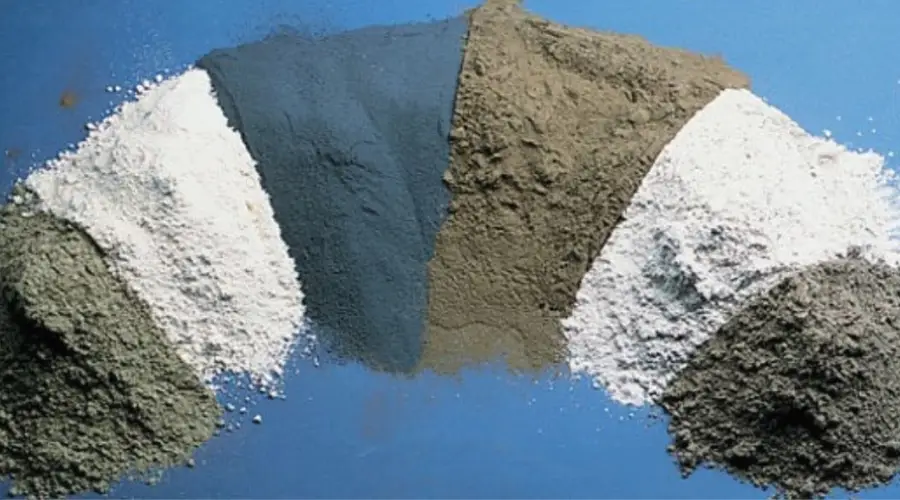
While almost all types of cements have the same initial and final setting time, some have differences in initial and final setting time. Below are listed the initial and final setting times of various cements.

Factors Affecting Final Setting Time

Several factors can affect the initial and final setting time of the cement. They are,

  • The setting time is greatly influenced by the composition of chemicals. The higher the percentage of tricalcium silicate, the lesser the time taken for setting. Similarly, the higher the dicalcium silicate slows the setting time of the cement.
  • When a cement block is finely ground, it hydrates faster. This, in turn, reduces the setting time of the cement.
  • The presence of excess water in the cement may prolong the setting time because the creation of more space for hydration.
  • Even temperature plays a significant role. The high temperature decreases the setting time, whereas lower temperature increases the setting time.
  • In admixtures, we have two types: retarders and accelerators. The addition of gypsum, which is a retarder, delays the setting time. The addition of calcium chloride, an accelerator, reduces the setting time.

Testing the Final Setting Time

As discussed above, the final setting time is determined by the Vicat apparatus. The procedure includes placement of prepared paste in the Vicat mould. The resistance of the mold is measured periodically. The final setting time is noted when the needle of the Vicat apparatus does not penetrate the prepared cement mold. This ensures the cement meets the required standard for construction needs.

Factors that can Accelerate or Delay Final Setting Time

The duration of the final setting can be modified with the addition of an accelerator or a retarder with the cement mixture.

  • Chemicals like calcium chloride, which is an accelerator, are added to speed up the hydration in cold climates and are useful in cold temperatures.
  •  Chemicals like gypsum, which is a retarder, are added to delay the setting time. It is useful in hot temperatures.
  • In some cases, environmental conditions such as high temperatures and low humidity accelerate the setting, whereas low temperatures and high humidity delay it.


Difference between Initial and Final Setting Time

Initial setting TimeFinal Setting Time 
It is the duration of time taken by the cement to lose plasticity and begin hardening.It is the duration of time taken by the cement to reach complete hardening.
The cement paste is workable at this stage.This stage signifies that cement can bear loads and further construction can proceed.
The ideal duration for initial setting time is 30-40 minutes.The ideal duration for the final setting time is 600 minutes.
This helps in the mixing and application process.This helps in determining the continuation of further processess.

Conclusion

The setting time of cement is one of the essential parameters in construction, influencing workability, strength, and durability. The final setting time indicates a stable state when the material can bear loads, and thus the construction can proceed safely and efficiently. Factors that affect the setting time, testing procedures, and the differences between initial and final setting times will be known by engineers, thereby optimizing construction processes and providing durable structures.

Curtain Grouting – Process, Applications & Key Differences

0
Curtain Grouting

Any construction building requires periodic refurbishment to increase the structure’s longevity. Various steps and processes exist to refurbish and resuscitate the structural integrity and load-bearing capacity. One of them is grouting. Grouting involves the injection of a fluid-like material into gaps, voids, or spaces in the structures. The grouting is done both in the initial stage of construction and after wear and tear to improve the strength or rigidity. There are various types of grouting practiced in the construction industry. This article will discuss curtain grouting. The diverse geological landscape has necessitated the inclusion of curtain grouting. This increases the safety and durability of structures. This article will give a brief description of curtain grouting, its working process, applications, advantages, and disadvantages.

What is Curtain Grouting?

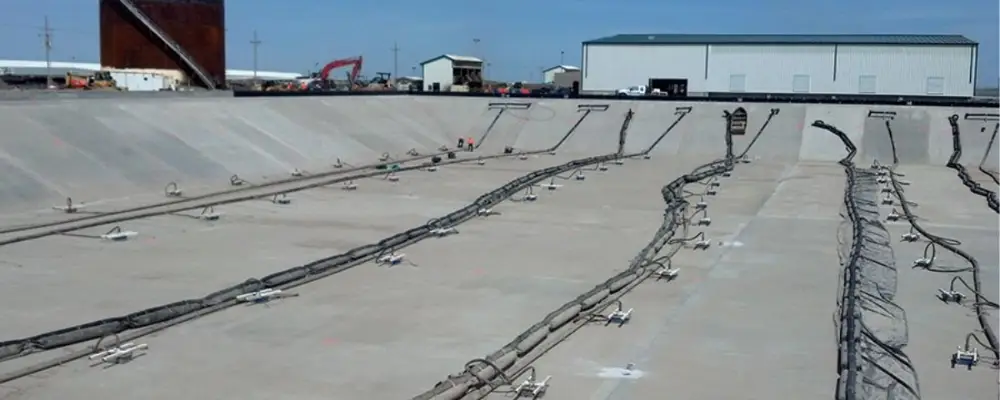
The curtain grouting involves the injection of grout materials into the ground. This creates an impermeable barrier, which is known as a curtain grout. In construction projects, there is always a chance of the development of pores or fractures. This infused grout will act like a curtain and obstruct the flow of water through such gaps. This curtain grout mitigates the seepage issues that arise at any point in time. In our country, the curtain grout is highly used in dam projects. In the construction of dam projects, the curtain grout addresses the seepage concerns and reinforces a solid foundation. Recognising its significance in structures like dams, the Bureau of Indian Standards has provided official guidelines for the design of curtain grout.

How Curtain Grouting Works?

The core principle behind curtain grouting is targeted grout injection. This creates a continuous impermeable barrier that prevents water seepage through porous openings, fractured soil, and rock formations. Precise planning is much needed to ensure that grout reaches every nook and corner to form a watertight curtain. The process begins with an introspection of permeability to determine the level of seepage. This gives us clarity on the need for grout material and injection parameters. Based on site conditions, suitable materials are chosen. Under controlled pressure, the grout is injected into the voids. It is the high-pressure injection that ensures the grout is spread to every nook and corner. After some time, the injected grout turns out to be a hardened curtain-like structure.

Application of Curtain Grouting

Curtain grouting is extensively used in the construction industries. Below are some of the common applications of curtain grout,

  • Curtain grout plays an indispensable role in the construction of dams. It prevents seepage through foundations and abutments. This in turn increases the stability of the structure.
  •  Next to dam construction, curtain grout is used largely in tunnel construction. It is used to seal the water seepage in water-bearing strata by creating a watertight barrier. This creates safe and dry working conditions for the construction project.
  •  It is even used in preventing contaminants from passing through groundwater. This safeguards the environment.
  • In small construction projects, it is used to reinforce foundations and control groundwater entry into basements.
  • Advantages of Curtain Grouting
  • In various geological conditions, curtain grouting stands out to be a one-stop solution to prevent water seepage.
  • It also helps in consolidating the foundation materials, increasing the stability and structure’s longevity.
  •  Its applicability ranges from large projects such as dam construction to small projects such as urban construction.

 Disadvantages of Curtain Grouting

  • The specialised equipment and materials used spike the amount of expenditure for the project.
  • The intricacy of the process requires skilled personnel to handle the entire process.
  • Improper injection or usage of material can cause environmental impacts such as groundwater contamination.  

Step-by-Step Curtain Grouting Process

  • Detailed planning should be laid out after site investigations. Following this, the appropriate selection of grout material and determination of injection parameters concerning the site is necessary.
  • Drilling is the next step following the instructions laid out in the design specification. This ensures alignment and depth accuracy.
  • Preparation of grout mixtures is carried out considering factors like viscosity, setting time, and depth accuracy.
  • Inject the prepared grout mixture under controlled pressure. The controlled pressure is to ensure the flow rate and proper distribution of the material.
  • The infected mixture is allowed to cure for some time. This forms the curtain-like structure preventing any form of seepages.

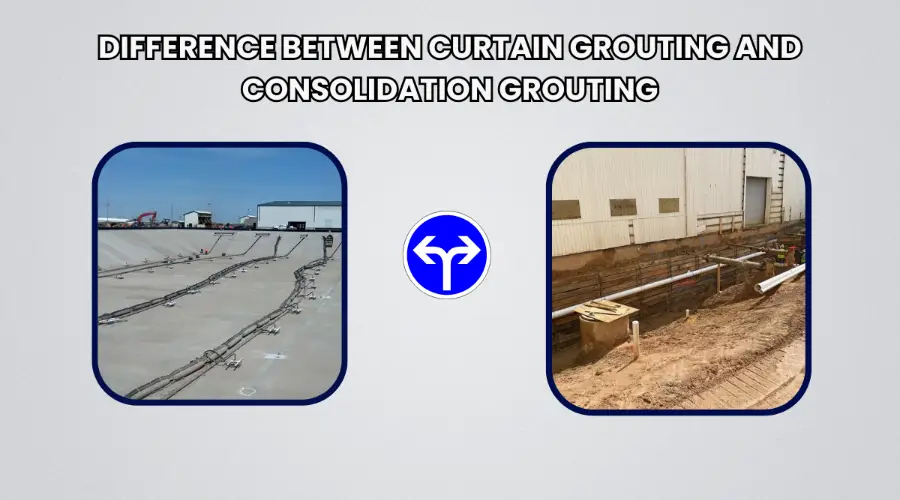
What is the Difference Between Curtain Grouting and Consolidation Grouting?

Difference Between Curtain Grouting and Consolidation Grouting
Curtain GroutingConsolidation Grouting 
In this type, grouting is formed with the process of injecting grout into the ground. In this type, the ground is strengthened and solidified by filling the void with grout.
The main purpose of curtain grout is to prevent water seepage.Here, the main purpose is to improve the strength, stability, and load-bearing capacity of soil. 
Some of the common applications are in dam construction, underground tunnels and many other applications.It is used in building foundations, slopes, and stabilisation projects. 
The pattern of curtain grouting is continuousThe pattern of consolidation grout is more specific to the weak zone. 

Conclusion

In conclusion, curtain grouting is an important technique in modern construction, especially for projects that are faced with adverse geological conditions. It prevents the seepage of water through the ground and, therefore, enhances the stability and longevity of structures. It is applied to a wide range of projects, from large dams and tunnels to smaller undertakings. While curtain grouting offers huge advantages in the form of control over water and reinforcement of foundation, it does pose some significant drawbacks, such as, expensive specialised equipment and skilled labour, besides careful planning and execution to avoid possible environmental impacts such as water contamination. Still, with effective application and constant innovation in grouting materials and technology, curtain grouting will remain an indispensable tool for the safety and success of numerous construction ventures across different geologies.

FAQs

1. Which grouting is the best?

While the effectiveness of grouting is determined by the specific application and environmental factors, some of the highly preferred grouting materials in the construction industry are epoxy grout, cementitious grout, and curtain grout.

2. What is the purpose of grouting?

The main purpose of grouting is to fill gaps, provide structural support, seal, aesthetic appeal and increase durability.

3. What are grouting sizes?

Grouting size plays a critical role in the overall design. It is important to choose a suitable size based on tile type and layout. Different sizes are,
·  Narrow – 1 to 2 mm
·  Standard – 3 to 5 mm
·  Wide – 6mm and above.

Cementation Process – Materials, Steps for Construction Use

0
Cementation Process

Imagine carving out a huge mountain and shaping it into a perfect architectural structure. Kingdoms used such architectural practices in ancient times; however, it is not viable to adopt such construction practices in the 21st century. Technology and innovations have made our lives simple and less complicated. Similarly, the construction sector is evolving and we could see new ideas and innovations infused. From carving out huge mountains to the use of stones, and bricks to build our dream projects, it is itself an evolution. This binding of several stones to one big structure becomes possible with the help of the cementation process. This process has significantly evolved the practice imbued in the construction industry to meet modern demands. Almost all construction projects in our surroundings, such as buildings, roads, bridges, and other infrastructure projects, include cementation. This article explores why the cementation process plays a pivotal role by providing a detailed description of the process, its application, advantages, and procedural steps. By the end of this article, readers will have a comprehensive understanding of its importance in modern construction.

What is the Cementation Process?

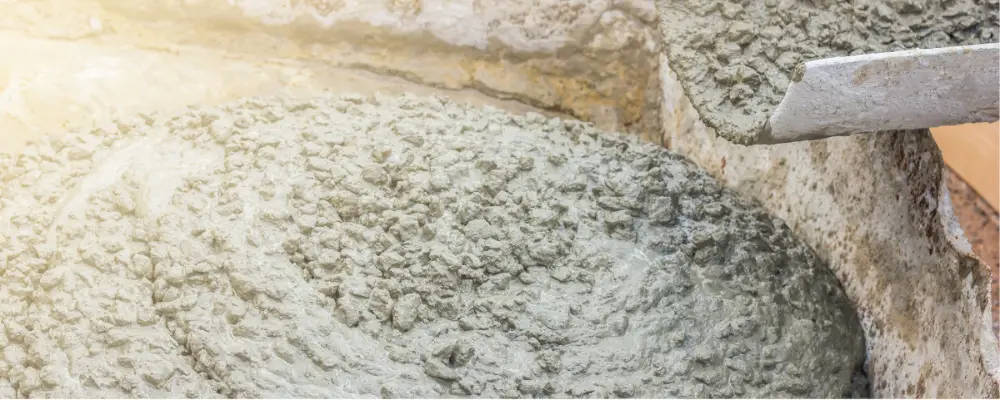
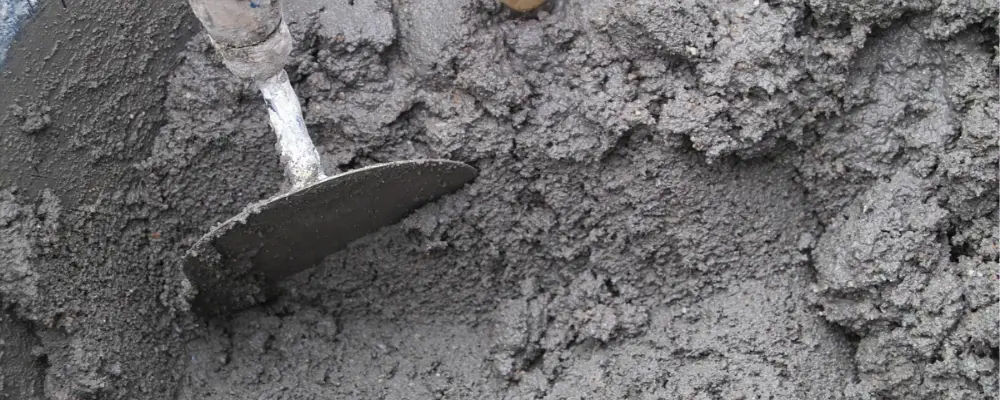
This process refers to a method of binding materials by creating a cohesive bond. This strong cohesive bond is made possible with the application of cement-based adhesives. In the construction industry, we can see this process included in various activities such as masonry, concrete casting, and surface finishing. The working process is the mixing of water with cement, which forms a paste. This slurry or paste-like material is used as a binder. It is the chemical reaction in the process that makes the paste hard and allows it to develop strength with the hydration reaction. Once solidified, this bond can be trusted to ensure the stability and longevity of the structure. While the cementation process itself is an evolution, with the technological advancements in material science, the process has refined manifold.

Materials Used in the Cementation Process

The materials used in the cementation process are chosen carefully to attain maximal performance and durability. The primary component in the cementation process is cement. It is a mixture of calcium silicates and small amounts of calcium aluminates. These sub-components in the cement are responsible for the hardening of cement when mixed with water. The most widely used cement in the cementation process is Portland cement. The basic minerals used in making cement are limestone, shale, and gypsum. The second component in the cementation process is aggregates. These are raw materials such as gravel, crushed stone, and sand extracted from pits and quarries. They add bulk and stability to the mixture. The third is an important component in the entire process, i.e. water. It initiates a hydration reaction which results in bonding. Finally, chemical additives are added to change the properties of the mix. The choice of materials used in the process varies for different construction projects.

Applications of Cementation

Cementation has a broad range of applications in the construction industry. This column will list some of the common applications of cementation in the construction sector for better understanding. The application of cementation includes both small-scale and large-scale projects.

  •  It is used in building construction for laying foundations, walls, and floors.
  •  It plays an indispensable role in constructing large-scale projects such as bridges, dams, and tunnels
  • It can even be used to produce durable concrete roads and walkways.
  •  In some areas, the concrete is also used as a precast structure such as beams, panels, and blocks.
  • Not only in building new structures, it also helps to resuscitate debilitated structures. It becomes possible through grouting and patching techniques.
  •  In some cases, with distinct properties, it is also used in marine construction and industrial flooring.
  • It is also used in constructional requirements such as durability and withstanding chemical exposures.

Advantages of Cementation

  • It enables the creation of long-lasting structures with its resistance to environmental factors.
  • It is versatile and adaptable to any type of construction project. This makes them the most preferred component in the construction sector.
  • In terms of cost affordability, it is considered to be economical for large-scale projects. It is easily available as they are readily made materials.
  • The process is simple. This makes the usage of material less complicated.

Disadvantages of Cementation

  • It is not environmentally friendly as the production of cement emits high carbon.
  • It is highly susceptible to shrinkage, and the occurrence of cracks is possible if not applied properly.
  • Cement takes considerable time to set and harden fully, and without adequate curing, it cannot achieve its maximum strength.
  • Additional reinforcements are required if used for dynamic or high-movement structures.

Steps Involved in the Cementation Process

The strong and durable bond between building materials is determined by the careful implementation of the steps below.

  • The first and foremost step is to prepare the surface. Remove any dirt, dust, loose particles, or contaminants on the surface where the cement will be smeared. Techniques like brushing, scraping, or sandblasting are widely used. The usage of these techniques depends on the level of contamination. Moistening the surface will improve the adhesion of the cement.
  • Mixing of the cement is done carefully with the correct proportions of cement, water, and additives. Mix it thoroughly to create a smooth and uniform paste. The mechanical mixer is used to attain the consistency of the mixture.
  • Then, the prepared mixture is applied to the surface and spread evenly to avoid voids. The binding surface is carefully aligned and placed together. This ensures proper positioning and fixing.
  •  Excess cement can be removed by applying firm pressure. This will create a strong bond as well. It is now all set to harden. The curing process takes several hours or days.

Conclusion

The cementation process has been a hub of evolution that now comes as modern building techniques ranging from carving mountains in ancient times to binding materials together with cement adhesives. It is beneficial in various ways, such as durability, versatility, and cost-efficiency, and its applications in different construction are indispensable. However, the consequences of environmental impact resulting from cement production and shrinkage and cracking that might occur afterwards demand appropriate consideration and mitigation. As technology advances, further refinements in cementation techniques can be expected, thus making construction practices more sustainable and efficient.

Ceiling Coffers – Types, Benefits & Design Ideas Explained

0
Ceiling Coffers

Ceiling decoration has become a growing trend in recent times. With no extra budget considerations, you can transform your space into something more appealing and visually striking. In that case, one of the best and widely used methods is coffered ceilings. It is somewhat similar to the Baroque style, invented in the early days when the ceilings were made of stones.

It is uncertain that everyone has a deep understanding of coffered ceiling decoration, its advantages, and design ideas. But no worries; this article will guide you in the right direction to provide you with sufficient details about coffered ceilings and their significance. Let’s delve into reading:

What are Ceiling Coffers?

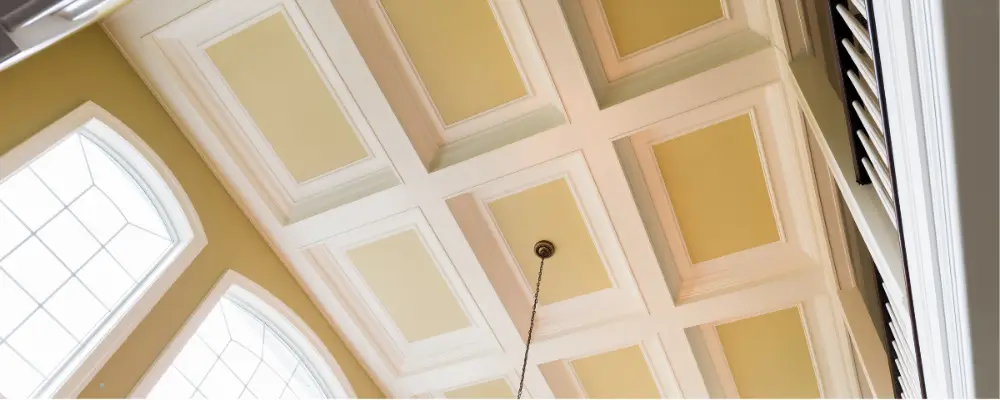
Ceiling coffers, often called coffered ceilings, are identified by their evenly spaced beams aligned in grid patterns. This outstanding architectural feature adds visual interest and depth to a room. Based on the individual’s preferences, they can customise the depths, whether it may be simple or complex. This method consists of a series of sunken panels, which are typically either square or rectangular.

Benefits of Ceiling Coffers

Here are the benefits you can gain from installing coffered ceilings. Let’s have a look at them:

Custom Design: Coffered ceilings give homeowners flexibility to create a custom look. With a wide range of options available, they can add different dimensional effects with deep or shallow heights. According to your architectural style and plan, you can mix and match the designs, colours, and panels for an ideal appearance.

Hide the Negatives: It is common that the ceilings are subjected to damages and cracks after a certain time of construction. With the installation of a coffered ceiling, you can hide those existing flaws and undesirable textures, creating a unique and striking look.

Mould and Mildew Resistance: One of the significant reasons to prefer coffered ceilings is that they have a strong resistance to sagging, mould, and mildew. Due to their lightweight, the construction process is simple and quick, and they are easy to clean and maintain.

Types of Ceiling Coffers

Installing the right type of ceiling coffers offers a unique style and pattern to the overall interior space. They have distinguished patterns and types that can fit the needs and changing requirements. Below are the popular types that you should know to make informed decisions:

Contemporary Coffered Ceiling: Contemporary ceilings can be valued for their symmetrical and organised grid pattern. In some cases, lumber is a handy option to cover the drywall of coffered ceilings, particularly in coastal areas.

Contemporary Coffered Ceiling

Geometric Coffered Ceiling: If you are looking to achieve a new ceiling shape, this can be your ultimate choice. You have diverse possibilities to achieve the desired shapes, such as octagonal, triangular, geometric, hexagonal, etc. Depending on your ceiling requirements, you can select the appropriate choice.

Geometric Coffered Ceiling

Traditional Coffered Ceiling: A coffered ceiling is almost similar to the waffle ceiling. People often choose traditional designs like box or grid, which seem simple and quite natural. If you want to add a sense of elegance to this pattern, it is possible by adding crown molding.

Traditional Coffered Ceiling

Rustic Coffered Ceiling: With no additional mouldings or designs, a rustic ceiling looks like simple wood beams. Unlike traditional coffers, they become a great choice for countryside and farmhouse-style architecture.

Design Ideas for Ceiling Coffers

Ceiling coffers have various design possibilities and are as follows:

Ceiling Designs: The coffered ceiling of traditional homes seems to mimic the style, while the modern design looks simple yet visually attractive. To achieve a neater and cleaner appearance, no beads and mouldings are placed along with a coffered ceiling.

Bedroom Designs: Colour selection is a primary concern when it comes to bedroom design. Ensure the design is both strong and detailed to make the space feel loved and comfortable. If you would like to add more depth to your room, it is good to improve the ceiling height to at least nine feet.

Living Room Designs: The living room would be the best space to visualise the outstanding result of the coffered ceiling. A room with high ceilings can elegantly adapt this design and draw immediate attention from people. Beyond the living room, it sounds great in audiovisual rooms with no echo issues.

How to Install Ceiling Coffers

The installation of a coffered ceiling improves the visual appearance and makes the space more charming and attractive. Here is the simple installation guide for your reference:

  • Determine your exact requirements, such as desired pattern, materials, and size of the coffers. Choosing the appropriate options only allows you to achieve the dreamed outlook.
  • Use chalk to mark the ceilings to ensure the planned lines are straight and level.
  • Install the main beams perpendicular to the ceiling joists and secure them using screws and nails.
  • Create a grid structure by installing cross beams to the main beams.
  • Clad the beams using desired material like PVC or MDF. To finish it with a perfect look, you can install decorative trim around the edges of the ceilings.
  • Finally, paint the beams to achieve the desired aesthetic and dramatic effect.

Common Challenges and How to Overcome Them

Your choice of coffered ceiling is fine, but you should be aware of these challenges to overcome them with the best techniques.

  • Uneven or cracked ceilings are not perfectly flat, resulting in an unpleasant look. Therefore, you should use furring strips or shims to level the surface before attaching the beams.
  • It is advisable to double-check the measurements frequently to achieve perfectly aligned beams.
  • Intricate designs need precise cutting and fitting of beams and panels.
  • Provide careful attention to ensure the beams are securely aligned with the ceiling joists to support the weight.

Cost of Ceiling Coffers

The cost of coffered ceiling installation can vary due to significant reasons such as material selection, size and complexity of the design, labour costs, and location. However, the general cost estimation will range between Rs. 500 to 1500 per square foot.

Closure Lines

Coffered ceilings are a significant investment for your home, which not only makes the space appealing but also improves the value. With the details mentioned above, you can have a better understanding of their types and design possibilities. By carefully considering your budget range and exploring the availability, you can make an informed decision.

FAQs

1. What ceiling height is ideal for installing coffers?

Coffered ceilings will be a great choice for homes with high ceilings, which are typically above 9 feet or taller. It adds depth and dimension to the overall space, making it visually appealing.

2. Can I add ceiling coffers to a small room?

Yes, coffered ceilings can also be installed in small rooms, but you need to pay careful attention to avoid making the space feel cramped. However, here are some significant tips provided to improve its elegance, such as:
1. Use shallow coffers
2. Light colors
3. Minimalist design
4. Strategic placement
5. Creative light settings

3. How do ceiling coffers affect lighting?

Here are some lighting challenges you need to consider while installing a coffered ceiling:
1. It reduces ceiling height, affecting the effectiveness of overhead lighting.
2. Even light distribution needs careful planning.
3. May create dark spots in the room