Home Blog Page 3

Knee Wall vs Pony Wall – Best Choice for Your Construction

0
knee wall vs pony wall

Can you believe walls can also act as a décor item? Yes, you might think in a different perspective to improve your architectural style and make it visually striking. But there are simple and elegant ways that won’t ruin your budget. Such terms are knee wall and pony wall. Both are different terms, but often used to describe the same thing.

Understanding the key differences between these terms helps you choose the right one for your project. This blog post clearly defines the definitions and key differences to make an informed decision.

What is a Knee Wall?

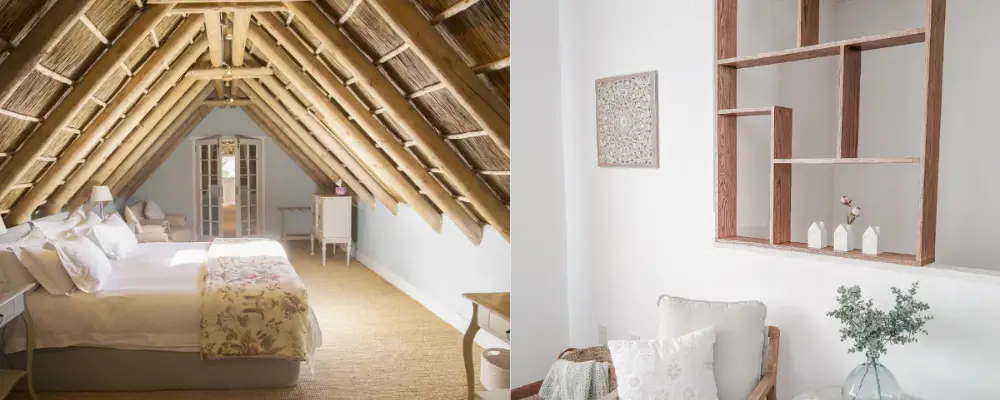
A knee wall is a short wall, probably under three feet in height, attached at the bottom plate of a structure to support roof rafters. Its height is typically at the level of a person’s knee, from the place where it is attached, either in the attic spaces or upper floor. Unlike other wall types, they are not versatile, yet support weight. It can be an ideal choice for houses with attic spaces.

What is a Pony Wall?

A pony wall is often called a half wall, which can be used in both interior and exterior spaces but is not extended from floor to ceiling. In general, they have served as stable walls, preventing ponies from escaping. Pony walls are also used as short walls and room dividers, containing limited storage space and counters. If you are planning for an open floor plan, this can be an excellent choice to separate spaces and create extra shelves.

Key Differences Between Knee Walls and Pony Walls

With the differences mentioned, the table can give you an idea about choosing the appropriate one:

FeaturesKnee WallPony Wall
DefinitionA knee wall is typically a short wall, under 3 feet in height, and can be found in attics.A pony wall is also a short wall used in both interior and exterior walls with a height range of 3-4 feet.
Primary PurposeKnee walls are primarily designed to support the structural weight of roof rafters in attics. It allows for increasing usable attic space and longer spans between supporting walls.Pony walls serve several purposes, such as creating distinct zones within an open floor, adding unique architectural elements, breaking up the larger walls into small spaces, and supporting countertops.
Structural RoleA knee wall is generally a load-bearing wall, essential to support the roof structure in attics.This is not a load-bearing wall and can be used for decorative or functional purposes. Unlike regular walls, this is not particularly designed to support significant weight.
LocationKnee walls can be located mostly in attic spaces.It can be used throughout the home, such as in hallways, kitchens, bathrooms, living rooms, etc.
Common UsesProvide support for built-in storage and roof rafters, and create usable living space in attics.Create privacy, divide larger spaces into smaller divisions, add visual interest to the architecture, and define areas within an open floor plan.

When to Choose a Knee Wall or a Pony Wall

Pony Walls

As stated earlier, pony walls are versatile and can be used throughout the home. Here are those uses:

Bookshelf: You can use a pony wall in two different ways in a bookshelf. Keep the top open and use the actual pony wall as a shelf by leaving slots out. Pony walls can also be used as mini-shelves; depending on their length and thickness, the number of books they can hold can differ.

Shower and Toilet Divider: You can feel protected when you add pony walls next to the toilet. To improve the aesthetic appearance, add a glass above the wall.

Reading Nook: You can install pony walls for a pleasant and comfortable reading nook. It can be placed wherever you want and can be personalised with an additional shelf to keep your books.

Kitchen Breakfast Bar: Pony walls were used to divide the kitchen and dining area in a home to make extra spaces. Whether it is a traditional or modern kitchen, this method can give a neater and more aesthetic view.
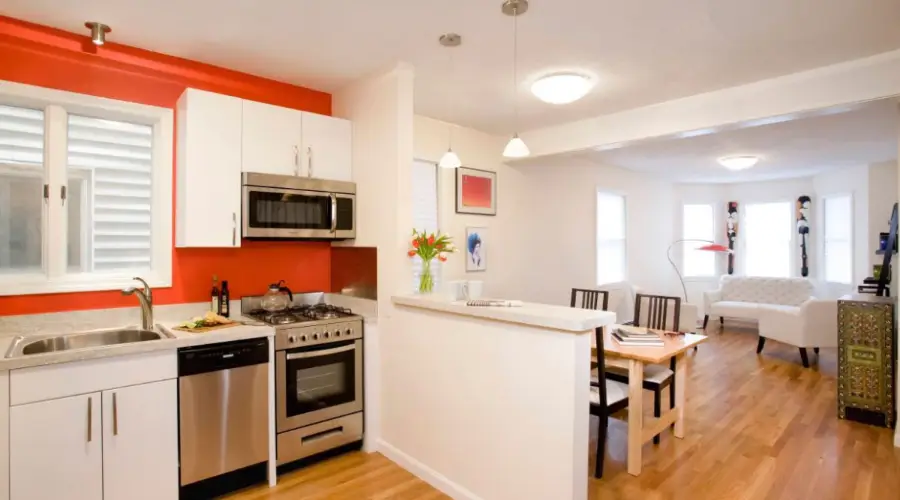
Pony Wall Kitchen

Knee Walls

Knee walls are primarily used to support weight like any load-bearing wall. These half walls are not being used for decorative purposes and can provide a vertical backdrop in the upper walls of a home or workplace. Unlike pony walls, they will not serve several purposes; they only have one.

Pros and Cons of Knee Walls

Pros

  • Creating usable living areas within the attic and allows for longer spans between the supporting walls.
  • Its primary function is to support the weight of the roof rafters.
  • Provides sufficient space for built-in storage like shelves and cabinets.

Cons

  • You may encounter complexities in attic framing and finishing.
  • Some areas may be significantly difficult to install or maintain, leading to cold spots.
  • This wall type may not be aesthetically appealing to everyone.

Pros and Cons of Pony Walls

Pros

  • Allow segregation of areas within an open floor plan without completely closing off the zone.
  • It can be an ideal choice to use in the kitchen from dining, living room from entryway, etc.
  • Creates architectural interest instantly with its unique and stylish design element.
  • It can efficiently support breakfast nooks, bars, countertops, or work surfaces.

Cons

  • Restrict views and natural light flow inside the room.
  • You will not enjoy complete privacy, especially for visual or sound seclusion.
  • It may leave sharp corners that are hazardous to children or pets.

Final Lines

The type of wall is crucial to improving the overall structural appearance and integrity of a building. With the aforementioned article, you might get an idea about knee and pony walls. Each has its own characteristics, benefits, and drawbacks. By understanding these concepts clearly, you can choose the one that fits your project requirements.

FAQs

1. Can a pony wall be load-bearing?

No, the pony walls are not particularly designed with load-bearing characteristics. It is just a decorative or functional element and are not meant to carry significant loads or weight of the roof.

2. How much does it cost to build a knee wall or a pony wall?

The cost of building a wall can’t be determined exactly, which can significantly vary due to several factors such as materials, size and complexity, finishing, and labour cost. However, the basic knee wall construction may cost between Rs. 800-1,000 per square foot, and a pony wall may cost around Rs. 600 to 800 per square foot.

3. Can knee walls be used for storage?

Yes, the knee walls can be used for storage purposes like built-in shelving, cabinets, and drawers. It is advisable to consult a professional to ensure that your desired needs are feasible.

Frame Type Construction – A Comprehensive Guide

0
frame type construction

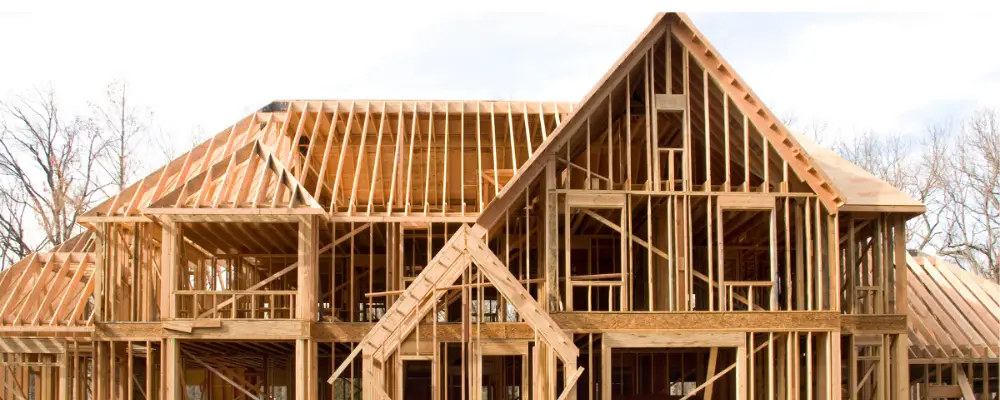
Framed structures provide robust support for infrastructure and buildings, making them a crucial component of civil engineering. They form a structure that can support and distribute loads since they are made up of interconnected beams and columns. Based on engineering and architectural requirements, many frame structure types are employed, which have an impact on a building’s stability, functionality, and design. Every form of frame, from lightweight space frames to strong moment-resisting frames, offers special advantages for particular uses. Read on to learn all about framed structures. 

What are the Types of Frame Structures?

A. Based on the way elements connect:

  • Rigid Frame Structure: 

This kind of frame is robust and rigid because the beams and columns are securely joined. Commonly employed in steel and concrete structures, it can withstand horizontal and vertical forces and does not flex under pressure. Two categories exist:

  • Fixed-Ended: The ends are immovable and fixed.
  • Pin-Ended: The frame becomes less rigid if the pins are removed.
  • Braced Frame Structure: 

The frame is strengthened by diagonal bracing between beams and columns, which makes it extremely resistant to earthquakes and wind. There are two typical kinds:

  • Portal Frames: Industrial buildings frequently feature portal frames as they form expansive uninterrupted spaces.
  • Gabled Frames: Gabled frames are peak-shaped frames that work well in places that face a lot of rain or snow.

B. According to the Materials:

  • Steel Frame Structure: 

These sturdy, lightweight structures are perfect for wide-open areas because they are made of steel beams and columns. They are earthquake and wind-resistant, but for safety, they require fireproof materials.

  • Wooden Frame Structure: 

Wood frames are utilised in workplaces and residences because they are affordable and adaptable. As they are lightweight, they are environmentally benign and climate-adaptable, which lowers building costs.

  • RCC (Reinforced Cement Concrete) Frame Structure:

An RCC (reinforced cement concrete) frame construction is a strong and connected system made of beams and columns arranged in a grid. They move huge loads to the foundation with efficiency and safety, and they are reasonably priced.

Characteristics of a Framed Structure

  • An A-frame structure is a robust configuration of slabs, columns, and beams intended to withstand significant lateral and gravity forces. 
  • The weight of the building is securely supported and transferred to the ground by this steel or concrete framework.
  • The compartments inside the frame are enclosed by walls in this system. 
  • These walls can separate spaces (non-load-bearing) or support loads (like shear walls). Permanent connections or pins hold the frame’s structural components together.
  • The main load-bearing parts of a framed structure are beams, columns, slabs, and shear walls. The materials used for construction vary based on the design and purpose.

Important Parts of a Framed Structure in Construction

In building construction, the essential components of a framed structure are:

Columns

Columns

The weight is transferred from beams and upper floors to the foundation by use of columns, which are vertical supports. They can support weights that are axially straight or eccentrically inclined. Designing columns is important because, unlike beams, which often only fail on one floor, a column’s failure could cause the entire structure to collapse.

Beams

The horizontal components of a frame that bear the weight of walls and slabs are called beams. They either distribute these loads directly to columns or to other beams. Beams are made to withstand bending stresses and are essential for maintaining structural stability.

Slabs

Slabs are level, horizontal surfaces that serve as roofs and floors, bearing vertical loads and providing protection. They also deal with wind and seismic forces. These loads are distributed to the beams beneath slabs.

Foundation

Foundation

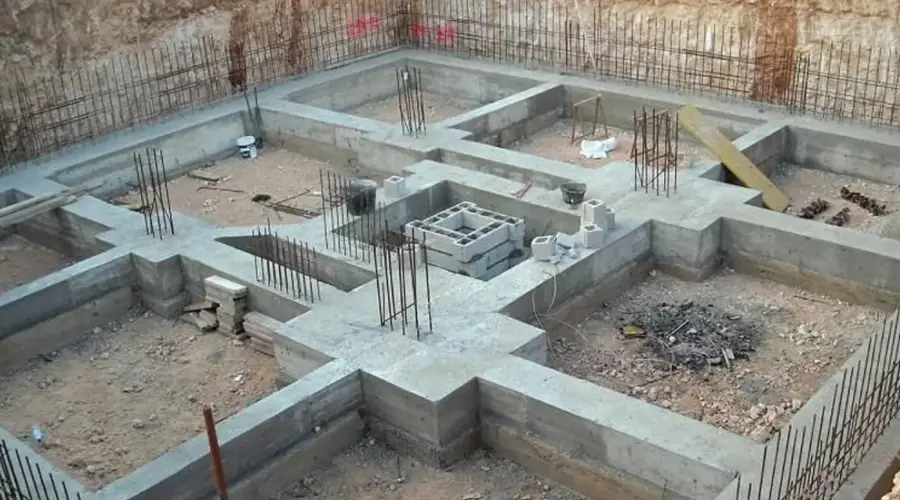
The primary function of a foundation is to ensure stability and support by transferring the entire weight of the structure into the earth.

Shear Walls

Large vertical structural components called shear walls are frequently seen in tall buildings. In addition to bearing certain vertical loads, they manage horizontal forces like wind and earthquakes. In accordance with their longer dimensions, these walls are most effective in one direction.

Elevator Shaft

The lift system is housed in a concrete container known as the lift shaft. It is made to withstand horizontal forces like wind and seismic activity and supports vertical loads.

Advantages of Frame Type Construction

Several advantages of frame-type construction are as follows: 

  • Framed constructions are more durable and stable than traditional load bearing structures.
  • With little bending or shifting, they can withstand strong horizontal forces like wind and earthquakes as well as significant vertical pressures like the weight of the building.
  • While their frames alleviate shaking and withstand vibrations, these structures are perfect for multi-storey buildings and seismically active places.
  • The dead load of the structure is comparatively less in general since it does not rely on big, hefty load-bearing walls. 
  • The long-lasting nature of the building is further increased by the fact that each completed floor slab shields the floors below from sunlight and rain.

Key Materials Used in Frame Type Construction

Frame-type construction is a widely used method in the building industry due to its load-bearing capacity and durability. The beams, columns, and shear walls are interconnected, contributing to the overall structural integrity of the building. The three prominent materials that have been used in the frame-type construction are discussed below:

  1. Steel 

Key features: 

  • The structure’s weight is supported by steel frames.
  • Steel sections are used to make girders, beams, and columns.
  • They are resistant to seismic and wind effects.
  • Both exterior and interior walls are usually made of lightweight, fireproof materials.

Benefits of using steel in frame type construction:

  • Compared to masonry, steel can support a lot more weight.
  • It reduces the amount of columns needed for support, allowing for wider regions without columns.
  • Steel functions similarly to RCC.
  1.  Wood 

Key features: 

  • Wood is widely used to construct factories, residences, and commercial buildings.
  • They offer great levels of comfort despite drastic changes in the climate.
  • Carbon-neutral wood is used in their construction, which lowers greenhouse gas emissions.

Benefits of using wood in frame-type construction:

  • Low construction costs.
  • As it is lightweight, less heavy equipment is required during construction.
  • It provides countless design options with quality construction.
  1. Reinforced Cement Concrete

Key features:

  • RCC constructions include a grid of columns, girders, and beams joined at the roof and floor levels.
  • Within the frameworks, walls are built.
  • Every component of the structure—beams, girders, columns, and slabs—is cast as one cohesive unit, but at different times.

Benefits of using reinforced cement concrete in frame-type construction:

  • Ensures stability by offering total continuity between slabs, beams, and columns.
  • It makes construction safer and more economical by lowering bending moments and deflections.
  • The foundations efficiently receive the weight of the walls, floors, and roofs.

Applications of Frame Type Construction

  • Residential Buildings: As they can support open layouts and large loads, they are used for residences and apartments.
  • Commercial buildings: Perfect for retail establishments, malls, and offices that need spacious, column-free rooms.
  • Industrial structures are frequently seen in warehouses and factories due to their strength and vibration resistance.
  • Educational Facilities: Its stability and robustness are advantageous to libraries, colleges, and schools.
  • Sports complexes: Ideal for arenas and stadiums with wide uninterrupted spans.
  • Bridges & Infrastructure: Crucial for transportation hubs, metro stations, and bridges.
  • Hospitals: Facilitates rapid construction and meets functional requirements.
  • Airports: Able to accommodate large areas and big terminal loads.
  • Temporary Shelters: Helpful for quick installation during disasters.
  • Custom Structures: Adaptable to specific applications such as event venues and exhibition halls.

Conclusion

A framed structure is a building’s sturdy framework, consisting of beams, columns, and slabs that support the building. These components support the building’s stability and strength against the forces of both wind and gravity. The building’s weight and everything it supports, including people and furniture, put a lot of stress on the structure, which is why it was built to withstand these stresses. Steel, wood, and reinforced concrete (concrete mixed with steel) are frequently used to construct these frame structures; the strength of each material varies according to the type of construction required.

Construction Joints in Concrete – Types, & Maintenance Guide

0
construction joints in concrete

Concrete joints are critical to achieving and maintaining structural strength and durability. They allow the structure to “breathe” and accommodate changes in settling, moisture, and temperature variation. Consider these joints as intentional breaks in the concrete that steer potential cracks and shield the building from unforeseen damage that would jeopardise its stability. Concrete joints come in various varieties, each intended to meet certain requirements like managing temperature fluctuations, dividing portions, or reducing shrinkage. For a concrete construction to endure and remain sturdy throughout time, proper joint types must be chosen and used. Read on to find out more.

What is a Concrete Joint?

To regulate the position and degree of cracking that happens as concrete cures and shrinks, concrete joints are intentional breaks or divisions in concrete structures. 

Concrete joints enable expansion, contraction, and movement of the concrete without endangering a structure. 

Every kind of joint, such as expansion, contraction, and construction joints, has a distinct function in maintaining the strength and longevity of the structure. Isolation, expansion, contraction, and building requirements are all managed by these joints. In slabs and pavements, they are positioned at regular intervals to help keep the concrete intact over time and avoid cracks.

Types of Concrete Joints

In concrete buildings, the different kinds of joints are:

  • Construction Joints
  • Expansion Joints
  • Contraction Joints
  • Warping Joints
  • Isolation Joints 

Warping Joints

Warping joints, also known as hinged joints, are carefully located to reduce tension caused by the warping effect. The concrete’s structural integrity is preserved by these joints.

Isolation Joints

Isolation joints are used in order to fully separate the slab from other elements such as walls, columns, or pipes. This helps account for different movements when the concrete shrinks, expands, or the ground settles. Even wooden columns should be separated to avoid cracking or damage. Expansion joints aren’t usually needed for interior slabs because concrete doesn’t expand much. In pavements, larger isolation joints are used near structures to allow for movement.

Expansion Joints

Expansion joints are designed to allow for concrete to expand and contract due to temperature changes. In India, these joints are placed at distances based on the slab thickness, with a gap of 2 to 2.5 cm to let the concrete move. Sometimes, dowel bars are added to help transfer the load between nearby slabs.

Contraction Joints

Contraction joints are placed closer together than expansion joints to help concrete shrink. These joints work by interlocking the aggregates and usually don’t need extra load transfer devices. However, some people suggest using dowel bars that are fully bonded for added support.

Construction Joints

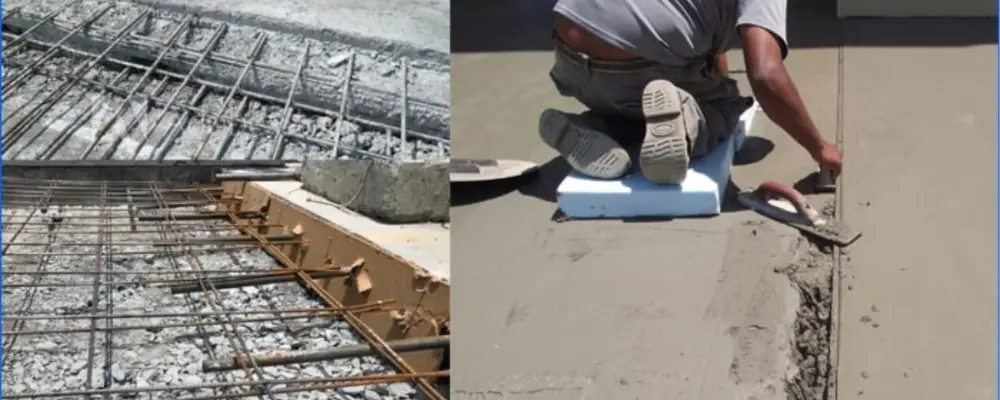
Construction joints are placed in concrete structures to manage breaks in the building process. They are carefully positioned in beams, columns, and slabs to avoid affecting the structure’s strength. Formwork is used regularly to ensure that new and old concrete surfaces bond properly.

Advantages of Concrete Joints

The following are some benefits of embedding building joints in concrete:

  • Unrestricted horizontal floor movement.
  • Restricted ability to move vertically.
  • Ideal transmission of load.
  • Prevention of cracks brought on by temperature changes.
  • Protection for floors.
  • Connecting two concrete elements efficiently.

Materials and Tools Used for Concrete Joints

Sealants, dowel bars, joint fillers, expansion materials, reinforcing bars, pre-formed filler strips, and cementitious grout are among the materials used for concrete joints. These materials are used for a variety of tasks, including reinforcing joints, transmitting weights, reducing debris accumulation, filling joints, accommodating movement caused by temperature changes, and bonding new and old concrete.

Concrete saws, joint formers, trowels, backer rods, tamping tools, joint cleaners, sealant guns, and watering tools are among the equipment needed for concrete joints. In order to ensure correct joint functionality and long-term durability, these instruments aid in precision joint cutting, surface shaping, concrete compacting, joint cleaning, and sealant application.

Maintenance of Concrete Joints

The following actions will help you maintain the integrity of your concrete joints:

  • Keep the joints free of debris and grime. Cleaning might not be necessary if the joints are filled or sealed.
  • To make sure the filler is shielding the edges, check the joints regularly.
  • Since wooden expansion joints might be more difficult to maintain, think about replacing them with more contemporary options.
  • If cracks appear, remove any water that may be close to the joints to avoid water damage.
  • Remove any plants or weeds that are growing in the expansion joints.
  • Get in touch with a reliable contractor to get any issues with the floor joints fixed as soon as possible. In the long term, timely repairs will save you money.

Application of Concrete Joints

Depending on the type of structure and its requirements, concrete joints serve a variety of purposes and are crucial to construction. Here are a few important uses:

Allowing Movement: 

By allowing for expansion, contraction, and settling brought on by variations in temperature, moisture content, and ground movement, concrete joints assist in keeping the concrete from cracking.

Enhancing Durability: 

Joints help structures like pavements, bridges, and buildings remain stable and long-lasting throughout time by controlling movement and stress.

Prevent Cracking: 

Joints assist in preserving the integrity of the structure by regulating the potential sites for cracks to emerge.

Dividing Sections:

In order to prevent stress or strain between various concrete pieces, particularly in big slabs and floors, dividing sections are utilised.

Facilitating Construction: 

By dividing the pouring process, construction joints make sure that concrete sections adhere properly when fresh concrete is made after a construction pause.

Waterproofing: 

By keeping concrete apart from other surfaces, isolation joints shield the structure from water intrusion. This is particularly helpful in places like parking lots and pavements.

To ensure performance and safety, each joint type is chosen according to the particular requirements of the building or structure.

Conclusion

Concrete joints are responsible for the structural integrity of your concrete surfaces. Preventing major problems can be achieved by prioritising timely care and being aware of the causes of joint degradation. For concrete constructions to last and perform properly, protecting investments and improving safety, testing your floors and conducting routine inspections and repairs are crucial. These measures help in preserving the performance of sturdy structures.

Parking Tiles Design – Types, and Advantages

0
parking tiles design

In modern-day construction, parking spaces have become an essential component for both residential and commercial spaces. The design of parking spaces is crucial, as it needs to withstand heavy vehicular traffic and also enhance the overall looks of a building.

To have a balance between the two, people prefer parking tiles. There are numerous tile and design options for parking, which provide various functional and aesthetic benefits. This blog will take a deeper look into parking tiles, types, designs, and advantages, and help you in picking the right tiling option for your parking space.

What are Parking Tiles?

Parking tiles are specially designed tiles for parking spaces and can withstand load, pressure, and wear caused by vehicle traffic. They have become an utmost necessity in commercial and residential environments for both functionality and looks. They are available in numerous options, based on the type, colour, texture, and design patterns.

Types of Parking Tiles

Concrete Parking Tiles

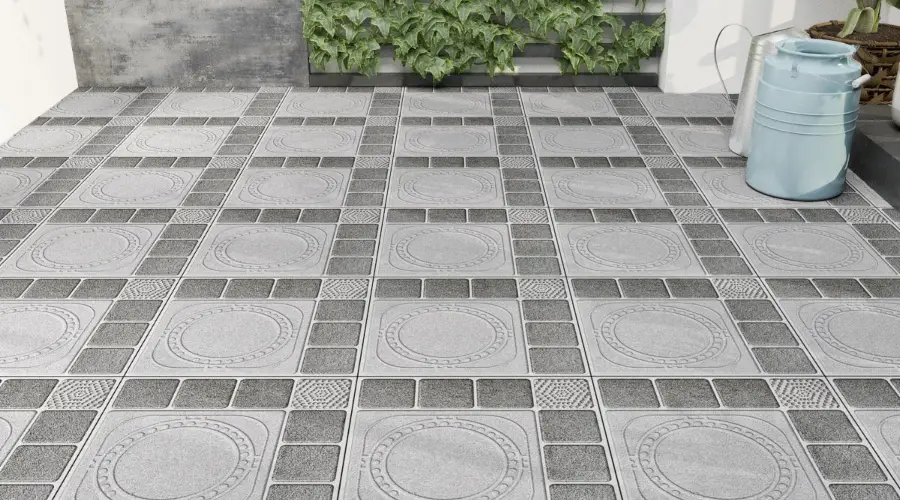
Concrete parking tiles are highly durable, cost-effective, and available in numerous colours and textures. These tiles can withstand heavy loads and harsh weather conditions, making them suitable for outdoor parking spaces. The colour options and the robustness of these tiles offer a balance between functionality and aesthetics. These tiles are most commonly used for residential and commercial spaces.

Vitrified Parking Tiles

Vitrified parking tiles are primarily made of clay that is fired in high temperatures to make it more compact and reduce void surfaces. They offer a shining and sophisticated look, with numerous colour and design options. These tiles are highly resistant to moisture, stains, scratches, and chemical attacks, making them ideal for high-traffic places.

Porcelain Parking Tiles

Porcelain parking tiles are known for their high strength, and resistance to wear, tear, and water ingress. These tiles are available in various colours, textures, and finishes, and can mimic natural materials, making them suitable for both indoor and outdoor parking spaces. However, these tiling options are quite expensive compared to other parking tiles.

Cement-Based Tiles

Parking tiles that are made of cement are highly durable and affordable, making them one of the most preferred tiling options for parking spaces, especially for places with heavy vehicle traffic. Here are some common types of cement-based parking tiles:

  • Plain Cement Tiles
  • Decorative Cement Tiles
  • Interlocking Cement Tiles
  • Polished Cement Tiles
  • Textured Cement Tiles
  • Concrete Pavers.

Popular Parking Tile Patterns

Chevron Pattern

Chevron Pattern

It is the process of arranging tiles in a zigzag pattern, creating a classic and elegant look in parking spaces. This tile pattern generally uses multiple colour combinations to create a dynamic look for both residential and commercial parking spaces.

Geometric Design

Geometric Design

Parking tiles with a geometric pattern that uses a combination of multiple shapes such as squares, rectangles and hexagons create vibrant spaces that add visual interest. 

What are the Key Advantages of Using Parking Tiles?

  • Parking tiles can withstand heavy loads, wear, and tear, enhancing structural integrity for a long time.
  • These tiles can withstand moisture, heat, and chemical attacks, making them a great fit for all weather conditions.
  • They are easy to clean and maintain and save costs spent on maintenance.
  • These tiles are available in various sizes, shapes, colours, and patterns, and can provide customised design spaces.
  • These tiles provide textured surfaces, making them slip-resistant, ensuring safety in all weather conditions.
  • Parking tiles offer sustainability that helps in draining water and reducing runoff.
  • These tiles can be custom-made, based on various sizes, shapes, designs and textures.

Residential Parking Tile Design Considerations

  • Residential parking spaces offer more freedom in choosing between the available options, based on looks.
  • These parking spaces usually have less traffic and there is less access to heavy vehicles.
  • The tiles need to be compatible with the exterior design of the home, and there is a wide range of styles, colours and patterns to choose from.
  • The cost of residential parking tiles is comparatively lower than commercial spaces.
  • The tile installation is simple and does not require a high labour force, however, using skilled labour is advisable.

Commercial Parking Tile Design Considerations

  • Commercial parking tiles should be highly functional to experience maximum benefits.
  • These tiles should have high load-bearing capacity, to withstand heavy vehicles and ensure safety and longevity.
  • The tiles should bear all kinds of extreme weather conditions to make them compatible for external purposes.
  • The aesthetic looks of the tiles should match the overall looks of the commercial space.
  • The installation of parking tiles is a huge process that requires strict guidelines, and skilled labourers, for maximum efficiency.
  • It requires regular maintenance, to preserve the structural integrity for a long time.

Conclusion

Parking tiles play a major role in creating the most stable, durable and visually pleasing parking spaces. There are numerous tiling and designing options available for both residential and commercial spaces. Concrete tiles and vitrified tiles are popular options for all parking spaces, however, porcelain tiles are suitable for less load-bearing residential spaces. We hope that this blog will help understand parking tiles and their importance.

RCC Pipe – A Comprehensive Guide

0
rcc pipe

Ever wonder how underground pipes installed decades back remain intact? The secret is RCC pipes. They form the backbone of underground construction necessary to modern life. Extensively used in irrigation drainage, sewage, and supply water systems, RCC pipes are a reliable choice for homes and businesses due to their strength, flexibility, and resistance. They are highly practical since their lifespan is long, requiring very minimal maintenance. An RCC pipe is durable and robust, resisting harsh weather and other loads in different applications while still ensuring great performance and longevity.

In this article, we will be discussing types, usage, how they are made, and specifications so that you can make smart choices in your usage.

What are RCC Pipes?

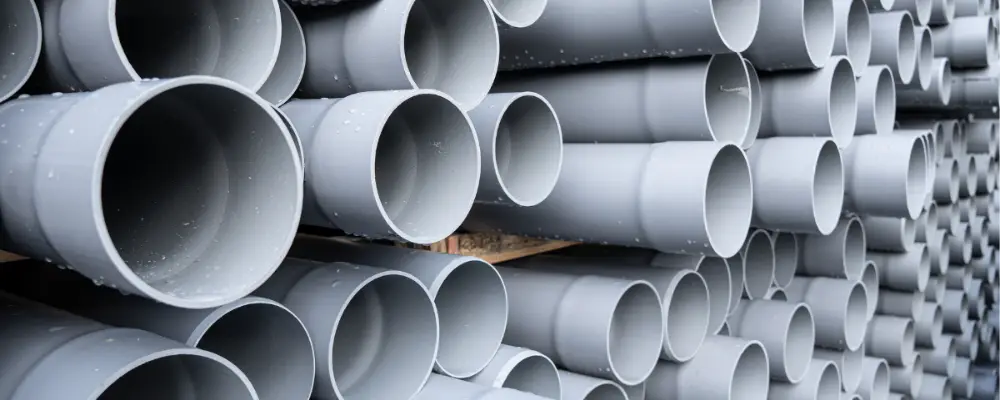
RCC pipes are part of infrastructural development such as water drainage, culverts, waste treatments, and irrigation. They suit these applications more than other piping materials since they can resist sewage toxins, are leak-proof, and can easily be repaired. Concrete pipes stand out as the top choice for these jobs compared to other materials. They’re a fit-and-forget option that can easily last about 100 years.

Types of RCC Pipes

This is a simplified overview of the several kinds of RCC pipes:

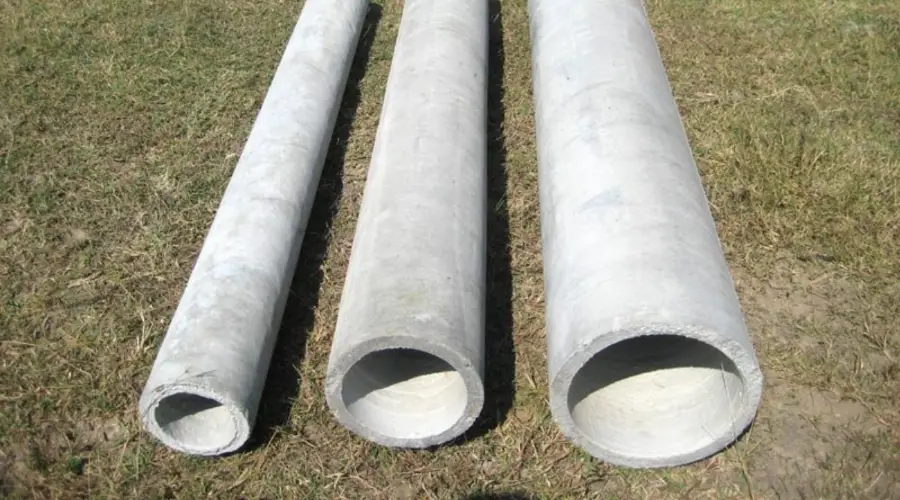
NP2 RCC Pipes:

Light-duty NP2 RCC pipes are utilised for irrigation and drainage in low-traffic locations. They are made to be used in areas with low pressure.

NP2 RCC Pipes

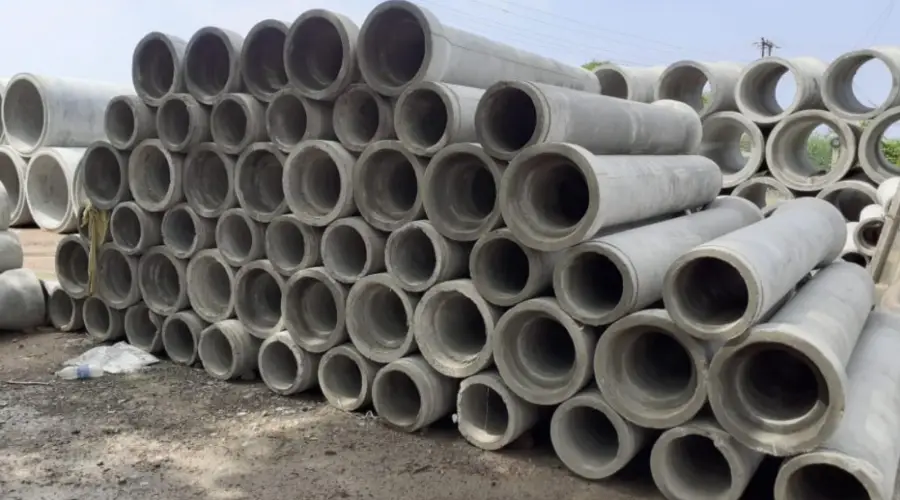
NP3 RCC Pipes: 

Medium-duty NP3 RCC pipes are appropriate for irrigation and drainage in locations with moderate traffic. They serve as non-pressure pipes as well.

NP3 RCC Pipes

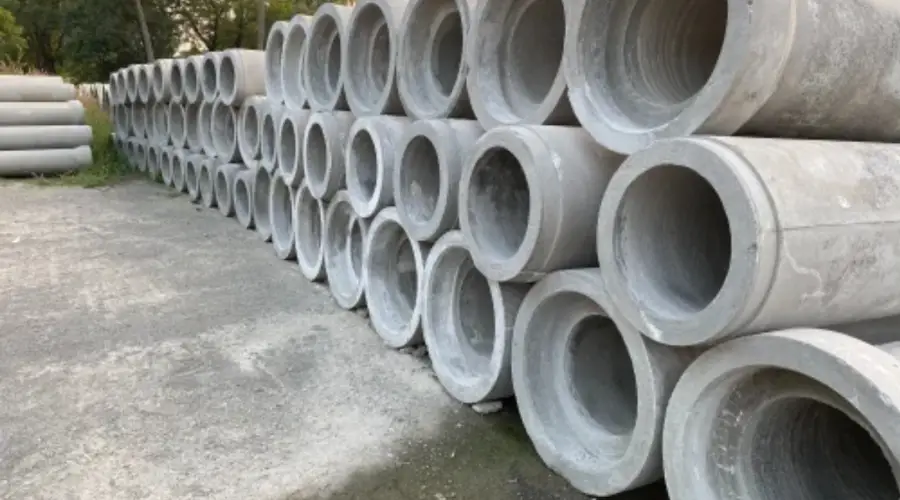
NP4 RCC Pipes: 

Heavy-duty NP4 RCC pipes are utilised for irrigation and drainage in high-traffic locations. They are non-pressure pipes, just like the others.

NP4 RCC Pipes

Manufacturing Process of RCC Pipes

The production of RCC pipes relies on two principal methods: vertical vibrated casting and spinning.

Vertical Vibration Casting Process: 

The vertical vibration casting method shapes and hardens the RCC mixture into tough pipes. Workers place a steel reinforcement cage in a mould and then pour concrete into an upright form. A vibrating table under the mould helps get rid of air bubbles, which results in a smooth, even finish and packs the concrete mix. This shaking not only makes the pipes look polished but also boosts their strength and toughness.

The Spinning Process:

The spinning process is a fascinating method used to create RCC pipes. It starts with placing a steel cage inside a horizontally positioned steel mould mounted on wheels. As the mould begins to spin at high speed, the RCC mixture is poured in. The rapid rotation uses centrifugal force to evenly spread the mixture against the mould walls, shaping it into a perfect cylindrical pipe. This spinning action not only ensures a smooth, uniform finish but also gives these pipes their nickname—spun pipes. Compared to the vertical vibrated casting method, the spinning process is faster and more efficient, making it a popular choice for manufacturing RCC pipes.

Applications of RCC Pipes in Residential Construction

Here’s how RCC pipes add value and reliability to our homes:

1. Sewerage Systems

RCC pipes handle wastewater efficiently, ensuring smooth flow and dependable performance for years. Their resistance to corrosion and high durability make them a solid choice for residential neighbourhoods, keeping households running worry-free.

2. Stormwater Drainage Systems

Heavy rains and waterlogging can be stressful for homeowners, but RCC pipes are here to solve the issue. They handle large water flows, preventing flooding in basements and low-lying areas. Their strength makes them a reliable choice for rain-prone regions.

3. Culverts

Think about the pathways in residential complexes or even garden walkways. RCC pipes often form the foundation of culverts, allowing water to pass safely beneath roads and driveways. This not only prevents erosion but also keeps these surfaces intact and smooth for everyday use.

4. Water Supply Systems

A steady water supply is vital for every home, and RCC pipes make it possible. They can handle high pressure, whether for multi-story buildings or connecting homes to the main water line. Designed for durability, they provide steady and reliable water flow.

5. Irrigation Systems for Landscaping

A beautiful garden makes a house feel like home. RCC pipes ensure lawns stay green and plants thrive by efficiently delivering water where it’s needed. Their strength and reliability make them perfect for keeping outdoor spaces vibrant and healthy.

Specifications of RCC Pipes

The key specifications of hume pipes as per IS (Indian Standards) 458:2003 are as follows::

Diameter: 

Hume pipes can have internal diameters ranging from 80 mm to 2600 mm.

Wall Thickness: 

The thickness of the pipe walls typically ranges from 25 mm to 215 mm, depending on the pipe’s diameter and kind.

Length: 

2 or 2.5 meters are the typical lengths for hume pipes.

Pipe Weight: 

The weight of Hume pipes can range between 80 kg and 10 tonnes, based on their size.

RCC pipes come in a variety of lengths and diameters, as listed below:

S.NoDiameter RangeAvailable LengthClass of RCC Pipe
1150 mm to 300 mm (6 inches to 12 inches)2 meters (6.56 feet)NP2, NP3, NP4
2300 mm to 2200 mm (12 inches to 88 inches)2.5 meters (8.2 feet)NP2, NP3, NP4
3150 mm to 1000 mm (6 inches to 40 inches)Varies, generally 2 meters or 2.5 metersNP2 (Light Duty), NP3 (Medium Duty), NP4 (Heavy Duty)
4150 mm to 2200 mm (6 inches to 88 inches)Varies, generally 2 meters or 2.5 metersNP3, NP4 (Medium to Heavy Duty)

Advantages of RCC Pipes

  • As RCC pipes are durable and able to support large loads, they perform extremely well in underground operations.
  • They last over 100 years, so replacements aren’t needed often.
  • These pipes are ideal for sewers and factories, resisting chemicals and rust effectively.
  • In tunnels and below-ground structures, they boost safety by not catching fire.
  • Effective fluid flow is promoted by the smooth inside surface of RCC pipes, which lowers friction and energy consumption.
  • As RCC pipes are recyclable and constructed from locally produced materials, they are environmentally beneficial.
  • They are cheap and, with their low maintenance needs, can save money in the long run.
  • Due to their versatility, RCC pipes are used extensively in many different systems-irrigation, sewerage management, drainage systems, and water supply amongst others.

Conclusion

To wrap up, RCC pipes offer a reliable, durable, and cost-effective solution for various underground applications. Their exceptional strength, resistance to chemicals, and ability to withstand fire make them ideal for essential infrastructure systems like sewage, drainage, and water supply. These pipes have an impact on both residential and commercial construction projects due to their flexibility in different systems. This makes them a key component in modern infrastructure.

What is a Parapet Roof – Types, Features & Maintenance Guide

0
what is a parapet roof

A modern roof design is a way to improve the overall architectural style and appearance of any building. You might come across various options, but you need to consider the pros and cons of each to make an informed decision.

One of the designs that plays a significant role since ancient times is parapet roofs. It can be an ideal option to keep your buildings safer and look better than others. This blog includes the key features, types, potential benefits, and applications of parapet roofs. You can read it to have a better understanding before making a decision.

What is a Parapet Roof?

A parapet roof is a wall extension that goes higher than the roofline and can be efficiently located at flat roofs. You can easily spot this roof type that rises at the edge of a structure, such as a terrace, walkway, roof, bridge, or balcony.

A parapet roof is primarily constructed to provide safety to a building and also acts as an effective solution for a range of roofing issues. They come in numerous shapes and configurations, which can be utilised on plain, flat roofs.

Key Features of a Parapet Roof

Parapet roofs can be mostly found in modern structures, especially in urban areas. Herewith, we have listed out some of its key features:

Safety: Safety is the primary reason to go for a parapet roof. It prevents people from accidentally falling off the roof and also restricts a fire from spreading to adjacent buildings.

Wind Resistance: Tall structures are subjected to encountering various damages due to wind uplift on the roof. With the installation of a parapet roof, you can avoid such damages to roofing materials.

Aesthetic Appearance: A parapet roof can add visual interest to structures, creating a unique and awe-striking style. It efficiently conceals rooftop equipment like water tanks, satellite dishes, or HVAC units, providing an aesthetic appearance.

Types of Parapet Roofs

Based on the design and construction, parapet walls are classified into different types, such as:

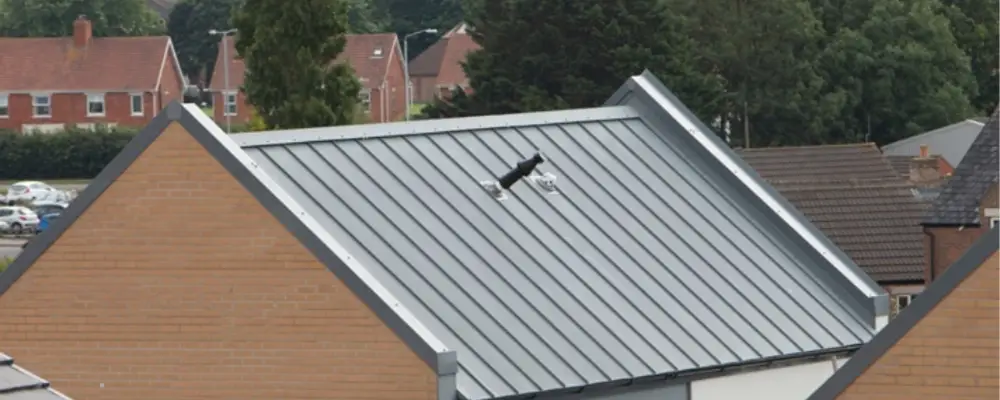
Plain Parapet Roofs: Plain parapets are most commonly used in modern structures. As the name indicates, this is a basic fit of a flat wall extension. It typically extends the roofline and makes the house look taller.

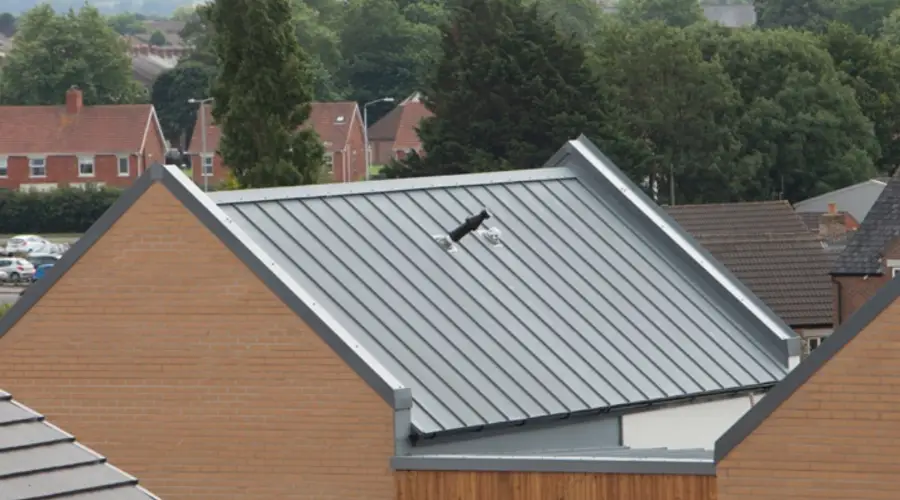
Plain Parapet Roofs

Sloped Parapet Roofs: A roof that has a slope, like a slanted hilltop. Unlike being straight up and down, this type is aligned along with the roof. It creates a dynamic and visually appealing look compared to a flat, plain parapet.

Sloped Parapet Roofs

Paneled Parapet Roofs: Unlike having a single, flat surface, this type has decorative panels. It can be made from various materials like brick, stone, and metal.

Stepped Parapet Roofs: Imagine a staircase; instead of steps, it becomes a wall. The wall is constructed in a series of steps that adds a unique architectural character to the overall building. It can be mostly seen in historical structures, especially in European countries.

Curved Parapet Roofs: Curved parapet roofs add a sense of sophistication to the building. They depict a flowing nature and create dynamic forms.

Benefits of a Parapet Roof

Parapet roofs offer several benefits to the structures, including:

  • Parapet roofs act as a barrier, preventing people from accidentally falling from the roof.
  • It restricts the spread of fire from one building to another.
  • A properly designed parapet roof allows water runoff effectively, preventing water damage from seepage.
  • It creates visual interest in a building’s façade.
  • It hides any extra rooftop equipment installed, like water tanks, satellite dishes, or HVAC units.
  • It actively prevents noise pollution from the surrounding environment and keeps your place calm and peaceful.
  • It strengthens the building façade against thunderstorms, hurricanes, and other harsh weather damages.

Applications of Parapet Roofs

Parapet roofs are used in a wide range of applications, such as

Residential Buildings: Parapet roofs are mostly found in urban areas, creating a unique element of architectural interest. They provide enhanced safety for residents and rooftop access, resulting in increased usage in townhouses, single-family homes, and apartments.

Commercial Buildings: Parapet roofs are utilised in many commercial structures like hotels, office buildings, and retail stores. It not only enhances the building’s appearance but also improves the safety for maintenance and rooftop equipment.

Industrial Buildings: Industrial buildings like factories and warehouses are susceptible to fire accidents. Using a parapet roof can improve safety and prevent fire spreading from one building to another.

Potential Challenges and Solutions

These are the challenging situations you might encounter while installing  parapet roofs:

  • When cracks or damages around the parapet roof allow water to penetrate, resulting in leakage, mold, or structural damage.
  • Strong winds create significant pressure on the roof that causes potential damage to the roofing materials. Additionally, an improper design or construction can make the situation even worse.
  • Extreme temperature fluctuations can create frequent contraction or expansion of roofing materials, creating cracks and damages in the parapet roof.
  • Regular inspection and maintenance are essential to ensure the safety measures of workers.

How to Decide If a Parapet Roof is Right for Your Building?

The requirements of individuals vary from one to another. Beyond that, you have a number of significant factors to consider, like safety precautions, aesthetic appeal, maintenance, cost, and building regulations. With the consideration of all these points, you can make an informed decision. You can consult a professional to determine whether it fits your building plans and requirements.

Maintenance and Care

  • Inspect often to identify the cracks, spalling, chips, or any other signs of moisture penetration.
  • It is advisable to repair any damages at an earlier stage to avoid water penetration.
  • Ensure the parapet roof is properly sealed to prevent water penetration.
  • Safety equipment should be in good condition and properly maintained.
  • If you live under harsh climatic conditions, it is recommended to inspect the roof often to notice any signs of damage.

Final Thoughts

Roof type plays a paramount role in enhancing the overall style of a building. It seeks immediate attention with its perfectly finished look. However, it is advisable to hire professionals to ensure the construction is made with quality materials to withstand harsh weather, and incorporate flashing and coping. Hopefully, this article provides you with essential knowledge about parapet roofs and their significance.

FAQs

1. What is the standard height for a parapet wall?

The height of a parapet roof can vary depending on the requirements and local building codes. It generally ranges between 3 to 4 feet (i.e., 0.9 to 1.2 meters).

2. Are parapet roofs suitable for all climates?

There are no climatic restrictions to install a parapet roof; however, the design and construction are essential to be adjusted according to the varying climatic conditions.

3. Can a parapet roof support heavy equipment like solar panels or HVAC units?

Yes, a parapet roof can efficiently support the installation of heavy equipment like HVAC units and solar panels, but the construction needs careful consideration to handle load distribution, wind loads, and water penetration.

Hardwood Flooring – Types, Finishes & Maintenance Guide

0
hardwood flooring

Having a living space with a warm, elegant, inviting atmosphere, and a timeless appearance is essential to make a stunning first impression. However, only limited flooring options can cover all these aspects. One such attractive and durable flooring option is hardwood flooring. This blog will explore hardwood flooring, and help you understand the long-term versatility options that it provides.

What is Hardwood Flooring?

Hardwood flooring is a flooring material that uses natural wood in the topmost layer, made of trees like timber, oak, maple and more. They provide timeless elegance, durability, and versatility, making them one of the most preferred choices for residential and commercial spaces. 

Types of Hardwood Flooring 

Solid Hardwood Flooring

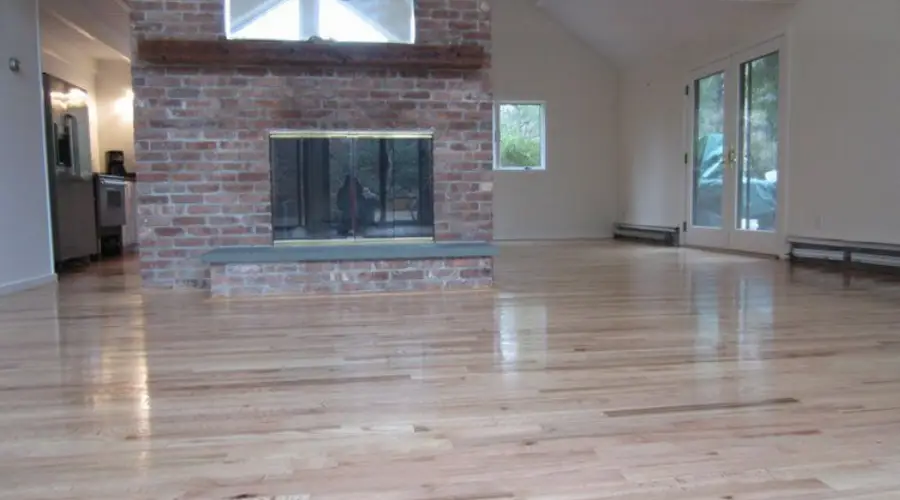
Solid Hardwood Flooring

This is a traditional flooring type made from a single piece of wood. It is commonly made of oak, maple, walnut, and other exotic woods, and is typically used as 3/4 inch thick flooring. This flooring is known for its durability, aesthetic looks, and ability to be sanded and refinished multiple times. However, it is more susceptible to water damage, and expansion and contraction caused by humidity.

Engineered Hardwood Flooring

Engineered Hardwood Flooring

It is a type of hardwood flooring that consists of real wood in the top layer bonded with multiple layers of plywood. This hardwood is generally 3/8 to 3/4 inches in thickness and is known for its resistance to humidity, expansion, and contraction. These features make it one of the most popular wood flooring options.

Acrylic-Impregnated Wood Flooring

As the name suggests, it is acrylic-infused wood flooring that enhances overall durability and moisture resistance. Due to its robustness, this flooring type is very suitable for high-traffic areas.

Hardwood Flooring Finishes

Oil-Based Polyurethane

Oil-Based Polyurethane

An oil-based polyurethane finish gives a rich and deep look over time, with its thick layering. It is highly durable and long-lasting compared to other water-based options, but requires a longer drying time, and produces a strong odour. It is widely applicable for high-traffic areas, as it can withstand scratches and wear. However, it requires periodic maintenance to keep its luster.

Water-Based Polyurethane

Water-based polyurethane provides a clear and non-yellowish finish, retaining the natural colour of the wood. It is similar to an oil-based polyurethane finish, but it requires lesser drying time and is ideal when combined with lighter wood. It requires more frequent reapplications, due to its thin protective coating.

Unfinished vs. Prefinished Hardwood

  • Unfinished Hardwood requires on-site finishing and allows customised finishes that can match the other space aesthetics. However, it consumes a lot of work and time for sanding, staining, and finishing.
  • Prefinished Hardwood offers a factory-applied finish that makes it easy to install. It provides a consistent finish throughout the surface, due to its application in a controlled environment.

Hardwood Flooring Installation Methods

Nail-Down Installation

It is the process of nailing the hardwood into the subfloor and provides strong and stable flooring suitable for solid wood. However, this process is more labour-intensive, and the installation process is noisy, due to nailing. The nails may also not be visually pleasing.

Glue-Down Installation

It is the process of gluing hardwood planks to the subfloor using a special adhesive. It provides more solid flooring and is ideal for engineered wood. However, it could lead to a messy application of adhesive, and the planks are difficult to remove later on, thus reducing its reusability.

Floating Floor Installation

It is the process of interlocking planks with each other, without nailing or gluing them to the subfloor. This installation process is quick and less messy, but may not be stable or durable compared to other methods, especially with solid wood.

Maintenance and Care Of Hardwood Floors

  • Hardwood flooring requires regular sweeping to remove dust and debris deposits.
  • Occasional damp mopping with a mild cleaner can be used based on the guidelines of an expert.
  • Mopping with excess water should be avoided, as it could cause damage to the surface.
  • Felt pads and mats can be used at furniture legs and entrances, to reduce wear and scratches.
  • In places of heavy foot traffic, reapplication of oils is done every 5 to 10 years, to maintain a smooth and flawless finishing.

Pros and Cons of Hardwood Flooring

Pros

  • It provides aesthetically pleasing finishes to  living spaces, improving their overall appearance.
  • There are a variety of hardwood flooring options, which can be selected to match any desired aesthetic.
  • When properly maintained, these floorings can last for decades.
  • Hardwood flooring increases the resale value of the building.
  • These flooring systems are a great fit for both residential and commercial spaces.

Cons

  • They are expensive in terms of material and installation costs when compared to other flooring options.
  • They are subjected to wear over time, especially when installed in places of high traffic.
  • The installation process requires a lot of time and labour.
  • When exposed to moisture, the wood is vulnerable to warping and swelling.
  • It requires regular maintenance and careful handling.

Cost Considerations

Material Cost

Solid hardwoods are costly when compared to engineered hardwoods, and the prices vary based on the wood type. On the other hand, although engineering wood is less expensive, the finishing options may increase the overall cost.

Installation Costs

The installation cost of hardwood flooring is generally high, due to its high labour cost. DIY installation options are also available, but these are less efficient.

Long-Term Value

It provides a good return on investment due to its increased resale value, especially when maintained properly. Its high durability and longevity make it a worthy investment in the long run.

Environmental Impact and Sustainability

It is a sustainable choice for flooring when sourced from authorised and well-managed areas. Certified wood products reduce the environmental impact, as they can be refinished and reused as new products multiple times, thereby reducing wastage.

Conclusion

In summary, hardwood flooring provides timeless elegance, and is a durable option for  living spaces. It offers versatile floor-finishing options, through different installation methods. It not only increases the overall look but also increases the value of the building. However, it is more expensive and requires a lot of maintenance. Still, its longevity, long-term value, and elegant looks make it one of the most preferred choices in modern construction.

Cathedral vs Vaulted Ceilings – Key Differences and Benefits

0
cathedral vs vaulted ceilings

The best way to improve the aesthetic and functional appeal is to include ceiling designs. A variety of ceiling designs are used in the construction industry. The topmost ceiling designs are cathedral ceilings and vaulted ceilings. Each type offers a unique touch to the appearance. In terms of grandeur and spaciousness, both designs are appealing for the constructors. However, they vary in design, purpose, and construction method. Various factors play an influential role in selecting the suitable design, such as room size, budget, and desired architectural impact. This article will be a guide and shed light on cathedral and vaulted ceilings, their distinctions, and pros and cons to give readers a better understanding and make a wise decision.

What are Cathedral Ceilings?

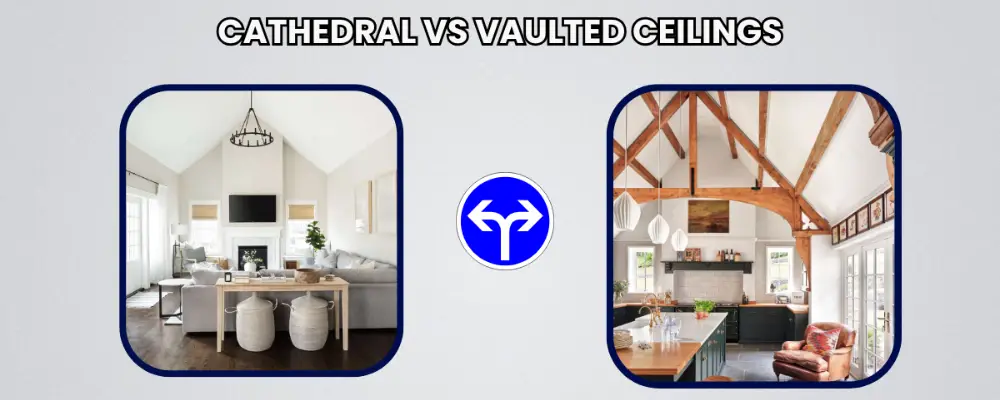
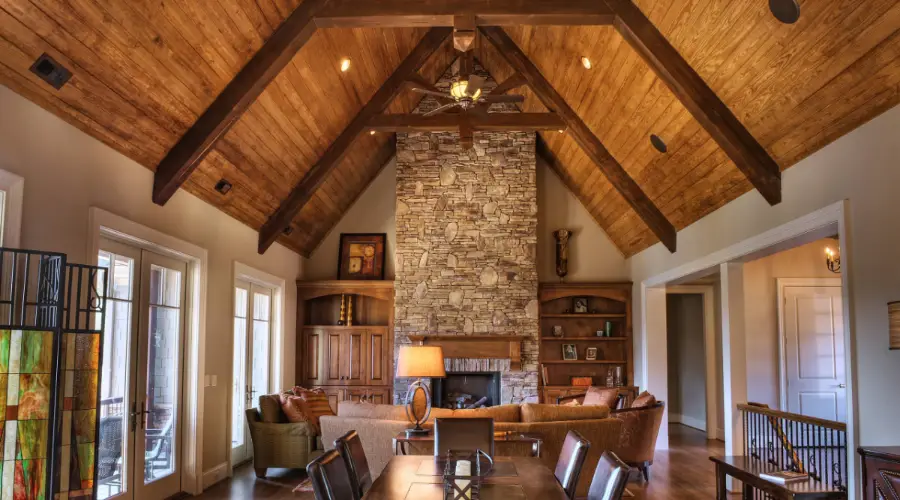
Cathedral Ceilings

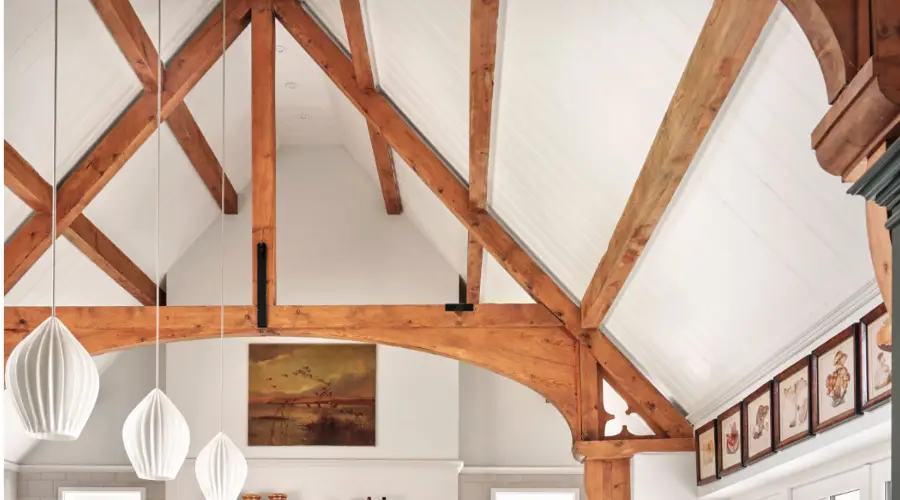
It is a symmetrical, sloping ceiling that mirrors the roof’s pitch to create a cohesive and dramatic design. This type of ceiling is commonly seen in churches. You would have realised from where the name cathedral comes into play. The cathedral ceilings often reach impressive heights, providing a sense of openness and luxury.  The alignment of uniform slopes and the roof’s angle adds a mesmerising appearance to the structure. Not only in churches, but these designs are even ideal for houses that have steep rooflines. In terms of other aspects, cathedral ceilings increase the natural light penetration, thus providing a feeling of more space.

What are Vaulted Ceilings?

Vaulted Ceilings

This type of ceiling extends upwards, providing a sense of height and spaciousness. The difference with cathedral ceilings is that vaulted ceilings do not necessarily follow the roof’s pitch. The vaulted ceiling is much more accommodative in terms of design additions. We can add arched, barrel, or domed designs, offering more flexibility in style and shape. This type of ceiling is very famous in Roman architecture to create visually stunning and structurally sound spaces. There is a rise in the usage of vaulted designs both in contemporary and traditional homes because of their aesthetic appeal.

Key Difference between Cathedral Ceiling and Vaulted Ceiling

Cathedral Ceiling Vaulted Ceiling
The design of the cathedral ceiling mirrors the roof’s pitch with its symmetrical sloping ceiling.The vaulted ceiling has an upward extension; however, it does not follow roof angles.
The uniform slopes of the ceiling meet at a central ridge.The design structures of vaulted ceilings are arches, domes, or flat sloped designs.
In terms of alignment, the slopes always align with the roof’s pitch.In vaulted ceilings, slopes may or may not align with the roof’s structure.
They are well-known for their dramatic and cohesive roofline.Its flexibility in design adaptation made it possible for various architectural designs.
There is a chance of energy loss due to direct roof connection.It has the potential for better insulation and energy efficiency.
It is suitable for houses with steep rooflinesIt is suitable for both large and small spaces.
In terms of cost, a cathedral ceiling is expensive due to the construction complexity.Vaulted ceiling costs vary with design and are moderately expensive.
Maintaining a cathedral ceiling is difficult due to its height and steep angles.Compared to cathedral ceilings, vaulted ceilings are much easier to maintain.

Pros of Cathedral Ceiling

  • The inclusion of cathedral ceilings inside structures creates a grand, open look that adds value to the house.
  • In smaller houses, the cathedral ceiling can create an illusion of more open and larger space which is beneficial in the projection of smaller rooms.
  • It negates the need for additional lighting sources as they have skylights or other types of natural fixtures.
  • It is a perfect choice for structures in hot or humid climates because it improves the ventilation of the room.

Cons of Cathedral Ceiling

  • The cost of a cathedral ceiling is expensive and the work is more complex than a standard ceiling.
  • The maintenance cost of the cathedral ceiling is also high because of its extra height and additional framing and insulation for support.
  • The placement of furniture or décor in a room is difficult as the design of the cathedral ceiling is peaked. 
  • It is very hard to heat and cool a cathedral ceiling due to its height.

Pros of Vaulted Ceiling

  • The sense of drama and elegance can be brought in with vaulted ceilings. Similar to a cathedral ceiling, it can make a room feel more open and spacious.
  •  It has natural lights or fixtures that can help brighten up a room. This reduces the need for artificial lights.
  • It can also improve ventilation and is much easier to construct than a cathedral ceiling.
  • The key factor in vaulted ceilings is that the roof line is not constrained to the styling of the roof line.

Cons of Vaulted Ceiling

  •  A vaulted ceiling is more expensive than a standard ceiling but not as expensive as a cathedral ceiling.
  •  It creates trouble in the winter season because the increase in warm air will increase the utility cost.
  • Even a small noise made inside the structure with a vaulted design may amplify manifold.

Choosing the Right Ceiling for Your Space

The dependence of choice between cathedral and vaulted ceiling varies based on several factors such as the room’s size, architectural style, and budget. If there is a wide space, the cathedral ceiling is ideal for steep rooflines with great symmetry and grandeur. Vaulted ceilings are preferred for smaller rooms due to their design versatility. A cathedral ceiling requires more heating and cooling whereas, a vaulted ceiling allows insulation flexibility.  

Conclusion

Both cathedral and vaulted ceilings provide beautiful design aesthetics and add a sense of space to your residence. Although vaulted ceilings allow you to be more flexible in your design choices, cathedral ceilings tend to have a stronger visual order. Knowing the parameters for selections, as well as the qualities that the styles possess, would allow you to choose the appropriate ceiling type for your house design, way of living, and financial plan.

FAQs

1. Can I have a vaulted ceiling in a small room?

Yes, they are a perfect choice for small rooms as they are good at creating an illusion of height and openness. However, not all vaulted designs can achieve it. Careful design planning and consideration are required with respect to the room’s dimensions.

2. Are cathedral ceilings more expensive to install than vaulted ceilings?

Yes, cathedral ceilings are more expensive when compared to all other ceiling designs. It is because of the alignment of the designs with the roof’s slope. This requires precise engineering and construction.

3. Which ceiling style is better for energy efficiency?

The ability to add insulation pockets makes vaulted ceilings suitable for energy efficiency purposes. Whereas, cathedral ceilings are susceptible to energy loss due to their direct alignment with the roof.

PCMC Property Tax – Rates, Payment & Rebates Explained

0
PCMC Property Tax

Do you own a property within the PCMC jurisdiction, Or are you looking to buy one in the near future? Then understanding the property tax rates of the PCMC is crucial. This blog will help you understand PCMC property tax rates, calculations, and payment methods.

What is PCMC Property Tax?

PCMC property tax is an annual property tax paid for owning property within the PCMC jurisdiction. The property tax is collected half-yearly by the corporation, and it acts as a significant source of revenue. These taxes are utilised for providing public amenities and enhancing infrastructure within the region. It is one of the first civic entities to adopt digital payments for PCMC property tax.

How is PCMC Property Tax Calculated?

PCMC Property Tax Formula

PCMC property tax = Built-up area x Age factor x Base value x Type of building x Category of use x Floor factor

  • Built-up area- It measures the total area of the specific property, including the area of walls, columns, beams, and other structures.
  • Age Factor- It is the adjustment of tax based on the age of the building. Older properties might enjoy the benefits of lower tax rates.
  • Base Value- It is the standard market value of the property set by PCMC for different areas.
  • Type of Building- The tax rates of the buildings vary depending on the type of building. Residential, Commercial, and Industrial buildings have different tax rates.
  • Category of Use- It determines the usage of the property, whether it is used for personal use, rented, or for commercial purposes. The type of usage may affect the tax rates.
  • Floor Factor- The number of floors of the building affects the tax rates. The higher the floor, the higher the tax rates.

Calculating PCMC Property Tax Online

  • Visit the PCMC Property Tax Self-Assessment Portal
  • In the zone tab, scroll and select the zone to which your property belongs.
  • Upon selection, a sub-use type, and construction type tab will appear.
  • Select the sub-type and provide details of the property area.
  • Click on the ‘Calculate Property Tax’ button, and the same website will calculate the property tax.

PCMC Property Tax Rates and Slabs

Residential Property

Residential Property

The residential properties are categorised into three slabs depending on their size and market value determined by the PCMC municipality. Based on the market value, the tax rates are calculated.

Market Value of the PropertyTax Rate (Per Market Value)
Less than ₹25 Lakh0.5% to 1.5%
Between ₹25 Lakh to ₹50 Lakh1.5% to 2%
More than ₹50 Lakh2% to 2.5%

Commercial Property

Commercial Property

The commercial properties are categorised into three slabs, based on their overall market value determined by the PCMC municipality. Based on the values, the tax rates are charged. Commercial taxes are comparatively higher than residential and industrial properties.

Market Value of the PropertyTax Rate (Per Market Value)
Less than ₹25 Lakh1% to 3%
Between ₹25 Lakh to ₹50 Lakh2% to 4%
More than ₹50 Lakh4% to 5%

Industrial Property

The tax rates of industrial properties are generally lower compared to commercial properties. However, their tax rates may vary depending on the size, location, and industrial zone.

Properties Exempted from PCMC Property Tax

Here is the list of properties for which PCMC has exempted certain properties from paying property taxes.

  • Heritage lands
  • Religious places
  • Educational institutions
  • Agricultural lands
  • Charitable properties
  • Public burial areas
  • Residential buildings with less than 500 square feet

How to Pay PCMC Property Tax Online?

  • Visit the official website of PCMC Municipal Corporation.
  • Select ‘Residents’ from the options available in the menu.
  • Click on the ‘Property Tax’ option to open an external tab.
  • Click on the ‘Property Bill’ option, where you can check the property details.
  • Enter the details asked in the portal— Zone, Gat No., Owner name, and Address.
  • After collecting the property bill, enter the payment details.
  • Enter the phone number, email ID, and pay your PCMC property tax securely.

How Do I Pay PCMC Property Tax Offline?

  • Reach out to your local ward office near your property.
  • Ask for the Property Tax Payment Form and fill out the required details of the property, ownership, address, and due amount.
  • Submit the payment form for verification and amount calculation.
  • Make the payment through cash, cheque, or online. 
  • After payment is done, receive the receipts containing the property tax information.

PCMC Property Tax Rebates

  • Properties that pay the PCMC property tax up to ₹25,000 are rebated with 10% of the general tax.
  • If the property tax exceeds ₹25,000, they are refunded with 5% of the tax amount.
  • Residential properties that use a sustainable approach with solar panels, vermiculture, and rainwater harvesting are discounted with 5% to 10% of the tax, based on the number of projects installed.

What Documents are Necessary to Pay PCMC Property Tax?

Property Ownership Proof

  • Sale Deed
  • Registration Certificate
  • Previous Property Tax Receipt
  • No Objection Certificate for housing
  • Encumbrance Certificate (if available)
  • Gift deed, Inheritance certificate (if available)

Government ID Proof (Any One)

  • Aadhar Card
  • Voter ID
  • Passport
  • Driving Licence

Property Details

Conclusion

In summary, paying the PCMC property tax is crucial for anyone who owns a property within the jurisdiction of Pimpri Chinchwad. By understanding the tax rates, calculations, payment methods, and deadlines, one can pay their taxes on time, and enjoy discounts. Failing to pay taxes on time could result in costly penalties.

Balcony Vastu Tips – Best Directions, Colours, and Plants

0
Balcony Vastu

In Vastu, balconies are crucial for balancing positive energies, allowing natural light and ventilation. This blog will explore some of the top tips for balcony vastu to enhance your home’s positivity to a paramount. By following simple rules for placement, direction, design, and decor, homeowners can create peaceful outdoor spaces that encourage relaxation, attract prosperity, and support spiritual growth, making their homes more positive and harmonious.

Top Tips for Balcony Vastu

Location and Balcony Direction as per Vastu

The direction of balconies has a major impact on attracting positive energies through natural light and creates a warm and relaxing living space.

  • Balconies facing the North enhance the overall well-being in terms of health, wealth, and prosperity, due to their close association with the god of wealth, Kubera.
  • The East-facing balconies promote positivity, happiness, and success, as they face the direction of the rising sun.
  • Northeast-facing balconies are believed to be most auspicious, promoting positive energy and spiritual growth, due to their association with the element of water.

On the other hand, balconies that face the south are usually to be avoided but can be adjusted or optimised with Vastu principles

  • South-facing balconies are not ideal, as they could attract negative energy and could cause health problems. It is believed that the Vastu pyramid or wind chimes, can nullify the negative effects.
  • West-facing balconies are also not ideal, due to their association with the setting sun, attracting negative energies and causing depression. Vastu pyramids or wind chimes can be used to counteract the negative energies.
  • Northwest-facing balconies are believed to attract wealth and business opportunities, and it is recommended to place water or a green plant to attract positive energy.

Roofing

The design and orientation of a balcony roof are ideal for determining the positive energy flow.

  • The balcony roof that slopes towards the North or East is considered auspicious.
  • Avoid roofs that slope towards the South or West directions, as they are considered inauspicious.
  • The height of the roof should be lower than the main roof of the building.
  • Lighter materials like wood, terracotta tiles, or lightweight concrete should be used as roofing materials.
  • Heavy materials such as asbestos or tin should be avoided, as they could absorb or trap heat, creating uncomfortable conditions.

Lights in Balcony

According to Vastu, the balcony should not be dark or gloomy. The balcony should utilise the maximum amount of natural sunlight, and should not be protected with heavy curtains or large plants.

Opting for warm-toned lights, dimmers, and string lights should be preferred to create a warm, inviting, relaxing, and soothing atmosphere, especially in the evenings. Harsh overhead lighting should be avoided, as it can create an unpleasant atmosphere.

The placement of the light should not affect the view. The lighting should illuminate the dark corners of the balcony and highlight the utilities and decor.

Balcony Colour as per Vastu

The colour palette of the outer living spaces has a big role in balancing the energy flow and enhancing the well-being of the occupants.

Favourable Colours

  • Using white-coloured lights provides purity and peace.
  • Cream-coloured surfaces create a sense of calmness and relaxation.
  • Light blue is closely associated with peace and tranquillity and is ideal for open spaces.
  • Light green is often associated with growth, harmony, and nature. 
  • Pale yellow helps in promoting cheerfulness and positivity.
  • Soft pink is associated with love and compassion

Unfavourable Colours

Dark colours such as black, brown, or dark shades of blue or green should be avoided, as they absorb natural light and create a gloomy atmosphere in the outer spaces.

Furniture

Heavy furniture can be used in the South-West or West direction of the balcony. Whereas, lightweight furniture can be used in the North-East corner. The placement of the furniture should not affect the entrance to the balcony.

Wooden or marble furniture is best and is considered to be auspicious. On the other hand, metal furniture should be avoided, as it absorbs negative energy. Clutter should be avoided, and the chosen furniture should have rounded edges.

Swing in Balcony

Swings are a great fit for balcony spaces, promoting the overall appearance and ambience. Placing the swing in the North or North-West corner is considered auspicious, and it should swing along the East-West direction to promote the natural flow of energy. On the other hand, placing the swing in the South-West corner is not preferred, as it absorbs heavy energies.

Wooden swings are considered auspicious, and metal swings should be avoided, as it absorbs negative energy. The swing chosen should be comfortable and decorative, creating a relaxing ambience.

Fountain in Balcony

A balcony space with a fountain is believed to attract wealth. Placing the fountain at the Northeast corner brings prosperity and creates a meditative, and serene atmosphere. Placing the fountain in the Southwest corner is considered inauspicious, as it could affect the flow of positive energy. The fountains should be small and cascading to create a soothing environment.

Plants in Balcony as per Vastu

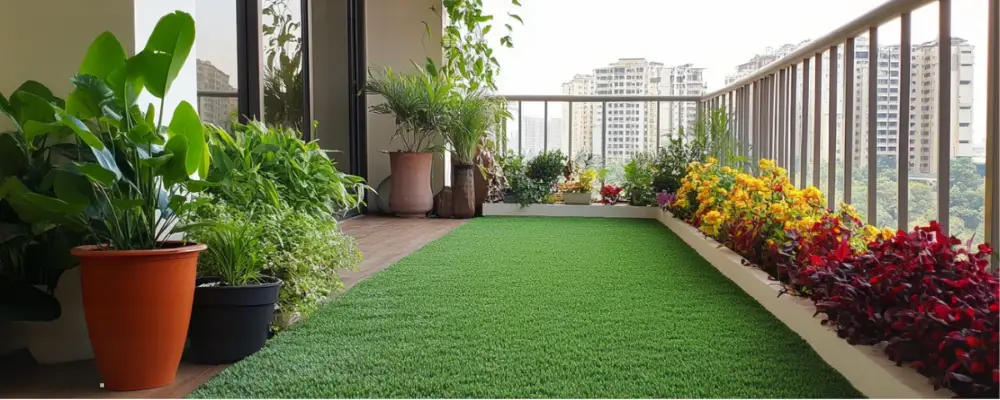
Placing plants in balcony spaces is considered to have a positive effect on mental and emotional well-being and is considered auspicious.

Favourable Plants

  • Tulsi plants have spiritual and medicinal purposes, and they promote positivity and the overall well-being of the occupants.
  • Money plants attract wealth and prosperity, especially when kept in the North or Northeast direction.
  • Placing the jasmine plant in the balcony space promotes positivity and happiness, and helps create a soothing and relaxing atmosphere.
  • Areca palm helps purify the air and promotes good health. When placed in the southeast direction, it promotes positive energy and financial growth.
  • Snake plants are helpful in purifying air and are believed to promote mental and emotional well-being.

Unfavourable Plants

  • Thorny plants such as cacti and rose bushes with thorns should be avoided in balcony spaces, as they are believed to obstruct the flow of positive energy.
  • Plants that are diseased or dead should be removed from the balcony as they are believed to absorb negative energy.

Conclusion

In summary, balcony spaces play a major role in promoting mindfulness and positivity in your home. Incorporating Vastu principles with your balcony spaces is believed to promote peace, harmony and financial abundance. Factors such as direction, placements, colours, lighting, decor, and other features are the key to creating and maintaining a more aesthetically pleasing, positive, and spiritual environment.