Home Blog Page 38

Defects in Timber: Types, Causes, and Prevention for Durable Construction

0
Defects in Timber

Since time immemorial, wood or timber has remained an essential natural resource for mankind. It is a widely used material in woodworking and construction because of its natural beauty, versatility and strength. From framing a building to forming beautiful furniture, timber fulfils both structural and decorative roles in our daily lives.

However, like any other natural material, timber is susceptible to numerous defects that might compromise its appearance, quality and durability. The cause of occurrence of these defects is not one. It might be due to natural causes, improper seasoning or poor handling. The defects potentially weaken its structural integrity, thereby diminishing its strength and aesthetic value.

Whether you are a builder, carpenter or homeowner wanting to maintain your project’s longevity and visual appeal, you must understand the types of wood defects. This blog provides an in-depth understanding of the various defects occurring in timber and the best ways to detect them. It further focuses on offering prevention and treatment strategies, ensuring that timber remains reliable and durable for construction and carpentry.

Types of Defects in Wood

We get timber from trees, which we convert into the required form for usage. Before reaching the final stage of usage, the timber needs to cross several critical stages, including growing without defects, being cut at the right time, seasoning, conversion and usage. Despite these, your timber might experience various defects at various stages due to natural forces, insects, fungi, and during seasoning and conversion.

Naturally Caused Timber Defects 

  1. Wind cracks

Often wood is exposed to strong winds, causing it to shrink. This creates cracks on the outer surface, leaving the wood vulnerable.

  1. Knots

Knots are the most common defects in wood caused naturally. When a tree grows taller, the lower branches or those close to the ground die. However, the bases of those branches remain in the tree, creating imperfections called knots. Knots are of two types- dead knots and live knots. Often, some branches of trees experience damage. When these dry and fall off, they leave behind some remnants, often referred to as dead knots. After some time, they loosen and fall off. The live knots, on the other hand, are sound and firm. Often, live knots are smaller and remain firmly attached to the timber, which is why they do not cause any problems.

However, dead knots decrease the strength of the wood and cause serious defects when the load falls perpendicular to the grains, lowering its value for structural use.

  1. Twists

Often, younger trees get exposed to high-speed winds. In such a scenario, the fibres get twisted in the opposite direction. The timber obtained from these trees is unsuitable for sawing. However, you can use them to make polls and posts.

  1. Shakes

Shakes refer to the timber defects occurring around a tree’s annual ring or growth ring. Simply put, the cracks and splits forming in the wood are called shakes. Depending on the depth and use, you might not experience it as a structural problem. However, it can be an aesthetic problem, as shakes are undesirable when you need to focus on appearance. One can classify shakes into three categories- star shakes, cup or ring shakes, and heart shakes.

  • Star Shakes: These shakes propagate from the bark towards the sapwood. Sometimes, you will find them growing even towards the heartwood. If you notice, you will see that the cracks are wider on the outer edge and get narrower towards the middle. When trees get exposed to extreme heat or frosting during their growth, it causes temperature differences, which further cause shrinkages and lead to cracks.
  • Cup or Ring Shakes: These shakes follow the annual growth ring of the tree. Exposure to excessive frost action is the primary reason behind these shakes. You can separate the growth ring partially or completely. When the crack separates the annual ring completely, it is called a ring shake, while partial separation is caused by cup shakes. Therefore, you can say that all ring shakes are cup shakes, but not all cup shakes are ring shakes.
  • Heart Shakes: Unlike star shakes, heart shakes propagate from the pit to the sapwood along the lines of the medullary rays. These cracks appear when the interior or the central part of the timber shrinks.
  1. Upsets

Upsets are crushed or compressed wood fibres. The primary reasons for these defects include improper felling of trees and exposure of young trees to heavy winds.

  1. Rind Galls

Have you ever noticed an abnormal growth in a tree bark? If yes, those are rind galls. When cutting the branches, the tree cutters often make mistakes, causing abnormal growth. Wood from this portion of the tree lacks strength, preventing experts from giving desirable structure to the timber.

Defects in Timber Caused Due to Insect Attack

Often insects like termites, beetles and marine borers infect wood. These insects feed on the wood, creating holes and weakening the strength of the wood. 

If your wood experiences a beetle attack, all sapwoods will have holes. The beetles lay their eggs in the wood, and the larvae feed on it. They make tunnels through the sapwood, creating wood dust.

Termites live in colonies and are known for eating the wood faster and creating tunnels through it. However, few varieties of wood can withstand termite attacks. 

As the name suggests, marine borers live in saltwater. They attack wood and make tunnels through them to take refuge or shelter. These insects attack all types of wood.

Defects in Timber Caused due to Fungi

  • Stain: Fungi mostly feed on sapwood, which is the outer living part of a tree from where the stored food, water and minerals are transported to the leaves. The sapwood comprises a phloem and xylem that move water, carbohydrates and other essential nutrients throughout the tree. During an infestation, fungi feed on this part of the timber, causing a stain. Although the stain does not affect the wood, it leaves a colour, making it aesthetically unpleasant. Since the heartwood does not store food, it remains free from stains.
  • Decay: Some fungi infest wood and destroy or eat it. They break the cell structure of the sapwood and heartwood.

Defects in Timber Caused Due to Improper Seasoning 

Often, the seasoning of wood becomes faulty, resulting in serious defects in the timber. During this process, the exterior or the surface layer dries before the interior layers and the difference in shrinkage creates stress. The experts create minimum stress and confront the shrinkage if the seasoning process is perfect. Faulty or improper seasoning causes a few defects. These include:

  • Check: It’s a kind of crack that separates the fibre without extending from one end to another.
  • Honeycomb: The drying process develops stress in the heartwood, creating cracks resembling a honeycomb’s structure.
  • Split: These are similar to checks but extend from one end to another.
  • Bow: It refers to the curvature formed in the direction of the length of the timber.
  • Cup: Have you ever noticed a curved shape forming in the opposite direction of the wood? These are cups.

Defects in Timber Caused Due to Improper Conversion

Miscut: Often, experts make mistakes while sawing and cutting wood, causing defects. The primary reason behind the defect is the lack of experience in sawing and carelessness.

Boxed Heart: When a woodworker saws timber in a way where its pith or the heart falls entirely within the surface through the length of the wood, the timber experiences a boxed heart defect.

Machine Burnt: Experts saw the timber through machines. The machine defect occurs when a machine gets overheated during cutting or sawing the timber.

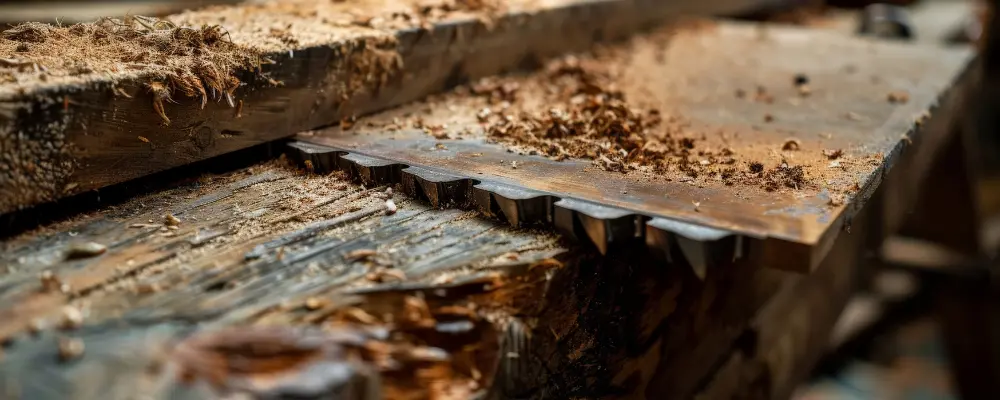
Machine Notches: During cutting or sawing of timber, inexperienced professionals fail to hold and pull the timber correctly, causing chips or torn mark defects.

How to Check Defects in Timber?

Whether you are using wood for crafting furniture or in your construction project, you must maintain its structural integrity and aesthetic quality. For this, you must effectively detect the various timber defects, as they can significantly affect the durability and performance of timber. Enlisted are the two ways you can adopt to check the timber for any defects.

Visual Inspection

It’s one of the oldest and easiest methods for detecting the presence of any defects in the timber. A thorough inspection of the wood surface will reveal common issues, including knots, warps, cracks and damage caused by insects. You must also look for signs of discolouration, decay, soft spots and fungal growth, as they indicate rot. Have you ever noticed the presence of small holes, tunnels and wood dust on your timber? These are clear signs of insect manifestation. The cracks, splits and warps are signs of improper seasoning and external stress, which compromise the strength of the timber. Ensure that your timber undergoes regular visual inspection, as it helps identify these surface-level defects before they worsen.

Non-Destructive Testing (NDT)

While you can detect surface defects through visual inspection, identifying internal defects is impossible with bare eyes. You must adopt specialised techniques, termed non-destructive techniques or NDT, such as X-rays, electromagnetic testing and ultrasound. Without damaging the wood, these advanced techniques can detect internal defects, such as structural weaknesses, decay, and void. With NDT, your timber undergoes a comprehensive assessment while preserving its structural integrity. These are beneficial in large-scale construction projects, where maintaining strength, reliability and safe performance are essential.

Best Ways to Prevent Defects in Wood

While preventing natural defects in timber is impossible, woodworkers can prevent the occurrence of defects during the processing. Enlisted are the steps you can take during each step of production.

The Production

Defects can arise as soon as the trees are cut. Therefore, the first few weeks are very crucial. Trees that undergo cutting between April and October can develop defects faster than those that undergo cutting during other months because insects and fungi are more active in these months. You can minimise the defects during this time by following a few guidelines. These include:

  • Keep the logs wet or store them underwater. You will notice a reduction in issues like warping, cracking and checking.
  • You can use an end coating such as paint, which is effective as it prevents the occurrence of checks. Before applying any end coating on the timber, you can also spray chemicals like insecticide and fungicide. It reduces the chances of insect and fungi infestation. However, you must be careful with these sprays, which can harm people and animals.
  • Place your timber in the east-west direction instead of the north-south direction. The east-west direction reduces solar heat.
  • Ensure to convert the logs into lumber within a fortnight of cutting them, especially during the summers. When you keep the logs sitting in the ground and under sunlight, the timber has a high potential for developing defects. If you plan to saw them, keep them off the ground in the shade, preferably in the water.

The Storage

After sawing the green logs into the lumber, you must season them. This is another phase when defects are common to occur. However, adopting some best practices can prevent decay. If you are air drying the wood, stack the logs evenly, allowing maximum ventilation and avoiding direct sunlight to prevent the occurrence of warp, rot, and cracks.

If you are using a kiln, ensure that you place the green logs in a climate-controlled space after drying. It will dry quicker without undergoing any defects from changing temperatures and humidity. The woodworkers must stack the processed wood with spacers, which prevents timber defects like bowing, warping and twisting. Ensure to check the moisture of the wood. The continuous checking prevents the usage of  wood before it is completely dry, thereby preventing warping.

Purchasing the Lumber

When purchasing lumber, check for defective boards at the store by following a few simple hacks. Thoroughly inspect each board, look for knots, wraps, insect damage, shakes and checks. The easiest way to check for warp presence is to hold one end of the board near your eyes while supporting the other end on the ground. Be sure to look through the length of all four directions of timber. You can check the timber’s moisture content with the help of a pinless moisture metre. A moisture content of 20% and above is green wood and must never be included in projects.

Treating Defects in Timber

To boost the timber’s longevity, structural integrity and aesthetic value, you must address the defects in timber. You can treat common timber defects such as rot, decay, insect infestation and cracks by adopting the following techniques.

Addressing Rot and Decay

Often, timber retains a high level of moisture, resulting in fungi infestation. It makes the timber prone to rot and decay, compromising its durability. First, you must remove the rotten or decayed parts of the timber to prevent their spread to other parts. Then, a coating of wood preservatives must be applied to the timber to prevent future decay. Ensure on-time treatment and proper ventilation of wood, as it helps minimise the chances of recurring rot.

Addressing Insect Infestations

Have you ever noticed insects on wood? These insect infestations can severely damage your wood. Ensure to look for signs of infestation, such as the presence of wood dust, small holes, and weakening of the structure. Apply appropriate insecticides and fungicides for treating insect-infected timber, which can also help prevent future infestations. If you notice any severity, contact a pest control service for complete eradication.

Timber defects can occur at various stages. However, they are most common during a tree’s growing period, seasoning and conversion processes. Whether caused naturally or during processing, the defects negatively affect the quality, strength, aesthetic appeal and longevity of wood. Further, they impact the structural safety and fire protection capacity of the building.

Brick & Bolt, as a leading construction firm, ensures to provide the best quality raw materials for all their projects. We provide complete support from the first day until the final delivery of a construction project. Our world-class service enables real-time tracking, communication, quality checks and regular project updates. With a dedicated team of professionals, Brick & Bolt offers personalised designs, catering to your unique tastes and requirements without compromising with the quality. Contact Brick & Bolt today to build your dream home!
Seasoning of Timber: Importance, Types, and How It Improves Durability

0
Seasoning of Timber

Wood, as a significant natural resource, finds unrivalled versatility in its use in construction. From decking your homes to fencing and woodworking, there’s little that timber can’t do. Timber or wood is one of the oldest and low-tech building materials, and architects around the world rely on it as their preferred building material. Compared to other building materials, you can make sustainable, affordable and environmentally friendly buildings with timber.

If you are regularly working with wood, you must have heard about timber seasoning. Seasoning of timber involves following a systematic way of reducing the moisture content from the wood and making it ready for future use. The process improves the wood’s durability, strength and quality. Proper seasoning of timber before using it in your projects makes it stronger and more resistant to environmental damage. Since seasoning timber makes the surface smoother for finishing, you will find it easier to work with. Whether you want to paint, varnish or polish it, you can expand the lifespan of your timber by seasoning it.

This blog focuses on providing a comprehensive understanding of the importance of timber seasoning along with the various types and processes involved. Whether you are in woodworking, construction or just curious to know the science behind boosting the durability of timber, this guide is for you. It will help you understand the different timber seasoning processes and how they influence the quality of wood used in various projects.

Timber Seasoning: What Is It?

Freshly cut timber contains high amounts of water, which might decay, shrink or wrap if it does not receive proper treatment. Seasoning the wood reduces these risks, making the wood stable and less prone to fungi and pests. Besides, if you are using timber in your carpentry or construction, seasoned wood or timber is the perfect choice.

Seasoning involves the process of drying timber to remove the moisture present in the wood cells. While you can season your timber in numerous ways, the aim is to remove the water content at a uniform rate from the wood piece. It ensures that your wood remains undamaged during drying and does not experience degradation.

With seasoned timber, you get superior dimensional stability. Besides, when using seasoned timber in your carpentry or construction projects, you will experience less warping and splitting. Moreover, in higher-grade timbers like hardwoods, seasoning enhances their properties and characteristics and boosts stiffness, compression and bending strengths.

Importance of Seasoning Timber

Reduced Chance of Fungi and Pests

Freshly cut timber or green wood contains high amounts of moisture, which is why they might start decaying and develop fungi. Drying or seasoning the wood reduces its moisture content by at least 20%, making it last longer. Besides, seasoned wood is less susceptible to rotting.

Boosts Strength

Timber fibres absorb moisture in the cell walls, softening the wood and making it an ideal breeding ground for fungi. Timber seasoning allows your wood to have a stronger composition as the process dries out water from the timber. Since your timber meets the right moisture content ratio, it becomes stronger and less susceptible to shrinkage.

Helps Maintain its Shape and Size

Undried timber is susceptible to shrinkage and warping because the moisture affects the internal structure of the wood, making it softer. While most professionals prefer timber for woodworking projects, highly malleable timber isn’t ideal for building, decking, fencing or for structural framing. Seasoning improves timber’s strength and stiffness, reducing its chance to break, snap and warp.

Types of Seasoning Timber

Seasoning of timber occurs in two methods. These include:

  • Natural seasoning
  • Artificial seasoning

Natural Seasoning of Timber

In this method of seasoning, your timber undergoes seasoning in the presence of natural elements, including air, sunlight and water. The two most common processes in natural seasoning of timber are:

  • Air seasoning
  • Water seasoning 

Let’s explore each of them in detail.

Air Seasoning 

This method of seasoning timber involves a natural approach wherein the experts leave the wood to dry on racks outside. It’s a two-step process where, first, you must build a platform at a height of 300 metres above the ground. Next, you need to arrange the wood in layers. Ensure to maintain air circulation between the logs, as it helps reduce moisture, which is essential in seasoning. However, this method requires maintaining some environmental conditions. You require a clean, shady, dry and cool place for timber air seasoning.

Although a slower method, it is one of the best options for timber containing gum veins, as the veins often harden under heat pressure. If such timber undergoes kiln seasoning, it might lose its original colours. Sometimes, experts coat the logs with an impermeable substance to reduce extreme moisture. If you want to improve the quality of oil coating, you must maintain a thick paint coating. To prevent fungal infection, you can treat the timber with gasoline or petrol.

Water Seasoning

Water seasoning involves immersing timber partially in water. The controlled soaking helps reduce drying stresses, preventing cracks during the subsequent drying phase. Generally, you must immerse the freshly cut wood containing sap in water, which helps in washing off the sap. The logs get filled with water, which is then sent for air seasoning. If you want to maintain the natural colour of the wood, water seasoning of wood is the best option.

Natural timber seasoning is cost-effective, environmentally friendly and ideal for large-scale timber batches. The process allows the assimilation of wood to environmental conditions. However, natural seasoning is time-consuming, as it relies on natural elements. Often, you might require extending the seasoning duration, especially during unpredictable weather.

Artificial Seasoning

Although natural seasoning is eco-friendly and cost-effective, most sectors are opting for artificial seasoning of timber because it takes lesser time. In this method, you can season timber within a week. The different ways of artificial seasoning are:

  • Kiln seasoning
  • Seasoning by boiling
  • Chemical seasoning 
  • Electrical seasoning

Let’s explore each of these processes in detail.

Kiln Seasoning 

It is one of the most common ways to dry wood using a special machine called a kiln to extract moisture. In the process, you must expose the timber to hot air in an air-tight chamber. The heating coils inside the chamber raise the temperature, creating hot air that circulates between the timber logs, reducing the moisture content. When you obtain the required temperature, there is a reduction in relative humidity, and the timber gets seasoned.

This type of seasoning works well as it dries out the timber evenly. Different types of wood have different humidity levels and require different temperatures and times for seasoning. If you require seasoning different types of wood, kiln seasoning is the best choice as you get the option to choose a certain temperature, humidity and time instead of a one-size-fits-all option. Although kiln seasoning of timber is faster compared to air drying, it has more negative implications for the environment.

Seasoning by Boiling

In this procedure, you require boiling the timber in water for three to four hours and then keep them for drying. Often, you need large quantities of timber to be seasoned. In such a scenario, boiling the timber becomes difficult. The best way is to keep the timber logs in an enclosed room and pass hot steam through them. The boiling or steaming process helps the timber logs to develop strength and elasticity, offering good results.

Chemical Seasoning

Chemical seasoning refers to subjecting wood to chemicals such as salt solutions to accelerate the drying procedure. Besides lowering moisture, the chemical acts as a protecting guard, preventing the wood from potential hazards like pests and rots. However, you need to meticulously handle the process, as it’s essential to stop any negative impacts on the wood’s natural properties. If time efficiency and elevated protection are your paramount considerations, chemical seasoning of timber is an ideal choice in various construction and industrial settings. 

Electrical Seasoning

In the electrical seasoning of timber, experts expose the wood logs to high-frequency alternating currents and continuously measure the resistance of the timber against electricity at every interval. When the timber achieves the required resistance for seasoning, the process ends- with the reduction of moisture content, there is an increase in the resistance of timber. The process establishes a delicate balance between speed and precision, making it particularly valuable in certain industrial contexts where the quality and characteristics of the seasoned wood are crucial.

Seasoning of timber is the reason why wooden building elements and furniture look sturdy and reliable. From lowering the moisture content to improving the wood’s durability and stability, the procedure converts wood into a strong material. Whether you need to use the timber in your construction or need to boost its resistance, seasoning plays a strong role.

As a one-stop solution for all your housing requirements, Brick & Bolt understands the significance of well-seasoned timber. One can witness their dedication towards the best quality reflected in every project and experience the effect of appropriate seasoning on the longevity and dependability of timber. The importance we give to well-seasoned wood for our projects ensures that each of our projects, irrespective of its size, stands the test of time, symbolizing durability and timeless beauty. Contact Brick & Bolt today to assure the best quality of seasoned wood for the construction of your dream project!

What is Green Concrete? Types, Uses, and Properties

0
what is green concrete

In today’s world, global warming caused by excess Carbon dioxide emissions is a very concerning problem. The construction industry is one of the biggest contributors to this problem. Green concrete is a new material which can reduce this contribution and help in creating a more sustainable future. Read on to learn what green concrete is, its types and properties.

What is Green Concrete?

Green concrete is a type of concrete that is ‘green’ or sustainable for the environment. It is manufactured (instead of using raw cement) with materials such as recycled waste from industries; this reduces the demand for new cement, hence reducing its impact on the planet. Regular concrete, while in production, produces a great quantity of CO2, which does much harm to the ecosystem of the planet. Green concrete reduces this pollution by using materials that require less energy to manufacture and that produce less CO2.

Otherwise stated, green concrete is an environmentally friendly option that helps protect the environment and is strong and sturdy like ordinary concrete.

Types of Green Concrete

Green concrete has several types. Each variety makes use of a special mix to make its type better for the planet. Let’s look into some of the common types:

Magnesium Oxychloride Cement

Magnesium oxychloride cement is produced from magnesium and other oxygen-based compounds. In contrast to Portland cement production, this type of cement yields lower CO2 emissions, thus it is environmentally friendly. During its production process, this cement does not need extremely high temperatures, and hence energy can be conserved. The major applications of this cement involve the construction of floors, walls and other similar strctural elements.

It works well against fire and mould, making it highly resistant and durable.

Ferrocrete

Ferro-concrete, better known as ferrocement, is a method of building with cement, sand, and water, adding importantly a mesh of steel wires. Since the mesh of steel wires strengthens in itself, much less cement is needed. This reduces the amount of cement, making it more environmentally friendly.

Ferrocrete is used in boat construction and also for water tanks; and is even sometimes used in the construction of houses. It has a lot of durability, can last for a long period, and its moulding is pretty easy.

Cement Geopolymer

Instead of using ordinary cement, this type makes use of wastes from various industries, like fly ash from coal plants and slag from steel plants. These wastes are combined with chemicals to form Portland-like cement.

Geopolymer cement is a fantastic environmental alternative, as it produces much lower levels of CO2 compared to conventional cement-up to 80% less. The applications range from road and bridge construction to even home and office construction.

Calcium Sulfoaluminate Cement

Another type of green concrete is CSA cement, which employs minerals like calcium sulphate that contribute to reducing CO2 during its manufacturing process. This type of cement sets very fast and is very strong; therefore, it is ideal for projects that need to be completed very quickly.

CSA cement also resists bad weather conditions; therefore, it has often been used in bridge building, airports, and sea structures.

Application of green concrete

It finds its application in several construction projects. Green concrete has become an alternative in recent times for people who want to build greener structures, and its usage is gaining interest. Some of the common places where green concrete is applied are as follows:

  • Dwellings: Green concrete can be used in the building of homes that are stronger and energy-efficient.
  • Offices and Shopping Malls: It is also used in large building structures to reduce their carbon footprint.
  • Highways: Green concrete makes highways last longer and requires minimal maintenance.
  • Dams and Bridges: Green concrete is so strong that it is suitable for major structures like bridges and dams.

Green Concrete vs. Standard Concrete

Green concrete varies in many ways from standard concrete, such as:

  • Materials: Standard concrete is made with regular cement, which is manufactured by heating limestone. A great deal of CO2 is generated in the process. Green concrete is made using recycled materials such as fly ash and slag; these produce less CO2.
  • Environmental impact: Standard concrete is harmful to the environment since it emits a lot of CO2. Green concrete is a better alternative to standard concrete as it cuts down carbon emissions and hence is friendlier to the environment.
  • Performance: Most green concrete match, and sometimes outperform regular concrete in strength and durability.

Advantages and Disadvantages of Green Concrete

Like with any material, green concrete has its downsides and good sides.

Advantages:

  1. Eco-friendly: Green concrete produces less carbon dioxide and utilises recycled waste materials, hence being more environmentally friendly.
  2. Recycled Materials: Utilises waste products from various industries, including fly ash and slag, that reduce waste discarded in landfills.
  3. Energy Saving: It takes less energy to produce green concrete than it does to make regular concrete.
  4. Performance/Resistance: It has high strength and longevity, just like normal concrete.

Disadvantages:

  1. Expense: Green concrete tends to be pricier because it may require special materials.
  2. Material Availability is Limited: The geographical unavailability of the material required for green concrete in all parts of the world makes the accessibility of green concrete difficult in certain areas.
  3. Inadequate Knowledge: Since green concrete is fairly new, not all construction firms are yet knowledgeable about the most optimal ways to use it effectively.

Properties of Green Concrete

Green concrete is not only environmentally friendly, but it also possesses several useful properties that are good for construction projects.

Higher Durability

Green concrete is very durable, meaning that it has the potential to last longer without repairs. This is because such materials incorporated into green concrete make the concrete stronger and, hence less likely to crack after some time. This is an important consideration for buildings and roads that may be in areas with more extreme weather.

Improved Workability

Workability is defined as the ease with which concrete is mixed and can be used in construction. Green concrete is usually very workable, easy to shape, and can be poured into forms. This makes it a good choice for all kinds of construction, ranging from homes to large buildings.

Reduced Heat of Hydration

The hardening of concrete is known as hydration. During the hardening process, concrete emits heat. Green concrete tends to emit less heat during the hydration process, which reduces cracking. This makes green concrete more stable and long-lasting.

Reduced Permeability

The term permeability is used to define the ease with which water and other liquids are allowed to pass through concrete. The permeability of green concrete is reduced; thus, it will absorb less water. Therefore, such applications in buildings or roads will help prevent water damage in rainy areas.

Conclusion

Green concrete is one of the exciting developments happening in the construction world. This variety is more eco-friendly than its conventional counterpart as recycled materials are used and much less CO2 is emitted during its setting. While it can be more expensive and harder to find, the benefits of green concrete include strength, durability, and environmental impact; for that matter, it’s a great choice for the future of the construction industry.

TDR in Construction: Purpose, Advantages,Types, and Cost

0
tdr in construction

With increasing restrictions on the construction industry, the transfer of development rights (TDR) plays a decisive role in urban development and conservation. It allows little wriggle room for both property owners and construction planners. 

The concept of TDR proposes a unique solution for the developer to build a construction within the regulated area and permits builders to buy building rights from less developed regions. TDR ensures that urban evolution aligns with environmental goals. In this article, we will highlight the working process of TDR, its advantages, purpose, benefits, and the cost involved in the process of TDR.

What is TDR in Construction?

Certain zones may come under TDR in construction with an emphasis on preservation, including farmlands, cultural resources, heritage resources, and common property resources used for public-use properties. TDR allows developers to exceed the authorised Floor Space Index (FSI) in other designated areas, which can be highly valuable for residential development. 

FSI is a critical factor in urban planning, determining the maximum allowable construction relative to the land size. With TDR certifications, developers can build additional floors, especially in regions where land availability is limited due to urbanisation. This system enables landowners to transfer development potential from restricted-use areas, supporting urban expansion while preserving valuable lands.

How does TDR Work?

The property owner obtains the TDR certificate from the local municipal corporation. This indicates that their property is retained for public services like roads, schools, parks, etc. In return, they have conceded the additional built-up area that they can use anywhere else. 

Government Defines Zones

The areas where development is restricted, such as historical sites and wetlands are identified by the government. The government also highlights the areas where building high-rise structures is allowed for higher density. Developers must strictly adhere to the allotted floor space index (FSI) in these zones, which limits how much can be built based on the plot size and zoning category.

Application by Property Owners

Property owners within restricted areas can apply for a TDR certificate. The government should verify the certificates and compute the developmental potential of the site they can sell based on the plot size and zoning regulations. It detaches the building permission from the property owner.

Government Authorisation

The government authorities thoroughly analyse the details of the property owner and declare there were no hindrances available on the site. They can also estimate the TDR value and ensure no misuse of the TDR system.

TDR Market

There are two options given to the property owner. One is they can directly sell their property to the developers, and the other is they can participate in government-run TDR exchanges for open bidding. The purpose of this exchange is to get potential prices. Meanwhile, the developer also intends to purchase TDRs to incur them in their upcoming projects.

Integration by Developers

The purchased TDRs are then integrated into the development projects. This permits them to construct the building beyond the usual FSI limits, thus increasing the density of the building and the project’s profitability. 

Purpose of Transferable Development Rights

The main objective of TDR is to develop underdeveloped areas by transferring developmental rights from well-developed areas. It eases the land acquisition process of the government. In busy cities, TDR is transferred from highly developed areas to less developed areas. It promotes urban growth and reduces population congestion in the city cores.

Certain zones are confined to preservation; TDR prevents expansions in these zones and protects the green environment. The sales of TDRs are directly transferred for developing public infrastructure projects. Lands with TDR have a high value.

Advantages of TDR in construction 

  • Advantages for Property Owners:
  • Income can be generated through unused restricted land.
  • TDR value has fair compensation when compared to the market value of the place.
  • The property owner can gain more benefits while involved in TDR government exchanges or direct selling to the developers.
  • Advantages for Developers:
  • Developers are permitted to build high-rise buildings in restricted zones, which increases the profitability of the project.
  • Developers also purchase TDRs from property owners for better building plans. This allows them to market their project in urban growth areas.

Types of Transferable Development Rights (TDR)

The major three types of transferable development rights (TDR) are as follows:

Slum TDR

Slum transferable development rights are a type of TDR that allows development in slum areas Following the approval of the slum clearance board or private developers, for every square metre of built-up area, the property owner, developer, or community can add additional space as a reward that can be sold. The total rehabilitation area and selling area can be confined to the Floor Space Index (FSI) that can be approved for the project.

Reserved Plots TDR

Once the compound gate and walls are built, the property owner must hand over the land to the government or any other developer without any hindrances of charges or conditions. In return, the owner receives the Development Right Certificate (DRC), which grants FSI per transferable development rights (TDR). 

Heritage TDR

The owner of heritage of historic properties can be given a heritage TDR to complement the loss of developable property. The state government must approve this. In every part of the world, this process can be followed.

How to Calculate TDR?

TDR calculation does not have any specific formulae. It is governed by several factors, such as:

  • Location of the plot
  • Size and zoning area
  • Significance of the land
  • FSI
  • State rules and regulations
  • TDR market changes

TDR Regulations and Policies

  • State-specific policies and frameworks
  • It can be used in restricted areas where development is limited (heritage sites and wetlands).
  • Specifies development zones with higher density.
  • Property owners and developers can buy and sell TDRs.
  • TDRs are traded in exchanges, bonds, or direct sales.
  • Ensures compliance with the law and addresses misuse of TDRs.

Challenges of TDR

The common challenges faced in transferring development rights are as follows:

Transparency and Equity

The complex governing regulations and inconsistent implementation of TDRs may pave the way for misusing the plots. Clear guidelines and access to all the stakeholders may avoid such misuses.

Environmental Concerns

The potential development of underdeveloped areas may impact environmental ecology. Careful zoning is a must before undertaking the TDR process.

Public Participation

Comprehensive planning and access to all the community members can ensure informed decisions and provide ownership.

How to find information about TDR before buying a home?

Some of the ways to find information regarding TDR before buying a home are as follows: 

Government and Planning Department Websites

Each locality has its own unique website for displaying information related to TDR. They include zoning guidelines, developmental plans, and TDR programs in your locality.

Public Records

Public records can also be accessed through websites or offline. They provide all the detailed information about the TDR transactions and development projects that are approved in your locality.

Municipal or Planning Department Offices

You can also visit your local municipal office or planning department to gather TDR information. They can offer you the latest and updated TDR programs, guidelines, and projects in your locality.

Realtor with TDR Expertise

An experienced real estate agent can help you calculate the value of your home, the implication of TDR programs, and potential development plans in your locality.

The Cost Involved in TDR in Construction

It is a tedious process that involves both the client and the vendor. For the client, it includes the cost of acquiring the TDR certificate from the government and the marketing fee to sell the plot. The profit is defined by the market value of the TDR based on the land type and development needs. 

For the buyer, the cost is purchasing the TDRs, which are prone to market fluctuations. Additionally, they must account for incorporating the extra space into their project. It includes both the TDR purchasing as well as project adjustments.

Conclusion

In conclusion, TDR is becoming a major element that offers controlled development in areas where environmental impact is concerned. It balances the need for development with the preservation of important land resources. This mechanism helps developers increase their project’s scope without affecting the protected lands.

Why Choose Sloped Concrete Roofs? Construction Tips & Benefits

0
sloped concrete roof

Sloped concrete roofs are usually used in construction for high strength and aesthetic purposes. The surface of this roof is angled, which allows easy runoff of water and snow, hence preventing potential damage to buildings. The slope or pitch of the roof is defined by the ratio of rise to its span. Sloping roofs are normally used in areas with heavy rain or snow as they prevent the likelihood of water accumulation and protect against weather conditions.

Structurally, it is the most durable, and that perhaps accounts for the reasons why concrete is the popular choice for sloped roofs. From homes to commercial buildings, it would be a good fit. That said, this guide is going to explain what types of sloped concrete roofs exist today, how they are built, what materials are applied and their advantages and disadvantages.

Types of Sloped Concrete Roofs

Mono-pitch Roof

A mono-pitch roof consists of a single sloping plane that extends from one side of the building to the other. It is straightforward to put up and is usually applied to smaller spaces like storage sheds or merely attachments at the back or side of a house. The pitch or inclined angle of this roof may vary from 10 to 30°. Although it is cheaper on account of less material used compared to other types, it provides much lesser ventilation space.

Dual-pitch Roof

The dual pitch roof, otherwise known as a gable roof, has two sloping sides that meet at a central ridge. It is a very popular type of roof for many homes due to its efficiency in water shedding and aesthetic appeal. The slope ranges from 15° to 45° per design needs and according to local climatic conditions. This type of design also allows air circulation to occur in the interior part to remain cooler.

Sloped Concrete Roof – Construction Process

A sloping concrete roof is built in several steps crucial for strength and durability.

Site Preparation and Formwork

First, the area of construction should be cleaned of debris. Then, formwork is installed to give the shape to the roof. Formworks act like moulds for carrying the concrete until it gets hardened. For sloping roofs, the formwork should be prepared along the angle of the slope. Common formwork materials are wooden or metal boards.

Placement of Reinforcement

Steel reinforcement bars, or rebar, are placed to give strength to the roof and prevent it from cracking. Amounts of rebar depend on the load the roof has to bear. A spacing of 6 to 12 inches on the centre is common for placement and gives adequate support.

Concrete Pouring and Curing

After reinforcement, concrete is poured. The mix is so designed to have a water-cement ratio of 0.4 to 0.5 to give an extremely stiff concrete that would remain in its placed position on the slope. Curing, very important for strengthening the concrete and avoiding future cracks, takes 28 days.

Sloped Concrete Roofs- Advantages and Disadvantages

Benefits

1. Water Drainage: Due to the inclination, water and snows runs off without any hassle and hence does not remain a leakage hazard.

2. Durability: Concrete is resistant to intense weather conditions; therefore, its application may be appropriate in regions characterised by heavy rainfall or snow.

3. Thermal Insulation: Sloping roofs contribute to maintaining the temperature inside a building, providing a cooling effect in summer and a warming effect in winter.

4. Aesthetic Value: It beautifies buildings and makes spaces seem visually larger, which in turn boosts property values.

Disadvantages

1. Higher Cost: Sloped roofs are more complicated and, therefore, costlier than flat roofs.

2. Additional Materials: The design requires additional reinforcement, thus raising costs.

3. Reduced Accessibility: The slope could provide a little challenge for maintenance since one might be less able to walk upon it or clean it as easily. The terrace area also gets minimised or eliminated.

4. Leakage and cracks: Improper laying, curing or waterproofing can lead the development of cracks and water leakages in the roof, which may be difficult to repair.

Materials Used in Sloped Concrete Roof Construction

Concrete Mix Specifications

This mix has certain properties and requirements for strength and durability. Some of the common mixes used in sloped roofs have a proportion of 1:2:4 (cement, sand, and aggregate, respectively). Superior mixes of M30 or M40 grades give compressive strengths between 30-40 MPa for more demanding applications. The slump value should be quite low in the range of 50 – 75 mm to keep the mixture stiff enough on sloping surfaces.

Waterproofing Materials

Waterproofing is necessary to prevent leakage. Bituminous membranes or liquid waterproofing compounds are applied following the curing process. These materials ultimately result in a water-resistant layer protecting the concrete.

Insulation Options

It’s used to help regulate indoor temperature levels and save energy. Rigid foam board and spray foam insulation are usually the ones used for this purpose and offer R-values ranging from R-4 to R-6 per inch and may be resistant to penetration of vapour to protect against further damage.

Sloped Concrete Roofs in Modern Architecture

Residential Buildings

Sloping concrete roofs are popular because of their resistant nature and look. The slope aids in effectively draining off water and snow and thus prevents leaking. These  roofs also provide space for attics or vaulted ceilings.

Commercial and Industrial Buildings

Sloping roofs can be used both for commercial and industrial purposes. They can support heavy loads, such as solar panels or HVAC systems, which makes them suitable for large buildings.

Sustainable Designs

Sloped concrete roofs have often been favoured in eco-friendly designs. They have a predisposition to better energy efficiency, can support solar panels, and even can be made with recycled materials for reduced environmental impact.

Conclusion

Sloped concrete roofs are indeed steady and stylish features of modern architecture. Efficient drainage of water, protection in harsh weather, and enhanced insulation have made sloped concrete roofs an increasingly demanded feature for both residential and commercial buildings. While the initial investment may be higher than normal, there are recurrent long-term advantages concerning maintenance and protection that will go a long way toward making sloped concrete roofs well worth any extra investment.

Concrete Wall Coping Explained: A Complete Guide for Beginners

0
Concrete wall coping

Concrete coping is amongst the primary conceptions in construction. This component acts like the top layer of the wall, which brings both functional and aesthetic benefits. Its primary work is to protect the wall from weather elements such as rain, snow, and even wind. Where proper coping of walls is absent, they are more prone to damage caused by water seepage that creates cracks and also degrades over time. Besides protection, concrete wall coping is one such variety that provides a finish that is for decoration purposes and thus can give residential or commercial elevation a fairly captivating look.

This has probably brought it to the front line among all the construction materials applied in many countries due to its strength, durability, and relatively low maintenance. In this blog, we are going to delve into the details of concrete wall coping, its benefits, its installation process, and various applications.

What is Concrete Wall Coping?

Concrete wall coping simply refers to the protective cap that is placed on top of a wall to prevent water from seeping into it and damaging it over time. Coping acts much like the roof of a house, protecting the wall below from the elements. Without coping, water can seep into the cracks of the wall, freeze during colder months, and expand, causing the wall to crack or weaken.

Concrete wall coping is pre-cast or poured concrete to provide strength and durability. A typical section of coping is about 4 to 6 inches(10 to 15 cm) wide and perhaps 2 to 4 inches(5 to 10 cm) thick, sometimes varying depending on the wall design. In these cases, the majority of coping is often set in a slight slope, specifically to let running water drain off and prevent any accumulation of water over the top of the wall.

The size of the coping can vary depending on the nature of any given job, with wall-width and severely weathered ones getting thicker coping, about 6 inches, for increased protection.

Benefits of Concrete Wall Coping

Concrete wall coping comes with a couple of advantages that make it indispensable during many construction projects. Key benefits include:

1. Resistance to Weather

Coping prevents water from seeping into the wall. Concrete has a natural resistance to water, but acting as coping, it does act as an extra layer of protection. Keeping moisture off can also increase life by several decades. Indeed, studies have shown that having concrete coping on walls will help cut down the infiltration of water up to 80%, reducing the freeze-thaw damages

2. Durability

Concrete is generally strong and durable. The compressive strength of normal concrete coping is approximately 4,000 to 5,000 psi(27.6 to 34.5 MPa). Therefore, it can resist not only pressure due to weather but even mechanical impacts, making it ideal for application in areas that are exposed to heavy usage. High-strength concrete coping may have compressive strengths over 6,000 psi(41.4 MPa) in some particular cases, especially when commercial or industrial applications come into play.

3. Aesthetic Appeal

Concrete wall coping is available to match the architectural needs of any structure. Many shapes and sizes are available, along with various finishes to meet the design specifications. This material is used very much for residential homes, commercial buildings, and even outdoor public places like parks. Many architects and designers use the coping of concrete as a means to impart a polished, Tagged feel to exterior walls and other outdoor structures.

4. Low Maintenance

Concrete coping requires very little maintenance. Once set and done, it can stay set for decades with the least amount of attention given. Unlike a few other pool copings-for instance, those made from wood or metal, which may tend to rot or rust after some time-concrete is quite durable and can stand harsh elements. As statistics go, concrete coping may last upwards of more than 50 years in nearly any type of environment, only needing cleaning and resealing now and then.

5. Energy Efficiency

Because of the heating from reflected sunlight, concrete wall coping should always be one of your choices for warmer climates; this helps to lower the temperature of the structure beneath it. A certain advantage is that it reduces the amount of air conditioning required, hence reducing energy costs. Indeed, studies have shown that effective coping installation can lower cooling costs by as much as 10% in buildings.

6. Cost-Efficient

Costs for concrete wall coping are higher at the outset compared to some other materials. The fact that it can last very long, with low maintenance requirements, pays for itself over time. Taking the most obvious example, while wood coping would need to be replaced every decade or decade-and-a-half, concrete coping can endure upwards of five decades and comparatively rất transitional in terms of saved costs in repairs and replacement.

Concrete Wall Coping Process

Concrete wall coping requires quite an accurate and thorough process. This involves the following:

1. Wall Surface Preparation

First, the top of the wall should be cleaned and prepared before its installation. Dust and debris are meant to be cleaned, along with loose material for strength in bonding between the wall and coping. If the wall is new, it needs to be cured properly, mostly for approximately 28 days, for the installation of coping.

2. Measurement and Cutting

The coping has to be strictly metered on the wall for a fit. For example, if the wall measures 20 feet, then every piece of coping will need to be cut against the length and width. At times, special moulds are used to cast concrete coping to custom dimensions to fit the wall.

3. Application of Mortar

A layer of mortar is used on top of the wall to hold the coping in place. A typical mortar mix might feature 1 part cement to 3 parts sand. The mortar should be spread out uniformly without any voids in which water can seep through. The recommended thickness for the mortar is about 0.5 to 1 inch, depending on the surface of the wall.

4. Lay the Coping

Concrete coping is carefully laid to the wall and aligned. Set firmly into position in mortar to ensure a good bond. Builders often take a level to ensure the coping is level and a slight slope permits runoff of water.

5. Sealing the Joints

The joints between individual pieces, after the coping has been laid, are sealed with a waterproof sealant to avoid water intrusion. This keeps moisture out and the wall dry. The silicone or polyurethane sealant commonly used in applications warrants that this joint be about 0.25 to 0.5 inches wide to allow for expansion and contraction.

6. Curing and Finishing

After the installation, the coping requires time to cure. These could require several days for the mortar and sealant to set up. These should be kept away from very heavy rain while foot traffic during this time may need to be avoided to prevent breakage.

Concrete Coping Applications

The concrete wall coping serves variably and can be put to use both in residential homes, commercial properties, and public spaces.

1. Residential Buildings

Concrete coping is used in homes on garden walls, fences, and patios. It provides protection but also a decoration to such buildings. For example, a 30-foot garden wall with decorative concrete coping raises the aesthetic value of a property by increasing its curb appeal.

2. Commercial Properties

The use of concrete coping is quite common in business for retaining walls, outside seating areas, and perimeter fencing. For heavier traffic areas involving walls, such as in commercial applications, concrete coping ensures durability and gives a clean and professional look.

3. Swimming pools

The concrete coping will allow the edges around the pool perimeter to be smooth. It prevents water from seeping between the pools and their walls. Bullnose coping, due to its rounded edge, is in wide usage in pools, which minimizes the chances of injuries. Depending upon the outline or the size of a standard-sized pool, approximately 40 to 60 feet of coping may be needed.

4. Public Space

Concrete wall coping is quite common in parks and other public areas. It is used on benches, in retaining walls, and on ornamental structures for covering and hardwearing purposes. Under harsh weather conditions, concrete coping can easily last for decades, thus extending the life of civic infrastructure.

5. Bridges and Highways

Concrete coping is used in very critical applications in bridges and highways, especially on parapet walls, where safety and structural integrity are required. In this respect, a typical bridge may require concrete coping with a strength of 5,000 psi to resist both environmental stress and heavy loads brought about by vehicles.

Conclusion

Concrete wall coping is important for protecting walls against weathering and adds  beauty to the walls. Non-fussy yet durable and stylish, it has become one of the favourite choices for residential and even commercial projects. Installation of concrete wall coping is a well-thought process that demands precision; thus, it pays off by way of protection for a long time, together with a polished finish. It is modern construction’s versatile and effective coping solution, whose usage varies from home to public space to infrastructural construction.

Completion Certificate (CC) in Construction: Purpose, Importance, Process of CC

0
cc in construction

In the construction industry, a completion certificate is of significant importance. It is issued upon the successful completion of a project, certifying that the construction complies with all approved building plans and adheres to safety regulations, including shoring requirements, to ensure structural stability. In this article, we explore the key factors in obtaining a completion certificate, as well as its purpose, importance, and process involved.

What is a Completion Certificate (CC)?

A completion certificate is a credentialed document that can be issued based on the completion of the construction project. It ensures that the process of construction adheres to a set of rules and regulations of the local governing bodies. The relevant authorities may visit the site directly and check that all work has been done under approved building laws and safety standards. 

It serves as decisive proof that the construction process has been carried out under the approved building plans and also follows local body laws, regulations, and safety standards. This certificate substantiates that the construction has been completed satisfactorily and the property is ready for inhabitation.

It may have various information, including

  • Information about the land
  • Features and characteristics of the building plan
  • Detailed information about the builder
  • Approved building height 
  • Location of the project

Purpose of Completion Certificate 

For several reasons, holding a completion certificate is essential for builders as well as buyers. They are as follows:

  • Legal adherence: It is evidence that the building is constructed following the regulations and safety standards of local municipal authorities.
  • Quality assurance: It influences the quality of materials used in the construction process to ensure a high standard of the completed project. It can also elevate the reputation of the developer for providing quality projects.
  • Deliver to buyers: Without a completion certificate, the developer may not give access to hand over the building to the buyer. This authorised document assures the buyers that the construction process hasabide by the approved building laws and safety standards and is now ready for occupancy for residential purposes.
  • Provide access to important services: In many cases, utility connections such as water, drainage, gas, and electricity can be obtained only through this certificate. Without this, you may not easily get the facilities in the local municipal department.
  • Easier sale or lease: Selling or leasing a property can be acquired through the completion certificate. It builds trust in the property and property owner.
  • Liability protection: It can protect the developer from facing any structural defects or issues that may arise after handing over to the buyers. It can also help to avoid legal disputes even after selling the property to another buyer.

Importance of a Completion Certificate 

This certificate allows the buyers or developers to confirm that the construction has been built legally without compromising the regulations and quality standards.

  • Acquires all building information: It contains all the information that has been connected to the construction process. It includes the name of the owner, developer, site location, site details, height of the building as approved, and the quality of the building materials. 
  • Compliance with local codes: It has the information that the construction process follows the construction criteria such as building height, distance from the public road, and distance from other neighbouring buildings.
  • Essential for getting an occupancy certificate: A certificate of occupancy will be provided, only if the developer has a certificate of completion.
  • Resale value: the resale value of the property is high when compared to one without having a certificate of completion.
  • Protection against fraud: It safeguards anyone from buying unauthorised and illegal properties. Constructions that fail to meet safety standards can also be avoided by checking the availability of this certificate.

How to Obtain a Completion Certificate?

Once the construction project is finished, the builder or developer can apply for a completion certificate. After the submission of the application form, the local municipal authorities will visit the construction site directly and inspect whether the construction work follows the local rules and regulations or not. 

During the inspection process, the authorities may check various details of the construction, site details, ownership, safety measures like air conditioning, fire safety, distance of the building from the main road, etc. Once the officers confirmed that the building complies with all the rules and regulations as governed by the local municipality. Then you will get the CC within 30 days from the day of the inspection.

Documents Required

Each locality may have unique rules for submitting the CC application process. The essential documents applying for CC are as follows:

  • A filled application
  • A licensed engineer or builder must certify the completion of the construction process.
  • Copy of the approval letter of the building’s plan
  • A certificate of income from property taxes and a certificate from the structural safety department may be required, or a letter from the concerned technical staff members may be enough.
  • An authorised letter from the fire department is required, if applicable.
  • NOC is required for installing a lift.
  • A NOC for water supply and sewage systems can be required.
  • An affidavit of applying for the provisional completion certificate can be included.
  • Any other documents required as per local regulations.

What is a Provisional Completion Certificate?

A provisional completion certificate is a temporary certificate issued by the local governing municipal bodies. It acknowledges the completion of specific stages of the project or developed portions. Unlike a complete CC, a provisional completion certificate focuses mainly on the completion of the distinct construction stages. 

It serves as evidence that the partially finished portions must adhere to the building’s plan and comply with regulations. The builders must manage the ongoing projects, ensuring compliance with the finished parts of the construction process.

Completion Certificate vs Occupancy Certificate

The below table may provide a succinct comparison between the completion certificate and occupancy certificate as follows:

S.noOccupancy CertificateCompletion Certificate
1

It ensures the safety of residency or use.Confirms the construction process must adhere to local approved building laws and regulations.
2It can be issued before inhabitation.It can be issued after the completion of the construction process.
3It mainly focuses on the safety of the inhabitants.Strictly concerned with legal requirements.
4It is mandatory for occupational purposes.It is essential for the completion of the project.
5It needs inspection processes and legal reports.Building codes and approved building plans must be converged.

Conclusion

In conclusion, understanding the importance of completion certificates in the construction industry is essential for buyers and developers. With this information, you can proceed with the process of obtaining your completion certificate. By applying these processes, you can easily get through your completion certificate process.

What is Prestressed Concrete? Its Benefits and Applications

0
What is Prestressed Concrete?

We know that concrete plays an incredible role in construction because of its adaptability and stability. However, basic traditional concrete structures can’t handle heavy loads or long spans. To overcome this issue, engineers developed prestressed concrete, combining concrete and steel’s strengths. As a result, prestressed concrete has become a crucial construction material. This article explains the prestressed concrete process, its benefits, and its applications.

What is Prestressed Concrete?

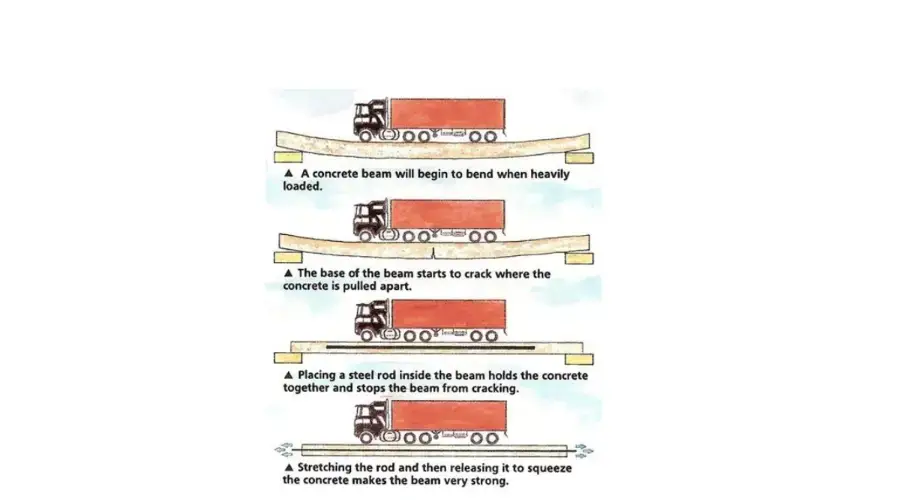
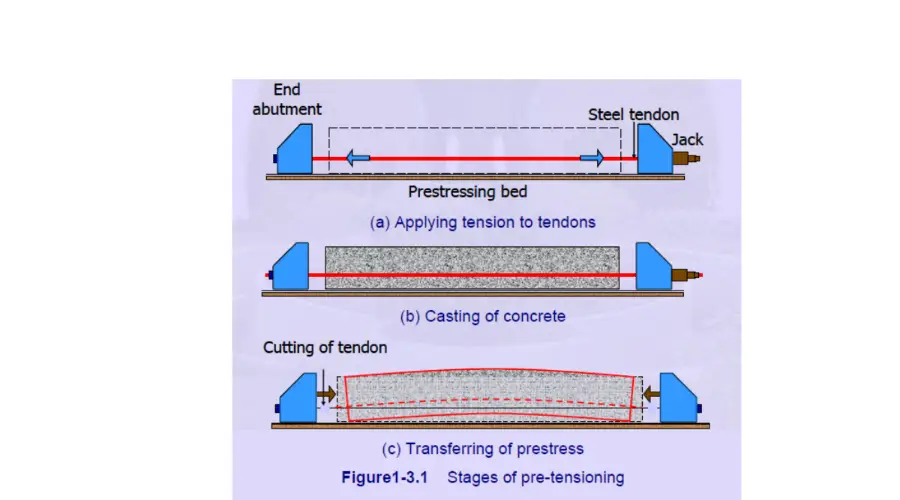
Prestressed concrete works by combining the hard nature of concrete and durable nature of steel. To make it, steel wires are tightly pulled and surrounded by concrete. After hardening, the steel is released, squeezing the concrete. This creates a powerful bond, boosting strength and durability. Thus, prestressed concrete supports massive weights and spans vast distances, perfect for constructing bridges, highways, and massive buildings.

Why is Prestressed Concrete Required?

Tensile strength is important in building materials because it prevents cracking and deformation. This ability allows materials to withstand heavy stresses and loads. However, concrete, despite its strength, lacks tensile strength, making it prone to cracking. To achieve tensile strength in concrete, prestress is created using steel bars. Consider a bridge made with a traditional concrete mix; without sufficient compression, it cannot withstand the pressure of heavy vehicles, leading to cracking. By incorporating steel, which provides tensile strength, massive support is added.      


Prestressed Concrete

  Image Source: williams-works

 How Does Pre-Stressed Concrete Work?

Though prestressed concrete involves complex processes, it has transformed the construction industry. By combining the science of tension and compression, prestressed concrete creates structures that boast enhanced strength and durability. Let’s see how it works.

The Prestressed Concrete Process:

Fabrication: Steel tendons (wires and cables) are manufactured and prepared.
Concrete Pouring: Concrete is poured around the tendons, enclosing them.
Tensioning: Tendons are pulled and stretched using hydraulic jacks.
Anchoring: Tendons are secured to the concrete to maintain the tension.
Relaxation: Tendons relax, transferring pressure to the concrete.
Compression: Concrete is compressed, increasing its strength.

This is a simple science behind how prestressed concrete works. When the pressure in the tendons is released, it converts into a compressive force within the concrete, preventing cracking and deformation. Consequently, the concrete develops the capacity to resist tensile forces and withstand heavy loads.

How to Implement Prestressed Concrete?

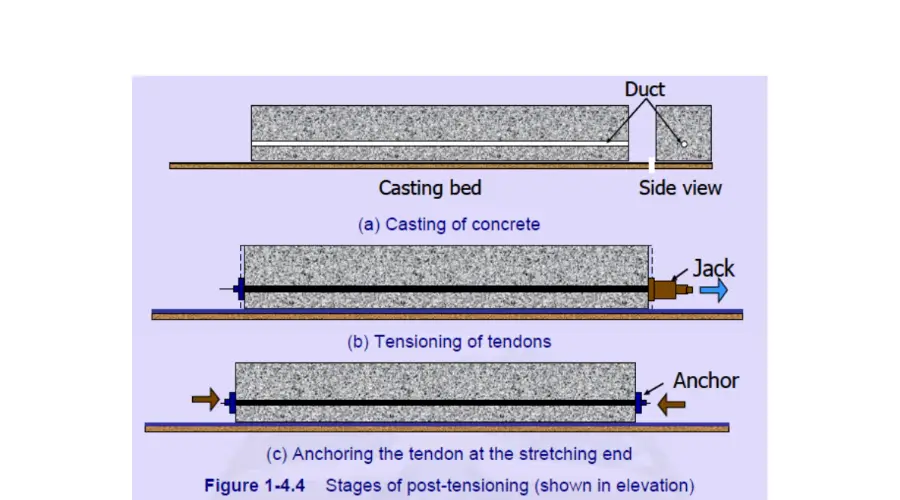
Before implementing prestressed concrete, it is essential to make accurate calculations and have a proper design plan. Afterwards, the site should be well-prepared to carry out the process. Tendons initiate the prestressed concrete process. However, the transfer of compressive force from tendons to concrete can occur in two ways: pre-tensioning and post-tensioning. Here’s what distinguishes them in the process.

Pre-TensioningPost-Tensioning
Tensioning occurs before concrete pouringTensioning occurs after concrete has set
Suitable for small spans and repetitive structuresSuitable for long spans and complex geometries
Tendons are placed directly in formworkTendons are placed in ducts within concrete
Lower equipment costs and less labour Higher equipment costs and more labour 
Used in precast components (roofs, floors, walls), foundation pilesUsed in long-span bridges, skyscrapers and infrastructures in seismic zones
Pre-Tensioning

     Image Source: williams-works

post - tesioning

     Image Source: williams-works


Benefits of Prestressed Concrete

Structural Integrity

Prestressed concrete has much higher strength and durability due to its inner forces acting against outer loads. This enables the concrete to be highly resistant to cracks and fractures, thereby ensuring the structure’s longevity. Moreover, prestressed concrete features an improved load-carrying capability, lowers deflection, and has greater resistance in earthquake-prone areas and wind loads. 

Streamlined Construction

The use of prestressed concrete significantly accelerates construction timelines. By minimising formwork and falsework, contractors can optimise site efficiency. Additionally, prestressed concrete components are lighter and easier to handle, reducing transportation costs and enhancing site safety. This streamlined process also leads to lower labour costs.

Environmental Sustainability 

Prestressed concrete promotes environmental responsibility by reducing material waste and energy consumption. Its sustainable material options and reduced carbon footprint contribute to an eco-friendlier built environment. Moreover, prestressed concrete improves indoor air quality, creating healthier spaces.

Economic Advantages

By optimising material usage, prestressed concrete achieves cost savings. Its extended lifespan (50-100 years) and reduced maintenance requirements translate to lower lifecycle costs. Additionally, prestressed concrete reduces structural weight, enhancing resale value.

Aesthetic Appeal

Prestressed concrete gives sleek, smooth finishes and thinner slabs and walls, increasing design flexibility. This results in improved natural lighting and enhanced architectural appeal.

Durability and Resilience

Prestressed concrete resists chemical attacks, exhibits improved fire resistance and reduces noise transmission. Its enhanced thermal mass and structural resilience ensure long-term performance.

Additional Benefits 

Beyond its primary advantages, prestressed concrete offers secondary benefits, including resistance to pests and decay, reduced shrinkage, and enhanced weather resistance. These added benefits further qualify prestressed concrete as a premier building material.

Advantages of Prestressed Concrete

  • Prestressed concrete achieves higher strength using minimal materials, resulting in lighter structures.
  • It can span up to 20 meters, making it suitable for long spans without intermediate supports. Therefore, prestressed concrete is ideal for bridges, highways, and stadiums.
  • Prestressed concrete minimises lateral deformation by up to 50% due to its enhanced strength.
  • It resists cracking and prevents water passage, which helps prevent corrosion. Its overall performance provides longevity to structures.
  • Prestressed concrete can withstand repeated stress over time without failing.
  • Prefabricated components of prestressed concrete speed up construction work.
  • It provides fire resistance for up to 4 hours and superior sound insulation, reducing noise transmission.

Disadvantages of Prestressed Concrete

  • The main disadvantage of prestressed concrete is that it requires high-quality equipment and a complex initial setup, increasing the initial investment.
  • Improperly placed or unprotected anchors can lead to corrosion and prestress loss.
  • Prestressed concrete also demands specialised engineers and skilled labourers, escalating labour costs.
  • It is hard to alter or modify any structures in the prestressed concrete due to the intricate placement of tendon and anchorages.

Materials of Prestressed Concrete as per IS Standards

CementOPC 53 grade, OPC 43 grade, and OPC 33 grade, Rapid hardening Portland cement, Portland slag cement, Portland Pozzolana cement, Hydrophobic cement, Low heat Portland cement, Sulphate resisting Portland cement. (any of these cement types can be used but should conform to IS standards)
Mineral AdmixturesPozzolana, Fly ash, Silica Fume, Rice husk ash, Metakaolin, Ground Granulated Furnace Slag (IS 456)
Aggregates20 mm aggregate is suitable (IS 1343)
WaterWater used for mixing and curing shall be clean and free from injurious amounts of oils, acids, alkalis, salts, sugar, organic materials or other substances that may be deleterious to concrete or steel (IS 456)Potable water is considered for mixing concrete
Prestressing steelPlain hard-drawn steel wire, Indented Wire, High tensile steel bar, Uncoated stress relieved strand (IS 1343)
Concrete GradeShould be minimum of M-30 for Post-tensioning and M-40 for Pre-tensioning (IS 1343)

Conclusion

To conclude, prestressed concrete has emerged as an innovative building method, renowned for its enhanced stability and durability. Its unique characteristics enable it to withstand heavy loads and provide stable structures, making it ideally suited for complex building structures, bridge construction, and multi-level buildings. Following established standards for materials and procedures is crucial to reach its full potential and maximise strength.

FAQs         

1. What makes prestressed concrete different from regular concrete?

Prestressed concrete applies compressive force via prestressing techniques, enhancing its load-bearing capacities beyond traditional concrete methods.

2. How does prestressed concrete improve building design?

It allows for longer spans, thinner structures, and reduced material use, facilitating innovative architectural designs.

3. What are the disadvantages of prestressed concrete?

The main disadvantages include high initial cost, dependence on skilled labour, and challenges in modifications.

4. How long does prestressed concrete last?

Generally, it can last up to 50-100 years and beyond if properly maintained. 

5. Can prestressed concrete be repaired? 

Yes, damages in the prestressed concrete can be repaired by specialized techniques.

Understanding the Applications of Mortar in Construction

0
Applications of mortar

In construction industries, mortars play a significant role as a binding material. It is made by mixing sand, cement, water, and sometimes lime. It is formed as a paste that will harden when dried and used to hold the components of the building together.  Mortar can give stability to brickwork, stonework, and also concrete structures. 

This blog will provide you with details regarding the importance of mortars, its functions, and applications in the construction industry. 

Importance of Mortar in Construction

Due to the ability to give strong adhesive bonds between building elements, mortars are commonly used in construction. If mortar is not used, then structures like brick walls, stone buildings, and others can lack integrity. Some of the important reasons for the need for mortar are,

  • Structural stability
  • Even the distribution of loads
  • Weather resistance
  • Aesthetic finishing
  • Durability and longevity

Functions of Mortar

  • Bonding Materials Together
  • Creating a Strong Foundation
  • Filling Gaps and Voids
  • Sealing and Protecting
  • Distributing Loads
  • Cushioning and Flexibility
  • Improving Insulation
  • Enhancing Aesthetic Appeal
  • Supporting Workability
  • Facilitating Repairs

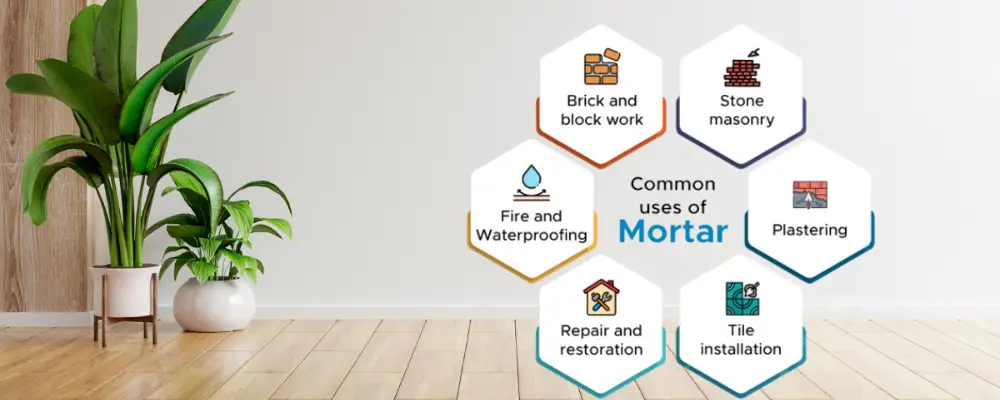
Applications of Mortar in Construction

Mortar can be used in various applications of construction. Some of the key applications are,

Plastering with Mortar

For the creation of smooth and even surfaces, mortar layers are applied to the walls and ceilings, and this process is called plastering. This process helps in improving the visual appearance of the interior and also prepares the surfaces for painting. Plaster mortars normally have a mixture of lime or cement with sand, and water. It provides a finish that is durable as well as aesthetically pleasing.

Mortar for Filling

For filling the gaps and cracks in built forms, mortar is commonly used. For example, in the space between the bricks where any minor cracks in the wall have developed, mortar can help in sealing it tightly and preventing air and moisture penetration. This helps in the maintenance of structural integrity by preventing environmental damage to the buildings. 

Binding Materials with Mortar

Mortar acts like glue and attaches different building blocks to one another. It ensures that all materials are in place and forms a solid and cohesive structure that will not fall apart easily. It has the ability to distribute the weight across the structure and helps in preventing cracks or failures. Lime mortars can be used in the historical restoration process because of their breathability and flexibility. Cement and mortar can be used in modern construction because of its durability and strength.

Waterproofing with Mortar

Some mortars have special formulations that can resist water. This type of mortar is mainly used for waterproofing basements, pools, and other structures that are exposed to water. This helps in the protection of the building structure from water damage that can cause moulding, deterioration, or structural weakening.

Mortar in Structural Repairs

Mortars can be used in making structural repairs in brick walls, for cracks in the foundation, or for filling the gaps in the concrete structure. The mortar can be used for restoration and maintenance of buildings and integrity. There are some specialised repair mortars that can be used for patching the cracks and damaged areas. These are mainly used for correcting the existing concrete surfaces and restoring their strength and functionality. 

Mortar for Fire Resistance

Mortars can also be made for providing fire-resistant properties. These are mainly used in the construction of chimneys, fireplaces, and other structures that experience very high temperatures and are  mainly designed for withstanding high heat without loss in the structural integrity of the building. Mortar also helps in preventing fire from spreading to other parts of the building.

Adhesive Application

Mortars can be used as adhesives for tiles, stone veneers, and other decorative materials. These mortars can be called thin-set mortars that have a special ability for providing excellent bonding strength and flexibility. This makes them suitable for the adherence of tiles to floors,walls, ceilings and other similar building surfaces.

Mortar for Decorative Elements

Mortar can be used for the preparation or creation of decorative elements such as cornices, mouldings and small projections on exterior or interior surfaces. It is easy to apply and flexible, allowing quick creation of intricate patterns and forms. It is also resistant to adverse weather conditions and durable, making it a popular material for architectural decoration.

Conclusion

Mortar is an important material in construction that has various uses, starting from binding and plastering to appearance improvement. By understanding its applications, the correct and most appropriate type can be selected for ensuring stability and durability of built forms.

FAQs

1. How are the Mortar Mixes Gauged?

Mortar mixes are gauged based on the ingredient ratio. Some ingredients are cement, sand, water, and sometimes lime. The commonly used ratios are 1:3 cement to sand for general construction purposes. For other applications like plastering, the ratio will be 1:4 for cement to sand.

2. How long can the mortar be kept before using?

After the mortar is mixed, it can be kept for about 90 minutes to 2 hours. After that, it will start to harden. It is important to use it within this time as the hydration process will start immediately. After two hours, the mortar loses its ability to bond and becomes ineffective. If the work is done in hot weather, then drying may take place even faster. The best practice would be mixing it in small batches as needed.

3. What is the difference between cement and mortar?

Cement is a component that acts as a glue that will bind water and sand to create mortar. A mortar is a product that is produced from mixing the cement with water and sand. 

4. Is mortar thicker than cement?

Yes, mortar is normally thicker compared to cement when it is mixed. Mortar has a high ratio of sand and cement that can provide it with a paste-like consistency. At the same time, cement is normally mixed with less sand and more water, as required for the production of concrete or for other applications.

Building a New Home vs Buying an Existing Home

0
building new home vs buying existing home

Building a new home vs buying an existing one is a question that always sparks debate in today’s real estate market. With surging construction costs, the thought of building a house generally takes a back seat. However, the desire to customise and build one’s own house never fades. From a financial standpoint, buying a home has various advantages. On the flip side, buying an existing home is often quicker, cheaper, and less complicated.

As the construction industry continues to advance, each option comes with its trade-offs. It is a deeply personal decision, considering the challenges and proceeding with what suits best. This blog helps you to understand the significance of each in detail so that you can make a more informed decision.

Is it Cheaper to Buy or Build A House?

The question of whether it’s cheaper to buy a builder’s house is always a confusing one. It’s difficult to jump to a conclusion. There is always a fluctuation in prices and demand in the real estate market. Construction has become increasingly expensive due to material costs and labour shortage. Many often hinge on the question—what do you get for your money?

CASE 1: Building a House:

The average cost to build a 1,000 sq ft house in India is around ₹20-25 lakhs. The costs for architects, plumbers, electricians and all other construction services can be ₹2,500 per sq ft. The land cost can range anywhere between ₹1,500-30,000 per sq ft, depending on the location. The below table will give you the approximate calculation for building a new house as follows:

S.NoFeaturesEconomical cost range (Rs.1810 sq ft)Medium cost range (Rs. 2250sq ft)Premium cost range (Rs.3000 sq ft)
1Architectural servicesRs. 20,000Rs. 50,000Rs. 1,00,000
2Building structural design servicesRs. 5000Rs. 10,000Rs. 25,000
3Material costRs. 8,55,000Rs. 10,44,000Rs. 13,65,000
4Labour costRs. 5,70,00Rs. 6,96,000Rs. 9,10,000
5Contractor profitRs. 1,80,000Rs. 2,25,000Rs. 3,00,000
6Miscellaneous costRs. 1,80,000Rs. 2,25,000Rs. 3,00,000
Total costRs. 18,10,000Rs. 22,50,000Rs. 30,00,000

CASE 2: Buying a House:

In big cities like Mumbai, Delhi, and Bengaluru, the typical cost of purchasing a house is between ₹7,000 and ₹10,000 per square foot. However, there may also be additional monthly or yearly maintenance costs, especially for multi-unit residences. 

Comparison of Prices: Buying vs. Building

On average, the cost per square foot to buy a house in a major city is often higher than the cost to build one. For example, in Mumbai, purchasing a house can cost around ₹10,000 per sq ft, while building one may cost approximately ₹8000 per sq ft including construction and purchasing land.

The cost of building can vary significantly based on various factors.Market conditions and location play a crucial role. Though both new and existing homes can be appreciated, all aspects create an impact. To meet market demands, custom-built homes may have a higher resale value. This can offer wider design and layout attributes.

Pros and Cons of Building A New Home 

Pros of building a new home 

  • There is freedom to customise for exact specifications. Hence, individual expectations are satisfied from layout to finishing.
  • New homes often come with modern amenities and energy-efficient appliances. This is an added advantage where better insulation and energy-saving systems are integrated. 
  • In a new home, everything is brand new. There is no worry about repairs for a while. 
  • Many new homes come with warranty features. It covers certain repairs and replacements that are valid for a particular time. 
  • Safety codes are maintained in new homes, which provides peace of mind. 
  • New homes that use modern materials create a healthy living environment. Therefore, it is less likely to contain harmful substances like asbestos or lead.
  • For better convenience and security, integration of smart home technology is feasible. 
  • New homes often have higher resale value. This is an added benefit for the future.
  • New Home construction often contains special financing options. Also, insurance premiums may be lower with updated safety features.

Cons of building a new home 

  • It is time-consuming, resulting in several months to years for the construction process to finish. It can be stressful, and delays are anticipated due to various factors.
  • Financial challenges and the need for temporary housing are often disadvantages in building a new home.
  • Market fluctuations can impact your budget because they cause changes in material and labour costs.

Pros and Cons of Buying An Existing Home

Pros of buying an existing home 

  • Existing homes provide immediate availability for occupancy. This reduces the waiting time compared to new constructions. 
  • These homes are often located in established neighbourhoods. It fosters a strong sense of community and makes it ideal for settling in.
  • More room for negotiation of the price is possible in the case of existing homes. There is also a deduction of interest in property tax and mortgage. 
  • Established infrastructure is often already in place for existing homes. It has schools and public services nearby with proper road construction. 
  • It offers location flexibility in the city. 

Cons of buying an existing home 

  • Older homes are generally outdated and cause a potential for more hidden issues.
  • It often results in higher maintenance costs over time due to the ageing system. 
  • The floor plan and design features of old homes may not meet modern preferences. 
  • These homes are less energy efficient, leading to higher utility bills. 
  • They have limitations with customisation and renovation. This is mainly because of the existing house’s structural constraints. 
  • Unlike new homes, existing homes do not come with builder warranties. This results in an increased risk of unexpected repair costs.
  • The property tax is also higher in established areas compared to developing locations. 
  • Old homes cannot be altered to function for modern designs as the layout is not flexible. 
  • They have a high risk for damage as it has an increased potential for pest issues.

Time Considerations For Building A New Home and Buying An Existing Home 

Time considerations for building a new home 

  • The planning and design take place for several months. It involves a set of processes, from layout planning to construction and architectural designs. 
  • It also takes time to obtain all the necessary permits. 
  • Cleaning and preparing the site for construction can take a few weeks.
  • Weather conditions and availability of labour and materials can cause delays at various stages.
  • The requirement for customisation and any changes to the original plan can add time to the construction process.

Time considerations for buying an existing home

  • Finding the right home can take several weeks to months.
  • Mortgage pre-approval, making an offer, and negotiating terms can take a few days to weeks. 
  • Scheduling and completing home inspections with necessary renovations are needed before closing the process.
  • Existing homes allow quicker occupancy when compared to new buildings, excepting the renovation process. 
  • Existing homes can have hidden issues, and market conditions can affect the purchase and extend the time.

Financial Tips to Pay for a Newly Built Home

  • Get pre-approval for a mortgage to understand the loan and interest rate. 
  • Assess your financial readiness by analysing your cash flow, savings, etc. 
  • Investigate the builder’s reputation. Research quality and reliability with customer reviews. Negotiate the construction price with the builder. 
  • Understand the features and upgrades included with the property. Avoid unexpected costs in the future by knowing all the specifications beforehand. 
  • Ensure all legal documents are clear and explore various financial options available with the builder before proceeding. Also, plan for property taxes well in advance.

Financial Tips to Pay for Buying an Existing Home 

  • Firstly, check your credit score. Improve your score if required to get a better mortgage rate.
  • Understand different loan types and compare the fees and rates in the market.
  • The closing fees can range between 2% and 5% of the home purchase price.

Additional Costs And Fees For Both

When dealing with mortgages, it’s important to understand the various additional costs and fees associated with both interest rates and closing costs. Here’s a detailed breakdown:

Interest Rates

Interest rates are the borrowed money expressed as a percentage of the loan amount. It is influenced by several factors: 

  • The loan type can be either a fixed-rate or an adjustable-rate mortgage. 

Fixed interest rates are the same throughout the long term. It provides stability in monthly payments, whereas variable interest rates change periodically based on market conditions. There is a fluctuation in the payment. 

  • High credit scores typically qualify for a low interest rate. 
  • The loan term has a significant impact. The shorter-term loan often has a lower interest rate.
  • Several economic factors and market conditions can affect interest rates.

Closing Costs

Closing costs are fees paid after the closing of a real estate transaction. Here are some key points: 

  • For the processing of loan applications, the basic charge is between 0.5% and 1% of the loan amount. This is considered a loan origination fee.
  • The appraisal fee for a property typically varies from ₹10,000 to ₹20,000 (depending on the flat or villa).
  • The legal charges for handling the deal and its closing depend on the company or individual involved.
  • Inspection fees range from ₹3,000 to ₹20,000.
  • The government usually charges 5% to 7% of the property’s market value for stamp duty and 1%  of the property’s market value for registration.

Conclusion

Building a new home or buying an existing one is a complex choice to make. The market trend suggests that buying an existing home is a go-to choice. However, building a new one always gives opportunities to align with the requirements and standards of individuals. Both paths generally meet the long-term goals and values. Ultimately, the choice depends on a variety of factors as explained.