Home Blog Page 32

Marble Flooring Trends – Colours, Technology,& Design Updates

0
marble flooring trends

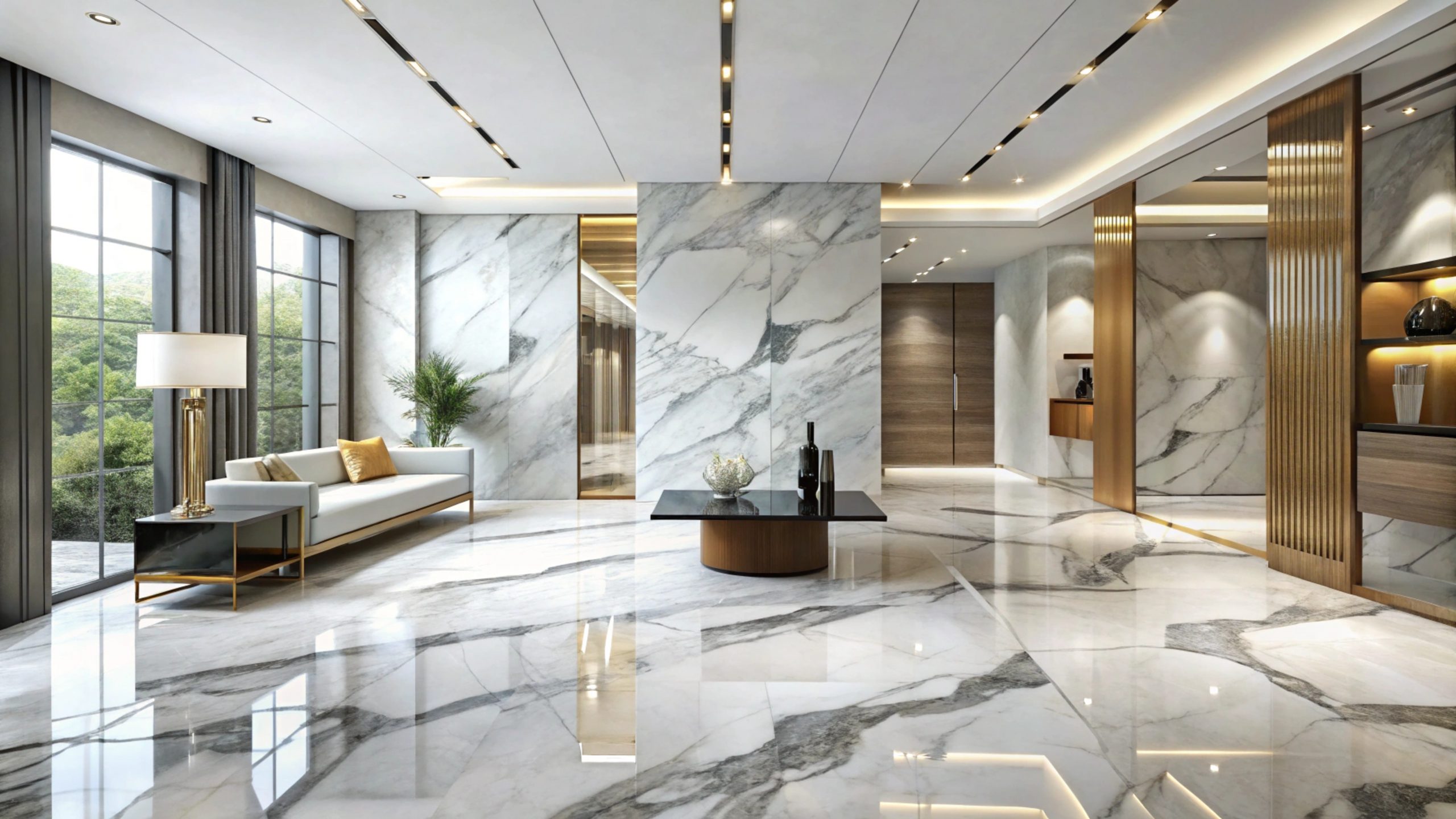
Marbles are one of the greatest marvels in the history of architecture. This metamorphic rock signifies luxury and elegance. For centuries, this symbol of luxury and elegance has dominated the interior design landscape. Formed over millions of years underneath the surface of the Earth, it emerged as a versatile and highly valuable option for flooring. The usage of marble could be traced back to ancient Greece. People of the ancient Greek kingdom considered it a symbol of social status. The great palaces and great Renaissance cathedrals of Rome and Greece signify the quintessence of marvel. Even in this technological era, the demand for earthen material- marble, continues to grow. However, marble has largely been influenced by innovative techniques and new technologies in various industries in terms of quality. This article discusses the trends in marble flooring, technological advancements, maintenance and durability of marble and its other significance. 

Colour Trends in Marble Flooring

While marble itself is an inexplicable beauty, the emergence of recent colour trends has seized the hearts and minds of people. 

White Marble: White marble is the perennial choice among people due to its pristine beauty and versatility. These coloured marbles create a sense of space and light. The transformation that could be brought with the use of white marble makes it an undeniable choice for modern kitchens, bathrooms, and living areas. 

Green Marble: If you have a love for nature, then green marble is yours. Its soothing appearance is increasingly popular in interior design. The organic elegance and refreshing touch to various spaces are preferred by large masses to connect with nature in their homes. Black Marble: While many hesitate to choose black colour, the dramatic and sophisticated presence of black marble in interior design makes it indispensable. The black marble is favoured in high-end designs where luxury and elegance are desired. 

Grey Marble: If you are interested in having a neutral background that complements various colour palettes and design elements, grey marble is the quintessential choice. Its subtle elegance and versatile design allow it to blend seamlessly with contemporary and traditional styles. 

Beige, Brown, and Gold Marble: In recent times, the rising popularity of beige, brown, and gold marble has superseded the preferences for regular colours. These inviting tones in contemporary spaces bring a sense of comfort and sophistication to interiors. 

Apart from these, the combination of colours and veining patterns has changed the market trend. Irrespective of the colour choices, the presence of veining adds depth and personality to the marble. This allows for creative and unique applications in interior design.

Technology in Marble Flooring

Marble flooring can be done using various technologies. Some of the most widely used technologies are Tech Forte, Continua +, Streninn, NITCO Cut-To-Size, Triple Reinforcement Technology, and Digital Gazing. 

  • Tech Forte includes the process of soaking a densifier into the marble slab to fill the pores. This process makes the marble more durable, abrasion-resistant, and dust-absorption resistant. 
  • Continua + is widely used to manufacture MarbleX, a synthetic product. 
  • Streninn uses robotic machinery to apply Italian expo to the front and back of the slab. This enhances strength and variable-thickness slabs and tiles. 
  • NITCO Cut-To-Size uses UV resin coating and UV light drying. This helps to achieve a finish, polish, and flatness accuracy. This includes damage-proof packaging as well.

3D-Printed Marble Floors

3D-printed marble is a type of floor that creates an illusion of depth and dimension. The method of creating a 3D-printed marble floor is done by imprinting a high-resolution image of the desired design on a durable material. This groundbreaking innovation combines the elegance and durability of marble with the versatility and customisation of 3D printing. This offers unique personalised flooring solutions.

Smart Heated Marble Floors

If you want to add comfort and efficiency, heated marble floors are an appropriate flooring method. This marble is highly preferred by those who want to reduce their energy costs while still enjoying a comfortable home. While we have many methods to heat the marble floor, underfloor electric radiant heating is the most popular one. This type of heating saves your money on energy bills while providing clean and quiet heat. The system works by heating the floor with electric heating elements that are woven in a serpentine pattern.

Digital Printing on Marble Surfaces

It is a multi-step process that involves design development, colour matching, cleaning, priming, ink formulation, high-resolution printing, sealing and polishing. The process includes the creation of 3D models of the marble floor. The marble surface is thoroughly cleaned, and a primer is applied to improve adhesion. Following this, a printed image is applied to the surface with a sealant. This protects the design and increases durability. In some cases, the marble is polished to revive the lost lustre in the process.

Popular Marble Patterns 

When it comes to patterns in marble, herringbone, chevron, and diamond are among the most popular choices for marble flooring. Herringbone patterned marbles are arranged in a V-shape, resembling the scales of herring fish. Chevron uses the same V-shaped tiles. However, in terms of arrangements, they are arranged in a parallel fashion creating a more formal and symmetrical look. Diamond patterns have marble tiles arranged in a diamond shape.

Marble with Other Materials

It is an undeniable fact that marbles provide people with a variety of beautiful experiences with their patterns and are also available in low-cost flooring options. However, combining different materials can give it a better visual experience. 

Marble with Metals: All metal pairs well with marble, brass, and gold stand tall. The combination of these metals with marble highlights the natural veining pattern. Even dark metals complement light floor colour variations. 

Marble with Wood: Wood creates classic luxury interiors in combination with marble. Wood such as mahogany and ebony fits well with dark marble, and white marble suits oak and pine.

Maintenance and Durability Innovations

Despite marble being used for centuries in flooring and other applications, its beauty and durability can be diminished without proper maintenance. However, technological advancements have led to innovative solutions for marble sustainability.

Advanced Sealants and Protective Coatings

This is a crucial tool for preserving the beauty and durability of marble compared to granite surfaces. They create an invisible barrier and protect marble from stains, water damage, and scratches. One such coating is nanotechnology coating. This coating forms a thick invisible barrier on the marble surface, preventing it from stains, water damage, and scratches. In addition, we have impregnating sealants that are ideal for both indoor and outdoor marble surfaces and tropical sealants used on marbles in harsh weather conditions.

Easy-Care Marble Alternatives

Some alternatives other than marble for easy care are porcelain and ceramic tiles. These tiles can be manufactured to mimic colour variations and veining of marbles. Engineered stones are also considered to be an alternative to the high-maintenance marbles. Quartz is manufactured to resemble marble. It is made from natural stone fragments combined with a resin binder.

Stain -Resistant Treatments

Marble, being a metamorphic rock, is highly sensitive to acids. For this reason, it is important to treat the marble surface to protect it. It is always recommended to treat the materials with water-repellent and stain-resistant products. These are neutral treatments, and will not change the colour of the stone. Along with this, there is another category of treatment known as the wet effect. This water-repellent liquid substance is spread across the surface with a brush. For outdoor use, surface-penetrating water repellents are highly recommended.

Conclusion

With its timeless beauty and elegance, marble has become a popular choice among people for flooring. The durability, versatility and luxurious appearance make it a preferable choice for both commercial and residential spaces. The technological advancements offer customisation and design possibilities to create unique and personalised spaces. Whether you are drawn to this classic marvel, it remains a timeless and luxurious choice.

A Guide to Construction Permits and Building Approvals in India 

0
Construction Permits

Taking on building projects in India requires a range of building approvals. Therefore, it is important for you to stay informed with these processes to adhere to the law and ensure successful completion. Getting permission for construction of a house and staying on top of the local regulations is a crucial step towards getting your construction work approved.

A project without mandatory house construction permission may be halted at any time by the authorities, resulting in significant losses not only for the property owner, but also for the entire department.

In order to avoid any such complications, read on and learn about how to get a building permit in order to begin engineering or construction projects in India.

About Building Approval Authorities

It is crucial to understand the building approval authorities in India in order to assist in navigating the complexities associated with house building approval. In addition to overseeing and controlling construction activities, these organisations also ensure conformity with local laws.

Localised municipal bodies may be responsible for construction projects, as well as development authorities. Moreover, you must stay on top of the construction guidelines and procedures governing each authority’s approval process.

The building approval process for single-family dwellings, small businesses, and smaller developments is usually handled by local municipalities.

Best Practices to Apply for Building Approval

Once you have gathered all the required documents and finished your building plans, the process of obtaining building approval can begin. The purpose of this stage is to ensure that you have adhered to the local regulations and guidelines while building your house. The following is a list of important milestones as well as the application process.

  1. Obtaining Application Forms

Get relevant forms from local authorities that are responsible for issuing building approvals. In these cases, they are original applications that show what information must be given out as part of the application process.

  1. Completing Forms and Submitting Documents

You need to ensure that the building approval application is completed accurately and completely. This application must include end to end building Construction drawing along with the document regarding land ownership and land demand. As a result, these documents work perfectly in determining whether the project adheres with local codes.

  1. Fee Payments

Besides submitting the completed forms and required documents, you are required to pay fees linked with the building construction approval. However, total fees that need to be paid depends on the size and type of the project, as well as the local municipal regulations.

  1. Scrutiny and Inspection of the Site

Following the filing of your application for building approval, an inspection and examination of the site will be required. Providing this information helps to ensure that the proposed building construction complies with local regulations and safety precautions, allowing them to approve the project.

  • Information verification: An official can examine the site extensively in order to ensure that the information provided on the form is accurate. A zoning inspector examines construction plans, land use, and compliance with zoning laws.
  • Inconsistencies or non-compliance issues: It may be discovered that there are some inconsistencies or non-compliance with local regulations. Different buildings may have different measurements or setback requirements that may be violated. In such cases, the building permit may be rejected or revisions may be asked for.
  • Possibility of revisions: Building plans may need to be amended or documentation may need to be added following the inspection results. Constructions that meet regulatory standards are considered safe to occupy at this point.
  • Cooperation with authorities: Inspection officers should be given complete cooperation. If any concerns or revision requests are addressed promptly, delays can be minimised and the approval process can be accelerated.
  1. Estimated Time Frame

It is important for you to be aware that the time it takes for the building approval process application to be processed depends on factors like location and workload on the concerned authorities. However, some applications may get reverted quickly whereas others may take several weeks or months. Therefore, it is important to be aware of these things while you plan for building approval.

Building Approval Mistakes You Should Avoid

There are many common errors that applicants make that lead to obstacles and delays during the approval process. This can be avoided by following the below-mentioned steps:

  • Applicants with incomplete applications: Make sure your application includes all the required documents. Verify if any paperwork is missing in order to prevent a delay in resubmitting the application.
  • Inaccurate information: It is your responsibility to make sure that your application is true and accurate. It is not uncommon for discrepancies to raise eyebrows and draw scrutiny.
  • Regulatory non-compliance: You need to ensure that all local zoning, setback, and safety regulations are followed when designing your building plans. Ensure compliance with the law with the assistance of a professional.
  • Ignoring NOCs and environmental clearances: Be sure to take note of utility NOCs (No objection certificates) and environmental clearances, if applicable. Overlooking these could delay projects or even result in legal consequences.
  • Communication problems: It is essential that building approval authorities communicate openly with each other. Be responsive to clarifications and revision requests as soon as possible.

Taking steps to avoid these mistakes can significantly improve your chances of receiving building approvals quickly and easily.

Conclusion

With the right approach and planning, you can navigate the Indian building approval process easily. Using this information, you can learn who processes such applications, what papers you need to prepare, and how to apply. Make sure all of these basic things are ready so that your project will not be delayed.

With Brick & Bolt, you will be able to build the house of your dreams without the hassles of obtaining approvals and permits, as the company provides end-to-end construction services. The vast experience of our team and the efficiency of our procedures guarantee a smooth home-building journey with minimal stress. Sit back and relax as we construct a magnificent residence for you. Contact Brick & Bolt today!

Understanding Gram Panchayat Khata: Process for Transfer and Key Information

0
Gram Panchayat Khata

If you have recently completed the registration of your property in the Sub-Registrar’s office, well done! You have taken an essential step towards establishing your rightful claim over the property. However, an important step to do before you can breathe easily is to transfer the khata to the property. Transferring the khata is important in order to update the local municipal or Gram Panchayat records with the ownership of the property.

If you are trying to get the Gram Panchayat khata certificate online, you may be wondering how to procure the e-Khata certificate. Do not worry! We will help you perform all the required steps.

What is a Gram Panchayat Khata?

A Gram Panchayat Khata is a legal document that confirms property ownership of land located under the Gram Panchayat’s jurisdiction, which may include many villages, a town, and an agricultural area. Transferring ownership charges are similar to converting a B Khata into an A Khata. 

Further, an E-khata must be obtained when one acquires land under the jurisdiction of the Gram Panchayat, for it clearly indicates that the land has already been converted into a residential area from agricultural use.

It is also imperative that the transfer of the Gram Panchayat khata be prioritised. Two examples of such documents are a khata extract from the Panchayat and an official order declaring that the land use has shifted from agricultural to non-agricultural. Usually, the total fees for khata transfer and khata land conversion do not exceed 6% of the registration fees.

What is Khata Transfer?

A khata is one of the most important documents legally, as it denotes ownership of a property and provides details regarding the property. It often targets the ownership of the khata record and updating the status of ownership in the property registries of the State after any transfer of property transaction, gift, or death.

In the case of urban assets, changing the ownership of a khata BBMP(Bruhat Bengaluru Mahanagara Palike) also involves a lot of stress and paperwork. Nevertheless, it is unavoidable that the property’s ownership must be properly recorded, the respective taxes paid, and a loan or permission to construct a building sought.

Types of Khata

Depending on the jurisdiction and validity of the property, there are various kinds of khata:

Khata A

These are given to properties with all the requisite approvals in place and adhere to the relevant bylaws and taxation policies. Under Khata A, one can conveniently apply for housing finance, seek sanction for building plans, and procure occupancy certificates. It comes with a Khata Extract, which includes details about the property and its owner, and a Khata Certificate, which certifies that the property tax records are in the owner’s name.

Khata B

This is released regarding lands that do not possess all the requisite permissions and may have outstanding taxes or clearances. There is no certificate for Khata B, only an extract, and no Property Identification Number (PID) is given.

e-Khata

This is the online version of Khata A for easy access and reconfirmation purposes. It works in the same manner as a physical Khata A, thus making every property transaction easier. Your property must already have a valid Khata A and a Property Identification Number (PID) in order to apply for E-Khata. Properties registered under Khata B can not apply for E-Khata.

BDA Khata

BDA (Bangalore Development Authority) issues this khata for properties located within the city of Bangalore and under its jurisdiction.

CMC/TMC Khata

The statement has been issued by City or Town Municipal Corporations (CMC or TMC) for properties found in the urban-rural periphery of Bangalore, redrawn without Bangalore and handled by municipal bodies respective to the properties.

Gram Panchayat Khata

As has already been explained, this is issued by the Gram Panchayat concerning properties within its jurisdiction. In the case of buying land owned by the Gram Panchayat, E-khata acts as a verification for the transmutation of the land.

Why is Khata Transfer Important?

In the State of Karnataka, a khata transfer must be carried out in respect of property transactions. No property taxes can be paid or ownership registered legally in the absence of a valid khata. Regarding this, the khata document includes a number of property facts, including the name of the new owner, the property ID number, the property’s area and use, its worth, and a tax appraisal.

A Khata Certificate is a legal document available in the municipality that supports the ownership claim over the property and also facilitates the correct registration of property tax under the new property owner’s name.

When is Khata Transfer Required?

These situations necessitate a khata transfer:

  • Sale of Property

In order to modify the ownership details after a real estate transaction is finished, the buyer must execute a khata transfer in addition to the selling deed.

  • Inheritance (with a will)

A khata transfer certificate is necessary if a will transfers property to a legitimate heir.

  • Inheritance (without a will)

A khata transfer is necessary if the property is transferred; otherwise, it is typically sold when there is no will.

  • Gift

A khata transfer is necessary to formally record the new owner’s name if a property is gifted.

Who Processes Khata Transfers?

The location of the property determines which authority is in charge of handling the khata transfer:

  • Urban Areas

The City or Town Municipal Corporations (CMC/TMC) or BBMP are in charge of the registration, property tax, and khata transfer procedures for properties located in metropolitan regions.

  • Rural Areas

In rural regions, khata-related issues are handled by the Gram Panchayat.

  • BDA Properties

The Karnataka Housing Board (KHB) and Bangalore Development Authority (BDA) are in charge of khata registration and transfer for properties under their jurisdiction.

Process for Khata Transfer

Depending on the regulatory organization, the khata transfer procedure differs slightly. This is a summary of the BBMP procedure:

Documents Required 

  • Registered property documents (sale deed, gift deed, or will)
  • Mother deed (earliest registered deed)
  • Certified Encumbrance Certificate (EC)
  • Latest property tax receipt
  • Previous khata certificate or occupancy certificate
  • Aadhaar card and PAN card of the new owner

Steps for Khata Transfer (BBMP)

  1. Register on the Sakala Portal, the BBMP’s online gateway for procedures about khata.
  2. Opt for the Online Application Form and provide the new owner’s particulars and the data contained in the sale deed and property tax receipt regarding the property in question. 
  3. Finish filling out the form and select the transaction type. 
  4. Attach the necessary files. 
  5. Provide your Aadhaar number in order to get a one-time password (OTP) for the purpose of application verification.
  6. Please download the acknowledgement slip with the Sakala application number after verification. 
  7. If your documents are verified, you will get a message to continue the payment process. 
  8. Using the Sakala application number, pay the khata transfer fees (2% of the stamp duty during registration) at any Bangalore One centre. 
  9. The khata transfer will be sanctioned within 2 to 3 days after the payment has been made.
  10. You can download and extract the khata certificate via the Sakala portal or pick it up in person at the BBMP office.

Conclusion

It is vital to transfer the Gram Panchayat or BBMP khata to legally recognize your property ownership. The process consists of multi-tiered procedures and documents; however, adhering to the right steps assists in easing the transfer of ownership, thus preventing any future problems. 

Besides that, if you are seeking a reliable construction company to turn your dream space to reality, Brick & Bolt is the way to go. We have the best real estate developers and designers in place who can construct the best structure that defines your lifestyle and exceeds your expectations. Contact us today to construct the space adhering to all the compliances.

Best Vitrified Tiles for Flooring: Designs, Types and Selection

0
Vitrified Tiles

Interior design is a major aspect of building your dream space and tiles are always one of the leading factors affecting it. There was a time when ceramic tiles were commonly used. However, the market has now changed with vitrified tiles that offer better benefits than ceramic tiles, thus making them one of the most popular choices.

Tiles made from vitrified materials consist of 60% silica and 40% clay, along with small amounts of quartz and feldspar. A glass-like material is formed by melting and mixing these materials and hydraulically pressing them to form vitrification. In this process, high temperatures are used so that the tiles can retain their shine for a very long time. Through this technique, the tiles are less porous, have less scratch and stain resistance, are resistant to water and frost, are durable and strong, and require low maintenance. Read on to learn more about its types, designs and how to select the best kind. 

Types of Vitrified Tiles

A vitrified tile has a base material that consists of different compositions, yet undergoes the same vitrification process. Depending on the body and finish of vitrified tiles, they can be categorised as follows:

  • Vitrified full-body tiles: These tiles are made of feldspar, quartz, silica, clay, and colouring pigment. The temperature at which vitrified tiles are baked is around 1200 degrees Celsius. In addition to having a uniform structure, these tiles can be cut and shaped like stone blocks after they are manufactured.
  • Double-charged vitrified tiles: Double-charged vitrified tiles possess a pigment layer directly applied to their surface. Double charge tiles are so-called because of the dual tone of the colours on them. It is possible to conceal minor scratches on the surface of tiles due to the thick layer of colouring pigment.
  • Glazed vitrified tiles: These tiles are covered with a hardened glaze. Digitally printed graphics can be applied to the glazed surface, creating unique patterns and perfect replications of natural materials like stones.
  • Polished vitrified tiles: Vitrified tiles generally have a nanopore surface which are able to absorb liquids, resulting in stains. Upon polishing, these tiles become stain-resistant because their nanopores have been filled. In addition to being low maintenance, these tiles have a reflective and glossy finish.
  • Industrial tiles: Industrial tiles are available in different grades of strength, texture, and characteristics based on their application. These have very high load-bearing capacity and abrasion-resistance. A few examples of industrial parking tiles include anti-radiation tiles, anti-static tiles, and chemicals and alkali-resistant tiles.

Promising Vitrified Tiles to Boost Design

Orient Bell Limited 

Orient Bell was founded in the 1970s and is one of the leading brands today. New Delhi has the company’s headquarters, while manufacturing takes place in Sikandrabad, Hoskote, and Dora, all in Uttar Pradesh. The company offers VTs with double charge, glazing, and full bodies.

Kajaria Ceramics Limited

Kajaria Ceramics has been in the market for 34 years, making ceramics that are a major part of the Indian economy. It has eight manufacturing facilities throughout India, including one in Sikandrabad, four in Gailpur, and three in Gujarat. It also has two plants in Vijayawada, one in Srikalahasti and three in Vijayawada. Vitrified tiles are available in polished and glazed finishes.

Nitco Limited 

The Nitco brand has been known widely since its development in 1953, and its head office is located in Mumbai, India, which is the country’s capital city. Glazed VTs, double Charged VTs, and soluble salt VTs are available from them.

Simpolo Vitrified Limited

With roots in the market dating back to 1977, Simpolo has been consistently growing with renowned quality. There is a manufacturing plant and the company’s headquarters in Morbi, Gujarat. VT is provided on a full body basis as well as on a double charge basis. There is a wide range of prices for 2 x 2 feet, ranging from ₹23- 440 per square foot.

Rollence Granito India 

A well-established manufacturer in India, Rollence Granito is located close to Morbi in Gujarat. The company provides both glazed and polished glazed VTs. The price per square foot ranges from ₹43- 350.

Somany Ceramic Limited

Somany Ceramics has been in operation since 1969 and is an internationally recognised organisation. There are production facilities of the company located in Kadi, Gujarat, Kassar, and Haryana, as well as joint venture plants in other states. It is possible to obtain double-charged VT, soluble salts VT, and glazed VT from them. There is a price range of ₹22-500 per square foot for 2 x 2 feet tiles.

Asian Granito India Limited

Asian Granito was founded in 2000 and has always strived to establish itself as an international leader. The company has a single plant in Gujarat. Along with double charged VT, they also offer polished glazed VT.

How to Choose the Best Vitrified Tiles?

The following factors can help you determine which vitrified tile is best suited for your area of application:

  • Type of space: When you are choosing vitrified tiles, you need to decide on the space where you want to install. They can be seamlessly installed in various places like kitchens, bedrooms, offices, parking lots, gardens, staircases, etc. The tile type will vary based on how the floor is intended to be used. You can find vitrified tile designs for each area carrying premium features and characteristics to suit specific requirements. 
  • Type of surface: Vitrified tiles go well across a range of spaces including retail shops, workshops, industrial floors, parking lots, swimming pools and outdoor settings. To ensure safety measures for each area and surface, it is important to choose tile designs that come with sufficient surface grip. For example, it is crucial to have an excellent grip on foot traffic on garden tiles so that you do not have to face any challenges even during rainy days. In addition to groove lines on the tiles for staircase steps, bullnoses protect the feet as well.
  • Footfall type: Although vitrified tiles can take a medium to high footfall, the type of traffic your tiles will receive should be considered. Regular floor tiles can generally handle a lot of foot traffic. However, you should use properly reinforced tiles when tiling a vehicle parking area. 
  • Design requirements: Various types of designs and colours are available, so choose the one that meets your needs and also blends harmoniously with the rest of your interiors and with other rooms in the house.  
  • Tiles with special characteristics: Cool roof tiles and industrial floor tiles come with unique characteristics. Let’s understand with an example: industrial floor tiles can offer resistance to radiation, static electricity, and chemicals in factories, power plants, and data centres. Even when exposed to sunlight, cool roof tiles can continue to maintain a cooler indoor temperature. VTs with certain specific benefits like these may be ideal for different scenarios and requirements.

Conclusion 

Vitrified tiles are the ideal choice to give an extraordinary look to your flooring and are available in various types, designs and finishes. Decide your budget, set your design criteria, and choose the one that best suits your needs. 

At Brick & Bolt, experts select tiles and colour combinations to assist you in constructing spaces that leave stunning first impressions. Being the leading construction company in India, the team can construct any space with your tile requirements in mind so that you never have to compromise on the look and feel of your home. 

No more waiting to bring your dream space to reality. Contact us today and rest assured that you get top notch space designs and construction. 

Top 5 Home Remedies to Effectively Get Rid of Termites Naturally

0
Termites Treatment

Termites are one of the biggest issues for homeowners as they can damage the belongings at their house, especially wooden items. One can generally observe their clicking sound, which is usually caused by their heads banging against walls and shaking of their bodies when they are disturbed. These sounds can make you frustrated and compel you to get started with termite treatment at home immediately. 

Fortunately, there are a range of treatment options available, but you have to choose which one fits perfectly for your home. When you are puzzled about the right termite treatment to choose to completely get rid of termites, it can be challenging for you to move on the right path. Therefore, to help you with the selection, we have come up with a blog that covers the list of treatments for termites at home. Read on to learn more.

Types of Termites

Subterranean Termites

Termites found in underground habitats will infest the structural wood of your home, along with the soil and compost surrounding your home. The tubes or roads they construct inside your house are made of wood and soil. The saw-toothed jaws of these termites usually damage dry wood more than they do for unseasoned or improperly seasoned wood. They live in large colonies, can eat items of other materials such as newspapers and books and are thus considered to be the most destructive types of termites.

Drywood Termites

Drywood termites, unlike subterranean termites, live solely in wood, while subterranean termites require soil in order to survive. A lot of the time, you will only find them in areas where it is warm, such as along the coast, so they do not build mud tubes as a way to get around. Termites in dry wood can be between 1/8 and 1/2 inches long and come in a variety of colours. A dry wood termite’s wings can be yellow-tan to light brown, depending on its shade. It is possible for drywood termites to form colonies of up to 2,500 individuals.  A sufficiently long period of time is required for drywood termites to completely destroy a wooden structure. They are not generally attracted to moisture and live in dry wood.

What are the Signs of Termite Infestation?

Termite infestations usually exhibit some telltale signs. Before an infestation worsens, homeowners should take action if they notice any of these signs:

  • Termite infestations under the ground can be detected by hollow mud tubes spanning the ground’s distance from structures.
  • An infestation of dry wood termites can be identified by faeces near windows and doors.
  • In walls and on the top of foundation walls, there may be deteriorated wood
  • Paper-covered drywall with gypsum underneath that has blistered
  • Stacks of discarded wings
  • The most telling signs are mud tubes, frass, and discarded wings, though blistered drywall or crumbling wood may also be due to other reasons.

Home Remedies for Termite Treatment

If you need termite control at home because of a minor infestation or are looking for ways to prevent future infestations, these home remedies are helpful. These can eradicate the infestation completely and ensure that the home and belongings remain pest-free for many years to come.

  1. Neem Oil for Termites

Utilising neem oil is an ideal remedy to get rid of termites and a variety of other pests which includes ants, cockroaches, bedbugs, and mosquitoes. There is a strong, bitter smell to this natural insecticide. Hence, neem oil plays a prominent role in kicking out termites from wooden structures from within with its natural properties. Simply inject neem oil into wooden structures if you want to treat termites. For permanent removal of the infestation, repeat this process for a few days. There are also no harmful effects on your health when you use neem oil treatment for termites, as it is a natural product. 

  1. Salt for Termites

Is your kitchen infested with termites? What if you used your kitchen ingredients to eliminate termites from your kitchen? Among the many kitchen ingredients you must keep at home, salt is one of the most common ones readily available in your kitchen. Would you be surprised to learn that salt can be used to kill termites and get rid of an infestation of them?

In case you are still unsure whether salt can be an effective method for the treatment of termites, just try this method and you will see the result. On the infestation, you simply need to spray a solution consisting of water and salt. By dehydrating the termites, salt will cause them to die without causing any adverse effects on your health or the health of your family members. You can also use the same method to treat termites in other parts of your house. 

  1. Vinegar for Termites

In most Indian homes, white vinegar can be found in the kitchen. Vinegar can be used to get rid of pests such as termites, ants, lizards, and some other insects in your home naturally and is a good choice if you are short on budget to treat termites.

You can easily treat termite infestations by making a solution where you mix white vinegar, lemon juice, and water together. Add 1 tablespoon of lemon juice to a half cup of water, and mix it with 2 tablespoons of white vinegar. Make sure that this solution is sprayed on and around termite infestations. Termites may not be eradicated permanently by this method. However, when termites infestations are still at their early stages, this solution can work for you. 

  1. Aloe Vera for Termites

Aloe vera is another natural home remedy for termite control. As soon as aloe vera gel is applied to the infested wood, the problem will be resolved by suffocating and killing the insects. Aloe vera gel can also be applied to your furniture to prevent termite infestations on your wooden furniture.

  1. Kerosene Oil

Liquids such as this are excellent termite killers for home use and a popular conventional method to kill termites. The treatment works well on drywood termites. Infested wood can be treated by spraying kerosene oil from a spray bottle. 

If you wish to prevent other wooden structures from being infested by termites, spray the liquid on them. The best way to ensure the wood is treated effectively is to inject kerosene oil.

Conclusion

A house full of termites always brings lots of frustration and causes a lot of damage. These can be avoided by using simple home remedies as explained above.

Brick & Bolt, the leading construction company in India, constructs houses with utmost safety and security and leaves no risk of termite infestations. With the best developers and top-notch expertise to construct houses that meet all your requirements on the go, this tech-enabled company has completed 4500+ projects in India. Contact us today to build your dream space. 

Self Healing Concrete: The Future of Sustainable Construction

0
Self Healing Concrete

Our world is filled with self-healing properties that can be observed in nature. From plants to the human body, every single living life is special for its self-mending properties. Have you ever wondered if this is possible in concrete also? Yes. It’s possible with the help of self-repairing concrete. 

In today’s Brick & Bolt blog, you are going to explore more about self-healing concrete.

What is Self-Healing Concrete?

Concrete that can get repaired or mended by itself after any damage is called self-healing concrete. Often, there is a correlation between durability and cracking. There can be around 19 Types of Cracks in the Building, such as settlement fractures, expansion cracks, plastic shrinkage cracks, shear and flexural cracks, or any combination of these. Splits caused by reinforcing corrosion, weathering-related cracks, heat strains, concrete corrosion, and poor construction all contribute to the problem. In self-healing concrete, the ability to withstand physical and chemical damages is higher than that of other types of concrete. Thus, it can be a solution to these problems.

How Does Self-Healing Concrete Work?

There are numerous methods involved in the self-healing process. Some of them are:

Autogenous Self-Healing Concrete

In this procedure, unhydrated cement particles act as a healing agent. The hydration of the clinker minerals stimulates the healing process.

The intrinsic qualities of concrete and calcium dissolution aid in the repair of hairline fissures

Autonomous Self-Healing Concrete

While the autogenous self-healing process is intrinsic, it is only effective for minor cracks. This is where autonomous self-healing approaches maintain their ground. Additional external self-healing provisions are provided to improve performance and facilitate concrete repair. 

Vascular Self-Healing Method

Vascular self-healing is a multi-faceted healing technology in which concrete is embedded with a hollow tube network with a healing substance inside. When choosing tubes, keep in mind that they are chemically inert. Additionally, these lengthy parallel tubes should make a strong link with concrete.

Inorganic Phosphate Cement (IPC) is preferred in conjunction with clay tubes. When the healing agent comes into contact with a break in the concrete, it seeps due to hydrostatic pressures, capillary or gravity forces, and seals the crack. 

Capsule Based Self-Healing Method

The healing efficacy of this approach is determined by the cementitious matrix and the characteristics of the embedded capsules.

Even a multi-capsule system can possibly be relied on. When these capsules come into contact with one another and split open, healing components are released, and the fracture is healed. Epoxy resins, polyurethane, and methyl methacrylate monomers(MMM) can all be used as healing agents. The microcapsule utilised in this method can be cylindrical or spherical in shape. The shell can be made of silica, ceramics, glass, polystyrene, or urea-formaldehyde. 

Embedding Shape Memory Alloys (SMAs) Method

Shape Memory Alloys are a sort of smart material that can be used in concrete due to its unique ability to retain its original shape even after deformation. Essentially, they serve the purpose of self-centering.

Researchers explored the impact of heating Shape Memory Alloy wires with electrical currents before inserting them into concrete beams. The Shape Memory Alloys were utilised for retrofitting, and they were pre-tensioned before being tested. During the test cycles, loading was applied to the mid-span, and deformation and cracking were investigated. The heated wires proved to be successful in crack mending and closing the cracks. 

Microbial or Bacterial Self-healing Concrete

Calcium Carbonate (CaCO3) precipitation can repair micro-cracks in concrete by microbial/bacterial self-healing. Microbial spores and calcium supplements containing healing agents are first manufactured in batches and then mixed into concrete. Researchers investigated microbiological intrusion in concrete, such as the side walls of a ship lock, and discovered that the fissures mended within 60 days.

Types of Self-Healing Concrete 

There are two different types of self-healing concrete.

  • Biotic
  • Abiotic

Biotic Concrete

In biotic self-healing concrete, bacteria is used as a main ingredient. The bacteria that produce acid are added to this bacterial concrete. In this bio-concrete, bacteria act as catalysts for the crack-healing process. This is preferable when the concrete structure is in contact with water or moisture.

When cracks occur in concrete, water seeps in, and bacteria spores feed on calcium lactate, converting it to insoluble limestones. The insoluble limestone hardens and fills the cracks without external aid.

Different acid-producing bacterias are used in this bio-concrete. Such as:

  • bacillus pseudofirmus
  • bacillus halodurans
  • bacillus cohnii
  • bacillus pasteurising
  • bacillus sphaericus
  • escherichia coli

Abiotic Concrete

Abiotic self-healing concrete, as the name suggests, heals concrete cracks without the involvement of biological agents. Instead, it utilises various chemical compounds to fill and seal cracks that occur due to environmental stresses or mechanical wear. This reactive mechanism is often preferred in conditions where moisture accessibility is limited. It is a valuable alternative to biotic self-healing methods.

Some of the chemicals used in abiotic concrete are cyanoacrylate, epoxy, polyurethane (PU), methyl methacrylate(MMA), dicyclopentadiene(DCPD), Na2Sio3 etc. 

Self Healing Concrete Applications

There are numerous applications of self-healing concrete in construction. Some of them are:

  • Roadways and Pavements: Roadways made up of self-healing concrete could patch up minor damages by themselves when cracks occur.
  • Bridges: The tiny fissures that usually form in bridge structures due to freeze-thaw cycles can repair themselves with the use of bacterial concrete.
  • Residential and Commercial Buildings: Homeowners and builders can stay carefree, knowing that minor damages will mend themselves, extending the structure’s life.
  • Tunnels: Autogenous healing in tunnels directs the concrete’s ability to repair its own cracks without external intervention, mainly through mechanisms such as the crystallisation of calcium carbonate and the hydration of unhydrated cement.
  • Airports and Harbors: Airports and harbours are busy with heavy machinery and traffic. Over time, normal wear and tear can take its toll. Self-healing concrete employs healing agents such as autonomous self-healing, microencapsulation, and vascular healing to fix cracks and increase structural durability.
  • Dams and Reservoirs: By using self-healing concrete in dams and reservoir construction, you can ensure longevity and greatly reduce the risks connected with concrete fractures and crevasses. Self-healing concrete contains an agent, such as dormant bacteria or capsule-based systems, that automatically repairs cracks and extends the life of the construction.

Advantages of Self-Healing Concrete

The following are benefits of self-healing concrete:

  • It can span several decades or centuries. This is the primary benefit of self-healing concrete. This means that you will never need to replace your concrete surface again during its lifetime.
  • Self-healing concrete reduces concrete upkeep. In regular concrete, cracks must be filled and sealed. 
  • Self-healing concrete improves compressive strength.

Challenges and Limitations 

  • One of the major downsides of self-healing concrete at the moment is its high cost. It is more expensive than conventional concrete. Perhaps in the future, the cost will drop down as self-healing concrete in construction becomes more popular. 
  • Many contractors do not yet know how to use this self-healing concrete in construction. Since it is a new product, many individuals have no idea how to utilise it.
  • There is no existing code to standardise self-healing concrete in construction.

Self-healing concrete is a novel solution that takes us closer to sustainable, long-lasting construction. Its capacity to autonomously repair cracks opens up a wide range of applications in infrastructure, including roads, bridges, buildings, and tunnels. If research advances and its use becomes more common, self-healing concrete has the potential to dramatically cut maintenance efforts while also extending the lifespan of concrete structures and ultimately revolutionising current architecture.

Which steel is better 500 or 550?: Differences & Uses

0
Which steel is better 500 or 550?

One of the most important choices when starting a construction task is defining the steel grade used on the project. The selection of steel plays a very important role in the stability, longevity, and cost-efficient nature of your edifice. Out of the many choices, Fe500 and Fe550 TMT bars are among the common options available because of their ability to withstand diverse forces easily. This article by Brick & Bolt will focus on the main characteristics of Fe500 and Fe550 steel grades, the benefits, and limitations of each, and which is best for your construction project. This article will be able to highlight the differences as well as the similarities between these steel grades. Resultantly, there will be clarity on the project and its implications in context to its success.

Steel Grade 500 and 550

With the leapfrog in modern critical infrastructures, the FE500 and 550 TMT bars have become more appropriate for the increasing need for vital infrastructure projects and high-rise construction. TMT bars are used extensively in the construction of engineering structures and are classified into four based on the size and strength of the building variations. Among the four types of TMT, the Fe500 and Fe550 are the popular choices as they offer greater seismic stability and ductility. Here, “Fe” stands for iron, and numbers “500 and 550” imply the minimum yield stress in MPa (megapascal), which is a unit of pressure or tension. “D” means the ductility of the steel bars. The TMT stands for ‘Thermonuclear Mechanical Treatment’ also known as the metallurgical process, manufactured under the Indian Standards. Increasing infrastructural developments such as skyscrapers, stadiums, fly-overs, airports, malls, multiplexes, dams, etc, demand the inclusion of “D” grade TMT bars. Specific properties of Fe500 and Fe550 grade TMT bars, such as resistance to earthquakes, flexibility and bending capacity of the bars, high elongation property, resistance to corrosion and rust, fire resistance, fatigue resistance, and weldability make these types preferable to other types.

Key Difference Between Fe500 and Fe550

Fe500Fe550
StrengthYield strength of 500 MPaYield strength of 550 MPa
DuctilityBalanced ductility suitable for various constructionsIncreased ductility, better deformation resistance
Elongation (%)18%20%
Tensile Strength8%6%
WeldabilityHigher carbon content (0.30%) reduces weldabilityLower carbon content (0.25%) increases weldability
Chemical CompositionCarbon: 0.3%, Phosphorus: 0.055%, Sulphur: 0.055%, Manganese: ≥0.60%Carbon: 0.25%, Phosphorus: 0.04%, Sulphur: 0.04%, Manganese: ≥0.60%
DurabilitySuitable for general construction, less durableMore durable due to higher tensile strength
ApplicationsStandard in multi-storey buildings and commercial projectsPreferred for high-rise buildings, bridges, and industrial complexes
CostGenerally less expensiveTypically more expensive, but cost-effective over the long term due to durability

Strength

The key difference between Fe500 and Fe550 is determined by the strength of the material. Yield strength and ductility are the deciding factors that determine the preferability of TMTs to meet constructional requirements. Fe500D is more apt for a range of constructional applications due to its striking balance between strength and flexibility. Whereas, Fe550D is well-known for its increased ductility. This gives them an edge over withstanding higher levels of deformation without compromising their inherent strength.

Properties

In terms of their chemical composition and mechanical properties, the manufacturers of these two TMT bars stringently adhere to the standards of core elements such as carbon, sulphur, and phosphorus to attain the desired attributes. The presence of a low amount of Sulphur and Phosphorus makes the TMT Fe500 and Fe550 grades highly acceptable for all construction purposes. As we all know, the higher presence of these two elements makes the material prone to fire and fatigue. The mechanical properties of Fe500 vary from Fe550D as the figure in the name does. Fe500 TMT bars provide a yield strength of around 500 MPa. On the other hand, besides providing enhanced ductility, Fe550D provides a higher yield strength of 550 MPa. These differences in their mechanical properties make them exclusive to their requirements.

Weldability

When it comes to the weldability of TMT bars, it is the carbon content that determines the result. The lesser carbon content increases the weldability of steel bars. In terms of chemical composition, the carbon content in Fe500 is 0.30% which is higher in comparison to that of Fe550D’s 0.25%.

Elongation

Usually, the elongation and the strength of the rods on applying tension/force are higher in D variant rods. In terms of percentage, the elongation of Fe500 is 18% and Fe550D is 20%. Their high elongation property provides them the resistance to withstand earthquakes. They can even elongate up to 50% without compromising on the measurements.

Composition

The chemical composition of Fe500 incorporates 0.3% of Carbon, 0.055% of Phosphorus, 0.055% of Sulphur, >=0.60% of Manganese. Whereas, Fe550 incorporates 0.25% of Carbon, 0.04% of Phosphorus, 0.04% of Sulphur, >=0.60% of Manganese.

Durability Comparison

The durability of the Fe500 and Fe550 TMT is determined based on the strength of the material. As we discussed above, the Fe500 TMT bar is designed to withstand a minimum strength of 500 MPa. While Fe550 TMT is designed to withstand a minimum strength of 550 MPa. When it comes to tensile strength, Fe500 TMT Grade Bar is 8% more than 0.2% PS but not less than 545.0 N/mm2, whereas, the tensile strength of Fe550 TMT Grade Bar is 6% more but not less than 585.0 N/mm2. Resultant of the difference in values, Fe550 is more durable than Fe500.

Cost Differences

Most commonly, Fe550 steel is more expensive than Fe500 steel due to its strength properties and better durability performance. This may change with the purpose for which we use them because the durability property of Fe550 decreases the cost needed to be spent in maintenance and repair over the life of the structure. This factor makes Fe550 more affordable and cost-effective in the long run. It is imperative to consider factors such as the grade of steel, the manufacturing process and the supplier’s location to ensure the quality of steel.

Application and Usages of Fe550 Grade Bars

  • As the tensile strength of Fe550 Grade bars is much greater, they are often found suitable for construction projects with more arenas. 
  • They can also be used for mechanical undertakings, scaffolds, and other structures that need to withstand a lot of weight. 
  • These types of bars are the most preferred for underground construction projects, marine projects, beachfront properties, and more.
  • Fe550D is more suitable for projects demanding exceptional structural needs, such as high-rise buildings, bridges, and industrial complexes.

Application and Usages of Fe500 Grade Bars     

  • Fe500 is standard in the market across many types of construction projects. Despite their reduced ductility, Fe500 has good stability and security in terms of earthquake resistance. They are mainly preferred in the construction of multi-storeyed buildings, business complexes, and private ventures. 
  • Fe500D, with its properties, is suitable for conventional construction needs such as residential buildings and low-rise structures. 

Advantages and Disadvantages of TMT Bars

In general, TMT bars are resilient and ideal to use with concrete to make buildings stronger. The ribbed pattern of the steel bar provides better conglomeration with the concrete. Its ductile property allows it to withstand shocks without any cracks or deformity. Their thermal stability doubles the capacity of a building to remain intact even during a fire. The withstanding capacity against that of fire ranges between 400 to 600 degrees centigrade. However, the transportation of bars is challenging and expensive due to its weight and transportation time. Even though bars can withstand fire, they may start melting at very high temperatures and lose their shape if welded.

Advantages and Disadvantages of Fe500 and Fe550 Grade Bars

Advantages of Using Fe500 Grade Bars 

  • Fe500 TMT bar is highly ductile with an elasticity of around 12% to 18%, minimising the risk of concrete cracking, and ensuring safer and more durable structures.
  • Malleable and resilient physical properties of Fe500 can withstand stress due to variations in temperature and adverse weather conditions.
  • Fe500 grades are highly preferable in seismic zones 3, 4, and 5 as they can endure reactive and seismic stress.

Disadvantages of Using Fe500 Grade Bars

  • While Fe500 TMT Grade bars are cost-effective, it is inappropriate to use them in projects requiring extremely high strength.
  • When we say, Fe500 provides a good balance of strength and ductility, we must ensure structural integrity is not compromised by adding excessive load.

Advantages of Using Fe 550 Grade Bars

  • The yield and tensile strength of Fe 550 make it apt for huge constructions like towers, dams, flyovers etc. 
  • It can withstand corrosion and has an amazing weldability feature. 
  • Low content of sulphur, phosphorus, and carbon increases the resilience of bars to tolerate fluctuating temperatures, improving the durability of the building.

Disadvantages of Using Fe 550 Grade Bars

  • Fe550 TMT bars affordability compared to Fe500 makes it less suitable for small-scale projects. 
  • Its high strength requires specialised handling equipment and techniques during transportation, storage, and fabrication. 

Manufacturing Process of Fe500 and Fe550

The manufacturing process of Fe500 and Fe550 includes a comprehensive manufacturing process. The first process incorporates the processing of iron ore, where the raw material is processed in the furnace. The impurities are tackled through beneficiation. Pre-treatment and ladle heating convert them into steel. Then, the molten steel is heated at 1200 degrees Celsius. When it comes to this heat treatment, Fe500 undergoes standard heat treatment. Meanwhile, Fe550 is subjected to a modified heat treatment process. The additional heat treatment of Fe550 makes it suitable for structures requiring high load-bearing capacity. Following this, thermos-mechanical treatment starts and water is sprayed onto the hot bars. This process toughens the outer layer of the bar, while the core remains smooth. The transfer of heat from the core to the surface strengthens the bar. The cooling process for Fe500 and Fe550 steel is a bit different. For Fe500, the steel bars are cooled quickly by quenching (fast cooling) right after rolling, which makes the outer part hard but leaves the inside softer. Fe550 bars also go through quenching, but they may include extra temperature control during the self-tempering stage to make them tougher.

Which Steel Grade is Better

When it comes to construction, both Fe500 and Fe550 have their merits and demerits. While Fe500 is mostly used for residential buildings, Fe550 is widely used for projects that demand additional strength and structural robustness to ensure buildings withstand unprecedented challenges over time. While both variants offer better tensile strength, yield strength and elongation, the 550 is far better when we compare both. Selecting any one out of the two depends on the building project. Fe550 are preferred for structures that need to bear a higher amount of load.

Conclusion

Finally, it is quite evident that Fe500 and Fe550 are similar in properties, and the differentiating factor between these two is the presence of ductility. The buyer needs to choose a suitable grade of steel depending on the kind of structure.

High-Density Concrete: Understand Its Composition, Pros & Cons

0
High-Density (HD) Concrete Blocks

Concrete density is likely to achieve the desired properties and functionalities. It differs for every construction project based on their plans and designs. However, one of the common preferences is high-density concrete made from various high-density man-made or natural aggregates.

It can be used in a wide variety of applications by adjusting the admixtures. In this article, you’ll be explained what high density concrete is, its composition, mix proportion, and advantages. Continue your reading to know more:

What is High-Density Concrete

High density concrete, also known as heavyweight concrete, includes a density range of between 6000 to 6400 kg/m3. This is approximately 50% higher than conventional concrete. This type of concrete primarily includes aggregates such as iron ore, hematite, magnetite, or ilmenite. High density concrete is fundamental for radiation shielding, counterweights, and other applications where the high density is essential.

It exhibits better shielding properties, acting as a protective layer against harmful radiations, including neutrons, X-rays, and gamma rays.

Composition of High Density Concrete

As mentioned earlier, high density concrete can be achieved through natural or man-made aggregates like magnetic or barite. It may also include manufactured aggregates such as lead shot or iron.

The level of density will depend on the types of aggregates we use in the composition. When using barites, the density can range up to 3500 kg/m3, whereas the magnetite will be 3900 kg/m3.

Beyond this range, the iron or lead shot is used as an aggregate to achieve densities of about 5900 kg/m3 and 8900 kg/m3. Concrete with heavy aggregates like iron ore and magnetite helps increase the concrete density and fight against radiation.

Materials and Mix Proportion of High Density Concrete

The constituent materials like water, cement, and admixtures are used in high density concrete, which are all the same for normal density concrete too. However, the aggregates can vary and may require special care and attention during batching, mixing, handling, transporting, and placing.

The desired density is achieved through high-density aggregates such as iron oxides. Before getting into the process, some considerations will be taken into account, such as intended use, availability, physical and chemical properties, and cost.

Concrete densities range from 3700 to 3800 kg/m3 and are obtained using certain typical aggregates with particle relative densities of at least 4500 kg/m3. The densities of 4800 kg/m3 utilise aggregates with a particle relative density of at least 6000 kg/m3.

With naturally occurring aggregates, concrete densities of approximately 4000 kg/m3 can be obtained. In contrast, with man-made or synthetic aggregates, densities above 4000 kg/m3 can be obtained.

Properties of High Density Concrete

The properties of high-density concrete depend on the types of aggregates used. For instance, typical densities of specific aggregates are as follows:

Type of AggregateAggregate Relative DensityAggregate Bulk Density, kg/m3 (pcf)Concrete Density kg/m3 (pcf)Fixed-water percent by weight
Geothite3.4 – 3.72080 – 2240 (130 – 140)2880 – 3200 (180-200)10 – 11
Barite4.0 – 4.62320 – 2560 (145 – 160)3360 – 3680 (210 – 230)0
Limonite3.4 – 4.02080 – 2400 (130 – 150)2880 – 3360 (180 – 210)8-9
Steel punchings or shot6.2 – 7.83860 – 4650 (230 – 290)4650 – 6090 (290 – 380)0
Ferrophosphorus5.8 – 6.83200 – 4160 (200 – 260)4080 – 5290 (255 – 330)0
Magnetite4.2 – 5.22400 – 3040 (150 – 190)3360 – 4170 (210 – 260)
Hematite4.9 – 5.32880 – 3200 (180 – 200)3850 – 4170 (240 – 260)
Ilmenite4.3-4.82560 – 2700 (160-170)3520 – 3850 (220 – 240)

If you want to achieve the concrete densities of 5000 kg/m3, then steel punchings or shot can be used.

Uses of High-Density Concrete

Due to its unique properties and functionalities, high density concrete can be used in a wide variety of applications. Here are some common uses such as:

Radiation Shielding: High density concrete can fight against harmful radiation such as neutrons, X-rays, and gamma rays. The usage of heavy aggregates such as iron ore and magnetite prevents penetration to the other side.

Counterweights: High density concrete is an ideal choice for counterweights, as it helps distribute weight evenly to the structures. When using it in strategic locations, stability can be improved with reduced stress on other components.

Underwater Structures: Concrete with high strength and density can make it an ideal choice for underwater structures. It can withstand the immense pressure created inside the water column. Its fast curing and resistance to corrosion are additional advantages.

Advantages of High Density Concrete

Here are the lists of advantages that you can expect from high-density concrete:

Enhanced Weight-bearing Capacity: Higher-density concrete supports heavy loads without lifting the structural stress and dimensions. This can be a perfect choice for structures where they have limited space but need to withstand significant stresses.

Reduced Thermal Cracking: High density concrete has excellent thermal conductivity when compared to normal concrete. It can dissipate heat and reduce the risk of thermal cracking when the concrete is exposed to rapid temperature fluctuations.

Space Savings: As known, high-density concrete has an increased strength-to-weight ratio. It helps create more compact structural elements, resulting in significant space savings. This is best suited for urban areas where the land space is very limited.

Cost Cutting: The initial investment of high-density concrete may be higher than that of conventional concrete due to the requirement for heavy aggregates. But it benefits you in several ways, like reduced thermal cracking and potential space savings.

Disadvantages of High Density Concrete

Reduced Workability: Compared to normal concrete, high-density concrete is quite difficult to mix, transport, and place. It drastically slows down construction work and increases labour costs.

Limited Availability: Heavy aggregates are expensive and are hard to obtain in some regions. It constrains the usage of aggregates during the manufacturing process.

Final Lines

High-density concrete can be seen in many construction projects as it offers numerous advantages to the structures over normal concrete. Choosing quality aggregates helps you achieve the desired properties. Hopefully, with this article, you can understand its properties, mix proportions, and advantages in detail.

H beam: Types, Characteristics, Application & Materials used

0

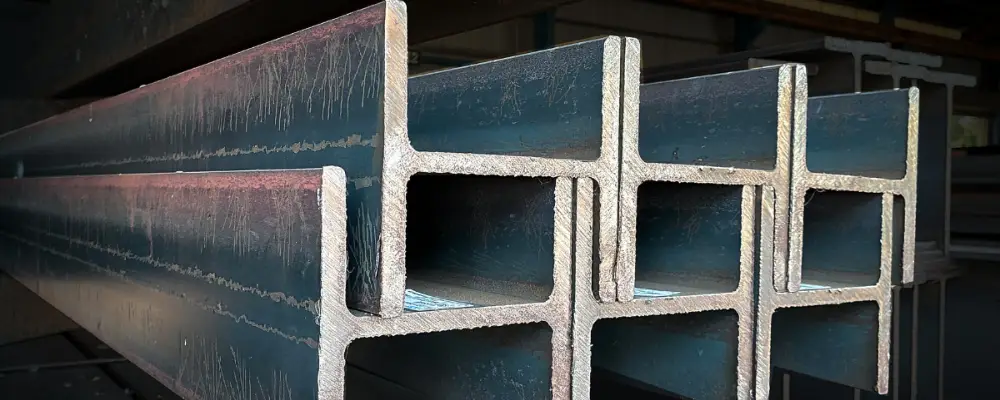
H-beam is pivotal in providing structural support and stability, as well as for bearing heavy loads and withstanding environmental stress. They are known for their H-shaped cross-section, which offers superior strength and stability for high-rise construction applications. The H-beams unique geometric structure makes it ideal for providing both horizontal and vertical strength to the structure. H-beams can support wide spans and distribute weight evenly. They are considered the cornerstone of modern construction projects. This Brick & Bolt blog explains the types, characteristics, applications, processes, and materials used in h-beams in detail.

What is H Beam?

It is a type of structural beam that is composed of horizontal and vertical layouts. Due to its supporting nature, it is mostly used in constructing homes, commercial buildings, residential buildings, floors, roofs, bridges, etc. Depending on the project requirement, it can be available in variable sizes.

The flange and web are the main components in defining the type of steel beam. H-beams are used in construction when there is unstable ground or for bridges that need to bear heavy loads.

Types of H Beams

Due to their strength and stability in spanning long distances in construction work, H beams are used in various construction applications. H beam is commonly divided into three types as follows:

  1. Wide Flange H-Beams
  2. Narrow Flange H-Beams
  3. Medium Flange H-Beams

Wide Flange H Beams

In wide flange H-shaped steel beams, the dimensions of the flanges and web vary depending on design requirements. These beams are primarily used as steel core columns in reinforced concrete frame structures for added strength and load-bearing capacity.

Narrow Flange H-Beams

These beams are specifically designed for load-bearing capacity and feature a narrower flange compared to wide flange beams.

Medium Flange H-Beams

One type of steel structure that is commonly used in construction and engineering projects. This type of H-beam features medium-wide flanges and is positioned perpendicular to each other.

Here is a tabular differentiated based on the flange width as below:

S.NoH-beam TypesFlange Width (B)Web Height (H)Relationship between flange width and web height
1.Wide Flange H-beamGreater than or equal to web heightEqual to or less than the flange widthB ≥ H
2.Medium Flange H-beamGreater than or equal to web heightEqual to or less than the flange widthB ≥ H
3.Narrow Flange H-beamEqual to one-half of the web heightTwice the flange widthB =½ H

Application of H beam

H-beam steels are mainly used in industrial and civil structures. The different applications of H-beam steels are as follows:

  • H beams are frequently used in bridge construction, which supports roadways and resist lateral loads induced by vehicular traffic.
  • It can be used in the construction of cranes, which are essential for lifting bearing loads and supporting stable machinery.
  • In the automotive industry, H-beams are used in the manufacturing of vehicles, including cars and trucks. H-beams provide structural support and reduce the weight of the vehicle.
  • Likewise, it provides the same structural support for constructing aircraft and other aerospace vehicles. It simultaneously reduces the weight of the vehicles.
  • Military vehicles like tanks and armored personnel carriers are constructed using H-beams for their structural support and protection against ballistic attack.
  • In building construction, H-beams are used as load-bearing elements in frames, floors, walls, and roofs, including residential, commercial, and industrial structures.
  • It is ultimately helpful in constructing vehicles and transportation structures such as train stations, airports, and road overpasses.

Key Characteristics of H-beam Steel

Load-Bearing Capacity

H-beam is known for its high load-bearing capacity. The vertical web and horizontal flanges make it an ideal structure for bearing hefty structures with large stress on both sides.

Structural Stability

The wide flanges are responsible for high resistance to bending and stressing. This structure provides strong integral support for large buildings that are required to bear heavy loads.

Versatility in Construction

H-beams are always flexible in the construction process. According to the requirements of each project, it can be altered. H-beams can be designed into many sizes that fit each construction project. 

Efficient Weight Distribution

H-beams are efficient in distributing weight across their length. It stops concentrated stress in one place and distributes the weight to the overall structure of the h-beam. It increases the overall strength of the steel structure.

Cost-Effective

H-beams are always considered economical because of their availability in all places. It reduces the use of more materials needed for construction and lowers transportation costs. It provides strong support for steel structures that require high load-bearing capacity.

Durable and Long-Lasting

As h-beams are made of steel, they are durable and long-lasting. Even though it is less corrosion-resistant, you need to maintain it regularly. It will add some maintenance costs.

The Price of H-beam Steel

In India, the price of the h-beam varies from place to place. The factors included in the price of the h-beam steel, such as the minimum order requirement, type of h-beam, and place where the construction site is located. The average price of the h-beams starts at Rs. 50 per kilogram. You can buy in bulk quantity, mentioning your requirement size and shape of the steel.

Process of Manufacturing and Rolling H-Pile Beams

Rolling is a primary method used to manufacture h-beams. A uniform length of steel is taken and heated into pliable material, which can be easily molded shape without cracking. Then it is passed into a universal mill, which contains horizontal and vertical rolls to get the desired H-shaped cross-section shape of h-beams.

Materials Used in H-Pile Beams

The two important materials that can be used in the manufacturing of h-beams are as follows:

  • New steel
  • Recycled steel

Some misconception is that h-beams manufactured from scraps are low quality in nature. But this is not true. Steel is a 100% environment-friendly and recyclable material that has always had its unique property of bearing high load capacity at any cost. 

H-Pile Beam Sizes

H-piles are dimensionally square structural beams. This specified design allows H-piles to transfer structural loads to deeper layers of the soil. They are commonly available in 8″, 10″, 12″, and 14″ lengths. However, 16” and 18” piles can also be found.

The individual piles can support a weight of up to 1,000 tons. These piles offer excellent pile resistance in dense soil. H-piles are considered a good option for constructing a pile system on rock.

Conclusion

On the whole, h-beams are widely used for building high-rise construction projects as well as structures that need heavy load-bearing capacity. The flexible property of h-beams makes it a wonderful opportunity to fit every project requirement.

How to Check Vastu for Home Entrance?

0
how to check vastu for home entrance

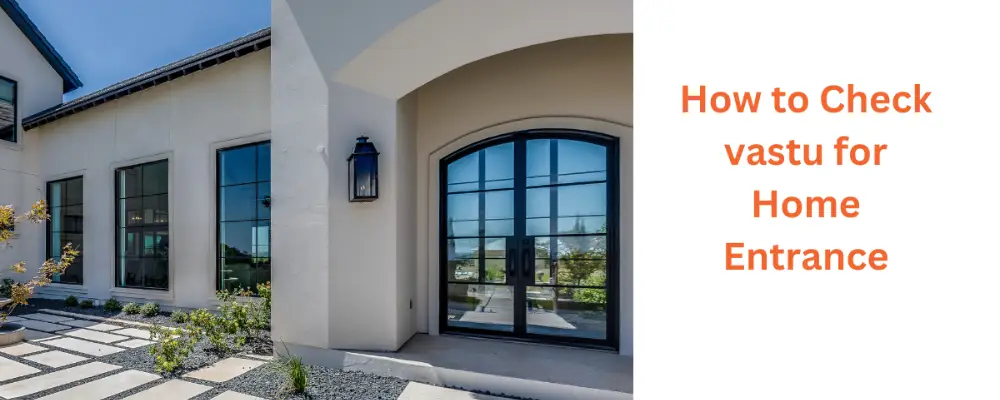
To create a harmonious and balanced life, Vastu principles are applied in building home constructions. As per our Indian architectural and design system, the main doorway of a house is not only an entryway but also a way of fortune and wellness for occupants. Vastu will help you understand the ideal home entrance for providing harmony and well-being in your living space. This article will provide more insights about the directions that suit your successful life.

Ideal Directions for Home Entrance as Per Vastu

Vastu principles are connected to directions, with each direction having its unique energy and influence on different aspects of life, including wealth, health, abundance, happiness, and stability. The below table provides a glance at the auspicious directions for your home entrance.

S.noName of the GodDirections
1.Kubera, the God of FortuneNorth
2.Yama, the God of justice and deathSouth
3.Indra, the Lord of heaven and God of the weather, sky, rain, and stormsEast
4.Varuna, the deity associated with seas, oceans, and rainfallWest
5.Ishana, God of birth, death, resurrection, and timeNortheast(Ishanya)
6.Agni, God of fireSoutheast(Agneya)

North-East Entrance

If the main entrance of your house faces the northeast direction, it is believed to bring good luck to the inhabitants. It can also attract new opportunities and is governed by the god Diti, who is considered very generous. The northeast is also associated with lord Ishana(Shiva), the god of birth, resurrection, and time, and is known as the Ishanya Corner. 

It is believed that family members may lead healthy and happy lives as this direction fills the home with positive energy, promoting productivity. The main entrance can be designed to be larger than any other doors.

East Entrance

Most people prefer to have their home entrance facing east because of the rising sun in that direction. The rising sun is believed to bring positivity and new hope. However, continuous sunlight in the house may increase the heat during the summer.

North Entrance

North-facing entrances are likely to receive the blessings of God Kubera, the god of prosperity and wealth. This direction is aligned with the magnetic energy from the North Pole, and wealth often comes to them in the form of success. 

South-East and South-West Entrance

It is not advisable to build entrances facing the southeast or southwest direction. However, large business owners have built their factories facing south. Despite this, having an entrance facing southeast or southwest is not recommended, as these directions are ruled by the god Rahu and are associated with attracting negative influences. 

These directions may invite negative energies into your home and bring misfortune. However, certain remedies can provide relief if your entrance faces southeast or southwest. Some of them are as follows:

  • To mitigate negative effects, you can place Om symbols, pyramids, or images of gods at the entrance of your house. 
  • Position a mirror at the entrance to avoid negative vibrations. 
  • You can also use hangings, water features, and green plants in the entrance area.

Steps to Check Vastu for Entrance

Some may be confused about checking the Vastu for their new or existing home. Let us explain some methods to determine the direction of Vastu for your dream home.

Determination of Vastu Direction

If you want to check the direction of your home, you can easily do so using Google Maps on your mobile phone. Stand in front of your entrance and open the compass feature, located in the top-right corner of the map. The compass will show the direction you are facing. You can also use a real-time compass to show the accurate direction of your house entrance.

Vastu Tips for Home Entrance

  • Avoid some cacti and other plants in front of the house. But Tulsi is an exceptional case for this.
  • Keep positive images and symbols at the entrance. Decorate your house with pleasant artwork, god images, and natural scenes.
  • Do not place broken mirrors, screeching doors, dripping taps, and untidy windows and doors in the house.
  • Do not place the kitchen adjacent to the bathroom. This is considered unfortunate, as per Vastu.
  • Select a wooden cot instead of another metal cot. Avoid two mattresses for a single bed.
  • Avoid placing mirrors near or in front of the bed. It may imbalance the energy flow in the body.

Common Vastu Do’s and Don’ts for Home Entrance

Here we are going to explore the best practices for improving the home entrance as follows:

S.noDo’s for Home EntranceDon’ts for Home Entrance
1.Make sure not to have your home at a low level, so construct a few steps to your home.Don’t connect the other bedroom doors to the main door entrance.
2.Use high-quality wood for making the main entrance.Avoid facing your entrance to large poles, trees, or wires as directly as it blocks the flow of positive energy into the house.
3.Add a wooden or stone on the doorstep to avoid loss of wealth.Avoid placing the septic tank near your main entrance.
4.Place your name board with attractive designs to bring good luck.Avoid keeping your shoe racks in front of the main entrance.
5.Have a two-sided shutter gate at the entrance of your house.Don’t go for circular or slider-type gates for your entrance.
6.Use good-condition gates for your entrance.Avoid using faded decorations at the entrance.
7.Compared to other doors, the main door should be the largest. You should open it in a clockwise direction.Avoid using violent, sad, or negative images or symbols at the main entrance.
8.Use bright or light colours like blue, grey, green, etc.Avoid black colour as exterior painting.
9.Place a window in front of your main entrance.Don’t place the water tank overhead of the main entrance.
10.Use different locks for different directions. Copper locks, east-facing houseIron locks, west-facing houseBrass locks, south-facing house Avoid constructing the main entrance at an uneven height to the other rooms of the house.

Conclusion

On the whole, integrating Vastu principles increases the energy flow into the house and the overall health of the occupants. The entrance is the ultimate place for flowing positive energies and abundance, ensuring the well-being of the inhabitants. Place all the positive things in the main entrance to nurture the well-being of all the occupants in the house.