Home Blog Page 31

Two-Legged Stirrups – Importance, Applications & Installation

0
Two Legged Stirrups

The world is brimming with construction and structural engineering. In this, every component plays a crucial role in ensuring the safety and stability of buildings. Out of other elements, beams, and columns are the two important structural columns. The beam and column play a major role in transferring weight and forces on a structure equally. This becomes possible with the creation of a safe load path. While these beams and columns are built using the same shapes and materials, they differ in function. To give them further strength, the beams and columns are wrapped around with steel bars. These steel bars are called Stirrups. This article gives a detailed explanation of different types of stirrups and their applications, advantages, and disadvantages.

As mentioned above, stirrups are closed loops of reinforcing steel. They are often used in concrete beams, columns, and other structural elements. They are made of high-quality Thermo-Mechanically Treated (TMT) bars, placed perpendicular to the main reinforcement. The usage of stirrups prevents shear failure in concrete structures.

What are Two-Legged Stirrups?

The two-legged stirrups are the most commonly used type in construction. To complete this type of stirrup, we require at least four rods. This type is used largely to provide longitudinal support. To achieve this, the U-shaped steel bars are bent and placed around the longitudinal reinforcing bars. This placement provides shear resistance, confines longitudinal reinforcement, and controls cracking.

Applications of Two-Legged Stirrups in Construction

Two-legged stirrups are a versatile reinforcement used in various concrete structures. 

Reinforcement of Beams
These stirrups help the beam handle sideways forces (shear forces) when it is carrying weight. By holding the bars together, they stop the bars from moving or bending when the beam is under pressure.

Use in Columns

In concrete columns, two-legged stirrups help make the structure stronger and more stable. They hold the vertical bars in place, stopping them from moving sideways. These stirrups also spread the pressure evenly through the column, which reduces the chance of the column failing. This is especially important in tall buildings, where columns carry heavy loads from the floors above.

Applications in Shear Walls

In shear walls, two-legged stirrups play an important role in making the walls stronger against sideways forces, like wind or earthquakes. They help hold the concrete tightly, increasing the wall’s strength and flexibility. This is especially important in areas prone to earthquakes, where buildings need to handle the shaking and movement without collapsing.

Bridge Construction

In bridge construction, two-legged stirrups are used to strengthen concrete girders and slabs. These stirrups help the bridge handle sideways forces (shear forces) that occur when vehicles pass over it. By reinforcing the structure, they make the bridge safer and more durable, ensuring it can support heavy loads without damage.

Foundations and Footings

In concrete foundations and footings, two-legged stirrups are used to secure the vertical reinforcement bars. They make sure the foundation can properly transfer the weight of the building into the ground. This is important for preventing the structure from sinking or shifting, helping keep the building stable and strong.

Retaining Walls

In retaining walls, two-legged stirrups give extra support against the sideways pressure from the soil. They strengthen the wall, helping it stay intact and preventing cracks or collapse when the earth pushes against it. This makes the wall more reliable and durable.

Advantages and Disadvantages of Two-Legged Stirrups

Advantages of Two-Legged Stirrups

·   In most construction projects, two-legged stirrups are used to provide additional shear reinforcement. Its legs help to confine the concrete improving the overall shear strength.

·    It enhances the beam’s ability to resist the forces exerted by the concentrated loads or moments.

·     Holding tight of the reinforcement bars, the capacity to provide additional tensile strength will increase.

·      It prevents negative moments occurrence and cracking in the continuous beams.

·     During an earthquake, it enhances the ductility of the beam allowing it to deform without sudden failure.

Disadvantages of Two-Legged Stirrups

·       Placing two-legged stirrups in congested areas is a challenging and time-consuming task.

·  While it acts as a component to control cranking, sometimes it becomes stress concentration points. This may cause cracking in concrete.

·       Its efficiency decreases in resisting shear forces under torsion or eccentric load.

How to Install Two-Legged Stirrups

·      First, the cross-check on the number of stirrups, and longitudinal reinforcing bars is made. Following this formwork is examined.

·   Longitudinal bars are placed in designated positions and spacing between stirrups is determined.

·        U-shaped stirrups are inserted around the longitudinal bars and attached to them.

·        Then concrete is poured into the formwork to fill the voids around the reinforcement.

·        Finally, removing air pockets and curing is carried out for a specific period.

Difference Between Two-Legged Stirrups and Four Legged Stirrups

Two-Legged StirrupsFour-Legged Stirrups
It has two-point attachments, often shaped like a simple loop or has a flat base. Four-Legged Stirrups has four points of attachment, resembling a wider platform in structure.
It offers less lateral stabilityIt offers great later stability
It has two legs that are bent into a U-shape.It has four legs and forms a square or rectangular shape.
Commonly used in simple design and easy fabricationsIt is used in situations where higher loads or torsional stresses are expected. 
It is used to provide lateral support to longitudinal reinforcing bars.It provides additional lateral support to the columns and resists torsion. 

Price Ranges of Two-Legged Stirrups

The price of two-legged stirrups used in house construction in India can vary based on several factors like material quality, bar diameter, and regional market differences. These stirrups are usually made from steel and come in different grades such as Fe415, Fe500, and Fe550. The prices typically range as follows:

  • Fe415: ₹50 to ₹70 per kilogram
  • Fe550: ₹80 to ₹100 per kilogram

The diameter of the bars also affects the cost, with common sizes being 6mm, 8mm, and 10mm. Generally, larger diameters mean higher prices since more material is needed.

Prices can vary by region. For example, cities like Mumbai might have higher construction costs compared to Chennai due to differences in steel and material prices. On average, standard two-legged stirrups might cost between ₹600 and ₹1,200, depending on the construction project’s specific needs.

For the most accurate pricing, it’s a good idea to check local steel suppliers or hardware stores. Online marketplaces can also provide current prices, making it easier to compare and purchase stirrups tailored to your project requirements.

Conclusion

To maintain structural integrity, a proper choice must be made in selecting a proper kind of stirrup. While single-legged stirrups are used for light construction, complex torsional and other types are applied in industrial projects. Each one differs from other types by reinforcement of concrete structures. This article on stirrups testifies that the stirrups will deliver the maximum amount of strength, durability, and resistance to shear and torsional forces. Finally, the overall safety and lifespan of the structure rely on the proper choice of stirrups.

Patta Transfer – Process, Documents, and Benefits in India

0
patta-transfer

In India, a patta transfer is an important aspect of recognising legal ownership to claim property. When there is a change in ownership, the process of patta transfer becomes significant. But what exactly is patta, and why is its transfer so essential?

Patta is a legal document issued by the revenue department in various states of India. It serves as a record of rights for any piece of land and acts as proof of ownership. The main purpose of a patta is to establish any legal claim and transaction driven under the property.

Patta transfer is pivotal in securing property rights. It is necessary not only when buying property but also when inheriting it. Many states now offer online services for patta transfers, making the process easy and accessible. Let’s dive into detail to understand the process more clearly with the steps to follow.

What is a Patta Transfer?

Patta transfer is an important step in attaining ownership of any property. It refers to a document legally established as a revenue record by the government. The patta transfer process involves the shift of property ownership from one person to another. Several key factors influence a smooth process during this transfer. 

Why is the Patta Transfer of Ownership Important?

A patta transfer is the legal proof establishing the new ownership of a property registered as a document. It contains details of the property, such as location, size, and the owner’s name. It is an essential document for selling, buying, or mortgaging property.

What are the Legal Effects?

It updates the ownership details in the government revenue records. Also, a Patta transfer provides legal security to both the buyer and the lender. This process gives legal recognition to the new property owner and updates government records accordingly.

Documents Required for Patta Transfer

Basic Documents

  • Patta Transfer Application: The application signed by the applicant
  • A copy of the sale deed: The sale deed is a primary document proving this property sale. 
  • The original sale deed is required for verification purposes. 
  • An electricity bill or property tax receipt is required as proof of possession. 
  • An Encumbrance Certificate: The Encumbrance certificate declares the property is free from legal liabilities. 

Required Identity Proof for a Patta Transfer:

  • Aadhaar Card
  • Voter ID
  • Passport
  • Driving License

Required Address Proof for a Patta transfer:

  • Copy of utility bills (Example: electricity, water, or gas bills)
  • Bank Statement
  • Ration Card
  • Rental Agreement

Property Tax Documents

  • Latest Property Tax Receipt: Proof of up-to-date property tax payments.
  • Previous Property Tax Receipts: Show the history of tax payments.

No Objection Certificates (NOC)

  • NOC from Local Authority
  • NOC from Housing Society ( If applicable)

Legal Documents

Affidavit: An affidavit stating the transfer details and the applicant’s claim.

Court Order: If applicable, provide a court order supporting the transfer.

Additional Proofs

Patta Document: Provide any available copy of previous Patta documents.

Chitta Document: If available, produce a Chitta document.

Field Measurement Book (FMB) Sketch: It shows the entire property boundary sketch as a layout.

A-Register Extract: Extract from the A-Register showing the property details.

Verification Documents

Other Documents 

Photographs: A passport-sized photo of the applicant.

Witness Statements: Statements from witnesses to support the legal records.

Legal Heir Certificate: A legal heir certificate if needed.

Death Certificate: Required for transfer due to the owner’s death.

Special Cases

Gift Deed: If the property is transferred as a gift.

Partition Deed: If the property is divided among heirs.

Settlement Deed: If the property is settled among family members

Step-by-Step Process for Patta Transfer

  1. Application Form:

Obtain the patta transfer application form from the Tahsildar office or download it from the official website.

  1. Fill out the Form: 

Fill in the details and choose the relevant service. Ensure accuracy to avoid delays.

  1. Attach Documents: 

Attach the required documents mentioned above. Ensure they are complete before submission.

  1. Court Fee Stamp:

A court fee stamp on the application form is required for processing. 

  1. Submit Application: 

Submit the completed application along with the necessary documents to the Tahsildar office.

  1. Acknowledgement Receipt: 

Collect the acknowledgement receipt for your application. Use it for reference purposes in the future to know regarding information about your application.

  1. Verification Step

The Tahsildar office will carry forward the verification of the application and documents provided.

  1. Field Inspection by Officer:

The Revenue Inspector will inspect the property and other relevant information.

  1. Approval: 

Once the document verification is done and the property is clear for approval, the officer will sign and approve the Patta transfer. Pay the relevant fees for the transfer process.

  1. Issue of New Patta and Updates: 

Then, the new Patta will be issued with an ownership transfer. It will be processed in the name of the new owner. The new owner’s name will be updated in all documents and the online portal once the process is completed.

  1. Final process:

Collect the new Patta document from the government office and verify the updated Patta details online.

  1. Special cases:

In case of any disputes or mistakes, raise a complaint and seek legal assistance during the process. You can resubmit the application for corrections and follow up regularly.

How to Apply for Patta Transfer Online?

  • Visit the Official Website: Go to the e-Services of Land Records website.
  • Login/Register: Register in the government online portal using your mobile number and address. 
  • Select the Service: Choose your required service option—Patta Transfer. Specify if the patta transfer is involved in a subdivision.
  • Fill in the Details: Enter the required details:
    • District
    • Taluk
    • village
    • survey number
    • subdivision number.
  • Upload Documents: Upload all the necessary documents as mentioned.
  • Pay the Fee: A processing fee is charged for the application.
  • Submit the Application: Submit the application and fill in the details. Submit the necessary documents with the application.
  • Track Application Status: Use the online portal to track your application status.

Benefits of patta transfer 

  • Legal Ownership:

 A patta transfer entitles the owner of a property. It is recognised in the government revenue records, which is crucial for legal aspects.

  • Avoiding Disputes: 

Any property disputes will be avoided. Land disputes are common, and to avoid such confusion, prompt registration of ownership transfer is necessary.

  • Access to Loan and Services: 

Updated patta is often required to access government services and benefits, such as subsidies or loans.

  • Property Tax Updates: 

The patta transfer process includes updating property tax records and ensuring that the new owner is responsible for paying taxes, which can prevent future tax-related issues.

Fees for Patta Transfer

  • Application Fee
  • Subdivision Fee: If the Patta transfer involves a subdivision, additional charges apply:
    • Rural Areas
    • Urban Areas
    • Corporation Areas

Common Mistakes to Avoid During Patta Transfer

  • Incomplete application form.
  • Providing incorrect information without double-checking.
  • Neglecting documents while submitting proofs.
  • Not making use of the online portal for convenient processing.
  • Not keeping the receipt safe in case of future reference.
  • Neglecting consultation with a legal professional.
  • Not taking proper measurements of the property dimensions.
  • Misspelled entry of names in the application and documents.
  • Failing to update the old records of the patta 
  • Submitting originals is not necessary. Produce only when required, and don’t forget to collect them back. Otherwise, only give photocopies of the documents.
  • Delaying the process can lead to disputes.
  • Not maintaining digital copies of the records and documents.
  • Ignoring an encumbrance certificate, which can affect the process. Obtain an updated encumbrance certificate.
  • Not following local guidelines. Adhere to local guidelines and procedures.
  • Incorrect Address Proof. Provide accurate and current address proof.
  • Unverified seller’s documents. Properly check the seller’s documents before proceeding.
  • Failing to check on legal disputes. Resolve any legal disputes before applying.
  • Incorrect property tax receipts. Provide proper property tax receipts.
  • Improper update of identity proof. Ensure that your given proof of identity is current and valid.

Conclusion

In conclusion, a Patta transfer is not just a government formality—it’s the key to securing rightful ownership. Whether you’re a first-time landowner or managing ancestral property, taking swift action to complete this process secures your investment for the long term. By ensuring proper Patta transfers to your name, you can avoid future disputes and legal complications. Remember, land is one of the most valuable assets, and updating the Patta is a small step that guarantees full control over what’s legally yours. Don’t wait for complications to arise—take steps cautiously. 

Sun-Dried Bricks – Eco-Friendly Manufacturing and Benefits

0
sun dried brick

There are many types of bricks in the construction field, and they vary in size, shape, properties, and more. Although modern bricks need large equipment and skilled labour for manufacturing, sun-dried bricks stand out distinctively. Here we take a look at what sun-dried bricks are, their applications, pros and cons.

What are Sun-Dried Bricks?

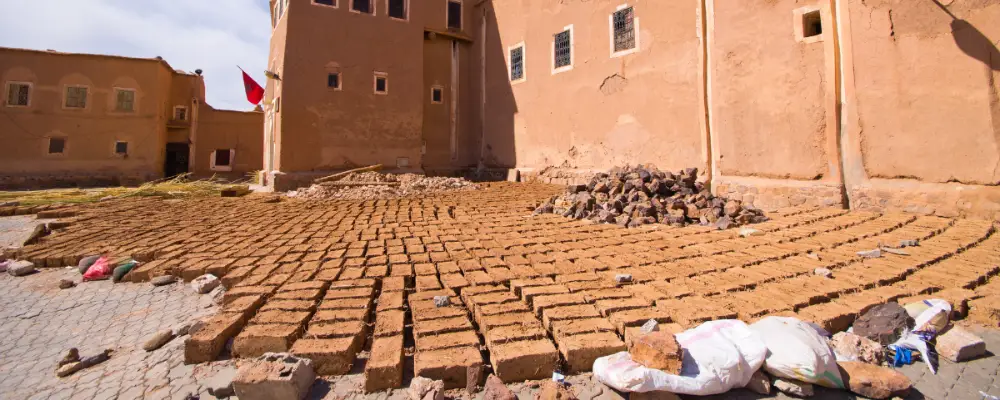
Sun-dried bricks are a special type of brick that is completely eco-friendly and manufactured using natural resources. These types of bricks use the sun’s heat waves to naturally dry the molded clay into bricks instead of burning the bricks in the fire. This is one of the ancient and sustainable practices in the brick manufacturing process and has been carried out for thousands of years. 

Manufacturing of Sun-Dried Bricks

  • Removing Top Soil: The top layer of the soil is removed to a depth of 200 mm to eliminate loose materials and impurities.
  • Unsoiling & Spreading: After removing the impurities, the clay is dug at a depth of 600 mm to 1200 mm from the ground and spread on a leveled surface.
  • Cleaning: The extracted clay is cleaned to remove stones, pebbles & other vegetable matter. If impurities are spotted, they are removed using washing and screening.
  • Weathering: The cleaned clay is exposed to the weather for a few weeks with alternate wetting, cooling, and drying.
  • Blending: In this process fillers such as sand, fly ash, or other straw materials are added and mixed together in the vertical direction until it becomes a blended mixture.
  • Tampering of clay: The blended clay mixture is combined with an adequate amount of water and is kneaded with the foot or cattle until it becomes a homogeneous mix with plasticity.
  • Moulding into a brick: A wooden or metal mold is used to shape the tampered clay into the shape of a brick/block. The sun-dried bricks typically use hand-molding or ground moulding.
  • Drying: After the moulding process, the bricks are kept for drying under the sunlight to naturally remove the moisture for a number of days, weeks or even months depending on the weather conditions, until the brick is completely dry and ready for use.

Materials used for Sun-Dried Bricks

Clay

Clay is the primary material that provides structure and binding properties. Silted clay or weathered clay is best suited for the bricks, as it provides sufficient cohesion and silt content, which offers proper texture, moisture, and plastic properties.

Sand

Sand is used as a filler material in the manufacturing of bricks. It helps reduce shrinkage, increase durability, and helps bricks to maintain shape. This ensures that the bricks do not crack or lose their shape and makes them suitable for load-bearing structures.

Straw

The usage of straws adds more strength to the brick and helps the brick to dry more evenly in the wet mass. The use of straw in bricks acts as a thermal agent, which absorbs moisture and makes it fire resistant.

Water

Water acts as a binding material that combines all the components into a mix. Although it is a significant material, the water needs to be dried out to achieve hardness.

Applications of Sun-Dried Bricks

  • Generally used for low-raised buildings up to one floor and other non-engineered structures.
  • Suitable for places with hot and dry climatic conditions due to its thermal properties.
  • Used for short-term and structures that don’t withstand any weights such as walls, temporary tents, partition walls, and more.

Advantages and Disadvantages of Sun-Dried Bricks

Advantages

  • Thermal Insulator: As the bricks are exposed to natural weather conditions, they act as a natural thermal insulator, protecting the building from extremely hot climatic conditions.
  • Sustainable: As the bricks are made naturally without the usage of any artificial machines are burning kilns, they are eco-friendly, sustainable, and free from carbon emissions.
  • Low cost: This is one of the most low-cost brick material for manufacturing, as it does not require expensive equipment and high-skilled workers.

Disadvantages

  • Durability: These bricks are comparatively less durable than the burnt bricks, making them unsuitable for multi-storeyed structures.
  • Poor water resistance: These bricks are porous and less water-resistant and are not suitable for extremely humid regions or wet climate conditions.
  • High Maintenance: Frequent maintenance is required, as they are subject to damage from multiple external factors including water, weather, and erosion.
  • Manufacturing time: The processing time of sun-burnt bricks is comparatively longer than burnt bricks, as it takes weeks or even months to remove the moisture content from the bricks. Since the sun is being the only drying source, climatic conditions could play a major role in the processing of bricks.

Burnt bricks vs Sun-dried bricks

Burnt BricksSun-dried Bricks
These bricks are dried at high temperatures to make them harder and more durable.These bricks are dried naturally under the sun without any artificial heat.
The manufacturing cost is high and uses high energy making it unsustainable.The manufacturing cost is low compared to burnt bricks and sustainable as the natural process doesn’t need artificial burning.
Durability, compressive strength, and weathering capacity are high, making it suitable for extreme conditions.The durability and strength are low and are not suitable for humid and wet conditions.
These bricks are widely used in different types of construction including high-raised residential buildings, commercial structures, and other engineering constructions.These bricks are suitable only for temporary and low-raised buildings up to G+1 buildings are not suitable for engineered structures.
Comparatively requires less maintenance than adobe bricks.Requires high maintenance as they are vulnerable to erosion, damage, and extreme humid conditions.
The manufacturing time is less and are prepared within a few days.The sun-dried bricks require weeks to months to get prepared, depending upon the weather conditions.

Conclusion

The Sun-dried bricks are ideal for temporary, decorative, low-load-bearing structures. Since it has great thermal resistance, they can be used for the construction of houses in desert areas, and places with very little or no rainfall, as they could naturally act as an insulator. Although there are several bricks in the industry, sun-dried bricks could be more eco-friendly, more affordable, and could be a great choice for small construction projects and decorations.

Moram Sand: Properties, Uses, and Benefits in Construction

0
moram sand

Sand is the most widely used material for constructing buildings, bridges, and roadways. Mostly, aggregates are used to achieve strength and load-bearing capacity. However, due to the scarcity and high cost of natural river sand and other aggregates, alternative sand types are being used. 

One such type is moram sand, a type of laterite sand. It is used for various purposes in the field of construction, alongside other construction materials. In this article, we will learn about the properties of regional moram sand and its applications.

For clarity and consistency, this article uses Moramto refer to the sand type, acknowledging regional spellings such as Moorum, Murum, or Moram.

What is Moram Sand?

Moram is a locally available sand which is formed through breakdown of rocks. It is available in the regions of tropical and subtropical areas. These areas are subjected to heavy rainfall and high temperatures. Due to this process, rocks are weathered down and lead to the accumulation of sand. 

Moram doesn’t contain humus because organic matter is rapidly decomposed and carried away by rain. This sand contains an accumulation of iron oxide and aluminium. The silica content is also leached away. The presence of iron gives it a dark red and brown appearance.

Moram sand has low compressive strength and is porous in nature. It is used as subgrade material in the construction of buildings, roadways, and filling plinth areas for its low-cost factor. 

Composition

Moram sand is made of 

  • Sand and gravel particles (60-70%)
  • Silt (20-30%)
  • Clay (10-20%)

The appearance and gradation of particles vary from region to region. This variation is based on weather conditions and the parent rock from which it is formed.

As already discussed, Moram sand is rich in iron oxides and aluminium. The Moram sand looks reddish-brown in colour due to its iron content. Moreover, the iron and aluminium content cause degradation to plant growth and cause acidity in the sand. 

Properties of Moram Sand

In India, Moram sand is abundant in the states of Tamil Nadu, Odisha, Kerala and other regions of the Northeast. Moram sand properties vary based on the weather conditions in these regions. There are some geotechnical properties to understand the quality of Moram sand which are discussed below.

Specific Gravity 

Specific Gravity of sand helps understand how it behaves under different moisture levels. It is an important aspect to understand whether sand has the load-bearing capacity. Moram sand has a specific gravity of 2.6-2.7. It means it is heavy in nature. It can provide stability to a moderate level if it is compacted well.

Liquid Limit

Usually, sand tends to absorb and hold water. It influences the workability and strength of sand. To find out this, the liquid limit of a sand is calculated. For instance, Moram sand has a 41-42 % liquid limit which is high. It means it changes shape under different moisture levels. It easily changes from plastic level to liquid level. 

As Moram sand has a high liquid limit, it is prone to settlement and deformation. Think of a wet clay, when we add water, we can mould into any shape. But if we add more water, the plasticity of clay changes to liquid. Though it is moldable into any shape, it is unstable. 

That’s why Moram sand is stabilised before use for construction purposes. So, the strength and volume of Moram sand are not balanced when it is exposed to high water content.

Plastic Limit

Plastic limit is essential to understand sand stability and settlement behaviour. It determines the moisture content at which sand starts to crack when remoulded. The plastic limit of Moram sand is 19-20%. 

This indicates that it will start to crack when a certain stress or force is applied. Hence, Moram sand exhibits moderate workability and strength.

Plasticity Index

Plasticity refers to a sand’s ability to resist cracking or breaking while undergoing deformation. The plasticity index is calculated by subtracting the plastic limit value from the liquid limit value. 

High plasticity index indicates soil’s vulnerability to settlement and deformation. It means the soil is mostly of clay or colloidal nature. 

Moram sand’s plasticity index value ranges from 22-23%, indicating slightly high plasticity. As a result, Moram sand has deformation and settlement issues.

Optimum Moisture Content and Maximum Dry Density 

The ability of sand to be compacted is crucial for understanding its load-bearing capacity and stability. At optimum moisture content (OMC), sand can be compacted to achieve maximum dry density. 

Compaction is usually done through pressing, tamping, or vibrating sand to densify it. If the water content is below this level, it is difficult to attain Maximum Dry Density. In simpler terms, sand cannot be properly compacted and densified, leading to settlement issues.

Unconfined Compressive Strength

The compressive strength of sand enables it to support structural loads under pressure. Unconfined compressive strength of sand is found when pressure is applied vertically and not horizontally. It shows how it withstands pressures at constant vertical force. 

Moram sand has an unconfined compressive strength of 180-185 KPa. It shows that moram sand has low to moderate compressive strength.

California Bearing Ratio

California Bearing Ratio (CBR) is calculated to find the strength of sand. It shows whether sand has the stability to support loads. To find out this, a piston is inserted into the sand to a certain millimetre level. It is compared to the penetration done on hard stone or rock. 

If the penetration is comparatively stiffer, the sand has a stronger subgrade level. moram sand has a CBR of 9.6-9.8% which is low. It means moram sand is suitable for low-rise buildings, roadways, and filling purposes.

PropertyValues
Specific Gravity2.6-2.7
Liquid Limit41-42 %
Plastic Limit19-20 %
Plasticity Index22-23 %
Maximum Dry Density1.6-1.7 gm/cm3
Optimum Moisture Content13-16 %
Unconfined Compressive Strength180-185 KPa
California Bearing Ratio (soaked)9.6-9.8 %

Stabilisation of moram Sand

For construction, we need cost-effective as well as high-quality sand. moram sand, although readily available and cost-effective, has limitations for projects due to its reduced stability, porosity, and settlement issues. 

Despite these challenges, moram sand is widely used in road construction in India. However, for road construction, stability and compressive strength are crucial. To address this, moram sand is stabilised using various materials. 

Simply put, sand stabilisation enhances sand properties, converting it into a stronger construction material.  

In studies, it was found that adding a mixture of coconut fibre and sawdust increases the strength and compaction of moram sand. A 2% mixture was added along with 50% water to the sand sample. After 2 days, the moram sand showed increased strength. 

In another study, Terrazyme, a natural compound found in fruits and vegetables, was used as a stabiliser. Terrazyme acted as a protective layer in the moram sand, preventing water infiltration. 

As a result, moram sand showed reduced permeability and water absorption and increased compaction. So, stabilising moram sand in this way makes it an ideal sand for road construction and pavements.

Uses of moram Sand

moram sand is utilised for various purposes due to its availability and properties.

Road Construction

In India, moram sand is majorly used in road construction because it is easy to compact. It is the primary base of roads and it supports the other base materials also.

The long network of roadways is made possible through using this cost- effective sand. It helps in promoting the economics of India by reducing cost.

Plinth Filling

We have seen the construction of homes where a type of red sand is heaped over in the plinth areas. This is moram sand, characterised by its larger particles and higher density, which effectively fills gaps. 

It serves as a sub-grade sand, providing a stable base for the structure. Other aggregates are often mixed with moram sand to further enhance its stability.

Once the moram sand is poured into the plinth regions, water is poured over it. After the moram sand has soaked well in the water, the layer of sand is compacted well using vibrators. The Plinth Filling process reduces water permeability and increases the strength of the sand.

Backfilling

moram sand is ideal for backfilling purposes, as it reduces voids and provides a proper base. In some homes, sand is used to level empty or uneven spaces.

moram sand can be used to level up areas where sand has been eroded or removed. Specifically, moram sand can be effectively utilised in slope areas, such as car parking slopes and entrance ramps of homes, to create a stable and even surface.

Landscaping 

moram sand is useful for landscaping purposes. Its porous nature and good drainage make it ideal for gardens, parks, and playgrounds. It prevents waterlogging, reducing the risk of sand erosion. moram sand’s stability also supports slope areas and prevents landslides.

Limitations of moram Sand

  • moram sand cannot support heavy structures and is not ideal for building structures. The reason is its loose structure and unbalanced volume at different moisture contents.
  • moram sand is acidic in nature and has a low water retention capacity, making it not ideal for high-fertility crops.
  • As it is porous in nature, the process of compaction is quite difficult.
  • Additionally, moram sand can generate dust and spread it to surroundings, causing pollution.

Conclusion

To conclude, moram sand has its own unique properties along with some limitations. Despite this, it can be used for specific purposes. Moreover, they are environmentally friendly and don’t cause harm like manufactured sands. By following proper standards, moram sand can be effectively used for construction and agricultural purposes.

FAQs

1. Is moram sand a type of laterite sand?

Yes, moram sand is a type of laterite sand with a high amount of iron oxide and aluminium.

2. What are the main uses of moram sand?

Moram sand is used as:
Filling material
Base material in roadways
For cultivation of specific crops (like tea, coffee, and rubber)

3. In which regions is moram sand typically found?

Moram sand is found in tropical and subtropical regions which have heavy rainfall and high temperatures.

Commencement Certificate: Steps By Step Guide & its Importance

0
Commencement Certificate

A commencement certificate, or CC, is an official document issued by the local municipal authority to commence the construction of the property. It ensures that the project is following all essential permissions and regulations. Before laying the foundation, the builder is required to obtain permissions, licenses, and sanctions for the plan and layout.

The municipal government will conduct the preliminary inspection before issuing a certificate. The CC is provided under the commencement certificate RERA Act. It authorises the building plans, land titles, and no-objection certificates.

Every homeowner needs to be aware of this certificate to confirm that the project is legally safe against all potential issues. This article provides detailed information about the commencement certificate and how to obtain it.

Overview of Commencement Certificate

A commencement certificate authorises the new building project after validating the building plans and layout. It is a significant document in the world of real estate. Generally, this authorisation is mandatory to commence the construction of the new property.

Builders need to submit the required documentation to the local municipal authority, subject to verifying all set and determined regulations. For builders, it acts as a confirmation that they have followed all essential guidelines, improving the credibility of their project.

Importance of a Commencement Certificate

A commencement certificate acts as legal proof for both homebuyers and developers. Let’s have a look at the benefits:

  • Legal Requirements: This certificate signifies that the construction project has obtained all legal regulations, such as construction and land use norms and environmental and zoning laws.
  • Safety Standards: It indicates that the project is planned with regard to safety standards, including fire safety, structural integrity, and earthquake resistance.
  • Helps in Getting Loan: Most banks and financial lenders ask for this commencement certificate before approving home loans. It ensures the lender that the project is legally underway and there is a lower risk involved.
  • Safeguard Buyer’s Rights: The certificate acts as a safeguard for buyers against potential legal complications. Without this evidence, buyers might face legal issues if any activities violate the law.

Steps to Obtain a Certificate of Commencement

Let’s delve into the steps to obtain a CC:

  • Submit an Application: Builders need to submit the formal application to the respective authority with all required documents and an application fee.
  • Site Inspection: After the submission of the application, a site inspection will be conducted to verify that the project plan has met all local rules and regulations.
  • Prompt Reply: If authorities ask for any queries, the builders need to give them a prompt reply with the required documentation or information.
  • Certificate Issuing: Once after the successful verification, if you have paid the processing fee (if applicable), the local authority will issue a commencement certificate.
  • Certificate Renewal: If your certificate is mentioned with any validity period, keep track of the details and take essential actions on time.

Required Documents for Obtaining Commencement Certificate

Below are the lists of documents that a builder/developer needs to submit for a commencement certificate.

  • An application form
  • Approved building plans
  • Land ownership documents
  • NOCs (no-objection certificate)
  • Environmental clearances
  • Latest tax-paid receipt
  • Photographs of the site

Planning and Procedures for the Issue of Commencement Certificate

The application procedure can vary between local authorities; however, the common steps involved in obtaining the commencement certificate, such as:

  • The application from the developer/builder is forwarded to the local authority along with a plan drawn that indicates the schedules of the land, the size of the proposed building, and the actual dimension of the land. If they demand any supporting documents that need to be accompanied with the building plan.
  • The application and documents will be verified by the authority to confirm that they adhere to local laws and regulations.
  • Once the validation is done, the concerned authority may approve or grant permission to issue the commencement certificate.
  • If the submitted building plan gets approved, an applicant is asked to pay the prescribed processing fee.
  • Finally, the local authority will issue a commencement certification. The builder is advised to check the engraved information is appropriate to your construction project.

Consequences of Building Without a Commencement Certificate

Below are the lists of penalties you will be charged if you fail to file a commencement certificate:

Penal Provisions: If a firm or builder fails to follow the provisions of section 11(2), they may need to pay a penalty of up to five thousand rupees. Each person who is in default faces a fine of one thousand rupees each day.

Removal of Company Name from the Corporation: According to Section 11(3), if the company has not responded to the registrar within 180 days, they consider that the company is not carrying out any business operations. The registrar has the right to remove the company name from the register.  

Validity of a Commencement Certificate

A commencement certificate is significant for beginning the construction process, and understanding its validity helps both buyers and builders. Here’s a detailed view:

Indefinite Validity: Commonly, a commencement certificate is provided with indefinite validity, as long as the builder or developer needs to follow the derived norms and conditions in the certificate.

Specific Time Limits: The time limit or validity period may vary for every region and local authority. It can range from a few months to years. If the validity period ends, you need to take immediate action when the construction is still in progress.

Renewals or Extensions: If you’re unable to complete the construction within the time limit of the commencement certificate, you should apply for an extension of renewal. This may need a formal application form and an additional processing fee.

In a Word

Whether you are committed to building a new project or planning to buy a home, ensure that the project has met all legal requirements. Most importantly, knowing what a commencement certificate is and how it influences the construction of a new building. I hope this article covers all the crucial aspects of the CC.

Latex Primer – Benefits, Drawbacks, Applications, Process

0
latex primer

A primer is a layer added as a surface base before being painted. It helps the paint to adhere properly, even on slightly rough surfaces. Primers also seal porous surfaces, prevent stains, and reduce the visibility of old paint underneath. Additionally, they improve the paint job’s durability and minimise the need for frequent touch-ups. 

Latex primers are frequently used in many painting applications. It can also be used on masonry, wood, and plaster surfaces. It covers up stains and some imperfections on the wall easily. In this article, we will explore the composition, application, and process of using latex primer in detail.

What is a Latex Primer?

Latex primers are water-based primers which are a good choice for interior and exterior applications. They emit fewer odours compared to other types, making them a better option for paintwork. However, it is important to make the surface clean or smooth before applying the latex primer, as it performs better on a clear surface than on an oily or greasy surface. 

Latex primer works as an adhesion material, providing a base for your top finish coat, i.e., paint. Most paintwork requires more than two coats to ensure proper bonding of the new paint with the wall and to cover any previous colors. Latex primers are flexible for any wall and less likely to crack or peel.

Why Do You Need a Primer Before Painting?

Before your painting process, priming is essential for getting better painting outcomes. The crucial aspects of priming are as follows:

  • Increased adhesion property:

Primers are widely used for their sticking property, as they help to bind the paint tightly to the surface. If you ignore this step, it may cause the paint to start peeling off within a few days, potentially leading to costly repairs.

  • Uniform Surface:

Primers provide a uniform surface by filling the porous surfaces of the drywall or wood. If you skip priming, then the painting would be inconsistent and unfinished. 

  • Seals and Protect the Surface:

It acts as a protective barrier to prevent porous surfaces and blocks staining of the old paint. 

  • Good Coverage

A well-primed surface may provide evenly distributed paint across the surface and avoid additional coats to get a super smooth surface. So prime your surface before painting your wall to get good coverage.

Applications of Latex Primer

Here are the various applications of latex primer:

  • Latex primer seals the voided surfaces on new drywall and ensures even absorption.
  • It can also be used on wooden surfaces to provide a smooth surface without any cracks.
  • It removes stains like watermarks, colours, and oil stains from the surface and avoids bleeding through the new top coat. 
  • Latex primers are used on masonry priming works, including concrete or bricks.
  • Latex primers are also used on metal surfaces, interiors, and exterior paintwork, covering up dark paints, and fixing small holes and small repairs.

Pros of Latex Primers

  • As it is a water-based primer, it is simple to use for cleaning and application processes.
  • Latex primers dry more quickly than oil-based primers, which makes it easy for several coatings of paint to be applied.
  • Latex primers are good for interior work because they don’t release any dangerous gases or scents.
  • It is flexible for applying on a variety of materials, including plasterboard, metal, and wood. 
  • It is fireproof.
  • Latex primers are mostly available in low VOC (volatile organic compounds) or zero VOC compounds.

Cons of Latex Primers

  • Not efficient in blocking all stains: Compared to oil-based primers, latex primers are inefficient in removing all the stains on the surface.
  • Not suitable for glossy surfaces: Glossy surfaces are not suitable for absorbing latex primers. The adherence quality of the latex primer may be less on glossy surfaces.
  • Less durable: Latex primers are not as durable as oil-based primers and may require frequent touch-ups.
  • Turn yellow over time: It is unsuitable for long periods as it turns pale yellow over time. The quality of the final coat may be affected due to this nature.
  • Appearance of brush strokes: Brush strokes may be visible on the surface due to their quick drying nature.
  • Sensitive to sudden temperature changes.

How to Apply a Latex Primer?

Applying latex primer involves several steps as follows:

What to do

  • Step 1: Clean and clear the surface with a cloth or sheet to remove any dust. Primers won’t stick to the surface if it has dust particles.
  • Step 2: Tape your edges to ensure clean lines with no messy edges. It gives a professional completeness to the paintwork. 
  • Step 3: Now apply the latex primer to get a super-finish coat. It creates a smooth base for promoting adhesion and a wonderful top coat of paint.
  • Step 4: Allow the latex primer to dry for at least 2 hours.
  • Step 5: Now apply the paint you want to your wall.
  • Step 6: Again, repeat the process of drying.
  • Step 7: Now remove the tape and your work is done.

Conclusion

On the whole, latex primers are a wonderful option to cover up any small repairs or holes on walls, ceilings and other surfaces. They can also be used for transitioning new paints on the wall and are very good adhesion materials that provide an impressive final top coat.

FAQs

1. How many coats of latex primer are required?

Each project requires different coatings of latex primer. Typically it involves more than 2 coatings for a wall or ceiling surface.

2. How long does latex primer last?

The average shelf life of the latex primer is two to three years. It may depend on the maintenance and storage of the primer.

3. Is latex primer washable?

As it is water-based, latex primers are easily washable with water and soap.

Mother Deed – Importance, Key Components, and Acquisition Tips

0
Mother Deed

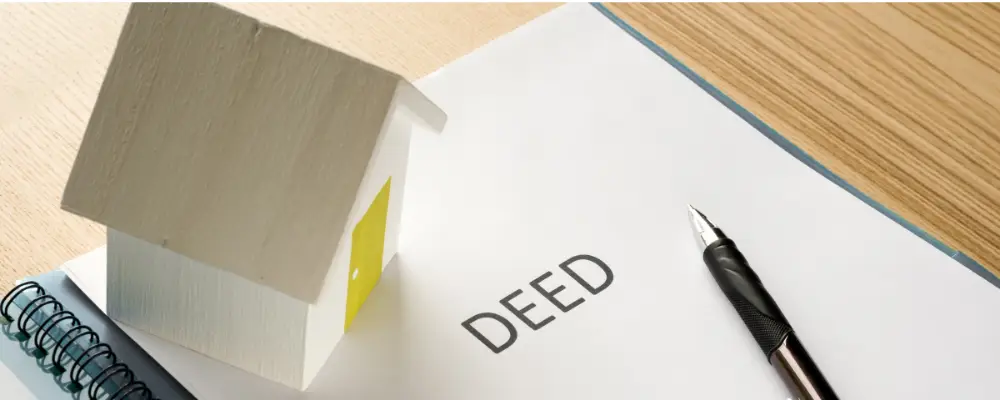
A mother deed, also known as a master deed or a parent deed, is a fundamental document that plays a vital role in real estate. It is a legal document for any property imprinted with some significant details that every buyer or homeowner needs to be aware of.

Understanding the implications associated with a mother deed helps property owners make informed decisions during property transactions. Let’s delve into the article to discuss its key aspects.

What is Mother Deed?

A mother deed is a primary legal document that establishes real estate property ownership and provides a comprehensive description of the property. It is crucial for all future transactions. This document outlines significant property information such as easements, property boundaries, restrictions, and the rights and responsibilities of the owners.

With this parent deed, you can also trace the historical chain of ownership. It acts as a valuable reference point, providing clarity for all parties involved.

Why is a Mother Deed Needed?

A mother deed is a crucial document essential for any property. It states clearly the:

Ownership: A mother deed is a primary source of evidence for property ownership, ensuring clarity for both the buyers and sellers. It helps track the historical chain of transactions and transfers of ownership.

Mitigating Legal Risks: Missing inevitable real estate documents poses legal risks, including encroachments, the possibility of title disputes, and undisclosed liabilities. By inspecting the mother deed, property buyers can identify the legal status before finalising the transaction.

Title Clarity: It is important to document the legal status and property’s ownership history. The mother deed, on the other hand, helps ensure the title clarity. A thorough examination of the parent deed allows buyers to uncover any irregularities associated with the property.

Facilitate the Property Transactions: Whether it is buying, selling, mortgaging, or leasing, you need a mother deed to streamline the process. It clarifies the transaction with a comprehensive record of ownership and encumbrances. It provides confidence to both parties and ensures smooth transactions.

Key Components of the Mother Deed

Mother deed includes some significant key aspects that are listed in the following:

Ownership Details: The record of ownership mentioned over the mother deed is a fundamental aspect of any property. It uncovers the original property owner and how that has changed through inheritance, gift deeds, or sale deeds. Each transaction of a property is laid on the foundation created by the mother deed.

Property Description: A mother deed includes crucial information about the property, such as measurements, precise location, and boundaries. It is essential to understand where the property exactly starts and ends. Additionally, a mother deed also helps you figure out the chain of titles.

Legal Provisions: The foundation of a mother deed contains specific legal conditions or provisions established by the original owner or governing authorities. These stipulations could include building regulations, land use restrictions, or zoning laws, which may help during the future development of the property.

Liabilities and Encumbrances: In addition to the property ownership history, the mother deed may also contain any encumbrances and liabilities such as legal restrictions, mortgages, or easements. Addressing these conditions is essential to obtaining a clean title and facilitating trouble-free property transactions.

How to Obtain a Mother Deed?

Here are the ways that can help you to obtain a mother deed:

Determine the Current Owner: Identify the current property owner for which you require a mother deed. Probably, you can get this information through property tax records, public records, or at the local land registry office.

Understand Property History: By conducting research, you can get to know the history of ownership and transactions made relevant to the property. It allows you to track the information, such as conveyance documents, past deeds, or other relevant records, to determine the chain of historical ownership.

Contact the Seller: Sometimes, a property has changed hands multiple times. To get copies of relevant documents, you can contact the previous owner or seller. With that, you have an opportunity to obtain the property’s history and previous transactions.

Identify the Original Deed: A mother deed is a bedrock for determining the initial ownership of the property. If you are unable to locate the original document, you can try through historical records, archives, or consult with professionals.

Approach the Land Registry Office: The registry office maintains the history of land records, including the titles and deeds. Visit your region’s registry office to request a mother deed or relevant documents related to the property. To facilitate the search, you need to provide specified details, such as the owner’s name, property address, and parcel number.

Verify the Documents: Once you receive the mother deed and relevant documents, review them carefully to ensure their accuracy. Pay close attention to the details, such as encumbrances, property description, ownership history, and other related information.

How to Get the Mother Deed Online

As mentioned earlier, a mother deed is a legal document used to establish property ownership. Let’s go through the simple steps to get the document online:

Search for Online Services: Visit the official website to access property records and obtain documents such as a mother deed.

Log in or Register: Once you find the online services, log in using existing credentials or create a new account on the website.

Fill up the Required Details: After logging in, you will be navigated to the section of submitting an online request for a mother deed. Following that, you need to submit the required details, such as property and transaction.

Pay Fees Online: You need to pay a processing fee for the document request using the mentioned online payment gateways.

Download the Document: Once the payment is done successfully, your request for mother deed is processed. You can either download the document directly from the website or receive your email or poster mail.

Verify the Document: If you receive the document, verify that it contains the property details for which you have applied and is properly certified by the authority.

How to Get the Mother Deed Offline

Identify the Responsible Authority: Identify the appropriate government authority maintaining the property records and providing mother deeds in your region. It may be the registrar of deeds, local land registry office, or sub-registrar’s office in your region.

Visit the Relevant Person: Approach the relevant person in the office during working hours. Be prepared to provide them with essential property details such as the survey number, the owner’s name, or its address.

Submit your Request: Ask the reception table to submit the formal application form. Fill in the required fields with appropriate property details and transactions.

Verify and Processing: A concerned person in the office will inquire about the details and process your request. They will conduct research and locate the mother’s deed with relevant documents.

Processing Fee: The charges may include document copying, search, and certification. Pay the fees charged and obtain the mother deed for the property you have requested.

Verify the Details: Once you receive the mother deed, verify it contains accurate information about the property before leaving the office.

The Registration Process for a Mother Deed

Here are the steps involved in processing the mother deed:

Document Preparation: Before going for registration, ensure that you have a mother deed with associated documents. They should be properly executed and stamped with authority. The mother deed of your property is specified with accurate details, including parties involved, consideration amount, and other related information.

Visit the Sub-Registrar’s Office or Local Land Registry: If the mother deed is ready, you can visit the local land registry or sub-registrar’s office for property transactions. You may need a physical appointment or to follow certain procedures estimated by the office.

Required Document Submission: Submit the mother deed with related documents to the sub-registrar’s office for registration. Supporting documents include proof of property ownership, proof of payment, and proof of parties involved.

Verification Process: After the submission of the required documents, the sub-registrar will verify the documents to ensure that they are free from errors and discrepancies. They validate the proof in different aspects to confirm its legality and authenticity.

Registration Fee: Every region of the sub-registrar’s office has a certain prescribed registration fee and other charges during the registration process. It is based on the property value mentioned in the mother deed. Once the payment is processed, the sub-registrar will issue an acknowledgement for the payment.

Official Certification: The registrar will file an official record to include the verification of documents and payment of fees along with property details. They will also endorse the registration process, including the date, registration number, and seal of the registrar.

Receipt of Registered Document: Once registration is done, the original mother deed of the property will be returned to the parties involved. The registered document acts as evidence for a property transaction specified with the parties’ rights and interests.

Documents Required for Mother Deed

Proof of Address and Identity: Requires valid government photo identification such as a ration card, property tax receipt, utility bills, Aadhar card, driving license, passport, or voter ID card.

Property Documents: To verify the chain of ownership and the property is free from any legal liabilities, it needs a proof of previous deeds, conveyance deed, and encumbrance certificate.

Property Tax Receipt: The receipts of property tax payments uncover the ownership and compliance with tax obligations.

Survey Map: A map clears the property boundaries, dimensions, and identifiable landmarks.

Payment Receipts: Payment acknowledgement of registration fees paid for the registration of the mother deed.

Affidavits or Declarations: Submit the affidavits or declarations if you are requested by the local authority.

Supporting Documents: Any supporting documents or additional certificates required by the registering authority as per the local regulations.

In a Word

A property transaction is a sensitive process that includes the verification of several important documents, especially the mother deed. It is a crucial certificate to indicate the chain of historical ownership and transactions. Understanding the importance of mother deeds can help you while buying or selling a property with a smooth registration process.

Cement Tiles – A Comprehensive Guide for Flooring

0
cement-tile

Are you tired of normal ceramic or porcelain tiles? Do you need a change and want to add beauty to your new home? If so, consider cement tiles for a refreshing change. Cement tiles have vibrant, lustrous colours with diverse patterns that are aesthetically pleasing. Let’s explore some interesting facts about cement tiles, including their pros and cons, composition and history and compare them with other flooring types.

What is a Cement Tile?

Cement tiles are colourful, handcrafted tiles that provide high durability. They come both in matte and glossy finishes and last for a long period without losing their shine. Unlike ceramic or porcelain tiles, they are non-baked or non-fired in kilns. Cement tiles are left for drying and hardening naturally for some days. These tiles are produced with the technology of hydraulic press.

History of Cement Tiles

Cement tiles started to appear in the 19th century in Spain. But they gained popularity through an exhibition in France in 1867. They have become a popular material that represents the Victorian period. Moreover, they made a revolution and were considered cheaper than ceramic tiles. Over the decades, it has become a popular flooring material throughout Europe and reached some other parts of the world.

Unlike ceramic tiles, cement tiles don’t use chemicals or colourants; they use natural pigments and are produced through handmade processes, even now. Numerous great architectural buildings, including churches, palaces, museums, and parliament, used cement tiles to add beauty and grandeur in historic times. In India, they were introduced by Europeans who came and started building homes here. Indian cement tiles blend Eastern and Western traditions.

In Tamil Nadu, near Karaikudi, there’s a village called Athangudi. The cement tiles produced in this village became so famous that people began referring to them as ‘Athangudi tiles’. These were inspired by Victorian flooring style. In the early 20th century, when affluent merchants used cement tiles from England, Italy, and France, they found it expensive to replace when damaged. So, the people of this region learned the art of making cement tiles. That’s how it became popular. These tiles incorporate geometric patterns, floral designs, and temple patterns.

To this day, most of the families in this village produce them for their livelihood in cottage industries using regional sand. The Chettinad mansions and places are grand in style with Athangudi tiles that attract many tourists. Homes built here hundreds of years ago also feature these tiles. Nowadays, these tiles are widely exported and used for decorative purposes. Cement tiles are produced on a large scale in other parts of India also due to increased demand.

How are Cement Tiles Made?

  1. Cement tiles generally have two surfaces, one is the colour surface, which will be visible to us after laying, and the other is the body surface, which gives the tile structure.
  1. The required ingredients for the colour layer or surface layer are white Portland cement, powdered marble, silica sand, carbonate, and natural pigments derived from earth oxides, carbonates, or plants.
  1. To produce a single piece of tile, a wooden or steel frame is needed. The frame is flipped, and a pattern mould or stencil is inserted into it. Over this, the pigments combined with other ingredients are added at the surface level, which is around 3mm-5mm in thickness. 
  1. Then, the stencil is taken out, and over the pigmented surface, a layer of grey cement, silica sand, and calcium carbonate is added up to 8-12mm thickness.
  1. Next, the tile is pressed using a hydraulic press machine or manually using a hand press to ensure even density and thickness. After pressing, the frame is turned over, and the frame is removed.
  1. Finally, the tiles are left for drying and hardening for some days at the optimal temperature. The usual size of these cement tiles comes in 20cm × 20cm dimensions.

Pros and Cons of Cement Tiles

Pros:

  • Timeless and Unique Designs: Cement tiles are handcrafted with customisable patterns. Whether you want traditional designs or a minimalist look for a modern house, you can get those patterns designed. These tiles will never fall out of fashion as they often represent the culture of local regions, incorporating unique patterns. As they are made manually, there will be slight imperfections, making each cement tile unique and beautiful.
  • Exceptional Durability: When cement tiles are properly installed, they become hard and tough and can last more than 100 years. They can endure heavy foot traffic and become even more lustrous with years of use.
  • Eco-friendly: As cement tiles are non-fired and non-baked, they do not produce carbon dioxide during manufacture. Moreover, they use pigments from naturally available sources. The manufacturing process of these tiles does not require electricity, thus saving energy efficiently and promoting sustainability.
  • Effortless Maintenance: It is easy to clean cement tile floors. You just need a bucket of water and coconut oil to keep the surface clean and glossy.
  • Versatile Applications: Cement tiles can be utilised in countertops, walls, floors, balconies, and patio areas. They can be used in various decorative spaces in homes.

Cons:

  • High Initial Cost: Cement tiles are more expensive compared to other tile options. However, they can last for a long time.
  • Installation Complexity: Cement tiles are fragile and heavy, requiring careful installation. Only experienced laborers familiar with these tiles can handle them properly.
  • Maintenance Requirements: Cement tiles lose their shiny appearance if not used for long durations. They need to be sealed every 3-5 years to avoid porosity.
  • Sensitive to Acids: Cement tiles are vulnerable to acid damage. Acid spills can degrade the surface. For cleaning, use pH-balanced detergents.
  • Not for Wet Areas: Cement tiles are not recommended for wet areas like bathrooms. Due to their porous nature, they require high-quality sealants and maintenance. They are also not suitable for outdoor spaces, as they cannot withstand all weather conditions. Exposure to freeze-thaw conditions can cause cracking.

Installation of Cement Tiles

Installing cement tiles is quite tricky and should be handled with care. The cement tiles always come with natural imperfections, like sharp less edges or slight variations in colours. So, it is normal and it becomes wholesome when installation is done. Moreover, use sealed cement tiles to avoid porosity.

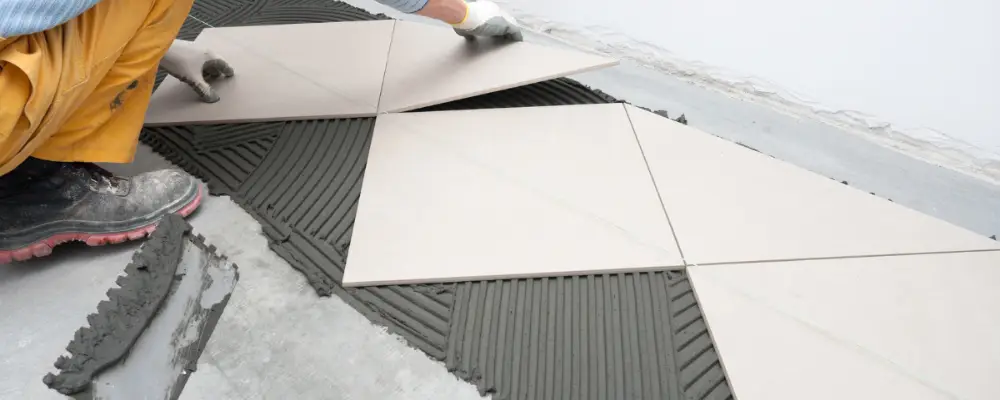
First, level the surface area before installation and make sure it is dry and clean. Pick cement tiles from boxes and soak them in water for some time. Using rulers, find the centre of the room or space and mark the perpendicular line. Start to fix the tiles from that centre and calculate the number of tiles required.

It can be installed by applying pre-mixed adhesive at the back of the cement tile or using thinset mortar. Leave 1/8 inches using tile spacers for grouting and fix the tiles one by one. Tamper them with a rubber mallet to ensure a levelled surface.

For edges near walls, you can cut cement tiles using a wet saw with a diamond blade. After installation is done, don’t walk on the floor and let it cure and dry for 24-36 hours.

Cement Tiles Vs Other Flooring Types


Cement Tiles

They are handmade using white and grey Portland cement, pigments, and sand. These tiles can give unique and textured patterns and add grandeur to floors.

Porcelain Tiles

These are one of the conventional tiles in use for many years. Clay, quartz, and other ingredients are heated at high temperatures to achieve high durability, sleek and glossy finishes. Porcelain tiles enhance the look of countertops, dining areas, and living rooms.

Ceramic Tiles

These tiles are similar to porcelain tiles and are made from clay, silica, and chemicals, along with colourants. They are available in various colours and patterns with a glossy surface. These thin tiles can be used in bathrooms and kitchens.

Marble flooring

They are more expensive, but give a luxurious look. They are natural materials composed of calcium carbonate and modified rock.

Granite 

Granite slabs are natural materials produced under extreme heat and pressure. They give a natural and durable finish and can be used in outdoor spaces also.

Conclusion

The history of cement tiles shows their versatility and durability. These tiles bring architectural style and beauty to homes. Before purchasing, consider the pros and cons discussed above. If you prefer aesthetics over others and are willing to maintain them regularly, cement tiles are an excellent choice. Ensure they are properly produced and sealed. Ultimately, successful installation is crucial to their performance.

FAQs

1.What are the benefits of cement tiles?

Cement tiles are unique, handmade tiles that promise durability. They can add beauty and charm to any space in the home.

2.How to maintain cement tiles?

Regularly clean cement tiles with mild detergent, water and coconut oil. Reseal them every 2-3 years to protect against stains. Avoid using harsh chemicals as cleaners.

3. What is the size of cement tiles?

Cement tiles usually come in 8×8 inch sizes, but are also available in 12×12 inch sizes based on requirements.

Where to Keep Medicines as per Vastu? – Its Best Directions

0
where to keep medicines as per vastu

Are you frequently falling ill despite taking your medications?

The orientation of Vastu principles is strongly believed to aid in the betterment of health by shifting the medicines to different directions. By adhering to these architectural beliefs, the north-northeast direction is considered ideal for storing medicines, as it promotes your welfare. 

Proper medicine storage enhances the potency of the medicines as well as creates a harmonious environment for a peaceful life. Each direction holds unique energies that can improve your health outcome. In this article, we will discuss the optimal directions for placing medicines and their potential impact on your health.

Importance of Proper Placement of Medicines According to Vastu

The way medicines are stored may seem like a small detail, but it has a great impact on one’s life. The principles of Vastu Shastra suggest that energy imbalances in your house may interfere with your health. 

Positioning medicines correctly could help maximise their effectiveness. While there may not be immediate results, the long-term benefits can improve health and well-being. Ancient beliefs emphasise that time and place significantly impact our lives. Storing medicines in the proper location, according to Vastu, may help reduce the frequency and severity of illnesses over time.

Ideal Directions to Store Medicines as Per Vastu

Only some directions are suited for placing your medications. Some specific directions may prevent your chronic illness. If you find no solution after taking a long time to find medicines, you may try to change where you place your medications. The best possible directions to store your medicines are as follows:

North-East Direction for Health and Healing

A clutter-free northeast direction is ideal for positive energy flows, which aid in medical treatment and speedy recovery. This area is perfect for meditation, prayer, and yoga, which support our potential health improvement. This direction is connected with the water element. So, placing small water fountains and water storage areas in this place may enhance the overall health of the family. The water element will increase the energy flow into your house.

South-East Direction for Storing Medicines

Vastu never suggests keeping medicines in the southeast direction. It may create an energy that suggests your intake of medicines never ends. So, be careful while placing medicines in this direction. This direction is associated with the fire element ideal for the kitchen and refrigerator. Keeping small indoor plants in this direction may improve your health.

Common Vastu Mistakes to Avoid When Storing Medicines

  • You should not keep your medicines in the southeast direction in your house. It will cause more medical illness for you and your family. You should completely avoid this direction for storing your medicines. If you keep continuing this, you or your family members may be affected by diseases unknowingly for a long time. So, the southeast direction is not auspicious for placing your medicines.
  • The north and west directions are considered among the worst for alleviating diseases. It may even worsen the condition by creating many unknown serious health problems.
  • The kitchen is not a suitable place for keeping your medicines. You may face some burns or cuts while cooking, but keeping medicines in the kitchen is not advisable.
  • Never make a separate place for keeping your medicines at home. It may be a welcome sign for your health problems. Problems will never go away from you; otherwise, surround you everywhere at every time. Precaution is different from this. 

Vastu Do’s and Don’ts for Medicine Cabinets

Here we are going to explore some vastu principles for keeping your medicine cabinets that help you to get better health conditions. Some do’s for medicine cabinets as per Vastu as follows:

Do’s for Medicine Cabinets:

  • Always keep your medicines in a storage box that is cool and dry to maintain the quality of the medicine.
  • Placing medicine storage in the bathroom cabinet may recall your medicine pattern and remind you to take it regularly without fail.
  • Your dressing table is a good choice to store your medicines. 
  • Storing your medicines on a shelf may keep the children away. 
  • Some people may store their medicines in refrigerators because some may have to be stored in temperature-controlled spaces.

Don’t’s for medicine cabinets:

  • You should never keep your medicines on the top of your refrigerator. Because the heat released from it may cause a reaction over the medicines, even if they are covered.
  • You are not advised to keep your medicines near inverters or batteries due to their hazardous nature.
  • It is not preferable to place your medicines near your gas cylinder or on top of the hot appliances, as it may create the reverse effect of the medicines.
  • Placing medicines next to a dustbin is not advisable, as it may contain more germs or bacteria, as it causes severe illness to your health.
  • Medicines should always be kept away from the reach of children. They may not know the dangers of having medicines unknowingly.

Conclusion

Vastu principles can aid in a quicker recovery. Keep medicines safely out of reach of children and pets at all times. Before storing any medication in the refrigerator, make sure to check its expiration date. Ideally, place your medicines in the north or northeast directions to support faster healing. If you have been dealing with a long-term illness, consider relocating your medicines to these directions for a change. You may notice positive results soon after making this adjustment.

FAQs

1.Which corner of the house is for health?

The northeast direction is suitable for health. It is considered the god’s direction that suits receiving positive energies into the house.

2. How to remove illness from the house?

Sanitise your floor regularly using rock salt once a week. It keeps you away from health-related problems.

3.Can we keep medicines in the west direction?

Yes. You can keep your medicines in the west direction. You may have a positive impact on your body.

Occupancy Certificate – Benefits & Apply Step-By-Step Guidance

0
Occupancy certificate

Real estate transactions involve verifying plenty of legal documents to ensure the safety of property ownership. Among them, the occupancy certificate is quite significant. It is a validation that the building adheres to local regulations and is completely safe for occupation.

This blog carries important information related to the occupancy certificate, including its benefits, steps involved, required documents, and consequences associated with it.

If you are about to register any real estate property, then ensure the property’s OC is clear and as per the estimated guidelines.

What is an Occupancy Certificate?

An occupancy certificate, also known as a building occupancy certificate, is a legal document provided after a new building construction is finished. It is issued by the planning authority or the local government to certify that safety regulations, approved building plans, and construction norms have been met.

Before granting this certificate, municipal authorities will inspect the site thoroughly and ensure it meets all the prescribed regulations. This certificate is compulsory to avail essential services like electricity, water, and sanitation.

Benefits of Occupancy Certificate

An occupancy certificate is a legal document certified by local authorities. It is proof that the building is entirely safe to use and ready for occupancy.

Here are some significant reasons to avail an OC:

Access to Essential Utilities: An occupancy certificate is essential to obtain electricity, sanitation, and water services. Without this document, securing these basic amenities is quite complicated for residents.

Legality and Safety: An occupancy certificate is a legal document provided by the local government to validate your property. It serves as an evidence that the building is safe to use and ready for occupancy.

Buying or Selling Property: The submission of a valid OC is essential when buying or selling a property. In order to ensure that everything is conducted under legal regulations, it is vital to have an OC.

Loan Approval: The OC certificate plays a significant role if you are planning to obtain a loan. Whether you are purchasing or renovating a home, both banks and lenders require OC as part of the loan approval process.

Legal Ownership: Property tax payments are only be made after securing the occupancy certificate. Obtaining an OC is a primary step for the builder or owner in the property ownership process, which requires certain crucial documents for approval.

Who Should Apply for an Occupancy Certificate?

The primary process begins with the property developer, who needs to ensure that all relevant rules and regulations are adhered to in the building as per the approved blueprints. Once the building is finished, the developer applies to the local governing body.

The burden of getting approval can vary under some circumstances. If it is a large project divided into stages, the developers may apply for a partial occupancy certificate for each finished stage. The completed portions can avail themselves of essential amenities like water, sanitation, and electricity connections. Residents can move into their apartments even though the overall project is still in progress.

An OC can be applied only by developers, not directly by the property owners. When applying, the local authorities will inspect the place before taking action.

How to Get an Occupancy Certificate Online

Usually, the builder or developer of the building is responsible for applying for an occupancy certificate. The process is simple when applying through local government portals and authority websites. Once they have verified all the legal requirements, the OC will be provided. Here are the simple steps you need to follow:

Steps to Apply for Occupancy Certificate Online

Visit the Official Website Address: Every region has an online portal to handle property-related services. Search and access the official local municipal corporation or development authority website.

Log In: If you already have an account, then you don’t need to fill in your details for registration. You can simply log in with your credentials. If you are a new user, then fill in the essentials to register.

Fill up the Application Details: Once logged in, you’ll be navigated to the section for the occupancy certificate where you need to fill in and submit the property-related details, such as the building permit number, property ID, and other relevant information.

Upload Essential Documents and Paperwork: Local authorities require certain important documents to verify, including structural stability certificates, approved building plans, Building completion certificates, and fire safety certificates. Ensure all the required documents are uploaded as mentioned in the portal.

Application Fee: Once the application form is submitted successfully, you’ll be asked to pay the fee online. Use your preferred payment gateway specified by the portal and keep the payment receipt safe for future reference.

Track Status: You can track the application status once the form is submitted. Before issuing the certificate, the local authority may conduct a direct visit to ensure that all the building standards are followed by the prescribed regulations.

Download the OC Certificate: Once the verification is done, you can download the occupancy certificate from the portal. Print the digital copy for your records.

Documents Required for Occupancy Certificate

The following are the most mandatory documents that you need to submit when applying for an occupancy certificate:

  • Project completion certificate
  • No objection certificate (NOC) for fire and pollution
  • Project commencement certificate
  • Photographs of the property or building after completion
  • Photographs of rain harvesting systems and solar panels
  • Building sanction plan
  • Tax assessment along with the latest property tax receipt
  • Area calculation sheet for each floor, signed by the authorised architect

How to Verify an Occupancy Certificate?

Occupancy certificates protect you from all kinds of financial and legal risks. To verify that OC is valid, you can follow these 3 methods:

Contact your Local Authorities: As stated earlier, OC is certified by the local authority to ensure that the building is safe to use. So, you can visit the urban development or local municipal office directly to confirm your OC’s validity.

Online Portals: You can verify the status of an occupancy certificate through local government portals. By entering your project details, the status will be shown immediately.

Common Mistakes: Be aware of common red flags, including expired documents, missing signatures, and incorrect property details, which can indicate that your OC is invalid.

Consequences of Not Having an Occupancy Certificate

The occupancy certificate is crucial for any new buildings. Without this legal document, owners face consequences in obtaining basic utilities such as water and electricity connections, challenges in securing home loans, and penalties charged by local authorities.

Legal Complications: New buildings without an OC can be considered as unauthorised. Both the buyers and owners are about to meet the legal complications.

Ineligibility for Amenities: Property owners are ineligible to obtain fundamental connections like water, sanitation, and electricity.

Loan Risk: Banks and lenders will ask for documents, including an occupancy certificate, when applying for loans. It becomes difficult to proceed when your property doesn’t have an OC.

Penalties and Fines: Constructions without an occupancy certificate will be considered as a serious concern. Local authorities may impose fines or penalties for no OC, resulting in additional financial troubles.

What is a Partial Occupancy Certificate 

A partial occupancy certificate is generally provided to large construction projects for each developed section. Builders can apply for basic utilities and allow people to reside in the completed phase.

Partial OC is a green light for developers to sell and allow residents to move into a specific portion of construction. It is important to note that availing a loan for an entire project is tricky, and it may take time to complete the project and get final approval. To handle such delays, builders and developers can make use of this partial occupancy certificate.

Difference Between Occupancy Certificate (OC), Completion Certificate (CC), and Possession Certificate (PC)

When buying a new home or construction, buyers may tend to confuse the occupancy certificate with the possession and completion certificate. To be clear, we have listed the differences in detail.

ParametersOccupancy Certificate (OC)Possession Certificate (PC)Completion Certificate (CC)
PurposeThe purpose of OC is to ensure that the building is entirely safe for occupancy and ready to use.Possession certificate is to confirm that the particular property is handed over to the respective buyer.It is to certify that the building is constructed as per the approved plans.
Issued ByIt is issued by the planning body or local municipal authority.It is given by a builder or developer.Completion certificates can be applied at development authority or local municipal authority.
ImportanceOC is evident that the building meets all the safety norms and is completely fit for occupation.Confirms that the construction plans adhere to legal and technical requirements of regulations.Acts as a proof that the property ownership is legally transferred to the buyer.
When IssuedOnce after the local authorities verify the infrastructure and confirm that it has met all the estimated guidelines.After the completion of building construction work as per the approved plan.Issued after the buyer has settled the payment and takes possession of the property.

In a Word

Acquiring an occupancy certificate confirms a smooth and secure property transaction. Whether it is a small or large-scale project, OC guarantees the building’s safety, legality, and eligibility for basic utilities. It empowers home buyers to make informed decisions and shows interest in the immediate transaction process.

FAQs

1. How much time does it take to gain approval for an occupancy certificate?

The time period to receive an occupancy certificate can vary for each project depending upon the building plans and complications associated with it. Most commonly, it takes around 30 days from the date of application. If you provide all the essential documents and construct the building as per the approved plan, you will receive it shortly.

2. How do I check the status of the occupancy certificate?

To check the status of OC, you can:
Check online: Enter your property details and track your application status online using a local municipal corporation or development authority.
Local Authorities: If you can’t check status online, you can directly contact the local authorities or relevant department.
Visit the Municipal Office: You can visit the urban development or local municipal office to know your OC status.

3. What steps to take if your builder doesn’t provide an occupancy certificate?

If your builder or developer doesn’t provide an OC, you can take these steps:
Request the OC
File a complaint
Legal action
Withhold payments
Seek government help.
Avoid occupying the property.