Home Blog Page 29

Trusses in Construction: Properties, Types and Benefits

0
Trusses in Construction

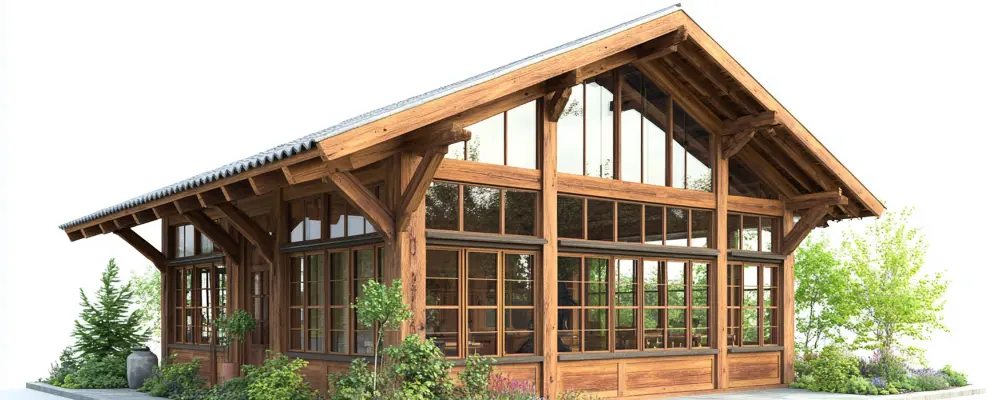
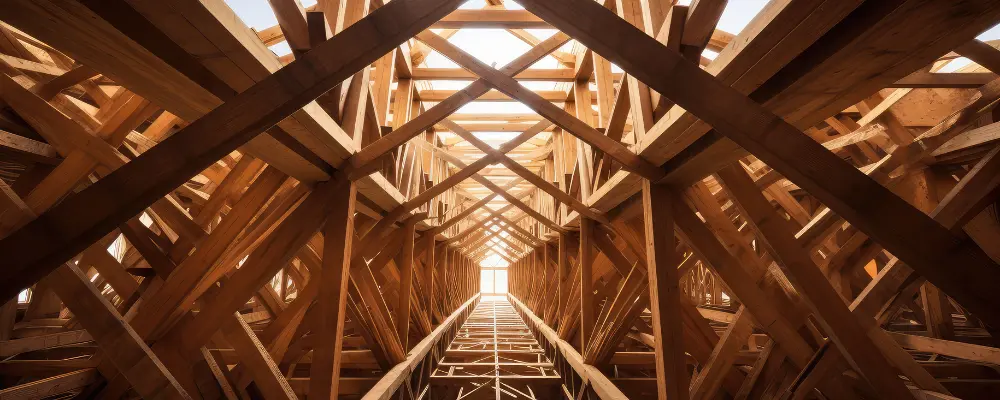
In modern construction, trusses are an essential element for creating stable, durable, and efficient structures. A truss is a structural framework made of triangular units to support heavy loads over large spans. The in-built stability and strength of triangular combinations make them ideal for supporting roofs, bridges and other architectural structures. This article will explore the different types of trusses, like wooden trusses and steel trusses, and their advantages, properties, and role in construction, especially in truss roof design and truss building.

Key Properties of Trusses

  • Load distribution: Trusses are good at distributing loads across their triangular framework, reducing the risk of localized failure. This makes them ideal for supporting heavy roofs and long-span bridges. 
  • Lightweight: Though powerful, trusses are lightweight compared to other structural systems, particularly in the case of wooden trusses used in residential construction. 
  • Durability: Steel roof trusses and metal roof trusses are known for their longevity and resistance to environmental factors like corrosion, fire and pests.
  • Rigidity: Trusses provide a high degree of rigidity, preventing excessive movement or deformation under load. 
  • Scalability: From small, trussed roofs in homes to expansive steel-framed industrial buildings, trusses are scalable and adaptable to a wide range of construction needs.

Materials Used in Trusses

Trusses are made from either wood or metal, with wooden trusses and steel trusses being the most used materials in construction. 

  • Wooden Trusses

Wooden trusses are preferred for residential and light commercial buildings due to their cost-effectiveness, ease of construction and aesthetic appeal. Wooden roof trusses can be premade and installed quickly, making them suitable for smaller buildings. However, wood is susceptible to moisture, rot, and pests, so proper treatment is necessary to ensure long-term durability. 

  • Steel Trusses 

Steel trusses are normally used in large-scale industrial buildings, bridges, and structures where strength and durability are essential. Steel roof trusses and steel frame trusses are highly resistant to environmental factors like corrosion, making them suitable for heavy-duty applications. They can span much longer distances than wooden trusses and are more fire-resistant. 

  • Metal Roof Trusses

Trusses can also be made with other metals such as Aluminium, to be used for structures that need high strength-to-weight ratios. These trusses are perfect for large buildings with long spans, where minimal support columns are desired. 

7 Types of Trusses in Construction

Many types of trusses are used in construction, each suited for specific applications based on factors like load-bearing capacity, span and material choice. Trusses are made from various materials, including wooden trusses and metal trusses like steel trusses, and they serve specific purposes based on the requirements of the structure. The brief about these trusses, as well as their application and benefits, are explained below. 

1. King Post Truss 

The king post truss is a traditional truss and the simplest type of wooden roof truss. It consists of a central vertical post (the king post) supporting the apex, two diagonal members and a horizontal tie beam. This truss is suitable for short spans, usually under 8 meters and is used in trussed roofs in residential structures. 

ApplicationsBenefits
Small residential buildingsSimple and economical 
Short-span wooden roof trussesEasy to construct and install

2. Queen Post Truss 

The queen post truss is similar to the king post but includes two vertical posts, allowing it to span longer distances between 8 to 12 meters. The design is often found in steel trusses and wooden trusses for medium-span buildings, supporting larger roofs with extra support in the middle of the span.

ApplicationsBenefits
Medium-sized roofsGreater span capacity than King post
Steel frame trusses in light commercial buildingsIt provides increased stability and support

3. Pratt Truss

The Pratt truss is widely used in steel roof trusses and wooden roof trusses. Its diagonal members face inwards, and the vertical member takes the tension forces, making it suitable for longer spans and heavy loads. This type of truss is found in industrial buildings and bridges, where load-bearing efficiency is important. 

ApplicationsBenefits
Bridges and large buildingsEfficient load distribution 
Steel frames and trusses for industrial purposesSuitable for long spans and heavy loads

4. Howe Truss

In comparison to the Pratt truss, the Howe truss has diagonal members that slope outwards, taking tension forces and the vertical members in compression. This design is especially effective for heavy loads and long spans. Howe trusses are often used in steel roof trusses for large industrial buildings and bridges. 

ApplicationsBenefits
Railway bridgesExcellent for supporting substantial loads
Heavy-load-bearing structuresSuitable for large spans

5. Warren Truss

The Warren truss uses equilateral triangles to distribute loads evenly across its structure. Its simple, repetitive design is ideal for both metal roof trusses and wooden trusses, making it an adaptable choice in various construction projects.  

ApplicationsBenefits
Long-span roofs and bridgesUniform load distribution
Truss roof design in large halls and factoriesEfficient use of materials and simple construction process

6. Fink Truss

The fink truss is a common choice for residential and light commercial buildings. Its web-like arrangement provides excellent support for moderate spans and is used in truss roof design for homes. Fink trusses can be made from either wooden roof trusses or steel frame trusses. 

ApplicationsBenefits
Residential roofingLightweight and efficient and ideal for mid-span roofs
Light commercial buildingsEasy to fabricate and install

7. Bowstring Truss 

The bowstring truss features a curved top chord that provides aesthetic appeal while also allowing for large, open space beneath. This type of truss is used in large structures like aircraft hangers and sports arenas. 

ApplicationsBenefits
Sports halls and gymnasiumsSuitable for wide, open spaces
Hangers and large warehousesStrong, durable, and visually appealing

Benefits of Trusses in Construction

  • Cost-effectiveness: Wooden trusses and metal trusses offer cost savings compared to other support structures. The lightweight design reduces the need for excessive materials, translating into lower material and labour costs. 
  • Strength and Stability: Trusses are strong and allow for efficient load distribution. Steel trusses can bear heavy loads, making them suitable for large industrial and commercial buildings.
  • Material Efficiency: The geometry of trusses allows efficient use of materials, ensuring smaller, lighter components that provide maximum structural integrity. This allows for faster construction time when using prefabricated components. 
  • Long Span Capability: Trusses are perfect for open spaces like warehouses, bridges, and big auditoriums because they can span large distances without the need for intermediate supports. This is especially true for steel frame trusses.
  • Sustainability: Wooden trusses are a sustainable option as they can be obtained from renewable timber. Steel trusses require more energy in production, are recyclable and contribute to sustainable practices.
  • Design Flexibility: Trusses offer great flexibility in terms of design, for both residential and large industrial buildings. The various types of trusses ensure that architects and engineers can choose the best configuration for their projects. 

Conclusion

Trusses are vital in modern construction, offering a cost-effective, durable, and flexible solution for supporting roofs, bridges, and large open spaces. Whether using wooden trusses for residential roofing or steel trusses for industrial structures, their triangular geometry provides strength, stability, and efficiency. The various types of trusses allow for flexibility in design and application, ensuring that the trusses will continue to be a crucial element in construction projects of all places.  

Everything You Need to Know About House Construction Contracts

0
House Construction Contracts

Building a new facility requires a large financial investment, careful coordination, and planning based on a sound legal foundation. It is important to have a house construction contract agreement meticulously written to protect the interests of the contractor and the property owner and to guarantee that the job is executed without a hitch. 

An agreement legally binding the owner and contractor in charge of erecting a structure is a construction contract. It details all facets of the building process, including the scope, timetable, budget, and extent of the endeavour. This document is essential to guarantee that the project satisfies all the necessary criteria, stays under budget, and finishes on schedule. 

We will review the key ideas to remember when implementing your building contract in this article.

What is a House Construction Agreement?

The home construction agreement is a legal contract that outlines the terms of construction and the conditions of performing a construction job between the homeowner and the contractor. This document is referred to as a “house construction agreement.” Its functions are as follows: The building process should be as smooth as possible, and the interests of both parties involved should be safeguarded.

Tasks, location, work descriptions, and the quality of work to be done and materials to be used are clearly described in the agreement. Consequently, the chances of cases of disputes or misunderstandings during construction work may be minimised, since all the stakeholders of a particular project are fully informed of all the specifications expected from them.

Types of Construction Contracts

The size and kind of the project, the delivery method, duration, cost, and the participants determine the many types of contracts used in the building sector. A project depends on knowing which construction agreement is required in a certain condition or instance. The different types of construction contracts in the building industry are as follows:

Lump-sum or Fixed-cost agreement 

The contractor offers a single price to provide the entire service throughout the project. Unlike the bidding process, the contractor will quote a project price instead of a price for each of the deliverables. This type of contract is basic and is suited for contracts where the scope of work is easy to describe.

When the scope of work has been defined in detail, the contractor is expected to provide a fixed-price tender. Before tendering a fixed-price bid, the contractor should also know the risks attached to the proposal and the project specifications. This mandates the contractor to be competent and experienced to provide such a contract.

Unit Price agreement

Item rate contract, value contract, measurement contract, and schedule rate contract refer to the same concept as the “unit price contract.” This type of construction contract management involves the contractors developing rate estimates for specific items of work based on a schedule of quantities provided by the owner.

Cost Plus agreement 

A cost-plus agreement allows the contractor to recover all expenses incurred in constructing a project. Thus, direct expenses include labour, materials, and supplies, which are examples of direct expense categories. They also include administrative costs like insurance, travelling, and part of the office space rent. In addition, contractors receive a fixed profit share.  

Turn-key agreement

A turn-key contract is a business deal wherein a complete product or service is delivered in every detail. This differs from entering into a staged project development agreement with an owner. The developer is employed to finish the whole project, and no intervention from the owner is allowed. The project is only handed over after it is complete and fully operational, and the builder or developer may not be the owner or operator of the project. In this regard, the developer is ‘handing over the keys’ to the new owner after the project.

Time and materials agreement

A time and materials (T&M) contract is one of the critical contracts used in construction. In this contract, an owner pays a set price, the cost of the material used in construction, and the percentage of profit incorporated at the time of construction. This contract is closely related to a lump sum type of contract.

Time and materials contracts are usually applied when the general scope of work is rather vague, and it is impossible to quantify the time and materials spent. In such a case, a fixed-price contract is not feasible because real costs could greatly exceed the contract price.

Target agreement

Under this arrangement, the contractor is paid based on the cost plus the percentage of completed work. Moreover, he or she is paid an extra percentage, plus or minus, for any savings or surplus compared to either an earlier estimate of the total cost or a target value created by evaluating the finished job and rating it at prior agreed-upon rates.

Terms of a House Construction Contract

Certain points need to be included in the construction agreement format signed between the owner and the contractor to lay down a strong base for your construction project.

  • Project Details: The agreement should precisely specify the project’s location, scope of work, and specifications, including the materials used, the degree of artisan quality, and special needs or features.
  • Contractor Details: This section should contain the contractor’s name, physical and mail address, phone and fax number, licence number(s), qualifications and certification(s).
  • Schedule: The contract must specify when and how the project is to be done, and the schedules of deliverance with or without penalties.
  • Payment Terms: It is, therefore, important to be specific about the contractual price, down payment, progress payments, and the last payment. The payment method and any penalties that the buyer may incur if they pay later should also be included.
  • Change Orders: Changes to the project’s scope should be sharply defined, and a clearly stated process should deal with approvals, cost impacts, and time effects.
  • Warranty: This should involve the period within which a contractor is required to correct defects in quality or materials which he has provided.
  • Termination: Which circumstances allow either of the parties to cancel the agreement, such as a breach of contract, insolvency, or failure to meet the expectations?
  • Governing Law: Specify the law governing the agreement and the court of jurisdiction in case of any legal proceedings.
  • Signatures: The contract is usually a written document and has to be signed by both the homeowner and the contractor, and each should be given a copy.

Benefits of Having a Construction Contract for Residential Projects

Construction is a complex and demanding task in any building project. In commercial projects, several aspects may encompass the design, construction, and management aspects of the project. Construction project management is sometimes difficult because it can be hard to coordinate everyone and ensure that the project will be done before the deadline and without going over the budget. This is where a construction contract comes in handy. Some of the other benefits are:

Legal Protection

Legal protection is one of the biggest advantages of having a construction contract. Construction contracts describe the legal implications of the construction project. This helps ensure that everyone in the transaction knows the parties’ duties, rights, and obligations. Disputes can be resolved according to the clauses of a construction contract that give legal protection to each of the parties involved. The contract can also serve as a reference if there are any controversies, confusion, or litigation that may arise in the course of the project.

Clear Communication

In construction projects, communication is paramount. Project construction contracts are handy organisational tools that enable efficient communication between the client, the contractor, and any other relevant actors in the construction project. They allow the involved parties to discuss the project schedules, budgets, timelines, and quality. It also assists in making a confirmation that everyone is in harmony and thinking along the same lines.

Cost Certainty

Business ventures can be expensive, and construction contracts help ensure that all the parties know how much the project will cost. A construction contract will have an estimate of the materials to be used, labour costs, equipment costs, and other cost factors. In addition, there should be a breakdown of any change orders or modifications that may be made on the project to avoid any shock regarding the overall cost of the project.

Better Project Management

Construction contracts play a role in the structuring and coordination of the project too. This defines the broad project duration and schedule, showing the important landmarks at various project phases. The contractor can also use the construction contract to check whether the project is implemented according to the plan. Also, it enables the contractor to be shielded from any possible scope alteration that would prove costly.

Improved Project Quality

The construction contract also provides the project with quality specifications. This ensures that everybody who participates in a project must meet certain standards regarding the material to be used, methods of construction, safety measures, and quality of production. This way, the contractor and the client can refer to the contract with standard quality requirements, culminating in a project with better overall quality.

Conclusion 

House construction agreements maintain complete transparency to execute the house construction practices. If the house construction contract and detailing concept is in place, it’s time to move towards the leading construction company in India. Brick & Bolt provides end-to-end construction services to completely transform your dreams into physical form.  We have best real estate developers and consultants in place who leave no stone unturned in constructing a space that fulfils all your requirements and desires. Contact us today and entrust the construction of your house into the safe and expert hands of Brick & Bolt. 

All You Need to Know About Placement of Concrete in Construction

0
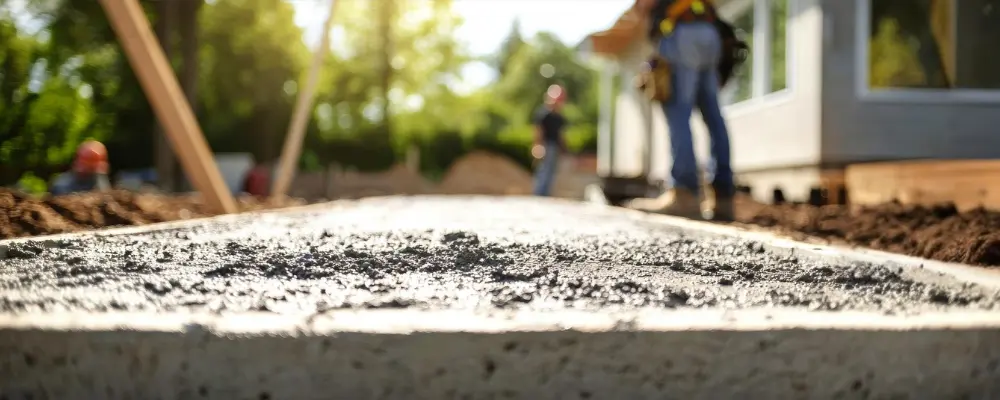
Concrete Placement

As you all know, concrete is the primary material required for most construction work and is known for its durability, strength and versatility. For concrete to perform well, it is very vital to ensure proper placement of concrete. This article will guide you and provide you with all the techniques, considerations, and practises involved in the placement of concrete, ensuring the material’s best performance in various construction projects.

What is Concrete Placement? 

Concrete placement is the delivery of the freshly prepared concrete mix to the specific location in a form that ensures it meets the design specifications. To prevent defects, proper placement of concrete is important as it provides uniformity and achieves the desired structural integrity. The concrete placing process involves transportation, pouring, spreading, compacting and finishing of the concrete.

Concrete Placement in Various Settings

Concrete placement is an important part of construction, and its methods depend on the project requirements, site conditions, and type of structure. Below are different methods of concrete placement, along with their detailed processes, which help in meeting the project’s structural and aesthetic requirements.

1. Process Before Concrete Placement 

Before any concrete is placed, careful planning and preparation are essential. This includes selecting the right equipment, laying out on the project site, and choosing appropriate tools to ensure efficient and safe concrete placement. The steps are:

(i) Formwork Preparation: The formwork, which acts as a mould for the concrete, must be set up and inspected for strength and stability. It should be free of leaks and positioned to ensure the smooth flow of concrete without segregation of materials. 

(ii) Setting Dimensions: The area and volume of concrete to be poured must be calculated and marked. This ensures that the formwork will hold the exact quantity of concrete required for the structure. 

(iii) Placement Timing: Once the concrete mix is prepared, it must be placed within 30 minutes of leaving the mixer to prevent it from hardening early on. Concrete should be poured as close to its final position as possible to avoid the risk of weakening the structure or causing displacement of the reinforcement.

2. Placement of Concrete in Layers 

Concrete is often placed in layers for large structures like dams, piers, and abutments. This method is necessary to secure uniformity and prevent issues like cold joints or weak points within the structure. The important features of this technique are:

(i) Layer Thickness: Concrete should be placed in horizontal layers of uniform thickness. For reinforced concrete, the layer thickness is between 15 to 30 cm, while for plain concrete, it ranges from 35 to 45 cm. 

(ii) Bonding Layers: The first layer, also known as the jointing layer, provides a rough surface for bonding with the next layer. This is followed by a smoother finishing layer to prepare the surface for further construction. 

(iii) Avoiding Cold Joints: It is vital to ensure that each layer is properly compacted and stiffened before the next is applied. The placement process should be quick enough to avoid cold joints, which can form when there is a delay between pouring layers, leading to weak points in the structure.   

3. Concrete Placement in Special Conditions

Special situations need specific concrete placement methods to ensure the material reaches its final position without segregation or weakening. These conditions can include confined spaces, challenging site layouts, or proximity to existing structures. Some methods are:

(i) Vertical Placement: When concrete must be placed in confined forms, tools like chutes, buckets, or elephant trunks are used to deposit the material vertically. This prevents the segregation of the aggregate and ensures even distribution within the formwork. 

(ii) Temperature Regulation: In hot or cold weather conditions, the temperature of the concrete must be monitored to ensure that it cures properly. Measures may include cooling the mix with chilled water or using insulation to maintain the ideal temperature range. 

(iii) Transitioning Between Old and New Concrete: In scenarios like extending a sidewalk, it is important to create a smooth transition between old and new concrete by using proper fill material and ensuring that the surfaces bond effectively.

4. Framework for Concrete Placement

The framework or formwork is a temporary structure that holds the concrete in place until it hardens. It must be sturdy, durable, and well-designed to withstand the pressure of the wet concrete. Important factors for formwork include:

(i) Structural Integrity: The formwork should be strong enough to maintain its shape and prevent deformation during the pouring process. Materials like steel, wood, or plastic are commonly used, depending on the type and size of the structure being built. 

(ii) Watertightness: Formwork should be sealed tightly to stop the concrete from leaking out, which could lead to defects in the finished structures.

(iii) Release Agents: To ensure easy removal of the formwork once the concrete is cured, release agents like oil or grease are applied to the inner surfaces. This prevents the concrete from sticking to the formwork and allows for clean removal without damaging the final structure.

Key Considerations in Concrete Placement 

Following are the vital considerations you must know during the placement of concrete. 

1. Workability

It affects the ease of mixing, transportation, placing, and finishing concrete. Workability influences the consolidation and surface quality of the placed concrete. Factors like water-cement ratio, aggregate size and shape, admixtures, and suitable temperature all affect workability.

2. Segregation and Bleeding 

The separation of aggregate from cement paste can lead to non-uniformity and weak zones within the concrete. Segregation is caused by excessive handling or improper mix proportions. The moving of water to the surface after placement can weaken the surface layer and cause durability issues. 

3. Compaction

Proper compaction eliminates air voids, ensuring that concrete surrounds the reinforcement and fills the framework, improving strength and durability. For pavements or large slabs, compaction methods like internal or external vibrators, roller compaction and manual methods like rods are used.

4. Temperature Control 

While cold weather concrete placement slows down curing and strength development, hot weather concrete placement increases hydration, which speeds up the setting and may cause thermal cracking. To accelerate curing methods of concrete placement in cold weather, use heaters, insulating blankets, chilled water, and shade.

Conclusion

In construction projects, the quality and performance of a structure are mostly affected by the placement of concrete. Using the right methods and taking important factors like workability and compaction into account is important for successful concrete placement. These measures enhance the structural integrity and durability of construction and contribute to the overall safety and longevity of the built environment. If you want your project to be done perfectly, consult the engineers and experts at Brick & Bolt, who can help you achieve optimal results in concrete placement, leading to structures that are strong, durable and meet your design expectations.

A Comprehensive Guide to Mud Flooring 

0
Mud Flooring

Mud flooring is a traditional flooring technique used for centuries, especially in rural and tropical areas. Known for its eco-friendliness, low cost and simplicity, mud flooring has seen a comeback in modern architecture as people increasingly embrace sustainable and natural building methods. This guide will provide a proper understanding of mud flooring, its benefits and applications, and how you can use it in various spaces. 

What is Mud Flooring? 

Mud flooring is exactly what it sounds like, a flooring technique made primarily from natural soil. It involves using a mixture of mud, clay, water, and sometimes organic materials like straw or cow dung to prepare a solid, smooth, durable floor. In certain regions, mud flooring is also called murram flooring, primarily when specific materials like murram (a type of laterite or disintegrated rock soil) are used.  

History and Cultural Importance of Mud Floors 

Historically, mud flooring has been common in many cultures worldwide, particularly in tropical climates with high temperatures. The natural thermal properties of mud make it a great insulator, helping to keep homes cool in hot climates. In India, Africa and various parts of Southeast Asia, mud flooring remains a symbol of cultural heritage. It is deeply tied to the rural lifestyle, where natural resources are readily available. This flooring method has been passed down through generations, and even with the rise of modern flooring materials like concrete and tiles, it remains popular in many rural areas as well as in modern construction. 

How to Make Mud Flooring 

If you are considering installing a mud floor, it is essential to understand the basic process and materials required. Here’s a simple guide on how to make mud flooring:

Materials Required 

1) Mud/ Clay: The primary material, mud, should be free of large stones or debris. Clay content should be high to ensure good binding.

2) Water: Essential for mixing the mud into a workable consistency. 

3) Organic Additives: In some regions, straw, rice husks, or cow dung are mixed with the mud to increase strength and durability. 

4) Sealing Agent: Natural oils like linseed or castor oil can be used as a waterproofing agent. 

Mud Flooring Process 

Below is a simple guide for the mud flooring process.

1. Preparation of the Surface: Start by levelling the ground where the flooring is to be applied. Remove any stones, roots, or other debris.

2. Mixing the Mud: Mix the mud with water until you have a thick, paste-like consistency. If you are using organic additives like straw, blend them in at this stage.

3. Application: Spread the mud mixture evenly across the surface. Use a wooden plank or trowel to smooth it out and ensure an even thickness.

4. Drying: Allow the mud floor to dry naturally. This can take several days, depending on the climate and weather conditions. 

5. Sealing: Once dry, apply a layer of cow dung paste, natural oil, or a mixture of other similar materials to seal the surface. This helps to prevent cracking and water damage.

Modern Applications of Mud Flooring

With the growing trend of sustainable architecture, mud flooring has seen a comeback in contemporary building designs. Here are some of the modern uses of mud flooring:

1. Eco-friendly Homes: For those looking to build an eco-friendly home, mud flooring can be used in conjunction with other sustainable building techniques like earth construction, bamboo frames or thatch roofing. The use of natural materials not only reduces environmental impact but also creates a living space that is in tune with nature.

2. Resorts and Eco-Lodges: Many eco-resorts and lodges have incorporated the aesthetic and environmental benefits of mud flooring. It’s common to find such floors in retreat centres focusing on wellness and reconnecting with nature. 

3. Interior Design Trends: In urban areas, mud flooring is sometimes used as a stylistic choice, especially in spaces with popular rustic or minimalist designs. The raw, earthy feel of a mud floor can add warmth and texture to modern interiors.

Advantages of Mud Flooring 

A few of the advantages of mud flooring that make it a good choice are:

1) Eco-friendly and sustainable: One of the important benefits of mud flooring is its minimal impact on the environment. It uses natural, locally sourced materials, and the carbon footprint involved in its production and transportation is lower than other construction materials like concrete or marble. 

2) Cost-effective: Compared to modern flooring methods, mud flooring is very cheap. The materials needed are mud, water and organic additives that are often available in abundance near construction sites. This also reduces the transportation cost of materials and makes it suitable for those looking for affordable housing solutions. 

3) Thermal insulation: Mud is known for its natural ability to regulate temperature. In regions where temperatures soar high during the day, mud flooring can help keep the interiors cool. Its high thermal mass absorbs heat during the day and releases it slowly, maintaining a comfortable indoor climate. In colder climates, adding straw or other insulative materials can help warm the space during winter. 

4) Aesthetically pleasing: While the concept of mud flooring might sound simple, it can be aesthetically pleasing. Its earthy tones and smooth, natural finish create a rustic charm that’s difficult to replicate with synthetic materials. In modern homes, it can be a statement of sustainable design, appealing to those who value natural beauty. 

5) Biodegradable and non-toxic: Mud is non-toxic and biodegradable, which makes it appealing for households aiming to reduce chemical exposure and minimise waste at the end of the building’s life cycle.

6) Easy to Maintain: Mud flooring is easy to maintain with regular application of a cow dung and water mixture or simply reapplying a fresh layer of mud, and the floor can last for many years. Cracks and damage are easily repairable with locally sourced materials without the need for costly repairs. 

Disadvantages of Mud Floors

While mud floors have many benefits, there are also a few drawbacks.

1) Susceptible to Water Damage: Mud floors are vulnerable to water damage and excessive moisture can lead to deterioration and cracking. In areas with a risk of high rainfall or floods, additional steps like waterproofing the floors by sealing the surface with oils or waxes must be used.

2) Needs Regular Maintenance: Mud floors need regular service to remain functional. The surface can wear down over time and may need periodic refinishing with fresh layers of mud or organic sealants. 

3) Limited Durability in High Traffic Areas: Mud flooring is not as durable as modern flooring materials like concrete or ceramic tiles in high-traffic areas, where the surface may erode faster and need more maintenance.

Conclusion

Mud flooring is a reliable and eco-friendly building technique that has stood the test of time due to its many advantages like affordability, sustainability, and aesthetic appeal. While it does require regular maintenance and may not be suitable for all climates, it remains a viable option for those interested in natural building methods and sustainable architecture. Whether used in rural homes or modern designs, mud flooring represents a return to nature and a commitment to reducing our environmental footprint. 

Oxide Flooring: Properties, Types, Advantages, and Disadvantages

0
Oxide Flooring

When designing your dream home and its interiors, every element present in the home plays a crucial role. Every little detail, from your windowpane to the last pillar, can affect the final aesthetics. However, most fail to focus on the flooring. An underestimated aspect of your home, flooring majorly affects the overall look and feel of your interior. You have an array of options to choose from, including stone, marble, tiles, terrazzo and bamboo for flooring. However, if you are an ardent lover of traditional flooring, red oxide flooring is an ideal choice. It is a piece of heritage that you cannot avail as a readymade commercial material; it is an art form.

Red oxide flooring has a close association with the culture and traditions of our country. It’s one of the oldest forms of flooring that we have utilised for several decades and is still around. The flooring method comes with numerous benefits, making it a popular choice among homeowners and construction professionals. With technological advancements, architects, designers and other construction professionals can create magnificent oxide floors in various textures and patterns. Read the blog to know more about the traditional oxide floor properties, types, advantages and disadvantages.

Oxide Flooring: Understanding the Concept

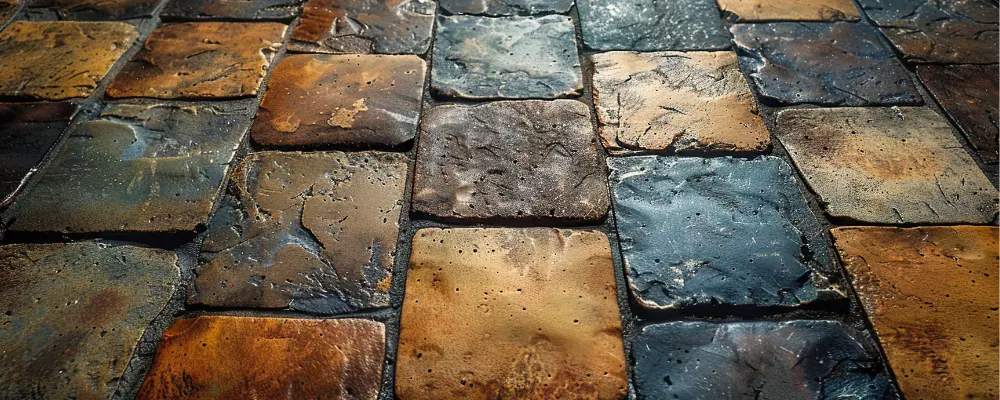
To create oxide flooring, professionals add red or other colour oxide paint or pigments to the substrate (generally cement) and then pack it with an organic sealant. When finished, it gives your floor a rich colour. Though red is the typical and most commonly used colour, you can avail oxides in a spectrum of colours. If you are looking to colour your floor in different shades of red, you can choose from 25 different tones that can be created by blending various shades.

Whether your space has traditional or modern décor, the warm tones of oxide flooring can add character to any room. These floors are easy to maintain and require occasional polishing to maintain the lustre. Most homeowners want a cost effective flooring solution that stands the test of time, for which oxide flooring is an ideal choice. However, your total cost varies depending on various factors, including size and preparation. You can avail the flooring in various styles from classic terracotta tiles to seamless poured concrete. 

Colours Available in Oxide Flooring

Homeowners and construction professionals have a plethora of colours in oxide flooring to choose for their homes. If you are not a fan of the red hue and are looking for unique colours, you can opt for other colours too. The various colours that can be availed in oxide flooring solutions include the following:

  • Red oxide flooring: Red is the traditional and most prevalent colour option in oxide flooring. It imparts an earthy appearance and pairs well with classic and rustic interiors.
  • Grey oxide flooring: A neutral and modern colour which resembles cement or concrete, grey is the most suitable for minimalist interiors. If you want to create a sleek look, grey is your colour.
  • Terracotta oxide flooring: It resembles the colour of clay pots. If you want to give your space a traditional or Mediterranean-inspired look, this is the ideal colour for your flooring.
  • Blue oxide flooring: A rare colour for colour cement flooring, opt for blue oxide flooring if you want to create a calm and serene atmosphere in your spaces.
  • Yellow oxide flooring: If you want to add life and brightness to your dull and boring space, yellow oxide is the right choice. Adding this colour to your cement floor will instantly uplift your area with a sense of joy.
  • Black oxide flooring: Want to achieve a dramatic and elegant look? Include the colour in your interior flooring and create a striking contrast with other elements in your space.
  • Brown oxide flooring: Do you love to give your space an earthy feel? The brown oxide is the best choice, as it complements both contemporary and traditional architecture.
  • Green oxide flooring: If you are a nature lover, green is your colour. Paint your floor in the green oxide colour and feel connected with nature. It’s most suitable for garden or outdoor floorings.

Types of Oxide Flooring

Oxide floors are available in a variety of types and finishes, including the following:

Liquid Red Oxide Coatings for Floors

Experts mix the liquid red coating with cement that you can use to cover any surface. Being non-toxic and non-hazardous, this flooring solution is perfect for public areas and areas that experience high foot traffic. You can spread the paint onto any surface, including concrete, wood, and tile floors. The liquid stains more easily than powder coatings, covering the imperfections effortlessly.

Terracotta Tile Flooring

Choose terracotta tiles with a red or other colour oxide finish for a classic and rustic look. Manufacturers make the tiles from natural clay that offers any space warmth and an earthy feel. They are durable, easy to clean and suitable for indoor and outdoor spaces.

Dry Powder Oxide Floor Coatings

Oxide dry powder is a powder you need to spread over an area requiring coating. Do not forget to coat it with a layer of clear sealant to create a robust and durable surface. With successive layer application, you can apply the powder instantly over concrete or any other suitable surface. You must use a protective sealant as the final layer, guaranteeing a long-lasting, high-performance coat.

Patterned Oxide Tiles

Red oxide flooring tiles have gained popularity over the last few years. Since these tiles come in attractive and gorgeous colours and patterns, they create interesting visual effects and textures. You can choose the tile in various exciting and aesthetically pleasing styles and patterns like basket weave and herringbone. These beautifully patterned tiles allow you to create endless designs and add personality to your space.

Oxide Flooring with Matte Finish

If you are looking for some uniqueness, opt for matte-finished floors. Since these floorings offer a soft, understated look, they complement various décor styles. With this non-reflective solution, you can enhance the beauty of the floors, creating a cosy and inviting atmosphere.

Oxide Flooring with Inlay Designs

Does the simple colour cement flooring look boring? You can create intricate designs or motifs by inlaying different materials (including stones, tiles and small chips) while the oxide flooring is being laid, creating stunning focal points. Whether you love geometric patterns, floral motifs or custom designs, the customisable inlays can add a touch of elegance and sophistication to the floors.

Self-Adhesive Backing Layer Oxide Floor Coatings

Experts create the red oxide coating with a liquid that you must spread over the area that requires coating. You then texture the area and lay a self-adhesive backing layer on top of the liquid coat to shield the textured surface area. It protects the area from damage by scrapes, stains and normal wear and tear. The textured layer forms over the treated areas, creating a tough and durable surface finish.

Advantages of Oxide Flooring

Amidst modern flooring solutions, oxide flooring has emerged as a popular choice amongst homeowners and construction professionals for various reasons, including the following:

  • Affordability: Oxide flooring solutions are a budget-friendly alternative which can give polished finishes similar to expensive flooring materials such as granite and marble. They are also customisable with various features such as embossing and inlaying.
  • Suitable for warm climates: Oxide flooring is ideal for Indian homes which generally experience tropical climates, as it offers a cooler surface during the summer months.
  • Longevity: Whether you opt for oxide floors in traditional red colour or in other colours, these flooring solutions are known for their durability and can last for several decades. Over time, you will find that the floor appears smoother and shinier. The best part of this flooring is that they are low-maintenance and resistant to fungus and mould.
  • Smoother surface: With this traditional flooring solution, you get a smooth  surface which is slip-resistant. You can witness the smoother finish your oxide flooring offers when compared to other popular flooring like granite or marble. If you have small children in your home who love playing, sitting and running on the floor, opt for this flooring, as it is gentle on the feet when you walk barefoot.

Disadvantages of Oxide Flooring

Despite having several advantages, oxide flooring solution comes with numerous disadvantages, including the following:

  • Susceptibility to damage: Do you live in a city that receives rainfall throughout the year or experiences high humidity? If yes, oxide flooring is not an ideal choice because these floorings are vulnerable to damage in humid environments. When exposed to areas that receive torrential rain or snow, traditional oxide flooring might experience surface cracks. Therefore, you must ensure to use these floorings for your home’s interior spaces rather than the outdoors.
  • Requires skilled labour: One of the common red oxide flooring disadvantages is that installing it is a meticulous process. You must contact professionals skilled in installing such floors, without whom errors can occur. Even a minute error might lead to the development of gaps and cracks, hindering the aura of the space and also leading to problems such as water seepage and eventual structural damage.

Conclusion

Today, most homeowners and experts associated with the construction industry are looking for sustainable, aesthetically pleasing and attractive flooring solutions. If you are one of them, install oxide flooring for your home or in your projects. Besides, instead of deteriorating like other flooring solutions, these traditional floorings become smoother and more aesthetic with time. Brick & Bolt focuses on financial viability and requirements of customers when designing a home, including appropriate flooring solutions. Whether you want a modern or traditional flooring solution such as oxide flooring, the experts associated with Brick & Bolt provide individually tailored solutions. Assuring real time project tracking, transparent communication, quality checks and regular updates on the projects, Brick & Bolt is a leading construction company in India. Contact Brick & Bolt today to build your dream home!

All You Need to Know About King Post Trusses in Construction

0
King Post Truss

The King post truss is one of the simplest and oldest structural frameworks used in architectural design. Commonly used in king post roof truss and bridge frameworks, this structural system has been around for centuries, dating back to medieval times. Its simplicity, strength, and economic efficiency have made it a preferred choice in various applications. This article digs deep into the design, applications, advantages, and limitations of the king post truss, providing a thorough understanding of this essential architectural structure. 

A Brief Overview of King Post Truss

A king post truss is a triangular structure normally made from timber or steel, composed of two principal rafters and a vertical central post called the ‘King Post’. The central post extends from the apex of the truss to the midpoint of the tie beam, creating two triangles. It is one of the simplest truss work designs in terms of both structure and function, and it is used to support a roof by spanning short to medium distances.

History of the King Post Truss 

The use of the king post truss can be traced back to the Roman and medieval periods, where they were primarily used in roof construction for churches and other significant public buildings. Timber was the primary material of choice, and the king post design was valued for its ability to span large open spaces without the need for internal support.

After the arrival of steel and iron, the king post truss began to be used in bridge construction. The ability of the truss to support load efficiently and economically made it ideal for small-to-medium-span bridges. Its simplicity means that it could be prefabricated and transported, making it a popular choice for railway and road bridges. 

Components of a King Post Truss 

1. Rafters: These are the sloping members of the truss work design that form the triangle’s sides. They bear the roof load and transmit it to the vertical king post.

2. King Post: This is the vertical central member, which runs from the tie beam at the bottom to the apex of the triangle. It is the key component that strengthens the truss and transfers loads to the foundation. 

3. Tie Beam: This is the horizontal beam at the base of the truss. It helps resist the outward thrust from the rafters, preventing the roof from spreading outwards. 

4. Struts: In some designs, diagonal struts can be added to support the rafters and increase load-bearing capacity. 

Variations of King Post Truss 

There are several variations of the king post truss, including:

1. Double King Post Truss: This variation features two vertical king posts, which allows for a longer span and a more even distribution of load.

2. Suspended King Post Truss: In this design, the king post is suspended from the rafters rather than being directly connected to the tie beam. This configuration is often used in bridge design.

3. Queen Post Truss: The queen post truss is a close relative of the king post truss but includes two vertical posts instead of one. This variation is used for slightly longer spans and distributes the load more evenly. 

Geometry of a King Post Truss 

The king post truss forms a simple triangle, one of the strongest geometric shapes in construction. The forces acting on the truss are tension in the tie beam and compression in the rafters, both of which are efficiently transferred downwards. King post truss dimensions are such that they support roofing structures, especially in small-span buildings like barns, sheds, and residential homes. The height of the king post roof truss and the pitch of the rafters can be adjusted according to design needs, but the essential triangular form remains. 

Applications of King Post Trusses

1. Roof Construction 

King post trusses are most seen in roofing. Their simple triangular structure makes them ideal for buildings that need large, open interior spaces without support columns. Residential homes, barns, sheds, and even historic churches have used king post trusses to support their roofs. For pitched roofs, this truss system efficiently carries the load and transfers it to the building’s walls or foundation.  

2. Bridge Construction

In bridge design, especially in the 19th and early 20th centuries, king post trusses spanning short distances in timber or steel bridges were used. In these applications, the king post is important in carrying the weight of the bridge deck and transferring it to the piers. Although they are not as common today for new bridge designs due to modern engineering advances, they remain vital in historic bridge restoration and preservation.

3. Pavilions and Public Structure

King post truss details are used to construct open-air structures like pavilions, park shelters, or gazebos. The aesthetic appeal of visible wooden trusses makes them a favourite for designs that aim for a rustic or traditional look. 

4. Aircraft Hangers and Industrial Buildings

Larger, more advanced versions of king post trusses, often constructed from steel, are used to construct large-span industrial buildings and aircraft hangers. Their lightweight design, coupled with their load-bearing efficiency, makes them suitable for such applications where internal space needs to be maximized. 

Advantages and Disadvantages of King Post Trusses

AdvantagesDisadvantages
Simple to design and build, making it a cost-effective solution for many construction projects. One of the key drawbacks of a king post truss is its limited span. 
The use of fewer materials makes king post trusses less expensive to manufacture and install and the need for fewer skilled labourers further reduces costs. The material choice, especially in timber king post trusses, can affect durability.
The triangular shape ensures that the load is distributed evenly, providing good support for the roof or bridge deck. It is efficient at spanning small to moderate distances without internal support.Timber is subject to rot, pests, and weathering which limits the lifespan of the truss if not maintained properly. 
King post trusses are aesthetically pleasing, giving a traditional or rustic look to the buildings and are used in barns, homes and public structures like gazebos.  It is not suitable for large-span structures without additional support. Complex trusses like queen post or pratt truss can be used for long-span applications.
It is versatile as it is made from materials like timber, steel, and concrete depending on the application and, therefore, is used in a wide range of structural designs. As it can handle only moderate loads, it is not suitable for structures that need heavy load-bearing capacity, like high-traffic bridges or multi-storey buildings.

Conclusion

The king post truss is a fundamental structural component used for centuries in roof and bridge construction. Its simple, economical design makes it an attractive choice for small and medium spans. Even with the limitations in terms of king post truss span and load capacity, its efficiency and aesthetic appeal keep it in use today in various applications. From rustic homes to historic bridges, the king post truss is extremely valuable in the architect’s toolkit. If you plan to build a barn, shed, or any space that might need king post truss construction details, contact the experts at Brick & Bolt for complete guidance. You can also get a team here to help you construct one. 

All You Need to Know About Queen Post Truss in Construction

0
Queen Post Truss

When designing or building a structure, one of the key elements to consider is the roof structure. The choice of truss system plays a vital role in deciding the strength, durability, and appearance of the roof. Among the various roof trusses available, the queen truss is one of the oldest and most widely used. Known for its simplicity and efficiency in spanning moderate distances, the Queen post truss offers several structural and aesthetic advantages. This blog will cover everything you need to know about Queen post trusses, including their design, components, benefits, disadvantages and applications.

What is a Queen Post Truss? 

The Queen post truss is a structural framework commonly used in roof construction. It adapts to the more basic King post truss, but the Queen post truss spans longer distances. It is used in roofing systems that need medium spans; the maximum span of a queen post roof is around 10 meters (33 feet). 

Unlike a King post truss with a single vertical post in the centre, a Queen post truss has two vertical posts called queen posts that divide the span into three sections. This results in a lightweight and structurally sound truss that supports the roof’s weight and any external loads like snow or wind. The Queen post truss is used in timber-framed buildings, bridges, and other constructions where aesthetic appeal and structural strength are needed.

Components of a Queen Post Truss 

A Queen Post Truss has a number of components, each playing an important role in its strength and stability. These components are:

1. Top Chord: The top horizontal member of the truss, running from one end of the truss to the other. It forms the upper edge of the truss and undergoes compression.

2. Bottom Chord (Tie Beam): This horizontal member runs along the base of the truss, connecting the ends of the truss and helping to keep the queen posts from spreading apart. It is under tension. 

3. Queen Posts: The two vertical posts in the truss, located at the third of the span from each side. These posts transfer the load from the top chord down to the tie beam.

4. Struts: These diagonal members connect the queen posts to the top chord. They help distribute the load and provide additional support to prevent bending or sagging. 

5. Rafters: The rafters extend from the top of the queen posts to the ends of the top chord. These inclined members form the pitch or slope of the roof. 

6. Purlins: Horizontal members that run parallel to the ridge of the roof and rest on the rafters. They provide intermediate support to the roofing material, allowing it to span the distance between the rafters. 

7. Soffit: A covering under the eaves of the roof, providing a finished interior appearance and helping with weatherproofing. 

These components work together to create a triangular structure that distributes forces evenly, ensuring the truss remains rigid and stable under load. 

Queen Post Truss Design 

The Queen post truss is designed using principles of geometry and engineering to efficiently support the loads acting on the roof. The design uses the basic triangular form, which is naturally stable and strong.

Here’s a step-by-step explanation of the factors affecting Queen post truss design:

1. Triangular Framework

Like most trusses, the Queen post truss uses triangles to ensure structural integrity. The triangular shape is naturally rigid, meaning it cannot deform unless one of its sides changes length. 

2. Load Distribution 

The vertical queen posts divide the top chord into three sections, allowing even load distribution across the truss. The tie beam at the bottom resists the outward thrust produced by the roof’s weight. 

3. Forces in the Members

  • The top chord experiences compression due to the weight of the roof and any applied loads. 
  • The bottom chord (tie beam) is in tension as it resists the outward forces exerted by the roof.
  • The queen posts are primarily under compression, carrying the loads from the top chord down to the bottom chord. 
  • The struts are under compression and tension, depending on the forces acting on different parts of the roof. 

4. Span Capabilities 

While a King post truss is suitable for spans up to 8 meters (26 feet), a Queen post truss can span distances up to 10 meters (33 feet). This makes it a preferred option for medium-sized roofs. 

5. Pitch

The pitch (angle) of the roof can vary depending on the application, but it is usually between 30 and 45 degrees for most Queen post truss systems. The steeper the pitch, the better it is for draining rain and snow, but it also increases the forces on the top chord.  

Uses of Queen Post Truss

Queen trusses have been used for centuries in various types of structures due to their simplicity, efficiency and ability to cover moderate spans. Some applications are:

1. Residential Buildings

Queen post trusses are used in residential roofing systems, especially in houses with pitched roofs. They balance structural and aesthetic appeal, making them ideal for modern and traditional homes.

2. Bridges 

In addition to roofing, Queen trusses have historically been used in bridge construction. The truss can support the weight of pedestrian or vehicular traffic, making it suitable for small to medium-sized bridges. 

3. Timber-Framed Buildings 

The Queen post roof truss is a popular choice due to its relatively lightweight design for timber-framed structures. Timber trusses also enhance the aesthetic of exposed ceilings, which are often featured in rustic or heritage-style buildings. 

4. Agricultural Buildings 

Barns and agricultural structures frequently use Queen post roof trusses. These trusses allow for wide-open spaces without the need for interior supports, which is beneficial in buildings that need large, unobstructed areas. 

Benefits and Drawbacks of Queen Post Truss 

AdvantagesDisadvantages
Efficient for medium span distances and medium-sized roofs and other structures.The queen post truss spans are limited to around 10 meters (33 feet).
Cost-effective as they are simple to design and construct for residential and commercial buildings.For larger buildings, more complex trusses or additional supports may be needed.
The exposed truss serves as a decorative element to the interior of a building, making it an attractive option for homes, churches and other buildings. Constructing a queen post truss involves more joinery and components than simpler trusses like a king post. 
It has good flexibility as it can be constructed from various materials like wood, steel, and engineered timber. Queen truss is adaptable to different types of construction projects.The construction time and labour costs are high for queen post trusses.
Truss design ensures that loads are evenly distributed across structures, reducing the risk of sagging or failure over time.Even though queen post trusses are strong, they are not suitable for structures that need to bear very heavy loads, like industrial buildings or bridges with high traffic.

Conclusion

The Queen post truss is a versatile, cost-effective and aesthetically pleasing option for medium-span roof structures. It offers a good balance between strength and simplicity that makes it ideal for residential, agricultural and small commercial buildings. While the queen post truss has limitations in terms of span and load capacity, its advantages in terms of efficiency and design flexibility make it a popular choice in various construction applications.

Manufacturing Process of Clay Roof Tiles: From Extraction to Installation

0
Clay Roof Tiles

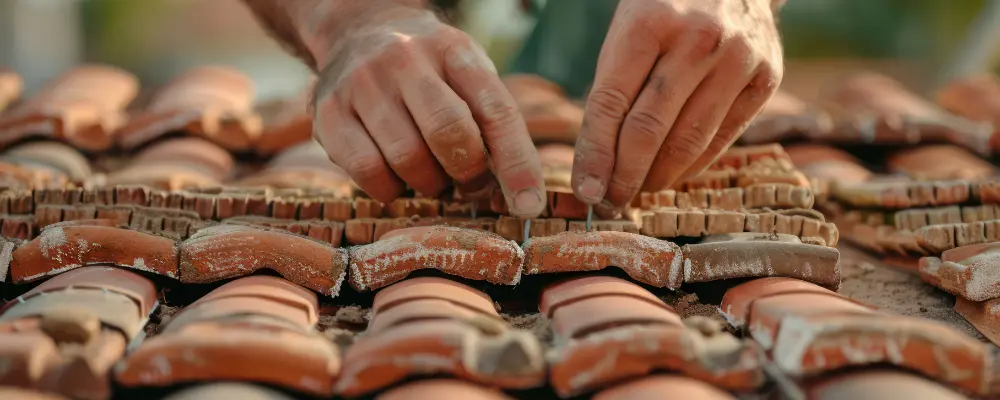
Clay roof tiles bear a rich history which dates back thousands of years to ancient civilizations like the Chinese, Greek and Roman civilisations, where they were utilised as durable, fire-resistant materials for roofing. The natural composition of the tiles combined with longevity and aesthetic appeal make them a staple in architecture. Moreover, the use of these eco-friendly roofing solutions continues to evolve over time.

They are a popular roofing solution even in the modern construction industry. Though today’s manufacturers apply modern and advanced techniques, the manufacturing process remains rooted in traditional methods. Enhanced by technology, the manufactures ensure that the clay tiles are more durable and resistant to extreme weather conditions while maintaining their rustic charm.

This blog delves into the details of the clay roof tiles manufacturing process. From sourcing of raw materials to the final quality checks, it highlights the blends of traditional techniques and modern advancements that lead to the production of high-quality terracotta tiles.

What are Clay Roof Tiles?

Manufacturers make the clay roof tiles from natural clay, shale or other similar earthy materials. They mould, bake and sometimes glaze the tiles to create sturdy and durable tiles. They come in various shapes, sizes and colours, making them versatile for different architectural styles. The clay tiles are resistant to extreme weather conditions, insects and fire, adding to their appeal as a roofing material. 

Clay Tiles Manufacturing Process

The clay tile making process involves several steps, from extracting raw materials to the final firing and quality checks. Let’s discuss these in detail.

Step 1: Extraction of Raw Materials

The process of making clay roof tiles begins with the extraction of clay from quarries. While the type of clay used might vary, the manufacturers use clay mixed with minerals that give the tiles their strength and colour. They then transport the clay to the manufacturing site, where they store the clay and prepare it for processing.

Step 2: Preparation and Mixing

Once the clay reaches the manufacturing site, the clay mix is prepared. It is first crushed and grinded to remove impurities, which helps in achieving a consistent texture. Then the clay is mixed with water and other additives like sand or grog for enhancing its properties. The mixture is thoroughly blended to ensure its uniformity.

Step 3: Shaping the Tiles

Now the manufacturers shape the clay into tiles using any of two primary methods:

Extrusion: In this method, the manufacturers push the clay mixture through a die to form a continuous strip. They then cut these into individual tiles of the required shape and size.

Moulding: In this method, the manufacturers press the clay mixture into the various shaped moulds to create tiles of specific shapes and patterns. The method allows in creating greater varieties of tiles in design and texture.

Step 4: Drying the Tiles

After shaping the tiles, the manufacturers keep them for drying to remove excess moisture. They perform the action in drying chambers or racks, where the tiles are exposed to controlled temperatures and airflow. However, proper drying is essential to prevent cracks and warps during the firing process. The drying process can take several days, depending on the size and thickness of the tiles.

Step 5: Glazing

Some clay roof tiles undergo a glazing process. During this process, the manufacturers apply a liquid glaze to the tiles’ surface. Besides enhancing the aesthetic appeal by adding colour and sheen, the glaze offers the tiles additional protection against weathering and staining.

Step 6: Firing

Firing forms the crucial step in the clay roof tiles manufacturing process. The manufacturers load the dried tiles into kilns, where the tiles experience high temperatures between 1000 and 1200 degree Celsius. The process hardens the clay, offering the tiles optimum strength and durability. The heat helps fuse the minerals present in the clay, creating a waterproof and weather resistant surface.

Step 7: Cooling and Quality Control

After firing, the manufacturers allow the tiles to cool down slowly. This helps in avoiding thermal shock, which might cause cracking. Once cooled, the tiles undergo a series of quality checks, ensuring that the tiles meet industry standards for strength, colour consistency and dimensional accuracy. The manufactures discard or recycle into new clay batches the tiles that fail to meet the required criteria.

Step 8: Packaging and Distribution

This is the final step, where the manufacturers pack the tiles for distribution. The manufacturers carefully pack the tiles, so that they do not experience damage during transportation. They then ship to the suppliers, contractors or directly to the construction sites.

Why Use Clay Roof Tiles?

Clay roof tiles are popular among the homeowners and construction professionals for their versatility. Enlisted are the key benefits of clay tile roof installation.

Low maintenance

Most roofing materials require frequent repairs and replacement. However, clay tiles are different and demand minimal maintenance. Homeowners can conduct an occasional inspection, replacement and cleaning, which are sufficient to keep them in good shape.

Durability

Clay tiles have the ability to withstand harsh conditions, including heavy winds, hail and even fire. Their robust nature means the tiles can last for decades without any need for replacement.

Energy efficient

Clay tiles are popular for providing excellent insulation. Installing clay tiles in your home keeps your home cooler in summers and warmer in winters. It helps in reducing the heating and cooling costs, making them an energy efficient choice.

Aesthetic appeal

Available in different shapes and styles, these roof tiles complement different architectural styles from traditional to contemporary, thereby enhancing the appearance of your dream home.

Choosing the right Terracotta Roof Tiles for Your Home

Clay roof tiles have emerged as a popular roofing material. With the numerous varieties available, it becomes difficult to choose the right one for your home. Enlisted are top tips homeowners must consider when choosing clay tiles for their homes.

Climate

Certain parts of India experience unpredictable weather, heavy rain and strong winds. Therefore, when choosing your clay roofing tiles, it’s vital to consider the climate of your region. If you live in a region with harsh weather conditions including strong winds, torrential rains and snow, opt for clay tiles that are durable and resistant to these climatic conditions. Choose tiles that have a high wind rating, resistant to water absorption and freeze-thaw cycles.

Style and Colour

Clay roof tiles come in various styles and colours. Therefore, you must choose tiles that complement the architectural style and colour of your home. Opt for tiles that match with or complement the existing colouring scheme of your home to add visual interest to your roof. You can simply opt for the traditional red and brown clay tiles, as they blend well with the natural surroundings, complementing the local architecture.

Maintenance and Repair

Although terracotta roof tiles are durable and long lasting, they might require maintenance and repair over time. Choose tiles that are easy to maintain and repair. Ensure to keep handy the replacement tiles in case of damage or breakage. If you live in a region that receives heavy rainfall, moss and algae growth are common problems. Therefore, you must opt for tiles that are easier to clean.

Conclusion

Clay roof tiles, with a blend of functionality and aesthetic appeal, are a timeless and durable material for your roofs. Understanding the process of manufacturing these tiles will help you appreciate their value. When choosing the roofing tiles for your home, ensure to consider its benefits, types and factors. Besides helping you make an informed decision, it will enhance the beauty and longevity of your home.

As a leading and trustworthy construction company in India, Brick & Bolt offers you the best roofing solutions to meet the highest standards of quality. With the professionals’ focus on using the best materials, the organisation offers exceptional clay tile roofing with optimum durability, thermal insulation and aesthetic appeal. Brick & Bolt ensures that their professionals execute each project with precision, offering long-lasting protection and enhancing the beauty of your homes. Our commitment to superior quality and customer satisfaction has helped us become a reliable choice for property owners seeking premium-roofing solutions in modern construction. Contact Brick & Bolt today to build your dream home!

Clay Roof Tiles: Types, Advantages, and Disadvantages for Homeowners

0
Clay Roof Tiles

Whether you are a homeowner or a construction professional, the choice of materials for your roofing play a crucial role in protecting the longevity of your home or structure. Therefore, you must select the right one for any construction project. One of the most popular and reliable tiles for roofing chosen by professionals in the construction industry are clay roof tiles. With these tiles, homeowners can enjoy a unique combination of strength, fire resistance and insulation. Since these tiles maintain a rustic and elegant charm, these are an excellent choice for modern homes.

Over centuries, clay roof tiles emerged as a popular choice in construction for their timeless beauty, natural composition and durability. Made from natural clay, these tiles withstand harsh weather conditions. Traditionally used in Spanish, Colonial and Mediterranean architecture, you can find local versions used in Indian construction.

This blog focuses on exploring the properties and various types of clay tiles available, with a special focus on their advantages and disadvantages. Whether you want to include these roof tiles for aesthetic appeal or their physical benefits, understanding more about them will help you make informed decisions.

Clay Tile Roofing

Clay tiles have been in use since before 2700 BC. These tiles have a lifespan of over 100 years, making them one of the most popular roofing materials worldwide. Popular for their distinct red colour, manufacturers make these tiles from  terracotta clay, which they bake and mould into individual tiles. Later they glaze these tiles with fluxes, earth minerals, silica, manganese or aluminium oxide to boost their aesthetics and durability.

Physical Properties of Clay Roof Tiles

Clay roof tiles, also known as terracotta clay roof tiles, are ceramic products made from solid units of clay or shale. With their unique physical properties enlisted herewith, these tiles emerged as a top choice for builders and homeowners seeking sustainable and reliable roofing solutions.

Composition

In today’s construction industry, sustainability is a crucial element, making clay roof tiles emerge as one of the favourites for roofing. These tiles are made from clay, shale or other naturally occurring earthy materials mixed with water and sometimes a few additives to enhance the natural properties of the raw materials. 

Durability

The high durability of clay tiles is one of the biggest reasons why most people want to install these tiles on their roofs. These tiles are resistant to extreme weather conditions, including snow, intense heat and heavy rain. Moreover, they are non-combustible and therefore, offer excellent fire-resistance. Their moisture resistance also ensures that they don’t degrade easily, offering your structure long-term protection against natural elements.

Aesthetic appeal

With clay roof tiles installation, your building achieves a rustic, traditional look. Generally available in red, orange, brown and other earthy shades, these tiles are versatile and complement various architectural styles. Their natural tones blend beautifully with the environment, enhancing the charm and character of every building. 

Thermal insulation

Clay roof tiles are excellent thermal insulators and help regulate indoor temperatures. During summers, these tiles help reflect the heat away from the building and retain heat during the winters. It contributes to energy efficiency by reducing the requirement for additional cooling and heating through mechanical ventilation systems.

Weight and Dimension

Although heavier than roofing sheets, clay roof tiles are lighter than typical concrete roofs. A single tile’s total variation in weight must not exceed over 6 to 10% of the nominal weight specified by the supplier. Besides, the average weight must not exceed 10% of the nominal weight. Moreover, the total variation of a single clay roof tile dimensions must not exceed 65% from the nominal dimension specified by the manufacturer. 

Different Types of Clay Roof Tiles

Since clay tiles can take any shape, they are versatile and suit many architectural forms, from Colonial to contemporary. Today, you can avail numerous varieties at affordable prices with varying profiles, including the flat to mimic traditional slate shingles and wood shakes. 

Mission Tiles

Often referred to as barrel roof tiles, Mission tiles have flat concave pans combined with half-moon shaped convex covers that create a wave pattern. The barrel shingles must be installed in pairs with the cover overlapping the pan. The mission style creates a distinct texture that shifts with the changing sun. While it is aesthetically beautiful, mission clay tile roof installation is expensive and labour intensive. The Italian, Roman and Greek styles are some of the styles which incorporated these tiles.

Spanish Tiles

Introduced by Spain, these one-piece S-shaped roof tiles designs offer a high-profile aesthetic similar to mission tiles. The installation of these tiles are affordable and less labour intensive. The Spanish style creates a rippled effect on your roof without variations. However, there are limitations in customisation of the style and creation of unique patterns.

Flat Tiles

Are you looking for a roofing solution that offers the durability of terracotta clay while mimicking other solutions like slate tiles or wood shakes? Then, opting for these flat tiles is the best solution. You can lay these tiles with an interlocking design with the help of fasteners. Alternatively, you can also lay these tiles in a double thickness like traditional shingles for creating multidimensional patterns.

French Tiles

Developed by Ludowici in the 1890s, the speciality of these roof tile designs is that they feature two protruding flutes in a single tile. These tiles provide a textured aesthetic with an increase in drainage capabilities. The French tiles feature an interlocking tab design, making them the best solution in cyclone-prone areas.

Advantages of Clay Tile Roofing

Clay roof tiles offer many attractive characteristics and properties, including the following:

Eco-friendly Solutions

Manufactured from natural materials, clay tile roofing offers superb environmental benefits. The eco-friendly components of these tiles do not emit any harmful gases during their production. Besides, the thermal mass and insulating properties of the tiles help decrease energy dependency. Thus, clay roof tiles are brilliantly sustainable, reducing the amount of materials and energy used in comparison to alternative roofing solutions.

Aesthetic Appeal

Besides the instantly recognisable terracotta shade, clay tiles come in a stunning array of colours, each perfect for creating a different look for your home. From the natural browns to the fresh whites and bright oranges, clay tiles give you complete flexibility to accommodate your roofing design according to your vision. Whether you are building a new house or redesigning an old one, clay tiles are excellent for creating a wonderfully traditional look, giving your house a classic feel without compromising functionality.

Low Maintenance

In comparison to other roofing solutions, clay tile roofing generally requires minimal upkeep. You do not require huge amounts of money for regular professional maintenance. Often mould and algae can accumulate over your clay tiles, but these are generally easy to remove and can be handled without a specialist or expensive products. In case you notice a cracked, missing or a broken tile, repairing and replacing them is easy, as it causes minimal disturbance to the rest of the roofing.

Longevity and Durability

Clay roof tiles, with their impressive structural strength, are ideal for areas experiencing high wind speeds, torrential downpours and extreme stormy weather. With correct installation and maintenance, clay tiles can last for more than 100 years. Today’s manufacturing and testing techniques have improved, meaning the endurance and resilience of these tiles is ever improving. Clay tiles are resistant to rot, decay and insects, ensuring their high durability.

Disadvantages of Clay Tile Roofing

Cost

Clay tile roof installation is often more expensive than other solutions such as roofing sheets. Moreover, their low availability in many areas makes them an unaffordable option for homeowners with tight budgets.

Heavy Weight

Clay roof tiles are heavier than other materials such as roofing sheets, thus making them difficult to install on existing structures. However, if the project demands installing them, you must offer additional support that requires extra cost.

Fragile

Clay tiles are often fragile and susceptible to breakage, especially when someone walks on the tiles or the tiles experience large amounts of pressure. They can also experience pinholes, which lead to water seepage and leakage from the roofs, requiring replacement. You must thus handle these tiles with extra care during their installation and regular maintenance.

Limited colour options

If you are looking for colourful roofing solutions, clay tiles are not ideal for the project.  They come in natural terracotta and dark brown shades, limiting the range of design possibilities when building a home or commercial properties, unless opting for painting , which becomes an expensive, labour-intensive and time consuming process.

Conclusion

The natural composition, aesthetic appeal and durability of clay roof tiles have made them a popular choice in the construction industry for centuries. Their ability to withstand extreme weather conditions and offer excellent thermal insulation make them a valuable investment for homes and buildings. Moreover, their eco-friendly nature and low maintenance requirements add to aesthetic appeal, especially if you are looking for a sustainable and traditional roofing option. Although clay tiles come with a few disadvantages such as heavy weight and fragility, their longer lifespan and timeless beauty make these tiles worth considering for your projects.

As a reliable and trustworthy construction firm in India, Brick & Bolt offers all the services right from the starting of the project to the final delivery, including sustainable roofing solutions. The company assures real time tracking, extensive quality checks and transparent communication. Whether you want roofing solutions like clay tiles for your new or existing home, the experts at Brick & Bolt ensure that you get the best quality materials without the hassle of contacting numerous contractors. They map the quality and progress of the projects using artificial intelligence and computer vision, allowing streamlined management of architecture and predictability of the completion of the project. Contact Brick & Bolt today to build your dream home!

Types of Footings – Their Importance in Construction

0
Types of footings

In protecting a building structure, concrete footings play an important role. Being installed underneath, these footings help to prevent settling. Concrete footings are highly used in areas with troublesome soil. They provide a stable, level base for the building foundation. Having such a concrete structure prevents moisture from seeping into the building. The prevention of seepage is particularly important in a basement or crawl space. During heavy rain, concrete footings become essential by preventing water damage. 

In general, concrete footings help distribute the weight of the building and prevent the structure from shifting or settling over time. From the above explanation, we can conclude that you will not dissent from the fact that footings are the backbone of home construction. This article explains the types of footings and their uses, providing readers with an idea of preferring suitable footings.

What is Footing?

Footing is a rigid structure that transfers the load to the soil or underlying strata. These rigid structures are constructed beneath the building pillars or at the construction site. 

Types of Footing

  1. Footings can be classified into different types based on their applications. Each foundation footing serves a specific purpose, such as addressing geological, structural, and spatial challenges to ensure resilience and stability in construction projects. Some of the major types are as follows:Wall Footing/Strip Footing
  2. Spread Footings
  3. Isolated Footings
  4. Stepped Footings
  5. Combined Footings
  6. Sloped Footings
  7. Mat or Raft Footings
  8. Strapped Footings
  9. Pile Footings
  10. Floating Footings

Different types of footings have their advantages and disadvantages. It is important to select the right type of footing based on its application and project requirements.

Wall Footing/Strip Footing

The capacity to distribute the entire weight of the load-bearing structure across the ground area makes strip footing suitable for shallow foundations. This is also known as wall footing. The continuous masonry strip distributes the pressure of a load-bearing wall over the ground. The soil’s carrying capacity is considered to determine the strip footing’s base width, as these two are inversely correlated.

Uses of Wall Footing

This is mainly used to support a long foundational wall, such as the sides of a house. Load-bearing walls that run parallel also use strip footing.

Spread Footings

This type is preferred in structures where the load of the entire structure needs to be distributed over a broad area of soil. Spread footing ensures that the distributed load does not exceed the safe bearing capacity. Their capacity to offer a reliable foundation for columns or posts makes them the most preferable choice for various construction projects.

Uses of Spread Footing

This type of footing is used in agricultural structures, institutional construction, and bridge construction.

Isolated Footings

The primary purpose of isolated footings is for individual columns or posts. The isolated footing’s capacity to support and distribute the load of each column to the ground makes it suitable for columns spaced apart. This type of footing could be used in conjunction with wall footings to provide additional support. The isolated footing can be a square, circular, or rectangular slab of uniform thickness.

Uses of Isolated Footings

Isolated footings are used for small structures such as sheds or porches. If the soil is soft and the water table is high, they can also be used for the four walls of a building.

Stepped Footings

Stepped footing is preferred to keep the metal columns away from direct contact with soil. This distance prevents corrosive effects. They carry the load of metal columns and transmit this to the ground below. In recent times, stepped footings have become less common. Footings are layered on top of each other by stacking concrete segments between each layer. This type of footing is also known as a step foundation.

Uses of Stepped Footings

This type is used in retaining walls, basement walls, and other structures built on sloped sites. It is highly preferred in areas with significant elevation changes.

Combined Footings

The name itself suggests that this type of footing supports two or more columns/pillars. This type of footing can be in square or trapezoidal and Rectangular. Generally, combined footings are preferred when the individual footings overlap and lie close to each other. This type is also preferred in soil that has a low load-bearing capacity. Because it distributes the load between columns to prevent settling. Space constraints in the construction site make it unavoidable.

Uses of Combined Footing

When two or more foundation walls are close together, this foundation can be used. It can even be used when there is a difference in the height of the foundation walls.

Sloped Footings

Because of the sloping top or side face of this type of footing, it is identified as sloped footing. Formwork construction often prefers this type of footing over others. It aligns well with or counters the natural slope of the terrain. A sloped foundation enhances stability by adjusting the footing’s angle.

Uses of Sloped Footing

Sloped footings are used in hillside or sloped terrain, retaining walls, bridges, architectural designs, piers and columns, and for seismic considerations.

Mat or Raft Foundation

This foundation covers the area, including the beam, slab and whole area with an RCC slab. This foundation is called the mat foundation. These footings save the heavy structures constructed on marshy sites and soft soil. The intrinsic stiffness in the raft foundation reduces dislocation motion.

Uses of Mat Foundation

This foundation is used for large buildings, bridges, and structures with high loads and challenging soil conditions.

Strapped Footings

The Strapped footing uses a strap beam to connect the inner and outer columns. This footing does not transfer any load to the ground. Instead, the total pressure will be distributed below the footing. Columns are arranged in such a way that the centre of gravity (C.G.) of combined loads of the two columns passes through the centre of gravity (C.G.) of the two footing areas.  In general, it acts as a bridge that stabilises and supports structural elements in construction footings.

Uses of Strap Footing

Strip footing is used in load-bearing walls, residential buildings, basements, commercial buildings, retaining walls, sloping sites, and high-rise buildings.

Pile Foundation

The piles are long, vertical load-bearing structures inserted into the ground to provide foundations. The piles are made of concrete, steel, or wood. This footing is mainly preferred in the area of soft soil strata. This footing offers better stability if the soil’s carrying capacity is deficient and the groundwater level is high. It helps the structures to prevent them from sinking into the ground.

Uses of Pile Foundation

This can be used for the construction of a building that has very heavy, concentrated loads. This includes high-rise structures, bridges or water tanks.

Floating Footings

This type of footing is used in buildings to counteract potential damage from frost heave. This can either extend below the frost line or insulate the structure to prevent any damage from freezing ground temperatures.  

Uses of Floating Footing

This type of foundation is used in soft, compressible soil, areas with high water tables, seismic zones, marine environments, landfills, and reclaimed land.

Conclusion

Footings are an important part of a building foundation. They are used to spread the pressure produced by the structure so that no uneven settlement takes place. The choice of the classification of footing is determined by a combination of factors such as the nature of the soil, loading conditions of the structure, available space, and regulations. The success of any building project relies heavily on the appropriate selection of footings.