Home Blog Page 24

Expansion Joint in Building: Types, Key Considerations, Procedure, Do’s and Don’ts

0
Expansion Joint in Building

Do you ever wonder how these tall buildings withstand powerful earthquakes or soil settling? 

It’s because of expansion joints, which allow tall and heavy structures to withstand powerful earthquakes or soil settling. The expansion joints are the structures that lay between the slaps to relieve stress on the building or the structure. Let us see the key factors, applications, and uses of expansion joints in concrete buildings or structures.

What is an Expansion Joint in the Building?

Expansion joints are installed in high-rise buildings and large-area structures to withstand natural calamities. Due to the changes in climatic conditions such as overheating or high cooling, the building facades, slabs, and pipelines can expand and contract. While constructing a building, these expansion joints are placed both inside and outside of the structures to withstand changes caused by seasonal variations. The four different types of movement that affect the building or the structure are:

  • Thermal
  • Wind sway
  • Soil settlement
  • Seismic activity 

The expansion joints are used to accommodate the above four movements.

Types of Expansion Joints
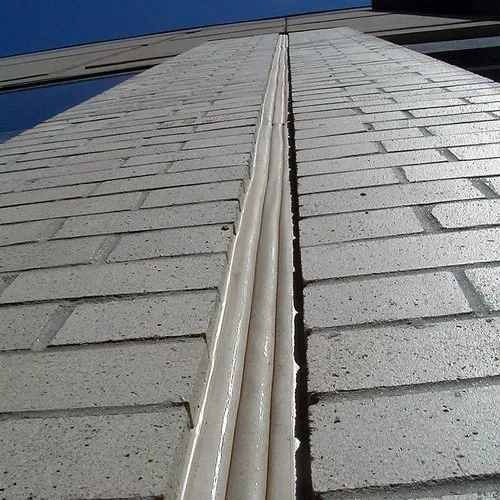
Types of Expansion Joints

The major types of expansion joints used in commercial construction are as follows:

  • Horizontal

Horizontal expansion joints act as a protective barrier. These precompressed foams are easy to accommodate and install and are known for their longevity.

  • Vertical

Vertical expansion joints also come as precompressed foams. You can cut them open and seal them. However, it should be handled with proper care when working at high elevations. Safety measures are required for installing this type of foam.

  • Seismic

These joints are particularly used for areas greatly affected by seismic activity. They come with a special plate that is anchored to the concrete. Epoxy is used while installing these foams.

  • Fire-rated

Fire-rated expansion joints are specially made to withstand fire. They can be used in buildings that have more than four floors.

  • Compressed seal

The precompressed seals are used in joint openings. They compresses and expand along with concrete due to their viscoelasticity. They regain their shape and size during every compression and expansion. They are extremely soft and effective expansion joints that can be used for joint widths.

  • Strip seal

These seals are locked into the concrete and are known for their high water resistance and durability. These can be widely used in bridges, heavy traffic areas, parking decks, etc.

  • Inflated 

These rubber seals are known for their strength in accommodating the concrete for compression and expansion. Rubber seals are used for sealing industrial structures.

  • Rubber gland

These rubber glands are used for high water resistance but require more maintenance and manpower to install compared to other types.

Key Considerations of Expansion Joints

If you build a structure without using expansion joints, it may lead to cracks in the building. Before the installation process, you have to verify the quality of the expansion joint you will use in your construction project. Visual inspection is crucial for checking any defective parts. The factors to be considered before choosing expansion joints are as follows:

  • Vertical vs horizontal

 These types of expansion joints are used in heavy foot traffic areas, water drainage, and areas that face changes in weather conditions. They also reduce sideways movements as well as high earthquake movements.

  • Traffic-rated or non-traffic-rated

Special joints should be used in high-traffic areas. It may be a pedestrian crossing area, vehicle area, or locations that have more machinery/tools.

  • Covered or non-covered 

An expansion joint cover may help to provide a covered transition across the opening of the joint, unaffected by the movement of two slabs. It may be covered or uncovered according to the location.

  • Chemical resistance

In some cases, corrosion-proof expansion joints are used for water resistance. They may be used in swimming pools or any other industrial area.

  • Filler type

The most preferable joints are silicone sealants, which are flexible to both vertical and horizontal movements.

  • Fire codes

You have to choose the expansion joints that are fire resistant too. In large high-rise buildings, this type of fire-rated expansion joint is used.

Filling areas and procedure of expansion joints

Filling Areas:

Expansion joints help buildings handle movement by creating gaps that allow different parts to shift without cracking. These joints separate concrete sections in areas like:

  • Floor to floor
  • Floor to wall
  • Wall to wall
  • Ceiling to ceiling
  • Ceiling to wall
  • Roof to roof
  • Roof to wall

Generally, expansion joints may not be needed on floors unless specific conditions require them. Some expansion joint systems are designed to be waterproof, while others are not. Properly filling and sealing these joints ensures that parts of the building can expand and contract safely, protecting it from damage due to temperature changes, settling, or other movements.

The procedure for installing expansion joints is as follows:

Installing expansion joints requires teamwork and following clear steps to ensure everything works correctly. Here’s an easy-to-understand process:

General Guidelines:

  • The project team works together to install the joints and fill any gaps based on the specific requirements.
  • Only trained workers should do the installation, while making sure to follow all safety rules.

Checks to Do Before Installation

Initial Inspection:

  • Check the expansion joint for any dents, rust, or dirt. It should be in good condition.

Preparation:

  • Clean the sealing surfaces on the flanges to make them smooth.
  • Confirm that the gap between the pipelines matches the size needed for the expansion joint.
  • Ensure the ends of the pipeline are clean and ready for welding, if needed.

Making Sure Everything Fits

  • Check that the pipeline is in the correct position according to the design.
  • Make sure the expansion joint fits well with the pipeline length.
  • Confirm that the pipeline is properly supported and anchored to prevent movement.
  • For joints that move sideways (lateral expansion joints), ensure the tie rods are properly installed.

Installing Guides and Anchors

  • Install anchors and guides according to the EJMA (Expansion Joint Manufacturers Association) standards:
    • Avoid placing the pipeline’s weight directly on the expansion joint.
    • Follow these spacing guidelines:
      • The first guide: ≤ 14 times the pipe diameter.
      • Remaining guides: ≤ 21 times the pipe diameter (or closer, if necessary).

Points to remember while installing expansion joints:

Keep the Joint Safe:

  • Use a welding blanket devoid of chloride to protect it against welding sparks.
  • Prevent the bellows from accidentally arcing.
  • Protect against building waste, such as mortar.

Installation Specifics:

  • If it has an inner sleeve, align the flow arrow with the system flow.
  • Hinge pins for angular expansion joints should be positioned correctly.
  • To align bolts, do not twist the joint.
  • Maintain the integrity of all parts, such as hinges and tie rods.
  • Use bolts cautiously and refrain from using tools that could harm the bellows.
  • To avoid material interfering with bellows movement, use a lagging cover while adding insulation.

Final Verification:

  • Perform a visual assessment before system testing.
  • Take off all of the temporary devices that have black or yellow tape on them.
  • Make sure everything is set up to avoid problems during operation and testing.

Do’s and Don’ts of Expansion Joints

The do’s and don’ts of expansion joints in concrete buildings are as follows:

S.NoDo’sDon’ts
1.Identify the joints early in the designing processDon’t forget about the joints
2.Considering building shape is importantDon’t use joints in unnecessary places
3.Calculate the structural frame of the building according to the expansion jointMake sure to find the concrete crack before the installation of the filler
4.Consider the temperature changes while constructing a building.Don’t forget to check the changes in expansion joints

Conclusion

On the whole, expansion joints are used to relieve the stress of the concrete buildings while movements take place. For each structure, unique expansion joints are used to fill the gap and withstand the building against seasonal variations.

FAQ’s

What are the major types of expansion joints in the building?

The major types of expansion joints in the building are as follows:
Horizontal
Vertical
Seismic
Fire-rated
Compressed seal
Strip seal
Inflated 
Rubber gland

What is the purpose of expansion joints?

The expansion joints are used to withstand the changes caused by climatic conditions such as thermal, seismic, high wind, and soil settlement.

How will it benefit the concrete building?

It prevents the building or the structure from falling or collapsing due to natural calamities.

Are expansion joints necessary?

Yes, they are necessary for tall buildings or structures, but not for small residential homes.
Cement Mortar – Characteristics, Properties, & Applications

0
cement mortar

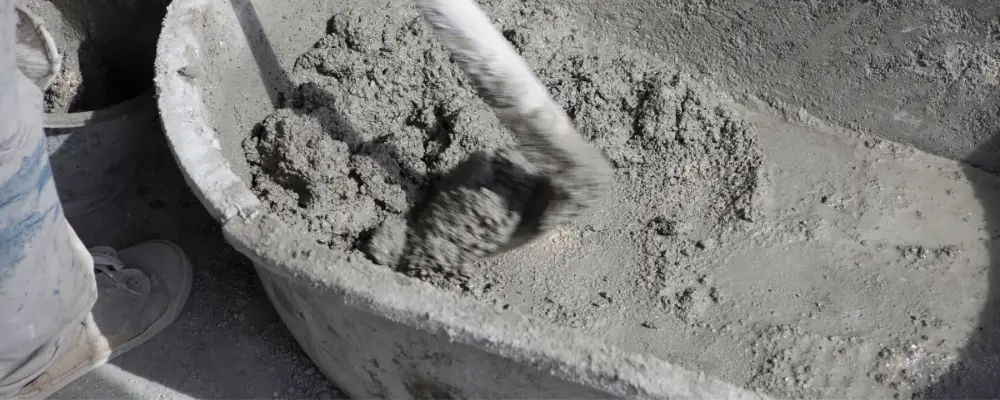
Mortar is a workable paste that contains ingredients like cement, water, and sand. It is a homogeneous mixture that helps bind the building blocks like bricks, stones, and concrete masonry units.

There are various types of mortars available in the construction sector, classified based on their applications, strength, density, purposes, and binding materials. Nowadays, cement mortar is widely used in construction due to its excellent strength and durability properties.

In this article, you will get to understand in detail cement mortar, its properties, characteristics, and applications. Continue your reading to learn more.

What is Cement Mortar

Cement mortar contains a mixture of cement, sand, and water. It is a binding agent used to seal the building blocks, like bricks or stones, to enhance their strength, longevity, and affordability.

The sand adds bulk to the mixture to achieve the workable consistency that can be easily shaped and applied. It is used in an abundant range of construction works, from small DIY projects to large-scale masonry works. More than these binding practices, cement mortar can also be used for decorative purposes, in different textures and colours.

Characteristics of Cement Mortar

Cement mortar possesses several significant characteristics.

  • Cement mortar has excellent durability, which makes it resistant to destructive influences that arise from sulfates, chemicals, acids, and mechanical effects like abrasion.
  • It is primarily used in masonry work to provide adequate strength in compression, tension, and bond.
  • Cement mortar is a mixture of cement, sand, and water, providing a good binding power while working on stones and bricks.
  • The thickness of the mortar is easily adjustable using sand content, which helps achieve the workable consistency.
  • The dry time of cement mortar is literally very quick, so that the construction work can be done with a specified timeline.
  • Cement mortar has excellent tight sealing properties, which do not create any cracks or damages in the structure.

Properties of Cement Mortar

Here are some notable properties of cement mortar:

  • Cement mortar should be well-proportioned and well-laid to obtain an impervious surface.
  • Applying a rich mortar with less than a ratio of 1:3 prevents cracks or shrinkage in the structure.
  • It is a binding material used to seal the masonry units like bricks, cement, stone, and blocks.
  • Cement mortar is primarily preferred for neat and well-finished wall and concrete work.
  • It allows for preparing the building blocks.
  • Efficiently seal the cracks and joints that exist in the wall and concrete works.
  • When water is poured into the dry mixture of cement and sand, the hydration process will occur. It encourages the binding process with sand particles and surfaces of concrete and masonry.
  • Applying a leaner mix is not so effective in closing the voids in sand, resulting in porosity.
  • The strength of cement mortar is based on the proportion of cement and sand used. Hence, each construction project requires a different range of strength, and this proportion can be adjusted accordingly.

Application of Cement Mortar

Cement mortar can be used in a wide range of applications because of its exceptional durability, strength, and ease of use.

Rendering: In general, rough surfaces are quite common to handle. To achieve a smooth and well-finished surface, cement mortar can be used, especially in areas such as floors, walls, and ceilings.

Bricklaying: Cement mortar is often used to bind the blocks or bricks together in any construction projects like chimneys, walls, or foundations. It also fills the gaps between stones and bricks, making the bond even tighter.

Tile Fixing: Tile fixing needs extra care and attention to seal the gaps thoroughly. Compared to other mortar types, cement mortar is a widely used tile adhesive to fix tiles on the floors or walls.

Swimming Pools: Cement mortar can actively fight against water infiltration, making it suitable for swimming pools and water-featured areas. It provides a watertight seal even in basements and below-grade structures.

Advantages of Cement Mortar

Let’s uncover some significant advantages of cement mortar in construction:

Enhances Versatility: Cement mortar is an ideal option for a variety of applications, including concrete mixing, masonry work, plastering, and flooring. It is easy to apply and achieve the appropriate shape as per the structure requirements.

High Strength and Durability: Cement mortar offers excellent compressive and tensile strength, which makes it suitable to work on load-bearing structures. It causes no shrinkage or cracks for the long run. Additionally, it can actively fight against heavy temperature fluctuations, weathering, and moisture.

Quick Setting Time: As mentioned earlier, the setting time of cement mortar is relatively quick. It enables faster construction progress, suitable for projects with deadline constraints.

Cost-Effective: Compared to other construction materials, it is quite cost-effective. Projects with budget constraints can consider cement mortar as a priority.

Disadvantages of Cement Mortar

It has several disadvantages to mention, including:

  • Unlike other mortar types, cement mortar is quite difficult to handle once it’s damaged.
  • During structural movement, it is more likely to shrink or crack over time.
  • Cement production creates various environmental impacts, contributing to greenhouse gas emissions and resource depletion.
  • Compared to other materials, the initial investment in materials and labour is quite high.

Preparation Process of Cement Mortar

The preparation of cement mortar involves two significant steps, including:

Selection of Quality Raw Materials

You have various raw materials available in the market for the preparation of cement mortar. However, choosing the right materials based on the construction and its purpose helps build quality structures. Cement mortar basically requires cement, sand and water.

Portland cement is the most commonly used type of cement in the preparation of mortar. It is suitable for a wide range of construction purposes. When it comes to the sand, the quality matters more. It should be free from any impurities like dust, clay, and iron oxides, etc.

Mixing of Ingredients

Cement mortar is an excellent binding material. It must contain well-proportioned ingredients to achieve the desired consistency. Initially, cement and sand should be mixed in a dry condition, and then water is gradually added.

You can mix it either manually or mechanically based on your convenience and construction needs. Hand mixing can work well for a small quantity of mortar; however, larger amounts require machine mixing.

Final Lines

Commonly, all types of mortars include a mixture of cement and sand. Its strength and durability can be adjusted according to the construction needs. The proportion of ingredients plays a vital role in it, which decides the actual strength and longevity of the structure. Ensure all criteria are checked before applying mortar.

Porotherm Bricks – Benefits, Properties, and Applications

0
porotherm bricks

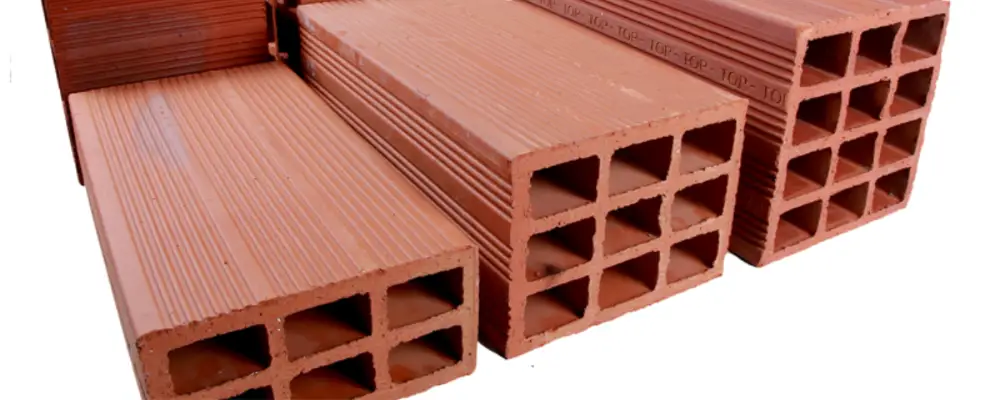
Bricks are one of the crucial construction materials that have been in use for thousands of years. Although bricks use different raw materials, clay bricks are widely preferred, which leads to the development of numerous clay bricks. There are several clay bricks in the market, and one among them is Porotherm brick. These bricks are hollow with gaps within the structure and gain wide attention. Here we take a look at what porotherm bricks are and everything you need to know about them.

What are Porotherm Bricks?

Porotherm bricks are perforated clay bricks that are made up of natural clay, rice husk, coal ash, and granite slurry. They come in both horizontal and vertical blocks that offer thermal insulation properties to the structure. They are a good energy-efficient option and are highly sustainable to rapid climate change.

Importance of Porotherm Bricks

Porotherm bricks are made using natural materials that are safe and environmentally friendly. They are designed to provide energy efficiency, durability, and support various construction projects. They are modern wall solution that reduces the usage of steel and concrete. They are strong and have natural thermal properties, which help the building maintain the climate in all weather conditions.  Porotherm bricks are best suitable for G+1 buildings and are used in both load-bearing and non-load-bearing walls.

Properties of Porotherm Bricks

Weight

Porotherm bricks are 60% lighter when compared to conventional wall materials. The lightweight properties make them easy to handle and save the overall structural cost by reducing the dead load.

Thermal Insulation

They provide excellent thermal insulation properties and are 45% more effective than other bricks. The natural thermal properties save the energy spent on maintaining the room temperature. They help maintain the room temperature throughout the year in all weather conditions.

Acoustic Insulation

The pore gaps in the bricks play a major role in protecting the structure from external noises. They have good acoustic insulation and are highly suitable for buildings where noise reduction is crucial.

Eco-friendly

Porotherm bricks are manufactured from clay that is de-silted from dead water tanks. The additives used are clay, coal ash, rice husk, and sawdust, which are completely natural. They are free from chemical and artificial substances. The bricks are also recyclable after their lifespan, making them one of the most natural and sustainable bricks.

Strength

Porotherm bricks have a high compressive strength of 10 N/mm² compared to concrete bricks. Due to their high compressive strength and lightweight characteristics, they can be used for both load-bearing and non-load-bearing walls.

Water Consumption

They consume up to 95% less water both during the manufacturing and during the construction process. These bricks are easily curable and only need less water and less time to cure.

Fire Resistance

These bricks have high resistance to fire, as it has already been exposed to extreme temperatures of up to 1000°C during the production process. They have a fire rating of F240, which means they can withstand extreme temperatures for 240 minutes.

Durability

Porotherm bricks are highly durable and have a high life expectancy. Generally, the lifespan of these bricks is over 150 years. They are also recyclable after their lifespan has expired.

Applications of Porotherm Bricks

  • They provide high privacy and good sound insulation, which are vital for partition walls in both residential and commercial buildings.
  • They have high durability, fire resistance, and strength and can be used in external walls.
  • Due to their high strength and lightweight properties, they can be used in both load-bearing and non-lead-bearing walls.
  • As they have excellent fire resistance properties, they are a great fit for fireplaces and chimneys.
  • These bricks are also used in constructing retaining walls, garden beds, and other landscaping structures.

Advantages and Disadvantages of Porotherm Bricks

Advantages

  • These bricks are strong and durable and can be used for both load-bearing and non-lead-bearing walls.
  • They are lightweight and easy to handle. They also reduce the overall dead load of the structure.
  • They are highly durable and have a lifespan of up to 150 years.
  • They have excellent thermal and acoustic insulation.
  • They are highly resistant to fire and water, that they can sustain in all extreme weather conditions.
  • They are made completely using natural resources and are suitable for green buildings.
  • They help the building maintain the room temperature all through the year.
  • They are easy to install, maintain, and repair.

Disadvantages

  • These bricks are not suitable for large and high-raised structures.
  • They form a white powdery layer when exposed to water due to a high efflorescence rate.
  • The manufacturing and construction of these bricks need skilled labour.
  • These bricks have limited availability.
  • They are limited to design.

Installation process of Porotherm Bricks

Preparing the base course

A sand-cement mortar bed is made on the floor before laying the first course. The porotherm bricks are placed over the bed in a straight line. It is crucial to ensure that the bricks are level both horizontally and vertically using the plumb and the string.

Mixing ZeroPlus Mortar

ZeroPlus mortar is a mix of fine-ground sand, cement, and other ingredients that are specially made to install Porotherm bricks. The mortar is mixed with an adequate amount of water to bring it to the right consistency for laying the Porotherm bricks. This mortar provides a thin layer and can be used at temperatures down to zero degrees Celsius.

Brushing Down the Bricks

The top portion of the brick should be brushed off to remove dirt and grit before applying the ZeroPlus mortar and to have uniform levelling.

Applying Mortor

A Porotherm roller is used to apply the ZeroPlus mortar to the brick and spread it all over the brick surface. The mortar is poured on the roller, and it is rolled backwards along the wall. This roller can be helpful in providing even spread and controlling wastage. 

Laying

It is important to check whether the first course is laid in a straight line and place the blocks the near center of the previous course. A wooden mallet is used to properly seal the brick over the existing course. The strings and bobs are used to ensure vertical levelling.

Cutting

Due to the interlocking design, the Porotherm bricks are cut to fit the gaps. These bricks can be cut either by hand or through an electrical tool. These bricks are suppressed inside the water before cutting to reduce dust.

Fitting Wall Ties

Two-part wall ties are used for the Porotherm wall, which eliminates the danger or injury caused by rapid installation and the problems caused by the cavity wall. The first part is used during the building process and the second part is attached to the outer skin of the wall.

Applying a parge coating

After constructing the wall, the Poroparge and Eco-parge coating is applied to the internal facing of the wall with a soft-headed broom. It is applied in a way that fills all the vertical joints and is free from gaps or cavities.

Comparison between Porotherm Bricks & Concrete Bricks

Porotherm BricksConcrete Bricks
These bricks can be laid in a faster phase, with a worker can cover 30 to 40 m² per day.The laying of concrete bricks is slow compared to Porotherm bricks. Where a worker can cover 12 to 15 m² per day.
The mortar starts to set in just 30 minutes. The full strength of the mortar can be achieved within 24 hours.The mortar is slower to set, and it takes around 2 days (48 hours) for the mortar to achieve full strength.
They are lightweight and have no sharp corners.They are heavy and have sharp corners.
They have a compressive strength of 10 N/mm², which is greater than concrete bricks.They have comparatively low compressive strength, that is 7 N/mm².
They produce minimal mortar waste and 2% brick waste while cutting.An average of 40% of the mortar and 15% block waste.
They have high thermal efficiency.They have lower thermal efficiency.

Conclusion

Porotherm bricks have numerous benefits and have been gaining attention in the construction field. They are highly resistant to water, fire, and sound and have high strength and durability. The usage of Porotherm bricks are evolving and are used in almost every type of building. If you are looking for an allrounder brick for your dream house or commercial site, you can consider Protherm brick as a choice.

One-Way Ribbed Slab – Design, Advantages, and Applications

0
one way ribbed slab

A slab is a flat, horizontal reinforced concrete element that is used to form flooring, ceiling, and roofs of a structure. These are one of the necessary components of the building that provide a solid, stable base.

There are numerous types of slabs in the building process, and one of the most architecturally pleasing ones is the one-way ribbed slab. Here, we take a look at what a one-way ribbed slab is, its design, construction, applications, pros, cons, and more.

What is a One-Way Ribbed Slab?

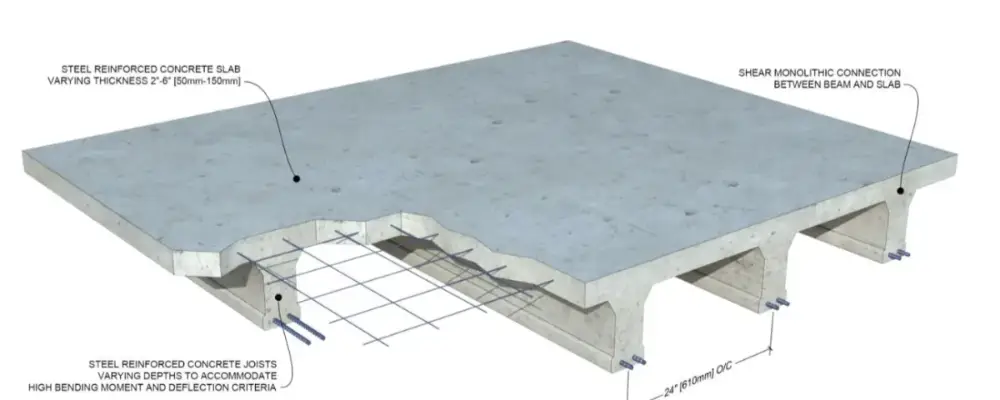
The one-way ribbed slab, or joist slab, is a thin floor slab supported by tapered reinforced concrete ribs (joists). The ribs are tapered and placed at a uniform spacing along a straight line. These ribs are supported by the girders that rest on columns. The spaces between the ribs are formed using removable pans or permanent fillers to provide a horizontal surface.

Applications of One-Way Ribbed Slabs

  • The one-way ribbed slabs are generally used for flooring.
  • They are used for places where the structure needs to withhold medium to heavy loads.
  • The ribbed slabs are used for parking structures.
  • They are used for smaller-span residential buildings in corridors and small rooms.
  • They are ideal for the construction of small office spaces and warehouses.

Advantages and Disadvantages of One-Way Ribbed Slab

Advantages

  • Lightweight and saves the usage of materials.
  • Attractive in appearance when exposed.
  • Economical if reusable formwork pans are used.
  • Vertical penetrations between ribs are easy.
  • Medium to long spans.
  • Large holes in the topping can be easily accommodated.
  • Used for heat transfer in passive cooling.
  • Fast to install.
  • Highly durable.

Disadvantages

  • The depth of the slab between the ribs may limit the fire-resisting capacity.
  • Requires a proprietary formwork.
  • Greater floor-to-floor height.
  • Large vertical penetrations are more difficult to handle.
  • Higher formwork costs compared to other slab systems.
  • Slightly greater floor thickness.

One-Way Ribbed Slabs vs Two-Way Ribbed Slabs

One-Way Ribbed SlabTwo-Way Ribbed Slab
Spans in one direction.Spans in two directions.
Supported by beams on two opposite sides.Supported by beams on all four sides.
Transfers load to the two supporting beams.Transfers load to the columns and supporting walls.
The one-way ribbed slab is comparatively thicker than the two-way ribbed slab.The two-way ribbed slab is thinner than the one-way ribbed slab.
The one-way ribbed slab requires less reinforcement.The two-way ribbed slab requires more reinforcement due to two-directional spanning.
The one-way ribbed slabs are suitable for short spans.The two-way ribbed slabs are suitable for longer spans.
They are applicable for long and narrow structures.They are applicable for structures that are square or rectangular.

Design and Construction of One-Way Ribbed Slabs

Designing of One-Way Ribbed Slabs

  • The minimum thickness of the one-way ribbed slabs depends on the type of support.
    • For a simply supported structure, the minimum thickness should be 1/16 times the length of the slab (l/16).
    • For one end continuous structure, the minimum thickness should be 1/18.5 times the length of the slab (l/16).
    • For both ends continuous, the minimum thickness should be 1/21 times the length of the slab.
    • For a cantilever, the minimum thickness should be ⅛ times the length of the slab.
  • The ribs are generally tapered and uniformly spaced between 400 to 750 mm. The voids formed using molds (pans) should be 500 mm wide and 150 to 500 mm deep (as per the ACI Code, Section 9.8.1).
  • The shear strength (Vc) provided by the concrete for the ribs should not be more than 10% of that of the beam.
  • The minimum width of the rib should be one-third (1/3rd) of the total depth or 100 mm (whichever is greater).
  • The secondary reinforcement in the slab in the transverse direction should not be less than the shrinkage reinforcement or 1/5th of the area of the main reinforcement in the ribs.
  • The secondary reinforcement parallel to the ribs should be spaced at a distance of not more than half the spacing between the ribs.
  • If the live load on the ribbed slab is less than 3 kN/m² and the span of the ribs exceeds 5 m, a secondary transverse rib should be placed at the midspan.

Construction of One-Way Ribbed Slabs

Formwork Preparation

The initial step in constructing one-way ribbed slabs is placing the formwork in the correct shape and dimensions. The formwork is usually made from timber or steel and is used to create the voids for the ribs and the thickness of the slab.

Placing the Reinforcement

Steel reinforcement in the form of a mesh or bars is placed within the formwork at the appropriate position, covering both the ribs and the solid parts of the slab.

Concrete Pouring

After the formwork and the reinforcement are placed, the prepared concrete mortar is poured into the voids, covering all the areas of the ribbed slab. The poured concrete is compacted using a vibrator to remove the air gaps, ensuring that the reinforcement and the cement mortar form a strong bond.

Curing

After the concrete is poured, the concrete slab is kept for hardening with formwork to make it a solid block. After they are properly finished, the slab is cured using water or another wet curing process to avoid premature cracking and drying.

Removing the framework

After the slab achieves sufficient strength to stand on its own, the formwork is removed and the final results of the finished one-way ribbed slabs are revealed.

Finishing

The constructed one-way ribbed slab can be further altered based on the architectural requirements by polishing or applying coatings to make it aesthetically pleasing and more functional.

Conclusion

​One-way ribbed slabs are among the aesthetically pleasing and lightweight slabs that are applicable for several smaller-spanned buildings or structures.​ They are widely used in places where the structure needs to hold a minimum of heavy loads. They can be used as precast structures to attain the necessary shape, size, and other physical properties based on the requirements.

Arch Structures – Types, Applications & Advantages Explained

0
arch structure​

Arches have been used in the structures for centuries. In the evolution of the construction sector, arches are an excellent option to elevate the elegance and overall look of the architecture. It has been widely used, from ancient Roman aqueducts to modern-day skyscrapers.

They play a pivotal role in improving the stability, beauty, design, and strength of the building. The history of arches seems overwhelming. Beyond elegance, they provide numerous advantages to structures, which make them a suitable option for various construction projects.

In this blog, we’ll uncover the crucial information about arch structure. Let’s delve into the topic now:

What is an Arch Structure?

An arch structure is a form of curved structure that widens an opening in a building and supports the weight from above. It can be widely used in both architecture and structural engineering to efficiently distribute weight and carry a very large mass placed above it.

You can see an abundant range of arch structures constructed for both structural and decorative purposes. Based on the style and feature constraint, the arch model can be customised.

Types of Arch Structure

Arch structures are available in various shapes and sizes, each with its own properties and characteristics. Based on the construction needs, the shapes will be finalised each time. Let’s discuss some types of arch structures:

Flat Arches

Flat arches are rectangular in shape with flat top edges, and no inner curves exist. They are best for structural engineering but not for functional and load-bearing qualities. They are typically used for aesthetic purposes only in modern buildings that are subjected to carrying light loads.

Pointed Arches

Pointed arches, also known as Gothic arches, feature an apex at the top where two circle arcs meet in the design. They are a common structural design often used to create intricate designs and patterns. They are well-known for their elegance and equal distribution of weight or loads from the above.

Rounded Arches

Round arches are another popular arch design widely seen in Roman and Gothic style architecture. They are semicircular, providing extreme strength and stability to the structure with its wide openings. This type of arch has a continuous curve and no additional support required. They can bear loads, but it is unsure that they may or mayn’t support weight from above. Rounded arches are evenly arranged and often used in home interiors.

Parabolic Arches

Parabolic arches look like the shape of a parabola, which needs accurate measurements to construct. They are not as common as round or semi-circular arches. This parabolic curve has efficient load distribution commonly in load-bearing structures like bridges. They are not only functional but also provide aesthetic value to your asset.

Segmental Arches

Segmental arches offer a curved look but are less than a semicircle. This type of arch style can fit a variety of architectural styles, particularly in buildings with a sloping or curved roofline. It has been recognised for their enhanced functionality and aesthetics, often used in building facades and interior décor.

Triangular Arches

Triangular arches are also named miter arches and Mayan arches. They consist of two straight segments formed by two stone slabs that lay diagonally against each other. These two parallel segments support the two diagonal stones to form the arch. They are less common in commercial building design but may be included in architectural designs for aesthetic purposes.

Centered Arches

Centered arches consist of a specific number of center points that distribute the loads evenly and bear the majority of the weight caused. Constructions commonly include four center points. One-center points include round, flat, pointed, and horseshoe-shaped arches. Two-center point arches integrate two load-bearing points, including pointed or lancet arches. Three center point arches have semi-elliptic and Florentine arches, while four center points include Tudor and Venetian arches.

Application of Arch Structures

Arch structure help create unique and functional structures. Let’s see some of their widespread applications in various fields.

Bridges: Undoubtedly, bridges are iconic examples of arches. By exemplifying the arch’s ability to distribute weight evenly across them with minimal support. When it comes to the modern variation, these arch bridges offer excellent flexibility in design and style.

Buildings: Arches are capable of supporting heavy loads without columns in a building. They provide open and classy interior spaces with minimal effort. They are commonly seen in industrial buildings such as factories and warehouses and also in public buildings like railway stations and airports.

Doorways and Windows: To add a touch of elegance, construct an arch in home entrances and openings. More than visual appearance, they support weight and provide structural support.

Vaults and Domes: They are architectural marvels used to create expansive and enclosed spaces. By combining multiple arches together, a three-dimensional structure can be formed.

Advantages of Arch Structure

Arch structures have many significant advantages, including:

  • The curved-shaped arch distributes weight evenly with minimal support, causing less stress on individual components.
  • Arches in buildings look graceful, which adds a sense of touch to any structure. It can be a perfect option to décor your house entrance and interiors.
  • Arch structures provide inherent stability and can be resistant to earthquakes and lateral forces.
  • In most cases, arch structures are more cost-effective than other structural systems, especially when dealing with large construction projects.

Disadvantages of Arch Structure

Let’s see some negative aspects associated with arch structures:

  • Unlike regular building methods, arch construction is quite complex and requires professionals with enhanced skills and tool-handling experiences.
  • It can be quite an expensive and time-consuming process.
  • Arch-style structures amplify noise, particularly during heavy rain or winds.
  • They require a strong and stable foundation to support the heavy loads and weight.
  • They often require maintenance, which can be costly.

Construction Process of Arch Structure

Arch construction typically involves the following steps:

Planning and Designing: Before starting the construction, determine the shape, size, and material of the arch. This ensures a strong foundation capable of evenly distributing weight and thrust. Choose materials like stone, concrete, brick, or steel to provide reliable support.

Centring Work: Centring is another significant process that supports the arch during construction. The important concern is ensuring that the centring should be appropriate to the shape and size of the intended arch.

Installing the Arch Stones: Unlike regular structures, arches are typically made of wedge-shaped blocks, called voussoirs. They are laid in a symmetrical pattern to achieve the arch-shaped structure in the desired style.

Removal of Centring: Centring is primarily used to offer temporary support. Once the arch is strong and stable, the weight of its above can be gradually transferred to the foundations. Then the centring can be carefully removed from the construction.

Finishing Touch: Finally, the gaps that exist between the voussoirs need to be filled with mortar to improve the structural integrity and tightness. To enhance its overall appearance, decorative elements like carvings, paint, or moldings can be applied.

Final Lines

Arches are an important and interesting topic in the construction sector. More than visual reference, they can provide strong support and structural integrity. Hopefully, this article explains the concept of arches and gives you a better understanding of their significance.

Rectangular Combined Footing – Design, Steps & Comparison

0
rectangular combined footing

There is no doubt that the construction structures exert considerable weight. A structural element that bears the weight of the structure is called the footing. Even a small mistake in the design of the footing could collapse the entire structure. This makes the proper foundation design crucial for the construction project. Before we move on to the article’s main theme, it is important to understand what footing is. It plays a crucial role by distributing the load to the wider surface of the soil to achieve structural stability. This prevents the heavy load from being entirely concentrated on the building’s columns, increasing longevity. However, different construction projects use different footings based on the requirements. The combined footing is the most suitable one for irregular column placement to distribute loads effectively. In this article, we will discuss the rectangular combined footing, design considerations, and calculations involved in rectangular combined footings.

What is a Rectangular Combined Footing?

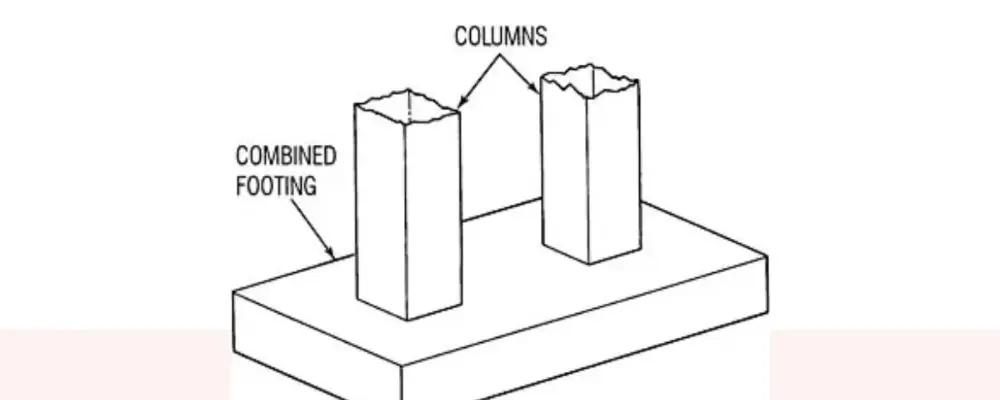
The shape of this footing is rectangular, as the name suggests. This footing is used whenever there is a difference in loads between two columns and when the centres are not aligned on a single line. The rectangular lengths create a platform to provide support to both columns. This type of footing, like others, transfers the load from the structure to the underlying soil.

Design Considerations for Rectangular Combined Footings

The design considerations vary with or without a beam in the rectangular combined footing. Measure the column loads and the self-weight of the footing. Then, the soil is tested to determine the bearing capacity after the area of footing for the load is calculated. In the external faces of the external column, the length is always more than the distance. The C.G. of column loads coincides with the C.G. of the area of the footing by fixing the footing beyond the column in a particular way. This ensures that the pressure is uniformly distributed to the soil. For design purposes, critical values and respective locations are mentioned on the S.F.D and B.M.D.

Steps involved in the rectangular combined footing without a beam are,

  • The designed depth is fixed after measuring the depth of the slab and considering one-way, and two-way shears. 
  • The depth of the slab determines the maximum bending moment. 
  • Slabs are treated considering them as longitudinal beams spanning between design and main reinforcement. 
  • If needed, shear resistance is prepared to resist one-way shear. 
  • To avoid the slab bending in the transverse direction and taking the form of a saucer, the load below the column should be distributed across the full width. 
  • Like isolated footing, the reactive pressure on the above area is calculated for the design of cantilever projections. 
  • Distribution bars are positioned in the transverse direction.

Steps involved in the design consideration of rectangular footing with a beam are,

  • In the case of a rectangular combined footing, the main and shear reinforcement of the beam is designed and maintained. 
  • The usual method is used to design the projected cantilever slab in the transverse direction.

Step-by-Step Calculation of Rectangular Combined Footing

Careful calculations and safety, stability, and serviceability are important while taking steps to calculate the rectangular combined footing. For specific design requirements and guidelines, it is advisable to refer to relevant codes and standards. When it comes to design calculation, one must consider axial loads and uniaxial moments to which the beam is subjected. Below are the steps involved in the design process of a rectangular combined footing.

  • Calculate the axial forces and moments acting on the columns about the axis of interest.
  • Based on the column sizes and spacing, measure the initial footing width and length.
  •  Estimate the depth of the footing as well.
  • Using the formula for the sum of axial loads from the columns, calculate the total load.
  • Using the formula q=W/A, calculate the bearing pressure.
  • The moments exerted by the column moments and any eccentricity are measured.
  • Calculate the shear forces acting on the footing.
  • The footing is assessed to determine the strength to resist sliding and friction between the footing and soil. Measure the overturning moment as well if the weight of the footing is heavier.
  • Maximum moment formula will help us calculate the required area of steel reinforcement.
  •  The formula of maximum moment is, Mu=0.87fyAsd  Where, As is the area of steel, fy is the yield strength of steel, and d is the effective depth of the footing.
  • Ensure adequate shear capacity concerning the shear forces.
  • To meet the serviceability requirements, ensure the shear capacity of the footing is adequate.
  • To avoid cracking, necessary steps should be taken regarding the spacing of reinforcement.
  •  Provide the number and spacing of bars for shear resistance.
  • Draw a construction plan showing dimensions, reinforcement layout, and any other relevant details.

Construction Process of Rectangular Combined Footing

Using stakes and strings, mark the outline of the footing on the ground. To accommodate formwork and reinforcement, dig the soil to a depth slightly larger than the footing dimensions. Wooden planks and steel sheets with strong formwork are used in the construction process to withstand the weight of the concrete. The reinforcement is positioned and tied together using wire ties. Following the preparation of the concrete, the concrete is poured into the formwork and vibrated to consolidate it. This prevents air bubble formations in the concrete. The levelling is done to a desired elevation. Once the concrete is cured, the formwork is removed carefully without causing any damage to the structure.

Rectangular Combined Footing Vs Other Footing Types

This type of footing offers several advantages over other footings. It is highly preferred in closely spaced columns or poor soil conditions. They reduce the load over a larger area to reduce soil pressure. Compared to other footings, they can easily accommodate unequal column loads. The flexibility in its design gives an edge in design and construction. If the footing is designed and constructed properly, the rectangular combined footing will be reliable and cost-effective compared to other types.

Conclusion

Rectangular combined footings are an efficient and economical option for supporting more than two columns, especially when three or more columns are located nearby or when the soil is poor. They minimise soil pressure by increasing the area of loading and improving stability. Units combined have a greater advantage over isolated footings in terms of the relationship between the slants of the columns and the vertical unevenness of the soil. Even though mat foundations have been found to work for very porous soil, it is very complicated and expensive. Even pile foundations which are best placed on the porous ground, are the most specialised and machine intensive. By taking into account various aspects, including soil type, the load of the columns, and structural properties, engineers can produce rectangular combined footings that perform safely and economically for a long time.

Casement Windows – A Comprehensive Guide

0
casement window

Windows are an integral part of any building and serve as portals that connect the exterior world with the interior of the structure. They are provided as openings in the walls that allow natural light, fresh air, and views of the outside world. There are different types of windows with various styles, designs, functions, and unique features. Casement windows are one of the widely popular window types that are in use. This blog gives a clear picture of what a casement window is, its types, installation, pros, cons, and more.

Overview of Casement Window

A casement window is a type of window that has been in use since the mediaeval period. These windows have shutters that are hinged to the frame at one side and the windows can be opened and closed like a door. Grooves or rebates are provided on the frame for the functioning of the shutters. The shutter panels in a casement window may be single, double, or multiple. Casement windows are available in UPVC (Unplasticized Polyvinyl Chloride), timber, and aluminium.

Types of Casement Windows

Side Hung

This is one of the most common types of casement windows, where the window is hinged at the side, and the shutter swings outward.  

Single Casement

This is a basic type of window that has a single panel hinged on a side and swings outwards.

Double Frame

It is a double-panel window with both the shutters hinged on the sides. They have a central mullion with window handles in the centre. These windows open outwards to have a large opening. This window is also called a French casement window.

Top Hung

This window is hinged at the top and is opened from the bottom. They are opened outwards towards the top. These windows are ideal to prevent rain from entering the building during wet climatic conditions. This window is also called an awning window.

Bottom Hung

This window is hinged at the bottom and is opened from the top. These windows are ideal for apartments and upper floors that require safe opening. This window is also called a hopper window.

Flush Casement

It is a thin frame, where the window sits flush in the frame when closed. This window type gives a contemporary finish with aluminium frames.

Fixed Casement

It is a type of casement window where the opening sash is fixed and cannot be opened. This type of window does not provide ventilation, but only light.

Advantages and Disadvantages of Casement Windows

Advantages

  • These windows provide maximum ventilation due to their wide openings.
  • These windows are easy to clean and maintain.
  • They are highly energy efficient.
  • These windows come in various ranges of styles, colours, and materials.
  • They are flexible and can be used for every type of building.
  • They provide aesthetic beauty to the property.

Disadvantages

  • Casement windows are hard to install and require highly skilled labour.
  • They are more expensive than most of the other window types.
  • Faulty casement windows are insecure, as they are easy to break into.
  • The sizes of casement windows are limited and fixed, unless customisation is opted for (which becomes more expensive).

Installation Process for Casement Windows

Prerequisites Before Installing

Before installing casement windows, it is crucial to check:

  • The measurements of the place of installation are accurate, which guarantees a proper fit.
  • Check for level openings, and straight edges, so that the windows work properly and last longer.
  • Check whether the structure is free from air leaks, water pooling, sealing failure, and have the ability to tolerate the window fittings.
  • Select the right casement windows that are high quality, have good ratings, and are durable.

Step-by-Step Installation Process

  • The places where the windows need to be fixed are cleared from damage and the tolerances are fitted based on the frame size.
  • The frames are positioned correctly in the openings and the horizontal and vertical levelling are checked using the levels and the plumb bob. The wedges can be used to position the frame at the point before permanent fixing.
  • After fitting the frame in the rough opening, the concealed gaps are sealed using waterproof silicone caulk on the exterior sides.
  • After fixing the frames, the sash (shutters) are checked for movements. Any undulations in friction and bindings can be adjusted by using screws.
  • After fixing the casement window, the fixing is double-checked for sealings and imperfections to ensure secure functioning.

What are the Different Parts of a Casement Window?

Window Frame

The window frame holds the casement window in place and is made up of a head and a sill that runs horizontally from top to bottom. They are joined with two jambs that run vertically on either side.

Window Sill

Window sills form the bottom of the window frame, which has a sloped or curvy finish to direct the water away from the window.

Casement

Casement is a part of the window that opens and secures the glazings in place.

Mullion

It is a vertical strip that is made of uPVC, timber, or aluminium and separates the sashes (window units).

Transom

It is a horizontal strip that supports the mullion and helps to keep the window units separate.

Lock Handle

It is the window’s lock that helps in opening and closing the window. It is placed on the casement jamb.

Trickle Vent

It is placed on the top of the window and consists of a grill on the outside and a closing vent on the inside.

Georgian Bars

These are vertical and horizontal bars that create the classic look of the glass that divides the windows into small square units. 

Astragal Bars

These are fitted on the top of the window both inside and outside in a single piece of glazing.

Casement Windows vs Sliding Windows

Casement WindowsSliding Windows
Casement windows open completely and allow more unobstructed views and more ventilation.Sliding windows open halfway, which obstructs the view allowing minimal ventilation and light to pass in.
They provide great energy efficiency. It seals the door completely when closed, not allowing external temperatures to affect the internal room temperature.The slide runners at the top and bottom of the window allow air to pass through. These windows cannot be closed completely which makes them less energy efficient.
They require periodical maintenance for the crank, lever, and handle.They have low maintenance as they have no cranks. Only the sliding channels need period cleaning to ensure smooth movement.
They are expensive and require skilled labour for installation.These are budget-friendly compared to casement windows.
Need external opening, which could obstruct sidewalks.The sliders don’t require external space for opening the window.

Conclusion

Casement windows are one of the most popular and widely used windows in construction. They provide a combination of aesthetic looks, maximised ventilation, energy efficiency, and security. Although they are expensive and require highly skilled labour for installation, they justify it by providing numerous benefits.

Facing Bond in Brick Masonry – Uses & Benefits

0
Facing Bond in brick masonry

In the construction sector, brickwork involves uniform patterns to maximise the strength of the structure. The industrial terminology for this uniform pattern is brick bonding. Brick bonding influences the structural strength and the appearance of the façade. This provides aesthetic character to many properties. It becomes essential to consider your brickwork because they have a significant impact on the overall appearance of the build. A better understanding of brick bonding is imperative to choose the most suitable one. Thus, brick bonding is a method of arranging bricks immediately above or below one another. Meanwhile, the bricks used in masonry are all of uniform size. In the bricklaying process, the successive courses of bricks do not lie in the same vertical line because the continuous vertical joints will result in little strength and stability. The bond created between the bricks distributes the concentrated loads over a larger area. Their uniform dimensions and smaller size make the process of bonding simple. Based on the laying and bonding style of bricks in walls, brick bonding can be classified. While there are many types of commonly used bonds in masonry, this article deals with facing bonds. This piece provides you with a better understanding of what face bonding is and its applications, advantages and disadvantages in the construction sector.

What is Facing Bond

Facing bonds are used when the bricks’ thicknesses differ. These bricks with different thicknesses are used to face and back the wall with the head course provided after several stretch courses. To negate the factor of different thicknesses influencing the bond, the vertical distance between the successive header courses is kept equal to the least multiple of the thickness of backing and facing bricks. The difference in the number of joints in the backing and facing causes uniform load distribution.  

How to Install a Facing Bond: Step-by-Step Guide

Step 1: The wall or surface must remain clean, dry and level before applying the facing bond. Remove damaged materials if you are working with an existing structure. Lay a strong concrete foundation or structural wall if the work begins from scratch. Ensure the surface is horizontal or plumb with a spirit level.

Step 2: To achieve consistency, mix the mortar in a mortar board or wheelbarrow with a suitable ratio of cement and sand. The typical use of standard mortar mix for a facing bond is 1 part cement to 3 parts sand. Prepared mortar must be in moist condition; a strong bond will not be formed if it is too runny.

Step 3: The prepared mortar is applied on the first row of facing bricks. The mortar is smoothened with the use of a trowel. The mortar bed on the top of facing bricks varies based on the type of brick and the type of bond.

Step 4: Place the bricks into the mortar bed, making your way across. Ensure the placement of these bricks aligns well with the facing bricks with an equal level and spacing. To have a uniform and clean-looking finish, ensure the bricks are straight both horizontally and vertically. While typical joint thickness is 3/8 inch, use a mortar joint to space the bricks as this varies depending on the desired aesthetic.

Step 5: To create a bond, apply each layer with the mortar on the top of the previously laid bricks. In this step, ensure the alignment of headers and stretchers is as per the bond pattern.

Step 6: To fit the available space, bricks need to be cut precisely. A brick hammer or masonry saw is used and cut-down bricks are laid properly in the row.

Step 7: To give a clean and professional look, use a brick jointer to smoothen the applied mortar. This step ensures the joint is solid and aesthetically consistent. In some cases, raked joints are used to provide a more textured finish.

Step 8: Finally, leave the mortar and bond to harden for 24 to 48 hours. Following all these steps will create a high-quality facing bond for a brick wall.

Application of Facing Bond

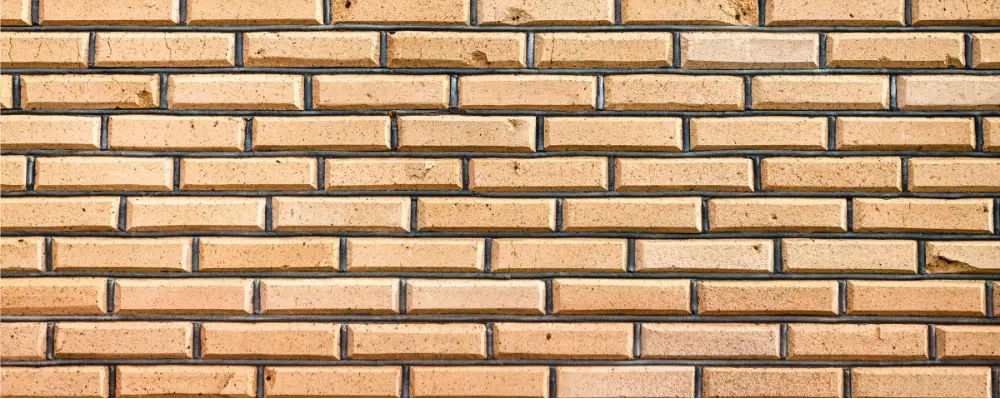
The primary purpose of facing bonds in the masonry part of the construction sector is for decorative and aesthetic purposes. This highlights the exterior appearance of a wall or structure immensely. As discussed above, the use of facing bonds could be seen in the construction of exterior walls of residential and commercial buildings. Apart from their external appearance, they may even be used in chimneys and fireplaces. The bricks in the facing bond are highly resistant to heat, making them apt for exposure to high temperatures. Some other common applications are boundary walls, fencing, facades of buildings, historical and heritage restoration, retaining walls and landscapes, courtyards, and retail commercial installations.

Advantages of Facing Bond

  • The primary advantage of using a facing bond is the visual appeal it exhibits. Its flexibility to customise to achieve unique textures and patterns fits them among many architectural preferences.
  • The uniformity and polished finish can be achieved with the use of facing bonds as they provide a consistent pattern throughout the wall.
  • This type of bond is resistant to inclement weather conditions and is resistant to rain, wind, The mortar joints prevent moisture from pervading into the walls, decreasing the risk of damage to walls.

Disadvantages of Facing Bond

  • The entire process of laying bricks in facing bonds and other steps is time-consuming. The requirement to cut down the bricks makes it even harder compared to the other simpler bonding styles.
  • This type of bonding requires highly skilled labourers to lay the bricks to precise standards.
  • More complex patterns and careful selection of bricks with high quality can add up to the cost making it more expensive.

Conclusion

Facing bonds are a preferable bond for finishing brickwork with designs and textures. They create a neat and consistent appearance and add value to the overall design of the structure. Also, since facing bonds are water resistant, they protect the wall from water damage. On the flip side, however, the process takes longer to complete and requires competent labour who can accurately place each brick in position. The intricate designs in all-facing bonds and the need to cut bricks into more regular shapes can add to the overall construction costs as well. Despite these issues, facing bonds still proves itself to be an effective tool for architects and builders who aim to create eye-catching yet robust structures made of brick.

Stepped Footing – Design, Importance, Benefits & Application

0
stepped footing

Sloping sites are challenging to build on, but they can produce unique architectural designs. Foundations are a base for balancing the structural element built above the ground. They are a decisive part of the construction process, supporting heavy loads to the soil or rock layers of the ground. 

In sloped sites, stepped footings help create horizontal concrete steps to follow the slope of the ground. By providing solid foundational integrity, stepped footings offer an economical option for building foundations on sloped terrain. In this article, we will explore their importance, applications, advantages, disadvantages, layout, and design considerations. 

What is Stepped Footing?

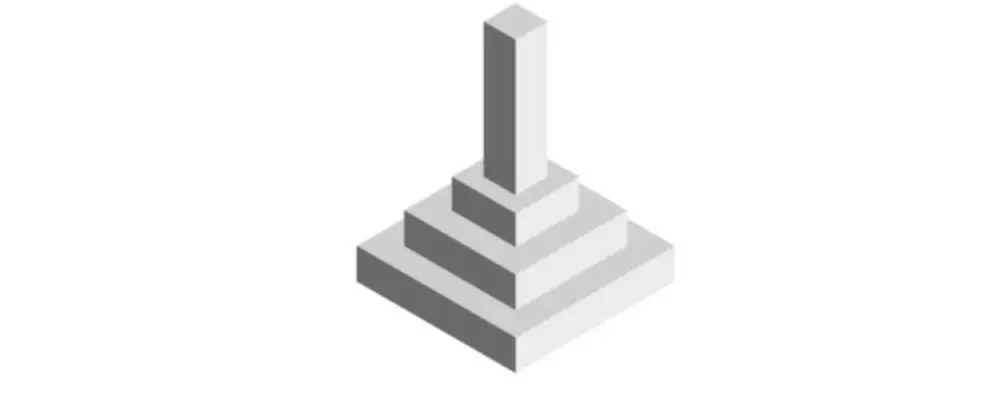
Usually incorporating three to four cross-sectional levels, a stepped footing is made of layers or steps of foundation sections that can be placed one on top of the other. By following the ground’s slope, these cross-sectional steps help transfer the structural loads to the soil smoothly. 

These steps increase the foundational surface area that is in contact with  soil and allow the structure to distribute the loads evenly to the ground. Stepped footings increase the load-bearing capacity and add stability to the structure, specifically in lower-strength soil types. It can also require precise engineering techniques to ensure that the steps are positioned correctly to maintain structural integrity and balance.

Importance of Stepped Footing 

When construction is necessary on weak or unstable soils, for tall structures, or buildings with significant loads, deep foundations are usually required. Bridges, skyscrapers, high-rise buildings, and industrial complexes are a few examples of structures where shallow foundations cannot support the weight. 

Additionally, when building on expansive or compressible soils, high water table sites, or areas with possible environmental or seismic dangers, deep foundations are required. Deep foundations ensure the stability and duration of the structure by shifting loads to deeper more stable layers of soil.

Some purposes of stepped footings are as follows:

  • The primary function of the foundation is to shift the weight of the building to the earth layers beneath it.
  • It aids in giving the construction a level, sturdy foundation.
  • The foundation aids in halting the building’s lateral displacement.
  • It offers assistance to avoid toppling and to withstand swinging.
  • It reduces the structure’s differential settlement.

Application of Stepped Footing

Stepped footing is the best choice for constructing structures in sloped regions. The important points are as follows:

  • For stability on sloping or uneven terrain, stepped footings work effectively.
  • By preventing uneven settlement, they reduce the chance of structural damage.
  • The uniform distribution of building loads across different ground levels is guaranteed by stepped footings.
  • These footings are more affordable than complicated ground levelling techniques.
  • Stepped footings require careful planning, excavation, reinforcement, curing, and site assessment.
  • Stepped footing foundations can be used for both commercial and residential buildings in a variety of construction projects.
  • To achieve the strength and durability of stepped footings, concrete must be properly cured. 

Advantages of Stepped Footing

As an expensive foundation construction method, it provides additional benefits, which are as follows:

  • Stepped foundations lower the possibility of structural weak points by preventing abrupt changes in foundation levels.
  • The foundation’s gradual transitions reduce movement or shifts in the structure above and aid in preserving stability.
  • It is simpler to put together isolated foundation steps that aren’t a part of a continuous run.
  • The stepped design improves the foundation’s resilience to bending (moment) loads and shear forces by increasing its effective depth.
  • Simple wall constructions and individual columns (isolated pillars) can be supported by stepped foundations.
  • They don’t require complicated foundation systems and offer enough stability for smaller, simpler structures.

Disadvantages of Stepped Footing

Some of the drawbacks of stepped footings are as follows:

  • Occasionally, construction projects may employ more concrete and steel reinforcement than is required for the appropriate structural strength due to over-engineering or imprecise design. Material waste results from this. 
  • The execution process is difficult compared to other footing methods.
  • It requires extra shuttering compared to simpler foundations like pad footing and sloped footing. 

How To Design Stepped Footing?

When the ground surface slopes more than one foot for every ten feet of horizontal distance, a stepped footing is required. Accordingly, the foundation cannot be positioned as a straightforward continuous structure if the earth slopes significantly, since this would produce an uneven depth and cause instability.

The footing must be levelled throughout or stepped to guarantee that the foundation’s top and bottom stay level in order to solve this issue. By establishing a sequence of steps that progressively modify the footing’s depth, the stepping of the foundation aids in matching the sloping terrain while preserving stability and uniformity across the entire foundation.

Design Considerations for Stepped Footing

Stepped footings minimise excavation and reduce the need for extensive below-ground walls. Stepped foundations are also useful for transitioning between deep and shallow foundations and are commonly used at corners and intersections.

Using regular steps in foundations prevents sudden level changes that could weaken stability. Each step should be no higher than the foundation’s thickness, with the upper section overlapping the lower by at least twice the step height, the foundation thickness, or 300 mm, whichever is greatest. Effective drainage is crucial to prevent instability from water pressure buildup.

Sloped vs Stepped Footings

The differences between the characteristics of sloped footing and stepped footing are as follows:

S.NOFEATURESSLOPED FOOTINGSTEPPED FOOTING
1.DefinitionFollows the natural slope of the ground, maintaining nearly constant depth below grade along the length.Designed with horizontal steps that follow the slope in increments, creating a “stair-step” effect.
2.Value for MoneyIt is not economical due to non-standard formwork, which increases the cost of the construction work.It is more economical due to less excavation and material usage, but more expensive than simpler types.
3.Formwork RequirementsIt requires a custom trapezoidal formwork, which is difficult to manage on-site.It uses rectangular formwork, which is easy to construct and manage on-site.
4.Complex ReinforcementDue to slopes, it needs varying lengths and sizes of horizontal and vertical bars which result in complicated fabrication and placement.The installation process is simple since it uses standard length and sizes of bars.
5.Stability on steep slopesIt can be unstable on very steep slopes and requires additional supporting features.It provides stable support on slopes and increases the contact area of structure to the soil.
6.Pouring ConcreteConcrete pouring is challenging on very steep slopes, as it requires more stiff mixes and closed top forms.Standard pouring is required, which makes the process easier.
7.ApplicationIt is preferable for moderate slopes.It is preferable for steeper slopes.
8.Design ConsiderationManaging formwork and material handling requires detailed communication.Since standard design practices and formwork are followed, it’s easy to coordinate with contractors.

Conclusion

Stepped footings are a practical way to ensure stability on uneven or sloping ground, guaranteeing a solid base for a variety of constructions. To guarantee correct execution and long-term performance, stepped footing design and construction require meticulous planning and site inspection. Stepped footings are an economical choice that lower excavation and material costs when compared to more complicated ground levelling techniques.

FAQ’s

1. What is the purpose of stepped footings when constructing buildings or structures?

Stepped footings are considered for building structures in sloped regions where they require structural stability and durability, to avoid soil erosion or settlement.

2. What are the benefits of using stepped footing?

Stepped foundations stop abrupt, drastic level changes that could cause structural movement and problems. They are frequently employed for moving from deep to shallow foundations. Transferring the structure’s weight into the underlying rock or soil is the foundation’s primary purpose.

Raking Bonds in Masonry – Types, Construction & Applications

0
raking bond in brick masonry

Bonding of bricks is the way of arranging bricks in a certain way using cement or lime mortar to build walls, pathways, floors, etc. There are numerous bonds in brick masonry, each with a unique style, purpose, properties, advantages, and disadvantages. Generally, bonds consist of facing headers or stretchers, but raking bonds are laid diagonally and produce a unique aesthetic. Here we take a look at what a raking bond is, its types, pros, cons and applications of the raking bond.

What is Raking Bond in Brick Masonry?

Raking bond is the process of binding the bricks at an inclined angle toward the wall. These bonds are not provided at the successive courses; however, they are built at equal intervals along the height of the wall. These bonds are generally used to build thick walls and are combined with English bonds to increase the longitudinal stability.

Types of Raking Bond

Based on the alignment of the bricks, raking bonds are classified into two types: Diagonal bonds and Herringbone bonds.

Diagonal Bond

In diagonal bonds, bricks are arranged at 45°angles in a way that the extreme corners of the wall remain in contact with the external stretcher lines. Brickbats are cut in a triangular shape to fill the small triangular gaps in the end that align with the stretcher. This bonding is used at a regular vertical interval between every 5th or 7th horizontal course. These bonds are best suitable for walls that are 2 to 4 bricks thick. In every alternate course, the direction of the bond is reversed. 

Herring-bone Bond

In a Herringbone bond, the bricks are arranged at a 45°angle in opposite directions from the centre of the wall. These bonds are used in the wall at a regular vertical interval, where the direction of bricks changes in every alternate course. These bonds are widely used for brick paving and decoration purposes.

How to Construct Raking Bonds in Brickwork?

Constructing a Diagonal Bond

  • Prepare the mortar by blending cement, sand, or other adhesives with the appropriate amount of water to make it a homogenous mixture suitable for binding the bricks together.
  • Prepare the bricks by choosing the right bricks and cutting the brickbats in triangular shapes.
  • Put some cement mortar on the level course as a bed to lay the bricks.
  • Place the bricks diagonally at a 45°angle and place the brickbats end-to-end touching the stretcher bond in the extreme corners.
  • Diagonal bonds are usually used at every fifth or seventh course.

Constructing a Herringbone Bond

  • Start by measuring and marking the centre point of the wall where the diagonals need to be reversed.
  • Dry lay the bricks to get a clear pattern of the structure.
  • Mark and cut the bricks in a triangular shape to fill the gaps.
  • Prepare the mortar by blending cement, sand, or other adhesives with the appropriate amount of water to make it a homogenous mixture suitable for binding the bricks together.
  • Place the bricks diagonally at a 45°angle until the centre point of the wall and place them in the opposite direction.
  • The corner gaps are filled with triangular brickbats and gaps in corners must be filled with mortar.

Applications of Raking Bonds

  • Raking bonds are used to create decorative patterns on the wall.
  • Herringbone raking bonds are commonly used for building pavements.
  • These bonds are mainly used for laying bricks on the floor.
  • Raking bonds when associated with English bonds give high thickness and stability to the walls.

Advantages and Disadvantages of Raking Bonds

Advantages

  • The raking bonds provide two to four brick wall thicknesses, making it one of the more stable wall types.
  • They provide decorative and ornamental finishes to the face of the wall or for brick flooring.
  • These bonds provide aesthetically pleasing finishes.
  • These bonds don’t need plastering, as the diagonal and herringbone bonds provide good looks and stability.
  • They are stable and can withstand for a long time.

Disadvantages

  • Construction of raking bonds needs highly skilled labour, as arrangements need to be made carefully.
  • These bonds are used only for the construction of non-structural walls due to the strength limitations.
  • These bonds are not provided in the successive courses, making their construction complicated.
  • Waste can be generated by cutting the triangular brickbats.

Conclusion

A Raking bond is one of the unique methods of laying bricks, which gives aesthetically pleasing finishes. The unique pattern and the structural stability it provides make it one of the preferred construction types, especially when looks are a concern. They can be used with English bonds to give good wall thickness and stability. Although they are aesthetically pleasing, they are not used for structural walls.