Home Blog Page 13

Wall Tiles for Living Room – Modern Options for Stylish Areas

0
wall tiles for living room

Selecting suitable wall tiles is among the most important aesthetic decisions you will make for your home. Walls offer a canvas for you to communicate using space and artistically display the style that you embody. The combination of textures, colours, prints, and styles forms a mesmerising tapestry. Wall tiles are regularly used in the kitchen and bathroom. That trend has changed, as wall tiles are gradually making their way into living rooms and other spaces in homes.

Let’s take a look at how you can use wall tiles in your living room to make a statement.

Types of Wall Tiles

Wall tiles are a combination of aesthetics and function. Some of the commonly used wall tile types are:

  1. Ceramic tiles or ceramic mosaic tiles : Ceramic refers to the material the tiles are made of. Due to their excellent properties like hard texture, beautiful color, elegant design, corrosion resistance, fire resistance, and wear resistance, they are the most popular option for most living spaces.
  2. Porcelain Tiles: A finer version of ceramic tiles, porcelain tiles have higher density. They are the most versatile when it comes to design. However, they are not all about looks; they are also stain and scratch-resistant, making them the easiest to maintain.
  3. Wooden Tiles: They are sophisticated but not very frequently used. Wooden wall tiles are slightly more affordable than wooden flooring and offer a modern, upstate look for less cost.
  4. Cement Tiles: Also known as concrete tiles, cement tiles are made from a mixture of cement, colour pigments, and sand. They are durable and available in a wide range of colours and patterns.
  5. Vitrified Tiles: Vitrified tiles are made from the vitrification of clay and silica. This allows them to have low porosity, which in turn makes them water-resistant. They do not require additional glazing like ceramic tiles. They are available in various finishes, such as rough, textured, smooth, and polished.
  6. Metal Tiles:  Metal tiles are durable and lightweight and provide a rich appearance to your interiors. They can be made of stainless steel, aluminium, copper, or bronze and used for decorative wall finishes.

Benefits of Using Wall Tiles in Living Rooms

  • Cleaning and maintenance: As opposed to painted walls, wall tiles are easier to clean and maintain. That drop of coffee stain can be easily wiped out without rubbing out a portion of the painted wall.
  • Durability: Tiles offer an extra layer of protection for the walls, making them long-lasting. They are also more scratch-resistant than paint.
  • Value for money: I know you are thinking, “Tiles are costlier than paint.” Allow me to change your mind. Paintwork needs to be redone at least every five to six years; however, with tiles, you don’t have that risk. This makes using wall tiles a one-time investment that packs a punch.
  • Can withstand high stress: In areas of high stress, a painted wall may chip or weather easily. Most tiles, with the exception of glass and porcelain tiles, can accommodate heavy stress.
  • Aesthetics: Tiles come in several shapes and sizes and are a great tool to express your creativity. 

Design Ideas for Living Room Wall Tiles

Design Ideas for Living Room Wall Tiles

We love wall tiles. Here are our top 5 tile designs: 

  1. French wall tiles: The French use light pastel colours that bestow a modern and sophisticated look to your interiors. You could use complementary pastel colours on adjacent walls or white on all the walls except the one on which you plan to mount the television.
  2. Persian Wall Tiles: Persians are known for their artistic nature, and their houses reflect this. The grandeur is woven into the tiles with motifs and intricate art. You could use them as a border along white tiles to bring a Middle Eastern look.
  3. Nature-inspired designs: The blue of flowing water, the green of forests, the white of Himalayan snow, and the lovely pink of flowers bring home serene natural landscapes. You could highlight them with a zen idol, and the entire space would look divine.
  4. Geometric patterns: Geometric patterns create a three-dimensional effect and are a good way to add a splash of colour to your spaces.
  5. Rustic Metallic Tiles: When used in enclosed spaces, rustic metallic tiles add depth. This works for home theater setups and warmer climates.

How to Install Wall Tiles in the Living Room

Unlike painting a wall, which you can sometimes do by yourself, The process begins with checking quality tiles that suit your space, ensuring durability and aesthetics. wall tile installation generally involves employing labour.Read on for a step-by-step process of installation:

  1. Measure the wall: Before installing wall tiles, the first thing you have to do is measure the wall. This will let you prepare for the installation, rationalise the process, and estimate the amount of material needed.
  2. Levelling the wall: Prepare the wall using a leveller to even out the surface before applying any adhesive.
  3. Mark Center Lines : The first tile usually needs to be fit into the center of the wall. Therefore, it is important to mark the center of the wall.
  4. Applying Adhesive : Using a good quality adhesive to seal the tiles is paramount. Once the adhesive is applied, the wall is ready to receive the first tile.
  5. Start placing tiles: Once the first tile is set on the adhesive, tiles are inserted into their positions.
  6. Check Alignment: After arranging a few rows of tiles you are required to check whether or not there is some over-lap of different tiles into each other.
  7. Grouting: A mixture of water, colour and cement is the product known as grout that is used to fill in between gaps of tile. Grouting is done to fill gaps and cover up tile joints to create a seamless surface.
  8. Excess grout removal: There is a possibility that the grout leaks onto the tiles once it has been used in filling the gaps. This excess can be removed with a scrubbing pad.
  9. Curing: Curing is a long and complicated procedure. During the curing period, the cement sets through a chemical process. It takes between 24 to 72 hours.

Cost of Wall Tiles for Living Room

Prices of tiles start at a low of 30 INR per square foot for basic/regular tiles, going up to even 10000 INR per square foot for premium tiles.

Maintenance Tips for Wall Tiles in Living Room

Wall tiles are relatively easy to maintain. That being said, they do not take care of themselves. Keep in mind that you follow the instructions given below to maintain the tiles :

  1. Clean regularly : The tiles need to be inspected and cleaned regularly to ensure there is no staining. Particularly the gaps between tiles that have grout, must be cleaned with water or cleaner fluid.
  2. Avoid harsh chemicals : You must keep harsh chemicals such as acids away from tiles as they cause eroding of the surface.
  3. Follow the upkeep methods for the given tile type : Each tile type has its own upkeep method. Say ceramic titles, for example, is water resistant, but wooden tiles are not. 

Conclusion

Wall tiles are an excellent investment to enhance the functionality and aesthetic finish of any space. They are wear, scratch, and stain resistant. With their versatility and wide options, they are generally a better option than painted walls.

Pointed Arches – Key Characteristics & Advantages

0
Pointed Arch

An arch is a curved structure constructed on buildings to support heavy loads above it. They effectively transfer compression forces downward and make the structure tension free. More than their strength and durability, arches are also known for the aesthetic touch that they can add..Arches can be seen in architectural marvels and many modern structures. Based on the type of construction, you can choose an appropriate arch type. In this blog, we detail out pointed arches. Continue reading to understand its key characteristics, advantages, and construction process.

Overview of Pointed Arch

Pointed arch, also known as a Gothic or ogival arch is an architectural element with curved sides that intersect at a point rather than a semicircular curve. They carry a distinctive shape and style that set them apart from other commonly used arches. Their pointed apex is instantly recognisable, often used in castles and cathedrals where the structures require larger windows and taller walls.

Key Characteristics of a Pointed Arch

Pointed arches have several key characteristics, including:

Shape: Unlike a smooth, semi-circular curve, a pointed arch is possessed of curved sides that meet at the top of two circular arcs. Its unique architectural design helps transfer the load efficiently and make the construction stress-free.

Versatility: Pointed arches offer different design possibilities like equilateral, depressed arches, lancet, and flamboyant. You can use various forms according to the construction requirements.

Two-Centered Construction: Pointed arch is constructed using two centers to provide great height and flexibility. Both the centers are used to create curves that have the same radii and meet at a common point.

Structural Efficiency: A pointed arch is primarily used to distribute the load or weight evenly to the foundation, which typically supports the construction of taller and complex structures.

Advantages of Pointed Arches

Pointed arches have become a popular architectural element often used in all types of constructions. Here are some of its significant advantages:

Load Distribution: Pointed arches can distribute the weight and load safely to the foundation in a more efficient way than rounded arches, and can thus be used in taller and complex structures.

Good Spanning Capability: This arch type has wider openings and higher ceilings, providing larger vertical spaces in the construction. It makes the structure taller and looks appealing.

Visually pleasing: Pointed arch has a unique shape and style that adds a sense of elegance to the overall building. The styles can be customised according to the requirements of ancient and modern architecture.

Better Ventilation: You can incorporate various styles and designs into pointed arches, allowing you to plan for more natural light and ventilation within buildings.

Step-by-Step Construction Process of Pointed Arches

Let’s have a look at the steps involved in the construction process of a pointed arch:

Designing and Planning: Before starting planning, you need to decide the type of pointed arch and its dimension. For clarity, you can take a piece of paper to scale the exact requirements. Ensure you have mentioned accurate sizes and shapes to accommodate the arch.

Centering Construction: The centering of construction should be strong enough to hold the load and weight of the arch without causing any impacts. A pointed arch requires a curved framework that should be efficient in handling larger weight until the concrete or masonry sets. It can be made of either timber or metal.

Lay the First Course of Bricks: The central stone is a keystone placed at the apex of the arch. It is responsible for ensuring the overall arch’s strength and stability. Following that, lay the voussoirs in pairs, one on each side of the arch, to ensure they are balanced and level. Applying mortar to the joints can make the bond stronger.

Removal of Centering: Once the arch is completely cured, check and ensure it has achieved the desired strength to support the construction. Then, you can remove the centering carefully.

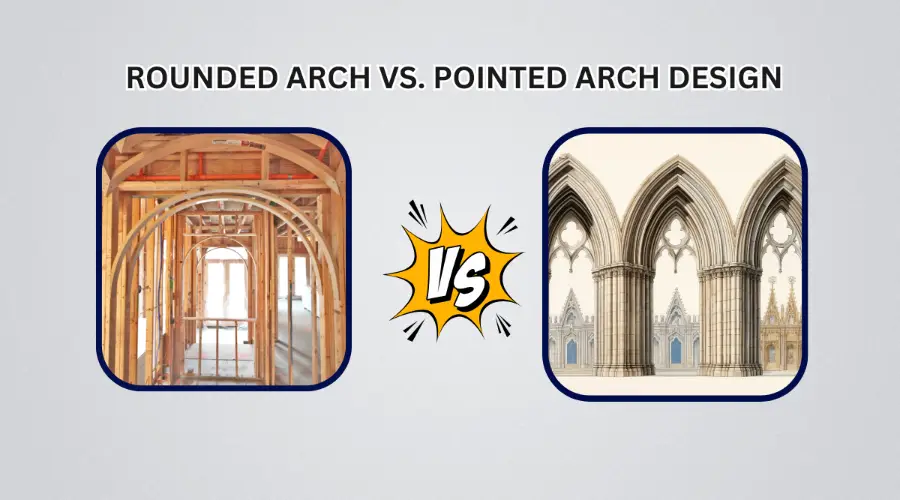
Rounded Arch vs. Pointed Arch Design

Rounded Arch vs. Pointed Arch Design
FeatureRounded ArchPointed Arch
ShapeA rounded arch is a half-circle, seeming like a semicircular curve.A pointed arch is composed of two different curves that intersect at the top of the edge.
ConstructionIt is a symmetrical curve, constructed using a single center point.Built using two center points, providing greater flexibility in design and style.
Load or Weight DistributionThis arch type is suitable for limited heights, distributing the weight outward, that is, pushing against the supporting walls.The weight is efficiently transferred downward, suitable for wider and taller structures.
StyleThis architectural style is commonly associated with Classical and Romanesque architecture.Pointed arches are a characteristic of Gothic architecture.
Common UsesTypically used in doorways, windows, and bridges.Frequently employed in cathedrals, churches, and other religious buildings.

Conclusion

Pointed arches are the most commonly used type of arches and distribute the weight more efficiently than rounded arches. Builders opt for this design while constructing taller and wider structures. This arch is more easily managed and balanced, reducing the requirement for massive walls. Understanding its significance can allow you to make better decisions while planning and designing.

FAQs

1. Are pointed arches still used in modern architecture?

Yes, pointed arches are still being used in modern construction. They are often incorporated into contemporary designs, providing many structural advantages and aesthetic value.

2. What are some famous buildings with pointed arches?

Here are some popular buildings constructed with pointed arches:
Taj Mahal, India
Alhambra, Spain
Notre Dame Cathedral, Paris
Westminster Abbey, London
Cologne Cathedral, Germany

3. How do pointed arches impact the aesthetics of a building?

The construction of pointed arches contributes to improving the overall appearance and aesthetic feel of a building. Here is how:
Allow natural light and ventilation
Wider spaces and taller structures
Dynamic and expressive
Symbolic significance
Intricate design
Add a sense of elegance

Types of Concrete Mixers – Used on Construction Sites

0
types of concrete mixer​

Choosing the right concrete mixer is like finding your way through a city of tall buildings—each option stands out, but picking the right one takes careful thought. For small to medium construction projects, drum mixers are usually used, but are not ideal for high-rise building projects. Each project has its unique timeline to adhere to. Different types of mixers are used for different types of projects to improve their performance and efficiency of the work.

Let us explore these various options to uncover different types of concrete mixers that suit your upcoming construction project.

What is a Concrete Mixer?

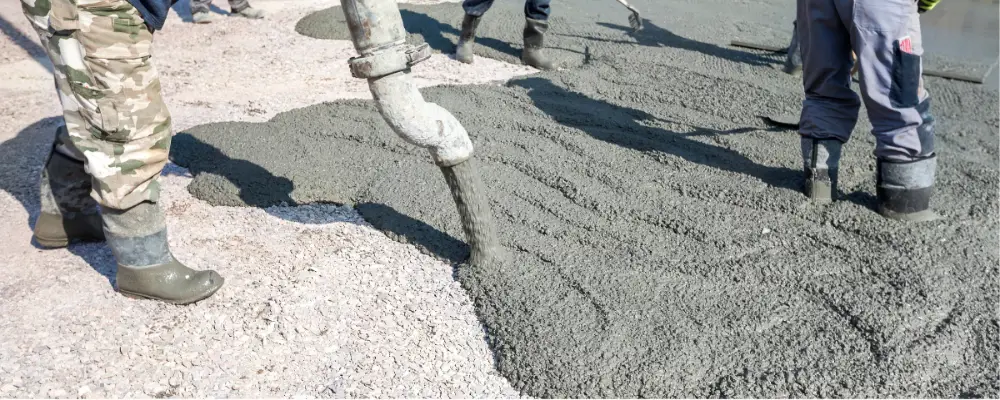
Cement, water, sand and some aggregates are mixed at a particular proportion to obtain the appropriate concrete mixture. These components are mixed together in a machine and poured on the site or used for further construction work. These mixers are available in different sizes and types according to the project requirement, you may choose the best. From small portable mixers to industrial-sized mixers, there are various choices available in the market. The purpose of these various concrete mixers is to make concrete production quicker and more economical for the construction process. 

Purpose of Concrete Mix

A concrete mix is a composite material that can be used for all sorts of construction works. It can be moulded into any shape and is known for its durability and affordability for every purpose. Cement, aggregates (such as gravel), sand and water can be mixed in precise amounts to provide a robust, long-lasting, and adaptable building material. The mixture offers:

  • Structural Integrity: Buildings, bridges, and other structures are guaranteed to be able to bear loads and environmental conditions because of their structural strength.
  • Durability: Over time, it can withstand wear, weathering, and chemical exposure.
  • Workability: Makes it simple to pour, handle, and shape before setting.
  • Versatility: Meets a range of building requirements, including those for walls, foundations, and ornamental elements.
  • Customisability: This may be modified for particular projects by adding admixtures for qualities like increased strength, less shrinkage, quicker curing, or by changing the mix proportions.

Types of Concrete Mixers​

There are various types of mixers available in the construction industry for mixing concrete. Let us explain briefly about their purpose and usage in the below passage.

Drum Mixer

Drum Mixer

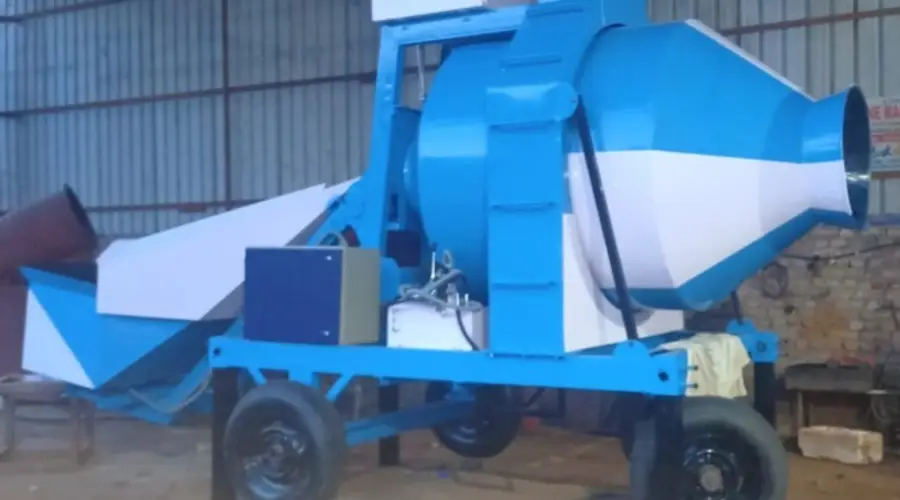
A drum mixer, also called a barrel mixer, is used to mix big batches of cement or concrete. It features a revolving drum with internal blades that mix the materials as it rotates. Drum mixers are perfect for both small and large construction projects since they are effective, simple to use, and require minimal labour. They are capable of efficiently handling mortar, concrete, and other building supplies.

Different Types of Drum Mixers

Different kinds of drum mixers are used for various purposes that enhance the production of the concrete mix as well as contribute to the fast construction process. Drum mixers can be further classified into three types, which are as follows: 

Tilting Drum Mixer

Tilting drum mixers are a common option for building projects when material needs to be unloaded rapidly. This is made possible by the tilting drum design, which allows the drum to be spun to pour out the mixed concrete or cement. In these mixers, the combined material is poured into a specific region from a drum that is inclined on its axis. Since the combined material may be conveniently discharged by tilting the drum, this type of mixer has the benefit of requiring less manual work than non-tilting drum mixers. They are therefore a well-liked option for modest to medium-sized building projects.

Non-Tilting Drum Mixer

In contrast to tilting drum mixers, non-tilting drum mixers rely on physical work to unload the combined material because they lack a tilting mechanism. The straightforward design and effortless operation of this concrete mixer are among its benefits. These mixers are well suited for both wet and dry combinations and can be used for small and medium-sized construction projects. In addition, they require little maintenance. Their incapacity to mechanically unload the mixed material is one of their primary disadvantages, nevertheless. For large-scale construction projects, this may be inefficient because large material quantities need to be unloaded..

Reversing Drum mixer

Reversing Drum mixer

The material can be efficiently mixed by the mixing blades of a reversing drum mixer since the drum may rotate in both directions. Mixing blades, or fins, are mounted on the inside of the drum to help facilitate the mixing process. One of this type of mixer’s advantages is its ability to produce incredibly consistent concrete mixtures, including wet and dry mixes. They are easy to maintain and clean, making them appropriate for modest to medium-sized construction projects. They might be less appealing for some building projects, nevertheless, because of their comparatively high cost.

Pan-Type Concrete Mixer

Pan-Type Concrete Mixer

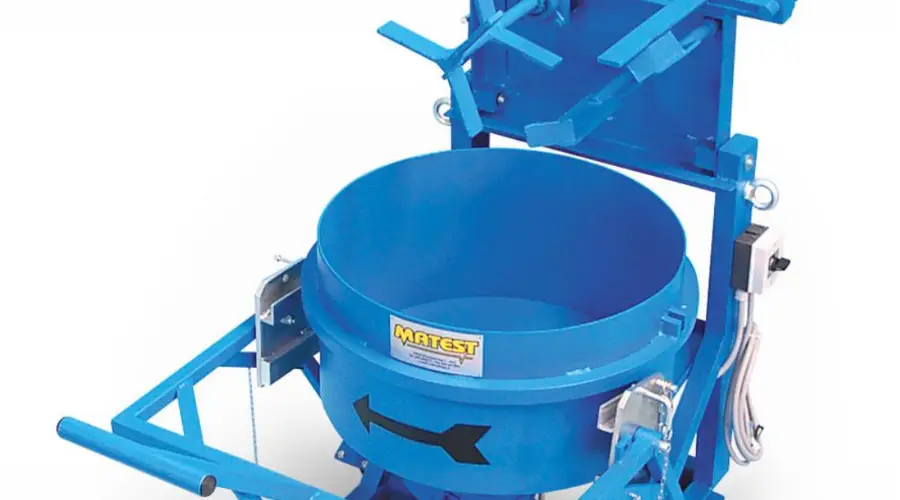
Due to its round mixing pan, this concrete mixer is commonly called a pan mixer or circular mixer. The circular pan is mounted horizontally on a wheeled frame for easy mobility. Their capacity to create extremely uniform concrete mixes is one of the benefits. Additionally, pan-type mixers can be used to create a variety of concrete mixes, such as wet/dry mixes, mortar, plaster, and refractory materials. Their smaller mixing capacity in comparison to other mixer types is one of their primary disadvantages, though. They may not be suitable for larger building projects that require high-capacity mixing equipment.

Continuous Concrete Mixers

As implied by the name, the continuous mixer’s job is to load, mix, and discharge the mix continuously until the task is finished or a break occurs. Materials are continuously added using screw feeders. For very huge projects like dams, bridges, high-rise building construction, etc., continuous mixes are utilised.

Twin-Shaft Mixers

Twin-shaft mixers are strong devices made for mixing concrete of superior quality. Their dual-axis operation ensures efficient and consistent results, with well-aligned shafts and specially designed blades reducing mixing time and delivering uniform concrete.

Key features of Twin-Shaft Mixers:

  • Shaft Alignment: Ensures smooth operation, reduces wear and extends the machine’s lifespan while maintaining mix quality.
  • Mixing Efficiency: The dual-shaft design allows thorough, fast mixing, ideal for high-strength and precise concrete needs.
  • Versatility: Suitable for various materials, including ready-mix, high-strength, and zero-slump concrete, making them adaptable for diverse projects.

These mixers combine efficiency, reliability, and versatility, making them a top choice for modern construction challenges.

Volumetric Mixers

As the name indicates, volumetric mixers are used to prepare concrete on-site and measure and mix concrete components as needed. They offer excellent efficiency and flexibility. They can be portable and act as mobile batching plants, allowing you to create custom mixes on demand and avoid excess waste.

These mixers keep cement, sand, water, and aggregates stored separately and combine them only at the point of delivery. This ensures fresh, high-quality concrete without issues like premature hydration or segregation.

Their mobility adds to their efficiency, enabling concrete production directly at the construction site. This reduces delivery time, costs, and the need for multiple trips to a batching plant, making volumetric mixers ideal for tight schedules and remote locations.

Conclusion

In conclusion, any building project’s success depends on selecting the appropriate kind of concrete mixer. Every type of mixer—drill, twin-shaft, continuous, pan, or volumetric—offers special benefits based on variables like project size, mix specifications, and operating effectiveness. To achieve high-quality, efficient, and economical concrete mixing, you can choose the best alternative by carefully assessing the particular requirements of your project and being aware of the capabilities of each type of mixer.

Precast Concrete Construction – Manufacturing And Types

0
Precast Concrete

One common building material that can be utilised in contemporary construction is precast concrete. It is generally created in a controlled environment, often away from the construction site or in a factory. It is resilient to severe weather and long-lasting. The primary advantage of this precast concrete is its recyclable property. It is changing how structures are built from a fastened construction process and lower labour costs to higher design customisation and flexibility. 

So, suppose you are looking for an advanced construction material that fastens your project timeline, cuts down labour costs, and has flexible design work. Because of its endurance and structural integrity, precast concrete is a good option in that situation. All of the manufacturing techniques, uses, varieties, and advantages will be covered in this blog to assist you in making your own choice. 

What is Precast Concrete?

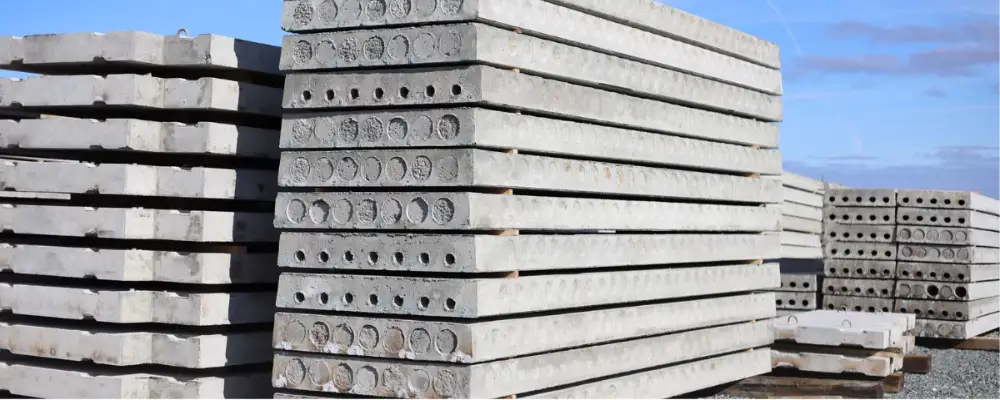
Precast concrete, a modern building material, can be created at a large factory or industrial facility by pouring concrete into a mould rather than on-site. The factory-made precast concrete can be transported to various places where it is required. As a completed material, the cured concrete product can be effectively placed on the construction site.

Manufacturing Process of Precast Concrete

Moulds can be used to create precast concrete. These moulds can be reused. Concrete can be cast into a reusable mould to create precast concrete, which is then delivered to the construction site. It shortens the construction timetable, improves quality control, and makes the process more efficient. Several key steps can be followed in manufacturing precast concrete. Let us discuss the process below:

  • Design and Mould Preparation

The initial step in preparing precast concrete involves creating reusable moulds designed for multiple castings. 

  • Concrete Mix Design

Certain characteristics of the concrete can be enhanced by several components, such as cement, sand, water, aggregates, and some artificial additives.

  • Batching

Each component is carefully measured and allowed for mixing in a batching plant. The consistency and quality of the final concrete material can be managed well through this process.

  • Casting

The mixed concrete is poured into moulds, shaping it into the desired precast component. To enhance the final product’s strength, reinforcements like steel bars or mesh may be embedded within the mould.

  • Curing

To increase its strength and durability, concrete undergoes a curing phase after it is placed. This process is often carried out in a controlled setting, such as a water bath or curing chamber, to give the best conditions for hydration.

  • Demoulding

The precast materials are removed from the moulds after reaching the setting time and hardened state. After cleaning, the moulds are ready for the subsequent casting procedure.

  • Finishing

These precast elements need additional finishing processes to achieve their appearance and functionality. They include treating the surface for its smooth appearance; polishing and coating can be done.

  • Transportation

Specialised vehicles can be used to transport these precast concrete materials due to their challenging properties, such as huge size and careful handling. It requires a lot of attention while transporting the precast concrete materials from the factory to the construction site.

Materials Used in Precast Concrete

A precast concrete construction is made up of numerous components. Among these resources are:

Cement: This is the most crucial component of precast concrete. To produce high-quality precast concrete as an NPCA-certified plant, you must meet the standards specified by the National Precast Concrete Association.

Precast concrete typically incorporates ordinary Portland cement (OPC) in grades 43 and 53, while Portland slag cement and Portland pozzolana cement are often used for precast concrete in challenging environments, such as tidal areas.

Water: A great precast concrete mix design is largely dependent on the ratio and cleanliness of the water. Impurities must be absent from the water because they can lower the quality of the mixture.

SCMs, or supplemental cementitious materials: They are usually industrial byproducts and sometimes natural materials that possess cement-like qualities. These materials are blended with ordinary Portland cement to enhance its hydration qualities.

Aggregate: The mix design for a particular precast concrete construction usually determines the type of aggregate to be used. Usually, a project manager will take texture, colour, and durability into account. It is possible to employ a special aggregate.

Precast concrete can also contain the following additional materials:

  • Water-resistant additives
  • Oxides
  • Reinforcement bars 
  • Steel tendons
  • Joints
  • Lightweight combinations
  • Non-shrinkable fibres
  • Epoxy Grouts 

Types of Precast Concrete Products

Five typical varieties of precast concrete are as follows:

  • Precast Concrete Walls

Precast concrete walls are well suited for creating low-maintenance structures that withstand poor climatic conditions. They can also be used to create interior and exterior surfaces to save time and money. 

  • Precast Concrete Beams and Columns

Precast concrete beams and columns are ideal for different kinds of structures, from mid-level apartments to commercial buildings. They are available in various shapes and sizes and can be flexible for project requirements. They are easily installed and have high structural strength for bearing heavy loads. Vibration and moisture do not affect them. 

  • Precast Concrete Slabs and Planks

The heavier precast concrete slabs are generally flat and rectangular and can be widely used for flooring, roofing, and walls. Large areas can be spanned by installing planks. 

  • Precast Concrete Stairs

Precast concrete stairs are fast-moving precast concrete products that can be employed for emergency exit stairways as they are easy to install and save time. The stairs are made with treads and risers as per project specifications.

  • Precast Concrete Retaining Walls

These concrete retaining walls are manufactured to form a seamless barrier and are engineered to interlock with one another. They are often reinforced with galvanised steel or enhanced with admixtures or fibre reinforcements for additional strength and durability.

Application of Precast Concrete

  • Precast concrete can be used for traffic barriers, stairs, columns, paving slabs, and architectural veneers in single-level to multi-level parking facilities.
  • Commonly used in residential and commercial buildings for walls and floors, offering energy efficiency and moisture resistance.
  • They are included as compound walls for property division, sound walls for noise reduction, and retaining walls for structural support in various settings.
  • Precast concrete is essential for bridge components like beams, arches, and deck slabs, as well as culverts for wastewater and stormwater management.
  • They can be used in water and wastewater management systems that include septic tanks, catch basins, manholes, and stormwater systems for safe containment and pollutant removal.
  • Precast concrete protects utility connections with products like vaults, light pole bases, transformer pads, and telecommunications systems.
  • They are suitable for agricultural applications because of their durability against extreme conditions, being used in feed troughs, fencing, bunker silos, and livestock management systems.
  • Precast concrete is found in roads, railways, and airports for barriers, underpasses, railroad ties, and tunnel segments.
  • Modular and decorative products include paving in customisable textures and colours, building components, and site features like cladding and mantels.
  • Marine and hazardous containment can be made using precast concrete, such as seawalls, docks, vaults, and hazardous material storage, offering resilience against natural and manmade forces. 

Advantages of Precast Concrete

Faster Construction: Precast concrete speeds up the building process as ready-made components are delivered and installed, eliminating on-site curing delays.

Higher Strength: Precast concrete uses well-mixed materials, ensuring greater strength and durability compared to site-cured concrete.

Controlled Production: Manufactured in controlled environments, precast concrete is not affected by weather conditions like rain or humidity, ensuring consistency.

Superior Quality: Dedicated production facilities focus on quality control, resulting in uniform and reliable products.

Cost Savings: Faster construction reduces labour costs and minimises resource wastage.

Design Flexibility: Specialised reusable moulds allow for intricate shapes, sizes, and decorative designs that are difficult to achieve on-site. 

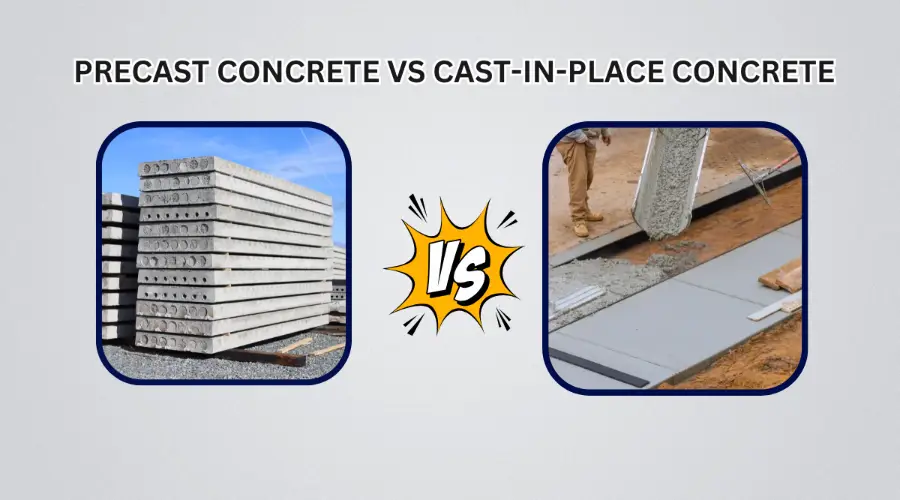
Precast Concrete vs. Cast-in-Place Concrete

Precast Concrete vs. Cast-in-Place Concrete
S.NoCriteriaPrecast ConcreteCast-in-Place Concrete
1Location of CastingManufactured off-sitePoured and moulded on-site
2Level of Quality ControlProduced in a controlled environmentSubject to imperfections on-site
3CustomisationLess customisable, suited for repetitive elementsGreater customisation is ideal for complex structures.
4Production TimeFaster to produceTheir production time is longer due to setting and curing time on site.
5CostTypically higher due to the manufacturing processThis can be higher due to specialised equipment and skilled labour.
6Best UseSuitable for mass-produced elements (e.g., walls, columns)Preferred for larger, complex structures, or challenging sites

Conclusion

Precast concrete provides quick construction, higher strength, and uniform quality through regulated manufacturing methods. It guarantees cost savings and lessens weather-related delays. Its adaptability in design makes elaborate forms and ornamental elements feasible. In conclusion, precast concrete is a cost-effective, long-lasting, and adaptable option for a wide range of building projects.

How to Build a Small House – Complete DIY Guide

0
How to Build a Small House

Building a house is a dream and a big milestone for most people. It is a huge decision that cannot be taken lightly. As certified constructors handle large-scale housing projects, people looking to build a small, budget-friendly house are often confused about where to start. If you are among them, don’t worry; here is a breakdown of the step-by-step process of building a small house.

How to Build a Small House: A Step-by-Step Guide

Set Your Budget

When planning to build a house, the first step is to determine the budget you can allot for the construction from start to finish. The overall budget should include the cost of the land, the size of the building, the cost of construction materials, labour, and permits for land and building.

Pick a Floor Plan

After determining the budget, you can hire an engineer to design your building’s floor plan and construction layout. The factors that need to be considered while designing a floor plan include traffic flow, natural light, ventilation, views, and local building codes. In case of prefabricated construction, select a proper frame, and the floor plan will be delivered along with the house kit.

Finance your Tiny House

You need to secure your finances before starting to build your house. If the budget exceeds your savings, going for a construction loan could be the best option for financing, as it covers the costs of the building.

Purchase Construction Materials

After confirming your floor plans and securing the financing, purchase the construction materials and equipment required for the construction. Choose the right quality of material for your house for the longevity of your building.

Preparing Foundation

Clear the debris, trees, and obstacles on the construction site and level the area. Numerous foundation options exist for small houses, including concrete slab foundations, crawl spaces, and simple pier foundations. The choice depends on location, soil conditions, and the construction budget. If the design includes plumbing, install the underground water and sewage lines during the foundation process.

Framing

Construct the frame supports for the roof, walls, and floors of the house using either a wooden or steel frame. This gives the skeleton or the structure of your home. Sheath and wrap the wall and roof surfaces to prevent the structure from water ingress into the underlying wood and to prevent the decay of the formwork.

Install Columns, Roofing, Windows, and Doors

After building the framework, install the columns and roofs using a concrete mix into the frames and sheathes. Construct the walls using a suitable construction material (brick or block). After completing the exterior works, install windows and doors by adding frames. The frames can be made of wood, metal, or PVC, whichever is suitable for your building.

Rough-In

It is the process of installing electrical wires, plumbing works, and HVAC system utilities into the structure. HVAC ductwork should be installed to improve air quality and vent toxic gases. Plumbing installations can be done to install a water storage tank and connect the water lines. Electrical wires can be installed to provide the necessary power source for the house.

Insulate Your Tiny Home

Considering the climate, insulation should be placed on the walls, ceilings, and floors to increase energy efficiency.

Add Appliances and Amenities

Install all the necessary amenities and appliances such as electrical switches, kitchen and bathroom countertops, sinks, showers, toilets, and lights. Connect all the plumbing and electrical works for proper electricity and water supply, making the house ready to occupy.

Top 5 Small Houses You Can Build On Your Own

There are numerous types of small house construction in the industry. Among them, we have handpicked the top five simple houses you can build on your own.

Concrete House

Concrete House

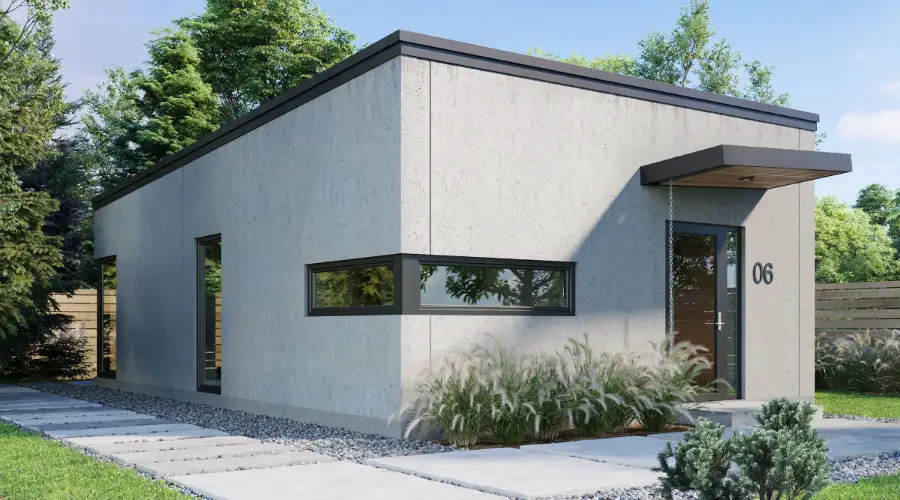
A concrete house is a type of house built with concrete as the primary building material. These houses are known for their durability and energy efficiency. Concrete is ideal for the construction of small houses due to its cost-friendliness, energy efficiency, and low maintenance requirements. 

Prefabricated House

Prefabricated House

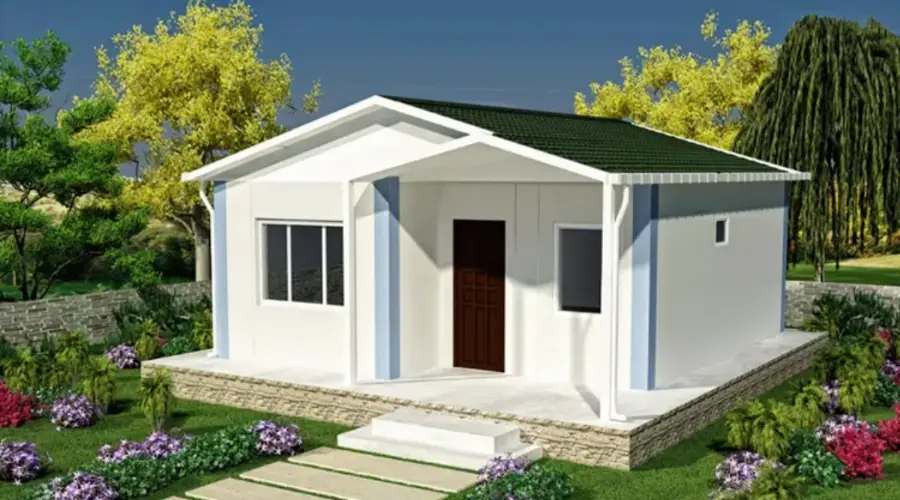
A prefabricated house could be good for your small housing project if your primary expectations are faster construction at an affordable price. This type of house has sections and panels that are built in the factory and assembled at the construction site.

Container House

Container House

A container house is a type of house that uses shipping containers that are repurposed into residential housing after their lifecycle. These houses are made by certain manufacturers and are moved to your housing location in a ready-to-occupy condition. This housing is extremely cost-effective, eco-friendly, and durable and can be transported to any place.

Clay Brick House

Clay Brick House

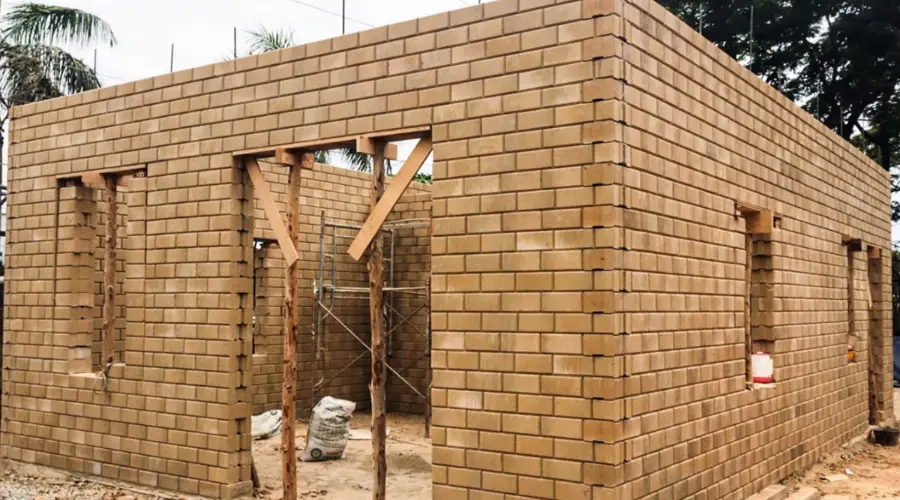
A clay brick house is a traditional house that is built using clay bricks as the primary building material. These houses are known for their efficiency, durability, and timeless aesthetic beauty. They are widely used and have proven to be strong and comfortable buildings for hundreds of years.

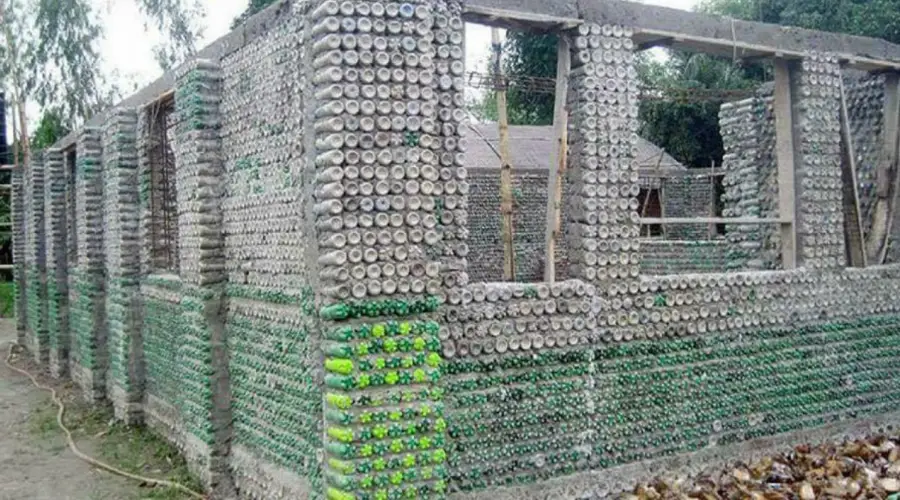
Plastic Bottle House

Plastic Bottle House

It is an eco-friendly house made using waste plastic bottles as the primary construction material. Waste plastic bottles of similar sizes are collected and filled with mud and sand. The mud and sand are tightly packed and used as a construction material, replacing bricks and blocks. This is one of the affordable, energy-efficient, and durable small housing types.

Conclusion

Small houses are more affordable and sustainable and require low maintenance, making them a preferred choice for many families. Their numerous advantages and budget-friendly construction help families live in a protected and sophisticated environment. Multiple small-scale building processes align with your needs and lifestyles, and this blog will give an overview of building your own small house.

Course in Brick Masonry- Types, Tools, and Importance

0
course in brick masonry

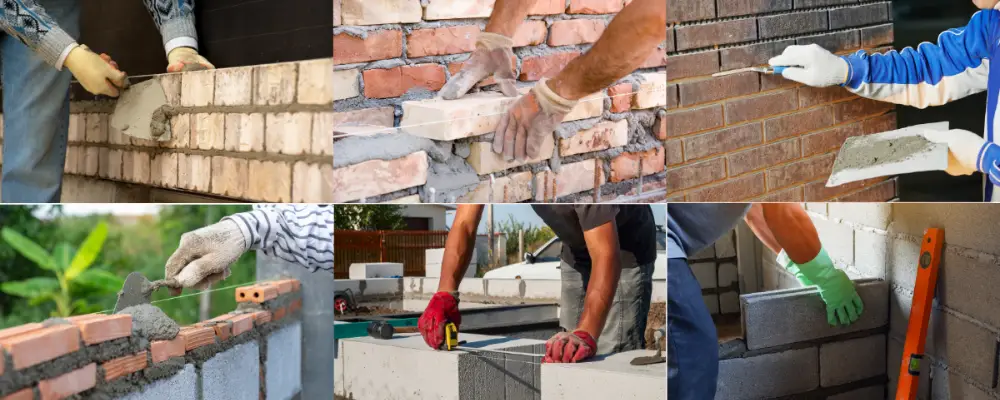
Brick masonry is the arrangement of bricks in a specific pattern using mortar to fill the joints. This is commonly used to construct walls, foundations, arches, and other architectural elements. 

The type of courses is one of the most important factors that contribute to the overall performance of masonry construction. But why are courses so important?

Choosing the right type of course not only enhances the aesthetic appeal of your home or commercial space but also ensures its structural stability.

Keep exploring this blog to learn more about brick masonry courses and their role in making your construction project durable and visually appealing.

What is a Course in Brick Masonry?

Arranging a layer of uniform units horizontally within a wall is considered a course in brick masonry. Generally, it can be a continuous row of various masonry units, such as concrete masonry units (CMU), stones, bricks, tiles, shingles, and more. 

A course in brick masonry involves precisely arranging bricks in a designated horizontal row, which ensures that the brickwork is strong and stable enough to withstand various stresses over time. 

Types of Courses in Brick Masonry

Stretcher Courses

This resembles a row of stretchers and is the simplest and most familiar arrangement of masonry units. The stretcher course pattern sits halfway over the joints in the row below. 

This is one of the most time- and cost-effective ways to lay bricks. Many can easily notice this pattern more commonly in brick buildings. 

Header Courses 

This type entirely consists of headers, not the stretcher side of bricks in the course. In simpler terms, masonry units are laid with their ends towards the face of the wall. 

Header courses are usually for very high-quality buildings and radial brickwork. 

Bond Courses 

This type of course is where the brick headers are seen in the facing and backing masonry. This arrangement is important to ensure the structural integrity and stability of the brick walls. 

Some types are available in bond courses, such as Flemish Bond, English Bond, Garden Wall Bond, and Stack Bond. 

Flemish Bond

This is created in a single course by laying alternate headers and stretchers. Flemish bond is a traditional course that is also known as Dutch bond.This course attracts many people with the alternative headers and stretcher pattern used for two thick brick walls. 

English Bond:

 Similar to Flemish bond, English bonds are also the oldest form of brick bonding. They are alternative course arrangements of stretchers and headers. People can witness a row full of headers and another row with stretchers. English bond is considered the strongest course and is widely used for building bridges and other structural projects. 

Stack Bond:

 This type is widely used for decorative purposes as it has less structural integrity. In a stack pattern, bricks are directly laid on one stretcher over the other. 

You can witness stack bonds in garden walls, interior partitions, and visually appealing facades. 

Plinth Courses 

Plinth courses are ideal for both commercial and residential buildings. A plinth is a portion of the structure between the floor’s surface above the ground and the surrounding ground. 

In simple words, the plinth is known as the bottom course of the wall. Plinth levels are essential for a stable foundation for the overall construction of floors and walls. 

Materials and Tools Used in Laying a Course

Without tools and materials, brick masons can’t successfully lay a course. Whether you are a property owner or construction professional, understanding the materials and tools ensures safety, design flexibility, cost-effectiveness, and quality of work. 

Here are the materials used in laying a course: 

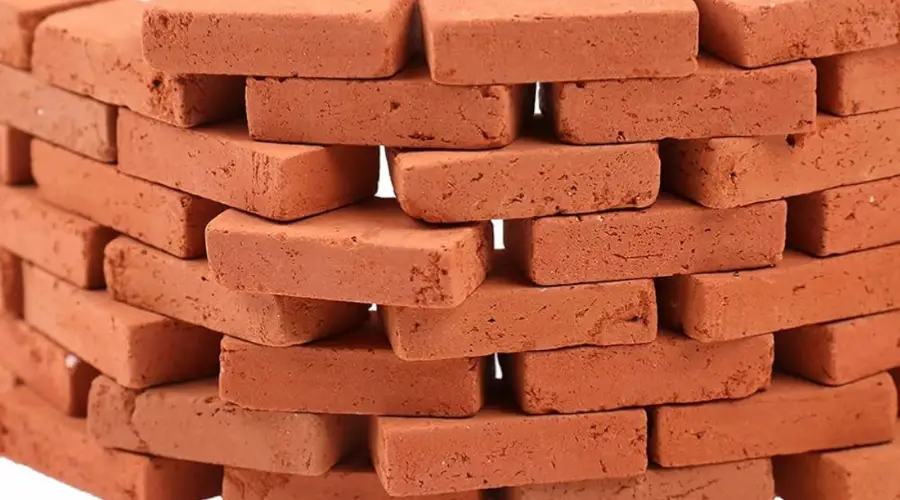
Brick

Brick is definitely the most important building material in masonry. Bricks should be tested for durability, hardness, and quality before using them in construction. Evaluating this helps to ensure the building is safe even before beginning the construction. 

Brick

Mortar 

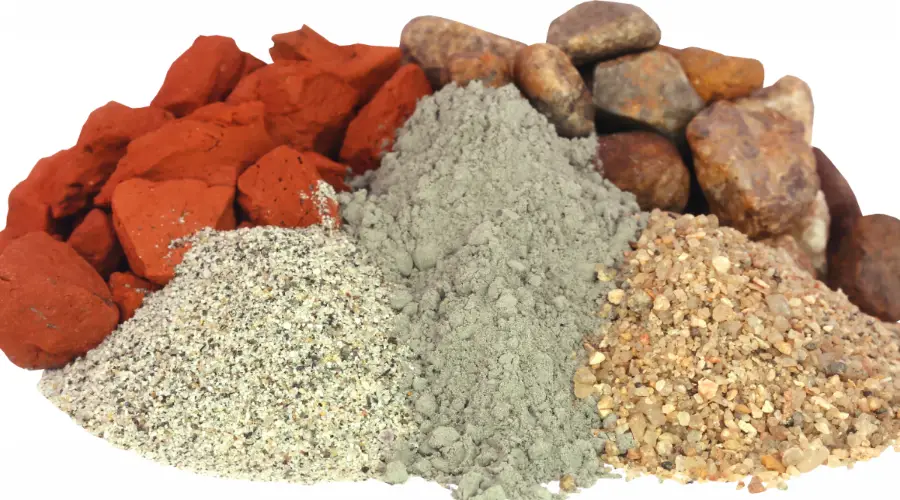
Mortar 

Mortar is nothing but a mixture of sand, cement or lime (a binder), and water to fill the gaps between bricks or stones. This mixture is applied as a paste in between blocks or bricks to bind them together. You might be more familiar with mortar, particularly if you’ve been to construction sites previously. 

Now, it’s time to know about the tools used in brick masonry. 

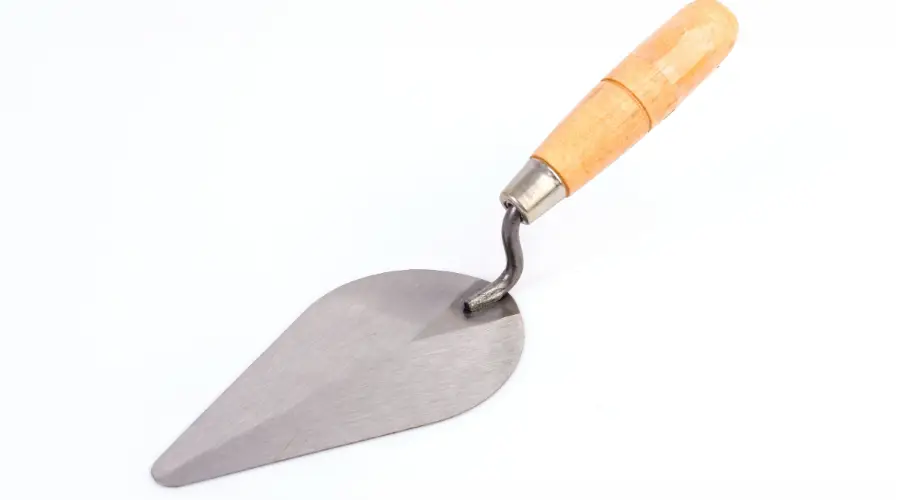
Trowel 

Trowel 

The trowel is a widely used handheld tool in brick masonry. The primary purpose of the trowel is to spread and shape mortar evenly to secure the bonds between bricks. 

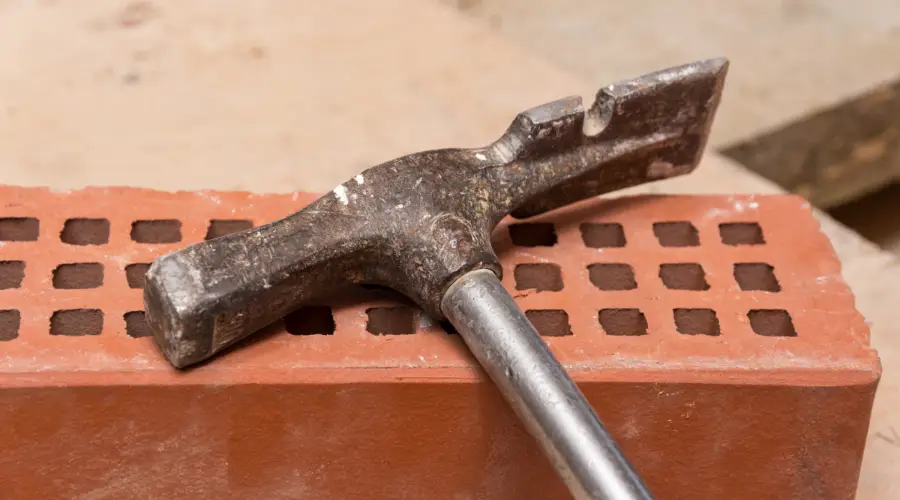
Brick Hammer 

Brick Hammer 

The brick hammer is considered a Mason’s best friend as it has two different faces: a chisel-shaped blade to cut bricks and a flat face to strike and set the bricks evenly. 

Steel Tape 

Steel Tape 

This is also the most familiar tool; measuring steel tape ensures the bricks are arranged to the exact length. Even people from the non-construction industry can use it for other purposes. 

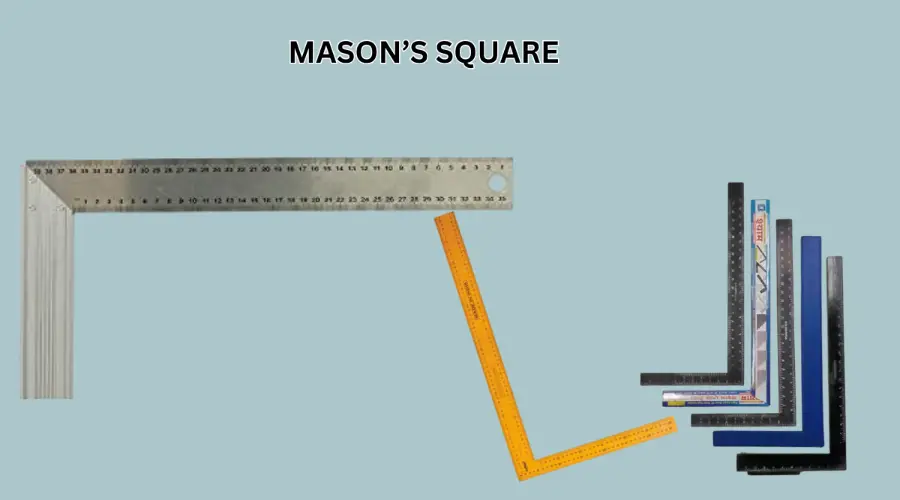
Mason’s Square 

Mason’s Square 

Mason’s square is to ensure the levels and accuracy of two perpendicular surfaces. The tool has a standard reference of 90 degrees to verify the accuracy of the corners. 

How to Lay a Course in Brick Masonry

  1. Work out and finalise how many bricks you need to construct a wall. 
  1. Mix the mortar, add soil, cement, and water, and fix it until you get a smooth and creamy texture. It can be wet but not loose. 
  1. Apply the first layer of mortar along the string line for 1 to 2 cm, which is known as the bedding.
  1. Start arranging the bricks according to the type of course you need. 
  1. Lay out the bricks in the particular course; it can be a stretcher, header, or English bond. 
  1. Then, apply mortar to arrange the bricks in a specific course. For some courses, you will only need a half-brick, so cut and place the bricks accordingly. 
  1. Repeat the process until you build the wall. Remove the excess mortar on the top and sides of the bricks. 

Significance of Courses in Structural Integrity

Structural integrity refers to the strength of a building or structure in holding its components together. Maintaining integrity requires collaborative efforts and consistent evaluation when choosing every material for a construction project. 

You need to be conscious of materials and test them for hardness, durability, load and stress analysis, and brick course. Yes, the course is also one of the most important factors in ensuring structural integrity. 

It’s because some specific course arrangements can be highly durable and stronger than others. For instance, you can consider English bond brickwork; the alternate courses of headers and stretchers improve its structural integrity, making it suitable for load-bearing walls. 

Meanwhile, the stack bond pattern is considered the weakest as the bricks are laid directly on top of one another with the joints aligned. This type of bond is apt for decorative walls and interiors.

Maintenance and Inspection of Brick Courses

Surely, everyone needs to know about the maintenance of brick courses. Property owners need to evaluate their buildings at least once a year, as environmental pollution and exposure to harsh weather conditions are getting worse. 

Regular monitoring of brick courses helps to identify even smaller defects, such as small cracks or chips. This identification allows you to take timely action and repair the defects with suitable mortar or filler. 

Once you have completely evaluated the building, you can clean it with a soft brush or cloth and repair it with filler. 

On the other hand, you can also visit professional services for enhanced cleaning and maintenance. Their services offer many benefits and make cleaning a hassle-free process. 

Conclusion

Courses in brick masonry provide several advantages, making them ideal for many construction projects. However, the quality of the bricks, mortar, and other materials used also plays an important role in strengthening the structural integrity. 

In that instance, selecting high-quality materials for different types of courses ensures enhanced structural integrity and long-term stability. So, always prioritise the best materials and contractors to get the best results.  

Type S Concrete – Properties, Applications & Maintenance

0
type s concrete

No structure will withstand for a longer duration if it is not built with durable building materials. The structure’s longevity is determined by the quality standard of the materials. While the constructor may list out various materials to complete the construction of a structure, the key ingredient out of all such materials is cement. The requirement for high-quality cement propels constructors to look for a specific Type. S-Type Cement, with its high strength and durability, makes it a popular choice among constructors. All constructors and suppliers must have an idea of various Types and how S-Type cement stands out from the other Types. This article answers all possible questions one may have regarding S-Type cement. Knowing this will help both suppliers and constructors satisfy customers with the best possible products and services.

What is Type S Concrete

Type S concrete is a special mix of cement designed to be very strong and long-lasting. It is mainly used in construction projects where the structure needs to handle heavy weight and tough weather conditions. This concrete is made by combining Portland cement, lime, and sand, which together create a strong glue-like material. This helps it hold bricks, blocks, and other building materials firmly in place. Thanks to its strength, Type S concrete is perfect for projects that need to support a lot of weight or stand up to rough conditions.

Properties of Type S Concrete

  • The value of fineness, and residue on a 45-µm sieve of Type S cement is 24%, whereas the maximum sieve value is 35%.
  • The percentage of autoclave expansion is around 0.8% to 1.0%.
  • The time consumed for the initial setting of the cement is a minimum of 1 to 1 ½ hours. and the final setting of the cement is a minimum of 24 hours.
  • The compressive strength of Type S cement is 1399 psi (9.0 MPa) after 7 days and increases to 2100 psi (14.5 MPa) after 28 days.
  • The air content in Type S cement in terms of volume ranges around 6-12%.
  • The original flow after the suction is approximately 70%.
  •  Type S cement provides an air entrainment level to prevent freeze-thaw deterioration.
  • It is also resistant to sulfates and exhibits watertight properties.

Applications of Type S Concrete

  • Type S cement is a binder in concrete mixes to increase strength. Some of the high-strength applications, such as bridge decks and parking structures. It can even be included in structures that require water resistance and durability.
  • It is used for grouting and patching applications. Some of the patching applications in construction projects are filling gaps or repairing cracks in concrete structures.
  • High strength and durability make it popular for masonry works such as laying bricks, blocks, or stones.
  • It is highly used in marine structures that include seawalls, docks, and piers. Its low permeability and resistance to water increase longevity despite being exposed to the water.
  • It is even used in basement walls and other below-grade applications. 

Mixing and Preparing of Type S Concrete

Mixing and Preparing of Type S Concrete

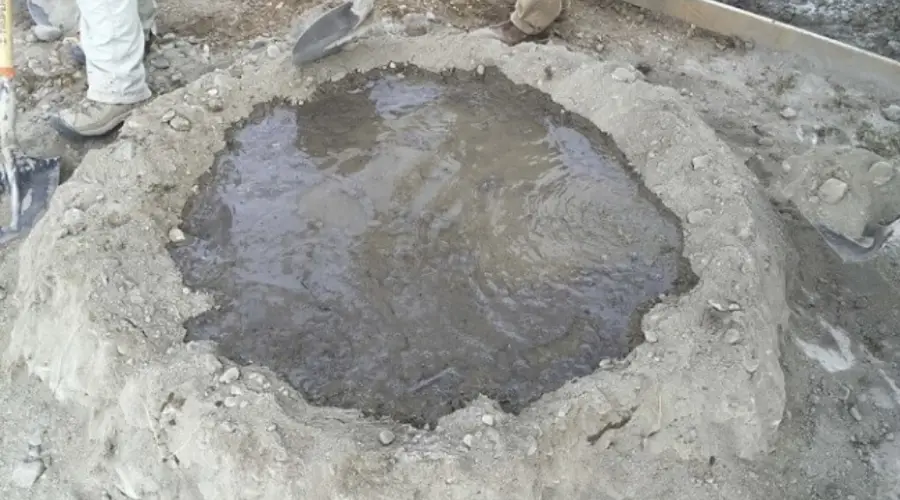
The preparation of Type S cement includes blending Portland cement, lime, and other additives. The first step in the preparation of S-type concrete includes mixing Type S cement with masonry sand at a ratio of 1:3. To prepare the mixture in workable conditions, pour some water. Stir it untill you achieve a plastic, moldable texture. A mechanical mixer is used to stir the mixture and to ensure uniform blending. Following this, the addition of cement and sand to the mixture is done, and the blend is left to dry for 1 to 2 minutes. To prevent lumps or uneven hydration, water is poured gradually while mixing the mixture continuously. Excessive water addition may weaken the mix. The prepared mixture should be in cohesive form and workable consistency. Excessive sag will reduce the quality of the mixture.

Benefits of Using Type S Concrete

  • Its higher compressive strength makes it able to withstand high-stress applications.
  • It has high resistance to all kinds of factors that can cause degradation to the structure. This increases sustainability and reduces the money that needs to be spent on maintenance.
  • Type S cement is naturally water-resistant, preventing any intrusion of moisture and damage to the structure. Because of this, contractors and suppliers run around the Type S cement for marine projects.
  •  Type S cement is not constrained to specific types of construction projects. It is versatile. It can be used in various construction projects for several purposes, including as a binder in concrete mixes, for filling patches, and in masonry. Its flexible characteristic makes it credible for constructors.

Installation Process for Type S Concrete

Installation Process for Type S Concrete

The first and foremost step is to ensure the base is clean and free of dust. To avoid any water absorption, the surface is dampened, and this should not end up making the surface oversaturated as well. The trowel is used to place the prepared cement on the surface. To form a uniform layer, spread the mortar evenly. The thickness ranges from around 3/8 to ½ inches. To shape the mortar joints, use a jointer to get the desired shape. Prepare it in such a way that the joints are smooth and compact, providing necessary durability and water resistance. Remove any excess mortar before it hardens. Cover the masonry with wet burlap for at least 48 hours to promote proper hydration and prevent cracking. Proper precautions are required when working in extremely cold temperatures. For this, proper protective coverings are used to achieve optimal curing conditions.

Maintenance and Care for Type S Concrete

  • Regular cleaning with water or mild detergent is necessary to remove dirt, algae, or efflorescence.
  • Regular inspection and precautionary methods can avoid cracks, concrete spalling, or mortar joint deterioration.
  • To protect against water infiltration, apply breathable water-repellent sealant.
  • Proper measures are required to prevent water from stagnating on or near masonry structures.
  •  Avoid deicing salts near structures, as they would degrade the mortar.

Conclusion

Type S cement is a versatile, durable material for a variety of construction applications that demand strength, resilience, and water resistance. Its superior properties in high compressive strength, low permeability, and resistance to environmental factors make it the right choice for masonry work, marine structures, and high-stress installations. Constructors and suppliers can ensure long-term and quality structures as created through understanding their properties, benefits, and proper methods for mixing, installation, and maintenance. Preparation, application, and care that follows best practices will ensure maximum performance and minimise the costs of maintenance in the long run for Type S cement, and that will ensure construction sustainability. The unmatched durability and flexibility of Type S cement remain at the center of the quest for strong and permanent structures.

FAQs

1.Can Type S concrete be used for structural walls?

Type S cement is great for building structural walls when used as part of a masonry system. It creates a strong bond between bricks, blocks, or stones, making it ideal for load-bearing walls.
However, it’s important to know that Type S cement is not meant for standalone or reinforced concrete structural walls. In India, its use is covered under IS 3466, which focuses on its role in masonry construction. This standard highlights how Type S cement improves the strength and durability of masonry, making it perfect for walls that are part of a complete masonry structure.

2. What is the compressive strength of Type S concrete?

The strength of Type S concrete depends on how long it is allowed to cure. 
After 7 days of curing, its strength is usually around 10 MPa (about 1450 psi).
After 28 days, it reaches about 14.5 MPa (around 2100 psi).

Tie Rods in Construction – A Comprehensive Guide

0
tie rod construction​

Tie rods in the construction sector provide integrity and stability to structures, enhancing their overall stability and strength. These tie rods can be used for small residential buildings as well as large-scale commercial buildings. Their tendency to bear tensile strength prevents the separation of two parts in construction designs, acting in conjunction with other structural elements. Some common places in structural systems where tie rods are used are retaining walls, formwork, and concrete structures. They provide workers with strong and trustworthy scaffolding to move around and are considered an essential component of scaffolding structures.

What is a Tie Rod?

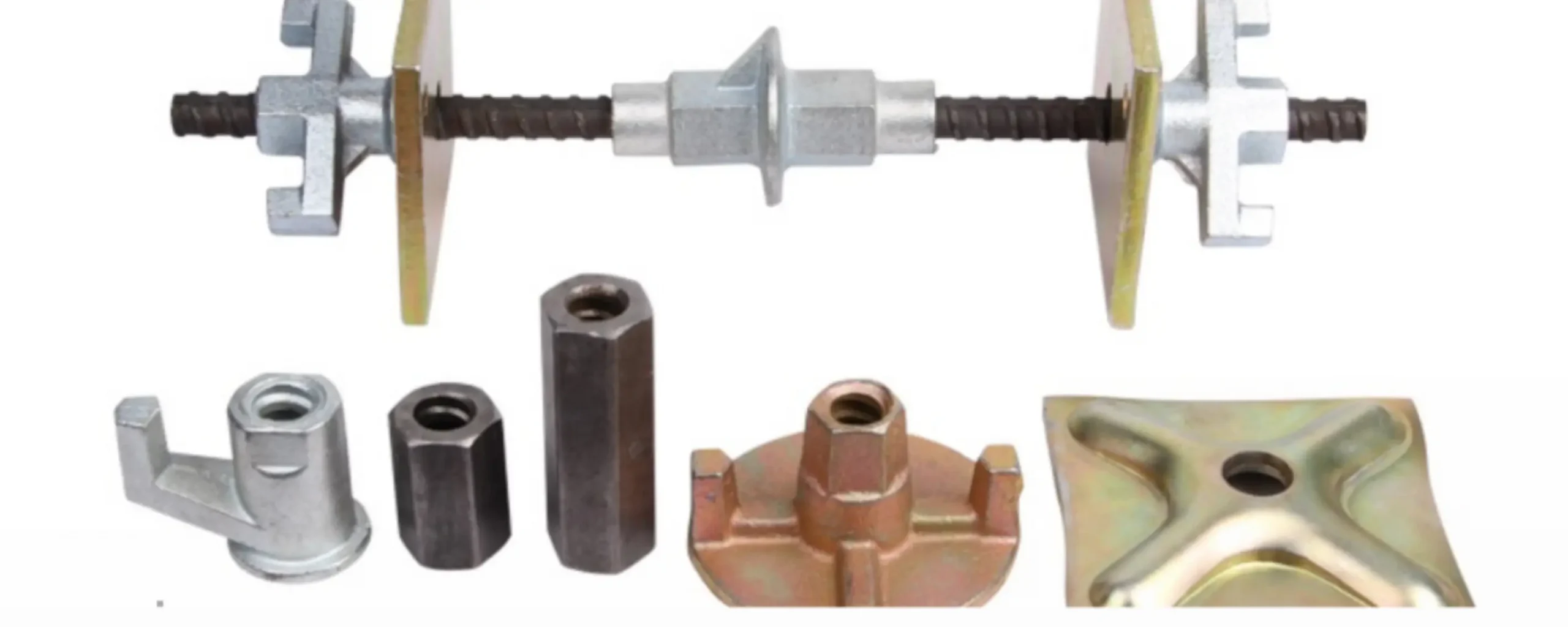
The main purpose of tie rods is to create a rigid connection between the scaffolding frames. The various components in the tie rods system include threaded rods, nuts, and plates. The load distribution of the scaffolding is achieved by inserting threaded rods through holes in scaffolding frames and tightening them with nuts and plates. In simple terms, tie rods are designed to withstand heavy loads and forces during the concreting process.

Materials Used for Tie Rods

The most commonly used material for tie rods is steel. There are different types of steel used in tie rods for various purposes. Some commonly used steel types are carbon steel, alloy steel, and stainless steel. Other materials include cast iron, aluminium, composite materials such as carbon fibre-reinforced polymer and glass fiber-reinforced polymer, bronze or copper alloys, titanium, concrete, wood, and galvanized or coated materials. Each of these materials has specific properties and constructors choose the most suitable material to suit their project design and requirements.

Types of Tie Rods in Construction

In the construction sector, several types of tie rods are used. Some preferentially used tie rods are

Solid Tie Rods: These types of tie rods are preferred in small-scale projects or where the space is limited. The usage of single pieces of steel makes them a compact piece ideal for smaller spaces.

Threaded Tie Rods: The special feature of this type is the adjusting and tensioning feature. The threaded rod and nuts enable easy adjustment of length and tension.

Grouted Tie Rods: If the structures need additional strength and stability, grouted tie rods are preferred. The holes are filled with grout or concrete along with nuts and washers to increase the stability of the structure.

Applications of Tie Rods in Construction

  • Tie rods are used in suspension and cable-stayed bridges to hold the deck and in arch bridges to withstand horizontal thrust and tension.
  • As a connector in roof structures to resist tensile strength and even support large-span roofs in warehouses, factories and stadiums.
  • In retaining walls, as they counter lateral earth pressure and provide anchoring support to the structure.
  • During casting of concrete, tie rods are used to hold formworks and provide stability and alignment to formwork.
  • They provide requisite resistance to tall buildings against wind and seismic forces.
  • Tie rods are even used in marine and offshore structures such as docks, jetties, and marine platforms.
  •  Even tunnels and subways include tie rods as supporting structures.

Installation of Tie Rods in Construction

Installation of Tie Rods in Construction
  • The effectiveness of tie rods increases with careful planning and execution of the structure. Some steps that need to be remembered to enhance the effectiveness are:
  • Based on the specific requirements, a qualified engineer should prepare the design of rods.
  • Before installing the prepared design, preparatory work such as clearing the shuttering where this needs to be installed must be done. This will enable easy access to the location.
  •  Following this, holes are drilled in the walls to insert tie rods into the walls or structures.
  • To ensure that the inserted rods remain in place, nuts and washers are used to achieve the tightness to create a stable structure.
  •  In some cases, along with nuts and washers, grouts or concrete are injected into the holes to provide additional support. This method is used in grouted tie rods.

Advantages of Using Tie Rods

  • Tie rods can withstand significant tensile force and provide the necessary strength and stability for heavy structures.
  • Tie rods prevent the deformation of the structure and maintain stability, enhancing the integrity of frameworks.
  • Tie rods are not restricted to specific structures. Their versatility makes them suitable for any structures ranging from bridges, retaining walls, roofs, tunnels, and decorative structures.
  • Tie rods are customisable. This provides the constructors with the choice of fabricating it to a precise length and diameter.
  • Use of aluminium or composite materials in tie rods will reduce the overall weight of the structures.
  • The cost of tie rods is economical in comparison to other structures that provide resistance to tensile stresses.
  • Galvanised or stainless steel as materials in tie rods will negate the possibility of the structure getting corroded.
  •  It distributes load evenly, reducing stress on one particular point. It can even handle vibrations and dynamic loads.

Design Considerations for Tie Rods

Aspects that need to be considered in the design stage are the capacity to handle tensile strength, dynamic loads, factors of safety, the strength of the material, how resistant the material is against corrosion, usage of lightweight materials to reduce dead load, diameter and cross-section of the rod, rod length and adjustability, choosing suitable end fittings, anchorage design, alignment, and using corrosion protection materials.

Maintenance of Tie Rods

The effectiveness and longevity of a tie rod can be retained with regular maintenance. Some measures to ensure tie rods are intact without any damage include regular inspection, cleaning, and repairs. The periodic inspection practice will help us to find signs of corrosion or damage. The settlement of dirt and debris is a major cause of corrosion. This could be prevented with the regular cleaning of the tie-rods structure. If any faults or damages to the structure are found, prompt actions to repair or replace the damaged elements must be taken. This will prevent future structural issues.

Conclusion

Tie rods are important in modern construction, they supply crucial tensile strength and stability to various structural designs across a range of applications. They are adaptable and versatile, useful from houses to large-scale infrastructure projects such as bridges, retaining walls, and offshore platforms. The right material, detailed design, and scheduled maintenance can ensure that tie rods provide high safety levels, strength, and performance of a structure. With advances in materials and technology, tie rods are also being continually improved, to offer customised, lightweight, and more corrosion-resistant alternatives for use in a diverse array of construction projects today. Due to their cost-effectiveness and reliability, they are here to stay, building stronger and more durable structures for generations to come.

Segmental Arches – Meaning, Types, Benefits & Applications

0
segmental arch

Arches are curved features that are a blend of aesthetics and great strength and stability. There are numerous types of arches in the construction industry, among which segmental arch is something that has been used across decades, providing numerous benefits and applications. Here is a detailed view of segmental arches and everything you need to know about them.

What is a Segmental Arch?

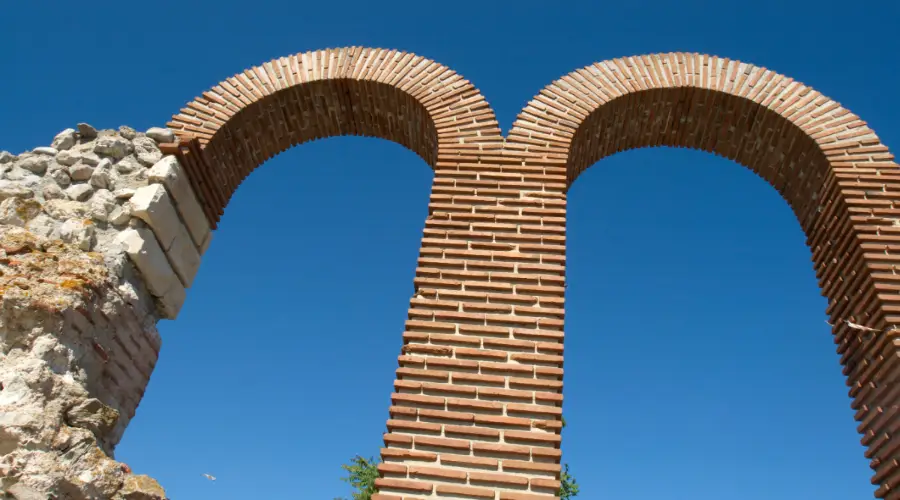
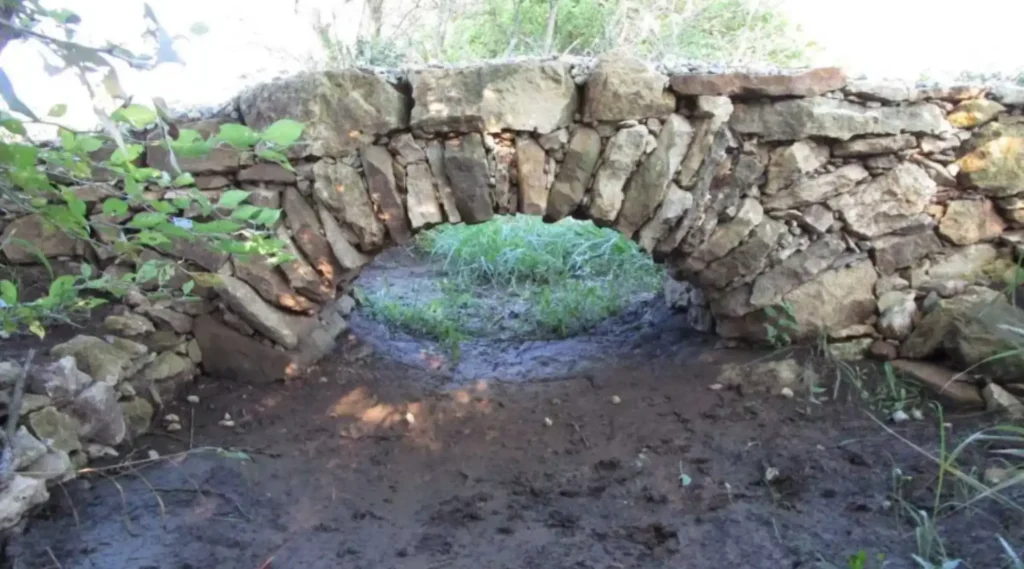
A segmental arch is a type of rounded arch whose curve is formed by a small portion of a circle smaller than a semicircle. Unlike a round arch, it is flatter and has a less pronounced curve. This arch effectively resists thrust, making it one of the most durable arches available in the industry. It provides a blend of both practical and aesthetic benefits to the structure.

Features of Segmental Arches

  • The segmental arch’s curve spans less than 180°, making it more flat and shallow with a less pronounced height.
  • The centre of the arch lies below the springing line, forming a flatter semi-circular arch.
  • It transfers less lateral thrust to the supporting structures, as it directly distributes the load downwards.
  • This arch offers design flexibility and can be combined with a wide variety of shapes and styles.
  • It is compatible with structures that offer very limited headroom.
  • It is one of the most efficient and durable arches in the industry.

Advantages and Disadvantages of Segmental Arches

Advantages

  • The segmental arch design requires less material compared to a rounded arch, making it more material and cost effective.
  • It reduces the need for heavy or reinforced supports, as the structure itself has the ability to withstand lateral thrust.
  • It provides wider openings without excess structural height, making it suitable for bridges, doorways and other places that need larger openings.
  • It provides an elegant look to the structure and is ideal for doors, windows and other decorative parts of the building.
  • Construction of a segmental arch requires less mortar and fewer building materials (bricks or stones), thus reducing the material and labour cost.
  • It is a strong and stable structure and has the ability to transfer loads downwards.

Disadvantages

  • Due to their flat surface, segmental arches may experience slightly higher vertical loads.
  • Designing a segmental arch is complex, as it requires detailed calculations and careful construction.
  • This design may not be suitable for all architectural styles, limiting the aesthetic ability to certain projects.
  • It can experience more stress due to point loads, potentially leading to cracking at the springline.
  • It is not suitable for tall and large spans, where additional reinforcement is required for stability.

Applications of Segmental Arches

  • It is most commonly used for doorways and window openings in residential and commercial constructions.
  • It is also popular in construction of small to medium spanned bridges, where obtaining a lower and flatter arch shape is crucial.
  • It is historically used in aqueducts to handle weight and distribute overlying forces over a long distance.
  • It is highly useful in the construction of tunnel entrances and underpasses.
  • Segmental arches can be used for constructing subway and railway tunnels for underground spaces.
  • It is widely used for constructing historical buildings in Georgian and Colonial-style.
  • It is ideal for constructing large openings in parking garages, warehouses and industrial buildings.
  • It can be used in vaulted ceilings and arcades in classical and modern buildings.

Step-by-Step Construction of Segmental Arch

Designing

The first step in building a segmental arch is determining its shape and size. This includes deciding the span and rise of the structure and choosing the right construction material (brick, stone, or concrete). 

Preparing the Site

Ensure that the foundation is capable of holding the arch. Prepare the abutments on either end of the arch suitable to bear the lateral thrust for a stable and strong to hold the arch above it. Mark the spring line where the arch begins to curve and mark the level to position it across the width of the arch accurately, 

Build Framework & Centering

Build a temporary framework to provide the correct shape of the arch and support it while constructing. The framework should be shaped like a scaffold to support the voussoirs. Position the centering in place to align the spring line with the framework that is suitable for carrying the loads of arch stones.

Lay the Voussoirs

Place the voussoirs on both sides of the spring line, ensuring that they are aligned and level. This will form the lower part of the arch. Closely place each voussoir with mortar so that the adjacent stones distribute loads evenly.

The voussoirs should be placed towards the apex of the arch and lean slightly against the underlying stones to form a smooth and even finish. The size of the voussoir varies based on the span and rise of the arch.

Place the Keystone

After completing both sides of the arch, a keystone is placed at the apex, locking the other voussoirs in place to complete the arch structure. After placing the keystone, the arch develops the ability to withstand on its own and becomes self-supporting.

Allow for setting

After laying the arch, leave the structure to set so that the stones can firmly hold together, making the arch stand stable.

Remove the Centering & Finishing

After setting, remove the centering carefully without affecting the arch’s stability. Depending on the construction needs, fill the spandrels with masonry or leave them open. Ensure that the arch does not have any misalignments or gaps and forms a properly integrated structure.

Conclusion

A segmented arch is one of the most practical and versatile architectural elements of a building and is known for its stability, aesthetics and efficiency. It is widely used in the construction of doorways, bridges and openings for underpasses and tunnels. It provides a wider opening and reduces the cost of materials and labour. However, it is not suitable for all types of architectural structures.

FAQs

1. What is the lifespan of a segmental arch?

The lifespan of the segmental arch depends on the construction materials used, quality of construction, environmental conditions, and types of use. Generally a well-constructed segmental arch can last from 50 to 120 years.

2. How do segmental arches distribute weight?

The segmental arch transfers the overlying compression loads to the abutments on either side of the supporting walls along the curve of the voussoirs.

3. Can segmental arches be used in seismic zones?

Segmental arches can be used in seismic zones, however it requires precise design and careful construction to ensure the required safety and performance to resist earthquakes.

Rounded Arches – Types, Benefits & Uses in Construction

0
round arch

Arches have been used in construction for hundreds of years for architectural purposes. There are numerous types of arches used in the construction industry. However, the most common arch type that has been widely preferred across years is rounded arches. Here we look at what rounded arches are and everything you need to know about it.

Overview of Round Arch

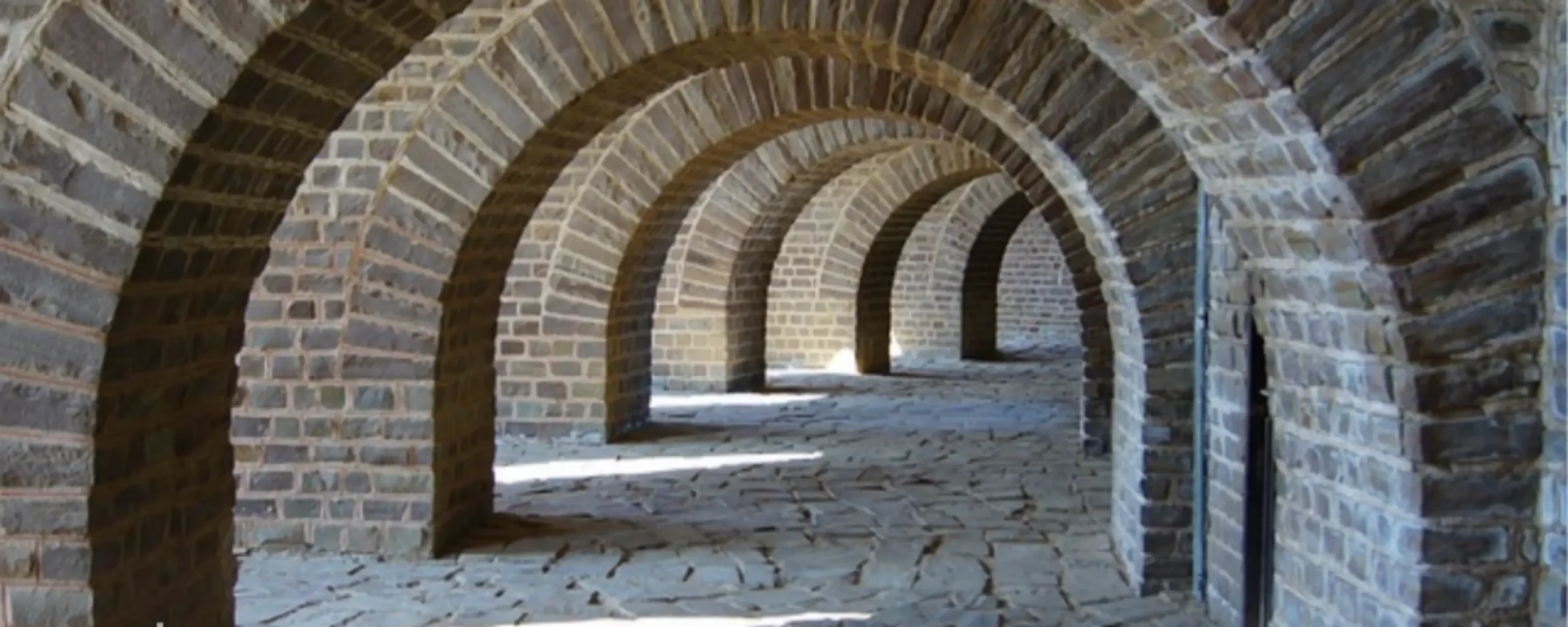
A round arch is a curved architectural structure which may or may not support the weight above it and commonly spans over curved openings. It is one of the oldest and most widely used arch types, and was majorly used in ancient Roman architecture, where it is believed to have been invented. The smooth surface of the arch not only provides an elegant look, but also helps transfer the overlying weight to the surrounding supports.

Components of a Round Arch

  • Keystone: It is the centre stone at the apex of the arch, locking all the other voussoirs bearing significant structural load.
  • Voussoirs: It is the wedge-shaped building material (stones or bricks) that forms the shape of the arch in masonry arches. These voussoirs are carefully cut and placed together to fit the curved shape perfectly.
  • Springline: It is an imaginary horizontal line aligned on top of the abutments above which the arch arises.
  • Spandrel: The triangular space between the curvy arch and the surrounding structures which is often filled with masonry works.
  • Intrados: It is the inner concave surface of the arch that forms the inner face of the arch.
  • Extrados: The outer convex surface of the arch which defines the arch’s curve.
  • Abutments: Abutments or piers are part of the wall where the arch rests. They are also called springing points.
  • Crown: It is the highest point of the arch, located at the top centre below the keystone. This is where two sides of the arch meet, and the curve is more visible.

Types of Round Arch

Semicircular Arch

Semicircular Arch

As the name suggests, the arch curve looks like a semicircle. The thrust transferred to the abutment is in the vertical direction, as the skewback is horizontal. In this arch, the centre lies exactly on the springing line.

Segmental Arch

Segmental Arch

A segmented arch is one of the most commonly used arches. It consists of a curve that forms one segment of a circle. These arches can resist thrust and are among the most durable. In this arch, the centre lies below the springing line, where the thrust is transferred in an inclined direction to the abutments.

Horseshoe Arch

Horseshoe Arch

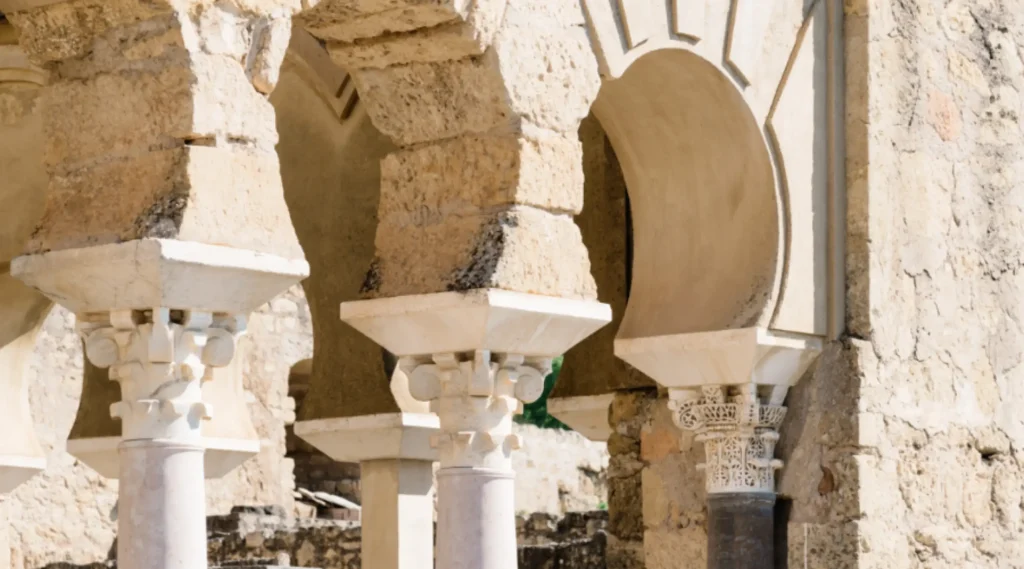
As the name suggests, the horseshoe arch is in the shape and structure of a horseshoe. It has a unique extended curve structure that extends beyond the semicircle. The horseshoe arch has high architectural and cultural significance and is widely used for doorways and windows in Islamic architecture.

Advantages of Using Round Arches

  • Round arches are highly efficient in distributing the overlying compressive loads. They support the structure by transferring load to the supports on either side.
  • Round arches are highly durable and can last for hundreds of years. Bridges built during ancient Roman times are still in use, hundreds of years after their construction.
  • Due to its high strength, load-bearing capacity and durability, it requires minimal maintenance.
  • This round arch provides a classical look that is aesthetically pleasing.
  • Rounded arches are compatible with other arches to create more complex and grand structures.
  • This arch does not require any intermediate supports, even for long spans.
  • Due to the equal distribution of loads, this arch can withstand seismic forces effectively.

Step-by-Step Construction Process of Round Arch

Designing

The first step in building a round arch is determining its shape and size. This includes deciding the span and rise of the structure and choosing the right construction material (brick, stone, or concrete). 

Preparing the Site

Ensure that the foundation is capable of holding the arch. Prepare the abutments on either end of the arch suitable to bear the lateral thrust for a stable and strong form to hold the arch above it. Mark the spring line where the arch begins to curve and mark the level to position it across the width of the arch accurately, 

Build Framework & Centering

Build a temporary framework to provide the correct shape of the arch and support it while constructing. The framework should be shaped like a scaffold to support the voussoirs. Position the centring in place to align the spring line with the framework that is suitable for carrying the loads of arch stones.

Lay the Voussoirs

Place the voussoirs on both sides of the spring line, ensuring that they are aligned and level. This will form the lower part of the arch. Closely place each voussoir with mortar so that the adjacent stones distribute loads evenly.

The voussoirs should be placed towards the apex of the arch and lean slightly against the underlying stones to form a smooth and even finish. The size of the voussoir varies based on the span and rise of the arch.

Place the Keystone

After completing both sides of the arch, a keystone is placed at the apex, locking the other voussoirs in place to complete the arch structure. After placing the keystone, the arch develops the ability to withstand on its own and becomes self-supporting.

Allow for setting

After laying the arch’s components, leave the structure to set so that the stones can firmly hold together, making the arch stand stable.

Remove the Centering & Execute Finishing

After setting, remove the centering carefully without affecting the arch’s stability. Depending on the construction needs, fill the spandrels with masonry or leave them open. Ensure that the arch does not have any misalignments or gaps and forms a properly integrated structure.

Round Arch Design in Interior Design

The round arch design can be incorporated into interior design and is used for building:

  • Arched doorways for smooth transition between rooms.
  • Arched windows for elegant looks and to provide more natural light to the room.
  • Arched ceilings provide a more visually pleasing effect on halls, living areas and dining rooms.
  • Alcoves for seating and shelving add more charismatic looks to the internal space.

Conclusion

Rounded arches are a versatile component of a building and have been providing aesthetic appeal for hundreds of years. They not only give a classic look but also help distribute the overlying loads to the supports. They are a blend of elegance and effectiveness, making them one of the most preferred arch designs.

FAQs

1. How is a round arch different from a pointed arch?

The round arch is a perfect semicircular arch that provides a smooth surface that distributes the load outwards. On the other hand, the sides of the arch meet at a pointed apex, and the load is distributed more directly in pointed arches.

2. What are the best materials for round arch construction?

Some of the best materials for the construction of round arches are stone (limestone, sandstone, or granite), brick (clay brick or concrete brick), and concrete.

3. Can round arches be used in small-scale architecture?

Yes, round arches can be used for small-scale buildings to construct doorways, windows, mirrors, fireplaces, and other decorative elements. The factors that need to be considered when constructing round arches are the surrounding space, materials, and creative adaptiveness.