Though creating your ideal home is exciting, have you ever considered the silent hero that lies beneath it all: your home’s foundation? To ensure your aspirations are grounded in reality, let’s get down figuratively as we investigate the realm of home foundations. Numerous foundation kinds and variables might affect the final cost and layout.
Ever heard the phrase “Constructed upon a strong foundation”? It is the actual framework of your house, not simply a metaphor. The sort of foundation you select can determine the stability and lifespan of your home.
Brick & Bolt explains the foundations for building a house in this blog. So, let’s set off on this path of foundational work together.
Types of Foundations in Construction
There are various foundations that you may become familiar with.
Examining Strip Foundations: An Examination of the Fundamentals
The strip foundation might be compared to a trustworthy buddy who is always there for you. It equally distributes the weight so that your house doesn’t settle favouritism. For good reason. Who wouldn’t want a trustworthy foundation partner? Many turn to it.
Pier Foundations: Overcoming Obstacles
If your house were a ship, the pier foundations would be the dependable docks to keep it afloat. Piers are useful for difficult terrain and water tables because they offer support and stability.
A Comprehensive Guide to a Strong Foundation
1. Excavation: Digging the Unidentified
Digging is the main priority. It resembles getting the canvas ready for a painting. I missed this stage when building my second house because I assumed it was digging. I had yet to learn that a thorough excavation would guarantee that your foundation fits well.
2. Formwork and Strengthening: Constructing the Bone Structure
Has a structure ever been seen without a skeleton? Reinforcing and formwork have a similar effect on your foundation. It’s similar to giving your house a spine, which is essential for stability and strength.
3. Pouring Concrete: The Lifeblood of Your House
Your home’s heart begins to beat the moment you pour concrete. Nerves and excitement are mixed. Like baking, a strong foundation cake is ensured using the correct elements (in this case, the mix and consistency).
Selecting the Proper Components: Building Materials for Foundations
Concrete: The Unwavering Foundation
Concrete is the superman of foundation materials. It is a popular option among homeowners because it is strong and long-lasting. My recommendation? Make sure to pay attention to the quality of the concrete. It’s the superhero your house is meant to have.
Steel Reinforcement: Developing a Sturdy Structure
Have you ever observed a steel web inside your foundation? That’s reinforcement at play. It functions similarly to armour, shielding your house against pressure and the passage of time.
Foundation Fears: Dispelling Myths for a Calm Construction
The fallacy is that “Every foundation is the same.”
Dealing with the Settling Fear: “My House Will Sink”
Although it’s a prevalent concern, settling becomes a controllable part of your home’s journey with the right foundation type and proper design. Don’t let your fear of falling behind keep you back.
How to Choose the Right Foundation?
Being a homeowner involves making decisions about your foundation, or at least knowing what factors the builder considers when making a foundation choice, even though it can be more enjoyable than choosing floor plans or colour schemes. Here are some factors that determine the best foundation for each home.
Lot and Environment Specifications
The lot and its surroundings should be taken into account first. This can comprise, but is not restricted to:
What is the lot’s grade? In other words, is your lot sloped? Because the stem walls, which close into the crawlspace, can be different heights, crawlspaces are common on sloped properties.
What kind of climate will it be where your home is built? Although concrete slabs are ideal in southern climes, they may shift and crack in colder regions due to frequent freezing and thawing of the earth. In colder climates, consider using a basement foundation for your construction.
What kind of soil does your land have? Stable, level ground that won’t shift is generally necessary for foundations, especially concrete slabs.
However, this could be difficult if you’re building a coastal house. In this case, you would be better off with a pier foundation.
What levels of water are there? The water table, also known as the point at which the ground becomes saturated, is where footings and foundations should be placed. The depth at which certain foundations, like basements, must be built can influence the choice of foundation, regardless of how high or low the water table is.
Styles and Designs of the Home
Certain home styles are better suited for certain foundations. For example, sprawling constructions are not advised for pier foundations because they can cause floors to sag between piers.
Foundation Goals
Consider the potential uses for your foundation. Differentfoundations have different applications. Completed basements are popular because they increase the amount of usable square footage in a house and can be equipped with guest rooms, lounge areas, and other amenities.
Conversely, crawlspaces provide a place to store things, but because of their short stem walls, they cannot be used as a room. Although concrete slabs don’t add any extra room, many homeowners find them an excellent option because of their other advantages.
Selecting the right foundation for your house is similar to choosing the ideal dance partner. It guarantees seamless, elegant travel and supports all of your movements. Thus, prospective homeowners, think about your choices, take advice from other’s experiences, including mine, and may your house rise tall on a foundation as solid as your aspirations.
Modern technology is constantly changing many parts of our lives, including home security systems. As thefts and other property crimes change, so do the ways to stop them. In this blog, Brick & Bolt, the best Bangalore construction company, discusses the newest changes in home security systems that are changing how we keep our homes and folks safe.
1. Smart Home Integration:
When it comes to home protection, smart home integration is one of the most important trends. These days, security systems are smart enough to work with other smart gadgets in your home, like lights, thermostats, and door locks. This integration makes automation and control better, so homeowners can handle their security from afar using voice commands or apps on their phones.
2. Surveillance Cameras That Use Artificial Intelligence (AI):
Regular surveillance cameras have been improved by adding AI features that make them smarter and more useful. These high-tech cameras can tell the difference between people moving and other movements. This cuts down on false alarms and gives homes more accurate alerts. Some models also come with facial recognition technology, which lets users find known faces and keep a closer eye on things.
3. Wireless Security Sensors:
Gone are the days of big, wired devices that had to be put in by a professional. More and more people are using wireless security monitors because they are flexible and easy to set up. You can hide these sensors around your house and they will pick up on motion, door/window openings, and changes in the surroundings. Because they are wireless, they can talk to the central security hub without having to deal with complicated wiring. This makes it easy for homes.
4. Biometric Access Control:
Fingerprint scanners, face recognition systems and voice controlled home automation are examples of biometric technology that is being added to home security systems to make them even safer against people who aren’t supposed to be there. Biometric access control makes sure that only approved people can get into your home by using unique biological traits for authentication. This technology makes things easier without lowering security because it gets rid of the need for keys and entry codes, which can be lost or stolen.
5. Remote Monitoring and Alerts:
These days, most home security systems come with remote monitoring built in. This is because of the popularity of cloud-based platforms and mobile apps. Homeowners can now get real-time alerts and notifications on their phones or tablets. This way, no matter where they are, they can stay up to date on any suspicious behaviour or possible security breaches. Remote monitoring gives you peace of mind and lets you act quickly when you need to, whether it’s a motion recognition alert or a doorbell camera notification.
6. Integration of Environmental Sensors:
Today’s home security systems do more than just look for intruders. They also use environmental sensors to keep an eye on things like water leaks, carbon monoxide, and smoke. When these sensors find dangerous situations, they can send alerts to homeowners so they can move quickly and lower the risks. People can protect their homes from burglars and other threats to their safety and property by adding environmental tracking to their security systems.
7. Backup And Storage In The Cloud:
In the past, security systems stored surveillance images on local storage devices like DVRs or hard drives. However, cloud-based storage has become a safer and more convenient way to store and view video recordings. With cloud storage, homes can store their videos safely away from their home, so they will be safe even if the hardware is broken or tampered with. Cloud storage also makes it easy to view video footage from anywhere with an internet connection. This gives you peace of mind and can be used as forensic evidence in case of an accident.
Advantages of Having Home Security Systems
Some of the best things about the newest developments in home protection technology are:
1. Better Security:
With the newest home security devices, you can protect your family and home from intruders, trespassers, and other threats.
2. Fewer False Alarms:
Newer home security systems are more accurate than older ones, which can help cut down on the number of fake alarms.
3. Convenience:
Newer home security systems are often easier to use than older ones. For example, you can get alerts when your security system detects strange behaviour or use a mobile app to control your system from afar.
4. Peace of mind:
You can be sure that your home is safe even when you’re not there because of the high-tech security systems that are in place.
How to Choose the Best Home Security System?
When you buy a home security system, you should think about your wants and budget. Here are some things to think about:
The size of your home: How many protection systems do you need? It is based on the size of your home.
How much you are willing to spend: A home security system can cost anywhere from a few hundred to several thousand dollars.
What kind of security do you need? List the features that are most important to you, like motion recognition, video monitoring, and being able to connect to smart homes.
The newest improvements to home security systems are changing how we protect our houses and families. These improvements, like smart home integration, AI-powered surveillance cameras, and biometric entry control, make homes safer and more convenient and give people more peace of mind. You can keep your home safe and secure in the digital age by keeping up with the newest home security trends and technologies.
FAQs
Advanced home security
1. Smart surveillance cameras with AI-powered motion detection and real-time alerts 2. Smart doorbell systems with video monitoring and two-way communication 3. Wireless alarm systems with mobile app control 4. Smart locks with biometric or smartphone access 5. Integrated sensors for windows, doors, and interior spaces 6. Professional monitoring services with 24/7 emergency response 7. Machine learning algorithms that can distinguish between normal and suspicious activities
Selecting flooring is much more involved than selecting the item with the greatest appearance. Several additional criteria heavily influence a selection, including wetness, durability, price, and more. Feel free to break the rules regarding flooring in your home. Wooden planks, which are great for living areas where you want a cosy feeling beneath your feet, and porcelain tiles, which work well in bathrooms and laundry rooms with high moisture levels, are no longer the only options for home flooring.
Due to new designs and technological advancements, flooring varieties you may have avoided have stayed the same. This has created more options and creative possibilities.
For example, modern engineered wood can be a terrific alternative for living rooms and bedrooms because it is less expensive than solid wood planks. These days, vinyl flooring has realistic pictures of salvaged barn wood that seem good enough for a den. While some new porcelain tiles look great in designer kitchens with their wood-plank-like texture and appearance, others easily pass for Calacatta marble in an opulent powder room. In addition to removing pattern duplication and incorporating texture for a double dose of realism, modern faux flooring products differ from past ones.
In this blog, Brick & Bolt ,talk about the types of flooring materials, pros and cons of the flooring materials and to choose the right flooring materials for your home.
Types of Flooring Materials
1. Concrete Flooring
Designers and high-end builders have used this simple building material as a stylish kitchen countertop and floor option. An institutional grey concrete floor that has been placed in place can be dyed, or it can be left that way. Also, it can have various surface treatments applied to it, such as rubber stamp stencils or acid stains, to produce a genuinely unique look.
Advantages:
Concrete floors are distinctive but strong and simple to maintain as long as they’re properly sealed when installed. Suppose you intend to install radiant heating, in which hot water tubes are implanted in the floors during installation. In that case, concrete floors are an excellent choice because of the material’s good heat conductivity.
Disadvantages:
Concrete floors are expensive and must be installed by professionals because they are custom products. The unforgiving rock-hard substance requires resealing for about a year to avoid discolouration.
2. Stone Flooring
Like wood, the stone is a classic flooring option that almost always raises the property’s value. There are three varieties of stone used for flooring. Layers of dissolved minerals and marine organisms generate sedimentary stones, such as limestone and travertine. Granite and other igneous stones are the product of intense heat and volcanic activity. Stones undergoing metamorphism, such as slate and marble, have undergone extreme heat and pressure changes.
Advantages:
Stone flooring is unique and has a lot of charm because no two stones are alike. Stone is another resilient material that is resistant to fading in direct sunshine and strong foot activity. It also keeps allergies and dust at bay.
Disadvantages:
Most stone flooring requires professional installation, so you’ll pay a premium. Stone floors aren’t soft underfoot, and dishware is almost certain to break if dropped on them. Many types of stone floors require sealing to resist stains.
3. Laminate Flooring
Another engineered product is laminate, which employs an image of wood (or stone or any other material) with a protective plastic coating instead of a wood veneer. Dense fiberboard is commonly used as the foundation for laminate flooring.
Advantages:
Because of its remarkable ability to withstand dents and scratches due to its plastic finish, laminate is among the most durable floor options available. It’s also one of the least priced, and it frequently comes with a “floating” floor system that’s easy to assemble yourself, with planks that click together rather than needing to be nailed or bonded.
Disadvantages:
Most people are unlikely to mistake laminate flooring for actual stone or wood. However, it often feels and sounds like plastic underfoot, and the repetition of patterns can reveal that it’s not real. Laminate flooring is temporary because it cannot be restored. Additionally, it is a less sustainable and healthful option due to the manufacturing process’s use of formaldehyde and other pollutants.
4. Tile Flooring
Ceramic and porcelain tile floors are the two primary varieties. Ceramics are usually created by combining sand and water, producing cheaper and softer materials. Because porcelain is made by firing denser and finer clay at a greater temperature, it is inherently tougher and less porous.
Advantages:
Tile flooring has a timeless appearance and comes in an endless array of hues and patterns, ranging from large-format tiles with barely noticeable grout lines to mosaic tiles. Every tile is low-maintenance and waterproof. Porcelain tile is incredibly durable and impervious to dents and scratches.
Disadvantages:
The largest negative is the installation process. It’s advisable to leave this endeavour to a professional unless you’re an extremely skilled do-it-yourselfer because the tiles are normally placed in mortar on a stable, smooth base. Similar to real wood flooring, porcelain tile may be quite costly.
5. Carpet
Despite resilient flooring’s increasing market share, carpet remains the most popular type in the United States. Most carpets marketed in this nation are tufted, meaning that tiny strands, usually made of nylon, protrude through a backing usually composed of polyurethane. Next is woven carpet, which is more prevalent in Europe and created by weaving swathes of yarn, most often composed of wool. The cost of woven carpet is significantly higher than that of tufted carpet.
Advantages:
Carpet is the most affordable and pleasant flooring material in various colours and designs. It is simple to install, and routine vacuuming is needed to preserve the carpet. Versions that resist stains are even simpler to maintain.
Disadvantages:
The carpet’s primary drawback is that it collects dust and debris, which allergy sufferers may find very irritating. Due to the way that woven carpet is constructed, dirt cannot hide in it, making it far more resistant to this. In addition to being anti-static, wool deters dust better than nylon tufted carpets.
6. Vinyl Flooring
Vinyl flooring, sometimes called resilient flooring, expands the fastest. The selection varies from low-cost, easily assembled peel-and-stick tiles to luxury vinyl tile (LVT). LVT comprises numerous layers, including a design layer with a high-definition printed picture, a sturdy top layer, and multiple cushion layers.
Advantages:
Sheet vinyl for beginners is rather reasonably priced. All vinyl is waterproof and stain, scratch, and dent resistant, making it appropriate for bathrooms and basements. Installation is simple for sticky tiles and floating boards, particularly. LVT is a robust, thick tile that resembles real wood in appearance and texture. In fact, our product specialists frequently struggle to tell LVT from real wood in tests.
Disadvantages:
Even LVT is still a far cry from real wood or stone, so even with its improved patterns and colour options, it will never pass muster with purists. Since it cannot be refinished, replacing it entirely is the only option when it starts to wear out. Not only is LVT unexpectedly costly, but it frequently costs just as much as genuine wood.
7. Linoleum Flooring
This all-natural flooring consists of wood materials and linseed oil. It is available in sheets or tiles, just like vinyl, but less widely than its durable cousin. Swedlow said, “Those installing linoleum in their kitchen, bathroom, or perhaps a new home gym tend to be more sophisticated customers.”
Advantages:
With linoleum’s distinctiveness and vintage attractiveness, sustainability is a major selling factor. The latest versions offer more styles and colours than previous years. In addition to being incredibly comfortable underfoot, linoleum prevents sunlight fading.
Disadvantages:
Vinyl has greater durability than linoleum. It is readily scratched and dented and prone to wearing under high foot traffic. Although adding to the care, applying a wax finish will help protect the surface.
8. Hardwood Flooring
Hardwood flooring is made entirely of solid wood machined from a solid piece. Popular types of hardwood are cherry, walnut, oak, and maple. Many home buyers find it a desirable flooring option due to its quality and versatility.
It does, however, require regular upkeep to keep them looking fantastic. To achieve this, use a hardwood floor cleaner once a month and apply a fresh coat of finish every three to five years. This makes it one of the more expensive flooring materials available.
Advantages:
Hardwood flooring’s timeless appeal might be explained by its warmth and beauty. A well-maintained hardwood floor can survive for decades or centuries because the material can be sanded and polished several times (particularly solid wood varieties).
Disadvantages:
The main drawback is the expense. Wood flooring is usually the priciest material, though some species are more affordable. In addition, it is prone to dents and scratches. Solid flooring, for instance, expands and contracts in response to variations in humidity, which can cause cracks, splinters, and creaky boards (engineered flooring handles moisture considerably better, making it ideal for kitchens and basements).
9. Engineered Wood Flooring
Engineered wood flooring is less expensive than solid wood and resembles real wood. It comprises a premium plywood base with a thin layer of hardwood laminated on top. It can last just as long as solid hardwood floors when properly cared for. Engineered wood flooring is a wonderful alternative for DIYers to install, saving money on installation charges.
Advantages:
It can be done yourself. Its top layer is made of real hardwood, which is more resistant to water and moisture than actual wood and less prone to distortion. Various techniques for installation are available.
Disadvantages:
It is not possible to redo more than once. It is not resistant to fading or significant differences in quality. Hollow underfoot sounds are possible.VOCs are released.
Things To Think While Choosing Flooring Materials For Your House
Many homeowners just consider the flooring’s appearance and cost, needing to consider how they will feel about the material over time. These are the things you should consider to make the right choice.
Maintenance:
When a floor is originally installed, it usually looks amazing. How much labour will it take to maintain that appearance for years or even decades? It’s really simple to keep engineered wood, vinyl, and laminate. Stone and linoleum are examples of materials that require more frequent sealing.
Comfort:
Compared to hard materials like concrete, stone, and porcelain, flooring with a soft underfoot like cork and vinyl tile will be far more comfortable. Comfort is crucial, especially in areas where you spend a lot of time standing, like the kitchen and laundry room.
Sustainability and Health:
Certain floors are better for the environment and your health than others. Generally speaking, the fewer synthetic materials they have, the better. For this reason, laminate or engineered wood floors are inferior to solid wood flooring. Cork and natural linoleum are also better than vinyl. The Sustainable Forestry Initiative and the Forest Stewardship Council have certified wood flooring, which originates from forests that are managed sustainably. Low levels of volatile organic compounds, or VOCs, are released by resilient flooring that has earned the industry’s FloorScore accreditation.
Other Flooring Materials
It is not just the materials listed above that can be used for flooring. Several unconventional materials can be utilised for flooring. Consider the following substitute materials:
Rubber: An organic substance possessing strong durability and a non-slip surface.
Terrazzo: A sturdy composite composed of epoxy and natural stone fragments.
Cork is an organic substance derived from the bark of cork oak trees. It is outstandingly fire-resistant and sound-blocking.
Bamboo: An eco-friendly substitute for real wood floors in place of hardwood.
It takes more than just picking the most attractive or affordable flooring for your house to choose the best flooring. Several criteria heavily influence the choice, including moisture content, durability, ease of care, and cost. Choosing a new floor can be an investment, so consider your wants and preferences. To ensure the job is completed to your standards, make sure you thoroughly discuss your ideas including the cost of marble flooring with the flooring contractor you selected. It is advisable to browse the top flooring installation businesses to ensure the work is done properly.
The two main approaches are the design-build and design-bid-build project delivery methodologies. Despite their identical names, each method differs greatly from the other. The relationship and responsibilities of the construction team distinguish design-build from design-bid-build.
The contract covers designers and developers in design-build projects, and project phases occur concurrently. However, for design-bid-build projects, builders and designers are hired independently. Project phases are specified and occur one after the other.
They have diverse team structures, adhere to different approaches, and have certain benefits and drawbacks. The best approach will be determined by the owner’s objectives and the project’s scope, risk, and complexity.
In this blog, Brick & Bolt explain choosing the right project delivery method and the advantages and disadvantages of design-build and design-bid-build.
What is Design-Build?
Design-build projects are managed by one organisation. To provide design, engineering, and implementation services, the builder and designer collaborate closely throughout this process. This strategy is defined by the early and regular collaboration between estimators, builders, architects, engineers, trades, and construction disciplines.
Advantages of Design-Build
1) Work Quality
When you choose a contractor up front, you do so based on quality and qualifications rather than cost. Quality builders don’t aim to fulfil the bare minimum; instead, they surpass performance expectations.
2) Quicker Schedule
Time is saved by avoiding the bid process. Simplifying decision-making also comes from working with a single, cooperative team from the start. According to CII research, “The greatest chance of succeeding in achieving goals in schedule maintenance, construction speed, and intensity is with an experienced design-build team.”
3) Regular Budget
This approach moves some project expenditures to the early design stages. However, studies indicate that involving the contractor early results in a more dependable budget. Teams that collaborate early on can uncover problems, discuss ideas, and voice concerns while the project is still conceptual. What good is the lowest bid if the project’s cost rises?
4) Decreased Owner Risk
Contractually, the parties agree to provide a design that satisfies the owner’s requirements. This removes the possibility of disputes between contractors, architects, and owners. Additionally, the owner is spared from mediating the designer-to-builder design hand-off.
5) Streamlined Communication
Many jobs become easier when the designers and builders are present simultaneously. Additionally, the results are superior when they can cooperate and work as a team throughout the project.
Disadvantages of Design-Build
1) No Competitive Bids
The owner could not receive the best rate because projects aren’t chosen based on the lowest bid.
2) More Difficult to Price Shop
Bundling eliminates the opportunity to choose a contractor based on price and the bidding process. Shopping around is also more difficult because many design-builders will start working on a full design after they are hired.
3) Insufficient Flexibility in the Contract
When you “bundle” services, you commit to just one supplier. This requires great trust.
4) Reduced Originality
There is less time for creativity and innovation because the project timeframe is faster with overlapping phases. Usually, design-builders offer a universally applicable answer.
What is Design-Bid Build?
The most common project delivery mode, design-bid-build, attracts bidders seeking low prices. Using this approach, the owner hires builders and designers independently. The design company provides 100% complete design documents. Subsequently, the owner requests quotes from contractors to carry out the specified scope of work.
Advantages of Design-Bid Build
1) Competitive Bids
You will get the most competitive pricing since contractors compete to win the job.
2) Architect Involvement
Architects have a professional responsibility to create a design on behalf of the owner. Since the build-out has no agenda, it will likely provide the highest-quality and most objective drawings.
3) Distinct Roles
Since design and construction roles are independent, defining ownership is clear-cut. Responsibility and legal responsibility are apparent.
4) More Control
While both methods require owner input, design-build gives the owner much more control. They pick their vendors every step of the way and can change that lineup at any stage.
Disadvantages of Design-Bid Build
1) Additional Change Orders
Variations or errors in the scope may result in issues because contractors will only submit bids on work specifically specified in the documentation. If expectations don’t match, this doubts accountability, causes timetable delays, and results in expensive modification orders.
2) Behind on Defining the Budget
Construction prices will be set in stone only after the design phase. If bids exceed the budget, the owner will bear the expense of redesigns, value engineering, and rebidding. Delays of this magnitude may result.
3) Extended Schedule
The design-bid-build process takes longer when the bid phase is added. Because the process is linear, any concurrent delay will cause the project as a whole to regress. Further factors that can cause project delays include redesigns, modification orders, and poor communication.
4) Absence of Product Logistics Knowledge
Architects need insight into product availability, shifting market prices, or logistical coordination because they aren’t involved in the execution and implementation phase. They might create a solution without considering systems that might be back ordered or the price of copper. Please consider this to avoid delays, extra expenses for expedited shipping, and redesigns.
Which Method is Best For Your Project?
These drawbacks have raised questions about the design-bid-build approach in recent times. Although design-build projects achieve better cost-quality balances, the conventional design-bid-build process is still needed.
Design-build would be a better option if…
Players working together would make your complicated project run more smoothly.
You must adhere to an accelerated timeline or are concerned about the schedule.
Your top priorities are the deliverables’ quality and cost.
You wish to take less chances and get less involved.
Design-bid-build would be a better option if…
Your project will likely undergo design revisions. Thus, cooperation and the knowledge of subcontractors are optional.
Due to the simplicity of your project, competitive bidding is the only option to keep costs under control.
You want each player to “stay in their lane” and be at ease with the individual players.
A longer project timeframe is fine for you.
You’re employed on a public project that needs to go through a fair bidding procedure.
You can construct your project with assurance using the appropriate project method. Ultimately, these two project delivery methods have operated for hundreds of years. Both are excellent choices. In the end, everything hinges on what matters most to you:
Is project control the most crucial thing?
Do you desire excellent communication and flow throughout?
Can you pay more if it means the project will be finished sooner?
You’ll know where you stand once you start responding to these questions.
FAQs
What is the difference between DBB and EPC?
DBB (Design-Bid-Build): The project is divided into three phases using this method. First, the design is completed. Then, contractors bid on the project. Finally, the winning contractor builds the project.
EPC (Engineering, Procurement, Construction): One company is responsible for everything in EPC. It must design, procure materials, and construct the project. This is often used for complex projects. It’s faster because a single contractor handles all tasks.
What is another name for design-build?
Another name for design-build is “Design and Construct” or sometimes just “D-B.”
Is EPC the same as design-build?
EPC is similar to design-build, but EPC is more comprehensive. In EPC, the contractor designs, builds, and procures all materials. Design-build focuses more on the design and construction parts, often without the procurement step.
How does the project schedule differ between Design-Build and Design-Bid-Build?
Design-Build: The project schedule is usually faster. Design and construction happen at the same time, with one team handling everything.
Design-Bid-Build: The schedule takes longer because each phase (design, bidding, and building) happens in sequence, with different teams at each stage.
Everybody needs security. And home is where we let go of all our worries and yearn to feel safe. That is, the area you depend on, where you lean on its walls like shoulders. Selecting and deciding on a roofing type for your own home is crucial.
A building’s roof is the most important component in terms of structural integrity and other aspects. The component offers the structure stability and a feeling of safety and security. One of the most noticeable and essential components of a building’s architectural beauty is its roof. Paradoxically, it is also an element that could be handled better or minimised throughout design and construction.
Many factors must be considered when choosing the type of roof and the materials used to build it. The house’s environment, architecture, surroundings, and energy efficiency are important variables.
In this blog, Brick & Bolt explains how to understand the different roofing options for your home.
Types of Roofing Materials
Metal Roofing Sheets
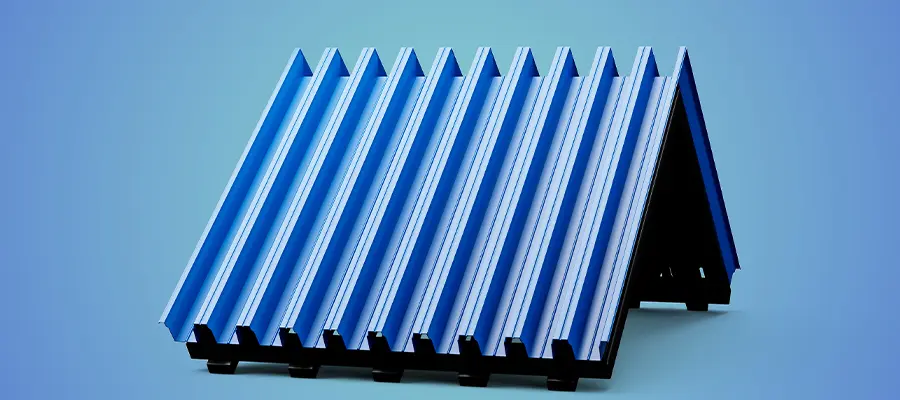
Zinc, aluminium, copper, and tin are the most popular metals for metal roofing sheets. Metal roofing systems come in various colours and textures and are frequently used in commercial, residential, and industrial constructions. They can be customised to fit specific roof styles that differ in cost, longevity, energy efficiency, style, and aesthetic value.
Due to their high thermal properties, metal roofing sheets can be used for building garages, backyards, garden sheds, home cladding, and industrial roof coverings. When constructed correctly, metal roofing panels are waterproof and resistant to wind, snow, hail, heavy rain, fire, and hail. Their susceptibility to oxidation or corrosion is their only drawback. The sheets stay exposed at rivets, joints, and welds where the coating is weakened, even when protective films and coatings aid in preventing corrosion. With time and weather, these spots tend to gradually erode the roof’s integrity if they are not further treated to avoid corrosion.
Sustainable Green Roofs
Green roofs, also known as eco-roofs, support and grow vegetation. They can install drainage and irrigation systems and a growing medium like soil covering all or part of them. It is crucial to consider waterproofing and the weight of the soil and vegetation while constructing a new green roof or renovating an old one.
In addition to having strong waterproofing coverings laid over them, green roofs also include root barriers that prevent seepages and fractures and prolong the structure’s life. They additionally make contributions to decrease protection expenses. Even if a home simply uses a portion of its roof as a green roof, it is still an excellent alternative. These roofs significantly improve the house’s visual appeal, are environmentally friendly, provide overhead insulation, and improve the inhabitant’s mental health.
Concrete Roof Tiles
Since concrete is the most often used building material, it makes sense to start with it. When poured, concrete can function as a monolithic component of the structure and integrate seamlessly with other structural elements. The strength of concrete is its main benefit. It also has advantages in terms of fire resistance, water resistance, soundproof quality, smooth finish, and accessibility.
There are currently many different textures and treatments available for concrete. Concrete has constantly been the choice of desire for constructing houses. It provides houses with solidity and security, whether slanted or flat roofs. However, the outside face of concrete roofs needs to be treated with caution. Applying reflective coatings and waterproofing solutions is necessary to guarantee heat control and water tightness.
Terracotta and Clay Roofs
Terracotta roofing tiles have been the material of choice for hundreds of years. The main cause is easy access to clay, the raw ingredient needed to manufacture terracotta. In kilns, clay is moulded and fired to create terracotta. Additives and dyes are added to give the basic clay distinct colours and qualities.
Sealants and protective coatings are also applied to make the porous tiles resistant to heat and moisture. However, in comparison to concrete, terracotta is weaker and requires more upkeep. Security and insect infestation may also be issues if you employ clay or terracotta tiles. To avoid concerns about water leakage and insect infestation, consider installing these tiles over a concrete roof rather than the conventional wooden structure if you decide to use these tiles in your homes.
Photovoltaic Shingles
Solar panels with a tile-like design are called photovoltaic or solar shingles. In addition to serving as a roofing material, solar shingles can generate electricity through solar radiation.
They are a great alternative to other conventional tiles in homes. If the roof substrate is appropriately sloped, installing these stylish tiles is simple. They could take the place of their unappealing solar panels. The output from photovoltaic shingles is marginally lower than that of conventional solar panels.
However, this becomes less of an issue for Indian houses. Considering that the majority of Indian locations see year-round sunshine, this two-in-one roofing solution is an excellent way to save both money and energy. The initial costs are readily regained in the long term, and choosing to roof offers a very reliable solution.
Slate Tiles
Roofing tiles are a high-end alternative for roofing materials, and they are naturally occurring slate. The sleek, sophisticated, and tidy appearance of slate tiles can greatly improve the appearance of your house. Slate tiles add a luxurious appearance to your room while being durable and low maintenance. Additionally, slate tiles come in various hues, including grey, mottled green, purple, blue-black, and others.
On the other hand, if slate tiles are an option for you, there are a few things to consider. Because slate is fairly heavy, be sure your home’s framework is built to withstand the weight. In addition to being one of the priciest roofing materials, slate requires specialised labour, which can take time to come by. And the budget needs to take these extremely significant factors into account.
Architectural or Laminate Tiles
This kind of asphalt shingle roofing is more resilient and long-lasting. Selecting this type of roofing over conventional asphalt shingles can help you overcome the drawbacks of the latter. Two or more layers of asphalt strips that have been crushed and bonded together using fibreglass additives and minerals are known as laminated shingles. Each layer may serve a distinct purpose; for example, the lower layer may strengthen the shingle’s structural integrity, while the higher layer may be more resilient to heat and mildew. In addition to supplying the shingle with the appropriate colours and textures for architectural appeal, the lamination also acts as a protective layer, creating a seal.
Membrane Roofing
Systems for membrane roofing are typically applied as an extra layer on top of another substrate roof surface. They are more commonly referred to as waterproofing membranes because they are usually employed to achieve watertightness.
High-density polyethylene (HDPE), polyvinyl chloride (PVC), neoprene, ethylene propylene diene monomer (EPDM), and other modified bitumens are the most often used types of membranes (also known as pitch roofing membranes). They come in rolls and are carefully arranged as sheets on roofs to reduce seams.
These are mostly utilised as the waterproofing base layer for residential water tanks and swimming pools. However, membranes are also frequently employed in older homes, retrofitting and refurbishing projects, and waterproofing flat-roofed terraces.
Asphalt Roofing Shingles
Although more frequent in the West, asphalt roofing shingles are less common in India. However, they are still utilised in India for particular purposes due to their simple application, inexpensive cost, and resilience under specific circumstances. Since asphalt is a byproduct of petroleum, it is widely accessible. To give it the desired texture and colour, fibreglass and other materials are applied on top after it has been strengthened with additional minerals. The result is a flexible, mat-like substance that can be cut and placed in various forms and patterns.
The main benefits of asphalt roofing are its flexibility and lightweight. These days, modern sheets are also easy to apply because they include an adhesive strip. This roofing material benefits from asphalt’s inherent waterproof properties and long lifespan. However, asphalt’s drawbacks make it less desirable in other situations, particularly in India. They are prone to organic growth, such as fungi and mould, which causes the material to decay. They typically don’t do well in inclement weather and shrink in colder locations. As a homeowner, you should adopt asphalt roofing only after weighing the short-term costs against the long-term drawbacks.
3-Tab Roofing Shingles
These roofing shingles are a subset of the previously mentioned asphalt shingles. In reality, they are one shingle piece with three cutouts that, when installed, resemble three different pieces. They not only give greater space for water to fall evenly, but they also significantly improve the beauty of asphalt roofing designs.
3-Tab roofing shingles offer a consistent appearance and feel and are less expensive than architectural ones. Nevertheless, 3-Tab shingles have shorter warranties and lower dependability than their laminate equivalents. The benefit is that they weigh 50% less than laminate shingles, making them perfect for situations where weight is an issue, such as retrofitting existing sloped roofs.
In India, tab shingles are not commonly utilised due to their drawbacks. Laminate shingles might be a better choice if you are looking to roof a house that you want to live in for the next 30 to 40 years.
Polycarbonate Roofing Sheets
PVC and UPVC are the two most prevalent forms of polycarbonate roofing sheets. Although this type of application is more common in commercial and industrial buildings, PVC roofing material can be useful in some parts of homes and dwellings. Plastic roofing sheets have the main benefit of being available in an extensive range of patterns, hues, textures, and thicknesses. Therefore, sheets with extremely particular qualities to meet the criteria can be obtained based on the application area.
If you’re looking for a clear roofing material that lets light through, polycarbonate sheets are perfect for your home’s patios, decks, sit-outs, and open parking lots. They have a long lifespan, are completely maintenance-free, and are incredibly resilient and weatherproof. Their extreme lightness also contributes little to the structure’s weight. In addition, installing these roofing sheets is simple and requires minimal support from the structure. Their susceptibility to abrasion and scratches is their main drawback, which causes them to become dull eventually. Additionally, they often distort when subjected to excessive heat or undesired stresses.
Plastic Roofing Sheets
Unlike polycarbonate roofing sheets, plastic roofing sheets are not designed to withstand continuous use and abuse. Although short-lasting, they are preferred in transient installations and low-value constructions. Plastic boards fastened over a wooden or metal framework are one type of plastic roofing sheet; others are polythene tarps. The main goals are to shield against rain and direct sunshine. They are not designed to be strong or resistant to weather, wind, etc.
During retrofits, uncovered areas can be covered with plastic roofing sheets, just like in material storage rooms and other similar spaces. They can be installed in a few hours and are incredibly affordable. They also worked on-site to create complicated arrangements in various colours and thicknesses.
Clay Tiles
Clay tiles are yet another environmentally friendly roofing alternative. One may easily find both glazed ceramic tiles and unglazed reddish clay tiles in the market. It works well in warmer climates and is most appropriate for coastal areas.
Clay roofing tiles can have single or double grooves and vary in size and pattern. Consider the woven clay tiles that cover roughly two square feet. Red clay roof tiles typically cost around Rs. 100, but concrete roof tiles might cost as much as half that amount.
Advantages of Good Roofing
Providing Safety and Comfort:
A sealed roof greatly impacts the degree of comfort and living conditions. When reselling, a leak-free roof can increase the house’s value and bring in more money.
Temperature Control Device:
No matter the season, whether it is stormy, sweltering hot, or pouring cats and dogs, a sound roof can control the temperature and keep you safe. To fulfil your needs, refer to the various material variations of roofing tiles available in the market.
An Envelope of Attention:
Your home will garner extra praise and brownie points if its roof speaks volumes about the artistry of its placement! Your home’s exterior will only be noticed and credited if kept tidy.
As a Defense Mechanism
An appropriately constructed roof is more than a barrier against periodic hail or rainstorms. It also acts as a barrier for the building itself. Directing away from the flow of water prevents moisture infiltration and attack on the walls.
Ensuring the Integrity of Structures
A well-positioned and well-kept roof guarantees the building’s overall structural stability. The roof’s stability determines the stability of the house’s complete framework.
You can take into account the following while selecting a roof for your house:
Durability: How much time the roof will last
Natural disasters: Is the roof resilient to storms and wildfires?
Weight: Does the roof weigh too much for the current roof framework?
Slope: How much slope does the roof have?
Appearance: Does the roof’s design match the house’s?
Conclusion The best type of roofing material for your house will rely on your preferences, the climate in your area, and your financial situation.
When selecting a roofing material, keep the following extra variables in mind.
Climate:
The ideal roofing material for your house will depend partly on the local climate. For instance, if you reside in a region that receives a lot of snowfall, you will need a roof that can support the weight of the snow, and if you live in an area with strong winds, you will require a wind-resistant roof.
Budget:
Roofing materials are available at a range of prices. Slate and metal roofs are among the priciest options; asphalt shingles, on the other hand, are among the most reasonably priced.
Individual preferences:
Which roofing material suits your house will also depend on your tastes. Slate tiles are a great option for an elegant and lovely roof. Metal is another option for a long-lasting and energy-efficient roof.
After considering these things, you can narrow your options and choose the roofing material that would work best for your house.
The process of planning, coordinating, carrying out, and overseeing building projects with digital tools and technology such as computers, software, and online platforms is known as digital project management. It enables the digital conduct of risk management, budgeting, deterministic scheduling, real-time communication, and other crucial project management functions. As a result, team members communicate more accurately and efficiently, procedures are optimised, and project performance is raised overall. It goes beyond conventional project management by utilising collaboration tools, cloud-based platforms, and software to improve communication, expedite procedures, and quickly produce projects.
In this blog, Brick & Bolt covers digital project management in construction, understanding construction project management software, the role of digital construction tools in construction projects, and choosing the best construction project management software.
Understanding Construction Project Management Software
Software for managing construction projects is a specialised tool used to make planning, organising, and carrying out construction projects easier. With its extensive feature set and functionalities designed to meet the unique needs of the construction industry, it gives project managers the ability to effectively manage every facet of a project from start to finish.
Key Features of Construction Management Software
One of the best things about building project management software is that it can centralise project data and communication so that everyone involved can access important data immediately. Some of the most important features that these software programs usually have are:
Scheduling and Planning:
Construction software for project management lets project managers make detailed schedules for projects, assign resources, and keep track of progress against deadlines.
Document Management:
With powerful document management features, these software programs make it easier to store, organise, and share project documents like plans, contracts, and permits.
Budgeting and Cost Control:
It’s important to keep costs under control during building projects, and construction project management software helps project managers keep track of costs, keep an eye on budgets, and find ways to cut costs.
Collaboration Tools:
Sharing files, messaging, and assigning tasks are just a few of the built-in collaboration tools that make it easier for project team members, subcontractors, and other parties to talk to each other.
Risk Management:
Building projects are naturally risky, but construction project management software has tools for finding, evaluating, and reducing risks at all stages of a project.
The Role of Digital Construction Tools in Construction Project Management Techniques
1. Efficiency and Collaboration:
The foundation of effective project processes is now digital project management technologies. These solutions enable smooth cooperation, dismantling organisational walls and guaranteeing that all team members agree on everything from work assignments to document sharing.
The success of a project is mainly dependent on communication. Digital technologies facilitate instantaneous contact among team members, irrespective of location, by offering features like file-sharing, discussion forums, and real-time chat.
2. Data-Driven Decision Making:
Useful Knowledge of Digital Tools for digital project management, including extensive analytics and reporting functionalities. Project managers can use data-driven insights to pinpoint bottlenecks, make well-informed decisions, and streamline procedures to improve project outcomes.
Project managers may proactively detect and handle possible risks using real-time data tracking. Thanks to this proactive strategy, teams can quickly lessen the effect of unforeseen issues by implementing corrective actions.
3. Adaptability and Flexibility:
Adaptability is essential in the fast-paced world of project management. Digital technologies allow operations to scale up or down and change project management procedures to meet project requirements.
Adaptability is essential in the fast-paced world of project management. Digital technologies allow operations to scale up or down and change project management procedures to meet project requirements.
Choosing the Best Construction Project Management Software
Choosing the best construction project management software system might be difficult due to the abundance of available options. When assessing software options, take into account elements like:
Scalability:
Make sure the program can grow with your building projects to meet their current and future needs in terms of size and complexity.
Integration:
Seek out software programs that work well with other programs and systems that your company uses, such as building information modelling (BIM) tools or accounting software.
Usability:
To guarantee broad acceptance among project team members, user-friendly interfaces and simple workflows are crucial.
Support and Training:
Pick a software provider who provides thorough training and continuous support to ensure that your staff gets the most out of the program.
Trends in Cloud-Based Project Management Software
1. Integration of Artificial Intelligence (AI):
AI is increasingly used in cloud-based project management applications to automate repetitive work. AI-driven features improve productivity by managing monotonous chores, freeing teams to concentrate on more critical project components. This includes scheduling and resource allocation.
Predictive analytics is a feature of cloud-based solutions that forecasts future trends by analysing historical project data. Project managers can make proactive decisions and maximise project timeframes with the help of this trend analysis.
2. Collaborative Platforms:
Project management systems hosted in the cloud are central hubs for unified collaboration. They minimise information fragmentation and promote collaboration by centralising project schedules, tasks, and communication channels.
With collaborative editing tools, team members may work on documents concurrently, guaranteeing everyone access to the most recent information. Updates in real-time improve communication and lower the possibility of mistakes from out-of-date data.
3. Mobile Accessibility:
Project management is evolving due to the mobility trend. Team members may manage tasks, monitor progress, and communicate using mobile-friendly cloud-based solutions, promoting an agile and responsive project environment.
Whether working from a desktop, laptop, or mobile device, team members can pick up where they left off thanks to seamless synchronisation between devices. This adaptability promotes teamwork and improves accessibility.
In summary, the digital revolution in project management is about changing how we approach and carry out projects, not only about technology. Construction companies may increase productivity, reduce expenses, and produce successful projects that meet or surpass customer expectations by utilising construction project management software and best practices.
Building contractors lead innovation in the ever-changing construction business, where industry trends and technology breakthroughs drive change. In this blog, Brick & Bolt examines how general and specialist contractors differ in their duties and how construction contractors adjust to market developments. It also features some forward-thinking firms paving the way for the industry’s future.
Adapting to Industry Trends:
1. Embracing Technology
Building Information Modelling (BIM):
Construction companies increasingly incorporate BIM into their daily operations. BIM’s development of digital project representations promotes cooperation between contractors, engineers, and architects. This technology lowers errors, enables more precise planning, and improves project effectiveness overall.
Project Management Software:
Construction contractors are increasingly using project management software. These technologies facilitate communication, control project schedules, and offer real-time updates, improving execution efficiency.
Drones and Robotics:
Drones provide construction firms with an aerial perspective of the project site and are utilised for site surveys, inspections, and data collection. On the other hand, robotics is transforming on-site jobs like concrete pouring and bricklaying, increasing accuracy and productivity.
2. Sustainability Initiatives
Green construction techniques:
Sustainable construction techniques are becoming increasingly commonplace among construction contractors. This covers applying waste minimisation techniques, energy-efficient designs, and environmentally friendly materials. Sustainability is essential to contemporary building methods, not just a fad.
Modular Construction:
Another trend contractors embrace is the advent of modular buildings. Modular construction minimises waste and expedites on-site construction by assembling building components off-site. This method not only increases productivity but also adheres to sustainable building practices.
3. Safety and Wellness
Internet of Things (IoT) in Construction:
IoT devices, such as wearables and sensors, are revolutionising construction sites by providing real-time data on worker safety, equipment performance, and environmental conditions. This data enables proactive decision-making and improves project efficiency.
Prefabrication and Off-Site Construction:
Prefabrication and off-site building lessen the labour that must be done on-site, reducing the workers’ risks. This pattern is consistent with the construction industry’s dedication to prioritising workers’ safety and well-being.
Trending Tech Trends in Construction
Construction Technology Trends:
Emerging innovations in construction technology, such as augmented reality, sophisticated robotics, and modular building techniques, are reshaping the rapidly changing construction sector.
Future of Construction Technology:
With advancements in science and engineering, new developments such as self-healing concrete, self-governing machinery, and intelligent structures that adjust to the demands of their occupants look promising for the future of construction.
Artificial Intelligence (AI) in Construction:
AI is transforming the construction industry by providing advantages, including safety monitoring systems to prevent accidents, autonomous machinery for enhanced efficiency, and predictive analytics for project planning.
3D Printing in Construction:
By enabling the quick and affordable production of intricate structures, cutting down on material waste, and providing design freedom, 3D printing has the potential to change the construction sector completely.
Virtual Reality (VR) in Construction:
VR technology enables stakeholders to view and engage with construction projects before construction, promoting improved communication, better design, and better project results.
Digital Twins in Construction:
Digital twins, or virtual copies of physical assets, are becoming increasingly common in the construction industry. They allow for real-time monitoring, analysis, and optimisation of building projects, boosting output and lowering hazards.
By integrating these technological developments into their building processes, contractors can stay on the cutting edge and complete projects faster, safer, and more sustainably than ever.
Specialised vs. General Contractors:
1. Specialised Contractors:
Expertise in Niche Areas:
For example, speciality contractors concentrate on roofing, plumbing, and electrical services. Their ability to provide highly specialised services stems from their mastery of the nuances of their field of specialisation.
Collaborative Approach:
Specialised contractors frequently work with general contractors to provide their knowledge to a larger project. By working together, we can ensure that experts with specific understanding manage all aspects of the construction process.
2. General Contractors:
Project Oversight:
As project managers, general contractors supervise every step of the building process. They oversee schedules, communicate with specialist contractors, and guarantee that the project meets the client’s requirements.
Holistic Understanding:
General contractors are well-versed in a wide range of building disciplines. Their understanding enables them to make well-informed choices, solve problems, and guarantee the smooth integration of various elements during the building phase.
Spotlight on Innovative Construction Contractor Companies
1. Katerra:
Full-Stack Construction Services: Katerra is a company that offers comprehensive solutions that are revolutionising the construction industry. By utilising state-of-the-art methods and tools, Katerra speeds up every stage of the building process, from design and material production to on-site construction.
Off-Site Construction: Katerra’s commitment to efficiency is evident in the amount of off-site construction it uses. Building schedules are shortened, and waste is reduced since prefabricated building components are produced in controlled environments.
2. Procore Technologies:
Construction Management Software on the Cloud: Procore Technologies is one of the leading cloud-based construction management software suppliers. The platform’s central project management hub facilitates real-time document handling, collaboration, and progress monitoring for construction firms.
Mobile Accessibility: Thanks to Procore’s mobile app, building teams can make decisions and communicate in real-time by accessing vital project information on-site.
3. Built Robotics:
Autonomous Construction Equipment: With its autonomous construction equipment, Built Robotics is changing the construction industry. Their technology transforms traditional construction tools, such as excavators and bulldozers, into accurate, self-operating machines.
Efficiency and Safety: By operating continuously, the autonomous equipment from Built Robotics increases efficiency and boosts safety by minimising the need for human operators in dangerous situations.
Innovations in contractor practices are shaping the future of the construction business. Construction contractors generate good change by embracing technology, adjusting to industry developments, and prioritising sustainability and safety. The collaboration of general and specialised contractors guarantees a thorough approach to building projects, maximising expertise and efficiency.
As we showcase innovative companies like Built Robotics, Procore Technologies, and Katerra, it is clear that the construction industry is undergoing a transformative phase. There will be more advancements in store as long as construction businesses continue to set the bar for building a society that is effective, sustainable, and technologically sophisticated from the revolution in construction, where every new project builds on the previous one to create a more robust and resilient future, greetings.
Digital construction, or construction 4.0, is the application of digital tools and technologies to increase the productivity, quality, and efficiency of building projects. It involves integrating digital technologies into every building process, from design and planning to construction and maintenance.
The construction industry has yet to fully adopt digital technologies, although digital tools like computer-aided design (CAD), building information modelling (BIM), and computer-aided manufacturing (CAM) have been used for years to produce accurate models and designs of products.
Digital technology has significantly impacted numerous industries worldwide. Although it’s more apparent in some sectors, like manufacturing, retail, and agriculture, the construction industry benefits most. It’s about time that contractors and their companies fully embraced the digital age.
In this Blog, Brick & Bolt explain digital construction tools, types of digital construction construction, examples of digital construction tools and advantages of digital construction tools.
How is the Construction Sector Changing As a Result of Digital Construction?
The world is changing constantly, and different industries must adjust to these new developments. Whether we like it or not, the change is unavoidable. Accepting it immediately can have a significant impact on cost savings and efficiency.
Contractors must evaluate their established practices and acknowledge that more digital alternatives will soon replace the creation of old procedures. The rule in this circumstance is the sooner, the better, rather than the later.
Digital technology can address global trends, and the following topics primarily drive the shift.
1. Urbanisation
Urbanisation is one of the leading forces causing change. Global urban population growth is a continuous process. According to a 2016 World Economic Forum study that looked into the issue, almost 200,000 individuals are thought to be relocating from rural to urban regions every day! This indicates a greater need for infrastructure development, including roads, schools, hospitals, power and water plants, and other facilities in addition to more homes.
2. Shortage of Labor
Construction organisations need help developing ways to boost production, even by 1%, these days. A primary cause is the need for more workers. Furthermore, there is a severe talent shortage in this sector. Professionals for senior roles are getting harder and harder to come by, and there’s a greater chance than ever of a labor shortage.
3. Lack of Resources and Waste Generation
Although recycling has been practised for some time, it is now more important than ever. To stop this environmental exploitation, new solutions must be developed as the extraction of materials used in the construction sector has expanded. More trash is created as a result, which leads to severe issues. This problem might be resolved by digital technology.
4. Changes in Climate
It should come as no surprise that pollution increases as more people move into urban areas. Global climate change caused by carbon pushes the building sector to update its outdated emission-reduction strategies. Over the next few decades, the issue is predicted to worsen. Reducing one’s environmental impact is imperative, and there’s no better way to do this than by utilising digital solutions.
Types of Digital Construction
1. Project Management Software
Project management software helps digitally manage the hundreds of thousands of actions on a building site. It is sometimes referred to as progress monitoring software or on-site execution software. It facilitates the construction process, which is infamously challenging and frequently leads to expensive errors and delays.
Both project managers and tradespeople working on a project can utilise project management software. Through mobile devices, parties may stay connected, make updates in real-time from any location, and keep tabs on every aspect of the project.
The fact that this kind of technology has a history of significantly influencing projects in both the short and long term has led to a sharp expansion in investment activity.
Building Information Modeling (BIM) has become a popular topic of conversation in the building business. It uses projections and past data to plan projects more effectively, replacing traditional blueprints with three-dimensional representations of buildings. It can also be distributed to aid in visualising the project’s advancement.
3. Robots and Drones
Robots and drones are assisting in solving the significant problem of labor shortages in the construction industry by supporting the labor force. They can be applied to various tasks, including project progress monitoring, safety inspections, site walkthroughs, and site logistics. Although they won’t completely replace people, it’s anticipated that robots and drones will be utilised more frequently to assist in the building industry.
4. Virtual and Augmented Reality
Everything and anything may go wrong on a construction project. This is the reason that careful and comprehensive project planning is very important. This is the sweet spot for augmented and virtual reality.
Buildings can be virtually simulated in three dimensions (VR) using augmented reality, which combines digital data with the user’s actual surroundings in real time. While virtual reality (VR) helps train workers on best-practice mistake-prevention measures, augmented reality (AR) helps anticipate potential hazards.
5. Machine Learning and Artificial Intelligence
Artificial intelligence (AI) and machine learning use data on the construction site to identify patterns and forecast future events. This might be a game-changer in figuring out the main reason behind delays, cutting expenses, and lowering risks.
Examples of Digital Construction
The domains of architecture, engineering, and construction (AEC) already employ digital tools, and some are quite standard, while others are only getting started. These are some of the digital construction tools that you may already be familiar with, ranging from common programs to more advanced technology.
Mobile technology is a common resource that facilitates communication and lessens the requirement for travel. Instantaneous project updates or critical safety alerts can be sent and received through online mobile devices. Remote project sites with poor or nonexistent network signals also benefit from offline mobile technology use. Programs can be downloaded in the morning, used on-site to capture pertinent data, and uploaded to cloud servers whenever a connection is available.
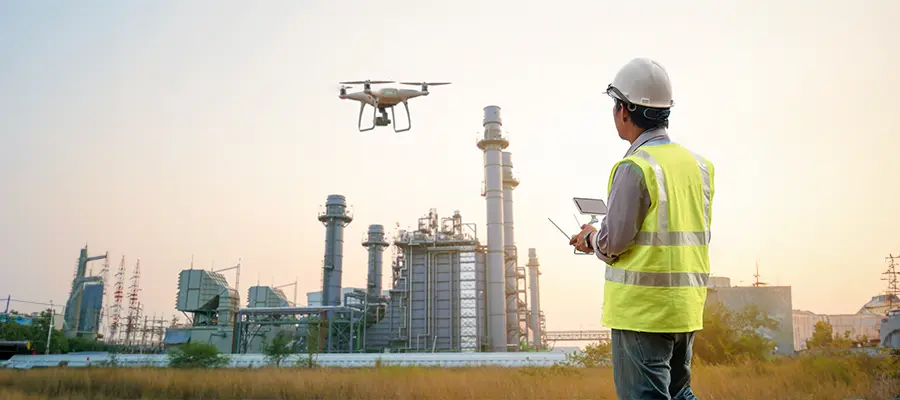
Drones, also known as unmanned aerial vehicles (UAVs), are another effective tool for obtaining information. Compared to traditional surveying methods, UAVs can quickly survey areas and gather data to create topographic maps in a fraction of the time and expense. To detect and diagnose faults and concerns before they become critical, they can also produce 3D maps of worksites or carry out visual inspections of far-off or difficult-to-reach places.
Project teams can access, manage, and exchange data in digital environments called Common Data Environments (CDEs) with the help of cloud-based software suites and filing systems. Popular tools like BIM programs, which allow plan modifications to be immediately sent to all subscribers, are made possible by CDEs. This procedure is far quicker and more effective than mailing and updating paper documents and plans.
Real-time data from remote sensors is made available through IoT, smart sensors, and wireless networks, and these are frequently included in BIM systems. IoT systems can follow the movements of assets and resources, which can improve logistics, record inventory, and deter theft. On-site employees can wear sensors to monitor safety and receive alerts when approaching potentially hazardous places or items.
Big Data analytics and machine learning AI can produce more precise estimates of the money, personnel, supplies, equipment, and other resources required for a given process. Machine learning can develop increasingly precise forecast curves over time by utilising historical project data, fresh data gathered from IoT devices and UAVs, and on-site laborers. These systems can then use the data analytics insights to inform new projects with comparable features, improving time estimates, productivity, equipment usage, and material requirements estimations.
Digital twins are essential for tracking development and spotting issues because they are a virtual depiction of actual processes and operations or physical components. Digital twins provide for early problem detection and speedy resolution because they are updated continuously. For instance, a company can keep an eye on the digital twins of its construction machinery inside to ensure everything operates as it should. Additionally, digital twins can be utilised for external services, such as verifying the operation of installed systems before transferring them to a site manager for ongoing oversight.
The Advantages of Digital Construction Technology
When utilised separately or incoordination, these digital construction technologies and applications are designed to improve the creation, management, and upkeep of the built environment to be safer, more effective, and more cooperative. Using digital building tools appropriately includes:
Encourage cooperation and Communication: Through mobile devices and remote connectivity, digital technology has demonstrated its ability to provide real-time information to all stakeholders. Because all stakeholders have access to the same data at all times and locations, cloud technology creates a single source of truth.
Increase Productivity: Project delays and financial blowouts might result from mistakes, design modifications, or unanticipated issues. Two benefits of digital building projects are more adjustment flexibility and a reduction in the quantity of drawing revisions and version faults.
Automate manual tasks: Manual labor requires a lot of repetition and time. Project services automation solutions facilitate streamlining several processes, including vendor onboarding, project planning, and client data management. Supervisors can focus on other important tasks since mobile timekeeping devices eliminate the need to monitor clock-ins and clock-outs.
Improved material workflows and safety: Sensor-based safety technology can make the workplace safer by informing employees about critical safety procedures and offering real-time situational awareness. Low-code applications can be installed on mobile devices to inform and direct quality checks, punch lists, safety walks, and daily reports.
Improve forecasting and tracking of projects: Drones and handheld scanners connected to BIM models can automatically detect deviations and anticipate possible issues during 3D site scans. Artificial intelligence (AI) models and predictive algorithms can produce more precise predictions regarding the supply, demand, and shortages of money, labor, equipment, materials, and other resources when paired with real-time information. This makes better workforce planning and more precise tracking of a project’s advancement concerning key performance measures possible.
Meet the demands of sustainability and the environment: Digital technologies will offer much-needed data and insights as businesses begin to feel more pressure and legal requirements to safeguard the environment and satisfy sustainable or “green building” standards. To better comply with carbon capture rules, digital technology can assist, for instance, in tracking the carbon production of equipment. On the other hand, digital technology may monitor and measure wastewater to demonstrate that sites adhere to water safety regulations for those required to follow the stormwater pollution prevention plan (SWPPP) under the U.S. Clean Water Act.
Digital technology significantly impacts the construction sector, offering benefits such as increased production, lower costs, improved cooperation, and time efficiency. Implementing it is becoming increasingly necessary, and it is not an option. You will not be in the business if you are unwilling to adapt. Accept innovation and embrace technology to stay competitive and allow your business to grow organically.
Drones are the technology gaining centre stage in the fast-paced construction industry, where innovation redefines conventional procedures. Unmanned Aerial Vehicles (UAVs), also called drones, are transforming the construction sector with a wide range of uses, including mapping, surveying, and inspection.
This blog, Brick & Bolt, delves into the revolutionary effects of drones in the construction sector, highlighting their many uses, advantages, difficulties, and potential future.
The Rise of Drones in the Construction Industry
1. Surveying and Mapping:
Traditional Challenges: Difficult terrain can make traditional surveying and mapping methods more difficult and necessitate time-consuming procedures. Accurate data collection for ground-based surveys may require assistance, particularly in remote or extensive locations.
Drone Solutions: Drones with LiDAR sensors and high-resolution cameras provide a quick and precise substitute. They can cover large areas quickly and effectively, supplying specific topographical data for volumetric measurements, design planning, and site investigation.
Advantages:
Quick data collection: Using drones drastically reduces the time needed to examine significant areas.
Enhanced accuracy: LiDAR technology provides accurate topography data and high-resolution images.
Enhanced safety: Removes the need for surveyors to navigate rugged terrain or dangerous areas.
2. Construction Site Monitoring:
Traditional Challenges: Project management depends on monitoring building sites to ensure that plans are followed and there are no possible problems. Access constraints and the inability to collect data in real-time may be the limits of traditional site monitoring.
Drone Solutions: Monitoring construction sites to ensure that plans are followed and there are no potential issues is essential to project management. Traditional site monitoring may have limitations due to accessibility issues and the inability to gather data instantly.
Advantages:
Improved project visibility: Up-to-date aerial photos ensure a thorough understanding of the building site.
Better project management: Makes it possible to make decisions quickly using the most recent data.
Monitoring progress: This enables effective monitoring of building schedules and milestones.
3. Building Inspection and Maintenance:
Traditional Challenges: Inspecting buildings, bridges, and other structures for upkeep or safety inspections can take much work, mainly when working with tall or intricate constructions. Conventional techniques could entail hazardous manual examinations or pricey equipment.
Drone Solutions: Drones with cameras and sensors can take high-definition photos and navigate intricate constructions. They are beneficial for performing considerable manual labour or scaffolding-free roof, facade, and other hard-to-reach area inspections.
Advantages:
Increased safety: Manual checks are necessary for less dangerous risks, particularly at high heights.
Cost-effective: Compared to conventional inspection techniques, drones are a more economical option.
Thorough data collection: A thorough investigation of structural problems is made possible by high-resolution images.
The Advantages of Drones in Construction
1. Time and Cost Savings:
Swift Data Collection: Drones expedite data collecting procedures, reducing the time required for mapping, surveys, and inspections. Efficiency means that projects can be finished faster and with fewer resources, which results in cost savings.
Decreased Downtime: By enabling construction managers to quickly detect and resolve problems, drones’ real-time monitoring capabilities help to minimise downtime. Aerial insights can be used to inform timely interventions that keep projects on schedule and minimise delays.
2. Enhanced Accuracy and Precision:
Drones equipped with sophisticated cameras and sensors can obtain high-resolution footage, which is helpful for mapping, surveying, and inspections as it provides precise and comprehensive data. This precision improves the total accuracy of construction operations.
Data Integration: Building Information Modeling (BIM) software and other construction management systems can easily include the data gathered by drones. This connection guarantees that all project participants have access to the most accurate and up-to-date information.
3. Improved Safety:
Reducing Risks: By eliminating the need for physical inspections at heights or in dangerous situations, drones help to improve safety on construction sites. By doing this, the risk to employees is reduced, and job site safety is improved overall.
Enhanced Emergency Response: Drones can quickly examine affected areas from the air during emergencies or natural disasters. This ability to act soon helps with disaster relief and makes emergency interventions more effective.
4. Flexibility and Accessibility:
Navigating Challenging Terrains: Drones can get through rugged terrain, giving them access to places that could be unsafe or difficult for ground-based surveys or inspections. This adaptability is extremely valuable for building projects with a variety of terrains.
Scaling Heights: Drones are excellent at reaching heights that would generally require specialist equipment or a lot of manual labour for examining large buildings like skyscrapers or bridges.
Challenges and Considerations in the Integration of Drones:
1. Regulatory Compliance:
Regulations for Navigating Airspace: Different national laws apply to the usage of drones. When implementing drone technology, building organisations must carefully evaluate how to comply with aviation authorities, navigate these rules, and secure the required permits.
Privacy Issues: Using drones presents privacy issues, particularly in urban settings. Building businesses need to set up explicit procedures for gathering data and handle any privacy concerns that may arise from employing drones.
2. Technical Challenges:
Battery Life and Range: The battery capacity of a drone determines its flight time and range. Large-scale construction projects may require long-range drones or repeated drone flights to achieve thorough coverage.
Weather Conditions: Unfavorable weather conditions, including strong winds or heavy rain, might affect how well drones operate. Weather-related restrictions must be considered for construction projects in places with unpredictable weather patterns.
3. Skill Requirements:
Operational expertise: Skilled pilots who comprehend the unique demands of construction applications and the technical facets of drone operation are necessary to operate drones in the construction industry efficiently. For drone operators, certification and training are prerequisites.
The Future of Drones in Construction:
1. AI and Automation:
Autonomous Flight and Navigation: Drone autonomous flying and navigation are becoming possible due to developments in artificial intelligence (AI). Artificial intelligence (AI)-enabled drones can optimise flight routes, navigate construction sites, and carry out tasks without continuous human supervision.
Automated Data Analysis: Drone data can be automatically analysed using analytics driven by artificial intelligence. This entails finding trends, seeing abnormalities, and producing insights that can be put to use without the need for human interpretation.
2. Integration with IoT and Sensors:
Drones can be equipped with various sensors, such as environmental monitors, gas detectors, and thermal cameras. Thanks to this connectivity, they can offer a wider variety of data, which helps with applications like safety inspections and environmental monitoring.
IoT Connectivity: Drones on building sites can interact with other equipment and systems by being incorporated into Internet of Things (IoT) ecosystems. This connectedness improves the total effectiveness of data collecting and processing.
3. Beyond Visual Line of Sight (BVLOS) Operations:
Extending Operational Horizons: Drone missions classified as Beyond Visual Line of Sight (BVLOS) do not necessitate the pilot to keep visual contact. Drones can cover more significant areas through BVLOS operations when restrictions change, increasing their impact and reach.
4. Swarm Technology:
Collaborative Drones: Swarm technology refers to the synchronised movement of several drones cooperating to complete tasks. With drones cooperating to cover vast areas, this cooperative strategy could improve the productivity of large-scale construction projects.
Drones are influencing a new era of construction techniques, ranging from monitoring and surveying to inspection and maintenance. The industry is overcoming obstacles, including technical constraints and regulatory compliance, while embracing drones, which promise to provide new efficiencies and capabilities.
The construction sector is changing because construction companies use drones to reach new heights. The sky is becoming more than just a background; it’s a dynamic frontier where creativity, technology, and construction combine to create a future of never-before-seen possibilities. Greetings from the age of drone construction, where each mission brings us one step closer to revolutionising how we make, plan, and imagine the buildings that define our surroundings.
Modern technology has changed how buildings are planned, developed, and built over and over again in architecture, engineering, and construction (AEC). Building Information Modeling (BIM) stands out as one of these innovations that has completely changed how the industry works and the standards used. Compared to standard 2D drawing methods, BIM provides a complete digital representation of a building’s physical and functional features. By combining geometric, dimensional, and contextual data into a single digital model, BIM helps everyone involved plan, create, build, and manage buildings more efficiently and accurately than ever.
In this blog, Brick & Bolt explains the details of building information modelling (BIM) in the construction industry, such as its background, main ideas, benefits, and how it will significantly change how buildings are planned, designed, and thought of in the future.
Understanding Building Information Modeling Services(BIM):
1. The Genesis of BIM:
The evolution of building documentation has changed a great deal since BIM came along, from drawings to digital models. Engineers and builders used blueprints and flat drawings in the past to show what they meant. However, BIM goes beyond these limits by making digital models that show the whole span of a building.
Early Days:
The first digitally generated house models were made in the 1970s, which is also when BIM first appeared. Since the 1990s, when the idea became popular, it has grown into a complete plan that includes building, managing buildings, and designing.
2. Core Principles of BIM
Physical and Functional Digital Characters:
The main goal of building information modelling (BIM) is to describe a structure’s physical and functional characteristics digitally. This includes details about the building’s shape and size and information about the materials used and how they will be used.
Cooperation and Coordination:
Building Information Modeling (BIM) makes it easier for people involved in the building process, such as contractors, architects, engineers, and site managers, to collaborate. By acting as a centralised hub, the model reduces errors and enhances coordination by guaranteeing that all parties work from the same data set.
Lifecycle Information Management:
BIM looks at the whole lifecycle of a building, not just its growth. Building Information Modeling, or BIM, is a complete source of information that can be used at any stage of a project, from planning and designing to building, maintaining, and taking down.
Benefits of BIM(Building Information Modeling)
1. Improved Visualisation and Design
Virtual Walkthroughs:
Building Information Modeling (BIM) lets you make detailed 3D models that show people what the planned building will look like in a way that is both interesting and accurate. Virtual walkthroughs are a new way for architects, clients, and project teams to see the design in a way that regular 2D models can’t match.
Iterative Design Process:
An iterative design method, BIM, makes it easier to do so. Model updates are quickly added to the project, so everyone on the team is always working with the most up-to-date information. This iterative method makes the design more adaptable and quick to change.
2. Enhanced Collaboration and Coordination
Centralised Datastore:
One of the best things about BIM is that it can be used as a central data store. Everyone can see and use the model, which allows them to share what they know and ensure that everyone agrees.
Real-time Collaboration:
BIM lets teams in different places work together remotely at the same time. Contractors, engineers, and architects can collaborate in ways that aren’t possible with traditional project management if they all use the same tool.
3. Clash Detection and Risk Mitigation
Preventing Conflicts:
By integrating clash detection features into the design process, building information modelling (BIM) enables project teams to spot possible conflicts or collisions before construction starts. Taking preventative measures makes mistakes less likely to occur, lowering the need for expensive redo during building.
Risk Mitigation:
BIM helps reduce risk by seeing possible problems early in the design process and resolving them. With educated decision-making, project teams may reduce risks and ensure a more seamless building process.
BIM facilitates precise cost estimation by offering comprehensive data on materials, quantities, and labour needs. The accuracy of the cost estimate improves financial planning and project budgeting.
Resource Optimisation:
By enabling project teams to plan and allocate resources more effectively, BIM helps to facilitate resource optimisation. BIM may make Construction processes more efficient and economical, which helps with everything from labour scheduling to material procurement.
Challenges in Implementing BIM:
1. Implementation Costs
Initial Investment:
Software, training, and technological infrastructure must be purchased to use BIM. It could be difficult for small and medium-sized businesses to make this initial investment.
ROI Over Time:
Although the initial outlay may seem high, the ROI (return on investment) throughout the project makes the outlay worthwhile. Organisations must, however, carefully evaluate their ability to bear these expenditures and, if necessary, arrange for a phased deployment.
2. Training and Skill Development
Converting to BIM Workflows:
Stakeholders moving from conventional construction workflows to BIM face a learning curve. Training programs are crucial to give architects, engineers, and contractors the skills to use BIM software efficiently.
Skill Shortages:
The industry may need more skilled professionals proficient in BIM methodologies. Addressing this challenge involves investing in education and training initiatives to build a workforce with BIM competencies.
3. Interoperability and Data Standards
Maintaining Compatibility:
Ensuring compatibility between various BIM software platforms might be challenging. Collaboration with multiple stakeholders utilising different software is standard in construction projects. It is essential to guarantee interoperability and seamless data transmission.
Collaboration and Data Standards:
Creating industry-wide data standards is a continuous process. Collaborative activities are required to develop standardised protocols that enable smooth information sharing and interoperability across various BIM platforms.
The Future of BIM in Construction
Building information modeling has changed the way buildings are planned, designed, and built, and it has become a competitive force in the construction industry. It looks like even bigger steps forward will be made in technology in the future, and BIM will be used in more areas of building.
1. Smart Cities and Infrastructure
BIM(Building Information Modeling) for Urban Planning:
BIM is growing to include whole cityscapes instead of just individual buildings. BIM is being used more and more in urban planning and the building of smart cities because digital models help people figure out how to combine ecology, transportation, and infrastructure.
Transportation and Infrastructure Projects:
BIM is used a lot in the planning and execution of transportation and infrastructure projects. It’s easier to organise the different parts of a project with BIM, which cuts down on downtime and improves the results of projects like highways and bridges.
2. Integration with IoT and AI
Internet of Things (IoT) and Real-time Data:
Putting BIM and IoT together can open up new possibilities. Real-time data from monitors built into buildings can improve BIM models and give us new information about how occupied buildings are, how much energy they use, and how efficient they are overall.
Artificial Intelligence for Predictive Analysis:
The use of artificial intelligence (AI) for predictive analysis makes BIM more useful by allowing for predicted analysis. AI algorithms can predict maintenance needs, make buildings more energy efficient, and improve their general operational performance by looking at data from BIM models.
3. Sustainable Construction Practices
BIM for Sustainable Design:
BIM is a big part of helping to make building methods more environmentally friendly. When designers and architects can model and analyse ecological factors to make building designs more energy efficient, construction projects have less of an effect on the environment.
Life Cycle Assessment:
From getting the materials to taking down the building, BIM’s life cycle assessment features let you see the environmental effect of a building as a whole. This information gives people who make decisions the power to make choices that support sustainable goals.
Building Information Modeling, which has changed the limits of traditional building methods, has brought about a new era of creativity, teamwork, and efficiency. We are moving toward a world that is more focused on BIM, which is causing a paradigm shift in the industry. This shift affects not only individual projects but also infrastructural development and urban planning as a whole.
BIM(Building Information Modeling) changes more than just technology in the construction business. It encourages teamwork, data-driven decisions, and building methods that are better for the environment. Even though there are problems to solve, BIM is still living up to its new promise. It offers the prospect of a time when building projects are carefully planned, optimised, and maintained over their whole lifecycle rather than just being built.