In a city like Bangalore where people come from all over in search of employment, there is a huge demand for housing in the residential real estate sector in and around Bangalore.
The cost of a 30*40 plot varies from Rs 2600/ sq ft (outskirts) to Rs 8500 (prime locations.)
30 40 sites in square feet
A “30 * 40 site” refers to a plot of land that measures 30 feet in width and 40 feet in length. To calculate the area, you multiply it:
30 feet x 40 feet = 1,200 square feet So, a “30 x 40 site” is 1,200 square feet in total area.
What are your requirements for building a 30*40 construction site?
· Construction Type: Individual House, duplex house
· Floors: The number of floors you are going to build
· Budget: Depending on your budget you can make a choice
The cost of a site varies depending on the amenities like schools, colleges, malls, hospitals, etc.
What Can You Construct on a 30*40 Site?
You can plan to build an independent house like a small 2bhk and then construct the other floors in the future depending on your budget. You also have to plan well and have a proper structural drawing prepared by an experienced Architect.
You can also have a duplex on a 30*40 plot size along with some rental units.
You can have an independent Duplex House where you can construct a 3bhk on Ground+1 Or Ground+2 floors.
If you are looking for an investment then rental houses would be a better option where you can get a better return on investments compared to the options I have mentioned above.
Construction Cost of a 30*40 site in Bangalore
The construction cost in Bangalore varies from Rs 1650 to Rs 2000/sq ft depending on the architect’s design and specifications.
The construction cost to build a house on a 30*40 site/plot is as follows:
Ground floor: 17 Lakhs
Ground +1 floor: 33 Lakhs
Ground+2 Floors: 50 Lakhs
Ground+3 Floors: 66 Lakhs
Ground +4 Floors: 83 Lakhs
Construction Cost of building a 3bhk G+1 duplex house on a 30*40 site
The construction cost to build a 3bhk on a 30*40 site in Bangalore varies from a minimum of 45 Lakhs to Rs 65 Lakhs depending on the materials used for construction.
In Bangalore 30*40 construction cost for the Ground floor is 16 L, ground +1 is 32L Ground plus 2 is 49 L, ground plus 3 is 65L and Ground+4 floor is 81 L
Duration of time for building a Duplex or Rental House on a 30*40 site/plot
30*40 only ground floor (3 months)
30*40 Ground + 1 (5 to 6 months)
Ground Floor+3 (8 to 9 months)
Ground + 4 (10 to 12 months)
Setback That you need to leave on a 30*40 construction site in Bangalore
The setbacks for a 30*40 construction site as per BDA/BBMP/BMRDA by law is to have a minimum setback of 8% on all the sides and 12% on the roadside.
Additional Cost of constructing a house in a 30*40 construction site cost
Finishing materials like electrical cabling, fixtures, and switches.
Plumbing installation like the washbasins, taps, etc.
Flooring/ tiling on the walls
Ventilation like the exhaust fans
Kitchen finishing like can also affect the cost based on the choice of granite, artificial granite, etc.
Approvals for home building in a 30*40 construction site
Building a home requires approvals from various government bodies like
Plan approval
Electric connections
For the required approvals you will be asked to present a few valid documents.
Ensuring a safe and healthy workplace is very important in construction, not only for the workers but also for the people who live in the buildings and the people who live nearby. However, buildings often create many pollutants, including construction dust and volatile organic compounds (VOCs), which can hurt the air quality inside. Solving these problems will take creative thinking and proactive steps. In this article, effective ways to improve indoor air quality during building activities are discussed, with a focus on lowering VOC emissions, controlling dust, and using air purification technologies.
The Problem with Energy Use
When it comes to how much energy they use, tall buildings are the worst. A lot of air conditioning is needed because big windows and areas let in a lot of natural light and heat. There is also a need for energy use because more people and things are in these buildings. In order to solve this problem, people use building systems, physical design, and new technologies.
Innovative Strategies and Resolutions
1. Building Direction:
By carefully studying the building’s direction, architects can reduce heat gain and make the most of natural light. Sunscreens and openings are two types of shading devices that can be put smartly to keep the temperature from getting too high. This saves energy and makes the inside temperature more comfortable for the people who are inside.
2. Energy-Saving HVAC:
Consider energy-efficient HVAC systems for construction with complex HVAC systems. Daily saving energy-saving HVAC solutions like variable refrigerant flow systems can save a lot. By precisely heating or cooling distinct sections, these systems maximise energy use.
3. Smart Building Management Systems:
Using advanced robotics and sensor technology, these systems can monitor and control energy use in real-time. By changing ventilation, temperature, and lighting based on occupancy and outside factors, these systems save the most energy without sacrificing comfort.
4. Use of Renewable Energy:
Tall buildings with wind or solar panels can balance most of their energy demand. This reduces fossil fuel and greenhouse gas emissions. Tall buildings have plenty of space for clean energy production on their roofs.
The Advantages and Key Takeaways
Lower Energy Costs:
High-rise buildings can become more financially stable by lowering their running costs and taking steps to save energy.
Effects on the Environment:
Using renewable energy sources and lowering energy use in tall buildings can help make the future safer and greener.
Enhanced Indoor Air Quality:
Energy-efficient HVAC systems and smart controls enhance air quality in high-rise buildings, benefiting resident’s health and well-being.
Compliance with Regulations:
Using eco-friendly methods in tall buildings helps ensure they follow the rules and avoid fines as governments tighten energy-saving rules.
Why Teamwork Matters?
Owners, engineers, builders, and tenants of high-rise buildings can work together to enhance air quality and decrease energy use. It is very important to consider each building’s needs and make energy-saving plans that fit its specific features.
Creative design, the application of modern technology, and the encouragement of ecologically beneficial practices can transform high-rise structures into places to live that are functional, eco-friendly, and people-friendly.
Cutting down on energy use in tall buildings makes sense and is necessary for a healthy future. A healthier and more energy-efficient built environment can be achieved with good planning, the use of energy-saving measures, and a commitment to ongoing tracking and improvement.
New developments in HVAC technology: A Step Toward Better Indoor Air Quality
In this blog, Brick & Bolt will talk about some of these changes and the good things that might come from them.
1. Smart Thermostats
One of the biggest HVAC advances is smart thermostats. By using sensors and complex formulas, these thermostats better control the temperature inside. The HVAC system can be changed to save energy and make the air better by learning what the people like.
Smart thermostats make it easier for tenants to be comfortable by letting them precisely control the temperature. The temperature can be set to instantly change based on occupancy to save energy when no one is home. Modern sensors can find contaminants in the air and amounts of humidity, which lets the HVAC system fix these issues quickly.
2. Systems for Cleaning the Air
People desire clean, healthy air in their homes, so more are using air filter systems. These systems remove allergies, pollutants, and other hazardous particles with HVAC systems. These days, more advanced technologies clean the air completely by using many filters, such as activated carbon and HEPA. Up to 99.97% of pollen, dust, and animal fur can be removed with HEPA filters. Activated carbon screens absorb volatile organic compounds, chemicals, and odours. Some air filter systems kill microbes like mold, viruses, and bacteria with UV light.
3. Environmentally Friendly HVAC Systems
One of the biggest challenges facing HVAC is energy efficiency. Energy-efficient solutions save money and improve indoor air. Modern HVAC systems consume less energy without sacrificing efficiency. This benefits the environment and humans. Lowering electricity expenses and carbon footprint, high-efficiency HVAC systems significantly reduce energy use. Humidity and temperature can be fine-tuned with the help of variable-speed compressors and advanced airflow management systems.
4. Remote Supervision and Management
We can now remotely monitor and regulate our HVAC systems, which changes our relationship with them. The Internet of Things (IoT) enables building managers and homeowners to monitor and operate HVAC systems using their computers or cell phones. This control lets repairs be made ahead of time, and the machine runs more efficiently. Remote tracking tracks energy use and notifies users about HVAC issues. Smart devices make life more comfortable and save energy by making it easy to change and plan temperature settings. Facility managers can monitor large buildings with many HVAC systems remotely to ensure optimal performance.
Many HVAC technology improvements increase indoor air quality. Smart thermostats save energy, improve comfort, and provide more precise control. Air purification devices effectively remove allergies, pollutants, and odours. Energy-efficient HVAC systems save money and improve air quality. Remote tracking and control facilitate maintenance more proactively, work more efficiently, and be more convenient.
As the construction industry changes, so must how we protect the air quality inside our homes. By following the tips in this piece, construction workers can reduce the harmful effects of dust and VOCs, making the places where they work and live healthier for everyone. By working together, coming up with new ideas, and being dedicated to sustainability, we can ensure that building projects reach their goals and improve people’s and community’s lives.
Off-site construction techniques are becoming increasingly common for building and renovating commercial projects to cut costs and improve efficiency. In-plant or off-site techniques can also address ongoing industry issues such as the scarcity of trained staff, rising costs, and limited materials supply.
For example, the cost of timber tripled at the start of 2022, which put a lot of pressure on architects, builders, and other industry participants to reduce costs and increase efficiency wherever possible.
Off-site construction can help reduce these problems, but it can also be more work up front for the contractors and project owners, which can be unsettling. Many projects will find that the benefits of offsite building methods greatly outweigh the additional coordination required, even with this departure from the status quo.
Brick & Bolt provides everything you need to know about permanent off-site construction, along with a list of its main benefits, things to think about before you begin, and advice on including project stakeholders.
What is Offsite Construction and Pre-Fabrication?
Pre-fabrication and off-site construction entail creating a building partially or entirely in a factory before being delivered and installed at the project site.
This method builds the modular elements off-site while enabling site development activities (excavation, concrete foundation, etc.) and the installation of structural elements to proceed. Building multiple sections simultaneously shortens the project’s total completion time in all weather conditions.
Types of Off-site Construction
Off-site construction can be divided into two primary categories:
2D modular wall panels finish the structure’s interior and exterior walls.
3D volumetric modular modules, full rooms or portions of a building.
2D Modular Wall Panels:
In a factory, 2D prefabricated panels, or prefab walls, are assembled into layers for simple transportation and installation on the construction site. Continuous insulation (CI), weather barriers, drainage, window and door apertures, structural steel framework, and other system components can all be found in prefabricated exterior wall panels. To speed up the dry-in process, exterior insulation and finishing systems, or EIFS, are offered as panels. Similarly, insulated wall panels, which can be applied to interior or external walls, are frequently used to expedite and simplify insulation.
Architectural wall panels, often known as panelised facades, are the outside treatments found on prefabricated walls in buildings. These systems, like the Modulite CI panels from Dryvit, can overload a structure, minimise thermal bridging, and provide a personalised facade with infinite finish possibilities for new construction and external repairs.
Labourers affix the panels to the structure’s exterior after the components are brought to the construction site. This method allows interior trades to finish their job sooner since contractors dry in the structure more quickly than they would during regular construction. The final installation should account for the additional time needed on-site for electrical, plumbing, and HVAC services, as these are typically ongoing in the factory. Here is more information regarding the advantages of CI panels.
3D Volumetric Modular Modules
Larger, three-dimensional rooms or a group made at a factory before delivery are known as 3D modular units. 3D volumetric units are very efficient and can be the most economical choice for new buildings, especially in repeating assemblies like apartments and hotel rooms, thanks to the front-end production process. This does not imply, however, that each module’s design, inside and external finishes must be the same. Unit-to-unit variations in these designs allow for the creation of any desired building look.
Due to their size, 3D modular modules require more expensive transportation to their intended location. Every state has unique shipping regulations, so a route must be planned well before the “oversize load” leaves the factory.
When compared to traditional on-site building and the use of 2D panels, the assembly process is typically less labour-intensive once the cargo arrives. These specifics can be evaluated and taken into consideration throughout the design stage.
Utilising a Hybrid Method of 2D Panels and 3D Modular Construction
Off-site construction is not a binary choice. Hybrid models are feasible and typical, with certain building components completed on-site and others built in a factory. The optimal mix of panelisation, modular construction, and conventional building techniques will depend on each project’s design, schedule, and worksite circumstances. Using them all may be more effective in certain circumstances. For example, common spaces of a hotel or office building could be built on the spot, with the building façade installed as panels and the individual rooms delivered as 3D pods.
A mixed-use structure is another illustration of a hybrid construction model. The lower one or two stories of a “podium building” are constructed as a concrete podium and include amenities like parking garages or retail businesses. These elements are made on-site to form the building’s foundation. Subsequently, modular homes are built on-site and later stacked for residential use atop the podium. To meet the requirements of almost any project, a plethora of off-site and traditional construction combinations are possible.
Advantages of Offsite Construction
Offsite construction is becoming increasingly popular as more businesses realise the advantages of relocating the building process from the actual site to a controlled factory setting. Here, we examine some factors that make remote computing the newest big thing.
Safety
Compared to the actual construction site, which is subject to weather and visibility variations, the factory presents a far more predictable environment. When the conditions are constant throughout, errors are significantly less frequent. The factory is not affected by the majority of the most hazardous construction site risks, such as falls from great heights and machine mishaps.
Effectiveness and Stability
Because off-site construction ensures consistency, it can be completed in less time each time. As long as the project is not delayed by mitigating factors like inclement weather, work may be certain to be completed on schedule and to the highest possible standard.
Durability
Less energy and large machinery are needed for off-site construction. In addition to using fewer cars to transport the completed product to the site, there is less waste because the company may purchase materials in bulk and determine their requirements more precisely.
Higher Quality
Prefabricated construction is primarily a repeatable procedure that increases quality control and lowers the likelihood of errors, rework, and callbacks. Furthermore, because off-site components must endure the shocks and strains of shipping, they are frequently built with even greater durability than on-site components, even if they are naturally built to meet or exceed building requirements. All stakeholders benefit from increased quality assurance, which ensures a long-lasting, robust outcome.
Lower Labour Costs
Research has indicated that erecting a factory structure requires much less labour. According to the Steel Construction Institute (SCI), the hands needed for a four-story residential development might be lowered by up to 75%. These savings would also apply to other types of construction. Naturally, the corporation will pay lower wages if fewer employees exist.
Reduction in Training
Acquiring the skills necessary to do a job well in an offsite build is far easier and requires less time than training people to be experts in onsite construction. Building is effectively turned into a manufacturing process when the construction process is moved to a factory, where each worker simply needs to understand their specific, tiny job on the assembly line. Quicker delivery and cost savings are achieved with less training.
Reduced Construction Schedule and Shorter Install Time
Fewer parts of an off-site construction project are weather-dependent because most of the work is completed indoors. Factory-built components can be finished at any time of year, regardless of external weather conditions.
Furthermore, panels and modular pieces are assembled simultaneously when on-site work starts. Before beginning further work, concrete must typically be cured for at least 28 days in the building industry. During those 28 days, work in a factory might continue by utilising off-site construction. To help shorten the project’s overall timetable, everything is taking place at the same time. Since most liquid elements, such as sealants and air barriers, have already been cured and won’t be impacted by fluctuating temperatures or precipitation, the units can be placed on-site in a wider range of climatic conditions once finished in the factory.
Things to Think About Before Selecting Off-Site Construction
While the procedures for on-site and off-site building methods are similar, they also call for careful planning and coordination.
Making Decisions Early
Everyone involved will observe that more decisions must be made at an earlier level because modular fabrication proceeds swiftly and frequently in tandem with other stages of the construction process. Furthermore, modifications are easier to make once work is underway.
Choose an off-site construction business with experience to help with this. They should be able to identify the decisions that need to be made, set up a schedule, and effectively oversee the entire process.
Financial Difficulties
The parties must also agree on who is responsible for the financial and insurance commitments of the prefabrication process. Regarding the lender’s definition of “property,” the financing may present difficulties. Lenders frequently withhold cash until the units are delivered to the job site, even when they are still in the factory.
Developers and building owners who require up to 50% of the loan upfront may find this troublesome. For their unorthodox construction approach, looking to nontraditional financiers, such as real estate investment funds, is advised.
Many funding options for off-site construction for Deep Energy Retrofit projects and building renovation for increased energy efficiency are available. Commercial Property Assessed Clean Energy, or C-PACE, is one such option. Under this scheme, energy upgrades or renewable energy systems for commercial buildings can be funded and repaid through property tax assessments.
Additionally, many states offer specialised funding for deep retrofit projects, such as RetrofitNY, Clean Energy Works Oregon, and Efficiency Maine’s PACE Loan Program. To promote retrofits in private residences, social housing, and community facilities, the Federation of Canadian Municipalities (FCM) recently introduced three new funding initiatives in Canada, totalling an expenditure of nearly $1 billion.
Design-Related Issues
Does this project lend itself well to panelised or modular design and fabrication? Each job will be unique. For example, the time and cost advantages associated with off-site building might be less significant in places with consistent or favourable weather and easy availability of raw materials. Before choosing, it is useful to perform a cost-benefit analysis of both possibilities. Furthermore, traditional on-site construction better fits complicated buildings without recurring components.
Anything from wall panels, precast concrete, permanent modular building systems, and more can be constructed off-site. Any architectural structure with recurring characteristics, such as restrooms, dormitories, or patient rooms in a hospital, may find it a feasible alternative. Offsite construction is enjoying a rebirth, but it’s nice to know you may still achieve your specific objectives while picking the benefits of this cutting-edge method. When the time comes to start building, remember that a design-build team can assist you in pursuing every avenue of offsite construction while seeing your commercial project through from conception to groundbreaking.
No Interruption to the Occupants
For those unfortunate enough to live nearby, an onsite development can be a tough test of patience. Construction and delivery vehicles travelling to and from the site can impede access routes and parking spaces, creating noise and air pollution from heavy gear and equipment. This is a specific issue in confined urban settings. Furthermore, cranes and construction sites are always ugly and can be a nuisance for a long time. Locals will be relieved to see development moved into a factory away from the site.
In conclusion, off-site construction is a revolutionary change from traditional building methods. It has many benefits, such as higher efficiency, lower prices, and greater sustainability. Offsite construction includes a wide range of new methods that change how buildings are planned and built. These methods include modular construction and prefabrication techniques. Offsite construction can help the construction industry be more productive, complete projects better, and meet the growing needs of the built environment if people in the industry understand its principles, methods, and benefits. Offsite construction isn’t just a trend; it’s a must for the future of construction. It makes better, faster, and more environmentally friendly buildings possible.
To learn more about the benefits of modular and prefabricated construction, click the link below.
Innovation is the cornerstone of progress in the exciting field of future construction technology. As the sector embraces digital change, we should expect a more connected, efficient, and sustainable built environment. Equipped with cutting-edge instruments and technology, construction experts will completely reimagine the possibilities of what can be constructed, how it can be constructed, and how it will affect the world.
After COVID, it has been shown that the popular perception that the construction sector is lagging in implementing modern technology in its daily operations is untrue. Despite overwhelming difficulties, the engineering and construction sectors emerged from the pandemic crisis better than others. Many are curious about the origins of this motivation. All of that was made possible by the ability to grow sustainably and the innovative application of technology in building.
The benefits and uses for updating your current processes are genuine and useful. To keep your construction company ahead of the competition, you’ll also need to figure out how to incorporate fresh ideas into your processes and strategy.
These state-of-the-art technologies are fundamentally altering future project completion and industry operations. In this Blog, Brick & Bolt will discuss the construction technologies that are impacting and changing the sector.
Construction Technology Types Affecting the Sector:
Significant advances in construction technology have affected many aspects of the industry. The following are a few categories of construction technologies that are impacting and changing the sector:
Better teamwork is made possible by using BIM since individual contributors and areas of expertise can contribute to a single model rather than breaking out into separate copies of a 2D paper sketch. In this sense, as users input, the model changes instantly, simplifying the procedure and boosting productivity. By automating clash detection and supplying a more comprehensive view of the project, BIM also aids in problem solutions during a project’s design and planning phases.
An increasing number of governments worldwide, including those in India, Hong Kong, France, South Korea, Germany, and Italy, are implementing mandatory BIM processes for major facilities projects. Government construction projects in the United Kingdom are already required to use BIM. The growth of AI in BIM, the rise in demand for BIM-based cloud collaboration, modular construction and prefabrication, and more are rising trends that will directly affect the industry, according to Research and Market’s 2021 Building Information Modeling Market Report.
Data Collection Apps
Apps are becoming more commonplace in the construction industry, and for good cause. Improved communication and remote work are made possible by the improved portability of tablets and smartphones. More precisely, construction organisations are using data collecting tools to obtain data from the job site that is quicker, more precise, and of higher quality.
Although it takes less initial investment and is easier to integrate into existing processes, this kind of technology offers significant advantages such as:
Significant time savings and a decrease in incorrect data entry: Users of data collection apps have claimed a 50% decrease in data input errors and a weekly savings of over 20 field and administrative hours.
Improved procedures: Workflows for collecting data can be automated so that submitting one form starts another, and so on, until a task is finished with all required approvals and data collected. In addition, some data-gathering programs provide web and mobile forms, enabling your staff to complete forms on PCs, laptops, tablets, cellphones, and any other digital device.
Increased adherence to safety regulations: Apps for gathering data can help with everything from reporting near-misses to doing thorough job safety analyses and daily equipment checks.
Reporting immediately: A data-gathering tool will help you expedite reporting, whether you require daily job reports, prompt customer deliverable turnaround times, or quick access to legal documents. Additionally, you can quickly alter reports to meet your company’s requirements.
Drones
The most popular new technology in the building is drones. They are less expensive than aerial photography and can do site assessments faster and more precisely than a team on the ground. They may produce dynamic 3D or topographical maps and models, measure volumes, and take data from their high-resolution cameras.
Drones also have the advantage of safely inspecting areas that are difficult to access, including near big buildings or bridges. They can also monitor worker’s productivity and progress on a task site.
Virtual Reality and Wearables
BIM is frequently combined with virtual reality technology to help understand complex projects. Imagine the possibilities: using BIM to design a building, you can use virtual reality (VR) to walk around it. This will help your team or the client get a more accurate picture of the project’s appearance when it’s finished. Gaining a deeper understanding of the project before it starts allows you to steer clear of costly change orders and significant alterations in the middle of the project.
Artificial Intelligence
For many years, construction projects have benefited from artificial intelligence (AI) by being safer, having better workflows, and completing tasks more quickly and effectively. However, many construction companies still need to figure out how to use this sophisticated technology within their organisations.
Larger companies have begun developing AI systems to support internal operations and decision-making. On the other hand, others depend on outside parties, like AI advisors and solutions providers, to assess their present procedures and find areas where AI or machine learning may be used.
3D Printing
In the construction industry, 3D printing is one of the newest technologies. However, BIM is less popular than it is. It was originally applied in 1995 and involves creating three-dimensional buildings from computer models. In 2023, using 3D software to create 3D models is a popular trend.
Blockchain Technology
The AEC industry will have more effective cost control and blockchain-based procurement methods by 2023 and beyond. This technology, which functions as connected collections of data “blocks” that comprise a digital ledger with the records of all transactions and accomplished milestones, was first introduced to the construction sector less than ten years ago. It resembles a real chain, where each link signifies a different project transaction and self-corrects automatically. Unlike others, it is safe, decentralised, and flexible enough for projects of any scale.
Digital Twin
The digital twin, the newest AEC sector technology, solves operation management problems. Simulation is used to create a building prototype. Digital twin trends and functionality cover the application of intelligent multidimensional digital models. Because digital twins can mimic, forecast, and advise decisions based on real-world situations, there will be fewer buildings experiencing operational challenges in 2023 and beyond. Using patterns and spatial cues, digital twins analyse performance while considering occupant behaviour.
3D Laser Scanner
The 3D laser scanner is one of the newest tools for construction in the AEC sector. It is constantly an innovation because of its interoperability and annual changes. It is renowned for its capacity to examine and evaluate actual objects. It has been used for many construction jobs, including safety, project inspection, mapping, and on-site surveying. Because of its accuracy, building planning is simple and significantly less expensive.
4D Simulation
4D simulations are one of the newest technological options to save time and money for onsite and offsite projects, as the construction industry is always looking for ways to optimise processes.
Conclusion
The future of construction technology is undergoing dynamic and varied innovations in different sectors that transform the sector. To experience these technologies develop and are more extensively used, construction is expected to become more sustainable, efficient, and adaptable to society’s changing requirements.
The process of evaluating and implementing procedures to reduce the impact of risks in construction projects is known as construction risk management. This risk management process entails extensive planning to build a plan that enables project managers to recognise, track, and reduce risks as they materialise.
The early phases of the construction planning process involve developing a construction risk management plan. This plan describes the potential project risks and the response to address them. As part of this, a crew member should be assigned to take ownership of and resolve the problem.
In this blog, Brick & Bolt discusses the construction risk management process, the types of risk management, and how to avoid risk management in construction.
Importance of Risk Management in Construction
Understanding the diverse risks associated with the primary building sites can help explain the significance of closely monitoring them throughout the project’s duration. More precisely, poor risk assurance and associated decision-making frequently lead to legacy problems that persist throughout the project. Project officers will find themselves in a situation where they must rely on individuals who oversee construction hazards to report on them without adequate risk assessment and control, leading to delays and rework.
Moreover, the stakeholder structures involved in building projects are typically very complicated, with numerous interactions at play. For example, all governing bodies (board, steering committee, audit committee, etc.) have the necessary openness and understanding of the risks associated with the project. Project managers may, therefore, worry that they’re not hearing the whole picture from their teams and that negative news won’t reach them in time to adequately handle the risks, which would cause project schedules to be delayed and significant cost overruns to occur.
Types of Risk Management in Construction Projects
Any factor that could cause the project to be delayed or incur more costs is considered a risk. A construction site presents a multitude of risks. It’s important to understand the risks and their potential locations to develop an effective risk management strategy:
1. Financial Risk:
Nothing happens in the absence of money. You understand that no one gets paid, and equipment cannot be rented. It is necessary to identify any circumstances that may disrupt your cash flow because of this. This may involve increased material costs, market rivalry, and other factors. Understanding financial risks increases your chances of sticking to your spending plan.
2. Risk to Safety:
Your team is most important to you. With them, things can get done. However, they also face safety risks because many jobs they are given might be risky. Even with the expertise and experience of your workers, accidents might occur. To guarantee employee safety, be aware of the risks to their safety and the potential dangers they may encounter. Then, develop a safety strategy.
3. Legal Risk:
Overcoming budget, schedule, and scope limitations is just one aspect of managing a construction project. Legal restraints include rules, code infractions, and disagreements over contract terms with customers, suppliers, and subcontractors. Your building project may need fixing for any of these reasons.
4. Project Risk:
Project risks are the common risks of project management that come with overseeing any project. These include running behind schedule, missing deadlines, and managing resources poorly. The project manager for construction needs to be meticulous and aware of any obstacles that could cause the project to go off course.
5. Environmental Risk:
This is also known as an “act of God,” which includes earthquakes, floods, and other natural calamities. Anything that nature unpredictably unleashes that renders the building site unusable is expensive and could be disastrous for a construction project.
The Process of Construction Risk Management
A construction project’s risk mitigation procedure is similar to any other project. The only difference is the kinds of risks you manage in the construction business. The risk management procedure consists of the following five steps:
Identification:
To begin with, jot down every potential problem that might occur. Investigate, consult with your team, and review historical data from comparable construction projects in the past. Although you can always alter and update this identification list, it’s best to establish a deadline to avoid becoming bogged down in the details.
Evaluation:
Not all risks are equal. Certain events are less likely to happen than others. One method to evaluate your list of hazards is to use a risk assessment matrix, which shows the possibility of each risk and its potential impact on your project. If a risk materialises, creating a risk assessment matrix will assist you in managing it.
Mitigation:
It is the process of putting in place a backup plan to lessen the possibility and effect of the risks you previously recognised. Naturally, the ones you identified as more likely and impactful should be prioritised. Should it materialise, these should be given an owner who will manage the risk’s resolution and determine its existence.
Monitoring:
This is a continuous process where you try to spot these hazards as soon as they materialise. This involves keeping an eye on how well your mitigation approach is working. Stakeholders ought to be informed about these project risks and consulted as well. Encourage assistance from other department heads and give the group the authority to handle risks. Ask them to record any changes to a risk’s location on your risk assessment matrix.
Reporting:
Examine and discuss your construction risk management plan with the team and any relevant parties. These risk mitigation reports let you assess how well the backup plan works. Although an Excel spreadsheet can be used for this, project management software is a more effective method. Online systems automatically collect data, build dashboards to show progress, and produce easily distributable reports.
How to Avoid Risk Management in Construction
A building project includes risks at every stage of its construction. As soon as a danger materialises, you must be able to recognise it, act promptly, and use the proper risk management strategy. The design process is something to watch out for. Execution is when mistakes or omissions can cost you.
In addition, there are external risks, such as managing the demands for change from new stakeholders. These could severely impact your construction risk management plan. Once construction commences, laws and local requirements may change, and the environmental analysis may not be comprehensive.
It is also your responsibility to monitor the staff. An inexperienced team asks for risk, so select seasoned experts and provide them with safety training. Likewise, low morale might result in conflict or personnel attrition. Remember to check your construction documentation for discrepancies and maintain current permits. These are only a handful of the numerous variables to consider when administering your plan for construction risk management.
In conclusion, efficient risk management is important to the success of projects in the construction sector and should not be overlooked. The complexity of construction projects, with their wide range of stakeholders, complex procedures, and external factors, emphasises the need for a strong risk management system.
Construction risk mitigation calls for a proactive strategy that spans the project’s lifecycle. The identification, evaluation, and prioritisation of possible risks provide the basis for well-informed decision-making, resource allocation, and the creation of backup plans. When conducting thorough and timely risk analyses, project teams may negotiate uncertainty skillfully and respond to unforeseen obstacles.
Risk management will continue to play an important role in guaranteeing the success and sustainability of construction projects as the industry develops and embraces innovation and emerging technology. Construction projects may prosper in a complicated, unpredictable, and dynamically changing environment when they adopt an anticipatory risk approach and employ flexible tactics.
Most homeowners and tenants always rank storage space as their top priority, regardless of a home’s square area. Finding a place for everything becomes more challenging when your life becomes busier, and you acquire more possessions.
Savvy owners and designers include personalised storage options that better suit distinctive lives in new construction or renovation projects. Adding storage to your internal and external architecture with style enhances functionality without sacrificing design.
The Importance of Storage Solutions in Home Design
Storage solutions are increasingly important as modern living areas become smaller and more compact. Congested environments not only appear disorganized but can also generate stress and worry. The key to good storage solutions is to make the best use of all available space.
One option is to use multifunctional furniture, such as beds with built-in storage or coffee tables with concealed compartments. Another option is to build wall-mounted shelves and cupboards to keep things off the floor and free up floor space. When creating a place, consider inventive ways to include storage in the layout.
How to Get the Most Out of Home Storage Solutions for Your Rooms
In today’s busy world, making the most of the room in our homes is important. Since more people are moving to cities and space is at a premium, people are looking for efficient ways to store their things at home. Finding smart ways to order your things can improve your living situation, whether you live in a small apartment or a cosy house. Let’s look at creative ways to store things that can make even the smallest rooms more useful and stylish.
Enhance Storage in the Wardrobe
Most homeowners associate bulging closet areas with ongoing struggles with order and clutter. However, there are more ways than ever to personalise storage in closet systems to meet your needs, such as:
Higher shelves and closet rods should be put in place to maximise the vertical storage space from floor to ceiling.
Employ movable shelves, drawers, stackable bins, clothing racks with shelves and hanging bars in modular closet organiser systems so that you may adjust them to suit your changing demands.
Include unique storage pieces customised for your belongings, such as shoe cubbies, scarf rods, jewellery trays, and accessory hooks.
Include unique built-ins for hidden storage, such as window bench seats with lift-off lids.
Rethink Staircases
Prime real estate is available under stair risers to hide something covertly. Build stair-step storage spaces to organise linens, shoes, toys, tools, decorations, and sporting goods. For a neat appearance, install doors across lower stair openings.
Creative Ways to Store Things in Small Homes
You don’t have to give up style or functionality to live in a small area. There have been 30 searches for “small space living,” which shows that people are becoming more interested in finding creative ways to store things in small homes. Use vertical room, buy storage bins that can slide under beds or stack neatly in closets, and buy furniture that can do more than one thing. You can fill up every inch of your small room with useful things if you think outside the box.
Magic in the Kitchen and Bathroom
Most homes, bathrooms and kitchens continue to be storage trouble spots. However, due to the standard upper and lower cabinetry, there is a lot of unused space between and up to the ceilings. Address this with improvements such as:
Sliding vertical shelves in extra-tall pantry-style cabinets.
Deep drawers are incorporated into the lower cabinet areas.
Narrow utility cabinets that reach the ceiling separate the current uppers and lowers.
Upper cabinets with glass fronts to get rid of shadowy, neglected areas.
To store extra toiletries, leave the shelves above sinks and toilets open.
Toekick drawers beneath sinks and overhanging counters to maximise available space.
Accept Hidden Corners
Examine all of the architectural openings and deep nooks in your house. Convert these formerly empty spaces into creative storage options like:
Build cubbies or cabinets into dormers, knee walls, attics, and eaves.
Place storage benches and window chairs in front of bay windows.
Include cabinets and display shelving in alcoves, recesses, and cove ceilings.
Close off uncomfortable under-stair areas so you can use them for a closet or utility storage.
You can easily turn unused space into useful assets by approaching house design with an eye on storage. Our team of architects at Brick & Bolt Construction skillfully incorporates custom storage into their storage build-outs, finally enabling you to maintain organisation! Get creative storage options for your house by contacting us right now.
A new age in construction has begun with the incorporation of smart home technologies in the ever-evolving field of technology. Modern automation systems in smart homes are revolutionising how we use our living areas. Automation and smart homes are changing how we live by making our lives safer, more convenient, and more energy efficient. As home automation systems continue to grow, the smart house of the future is likely to be a community of gadgets that work together to improve life and change how people think about homes. The houses we construct now are at the vanguard of this revolutionary shift toward a more innovative, more connected future, which has already started. For your basic understanding, Brick & Bolt brings all the trends in home automation using smart home technology.
The Integration of Smart Home Technologies in Construction
The idea behind smart homes is to combine different technologies to improve the security, energy efficiency, and comfort of living areas. As technology advances, the construction sector has completely embraced smart home devices. Infrastructure facilitating smooth communication and automation is incorporated during these integration planning and design phases.
Smart Infrastructure:
Establishing a solid infrastructure to facilitate automation is the first step in creating a smart home. This covers integrated control panels, smart electrical systems, and high-speed internet access. These days, builders include these components in the design process to ensure houses are ready for the newest innovative technology.
Wireless Connectivity:
The widespread use of wireless technology has changed how smart homes are designed and built. With Bluetooth and Wi-Fi, devices, sensors, and smart products can now easily talk to each other, creating an ecosystem inside the home that works together. Many of the features found in smart homes depend on this wireless communication.
Trends in Home Automation:
Intelligent Security Systems:
Automation has made home security more intelligent and advanced. Homeowners can monitor and manage their security systems in real-time with smart locks, facial recognition, doorbells, and surveillance cameras. When their mobile apps are integrated, users can remotely control entry to their houses and receive fast alerts.
Energy Management Solutions:
As environmental awareness grows, energy control is becoming a big trend in smart homes. Intelligent lighting systems, energy-efficient equipment, and automatic thermostats can help homeowners get the most out of their energy use. Automatic computer programs called machine learning algorithms look at patterns in how much energy is used and give suggestions for making things even more efficient.
Voice-Activated Assistants:
Virtual assistants that you can talk to, like Google Assistant and Amazon’s Alexa, are already important parts of smart houses. Because these assistants are driven by AI, users can control different home functions with their voices, like playing music, locking doors, and changing the temperature.
Smart Appliances:
The kitchen and laundry room are now automated due to the introduction of smart appliances. Smart washing machines, dishwashers, stoves, and refrigerators can all be operated from a distance. With the help of smart equipment, the kitchen and laundry room are now fully automated. Smart fridges, stoves, dryers, and washing machines can all be controlled from afar. Some models may even recognise user habits to maximise efficiency and performance.
Automated Window Treatments:
Smart window treatments include motorised blinds and curtains that can be set to change based on temperature, sunlight strength, and time of day, among other things. This keeps the temperature inside stable, which is not only more convenient but also saves energy.
The Rise of the Connected Home:
A common way to tell a smart home apart is by how well its many systems and gadgets work together. In a networked home, for example, a central hub would let people control lighting, thermostats, entertainment systems, and security cams from a single screen. The ease and overall user experience are improved by this degree of integration.
Security Beyond Traditional Measures:
Smart homes come with cutting-edge security features that go beyond conventional methods. A complete security architecture is offered via facial recognition technology, biometrically accessible smart locks, and integrated alarm systems. These elements give homeowners peace of mind in addition to discouraging possible intruders.
Energy-Efficient Living:
By using intelligent systems, smart homes make energy efficiency a priority. Automatic thermostats adapt to the user’s temperature preferences, while intelligent lighting systems minimise energy use by varying colour temperature and brightness. Remote monitoring and control of these devices allows homeowners to ensure that energy is used effectively even when not at home.
Voice-Activated Convenience:
In smart homes, voice-activated virtual assistants are the height of convenience. Homeowners can use voice commands to operate smart gadgets, play music, make reminders, and even get recent news headlines. In addition to being practical, this hands-free method of home administration also lends a hint of sophisticated futurism.
Customised Home Entertainment:
Smart homes are redefining the entertainment landscape. Modern audio and video systems installed in home theatres allow for the seamless integration of smart devices. Users can manage every aspect of the entertainment system with just one app or voice control, including volume adjustments and light dimming.
In summary, the rise of smart home technology is changing how we live by making it safer, more convenient, and more energy-efficient. The smart home devices try to make our lives safer and more comfortable, from control panels built into wifi connections. Voice-activated assistants, smart security systems, and energy management tools make daily chores easier and give you peace of mind. With entertainment choices that can be changed to fit our tastes and needs, smart homes are the way of the future for our living spaces. The houses we build today are setting the stage for a more connected and efficient future as this trend continues to grow.
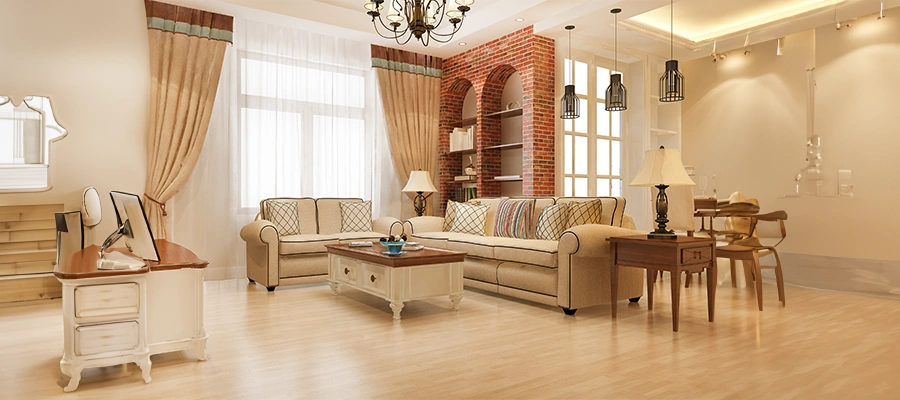
Want a cosy and inviting stylish living room? Although having a cosy throw is undoubtedly a benefit, you’ll need more than that to change a formal space. Your living room needs to be less precious and more approachable for a multipurpose area that is kid- and pet-friendly, as well as a centre for movie marathons, game evenings, and lots of meaningful conversations, especially as everyone curls up for the winter.
A smart balance of comfort, practicality, and personal taste is needed when designing a cosy and fashionable living room. Whether you’re planning a living room renovation or beginning from scratch, Brick & Bolt can assist you in creating a room that embodies your style and provides the cosiness and warmth everyone desires. Come, let’s explore this blog.
Turn Your Living Room Into A Cosy Haven
Another thing that makes you feel welcome is a cosy sitting room. It’s where you relax after a long day, have people over, and make moments with your family that will last a lifetime. By adding the right design elements and finishing touches, you can make your cosy living room a warm, inviting, stylish place.
Enjoy the Comfort of Cosy Living
When creating a cosy living room, it’s all about finding the right balance between comfort and style. Start by adding soft sofas and seats that are too big for you, topped with fluffy pillows and throw blankets. To make a space feel cosy and close, choose rich, warm colours like caramel, burnt orange, and deep burgundy.
Bring Modern Elegance Into Your Space
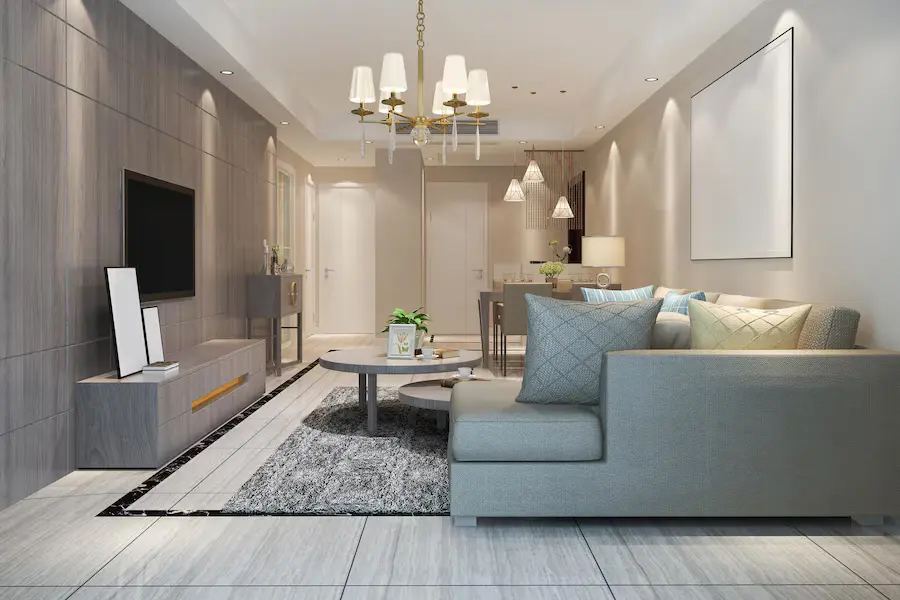
Getting cosy is very important, but you don’t have to give up style to do it. The style of modern living room decor is sleek and classy, combining ease with modern design elements in a way that looks great. You can make a space that feels both stylish and welcoming by using clean lines, simple furniture, and statement pieces.
Check Out Different Types Of Interior Design Styles Living Room
There are so many interior design styles out there that it can be hard to pick the right one for your living room. There is a style for everyone, whether you like the classic grace that never goes out of style or the sleek minimalism of modern living room decor. Different design styles, like Scandinavian, Industrial, or Mid-Century Modern, can help you make a place that is truly your own and shows off your personality.
Add Class To Your Space With Stylish Touches
If you want to add a bit of sophistication, adding God worshipdesign elements to your living room can make the whole space look better. Think velvet, marble, and brass accents of high-end materials mixed with classic furniture and home decor. The little things, like fancy light fixtures and bold art, are what really make a room feel clean and high-class.
Living Room Remodelling Ideas Can Help You Make Your Dreams Come True
If you feel your living room needs a new look, you might want to consider renovation ideas. There are many ways to make it a stylish space that shows off your personal style and taste, such as updating the flooring and lighting, rethinking the layout, and adding architectural features.
Take Pleasure In Cosy Home Decor
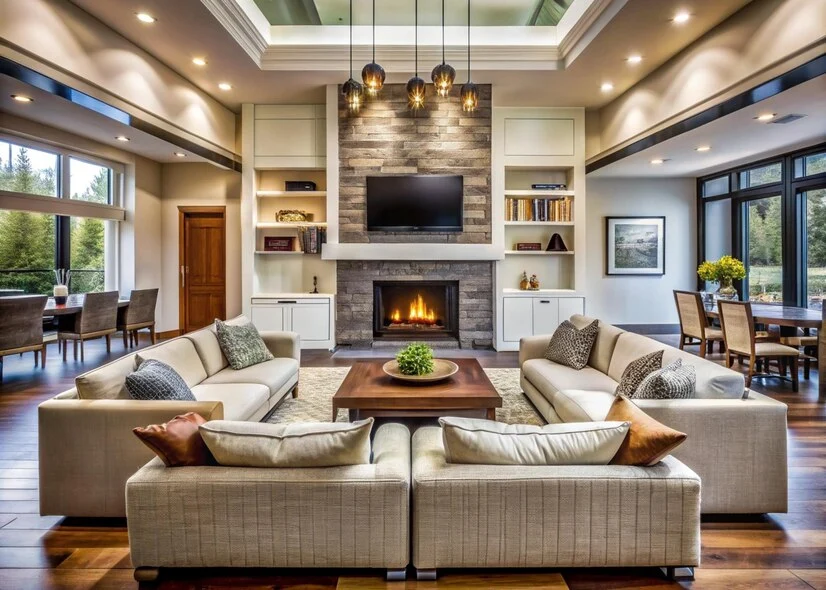
The goal of adding cosy home decor to your living room is to make you feel at home by making it feel warm and inviting. Adding personal touches and emotional items to your space can make all the difference in making it feel warm and inviting, whether it’s a roaring fireplace, a gallery wall full of family photos, or a cosy reading nook tucked away in the corner.
8 Trendy Ideas To Design Your Living RoomCosy
1. Establish Your Style
Determining your style is essential before you start the design process. Which style is more traditional and homey or more modern and minimalist? Which do you prefer? You may be drawn to contemporary design’s clean lines or the carefree vibe of bohemian decor. Knowing your style will help you choose the right furniture, paint colours, and decor pieces.
2. Examine the Color Scheme
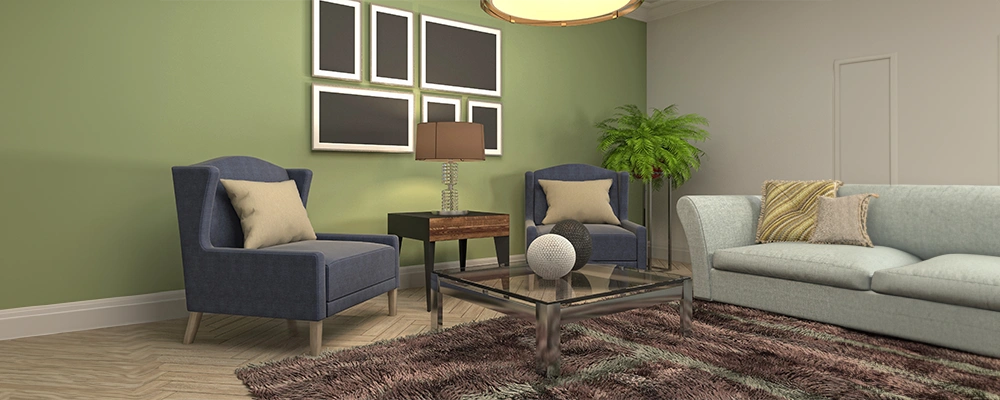
The living room colours you choose can greatly impact how it feels. Cool colours like blues and greens arouse peace and tranquillity, while warm tones like reds, oranges, and yellows create a warm and welcoming ambience. Neutral colour schemes are adaptable and can be accentuated with vibrant accents to create visual appeal. Feel free to experiment with colours that speak to you because the paint is temporary.
3. Make an Investment in Cosy Seating
Comfy seating is essential in any living room. In addition to offering a place to unwind, a well-chosen sofa and armchairs can set the tone for the overall décor of the space. Seek for items that combine comfort and style, and consider opulent and robust materials. A range of throw pillows can provide colour and texture, making the space feel cosier.
4. Lighting Layers
The right lighting is essential to creating a comfortable space. To create a cosy and inviting atmosphere, use a variety of lighting sources, such as candles, floor lamps, table lamps, and overhead lighting. Dimmer switches allow for softer lighting in the evenings and brighter lighting during the day, which can help change the mood of the space.
5. Use Textures
Textures provide a living space with depth and visual appeal. Combine wood, metal, glass, and textiles for a rich, layered look. Textured cushions, cosy throws, and soft rugs can all contribute to a more comfortable atmosphere. Ornamental pieces like pottery and baskets also add warmth and character.
6. Make Your Space Unique
The hobbies and characteristics of the people who reside in the house should be reflected in the living room. Add sentimental pieces to your decor, such as family portraits, antiques, or collections. Whether it’s a professionally done piece, a kid’s sketch, or something you made yourself, art may also provide a personal touch.
7. Function-Based Optimisation
Although design is vital, your living room must also be practical. Consider the room’s flow while placing furniture to encourage natural movement and conversation. If your living room serves as a home office or a place for kids to hang out, consider storage options that keep the area tidy and orderly.
8. Introduce Greenery
Any space can benefit from the colour and vibrancy that plants provide. A big potted tree, a few little succulents, or an assortment of herbs greenery may add comfort to your living area. In addition to adding aesthetic value, plants can enhance air quality, increasing your room’s comfort level.
Creating a fashionable and comfortable living room doesn’t have to be difficult. Design a stylish and welcoming home by using these suggestions and adding pieces that express your taste. After all, a living room should feel like home, so think about what brings you and your family comfort and happiness.
Placing furniture correctly is crucial, whether designing a new home or remodelling an old one. While improving comfort and beauty, well-thought-out placement produces a beneficial traffic flow. On the other hand, careless furniture placements break the room’s flow, impede your way of life, and hide otherwise excellent design aspects.
During your next home improvement, consider these basic yet imaginative guidelines when choosing where to place each piece of furniture with consideration. If you want to improve the atmosphere in your living room, bedroom, or any other room in your house, learning how to arrange and place your furniture can help you make the most of the space you have.
Essential Tips for Furniture Layout
1. How to Arrange Your Bedroom Furniture Layout:
Your bedroom should make you feel calm and at ease. Set up the furniture in a way that helps you rest and sleep better. Position the bed against the wall that will draw attention to it and leave enough room around it for people to move around. To keep your space clean and organised, use bedside tables and other storage options.
2. Importance of Furniture Layout:
Arranging furniture in the right way can make a room feel bigger, cosier, and better organised. By placing furniture in a smart way, you can make places for different activities while still allowing people to easily move around.
3. Think About the Size and Shape of the Room:
Before you start arranging the furniture, you should think about the room’s size and shape. When you’re in a small area, choose furniture that takes up less room and works well. However, bigger rooms are more flexible so that you can try out different layouts in creative ways.
4. Pay Attention to Functionality:
Figure out the room’s main purpose and arrange the furniture to support that purpose. In the living room, for example, the sitting area should be good for relaxing and having fun, while in the bedroom, the bed should be the main place to unwind.
5. Living Room Furniture Layout
The living room is the heart of the home, where family and guests gather to do many things. Try out different setups until you find the one that works best for your room. You could choose symmetrical plans for a classic look or asymmetrical layouts for a more unique feel.
6. Ideas for a Small Living Room Furniture Arrangement:
Making the most of the space you have is important in small living rooms. Choose furniture that can be used for more than one thing, like sofa arrangements or nesting tables, to get the most out of your space without losing style. Use wall-mounted shelves or hanging cabinets to make the most of vertical space and free up floor space.
7. Use Room Planner Tools:
Use the power of technology by using room planner tools to see how your furniture will look in different arrangements before you decide. With these tools, you can try out different arrangements and get a good idea of how the different pieces will fit in the room.
8. Be open to change:
Don’t be afraid to try new things and rearrange your furniture every so often to give your place a new look. Your furniture arrangement should change along with your wants and tastes. Stay open to new things and change your style to fit them.
9 Tips For Furniture Placement in Your Home Design
1. Frame with Furnishings
Couches, loveseats, or matching chairs can enclose comfortable living room seating arrangements. To provide private conversation nooks, angle pieces gently toward a central coffee table. Likewise, for a polished look, pair beds with dressers and nightstands. Anchoring furniture clearly defines functional zones.
2. Control the Flow
Determine the best traffic flow patterns in space by mapping its functional elements and architectural aspects. While ensuring enough passageways, strategically place important pieces like beds, couches, desks, and tables as anchors. Avoid obstructing windows, doors, or corridors with prime circulation lanes blocked by furniture placement.
3. Draw Attention to Furnishings
Arrange furniture so that it visually directs attention to the focal points you want to emphasise in the space. For instance, arrange a sofa to face the fireplace directly or tilt lounge chairs. Or lift your gaze to the lovely garden vistas beyond your windows. As a result, the sightline is appealing.
4. Become Closer
Arranging furniture in groups that invite social gatherings facilitates close social engagement and communication. For example, set a dining table with plenty of elbow space and chairs. Place inward-facing floating chairs near a fireplace in a living room or workplace meeting area. The proximity of furniture fosters meaningful moments.
5. Take Light and Views into Consideration
Arrange furniture setup to enjoy beautiful outside views from glass doors and windows. Place a desk, breakfast table, or reading nook next to a lovely garden view. Arrange seats with your back to picturesque scenery. Place task chairs close to windows for natural light to help reduce eyestrain.
6. Add Bulky Items Firstly
Start by arranging large furniture pieces such as media cabinets, king beds, sectionals, china cabinets, and large desks to form the “bones” of your floor design. Chairs, ottomans, and side tables are good examples of smaller, mobile decor elements to fill empty spaces. This well-balanced design avoids a crowded look.
7. Permit Usable Space
Give family members enough space around furniture to move freely without running into each other’s knees or feeling confined. Give yourself plenty of space, for instance, when sitting at dining tables and opening dresser drawers or equipment doors.
8. Combine Using Uniform Layouts
The design of adjacent rooms with an open concept should flow continuously. From room to room, arrange beds, desks, and seating spaces along the same wall. Even though the furniture types differ, this repetition creates a sense of oneness.
9. Empty and Occupied Areas in Balance
To avoid congestion and highlight the architecture, it is recommended to maintain a balance between furniture groups by creating pockets of light open floor space. On the other hand, bare, empty, vast spaces are not cosy. Look for the “just right” amount of anchored and open zones, similar to Goldilocks.
These basic yet imaginative furniture placement guidelines assist you in creating useful areas with a cohesive aesthetic. Proper placement turns disorganised spaces into well-thought-out living spaces. More ideas for a home or workplace layout? The architects at Brick & Bolt have decades of experience with furniture planning. Reach out to us right now to improve your surroundings!
In the construction industry, becoming an independent contractor can be an exciting and intimidating experience at first. Working through construction contracts is one of the most important tasks. These documents can be confusing since they are frequently filled with legalese. However, they are essential to protecting your rights.
This Blog, Brick & Bolt, aims to inform you about the essentials and a few more things that must be included in every building contract.
Important Elements of a Construction Contract
All contracts have to have certain things, no matter what kind or how they are put together. While standards such as AIA and ConsensusDocs offer basic contracts you can utilise, there are other situations where you may require a customised construction contract. A product or service must be provided in exchange for payment or another consideration with monetary worth in a contract. A construction contract’s other fundamental component is the deadline for finishing the service or goods.
Construction Contract Structure
Every construction contract begins with a section that specifies the parties involved: the buyer, the company or individual receiving the services, and the individual or corporation providing the services. Legal names and the dates when the agreement begins or ends must be included in these parts. The contract must also specify the party’s location and a description of the services. The following sections will discuss each contracting party’s responsibilities and the extent of their labour in purchasing specialised goods or services.
Legal and Associated Terminologies
The contract terms should also specify how any claims will be handled and the procedures that both parties must adhere to if any do. Arbitration is typically the preferred route to resolve conflicts before taking the matter to an AHJ or local law authority. The conditions under which disagreements can be brought before the opposing party must be clearly stated. Make sure you read and comprehend the section on indemnity agreements. The language in this part is suitable, so the contractor will cover the cost of defending and protecting the owner against bodily injury and property claims made by insurance companies.
Guarantees and Conditions
After the project is finished, you should provide a warranty, which may cover labour, materials, or both. This section clearly defines what material and workmanship warranties mean and when those warranties will begin to run. The duties specified in the scope of work will be those the owner wishes to carve out to hire a third party. Ensure your warranty begins on the day you receive the substantial completion and lasts for the specified time. Manufacturer’s warranties for systems, materials, and equipment must be included in the warranty package. Ensure that warranty items from punch lists are defined precisely for your advantage.
Reimbursement and Payment
Cost-related problems and conflicts can arise from construction contracts that need to specify which services or expenses are to be compensated. Verify if there is a list of the costs for which you qualify for reimbursement and information on how those charges are handled and invoiced. This section contains the payment recurrences, which tell you how often and quickly you will be paid. Suppose a T&E kind of contract is being used. In that case, including the description and all necessary information to process the invoice and any supporting documentation, such as timesheets and invoices, is crucial. Payment arrangements can be made during order placement once the material is delivered to the location. Allowing contractors to overhead and profit during change order requests is another frequent clause added to some building contracts.
Construction Area
The most important, and perhaps the most ambiguous and disregarded of all. There should be more in this section than what your estimator currently offers. To ensure no scope gaps, take advantage of the chance to inquire about and receive confirmation from the Owner regarding the accuracy of the drawings and documents supplied.
This section will specify the tasks to be carried out and how the contractor will do them. A project free from disputes must have a well-defined scope, making collecting payments and accepting services easier. This section will outline the construction contract document’s precedential order and the analysis that must be done if there are any differences.
Duration in Building Agreements
There is little time left. That expression is frequently used, but are you aware of how it affects your project or contract? It denotes that the project’s duration is specified from beginning to end and that any modifications or extensions that may result in additional time must be handled and recorded. The project must include its start and finish dates, calendar or work days, and the requirements to finish it on schedule. It is also necessary to add wording in this section describing possible justifications for asking for time extensions.
Unexpected Events
Items about force majeure and excusable incidents are crucial components in every construction contract. Here is where you safeguard your interests against uncontrollably occurring unforeseeable circumstances. Events outside your control, such as strikes, storms, fires, and legislative changes, can substantially impact how well you execute the project and cause serious delays from which you may be unable to recover.
At the very least, the following must be covered under the force majeure section:
What must be completed following an incident
Who is authorised to halt work or cease performance?
What transpires over a longer length of time
How to solve the issue
Causes for contract termination
Schedule
While some believe this belongs under the time part, you will benefit from this area. Your payment terms depend on you explaining how long it will take to finish the project and major milestones. The timetable is a strong weapon to defend your project in case of a delay or impact on your completion date. The contract’s schedule section should contain precise wording regarding the process of obtaining delay damages. The timetable should indicate a contract violation and how the delays impacted the timeline.
Contract Negotiations For Construction
Construction contract negotiations can be difficult processes requiring close attention to detail. Before engaging in negotiations, it’s critical to have a complete grasp of the project’s scope of work, schedule, and budget. Before the contract is signed, all parties involved should agree with the project’s objectives and expectations, and any possible problems or risks should be recognised and resolved.
In summary, understanding construction contract’s many forms, typical terms, and legal ramifications is vital because they are a vital part of the construction business. A successful project can be ensured and risk reduced by carefully planning and drafting a construction contract, regardless of whether you are the owner, contractor, or subcontractor. You can better negotiate the intricacies of building contracts and safeguard your interests by adhering to the rules described in this article.
Don’t worry; Brick&Bolt has written a detailed blog about building contractors. To read more, click on the link below: