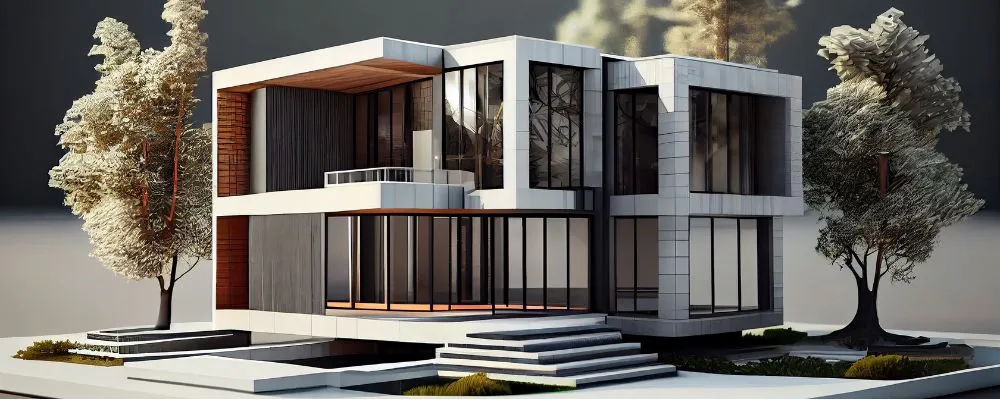
Duplex house construction is mainly done on two or more floors, with an internal staircase connecting them.
How many floors we want to construct impacts the cost of the duplex house construction.
Duplex House Construction Cost in Bangalore
Duplex house construction costs depend on size, style, and material variations.
The duplex house construction cost is also influenced by location, with some areas having higher construction costs.
Duplex house construction cost is mainly divided into two parts:
1. Construction materials Estimate
2. Finishing materials Estimate
Price Per Square Foot To Build a Duplex in Bangalore
In Bangalore, the cost of building a duplex starts at Rs 1535/sq. Ft., including GST. A side-by-side duplex is the most expensive, regardless of whether it is a single-story or a double-story.
The additional costs are for the roofing, framing, and plumbing.
The foundation is 9% of the total cost of the project
Walls and exterior finish 6% of the total cost
Roof-10% of the total cost.
For your information, a 30*40-foot plot, or 1200 sq. ft., is the most common and demanded site size in Bangalore, and the most basic construction, including the plot cost, can be covered in approximately 90 lakhs.
Factors that Affect the Duplex House Construction Cost in Bangalore
A breakdown of various components will give you a general idea of where your money is spent on the project.
Architecture Fee
If the project is large, the architect can charge 3 to 5 per cent of the total cost. Hiring an architect can be expensive, but it can be worth every penny. If an experienced and reputed architect is involved in building your Duplex house, you won’t have to worry, as a reputed architect will work efficiently and make sure the project is done on time.
Project Schedule
The cost of Duplex house construction can increase if the time of the project takes longer. The duration of the construction project affects the price.
Materials
It includes shipping charges. The cost of materials keeps changing, and materials are the most expensive aspect of construction. If the materials are delivered on time, construction gets on time. The material cost calculator will help you understand the cost of materials before construction.
Design and Planning
A well-planned design reduces the project’s hurdles. For example, a planned design of a duplex house will increase the project’s efficiency.
Fees of the Structural Engineer
It is very important to get skilled professionals to complete the task. A qualified engineer will charge a lot of money for the project. Therefore, a team of experts like architects and civil engineers will work efficiently and ensure they complete the project on time.
Approval/Plan Sanction from BBMP BDA
Approvals are important when starting a construction project in Bangalore; otherwise, they can be considered illegal. A certain amount has to be paid as registration charges to the concerned authorities.
Condition of Construction Sites
Heavy rain can change the site of the construction, causing soil erosion, which can increase the cost of duplex house construction. It can also increase the project’s duration, making it more expensive. Site conditions such as poor soil conditions and wetlands can also increase the project cost during the construction phase.
Priorities of the Client
It’s the client’s money that is used in the construction. Hence, it is the most important factor affecting a duplex house’s cost.
Labour Rates
Labour rates keep changing from time to time. If the project gets delayed, the labour rate will increase, increasing your duplex house construction cost.
It is always advised to add at least a 10% contingency to the total cost of duplex house construction for unforeseen expenses.
Evaluate your plan by reading the factors that affect the duplex house construction cost with a cost estimator and take your final decision. Learn more about duplex house construction and floor plans.
A duplex house usually has three bedrooms, a dining and kitchen area, and a balcony or small terrace. It gives the feeling of a bungalow or villa but within a smaller plot area.
If you want to construct your duplex house in Bangalore, contact Brick & Bolt and make your dream come true.
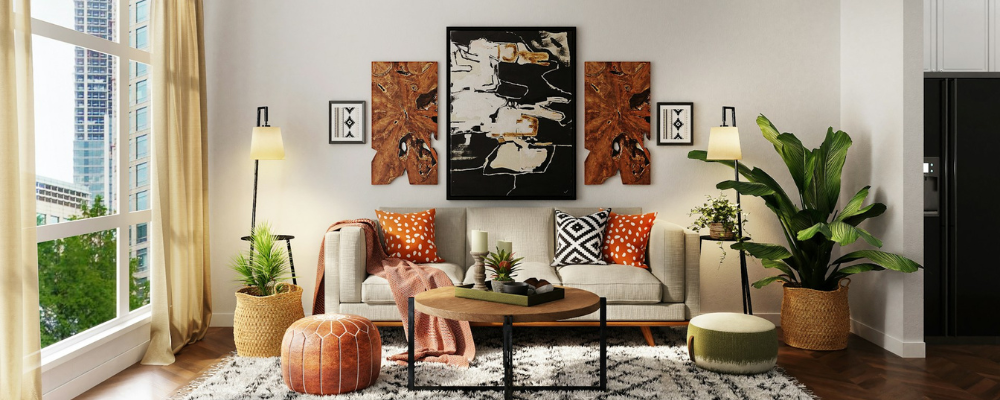
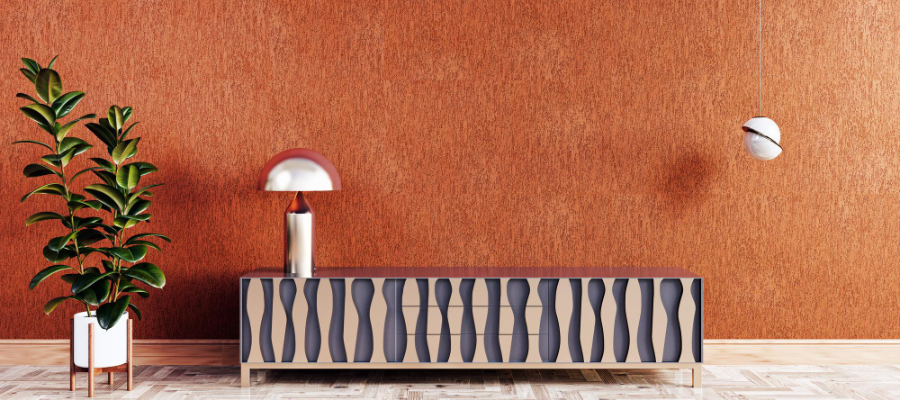
Decorating a space enhances the aesthetics and makes it more appealing. Blank walls give the best space for decorations, and even decorative pieces are accentuated when added to the wall. Those empty walls are filled with opportunity and can themselves when painted boldly and brightly with different techniques, act as a beautiful element. The way the walls are styled reflects your taste and interest as they make you surrounded by the things which you are fond of or adore.
Hence, Brick & Bolt presents the top wall decoration ideas in this blog to elevate your space with elegance and style.
9 Best Wall Decoration Ideas
The following are the best wall decoration ideas for your home.
1. Breaking the Painting
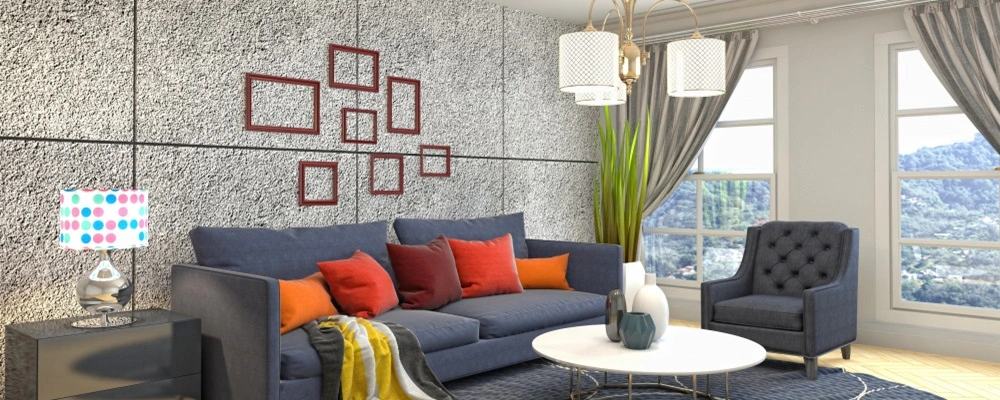
This is one of the trending kinds of wall décor in which you can divide a painting into different parts and then place it on a wall with little space in between those paintings.
2. Indoor Plantation
Various plants grow in the shade. Blending the green within the interiors is a perfect choice to improve the quality of space. It makes the wall visually appealing too.
3. Use of Antiques
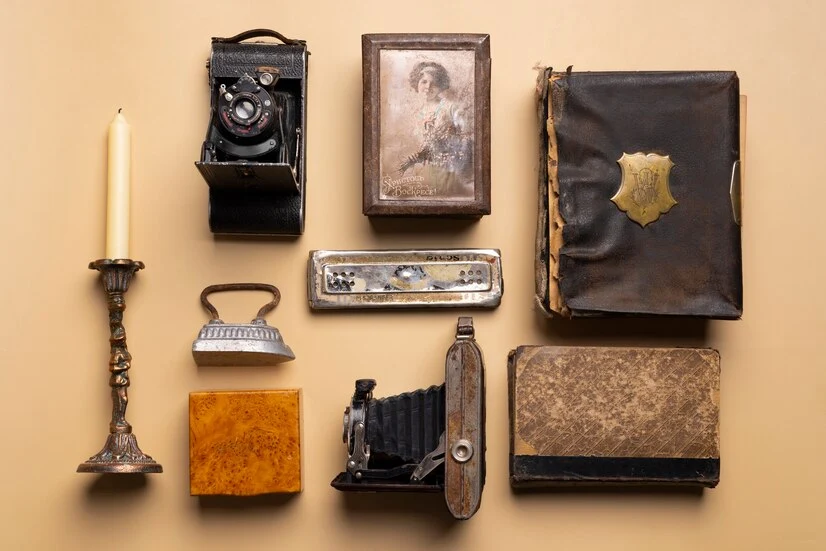
By hanging antique pieces on the wall, you can give your living room or entrance a rustic and eclectic feel.
4. Use of Artwork
You can hang any artwork on the blank wall, depending on how you want to style the space. It can be traditional or modern, small or large, a clock or a canvas, or just sculptured pieces. Another idea is that you can place a large artwork such that it covers almost the entire wall. This would act as the center of attraction in the room.
Instead of hanging a painting or artwork, you can hang contrasting-colored fabric on the head of the bed or even in the living room. This would give the room a traditional feel and also make it brighter.
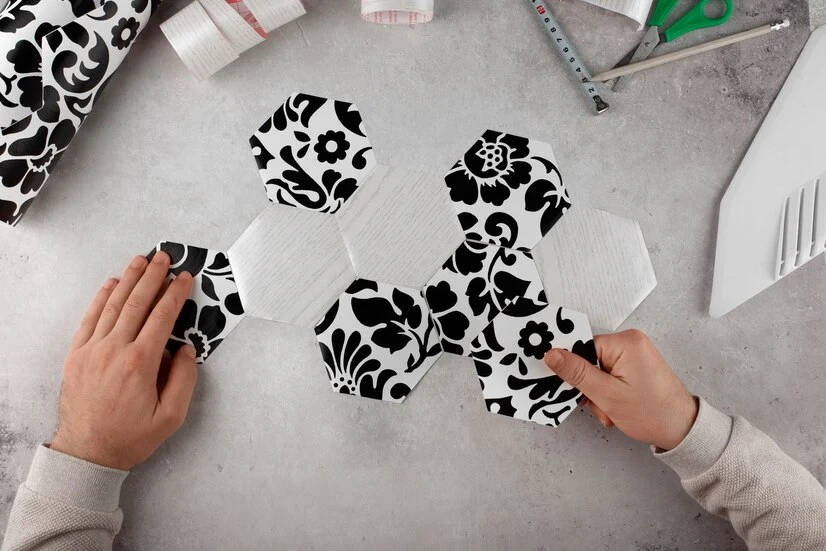
7. Creating Patterns with Stencils
Patterns can be created on some portions of the wall that give an unusual and unique impact on the wall.
8. Wall Painting
Wall painting is an art. Simple and minimal painting on a wall usually in black in contrast to a lighter colored wall.
9. Embracing with Mirror
Placing a mirror not only reflects a lot of light and makes the room look brighter but also adds to the aesthetic of the room. A single large mirror with a dark decorated border acts as a piece of artwork itself. Moreover, even patterns can be made over mirrors and then placed on the wall enhancing the beauty of the space.
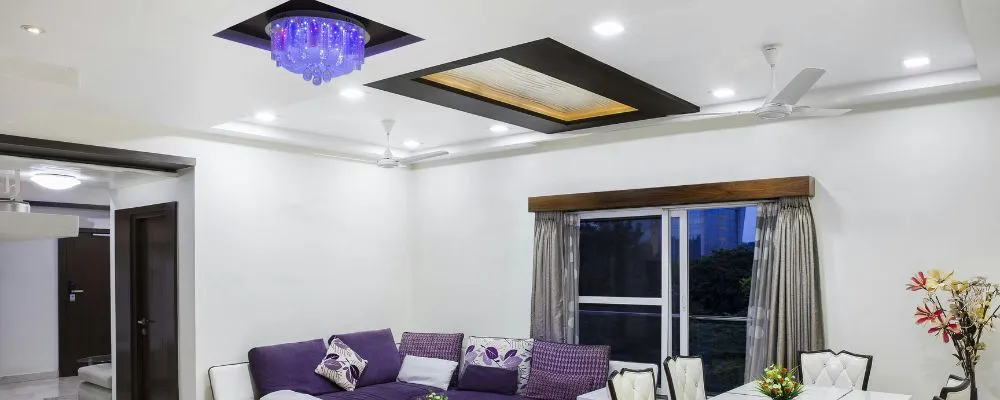
When designing a room, people often forget about the ceiling. However, a well-constructed false ceiling can totally change how a room looks and feels. A stylish false ceiling can add grace, depth, and charm to any room, whether you’re renovating or building a new home. In this blog, Brick & Bolt will discuss all about false ceiling including false ceiling types, costs, advantages, and 10 creative false ceiling ideas for your home.
What is a False Ceiling?
A false ceiling is a type of finish that is used to hide holes, gaps, or rotting wood in an attic or cellar. In addition, it can be used to finish a ceiling for a low cost. False ceilings are made from things like cheap sheetrock that can be hung on top of the current ceiling joists to make it look like the ceiling goes on forever.
In older homes where the ceiling joists may not be in good shape, false ceilings are often used. For a smooth finish, you can paint them or leave them unpainted. One more thing they can be used for is to insulate the basement, which helps keep the temperature stable and lowers energy bills.
Types of False Ceilings Used In India
All over the country, different types of false ceilings are used, made from traditional materials and new, cutting-edge technologies. Let’s look at some of the most common choices:
TYPES
DESCRIPTION
ADVANTAGES
USES
ESTIMATED COST
Plaster of Paris(POP) False Ceiling
In India, POP false ceilings have been a popular choice for many years because they have a smooth finish and can be used to make patterns that look like they belong together. Plaster of Paris is a flexible material that can be shaped and formed into many different forms. This makes it perfect for decorating walls . People love POP fake ceilings because they are cheap and can make any room look more elegant.
1. A smooth finish with few seams or joints. 2. Allows for very detailed and complex drawings. 3. Very quick and simple to set up. 4. Can be painted or decorated to make it look better.
People often use POP false ceilings in their homes, offices, banquet rooms, and other business settings.
₹75 – ₹120 per square foot
Gypsum False Ceiling
Many people like gypsum false ceilings because they are flexible, long-lasting, and affordable. Because they are made of gypsum boards, these ceilings are very flexible and can be easily shaped and designed in any way you want. Gypsum false ceilings have a smooth finish and can fit lighting systems and patterns with a lot of detail.
1. It is simple to set up and keep up. 2. They are fire-resistant, and they can be used in both homes and businesses. 3. Excellent at blocking out noise. 4. You can paint or design it to match any style of room.
Gypsum false ceilings are commonly used in homes, businesses, hotels, restaurants, and stores.
₹60 – ₹120 per square foot
PVC (Polyvinyl Chloride) False Ceiling
1. They are great for moist areas like bathrooms and kitchens because they don’t absorb moisture.2. Easy to clean and don’t need much care.3. You can choose from a lot of different patterns and finishes.4. A cheaper alternative to standard building materials.
1. They are great for moist areas like bathrooms and kitchens because they don’t absorb moisture. 2. Easy to clean and doesn’t need much care. 3. You can choose from a lot of different patterns and finishes. 4. A cheaper alternative to standard building materials.
False ceilings made of PVC are often used in homes, businesses, schools, hospitals, and other places that are wet.
₹30 – ₹80 per square foot
Metal False Ceiling
Metal false ceilings look sleek and modern, which is why they are a popular choice for modern rooms. Metals like aluminium, steel, and tin are often used for false ceilings. Metal ceilings come in a number of styles, such as brushed, powder-coated, and reflective. They are known for lasting a long time, being strong, and not rusting.
1. Strong and long-lasting. 2. They can be used in high-risk areas because they don’t catch fire. 3. Surfaces that reflect light can make a room brighter and lighter. 4. It can be put up over long distances without any support structures.
Commercial buildings, airports, metro stops, shopping malls, and factories often use metal false ceilings.
₹80 – ₹150 per square foot
Wooden False Ceiling
Wooden false ceilings are popular in high-end homes and businesses because they add warmth, grace, and natural beauty to any room. When making a false ceiling, people often use wood veneers, plywood, and solid wood boards. Timber ceilings can be stained, painted, or left unfinished to show off the wood’s natural grain and structure.
1. It makes rooms look more expensive and classy. 2. Excellent at insulating against heat and sound. 3. Allows you to make your own shapes and patterns. 4. Environmentally friendly and long-lasting choice.
Hotels, spas, restaurants, heritage buildings, and luxury houses all use wooden false ceilings all the time.
₹150 – ₹300 per square foot
Fibre False Ceiling
The false glass ceiling gives the room a sense of openness and clarity by letting natural light in.
1. They are highly durable. 2. Fire resistance and low maintenance. 3. They are also good for the environment, which makes them a popular choice for modern living areas.
They are commonly used in residential, commercial, and industrial settings for their durability and versatility.
₹52 – ₹121 per square foot
Glass False Ceiling
When it comes to ceilings, a glass false ceiling is one that is made completely or mostly of glass tiles or panels. When these pieces are put up below the main structural ceiling, they make a striking and modern design feature.
Glass false ceiling gives the room a sense of openness and clarity by letting natural light in.
Glass false ceilings are popular in modern homes, offices, and business buildings because they look stylish and make rooms feel bigger.
₹350 – ₹600 per square foot
10 Creative False Ceiling Ideas for Your Home
1. Accents with Wooden Beams
Adding wooden beams to your false ceiling will give your home a rustic look. Exposed wooden beams give rooms a warm and unique look, making them like cosy houses. You can choose natural wood finishes for a more realistic look, or you can paint the beams to match your home’s style.
2. Geometric Patterns and Shapes
Adding geometric forms and patterns to your false ceiling will make a strong statement. Geometric ceilings, like triangular patterns or diamond patterns that stand out, give any room a modern look. You can make custom shapes from gypsum boards or plaster of Paris (POP) to make a unique centre point in your room.
3. Cove ceilings with lights
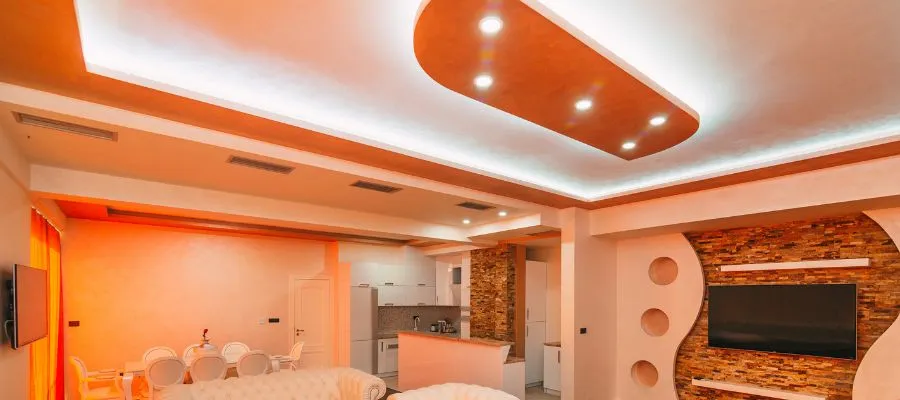
Cove ceilings that are lit up and give off a soft, ambient glow can completely change the look of your space. Installing concealed LED strip lights around the edges of the ceiling makes for a stunning visual effect that lifts the mood of the room as a whole. Pick lights with warm or cool tones to match your room’s style and create the right atmosphere for relaxing or having fun.
4. Skylight Designs
Skylight effects that make it look like the sky is lit up by the sun let you bring the outdoors inside. To make it look like natural light is flowing through the clouds, translucent ceiling panels with LED backlighting should be installed. This unique design feature makes any room feel bigger, which makes it perfect for bedrooms and living rooms.
5. Elegance in Metal
False ceilings made of metal that look glamorous and expensive are the height of modern elegance. You can pick from different metal styles, like silver, gold, or copper, to match your home’s style. For a sleek and modern look, metallic tiles or panels can be put down in a single, uniform piece or in a pattern with lots of small pieces.
6. Beautiful Paintings
With paintings that show off your own style and creativity, you can turn your ceiling into a work of art. You can have a skilled mural artist paint complex patterns, landscapes, or abstract shapes directly on your false ceiling. This one-of-a-kind method gives it a touch of artistic flair and makes it the centre of attention in any room.
7. Themes Based on Nature
False ceiling themes that are based on nature can bring the beauty of the outdoors inside. To make a calm and peaceful space, choose PVC panels with botanical prints, leaf designs, or vine patterns. These designs are based on nature and make you feel calm and balanced. They are great for eco-friendly homes or people who love nature.
8. Illusions of Sight
Play tricks on your eyes with fake ceilings that don’t follow the rules of perspective. To add depth and interest to your design, choose 3D panels or tiles with geometric designs or trompe-l’oeil effects. These interesting designs will surprise and delight people inside your home, making them talk and admire you.
9. Integrated Lighting System
Integrated lighting systems that fit in with your false ceiling give you the best of both worlds. You can use recessed LED spotlights, pendant lights, or track lighting fixtures in the ceiling design to provide task lighting, draw attention to building features, or show off artwork. This unified approach to lighting makes your room look better overall while also making it more useful and creating a better mood.
10. Elegance in Simplicity
When it comes to minimalist false ceiling designs, less is more. These styles accept both simplicity and sophistication. To make a classic and modest look, choose clean lines, soft textures, and neutral colour schemes. Minimalist ceilings make other design elements in the room stand out while giving your interior decor a consistent background.
A well-designed false ceiling can make any room look and feel better. It can also add style, class, and usefulness to your home. There is a false ceiling choice for every taste and budget, whether you like the classic beauty of gypsum, the smooth look of pop, or the many uses of PVC. By looking into different brands, styles, and prices, you can find the perfect way to make your living space match your own unique tastes and style.
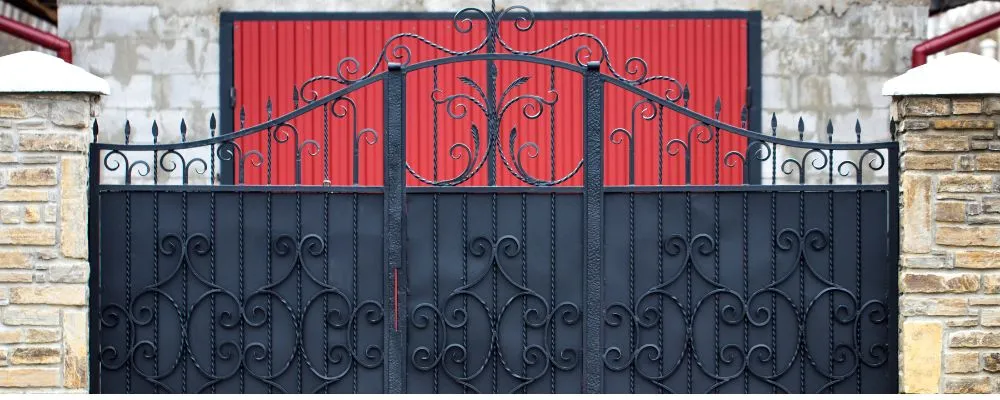
The Gate is the entry point of the home. It is given to the compound wall or the home’s exterior wall. The gates are available in various designs made of different kinds of materials. In India, they are made up of either wood or steel. The Wooden Gate for Compound walls is uncommon today as it is expensive and non-durable. Steel gates are usually made of stainless steel or mild steel. Stainless Steel Gates are lustrous and silvery. They are left unpainted to maintain the property of lustrousness. Meanwhile, the Mild Steel gates are painted or powder-coated to enhance their appearance.
Types of compound gates Based On The Materials Used:
Wooden Gate: These gates are made of wood and require high maintenance. They are not suited in high moisture zones as the wood swells when absorbing water. It also degrades periodically by fungus or termites if not serviced properly. The three types of wooden gates are:
Teak Wood Gate.
Sal Wood Gate.
Plywood Gate.
Steel compound Gate: These gates are made of Steel or Iron by experienced fabricators. They are relatively more durable than wooden gates. However, they are prone to corrosion and require periodic service. They are relatively affordable, and the cost per gate depends on the designs and materials used. A typical 4-foot gate starts from Rs 6000.
Stainless Steel Gate: Stainless Steel Gates are stylish and durable. They are less prone to corrosion and require less maintenance. However, they are relatively costlier as they are made only by Stainless Steel fabricators, and the material cost is high. Always ensure the thickness of the Steel Tubes used in the Gates. (Adopt 16 gauge or 1.29mm as the minimum thickness of the tubes used.)
Mild Steel Gate: The Mild Steel Gates can be made of CR tubes, HR tubes, MS steel bars, or a combination of all unique designs.
Cold Rolled Tube Gate: These tubes are available in various shapes and sizes, with gauges ranging from 19 to 14. (Adopt 16 gauge or 1.29mm as the minimum tube thickness for better durability.)
Hot Rolled Tube Gate: These tubes are less used and relatively economical. However, they cannot be powder coated as their texture is relatively rough and can only be painted.
Non-tubular Gate: These are made from steel bars, gate channels or angles.
Integrated Tubular Gate: These are made from tubes associated with steel bars and angles.
Aluminium Gates: These are made of aluminium and are rarely used, as the strength of aluminium is not as good as steel.
Types Of Compound Wall Based On The Serviceability Used:
The following are the Types of compound wall gates based on the serviceability used.
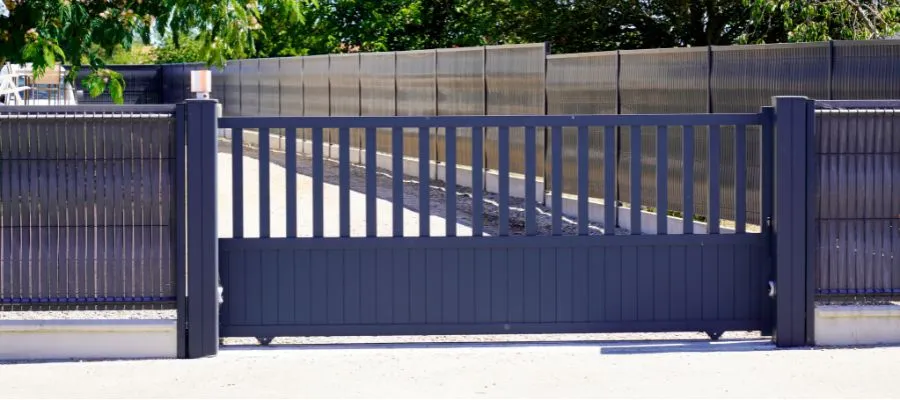
Sliding gate for compound wall:They are the most stylish and space-oriented gates and they are best suited for car parking and are the handiest variety of gates.
Track Sliding Gate: It will have a track laid with steel bars or angles that run the Sliding part. It is prone to track jams and requires periodic maintenance.
Cantilever Sliding Gate: This is a sliding gate with wheels, a track, and a cantilever projection. It has no track jams and requires less maintenance.
Telescopic Sliding Gate: A sliding gate can be split into parts of track sliding gates. It’s best suited for places where there is a paucity of space for opening the gates.
Swing Gates: These gates are the most used and are widely available.
Single Swing Gates: They are single-leaf gates with either clockwise or anti-clockwise openings.
Double Swing Gates: They are double-leaf gates with either exterior or interior openings.
Collapse Gates: These are old-fashioned gates and require periodic maintenance. They collapse themselves before sliding through the track provided to open the gate.
Folding Gates: These double swing gates fold at certain intervals to fit cars inside them. They are usually provided at places where there is ample space for opening the gate.
Building a house from scratch can be an exceptionally stressful experience. However, if done correctly, it can be a dream come true. After all, you will live the rest of your life in this house. So, it’s always best to do your homework and make informed decisions. If you want to start building your home, the first big question you need to address is your budget. Find ways to reduce the cost of construction.
In this blog, Brick & Bolt will explain the cost of house construction in Bangalore.
How to Decide on a Budget for Your House Construction?
To optimise your house construction cost, you need at least a basic understanding of what you want – by that, we mean you need a basic floor plan. This plan will have an overview of your home construction process and should include the following details:
No of floors
The total square foot area of your house
Figuring out this beforehand will help you reduce house construction costs and make your life easier.
Here are all the factors that can significantly impact your house construction cost.
The Plot Size
Choose a plot that has the potential for development in the future. Always know where you are investing your money before buying a plot. Also, check for water and electric connections near your plot.
The plot level is also very important, so choose a plot that is reasonable compared to the road level.
1200 sq. ft. or 30*40 sites are the most common plot dimensions seen in Bangalore.
The Building Material
Buying materials from local vendors will reduce transportation costs, as transporting construction materials is expensive. Go around and evaluate the rates of raw materials in the market by yourself. One of the most important factors is using materials of top quality but at the best price. This saves on the cost of building materials and also reduces the cost of house construction. Material selection has a direct impact on house construction costs.
Design Cost
Give your home a rustic feeling and cut down on construction costs. Fly ash bricks instead of red or other bricks will lower the price. The versatile design style works in almost any interior, from the bathroom to the living room.
In recent years, we have become more drawn to classic and contemporary homes, and wooden finishing on walls and flooring is one great alternative and also a very cost-effective way of making the home look beautiful.
A professional designer or architect will optimize the building design, which will reduce overall house construction costs.
Labour Cost
House construction costs also depend on the labour contractor’s rate in Bangalore, which varies from Rs 230 to Rs 280/ sq. ft. This is the average construction cost per square foot area in Bangalore. The house construction cost also depends on the location, which includes brickwork, concrete work, etc.
Building Contractor rates in Bangalore vary from Rs 1499 to Rs 1719/sq. Ft., which includes plumbing, electrical, flooring, etc. Also, before opting for a team or a contractor, it is recommended that you analyse whether they will be able to meet your requirements.
Also, avoid using aesthetically pleasing concealed wiring, which will increase labour costs.
At least 15% of your house construction costs must be kept aside for clerical works such as sanctioning the plan and meeting the BWSSB and KEP charges.
Optimising the amount of money spent on these details can help you ensure you don’t overshoot your target house construction cost per square foot.
House Construction Cost Optimisation Tips
Keep the Design Simple
Less is more. Your home is your personal space, whether it’s the design of the house or the kind of furniture that should be intimate and personal to you. Keep the design close to your personal preference.
Pre-plan and know exactly how you want to set up your home space according to your taste and style.
Don’t Make Changes Mid-way
If you decide to change the blueprint for the project once the construction has started, it could cost you a bit.
You cannot certainly be an expert when it comes to the construction of a house, but you can paint the walls and work on polishing the window frames and doors to cut down on house construction costs. Remember to keep the design simple, and don’t go all out.
Try out Prefabrication
Modern technology is used to reduce the cost of house construction. Use prefabricated parts to build your home. This not only reduces the cost but also the time needed for construction.
Color & Putty
If you want to cut the cost, then go for a lime-based colour. Put the colour twice to make the walls look brighter. Don’t use putty. Putty is used when you need a smooth wall, or the wall is very rough.
Average Construction Costs per Square Feet in Bangalore
The most important thing you need to remember is that house construction costs are primarily calculated per square foot. The current per-square-foot construction costs in Bangalore may vary from Rs 1465/sq. Ft. to 2060/sq. Ft., including GST.
The Usual Specifications For Rs 1465 per Square Foot Are
The foundation will be 4 inches thick.
Cement ACC/ Birla of 53 grade
Plaster of 12mm thickness with 1:4 mortar
Underground sump-4000 liters
Bathroom accessories include washbasin, shower, etc.
Get in touch with a construction company in Bangalore to build your dream project. They will bring your imagination to life and lower your construction costs. Meeting Experts and sharing your needs, requirements, and payment process will save you time and energy. Making the house construction process reliable, simple, and transparent is what you should look for in a team.
The cement companies in India are very profitable, mainly due to the country’s thriving real estate market. As a result, cement plays an important part in the building industry; hence, it is essential to know cement manufacturers and their prices. If you are searching for the best cement companies in India, your quest ends here.
Brick & Bolt provides a comprehensive list of cement companies in India to help you select the best cement brands for your construction project. So, let’s explore the best cement manufacturing companies in India.
Top Cement Companies in India
The following is the list of the best cement companies in India.
Ambuja Cement
Ultratech Cement
ACC cement
Dalmia Cement
Ramco Cement
Prime Gold Cement
Birla Cement
Let’s explore all the cement brands and their prices:
1. Ambuja Cement
Ambuja Cements Limited was previously known as Gujarat Ambuja Cement Limited (GACL). This is a well-known cement manufacturing company in India. They market and sell clinker and cement to both local and international markets. The company has established a notable presence in western India and has earned a positive reputation for making environmentally friendly products. Ambuja Cement’s manufacturing facilities are located in Rajasthan, Himachal Pradesh, and Gujarat.
Ambuja Cement prioritizes sustainable development and plays a leading role in protecting the environment, conserving energy, and fulfilling social responsibilities. The company has been honoured with numerous prestigious awards, such as the National Award for Excellence in Water Management and the Energy Conservation Award.
The company offers different types of cement and products, including Ordinary Portland Cement (OPC), Portland Pozzolana Cement (PPC), and Ready Mix Concrete. With so many factories and an extensive distribution network, Ambuja Cement can ensure its products are widely available throughout India. Ambuja cement provides exceptional strength and durability to structures; hence, many reputed home construction companies in Hyderabad, like Brick & Bolt, use Ambuja cement in their home construction projects.
Ambuja Cement Prices
Ambuja PPC cement is often priced between INR 400 and INR 450 per 50 kg bag, whereas Ambuja OPC cement generally ranges in price from INR 450 to INR 500 per 50 kg bag. These costs may vary depending on a number of variables, including the location.
2. Ultratech Cement
Image Source: Ultratech Cement
Ultratech Cement is one of the major cement manufacturing companies in India. They provide a wide range of cement products, including Portland Blast Furnace Slag Cement (PSC), Portland Pozzolana Cement (PPC), and Ordinary Portland Cement (OPC). The company has gained a reputation for its modern products and commitment to sustainability, resulting in various prestigious awards and accolades. The Ultratech OPC 43 Grade Cement is their best-performing cement product, ideal for a variety of building applications. It offers exceptional compressive strength and is suitable for various projects, including residential and commercial applications.
Ultratech Cement Prices
UltraTech PPC cement is often priced between INR 400 and INR 450 per 50 kg bag, whereas UltraTech OPC cement has a typical price range of INR 450 to INR 500 per 50 kg bag. Nevertheless, the prices can fluctuate based on the geographical area and the cement’s accessibility.
3. ACC Cement
ACC Limited is the top cement company in India. The company manufactures various cement types, such as Ordinary Portland Cement, Portland Pozzolana Cement, and Portland Slag Cement. One of their popular products is the ACC Gold Water Shield Cement, which is specifically formulated to safeguard homes against moisture and leakage.
With over eight decades of existence, ACC Limited has made a name for itself in the Indian cement market. The corporation has a vast network of R&D facilities, sales offices, and cement production facilities throughout India. ACC Limited has built a good reputation for providing excellent products, innovating solutions, and upholding sustainable business standards.
ACC Cement Prices
The types of cement and the region in which it is supplied are two variables that might affect the cost of ACC cement in India. The average cost per 50 kg bag for OPC ranges from Rs. 360 to Rs. 460. The price range for PPC is between Rs. 350 and Rs. 470 per 50 kg bag.
4. Dalmia Cement
Dalmia Cement is the best cement company in India and is part of the Dalmia Bharat Group. The company’s headquarters are in New Delhi, and it has been in the industry since 1939. To satisfy the varied needs of different construction projects, whether residential, commercial, or industrial, Dalmia Cement offers a large range of cement products.
People choose Dalmia Cement OPC 43 because of its remarkable compressive strength, remarkable resistance to environmental factors, and long-lasting durability. Their product is made using premium raw materials and advanced technology, ensuring consistent consistency and unparalleled quality.
Dalmia Cement Prices
The cement brand provides different types of cement, such as Dalmia PPC Cement and Dalmia Cement OPC. For Dalmia Cement OPC 43, the pricing range is often INR 370 to INR 430 per 50 kg bag, and Dalmia Cement OPC 53 is generally priced between INR 390 and INR 430 per 50 kg bag. A number of variables, such as supply, demand, and location, may affect the price.
5. Ramco Cement
Image Source: Ramco Cement
Ramco Cement is a well-known cement manufacturing company in India. It was founded in 1961 and is based in Chennai. The company gained a reputation for producing a wide range of superior cement products to meet various building needs. Ramco Supergrade Cement is one of the company’s most popular cement products because of its outstanding strength and superior quality.
The cement brand produces various types of cement in addition to Ramco Supergrade Cement, such as Portland Pozzolana Cement (PPC), Ordinary Portland Cement (OPC), and Rapid Hardening Cement. With the most advanced cement production facilities strategically located across India, Ramco Cement ensures a steady and dependable supply of its superior products countrywide.
Ramco Cement Prices
The price range for Ramco Cement PPC is typically between INR 380 and INR 420 per 50 kg bag, while Ramco Cement OPC is priced between INR 420 and INR 460 per 50 kg bag. The pricing can fluctuate depending on various factors, including location, demand, and supply.
6. Prime Gold Cement
In 1984, Shri Pradeep Aggarwal commenced Prime Gold. With his assurance, he achieved his aims and established himself in the building industry. His mission was to provide a stable and secure livelihood. In the construction industry, Prime Gold is a well-known brand and one of the leading producers of building materials. Their reputation as the top cement manufacturers company in India comes from the high-quality products they provide.
Prime Gold Cement Prices
The average cost per 50 kg bag for Prime Gold PPC cement ranges from Rs. 380 to Rs. 400. The price range for Prime Gold PSC cement is between Rs. 390 and Rs. 410 per 50 kg bag. A number of variables, such as supply, demand, and location, may affect the price.
7. Birla Cement
Birla Corporation Limited, founded in 1919, is the main enterprise of the MP Birla group. It has an extensive history as the best cement manufacturing company in India and has been in the business for more than eight decades. It supports the development of the nation’s infrastructure and operates throughout the nation. It has around 17 cement-manufacturing plants and about 90 ready-mix concrete plants.
The organization employs a huge number of highly qualified workers. The company produces various cement types, including Birla Cement Samrat, Birla Cement Unique, and Birla Cement Perfect Plus. Among all of them, Birla Cement Samrat is one of the company’s best-selling cement products and is renowned for its remarkable strength and longevity.
Birla Cement Prices
For every 50 kg bag, Birla Cement Samrat costs between INR 390 and INR 430 on average, and Birla Cement Unique costs between INR 360 and INR 400 on average. A number of variables, including supply, demand, and location, may affect the price.
Conclusion
On a final note, cement is a vital construction material and plays a crucial role in your structure’s durability and strength. However, as we all know, the cost of cement also impacts the overall construction cost. Hence, choosing the best cement for your house construction that fulfils your construction requirements and also fits into your budget is crucial. Hence, for your convenience, you can use Brick & Bolt’s cost estimator to estimate your house construction cost and get an idea of the overall cost; it will help you choose the best cement brand for your construction project without affecting your budget.
The terrace is more than just a place to be outside; it’s an empty surface that you can use to make a beautiful place to relax, have fun, and connect with nature. Whether you have a large rooftop or a small balcony, there are many ways to improve your outdoor living experience.
Whether you have a large rooftop or a small balcony, terrace gardening is a great way to make your yard look like a little paradise. It makes your outdoor area look nicer, gives you a place to relax, and gives you fresh flowers and food. Let us look at some creative terrace gardening ideas that will help you make a green and alive space.
Vertical Gardening:
Vertical gardening is a way to save space, make a space look better, and get more plants in a small area. To make a beautiful green background, put up upright planters or living walls. To make a rich and interesting vertical garden, pick plants with a range of colors, textures, and ways of growing. Mix flowering vines, succulents, herbs, and decorative leaves to make your deck look better and serve more purposes.
Container Gardening:
You can grow plants in pots, planters, and hanging baskets, which makes container gardening great for terraces. Try out various container sizes, shapes, and materials to make a yard oasis that is both interesting and welcoming. Arrange the plants so that they get the most sunlight and room. To make the most of vertical room and make a beautiful display, think about stacking or arranging things in tiers.
Theme Gardens:
To give your terrace a unique look, think about using Mediterranean, Zen, or tropical yard themes. Bring your chosen theme to life by adding the right plants, accessories, and decorations.
Edible Gardens:
You can enjoy growing your own food by making an edible garden on your balcony. Food plants like herbs, veggies, fruits, and flowers can be grown in pots or raised beds. When you get fresh food from your own yard, it feels great. If you want your balcony garden to be useful and last a long time, add perennial foods that you can eat, like blueberries, strawberries, and dwarf fruit trees.
2. Terrace Flooring Options
The terrace flooring is not only helpful, but it’s also an important part of the design that sets the tone for your outdoor area. Choosing the right flooring is a big part of making a patio that people will want to use and enjoy. It can improve the look of the area and give you a nice spot to relax. Here are some types of floors that you can use for your outdoor living space in different ways:
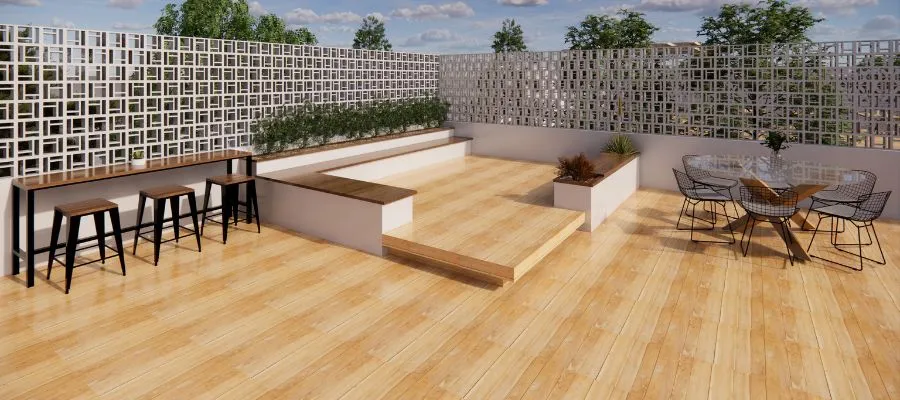
Wood Decks:
Wooden decks can make an area feel warm and welcoming. Choose long-lasting trees like teak or cedar for terrace flooring that lasts, or think about eco-friendly composite decking for a deck that doesn’t need much upkeep.
Tiles and Pavers:
In order to get a sleek and modern look, you can choose tiles made of ceramic, stone, or concrete, among other things. You can make your terrace and patio flooring unique by playing around with patterns, textures, and colors.
Artificial Turf:
Give your terrace flooring the lushness of a lawn without the work of upkeep. Artificial grass is soft on the feet, simple to clean, and gives outdoor activities a bright green background.
3. Outdoor Decorating Ideas:
Furniture Arrangements:
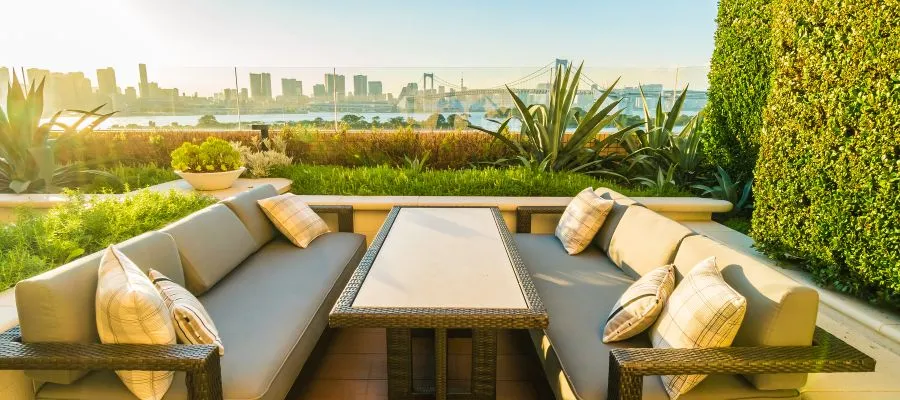
Investing in easy seating, like lounge chairs, hammocks, or outdoor sofas, will help you make cosy spots to relax. For extra comfort and style, add pillows and throws that can stand up to the weather.
Solutions for Lighting:
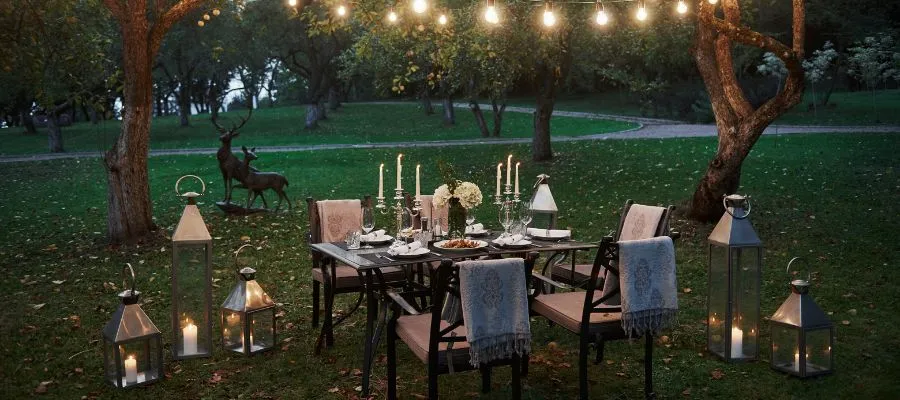
With smart lighting, you can use your terrace space later at night. Add string lights, lanterns, and LED lights to make a magical environment that makes people feel better.
Add materials as Accessories:
Outdoor rugs, throw pillows, and curtains can add colour and texture. Pick fabrics that won’t get damaged by the weather and are easy to clean. To make your place more unique, try out different patterns and prints.
4. Design of Balconies and Terraces:
Terraces and balconies are like adding on to your living room inside, giving you more places to relax, have fun, and connect with nature. No matter how big or small your balcony or terrace is, with some careful planning, you can turn them into comfortable retreats that show off your style and make your life better. When designing balconies and outdoor living spaces, here are some important things to keep in mind:
Multifunctional Layout: If you don’t have a lot of room, make the most of it by creating a terrace that can be used for many things. Include pieces of furniture that can be used for more than one thing, like storage benches or folding tables.
Privacy Screens:
Privacy screens or walls can help you feel more private. You can use trellises with climbing plants, bamboo screens, or decorative panels to make a private area in your outdoor living space.
Water Features:
A small waterfall, pond, or other water feature can add the soothing sound of water running. In addition to making the area feel calmer, it also brings in birds and other animals, which makes your terrace even more beautiful in its natural state.
In conclusion, transforming your terrace into a stylish and useful outdoor living space is a fun project that lets you enjoy the great outdoors to its utmost. If you love gardening and interior design or just want a quiet place to relax, these creative ideas will help you make the most of your terrace, no matter how big or small it is. Let your creativity run wild as you start to change the look of your terrace!
Everyone is excited about building their dream home perfectly and stylishly to attract other’s attention. For that, they will check every nook and cranny of the house to be perfect. One of the most important considerations when completing house construction is the combination of paint colours. Most homeowners focus more on exterior house colours because everyone will focus mainly on the exterior home first. Choosing the right colour combinations for your home can give it a new look, whether you want it to look modern, contemporary house colours, or classic.
In this blog, Brick & Bolt will guide you through selecting the best colour combinations for your house exterior. We will get ideas from new styles and traditional designs to ensure your home stands out in the best ways.
Importance of Understanding the Impact of Exterior House Colours
Before discussing specific colour choices, it’s important to understand how much exterior colours can change your home’s looks and worth. The proper combination can bring out the best in your house architecture, make it more interesting, and even change people’s moods. On the other hand, choosing the wrong colours can make your home look bad on the street and even lower its value.
Top 7 Trending Exterior House Colours
Let’s look at some of the recently popular colours that people are choosing for the outside of their homes:
1. Earthy Neutrals:
Warm beige, soft brown, and subtle grey are all earthy tones that are popular for painting the outside of homes. These colours make you feel warm, stable, and in tune with nature, which makes them classic choices for a wide range of building styles.
2. Sophisticated Blues:
Shades of blue, from soft colours to deep navy tones, are being used more and more to give the outside of homes a touch of class and peace. Lighter blues can make a room feel clean and open, while darker blues add depth and style.
3. Modern Greys:
Grey is a modern and flexible colour for the outside of homes, with people choosing sleek and modern shades that go well with simple designs. The shades of grey in this group, from light dove grey to charcoal, give the outside of any home a sense of sophistication and timeless grace.
4. Bright Accents:
Many homes have basic colours for the main body, but bright accent colours are being used to make a statement and give the outside more personality. Bright colours like deep greens, bright yellows, and rich reds are used on doors, windows, and trim to make focal points that stand out.
5. Natural Greens:
Shades of green are becoming more popular as outdoor house colours because they look like the lush beauty of nature. Soft sage greens, grassy tones, and deep forest colours can make you feel calm and connected to nature, especially in homes that are close to nature.
6. Warm Whites:
Crisp white is a classic choice for the outside of a house, but warmer shades of white are becoming more popular. Creamy off-white and soft ivory tones make a space look warm and inviting while also keeping it clean and classic.
7. Accents in Black:
Black is becoming a trendy accent colour for modern exterior home paint that adds a bit of class and drama. Black details, like door or window frames, create contrast and visual interest, which makes the house look better from the street.
Classic House Colour Combinations
Even though styles come and go, some colour combos will always look classy and nice on the street. Classic colour choices, like soft beige with white trim or muted grey with black accents, look classy but understated and go with many different types of architecture. You can use these neutral colour schemes as a base and then add your style through landscaping, building details, and decorative items.
How to Choose the Right Exterior Colour For Your House
When choosing a colour plan for the outside house painting colour combination, it’s important to think about things like the style of the building, the landscape around it, and the overall look of the neighbourhood. A Victorian-era home might look great with a bright colour scheme of jewel tones, while a modern, simple home might look great with a one-colour scheme of shades of grey. Use your home’s architecture, like the bricks, roof materials, and window styles, to help you choose colours and make a composition that flows well.
Common Things to Think About the House Colour Combination
You should think about how the colour will work in real life as well as how it looks. How long the paint lasts and how well it works can be affected by the weather, how much sun it gets, and how often it needs to be fixed. Shades that aren’t as dark tend to soak up heat and fade faster than shades that are, so they work better in warmer places. Putting good paints and finishes on the outside of your house will also help keep it safe from the weather and make your colour scheme last longer.
How to Paint the Exterior of Your House the Right Way
When you’ve chosen the right colours for your home, it’s time to use paint to make your ideas come to life. Getting ready well is the most important thing you can do to get lasting professional results. Initialise by thoroughly cleaning the outside area and fixing any flaws or damage. Use high-quality primers and paints made for outdoor paint colour, and put on several coats for the best coverage and longevity.
In conclusion, the exterior paint of your house is a blank board where you can express yourself and show off your style. By carefully choosing the right colour combos, you can improve the look of your home from a distance, bring out its architectural features, and make it a nice place for people to live and visit. You can make your home a real work of art with the right colour scheme, whether you like things that are bold and modern exterior paint colours or classic and modest.
Building and designing a dream home is a very personal thing, even though you might be surprised to know how much your interiors affect your moods and general well-being. Hence, you should carefully consider how you design your living spaces because it can affect your daily mood, especially because you spend so much time at home relaxing, working, and having fun. But, when you ever think about interior design, the terms creativity and style might come to your mind first. However, you would be surprised to know that science also plays a role in interior design.
Expert interior designers typically adhere to guidelines based on particular elements and principles of interior design. And by maintaining the balance of interior design elements, you can achieve a visually pleasing interior. When these components come together harmoniously, a room’s functionality and appearance will increase.
Hence, in this blog, Brick & Bolt presents the 7 most important elements of interior design for in-depth knowledge of home designing so that you can design your home like a pro!
7 Elements of Interior Design
You should always consider the following elements when designing your home interior.
1. Space
In terms of interior design, a functional space is the basic element of interior design. A functional space serves as the foundation for any interior design. As a result, you must be fully aware of the available space and the intended use of each unique space. A functional space would have two types of spaces: a positive space and a negative space. A positive space would be occupied by furniture or fixtures, such as a dining set, sofa, or other furniture, and a negative space would be one that is left empty, such as a hallway or the space between a dining set and a sofa. Because each person will need a different space for different purposes, both spaces are determined by the needs of the user. However, you must maintain and balance both areas if you don’t want them to be too crowded or empty.
In addition, interior design allows you to work in three dimensions, which means length, width, and height. So, depending on your functional and design goals, you can either fill or leave this three-dimensional space empty.
2. Colour
Colours are the key elements of modern interior design. It would be the most important thing to notice after the space’s functionality, as the aesthetic relationship between a living and non-living object is represented by colour. Colour selection can also reflect a person’s psychological attachment to the space’s usefulness.
Before choosing a colour scheme for your room, consider how you will use the space and your activities in that room. Second, keep in mind that light can change our perception of colour, so think about how your chosen colour will appear during the day and at night in both artificial and natural lighting. Finally, take the space’s dimensions into account. You can use lighter or brighter colours in smaller spaces to create an illusion of a large space. Darker shades can provide a larger area and a strong sense of dimension.
Three characteristics set each colour apart: Shade, Value, and Intensity. To execute various colour combinations or pairing adjustments, you need to understand these three factors thoroughly. For instance, light earth tones, such as beige, light brown, light warm grey, etc., would be a great option for a bedroom because they are a harmonious blend of neutral bases that reflect stability and are excellent for transforming any space into a peaceful haven with a cosy atmosphere.
3. Line
Lines that are dynamic, vertical, and horizontal aid in directing the eye and shaping a space. Harmony, unity, and contrast can be formed through the use of lines created by the structural design and furniture in the space.
Verticle Lines:
Features like windows and doorways create vertical lines that give off a sense of strength and freedom. Functionally speaking, highlighting vertical lines creates the impression that a space is taller. You need to be careful while using vertical lines to avoid feeling uncomfortable. They are frequently appropriate for use in offices, dining rooms, and foyers.
Horizontal Lines:
Tables and other surfaces produce horizontal lines that indicate efficiency, formality, and stability. Highlighting horizontal lines helps you elongate and widen a space while drawing attention to a central feature. However, exercise caution—overemphasising horizontal lines can give the room a lifeless, uninspired appearance.
Dynamic Lines:
Curved, zigzag, and diagonal lines are referred to as dynamic lines. Stairs are one example of a structure with these lines providing movement and energy. Dynamic lines are visually stimulating and hold our attention for longer. On the other hand, an excessive number of dynamic lines in a space can become overwhelming and cover up vertical or horizontal lines.
You should combine various lines to create balance. Normally, you can accomplish it by choosing a single, prominent feature line that best suits your needs and the mood you want to create in the room.
4. Form
Form refers to the room’s shape and the shapes of any items in it. It’s a unique design element of interior design. Put differently, it refers to the three-dimensional physical form of any object. Forms are typically classified as natural or geometric. Geometric forms are characterised by sharp edges and hard lines that often reflect a man-made appearance, whereas natural forms are more organic and appear to have been created by nature. You can maintain harmony and balance by combining forms of similar shapes, but confusion can arise if you use them with too many different shapes.
5. Light
Light is one of the key elements of interior design. Any space needs light, whether it comes from natural sources or artificial ones. The other components could not shine to their greatest extent without it. Beyond just serving a practical purpose, light also defines colour, texture, and mood in a space. There are three types of light: accent lighting, which highlights objects; task lighting, which serves a defined purpose; and mood lighting, which creates an ambience. When thinking about lighting, it is crucial to think about the activities that will take place in the space. Here, the quantity and quality should both be evaluated.
For instance, bright lighting is necessary for an office so that employees can see well and be attentive. Conversely, a more subtle approach can be taken when lighting is applied in the living room. You can make a space much more versatile by applying a dimmer. It is always important to consider natural lighting, which can be controlled by strategically placing windows, doors and even mirrors.
6. Texture
The physical surface of an object or finish is referred to as its texture. There are two types of texture: actual texture and visual texture. Texture noticed by the eye is referred to as visual texture. Stated differently, this is the sense of texture that arises from merely looking at an object. Usually, this effect takes the shape of a pattern. Real or tactile textures have three-dimensional qualities and can be seen or felt.
Though texture is a frequently overlooked feature, it can really give the space a special touch. Similar to combining patterns and colours, you can combine textures to create a soft sense of depth in a room. Consider smooth, coarse, and glossy; texture can add interest and detail to anything, from fabric to accessories to furniture, to make it visually appealing. In short, it provides a roomy feeling.
7. Pattern
Similar to texture, you can use a pattern to enhance the appeal of a space by combining it with colour. The use of repeating designs creates patterns, which are present in fabrics, wallpaper, rugs, and soft furnishings. Many types of patterns are available, including animal prints, geometric, pictorial, organic, and striped patterns. The ideal way to apply a pattern in a room is to start by considering the room’s dimensions and design. You must be careful while using patterns in small rooms to prevent the area from feeling cluttered.
Nonetheless, patterns that produce horizontal or vertical lines can be employed to enhance the impression of space. Although complicated designs with contrasting colours and lines may brighten a space, you can use them on the feature walls. Large patterns can thrive in a large area; they turn the space into a clear focal point. Hence, to maintain the room’s essence, you must figure out which style category of the pattern belongs to your space.
Conclusion
In summary, interior design is a fascinating art form that embraces unusual elements and rejects convention. It enables you to create a living space that is entirely your own by carefully combining different interior design elements such as space, colours, form, patterns, lines, lights, and textures. Your space will appear more functional and have a more pleasing appearance when these elements work well together. So, whenever you think about your home’s interior design, consider these elements and principles of interior design, which will assist you in giving your personal touch along with the comfort and aesthetic appeal to your home.
Building a new home can be exciting and stressful too. It’s better if we leave it up to the contractors, and hire a skilled house construction contractor.
A House construction contractor is someone responsible for constructing and renovating your house.
By hiring the right house construction contractor, you can avoid a couple of things which include:
Types of contractors for house construction in Bangalore
General Contractor for house construction
In Bangalore, the general contractors are responsible for hiring subcontractors who will be responsible for electrical works, painting works, and plumbing works. It is also mandatory for contractors to be on site regularly to track and inspect progress.
General Contractors usually manage a team of subcontractors who help in various types of work in the construction of your project.
Questions you should ask a general contractor
What qualities do they look for in subcontractors?
If he is licensed and insured?
How long will it take to complete the project?
Civil Contractors for house construction
Civil construction falls in the category of civil engineering which is all about designing, and constructing.
The rates of a civil contractor depend on the kind of work he/she will be responsible for as per your requirements.
A masonry work would cost you approximately Rs 350 to Rs 650/ sq. ft. and Rs 650 to Rs 1, 400/sq. ft. for tile works and simple flooring.
The scope of work for a civil contractor in Bangalore for residential projects includes the construction of high-rise buildings, stand-alone apartments, housing complexes.
Building Contractors for house construction
A building contractor is someone who can take care of several things during your house construction process.
Is it possible for you to continuously track the project?
If you are someone who cannot visit the site daily, then a building contractor is a perfect match for you.
Building contractors rate starts from Rs 1300 to Rs 1750.
A building contractor takes care of the plumbing work, electrical work, and all civil works. A building contractor will arrange the raw materials, vehicles, and many more.
Few responsibilities of a building contractor include:
A building contractor will get you the building plan,
He will get the required approval
He will get the building materials
He will supervise
He will be in-charge till the project ends
Building contractors rate starts from Rs 1300 to Rs 1750
Building Contractors or Civil engineers often play the role of a project manager and are responsible for all aspects of the project. They are also responsible for completing the project at the scheduled time.
**Warning
The disadvantage of hiring a building contractor is that the contractor may use low-quality materials that are relatively inexpensive and thereby increase their profit.
Labor Contractors for house construction
In the case of a labor contract, the house owner has to provide all the materials. The owner should have a labor contract agreement for house construction with a list of works.
The current labor contractor rates in Bangalore starts from Rs 260/sq. ft to Rs 360/ sq. ft.
In Bangalore, some of the works done by the labor contractors include:
Brickwork,
Fixing
Concreting &
Plastering etc.
In the case of a labor contract, the labor contractor works on a labor contract basis based on an hourly tariff. But you are responsible for providing all the raw materials to the labor contractor required for the construction of a project.
But the main question is are you aware of where and how are you going to get the raw materials?
Are you good at negotiating?
The advantage of a labor contract is that the owner can buy quality materials and has a choice on the brand and price.
For your information
The Bruhat Bengaluru Mahanagara Palike (BBMP) blacklisted 32 contractors for raising fake bills over civic works between 2008-2011
You can’t trust the quality anymore. So be careful of who you trust.
If you are looking for an end-to-end construction service provider in Bangalore talk to experts at Brick&Bolt.