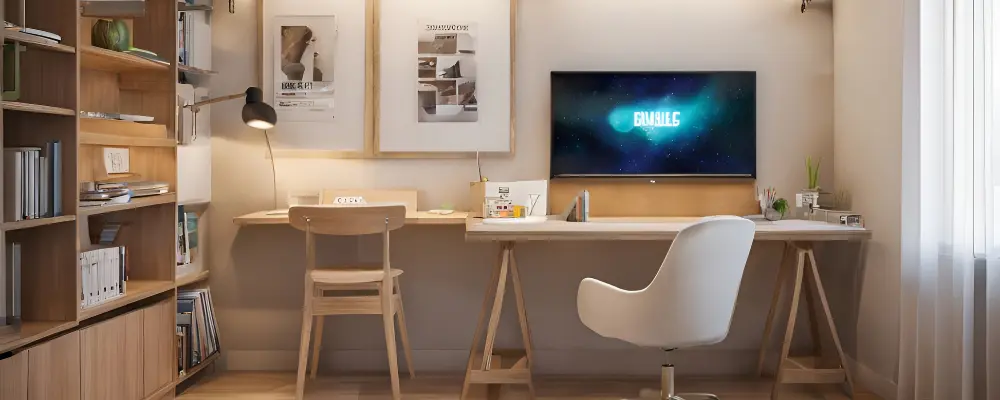
Interior designing ideas for different rooms of your house are very much available. But a personal fond space to decorate at home would be the study room. While the name already fills the right vibe, a few add-ons to your study room can make it one beautiful space.
Unlike living room design ideas , there are a very few suggestions available as standard for this special space. As the holiday sets to break its time to make some simple design for small room that can be customized to make it your own.
Creative Study Room Design Ideas
1) Storage
Pick open book shelfs and tables that come with inbuilt shelfs on their sides and design your own labels to divide the space. In case you need extra space, you can opt for storage boxes that can be stacked on the table with creative self designed labels on them.
2) Bean bags
While these fit in almost any room you pick in your house, they will be perfect for a study room. Along with style they also offer a relaxing effect while you enjoy your favourite book. They will go well with your Interior designing ideas.
3) For the bibliophile
If your love for books is never ending then choose large shelfs to store your treasure. For those going to a gigantic and dreamy study rooms a classic wooden shelf will always stand as a choice. Today you can also pick from easy to assemble shelfs in vibrant colours.
4) Your own cork board
You can attach a cork board to the wall to pin your lists and decorations. You can also add you best pictures from your achievements that will get you motivated.
5) Paint them bright
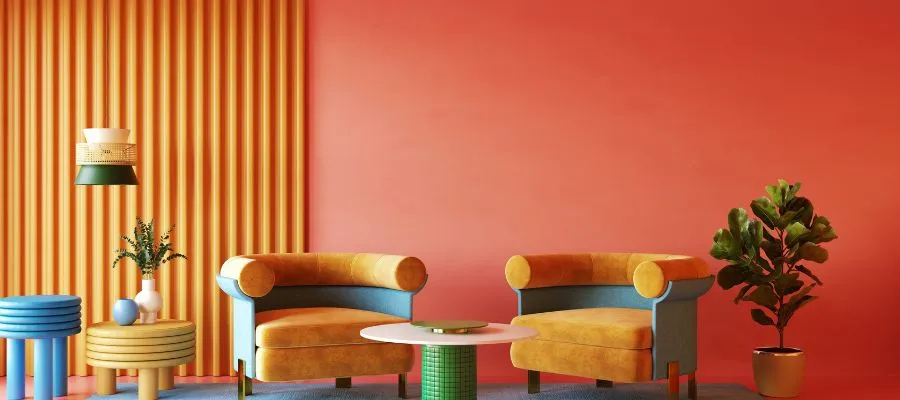
A bright colour to your study room can be a great experiment. You can add complimenting furniture that will reflect the essence of the room.
6) Posters and holders
Study room designing can take in some a beautiful collage of the best posters. One can also pick a mug with a great quote and use it as a stationary holder. Choices can also spread to picking wooden carved pieces as wall hanging that can get your energy back each day with its motivational quotes. For a perfect finish add some small festival lights to them.
7) A design for small room
While most of us do not come with a dedicated study room, it is an essential part of a home. So instead of converting your bedroom space look for a comfortable nook like may be under a staircase which is spacious enough to hold a book shelf and a table. Now you can decorate the space with basic stationary in hanging baskets, a foldable lamp and preferably a foldable table that can be go easy on the small space.
8) Leisure space
Apart from being the place to study, study room can also be a great place for other leisure activities such as music. So, make space for your musical instruments or gaming equipment’s. You can wall hang them if space permits.
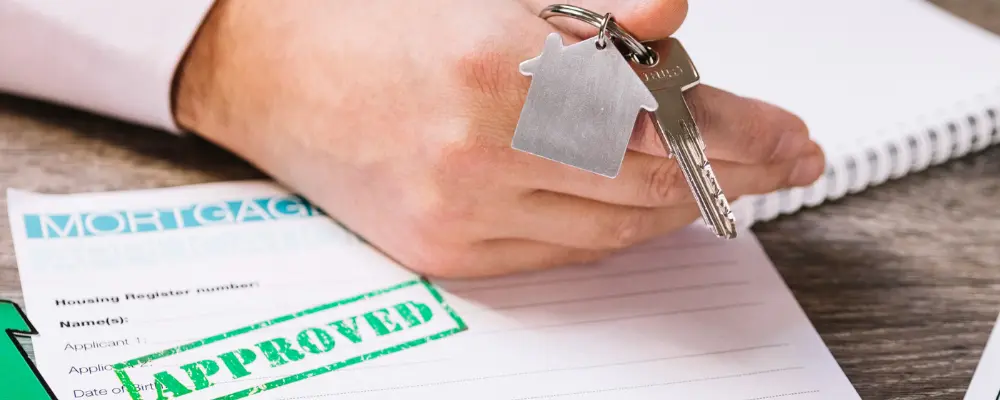
Before starting a building construction the owner must make sure that he has obtained all the necessary building plan approvals from the concerned authorities. A building construction that is done without any building plan approvals will lead to demolition or huge fines.Site preparation is equally important based on the building plan which is also followed by an inspection by government officials.
To get a building plan approval in Bangalore, you must first know the KHATA of your home.
KHATA Certificate
KHATA is a legal document needed by property owners in Bangalore and it is issued by the Municipal Corporation in Karnataka to compute property taxes. It includes all the important details such as:
The owner’s name
Location
The plot size
Property identification number etc.
A KHATA has two elements:
A Certificate: KHATA certificate is required for property transfer and property registration.
An Extract: A KHATA extract has all the details of a property.
Plots are further classified into three types:
1) A KHATA
A KHATA is a document that has the details of the property such as the plot size, location, built-up area, etc. A KHATA means it’s legal property, and you have the right to construct it. A KHATA owner has to obtain all the necessary permissions from the BDA, BESCOM, and BWSSB.
2) B KHATA
B KHATA is issued when a property has pending property tax dues to be cleared. It is a temporary certificate that needs to be converted to A KHATA. B KHATA is issued when a property has pending property tax dues to be cleared. It is a temporary certificate that needs to be converted.
3) Panchayat KHATA
Panchayat plan approvals are an easy process. Depending on the jurisdiction, the authorities has to approve it.
Gram and taluk panchayats give approvals for construction on land less than one acre.
For more than one acre of land, the plan approvals are given by the Directorate of Town Planning (DTP)
BMRDA and BIAAPA are also responsible for plan approvals for villages falling under their jurisdiction.
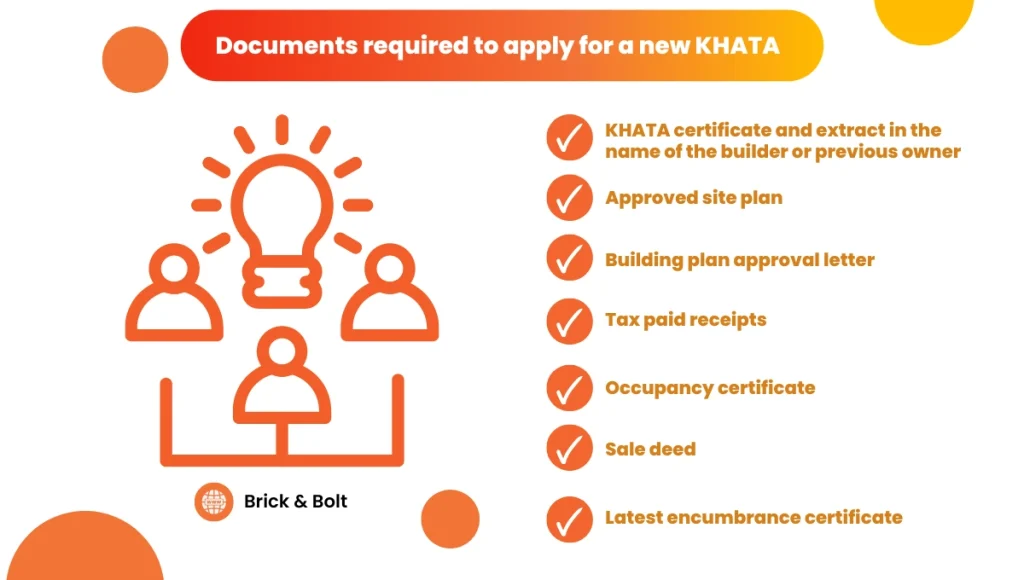
Documents required to apply for a new KHATA
KHATA certificate and extract in the name of the builder or previous owner
Bangalore has two bodies that approve building plans for projects. It is mandatory to get your plans approved by these authorities.
If you fail to take approvals your construction will be considered unauthorized and can be demolished by the concerned bodies.
These bodies are:
BBMP-(Bruhat Bangalore Mahanagara Palike)
BDA- (Bangalore Development Authority)
BBMP Plan Sanction in Bangalore
The BBMP approves new building constructions within its jurisdiction and issues letters to builders/property owners as building plan approvals for the construction of a new building, after verifying all documents and legal requirements.
BDA Plan Sanction in Bangalore
It is the principal planning authority in Bangalore. As a regulatory body, it will approve the layouts in lands, and approvals will be done through BDA. The BDA plan sanction charges vary on the project whether it’s a villa, or apartment, etc.
Now you can also get agents in Bangalore to get the BDA building plan approval done with all the required documents.
How to Submit Building Plan Approval Application
You have to first download the application form from the BBMP website. You can either submit it online or submit it yourself to the BBMP office with all the necessary documents. Also remember if you submit the form online it has to have your name, email id, and phone number. If the application process is done manually then a few important documents need to be submitted.
No objection certificate from all the concerned bodies (BBMP, BDA, BWSSB, KSPCB, ULC,)
Site plan
Encumbrance Certificate
Building plan
Foundation Certificate
Schedule 2 of the National Building Organization (NBO)
Development charge receipt
Additional information
If you are applying online with all the documents required for the building plan approval process will take approximately 30 days. Also, remember to get a printed acknowledgement from the BBMP office after submitting the application form.
After following all the steps the necessary certificates will be issued from the Concerned Authority.
BWSSB Water Connection Application Process in Bangalore
To get water and drainage supply in Bangalore:
You have to fill an application from a BWSSB service station.
You have to pay Rs 30 each for water and sanitary connection.
An occupancy certificate is required if the building is higher than G+3 floors.
Along with the application, you must also get permission to cut the road.
BESCOM Electric Connection Application Process in Bangalore
To get an electric connection in Bangalore.
You have to get an application form from the BESCOM office.
The application form is called the A form.
Rs 50 is charged as a registration fee along with the documents.
All the concerned authorities charge a certain amount in the form of building plan approval fees. For your information building Plan may not be mandatory.
Soon, you will not need building plan approval for residential properties if the size of the site is less than 40×60 sq. ft. The Bruhat Bengaluru Mahanagara Palike (BBMP) has proposed to the state government.
BBMP(Bruhat Bengaluru Mahanagara Palike) plan approval charges 2024
The BBMP (Bruhat Bengaluru Mahanagara Palike) plan approval charges for 2024 are calculated based on the guidance value of the land. The fee is set at 0.5% of the guidance value per square meter of the property. For instance, if the guidance value of your land is ₹1,00,000 per square meter, you would pay ₹500 per square meter as the BBMP plan approval fee. These charges apply to residential, commercial, and industrial building plans.
FAQs
1. What is the Building Plan Approval Process in Bangalore?
The building plan approval process in Bangalore is a series of steps. Local authorities must follow these steps. They ensure new buildings meet city rules and standards. It involves submitting documents, paying fees, and obtaining clearances before starting construction.
2. Which authorities are involved in the building plan approval process in Bangalore?
The main authorities are the BDA, BBMP, and BMRDA. You may need more clearances from BESCOM and BWSSB.
3. Can I apply for building plan approval online in Bangalore?
Yes, the BBMP and other local authorities have online portals. You can use them to submit your building plan applications, upload documents, and pay fees. The online system helps streamline the process and provides status updates.
4. How do zoning regulations affect the building plan approval process?
Zoning regulations control the types of buildings allowed in an area. They can be residential, commercial, or industrial. They also set rules on building height, setbacks, and FAR. Your building plan must follow these regulations to receive approval.
Structural strength is a very important aspect to watch out for during construction. The life of your project is going to be long only when you begin to watch out for small details especially when it comes to grade of raw materials used. One such important material used is the plywood. A wide variety and brands are available in the market, But the confusion still pertains as of which to choose for the various uses at home which is of more concern than just gst on plywood.
A few grades and types of plywood along with the uses are listed below and can be used as a reference before choosing it for your construction.
Grades
Your local supplier would usually have plywood of 4 grades termed A,B,C and D with A being blemish less and the grade going lower from there on. The letters typically come is pairs stating the grade of the best and the back side grade. For example, a A-C types will have the best finished face and a relatively unfinished back. For construction C-D or CDX type is commonly used.
Interior and Exterior Plywood
Based on the application area the plywood are classified as interior or exterior use. Interior applications usually use MR or Moisture-resistant plywood for furniture. For external uses BWP Boiling Water Proof or BWR Boiling water Resistant are used. This is adequately waterproof compared to MR.
Commercial ply refers to MR ply whereas waterproof ply refers to BWR /BWP. BWR is also commonly referred to as Marine plywood and is used for high-grade applications. For waterproof applications marine plywood is chosen as the best material and comes in A-A top grade although is limited to hardwood choices only. This has slightly more expensive plywood sheet price.
Hardwood and Softwood Plywood
Used as a classification in interior plywood’s hardwood species include birch, oak and cherry which are commonly used for indoor applications such as furniture making. If the complete veneers which is used in making the plywood is from a hardwood tree then this is termed as hardwood plywood and costs slightly higher.
Softwood plywood is made from Spruce-Pine-Fir(SPF), Mango wood or commonly Cedar wood. There are other plywood’s based on the particular wood that has been used such as redwood plywood, teak wood and Gurjan Plywood.
Sanded Plywood
For applications where only one side of the plywood will be visible to the customer sanded plywood is the best choice. Most application s use A-C grade where the visible side is free of blemishes where as the other side will have slightly less perfect finish. Sometimes you can also find SPF as one-sided sanded for application such as cabinets etc.
Structural plywood
Structural plywood depends on having extreme stability over external appearance. The resins which are used to adhere the plies in this case are chosen to give extra strength and protect from layers getting separated. . This type of strength is seldom found in grades higher than C-D and is commonly used in Concrete forms on the construction sites.
Having a basement in your house? Are you worried about basements tuning out to be dark and dingy? Here are various design ideas which will help you to make your basement prove to be more appealing and much-preferred space to spend time in. You can also make use of your basements for different purposes depending on your interests and size of your basement.
Using an open planning layout
Basement spaces should be planned such that they are open and do not have hindered offsets to make the area look larger and spacious. Rooms with partitions and cluttered furniture make the spaces feel small and dark too. That should be avoided with the basement.
Pastel colors
Pastel and neutral colors which are soothing to the eyes work best for the basement. They give the space a rich and classy look and are also enhanced under artificial lighting making the basement feel lively.
Analysing the natural light
If there is a window in the basement, even a small one letting in natural light, then that area can be designed such that there is nothing blocking this window. The light should be allowed to flow throughout to make the space feel brighter and naturally lit.
Proper artificial lighting
The basement should have sufficient installation of artificial lighting such that the space does not appear dark and doomy.
A basement can be used for different purposes, with some of them suggested below.
Using as a lounge
The best and easiest way to use your basement is by converting it into a lounge by moving in the furniture and designing it in a way that suits you the best for relaxing and having your own time.
Converting to home theatre
If you have a pretty large room without any offset, then you can convert the room into a small home theatre with a projector screen and sofa chairs.
A bar
You can use your basement however small or large by installing cabinets and a refrigerator.
Workout space
Are you a workout freak? Or don’t have any extra space for the treadmill and other workout machinery? Then your basement can definitely become the best workout space for you.
Children play area
The basement can be simply used for your children’s play area just by using floor mats and unpolished furniture nearby. It would provide a large free space for the kids to move and play too.
Hobby space
If you are an artist or a musician, you can just change the dark area into a live studio for your work.
Library
You can simply convert your basement into a library by building up shelves and storage for books. It’s a perfect peaceful space away from outside disturbance.
Choosing the right paint colours for the interior rooms of your home can be both fun and hard. A room’s mood, atmosphere, and general feel can greatly affect the colours you choose. This detailed blog guide, Brick & Bolt, will show you how to choose the best paint colours for your style and tastes, whether you want a cosy, peaceful bedroom or a lively, inviting living room.
How to Understand the Psychology of House Painting Colours
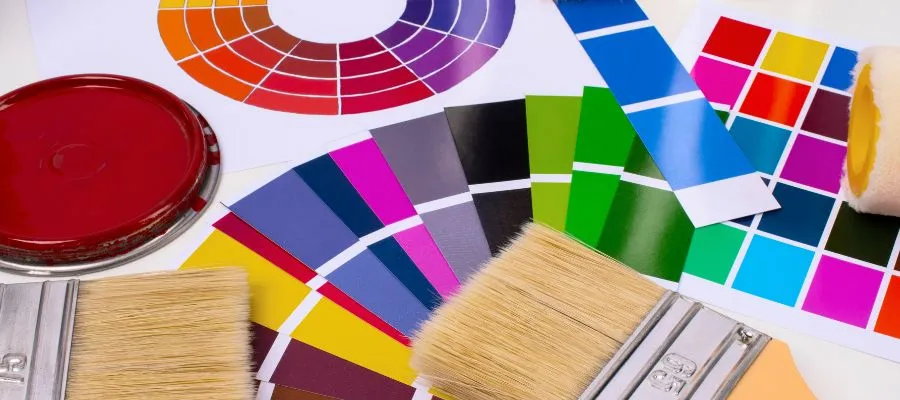
It’s important to know the basics of colour psychology before getting into the details of picking paint colours. Colours can change your mood and behaviour by making you feel different feelings. Warm colours, like red, orange, and yellow, tend to make people feel cosy, warm, and energised. Cool colours, like blue, green, and purple, are known to calm and soothe. Neutral colours, like beige, grey, and white, are flexible and can be used as a background for other colours that are used as accents.
How to Choose the Interior Paint Colours
It can be hard to decide what colours to paint for your home, but with a little help, you can make choices you’ll be happy with. Here are the steps you need to take to pick the right paint colours:
1. Think About the Mood:
Think about how you want each room to feel. Would you like it to feel warm and cosy or open and airy? The colour you pick can greatly affect how the room feels.
2. Get Ideas:
You can find ideas in books, on the Internet, or even in nature. When you see rooms or colour choices that you like, save them. This will help you figure out what colour scheme you like best.
3. Check the Lighting:
Write down how much natural light comes into each room at different times of the day. Darker colours can work in rooms with lots of natural light, but rooms with less light might feel too closed in and need lighter colours.
4. Think About the Room’s Purpose:
The room’s purpose can also affect your chosen colour. For instance, you might want soft colours in the bedroom and bright ones in the creative workshop or playroom.
5. Pick a Base Colour:
Pick a neutral base colour for the walls. Neutral colours like white, beige, grey, or greige (a mix of grey and beige) make a great background for a wide range of furniture and home decor styles.
6. Check Out Accent Colours:
Once you have your base colour, you might want to add accent colours to make things look more interesting. You can use these on trim, accent walls, or home decor items like pillows, curtains, and art.
7. Think About the Flow:
Picture how the colours in one room will flow into the next. You want your home to have a smooth flow, so think about how the colour schemes of each room connect to those of the others.
8. Test Samples:
Before you decide on a colour, buy small samples and put paint swatches on the walls to see how they look in different lights. This will help you picture how the colour will look when spread out over a bigger area.
9. Take into Account Existing Furniture:
Think about any furniture or decorations you already have that you want to keep in the room. When you paint, make sure the colours you pick don’t clash with these things.
10. Trust Your Instincts:
Choose colours that make you feel good. If you want your home to show off your personality and style, go with your gut regarding colour. By following these steps and taking your time to look at different choices, you can choose paint colours that make the inside of your home look and feel better.
Common Mistakes to Avoid While Selecting the Paint Colour For Interior Rooms
Picking paint for your home can be a big choice that affects how it looks and works. Here are five mistakes that people often make when picking paint:
1. Paint can have very different looks in different lights. People often make the mistake of picking a colour based only on how it looks in the store or on the internet. You should always put paint samples on your walls and look at them at different times to ensure you like the colour in all kinds of light.
2. Every paint colour has neutral, warm, or cool undertones. If you don’t pay attention to the undertones, colours may clash with your current decor or set an unintended mood in the room. Think about the hues of the paint you choose and how they might work with or against other things in the room.
3. You need a primer to get a smooth paint finish that lasts a long time. It gives the paint a stable base to stick to, makes the coverage better, and can help hide flaws. If you don’t use primer, the paint might not stick well, cover evenly, or need more coats.
4. Paint has different finishes, like white, satin, semi-gloss, and gloss. Different finishes have different qualities, such as how long they last, how shiny they are, and how easy they are to clean. Think about what you want to do with the room you’re painting and pick a finish that works for you. For instance, hallways and kitchens that get a lot of use might benefit from a more durable finish and easy to clean. On the other hand, a matte finish can make beds and living rooms feel more cozy.
5. Preparing the area correctly is very important for getting a paint job that looks professional. This includes smoothing rough surfaces, filling in holes or cracks, and cleaning the walls to remove dirt, dust, and grease. Painter’s tape should also be used to protect the trim and surfaces next to it. If you don’t prepare correctly, the paint might not stick well, cover evenly, or give you a good result.
Choosing the paint colours for the interior rooms of your home is unique and creative. You can be sure you’ll choose the right colours for each room by learning about colour psychology, evaluating your space, trying different colour schemes, touching up paint samples, and thinking about finishes. If you plan and do it right, you’ll be able to make a home that fits your style and tastes.
If you want to explore more about different types of paints for your home. Click the link below.
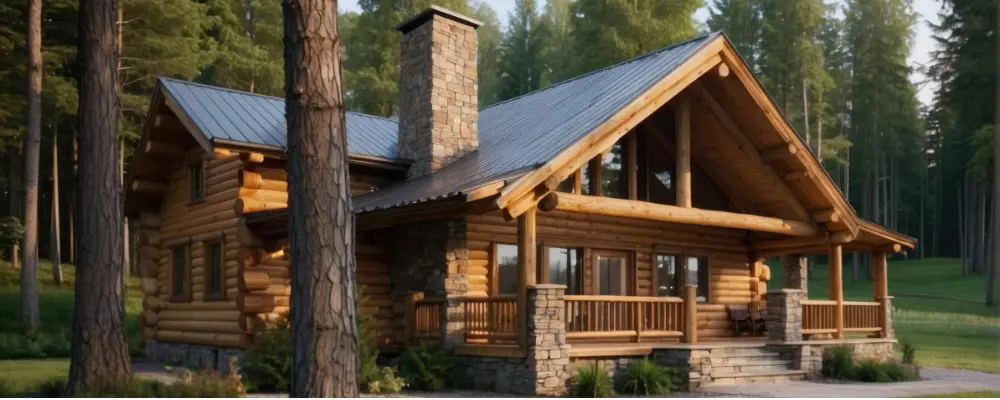
Wood is the magic that can bring class and elegance to anything with just its presence. Even after being used by so many across the world, wooden furniture is tasteful and eternally beautiful. Apart from using wooden furniture wood can also be used as the basic construction material in place of brick or concrete. Wooden houses are very popular in forest areas where we all dream of taking the next vacation too. But wooden houses can also be a conventional choice for building houses.
A few brief about wooden house design, and the pros and cons of picking these is listed.
Why Wooden House:
Wooden housing has been a preference for construction across Part of Europe as well as the United States and one of the main reasons behind the same is how easy the material transportation and building is in comparison to concrete homes. Wood is light and thus allows ease of construction and eliminates the need for multiple heavy machinery. Wooden homes are faster to put together especially given that a lot of ready-made choices are available. There is a choice to put together the construction in a factory and simple transport and install, or even if you build yourself sheet woods are readymade and available in different sizes, easy to shape, and shades and types that it is al the more easy to complete the process.
Also, Compared to concrete house construction it is observed that wooden house construction cost is less and efficient. The process is also faster and lot of money is saved there too. This also leaves a big opportunity to remodel with ease compared to concrete homes. Wooden homes are also versatile and energy efficient as they are natural insulators and hence cold and hot temperatures can be faced with ease with such homes.
Wooden homes are usually preferred in hilly areas due to availability as well as ease of transportation of raw materials. Most importantly hilly areas prone to landslides or earthquake-prone areas choose wooden houses over any other types. Similarly, the insulation property helps with areas facing extreme temperatures.
Disadvantages
Well, with all the pros stated above come a few drawbacks too. One important issue is termites. Making wood the basis of your home will mean a termite infestation can ruin quite a significant amount of the house. Also, the presence of water or moisture inside wood walls can cause some damage. Natural expansion and shrinkage of the wooden material also affect it.
But moisture-resistant methods to cover wood is also becoming popular to increase the appeal. The fact that wood is a durable material and can give the strength and beauty that is unmatchable is a reason why wood can be a great choice to build your home. Wooden home choice is expanding these days. Many companies are importing wood in knocked-down form which can later be assembled at the specified location. This will help reduce overall labour cost as well as various other costs incurred in other building methods.
FAQs
wooden house construction cost in india
Constructing a wooden house in India is relatively uncommon, and costs can vary significantly based on factors such as design complexity, material quality, and location. On average, the construction cost for a wooden house ranges from ₹2,500 to ₹3,500 per square foot. This estimate includes expenses for materials, labor, and finishes.
wood house vs concrete house cost in india
In India, constructing a traditional concrete house typically costs between ₹1,000 and ₹5,000 per square foot, depending on factors like location, materials, and labor.
Wooden houses are uncommon and may incur higher expenses due to the scarcity of suitable timber, specialized labor, and necessary treatments to withstand local climatic conditions. Consequently, building a wooden house in India is generally more expensive than a concrete one.
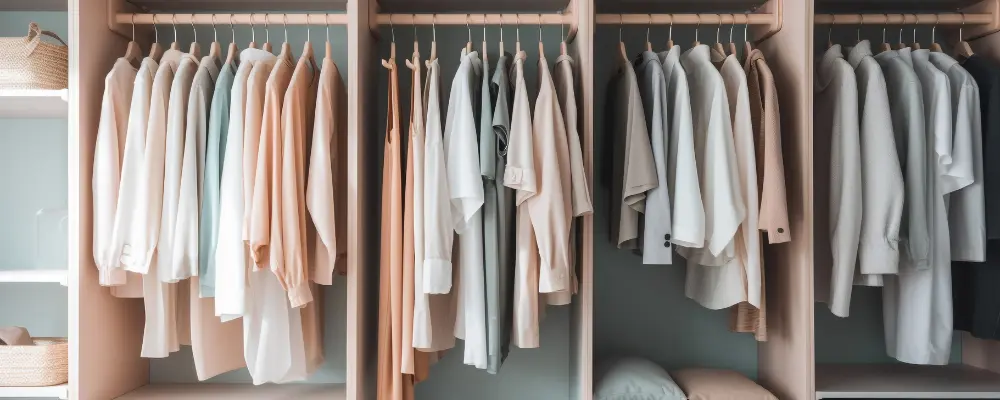
We all have a dream closet in our heads and we are always dreaming about walk-in closet designs and more. But we somehow mostly settle with anything close to what we want when we go shopping. Now how about if you get the chance to build the closet or wardrobe of your dreams? If you are nervous because you might fall short of understanding that might help you know about the technicalities of this process, then this is the perfect guide that will help you understand everything you will need to have in bring your dream to reality.
Basic Material – Plywood For wooden wardrobe
Plywood is a great choice of material to make beautiful closets that will be every bit of your dream. They are very convenient to use and most processes such as screws or nails do not mess with the wood. Also, it is also conveniently available in varying sizes and can fit in most applications you might need it for. Also, the durability of the material comes from the fact that it is a combination of multiple sheets of wood and lasts long.
Plywood refers to multiple sheets of wood pasted together. There are various grades of plywood which are available for different purposes of your home interior. Wooden closets or wardrobes will usually use A-C plywood types as A side will give the best finish. Similarly, various thicknesses of plywood are available.
Taking particularly for making your closet, A-C types will be the right choice for the expected finish. There are 2 major choices when picking between plywood which is either commercial ply or marine ply. While commercial ply will be the right choice for most cases, if you can go a step above in your budget you can also try Marine ply but this is not a necessity. In India, varying ranges of thicknesses such as 3-9mm, 12mm, 15,16,19,22 and 25mm are most commonly available. For applications such as wardrobes and closets, a combination of thick and considerably thin thicknesses will be necessary.
Plies varying from 12-19mm which usually are made from hardwood are the first preference for wardrobe designs. A thickness of 16mm is most preferred for verticals of the main covering as well as for internal partition as this will carry most of the weight of the closet. Larger closets sometimes look for 22mm also although it is a very rare case. Now other than the verticals a considerably thinner range of plywood is chosen. So, the range below 12mm is a good choice for this purpose.
The finishing touch :
Laminates and veneers are the options available for finishing materials that are made from MDF, plywood, or solid wood. While laminate is made from pressing thin layers of flat paper as well as plastic resins, veneer is made from a thin layer of hardwood. Laminates are easy to maintain and come win various varieties and have been considered as the most durable option compared to veneer. It is also cheaper when compared to veneer. Once the wardrobe or closet has been made it will still look raw. There are 2 major ways to finish this piece of art and that is either polish or paint. High-quality veneered plywood or the clad with a veneer can be given a polish.
The advantage of polishing is that it is considerably easier than painting as the surface of most Indian plywood is uneven and hence painting cannot always give the smooth elegant finish you will dream of.
Vastu Shastra says that the direction of your home is very important because it affects many parts of your life, including your health, wealth, and general happiness. Regarding the four cardinal directions, homes facing southwest are in a special place that offers both possibilities and challenges. In this article, Brick & Bolt go into great detail about South-West-Facing Vastu for Houses. It explains the dos and don’ts and gives useful advice on making your living area harmonious with good energy flow.
Understanding the Significance of Home-Facing Southwest
Based on Vastu principles, homes that face the southwest can access the energies of stability, longevity, and wealth accumulation. However, bad alignment or flaws in the building can mess up these forces, which is bad for the people living there. So, following Vastu rules is important if you want to improve the flow of good energy in your home.
Challenges of Southwest-Facing Homes
Vastu Shastra says that houses facing southwest are usually lucky, but there are some problems that people who live in these homes may face. To deal with these issues successfully, you need to be aware of them. If your house faces southwest, here are some problems that might come up:
1. Irregularities in Energy Flow:
A southwest facing home may have irregular energy flow if it is not properly built or lined. This imbalance can cause things to stop moving or get stuck in some places, which can hurt the people who live there generally.
2. Money Problems:
A house facing southwest Vastu can bring wealth and success if it is properly aligned, but if there are Vastu flaws or bad energies in this direction, it could cause money problems or difficulties. This could lead to bad money management or costs that were not planned for.
3. Health Concerns:
If Vastu for houses facing southwest isn’t set up right, it could lead to health problems for those who live there. This can show up as long-term sickness, tiredness, or a general feeling of not being well. It’s important to fix any Vastu problems that could hurt your health.
4. Relationship Strain:
Stable and peaceful relationships are linked to the southwest direction. If there are Vastu imbalances or negative forces in this area, it could cause problems or stress in family or marriage relationships.
5. Things involving the Law and Court Cases:
Homes facing southwest with Vastu flaws may also have problems with legal disagreements, court cases, or property issues. These problems can cause worry and uncertainty for the homeowners and might need to be solved by the law.
6. Strengths and Weaknesses in the Structure:
Houses facing southwest may have problems with their structure if they aren’t built or kept up properly. This could cause issues like wall cracks, base problems, or water leaks, weakening the building’s structure.
7. Negative External Influences:
The energy dynamics of a southwest-facing house can also be affected by things outside the house, like nearby buildings, the weather, or natural features. Bad effects from nearby properties or natural features could harm the house’s general Vastu harmony.
Vastu Remedies For A South-West Facing Property
If your property faces southwest and is having Vastu problems or imbalances, there are a number of fixes and solutions that can help balance the energy flow and lessen any negative effects. Here are some good Vastu fixes for a house that faces southwest:
1. Use of Mirrors:
Putting mirrors on the walls of the southwest area can help block out bad energy and make the space feel bigger. Mirrors reflect light and energy, making the room more positive regarding Vastu.
2. Hanging Yantras:
In Vastu Shastra, sacred geometric patterns called Yantras are useful for balancing energies. Hanging a Vastu Yantra or a Shree Yantra in the house’s southwest area can help eliminate bad vibes and bring in good ones.
3. Placing of Crystals:
Pyrite, amethyst, and citrine are some of the crystals that are thought to have strong Vastu effects and can be put in the southwest to bring more wealth and safety. These crystals take in bad emotions and send out good ones, making the space around them more peaceful.
4. Balancing Elements:
Make sure that the southwest-facing land has an equal amount of each of the five elements: earth, water, fire, air, and space. Add things like indoor plants for Earth, a small waterfall or other water features for Water, soft lighting for Fire, good airflow for Air, and getting rid of clutter for Space.
5. Colour Therapy:
Choose your colours carefully to clear the energy in the southwest. Warm, earthy colours like beige, brown, or clay can help you feel stable and grounded. Blue or green colours, on the other hand, can bring you peace and wealth.
6. Feng Shui Enhancements:
To increase good energy flow in the southwest area, both Feng Shui principles and Vastu solutions should be used together. Vastu repairs can work well with Feng Shui fixes like wind chimes, bamboo plants, or plenty of signs.
7. Fixing Architectural Flaws:
If there are structural or architectural flaws in the southwest area, you might want to make the necessary changes or repairs to fit with Vastu principles. This could mean moving items around, changing how rooms are set up, or fixing things up as needed.
8. Regular Cleansing and Purification:
To clean the energy of a property facing southwest, do regular cleansing practices like smudging with sage or lighting camphor on fire. This helps eliminate bad vibes and makes the space feel clean and positive.
9. Consultation with a Vastu Expert:
Talk to a trained Vastu expert for personalised advice and custom solutions. They can examine the southwest-facing property’s specific Vastu flaws and suggest the best solutions based on each person’s needs.
On a final note, including the Southwest, by promoting wealth, health, and general well-being, facing Vastu principles in your home can improve life. Aligning your home with the forces of the universe can help you make it a peaceful place where good vibes can grow. Remember that every choice you make about your home’s architecture can affect your future, so be careful on the path to Vastu compliance for a happy life.
If you’re looking to build a new home or fix problems with your current one, learning about South-West Facing Vastu or Vastu-compliant plot selection, Brick & Bolt can help you have a happy and successful life.
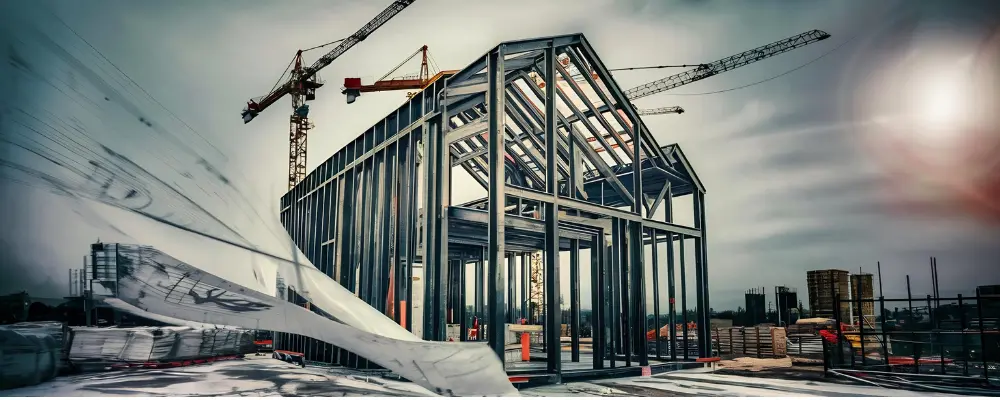
Steel Frame structures involve the construction of the skeleton of the building using horizontal and vertical steel members. Mild steel is used for this purpose. Mostly such type of structures are used in building high-rises, industrial buildings and factory sheds, temporary structures and huge airports.
Advantages of steel frame construction
Durability
Steel members made up of mild steel are highly durable and strong and can take upto tons of load in one go without failing.
Ductility
Steel is a very ductile material and its deformation takes place in stages. It doesn’t fail suddenly without getting deformed. So, in case of failure, there will be a certain time available before the member completely collapses.
Light Weight
As compared to wood and concrete, steel structures are extremely light in weight. A typical steel member is 30-50% stronger than the wood equivalent.
Easy manufacture
Steel members can be easily manufactured in large numbers in the factory.
Variety in sections
They are available in various sizes and sections (I section, C section, T section, etc). Different types of sections are used depending on the type of building and the amount of load to be carried.
Transportation
Manufactured best steel studs can be easily transported from the factory to the site without much of ware and tare and damage.
Faster work
The steel frame structure can be easily assembled on-site using different joinery such as welding, bolting, and riveting. The time taken to build up a steel structure is very less as to that taken by an RCC structure.
Resistant to moisture
Steel members when coated with zinc or undergoing powder treatment, become extremely resistant to moisture and water.
Resistant to insects and pest
Structural steel components are not affected by the degrading effects of burrowing insects and mammals, unlike the problem for wooden frameworks.
Environment friendly
Trees do not need to be cut down for making these steel components. Thus, steel structures are environmentally friendly. Moreover, these structures can be assembled as well as de-assembled on site itself without causing any harm to nature.
Disadvantages of steel frame construction
Thermal conductivity
The transfer of heat in steel studs is extremely high. This causes a lot of waste of energy. Various measures need to be taken to prevent thermal conductivity in these steel members.
Susceptible to fire
In high temperatures or in the case of fire, the steel members are prone to failure. Mostly these steel columns are encased in concrete in order to prevent them from failure.
Requirement of insulation
Proper coating and treatment are necessary on steel members to protect it from external weather conditions. Moreover, insulation is also required to prevent thermal conductivity and waste of energy.
Prone to corrosion
In marine areas, steel studs are prone to corrosion and lose strength.
Planning to build your dream home or embark on a construction project? Understanding the construction process is key to ensuring success. From initial planning to post-construction checks, each stage plays a crucial role. In this guide, we break down the construction journey into simple steps, covering everything from procurement methods to final inspections. Whether you’re a seasoned builder or a first-time homeowner, follow along for valuable insights and expert tips to navigate the construction process with ease. Let’s get started on building your dream project!
Pre-Construction Stage
In this stage, you create a basic design and then get your blueprints developed by an architect. After this, you have to get approvals from the authority, and then create a strategic plan for the construction of a building.
The planning stage provides a set of guidelines for the construction team to follow through with the project.
You also get a chance to discuss your various cost-saving options with the construction team at this stage.
*Also note different permits are taken at different stages of construction of a building.
Procurement Stage
This is the stage where you identify the materials needed for building construction, consider a list of suppliers, and then finalize the purchase order.
In this stage, you also identify the goods and services needed for construction. After that, you have to find the correct vendors and determine their ability to provide the best value and quality for goods and services.
The Principal Procurement Methods
General Contracting
This is the traditional procurement method where the contractor is not responsible for the design and floor plans. They simply are responsible for building construction.
Design & Build
In the design-and-build contract, the contractor is appointed to design and build the project. The contractor will plan the project, organize the materials required for building construction, and should also be responsible for the quality of the project. The contractor should complete all the building construction stages within the agreed time plan and budget.
**In other procurement methods, consultants or architects are appointed to design the project, and the contractor is then appointed for the final execution of the project.
Construction Management
You can also get hold of a professional service that specializes in project management techniques. They will manage the planning, design, and construction of a project from the beginning to the end.
Management Constructing
In some cases, the client will employ several different subcontractors who execute different parts of the project separately. This helps the client to delegate work properly and finish the project on time.
Construction Stage
This is the stage where the actual construction takes place.
Step 1: The site engineers carry out all the quality checks required for the construction to begin. Once everything is certified okay, they move on to the next step.
Step 2: The clearing and excavation of the land take place which mainly involves ground-leveling and removing all the obstacles that come in the way of construction.
Step 3: After that, you focus on building the foundation of the house. This is then followed by constructing the basic framework of the house which includes working with steel beams or wood frames.
Step 4: This is the groundwork upon which all the other aspects of the building will follow. The other aspects that follow the framework are as follows:
Plumbing works such as installing pipes,
Installing the roof or the ceilings
The cooling and heating needs are considered once the outer walls are constructed
Electrical fixtures are installed
Once the walls inside are constructed, you start working on the windows, doors, cabinets, and toilets. Here are a few ideas on selecting a window grill type.
Once the building of the foundation and the basic structure is constructed the last stage involves finishing touches like:
The flooring
Fixing faucets
Woodwork or carpentry etc.
Here’s how you can cut down on costs and unnecessary expenses in woodwork and carpentry.
Post-construction Stage
The post-construction phase is there in case a situation comes up once the construction is over and if something isn’t meeting your needs. It is important to follow a punch-list and be confident that the construction of your project has come to an end.
A punch list is a document prepared confirming that the contractor has followed the complete contract specifications. Official documents are an important part of the post-construction process. Once the documents are signed, you will make the final payment to the contractor.
Warning:
Before starting a building construction the owner must make sure that he/she has obtained all the permissions from the concerned authorities. A construction that is done without any permits leads to demolition or huge fines.
Site preparation is equally important based on the building plan which is also followed by an inspection by government officials.
Inspections take place at different stages and at the end of the project, a final inspection is performed.