There is no and a calm, hot shower cannot solve. Most people always look to just make the bathroom space easier to clean, moisture resistant and more features. But have you ever thought about what simple designs you can explore around your bathroom in terms of arrangements and what new to add? By choosing simple and cheap interior designs you can explore great ideas for your bathroom.
Creative Bathroom Design Ideas
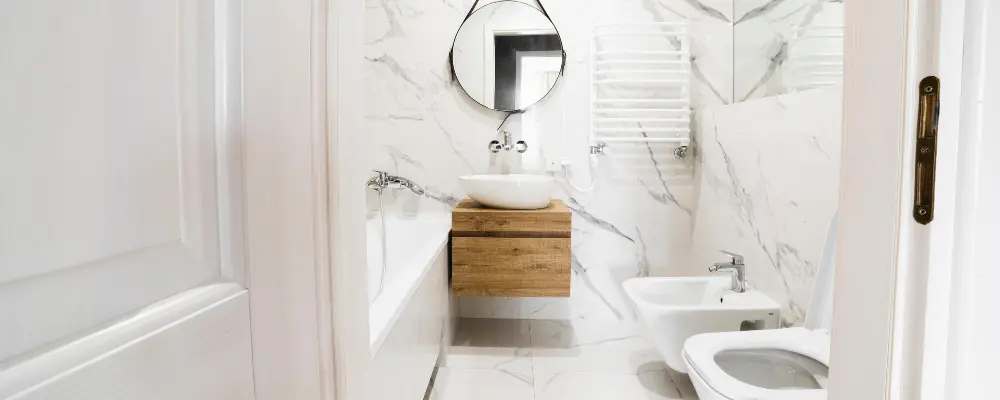
A small but the best bathroom design space can be achieved if arranged well to utilize the space. Start off with picking panels for the essentials. You can take the wall space immediately near the door for your mirror and add your basin below. You can add a wood panel below for storage or add a small ladder beside the mirror which you can use along with some baskets to store your toiletries. A shower and tap set can be added to the wall after this space. The toilet can be added to the opposite side wall and a towel rod can be added aside this.
If you have in mind an idea to have a shower wall, you can either experiment with shower curtains or use glass panels for partition. This will help split the bathing area from the other articles. You can add the mirror and wash basin below it opposite to the shower cabin. You can pick out a translucent glass and experiment around with gorgeous colors.
You can try designing the washbasin in front of a window. A low window will make space to use as a storage space where you can add baskets or boxes to keep the toiletries. You can also use a longer panel for the washbasin where the basin can be retained to one part and the rest can be used for storage too. The rest of the washroom can have a shower installed and the design will be perfect for a medium space.
If you dream of having your own bathtub then a simple design to add can make this happen for your bathroom. If a bathtub will take up half the space then with a little planning you can add everything else you need. Use the wall space above the tub to add panels that can be used as storage cabinets. You can add a bathroom mirror cabinet and wash basin opposite to the tub. You can add shower curtains for some privacy.
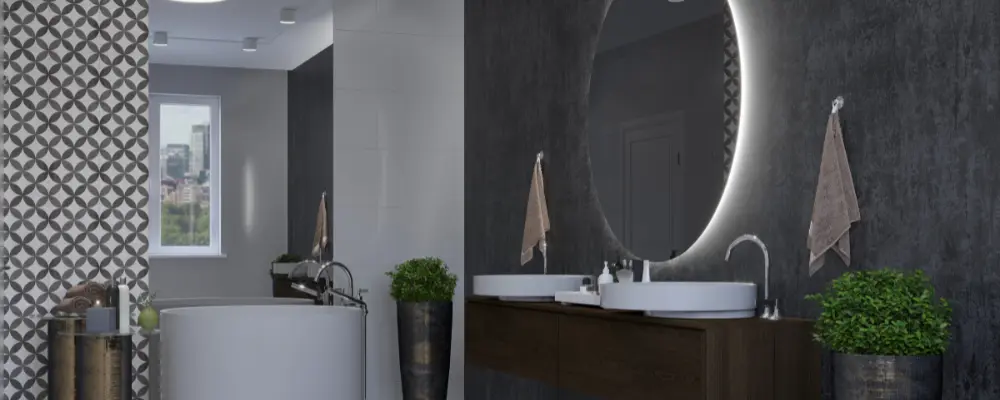
Bathroom vanity is a dream of many. But given the traditional designs are quite expensive people prefer to stay clear of it. But using a simple wooden cabinet added you can make this happen. A bathroom vanity covers the storage space needed and a mirror can be added to the tops of this. You can design the shower and toilet to take up either side of the vanity. This great design can have a bathtub added to one side and this will make it all the more dreamy. Splash around some colors and this will work miracles.
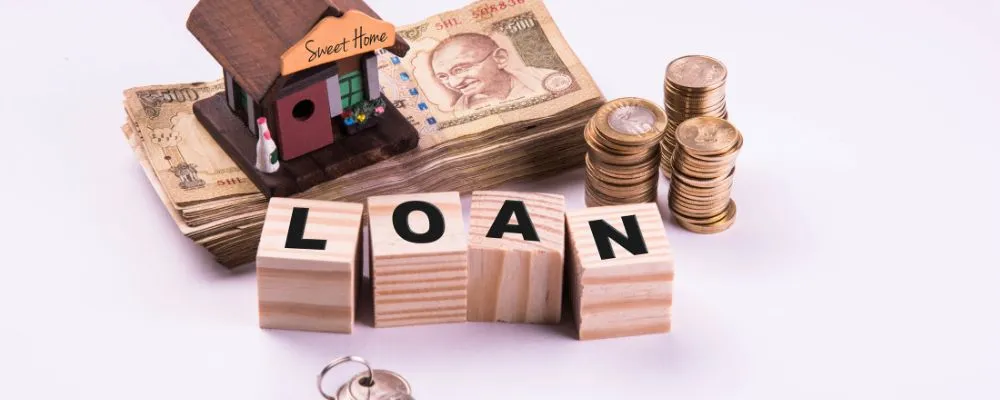
Starting from scratch to build your dream home is an exciting project that needs careful planning and financial planning. In India, home loans are an important way for people to get the money they need to build their dream homes. In this blog, Brick & Bolt has a lot of things you need to know about home loans for house construction. We’ll cover eligibility requirements, interest rates, and the application process. Whether you want to build a cosy cabin in the woods or a modern home in the city, you must know how home construction loans work to complete your project successfully.
Understanding About Home Loans
Home construction loans, which are sometimes called “self-construction loans,” are a special kind of loan meant to help people pay for building their own homes. Traditional home loans are used to buy already-built homes. On the other hand, building loans give out money in stages that match the progress of the building. This staged distribution ensures that funds are used properly during the building process, lowering lender’s and borrower’s risk of losing money.
What are the Key Components of Home Loans
Loan Amount:
Most home-building loans cover a portion of the total project cost, which includes buying land, paying for construction, and any associated fees. The loan amount is based on the user’s income and ability to repay the loan.
Interest Rate:
The interest rate on a home-building loan can change based on the borrower’s creditworthiness, the lender’s rules, and the current market conditions. To get the best deals, it’s important to compare the interest rates that different lenders offer.
Loan Term:
The loan term is the amount of time the user has to repay the loan. Home construction loans usually have various repayment options, so borrowers can choose the best option for them.
Down Payment:
Like with regular home loans, people who want to get a building loan usually have to make a down payment. The amount of the down payment is based on a lender’s rules and expressed as a portion of the total project cost.
Loan Eligibility:
Lenders consider several factors to decide if a person is eligible for a home loan, such as their credit score, employment background, and other debts. Meeting the lender’s requirements is necessary to get the loan approved.
Types of Home Construction Loan
India has different kinds of construction loans for people who want to build their homes. Most people have these types:
1. Home Construction Loan:
This is the simplest type of loan, meant to help pay for building a new home. As the building project progresses, the loan amount is paid in steps or in instalments.
2. Home Improvement Loan:
This type of loan isn’t just for building a new home; it can also be used to fix up or improve a current one. It can pay for changes, fixes, and improvements to the structure.
3. Plot and Construction Loan:
The third type of loan is a plot and construction loan, which pays for buying a piece of land and building a house on it. It combines financing for buying land and building on it into one loan.
4. Composite Loan:
This type of loan covers the cost of buying land and building on it, like a plot and construction loan. However, depending on the lender, there might be different rules and terms.
5. Bridge Loan:
A short-term loan, called a “bridge loan,” covers the time between buying a new home and selling an old one. This may be helpful for people who need money to start building while they wait for their current home to sell.
6. Self-construction Loan:
This type of loan also called a “self-build loan,” is for people who want to build their own homes instead of paying a builder. The loan is given out in steps based on the progress of the building.
7. Home Construction Loan for NRI:
This type of loan is meant for Non-Resident Indians (NRIs) who want to build a house in India. It usually has slightly different eligibility requirements and paperwork needs than loans for Indian residents.
8. Government-Sponsored Construction Loans:
Sometimes, government bodies or agencies offer subsidised or low-interest loans for building a house as part of housing development plans or programs that aim to make housing cheaper.
Eligibility Criteria For Home Construction Loan
The eligibility criteria for a Home construction loan in India differ based on the lender and the loan’s terms. But there are some general standards that most lenders look at when deciding who can borrow money:
1. Age:
Most applicants should be between the ages of 18 and 70. Lenders may have slightly different age requirements.
2. Income:
Lenders examine the borrower’s income to ensure they can pay back the loan. A stable source of income is usually needed. This could come from a paid job, business, or working for yourself. Different lenders have different exact income needs.
3. Credit Score:
To get a loan, you need to have a good credit score. Lenders usually want you to have a credit score of 650 or higher, but some may accept slightly lower scores if other things are true. If you having credit score is 500 or even less chances of getting home loan is nearly impossible. on that case you have to built or buy your home without a loan.
4. Employment Stability:
Lenders like to work with people with a history of stable jobs or businesses. Salaried people may need to have been working for a certain amount of time, while self-employed people may need to show that they have a steady business income.
5. Documents About the Property:
People who want to borrow money need to show proof that they own the land, approvals for building plans, and figures for the cost of building the property.
6. Down Payment:
People who want to borrow money may have to put some money into a building job. The down payment amount can differ, but it’s usually a certain percentage of the total job cost.
7. Loan-to-Value (LTV) Ratio:
Lenders determine the amount of a loan to give based on the property’s value. The LTV ratio shows how much of the property’s value the lender is willing to fund. Based on factors like the borrower’s income and credit score, most lenders will give loans with an LTV ratio of up to 70–80%.
8. Repayment Capacity:
Lenders determine whether borrowers can pay back the loan by examining their other debts, monthly income, and monthly costs. An important part of this evaluation is the borrower’s debt-to-income ratio (DTI).
9. Legal and Regulatory Compliance:
People who want to take out home-building loans must follow all legal and regulatory rules. This includes providing correct information and following the steps for documenting and verifying it.
Top Home Construction Loans in India
Below are some of the top home construction loans in India. Please keep in mind that interest rates and other terms may change depending on the applicant’s credit score, loan amount, and loan term. You should always check with the banks for the most correct and up-to-date information.
Bank/Financial Institution
Loan Name
Interest Rate
Loan Amount
Loan Tenure
State Bank of India(SBI)
SBI Home Construction Loan
Starting from 6.70% p.a.
Upto 90% of the property value
Up to 30 years
HDFC Ltd
HDFC Home Construction Loan
Starting from 6.75% p.a.
Upto 80% of the property value
Up to 20 years
ICICI Bank
ICICI Home Construction Loan
Starting from 6.75% p.a.
Upto 90% of the property value
Up to 30 years
Axis Bank
Axis Home Construction Loan
Starting from 6.75% p.a
Upto 90% of the property value
Up to 30 years
Punjab National Bank(PNB)
PNB Home Construction Loan
Starting from 6.80%p.a
Upto 90% of the property value
Up to 30 years
Benefits of House Construction Loans
Customisation:
Home-building loan borrowers can customise their homes based on their needs and wants, including adding their own design elements and architectural features.
Financial Flexibility:
Because building loans pay out money in stages, they give borrowers financial flexibility, which helps them keep track of construction costs and avoid financial stress.
Cost Savings:
Building a house from scratch might be cheaper than buying one that’s already been built. Borrowers can make the most of their building budget and cut costs by carefully planning and budgeting.
Asset Appreciation:
Investing money in building a house can pay off in the long run by raising its value. When homes are carefully planned and built, their value may rise over time, making them valuable tools for their owners.
In conclusion, home construction loans are a good way for people in India to get the money they need to create their dream homes. But before choosing this option make sure that your salary is more enough to manage the interest rate, Hold it as your last choice try for some other options like owner financing. Plan more cautiously and make your dream home a reality.
If you want to know about the procedure for getting a loan in Bangalore, click the link below.
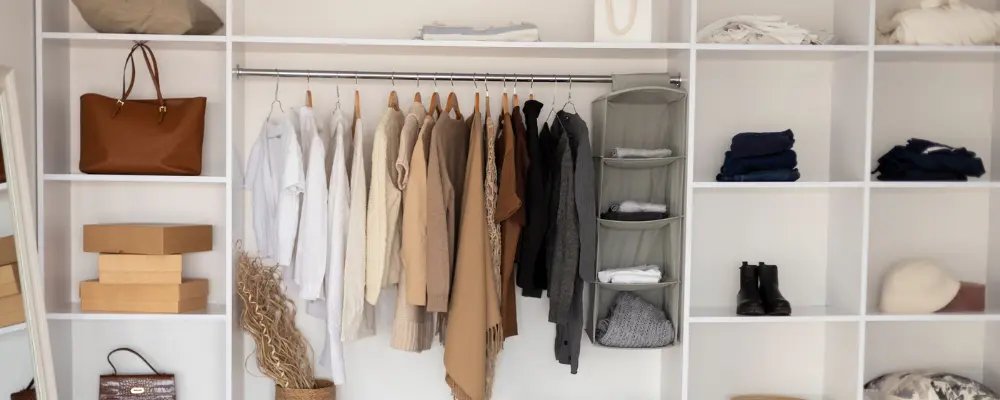
Are you ready to make your bedroom look more stylish? Today is a good day for you because we will discuss almirah designs. I promise it will be fun!
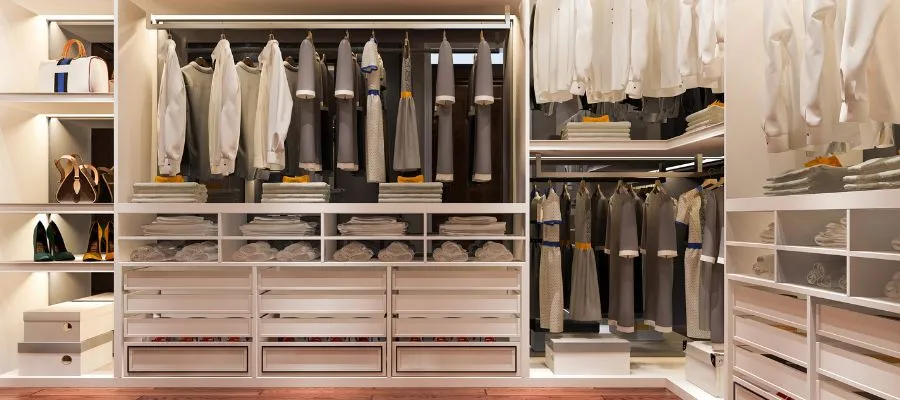
Imagine that when you walk into your bedroom, you don’t see a bunch of stuff strewn around or drawers full to the brim. Instead, you see sleek and stylish storage solutions that look good and make your life easier. Doesn’t that sound like a dream? Now that there are new styles for almirahs, that is possible.
In this blog, Brick & Bolt delve into the latest trends in bedroom almirah designs, from sleek and modern to classic and elegant.
How to Choose The Right Material For Bedroom Almirah
Making your almirah out of the right material is very important for how long it lasts and how nice it looks. Before you choose one for your bedroom, consider the pros and cons of each material, from wood to metal and everything in between. Think about things like how long it will last, how much upkeep it needs, and how aesthetically pleasing it is.
10 Modern Designs for Bedroom Almirahs
1. Sleek and Minimalist:
An almirah with a smooth and simple design will help you enjoy the beauty of simplicity. This style is great for modern beds because it has smooth finishes, clean lines, and a simple elegance. Choose a colour scheme with muted tones to make your area feel calm and peaceful.
2. Mirrored Magic:
A mirrored almirah will add a bit of glitz to your bedroom. Mirrored walls not only make a room look bigger, but they also reflect light, making it feel brighter and bigger. To make this classic style more modern, choose a pattern without frames.
3. Built-In Brilliance:
A built-in almirah design will help you make the most of the space in your bedroom. These almirahs are made to fit your space perfectly and blend in with the walls, giving your room a clean, modern look. Adding built-in lights will make it look more expensive and useful.
4. Sliding Doors:
Say goodbye to big doors that swing open and hello to sleek doors that slide open. Sliding door almirahs are great for bathrooms that don’t have a lot of room. You can add depth to your room with mirrored panels or protection with frosted glass.
5. Open Shelving:
An open-shelving almirah lets you show off your favourite items. Open shelving gives your bedroom visual interest and a lot of storage space. It’s great for showing off books, art, and decorative items. For a unique look, mix and match different shapes and materials.
6. Integrated Drawers:
An almirah style with built-in drawers will help you organise and keep your things out of sight. These secret storage ideas are great for smaller things like underwear, socks, and accessories. Pick drawers that close softly for more ease and use.
7. Statement Hardware:
Adding statement hardware to your almirah will make it look better. Pick out bold buttons or handles in finishes that are different from each other to give your bedroom personality and style. Mix and match different styles to create a look that shows off your style.
8. Modular Flexibility:
A modular almirah design lets you customise your storage option to fit your needs. You can move and arrange modular units to maximise your room and storage needs. You can also change the way your bedroom is set up by adding or removing shelves, drawers, and hanging rods.
9. Multi-Functional:
An almirah that can be used for more than one thing will help you make the most of your room. Look for built-in desks, dressing tables, and media consoles for the most usefulness and flexibility. These all-in-one options are great for small beds or rooms that can be used for more than one thing.
10. Natural Materials:
An almirah made from natural materials like wood and bamboo will add a touch of nature to your bedroom. Warm tones and organic textures make the space feel cosy and welcoming, perfect for resting and relaxing after a long day.
Advantages of Having an Organised Almirah at Home
Keeping your home’s almirah organised has a number of advantages, and they are:
An organised almirah lets you make the most of your room, ensuring that every inch is used well. This can help you store more things without making your living room crowded.
If you organise your almirah, finding what you need is simple without digging through a lot of junk. This saves time and makes things easier, especially in the morning or when you’re in a hurry.
Keeping your things in order can help prevent damage. Put away things neatly so they don’t get jumbled, scratched, or broken. For example, clothes that are folded or hung correctly are less likely to get folds or creases.
Keeping your almirah organised generally makes your home look better. When you organise your shelves or drawers neatly, they look better and make your living space feel cosier and more attractive.
Clutter can make you feel stressed and anxious. Organising your almirah gives your living area a sense of order and peace, which can help you relax and calm down.
Keeping your almirah clean and organised makes it easier to stick to a daily schedule. You can put different kinds of things in different places, which makes it easy to find what you need when you need it. This helps you get things done faster in your daily life.
An organised almirah makes it easier to see what you have. This helps you remember what you need and what you already have, so you don’t buy the same things twice or forget about the ones you already have.
Revamp your bedroom with the newest almirah styles and stylish storage methods. There’s an almirah out there that will make your bedroom look better, whether you like sleek and modern or classic and classic. Spend money on good work and the right materials, and you’ll have a well-organized almirah in your bedroom. By choosing smart storage options and making careful design choices, you can make a bedroom that fits your style and is also very useful and comfortable.
With the newest almirah designs, you can turn your bedroom into a stylish and elegant haven. Say goodbye to the mess and hello to stylish storage options that will make your bedroom look better and make your life easier. Add a stylish almirah to your room to make it look better and take your bedroom to a whole new level of luxury and style.
To learn more about bedroom wall colour combinations that can transform your space, click the link below.
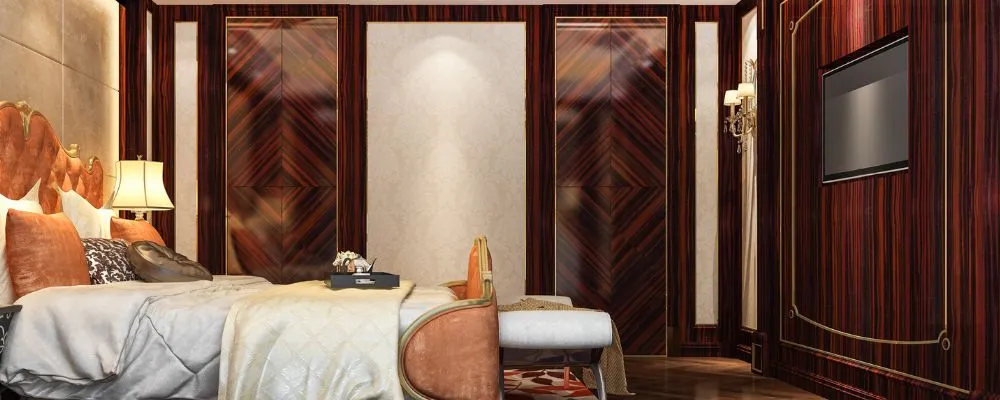
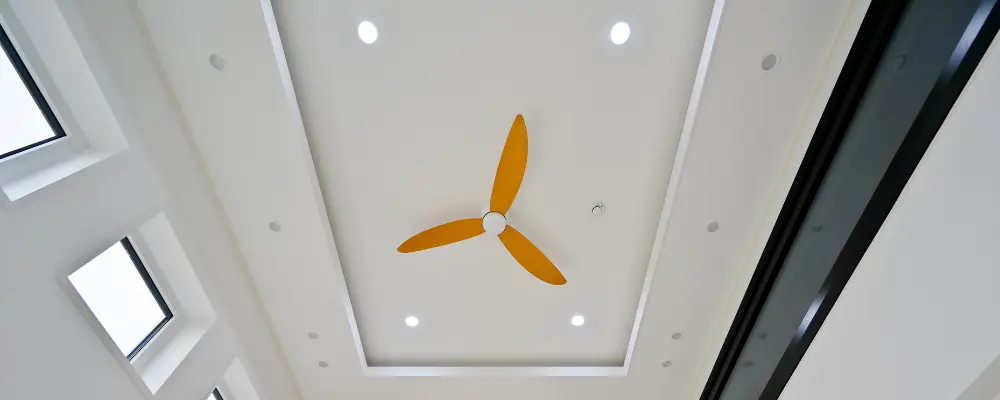
False ceilings are artificial ceilings which are hung from the slab. They are used to provide an attractive look to the ceiling. In offices and malls, they are used to hide the services too. Moreover they are also used to hide structural systems and ducting. They also work as an acoustical barrier by reducing echo problems and insulators to heat and cold. The false ceiling type to be used depends on their place of use, the ambiance needed and the budget.
Various types of false ceiling
Plaster of Paris false ceiling
This type of ceiling is the most widely used false ceiling material. It is the cheapest among all the false ceiling materials. POP is mixed with water and is applied to fibreboard or wood base which suspends from the slab above. It requires a specific time to dry. But, it easy to construct and can be designed in different forms. These are most commonly used for residential purposes.
Gypsum false ceiling
Gypsum boards are suspended using metal grids to form the ceiling. These are widely used in offices. These boards are extremely lightweight and flexible.
Wooden false ceiling
Wooden ceilings are constructed with plywood planks being nailed or glued together. These are usually expensive but give a great visual appearance. They are widely used in areas with cold climates for great insulation properties. Wooden False Ceiling Design suits more in Porch area
PVC ceiling
PVC ceilings are also used these days. These are waterproof, require very low maintenance and are also water resistant.
Metal ceiling
These metal ceiling panels are installed either on steel T-sections or cross-sections and then suspended by rods. These types of ceilings are suitable for a large range of applications. They are ideal for concealed wiring. Easy to install and access Easy to clean and maintain.
The art of design and building the perfect home comes not only from great interiors or designs but also from good safety measures to make the home a safe one. While the electrical wiring of the home is an important aspect to pay major attention on why so is a question we all know the answer too. Fire hazards following bad placements and usage of electrical points and switches are plenty and such faulty designs need to be carefully examined in the plan.
Here are a few thoughts on how and where to place electrical points and switches for electrical safety at home.
PowerPoint placement: Where you design the location of your PowerPoint is very necessary. It should be placed in such a manner that its utility isn’t destroyed at the same time is also safe to use. Today most people like to place electrical points in places where it is invisible. But you should understand that if you place one inside your shelf to make it look good, it might also pose issue when it comes to actually using them. Like example, if you choose to put your electrical point inside your face shelf in your bathroom using it will mean no access to the mirror. So, discrete is important but not the most important either.
Understanding the switches: Various varieties of fancy switches such as smart switch types at home that are available today that can add glam to your home. Customized switches for each appliance are also available which make it more useful too helping us avoid having to try every switch or in fact write on top of them with a marker.
Check amp rating on wiring and devices before you use them for your purpose. Overloading with excess current beyond what these can hold is not at all safe. Also, make sure the electric wire connections etc and insulated properly on the outside Do not leave open ends exposing the wires.
Where to place the switch box ?
The ideal height at which the switches are placed on the walls is about 48-52 inches from the floor. This choice comes for two reasons, the first being it is an ideal height for most people to access the switches but is high for children. Also, this is an easy height for installation during construction as well as for repairs. The height and location will vary for different needs such as for you vacuum cleaners to make it more easy to use.
Be very careful while placing electrical points, sockets and switches near wash areas or any place involving flow of water. Choose waterproof electrical sockets for outdoor needs and in such places involving water.
While installing the points make sure your electrician names the wires before fixing. In case of an issue it will be easy to quickly identify and test the right one without a trail and error sequence.
Choose the right types of sockets built with the type of wall in mind. Solid walls and cavity walls have different requirements hence choose the ones that will fit your wall type well.
Revise your wiring once in few years and do the same with replacing sockets and electrical points for safety purposes.
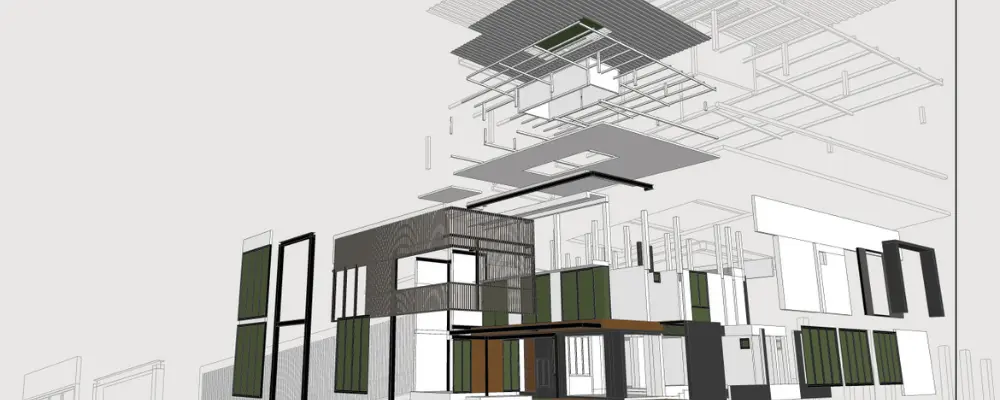
Designing new structures or buildings for construction is known as architecture. The architecture industry offers a variety of interesting works, many of which entail drawing up new designs. Architectural drawings come in a variety of forms, which is why it’s crucial to understand them if you are planning to construct a house. Hence, in this blog, Brick&Bolt explains what an architectural drawing is and its types.
What is Architectural Drawing?
An architectural drawing is a representation of a building or other structure illustration during the design phase by an architect. In simple words, a diagram, plan, sketch, or blueprint that conveys specific details about a building is called an architectural drawing. During the planning phase of the construction process, architects and designers prepare these kinds of technical drawings.
Importance of Architectural Drawings
Architectural drawings are useful when a building is ready to go into the construction process because they give workers comprehensive information about the structure that can improve productivity and efficiency. For example, construction workers can show where windows and doors should be placed, where beams and columns should be positioned, how many floors they should account for, and what materials they might use depending on the building.
Apart from that, the architectural drawings help project planners and homeowners to understand the final look and functionality of a building. They offer thorough documentation of the internal workings of a building, which is essential for future maintenance.
You require different types of architectural drawings throughout your construction project.
So, let’s discover more about those.
8 Different Types of Architectural Drawings
The following are the different types of architectural drawings used in the construction project.
Site Plan Drawing
Floor Plan Drawing
Cross-Sectional Drawing
Elevation Drawing
Landscape Drawing
As-Built Drawing
Detail Architectural Drawing
Excavation Drawings
Let’s dive deeper into all the types:
1. Site Plan Drawing
Site plans give an aerial view of the building and the surroundings. Sometimes, it even displays nearby structures or transportation infrastructure, such as roads. Architectural site plan drawings are essential for demonstrating the exact position of the structure in proximity to the property lines. Additionally, the site plan drawings can provide precise measurements and information about patios, driveways, landscaping, and other outdoor design features.
2. Floor Plan Drawing
The floor plan is a drawing of an interior layout of your structure. Architects can design floor plans for each room in a building with multiple floors or rooms. Architectural floor plan designs help arrange the layout of doors and windows and other features that will make the structure look nice once constructed. Depending on their intended use, floor plan layouts also come in a broad range of varieties. As an example, some floor plan drawings are created to show specific design elements such as electrical or plumbing systems. You can draw floor plans in 2D or 3D (2 Dimensions and 3 dimensions) with the help of different digital tools like Revit and CAD-computer-aided design.
Drawings that provide precise measurements between walls, windows and doors are the most popular type of floor plan used in residential construction projects. This building plan drawing also displays the surface area calculation for every room. Floor plan designs are necessary to create estimates and build a house as per the architect’s specifications.
3. Cross-Sectional Drawing
The cross-section drawings display both visible and hidden components of a building; they are two-dimensional drawings. Consider that you are looking inside the building after cutting a portion of it in half along a vertical plane. It is a sectional or cross-sectional drawing.
In simple words, assume you have a chocolate vanilla cake; when you see it as a whole, you can see the shape of the cake, such as round or square. But if you slice it, you can see the all layers of that cake.
The cross-section drawings help demonstrate how specific components of a building are put together. They can display items such as
Floor-to-floor structural transitions,
How walls need to be constructed,
How windows and ventilations fit into those wall sections
4. Elevations Drawing
An elevation drawing is drawn from a vertical plane facing directly at the building. Those architectural elevation drawings display the exterior of the building from the back, front, and side are the most common types of elevation drawings. These architectural house design drawings also display the height of the building and the effects of its elevation on the structure.
In essence, an elevation drawing is the drawing of the exterior of your building. Every elevation drawing has a label indicating which direction it faces on the compass. From various angles, there are various views of your elevation.
5. Landscape Drawing
Architectural drawings are not always centred on structures or buildings. The surrounding environment of the building or structure must also be taken into consideration. The landscape drawing is close to the site plan drawing, but obviously with a focus on more specific information about the hardscapes and greenery. These architectural design drawings help to show the overall landscape layout and measurements. So, when you build a home, it will help you to make a beautiful landscape to enhance its outer beauty. They are more common in residential construction than the commercial structures.
6. As-Built Drawing
The as-built architectural drawings are revision drawings hence, these house-building plan drawings aren’t complete until the construction process is completed. They serve to demonstrate alterations made to the original designs and the construction process of the building. To differentiate between how the building was actually constructed and how it was intended to be constructed, the contractor typically marks them up. This isn’t done until the construction project is completed.
7. Detail Architectural Drawing
In the detailed architectural drawing, the small cross-section drawings and close-ups of specific building components are typically combined. They play a crucial role in demonstrating how different components work together in key areas of the structure.
The detailed drawings can help provide instructions on how to assemble the components of the building, such as how you can assemble reinforced concrete beams. It also shows the custom design elements or complicated crossings or junctions, such as roof eaves or window openings.
8. Excavation Drawings
Excavation drawings offer comprehensive details about tunnels, pits, shafts, trenches and other soil removal techniques. Architects can also include crucial information about the excavation procedure in these drawings.
Conclusion
In conclusion, architectural drawings are essential resources in the construction industry that allow designers, architects, and other stakeholders to communicate and visualise ideas. There are several types of architectural drawings you can use for various purposes during the entire design and construction phases of your project. They offer comprehensive information about the dimensional, structural, and aesthetic aspects of the building. As technology develops, digital tools and software are now playing a crucial role in creating architectural drawings, increasing productivity and teamwork in the construction industry.
In recent days, the procedure for getting home loans has become quite simple. With the advancement of NBFC’s (Non-Banking Financing Centers) like Mahindra, Bajaj, IDFL etc… entering the market the private and co-operative banks have also entered the competitive market with attractive interest rates, EMI’s and payment schedules. A big thanks to the growth of the Home Loan Industry in India. We can now avail as much as 90 percent of the project cost.
Procedure for Obtaining a Home Loan in Bengaluru
Determine the budget amount that you want depending on your requirements, the specifications of home and the design of the home. Also, calculate the future expenses that occur once the loan is a sanction to decide on the total budget amount.
While choosing the best home loan, calculate the EMI that you need to pay (Equated Monthly Installment) every month on the availed loan amount and the tenure for the repayments. As a thumb rule, always fix EMI lesser than 50 percent of your monthly salary.
Before applying for any home loan, always inquire about your eligibility to the wanted loan scheme. Know the chances of acceptance and of your application through eligibility calculators that are freely available online.
Get all the required documents collected to apply for the home loan. The required documents will include the property papers which comprise of Permission for construction, Registered agreement of Sale, Occupancy certificate (if applicable), Share certificate (if applicable), Water Bill, Electricity Bill ( If applicable), approved Plan copy, Registered development agreement with the builder, Conveyance Deeds (If Applicable), Income Tax Returns for the past two years and Payment Receipts or bank account statement showing all the payments made to Builder/Seller, the account transactions of past six months, the loans taken in the past if any, TDS certificates if applicable.
Apply for a home loan with the bank or NDFC. Usually, the bank will charge around 8.5 to 10 percent interest depending on your status and property worth. The NDFC will usually charge around 9 to 11 percent interest depending on the same. It’s only the NDFC’s and co-operative banks who will provide the home loan on the B Katha property hence do not apply to private banks and nationalized banks as your application gets rejected after the scrutiny.
Home loan assessment is done by the bank verifying the submitted application and the submitted documents.
After successful verification and valuation of the property, the bank or the NDFC issues a Home Loan Agreement. Now the borrower is ready to sign Home Loan Agreement. The home Loan agreement will contain all the terms and conditions related to Home Loan. The borrower is supposed to submit original documents, ECS (Electronic Clearance Service) with cheques and other undertakings as per the clauses of the Bank or NDFC.
The bank will provide banker’s cheque to the Borrower only after communication with the builder or the Seller and will undergo disbursement process. The funds are directly transferred to the third party builder or the seller on the requirement basis.
How to apply for a home loan or a property loan with B- Katha?
Ideally, it’s not feasible to buy a B- Katha plot. No matter how cheap you obtain the property, there is always a hurdle in obtaining the housing license and other vital amenities from the local authority. It’s against the law for the local authority to give such licenses and amenities for B Katha property but people bribe local authority and get it done or these local authorities demand a bribe and get the job done. The point to note is that these properties are always on the verge of destruction if the situation demands and are most vulnerable to a complete loss. So, ensure that you are not buying a B Katha property and if already done, convert it to A-Katha from the local authority at the earliest.
Apply with a decent NDFC or a co-operative bank for the home loan. Follow the procedure mentioned above. Since it’s a B Katha, the property is subjected to be charged 1-2 percent more as a rate of interest.
The Vastu is considered as a science rather than the myth. These are the rules set up by ancient Hindu people based on their research for the well-being of mankind. The Vastu will start from the selection of the best plot and will continue in each and every aspect until the house is constructed. Usually, during the time of the purchase of the plot or the land, people will not look into the Vastu and later repent for not having the best Vastu setup. This may also be due to the fewer availability of land or due to the increased cost of Vastu complaint land.
The best shapes for the Vastu complaint land is square and rectangular. But, in half of the cases, it’s difficult to find such a piece of land. In those cases, always buy the Trapezoidal Gaumukhi land where the outer projection towards the road is less and towards the back is more. Do not go with the reverse combination of the trapezoidal land (Simhamukhi) as its considered to be extremely disadvantageous. Such plots are best for commercial purposes. Also avoid any other shaped land or plot which is triangular, circular, oval or the plot where North East side of the land is cut; its like head being chopped off from the property.
Here are some tips to be considered before buying the plots
Select a calm place with a lot of greenery. Check for the fertile soil; fertile soil indicates the best soil for construction.
Check for land history. Do not purchase a Temple, Graveyard or Cemetery land as these will contribute to your hardships and cause distress.
Always visit the land before buying. Open your senses, if these give positive instinct on the land, go with purchasing. Else, wait for another land as proceeding with the same land might bring you more distress.
A land tilt of 20 deg. from the North, the line is considered to be auspicious.
Avoid a land which is adjacent to smell emanating place.
Avoid plots with missing corners. These are considered to be extremely inauspicious.
Avoid lands which are projected in North West, South East and South West. These are considered to bring bad luck for the owner.
On the other hand, North East projected land is extremely good for residential purposes.
Consider buying rectangular plots with longer sides on East-West over the same on North-South.
In case a road is heading the plot from the front, the plot is considered to obtain energy. This condition is known as Vithi Shool where Vithi means road and Shool means arrow. This energy is considered positive only when this happens from East North East or North North East directions. So, it’s better to avoid all other kinds of Dead End plots.
A plot which is of Island shaped with roads on all sides should be avoided for residential purposes.
A plot with roads on three sides of North, East and West is considered auspicious for both residential and commercial purposes.
While the plot with roads o three sides of North, South and East and any other combination is considered good only for commercial purposes.
The Plots with roads on North and East are considered best and auspicious for a corner plot. These are called as Eshanya Plots.
The Vayuvya Plots with roads on South and West are good for house construction.
The other two combinations of corner plots namely Nairutya and Agneya must be avoided as these are considered to be inauspicious.
In case of the one-sided road- plots, avoid west facing plot which is considered to be disadvantageous.
There should not be any Banyan tree, Peepal tree or White fig tree in the 100m vicinity of the plot.
You might not always end up with a palace from paradise yet home is sweet home. We all love to accommodate with all the items we love and decorate our beautiful home space the way we like. But, well not all of us are blessed with space which is the constraint for our decoration creativities. Now how about we mock this down and find the greatest smart storage ideas for home?
You could start off with simple steps and reach the ultimate storage savers. Which way you choose can follow from taking this as a basic guide.
Smart Storage Solutions for Your Home
Making every part of your asset multipurpose can help the most. To start off, you can buy beds that come with storage space below. This will help you completely tuck off various articles you might not need to use every day subtle and easy. This will help you store anything you might need often in shelves.
The best way be smart in kitchen racks and storage is to use slide-out rods to store pans in your kitchen cabinets. Similarly, use an appliance lift to efficiently use space to store your kitchen essentials. Also, use rotatable spice holders to avoid having to arrange your spices collection and cover the kitchen.
Add beautiful baskets for storage around the house in places you might need more space. You can add them to your kitchen, bathrooms or living rooms to add anything more to these spaces.
Insert plastic cups between your towel rod and the wall used to store your razor, brush, etc.
Try installing dish-drying cabinets above the sink. This will help remove the need to arrange and dry them separately.
Try installing fold out iron board on the inside of your cupboards or wardrobe or drawers. This will help save lot of space and turn out very useful. Stick hooks along the kitchen cabinet doors to store your spoons, forks, etc,.
Make provisions on the wall to hang your bags, guitar etc,. so as to avoid these things from taking up space on your desk.
Add mason jars to your shopping list and add them in places you need additional small storage. You can use this in your dressing tables to arrange your make up articles.
Get your room ready to store all your shoes by attaching wooden slabs vertically where you can arrange them. You can also add some hooks in between the arrangement in order to hang your jewellery. It will be a great interior designing idea too.
Use panels within your cupboard to make more space to store. Vertical panels will help utilize the height of your cabinet efficiently.
Use spice rack attached to your walls in your bathrooms to store your toiletries.
If you love to shop but have a small closet , this hack will be your everything. There is a much more efficient way to use hanger to hang multiple clothes. Attach a loop below the main hook in the hanger and use this to hang a few one below the other. You can attach multiple loops to the same hanger and use it for your scarfs or garments.
Use floating stands around the house. This will give you the extra space below the stand to ease in a few items.
In small houses, where there are restrictions with space, usually bathroom spaces are compromised. Within this optimal space also an effective expansive feel can be provided. Various techniques or design ideas can be utilized to in making small bathrooms look desirably enlarged and useful.
Maximizing Space: Small Bathroom Design Ideas
Smart Storage
Using an effective storage cabinet in the bathroom reduces plenty of space. Providing a cabinet below the wash basin is a great idea to avoid clutter shelves in to place things in the bathroom. Making niches in the wall or overhead shelves to place stuff also works. Finished edges overall give an enlarged look to the space in bathrooms.
Walled shelves
Space overhead can be utilized by making shelves to keep stuff.
Proper lighting
Proper position of the ventilation window such that maximum natural light enters the bathroom is a must. A lighted bathroom automatically gives an expansive feel.
Avoid recessed ceiling or false ceiling
Lowering down the height of the bathroom makes it look even smaller. Avoid using false ceilings for bathrooms with limited vertical space, as it can further reduce the perceived height and make the space feel cramped.
Relevant tile size
Using extremely large tiles or too tiny tiles can make the bathroom look disproportionate. So, using relevant tile size is really important.
Reflective Colors
Lighter tones of warm or cool colours that reflect light make the bathroom look brighter. Brighter bathrooms tend to look more pleasing and large.
Bathroom fixtures
Using minimum bathroom fixtures makes walls appear blank and large. These fixtures of the same material or color enhance the contrast and give a relatively good appearance.
Variety of textures
Adding textures to blank tiles can be an option. Using variance in tile colors or patterns adds to the quality of bathroom space.
Use of transparent glass
The use of glass partition or shower door is preferred over frosted or opaque glass. This would expand the field of view in the bathroom making it appear large. In opposition to that frosted glass would give privacy but make the bathroom look smaller.
Large Mirror
Placing a large mirror in the bathroom reflects a lot of light and is good for small bathrooms.
Use of countertops
Countertop basins tend to provide a more expansive look rather than the wall-mount basins which look more like an obstruction. Reflective countertops also add to giving an enlarged appearance. Moreover, cabinets can be placed below the countertops for storage.