Home Blog Page 104

Comprehensive Guide to Buying Property in India as an NRI: Legalities and Procedures

0
Guide to Buying Property in India as an NRI

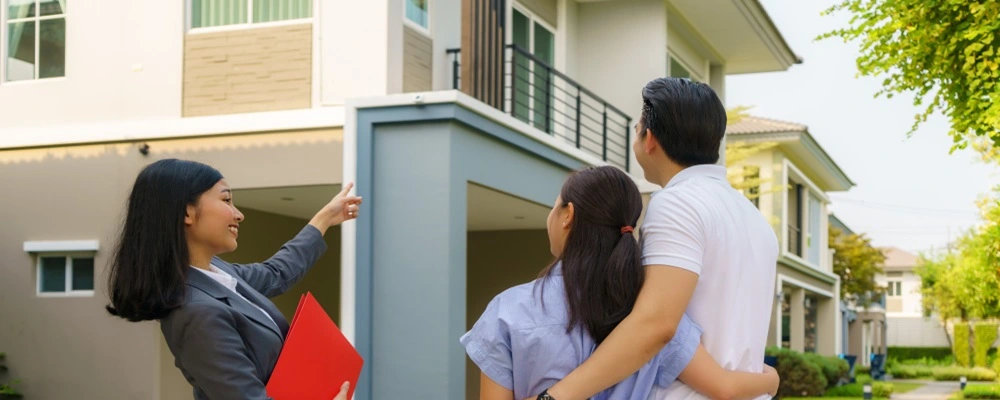
NRIs are Indians based in a foreign country spending 182 days in a particular financial year on foreign soil. They always have a question running back in their heads: whether they can buy property in India. Various laws have made it possible to build a buy property in India for NRI. 

India is becoming a more significant real estate market, which attracts NRIs to invest in property. But how can NRIs buy property in India? The right document, adhering to compliance, and following every framework can make it convenient for NRIs to buy property in India. 

Are you struggling with the documentation or steps to buying property in India as an NRI? Keep reading the blog, as we will cover a complete guide to the NRI property buying process in India. 

Can NRI Buy Property in India?

NRIs can purchase property in India when they comply with the right regulations and submit the relevant documentation. Whether getting loans for building commercial or residential property, NRIs can remain eligible for all.

According to the foreign exchange management regulation passed in 2018, NRIs are granted flexibility to purchase residential and commercial property. However, the process of buying property in India as an NRI comes with certain restrictions, as some properties, such as farms and plantations, cannot be bought by NRIs or require approval from RBI. 

Purchasing farmland, plantation property, or farmhouses is only permitted for Indian citizens residing in India permanently. An NRI who inherits any of these types of property must pass it on to a citizen of India residing permanently in the country.

A NRI who purchases property in India may also transfer it to the following people:

  • Another NRI
  • An Indian citizen residing in the country
  • An Indian living outside of India but with Indian ancestry

Types of Property NRI can invest.

There are two types of property investment options for NRIs in India. Some require no permission, whereas others may require approval from RBI. 

1. Residential and Commercial Property

The Reserve Bank of India (RBI) provides NRIs with general exemptions for owning residential property and investing in commercial property. The RBI is not required to approve this action and doesn’t have to be informed. Currently, NRIs can purchase several homes or commercial properties of their choice.

2. Agricultural and Plantation Property

NRI cannot directly purchase agriculture and plantation land as it is required to comply with the regulations. Any Indian citizen can act on behalf of NRI to purchase the land, ensuring they have a valid Power of Attorney. NRIs are restricted from purchasing agricultural or plantation properties in India under the RBI’s general authorization. The current restrictions prevent NRIs from purchasing farmhouses in India. All those NRIs looking to purchase agricultural land in India must apply for permission from the RBI.

Documents Required for NRI to Buy Property in India

NRIs need to submit the documents required for property purchases in India. The following are some of the documents required by NRIs to buy property in India:

1. Passport

The NRI must have a valid passport to affirm his or her identity. It is essential that the passport, when purchased, has a valid visa and is not damaged.

2. Overseas Address Proof

It is necessary for NRIs to provide proof of the addresses of their overseas locations. Typically, it takes the form of a license, utility bill, or financial statement.

3. PAN Card

A PAN card is the most necessary documentation for NRIs looking to buy property in India. NRIs can easily apply for PAN cards online or by contacting the Indian embassy.

4. Sale Agreement

Sale agreements summarize the conditions and terms of the property transaction, such as the sale price, the payment schedule, and possession dates.

5. Title Deed

A title deed is a document that conveys ownership of the property. NRIs want to ensure that the title deed contains no obligations or disputes with legal authorities.

6. Bank Account Details

Bank account details are a mandatory documentation requirement that NRI must have while proceeding further to the NRI property building process in India. To facilitate transfer funds for the purchase of the property, they must set up Non-Resident Foreign Exchange (NRE) or Non-Resident Ordinary Account (NRO).

Steps for NRI to Buy Property in India

Steps for NRI to Buy Property in India

NRIs understand the growth prospects of the real estate industry in India, and there is no better chance than now to invest in property. This gives them financial security and stability while on the move. Some people face challenges while building property in India. Here, we have put together easy Steps to buy property in India as an NRI. 

1. Getting Permissions 

There is no preset requirement for NRIs to apply for permission to purchase property in India. The property can serve any purpose, from commercial to residential. Luckily, Indian law does not require or restrict the purchase of property in India for NRIs. Even NRIs do not need specific permission from the Reserve Bank of India (RBI), as RBI has granted general permission to all NRIs.

Still, there are some properties that NRIs cannot buy, like Agricultural lands, plantation lands, and farmhouses. If you have eyes on these properties, there are some limitations or restrictions. To buy these types of property, you will require approval from RBI.

2. Getting the Property Ownership

According to Indian law, Non-Resident Indians have the complete right to own residential and commercial property in India, as stated in the Foreign Exchange Management Act (FEMA) and RBI guidelines. However, NRIs need to use the Indian Rupee to finance a home loan. Besides that, the law also states that NRI can purchase property in joint ownership with Indian citizens if they follow all the eligibility requirements.

3. Power of Attorney

Having a Power of Attorney is an important step for an NRI buying property in India. A power of attorney grants other individuals the right to act on behalf of the NRI and oversee the property-buying process. 

However, the law states all the documents involved in the property buying process must involve the signature of both parties and are subject to verification with the registrar in the relevant jurisdiction. The Consulate of the country where the NRI resides should certify the Power of Attorney selected (a family member) if the NRI cannot participate personally in the purchase process.

4. Payment Options

NRIs can purchase property in India only in Indian currency. Regardless of your home country, you must still pay in Indian currency. 

5. Loan

NRIs can apply for a home loan to purchase property in India. There is no certain limit on the amount of loan NRIs can get. However, the interest rate may vary with each lender. Several banks and Non-Banking Financial Companies offer loans to NRIs. Purchasing property in cities like Mumbai can lead to higher property rates, so applying for a home loan is the ideal choice. 

6. Taxes and Charges

Taxes are imposed on all income derived from properties in the country. Tax deducted at source will be charged on rental income the property earns. The TDS on long-term capital gains is 20% on resales, while the capital gains tax on short-term gains is based on the NRI income tax slabs. Also, NRIs are subject to stamp duty, registration fees, GST (Goods and Services Tax), etc.

Tax Implications for NRI Buying Property in India

NRIs looking to purchase property in India must comply with all the tax compliance. Here are the top tax implications every NRI must consider while closing a property deal in India: 

Income Tax

Income tax is a crucial tax every NRI needs to pay when buying property in India. From earning rental income from the property to getting capital gains from selling, income tax must be paid on these profits. It depends on the type and amount of income to determine the tax fee.

Property Tax

Property tax is the next important tax implication NRIs must pay to the local municipality where their property is located.

TDS

While selling the house, you must deduct Tax Deducted at Source (TDS) at a charge of 20% (plus surcharge and cess). The TDS will be deducted from the stamp obligation cost if the sale price exceeds the stamp duty value. NRIs are required to pay capital gains tax on the income from the sale of property. Taxation may vary based on the duration of ownership and the income generated.

Double Taxation Avoidance Agreement (DTAA)

Indian government agencies have signed DTAA agreements with some popular countries to eliminate double taxation. If you owe taxes in your home country, you can make a deposit for the tax paid in India.

Conclusion

Building a property in India has always been NRI’s priority, as it has seen significant current and future growth in the real estate market. Various Indian laws and regulations have made it easier for NRI to purchase property in India. If you are unable to look for property in India that meets your preferences, Brick & Bolt is a reliable choice to construct the property that meets your property requirements on the go. As a leading construction company in India, we specialise in constructing a property that fulfils every design and property layout need. Contact us today to fulfil your dream of owning a property in India.
Smart Tips for Building Your Dream Home Before You Turn 40

0
Tips for Building A Home Before You Turn 40

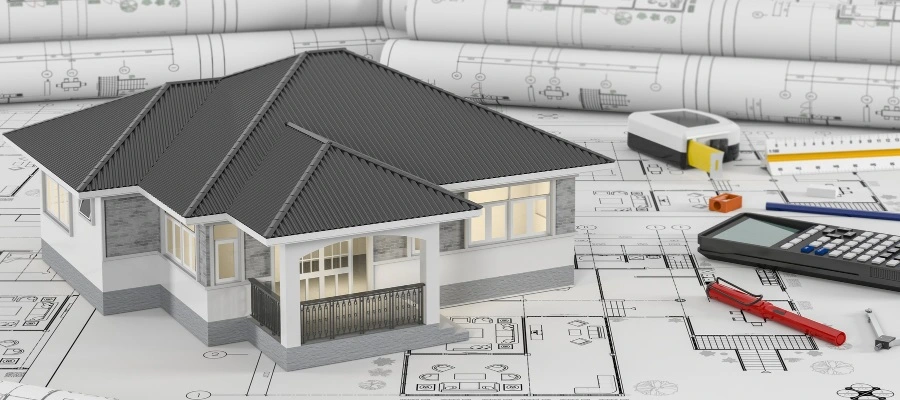
Everyone growing up dreams of building a house before turning 40. Getting your own house brings security, comfort, and peace of mind. But achieving it within the age of 40 fills you with positivity and feels like the biggest milestones come to life. 

Well, it gives you the best feeling to own your dream house before turning 40, but it requires a lot of research, preparation, and various steps to build your dream house. In addition, it brings a range of challenges, especially when you have a specific requirement to develop it according to your needs and design.

That’s why Brick & Bolt is here to help you! We will help you take the right steps to achieve your dream before you turn 40.

Read on as we will help you develop your dream house before 40 at every step. 

Why is Investing in a House in 2024 a Reliable Choice?

When you realize that real estate is a long-term investment, deciding whether or not to build a new home in 2024 becomes much easier.

New Builds Can Save You Money

Renting a house can be an affordable choice, but paying it for years and years can only lead to losses. If we look at the bigger picture, building the house in 2024 will always benefit you. However, the rental cost also continues to rise, making building homes a crucial choice. However, the new construction does not require the constant maintenance of older, established structures, which calls for developing the new house over renting. 

You Can Design Your Home as Per Your Own

Designing a home is the best feeling, specially when it comes to your own home. Building your dream house can benefit you over the years, and you can get it designed as per your needs. Rental houses are designed as per landlord requirements, but with new house construction, you can build your own house with a modern approach that matches your lifestyle. 

Future-proof Your Building Costs

There will likely be a rise in overall house construction costs in the future despite the easing of supply chain delays in recent years. Rising energy costs have increased the production cost of some construction materials, including cement, glass, and aluminium. Tradespeople shortages have also worsened over the past few years and are likely to worsen before they improve.

7 Easy Tips for Building A Home Before You Turn 40

Easy Ways to Build a House

Getting started early on planning your dream home can put you on track to achieving it by age 40. Here are the essential tips to add to your checklist to build your dream house before 40.

1. Decide What You Want

Before building the dream house, it is essential to know that what makes a house your dream home. so, combine all your house requirements, from design to layout, to ensure it meets perfect picture house requirements. There are various ready-to-move options, like Independent villas, 2BHK, 3BHK, or 4BHK flats, that meet your space and modern requirements. When choosing a ready-to-move space, make sure it is in the middle of the city and matches your budget. 

If you are planning to build a house with a custom design and requirements, choosing a leading construction company like Brick & Bolt is a reliable choice to meet all your requirements on the go. They can help you develop a high-quality house within your budget. Before deciding to build the house, ensure you tick all the boxes of requirements, and it defines your lifestyle. 

2. Start Your Savings Early

Saving is very important to get on the move to purchase or construct the home and make sure you have enough to pay for the down payment or construction. While you are investing in the building house make sure you carry at least 20% of the total price of the house. Hence, it will end the hassle of interest and lower down the burden of high EMI. 

3. Loan Comparisons

To get a better knowledge of the market and shortlist the best options, it is highly recommended to compare home loans from different banks. During this process, check interest rates and processing fees charged by banks, which usually vary from one institution to another. After reviewing and comparing these offerings carefully, you’ll be able to determine the costs of borrowing. This step will give you a better understanding of your loan capacity.

4. Maintain a Healthy Credit History

Maintaining a healthy credit history is imperative to applying for a larger loan amount. Additionally, a healthy credit score demonstrates your financial responsibility. There are several ways in which you can develop a good credit score, including:

  • Pay all your bills on time. Timely bill payments contribute a lot to maintaining a sound credit history. 
  • Use your credit card for several years, as it will help you boost your credit history. A credit card with a long history shows that you have a good habit of paying all the bills. 
  • Never borrow more than your capabilities. Doing so will increase your credit card debt, which can lead to a poor credit history.

5. Stick to Your Budget

Well, you are planning to build your house within 40 years, and you cannot check the box with any further expenses as there are many financial commitments to fulfil. Therefore, planning a suitable budget is essential. To make the budget, check for all the basic and emergency expenses, as it will help decide the net amount for your dream house. To track and manage your expenses without taking the manual route, you can use a variety of financial applications. While you are on the way to buying property, it is ideal to restrict unnecessary expenses so that you have an additional amount to include in the house budget.

6. Be Aware of Hidden Costs

When keeping a set budget, many people overlook hidden or unknown costs that can amount to lakhs. It is important to note that additional fees such as registration, stamp duty, and khata (where applicable) may be required. In some cases, builders may not mention taxes and other charges, so you won’t know the final price until you start the construction. The total price and registration and stamp duty charges should be requested to arrive at the final cost. Additionally, if you are building a new home, you may be required to buy furniture and other items as well. When setting a budget, you should always take these factors into account.

7. Choose the Right Real Estate Developers

Hiring the best real estate developer is a great way to build a highly efficient property that meets your design requirements and looks like a perfect dream house before turning 40. They have the best design, and their construction team can go the extra mile to build your dream house to match all the house development requirements.

Conclusion

Building a dream house before 40 comes with challenges, but with the right planning and process, you can address the obstacles and get closer to realizing your dream. If you are struggling to find the dream home that matches your requirements and lifestyle, Brick & Bolt is ideal for constructing a modern house that will bring your dream home to life. We have the best team of designers and developers who aim to offer perfection in designing and constructing the property. Contact us today to book your free consultation and walk on the journey of building your dream house before 40.

Nanotechnology in Concrete: Improving Strength and Durability at the Molecular Level

0
Nanotechnology in Construction

Concrete has been used as a building material since Roman times. It is mostly made up of four materials: cement, sand, aggregates and water. Every year, people all over the world build a huge number of different types of structures out of concrete. Normal concrete can’t do what it’s supposed to do because of changes in the building industry recently. For making heavy structures like bridges, multi-story buildings, seashore structures, and many more, there is a huge need for advanced concrete, which can meet the needs of higher strength and ease of construction. 

To fulfil those requirements, different experts are investigating the macrostructure and nanoscale of concrete. Hence, the industry is introducing the use of nanotechnology in concrete. So, with Brick & Bolt, let’s explore nanotechnology in concrete, including what it is, the benefits of nanotechnology in concrete and its recent developments. 

What is Nano-Technology in Concrete?

To understand the term ‘Nanotechnology in Concrete’, you first need to understand what nanotechnology is. So, “Nanotechnology” is often used as a “catch-all” term for anything very small, but in general, it means “understanding, controlling, and restructuring matter on the order of nanometers” (less than 100 nm) to make materials with fundamentally new properties and functions.

Nanotechnology in concrete includes the addition of nanoparticles to the cementitious material to enhance the overall performance and properties of concrete, such as its workability, durability, compressive strength, shrinkage, and more. As mentioned above, these nanoparticles are typically 1 to 100 nanometers in size. They can be derived from various materials such as silica, carbon, titanium dioxide, and others. Micro-silica or nano-silica is strongly advised for usage in ready-mix concrete since it improves the concrete’s elasticity, durability, and mechanical properties. 

Benefits of Nanotechnology in Concrete

The following are the benefits of nanotechnology in concrete.

1. Enhances Strength and Durability

Nanoparticles can fill in the gaps between the ingredients of concrete, such as cement particles, sand, and aggregates, which makes it denser and enhances its strength and durability. This higher packing density makes the concrete less porous and increases its resistance to cracking, abrasion, and chemical attack.

2. Increases Flexibility and Ductility

Nanoparticles can modify the microstructure of concrete, making it more flexible and ductile. This makes it easier for microcracks to form and makes the material better able to handle dynamic loads like earthquakes.

3. Enhances Workability and Performance: 

Nanoparticles can act as lubrication that makes it easier for cement particles to spread out and makes fresh concrete easier to work with. In addition, they can accelerate or retard the hydration process, which allows better control over setting time and early strength development of the concrete.

4. Self-Healing Properties

Some nanoparticles, such as nano-sized calcium carbonate or polymers, can repair cracks in concrete on their own. Environmental factors like changes in moisture or pH levels activate these nanoparticles. Once they get active, they combine with the materials around them to fix cracks and prevent further damage.

5. Easy Modification for Specific Applications

Nanoparticles can be used with various admixtures or additives to modify the specific properties of concrete. For example, nano-sized photocatalysts like titanium dioxide can be mixed into concrete to facilitate self-cleaning surfaces or to reduce air pollution by breaking down organic pollutants in the air.

Recent Developments in Nanotechnology in Concrete

Benefits of Nanomaterials in Concrete Construction

Products based on nanotechnology are now available on the market to decrease concrete’s permeability by adding nanoparticles as a solution. As per ‘The Constrofacilitator’, following are the recent developments in nanotechnology in concrete.

1. Nano-cement Portland cement 

When compared to traditional Portland cement, the composition of nano-cement, which is made up of calcium silicate-based nanoparticles created via flame spray synthesis, exhibits a tenfold improvement in early reactivity.

2. Nano-fume

High-strength concrete can be created using nano-fume, an ultrafine powder admixture of amorphous SiO2 made from fly ash combined with regular Portland cement. 

3. Nanometer-sized franklinite particles

Concrete made with nanometer-sized franklinite particles from an electric arc furnace has shown higher strength than concrete produced alone with Portland cement. 

4. Iron oxide nanoparticles 

Iron oxide nanoparticles are utilized in concrete to provide it with more strength and resistance to abrasion.

5. Organo-modified montmorillonite particles

Hydrophobic organo-modified montmorillonite particles have shown instantaneous strength and a commercially significant decrease in the permeability of cement mortar and concrete. 

6. Carbon Nanotubes 

Carbon nanotubes are very strong nanoreinforcements found in cement-based materials..

7. Nanoporous thin film 

It has been discovered that applying a nanoporous thin coating on aggregate surfaces prior to concrete mixing is an efficient method of enhancing the Interfacial Transition Zone and, therefore, the concrete’s performance. 

8. Titanium dioxide nanoparticles

Titanium dioxide nanoparticles can quickly hydrate, reach a higher degree of hydration, and clean themselves (in concrete); they are superhydrophobic, don’t fog, and don’t collect dirt (in windows), and they can generate electricity without using fuel (in solar cells).

9. Silicon dioxide nanoparticles

Nanoparticles of silicon dioxide: they improve fire resistance, cooling, light transmission, and mechanical strength reinforcement in concrete; they also improve flame-proofing and anti-reflection properties in windows.

Conclusion

To sum up, there is still so much to learn about the use of nanotechnology in sustainable construction despite the amazing progress that has been documented. Enhancing the properties of concrete, such as workability, strength, and durability, which have been shown to depend on the nanoscopic characteristics of its constituents, is one of the advances in the use of nanotechnology in sustainable construction. Therefore, it is expected that the use of nanotechnology to modify the molecular and atomic structures of these materials and their components at the nanoscale would significantly improve the performance of concrete and sustainable building materials in the future.

Labour Laws and Safety Regulations in Construction: Ensuring Worker Welfare On-site

0
labour law for construction

Amidst the noise of drills and cranes, a strong framework protects the safety and rights of those working on the front lines. These are the labour laws and safety rules. In this blog, Brick & Bolt delves into one of the most crucial aspects of building work- ensuring workers are safe and healthy by adhering to all the rules and laws about work.

Understanding Construction Labour Laws

Both employers and workers in the construction industry hold the key to a safe and fair work environment. Understanding the rules that govern work in the industry empowers them to ensure their interactions align with the law. These laws, specific rules set by the government, cover many work areas, such as workers’ rights, wages, working hours, and safety standards.

To understand construction labour rules, you need to know the following:

1. Labour Laws for the Construction Industry

Construction-specific labour rules control things like the minimum wage, overtime pay, and child labour. Following these rules is the law and the right thing to do to protect worker’s health and safety.

Minimum Wage Requirements: 

Rules govern how much an employer can legally pay an employee per hour. These rules ensure that people who work in construction are paid enough to meet their basic needs. Employers must pay at least the minimum wage, which can differ in each state and may change occasionally.

Overtime Pay: 

Rules about overtime pay say how much companies have to pay workers who work past regular hours. Employees who work more than a certain number of hours in a day or week usually get paid extra. To avoid labour violations and keep workers happy, it’s important to know and follow the rules about overtime pay in the building industry, where projects often need long hours to meet deadlines.

Child Labour Restrictions: 

Laws against child labour prohibit the hiring of minors to do dangerous or hard jobs in the construction industry. These rules aim to protect young people’s health, safety, and educational possibilities. Employers must follow rules about minimum age, maximum work hours, and other things meant to protect children’s health and safety while also giving them chances to learn and grow. 

2. Rights of Construction Workers

Building workers have many rights, such as the right to a safe workplace, fair pay, and not being discriminated against or harassed at work. It is very important that everyone understands and upholds these rights to create a culture of respect and dignity in the building industry.

Right to a Safe Workplace: 

People who work in construction have the right to work in a place free of known dangers that could hurt or kill them. Employers are responsible for finding and fixing dangers in the workplace, ensuring workers have the right safety training and tools, and taking other steps to prevent accidents and injuries. Workers should not be afraid to report unsafe situations and should be able to participate in safety programs and training.

Fair Compensation: 

Paying workers fairly means more than just meeting the minimum pay. It also means ensuring they get paid on time and correctly for all their work hours. This includes overtime pay, bonuses, and other earned perks or incentives. Fair pay makes workers happy, loyal, and productive, and it also lowers the risk of legal trouble that comes with wage and hour violations.

Freedom from Discrimination or Harassment: 

Construction workers have the right to a safe workplace where they are not discriminated against or harassed because of their race, gender, age, religion, or disability. Employers need to set rules and guidelines to stop and deal with discrimination and harassment at work. This includes training workers, reviewing reports, and punishing offenders as needed. Making sure that workers are safe from harassment and discrimination helps to create an environment of respect, equality, and inclusion in the construction business. 

3. Compliance with Construction Regulations

Adhering to construction regulations is not just a legal obligation; it’s a mark of a responsible construction company. These regulations encompass a broad spectrum of requirements, from environmental standards to building codes. By following these rules, construction companies not only mitigate their legal risks but also demonstrate their commitment to the health and safety of their workers. 

Adherence to Building Codes: 

Building codes are rules that ensure buildings are safe and well-designed for everyone who lives, works, or visits them. Building permits, approvals, and certifications for construction projects depend on following building rules, which cover many different areas, such as ensuring buildings are safe, accessible, and energy efficient.

Compliance with Environmental Standards: 

Environmental standards control how building projects affect water and air quality, noise pollution, and habitats. Following environmental rules means reducing negative effects on the environment, getting permission for actions that might affect natural resources, and fixing any environmental problems that construction projects cause.

Putting Safety Protocols and Procedures into Action: 

These rules and routines are meant to keep the building industry safe and free of accidents, injuries, and illnesses from working there. Some of these are methods for finding and rating hazards, using personal protective equipment (PPE), operating and maintaining equipment, what to do in an emergency, and safety training. It is important to follow strict safety rules and protocols to protect the health and safety of building workers and keep the workplace safe.

Prioritising Occupational Safety in Construction

By prioritising occupational safety in construction, people work together to ensure that workers’ safety and well-being come first in all building activities. To make occupational safety a top priority on building sites, which are always changing and often dangerous places to work, full safety measures, rules, and training programs must be put in place to prevent accidents, injuries, and illnesses that can happen at work.

This prioritisation includes a few important parts:

1. Safety Culture: 

Creating a safety culture in which everyone, from managers to frontline workers, is dedicated to putting safety first above all else. This means encouraging people to be aware of safety issues, take responsibility, and be involved in safety efforts.

2. Risk Identification and Mitigation:

Being aware of the possible dangers and risks associated with building work and taking the right steps to reduce them is essential. This includes conducting thorough risk assessments, implementing safety controls, and ensuring that people have the right personal protective equipment (PPE).

3. Training and Education: 

Provide workers with thorough safety training and education programs that give them the knowledge and skills they need to successfully spot and deal with safety hazards. This could include learning how to use tools correctly, what to do in an emergency, and how to report hazards.

4. Regular Inspections and Monitoring: 

Checking and auditing building sites regularly to find and fix safety problems immediately is a proactive method that allows problems to be fixed quickly and improves safety practices.

5. Giving Workers the Power: 

Workers are given the power to take an active role in safety efforts by being given ways to report hazards, suggest improvements, and join safety committees or meetings. People who work there should be able to speak out about safety issues without worrying about getting in trouble.

6. Compliance with Regulations: 

Ensure government agencies and industry groups follow all important safety rules and regulations. This means staying updated on government rules, getting the right permits, and following the best safety management practices.

By putting safety first in construction, companies protect the lives and health of their workers, boost productivity, cut down on the costs of accidents and injuries, and maintain their image as responsible and ethical employers. 

How To Ensure Compliance and Worker Protection in the Construction Industry?

Ensuring compliance and worker safety in the building industry requires a multifaceted approach that includes proactive steps, strict rules, and a long-term dedication to health and safety. To do this, here are some important steps:

1. Legal Requirements for Construction Projects

To effectively navigate the regulatory landscape, it is important to know the legal requirements for building projects. Legal requirements must be followed at all times for building projects to go smoothly. This includes getting the right permits and following zoning rules.

2. Employee Rights in the Construction Industry

By teaching workers in the construction industry about their rights, they can stand up for themselves and hold their bosses responsible. Worker handbooks and training events are two tools that can help you make sure your employees know their rights and responsibilities.

3. Labour Union Regulations in Construction

When working in a unionised workplace, construction companies need to know the rules set by the labour unions in order to keep workers happy. Working together with labour unions and following through on collective bargaining deals encourages workers to respect and work together. 

In conclusion, it is not only the law but also the right thing to do in the fast-paced construction industry to put worker safety first. By following safety rules of construction and labor laws, construction companies can make the workplace a place where everyone feels safe and valued for their rights and dignity. Let’s keep working toward a future where building sites are known for being safe, giving workers power, and making money for everyone.

Building Codes and Standards: Staying Up-to-Date with Regulatory Requirements

0
Building Codes Regulation

The construction industry is always growing, so it’s important to know the latest building codes and standards. As projects change, so do the rules that govern them. This means that everyone involved needs to stay alert and take action to make sure they are following the rules. In this blog, Brick & Bolt goes into great detail about building codes and standards, explaining what they mean, how they’ve changed over time, and how to use them correctly.

What are Building Codes?

Building codes are a set of regulations that tell builders what the basic standards for safety, durability, and structural integrity should be. These rules cover many areas of construction, such as fire safety, plumbing, electrical systems, accessibility, and structural design of buildings.

The Importance of Building Codes and Standards

Following building codes and standards is very important in the construction industry to make sure that structures are safe, reliable, and last a long time. These building code regulations and building construction codes are like a set of directions that control different parts of designing, building, and maintaining a building.

The International Building Code (IBC):

The International Building Code (IBC) is a comprehensive model code that was made by the International Code Council (ICC) to set basic standards for how buildings and structures should be designed, built, and occupied. It is a set of rules that all jurisdictions must follow when it comes to building safety and development. The goal is to promote consistency, uniformity, and interoperability.

The IBC is updated on a regular basis to include new technology, research findings, best practices, and lessons learned from previous failures. While the IBC is intended to be a model code, any jurisdiction may adopt, modify, or add to it to meet its particular requirements, circumstances, and aims.

Adoption of the IBC by state or municipal governments makes building codes more standard and interoperable. This simplifies the design, construction, and regulatory procedures for builders, architects, engineers, and other stakeholders working in various fields.

The IBC covers a lot of different building-related topics, such as, but not limited to:

Structural Design: 

Rules for making buildings strong enough to handle different types of loads, like dead load, live load, wind load, earthquake load, snow load, etc., and the condition of the soil.

Fire Safety: 

Rules about how to avoid, find, put out, and evacuate a fire, as well as standards for building materials and systems that are resistant to fire.

Building Materials and Methods: 

Details about building materials, methods, and quality control measures that make sure buildings are durable, safe, and constructed correctly.

Accessibility: 

Rules for designing buildings and services so that people with disabilities can use them, in line with laws and standards that apply to accessibility.

Plumbing, Mechanical, and Electrical Systems: 

Rules for installing, maintaining, and making sure that electrical, plumbing, and HVAC (heating, ventilation, and air conditioning) systems are safe in buildings.

Energy Efficiency and Sustainability: 

These are rules for designing and constructing buildings that use less energy. They also include standards for using sustainable materials, renewable energy systems, and actions to protect the environment.

The National Building Code (NBC):

The National Building Code (NBC) is a complete set of rules and guidelines that each country makes to control how buildings are designed, built, and used in its own country. It tells architects, engineers, contractors, and other people who work in the construction business how to ensure that buildings are safe, sound structurally, and in accordance with all laws and rules.

The National Building Code may differ from country to country because of differences in climate, geography, traditional practices, and rules and regulations. However, the main goal is to protect the health, safety, and welfare of the people by setting minimum standards for the built environment.

Most of the time, the National Building Code is enforced by local, regional, or national regulatory bodies through building permits, inspections, and certifications. Penalties, fines, or legal action can happen if you don’t follow the national building code. This shows how important it is to understand and follow these rules in construction tasks. 

The National Building Code usually talks about many things when it comes to building, such as, but not limited to:

Structural Design: 

Rules for making buildings strong enough to stand up to forces like wind, earthquakes, and gravity.

Fire Safety: 

Rules for avoiding, finding, putting out, and evacuating a fire to protect people and property.

Plumbing and Mechanical Systems: 

Rules for setting up and maintaining plumbing, HVAC (heating, ventilation, and air conditioning) systems, and other mechanical systems to ensure their well-being and safety.

Electrical Systems: 

Rules for setting up, maintaining, and ensuring the safety of electrical wiring, tools, and equipment in buildings.

Accessibility: 

The rules for ensuring that buildings and spaces are easy for people with disabilities to use, in accordance with accessibility laws and standards.

Energy Efficiency: 

Standards that encourage building designs and construction methods that use less energy and have less of an impact on the environment.

Local Building Code:

Local building codes are the rules and laws that local or regional governments set to govern construction in their area. These rules are made to fit the specific needs, wants, and goals of the area, which can be affected by things like climate, geography, cultural practices, and population density.

Municipal or regional building departments or regulatory bodies issue building permits, inspections, and certifications to ensure that local building codes are followed. All building projects in the area must follow these rules. If they are not followed, penalties, fines, or legal action may be taken.

Because these rules are unique to each area, builders, architects, engineers, and other interested parties need to learn about the local building code requirements that apply to their project site. Working closely with building officials and local authorities can help ensure that construction projects meet the standards and get the approvals they need to be occupied.

Most of the time, local building codes go beyond what is required by national or foreign building codes. They add more specifics and details to make sure that construction projects meet the needs of the area. They might talk about a lot of different things, such as, but not limited to:

Zoning Regulations:

Zoning regulations say how land can be used, how dense buildings can be, how far apart they can be from each other, and other things that affect where and how buildings can be placed in a town.

Standards for Building Design and Construction:

These include rules for structure design, materials, building methods, and quality control measures to make sure buildings are safe and last a long time. 

Fire and Life Safety: 

Rules about how to avoid, detect, put out, and evacuate a fire, as well as requirements for fire-resistant materials, emergency exits, and how first responders can get to the scene of an emergency.

Accessibility: 

Rules for designing buildings and services so that people with disabilities can use them, in line with laws and standards that apply.

Energy Efficient and Sustainable: 

These are the rules that are meant to encourage designing and constructing buildings that use less energy. They also include standards for environmentally friendly materials, renewable energy systems, and ways to protect the environment.

Health and Cleaning: 

Rules about plumbing, cleaning, ventilation, and other parts of building design and operation that are meant to keep people healthy and comfortable.

Importance of Building Code Compliance

Building Code Inspections: 

During the building process, regular checks are done to make sure that building codes and standards are being followed. These checks cover different stages, from the foundation to the final occupancy, to make sure that rules are followed.

Compliance with Building Codes: 

Following building codes takes careful planning, design, and execution. To get through the complicated process of compliance, you need to hire experienced architects, engineers, and contractors who know how to meet regulatory standards.

Building Code Regulations: 

Everyone involved in a construction job needs to know the details of building code regulations. From developers and architects to workers and inspectors, following the rules makes sure that people are safe and healthy and that the law is followed.

In conclusion, building codes and standards are very important for ensuring that buildings are safe, reliable, and last a long time. By following these building code regulations, professionals in the construction business can ensure that their projects are safe, efficient, and good for the environment.

Building Dreams: How to Choose the Right Architect for Your Dream Home

0

Everybody has hopes and dreams for their own homes. Some people might want open floor plans for comfort and luxury while other wants an easy kitchen expansion to create even a few more square meters of open space that can be used. It will be much easier to make your dreams come true if you choose an architect for your home building who understands your goals and with whom you can work together in a positive way. 

Who are Architects, and What They Do?

A person who designs, plans and supervises the construction of structures is known as an architect. To practice architecture is to provide services related to the design of structures and the areas on the site around them that are primarily used by humans for habitation or usage.

The responsibilities of architects differ based on the type of organization they work for, their location and other variables. They might be engaged in every stage of a building project, from designing architectural drawings and specifications to supervising the various stages of the construction process, all the way from expressing ideas to customers and building contractors. Architects often work with specialists in adjacent disciplines, including structural engineering, urban planning, and interior design.

How to Choose an Architect For Your Home Building Project?

The following are the factors to consider when choosing an architect for your home construction project.

1. Ask Friends and Family for Recommendations

One of the best ways to choose an architect is to get recommendations from people you know who have recently built a house. These could be friends, family, or coworkers. They will tell you the truth about what to expect from the architect and how much they charge. They will also give you the best tips on how to work with the architect.

2. Consider Your Budget 

Hiring an architect requires having a reasonable budget. Decide how much you can afford to pay for architectural services before you start your search. So that, you may decide if a certain architect is within your budget before pursuing further conversations with them. Remember to consider overall house construction costs including extra expenses for things like supplies, licenses, and other surplus charges. Establishing your budget upfront can make it easier and faster to identify potential architects. 

3. Research for Potential Architects 

Finding the perfect architect for your dream home is the first thing that needs to be done when selecting an architect. If you have friends or family who have done jobs like this before, ask them to suggest someone. You can also search online or in trade magazines for architects in your area who are experts in the type of work you want to do. When you have a short list of possible architects, look at their websites and galleries to learn more about their work and how much experience they have.  

4. Check Their Experience and Portfolio 

Look for an architect with expertise and a successful track record when making your choice. To learn more about their talents and styles, take some time to browse through their portfolio. Verify that their aesthetic adheres to any zoning or municipal laws as well as your project’s concept. Ask them about their expertise with projects that are comparable to yours, such as adaptive reuse or green building. This sort of specialist expertise may be quite helpful in the difficult project design process.

5. Arrange an Interview with the Potential Architects 

Arrange an Interview with the Potential Architect

Once you have a short list of potential architects, it’s time to arrange an interview with them. Find out how they’ve worked on projects like this before, what their design philosophy is, and what services they offer. You should feel good about working with them and get along with them personally. This will make sure that communication goes smoothly throughout the whole process. Also, make sure you ask about fees and how they will bill you so there are no unpleasant surprises later on.  

6. Check Their Suitability for Your Project

The most crucial aspect of selecting an architect is to make sure that they meets your requirements and standards. This entails reviewing their portfolio to make sure your project’s scope aligns with their style. Are they experts in contemporary designs? Have they worked on residential projects before? A skilled architect should be knowledgeable about both the style and functionality of the design. It’s also critical to consider their reputation among colleagues and customers. References from previous clients might help you assess a candidate’s dependability and suitability for the work at hand. 

7. Check References of the Shortlisted Architects

Communicating with previous customers of an architect is the finest technique to assess their abilities. Inquire about references from past customers who can attest to the quality of their work, punctuality, compliance with the construction contracts, communication abilities, etc. from any prospective architects. To see firsthand the calibre of their workmanship and design ethics, try to visit any buildings they designed or renovated.

8. Keep Attention to Every Detail

The majority of architects recognize the value of this aspect. It is crucial to have written copies of all the specifications, phases, schedules, costs, and contracts related to your house construction process. Spend some time looking for ways to enhance the original design rather than ignoring minor flaws. Above all, save all of your documents for future use.

In conclusion, hope these tips for choosing an architect for your dream home will help you to find a compatible person who respects your vision and has a successful track record in home designing and building. Take your time and follow your intuition when selecting an architect, since they will be the ones responsible for making your vision a reality. When you’ve located the ideal fit, be ready to begin building the house of your dreams. Even while the path won’t always be simple, working with the best architects or an architectural firm like Brick & Bolt will provide outcomes that will be well worth the effort.

Contractual Agreements in Construction: Drafting Tips and Common Pitfalls to Avoid

0
Construction contract

In the rapid and complicated construction industry, contractual agreements are crucial for ensuring project success. All the people involved, developers, contractors, subcontractors, architects, engineers, and suppliers, must follow these legal contracts to ensure they know their duties and responsibilities. Writing thorough and well-organized construction contracts is important to reduce risks, settle disagreements, and protect everyone’s interests.

Whether you’re a seasoned construction worker or just starting out, knowing the ins and outs of construction contracts and being aware of common pitfalls can make a big difference in how well your projects turn out. In this blog, Brick & Bolt will talk about useful drafting tips and some of the most common mistakes you should never make when working with construction contracts.

What are Construction Contracts?

Construction contracts are deals between a client and a contractor to do certain work. They are legally binding. There are clear instructions in these contracts about the work that needs to be done, when it needs to be done, how much it costs, and who is responsible for what. To keep disagreements from happening during the building process, it’s important to communicate clearly and keep thorough records. Also, contracts usually have ways to settle disagreements and deal with changes in the project’s scope or unplanned events.

Drafting Tips for Effective Construction Contracts:

Construction Contracts

1. Clear and Concise Language: 

Construction contracts should be written clearly, concisely, and briefly. Do not use law terms or words that are too technical and could be misunderstood. Make sure that terms, jobs, and responsibilities are clearly stated to avoid disagreements caused by misunderstandings. It is important to ensure that everyone can understand the language used, even if they don’t know much about law or technology.

2. Detailed Scope of Work: 

Outline the work that needs to be done, including a full description of the project, the materials that will be used, the specs, and any special needs or restrictions. This work should leave no room for doubt, and everyone involved should read it over and agree to it. Because the scope of work should be very clear, there shouldn’t be any misunderstandings or wrong assumptions during the project completion phase.

3. Payment Terms and Schedule: 

Make the payment terms very clear. This should include the contract’s total value, payment milestones, and any fines or rewards for paying on time or late. Describe how to send invoices, process payments, and handle disputes that arise from payment problems. It is important to set up a clear and fair payment plan that takes into account how far along the work is, how much it costs, and any possible delays or problems.

4. Timeline and Project Scheduling: 

Set reasonable due dates for the project, taking into account possible delays or unplanned events. There should be clauses for extensions, liquidated damages, and fines for delays that are the party’s fault. A clear project schedule helps keep everyone on track with their expectations and gives you a way to measure success and think about possible rewards or punishments.

5. Risk Allocation and Liability: 

Carefully divide up the risks and responsibilities among the people involved. Make it clear who is responsible for getting the right permits, getting insurance, following safety rules, and taking care of any possible environmental problems or dangerous materials. Risk sharing should be carefully thought out based on what each party can do, how much they know, and how much power they have over certain parts of the project.

6. Clauses for Change Order Procedures: 

Changes or modifications are often made during a construction job. Establish clear rules for handling change orders, such as how to ask for, approve, and record changes, as well as the costs associated with them.

7. Ways to Settle Disagreements: 

Describe the steps that will be taken to settle any disagreements that may come up during the job. Depending on the type of disagreement and how bad it is, this could include rules for mediation, arbitration, or going to court.

8. Termination Clauses: 

Make it clear when either party can exit the contract, such as when there are major breaches, insolvency, or events beyond their control. Make sure everyone knows their rights and responsibilities if the agreement is broken.

Common Pitfalls to Avoid in Construction Contract Drafting:

Pitfalls to avoid contract drafting

1. Ambiguous or Unclear Language: 

Uncertainty or ambiguity in a building contract can lead to misunderstandings, disagreements, and expensive court cases. Ensure that all of the conditions, terms, and rules are written in a way that is easy to understand. It is also a good idea to have a lawyer look over the contract to find and fix any unclear or inconsistent parts.

2. Incomplete or Missing Clauses: 

If important clauses or provisions aren’t included in a building contract, important parts of the project might not be covered, which could lead to disputes and legal problems later on. Carefully read over and make sure that all the necessary terms are included.

3. Unrealistic Timelines or Budgets: 

Setting deadlines or budgets that are too tight can put too much pressure on everyone involved and lead to delays, cost overruns, and disagreements. Make sure that everyone involved carefully reviews the schedules and budgets and agrees on them.

4. Failure to Allocate Risks Appropriately: 

If risks and responsibilities aren’t shared correctly, it can cause disagreements, financial losses, and project delays. Carefully review the risks and assign them to each party based on their skills, knowledge, and power over different parts of the project.

5. Lack of Proper Review and Negotiation: 

If you rush through the process of writing a contract without doing enough review and negotiation, you could make mistakes, end up with terms that aren’t fair, and have legal problems in the future. Allow enough time for everyone to carefully look over, negotiate, and work together on the plan.

6. Non-compliance with Laws and Regulations: 

If people don’t follow the laws, rules, and industry standards that apply to them, they could face legal problems, fines, and project delays. Ensure that the contract follows all applicable laws and business best practices.

Construction workers can improve and enhance their contractual agreements by following these drafting tips and avoiding common pitfalls. Well-written construction contracts protect everyone’s interests and encourage everyone to work together and get things done, which helps projects finish successfully.

Remember that getting help from experienced construction attorneys can be very helpful in making sure that your contracts are complete, enforceable, and in line with best practices in the industry. Including important people, like architects, engineers, and project managers, in the contract drafting and reviewing the contract can also give useful information and help find possible problems or trouble spots. You can reduce risks, settle disagreements quickly, and set the stage for successful building projects that benefit everyone if you put in the time and effort to write and negotiate contracts.

Different Types of Doors to Consider For Your Home

0
Types of door

One of the most important parts of home planning is the choice of doors. Doors not only serve practical purposes like keeping you safe and giving you privacy, but they also make your home look better overall. In this blog, Brick & Bolt explains about all the different types of doors you can get for your home, breaking them down by style and material. Whether you’re making a new home or remodelling the one you already have, knowing about the different door options can help you make choices that make your living space more useful and beautiful.

Types of Doors by Style

Door by style

There are many types of doors based on style, and each one looks good and has its own special features. Here are some common types of door styles broken down by type:

1. Flush Doors

When it comes to doors, flush doors are sleek and simple, so they fit right in with modern interior designs. There are no frames or decorations on the smooth surface of these doors, which gives them a clean and modern look. They are often found in houses in cities and simple homes. One of the best things about flush doors is that they can be painted or veneered to fit any style of interior design. The smooth surface of flush doors also makes them easy to clean and maintain, which is great for homes with lots of people.

2. Panel Doors: 

Panel doors are a standard choice that makes any home look more beautiful and rich. One or both sides of these doors have raised or hollow panels that give them visual interest and depth. Panel doors are good because they last a long time because the panels help to strengthen the door’s frame, making it strong and long-lasting.

3. Bifold Doors: 

These doors fold in half, making them very useful in small rooms like pantries, closets, and washrooms. These doors have two or more sides that fold together like an accordion when they are opened. This makes them easy to get to and makes the best use of space. Modern homes and flats with open floor plans and rooms that can be used for more than one thing often have bi-fold doors. Bifold doors are useful because they can be changed to fit different opening sizes, and they are easy to use because they have a track-and-roller system.

4. Sliding Doors: 

Another way to save space is with sliding doors, which make it easy to go from inside to outside and offer wide views. One or more panels on these doors slide horizontally along tracks, so there is no need for room for the door to swing open. Many modern houses and beachfront homes with lots of natural light and outdoor living space have sliding doors. When it comes to modern living spaces, sliding doors are perfect because they look good, save energy, and are easy to adjust.

5. French Doors: 

With their classic look and timeless design, french doors add a bit of class and elegance to any home. These doors are made up of two hinged pieces that open from the middle, making a large opening that feels warm and welcoming. French doors are often used as entrances to gardens, terraces, or porches because they let in a lot of natural light and make the transition from inside to outside smooth. One of the best things about French doors is that they can be made to fit any architectural style by choosing from different types of glass, hardware finishes, and grill designs.

6. Dutch Doors: 

Dutch doors are a charming and useful option for homes that want a unique and useful way to open their doors. The top and bottom halves of these doors can open and close separately because they are split horizontally. Dutch doors are great for people who want to enjoy the outdoors and the sun without giving up their privacy or safety. They are often found in cottages, farmhouse-style homes, and coastal houses. They add character and charm to any entryway. Dutch doors have many benefits, such as being flexible, saving energy, and making a home look better from the street.

7. Pivot Doors: 

These doors are modern and unique, and they give any room a bit of architectural flair. These doors don’t swing open like most doors do; instead, they spin on a pivot hinge, which makes them easy to use. The unique form of pivot doors makes them a popular choice for front doors in modern homes, luxury apartments, and business buildings. One of the best things about pivot doors is that they can be made in a wide range of sizes, styles, and materials to match any style.

8. Battened and Ledged Doors:

Doors with battens and ledges give any home a touch of country charm and warmth. The traditional and classic look of these doors comes from the way the vertical wooden boards (battens) are held together by the horizontal wooden pieces (ledges). In country cottages, farmhouses, and cabins, battened and ledged doors are popular. They give the rooms a sense of nostalgia and authenticity. Some of the benefits of battened and ledged doors are that they are long-lasting, look good, and can handle bad weather.

9. Revolving Doors: 

Offices, hotels, and business buildings with a lot of foot traffic can benefit from using revolving doors. These doors are made up of several panels that move around a centre axis. This lets people enter and leave at the same time without letting drafts or noise in. People know that revolving doors save energy because they keep the temperature inside stable by limiting airflow. Because they take up less room, operate smoothly, and offer better security, revolving doors are perfect for public areas that are always busy.

10. Louvered Doors: 

Louvered doors are both stylish and useful, and they make any room look more interesting by adding texture and pattern. These doors have horizontal slats, also called louvers, that are evenly spaced across the surface. This lets air move and ventilation through while still keeping your privacy. Bathrooms, closets, and utility rooms are popular places to use louvered doors because they let air flow and allow ventilation. One of the best things about louvered doors is that they can be made to fit your needs by adding different sizes and shapes of louvers.

11. Roller Doors: 

Garages, warehouses, and industrial facilities can benefit from roller doors because they are practical and take up little room. These doors are made up of horizontal slats that are linked to each other and roll up and down along tracks. This makes them easy to use and makes good use of space. Roller doors are known for being strong, safe, and resistant to the weather, so they can be used in difficult conditions. Roller doors have many benefits, such as not needing much upkeep, running smoothly, and being able to handle heavy use, which makes them perfect for commercial and industrial settings.

12. Hinged Doors: 

Traditional and flexible hinged doors can be used in many places in the home, such as entryways, bathrooms, and closets. These doors have one panel that is connected to the door frame by hinges. The hinges allow the panel to swing in or out. Many different styles, sizes, and materials are available for hinged doors, so they can be used inside or outside. Simple, inexpensive, and easy to install are some of the benefits of hinged doors that make them a popular choice among homes.

13. Pocket Doors: 

These doors slide into a hidden pocket in the wall when they’re not in use, freeing up as much floor room as possible and letting people move freely. These doors are great for small rooms, halls that aren’t very wide, and other places where there isn’t much room to swing. Pocket doors come in many styles and materials, so people can make them fit their wants and tastes. The good things about pocket doors have many benefits, such as taking up less space, being easy to use, and giving any room a clean, streamlined look.

14. Barn Doors: 

These doors are trendy and rustic, and their sliding system and use of reclaimed wood make them a great addition to any home. These doors make a unique and stylish entrance because they slide along a track that is fixed above the doorway. A touch of warmth and authenticity is added by barn doors, which are popular in farmhouse-style homes, industrial lofts, and modern rooms. Barn doors are useful because they can be used in many situations, last a long time, and make a statement in any room.

15. Saloon Doors: 

Saloon doors, which are also called swinging cafe doors or cowboy doors, are a fun and quirky choice that gives any room a sense of history and personality. These doors have two sides that swing open from the middle, making it easy to get through while still keeping things private. Saloon doors are often used in kitchens, bars, and restaurants to make the space feel fun and friendly. Saloon doors have a unique look, can be used in a variety of ways, and can add charm to any room.

Different Types of Doors Based on Their Materials:

Door by materials

1. Glass Doors: 

Glass doors are a modern and classy option that makes any home look more stylish and sophisticated because they let in more light. The strong frame that holds these doors together makes the toughened glass panels look like they are one piece. Modern homes, beachfront properties, and business spaces often have glass doors because they let in a lot of natural light and views that aren’t blocked. Glass doors are useful because they can be used in many situations, last a long time, and make small rooms look bigger and airier.

2. Steel Doors: 

Doors made of steel are strong, long-lasting, and safe. They protect well against burglars and bad weather. The galvanized steel plates that make up these doors are filled with insulation material, which makes them very good at keeping heat in and noise out. When protection and energy efficiency are very important, steel doors are often used as front doors in homes and businesses. Steel doors are strong, last a long time, and don’t need much upkeep, which makes them perfect for places with a lot of foot traffic.

3. Wooden Doors: 

Wooden doors are classic and can be used in many situations. Their different colours and grain patterns make any home feel warmer and more beautiful. Based on your style and price, these doors can be made of solid wood or engineered wood like plywood or MDF. Wooden doors come in many types, finishes, and styles, so people can make their homes look the way they want them to, based on their personal tastes and way of life. Wooden doors are good because they look nice, keep heat in, and can be repaired or painted whenever they need to be.

4. Aluminium Doors: 

Aluminium doors are durable, light, and easy to take care of. They also look sleek and modern. The frames of these doors are extruded aluminium and have glass or panel openings. This makes them strong and stable while letting in the most natural light and views. Modern homes, business buildings, and high-rise condos often use aluminium doors because they are durable and can be styled in a variety of ways. Aluminium doors are good because they don’t rust, use little energy, and can be recycled. This makes them a good choice for eco-friendly homes.

5. Fiberglass Doors: 

Doors made of fiberglass last a long time, use little energy, and look like wood without the upkeep. The fiberglass and resin used to make these doors give them better strength, stability, and heat performance. There are many styles, textures, and colours of fiberglass doors that can make them look like real wood without maintenance. Fiberglass doors are often used in coastal homes, humid climates, and places with a lot of foot traffic because they are resistant to moisture and last a long time. Fiberglass doors have many benefits, such as not needing much upkeep, being energy efficient, and not warping, breaking, or rotting.

6. Fiber Reinforced Plastic Doors:

Fiber-reinforced plastic (FRP) doors are a cheap and lightweight choice that can be used in a variety of situations and last a long time. The fibreglass strands in these doors are set in a resin matrix, which makes them strong, flexible, and resistant to rust and weathering. FRP doors are often used in business buildings, factories, and places with a lot of moisture because they are strong and don’t break easily. A few of the benefits of FRP doors are that they are lightweight, don’t break easily, and can handle tough weather.

7. Melamine Doors: 

Melamine doors come in a lot of different styles and colours are easy to clean, and don’t cost a lot of money. The melamine resin finish on these doors makes the surface smooth and long-lasting, so they won’t scratch, stain, or fade. They are made of particleboard or MDF panels. Melamine doors are often used in utility rooms, bathrooms, and kitchens because they are durable and inexpensive. Melamine doors have many benefits, such as being inexpensive, easy to maintain, and able to look like real wood or other materials.

In conclusion, decisions about the right doors for your home are significant and can affect both the look and functionality of your living area. There are a lot of different types of doors you can use to make the right entrances and walls for your home. These include flush doors, glass doors, steel doors, wooden doors, and more. A lot of choices are available to meet your wants and tastes, whether you like sleek and modern designs or classic and traditional ones. If you know about the different styles and materials of doors, you can make choices that will make your home look better, feel better, and be safer for years to come. 

If you want to know about a secured lock system for your main door, check out our exclusive blog by clicking the link below.

Types of Brick Bonds Used in Masonry

0
Types of Brick Bond Used in Masonry

The consistent pattern of brickwork that maximizes the strength of the building is called “brick bonding” in the construction sector. Although the brick bond’s main function is structural, it may also significantly impact your home’s exterior look and your home’s distinctive style. Hence, in this blog, Brick & Bolt explains what a brick bond is and the top 11 types of brick bonds used in masonry.

What is a Brick Bond?

A brick bond is a pattern that is used to place bricks within the building they make, such as a sidewalk, wall, or column. They may be arranged widthwise, horizontally, or standing upright. Simply put, the way bricks are put is called a brick bond. It works for things like brick walls, brick flooring or paving for yards and paths. 

There are numerous types of brick bonds, and each has unique characteristics, installation difficulties, and structural issues when it comes to wall construction.

11 Types of bond in brick masonry

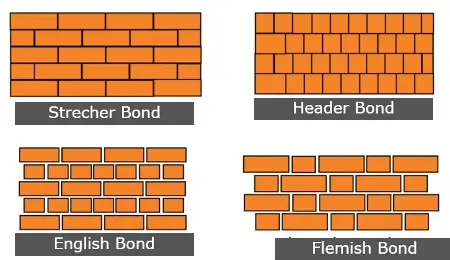
The following are the types of bonds in brick masonry:

Brick bond types
  1. Stretcher Bond
  2. Header Bond
  3. Flemish Bond
  4. English Bond
  5. Stack Bond
  6. Garden Wall Bond
  7. Zig Zag Bond
  8. Raking Bond
  9. Facing Bond
  10. Scottish Bond and American Bond
  11.   Rat Trap Bond

Let’s explore all the brick bonds in detail.

1. Stretcher Bond

Stretcher Bond

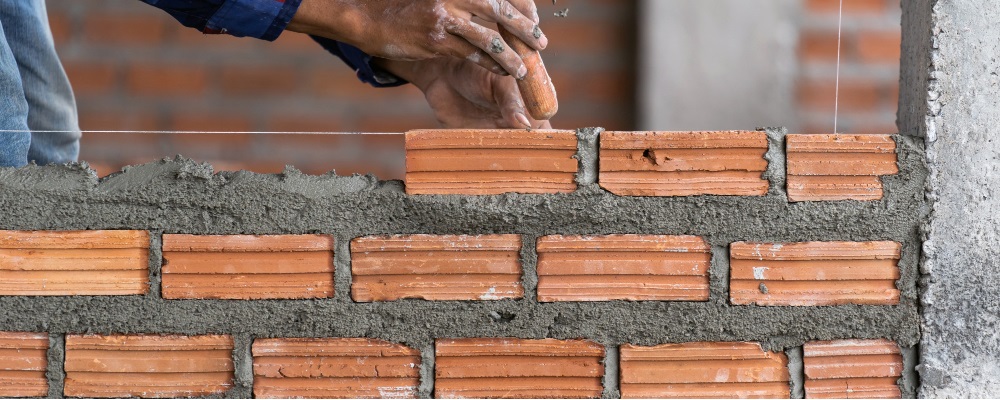
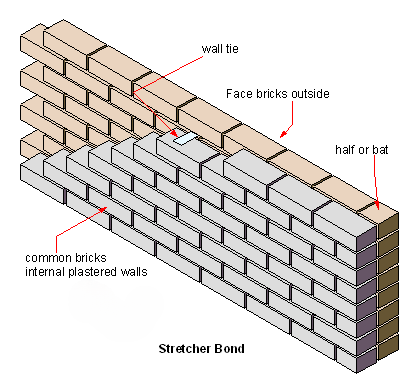
A brick’s longer, narrower face is referred to as a stretcher. Stretcher bond is also known as a Running bond. It results from laying bricks such that only their stretchers are visible, overlapping halfway between the courses of bricks above and below. The most basic repeating pattern in brick is a stretcher bond. But one problem with stretcher bond is that it can’t really stick to bricks next to each other in walls that are full width and thick. They are suitable for one-half brick thick walls, like those used to build half-a-brick-thick partition walls. 

2. Header Bond

The header is the 9cm x 9cm square face of the brick that is shorter. You can also call it a heading bond. Each course of bricks in a header bond is put on the face of the wall as a header. Stretcher bond is used to build walls that are half the thickness of a brick, and header bond is used to build walls that are 18 cm thick, which is the thickness of a full brick. 

3. Flemish Bond

Putting down different headers and stretchers in a single course makes a flemish bond, which is also called a Dutch bond. The subsequent brick course is placed such that the header is positioned in the center of the stretcher in the course below; that is, each course’s alternative header is centered on the stretcher of the course below. The header in the corner of each Flemish bond alternative route is the first step. The types of brick bonds are at least one full brick thick. One problem with flemish bonds is that it is hard to build and take more skill to lay correctly because all the vertical mortar joints need to be lined up vertically for the best results. Even though Flemish bonds look better, they are not as strong as English bonds when it comes to building load-bearing walls. So, if you need to point brick walls, you can use Flemish bond for a better look. English glue is the best choice for plastering walls. 

The flemish bonds are classified into two categories:

i) Single Flemish Bond

A single Flemish bond is a mix of an English bond and a Flemish bond. In this type of building, the front surface of the wall that is visible is made of Flemish bond, and the back surface is made of English bond. For a single Flemish bond, the width must be at least one and a half bricks. The main reason for using a single Flemish bond is to make the front look better while still giving the bricks the power they need with an English bond.

ii) Double Flemish Bond

The front and back of a double Flemish bond have the same look because each course is made up of an alternate heading and stretcher. These types of bonds in brick masonry are not as strong as English bonds.

4. English Bond

In brick masonry, English bond has one course of stretchers and one course of headers above it. This means that the two courses of stretchers and headers alternate. The headers are placed in the middle of the stretchers below, and every other row is lined up vertically. Some walls have quoin closers at the start and end to break up the straight lines of the vertical joins. When you cut a brick in half lengthwise, you get a quoin close. These are used at the corners of brick walls.

5. Stack Bond

In the Stack bond design, the bricks are stacked on top of each other so that all of the joints line up. Since the bricks are stacked vertically down the wall, they don’t stick together very well. As a result, this pattern of brickwork isn’t as strong as others. People often use this type of masonry bond for decoration.

6. Garden Wall Bond

This is one of the best types of brick bond for walls that are one brick thick. A garden wall bond makes wall construction faster and less expensive. This brick bond is not as strong as the English Bond, so it works best for building dwarf walls and other constructions that won’t be under a lot of stress and load.

The garden wall bonds are classified into two categories:

i) Flemish Garden Wall Bond

In the Flemish garden wall bond, which is also called the “Sussex Bond,” forms like stretcher, header, and stretcher are used. In this type of brick bond, there are three stretchers and one header in the same course instead of just one header and one stretcher. It’s also known as “balanced bonding.” 

ii) English Garden Wall Bond

In this type of brick bonding, English Garden Wall Bond are set up in a way that is similar to English bonds. The only change is that every four or six courses, the heading courses are added. Usually, one course of headers is paired with three courses of stretchers. On the heading course, a queen next to the quoin header acts as the required lap end.

7. Zig Zag Brick Bond

Bricks are put in a zigzag pattern throughout the joint when using a zigzag bond. Two types of bonds that belong to the same category are zigzag and Herringbone bonds. Owing to its appealing look, it works well for domestic building paving projects like walkways and floors. But it can’t be utilized to construct a masonry structure’s main walls since it can’t support weights.

8. Raking Bond

In the raking bond, the bonding bricks are put at an angle other than zero or ninety degrees. Because of this configuration, English bond walls constructed in this manner are more stable over time. Bricks angled toward the wall’s face are placed within a wall’s exterior stretchers to create a bond between the two sections. The height of a wall is split into parts where this type of bond is added.

The racking bonds come with two different types of brick bonds:

i) Herring-bone Bond

Herring-bone bond is one of the best types of brick bond for walls. It is at least four bricks thick. In this pattern, the bricks are set up 45 degrees from the middle and go in two different ways. You can also find these types of bonds on brick sidewalks.

ii) Diagonal Bond

This brick bond works best on walls that are two to four bricks thick. For most walls, the diagonal bond is added in every fifth or seventh course of the height. In this type of bond in brick masonry, the corners of the series stay connected with the stretchers.

9. Facing Bond

In these types of brick bonds, the header course comes after a number of stretcher courses. It’s often used to make walls that are thick. It can be very helpful to bond together the two different sizes of the facing wall and the backing wall. In spite of this, there are not the same number of joints on the facing and backing sides.  However, because of the unequal load distribution brought on by the broad range of thicknesses, there are not an equal number of joints in the backing and facing faces. Another possible consequence of this non-uniformity is the uneven settling of the masonry walls. 

10. Scottish Bond and American Bond

The stretchers are used five times beneath the header course in the Scottish Bond. The American Bond course consists of seven repetitions of brick brickwork.

11. Rat Trap Bond

The rat trap bond uses bricks that are arranged vertically or on edge, but never horizontally. Consequently, a hollow gap or cavity develops in the wall. By preventing interior temperatures from rising above outdoor ones and vice versa, this function helps to improve thermal comfort. Compared to other bonds, this type of wall uses less material. The Flemish bond and the rat trap bond have a lot of physical similarities. It can resemble a vertical Flemish bond. This type of brick bond will cost more since it needs specialized labour and oversight.

Conclusion

In conclusion, a bond is the placement of bricks or stones in each course to maximize interlocking and minimize vertical gaps between two succeeding courses on a wall’s face or body. Brick bonds, which reflect the patterns utilized in brick installation, are often seen in masonry construction. They may be used for concrete blocks and other masonry constructions, as well as for brick walls and pavers.  The complete brickworks process is determined by the types of brick bonds and their quality. For brick walls and other constructions to be both strong and aesthetically pleasing, the bricks must correctly connect.

Exploring the Stamp Duty and Property Registration Charges in Delhi

0
Stamp Duty and Property Registration Charges in Delhi

Recently, the Indian government empowered the nation to levy taxes on property transactions. Property taxes stand as a leading source of revenue generation for local governments across the nation. Imposed in the form of stamp duty, the Registration Act of 1908 makes it mandatory for homebuyers to pay stamp duty at the time of property registration.

Whether you plan to buy, sell, or invest in properties, check out the Stamp Duty and Registration Charges in Delhi. If you are a homebuyer, and the purchased property remains unregistered in your name, you do not enjoy the ownership of the property by a court of law. The registration of the purchased property and the ownership of the property get transferred from the previous owner to you in the government records. Therefore, The Registration Act of 1908 mandates every buyer to pay a stamp duty charge at the time of property registration.

Hence, as a leading construction company in Delhi, Brick & Bolt explain all about stamp duty and property registration charges, including what it is, factors affecting stamp duty and registration charges, documents requirements, how to calculate it, and how to pay stamp duty and registration charges online.

Explaining Stamp Duty and its Significance in Property Transactions

Stamp Duty plays a crucial role in property transactions across Delhi. The government is levying the tax on properties acquired through various means, including gift deeds, sales deeds and conveyance. The Delhi government sets the rate, which varies significantly depending on multiple factors, such as the type of property and the owner’s gender. These rates are subject to revision to align with the market trends and policy objectives. 

Understanding the intricacies of stamp duty is crucial for anyone planning to buy a home or engage in property transactions in Delhi. This understanding is not just about the legality of the transactions but also about the financial implications. Proper assessment and compliance with stamp duty regulations ensure a smooth and legally sound property transfer in the city while also helping you plan your finances effectively.

Stamp Duty and Registration Charges in Delhi

In the Indian capital city, property registration charges play a crucial role in the legal transfer of ownership. The government calculate the charges based on the current market value of the registration of your property.

The registration fees amount to 1% of either of the consideration amount agreed between the buyer and seller or the value as per Delhi circle rate of the stamp duty, whichever is higher. The mechanism ensures that the government receives a fair share of the revenue from property transactions while preventing the undervaluation of properties from evading taxes. Determining property registration charges based on higher values between the consideration amount and the circle rate helps maintain transparency and fairness in property transactions across the city.

The New Delhi Municipal Council (NDMC) and Delhi Cantonment Board play significant roles in the governance and administration of specific areas within Delhi. Often, properties located within their jurisdiction experience variations in stamp duty and registration charges compared to other areas in the city. 

Factors Affecting Stamp Duty and Registration Charges

Stamp Duty and Registration Charges in Delhi depend on various factors.

Property Location: 

Your property’s location forms the primary determinant within the city. The different areas in the city have different rates set by the local authorities, including the Delhi government and administrative bodies like NDMC and the Delhi Cantonment Board. 

Buyer’s Age:

Your age also influences these charges, as some jurisdictions offer concessions or exemptions to senior citizens and specific categories.

Buyer’s Gender:

The buyer’s gender is important in Stamp Duty rates in Delhi 2024. The government levies lower rates on female owners to promote gender equality and empower women in property ownership. 

Property Type:

Another critical factor involves the type of property. Residential and commercial properties have different rates and regulations governing stamp duty and registration charges. 

The state government assesses these factors collectively to determine the final costs of property transactions in Delhi. It highlights the significance of careful research and consultation with legal and real estate professionals.

Calculation of Stamp Duty and Registration Rates in Delhi

As a prospective property buyer in Delhi, you have the power to access online resources and stamp duty calculators. These tools provide you with valuable insights into the estimated charges associated with your intended purchase. By simply inputting the essential details about your choice property, such as the location, type, and value, you can generate an approximate figure for stamp duty and registration charges. This knowledge empowers you to understand the financial implications of your investment and plan accordingly.

While calculating stamp duty and registration charges in Delhi, ensure that the circle rate established by the government is considered. The circle serves as a benchmark for property values in a particular area and plays a pivotal role in determining your property’s registration fees. As a buyer, you must stay informed about the latest guidelines and updates about the circle rates, as they ensure accurate calculations. When you have regular updates, you have access to the current information. It helps you make informed decisions and avoid discrepancies during property registration. Staying informed and using the available online tools, you can navigate the complexities of stamp duty and registration charges effectively, facilitating a smoother transaction process.

Systematic Guide for Paying Stamp Duty Online

Payment Process of Stamp Duty and Property Registration Charges in Delhi

With the introduction of e-stamping techniques in Delhi, there are no offline channels, and you must pay the stamp duty through e-stamping. The centre appointed the Stock Holding Corporation of India Limited (SHCIL) as the agency responsible for e-stamps. Therefore, homebuyers must visit the organization’s official portal and pay there.

Online stamp duty payment is simple yet efficient. You can complete it from any location to save time and effort. To make the payment, follow the steps below.

Step 1: Visit the Official Portal      

First, visit the official website of Stock Holding Corporation Ltd. It’s the gateway to initiate your stamp duty payment in the capital city of India.

Step 2: Register or Create an Account

If you do not have an account in the portal, ensure that you create one with the required information, including your name, email address and phone number. Once you register your phone number, you will receive an OTP (one-time password) on your number. Follow the instructions mentioned on the portal and validate your account.

Step 3: Enter Details of Your Property

After logging in to the account, find the page dedicated to stamp duty. Enter the pertinent information about your property for which you are paying stamp duty. This information includes specifics like the area, nature and location of the property, and ownership information.

Step 4: Calculating the Stamp Duty

After you submit the data related to your property, the site will compute the application stamp duty, considering the current rates established by the state government. 

Step 5: Uploading the Documents

The next step is to upload the required files in the order mentioned in the portal. You need to submit documents related to real estate, including an agreement to sell, or any other document required by the state government.

Step 6: Verification and Validation

After entering the required information, ensure that you examine it. Take note of the stamp duty amount, property specifics and attached document. Verify and ensure that all information is current and correct. If you want to make any changes, it is the right time to do so, as you can never change anything once you submit it.

Step 7: Make Payment

After confirming all the details, proceed to pay the computed duty amount. You can pay the stamp duty and registration charges through digital wallets, debit cards, credit cards, and net banking. For secure transactions, choose your preferred payment option and adhere to the mentioned instructions.

Step 8: Acknowledgement and Receipt 

The SHCIL web portal will generate an acknowledgement copy or receipt after you have successfully paid the stamp duty. You must download and store it as proof of evidence of payment.

What are the Documents Required for Stamp Duty Registration Charges in Delhi?

You must submit some essential documents to complete your property registration process in Delhi. These documents serve as proof of ownership and facilitate the legal transfer of the property from the seller to the buyer. These include the following documents.

  1. ID and address proofs: The buyer and the seller must support with their identifications and address proofs. It can be any government documents, including an Aadhaar card, voter ID card, passport or driver’s license for verifying their identities and addresses.
  2. Passport-size photographs: The seller and the buyer must submit their recent passport-size photographs for documentation purposes.
  3. PAN card: The buyer’s and seller’s PAN (Permanent Account Number) card is essential for property registration and tax purposes. You must provide it as per regulatory requirements.
  4. Proof of TDS payment: If applicable, you must provide proof of tax deduction for the source (TDS) payment. As a buyer, you deposit TDS with the income tax authority after deducting it from the sale consideration amount.
  5. Sale deed: Your sale deed is a legal document officially transferring the ownership of the property from the seller to you. It includes all details, including the property’s description, sale consideration and transaction terms.
  6. E-stamp paper: The paper creates legal agreements or documents, including the sale deed. You must purchase the appropriate denomination of an e-stamp paper based on the transaction value.
  7. Registration fee receipt: You also require upload proof of payment for the registration fee, calculated based on the property value or circle rate.

Ensure you submit all the required documents on time. It helps you with a smooth and legally compliant property registration process in Delhi. The government advises the sellers and buyers to gather and organize these documents in advance. It facilitates the efficient completion of the registration process.

Conclusion

If you plan to buy a property in Delhi, comprehending stamp duty and property registration charges in Delhi is indispensable. With the advancement of technologies, you can familiarize yourself with the rates, calculations and procedures involved. These help you in making informed decisions and facilitate seamless transactions. The initiatives undertaken by the government to promote women’s homeownership and streamline the payment process contribute to fostering a transparent and inclusive real estate environment in Delhi.