Home Blog Page 105

Citizen’s Guide: Understanding Patta Chitta, Online Application Process and Fees

0
What is Patta Chitta

Several Indian states are making their land records digital to reach their goal of the Digital India programme. Patta Chitta is an essential document for landowners in Tamil Nadu, validating their ownership rights and offering crucial legal recognition. With the advent of digitalization, one can obtain Patta Chitta on online platforms. It offers convenience and efficiency to landowners.

The document provides crucial information, including the land area, ownership details, revenue assessment, offering legal recognition and protection to landowners. Patta Chitta serves as a supporting document if you plan to buy and sell a property, take loans, or avail yourself of the various government schemes and subsidies. With Patta Chitta, you, as a landowner, can establish your identity as a legal owner, safeguarding your interests and preventing disputes regarding land ownership.

Hence, as a leading construction company in Chennai, Tamilnadu, Brick & Bolt provides a comprehensive guide on Patta Chitta, including what patta chitta is, the difference between patta and chitta, its benefits, the online application process of patta chitta, How To Get Patta Chitta, documents requirements and fees. 

What is Patta and Chitta?

Issued by the Tamil Nadu government, Patta serves as a record containing the original landowner’s name, the land’s area, and its location, along with survey details. It is a crucial document that you, as a landowner, must have to prove you possess a particular property. The concept of Patta isn’t new. Instead, people started it in ancient times when the landowners documented their lands using traditional methods. 

Over time, the Tamil Nadu government established the Patta as a formal document, allowing individuals to register their land ownership. Patta acts as a sense of security, highlighting your land’s ownership. Whether you want to sell, rent or lease your property, you need to produce Patta as proof of owning the land. Moreover, financial organizations require a copy of your Patta while sanctioning loans.

A Patta contains the following information:

Owner’s Name: The document contains the landowner’s name who has the right to hold the land.

Location of the Property: The document specifies the exact location of the land, including the district and Taluk.

Survey Numbers and Subdivision Details: The document’s section contains the landowner’s details, especially the administrative division. One can find various information, including the survey and subdivision numbers. These unique codes help identify the specific place of the land.

Size and Classification of the Land: The document specifies the category of the land owned by an individual. It can be wetlands or dry lands. It helps calculate the types of crops suitable for the land.

Revenue Payment Details: The section furnishes revenue details of the land, such as outstanding payments and paid land taxes.

Chitta is a land revenue document maintained by the Village Administrative Officer (VAO) and the Taluk office. Chitta, similar to Patta, provides the relevant details of the ownership, area, and size of the land. It classifies the land into nanjoi or wetland, and punjai or dry land.

In 2015, the Tamil Nadu government merged Patta and Chitta into a unified document, which we today call Patta Chitta. The consolidated record contains information regarding the size, area, revenue history, and ownership of specific properties. It helps landowners make transparent transactions and avoid disputes.

Differences Between Patta and Chitta

Despite being similar, Patta and Chitta have subtle differences. These include the following:

Regarding purpose, Patta serves as a legal document provided by the government establishing homeownership of the proposed land. On the other hand, Chitta focuses on the details of the land. The details include the survey number, location, area, and type of the land. In short, Patta is a legal document acting as a Record of Rights (ROR), whereas Chitta is a comprehensive document containing the necessary information related to the land.

In terms of information, Patta contains details about the property and its location. On the other hand, Chitta includes encumbrances and liabilities of the land.

Speaking of legal status, Patta is a significant document providing landownership. It acts as a vital document when a landowner wants to buy, sell, or lease a particular piece of land. Chitta is a supporting document containing all the information related to the property. In short, Chitta refers to an individual’s track of ownership of the proposed land.

Benefits of Having Patta Chitta Documents

The Patta Chitta holds immense importance for Tamil Nadu landowners for the following reasons.

Proof of Ownership

Patta Chitta is the primary document for establishing legal land ownership in Tamil Nadu. The document offers the landowners their rights and protects them against any disputes or claims on the property.

Assessing Land Revenue

The Patta contains information about an individual land area, classification, and land revenue assessment. It ensures that the landowners know the applicable taxes and charges related to the property.

Access to Government Services

Possessing Patta facilitates the owner’s access to various government services and benefits associated with the land. Owners can obtain loans, subsidies, and grants and exercise land-related rights and privileges.

Land Classification and Usage

The Chitta provides information on land classification, including industrial, agricultural, commercial, and residential. Classification determines the permitted usage, ensuring compliance with land-use regulations.

Property Tax Assessment

Since Chitta provides the necessary details for calculating and levying taxes, landowners can also use it to assess property taxes. It ensures that they are aware of their tax obligations.

Legal Transactions

Chitta is essential for conducting legal transactions associated with land, and owners might sell, buy, or mortgage their properties. It acts as a reference document for verifying ownership and establishing the legitimacy of land transactions.

How to Apply for Patta Chitta Online?

Patta Chitta Online Application Process

After merging Patta and Chitta into one, landowners in Tamil Nadu must follow the online application process for Patta Chitta. While applying, one must follow these steps.

Step 1: Logging Into the Website        

Individuals planning to apply for Patta Chitta must log in to the Tamil Nadu Patta Chitta website. One can avail of the website in two languages- English and Tamil.

Step 2: Choose the Relevant Option

Click on the View Patta & FMB/ Chitta/ TSLR Extract option on the website. The option under the heading View Patta Copy/ A-Register Extract.

Step 3: Select the District and Taluk

Enter details such as Taluk, village, ward, survey number, and other relevant information from the dropdown menu. After entering the required information, click on the proceed button. The dropdown menu contains all the districts except Mayilduthurai, the 38th and the newest district of the state, announced in December 2020.

Step 4: Enter Relevant Details of the Property

Enter the survey and sub-division numbers after selecting the survey number in View Patta Chitta using the bar. If you choose the Patta Number in the Patta/Chitta, Use the bar to enter the Patta number. Enter the authentication value and click the submit button.

Step 5: Download the Certificate

After submitting the property details, you will receive a certificate from the Town Survey Land Register. The online certificate will contain the property’s details, including the type of construction on the property, the municipal door number, the type of land, the locality and the survey number.

Documents Required for Patta Chitta in Tamil Nadu

The paperwork landowners require to obtain Patta Chitta in Tamil Nadu differs slightly depending on the type of application and land transaction. However, an individual must collect the enlisted documents for a general application. These include:

  • Identity and address proofs
  • Land ownership documents
  • Record of Rights (ROR)
  • Encumbrance certificate
  • Survey number and subdivision details
  • Land tax receipts
  • Old Patta or Chitta documents, if applicable
  • Mutation register extract
  • Copy of layout approval, if applicable 
  • Power of attorney, if applicable

Fee Payment for Patta Chitta 

Landowners can avail of Patta against a small cost of INR 100. However, the Tamil Nadu government encourages the landowners for Patta Chitta online payment. It aids in educating the citizens about the specifics of the land. Based on their Patta Chitta documentation, farmers can receive crop loans from banks and other financial entities. Individuals can pay their land revenue taxes on time. Furthermore, one must submit other fees related to the land, These include the following:

  • Patta application fees
  • Chitta application fees
  • Patta Chitta combine application fees
  • Online service charges
  • Other charges

Checking the Status and Validity of Patta Chitta

Landowners can check the status of their Patta Chitta by following these steps:

  • First, one needs to log in to the Tamil Nadu e-District Website.
  • Enter the application ID along with the Captcha Values. After entering these details, click on the Get Status Button.
  • The website will reflect the Patta Chitta status.

One can also check the validity of the issued certificates online. When checking the validity of the Patta Chitta, ensure to add the reference number. Follow the steps listed to validate or verify the Patta certificate.

  • Log on to the Tamil Nadu Patta Chitta website, available in Tamil and English.
  • Select the Verify Patta option. It is under the head Verify Web Issues Patta/ A-register Extract.
  • Enter the reference number and click the submit button.
  • The website will generate the verification details of the requested Patta.

Conclusion

Tamil Nadu’s Patta Chitta systems are a significant development in land management. It offers citizens an easy-to-access and transparent platform for managing and confirming their property data. Besides, the digitization of these papers decreased the chances of fraudulent activities. Since landowners can access property information online, Patta Chitta facilitates hassle-free transactions, improves the verification process, and adds to a transparent land governance system. Patta Chitta is critical in enhancing transparency, lowering bureaucratic barriers and developing a secure and efficient land management system in Tamil Nadu. It proves the Tamil Nadu government’s dedication to digitalization and citizen-centric services.
Types of Stairs in Building Construction

0
tYPES OF stairs

Stairs are an important part of building design that is often overlooked, but they are also very important for how the building looks. The design and construction of stairs greatly affect the general look and usability of a building, whether it’s a home or an industrial complex. In this blog, Brick & Bolt looks at the different types of stairs that are widely used in building construction and explains their unique features, benefits, and best uses.

Different Types of Stairs in Building Construction

STRAIGHT STAIR

Stairs are a set of steps or flights that let people move from one level of a building or structure to another. They can have different shapes and sizes depending on the needs of the architecture and the function. 

From classic straight stairs to contemporary spiral designs, each type of staircase offers unique characteristics and advantages. 

Let’s get into the types of stairs in building construction:

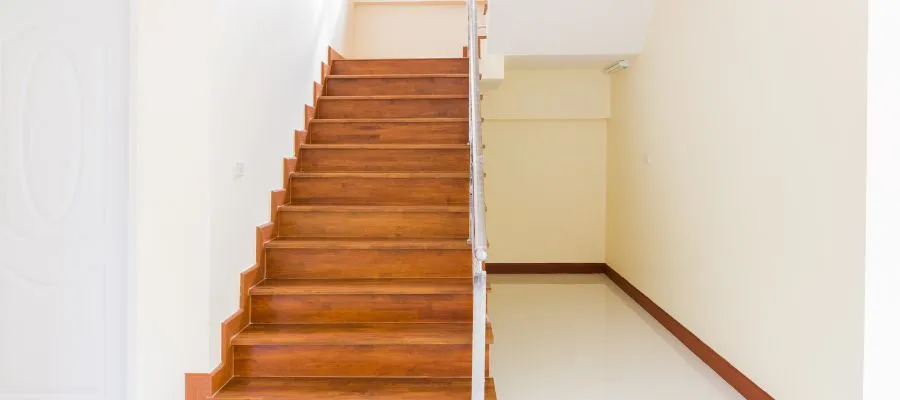
1. Straight Stairs

Straight stairs are the simplest and most common type, featuring a continuous flight of steps without any changes in direction. They are easy to design, construct, and navigate, making them perfect for various settings, including homes, offices, and public buildings.

Advantages of Straight Stairs

  • Straight stairs are popular because they are easy to use and space-efficient. They are also easy to put together, which saves time and money during the building process because they are simple.
  • Their linear design means they don’t take up much floor room, which makes them useful in a wide range of architectural settings. 
  • t also makes it easier for people of all ages and abilities to use, since the steps are all the same and there are no landings or turns. 
  • Straight stairs can be made from a variety of materials and designs, so they can fit a wide range of aesthetic tastes and building needs. 

2. L-Shaped Stairs

As the name suggests, a 90-degree turn makes an “L” shape on L-shaped stairs. This design gives you more freedom in planning your space, and it’s often used in apartment buildings where you need to change directions because of limited room or your personal taste in architecture.

Advantages of L-Shaped Stairs

  • Firstly, their design allows for efficient use of space, particularly in tight or compact areas, as they can be tucked into corners or against walls. 
  • This layout also provides a natural transition between floors, promoting smooth traffic flow within a building. 
  • L-shaped stairs tend to be safer than straight stairs, as they typically incorporate landings or platforms at the turn, offering resting points and reducing the risk of accidents. 
  • Their aesthetic appeal and versatility make them suitable for various architectural styles, from modern to traditional, enhancing the overall visual appeal of a space while ensuring practicality and functionality.

3. U-Shaped Stairs:

U-shaped stairs involve two flights of steps parallel to each other with a landing in between, making a “U” shape. Larger buildings or homes with plenty of room usually have this design when there is a long vertical distance to be crossed.

Advantages of U-Shaped Stairs

  • One big advantage is that they make good use of space because they can often fit neatly into a corner or up against a wall, making the most of the floor space you have. 
  • The U-shaped stairs usually have steps or platforms at each turn. These give you a place to rest and lower the risk of accidents. 
  • The symmetrical and aesthetically pleasing layout of U-shaped stairs can improve the look of a room as a whole, going with a variety of architectural styles while still being useful and stylish.

4. Spiral Stairs

Spiral stairs are also known as circular stairs or helical stairs. Spiral stairs feature a central column around which the steps wind in a helical pattern. These stairs are prized for their compactness and aesthetic appeal, making them popular choices for both indoor and outdoor uses, such as towers, lofts, and historical buildings.

Advantages of Spiral Stairs

  • They are perfect for places that are tight on space because they are small and take up little room. They make good use of floor space while still letting you get from one level to another. 
  • This adaptability means that spiral stairs can be used both inside and outside, and they can fit in with a wide range of architectural types and settings. 
  • Spiral stairs have a unique look that makes any room look more elegant and sophisticated. Their curved shape makes a striking focal point that adds to the general atmosphere and architectural interest. 
  • Spiral stairs can be changed to fit different design tastes and practical needs, so they are flexible in both form and function. 

5. Curved Stairs

The beautiful curves or arcs of curved stairs make a sweeping effect. You can find them in high-end homes, luxury hotels, and big public buildings. They add a touch of class and elegance to any building plan.

Advantages of Curved Stairs

  • It provides a striking centre.
  • Improves the look of architecture.
  • Curved stairs are a stylish and space-saving option that can make a room look better while making the most of its floor space.

6. Floating Stairs

Floating stairs, which are also called cantilevered steps, look like they don’t have any supports, which makes them look clean and simple. These stairs depend on hidden structural supports or brackets attached to the wall, creating a striking visual effect that exudes modernity and sophistication.

Advantages of Floating Stairs

  • They are flexible in form because they can be changed to fit different architectural styles and tastes.
  • Their simple design makes them easy to clean and maintain, which adds to their clean, clear look. 
  • Floating stairs also give the impression that they are light and not heavy, which makes them a striking focal point in any room.

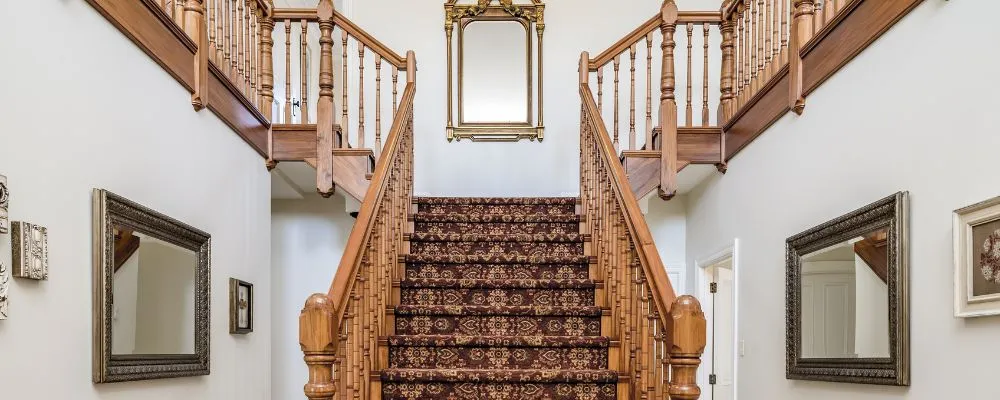
7. Split Stairs

Split stairs are also known as bifurcated stairs. Split stairs have a landing in the middle that splits the stairs into two separate flights, each going in a different way. This design makes a striking visual effect and gives any area, inside or out, a touch of architectural sophistication. There are different ways to set up split stairs based on how the building is laid out and how much space is needed.

Advantages of Split Stairs

  • Split stairs are also easy to build in a way that works with a variety of architectural styles and tastes.
  • They can also give a room a sense of greatness and elegance, especially in entryways or larger rooms.

8. Ladder Stairs

Ladder stairs, which are also called alternating tread stairs or ship ladders, are a unique and space-efficient way to make vertical movement work in buildings. Ladder steps are different from regular stairs because they have alternating treads that let people go up or down with a steeper slope. Ladder steps have clear benefits in some situations, but they might not be right for everything. 

Advantages of Ladder Stairs

  • Need less floor space because they slope steeply.
  • Make it easy to get to higher levels in small areas.
  • It can be changed to fit different styles, tastes, and space needs.

9. Crossover Stairs

Crossover stairs, which are also called crossover bridges or pedestrian overpasses, are raised walks that let people safely cross over things likes machines, moving parts, pipes, or other things that might be in the way in a building. These structures make crossing easy and quick because you don’t have to deal with traffic on the ground. 

Advantages of Crossover Stairs

  • Crossover stairs are safe for people to use because they let them cross over busy places without blocking traffic.
  • Everyone can use these stairsmaking it easy to get across town.
  • Crossover stairs help traffic move better and reduce congestion by separating people from cars. This makes it faster for both walkers and drivers to get where they need to go. 

10. Scissor Stairs

Scissor stairs have a unique design with treads that go back and forth. They are also called switchback stairs or alternating tread steps. Unlike regular stairs, where each step is flat, scissor stairs have steps that change curves, making them look like a pair of scissors opening and closing. Because of their form, scissor stairs can have a steeper slope while still providing a stable footing. This makes them a good choice for buildings with limited floor space. They are often used in factories, lofts, and other places where traditional stairs might not work because of limited room.

Advantages of Scissor Stairs

  • Scissor stairs are small, they make good use of room and are ideal for places with limited floor space. 
  • Their form can also be changed to fit any building, and it gives it a modern look that makes it look better overall.

When it comes to building, the choice of stairs is more than just a matter of function; it’s also a chance to improve the structure’s look and how it flows. Architects, designers, and homeowners can make choices that improve both form and function by learning about the differences between stair types and how they can be used.

We at Brick & Bolt know how important stairs are in the planning and construction of buildings. Our team of experts is dedicated to making your construction dreams come true, whether you want a traditional straight staircase or a modern floating design. Get in touch with us right away to start your stairway to greatness journey.

Compound wall Construction and Design

0
Compound wall Construction

Compound wall construction and design can be done with various materials like brick, concrete, pre-cast concrete, metal grills, bamboo and stone. These days even garden green walls are used as compound walls.

Compound wall construction, compound wall design, brick, concrete, pre-cast concrete, metal grill, bamboo, wall garden, green wall, stone masonry.

Compound walls act as the frame to the house adding to the aesthetics and overall appearance of the house. These are most ignored and usually designed with just the trends without taking into consideration the context and the design of the house. Compound walls need not be just simple straight walls. They can be designed in different ways using different materials and also different from boundary wall construction

Plastered brick wall

Brick wall with plaster and paint are most commonly used for making compound walls. Variation in laying such as steps or voids is done to drift away from the simple straight horizontal wall and make the wall look appealing.

Metal fenced wall

Metal grills of infinite designs are placed with brickwork or concrete columns to add to the beauty of the compound wall. Such walls give an aristocratic look.

Exposed brick work

Fine quality of bricks are used to build such compound walls. These walls provide an earthy feel to the house.

Pre-cast concrete wall

Pre-cast concrete slabs are used and stacked up to build compound walls. These are also known as ready-made compound walls.

Bamboo

Bamboo is a unique material which enhances the feeling of the space. Using bamboo for fencing or compound wall not only proves to be inexpensive but also enriches the space. Keeping the bamboo intact gives a more ordered look.

Wall garden – vegetative compound wall

Vegetation can be grown on walls making the aura more green and fresh. These kind of walls improve the quality of air and space too. Different plantations can be done in stripes or random to give different appearances.

Stone masonry

Rubble stone masonry is used in the construction of compound walls.

Foundations for compound wall

Open foundations are simply a layer of foundation concrete provided at the base of the compound wall with a simple design pattern. Concrete pedestals are provided below the beam over which the compound wall is built.

Wall footing and stepped wall footing are used while the compound wall is made up of brickwork.

Classy Colour Schemes for Bedroom

0
Bedroom colours

Colours play a very vital role in enhancing the appearance of spaces. Colour schemes in turn add to the schema experienced in the rooms. The mundanity of these colours might act as boredom. So, it is an important task to choose colour schemes which suit the owner in best way.

Bedrooms are an essential part of the house where your days begin and end. Colours which you see while waking up and sleeping do have a hard impact on your psychology. Moreover, these colours also affect your mood, temperature of room, eyestrains and even the size of the room. While some colour schemes can be used to make a large room look smaller, other can be used to make a small room look enarged.

Warm colour schemes

Do you have an extremely cool and dark bedroom lacking natural light? Then warm colour would be the best to lighten up your room. Warm colours like red, orange, yellow, bold pink usually feel more welcoming and inviting. A darker colour with warm undertones can also be used to make large rooms feel cosier. Moreover, these tones also provide an active environment, so if you want to elevate a dull mood this colour scheme works perfect. Paleness of a north facing room can be turned brighter by using softer warmer shades.

Cool colour schemes

For rooms with heating issues may be due to direct sunlight or the location of the place, cool colours would absorb heat and make it quite cool. Shades of blue, violet, and green bring an essence of calmness and serenity. If the rooms are pretty small, then you can use cool colours to expand the space and make it feel larger. A cool colour scheme is extremely soothing to eyes and is an utter match for aggressive moods. South-facing rooms with harsh lights can also be toned down with cooler colours.

Monochromatic colour schemes

A monochromatic scheme uses varying tones of a single colour to give an elegant. Colours like white, beiges and greys are usually used in this scheme. A proper amount of variation in the tones and use of textured elements is important in order to prevent the room from becoming boring and bland. So, if you have small bedrooms, then monochromatic colour schemes will prove successful in obtaining sophistication and spacious effect.

Monotone colour schemes

Monotone colour schemes utilize the use of a single colour in enlarging small bedrooms. Usually, the colour white goes hand in hand with little or no variations in the tone of various elements in the room. It is accompanied mostly with wooden flooring to provide an enhanced effect to the monotonous colour scheme. 

Neutral colour schemes

Pastel colours usually constitute neutral colour schemes. They provide a classy and soothing environment. Earthy tones or greener tones work best for the eyes. These are most preferred colours used at homes. A combination of dark and lighter tones of neutral colours avoids blandness and converts the room into a relaxing and tranquil space.

Contrast colour scheme

An unusual combination of colours from various pallets or colour schemes would be a thrilling experience. It would completely transform the bedroom into a space with interchanging emotions. A contrast between warm colours like red and monotonous white would come out to be really classy. You can even use a combination of neutral pastels and darker cool colours to break the simplicity and cause the visual flow of attention to every corner of the room. The contrast in colours is not only an overwhelming experience but also seems to be inviting, energizing and pleasant at the same time.

Colour schemes for bedrooms highly depend on individual choices and preferences. Ultimately, the different shades and colour combinations of wall paint and fabrics must fit in perfectly giving you the desired feelings.

Understand Granite Flooring

0
Granite Flooring

The right floor gives the right vibe to your home. There are ample flooring options available in the market. But a few of them are quite expensive in comparison to the others but with the price they are reliable and long lasting too. Cheap flooring options sometimes wash away the looks of your home with time as they start looking old and also start getting damaged. Granite flooring for home is one of the best flooring options you can go for your home. And why is it so?

Well, the answer to why it is good and a few details that will help understand granite flooring in detail is listed here.

Why Granite Flooring?

So far granite is considered one of the best flooring options for your homes although it might cost on the higher end compared to ceramic tiles. Yet it takes very small price for installation and also has the tendency to increase resale value of your homes. Granite tiles have a rich and luxurious finish to them and not just that , they have very good features too. It can deal well with heat and usually protected from scratches or chipping away compared to cheaper options. Most of all they are extremely durable and have high strength.

Granite is also extremely resistant to moisture and heat. In fact it is also very resistant to bacteria and usually does not cause any allergies related to the raw materials. Granite floors also have very low maintenance cost compared to any other material. It is easy to mop up and clean the surface. Overtime the maintenance becomes easier although initially a little amount is required to be spent on leaning the floor. These various features makes it viable to be used in various places of your home.

What to consider before buying?

The first aspect is thickness. The standard size for flooring tiles is 3/8 of an inch but sometimes ½ or ¾ of an inch which is thicker is also used based on how long you will need the flooring to last. Higher the thickness higher is the quality.

Grades   

Different grades of granite are used for different parts of the housing or commercial areas. While certain applications need higher grade especially for commercial purposes , at homes flooring is done with a lower grade. There are three different ranges available. Low and filling range is used in few cases in case you need cheaper options for your bathrooms etc and average and commercial grades are used most commonly for main living room tiling and office spaces. The highest superior quality is used for places with highest strength requirements like in industries. Cost also goes higher with the quality.

Finish  

There are 3 major finishes available which are famed, honed and polished. All of them are equally reliable while polish can give a glossy finish and a rich look.

Also, color of granite tiles matter. There are bright and bold color options whereas neutral or dark color options are also available. They are available in various shades and a design preference such as lines, figures , dots etc,.  you can pick the ones that will compliment your room color scheme. When you try out color schemes one will realize colors and patterns also affect the cost as common pattern are quite cheap whereas if you look for unique patterns you will need to pay more.

All About Modular Kitchen

0
Modular kitchen

The standard modular kitchen layout usually comprises multiple cabinet units on the side and overhead and drawers below the platform. These cabinets include wall units, floor units, tall storage cabinets, etc. which are installed based on the need and size of the kitchen. They can be designed using different types of wood and finishes. You can choose between them depending on your interests and budget. You even have enormous options with the kitchen accessories to be used in the drawers and baskets. 

Types of plywood 

MR grade plywood 

MR grade is moisture resistant plywood, also known as commercial plywood. It is not completely water or humidity resistant but can withstand it with much less damage. Such plywood work well with the kitchen cabinets. These are comparatively cheaper and cost around Rs __ per sq ft.

BWR grade plywood 

Boling water resistant plywood is made up of plastic raisins which are waterproof in nature. It is extremely good in quality and provides a greater resistant to humidity and water. 

MDF

MDF is medium density fibreboard which is widely used in the interiors for making cabinets of all types. It is not resistant to water and gets damaged easily but is very cheap as compared to wood . Usually modular kitchen cabinets are made up of MDF and then laminated on all the sides such that there is no seepage of water inside. The price of these boards is Rs10-20 per sq ft.

Types of finishes

Acrylic Finish 

The acrylic finish to the cabinet is a reflective high gloss finish. It gives an extraordinary shine to the cabinet which gives a mirror-like reflection. It has a higher cost as compared to the laminates. It is mostly used in the overhead cabinets or side cabinets where not much abrasion would take place. The acrylic finish requires maintenance and cleaning regularly such that shine doesn’t fade away.

PU finish

PU finish is also one of the reflective finishes done by painting MDF boards. But it is not very effective in resistant to scratches and is comparatively costlier than laminates.

Glossy Laminate 

High glossy laminates are laminates with a shiny texture and high reflectiveness. These are used as an alternative to Acrylic or PU finish as they are relatively cheaper and require a very low maintenance. 

Matte Laminate

Matte-finish laminates provide an elegant look to a kitchen space. This laminate has moderate reflectiveness and a standard finish with great resistance to scratches. They can be cleaned easily and do not require much maintenance. These are the cheapest option available and are most preferred. They are also available in solid colors, textured and various patterns.

Types of baskets

Cutlery basket

These are thinner baskets designed to store spoons, knife and other cutlery used in the kitchen.

Cup-soccer drawer

These are designed to store cups and soccer. They have special partitions such that the soccer can be placed in line. 

Thali basket or drawer

These are specially designed to store plates or thalis, pans and other flat items.

Plain Baskets

These are designed to store large utensils. These do not have specific dividers as in the upper ones. There are different models available with a few dividers and various accessories if desired. A plain baskets, say 15x20x4 dimensions, can be availed at a cost of Rs.1,300.

Types of channels

Channels used in the kitchen drawers differ in mechanisms and also act as a major contributor to the cost of the kitchen. 

Telescopic channel 

These are most commonly used channels in the kitchen drawers. They are the cheapest and are about Rs 250 or so per drawer.

Soft close channel

Soft close channels are channels that have a soft closing mechanisms for the drawers or the baskets. These channels when closed do not hit hard rather have a smooth motion. These are preferred for drawers with breakable items such as cup and soccer or ceramic plates etc. They cost about Rs 590 onwards.

Tandem 

Tandem box channels are box like closed channels with a soft close mechanism built in it. They are most widely used to give a rich and classy look to the kitchen. They are considered the best options when a greater and heavy storage is there. A tandem box kit with drawer slides, rear and front brackets, rod and screws would cost about Rs.2500 onwards depending on the company and type of drawers too.

Overhead cabinet options

Traditional shutters

These are shutters with wooden or aluminium panels. A modern look can be given with a laminate or finish added to the wooden shutter. Usually tinted glass is used with aluminium panel to give a aesthetically appealing view.

Lift up mechanism 

Lift up shutter are a latest technology using hydraulic pump mechanism such that shutter can be lifted vertically upwards. These are widely used these days in modern modular kitchen but are comparatively costlier. 

Vertical rolling shutter 

A tall rolling shutter is usually used in the corner of the kitchen such that it gives a centralized storage with adjustable shelves inside giving a great organisation. A tall door with multiple blinds rolls up and down smoothly and can be effectively designed as per the height of the user.

Different Door Types and where They are Used

0
Different Door Types

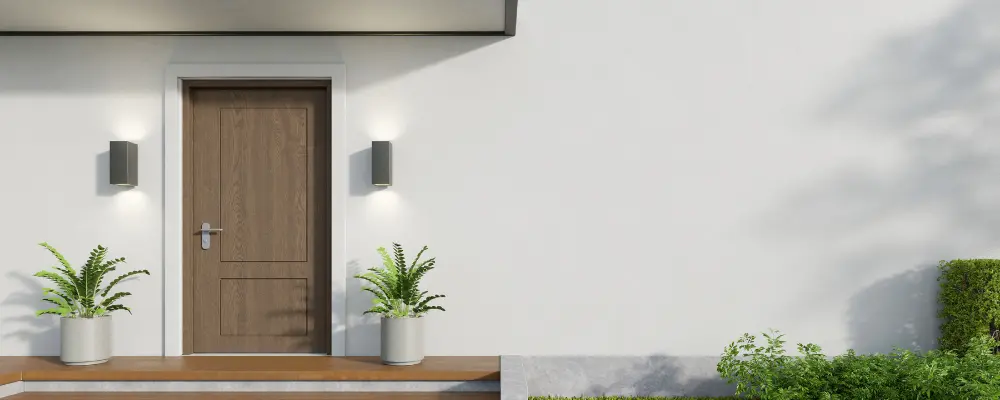
Well, irrespective of what your interior design is all about, the first door you have for your home is a pleasant welcome. A building has different types of doors and windows in different materials for different purposes based on their use for various rooms in the home. The door not only has to go well with your interior design but different types of doors and their uses vary as per. It should be sturdy, waterproof, long-lasting etc.

There are various types of doors for homes and different types of door architecture. So, to explore the options on different types of doors for your houses below listed is a simple guide.

Based on Materials 

  • Wooden or timber door: While extensively used for exterior applications at home although it can be used in any other part of the house.. The doors are sturdy, soundproof and provide insulation and the material is easily available.
  • Battened, ledged, framed and panelled doors are some of the different types present within the wooden door segment. While battened and wooden door refer to a door design where there are vertical wooden battens which are usually tongue and groove jointed. This provides rigidity and god protection and is especially used in main entrance doors. Similarly, Framed doors have the basic frame made out of wood and a panelled design.
  • PVC Door: Made of polyvinyl carbon these doors are very easy to use as it is light weight. It comes in various colours and is scratch-proof and easy to maintain. These doors are commonly used in bathrooms or store rooms.  
  • Fiberglass doors: These are used mostly in external application and come is various styles, design and shapes.
  • Glass door: The eternal beauty of glass doors gives privacy and durable and a wonderful appearance. It could be used in main entrance doors, partition doors as well as bathroom doors.
  • Steel and Aluminium doors: While steel doors and heavy and beautifully designed as garden doors etc, aluminium doors are very light weight and the frame is good for use at home as well as offices. Aluminium doors will not be affected by termites and can last in harsh conditions.

Based on Operation 

  • Hinged doors : The doors is hinged in on one side and is the usual type in case of wooden doors. In case of swing doors the hinges are on both sides of the doors with the entrance in the middle.
  • Revolving doors : Commonly used in high traffic areas in public places such as hospitals, these doors revolve on one side of the shutter and will get closed on its own.
  • Foldable and sliding doors: Commonly used in doors with glass panels or fibre panels, foldable doors and sliding door are commonly used is partition or in balcony. The door has one or more shutter based on available space in case of sliding whereas folding doors are usually used as folding partitions in a room.

Interior Design Ideas for Small Homes

0
small home interior design

In this era of inflation, small house designs are relatively becoming a center for attraction for affordable housing. Small homes fit best in budget and are also easy to maintain. Interior design in such small homes then becomes essential to improve the visual arena and make small spaces appear large. Design ideas can be adopted to enhance the quality of spaces in small homes and increase the storage and movement area.

Minimum furniture with maximum storage

Using a few large furniture objects with no offsets in a small room is better than using too many small pieces of furniture. Clear finishing lines make a room appear larger. Too many tiny furniture items seem to act like clutter and make a room appear even smaller. The large furniture items can be used with built-in storage capacity. Sofa and beds with a facility of storage below the seating provide extra space for storage which is lacking in small homes.

Staggered and foldable furniture

Staggered tables and chairs save a lot of space and provide effective areas for free movement. These furniture are designed in such a way that they are not only useful but also add to the aesthetics of the space. In addition to stacked furniture, foldable furniture also save a lot of space. They can be stored within a small space and can be opened up when required.

Multi-functional furniture

Using a side platform in such a way that it acts as a small dining table can eliminate the additional requirement of a huge dining table with chairs. A sofa cum bed or walled bed can be used which further enlarges the space.

Narrow shelves

Small walled shelves act as a good option in order to place items, especially in the bathroom and kitchen. These shelves make use of blank walls while making them functional and add to the look of space too. Transparent shelves usually give a lighter feel rather than solid shelves.

Mirrored wardrobes

Wardrobe doors with attached mirrors can be used instead of adding a dressing table in the room. This will save space and also give more blank walls for different uses. Moreover, mirrored wardrobes also reflect light and make the space look brighter.

Lighter color scheme

Light pastel colors are best for small rooms. These colors reflect light and make the small space look enlarged. Dark colors should be avoided as they make space look dull and small.

Proper use of corners

Corner tables and full-length shelves can be used to make use of the small corners. These help in utilizing the dead spaces which are of no use otherwise.

Overhead cabinets

Creating small cupboards overhead in the space above the lintel increases the overall storage. These can be used to store things that are not required daily.

Utilize space below the staircase

The space below the staircase is dead and unused. Instead, it can be converted closed wardrobe or drawer and lots of things can stored in it.

Energy Efficiency Using Home Automation and IoT

0
Home Automation and IoT

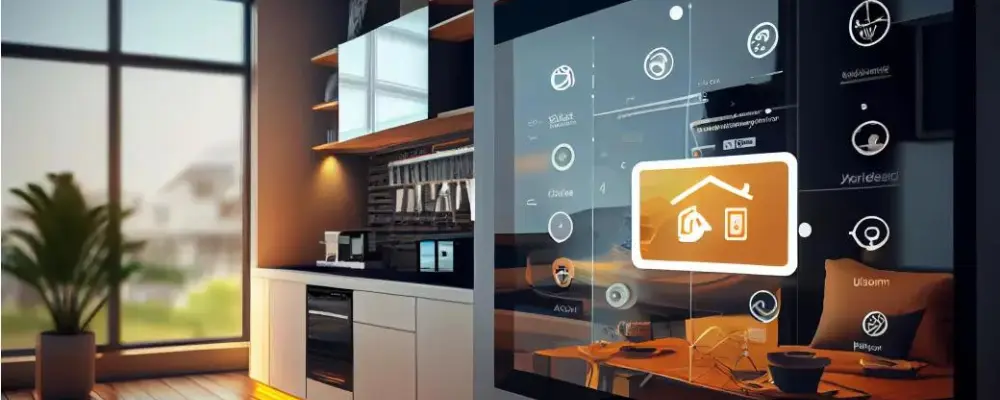
Can you imagine how simplified your life could be if all the devices at your home could be connected to the internet? Amazing right? Well, using home automation and Internet of things this is possible in real! Not only your computer or phone can be connected to internet but also various elements of your home such as window panes and doors, speakers, lights, air conditioners and fans, kitchen appliances, etc.

The Internet of Things (IoT) is the network of physical devices, home appliances and other items connected with software, and sensors such that the devices can be controlled with computers or smart phones, or even smart watches.

Home automation based on the Internet of Things turns the home into an energy-efficient one. Energy saving can be done in various ways which in turn also saves your money and makes home your home environmental friendly in the long run.

Automation & IoT: Tips for Smart Living

Scheduling devices

The scheduling of all appliances can be controlled based on user activities, weather conditions, timely use etc. The water heater can be tuned such that it doesn’t work when people are at work and not at home. In the same way, even the air conditioning system can be timely set such that energy is not wasted in cooling your home when nobody is there at home.

Controlling appliances

The appliances at home can be controlled from any room and also from outside your home. In case you forget to turn off the television or even switch off oven or microwave then you can easily do it on one tap. This saves in turn a lot of energy that would otherwise be wasted. The heavy load-taking appliances such as TV and AC when turned off in time help make home energy efficient. Moreover, with the control of blinds, awnings, windows, vents and fans you can improve the passive cooling of your home and so the cooling devices are only needed when the desired temperature is crossed.

Help from the sensors

While it is very common for people to not switch off lights when they get out of one room and go to another. This can be taken care of by the sensor system that automatically turns of the light when a human being is not present in a certain radius.

Saving resources

Motors operate fans, dampers, valves and pumps which can allow water or air to flow under the influence of the fans and pumps. These motors can be controlled by timers and sensors. This prevents an extra flow of water once the tank is filled and saves waste of water.

Additional use of renewable energy

The energy of various renewable energy sources (wind turbine, solar panels etc.) is computed and incorporated into existing energy sources, for operating various home appliances to cut electricity costs.

The smart home concept is day by day gaining popularity because there can be big savings in time, energy and money with relatively small efforts and investments. Installation of home automation technology must be thoughtful and designed effectively such that it helps in energy efficiency and overcomes the initial cost at the best.

Sump Construction & Size Requirement

0
Sump Construction

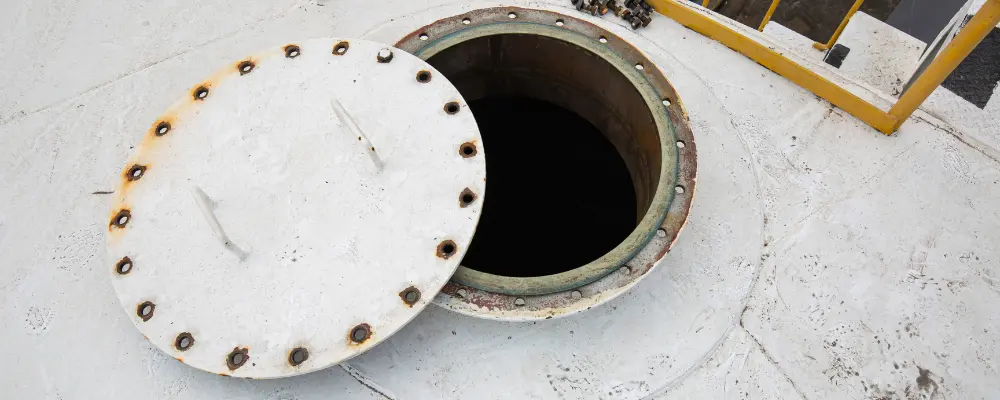
Constructing a sump is an important element of your house construction. A sump acts as a multipurpose water storage for both borewell water as well as for municipal corporation water and will be a great alternative if one fails.  Although it is the sump that gets constructed first, it can only happen hen the entire plane has been properly laid out. Constructing a sump based on its capacity can happily if by design you know the total capacity of occupancy for the entire project.

What is a Sump or Water Sump?

A sump is a low-lying pit or space, usually in a basement or a construction site, where water collects. It’s designed to prevent flooding by gathering water that comes from rain, leaks, or groundwater. Once the water collects in the sump, a pump (called a sump pump) removes the water and keeps the area dry. This helps protect buildings from water damage. Meanwhile, the Water sump is nothing but the same, the collected water will be used for agricultural & Household works.

How to calculate sump capacity

Step 1: Understand Your Water Needs

Before diving into the calculations, it’s essential to determine how much water your household consumes daily. On average, a person in India uses about 135 liters of water per day for all purposes, including drinking, cooking, bathing, and cleaning. [As perINDIAN STANDARD
CODE OF BASIC REQUIREMENTS FOR WATER SUPPLY, DRAINAGE AND SANITATION
Report]

Example:

If your household consists of 4 people, the daily water requirement would be:

4×135 liters = 540 liters per day.

Step 2: Determine the Number of Days of Water Storage

Next, decide how many days’ worth of water you want to store in the sump. This depends on the water supply frequency and any potential shortages. Typically, a 3 to 5-day storage is advisable.

Example:

If you choose to store water for 3 days, your total water requirement would be:

540×3 = 1620 liters.

Step 3: Consider Additional Storage for Contingencies

It’s always a good idea to account for some extra capacity to cover unexpected situations like delayed water supply or increased water usage during certain periods. An additional 10-20% is generally recommended.

Example:

If you add 10% extra capacity for contingencies:

1620×1.10 = 1782 liters.

Step 4: Calculate the Sump Dimensions

Now that you have the required capacity in liters, you can calculate the dimensions of the sump. The volume of a rectangular sump can be calculated using the formula:

Volume = Length × Width × Height

This formula is generally used when the dimensions are in meters, and the result is in cubic meters (1 cubic meter = 1000 liters).

Example:

Let’s say you want your sump to be 2 meters long, 1 meter wide, and 1 meter deep. The volume will be:

2×1×1 = 2 cubic meters = 2000 liters.

This volume of 2000 liters exceeds your required capacity of 1782 liters, making it a suitable size.

A few tips and ideas about sump construction

On average a project having one house will need a sump capacity of about 6000-7000 litres. A basic sump of about 1500 litres is used for construction purposes initially and then expanded. This will make sure there is water availability during scarce times also. Refilling happens when the volume falls below 500-1000 litres. For each additional house expanding to 4000-5000litres /home is necessary. This will be quite expensive but is very much necessary.

Important points to keep in mind

Where to locate: In most cases the area below the car porch is dedicated to making the sump as this will provide ample space.it is preferable to locate the sump close to the road where water lines will run and it will be easy to create the connection.

Depth: Sump depth is usually chosen between 4.5- 5 feet ideally to make sure a man cleaning it will be able to keep his head out to avoid suffocation.

The size: The size will be calculated based on capacity. A rough estimate is that 1 cubic feet can contain 28 litres of water, and 6000 litres will need 215 cubic feet. Now diving this by the height 5 feet you get 43 sq feet. Now this can be divided as length*breadth based on your space.

Walls: Make sure the walls of the sump are higher than the ground as this will help stray water from rain seeping into the tank.

Materials to use during construction:

Concrete Tanks: This is the most preferred material for constructing a sump. This will act as the best underground tank and you will not have to worry about water seepage and contamination of water from underground or sewage. This will last for a long time and most importantly east to maintain. Sump cleaning is also easier in this case.

Readymade plastic tanks: These tanks are available in various capacities like that of overhead water tanks. The biggest advantage is how fast this can be made as no plastering or other work will be required. This is not considered as a great option to leave for a long time as this can cause contamination itself as well as can give up under pressure from the weight above.

Bricks: This type comes with the greatest risk of leakage if not constructed with proper care. 

Good quality plaster that is rough needs to cover the outside whereas smooth plaster needs to cover the inside. A plastering mesh helps avoid cracks. The plastering should happen in one go to avoid cracks.

Constructing: Water pressure is subjected to be higher on the corners and hence 90-degree corners need to be avoided and going to rounded corners is a good choice. This will help distribute pressure over the area and also make it easy to clean.