Home Blog Page 9

Top Builders in India – Your Dream Home Construction

0
Top Builders in India

Choosing the right builder for your next project is challenging yet important. The market is flooded with so many key players; it is your job to conduct research and identify the trusted one. It doesn’t matter whether you are planning for a residential or commercial project; they should have a keen sense of industry knowledge and experience.

To minimize your burden, we have come up with the list of the top 20 builders in India. These companies are excellent in serving the customer needs according to their financial stability. Each of these builders has an impressive portfolio in the construction industry with 90% customer satisfaction ratings.

Let’s uncover the list of companies in India.

Top 20 Builders in India

Identifying the right builder in the market is essential to meet the desired construction needs. That’s why we’ve curated the list of top players in India. Here’s a breakdown:

Brick & Bolt

Brick & Bolt is a tech-enabled construction company that deals with a huge number of projects with the assistance of efficient engineers and designers. They optimize and streamline the whole project from planning to construction. The company is primarily recognized for its flawless execution without compromising quality and estimated deadlines.

They can efficiently handle various kinds of projects, from residential to B2B construction services. Of course, the results are outstanding and meet your desired dreams. They work with a motto of maintaining absolute transparency throughout the project. You can dive into their designs, contracts, quotations, and costs of services to have a clear picture and start your pre-booking process.

Supertech

Supertech is a real estate developer based in Noida, India. They focus on modern architectural designs and conduct surveys to understand customer preferences. With several completed projects, the company has built a strong reputation in the Indian real estate market.

Brigade Enterprise

Brigade Enterprise is a real estate developer with over three decades of experience. They are known for developing commercial, residential, and retail properties in cities like Bengaluru, Kochi, Coimbatore, Chennai, Mysuru, Mangaluru, and Goa.

DLF

DLF is a well-known real estate developer involved in numerous construction works, such as commercial, residential, and retail projects across the country. Some of their projects are noticeable; which serve as references to strong focus and quality projects? They set their motto to deliver quality results from small to large-scale construction projects. The company has a group of dedicated engineers and designers who strive to embody the dreams of individuals. Some of its recognised projects are DLF Mall of India in Noida, DLF Cyber City in Gurgaon, and DLF Emporio in Delhi.

Ekta World

The most reputed real estate developers and builders in Mumbai, India, are working with the intent of delivering enhanced lifestyles for individual clients. They approve each project with enhanced passion and innovation. The company has been successfully delivering quality results with happiness since 1987. With over three decades of field experience, they have made many memorable projects, particularly in Maharashtra, India. They pride themselves on handling various projects like residential, commercial, and retail spaces.

Godrej Properties

Godrej Properties, India’s leading real estate company, is valued for its well-crafted homes and properties. They have built numerous vibrant communities and let families experience real joy and peace. People choose this builder for its innovative design, customer-centric approach, clear communication, and quality construction. Due to its transparent service model, the company has successfully completed 100+ projects in 20+ cities across the country.

Goel Ganga Group

Goel Ganga Group is one of the key players in the Indian real estate market. With over four decades of deep dedication and experience, they have crafted many landmark projects. The company is excited to provide real estate solutions to the ever-evolving, challenging projects. With a keen sense of industry knowledge and supportive team members, the company is serving successful innovations and ideologies in the construction sector. You can contact them for quality services with a clear objective at a reasonable cost.

K Raheja Corp

If you are looking for a real estate builder who listens to your queries and provides accurate solutions, then here is an option. K Raheja Corp is one of the recognized builders and developers in India involved in developing various large-scale commercial, residential, and mixed-use projects. This company is widely recognized in cities like Bangalore, Mumbai, Hyderabad, and Pune. Beyond quality construction, they have a strong motive to derive sustainable development.

Lodha Group

Lodha is a top real estate developer in India, offering exceptional services for both commercial and residential properties. The company has many landmark projects in various cities like Thane, Mumbai, Bengaluru, Pune, and London. They specialise in transforming the way you live and work in this society. To execute and meet the desired construction results, the company is ready to accept any risks and challenges.

Mahaveer Group

Mahaveer Group is one of the top 10 construction companies in Bangalore, Karnataka. The company’s planning and execution are completely transparent, which builds trust among the customers across the country. They maintain construction quality throughout the project, which sets them apart in front of the world-class customers. Being a real estate company, they set a goal to meet the requirements of individual clients.

Mahindra Lifespace Developers

Mahindra Lifespace Developers has become one of the reputable real estate companies in India. It is primarily recognized for its quality construction, modern design, and sustainable development practices. People across the country identify this company through various iconic projects like Mahindra World City in Chennai, World Trade Center Mumbai, and Mahindra World City in Jaipur. They pride themselves on declaring that the company has won several awards for its World Trade CenterMumbai project.

Omaxe

Omaxe has a strong presence in the construction industry across various parts of the country. With quality and disciplined work, the company is engaged in a number of residential, commercial, and mixed-use projects. They are capable of providing better results to any challenging construction design and planning. Some of its notable projects, such as Hi-tech City in Hyderabad and IT City in Mohali.

Paranjape Schemes

There are no limitations to creativity and quality at any construction projects. Paranjape Schemes has successfully completed many construction projects in both residential and commercial sectors. The company had a strong presence in developing housing projects for more than 30 years. They have become a pioneer in constructing your dream house and bring happiness to numerous families. They aspire not only to deliver quality results but also to meet the actual expectations of individuals.

Prestige Group

Prestige Group is one of the biggest real estate companies in India. The company has a proven record of 200+ successful completions of projects across India. With over 35 years of experience, they maintain a strong presence in delivering quality results at a reasonable budget range. The company believes that this success is the cause of experienced professionals who are dedicated to their work and committed to offering the best possible services to their clients.

Puravankara

Puravankara is one of the trusted and admired real estate developers in Bangalore. The firm was established in 1975 with a motto of building international quality homes with 100% transparency. It is valued for its state-of-the-art luxury and creative designs suitable for people who are aspired to turn dreams into reality. They have a team of professionals committed to delivering premium quality results within their budget. Beyond quality, the designs are highly noticeable and make your space a landmark.

Ramaniyam

Ramaniyam is a place accommodating the dreams of individuals and work to achieve them. They are key players in the construction sector for more than 30 years. They have constructed multiple ranges of noticeable projects, such as bungalows, luxury and mid-range apartments, and premium villas. With a strong loyalty and commitment, the team has completed over 250+ projects at the estimated budget range.

Shapoorji Pallonji

Shapoorji Pallonji is a globally recognised real estate builder and developer. They are providing end-to-end construction solutions, including real estate, engineering and construction, infrastructure, energy, water, and financial services. Surprisingly, the company has a workforce of over 35,000 employees in 40+ countries involved in developing iconic landmarks and megastructures.

Shriram Properties

One of the leading real estate developers in India focused on offering affordable housing construction to the clients. The company is committed to crafting dreams and nurturing vibrant communities with a sense of elegance and beauty. They develop each project thoughtfully and meet the demands of individuals. With a strong presence in the construction market, they help to discover your dream house in the desired locality.

Sobha Developers

Sobha Developers is a growing real estate builder in India founded in 1986. The company has a corporate headquarters in Bangalore, primarily valued for its customer-centric approach, quality construction, and innovation. With the support of strong and efficient professionals, the company has developed a strong reputation in the Indian real estate market.

Sri Sai Harihara

Sri Sai Harihara has become a pioneer in the real estate sector for 30 years. They are proficient in delivering an unmatched lifestyle at an unbeatable price. The team involves conducting market research to provide the lifestyle you love. Sri Sai Harihara is the ultimate option to meet the sizes of houses you want at a reasonable budget range.

Final Wordings

The list of top 20 builders in India provides you with an overview of the construction industry. Each client has unique demands and dreams; with the right selection of builders, you can achieve the best possible price range. Go through this list and choose the one who fits your needs.


Top Builders in Hyderabad – Your Dream Home Construction

0
Top Builders in Hyderabad

With so many possibilities on the market, it can be hard to choose the ideal home. Brick and Bolt stands out as a name you can trust if you’re a Hyderabad homebuyer searching for a dependable developer. Well-known for their dedication to high-quality construction, track record, and timely project completion, they make sure your path to homeownership is stress-free and easy. Here we are providing list of the top builders who excelled in the construction industry in Hyderabad based on authentic facts and numbers to help you select the best builder for your dream project or home.

Top Builders in Hyderabad

Brick & Bolt 

Brick and Bolt has established itself as a leading developer in Hyderabad. It started from a small idea that celebrated fruitful results in the construction industry by creating a simple, transparent, reliable construction process. Over 7000+ homes were successfully built by the Brick and Bolt team, and their unwavering quality checks, timely delivery, and customer-focused approach increased their number of clients and excellent project outcomes.

Aparna Constructions and Estates Pvt. Ltd.

They have been established to create high-quality gated communities since 1996. High-quality residential properties can be built in the heart of the city. Their experience ensures modern amenities and a comfortable living environment.

Janapriya Engineers Syndicate

With over two and a half decades of experience in real estate, they have built around 21,000 multistorey apartments and several other commercial properties in and around Hyderabad and Bangalore. Their motto is to deliver quality housing at affordable prices. They were established in 2005 and considered “the Most Preferred Builder in South India”.

Sumadhura Infracon Pvt. Ltd.

Sumadhura’s construction quality is obvious throughout, from premium finishes to floor plans. Over the years they have completed more than 40 projects and have seen the highest rate of capital appreciation. They are known for their exceptional quality and design innovations that provide exceptional life experiences, value, and security for their loyal customers.

SMR Holdings

SMR Holdings is seen as one of the leading construction houses in South India. Their clarity and conviction in their work make them unique in building houses. World-class living spaces can be achieved through attention to intricate details, comprehensive project management, and exceptional quality checks.

Prestige Group

Prestige Group is a well-established, renowned real estate company that leaves its marks in every asset class of India. It was founded in 1986 and currently focuses on projects in potential developmental areas. Their market share is expected to skyrocket, and their project deliveries are exceptional as they are leaders in the real estate industry. 

Ramky Estates & Farms Limited

In the real estate industry, Ramky Estates & Farms Limited is a shining example of creativity, sustainability, and quality. They create properties that combine innovative layouts and modern technology, building on their more than 25 years of legacy and trust. Focusing on luxury and theme-based projects, they draw inspiration from around the world to create long-lasting, high-end houses. Superior standards and long-lasting value are guaranteed by their adoption of the newest construction technologies. Ramky Estates takes satisfaction in improving people’s lives and paving the way for better futures.

My Home Constructions Pvt. Ltd.

In 1981, Dr. Rameswar Rao founded My Home Constructions, bringing a fresh approach to real estate. Being the first residential complex in Somajiguda, their first project, My Home JM Apartments, was significant. Over the years, My Home introduced iconic developments like My Home Jewel, continuing to shape Hyderabad’s real estate landscape.

Modi Builders

With more than thirty years of experience creating outstanding residential spaces, Modi Builders is a well-known brand in Hyderabad’s real estate market. They prioritise honesty, customer-centric ideals, and upholding the best construction standards, as seen by their extensive portfolio of completed projects. Their approach blends quality with competitive pricing, achieved through company-owned land and in-house processes. 

Sri Aditya Homes Pvt. Ltd.

With over two and a half decades of experience in the real estate industry, Sri Aditya Homes was founded in 1991 by Mr. V. Kotta Reddy. They are one of the top builders who create luxury living spaces in the buzzing city without compromising its aesthetic appeal and quality standards.

Vertex Homes Pvt. Ltd.

Vertex is a Hyderabad-based real estate company operating in Telangana and Andhra Pradesh. They develop residential and commercial projects, including villas, apartments, business spaces, and planned communities. The company focuses on maintaining strong customer relationships and ensuring client satisfaction.

Rajapushpa Properties Pvt. Ltd.

The Parupati Brothers founded Rajapushpa Properties in 2006, and with its gated community apartments, villas, and commercial spaces, it has completely changed residential living. The company, which is led by visionary individuals, prioritises high standards, engineering excellence, and careful craftsmanship. Rajapushpa Properties, which is renowned for its excellence, transparency, and prompt delivery, seeks to improve residential and commercial real estate developments.

Hallmark Builders

Hallmark Builders, founded in 2008, has established industry standards for quality, design, innovation, and trust. Hallmark, which is well-known for its innovative methods and client-driven projects, guarantees prominence and credibility in all undertakings. With a dedication to client delight, the business has emerged as a leading provider of quality, and Vicinia is its most recent noteworthy accomplishment.

ASBL Developers

ASBL (Ashoka Builders India Pvt Ltd), a real estate firm specialising in construction technologies, was established in 2017. ASBL produces high-quality projects on schedule because of its reliable systems. In 2018, ASBL Lakeside, their debut project, was introduced. Following this, ASBL Spire, Springs, and Spectra were developed. Over ten million square feet of residential space have been planned in Hyderabad in just five years, with six million square feet delivered and more than 1,800 families served.

Cybercity Builders

One developer that serves the contemporary urban lifestyle is Cybercity Builders. The Telangana government gave it the Best Management Award 2023 for Labour Welfare. The projects are renowned for their intelligent infrastructure and modern design. 

Praneeth Group

Praneeth Constructions, established in 2007, has built a solid reputation for credibility, excellence, and commitment. Having finished more than 20 projects, they prioritise providing houses with the highest level of care and attention to detail. They are a reputable brand in real estate because of their dedication to excellence, creative building methods, and uncompromising standards of quality, which guarantee that every house represents the aspirations and confidence of its clients.

Conclusion

In conclusion, Hyderabad’s leading builders have significantly influenced the city’s vibrant real estate market. These developers provide luxurious homes, eco-friendly housing options, and reasonably priced living areas to meet a variety of needs. These builders will continue to play a crucial role in propelling Hyderabad’s future growth and prosperity as the city expands.

Uses of Silt Soil in Construction – A Complete Guide

0
uses of silt soil in construction

The quality of the raw material is very important for a foundation to be safe and stable. Among the various types of soil, selecting the right type of soil for construction plays an important role.  With so many options available, silt soil is often preferred for brick-making and foundation construction due to its unique properties.

However, it is important to acknowledge that silty soil also has certain limitations. In this article, we will explore why silt soil is commonly used in construction, particularly for creating strong and stable foundations, while also considering its potential drawbacks.

Overview of silt soil

Silt soil is one of the key soil types, alongside clay and sand. Its particle size ranges from 0.002 mm to 0.05 mm, making it finer than sand but coarser than clay. The word ‘silt’ comes from Old English, meaning something that flows or is poured. 

While silt soil is smooth in texture, it is fertile with a rich nutrient content ideal for farming. When wet, it feels slippery, as if one is walking over flour. Its colour usually varies from brown to  greyish, depending on the minerals and organic components it holds.

Properties of Silt Soil

Here is how silt differs from clay and sand:

  • Texture: Dry silt has a smooth, powdery texture, similar to flour. When pressed between the fingers, dried silt easily crumbles into fine particles. But dry clay forms hard, compact clumps that are hard to break, while sand feels gritty and remains loose when dry.
  • Adhesion: Wet silt becomes slippery and can be moulded but loses its shape easily. Clay, on the other hand, has high adhesion and cohesion when wet. Wet sand can be moulded but tends to crush easily once dried or disturbed.
  • Shape: Silt particles have a spherical shape. Clay particles are flat, and sand particles are angular.
  • Moisture retention: Silt retains water better than sand but is less effective than clay. This is because the small particles have a large surface area that enables more water molecules to hold onto them. Clay retains most of the water, but it drains poorly, whereas sand drains fast and retains minimal water.

Uses of Silt Soil in Construction

Silt soil plays a crucial role in construction because of its special properties. Though it is not used as the primary material for foundations, it is used for many purposes in construction projects:

  • Brickmaking

The fine texture of silt soil makes it suitable for brickmaking. Combining it with other materials, like clay, creates bricks strong enough to build walls and other structures.

  • Mud Mortar and Mud Plaster 
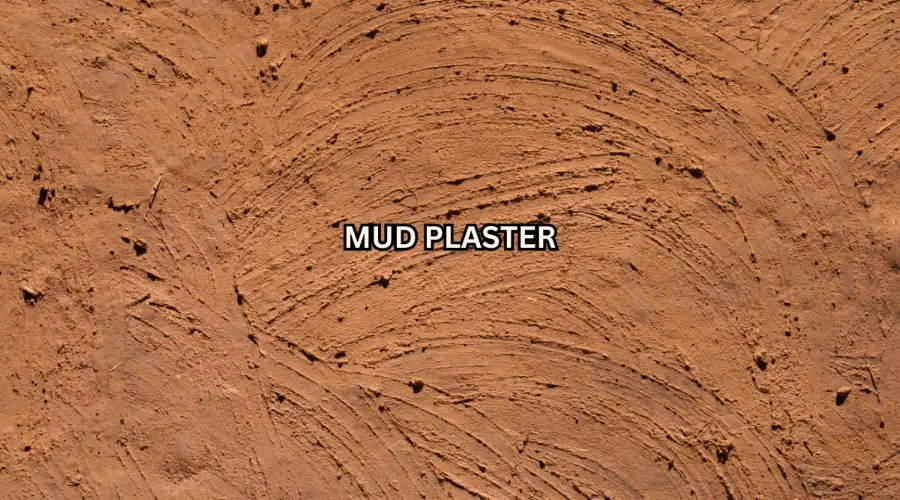
Mud Plaster

Mud houses often use mud plaster and mortar for construction. Silt is an important component in these materials, which also include clay (the finest), silt, and sand (the coarsest). The fine particles of silt improve the texture and make the plaster easier to apply, helping to create a smooth finish. In mud houses, this combination helps ensure walls are durable and well-finished. Adding silt to mortars also improves their performance by enhancing the mixture’s ability to stick together and making it easier to work with, allowing for better application and setting.

  • Soil Stabilisation 

In some locations, silt is used for soil stabilisation in road construction. It improves the compactness and strength of the soil, which helps create stable bases for roadbeds and foundations.

  • Fill and Remark 

Sometimes silt soil is also used as filling material for construction, mainly in land reclamation projects or to fill ground depressions.

Overall, silt-soil properties make them greatly useful in construction with other materials for strength and stability.

How to Improve Silt Soil for Construction Use

The most common problem associated with silty soil is the retention of large quantities of water, resulting in poor drainage and leading to instability in construction. On the other hand, if improvements are correctly applied, silt soil can be modified to make the foundation more stable and allow better performance in construction.

  • Mixing with Sand or Gravel 

The most common method for the stabilization of silt soil is to mix it with sand or gravel. Sand will break down the fine particles in silt, allowing for a free and easy flow of water. Using this way, the soil won’t compact too much. Gravel adds strength and stability to soil. This mixture of both tends to create a much more compact and stable foundation, which will then have the ability to carry heavier loads.

  • Organic Matter Addition 

Organic materials such as compost or manure increase soil aeration and improve its nutrient content. Organic matter also reduces compaction and, therefore, makes it easier to work with the soil while increasing the stability of the soil in the structure. This is helpful for agricultural or light construction projects.

  • Soil Stabilizers 

Adding stabilizers like lime, cement, or polymers to the silt soil enhances its strength and durability. Lime reduces plasticity and water retention, whereas cement improves the binding property of the soil. Such stabilizers prevent the soil from becoming too soft or unstable under load.

  • Compaction 

Silt soil for construction requires proper compaction. Mechanical compactors are used to remove air pockets and increase the density and strength of the soil, which is important for making a stable base for foundations.

These techniques can effectively modify silt soil for different construction applications, ensuring durability and stability.

Final Thoughts

Silt soil has a vital role in construction because of its unique properties and is therefore used for several applications like brickmaking and soil stabilization. Improving silt soil through the techniques of mixing with sand and adding organic matter can transform it into a reliable material for construction purposes. Such improvements ensure that silt soil provides a firm, stable foundation for various construction projects.

FAQs

1. Can silt soil be used directly for construction?

No, silt soil requires improvement through mixing or stabilization methods for effective use in construction.

2. What precautions should be taken when using silt soil?

Precautions include ensuring proper drainage, compaction, and stabilization due to its moisture retention properties.

3. Is silt soil suitable for building foundations?

With proper treatment, silt soil can be suitable for foundations. However, its moisture retention must be managed to ensure stability.

Top 20 Builders in Bangalore – For Your Dream Home

0
top builders in bangalore

Bangalore— ‘The Silicon Valley of India’ is one of the prime cities that is thriving to be the real estate hub. The city attracts a lot of buyers, and the traffic marching towards the city is ever-growing. A lot of people want their dream house in Bangalore city; however, most would be confused about which builder to choose from. This blog will list out the top builders in Bangalore, and may help find which builder is best suited for your dream project.

Top 20 Builders in Bangalore

Brick & Bolt

Brick & Bolt is a technology-driven construction company that is primarily located in Bangalore since 2016. They primarily focus on delivering simple, transparent, reliable and high-quality construction services to satisfy the customers’ needs. They ensure rigorous quality assurance by performing over 470 quality checks and provide transparent online monitoring facilities to the property owners.

In a short period of time, they have built over 7000 homes and have committed to numerous residential projects across major cities like Bangalore, Hyderabad, Pune, and Gurgaon. The tech-driven construction process is a revolution in the industry, and the trust within the customer circle makes it one of the top builders in Bangalore.

Sumadhura Infracon Pvt. Ltd

Sumadhura Infracon Pvt. Ltd. carries thirty years of legacy in the real estate market of Bangalore and is one of the prominent builders. They are known for their sophisticated, innovative and flawless design and construction work and successfully delivered around 11 million sq ft of residential spaces. 

They won numerous awards for their projects including ‘Themed Project of the Year’, ‘Industrial and Warehousing Project of the Year’, and ‘Excellence in Customer Service’, which they won at the 2024 Realty+ Conclave & Excellence Awards. Some of their notable projects include Sumadhura Epitome, Sumadhura Logistics Park, Folium by Sumadhura and more.

SOBHA Limited

SOBHA Limited is a well-known builder with a significant presence in Bangalore since 1995. Their primary objective is to provide quality, luxury and sustainable residential and commercial buildings.

Stepping into the 30th year next year, they have delivered over 400 projects with world-class amenities. Track2Realty has consistently honoured them as the top real estate brand in India. Some of their top projects in Bangalore include SOBHA Dream Acres, SOBHA Indraprastha, SOBHA Oakshire and more.

Shriram Properties

Shriram Properties is one of the prominent builders that has been primarily based in Bangalore since 1995. They are known for their affordable housing and quality construction in a strategic locations, to connect buyers with essential amenities. They not only constructed residential buildings but also built commercial complexes, office spaces and retail outlets.

They have a widespread presence in the South Indian real Estate market and won the ‘Developer of the Year’ award at the South India Real Estate Awards. Some of the notable projects of Shriram Properties in Bangalore include Shriram Chirping Woods, Shriram Southern Crest, Shriram Hebbal One Commercial, and more.

Sattva Group

Sattva is one of the leading property development, management, and consulting organizations in India since 1993. It has a profile of delivering numerous commercial, residential and multi-purpose projects across top cities. Their prime focus is to create a future-ready sustainable space at an affordable cost. 

Sattva was honoured with ‘Best Residential Affordable Project’ by ET Business Excellence Awards 2022-23. Some of the notable projects of Sattva Group in Bangalore include Sattva Misty Charm, Sattva Bliss, Sattva Ashraya, Sattva Anugraha, and more.

Salarpuria Group

Salarpuria Group is one of the trustable, quality-focused and innovative builders, based in Bangalore, Karnataka since 1985. They have delivered numerous notable projects in Bangalore, and stand as one of the impactful builders in the industry.

They have won numerous awards for their contribution including the Times Business’ ‘Best Developer- Residential of the Year’ in 2023, IGBC Green Champion Award and more. Some of their top projects in Bangalore include Salarpuria Sattva Cadenza, Salarpuria Sattva Park Cubix and more.

Puravankara Ltd.

Purvankara is one of the most trusted and high-quality builders in Bangalore. They have been in the industry since 1975 and have delivered some of the best quality residential and commercial buildings. They are known for providing affordable luxury buildings, with a key focus on customer satisfaction.

They won the ‘Best Affordable Housing Developer’ Award at CNBC Awaaz Real Estate Awards, ‘e4m Pride of India’- The Best of Bharat Awards, and the ‘12th Realty+’ Excellence Awards. Some of their iconic projects in Bangalore include Purva Blubelle, Puravankara Purva Park Hill, Purva Palm Beach, Purva Westend, and more.

Provident Housing Ltd.

Provident Housing Limited is one of the largest urban residential developers at an affordable price. Their primary vision is to help buyers own an aspirational home that meets their residential requirements. They provide excellent community living experiences to elevate the customer lifestyles with homes. 

They won numerous awards including the ET Best Realty Award, Developer of the Year (South India) award, and more. Their notable projects include Provident Bayspace, Provident Botanico, Provident Ecopolitan and more.

Prestige Estates Projects Ltd.

Prestige Estates Projects Ltd. is a well-known real estate developer primarily based in Bangalore since 1986. In their over thirty years of service in the construction industry, they have delivered numerous residential, commercial, retail, and hospitality projects in India, from affordable to high-end.

They primarily focus on quality construction, customer satisfaction, and luxury projects. Some of their iconic projects include Prestige Lakeside Habitat, Prestige Falcon City, Prestige Pine Forest Whitefield and more.

Mantri Developers Pvt. Ltd.

It is one of the prominent real estate development companies in South India with a focus on innovation and sustainable development. For over two decades, they have been delivering high-quality residential, commercial, retail, and hospitality projects to promote customer satisfaction and community living.

They won numerous awards including the CII-ITC Sustainability Award for their sustainability practices. Some of their notable projects include Mantri Altius, Mantri DSK Pinnacle, Mantri Espana, and more.

Mana Projects Pvt. Ltd

Mana Projects Pvt. Ltd. is one of the well-established builders, based in Bangalore since 2000. Their primary objective is to deliver value to customers by blending imagination and engineering to provide high-quality construction and innovative designs.

They are honoured for excellence in construction practices and customer satisfaction. Some of their notable projects include Uber Verdant, Mana Foresta, Mana Emerald, Mana Capitol and more.

Mahindra Lifespaces

Mahindra Lifespaces is a well-established builder that has been in the industry for two decades. The brand primarily focuses on eco-friendly and healthy construction practices for a better future.

Mahindra Lifespaces is the first real estate company in India to commit to the Science Based Targets Initiative (SBTi). They are honoured for their initiative and received the ‘Sustainable Developer of the Year’ by the Global Real Estates Brand Awards. Some of their notable projects include Mahindra Windchimes, Mahindra Eden, and more.

Mahaveer Group

Mahaveer Group is one of the leading real estate sectors that has been primarily based in Bangalore since 1997. They are committed to delivering quality homes to enhance the living standards of the customers, with a timely and quality delivery aiming for customer satisfaction.

They received numerous awards including Lifetime Project of the Year and Premium Lifestyle Projects Developer Award. Their notable projects in Bangalore include Mahaveer Meridian, Mahaveer Horizon, Mahaveer Willet, and more.

L&T Realty

L&T Realty is a part of the Larsen & Toubro conglomerate that operates in the real estate sector. It is one of the most trusted and respected realty developers that delivers to meet the customers’ needs with innovation and excellence. Their commitment to transparency, trust, and ethical business practices, stands out among other builders.

They won numerous awards for excellence in different categories, including the Beat Realty Brand 2024 by ET Now and The Times Group. Some of their notable projects in Bangalore include L&T Raintree Boulevard, L&T South City, L&T Raintree Bliss and more.

Godrej Properties

Godrej Properties is one of the popular property builders in India. It is a subsidiary of the renowned Godrej group, that has a rich heritage of over a century. They have been in the construction industry since 1990 and are committed to delivering a blend of sustainable, modern, and eco-friendly projects.

They were honoured with numerous awards including ‘The Most Trusted Real Estate Brand’ Award by Brand Trust Report, and ‘Developer of the Year-Residential’ by ABP News Real Estate Awards. Some of their prominent projects are Godrej Eternity, Godrej Woodsman Estate, Godrej Woodspaces Whitefield and more.

DS MAX Properties Pvt. Ltd.

DS MAX Properties is one of the most prominent builders in Bangalore, that has been in the industry since 2007. They are committed to providing luxury homes at an affordable price, by maintaining excellence in innovation, creativity, and sustainability.

They received multiple awards for their contribution to real estate development including the ‘Top Reliable Developer of the Year’ at the ET Business Excellence Awards 2019. Some of their notable projects include DS-MAX Nakshatra, DS-MAX SkySista, DS-MAX Signature and more.

Concorde Group

It is a leading real estate developer, based in Bangalore since 1995. They are primarily focus on delivering customer-centric, high-quality residential and commercial properties to enhance the lifestyle of residents.

They received numerous awards for their contribution to the industry including the Best Ultra Luxury Residential Project of the Year, Most Unique Project of the Year, and more. Their notable projects include Concorde Hillcrest, Concorde Luxepolis, Concorde Cupertino, and more.

Century Real Estate

It is a prominent real estate development company based in Bangalore. They have been delivering quality projects for the last four and a half decades. They primarily focus on enhancing the quality of life through high-quality residential and commercial properties.

They are involved in numerous landmark projects including the Taj Residency, Manipal Centre, and Vijaya Bank Corporate Office, and developed successful projects such as Century Eden, Century Artizan, Century Sports Village, and more.

Casagrand Builder Pvt. Ltd.

It is one of the leading construction companies in South India that has provided exceptional living spaces since 2004. Their primary focus is to enhance the quality of life, ensuring customer satisfaction. They received numerous awards including the Best Lifestyle Developer Award in 2022. Their notable projects in Bangalore include Casagrand Florelle, Casagrand Royale, Casagrand Boulevard, and more.

Brigade Enterprises Ltd.

Brigade Enterprises Ltd. is one of the leading builders in Bangalore, that has been present since 1986. In their 38 years of experience, they have built a diverse portfolio of residential, commercial, hospitality, and retail projects. Their key focus is to incorporate innovation, sustainability, and customer-centric design.

They were honoured as ‘India’s Top Builder 2022’ at the Construction World Architect and Builder Awards. Some of their remarkable projects in Bangalore include Brigade Valencia in Electronic City, Brigade Horizon in Mysore Road and more.

Conclusion

This blog would have helped you in finding the right options for your dream construction in Bangalore and nearby suburban areas. The building opportunities are endless and choosing the right one is up to your decisions, based on your project needs and affordability.

Blister in Bricks – A Comprehensive Guide

0
Blister in Bricks

Bricks are the primary construction materials that ensure the structural integrity of the building. Since they are an important building component, choosing the right quality bricks becomes mandatory. However, there are numerous defects in bricks, each of which has some impact on the construction. One such defect is blistering and this blog will help you understand what blisters in bricks are, how to identify them, their causes, impact, prevention, usages, and more.

What is a Blister in Bricks?

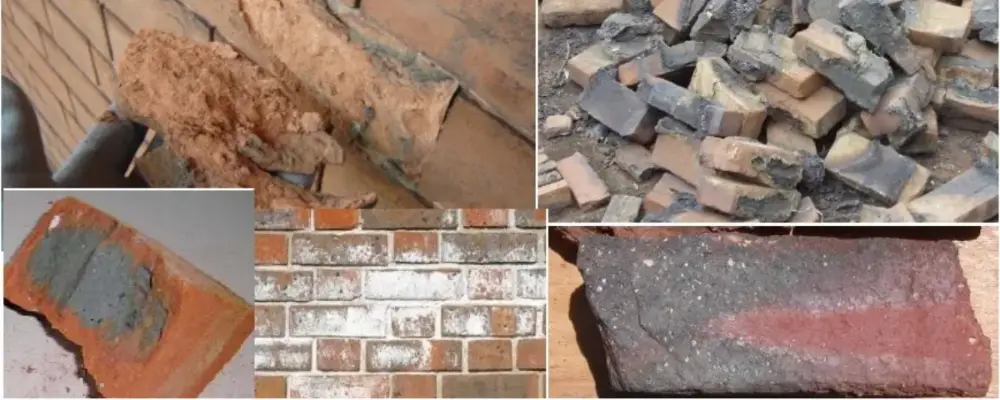
A blister in bricks refers to a defect that causes raised, bubble-like areas on the surface of the brick, which is usually associated with discoloration and uneven texture. This defect affects the aesthetics and structural quality of the bricks, based on the severity of the defects.

How to Identify Blisters in Bricks?

Blisters in bricks can be identified by visual inspection, touching, and through a sound test. Examine the surface of the bricks for any raised or bubbled areas that look rough and uneven compared to regular bricks.

Sometimes, blisters may be accompanied by cracks or flakes, which can be easily identified. The blisters might cause discoloration, and the appearance will be light in colour.

If visual and tactile inspection cannot identify the blisters, a simple sound test could be useful to identify them. Gently tap the brick with a metal object and listen for the sound; if the sound is dull or hollow, it indicates blisters.

Causes of Blister Formation in Bricks

Poor Compaction

When the clay brick is not completely compacted during the moulding process, it allows air voids to remain trapped within the brick, leading to the formation of blisters when subjected to firing.

Trapped Air or Moisture

During the manufacturing of bricks, air or gases could get trapped inside the brick. When kept under the firing process, the air pockets expand, forming bubbles or creating blisters.

Overhearing During the Firing Process

When the firing temperature is too high or not distributed evenly inside the kiln, the air voids in the brick cause gases and moisture to expand rapidly into the brick, forming a blister.

Impurities in Raw Materials

Any impurities in clay or other raw materials, especially organic matter, could lead to unwanted reactions during the firing process. The gas generated by the decomposition of impurities could lead to gas formation within the brick, resulting in blisters.

Uneven Drying

The blisters are formed when the bricks are not dried consistently under natural weather. This causes the moisture content within the bricks to turn into steam during firing and causes expansion within the structure, causing blisters.

Impact of Blisters on Brick Quality

Aesthetic Damage

Aesthetic Damage brick

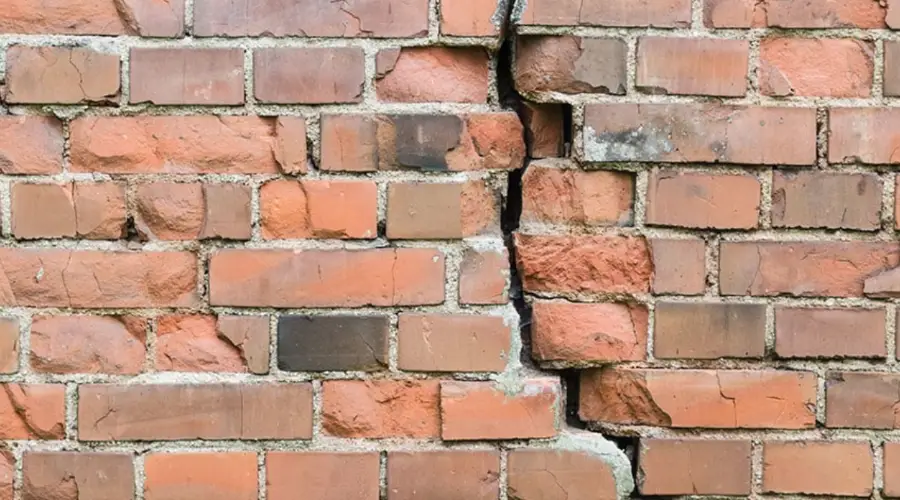
The visible raised areas on the surface of the bricks affect the overall appearance of the bricks, making them look less uniform and less visually appealing. The discoloration, rough, and uneven surface affects the overall aesthetic appeal of the bricks. Blistered bricks are not suitable for exposed walls due to their poor visual uniformity.

Structural Weakness

Blisters create weak points in the bricks due to the air voids. This reduces the density and load-bearing capacity, and the pore voids increase the risk of water ingress. These factors make blistered bricks less suitable for construction applications.

Decreased Durability

The blistered bricks can be more vulnerable to environmental conditions, such as rain, freeze, thaw, and more. All these factors could cause degradation over time, thereby reducing the efficiency and resulting in increased maintenance costs.

How to Prevent Blisters in Bricks?

  • By proper compaction, the air voids within the bricks can be eliminated, which reduces the occurrence of blisters.
  • Proper monitoring and controlling of the moisture content during mixing and drying can help prevent the occurrence of blisters during the firing process.
  • Using high-quality clay and other raw materials that are free from impurities could reduce the chances of blistering.
  •  Maintaining proper temperature during the firing process within the kiln can help avoid overheating, which causes the uneven, rough surface of the brick.
  • Protecting freshly moulded bricks from excessive moisture or rain could prevent the chances of blistering.

Can Blistered Bricks Be Used in Construction?

Although blistered bricks are defective, they can still be used for construction for different purposes.

  • These bricks can be used for non-structural applications where visibility and stress applications are low, such as in internal or partition walls.
  • They can be used for landscaping projects such as gardening walls, paving, or other decorative elements.
  • These bricks can also be used as a fill material in places where appearances are not important.
  • They can be used for cost-effective construction projects or in temporary structures to save costs.

What Should I Do if I Find Blisters in My Brick Structure?

Access the Severity of the Blisters

If you found blisters in the bricks, determine the spread and severity of the blistering. Small and isolated blisters in bricks can be acceptable; however, large or multiple blisters indicate more serious underlying issues, making it not suitable for construction works.

Determine the Cause

If blistering is found, understand the potential cause behind it. If the blistering occurs soon after the installation, the construction methods can be reviewed to find if it is caused by improper firing or insufficient ventilation. In this case, contact the contractor or brick manufacturer.

In other cases, issues like poor ventilation, high humidity, and improper mortar usage can be addressed to control blistering.

Consider the Type of Structure

Check for the structure where the blistering is found. In the case of non-load-bearing or non-visible walls, the blisters may not be a concern. However, if they appear on load-bearing walls or facing walls, it indicates a problem with the bricks used.

Fix Surface Blisters

If the blisters are small and don’t affect the structural integrity, it don’t need any replacement, and simple cleaning and sealing can prevent blistering. However, if the blistering causes cracks or other structural issues, remove and replace the affected brick carefully.

Address Moisture

If water damages are found to be the major issue for blistering, the structure can be coated with a waterproofing sealant, and necessary surface treatment can be done to prevent further water ingress.

Conclusion

Blistering in bricks is a serious defect that needs to be addressed before or after construction. It affects the shape, strength, durability and aesthetic looks of the bricks, causing damage to the structure. Less severe blistering in non-structural areas may not be a major concern, but severe defects in structural walls could be an indication of a big problem. 

Hearting in Brick Masonry – Essential Guide for Builders

0
hearting in brick masonry

Brick masonry is a construction technique that uses bricks and mortar to construct structures of high durability and aesthetic beauty. Hearting is one of the terms or techniques used in the masonry process that is generally applied in thick walls. It provides numerous benefits, and this blog will help you understand its importance and construction process in detail.

What is Hearting in Brick Masonry?

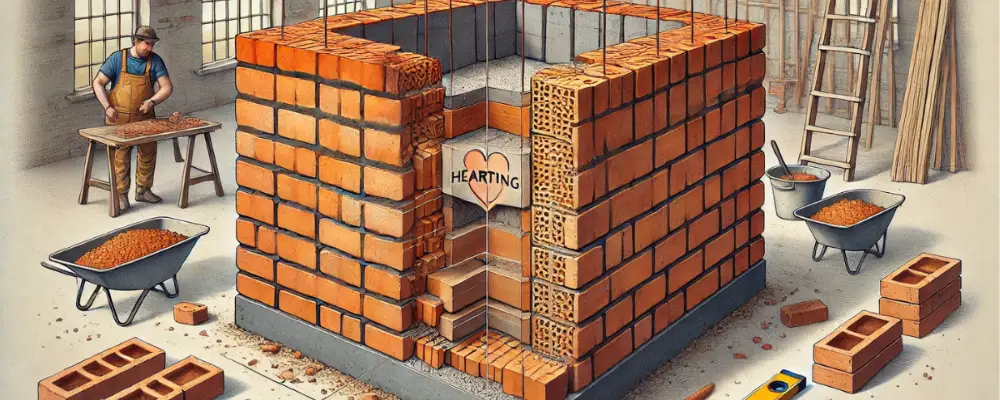
Hearting in brick masonry refers to the interior portion of the brick wall that is placed between the facing and backing bricks in a wall. It is mainly used to provide the necessary structural support, load distribution, and thermal insulation to the structure. 

Construction of Hearting in Brick Masonry

Preparing the Hearting Materials

Select the materials that are required for hearting, such as full bricks, brickbats, concrete blocks, or rubble stones, depending on the structural requirements and availability. Prepare the mortar to bind the hearting materials together.

Laying the Facing Bricks

The facing bricks are laid first, based on the types of bond, either along the stretcher or header bond, depending on the aesthetic and structural needs of the wall. The bricks used in the exterior faces of the wall should be of high quality.

Laying the Backing Bricks

The backing layer of the wall is then constructed using standard bricks forming the inner face of the wall. The backing bricks are laid in a simple bonding pattern, as they are not exposed to view.

Placing Hearting

After installing the facing and backing, the core portion between them is filled with hearting materials— full bricks or brickbats. The hearting is laid in a staggered pattern, and mortar is applied between the hearting materials to create a solid bond and enhance load distribution.

Compaction

After filling the core, the hearting materials are compacted properly, by tapping the bricks lightly or using a mechanical vibrator to eliminate voids and ensure the solidness of the wall. Plumb bob and spirit levels are used to ensure that the wall constructed is uniform throughout the surface.

Curing

After constructing the wall using hearting, it is important to keep the structure idle under the moisture for at least 7 days to completely cure and achieve the necessary strength and stability.

Types of Bricks and Mortar Used

Bricks/Blocks

Types of Bricks

Full Bricks

Standard full-sized clay bricks or concrete bricks are used as hearting materials in brick masonry, to enhance the strength, stability, load-bearing capacity, and durability of the wall.

Brick Bats

The cut or broken pieces of the bricks, also known as brickbats, are most commonly used as the hearting materials, as they are economically and effectively used from the waste and leftover materials.

Concrete Blocks

Concrete blocks, either hollow or solid, can be used as hearting material in thicker walls. They provide high strength and thermal insulation to the structure.

Mortar

Cement Mortar

Cement Mortar

Cement mortar made with a mixture of cement, sand, and water is commonly used for hearting in brick masonry. They provide high strength and durability and are suitable for modern construction.

Lime Mortar

Lime mortar made with lime, sand, and water can be used for the hearting of bricks, especially for traditional buildings. They provide flexibility and workability and protect the structure from cracking and shrinkage.

Other Fillers

Stone Fill

The rubble or irregular broken stones can be used for hearting as they are highly durable, strong, and provide strong support to structures.

Key Considerations for Hearting in Brick Masonry

Material Selection

The hearting material should be free from defects and possess the necessary strength and thermal properties. The mortar should be suitable to complement the bricks used and should be highly durable.

Resistance

The chosen hearting materials should be highly resistant to thermal and acoustic forces. Hollow blocks are ideal for resisting both thermal changes and acoustics.

Cost

The cost of the materials should be considered when determining suitable options. Full bricks or brickbats could be effective for hearting at an economical price.

Alignment and Bonding

Proper alignment and bonding between the hearting material and the outer layers are essential for maintaining structure stable throughout the wall. Any weaker bonding could weaken the structural integrity.

Benefits of Proper Hearting in Brick Masonry

  • Proper use of hearting materials helps in distributing the loads evenly across the wall, preventing the structure from cracking or failure.
  • It provides resistance against external factors such as moisture, temperature fluctuations, freezing conditions, and other extreme climatic conditions.
  • The thermal insulation properties maintain room temperatures while reducing energy costs  spent on energy associated with heating and cooling of buildings.
  • The thick wall prevents water ingress, and the effective use of hearting materials minimizes moisture absorption and efflorescence.
  • It is naturally fire-resistant, and this characteristics enhances protection against fire accidents.
  • Brick masonry with proper hearting provides a uniform appearance on facing surfaces, enhancing the overall aesthetic appearance.
  • High load-bearing capacity combined with resistance properties enhances durability while reducing maintenance and replacement costs.

Applications of Hearting in Brick Masonry

  • Hearting can be used to construct both load-bearing and non-load-bearing walls due to its balance between strength, resistance, and aesthetics.
  • It serves as fire walls to prevent damage from all sorts of fire accidents.
  • Its high stability makes it suitable for retaining walls that resist lateral earth forces.
  • It can be used for historical restoration projects to maintain structural integrity.

Conclusion

Hearting in brick masonry is most commonly used for thick walls. Proper use of hearting enhances the structural integrity, durability, thermal insulation, resistance, and aesthetics. It requires proper planning and execution to achieve maximum efficiency while minimizing the maintenance cost and helps in maintaining the longevity of the wall.

Sanded vs Unsanded Grout – A Complete Guide

0
Sanded vs Unsanded Grout

You are in the middle of picking your favourite tile and preferred tiles for your dream project, but you have questions regarding the construction process.

There are some aspects of the construction process that you take for granted and do not put much thought into. What kind of grout to use is one of them?

What is grout? Grout is a mixture of water and cement that appears fluid and hardens on drying.

Sometimes sand is added to this mixture and this makes a difference. 

Let’s find out how.

What is Sanded Grout?

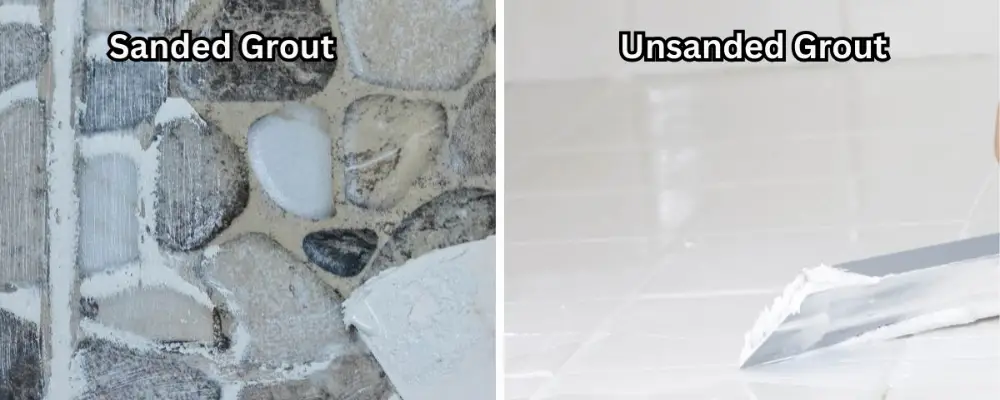
Sanded Grout

Some believe the name is a misunderstanding; the term sanded may even refer to abrasion methods or “sanding” the surface in common language. However, to clarify, the term sanded grout actually refers to the addition of sand to the grout.

Sand is added to the mixture for several reasons, but mainly to fortify it. This means, sanded grout is simply a mixture of sand, water, and cement. Adding sand to the mixture makes it denser. This gives it the ability to cover larger gaps. However, its high viscosity poses a challenge in smaller areas like shower tiles. The primary purpose of sand in this type of grout is to provide strength and durability.

What is Unsanded Grout?

Unsanded Grout

Sand may fortify the grout, but it also thickens it. This is not ideal for several reasons, such as when a smooth surface is required to be built. So, sometimes, you may have to skip the sand.

Grout, to which sand is not added, flows as a thinner fluid – only a mixture of water and cement is known as unsanded grout. The lack of sand makes it easier to fill smaller gaps. Usually, colour is added to the mixture to make it recognisable.

Key Differences: Sanded vs Unsanded Grout

PropertiesSanded GroutUnsanded Grout
DurabilityHigher durability owing to the addition of sandLower durability
Cost-effectivenessGenerally more cost-effectiveSlightly  more expensive
SmoothnessRougher surface due to sandMuch smoother
ThicknessThicker consistencyThinner and more fluid
Ease of ApplicationSanded grout is more difficult to applyUnsanded grout is easy to apply
Water RequirementsMust be mixed in PH-neutral water onlyNo specific water requirements
Drying periodTakes longer to dryDries more quickly
MaintenanceSanded grout is easier to maintainSlightly harder to maintain

When to Use Which: Sanded vs unsanded grout​

Deciding when to use either type of grout depends on several factors:

Joint Width: Making a choice between sanded and unsanded relies on the gap size between the tiles. If the joint width measurements are so tiny that they do not exceed ⅛ of an inch, then unsanded grout can be used for filling tinier gaps. Sanded grout is more effective in wider joints.

Tile Type: The type of tile is the major determining factor for deciding what kind of grout can be used. Unsanded grout is good for delicate tiles such as marble or glass or ceramic tiles, whereas sanded grout is good for hardier options.

Traffic: Sanded grout can be used in high-traffic areas because it is tough and hard. Unsanded grout may not be used in high-traffic areas because it may wear out.

Location: Location determines the kind of grout that should be used. Sanded grout can be used in outdoor applications while unsanded grout can be used in indoor applications.

Grout Maintenance Tips


Taking care of grout helps your tiled areas stay clean and last longer. Sanded and unsanded grout need different care. Here are easy tips to keep both types of grout looking good.

1. Clean Regularly

To keep grout looking fresh, clean it at least once a week. Use a pH-neutral cleaner to prevent damage, or for light cleaning, mix equal parts vinegar and warm water—but avoid vinegar if you have natural stone surfaces. For tougher stains, create a paste using 3 parts baking soda and 1 part hydrogen peroxide. Apply gently and scrub carefully, especially on unsanded grout, to avoid damage.

2. Seal the Grout
Sealing your grout is key to preventing moisture and stains from penetrating.

  • Unsanded grout should be sealed every 6-18 months, depending on the type of sealant used and traffic levels.
  • Sanded grout generally requires less frequent sealing.
    Before sealing, always clean and dry the grout thoroughly. If spills occur, wipe them up immediately to avoid staining.

3. Avoid Harsh Chemicals
Stick to mild cleaners when tackling grout. Harsh chemicals like bleach or ammonia can weaken and damage the grout over time.

4. Scrub Gently
Use the right tools for the job:

  • For sanded grout, a stiff-bristle brush works best.
  • For unsanded grout, use a soft-bristle brush to avoid scratching.
    Always scrub in circular motions for the best results.

5. Call a Professional When Needed
If the grout becomes too stained or cleaning it feels impossible, consider hiring a professional. Specialists can restore grout colour and cleanliness using methods like hot water extraction, leaving it looking as good as new.

Conclusion

Sanded grout varies in many ways from unsanded grout. Thus, it becomes important to make the right choice.

Sanded grout is strong, resists shrinkage, and is well-suited for wider grout lines (greater than 1/8 inch) and high-traffic areas. There are places with heavy traffic, and it requires use of sanded grout. Unsanded grout beats sanded grout when it comes to its smoothness and makes good adhesive for tiles and applications indoors.

​Choosing the right type of grout is essential for a successful tile installation.​

Frequently Asked Questions

1. Can I mix the sanded and unsanded grout together?

No, mixing sanded and unsanded grout is not recommended. Each type has its specific purpose and application.

2. Can sanded grout be applied to walls?

Yes, sanded grout can be used on walls.

Type K Cement – A Solution for Crack-Free Concrete

0
Type K Cement

Cracks in concrete have always been a headache for engineers and contractors. They compromise structural integrity and lead to expensive repairs. These will reduce the overall lifespan of projects. In search of finding the right solution, Type K Cement has emerged as a game changer. It is a specialized cement designed to tackle cracking issues head-on. 

Type K Cement has shrinkage-compensating properties. It provides an innovative solution, making it the go-to material for durable and aesthetically pleasing construction. This read explores all about Type K Cement, including its composition and benefits. If you are curious about advanced construction materials, this guide will help you understand why Type K Cement is a great choice.  

What is Type K Cement?

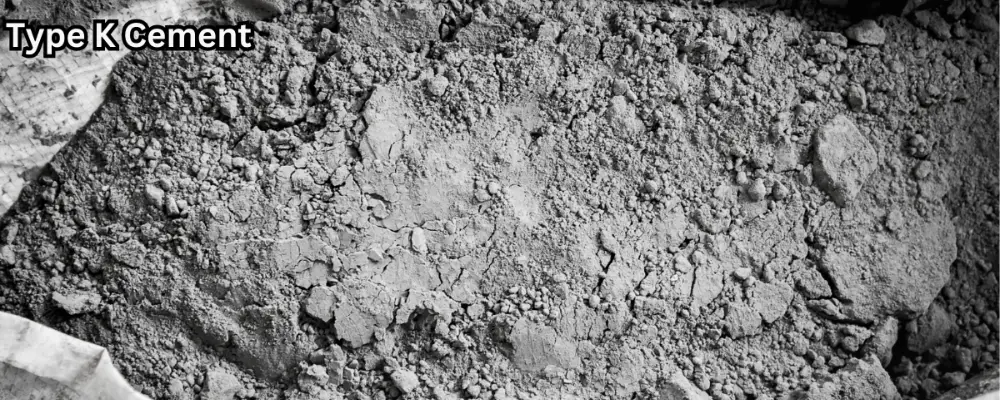
Type K Cement is a shrinkage-compensating cement. It is used to minimise cracks in concrete structures. Regular Portland cement shrinks when it dries and hardens. Type K Cement undergoes controlled expansion during the curing process.  

This expansion compensates for drying shrinkage to ensure a crack-free concrete surface. So, it is a perfect choice for projects requiring durability and aesthetics.  

Composition of Type K Cement

The magic of Type K Cement lies in its unique composition. It is formulated using various critical components, each playing a specific role in its shrinkage-compensating properties.   

Calcium Sulfoaluminate:

Cement Calcium Sulfoaluminate

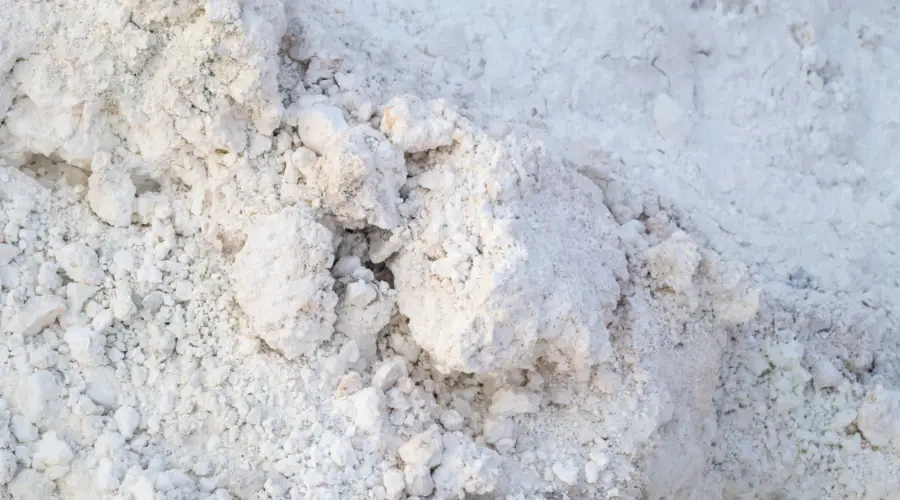
This compound is the primary driver of expansion. It reacts with water and sulfates to form expansive ettringite crystals.  

Portland Cement

Portland Cement

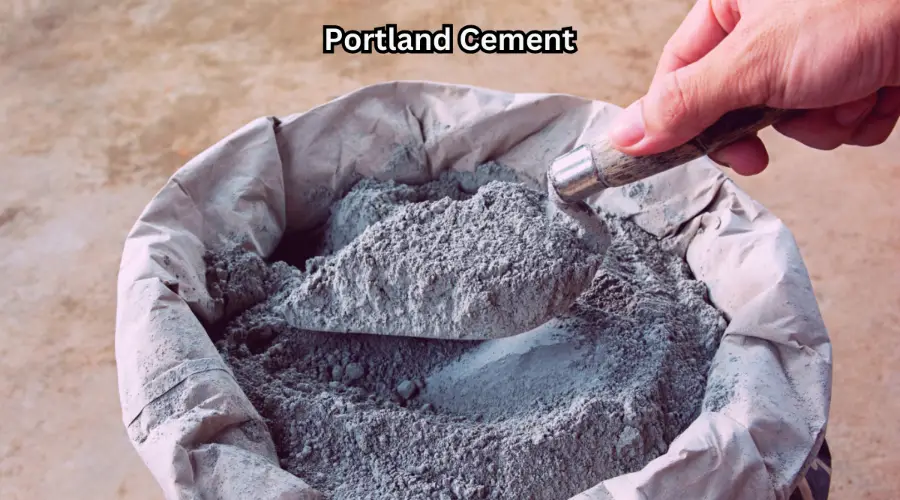
It acts as the primary binder, providing strength and structural integrity.  

Gypsum or Anhydrite:

Gypsum or Anhydrite

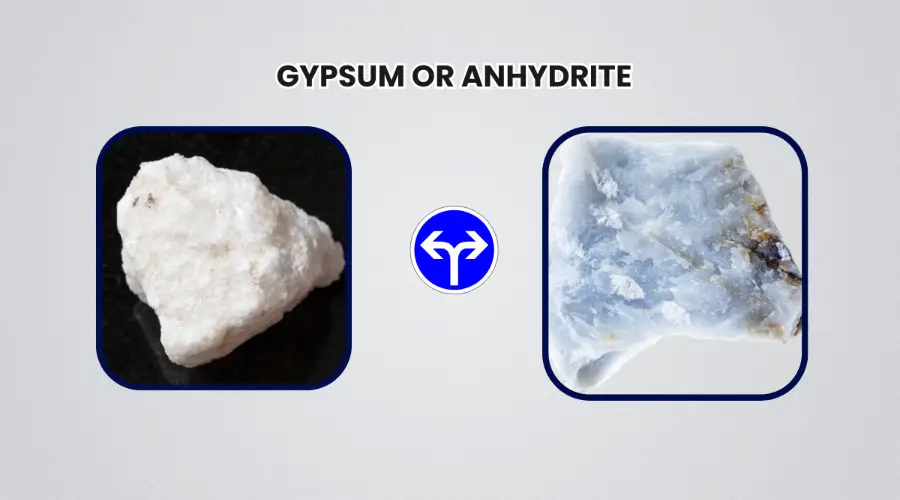
It serves as a sulfate source, facilitating ettringite formation during hydration.  

Together, these ingredients ensure the concrete expands slightly during curing., which counters the shrinkage causing cracking in traditional mixes.

Characteristics and Benefits of Type K Cement

The following are some unique characteristics and benefits that make Type K Cement crucial in modern construction:  

Shrinkage Compensation:  

Type K Cement has a defining feature to counteract drying shrinkage and prevent cracking. This ensures long-term stability and minimises maintenance costs.  

Enhanced Durability:  

Crack-free concrete has a higher resistance to environmental damage like water infiltration and freeze-thaw cycles. It also protects the building from chemical attacks.  

Cost Effectiveness:  

The initial cost of Type K Cement might be higher, However, its durability significantly reduces repair and replacement expenses.  

Improved Aesthetics:  

The absence of cracks ensures a smoother and visually appealing finish. It is particularly important for exposed surfaces.  

Versatility:  

Type K cement is suitable for various industrial and commercial applications. It can also be used for residential projects, making it versatile.

Applications of Type K Cement in Construction

Type K Cement has carved its niche in projects where crack prevention is important. The following are some common applications:  

Large Slabs on Grade:  

Warehouses and distribution centers with expansive concrete slabs benefit greatly from Type K Cement. It prevents unsightly cracks from disrupting operations.  

Parking Structures and Decks:  

These structures face constant exposure to environmental stress and traffic loads. Type K Cement ensures they remain crack-free and durable.  

Bridges and Highways: 

Infrastructure projects demand long-lasting materials. Type K Cement reduces the risk of cracks caused by traffic vibrations and environmental conditions.  

Water Retaining Structures:  

Tanks and reservoirs rely on watertight concrete to prevent leakage. Type K Cement delivers on this requirement by eliminating shrinkage cracks.  

Residential Projects: 

Type K cement is traditionally used in commercial and industrial projects. It is now being adopted for residential driveways and decorative concrete. These projects require aesthetics and durability should be valued.

How Type K Cement Works

Type K Cement can prevent cracks from its controlled expansion during the hydration process. The calcium sulfoaluminate reacts with the sulfate source to form ettringite crystals When water is added to the cement mix.

This formation of ettringite causes the concrete to expand slightly. The expansion offsets the natural tendency of concrete to shrink as it dries. It effectively prevents the tensile stresses from developing. By balancing these forces, Type K Cement ensures the concrete remains stable and crack-free.  

Cost and Availability

The cost of Type K Cement is generally higher than traditional Portland cement. This is due to its specialised formulation. The reduced maintenance and longer lifespan justify the upfront investment.  

Availability may vary depending on location, and not all suppliers carry Type K Cement. It is often available through specialised construction material distributors. Contractors planning to use it should check availability and lead times to ensure timely procurement.  

Installation and Usage Guidelines

Proper handling and installation are important to maximise the benefits of Type K Cement. Here are some guidelines to follow:  

Mix Design: 

Consult with a structural engineer to develop a mix that meets the specific requirements of your project, including precise proportions of aggregates and admixtures.  

Reinforcement Placement:  

Reinforcement like rebar and wire mesh should be strategically placed to accommodate the cement expansion properties.  

Curing:  

Adequate curing is important to allow the expansive reaction and ensure the desired shrinkage compensation; use moist curing compounds as recommended.  

Expansion Joints:  

Design and position expansion joints to control and direct the movement caused by the cement expansion.  

Quality Control:  

Perform regular quality checks during mixing and placement to ensure the concrete meets the desired specifications.  

Bottom line 

Type K Cement has made crack prevention in concrete construction easier. Its ability to offset drying shrinkage through controlled expansion makes it an invaluable material for various applications. 

For any kind of construction project, Type K Cement delivers excellent durability and aesthetics. By investing in this advanced material, builders can create structures offering long-term value.  

FAQs

1. How does Type K Cement prevent cracking?

Type K Cement counteracts drying shrinkage by expanding slightly during hydration. This controlled expansion offsets the tensile stresses, causing cracks, ensuring a stable and durable concrete surface.

2. Is Type K Cement suitable for residential projects?

Yes. Type K Cement is perfect for residential applications like driveways and flooring, where aesthetics and durability are key concerns.

3. What are the key ingredients in Type K Cement? 

The primary ingredients in Type K Cement include calcium sulfoaluminate, Portland cement, and a sulfate source like gypsum and anhydrite. These components work together to create its shrinkage-compensating properties. 

Which Cement is Best for Slab – Find Out Here

0
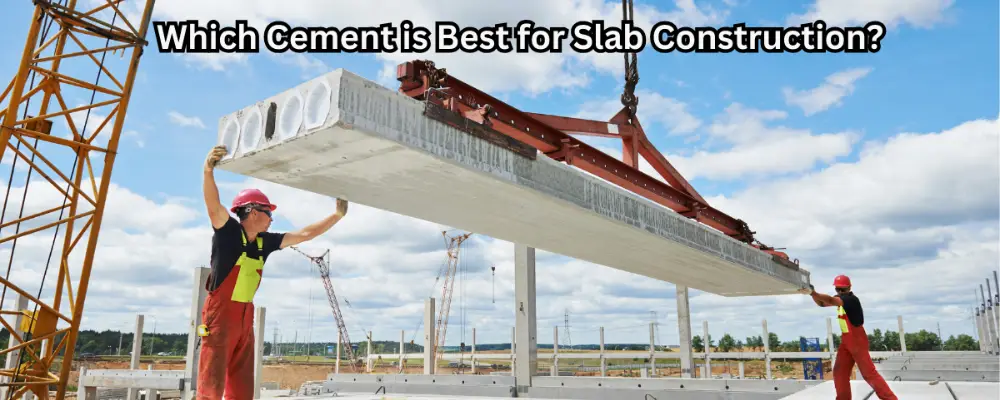
Which Cement is Best for Slab Construction?

Many people enjoy renovating their homes from time to time. This is mostly due to conditions like rusty walls, leakage of water from the roof, or even cracks in the floor. During the renovation, it is important to consider many factors, like the quality of materials, including paint, wood, cement, etc. 

One common issue in homes is floor cracks, which is why many prefer using concrete slabs. To ensure durability, it’s essential to choose the right cement with a solid warranty. So, which cement is best for concrete slabs? Let us look for an answer to this question down below.

Understanding the Importance of Cement in Slab Construction

Cement is an essential material used in slab construction, providing strength and durability to the structures. It binds all other materials so that the slab can support and bear heavy loads without internal cracks. 

The quality of cement used is very important for preventing problems like shrinkage, cracking, and water ingress. Choosing the right cement guarantees lasting stability and safety for the slab. Proper curing and mixing of the cement can further enhance strength and longevity for the slab construction.

Types of Cement Used in Slab Construction

Portland Pozzolana Cement (PPC) is often the preferred choice for slab construction, especially in residential and educational buildings. Composed of 77% cement clinker, 3 to 5% gypsum, and 20% fly ash, PPC offers key benefits like enhanced waterproofing, improved tiling, plastering suitability, reduced cracking and shrinkage. It also allows for extended framework removal time and offers strong load-bearing capacity, preventing slab cracks.

Another top choice is Ordinary Portland Cement or OPC, commonly used in large-scale projects such as power plants and factories. Manufactured from cement clinkers and 5% gypsum, OPC provides early-stage adhesive strength. It has excellent workability and strength for the first 28 days, making it suitable for structural elements such as beams and columns in buildings.

How to Choose the Best Cement for Slabs

Many factors are involved in selecting the best cement for the slab. The first crucial step is to consider the type of project. Then, consider the cement, which provides high durability, strength, and low shrinkage. 

For instance, Portland Pozzolana Cement is best suited for residential slabs as it is waterproof and crack resistant. Ordinary Portland Cement is usually the desired type of cement for many construction firms for commercial projects because of its early-stage strength. 

Recommended Cement Grades for Different Slab Applications

  • Residential Slabs

Grade 33 cement is appropriate for the construction of residential slabs. It is strong enough to provide durability for use in light to moderate load capacity. This will ideally suit homes and small buildings. Its cost-effectiveness, combined with sufficient performance for everyday use, makes it a popular choice.

  • Commercial and Industrial Slabs

Grade 43 cement is more appropriate for industrial and commercial slabs. This grade has excellent stability under increased load, and it is commonly used in offices, warehouses, and factories.

  • Specialised Slab Projects      

Grade 53 cement is recommended for specially designed slab projects, which sometimes require exceptional strength for high magnitudes. It can withstand tough environmental conditions, high-rise buildings, bridges, and other large infrastructures that demand both high performance and resistance.

Best Practices for Slab Cement Application

  1. Proper Mixing Techniques
  • Use the Correct Proportions

Ensure the proper proportions of cement, sand, and aggregates, usually in a 1:2:4 ratio for concrete. To make a stronger slab, use a cement-to-water ratio of about 1:0.4 to 0.6, depending on the type of cement.

  • Use Clean Ingredients

All materials, like cement, sand, and aggregates, should be clean and free from impurities like dirt or debris. Contaminants can weaken the mix and affect the slab’s quality.

  • Thorough Mixing

Mix all ingredients evenly to avoid weak spots in the slab. Use a mechanical mixer for larger projects, ensuring a uniform blend of cement and aggregates for consistent strength.

  1. Curing Methods
  • Water Curing

This is a common process where a slab is kept damp for many days, which can be done either by spraying water on its surface or covering it with wet burlap. The chances of cracking are reduced, and through this technique, the cement stays properly moist.

  • Curing Compound

A curing compound is used to create a thin film over the slab to retain moisture. This is a quicker method and works well in areas where water is limited.

  • Steam Curing

Steam curing can be used for faster curing, particularly for precast slabs. This technique speeds up the hydration process by introducing both heat and moisture.

  • Covering with Plastic Sheets

Covering the slab with plastic sheets helps reduce moisture loss, especially in hot or windy conditions. This is a simple and effective method to maintain optimal curing conditions.

  1. Common Mistakes to Avoid
  • Using Excess Water in Concrete Mix

Overly wet concrete decreases its strength. Mix to create a 4-inch pile, ensuring durability by balancing flow and structural integrity.

  • Using Insufficient Water in Concrete Mix

Too dry concrete lacks adequate hydration for curing. Trowel a smooth surface with three strokes to ensure optimal moisture and full strength.

  • Pouring Slabs Too Thin

A slab under 4 inches is prone to cracking. For durability, use a 6-inch thickness for heavy-duty areas like garages or driveways.

  • Using Expired Cement

Avoid old cement with hard lumps. Fresh Portland cement is crucial for reliable hardening and long-term durability in concrete projects.

  • Incorrect Timing for Troweling

Trowel after surface water dries but while concrete is soft. Early or late troweling risks weak, uneven surfaces.

  • Pouring in Extreme Temperatures

Pouring above 80°F or during frost weakens curing. Aim for moderate weather to ensure concrete strength and longevity.

Wrapping it Up

Selecting the best cement ensures durable slabs with strength and crack resistance. Consider factors like cement type, grade, and application techniques. Proper mixing, curing, and using high-quality materials are essential for long-lasting results in residential, commercial, or specialized slab projects.

FAQs

1. Which grade of cement is best for roof slabs?

Grade 53 cement is often preferred for roof slabs due to its exceptional strength and long-lasting durability.

2. What is the ideal water-cement ratio for slab construction?

The water-cement ratio typically ranges from 0.45 to 0.60 for slab construction.

3. Is it necessary to cure slabs after construction?

Yes, curing concrete slabs after construction is essential for achieving their maximum strength and durability.

Which Cement is Best for Plastering? Find Out Here

0
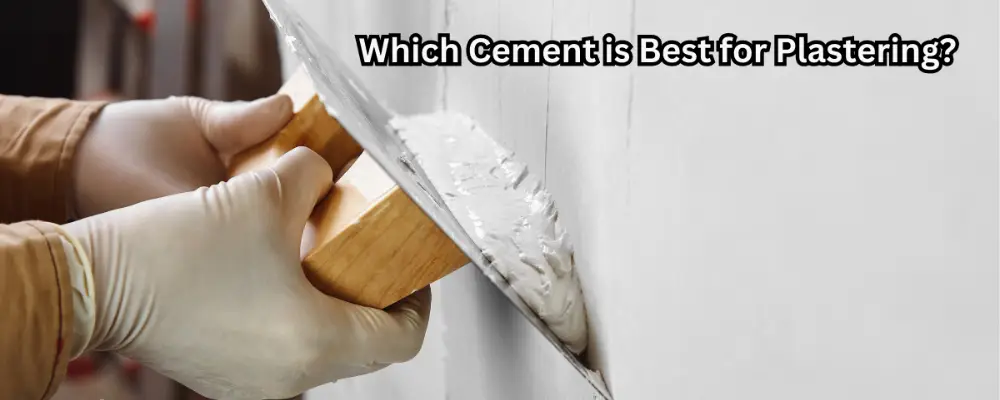
Which Cement is Best for Plastering?

Plastering is a necessary aspect of construction that transforms rough walls into smooth surfaces ready for painting. However, the smooth end results generally depend on the materials used during the process. Hence, selecting the appropriate cement for plastering is important as it ensures that your walls last a long time. This read takes you through all types of cements available so you can choose the right one for the plastering needs.

Factors to Consider When Choosing Cement for Plastering

  • Strength Requirements

The strength of the cement decides how effectively the plaster can withstand forces like weathering and cracking. For most projects, 43-grade OPC offers an ideal balance of strength and workability, providing a smooth finish for internal and external walls.

In damp areas like bathrooms and kitchens, cement with waterproofing properties or additives is recommended to maintain plaster integrity. For faster setting, Rapid Hardening Portland Cement is an option, though care must be taken to ensure sufficient working time.

  • Setting Time

The setting time of cement influences its application process and varies based on climate and project requirements. The initial setting refers to when the mixture begins to harden, and the final setting occurs when it has completely hardened. OPC’s moderate setting time suits most plastering needs. In cold climates, cements with shorter setting times are preferable. In hot climates, those with longer setting times allow for adjustment at application. Retarders or accelerators may also alter the set time to meet specific needs.

  • Cost Considerations

Budget plays a significant role in selecting cement. While cheaper options may save costs upfront, high-quality cement ensures durability and reduces long-term maintenance expenses. For instance, 53-grade OPC may have a higher initial cost but offers greater strength and quicker setting, which can save on labour and time.

Buying cement locally and in bulk can help lower costs. However, using additives or special mixes may be expensive but might be needed to ensure the plaster performs well.

  • Decision-Making

To choose the best cement, compare quotes from multiple suppliers, balance costs with project requirements, and consider long-term savings over initial expenses. 

By factoring in strength, setting time, and budget, you can select cement that ensures durable and high-quality plaster, enhancing the overall structure.

Types of Cement Commonly Used for Plastering

Many different types of cement with unique features are available for plastering. Some commonly used types of cement for plastering are as follows:

  • OPC or Ordinary Portland Cement

OPC is the most commonly used cement in construction. It is a combination of limestone and clay, which promotes excellent binding properties. Hence, strength and durability are improved in buildings.

  • PPC or Portland Pozzolana Cement 

PPC is prepared by mixing Portland cement clinker with pozzolanic materials. It is a thermal and waterproof material that mainly resists cracks and structural damage caused by moisture and changes in weather. This helps improve the construction’s durability.

  • RHC or Rapid Hardening Cement 

RHC is a specialized cement designed for quick setting and hardening. Available in RHC 43 and RHC 53 grades, the latter is preferred for its faster adhesion. It is commonly used for repairing cracks and creating precast concrete components. 

  • QSC or Quick Setting Cement 

QSC is ideal for small-scale projects requiring rapid setting, such as crack repairs and minor roof fixes. It sets faster than RHC but is not recommended for large-scale applications.

  • SRC or Sulphate Resistant Cement 

SRC is specifically formulated to resist damage from high sulfate concentrations in the surrounding environment. This makes it ideal for use in areas where sulfate exposure could weaken structures. Due to its unique properties, SRC is more expensive than other types of cement.

  • White Cement

The white colour makes white cement unique, easy to work with, and has various applications in roofing and decoration. White cement is more resistant and weatherproof.

  • LHC or Low Heat Cement 

LHC generates less heat during hydration, making it suitable for large concrete structures like dams and foundations. It is typically available in a 38-grade variant, with a compressive strength of approximately 33 MPa after 28 days of curing.

Which is the Best Cement for Plastering?

The best cement for plastering depends on the requirements of your construction. Ordinary Portland Cement, grade 43, gives a smooth finish for usual plastering. The best cement to be used for high-humidity areas is Portland Pozzolana Cement since it has water-resistant qualities. For urgent repairs, apply Rapid Hardening Cement or Quick Setting Cement. In gravel-rich surroundings, sulphate-resistant cement will work best. Think about the climate, strength, cost, and all other factors to choose the right cement for permanent and beautiful plastering.

Comparison of OPC and PPC for Plastering

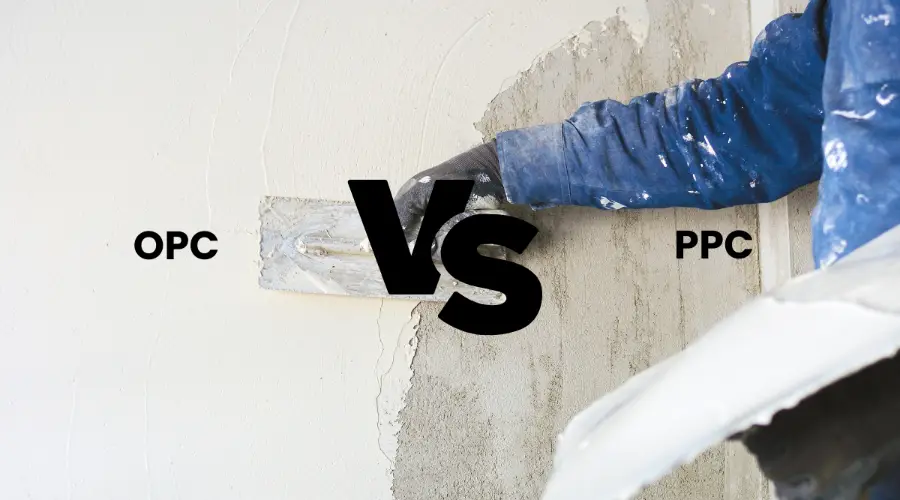
Comparison of OPC and PPC for Plastering
Features OPC (Ordinary Portland Cement)PPC (Portland Pozzolana Cement)
CompositionMade from limestone and clay.It is produced by mixing pozzolanic substances such as fly ash with OPC.
Setting TimeThe quicker setting time makes it ideal for fast-paced projects.Slower setting time, ideal for extended working periods.
DurabilityOffers good strength but is less resistant to moisture.Highly durable with better resistance to moisture and chemical attacks.
Climate SuitabilityIt is best for dry regions, which are prone to cracks in humid conditions.Suitable for humid and high-moisture areas, and is resistant to cracking.
CostSlightly more expensive due to faster setting properties.It is more affordable because of the presence of pozzolanic materials.
WorkabilityProvides smooth finishes but requires careful application.Easier to work with, especially for large-scale plastering.

Wrapping it UP

The right cement for plastering is very important to ensure durable and smooth finishes. Ordinary Portland Cement (OPC), especially OPC 43, is a good option for general use where a smooth finish and strong durability are needed. On the other hand, Portland Pozzolana Cement (PPC) is best for areas with moisture and chemicals, as it lasts longer and is more resilient. Always check your own needs to pick the right cement for achieving durability as well as a superior finish in your project.

FAQs

1. Can white cement be used for plastering?

White cement is suitable for plastering and is especially used for decorative projects.

2. Is PPC suitable for exterior plastering?

Portland Pozzolana Cement is ideal for exterior plastering because of its superior durability, crack resistance, and ability to tolerate harsh weather.

3. How much cement is needed for 1 square meter of plastering?

Generally, 5 to 6 kg of cement is needed to plaster 1 square meter of wall, which equals 0.1 to 0.12 bags of 50 kg of cement.