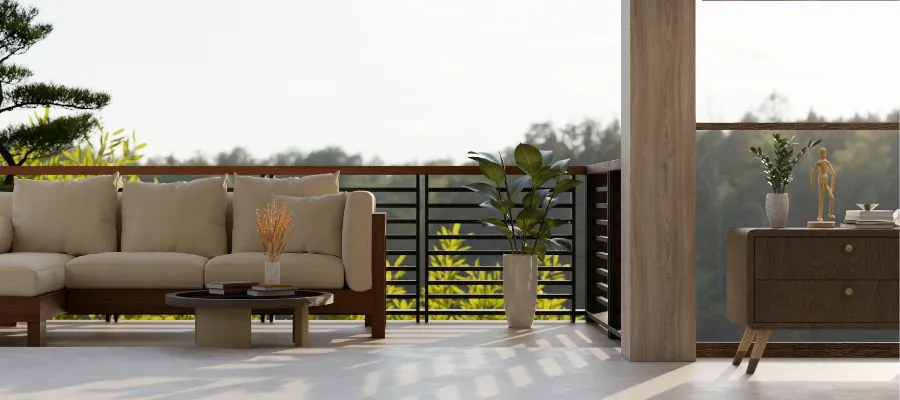
A safe home makes the best home. While a huge variety of windows and balcony designs are making the rounds now, a huge option pool for grills are also available today. These along with providing good safety will also help prevent accidents to a large extent. There are basically 2 major types of windows- interior and exterior fixed windows.
Commercial buildings usually use external fixes just like basement windows, alleyways etc,. whereas the internal fixed is used often in the form of screens and come is various designs. This will be a brief window grill design catalog to refer to for your purpose.
Basic differentiation happens with the type of material used. Each of these has ample designs available that can suit your style.
Material Options and Design Varieties for Window Grills
Metal Styles
Iron / Iron cast
Being a heavy metal iron window grills will be the perfect way the give proper safety to your home. The grills are very heavy and the most potent of the various types. The only problems with iron grill is that they rust as hence a lot of money will be incurred in maintaining them. Regular painting can help with the same. With respect to cast iron a great deal of varieties of available. But again the issue is that it is very susceptible to adverse weather.
Wrought iron :
The advantage of wrought iron over cast iron is it is much thinner comparatively and can be casted into various shapes. This is mostly used for decorative purposes only as it cannot provide much strength.
Steel and Stainless steel :
This grill type is more durable while using both inside and outside your home. This is strong and heavy and can stand resistant to water and moisture, unlike iron. There are various patterns available to choose from. Stainless Steel is slightly more expensive compared to steel but proves well with a very pleasing look. This also requires less maintenance and is resistance to moisture. These grills are usually preferred over steel and iron and is like the dream modern grill.
Mild Steel :
This is a cost-efficient window grill design new to most people. This is also very easily available in stores and comes mostly in straight bars and square grids mostly. This is not as rigid as steel and may not be an option for using in places where higher safety is required.
Aluminium :
Falling among the lightest materials of choice for grills these are available in various designs, It does not rust and are safe too. This is not as tough as iron or steel and hence cannot be used for safety but Is a perfect option to use in kitchens and shafts.
Non–Metal Styles
Wood :
These grills can add a huge taste of class and elegance to homes but come with a huge budget. These are available as detachable versions and hence is not very suitable for safety purpose for homes. This will require quite some maintenance money as the wood has to be polished and painted to maintain well and is usually used in high-budget homes.
Sandstone :
This is usually used for decorative purpose in places requiring coverage as a screen as well as good ventilation. It is a soft stone and is sculpted into beautiful designs and colours and hence will add beauty to your home.
Rainwater harvesting is the storage of rainwater for reuse such that it does not get run off and wasted. Rainwater can be collected from roofs and catchment areas and then diverted to the storage area where it can be efficiently stored for reuse. The harvested water can be used for drinking water, household purposes, longer-term storage for future use, and for other purposes such as groundwater recharge.
A rainwater harvesting system follows the below process
Collection through catchments
The rainwater collection is done through catchment areas which are nothing but surfaces over which rain falls directly. It can be a terrace, garden or paved open space, or even a courtyard. Sloping roofs, RCC slabs, weather-sheds, corrugated sheets, and fabricated roofs, all act as catchment areas.
Gutter
At the edges of sloping roofs or fabricated roof structures, channels are installed such that the rainwater flows from these roofs to the channels and from these channels to drain pipes. These channels are known as gutters.
Transportation through conduits
Transportation of rainwater means the proper flow of rainwater from the collection area to the storage area. This is done with the help of pipelines or conduits. These conduits are made of Galvanized Iron (GI) or PVC. Gutters collect the rainwater from the sloping sheds and roofs. These gutters are connected further to pipelines which further carry rainwater from the catchment to the harvesting system and finally into the storage. Terraces and paved grounds have a direct flow of water into the pipelines.
Filtration tank
Rainwater is filtered to remove unwanted dirt and micro-organisms before it enters the storage tank or recharge structure. Various types of filters are available – Charcoal water filters, Sand filters, Horizontal roughing filters, and slow sand filters.
Storage tanks
The rainwater once filtered is ready for direct usage. The filtered water is thus stored in tanks or barrels. The tanks can be designed with RCC or masonry depending on the volume of water to be stored. These tanks need to be carefully placed, either underground or partly underground.
Recharge of groundwater levels
The collected rainwater can also be used to recharge the groundwater levels. Ground recharge is can be done at a shallow level using recharge trenches and permeable pavements. While bore wells and recharge pits are dug deep underground where water can be stored and recharged.
The colour scheme for your living room is the centre point of attraction of your home. The colours you choose relate to your personality as well as can have the right emotional effect on you. While for many years we have always preferred using soft, solid colours on the walls, a little chance to experiment could actually land you with an energetic colour scheme that can bring your mood up anytime.
So, with about ample choices to meddle with before you pick your take, here listed area few elegant yet different modern colour schemes for your living room that you might like. Modern Colour Schemes for your Living Room
Grey Matte
Picking a grey matte shade for your walls will mean a little traditional with a tad bit experimental. Matte finishes can give the classy elegance that your living room vibe will hold. The colour grey also adds a rich look and helps you match up with bold colour furniture or decorative like orange, green, pink, red, etc,.
The warmth of wine
Picking a wine color for your living room color scheme would be a great idea. The color is graceful and plump. You can pick soft tones of wooden furniture, match them up with grey or gold rose decorative such as cushions and up the look. The overall look will be dusky and a little countryside home with a splash of wine tone. This would be one of the best colours for living room walls.
Gorgeous green
Instead of picking pista green or softer shades, you can try bolder tones such as emerald green. The scheme look can be enhanced with deep tones of blue covered in design, small indoor decorative plan pots or artwork. You can pick some fancy modern furniture in turquoise for a fresh energetic look or shiny wooden furniture aged gracefully to add a majestic look to your living space. The space would emit the beauty of a green landscape right in your living room.4.
A dip into neon
Neon is often considered a very bold choice for the living room colour scheme. But with the right partners, it can enhance the focus of your living room. You can chose to paint the walls in faint pink or matte grey and compliment the look with metal or stone furniture. Now add the neon touch through the cushions shades or centre pieces to this classy design to depict the craving adventure.
Pattern play
Instead of choosing patterned wallpapers for your interiors you can go for solid colours and splash some patterns on the interior decorations. This would be a great living room idea. You can chose pastel shades for the wall and bring In bold patterns in contrasting colours. Bring a twist with solid-coloured cushions and decorations complimenting the basic wall shade to finish the look.
Double colours
You can try double colours for your living room walls either with patterns or as solid shades. You can mix two bold, two soft or even one of each shade to get the perfect finish. To pair them up choose colours that go well from the colour wheel. Instead, you can also go for patterned wallpapers and use solid, complimenting coloured furniture.
When building a home, the type of cement you use is very important. There are many choices, but Portland Pozzolana Cement (PPC) stands out as a useful and flexible one. In this blog Brick & Bolt, we look into the ins and outs of PPC, including what it is made of, its benefits, and how it helps build homes that last.
What is Portland Pozzolana Cement(PPC)?
PPC, which stands for Portland Pozzolana Cement, is a type of cement that is frequently utilized in the building sector due to its exceptional qualities and benefits. The performance and sustainability of this material are improved by the addition of pozzolanic materials and Portland cement clinker, which are both components of this mixture.
What is the classification of PPC Cement?
Portland Pozzolana Cement (PPC) is put into groups mainly based on what it is made of and how well it works, as described by appropriate standards and guidelines. PPC is categorized by state standards in many places, like India. These standards could be the Indian Standard (IS) or the American Society for Testing and Materials (ASTM) standards. Here is an outline of how PPC is categorised:
1. Based on Pozzolanic Material Present:
Type I:
PPC with a low to moderate amount of pozzolanic material present, usually between 10% and 25% by mass. This kind of PPC develops moderately in strength and can be used for a wide range of building tasks.
Type II:
PPC with a higher pozzolanic material content, usually between 25% and 40% by mass. Type II PPC develops stronger and lasts longer, so it can be used for building concrete and infrastructure projects that need better performance.
2. Based on Compressive Strength:
Grade 33:
PPC with a minimum compressive strength of 33 MPa (Megapascals) after 28 days. Most of the time, Grade 33 PPC is used for general building and non-structural uses.
Grade 43:
PPC that has a minimum compression strength of 43 MPa after 28 days. It is possible to use Grade 43 PPC for structural concrete parts like beams, columns, and blocks that need to be stronger.
Grade 53:
PPC that has a compression strength of at least 53 MPa after 28 days. Grade 53 PPC is used for high-strength concrete projects like bridges, marine structures, and precast parts.
3. Based on Setting Time:
PPC can also be put into groups based on when it was set up, including when it was first set up and when it was last set up. The required setting time is given to make sure that the cement has the right workability and strength development characteristics for the building.
4. Based on Chemical Composition:
Some types of PPC may also look at the cement’s chemical makeup, such as the amount of Portland cement clinker, pozzolanic materials, and other ingredients that are in it. These requirements help make sure that the quality and performance of PPC are always the same in different situations.
It is important to keep in mind that the way PPC is classified may be different in different countries and areas, depending on their own rules and standards. To choose the right type and grade of PPC for their projects, builders and contractors should look at the important standards and specifications. Following classification standards also makes sure that the quality, performance, and dependability of PPC in building applications.
Composition of PPC:
Portland Pozzolana Cement is made up of a mix of Portland cement clinker and pozzolanic materials that work well together.
Portland Cement Clinker:
Portland cement clinker functions as the principal component of Portland cement cement (PPC). Cement clinker is formed by grinding a mixture of limestone, clay, and other minerals in a kiln at high temperatures. This process is known as the Portland cement production process. In addition to providing the initial strength and binding capabilities of PPC, it is the foundation upon which the majority of cement types are built.
Pozzolanic Materials:
The combination of pozzolanic materials is the characteristic that sets PPC apart from other materials. These components, which may include fly ash, calcined clay, or volcanic ash, are crushed to a very fine quality before being incorporated into the cement mixture. In the presence of water, pozzolanic materials undergo a chemical reaction with calcium hydroxide, which results in the formation of additional cementitious compounds. In addition to improving the cement’s strength and durability, this reaction, which is referred to as the pozzolanic reaction, also provides additional benefits.
Advantages of Portland Pozzolana Cement
Portland Pozzolana Cement (PPC) has become a popular choice in the building business, because it has so many benefits. In this section, we’ll talk about the main reasons why PPC is an important part of home building projects.
1. Better Strength and Durability:
Compared to regular Portland cement, PPC is stronger and lasts longer. The addition of pozzolanic materials makes it easier for more cementitious compounds to form. This makes the concrete stronger and better able to handle things like chemical attacks, sulfate exposure, and rust. Structures made with PPC are more likely to last for a long time and be reliable.
2. Lower Heat of Hydration:
One thing that makes PPC stand out is that it has a lower heat of hydration. PPC produces less heat during the hydration process than regular Portland cement. This makes it useful in situations where differences in temperature can cause thermal cracking, like in big concrete structures. This feature of PPC makes the construction last longer and more durable.
3. Improved Workability:
The smaller pozzolanic materials in PPC make it easier to work with because they are contained in the cement mix. This better workability means that it is easier to move, mix, place, and pack down concrete during building. So, builders can make their buildings look better and have smoother finishes while also cutting down on the time it takes to build and the amount of work that needs to be done.
4. Resistance to Sulfate Attack:
Structures that are built in sulfate-rich areas, like coastal areas or places where the dirt has a lot of sulfate in it, need cement that is more resistant to sulfate attack. PPC makes the structure more resistant to sulfate attack, which lowers the risk of damage and makes sure it lasts longer. Because of this, PPC is a great choice for building jobs that need to be done in tough environments.
5. Lower Carbon Footprint:
Less carbon dioxide is released into the atmosphere when pozzolanic materials are used to make PPC. This helps lower the carbon footprint of making cement. By using industrial waste like fly ash or calcined clay, PPC helps reduce the damage that making cement does to the earth and encourages green building methods. This makes PPC a good choice for builders and producers who care about the environment.
6. Cost-Effectiveness:
Even though PPC works better and has more benefits, it is still cheaper than other types of cement. Pozzolanic materials are often cheaper than other types of cement because they are made from waste materials in factories. Additionally, structures made with PPC last longer and need less upkeep, which lowers the overall cost of the construction project over its entire lifecycle.
In conclusion, Portland Pozzolana Cement (PPC) has many benefits that make it a popular choice for building homes. PPC offers better performance at a lower cost, with benefits like increased strength and durability, easier workability, and sustainability. By using PPC’s benefits, builders can create strong, long-lasting structures that meet the needs of modern building practices and help with sustainable development.
Mortgage loan and home loan are two terms that are regularly encountered in the area of real estate financing. Although they are frequently used interchangeably, there are subtle differences between them that can have a substantial impact on the financial decisions that borrowers make. In order to assist you in navigating the complexity of property finance, Brick & Bolt will look into the differences between mortgage loans and home loans in this blog.
Mortgage Loans
When it comes down to it, a mortgage loan is a loan that is designed particularly for the purpose of purchasing real estate. The loan is secured by the property that is being acquired, which performs the function of collateral for the loan. During the course of a defined time period, which typically spans several years, the borrower makes a commitment to return the loan amount, together with the interest.
Let’s Explore Some Additional Details About Mortgage Loans:
Mortgage Rates:
Mortgage loans often offer competitive interest rates, which are impacted by a variety of factors, including the state of the economy, price increases, and the creditworthiness of the borrower. Borrowers have the option of selecting either a fixed-rate mortgage, in which the interest rate remains unchanged during the duration of the loan, ensuring stability and predictability in monthly payments, or an adjustable-rate mortgage, often known as an ARM, in which the interest rate may fluctuate regularly based on market indicators.
Loan-to-Value Ratio (LTV):
Lenders evaluate the loan-to-value ratio, which calculates the ratio between the amount of the loan and the value of the property that has been purchased. It is possible that a lower loan-to-value ratio will result in more favourable loan terms, such as lower interest rates and reduced requirements for private mortgage insurance (PMI). This is because a lower LTV ratio signifies a lesser risk for the lender.
Private Mortgage Insurance (PMI):
Borrowers who make a down payment that is less than twenty per cent of the total purchase price of the home may be compelled to pay for private mortgage insurance. PMI safeguards the lender against the possibility of the borrower defaulting on the loan. They may be eligible to request the removal of private mortgage insurance (PMI) after the borrower’s equity in the home reaches twenty per cent, which will result in a reduction in their monthly payments.
Closing Cost:
It is important for borrowers to ensure that they have sufficient funds in their budgets to cover the closing charges associated with the mortgage loan. The fees associated with the loan origination, the appraisal, the title insurance, the attorney fees, and the prepaid property taxes and insurance may be included in these charges. For borrowers, it is vital to check the Loan Estimate that is provided by the lender. This document provides an outline of the projected closing costs, and it is important for them to budget accordingly.
List of Important Elements of Mortgage Loans:
Secured by Property:
The property that is being acquired acts as collateral, which enables the lender to reduce the risk that is involved with the loan.
Interest Rates:
The interest rates that are associated with mortgage loans are normally either fixed or adjustable respectively. Fixed rates are those that remain the same during the duration of the loan, providing stability for the borrower. Adjustable rates, on the other hand, might change depending on the financial market conditions.
Long Terms:
There are a variety of loan lengths available, with the most frequent range being between 15 and 30 years for mortgage loans. When the loan is for a longer period of time, the monthly payments are lower; nevertheless, the overall amount of interest paid over the course of the loan’s lifetime is higher.
Down Payment:
In most cases, borrowers are required to make a down payment, which normally falls within the range of three per cent to twenty per cent of the total purchase price of the home. However, there are some programs that permit lesser down payments.
Home Loans
A home loan is a more general term that encompasses a variety of loans used to purchase, construct, remodel, or refinance a home. Although mortgage loans are included in the category of house loans, the latter category also encompasses other forms of financing, such as home equity loans and home equity lines of credit (HELOCs).
Important Components of Home Loans
Home Equity Loans:
Homeowners who have equity in their properties may be eligible for home equity loans, which enable them to borrow money against the value of their homes but come with certain requirements. As a result of the fact that these loans often come with fixed interest rates and fixed monthly payments, they are excellent for one-time expenses such as home improvements, debt consolidation, or significant purchases.
Home Equity Lines of Credit (HELOCs):
HELOCs are a type of credit line that is comparable to home equity loans in that they enable homeowners to access their home equity, but they offer greater flexibility. For the duration of the draw period, home equity lines of credit (HELOCs) perform the function of revolving lines of credit, enabling borrowers to borrow funds as needed, up to a predetermined credit limit. Borrowers are only required to pay interest on the amount that they borrow while using a home equity line of credit (HELOC).
Refinancing:
It is also possible for homeowners to use home loans to refinance their existing mortgages. This can be done for a variety of reasons, including obtaining a lower interest rate, shortening the loan term, or gaining access to equity for other purposes. Refinancing helps borrowers save money on interest payments over the course of the loan’s term, which can free up funds that can be used for other financial goals.
Tax Implications:
Taking into consideration the tax implications of home loans, particularly with regard to the deductions for mortgage interest, is a vital step for borrower consideration. It is possible for borrowers to deduct the interest they pay on their primary dwelling as well as, in some circumstances, the interest they pay on a second home or investment property using the tax regulations that are currently in effect. On the other hand, because tax regulations are subject to change, it is recommended to seek the advice of a tax counsellor in order to receive individualized guidance.
Key Features of Home Loans:
Versatility:
In contrast to mortgage loans, house loans can be utilized for a variety of purposes other than the purchase of a home. They might be used to finance home improvements and repairs, or they could even be used as a way to gain access to equity that has been built up in the property.
Secured and Unsecured Options:
While mortgage loans are always secured by the property, home equity loans and home equity lines of credit (HELOCs) can be secured (by the equity in the home) or unsecured, depending on the needs of the lender.
Terms and Interest Rates:
The terms and interest rates for house loans are different for each form of loan, and the interest rates are also different. When opposed to conventional mortgage loans, home equity loans and home equity lines of credit (HELOCs) may have differently structured payback terms and interest rates.
Flexibility in Use:
Home loans provide homeowners with the ability to spend their finances in a manner that is flexible, which makes them an invaluable resource for homeowners who are trying to leverage their home equity for a variety of financial requirements.
Differentiation: Mortgage Loan vs Home Loan
ASPECT
It can be used for purchasing, renovating, etc.
HOME LOAN
Purpose
Specifically used for purchasing real estate.
Commonly, 15 to 30 years.
Collateral
Collateral is provided by the property that is being purchased.
Depending on the type, it could be either secured or unsecured.
Interest Rates
In most cases, either fixed or adjustable
The amount varies according to the type of home loan.
Loan Terms
Commonly 15 to 30 years.
The amount varies according to the type of home loan.
Down Payment
Typically required
The amount varies according to the type of home loan.
In conclusion, mortgage loans and home loans both have the same objective, which is to make homeownership more accessible; yet, it is essential to have a thorough awareness of the differences between the two in order to make well-informed decisions regarding one’s finances. You may save yourself time, money, and frustration in the long run by being aware of which loan choice is most suitable for your requirements, regardless of whether you are in the market for a new house or thinking about tapping into the equity in your current residence.
Frequently Asked Questions(FAQs)
1. How does a home loan differ from a mortgage loan? What is the primary distinction between the two?
The primary distinction resides in the amount to which the loan is being extended. Compared to a home loan, which comprises a variety of financing alternatives for homeownership and the expenses that come along with it, a mortgage loan is designed particularly for the purchase of real estate.
2. Are the interest rates on mortgages the same for all types of home loans?
Mortgage rates are not fixed; rather, they can change depending on the type of house loan and the lender. Home equity lines of credit (HELOCs) and conventional mortgage loans could have prices that are different from one another.
3. If I want to get a mortgage, do I need to make a down payment?
This is contingent upon the sort of house loan that you are asking for as well as the restrictions that the lender has. There are a variety of house loan alternatives available, and while standard mortgage loans normally require a down payment, other options may give greater flexibility.
4. Is it possible to use a home loan to fund home renovations?
Certainly, it is possible to fund home modifications and renovations with some kinds of house loans, such as home equity loans or home equity lines of credit (HELOCs).
5. What factors determine my eligibility for a mortgage or home loan?
When making lending decisions, lenders take into account a number of criteria, such as the applicant’s employment history, income, debt-to-income ratio, credit score, and the value of the property that is being financed.
The decision between judicial and non-judicial stamp papers holds a huge amount of weight when it comes to the area of legal paperwork and transactions. For the purpose of assuring the validity and legality of various papers, it is essential to have a thorough understanding of the details and implications of this option. In this blog, Brick & Bolt look into the differences between judicial and non-judicial stamp papers, as well as the legal consequences of each type of stamp paper and the situations in which it is appropriate to use particular types of stamp papers.
Differences between Judicial Stamp Papers and Non-Judicial Stamp Papers?
Before digging into the legal consequences of these stamp papers, it is important to understand the differences between judicial and non-judicial stamp publications.
What is Judicial Stamp Papers?
The term “judicial stamp paper” refers to a type of stamp paper used for executing legal or court-related papers. Agreements, affidavits, bonds, and other instruments that need to be filed or produced in front of a court or judicial body are often included in this category of documents. Judicial stamp papers can be purchased through authorised stamp dealers or agencies approved by the government.
Legal Implications of Using Judicial Stamp Papers
In terms of legal implications, the utilisation of judicial stamp papers is indicative of a number of qualities and advantages, including the following:
Document Authentication and Validity:
Documents signed on judicial stamp sheets are seen as more authentic and believed to be legally binding. The stamp paper contributes to the legitimacy of the agreement or transaction in the eyes of the law by serving as evidence of the agreement or transaction.
Stamp Duty Payment:
Stamp duty is a tax imposed by the government on legal documents to authenticate them. Stamp duty is required for judicial stamp papers. The amount of stamp duty that must be paid varies according to the transaction’s quantity and nature.
Admissibility in Court:
When it comes to the admissibility of evidence in court proceedings, documents executed on judicial stamp papers are easily admissible. Because of this, they carry more weight and credibility, which ultimately strengthens the legal position of the parties involved.
When to Use Judicial Stamp Paper?
Since judicial stamp papers are considered to be of significant legal importance, they are often suggested for the following categories of documents:
Legal Agreements:
The execution of any agreement or contract with legal implications, such as a partnership agreement, a loan agreement, or an employment contract, should ideally be done on judicial stamp papers to guarantee that the agreement or contract may be enforced.
Affidavits and Declarations:
In order to ensure their authenticity and legal validity, affidavits, sworn statements, and declarations that are made in front of a judicial authority or that are intended to be submitted in court proceedings should be prepared on judicial stamp sheets.
Court-Related Documents:
Documents filed or produced in court, such as petitions, complaints, or applications, must be drafted on papers with the judicial stamp to comply with legal requirements and procedural formalities.
Now, let’s look into Non-Judicial stamp papers
What are Non-Judicial Stamp Papers?
Non-judicial stamp papers are used for various transactions and agreements that do not necessarily involve legal processes or matters related to the court. In comparison to judicial stamp papers, which are designed to be used for submitting or producing documents in front of a court or other judicial authority, non-judicial stamp papers are utilised for a wider variety of purposes in both personal and business monetary transactions.
Legal Implications of Using Non-Judicial Stamp Papers
The legal consequences of non-judicial stamp papers are different from those of judicial samp papers, notwithstanding the fact that they serve a variety of practical purposes:
Transactional Agreements:
Non-judicial stamp papers are frequently utilised to execute transactional agreements. These agreements include sale deeds, leasing agreements, mortgage deeds, and other contracts that are not directly related to legal proceedings.
Convenience and Cost-effectiveness:
Non-judicial stamp papers, in contrast to judicial stamp papers, are significantly simpler to acquire and can be obtained from designated stamp sellers or government offices. This makes them more convenient and cost-effective. When compared to judicial stamp papers, they are frequently preferred due to the fact that they are more convenient and cost less.
Limited Legal Standing:
Although non-judicial stamp papers are able to satisfy the requirement of stamp duty payment, it is possible that they do not have the same legal weight and admissibility as judicial stamp papers in some legal disputes or court procedures.
When to Use Non-Judicial Stamp Paper?
In situations where legal proceedings are not required, non-judicial stamp papers are useful for a wide variety of transactions and agreements for the following reasons:
Property Transactions:
Documents relating to property, such as sale deeds, lease agreements, donation deeds, and other property-related documents, can be executed using non-judicial stamp papers in order to facilitate the transfer of ownership or tenancy rights.
Powers of Attorney:
Powers of attorney, which are documents that provide power to an individual to act on behalf of another, can be created on non-judicial stamp paper. This makes them legally effective for particular reasons, such as the management of property or the representation of legal matters.
Business Contracts:
There are a variety of business-related documents that can be drafted using non-judicial stamp paper. These documents include commercial agreements, agreements for sale, service contracts, and other business-related documents. The purpose of these documents is to establish the rights and responsibilities of the parties involved.
In conclusion, it is important to note that the choice of judicial or non-judicial stamp papers is based on the characteristics of the document, the legal implications of the document, and the particular requirements of the parties concerned. Non-judicial stamp papers offer convenience and cost-effectiveness for various transactions and agreements, unlike judicial stamp papers, which give higher authenticity and legal standing. Individuals and organisations can make educated judgments to secure the validity and enforceability of their documents in compliance with the law if they provide themselves with an understanding of the legal consequences that are associated with each type of stamp paper.
Concrete is a widely used construction material. It is a mixture of cement, sand, aggregates, water, and admixtures. Concrete’s strength directly impacts the durability of your construction. Hence, it is crucial to consider the strength of concrete before you use it in your construction. The grade of concrete is a way to figure out how strong the concrete is after 28 days of being worked on, such as M5, M10, M20, M25, M30, M40 and more. The grade of concrete is shown by the magnitude, which is written as N/mm2 or MPa. The grade of concrete is divided into three categories: ordinary grade, standard grade and high-strength grade.
Brick & Bolt presents a comprehensive guide to the M20 grade of concrete, covering everything from the basic M20 concrete ratio to its applications and calculations of the components.
What is the M20 Concrete Ratio?
M 20 concrete ratio gains a compressive strength of 20 N/mm2 or MPa after 28 days of curing period. Simply put, the M20 concrete ratio is the percentage that the concrete is mixed with to get the required 20 N/mm2 or MPa compressive strength. It shows the highest stress that the concrete can withstand before cracking or shearing. It is an ordinary concrete grade that is used in building projects that need average compressive strength. M20 concrete grade is used to build residential and low-rise buildings, as well as supports, floors, and other structural parts.
As per IS 456:2000, the M20 grade concrete ratio is 1:1.5:3, which means 1 part of cement, 1.5 parts of fine aggregates or sand, and 3 parts of coarse aggregates.
Application of the M20 Concrete Mix Ratio
M20 concrete ratio is often used inreinforced cement concrete (RCC) constructions, including stairwells, beams, columns, and slabs. The applications are as follows:
Pavements: M2O concrete grade is used for sidewalks, pavements, and comparable surfaces. It provides enough durability and strength to withstand mild vehicle and pedestrian activity.
Structural Units of Small Buildings: M20 grade is used to build structural units such as slabs, beams, and columns for small to medium-sized buildings. It offers a decent mix of robustness and longevity for moderate exposure scenarios.
Water Retaining Structures: RCC water tanks and pipelines are examples of water retaining units that may be made using the M20 concrete mix.
Small-Scale Infrastructure: TheM20 concrete mix ratio provides the best structural integrity for building walls and retaining walls on a small size.
How to Calculate the Components in M20 Grade Concrete Ratio
You can determine how many ingredients are needed to make M20 ratio concrete using basic calculations. To get a better understanding of the factors used in the calculation for M20 grade concrete, consider the terms below:
Total Sum of M20 Ratio
As mentioned above, the M20 concrete ratio is 1:1.5:3,
Hence, total sum of M20 ratio is = 1+1.5+3 = 5.5
Dry Volume of Concrete: The dry volume of concrete is the mixture that results when you only mix the dry ingredients, such as cement, sand, and aggregates.
Wet Volume of Concrete: This is the amount of concrete that is “wet” after you add water to the dry mix.
The dry concrete mix has voids that shrink when water is added. When concrete gets wet, it loses volume, so more material is needed to compensate.
So, if the wet volume of concrete is 1 m3, it equals 1 x 0.54 = 1.54 m3 after being expanded by 54%.
Hence,
Dry Volume of Concrete is 1.54 m3,
Wet Volume of Concrete is 1 m3
Now, calculate the Ingredients of the M20 concrete ratio,
Calculation of Cement Quantity for M20 Concrete Ratio
Cement Quantity = Dry Volume of Concrete * (M20 Cement Ratio/Total Sum of M20 Ratio)
= 1.54 m3 * (1/5.5)
= 0.28 m3
Now,
The cement quantity for M20 concrete mix = Volume of Cement x Density of Cement
= 0.28 x 1440 Kg/m3
= 403.2 Kg of cement required for 1m3 concrete as per the M20 ratio.
Calculation of Sand Quantity for M20 Concrete Ratio
Sand Quantity = Dry Volume of Concrete * (M20 Sand Ratio/Total Sum of M20 Ratio)
= 1.54 m3 * (1.5/5.5)
= 0.42 m3
Now,
The sand quantity for M20 concrete mix = Volume of Sand x Density of Sand
= 0.42 x 1600 Kg/m3
= 672 Kg of sand required for 1m3 concrete as per the M20 ratio.
Calculation of Aggregates Quantity for M20 Concrete Ratio
Aggregate Quantity = Dry Volume of Concrete * (M20 Aggregate Ratio/Total Sum of M20 Ratio)
= 1.54 m3 * (3/5.5)
= 0.84 m3
Now,
The required aggregates quantity for M20 concrete mix = Volume of Aggregates x Density of Aggregates
= 0.84 x 1500 Kg/m3
= 1260 Kg of aggregates required for 1m3 concrete as per the M20 ratio.
Water Requirement for M20 Concrete Ratio
In M20 concrete, the water-to-cement ratio generally ranges between 0.35 and 0.55. However, the amount of water depends on factors such as workability, climate, and desired quality.
Conclusion
In a nutshell, anyone working on building projects needs to know about the M20 concrete ratio. By understanding its uses and components and how to calculate the components in the M20 concrete mix ratio, you can learn to build structures that will last for years, providing safety and dependability.
Delhi has extensive infrastructure, which speaks for its thriving real estate market. As the need for luxury and modern apartments and villas rises in Delhi, the demand for choosing the best real estate developer in Delhi increases to bring your property design idea to life. Whether taking an innovative approach to design or developing a modern house, these Real estate builders in Delhi settle for perfection in commercial and residential spaces.
Here, Brick and Bolt list the top real estate companies in Delhi that will help you turn your dream home into a reality.
Top real estate developers in Delhi NCR
Delhi is a bigger real estate market, but finding the right developer is important to building world-class houses and villas. Here is the list of best real estate developers in Delhi that can shape any dream house:
1. Omaxe
Omaxe Limited tops the list of real estate builders & construction company in Delhi, which reflects their expertise in constructing the best buildings while keeping up with the latest industry standards. Established in 1989 by Mr. Rohtas Goel, the company has developed more than 100 million sq. ft. of space, such as apartments, plots, and commercial buildings.
A well-known Omaxe project features quality construction and outstanding layout design. The team has the expertise to make your property construction idea a reality. Whether you want to develop your dream bungalow with modern amenities or build a cozy house that fits your lifestyle, they are your go-to real estate developer.
2. Veera Developers
The Veera Developers Group entered the market in 1981 and is now among the top ten best real estate developers in Delhi. This group specializes in developing properties that promote luxurious lifestyles through its world-class villas and apartments. This group combines contemporary designs with natural landscapes and innovative interiors.
They develop residential, commercial, and retail properties, handling everything from land acquisition to project planning to marketing and sales.
By continuously innovating, Veera aims to delight its customers with luxurious living spaces. The company’s reputation is built on ethical practices, transparency, and high property maintenance.
3. Parsvnath Developers Limited
Parsvnath Developers Limited deserves the name on the best real estate Builders company list in Delhi because of their expertise. They have always been efficient in providing impressive real estate development to meet customers’ demands.
With significant years of experience serving every industry, they can turn any blank slate building into a modern hub that will amaze customers. Their high satisfaction rate across sectors made them step up to the top of the list of best real estate developers in Delhi.
Parsvnath walked on the mark to make a better world, and they proved it by transforming flat land into resort-style residential, commercial, and recreational properties. They have achieved a big name in the city and are dedicated to building the best houses in Delhi.
4. DLF Group
DLF Group is the most prominent real estate developers in delhi ncr. It has an excellent track record of developing eye-catching infrastructure that wins customers’ hearts.
They have the expert hand on the fly to deliver the best for your infrastructure development. DLF Group has served a wide range of sectors like Hospitality, retail, commercial, and so on with the best real estate development. They entered the market several years back in 1946 and continue with the same legacy of delivering the best infrastructure that has brought them into the spotlight.
DLF has always been willing to travel miles to meet customer building development requirements. The company specializes in building condominiums and luxury villas in Delhi. Its commitment sets it apart from other real estate developers in Delhi.
5. Raheja Developers
Raheja Developers is the real estate company in delhi on the list. Founded in 1990, it specializes in building and provides a high-quality selection of residential and commercial properties.
Over 60 million square feet are being constructed and permitted, an area of 90,000 acres is under development, and over 15.50 million square feet, including hotels, are being developed. Having worked with some prestigious clients, they have established a legacy as one of Delhi’s best real estate developers.
6. Ambience Group
Ambience Group is a leading real estate developer in Delhi with expert team consistently working to meet the requirements of every project, be it customized or a dream house idea. As the best property developer in Delhi, Ambience Group can meet any construction need.
It is well known for its commitment to building high-quality and affordable residential properties. With Ambience Group’ contribution to real estate in Delhi, home buyers can choose various affordable housing options.
7. Add India Group
Add India Group is a well-recognised name in the Delhi real estate market, which announced its presence in the industry on 7 April 1998. Its professional team and dedication to building the infrastructure with perfection make them a key player. If you want to create luxurious apartments or villas, they have the best resources to meet your requirements, compelling you towards luxurious residential living.
Over the years, Add India Group has had a dedicated real estate development team working on prestigious projects covering various development lands. They have been the one-stop name for providing the best quality work, and their portfolio speaks for it all.
8. Emaar India
Emaar India is promising name in the Delhi real estate market and was founded in 2005. Being the best real estate company in Delhi, they have done some impressive work of developing a building that fits picture perfect with end user lifestyle.
Besides a range of completed projects, they are also working on some of the best projects, which combine impressive design and development. Their team is known for providing luxury and contemporary design developments.
9. Ashiana Housing
Ashiana Housing is a prominent real estate developer in Delhi with the potential to build the best houses that grab attention. Founded in 1979, it continues to prove its potential by building homes with world-class amenities for residents.
If you want to create office space or villas, Ashiana Housing has always taken a remarkable stand in coming up with the best infrastructure that resonates with comfort and security. The Ashiana Housing Company in Delhi strives to offer comfort, security, and affordability to meet buyers’ needs.
10. Tarc
Tarc is the one of the fastest-growing real estate companies Delhi. The developers and design team at Tarc are committed to developing properties that combine design with functionality. Some of the most popular projects where Tarc has left a significant market include TARC Tripundra, TARC Maceo, TARC Hauz Khas, etc. A key focus of the Tarc is to create contemporary living spaces suitable for the unique needs of city residents.
How to Choose the Best Real Estate Developers in Delhi?
Following are a few steps you can take when trying to find a reliable real estate developer:
Reputation in the Market: Investigate the real estate developer’s background and industry reputation. Do not rush things while considering the developer; landing with unreliable developers can damage you in the long run.
Check Previous Projects: To ensure you are working with the right developer, speak with previous clients who worked with the same developer. If they have dealt with a particular developer, they can tell you how they did.
Projects Undertaken: Learn about the developer’s previous projects and position. It is advisable to physically visit the development site.
Review the Quoted Price: Examine what you’re paying for and ensure it’s worth it. It is crucial to consider your budget and pricing when selecting a real estate developer who fits your budget and meets your requirements.
Top Real Estate Developer Delhi Comparision Table
Top Real Estate Developers in Delhi
AmbitionBox Rating
Year Founded
Top Projects in Delhi
Omaxe
4.1/5
1987
Omaxe Chowk, Pearls Omaxe, Omaxe Square
Veera Developers
3.5/5
1981
Hotel Veera Palace, Veera Tower, Hauz Khas Enclave, Safdarjung Enclave
Parsvnath Developers Limited
3.3/5
1990
Parsvnath Paramount, Parsvnath La Tropicana, Parsvnath Mall, Rohini, Elegante Mall, Netaji Subhash Place
Suncity Success Tower, Gurugram, WellDone Tech Park, Gurugram
Emaar India
3.7/5
2005
Imperial Gardens, Emerald Hills,
Ashiana Housing
4.1/5
1986
Ashiana Advik, Ashiana town, Ashiana Nirmay
Tarc
3.9/5
2016
TARC Hauz Khas, TARC Residences Chattarpur
Conclusion
The real estate market in Delhi is booming, and these top 10 premium real estate companies have contributed greatly to its development. Capitalizing on iconic buildings and luxury residential complexes, they reinvent luxury living.
If you are short on budget and your pocket does not allow you to go with such developers, Brick and Bolt, the best yet Affordable builders in Delhi, is here to help.
We have the best team of architects, designers, and contractors who meet your design and property development requirements within your budget. With us, you will get hands-on experience with the perfect balance of budget and quality. Contact us today and start developing your dream house that reflects your lifestyle.
A balcony is a place where everyone chills and keeps their minds relaxed. Most people dream about a balcony where they can have a cosy cup of tea, play with their pets, and read a book while viewing the scenery. But everyone needs help making a balcony look elegant or designing a balcony grill for their home. But no worries on this part because Brick & Bolt has some ideas about choosing the right balcony grill design for your home.
Understanding the Importance of Balcony Grill Design
Before we get into the topic, we should know how safe the balcony is. It is usually not safe for kids and pets. To avoid such problems, you should always be prepared with safety measures. Make sure the balcony is covered with grills; this is where balcony grill designs come into play, serving as a protective barrier to prevent accidents and ensure peace of mind for homeowners.
How to Choose the Right Balcony Grill Design For Your Home
Choosing the right balcony grill design for your home is an important choice that requires weighing safety, looks, and usefulness. Here is a step-by-step plan to help you get through the process and choose the best grill design:
Evaluate Your Safety Needs:
To begin with, evaluate your safety needs. Consider whether you have kids or pets, how high your balcony is, and any other safety worries you may have.
If safety is important, choose a grill with small gaps between the bars so that pets or children can’t escape. Select a full-cover balcony grill design for extra protection.
Figure Out Your Aesthetic Tastes:
Take some time to consider your home’s architectural style and the look you want to achieve with your balcony design. Look for ideas in fashion magazines, the web, and social media sites. Compare various styles, finishes, and materials to find one that suits your tastes.
Think About Your Material Choices:
Different materials can be used to make balcony grills, each with pros and cons.
Aluminium Balcony Grill: Aluminum balcony grills are popular for modern homes because they are strong, lightweight, and don’t rust. They can be used in various ways and don’t need much upkeep.
Iron Balcony Grill: Iron balcony grills are made of iron, look beautiful and strong, and will never go out of style on a porch. But they might need regular upkeep to keep them from rusting.
Steel Balcony Grill: Steel balcony grills are a flexible choice for modern homes because they are strong and look good. They last a long time and don’t need much upkeep, so you can enjoy them for a long time.
Style and Design:
Consider the style and design features that suit your taste and complement your home’s architecture.
Full-cover designs: These designs offer the most security and privacy, so they’re great for flats or places with many people.
Modern Designs: Designs that are sleek and simple, with clean lines and few details, that go well with modern buildings.
Glass Inserts: Use balcony front glass grill design to attract the view of the visitors. Choose glass panels to make a stylish clear barrier that doesn’t compromise safety. Glass panels let in more natural light and let you see clearly.
Ensure Compliance with Building Codes
Before making a final choice, ensure the outdoor grill you want to use is designed to meet all local safety and building codes. To ensure the safety of your balcony, check the standards for height, the distance between bars, and the structure as a whole.
Ask a Professional: If you need help determining which outdoor grill design is best for your home, ask a builder, designer, or contractor. They can give you expert advice based on your wants and needs.
Review Your Budget: Consider your budget when choosing a balcony grill design. There are many different prices for balcony grills, so picking a style that fits your budget is important.
You can choose the right balcony grill design for your home if you follow these steps and consider your safety needs, style tastes, material options, and budget.
10 Modern Balcony Grill Designs For Your Home
Modern grill design for balcony full-covers your home to look elegant and stylish. It combines good looks with usefulness, making outdoor areas safer and more creative. Here are some modern ways to make your balcony look better:
1. Minimalist Metal Grills:
Modern buildings look good with sleek, simple metal grills in black or silver tones. Choose simple shapes and straight lines to give your porch a touch of class.
2. Glass Barriers with Metal Accents:
Mix glass panels with metal details for a stylish and airy look. This design not only keeps you safe but also lets you see more from your porch, making it feel bigger.
3. Vertical Gardens with Integrated Grills:
Add greenery to your outdoor grill design by adding vertical gardens. These growing walls add a nice touch of nature and keep people out. Include the grill in the design to make it look like it fits perfectly.
4. Foldable or Sliding Grills:
Depending on your taste, choose grills that fold up or slide open and shut easily. This gives you the freedom to enjoy an open porch on nice days and close it up when you need to.
5. LED-lit Grills:
Adding LED-lit grills to your deck will make it look amazing at night. By changing the lighting, you can set the mood and improve the atmosphere of your outdoor space.
6. Customised Laser-Cut Designs:
Add intricate laser-cut designs or motifs that show off your style and personality to make your balcony grill your own. There are many different ways to create a unique focus point, from abstract designs to patterns based on nature.
7. Multi-Functional Grills:
Choose grills that can be used for multiple purposes, like ones with built-in seats or storage. This will make the most of the room on your balcony while keeping the overall look consistent.
8. Wood and Metal Combination:
Mix warm wood elements with smooth metal finishes for a modern but warm outdoor grill design. This mix of materials gives the area structure and visual interest, making it a nice place to relax outside.
9. Smart Grills with Remote Control:
Get a smart grill that you can control with your phone even when you’re not nearby. It’s easy to change the grill’s settings or open and close it, which gives you peace of mind and comfort.
10. Balcony Safety Grill Designs or Mesh Screens:
If you have kids or pets on your balcony, add safety nets, mesh screens, and grills to keep them safer. Pick see-through materials to keep things secure and visible.
In conclusion, choosing the right balcony grill design requires a careful balance of style, safety, usefulness, and following the rules in your area. There are many balcony grill designs that will make your outdoor space safer and look better. You can choose one by figuring out your safety needs, style tastes, cost, and available materials.
Remember that talking to professionals like builders, designers, or contractors can give you useful information tailored to your wants and situation. With some thought and creativity, you can turn your balcony into a peaceful spot to relax and enjoy the view without sacrificing style or safety.
If you want to know about window grill design, click on the link below.
Wall putty is the most important component of the construction and interior design industry. It plays a crucial role in ensuring that your walls are smooth, durable, and aesthetically attractive.
Hence, in this blog, Brick & Blot provides you with a comprehensive guide on wall putty, including various aspects, such as what wall putty is, types of wall putty, how to apply it, how to choose it, its benefits and expert tips on wall putty application technique.
So, let’s start the journey.
What is Wall Putty?
Wall putty is also known as paint putty. It’s a white cement-based powder made of polymer and other materials. It makes the wall look smoother. Its main purpose is to fill in holes and cracks in walls and make the surface smooth before painting. Using wall putty provides better protection for your walls against dirt, mold, and cracks. It’s a flexible material that can be applied to any wall, including prefabricated, concrete, and even rendered walls, to give them the best paint and wall finish. To get a surface ready for new paint, one to two coats of paint putty and some sanding might be needed.
Types of Wall Putty
There are various types of wall putty available in the market and they all have their own benefits. So, you can choose the right type of wall putty according to your scope of work and requirements. The following are the various types of wall putty for your home:
Cement Wall Putty
Cement-based putties, also called cement putty, are mostly used to fix cracks in concrete and brickwork. The powder form needs to be mixed with water before it can be used. It should be about the same thickness as peanut butter, neither too runny nor too thick. After that, use a putty knife to put it on and wait a day or two before painting the wall.
Acrylic Wall Putty
You can use acrylic-based putties, also called acrylic putty, on both plaster and sheetrock. They come in powder or ready-to-use form. Many of them have a smooth finish, and you can change the color to match your wall paint. One bad thing about them is that they might chip or crack over time because they are not as strong as cement putties.
Gypsum Wall Putty
Gypsum-based wall putty, also called gypsum wall putty, is great for inside walls. It’s easy to use and gives a smooth finish. The gypsum wall putty is super light and sticks very well to the wall surface. Its fire-resistant quality makes it a safe choice for residential and commercial use. Gypsum-based wall putty comes in both powdered and ready-to-use forms.
White Cement Wall Putty
People like white cement wall putty because it has a white finish that is great for painting. It can be used on indoor walls and gives you a smooth, classy surface for painting. White cement wall putty is simple to use, and it dries quickly, which saves your effort and time. The white finish brings out the colours in the paint, making your walls look new and warm. White Cement and Polymers are the main elements that make the wall putty
Advantages of Using Wall Putty
The following are the advantages of using wall putty on your wall:
1. Easy to Use
Paint putty is great for fixing things around the house because it’s so simple to use and put on. If you want, you can even tint them to make your own colour.
2. Make a Base for New Paint
If you want to paint your walls, you will need to use wall putty under the paint. It will give a smooth surface finish and help your paint cover up better for any flaws.
3. Fixing Holes and Cracks
Cracks in the wall that are caused by damage or water leaks can be fixed with paint putty. It’s important to do this if you want to sell your house soon because it will help repair the wall’s structural stability.
4. Better Insulation
You can also use wall care putty to make your home warmer by filling in any holes or gaps between the wall and the frame. Your energy bills will go down because your home will stay warm in the winter and cool in the summer.
5. Water-Resistant
Wall putty does not crack or peel over time and can handle water. Because of this, they are a great choice for wet places like bathrooms and kitchens.
How To Apply Wall Putty on Your Walls?
In order to understand how to apply wall putty on walls, let’s go over the steps of wall putty application techniques:
1. Get the Surface Ready
First, clean the wall thoroughly to get rid of any dust, dirt, or small particles. Fix any visible holes or cracks in the walls with the paint putty.
2. Mixing Wall Putty
When mixing wall putty, it’s recommended to follow the manufacturer’s guidelines that came with the putty. Depending on the type of paint putty you’re using, make a smooth paste.
3. Apply It on the Wall
Use a putty knife or trowel to spread a thin layer of wall putty on the wall. Spread it evenly to ensure the whole area is covered. After that, let it dry for the suggested amount of time. This can be anywhere from 6 to 24 hours, depending on the type of wall putty and the weather conditions.
4. Sanding
If you want to make the surface even smoother, use sandpaper after the wall putty is completely dry. Sanding helps create a smooth finish without flaws.
5. Apply Base Coat
Use a good primer on the prepared surface. Priming helps the paint stick better and ensures an even finish.
6. Paint Your Wall
If you want to paint your wall, you can wait until the primer is dry before you start.
How to Choose the Right Wall Putty for Your Home?
1. Type of Surface
Think about what kind of surface you want to use wall putty on. Some types of wall putty, like cement putty, work well on concrete, while others might work better on drywall or plaster.
2. Plan your Budget
Take a look at your project budget. Some types of wall putty might cost more, but they might last longer and work better.
3. Finished Product
Think about where you want to end up. Gypsum wall putty or white cement wall putty might be the best choice if you want a smooth, even surface.
4. Exterior or Interior Use
Figure out whether you need wall putty for exterior walls or interior walls. For example, acrylic wall putty and cement-based wall putty are the bst option for your exterior walls.
5. Wall Putty Brands and Goodness
Choose well-known wall putty brands for high-quality products and durability. Cheap, low-quality wall putty might not give you the finish and longevity you want.
Expert Tips for Using Wall Putty
Here are some tips from professionals on how to get the most out of wall putty:
Make sure your wall surface is clean and free of dust, grease, and other loose items before you apply wall putty. The wall putty will stick better to the surface if you clean it well.
Wall putty needs enough time to dry before you can paint over it. So, follow the manufacturer’s directions because the drying time changes based on weather and humidity.
It’s important to use a good primer after putting on wall putty. The base makes it easier for the paint to stick, makes the colours look better, and makes the job last longer.
To get a smooth finish, use a putty knife or a shovel to spread it out evenly. Do not leave spots that are too thick or too uneven, as they can change the way the paint finishes.